Collections of content by media category and links to further resources.
50 States Directory
Scroll Down for Individual State Folders
Everyone is encouraged to file election integrity news, announcements, and resource links as guides to citizen action in your home states.
Content Suggestions
Links to state elections codes and secretary of state websites; court cases; investigation reports; announcements of public hearings and demonstrations; and meetings and programs of your local election integrity groups.
For help uploading content to the public pages, click here
NATIONAL DIRECTORY of REGIONAL ELECTION INTEGRITY GROUPS
[ If you don't see your local group listed here please send us a note at Info[at]ElectionDefenseAlliance[dot]org and we will add your group to the listing. ]
Looking for Voter Registration Information for Your State?
Project Vote Smart has prepared an excellent guide to voter registration rules, deadlines, and procedures in all 50 states. Click the link below, then select your state from the dropdown list:
http://www.votesmart.org/voter_registration_resources.php
Also check the [Your State] Voter Registration Information link below to read a detailed profile of your state's voter registration database and state-specific voter registration policies. The report is part of the 50-state national survey titled Making the List, researched by the Brennan Center for Justice.
Additionally, we recommend getting and sharing a copy of the book Count My Vote!, a voters' self-defense guide to voter registration, election regulations, and voter ID laws in all 50 states.
By arrangement with publisher AlterNet, EDA is offering these handbooks at a 40% discount, just $6.00 plus postage.
Available here: Count My Vote
Please inform voter registration and election protection organizations about this important guide.
Alabama Voter Registration Information
Alabama Voter Registration
Attached below is a downloadable PDF copy of Alabama Voter Registration Information as set forth in Making the List, Database Matching and Verification Processes for Voter Registration as published by the Brennan Center for Justice at New York University on March 24, 2006. This document contains available information about voter regtistration current as of the date of publication.
Federal law now requires, as of January 1, 2006, that states create and maintain statewide databases to serve as the central source of voter registration information. Citizens’ ability to get on the rolls—and thus their ability to vote and have their votes counted—will now depend on the policies and procedures governing the use of these databases in the voter registration process. Evidence demonstrates that poor policy and procedure choices could result in the unwarranted disenfranchisement of millions of eligible citizens attempting to register to vote. The new statewide databases, and their role in the voter registration process, are poorly understood, but extremely consequential.
This report, issued just as the state databases begin to come online, presents the first comprehensive catalog of the widely varying state database practices governing how (and in some cases, whether) individuals seeking to register will be placed on the voter rolls.
The report covers the state’s voter registration process, from the application form up through Election Day—including the intake of registration forms, the manner in which information from the forms may be matched to other government lists, the consequences of the match process, and any opportunity to correct errors. Each variation at each step of the process has tangible consequences for voters seeking to register and vote in 2006 and beyond. Information was current as of November 2005.
IMPORTANT: Because of the possibility that voter information may differ from database to database (abbreviations, street designations, etc.) or because of data entry errors, valid voter registration data may be rejected. Individual voters are urged to contact their county clerk or local election board to determine that they are properly registered. Many such election authorities maintain online services for this purpose, other will require a telephone call or perhaps a written inquiry to determine the voter's eligibility.
As an addendum to this state report, a fill-in form for voter registration is presented which can be completed, printed and sent to the appropriate registratrar of voters (generally the county Clerk or local election board). The proper form of submission and location is included on the registration form.
Looking for Voter Registration Information for Your State?
Project Vote Smart has prepared an excellent guide to voter registration rules, deadlines, and procedures in all 50 states. Click the link below, then select your state from the dropdown list:
http://www.votesmart.org/voter_registration_resources.php
Also check the [Your State] Voter Registration Information link below to read a detailed profile of your state's voter registration database and state-specific voter registration policies. The report is part of the 50-state national survey titled Making the List, researched by the Brennan Center for Justice.
Additionally, we recommend getting and sharing a copy of the book Count My Vote!, a voters' self-defense guide to voter registration, election regulations, and voter ID laws in all 50 states.
By arrangement with publisher AlterNet, EDA is offering these handbooks at a 40% discount, just $6.00 plus postage.
Available here: Count My Vote
Please inform voter registration and election protection organizations about this important guide.
Alaska Voter Registration Information
Attached is the Alaska Voter Registration Information as set forth in Making the List, Database Matching and Verification Processes for Voter Registration as published by the Brennan Center for Justice at New York University on March 24, 2006.
This document contains available information about voter regtistration current as of the date of publication. Federal law now requires, as of January 1, 2006, that states create and maintain statewide databases to serve as the central source of voter registration information. Citizens’ ability to get on the rolls (and thus their ability to vote and have their votes counted) will now depend on the policies and procedures governing the use of these databases in the voter registration process.
Evidence demonstrates that poor policy and procedure choices could result in the unwarranted disenfranchisement of millions of eligible citizens attempting to register to vote. The new statewide databases, and their role in the voter registration process, are poorly understood, but extremely consequential.
The Making the List report, issued just as the state databases began to come online, presents the first comprehensive catalog of the widely varying state database practices governing how (and in some cases, whether) individuals seeking to register will be placed on the voter rolls. The report covers the state’s voter registration process, from the application form up through Election Day - including the intake of registration forms, the manner in which information from the forms may be matched to other government lists, the consequences of the match process, and any opportunity to correct errors. Each variation at each step of the process has tangible consequences for voters seeking to register and vote in 2006 and beyond.
IMPORTANT: Because of the possibility that voter information may differ from database to database (abbreviations, street designations, etc.) or because of data entry errors, valid voter registration data may be rejected.
Individual voters are urged to contact their county clerk or local election board to determine that they are properly registered. Many such election authorities maintain online services for this purpose, other will require a telephone call or perhaps a written inquiry to determine the voter's eligibility.
As an addendum to this state report, a fill-in form for voter registration is included, which can be completed, printed and sent to the appropriate registrar of voters (generally the county clerk or local election board). Form submission directions and addressing information are included on the registration form.
Looking for Voter Registration Information for Your State?
Project Vote Smart has prepared an excellent guide to voter registration rules, deadlines, and procedures in all 50 states. Click the link below, then select your state from the dropdown list:
http://www.votesmart.org/voter_registration_resources.php
Also check the [Your State] Voter Registration Information link below to read a detailed profile of your state's voter registration database and state-specific voter registration policies. The report is part of the 50-state national survey titled Making the List, researched by the Brennan Center for Justice.
Additionally, we recommend getting and sharing a copy of the book Count My Vote!, a voters' self-defense guide to voter registration, election regulations, and voter ID laws in all 50 states.
By arrangement with publisher AlterNet, EDA is offering these handbooks at a 40% discount, just $6.00 plus postage.
Available here: Count My Vote
Please inform voter registration and election protection organizations about this important guide.
Arizona Elections Report Submitted to EAC
The following report submitted to the U.S. Election Assistance Commission on Dec. 8, details findings about elections in Maricopa County, Arizona, resulting from a year-long investigation conducted by the Arizona Tansparency Project, a collaborative project of AUDIT-AZ, Election Defense Alliance, and election integrity activists from a variety of Arizona political parties. The report was jointly written by principal investigators and coalition organizers, John Brakey and Jim March.
MISSION: We are nonpartisan organization whose mission is to restore public ownership and oversight of elections, work to ensure the fundamental right of every American citizen to vote, and to have each vote counted as intended in a secure, transparent, impartial, and independently audited election process.
Monday, December 08, 2008 4:06 p.m.
Chair Rosemary E. Rodriguez
Election Assistance Commission
1225 New York Avenue, N.W. - Suite 1100
Washington, DC 20005
Dear Madam Chairwoman and Members of the Board of the EAC:
Now after spending more than 4 years full time understanding how elections work, first in Pima County on Diebold equipment, then in Maricopa County on Sequoia equipment we at AUDIT-AZ can conclude that elections are unverifiable and are "faith-based" for the most part.
Our Election Integrity Movement in Arizona continues to work to discover more of the flaws built into the election process that been made even more abundantly evident during current general election. It is now time to use all the information that has been gleaned to date to work on solutions to put safeguards in place to assure transparent and auditable counting of the 2010 Election working with Election Defenses Alliance and our other national partners. The court case in Pima County, Arizona of the Pima County Democratic Party vs. Pima Board of Supervisors set a precedent that the databases produced by electronic voting equipment -- whether individual machines, or in the central tabulators -- is public record and belongs to the people. With the release of 800 databases this case lead to the largest release of databases in the history of electronic voting in the United States.
Last July we submitted to the EAC the story of Pima County, (Tucson, AZ).
Today we present Maricopa County, (Phoenix, AZ) which is the 4th largest county in the United States.
For the sake of keeping this short here are the highlights of what we found and learned: [click Read More link]
Or Download the PDF report
Maricopa County, AZ Election Department:
1. AS BAD AS DIEBOLD/PREMIER IS, SEQUOIA AND ES&S ARE WORSE! The equipment Maricopa has was ES&S and in early 2006 converted over to Sequoia. In California ES&S wouldn’t even submit their products for review and was disqualified to be used in California.
2. NO SIGNATURES ON POLLTAPES, WHICH AREN'T POSTED AT THE POLLS. Unsigned polltapes allow the creation of duplicate tapes with fake values after the fact, and are a vital component of any election fraud which seeks to alter both the paper and electronic records of the vote simultaneously.
Polltapes weren't signed as a matter of county policy and instructions to pollworkers. Neither are they posted publicly at the polling place on election night to create an independent record of the precinct vote.
Legality: posting of polltapes isn't required in Arizona (yet). But signing them is – the Arizona SecState's election procedures manual carries the force of law. The latest edition (Oct. '07) is online:
At page 142 we find:
• follow the procedures for printing the totals,
• tear off the tape,
• sign the tape,
• place the tape in the appropriate container or envelope
...
Maricopa County stopped signing the end of day pollworker result tape from the precinct’s optical scanner at the same time that the new hand count audit law that we passed in 2006.
3. ATTACKING THE DATA EN ROUTE (“MAN IN THE MIDDLE” ATTACKS). We learned in Maricopa County election-night that the 22 satellite receiving stations phone modem in the result using a laptop computer and that the election results are not encrypted. This mentored is totally prohibited in California by the Secretary of State. Link to full report: http://www.sos.ca.gov/elections/voting_systems/sequoia/system40/2008-10-...
“7. No network connections to any device not directly used and necessary for voting system functions may be established, Communication by or with any component of the voting system by wireless or modem transmission is prohibited at any time. No component of the voting system, or any device with network connectivity to the voting system, may be connected to the Internet, directly or indirectly, at any time.”
Maricopa Vulnerabilities And System Components
B.1.5 MPR, MEMORYPACKS, AND CABLES
Maricopa uses laptops to send results.
Power cable, memory pack, and communications cable.
Excerpt: System Description and Components California Report:
Voting Systems
• MPR: Is a desktop device, which is plugged into a PC (usually at the election central site), and developed specifically to work in conjunction with WinEDS, which is installed on a PC. The MPR performs the following functions (via MemoryPack).
• Burns election data, from WinEDS, onto MemoryPacks, to be used during the election.
• Is used by the Optech Insight to tabulate ballots.
• Transfers the ballot totals to WinEDS, for processing.
• MemoryPack: A removable MemoryPack containing the following information is inserted into the rear of the Optech Insight:
• Election parameter data
• Precinct totals
The Optech Insight [ed: also used in Maricopa] uses the Election Parameter data programmed into the Memory Pack, using WinEDS to obtain Precinct Totals, during the election.
The memory pack may be removed at the end of the election and transported to the Central Counting Location for rapid transfer of precinct totals to the central counting location for inclusion into the canvass reports, by WinEDS.
KEY SECURITY FLAW: Sequoia doesn’t provide a system to modem results from the memory pack reader straight up to the central tabulator. Instead, data is pumped into laptops from memory pack readers at the 22 regional processing facilities, and then the laptops modem results in. First issue is that no independent audit of what Maricopa loads onto those laptops has been performed. We do know that the memory pack data contents aren’t encrypted, so “auto manipulation software” at that laptop would be childishly simple to implement. Second, and possibly worse, is that we don’t know how many people know the phone number and access codes into the central tabulator station that receives those phone calls. Clearly a standard PC can connect in (as that’s what the county uses) – could somebody launch a systematic attack on the central tabulator from anywhere in the world? For all of these reasons and more, California completely banned the use of modems for these purposes as well as Pima County, Arizona. The rest of the problems we note where seals and ballot box security are inadequate, poll-tapes are unsigned and the hand-audits can be subverted make these problems worse; when combined, these security flaws add up to a total “solution” for vote hacking – BOTH the electronic and paper records can be subverted in lockstep with minimal staff.
4. MARICOPA HAS A BADLY BROKEN CHAIN OF CUSTODY - MULTIPLE SEALS, ALL THE SAME NUMBER, NO AUDITING OF HOW MANY ARE USED.
Maricopa purchases their seals in packs of 20 – all 20 bear the same number. At the post-election hand “audit”, we observed that the serial number for the seal on both the main ballot bag and the touchscreen “audit” trail pack for precinct Ironwood 400 were 0080400. Other containers holding the provisionals and dropped-off mail-in votes would have been in other containers (the laughable plastic ones pictured) each with two more of these numbers. That's six seals needed. Different precincts received different numbers of seals – some pollworkers report getting 10, or 15, or all 20. According to testimony on a courtroom witness stand under oath by election director Karen Osborne, no check is made of how many unused seals come back in from the field – apparently pollworkers and anyone else involved in handling precinct materials on election night or after are allowed to tamper with ballot containers to whatever degree they like.
We learned of the number of duplicates by accident – the elections office gave their unused seal stash to the county sheriff's office, who used them to secure the lockers that hand “auditors” and observers put our stuff into. Jim March noted that the seals were the same type and same series (starting with “008”) as the elections office seals, and photographed a pile of 20-packs. We later confirmed the sheriff's office received these from the elections department.
Legality: this isn't illegal – yet. Nobody ever considered that an elections agency might reject all basic election security processes in this bald-faced a fashion.
Here we see dedicated volunteers checking seals on a ballot box, not realizing that a simple centerpunch and hammer renders their dedication absolutely useless.
Each side of the box has a single steel "hinge pin" which stays in place due to a "curl" on one end only.
Drive the steel hinge pin out from the end opposite the "retaining curve." The plastic is easily flexible enough to bend around the steel "bump" without leaving a mark.
Spot the problem yet?
With the hinge-pin removed, it's ballot piracy ahoy, matey. . .
Note that the pin goes back in as easily as it came out, with zero evidence of tampering
We've left the "Fry's" price tag intact in case Karen Osborne tries to clap us in irons for "ballot box theft."
5. A SUBVERTIBLE HAND “AUDIT” PART ONE – THE MAIL-IN VOTE
Arizona has a hand-”audit” law, new as of 2006. We fought hard for this law, not realizing that at least where Sequoia equipment is in place, it's useless in “auditing” the mail-in vote.
Here's why. 1% of the mail-in vote is supposed to be “audited”. The counties (led by Maricopa) fought tooth and nail to avoid having to sort the mail-in vote by precinct. Instead, counties are supposed to create “audit batches” selected by the political parties. Most of the proponents of the bill were from Pima County and familiar with Diebold gear.
In a Diebold-based system, when you're scanning mail-in votes pre-election the software doesn't track how many votes are in a “batch” of mail-in votes just fed in. So to create an “auditable batch”, the system operator (observed by political parties or other observers) prints out a complete “who's winning and losing” report (called a “summary report” in Diebold-speak), scans up to 500 or so ballots, then prints another summary report. Without anybody looking at them, the two summary reports are supposed to be boxed up with that “audit batch” of ballots, sealed away and then made available for hand count later. To get the total votes that should be in the stack, you subtract the first report from the second for any race or candidate. It's clunky but it does work.
But not in Maricopa, where they use Sequoia gear!
Here's how Maricopa works: The county scans one of a pre-selected set of “batches” (generally under 200 votes) into the machine, tracking it (like every other such batch) with their own batch tracking number – as an example, “24-119” might be a valid batch number.
They then box up the votes for batch 24-119 and ask the scanner station computer to print out the vote totals for batch 24-119. The totals are put in a manila envelope, sealed and put in the same “silly box” you can see pictured throughout being center-punched open. Both the county and the political observers note which batch numbers are in which numbered and sealed box, writing down seal numbers.
After the election but before the “hand-audit”, election staff has the ability to ask the computers a critical question: “What vote totals for each candidate or issue are supposed to be in any given batch?”
And that means they can peek into the sealed manila envelope without breaking the seal. They can produce a duplicate of the report that's in that envelope, after the fact.
If it's not clear yet: that in turn means they can check to make sure the “audit batches” come out perfectly, covering up either fraud, database glitches, or poor quality scanners.
Legality: quality boxes and seals that come from sources that guarantee seal uniqueness would help, but the real cure is to force sorting the mail-in vote by precinct. “Audits” would happen by precinct on a true random pick without worry about “audit batches”, printing of pre-election vote totals or any similar stupidity.
6. TAMPER-FRIENDLY PRECINCT BALLOT BAGS
The ballot bags holding the main precinct ballot stacks are literally duffel bags of cordura nylon. Instead of the usual zipper lengthwise across the top as in a typical “gym bag”, these are cut more square and have a zipper around the upper edge. To “seal” it, a heavy-duty zip tie with a serial number tag connects the two “pull ties” of the standard zipper. It's not that hard to put both zippers near a corner and “turn the bag inside out” enough to get ballots in and out. In the process you'll put stress on the zipper pull-tabs.
During the hand-"audit" Jim March was able to look at the zippers of about 20 bags. About half were missing the pull-tabs, which were replaced by standard key ring snap-rings.
First issue: Were the pull-tabs missing because people were regularly bypassing the seals?
Second, and even more obvious: once a snap-ring is on there, it can be removed easily in seconds, bypassing the seal. Since this was so common (50% of bags), any ballots you wanted into could have it's pull-tab snipped off with wire cutters and replaced with, you guessed it, a snap-ring as this was the common “fix”. We pleaded with Election Director during the lottery drawing to allow us to put additional seals on the 23 ballot bags that were picked out of the 1,142 precinct ballot bags. Link to audio is below in point 7):
Physical box security for the mail-in and provisional votes left at the polling places was even dumber – the county uses flip-lid boxes of a very cheap type that are easily opened as pictured.
We found the same exact make/model of ballot box for $12.99 at the local Fry's Electronics outlet, and tested it's tamper “resistance”. It's the translucent box with the blue lids in pictures scattered throughout this document.
Legality: it's actually not illegal in Arizona to use ballot boxes that are tamper-friendly. This will be the subject of urgent legislation this year.
7. A SUBVERTIBLE HAND “AUDIT” PART TWO – THE PRECINT VOTE The morning after the election, the county insisted on immediately having the parties pick the precincts and races to “audit”...even though not all of the initial precinct results were in as required by law. At the moment when they picked the precincts and races to audit, the count wasn't fully “in” - over 300,000 ballots remained to be processed overall including 10 precinct ballot memory packs still missing or not yet reported. Those votes wouldn't be included in any potential audit. Audio excerpts of our complaints that morning are online at: http://www.youtube.com/watch?v=9oAczDmbWww
Legality: they were specifically barred from beginning the hand “audit” process until the entire “unofficial” precinct totals were in and publicly committed.
Election day was of course Tuesday. The “hand-audit” selection was Wednesday around 9:00am. The hand count didn't start until Thursday morning – across town at the sheriff's Joe Arpaio training facilities who happens to be the most controversial sheriff in the United States. Wednesday afternoon the ballots were moved over to the sheriff's training classrooms, away from camera monitoring for approximately 20 hours until the hand “audit” started.
THIS WAS BLATANTLY ILLEGAL. AZ statutes require holding the ballots under camera scrutiny until they're “audited”.
Ballot boxes with dubious security bought on the cheap with duplicate seals available were hauled offsite to offices under the control of the sheriff's staff – the same sheriff who was himself running for re-election in this race, along with some of his key political allies including the county attorney. We have no idea if this triggered abuse, but at a minimum it gave improper appearances.
And all of this was contrary to state law.
Let's recap: would we allow any other candidate's staff to take sole control of ballots for almost a whole day? If the ballot boxes and bags were physically secure with tamper-resistant seals, if polltapes were signed or if chain of custody was otherwise respected we wouldn't be so concerned. With ballots so easy to alter by anyone with physical access, this offsite removal was in our opinion a horrific risk.
8. HOW TO BUILD A BALLOT DUPLICATING STATION THAT FITS IN A CLOSET
Maricopa County contracts with a company called Runbeck Election Services for ballot printing and processing. More on them in the next chapter. One of Runbeck's services is the rental of a complete ballot printing “solution” called “Sentio”: http://runbeck.net/?v=sentio
The idea is that a computer supplied by Runbeck holds encrypted copies of the ballots in .PDF format and prints them to a large Okidata color laser printer “on demand”. This seems like a good idea for walk-in early ballots: you don't know what precinct the voter is until they walk in, at which time you print the right ballot for them rather than have stacks of different types and languages. The attached computer is supposed to track how many ballots it prints of each type, as an anti-fraud measure.
The problem is, anybody with the original ballot images (accessible by far too many people) can put them on a laptop, walk up to the “Sentio,” unplug the printer from the Runbeck-supplied computer, plug the laptop in, and print an unlimited number of extra ballots.
There would be one risk: the printer has an internal page count, and if somebody “audited” that (tracked how many ballots printed, page count pre-election, page count post...) they might catch the fraud. Well that's no problem. Okidata laser printers aren't hard to find. This one costs about $6,000 and would fit in a decent-size closet. Smuggle the original PDF ballot image files out on a memory card no bigger than your thumbnail crammed into your cell phone and print as many counterfeit ballots as you want. Runbeck has simply created a blueprint for counterfeit ballot fraud. The ability to make fake ballots makes the day-long visit to the sheriff's offices more frightening – so many of these issues “interact” so that on their own they're of modest interest, together they're a blueprint for fraud.
The only good news is that for some reason, the ballots these Okidata printers generate work OK on a Sequoia scanner but not on Diebold scanners – there was a horrendous failure rate in Pima County and they're likely going to give up on the concept. One theory is that heating the paper in the laser printer's fuser section is stretching it, making the timing marks on the edges fail when Diebold scanners read them. So counterfeiting attempts of this class would be harder in a Diebold county and with more risk of discovery.
9. EXCESSIVE OUTSOURCING
Runbeck Election Services prints the ballots in Maricopa County – mostly on big professional offset printers but also using some “Sentio” systems in-house. Mostly normal enough – but they also mail out the ballots to mail-in voters, receive them back in from the voters, scan the signatures, process them by batch for the county and only then ship them off to the county elections office.
The Runbeck mail facilities are monitored by sheriff's deputies, but let's remember the sheriff was running in this election. IF the sheriff is corrupt, finding corrupt deputies would be no problem at all.
At the central tabulator facilities, outsourcing continues. The primary operator for the central tabulator and at least half the staff are Sequoia employees on-site, rather than county employees.
The level of outsourcing is such that a full vote manipulation could be carried out without a single county elections staffer or officer being involved.
Recent studies at Princeton University examined a Sequoia voting system of slightly older vintage than what's used in Maricopa. There are however similarities: the “Advantage” pushbutton system in New Jersey runs on a Z80 processor and stores data on EEPROMs – Electrically Erasable Read Only Memory. The Optech optical scanner stations in Maricopa that record 98% of the precinct vote also use Z80 processors and EEPROM memory packs.
A standard EEPROM chip--something like this--is inside the Sequoia memory pack.
The Princeton study showed that data on the memory pack could be altered by a device as small as a pack of cigarettes, or easier still a laptop or “palmtop” computer of almost any sort. Electronic alteration is simple because there is no encryption of the data in the pack – also known as an “electronic ballot box”. See YOUTUBE 07:12 minutes: Sequoia Part 5: Manipulating Sequoia Results Cartridges could be easy in Maricopa County, AZ. http://www.youtube.com/watch?v=3bZvqTKOtjI
The Diebold optical scanners are roughly the same vintage and shared the same flaw. In the HBO documentary “Hacking Democracy”, Black Box Voting and their consultant Harri Hursti went to Leon County FL and proved you could alter the contents of their memory cards, rigging them before election day so as to have negative votes for one candidate and positive votes for another yet still show “no votes entered” if you check it on election morning by running a zero tape. Such an electronically pre-stuffed ballot box will take votes from one candidate and give them to the other, while printing an end-of-day tape at the close of polls that will look correct.
In a state such as Arizona where at least a small hand-count happens, one would think this would be too risk – unless of course the county has made undetectable access to the paper ballots trivially easy....
The Diebold memory card physical format was very obscure and the BBV team had to search hard for an effective reader, buying a device online normally involved in measuring moisture in cornfields. The EEPROM technology used by Sequoia doesn't have that problem: while the connectors used for the memory pack are proprietary, the internal memory chip is a standard device. Given access to just one pack and a few minutes quality time with a screwdriver and continuity tester, it's possible to trace the pins from the standard EEPROM chip holder to the connections Sequoia creates. From there, making an adapter between a writer device for such chips and the Sequoia connector means about $10 worth of Radio Shack parts and half an hour with a soldering iron. Build just one and it could hack as many cartridges as you'd like in rapid order.
As a final insult, while state law requires these memory packs to be brought in from the field by two people (one from each party), that clause is routinely ignored. While at a receiving station watching them come in, a number of pollworkers attempted to hand these off to us. The cartridges were in plastic bags with paper seals that can be peeled open if you do it slow enough, and can be re-sealed with no evidence of tampering.
11. “TRANSPORTING THE MEMORY PACK” from Secretary of State Procedures manual page 143 Approved October 2007
In precincts where transmittal is not done by modem:
* place it in the container provided along with the tape,
* for accessible voting units with a paper receipt, place the receipt in the container
* seal the container,
* the inspector and judges sign the seal, then
* at least two designated election officials representing voters of different political parties shall deliver the container to the designated receiving site.
NO SEALS, 1 PERSON DELIVERING
Here is a video we shot that proves that the above procedure was not done: http://blip.tv/file/1437202/
12. CENTRAL TABULATOR SOFTWARE AND SEQUOIA ISSUES IN GENERAL
Sequoia has broken a number of rules regarding voting system certification in general. Some of these are specific to the central tabulator (WinEDS) and ballot preparation software (BPS). Voting system software is supposed to be reviewed at the Federal level and then in AZ again (barely) at the Secretary of State's office. Sequoia has very deliberately avoided oversight on several key components.
HERE ARE THREE KEY POINTS WHERE SEQUOIA HAS VIOLATED THE LAW:
1. Sequoia uses Windows CE ("Compact Edition") on one component (the "HAAT", "Hybrid Activator, Accumulator & Transmitter") yet didn't declare Windows CE's customized code to the Federally qualified test labs. The National Institute of Science and Technology recently de-certified one of the three original labs (Systest) and in their letter stripping Systest of the ability to test voting systems, NIST says:
The Windows CE customizing files were not reported as being reviewed as non-COTS source files. [ed: "Commercial Off The Shelf" or COTS software doesn't need full test lab review where custom stuff does.] An open question exists of how to report these files but the presence and review of these Windows CE customizing files needs to be reported to identified [sic] that they were missed.
In other words, NIST is blaming the lab for not catching on that WinCE is heavily customized by design - this "mini version" of Windows is a "kit" Microsoft puts out that the hardware vendor needs to complete rather than a complete system. However, the rules say the vendor such as Sequoia has to declare what's custom and what's not...so the sin is on both the labs for stupidity (three labs blew it in this fashion) and on Sequoia for fraud.
See also NIST's letter at: http://www.eac.gov/extlnk/lnkframehead.htm?http%3A//vote.nist.gov/NVLAP/...
...on page 18 (as Acrobat numbers pages) section 5.10.1.
2. For their next trick, Sequoia has claimed that BPS is passing "software" from that uncertified system (BPS) and pumping it into a certified system (WinEDS). After our February analysis of the Maricopa operation we received a public records response to our query for the Sequoia database (including BPS data) drafted by Sequoia's vice president of certification. That letter says that the BPS data being transferred into WinEDS contains “proprietary software”. Even if you accept that BPS doesn't need certification, there's no possible way a court will support an uncertified program pumping software into a certified system. Nobody can be allowed to do that if the system is to retain any credibility whatsoever.
3. Sequoia claims BPS doesn't need cert under the 2002 federal standards . . . and so far the EAC and AZ SecState's office has backed that concept. However, that flies in the face of the federal definition of "voting system" as codified in HAVA:
SEC. 301 42 USC 15481.(6)(b) VOTING SYSTEM DEFINED — In this section,the term "voting system" means—
(1) the total combination of mechanical, electromechanical, or electronic equipment (including the software, firmware, and?documentation required to program, control, and support the equipment) that is used—
(a) to define ballots;
(B) to cast and count votes;
(c) to report or display election results; and
(D) to maintain and produce any audit trail information;
BPS "DEFINES BALLOTS" as the Maricopa County elections office knows. Given federal law in this area, and the AZ legal requirement to follow the federal standards, it seems likely a court would say BPS needs certification – which it doesn't have.
We even have some reason to suspect why BPS wasn't submitted for certification: It needs MS-Access present in order to run. Microsoft Access is well known for it's ability to get people into election databases and let them make alterations without leaving the normal “audit” lot traces . . . it's basically a burglary tool for elections. Even the worst of the test labs would have choked on having it present in the field, required to make BPS work.
13. LACK OF ACCOUNTING DETAIL BY BALLOT TYPE
True auditing of an election involves tracking where each vote and block of votes came from by category. Each category of vote (mail-in, precinct optical scan, precinct touchscreen, provisional and more) has it's own set of risks as to how it could be subverted. Knowing what the totals are for each category by date allows identification of unusual "spikes" or variances between categories.
Arizona is among the majority of Western states in which it is easy to sign up as a mail-in voter. As with other such states, the rate of mail-in voting hovers near 50% or so. If a candidate wins big at the precincts but loses big in the mail-in vote, the possibility arises that one or the other was subverted in some fashion - the bigger the discrepancy, the more attention should be paid.
Maricopa has made such analysis difficult bordering on impossible by "blending" vote categories. We consider this a serious failing.
On election night at 8:03 p.m., the county published vote totals for the mail-in vote to date. This made perfect sense as those were the only ballots scanned and processed; they had printed the "who's winning and losing" report at the first legal moment they could (one hour post polls close).
From that moment forward, no additional "mail-in vote numbers" were published, even though well over 300,000 ballots were remaining to be scanned. All of those votes were piled into the precinct totals - as were provisional votes, mail-in votes dropped off a the precinct and the military absentee votes processed through the AZ Secretary of State's site.
Jim March wrote:
“It's as if all parts of your dinner were run through a blender before being poured onto your plate. The results are about as palatable but in the case of the Maricopa elections process, the result isn't nausea: it's an inability to track what's going on and spot problems that may be related to security risks to one class of vote versus others”.
Other AZ counties including Pima break their numbers out in much more detail. Maricopa's process needs to be reviewed against that of other agencies in and out of Arizona.
14. PUTTING THE PIECES TOGETHER IN MARICOPA: A BLUEPRINT FOR A HACK?
All the pieces are present (and then some) to pull of the “immaculate hack” - alter both the paper and electronic records to match in a vote tampering attack that can never be detected.
A. The paper records are vulnerable due to duplicate seals, poor quality ballot boxes (or bags) and storage in insecure locations. Altering the paper records for all ballots on a county-wide race might be possible if you just “shave” ten or so votes per precinct. Doing so for a race that doesn't cover the whole county, such as one of the smaller city councils or any of the various board positions would be easier. Extra ballots are available through via one of the same printers Runbeck's “Sentio” uses, or just deliberately overvote a candidate position when the voter votes “incorrectly” for a certain candidate.
B. You wouldn't need to alter the central tabulator record at all. Best approach would be to hack the memory cartridge, print out a new results tape (unsigned same as the original) and re-feed that into the central tabulator.
C. You can do anything you want to the mail-in votes at the central tabulator, because you know which batch numbers CAN be “audited”. You'd be taking a minor risk that the scanners might have malfunctioned on the “audit” batches and the counts might not come out right – but that's OK, subverting the hand “audit” ahead of time by making sure the mail-in hand “audit” batch counts come out perfectly is child's play: find out from the computers what votes are supposed to be in the “audit” batches, open the box either with the centerpunch stunt or your handy spare seals and make sure they're right. When hand “audits” come out perfect, you can be sure nobody will dig deeper.
IT WOULD BE ALMOST IMPOSSIBLE TO DESIGN A SYSTEM END-TO-END THAT WOULD FACILITATE FRAUD BETTER THAN WHAT WE'VE FOUND IN MARICOPA COUNTY.
The day after the election when the parties were picking precincts and races to “audit”, we raised these concerns and asked the county to put extra seals of the “sticky” type at the four corners of the mail-in vote “audit” batches and to allow us to put additional seals on the 23 precinct’s ballot that were picked out of the 1,142 precincts. This was met with angry refusal. Link to audio excerpts of our complaints that morning are online at: http://www.youtube.com/watch?v=9oAczDmbWww
At every step, this department in general and Ms. Karen Osborne in particular displayed a lack of concern for real security while ensuring that “security theater” involving metal detectors, rules about “no cellphones, no laptops” and other such silliness was the rule.
While that was going on, she actively worked to make sure she could tamper with the vote at any time. A classic example involved the mail-in vote “audit” box seals. They were always ceremoniously taken out two at a time, each individually numbered (two seals to a box) – neglecting to mention they had an additional 19 seals of each number in the back room in case they needed to get into those boxes.
That was a bitter insult to all of the volunteers from the Republican, Democratic and Libertarian parties who put in long boring hours to make sure this process went smoothly and fairly. For our effort, we were treated to a meaningless show, a Potemkin Village of an election, barred from going anywhere else in the building or inspecting what goes on behind their closed doors and layers of secrecy.
Sadly, on top of everything else, on November 4th, 16 voters out of 100 that voted at a precinct in Maricopa County (Phoenix) had to vote a provisional or a conditional provisional ballot.
15. SO WHAT'S THE CURE?
Last December 19th the headline in the Tucson Citizen read “Pima County to spend up to $10 million to improve ballot security”. That included the purchase of an entirely new voting system for about $5 million.
Immediately after hearing this Jim March and I opposed this idea due to the fact we know there is nothing else out there at this time or for the next 2 to 4 years that’s any better. We know that we’re voting on a fatally flawed system and the only solution at this time is transparency, transparency and more transparency. As I’ve stated above, as bad as that Diebold system is, it’s better than many other voting systems that exist at this time, it's better for all of us to work with the devil we know rather than the devil we don't. So please help us get more transparency.
BUT WHO WILL DELIVERER THAT TRANSPARENCY?
In Arizona we had to learn through litigation in Pima and Maricopa County that NO ONE REPRESENTS THE PUBLIC when it comes to verifying that elections are honest. We know this from our work and the deposition of Jan Brewer’s State Election Director Joseph Kanefield:
Testimony in a deposition of the Arizona Secretary of State’s office under Rule 30 (b) (6) designee was Joseph Kanefield, State Election Director, April11, 2008. Stated on the record that his office doesn't have the authority to examine election databases, how could this be?
IMPORTANT EXCERPT OF DEPOSITION:
Q. BY Attorney William ‘Bill’. RISNER: First, can we clearly establish that your office never has gone in and examined a database to see if there's been any fraud or manipulation?
A. Mr. Kanefield: Our office doesn't have the authority, under law, to do such an examination. Our -- the extent our office has oversights over a potential fraud investigation would be pursuant to the statute we discussed earlier, where a copy of the election software and database structure is filed with our office. And at that point, we would make that available to the Attorney General. THAT'S ONE OF THE REASONS IT HAS TO BE KEPT CONFIDENTIAL. So are we going in and are we examining county databases and computer programs? We don't have the authority to do that. I mean, the Secretary of State's authority is prescribed by law, AS SET FORTH IN THE CONSTITUTION, and she's been given oversight over a number of election-related activities, including logic and accuracy testing and other related issues. But when it comes to the administration of the elections at the county level, what you're talking about, if you're -- IF YOU'RE ALLEGING THAT WE SHOULD HAVE BEEN DOING THIS AND HAVEN'T, THEN YOU'RE WRONG. We just simply don't have the authority to do that. If we were provided that authority, then, of course, we would do that. But we think that the process works and that if those allegations are made, then those with authority -- including the County Attorney, Attorney General -- can undertake such review, as was done by the Attorney General at your request.
Q. BY MR. RISNER: Are you aware of any county in Arizona that has ever conducted a post-election examination of the database for evidence of fraud or manipulation?
A. MR. KANEFIELD: I am not aware, other than what's occurred in Pima County. But that doesn't mean it hasn't happened. It's just that I'm not aware.
Q. BY MR. RISNER: Okay. So the result, then, is that the Secretary of State, because it has no authority to, does not examine and has never examined an election database after an election in any county in Arizona; correct?
A. MR. KANEFIELD: That is correct.
Two-minute video on KOLD TV Tucson 4/21/08, “WHO CHECKS THE VOTE COUNTERS?"
It is NOT the Secretary of State! Not the Attorney General! Not the County!
From the process of discovery in Pima Co. several important bodies of work have been produced that have within them the potential that could help with creating trustworthy elections. These elements are:
1. We’re making a documentary called “Fatally Flawed” to be issued as a DVD/video that will:
a. Review the nationwide implications of the precedent-setting Pima Co. court case that reaffirmed and established that the databases are public records to be available for public scrutiny.
b. William ‘Bill’ Risner Esq. will be laying out the facts of the RTA bond election and making a case to the public that election fraud is real, thus assisting us by whipping up public pressure to demand a proper criminal investigation.
c. From the examination of the databases comes the possibility to detect and verify databases manipulation. (Vote flipping and hacking) in other election.
d. Explain a number of ways the vote can be hacked or manipulated from inside the machines
1. Company preprogrammed memory cards to influence the manner that votes are counted.
2. Use of uncertified software.
3. Physical manipulation of the databases using the Microsoft Access program.
2. We designed a special computer program to analyze the Diebold computer logs and databases of the central tabulations to see whether manipulation has occurred. Tampering at the memory cards may show up in this software depending on the type of manipulation. Automated reports on patterns of voting throughout an election cycle will be part of the program and will allow for fast "sanity checks” of an election cycle in time to file legal challenges. Currently a software program is in beta testing.
3. Maricopa Project - We have started a detailed examination of the Maricopa County election process along with the Sequoia gear it runs on. As you know now from above there are major flaws. A key concept that we believe will be valid in most states is "electronic voting must include effective electronic observation". When state observation laws rely on human eyeballs alone in this electronic age the ability to fully observe the process and results will never be thorough, and complete. This concept can be used to push for reforms WITHOUT a total legislative overhaul, by taking a functional approach to existing legislation.
4. LEGISLATION TO GRAPHICLY SCAN THE VOTE -- Voting is a secret process, counting the vote is a public process. The idea that ballots can be graphically scanned and then distributed to any interested party could be the main breakthrough we need to ensure accurate elections. A systematic model is established in each county where a certain percentage of the ballots are photo scanned with graphic scanners and put on the Internet for public transparency and scrutiny, which can be checked against a physical audit. However, at present SoS Jan Brewer is blocking it with spurious legal arguments. Sen. Johnson prepared and sponsored legislation at least allowing the scanning of ballots in standard commercial graphic scanners ("white boxes") after they come out of the standard voting machines ("black boxes"). Given this opportunity Pima will jump at the opportunity and others will follow. Graphic scanners are far cheaper than changing from one unreliable set of "black boxes" to another (Diebold to Sequoia, etc.).
This is how it would work. On election day, 10% of the precincts shall be randomly selected by drawing. That evening as the polls close, a special group of pre-selected pollworkers will travel to those precincts with a laptop computer and small scanner and at the close of polls will scan those paper ballots plus the various end-of-day reports, printouts and the like.
Like the larger scanners used to process the mail-in and provisional votes, these smaller systems and scanners must not have optical character recognition ability and must write the output scans to write-once media.
Copies of this media will be made available at the polling location to those interested, and made available later by the same means as the larger graphic scan collections on the Internet, marked as to the precinct they came from and method of scanning. The rest of the precinct paper vote, as it arrives at the jurisdiction's main election processing scanner, shall be scanned on the same large graphic scanners that process mail-in and provisional votes, handled in the same manner but identifiable as to precinct and scan type.
5. EDUCATION, EDUCATION, EDUCATION of election personnel, legislators, and grass roots people to put the pressure on their officials and become the auditors of a transparent system that assures every vote is counted accurately as intended. We at AUDIT-AZ and EDA work with all groups from the sincere Right and Left.
Regarding The ELECTION ASSISTANCE COMMISSION
The EAC, formed in 2002, to date still acts as if it were a steering committee with no real power to enforce security standards. This model, influenced by vendors who control the certification process, permits the establishment of voting systems like the one described in Maricopa County with no built-in security, which appears designed to allow wholesale vote-tampering. When votes are counted by insecure systems in secret, the public interest that votes be counted accurately and transparently can be easily subverted, and we no longer have a democracy.
Too much is at stake. This needs to change! A democracy must be built on transparency and verification, not blind faith.
Elections are just too important.
I thank you for your consideration.
Respectfully yours,
John R. Brakey,
Co-founder of AUDIT-AZ (Americans United for Democracy, Integrity, and Transparency in Elections, Arizona) and Co-Coordinator Investigations for Election Defense Alliance http://www.electiondefensealliance.org/about_john_brakey ?
5947 S Placita Picacho El Diablo ?Tucson, AZ 85706?
520-578-5678
Cell 520 551 5492
Attached is the Arizona Voter Registration Information as set forth in Making the List, Database Matching and Verification Processes for Voter Registration as published by the Brennan Center for Justice at New York University on March 24, 2006. This document contains available information about voter regtistration current as of the date of publication.
Federal law now requires, as of January 1, 2006, that states create and maintain statewide databases to serve as the central source of voter registration information. Citizens’ ability to get on the rolls (and thus their ability to vote and have their votes counted) will now depend on the policies and procedures governing the use of these databases in the voter registration process. Evidence demonstrates that poor policy and procedure choices could result in the unwarranted disenfranchisement of millions of eligible citizens attempting to register to vote. The new statewide databases, and their role in the voter registration process, are poorly understood, but extremely consequential.
This report, issued just as the state databases begin to come online, presents the first comprehensive catalog of the widely varying state database practices governing how (and in some cases, whether) individuals seeking to register will be placed on the voter rolls.
The report covers the state’s voter registration process, from the application form up through Election Day - including the intake of registration forms, the manner in which information from the forms may be matched to other government lists, the consequences of the match process, and any opportunity to correct errors. Each variation at each step of the process has tangible consequences for voters seeking to register and vote in 2006 and beyond.
IMPORTANT: Because of the possibility that voter information may differ from database to database (abbreviations, street designations, etc.) or because of data entry errors, valid voter registration data may be rejected. Individual voters are urged to contact their county clerk or local election board to determine that they are properly registered. Many such election authorities maintain online services for this purpose, other will require a telephone call or perhaps a written inquiry to determine the voter's eligibility.
As an addendum to this state report, a fill-in form for voter registration is presented which can be completed, printed and sent to the appropriate registratrar of voters (generally the county Clerk or local election board). The proper form of submission and location is included on the registration form.
EDA is pleased to present for general public access, possibly the most thoroughly detailed election monitoring manual in the country. The primary author, Mickey Duniho, is a member of the Arizona Election Transparency Project and of AUDIT-AZ, an EDA affiliate organization co-founded by EDA Investigations Co-Coordinators John Brakey and David Griscom.
This manual was commissioned and published by the Election Integrity Committee of the Arizona Democratic Party.
Although prepared with specific reference to Arizona election law and procedure, this manual can be recommended as a guide to election monitoring anywhere in the US. This is because the electronic voting systems in use in the vast majority (well over 90%) of U.S. electoral jurisdictions overwhelmingly determine the conduct of elections, and vary only in slight details between the various E-voting vendors.
Whether or not every voting system feature or electoral procedure described in this manual correlates to a feature or procedure in your local electoral jurisdiction, this manual identifies the kinds of voting process information that must be checked and shows you where, when, and how to find and monitor these points in any computerized election process.
We present the table of contents of this manual to give you an idea of the depth of detail.
We recommend that local groups modify sections of this manual to reflect election law and procedure that may differ in your state, and then upload these modified state editions to the appropriate state folder in this 50 State Directory.
Arizona Democratic Party
Election Integrity Manual for County Chairs
Table of Contents
Chapters
1. Introduction to Election Systems
a. Components of the elections process
i. Voter registration
ii. Voter ID
iii. Casting the ballot
iv. Counting the vote
b. Party roles and election integrity structure
c. Risk assessment
2. Breaches of Election Integrity
a. Bureaucratic problems
i. Inadequate physical security
ii. Inadequate bookkeeping
iii. Inadequately trained poll workers
iv. Lack of transparency
b. System failures
i. Registration errors
ii. Ballot errors
iii. Early voting problems
iv. Polling place problems
v. Counting problems
c. Vintage intentional methods
i. Deny poor people the opportunity to register
ii. Purge valid voters from the registration rolls
iii. Direct voters to the wrong polling places
iv. Require ID at the polls
v. Prepare false early ballot entries
vi. Stuff the ballot box at the polls
vii. Render valid ballots unreadable or unacceptable
viii. Replace batches of valid ballots with fake ones
d. Modern technological intentional methods
i. Program computer to count incorrectly
ii. Change the totals in the computer after scanning ballots
iii. Report fraudulent results from polling places
3. Your rights and responsibilities
a. Statutory rights and responsibilities
i. Review voter registration lists
ii. Conduct logic and accuracy tests
iii. Appoint Election Board members
iv. Appoint observers to watch every step of ballot processing
v. Randomly select precincts and races to be audited
vi. Appoint audit workers to hand count some of the ballots
vii. Supervise the audit
b. Actions not legally specified but desirable and useful
i. Obtain copies of computer logs, election department reports, databases
ii. Analyze all the data collected by observers and from the Elections Department
iii. Ask questions about any procedure that seems incorrect or insecure
4. People involved in ensuring election integrity
a. Election Boards-paid employees of the County elections department
i. Accuracy Certification Board
ii. Poll workers-Inspectors, Marshals, Judges, Clerks
iii. Early Boards
iv. Duplication Boards
v. Receiving Boards
vi. Inspection Boards
vii. Provisional Boards
viii. Write-in Boards
ix. Audit Board
b. Election Observers – for every Board
c. Other election integrity people
i. Recruiters
ii. Coordinators
iii. Planners
iv. Liaisons
v. Researchers
5. Ensuring election integrity at the polls
a. Voters rights and likely problems
b. Poll watchers’ limitations
c. Getting help
d. Recruiting and training poll watchers
6. Ensuring election security
a. Security of ballots
i. Accounting for ballots printed and delivered to the County
ii. Accounting for ballots used
iii. Accounting for ballots not used
iv. Transporting ballots from one location to another
v. Other chain of custody issues
vi. Tamper-revealing seals
b. Security of election machines
i. Physical Security
ii. Checking the software on the election machines
c. Security of the central count system
i. Early ballot counting computer security
ii. Computer audit logs
iii. Security camera monitoring and logs
iv. Party observers’ role in maintaining security
d. Security of vote-total reports printed before the end of Election Day
i. Being alert to anything and everything coming out of the printer
ii. Sealing early reports and recording seal numbers
iii. Checking all seal numbers after Election Day
e. Security of the audit
i. Sealing early ballots selected for audit and recording seal numbers
ii. Checking all seals after Election Day
iii. Precinct-level report of votes BEFORE selection of precincts for audit
iv. Selecting the precincts and races to be audited
v. Selecting the early ballots to be audited
vi. Checking precinct-cast ballot bag tamper-revealing seals
vii. Checking seals on touch-screen voting machine cartridges
7. Ensuring election integrity-data collection and analysis
a. Collecting data
i. Recording ballots at every step of the process
ii. Recording seal numbers on boxes of ballots
iii. Recording times
iv. Recording names of people performing different tasks
v. Recording seal numbers used on computers, storage containers, rooms
b. Analyzing the data
i. Comparing numbers of ballots at different stages of the election
ii. Comparing seal numbers from different stages of the election
iii. Looking for odd events (e.g., extra early reports, unneeded database actions)
iv. Comparing early ballot numbers with precinct-cast ballot numbers
v. Checking the database after the election is over
Appendices
A. Arizona Election Day Manual
B. Consolidated Arizona Election Calendar
C. Count Chair Election Integrity Checklist
D. Observer Guidelines
E. Sample log forms for observers
Help Pima County Democratic Party Attorney Bill Risner
Make the Case for Election Integrity
Attend Hearing 9AM Tuesday June 12th
Pima County Superior Court 110 West Congress, 6th Floor
The Pima County Democratic party lawsuit vs the Board of Supervisors is about the broader issue of Election Integrity not to change the outcome of a single election.
o The County in its latest filing continues to claim rights to secrecy and charge that our technical representatives, Jim March and Mickey Duniho are NOT experts.
* The County is asserting that election insiders, despite evidence of misconduct not yet explained, are the experts who have rights not to be challenged by any outsiders.
* The County filed for a stay to stall the lawsuit citing that the evidence of county election department employee misconduct had been turned over to the Attorney General's Office for investigation.
* The lawsuit would be on hold indefinitely until that investigation was complete even though election problems need a remedy before any more elections are conducted.
* Fifty people attended the last hearing on short notice. We must pack the courtroom June 12 to support Bill Risner. This case was featured last Friday on Arizona Illustrated
http://kuat.org/misenplace.cfm?ID=625
* During Last weekend's interviews with John C Scott on 1330 AM and Emil Franzi on KVOI 690 AM Bill Risner and Party Vice-Chair Jeff Rogers convincingly educated the general public about why every citizen should understand that it is vigilance and public oversight of all political parties during every election is what makes our votes matter in Arizona.
Looking for Voter Registration Information for Your State?
Project Vote Smart has prepared an excellent guide to voter registration rules, deadlines, and procedures in all 50 states. Click the link below, then select your state from the dropdown list:
http://www.votesmart.org/voter_registration_resources.php
Also check the [Your State] Voter Registration Information link below to read a detailed profile of your state's voter registration database and state-specific voter registration policies. The report is part of the 50-state national survey titled Making the List, researched by the Brennan Center for Justice.
Additionally, we recommend getting and sharing a copy of the book Count My Vote!, a voters' self-defense guide to voter registration, election regulations, and voter ID laws in all 50 states.
By arrangement with publisher AlterNet, EDA is offering these handbooks at a 40% discount, just $6.00 plus postage.
Available here: Count My Vote
Please inform voter registration and election protection organizations about this important guide.
Arkansas Voter Registration Information
Attached is the Arkansas Voter Registration Information as set forth in Making the List, Database Matching and Verification Processes for Voter Registration as published by the Brennan Center for Justice at New York University on March 24, 2006. This document contains available information about voter regtistration current as of the date of publication.
Federal law now requires, as of January 1, 2006, that states create and maintain statewide databases to serve as the central source of voter registration information. Citizens’ ability to get on the rolls (and thus their ability to vote and have their votes counted) will now depend on the policies and procedures governing the use of these databases in the voter registration process. Evidence demonstrates that poor policy and procedure choices could result in the unwarranted disenfranchisement of millions of eligible citizens attempting to register to vote. The new statewide databases, and their role in the voter registration process, are poorly understood, but extremely consequential.
This report, issued just as the state databases begin to come online, presents the first comprehensive catalog of the widely varying state database practices governing how (and in some cases, whether) individuals seeking to register will be placed on the voter rolls.
The report covers the state’s voter registration process, from the application form up through Election Day - including the intake of registration forms, the manner in which information from the forms may be matched to other government lists, the consequences of the match process, and any opportunity to correct errors. Each variation at each step of the process has tangible consequences for voters seeking to register and vote in 2006 and beyond.
IMPORTANT: Because of the possibility that voter information may differ from database to database (abbreviations, street designations, etc.) or because of data entry errors, valid voter registration data may be rejected. Individual voters are urged to contact their county clerk or local election board to determine that they are properly registered. Many such election authorities maintain online services for this purpose, other will require a telephone call or perhaps a written inquiry to determine the voter's eligibility.
As an addendum to this state report, a fill-in form for voter registration is presented which can be completed, printed and sent to the appropriate registratrar of voters (generally the county Clerk or local election board). The proper form of submission and location is included on the registration form.
E-Vendors Dominate "Future of California Voting" Hearing
Source: Capital Public Radio, KXJZ Sacramento, CA
California's Electronic Voting Booths Need An Upgrade But It Won't Be Cheap
Aired 2/8/2010 on All Things Considered Aired 2/9/2010 on Morning Edition
Sacramento, CA -- California elections officials say their computerized voting booths are in need of upgrades, but they can’t afford to make big improvements. Capital Public Radio's Steve Shadley reports:Listen
Two statewide elections are coming up later this year but local elections officials say they’re working with outdated electronic voting booths.
Private companies that sell the equipment say the state and counties would be better off buying new systems rather than trying to modernize the old equipment.
That would require millions of dollars that governments don’t have right now. At a public hearing on the issue in Sacramento, some citizens urged the officials to get rid of electronic voting, period.
Courbat: “We’re not convinced there is enough security in these voting systems to justify continuing to purchase them. We have seen demonstrations over and over again of machines being hacked...”
Courbat says it would be more secure if voters cast paper ballots that would be counted by hand. But advocates for the disabled say not everyone can fill out a paper ballot.
The following article was first published at http://parke.dreamhosters.com/s9y/a/ 5 and subsequently distributed to the California Election Protection Network and published as a featured guest post at Bradblog.com at: http://www.bradblog.com/?p=7016 on 3.25.09. The original article is reprinted here by permission with appreciation to Parke Bostrom, and to Brad Friedman of Bradblog.com.
Diebold Nukes Humboldt!
by Parke Bostrom
At the California Secretary of State's public hearing regarding the possible decertification of GEMS 1.18.19 related to the Deck Zero covert deletion of 197 ballots in the November election, the audit log's magical "clear" button, and the GEMS's audit logs failing to show when ballots were manually deleted by the operator, Diebold/Premier representatives tried to shift blame for the 197 deleted ballots onto Humboldt County Registrar of Voters Carolyn Crnich.
Crnich responded, "If you're saying that your system needs to be checked every damn time we turn it on, I agree with you."
Crnich's use of an expletive seems to have pushed Diebold/Premier's legal counsel over the edge, causing them to reach for and firmly press the "nuke" button.
Several days after returning to Humboldt, Crnich received two letters from Premier. Both letters arrived in a single envelope, but unlike Premier Khrushchev's two letters to President Kennedy, Crnich did not get to choose which letter to respond to.
'Apparently, section 25 allows Diebold/Premier
to terminate Humboldt County's annual license
. . . on 90 days' notice'
The first letter, dated March 17th, was regarding section 25 of the DIMS license agreement. The license agreement was signed on April 27th, 1999. Apparently section 25 allows Diebold/Premier to terminate Humboldt County's annual license to use the DIMS voter registration system on 90 days notice. Additionally the letter went on to revoke all of Humboldt County's licenses to use any Diebold/Premier election systems and software following the May 19th statewide special election. Diebold/Premier also required that many pieces of equipment would have to be returned. (Click READ MORE to continue)
The second letter, dated March 18th, asked for confirmation that Registrar Crnich had declined Diebold/Premier's offer of a free hardware and software upgrade to GEMS version 1.18.24. Such an upgrade would also require that Humboldt County's fleet of eighty precinct-based AccuVote optical scan machines receive a hardware retrofit.
Previously, Premier had offered to perform the upgrade at a cost of $324 per AccuVote (a total cost of $26,000), but they generously offered to throw in a free upgrade of the software part of GEMS. A week after Crnich rejected that deal, Premier offered a complete free upgrade of hardware and software, that Crnich also rejected. Instead of retrofitting Humboldt's current AccuVotes, Premier offered to provide refurbished retrofitted machines direct from Texas. According to Crnich, Santa Barbara and San Louis Obispo counties have accepted a free hardware and software upgrade to GEMS 1.18.24, including retrofitted and refurbished AccuVote optical scanners.
Apparently, after "every damn time", all offers were off the table and the nukes were launched.
I asked Crnich if Premier was taking back all the AccuVotes, too, or if Premier were merely taking all the "brains" and leaving us with "just the useless pieces". After pausing for a second, she replied, "they are leaving us with the rest of the useless pieces." I asked her if she really wanted me to quote her saying that. Crnich's reply: "What else can they do to me at this point?"
Back in December or January, when Crnich was discussing the transition to Hart InterCivic equipment, she did say that she was planning on continuing to use Premier's DIMS voter registration system. But now she has to scramble to switch to another system:
May 19th is the special election. After that, Crnich will have to take delivery of the replacement Hart equipment, test it, be trained on it, train voters and poll workers to use it, conduct a test election on it, and then start preparing for the November statewide election. At the same time, she will have to return Premier's equipment. And now, additionally, she will have to transition Humboldt's entire voter registration database to a new system. I think the voter registration system transition needs to be done within 90 days, meaning by June 17th-ish. In other words, the entire voter registration transfer will need to be done during the preparation for and post-election canvassing of the May 19th special election.
I asked Crnich for copies of the two letters so I could post them here. Absurdly, Crnich claimed that after having read both of the letters to members of the public at a public meeting, the letters are still attorney-client privileged because she had sent copies of the letters to county council. These are letters from Premier to Crnich terminating contracts between Premier and Humboldt County. (If there are any lawyers out there who think this claim is not absurd, and that the letters are indeed privileged, please let me know.)
And here is some free advice to any Premier public-relations types who may be reading this post and thinking about trying to do some damage control. Call up your corporate lawyers and get them to apologize to Crnich for terminating all the contracts in the middle of an election cycle. Then have them politely request that Crnich propose a schedule for discontinuing the use of DIMS at her convenience. It may take a little longer than 90 days, but I am pretty sure that at this point in time she is very eager to stop using any products that carry the Diebold/Premier name.
==============
About Parke Bostrom:
Parke Bostrom became a poll worker in 2004 due to concerns with paperless voting machines (which are not used in Humboldt County). He became involved as a volunteer with the local Voter Confidence Committee, the Humboldt Election Advisory Committee, and Humboldt County Election Transparency Project over the course of 2008. Parke has also served as an election night election observer, most recently on behalf of the Humboldt County Republican Party. His professional background is in software and programming.
Stateside With Rosalea Barker, Wednesday, 18 March 2009
In Sacramento Tuesday morning, 17 March, the California Secretary of State’s Office held a public hearing on SoS Bowen’s report about a software problem that resulted in 197 votes being erased from an election tally in Humboldt County with no record of such deletion showing in the audit log. Tuesday's public meeting was made available via a listen-only phone link.
Background material, including a brief Staff Report to the SoS, and the Secretary of State’s earlier report to the Election Assistance Commission, is available here. A transcript of today’s hearing will later be available from the CA SoS website.
'In summary, Finley pointed to four main concerns, which were included in the SoS’s report to the federal Election Assistance Commission: a software error leading to deletion of ballots; failure of audit logs; the presence of the clear button on audit logs; and inaccurate timestamps on audit log entries.'
The first speaker was Lowell Finley, the Deputy Secretary of State of California for Voting Systems Technology and Policy, who outlined how the missing votes were brought to the secretary of state’s attention as a result of an independent audit of voting in the November 2008 election.
Video will take about a minute to load. Runtime: 1:22:09.
This video of the entire public hearing runs 1.5 hours and includes Deputy Secretary of State Lowell Finley delivering a 30-minute summary of investigation findings, a response by Justin Bale of Premier Election Solutions, and remarks by 10 citizen activists and Humboldt County Registrar Carolyn Crnich.
Note: There is a loud low-level hum in the recorded audio, and the final half of Crnich's remarks are lost when the microphone audio drops out.
Video provided by The California Channel.
Video URL: http://www.calchannel.com/channel/viewvideo/179
The Humboldt County Election Transparency Project had convinced that county’s registrar of voters to invest $25,000 in off-the-shelf optical scanning equipment, provided open source software to tally the results of their independent scan of ballots, and then proceeded to re-scan every ballot as well as handcount them if there was a discrepancy between the official and independently counted totals.
In summary, Finley pointed to four main concerns, which were included in the SoS’s report to the federal Election Assistance Commission: a software error leading to deletion of ballots; failure of audit logs; the presence of the clear button on audit logs; and inaccurate timestamps on audit log entries. (The “clear” button is the equivalent of using “delete” on a Windows system with the important difference that there is no backup of what was deleted.)
Finley pointed out that had any of these problems been discovered by the federal laboratory that certified the software, it would have required denial of federal approval of that version of the software. He said the federal lab didn’t report any such flaws, nor were the software error and audit log problems detected by the California Secretary of State’s testing processes.
One of the concerns Finley had was that back in October 2004, Premier—then known as Diebold—was aware of the problem, and failed to notify both the federal and state entities involved in certifying software and voting equipment, instead sending an “informal” email directly to the county elections officials with equipment running on that version, giving a workaround.
Finley said that at no time did Diebold update its operating manuals to include the workaround, and with a change of Registrar of Voters in Humboldt County between 2004 and 2008, the undocumented problem was not dealt with.
In his presentation this morning, Premier’s General Manager, Western Area, Justin Bale, said that the lack of proper handoff between the Humboldt County registrars, and a lack of vendor reporting protocols required by states back in 2004 were key to the loss of the votes in November 2008. Bale also said it was inaccurate to say that the email was the only contact. The software problem was discussed many times directly with county elections officials, he said. There are only three counties in California still using this old version of the software, and his company has repeatedly encouraged them to update. Premier also now distributes official Product Advisory Notices.
On the question of the work put in by the Humboldt County Election Transparency Project, Bale said he welcomed the fact that their independent audit had shown how accurate the electronic tally had been in all the other precincts where the chain of events had not taken place which led to the wiping of those 197 votes in one precinct. Questioned by one of the panelists about whether Premier has addressed a different problem—that of audit logs being wiped with no trace, or showing inaccurate timestamps—Bale replied, “No, not yet.” He said there was no malicious intent, but it was simply not addressed in the initial programming. “We’re now looking at it as a priority,” he said.
The public comment portion of this morning’s meeting allowed two minutes per speaker—down from the three minutes advertised in the agenda because of the number of people who wanted to have their say. Most of the speakers were from election protection advocacy groups and favored the use of open source software but differed on whether handcounting votes was a good thing.
Judy Alter of the Project to Protect CA Ballots, who lives in Los Angeles, and Gail Work of the San Mateo County Democratic Party, both spoke on the lack of access given to election observers, despite there being laws saying they should have that access, and called on Secretary of State Bowen to be more proactive in promoting the rights of credentialed observers.
Kevin Collins of the Humboldt County Election Transparency Project and Judy Bertelson of the Voting Rights Task Force emphasized that the solution put in place in Humboldt County—of using an independent scan and audit of the vote—is both cost-effective and efficient, and could be emulated throughout the country at the precinct and/or county level.
Kim Alexander of the CA Voter Foundation felt that discussions to date seem to suggest that the problem with the audit log is limited to only this one system. “But it’s not. Up to this point, everyone working on election integrity assumed the audit logs were reliable. The Secretary of State should make audit logs a priority.” Alexander noted that election integrity activists were in Sacramento in 2004 protesting the use of uncertified software, and now “we’re here because of certified software” despite the state’s best efforts to adopt more stringent certification.
Tom Pinto of the Humboldt County Election Transparency Project said that “What I’ve learned is that we need to conduct a 100 percent audit throughout California.” He pointed out that the first time they monitored an election, in June 2008, “we discovered boxes of absentee ballots that hadn’t been counted. That was before certification [of the election results]. Doing citizen audits we can correct problems before certification. . . . When you’re doing something important, you need to go back and count it twice.”
A full transcript of the Tuesday hearing will be made available here by the Office of Secretary of State.
CA Hearing on ES&S Uncertified Machine Violations, 9/20/07
PUBLIC HEARING
LOCATION
Office of the Secretary of State
1500 11th Street
First Floor – Auditorium
Sacramento, California 95814
HEARING DATE AND TIME
September 20, 2007, 10:00 a.m.
NOTICE
Elections Code section 19213 provides that a voting system or part of a voting system which has been approved by the Secretary of State shall not be changed or modified until the Secretary of State has been notified of the change in writing and has determined that the change or modification does not impair the accuracy and efficiency of the voting system or part of a voting system sufficient to require a reexamination and re-approval of that system or part of a system.
Elections Code section 19214 authorizes the Secretary of State to seek injunctive and administrative relief when a voting system has been compromised by the addition or deletion of hardware, software, or firmware without prior approval. Elections Code section 19214.5 authorizes the Secretary of State to seek monetary damages and other relief for an unauthorized change in hardware, software, or firmware to any voting system certified or conditionally certified in California.
Election Systems & Software, Inc. (ES&S) has violated Elections Code section 19213 by deploying for use in polling places in several California counties hundreds of units of a version of the AutoMARK ballot marking device that was changed and modified from the version approved by the Secretary of State, without notifying the Secretary of State and without a determination having been made by the Secretary of State that the change or modification does not impair the accuracy and efficiency of the AutoMARK sufficient to require a reexamination and re-approval of the AutoMARK or the voting system of which it is a part.
Accordingly, pursuant to Elections Code section 19214.5(b) and Government Code section 6064, notice is hereby given that a public hearing will be held to give interested persons an opportunity to express their views regarding the intention of the California Secretary of State to seek administrative relief against Election Systems & Software, Inc., pursuant to Elections Code sections 19214 and 19214.5(a), seeking any or all of the relief specified in section 19214.5(a), including the following:
(1) Monetary damages from the offending party or parties, not to exceed ten thousand dollars ($10,000) per violation. For purposes of this subdivision, each voting machine found to contain the unauthorized hardware, software, or firmware shall be considered a separate violation. Damages imposed pursuant to this subdivision shall be apportioned 50 percent to the county in which the violation occurred, if applicable, and 50 percent to the Office of the Secretary of State for purposes of bolstering voting systems security efforts.
(2) Immediate commencement of decertification proceedings for the voting system in question.
(3) Prohibiting the manufacturer or vendor of a voting system from doing any elections-related business in the state for one, two, or three years.
(4) Refund of all moneys paid by a locality for a compromised voting system, whether or not the voting system has been used in an election.
(5) Any other remedial actions authorized by law to prevent unjust enrichment of the offending party.
Premier Elections Goes to CA Hearing Over "Zero Deck" Failure
Findings Could Result in Vendor Decertification
Today (March 17) the Office of Secretary of State, California, held a voting systems review hearing on the "Zero-Deck Anomaly" of the Premier (formerly Diebold) Elections System Ver. 1.18.19, a known flaw that can (and has) resulted in the erasure of votes without leaving any trace of miscount in the voting system's audit log.
The disappearance of 197 votes from Humboldt County election results in the November 2008 presidential election was discovered only through the monitoring effort of a local citizen group, the Humboldt Election Transparency Project (HETP), using a ballot-imaging scanner that made a separate record of the ballots available for independent citizen review.
This instance of the "Zero Deck" failure illustrates a fundamental problem with electronic voting systems in general: Namely, the poor-to- nonexistent quality assurance provided by the federal voting machine certification process. The programming flaw in the GEMS ver. 1.18.19 voting system evaded detection in all federal and state certification reviews. The software remains widely in use by electoral jurisdictions throughout the U.S.
'These standards would have required failure of the voting system containing the GEMS version 1.18.19 software had the flaws found in this investigation been identified and reported by the Independent Testing Authority (ITA) that performed the federal testing. . . .
The ITA testing of the system discovered no such flaws. The National Association of State Election Directors (NASED) approved GEMS version 1.18.19 in three voting system configurations between February 2004 and September 2004.'
-- Staff Report of the Secretary of State Office of Voting Systems Technology Assessment
At today's hearing, citizens opposed to the continued use of Premier Election Systems in California, testified for the public record, calling for the decertification of Premier voting systems.
Under the California Election Code, the secretary of state has the authority to decertify a voting system "if the Secretary determines that the system is defective or unacceptable." The secretary also has the authority to completely ban an E-voting vendor from doing business in the state for repeated failure to comply with election laws or meet minimal performance and reliability standards.
The secretary of state is expected to issue a finding within a matter of weeks that will determine the future of Premier Election Systems in California.
=======================
CA Elections Division Staff Report
DIEBOLD/PREMIER GEMS VERSION 1.18.19
Premier Election Solutions’ Global Election Management System (GEMS)
Software Version 1.18.19
Staff Report Prepared by: Secretary of State Office of Voting Systems Technology Assessment
March 13, 2009
I. Investigation & Findings
The attached California Secretary of State Debra Bowen’s Report to the Election Assistance Commission Concerning Errors and Deficiencies in Diebold/Premier GEMS Version 1.18.19 (“Report”) identifies software flaws in the GEMS version 1.18.19 software that led Humboldt County to initially inaccurately certify results (which were subsequently corrected) for the November 4, 2008, General Election.
The flaws also led to inaccurate or missing audit trail information that was pertinent to the investigation into the cause of the inaccurate results. The Secretary of State’s investigation identified the following errors and deficiencies in GEMS version 1.18.19, all of which are discussed in the Report:
1. The “Deck 0” software error caused the deletion of 197 tallied ballots.
2. GEMS version 1.18.19 audit logs fail to record important events.
3. “Clear” buttons on the GEMS Poster Log and Central Count Log permit deletion of important audit records.
4. Date and time stamp on audit trail entries are inaccurate.
II. Adherence to State & Federal Requirements
A. Federal Standards
As described in the Report, the investigation identified multiple failures to adhere to the 1990 Performance and Test Standards for Punchcard, Marksense, and Direct Recording Electronic Voting Systems, the federal voting system standards that the GEMS version 1.18.19 software was required to meet.
These standards would have required failure of the voting system containing the GEMS version 1.18.19 software had the flaws found in this investigation been identified and reported by the Independent Testing Authority (ITA) that performed the federal testing.
The ITA testing of the system discovered no such flaws. The National Association of State Election Directors (NASED) approved GEMS version 1.18.19 in three voting system configurations between February 2004 and September 2004.
B. State Testing and Review
The California Secretary of State’s office tested the three voting system configurations that include GEMS version 1.18.19 in June 2004, July 2004 and September 2004, respectively. The testing did not detect the “Deck 0”or audit trail problems. Between August 2004 and October 2004, the systems were approved for sale and use in California.
This Secretary of State investigation falls under the purview of California Elections Code section 19222, which states:
The Secretary of State shall review voting systems periodically to determine if they are defective, obsolete, or otherwise unacceptable. The Secretary of State has the right to withdraw his or her approval previously granted under this chapter of any voting system or part of a voting system should it be defective or prove unacceptable after such review. Six months’ notice shall be given before withdrawing approval unless the Secretary of State for good cause shown makes a determination that a shorter notice period is necessary. Any withdrawal by the Secretary of State of his or her previous approval of a voting system or part of a voting system shall not be effective as to any election conducted within six months of that withdrawal.
III. Conclusion
Elections Code section 19222 authorizes the Secretary of State to withdraw approval for use of any voting system if the Secretary determines that the system is defective or unacceptable. In the event the Secretary decides that withdrawal of approval is appropriate, the minimum period provided by statute before that decision could take effect is six months.
The California Secretary of State's Office held a public hearing Tuesday to gather testimony about a software flaw in electronic voting systems that erased 197 vote-by-mail ballots in the Nov. 4, 2008, general election in Humboldt County, Calif. The ‘Deck 0" flaw automatically deletes the first batch of tallied votes from optical scan paper ballots after they are scanned into Premier Elections Systems' Global Election Management System (GEMS) version 1.18.19, according to the Secretary of State's Office. (Premier was formerly known as Diebold.)
The Secretary of State's Office also found problems with audit logs of version 1.18.19. It doesn't log important system events, records inaccurate timestamps, and contains a "clear" button that deletes logs.
Justin Bales, western region general manager of Premier, testified Tuesday that 16 California counties are using an updated version that fixes many of those problems. Premier isn't opposed to California Secretary of State Debra Bowen decertifying the flawed software version, he said. The deletion of ballots was inadvertent and election security is of paramount importance to Premier, Bales said.
Premier issued a workaround for the Deck 0 problem in 2004, but the Humboldt County elections worker who was informed about it left the county prior to the Nov. 4, 2008 election. Humboldt County Registrar of Voters Carolyn Crnich testified that the county has decided to move to a new vendor for its electronic voting, but will have to use Premier systems for its next election in May.
Crnich and her office oversee an innovative program called the Humboldt County Election Transparency Project that relies upon volunteers to use a high-end scanner in order to produce digital images of all ballots. The images are uploaded to the Internet and are also available on DVD.
Kevin Collins, a volunteer for the transparency project, testified Tuesday that the vote tally inaccuracies in Humboldt County beg the question of many other elections in the U.S. have been unknowingly impacted by flaws in version 1.18.19. The software version is federally and state-certified.
According to California Elections Code, the Secretary of State has the authority to withdraw approval of an electronic voting system if it's defective. The decision would go into effect after a minimum of six months.
Black Box Voting » News Headlines » (CA) 3/09 Los Angeles:
Lawsuit alleges corruption of Conny McCormack, former elections chief
McCormack has been the subject of corruption investigations before, in Dallas County TX, where the state attorney general was investigating charges of election-rigging by shorting ballots in Black districts. She moved out of state to take a position in San Diego, from an election official who had been indicted. Neither McCormack's Texas investigation nor the San Diego official's corruption investigation stuck, but she's back under fire again now with this lawsuit. McCormack abruptly resigned last year.
LOS ANGELES—The Los Angeles County Board of Supervisors will consider a proposal to pay $1.1 million to settle a lawsuit alleging corruption among former senior county employees.
The proposed settlement was approved Monday by a county claims board, sending the measure to supervisors for final consideration.
The lawsuit filed in February 2007 alleges former county Registrar Conny McCormack discriminated against elderly and nonwhite employees and provided favors for friends.
The plaintiffs include Alvarez Lecesne, his wife Desnee, and their co-worker, Kristen Heffron, who all formerly worked for McCormack's office.
The lawsuit alleges McCormack discriminated against elderly and nonwhite employees and managed the department by "dispensing favors; helping friends, often at the public's expense; and circumventing established procedures and rules, rather than serving the public good."
Lecesne alleges McCormack tried to persuade him to boost test scores for a friend's promotion and to participate in an attempt to defraud an insurance company on behalf of another friend, then retaliated against him when he refused.
McCormack retired at the end of 2007 following a battle with Secretary of State Debra Bowen over electronic voting machines. The state had decided to temporarily pull the plug on electronic voting machines that McCormack helped place in 5,000 precincts.
The county's former chief administrative officer, David Janssen, is also a defendant in the lawsuit.
Bev Harris comments:
"And guess who gets to pay the million dollar settlement? Not McCormack who, due to the settlement, will never appear in court, but the taxpayers--the same people who thought they were voting for people who would represent them.
Although I have no evidence of any such thing, it would seem likely that if anyone on the Board of Supervisors had been fraudulently elected with a little help from McCormack, they would probably find it preferable to bilk the taxpayers of a million bucks rather than risk the possibility of McCormack being cross-examined under oath in a court of law.
By the way, I learned many years ago that federal Civil Service test scores are frequently manipulated and I see no reason it would be any different at the State level.
One can find on this site scattered instances that would add up to an instructive list of cases where folk hired for illegal functions whose investigations are derailed, as well as those convicted of crimes, then get hired elsewhere for the same function they were so adeptly illegal about. It's in fact a long-standing, much used, US political and bizness tradition."
ES&S Settles $3.25 Million CA Lawsuit for Uncertified Machine Sales
Secretary of State Debra Bowen said today the state will get $3.25 million after she settled her department's lawsuit against Election Systems & Software Inc., the electronic voting machine manufacturer.
After paying for attorneys' fees, the remaining $2.93 million the state will get from Election Systems & Software will be used to improve and strengthen the integrity of California's electoral system, Bowen said.
"Californians have the right to know the systems they use for voting have met the legal standards for security, accuracy, reliability, and accessibility," Bowen said in a statement announcing the settlement.
Bowen filed a lawsuit against the voting machine manufacturer in November 2007, amid allegations that the company had sold 972 AutoMARK Model A200 ballot-marking machines to several counties that contained hardware changes that had were not authorized by the Secretary of State, as required by law.
Five California counties bought the modified Model A200 machines believing they were buying voting equipment exactly like the AutoMARK Model A100 machines the Secretary of State had actually tested and approved. The counties included: San Francisco (558 machines), Solano (160), Marin (130), Merced (104), and Colusa (20).
Manual Tallies in California: An Observor Checklist
Observing Manual Counts – A Checklist and Questionnaire Prepared by the California Voter Foundation
www.calvoter.org
California voters have the right to observe manual counts, which take place after the election and before the results are certified. The purpose of the manual count is to publicly verify the accuracy of software vote
counts. Counties comply with the manual count law by publicly counting a subset of ballots selected by hand and comparing the hand-counted totals to the software vote counts.
Under state law, counties must conduct their manual counts within a four-week period after Election Day. In smaller counties, the entire process is often completed in one day, and usually occurs shortly after the election. In larger counties, the process can take several days and sometimes does not begin until a week or two after Election Day.
I. SIGN UP AS AN OBSERVER
Contact the county elections office
and inform the staff that you want to observe the manual count. Be sure to provide your name and contact information so the staff can easily notify you. (You do not have to reside in the county whose
manual count you wish to observe.)
Ask the county to provide you with any written procedures in advance of the manual count.
Q:
Did the county election staff fulfill your request to be
notified? How far in advance of the manual count start date and
time were you notified?
Q: Were you provided with written procedures for the manual count?
II. RANDOM SELECTION PROCESS
California law requires each county to select one percent of its precincts at
random and manually recount the ballots from those precincts (Elections
Code Section 15360).
Ask the county staff what method the counties will use to select precincts to count at random.
Ask when and where the random selection process will take place so you can observe it.
Q:
What method did the county use to randomly select precincts (i.e.
a software program, rolling of dice, drawing numbers, etc.)?
Q: Did you find the selection process to be random? Were you able to observe this process?
III. GETTING STARTED
Bring a notebook for taking notes. Some counties will also allow you to photograph the manual count while it is in progress. A calculator may also be useful.
Take note of which precincts were selected for the manual count.
Ask the county to provide you with a statement of the vote tallies in the precincts so you are able to compare those numbers with the hand-counted totals.
If any forms are used to facilitate the manual count, ask if you can be provided with a copy.
Q: When you arrived at the manual count location, were you asked to sign in?
Did you have to provide any identification?
What security requirements or restrictions, if any, were in place?
Q: Who was your contact person at the election office who facilitated your manual count observation?
Some counties hand count all types of ballots cast in a precinct, including absentee and provisional ballots. Other counties exclude absentee and provisional ballots from the hand count.
Ask the county staff if absentee and/or provisional ballots are included in the manual count.
Q: Did the county include all ballot types in the manual count? If not, what kind of ballots were included?
IV. THE MANUAL COUNT IN ELECTRONIC VOTING COUNTIES
State law requires that results from electronic ballots must be verified
during the manual count using the voter-verified paper audit trails.
(Election Code Section 19253).
Q: Did the county use the voter-verified paper trails to perform the manual count?
Q: If the paper records were stored on one long spool, did the county use
any special devices to help manual counters manage and scroll through
the paper records?
According to state law, the purpose of the manual count is “to verify the accuracy of the automated count.” (Election code section 336.5). With electronic voting, some interpret this to mean that the voter verified paper records should be compared to the electronic results recorded by the electronic voting machines. Others interpret this to mean that the paper record tallies should be compared to the results generated by the software that produces the overall vote totals.
Q: In your observation, were the paper records compared to results from electronic voting machines (such as printouts of vote-totals produced from the machines at the close of polls) or results generated by the software that produces the overall vote totals (such as the semi-official canvas)?
Q: How much time did you spend observing the manual count?
Q: Can you give an estimate of how long it took the county to manually count a single precinct?
V. VERIFYING THE VOTE COUNT
Q: Did you witness any discrepancies between the manual count and the automated count?
Q:If there were discrepancies, was the cause determined? If so, what caused the discrepancy?
Q: Overall, based on what you saw, how confident are you that the county’s vote count is accurate?
Please share any other observations you made during the day. The California Voter Foundation values your input. Please send your manual count observations via email to [email protected], or via fax, 530-750-1799. Thank you!
Alameda County Actions -- Voting Rights Task Force
Voting Rights Task Force
VRTF
Sequoia Security Testing
Whitewash
Letter
Alameda County
Phone Banking for Debra Bowen
Tuesday evenings, 6 - 9 pm
United Democratic Campaign 1936 University Ave,Berkeley
(between Milvia and M.L. King)
Click here for details.
Alameda - Sequoia Security Tests / Speak to the Supervisors Tuesday Morning
Insist that they carry out the security testing of the new Sequoia voting machines that they voted for June 8.
11 AM, Tuesday, October 10
Board of Supervisors Chambers
Administration Building, 5th Floor
1221 Oak Street (at 12th), Oakland
This is item 14 on the agenda.
And write a letter to the board of supervisors!
For more information click on Security Testing.
Election Monitoring Course : Observing And Reconciling The Count
Wednesday, October 11-- 6:45 P.M. to 9 P.M.
Grand Lake Neighborhood Center 530 Lake Park Avenue,Oakland
The Voting Rights Task Force, an autonomous committee of the Wellstone Democratic Renewal Club,
has been working since 2004 to achieve secure, open, and verifiable elections.
Next meeting, Tuesday, October 10, 8 PM
Royal Pizza 2074 University Ave, Berkeley (1/2 block west of Shattuck) (510) 665 8866
VRTF Meetings are the 2nd and 4th Tuesdays of the
month, from 7 to 9 pm. The location varies, but it's usually in north
Berkeley. Please sign up to the VRTF discussion list for announcements.
To join the VRTF discussion list, go to http://groups.yahoo.com/group/voting-rights/join
or send an email to: [email protected]
Discussion group home page :
http://groups.yahoo.com/group/voting-rights
Secretary of State Debra Bowen Withdraws State Approval of Premier Voting System Legislation to Require Disclosure of Product Flaws Clears First Hurdle
SACRAMENTO – Secretary of State Debra Bowen today announced she has withdrawn state approval of Premier Election Solutions’ Global Election Management System (GEMS) version 1.18.19, which contains serious software flaws.
Premier GEMS 1.18.19 contains the “Deck Zero” anomaly, a software error that can delete the first batch of optically scanned ballots under certain circumstances without alerting elections officials to the deletion.
In addition, the system’s audit logs fail to record important events and “clear” buttons permit deletion of key records, both of which violate federal standards.
The Secretary of State’s office conducted an independent investigation into the GEMS 1.18.19 system and held a public hearing on the matter March 17, at which a Premier representative said the company had no objection to discontinuing the system’s use in California. Secretary Bowen reached her decision after analyzing the investigation findings and evaluating the written and oral public testimony on the system.
“Clearly, a voting system that can delete ballots without warning and doesn’t leave an accurate audit trail should not be used in California or anywhere,” said Secretary Bowen, California’s chief elections officer.
“I am putting together a comprehensive plan to examine the audit logs of other voting systems to determine if they suffer similar problems. Having a reliable audit log is critical to ensuring that every Californian’s vote is counted as it was cast.”
The “Deck Zero” flaw caused 197 ballots to be inadvertently deleted from Humboldt County’s initial results in the November 4, 2008, General Election. Humboldt County corrected its election results when it discovered the software error. Two other California counties, San Luis Obispo and Santa Barbara, used the same software for the November 4 election but encountered no similar problems in counting ballots.
Of the three counties that used Premier GEMS 1.18.19, Humboldt County has decided to switch to another vendor.
San Luis Obispo and Santa Barbara counties have accepted Premier’s offer to upgrade their systems to a newer GEMS version that is approved for use in California.
State law gives the Secretary of State the authority to periodically review voting systems to determine if they are “defective, obsolete, or otherwise unacceptable.” Once a system’s approval is withdrawn, counties have six months to remove the system from use. Therefore, no California county may use Premier GEMS 1.18.19 for any election after September 30.
While the Secretary of State has responsibility for approving or denying voting systems for use in the state, each of California’s 58 counties is responsible for purchasing a system that has received state approval. To prevent similar problems in the future, Secretary Bowen is sponsoring SB 541 (Pavley), which requires ballot printers and voting system vendors to notify the Secretary of State when they discover previously undisclosed flaws in their products. The bill passed its first legislative hurdle today when the Senate Elections, Reapportionment and Constitutional Amendments Committee approved it on a 3-to-2 vote.
More information about the investigation into Premier GEMS 1.18.19 and the public hearing, can be found at http://www.sos.ca.gov/elections/elections_vs_premier.htm.
More information about voting systems can be found at
http://www.sos.ca.gov/elections/elections_vs.htm.
To view this and other Secretary of State press releases, go to http://www.sos.ca.gov/admin/news-releases.htm
CA Secretary of State Race is a Contest for Election Integrity
Original article published by California Progress Report
Debra Bowen: A Powerhouse California Secretary of State Rather Than an Appointed Placeholder
Bowen
Will Have to Overcome Money Disadvantage and a Determined Republican
Effort to Keep Schwarzenegger Appointed Incumbent McPherson
By Frank D. Russo
There is no question that State Senator Debra Bowen would make one
of the greatest Secretary of States that California has seen and would
make sure that every vote is counted, accurately and fairly, a concern
on the minds of many voters. She has a record of accomplishment she can
point to as a California legislator since 1992 and has authored many of
the laws that she would be enforcing. She has served as Chair of the
Senate Elections, Reapportionment, and Constitutional Amendments
Committee and is regarded as an expert in government reform, consumer
protection and privacy rights, environmental conservation, and open
government.
She just received a ringing endorsement by the San Jose Mercury News
"Bowen better suited to be secretary of state: Legislator's skepticism needed in move to electronic voting."
She is also the only woman on the ballot for any of the California
State Offices from Governor through all the down ticket races. And
she's a Democrat in a Democratic state.
She faces two major problems: A concerted effort by Republicans to
retain this office and a money disadvantage in an important but
relatively low visibility race. Arnold Schwarzenegger, who appointed
McPherson to this position when Kevin Shelley resigned has been helping
behind the scenes and McPherson had $1 million in the bank as of the
last reporting period ending September 30, 2006, much of it from the
usual Republican suspects--insurance companies, the RJ Reynolds Tobacco
Company, pharmaceutical giant Eli Lilly, energy companies--and some
folks who you would expect to be supporting a Democrat but hedged their
bets when it looked like McPherson would be the favorite to win. You
can bet there will be more last minute money from Republican sources
before the election.
But McPherson has upset many voters and organizations concerned
with the accurate counting of votes. In the spring, he
certified Diebold voting machines without proper hearings
and documentation. Bowen called him on it. In the latest survey, the
Los Angeles Times poll, Bowen had the edge by 35 to 33% with a huge
undecided segment of likely voters.
This is a big state and it
usually takes a lot of money--a lot more than the million McPherson has
to be able to communicate with the voters. In the same filing period,
Bowen has only $365,000 in the bank. But the one area that cannot be
discounted is the loyal following she has from many of the netroots. It
was the word of mouth from the grassroots and electronic version of
this from the internet that propelled Bowen to a landslide win in the
June Democratic primary. At this time in the primary race, polls showed
her trailing with a large undecided vote.
Her record should speak for itself. Just take a look at some of the
bills she authored in this last session that on election matters that
became law:
• Voting Systems Standards (SB 370) Requires
elections officials, when doing the 1% manual recount required by law,
to use the paper ballots produced by electronic machines.
• Voter privacy
(SB 1016) A three-part bill that: 1. Protects the confidentiality of
voter signatures by making signatures confidential the same way Social
Security numbers and driver's license numbers on voter records are
protected. 2. Protects the confidentiality of initiative petition
signatures by requiring initiative proponents to train signature
gatherers on keeping signatures confidential. 3. Helps people
registering to vote protect their privacy by putting clear disclosures
on voter registration forms telling people they only have to give a
driver’s license OR a Social Security number, not both; the phone
number and e-mail address on the form are optional, not mandatory;
victims of domestic violence have a right to keep their data
confidential; and voter data can be released to political campaigns,
journalists, researchers, and elections observers.
• Safe At Home Program (SB 1062) Under current law,
only domestic violence and stalking victims are allowed to enroll in
the Secretary of State’s “Safe At Home” confidential address program,
which allows people to receive mail at a confidential address set up
and maintained by the Secretary of State. This bill allows sexual
assault victims to enroll in the program as well.
• Voting Systems Standards (SB 1235) This expands
last year’s SB 370 (Bowen). The manual count law requires the votes in
1% of the precincts (with some exemptions) selected at random to be
counted manually and matched against the results from the electronic
tabulator. This bill requires: 1) All “early voting” center and
absentee votes to be included into this tally; 2) The precincts to be
included in the 1% count to be randomly selected by a random generated
number method or based on regulations drafted by the Secretary of
State; 3) A five-day public notice of when and where the precincts for
the 1% audit will be selected and of the audit itself; and 4) The
results of the audit to be made public.
• Voting System Standards–Recounts (SB 1519)
Requires the Secretary of State to set up standards for how recounts
are to be conducted. There is no state law or regulation on how exactly
recounts are conducted. Instead, the procedures (which vary by voting
system) are laid out in an informal “best practices” manual between the
Secretary of State and the counties. This bill requires the Secretary
of State to create official rules and standards, so everyone (including
the public) will know how it’s done and it won’t vary from county to
county.
• Voting System Standards–Absentee Ballots (SB
1725) Requires counties to “track” absentee ballots so a voter can call
in (or log onto a web site) and check to see if their ballot arrived.
Bowen said at the time: “Nearly 47% of the people who voted in the June
primary did so by absentee ballot, yet unless they dropped their ballot
off in person, they have no idea if it arrived by the 8:00 p.m.
Election Day deadline. Nearly every county already puts bar codes on
absentee ballot envelopes so they can sort and track them more easily,
so using that existing system to let voters find out if their ballot
arrived in time to be counted is a cost-effective way to keep voters
involved and informed." A great idea.
• Voting Machine Inspection (SB 1747) Right now,
the law restricts the ability of people to inspect voting machines,
limiting it to county central committees who can send in “data
processing specialists or engineers.” This bill expands it to every
qualified political party, removes the requirement that they be “data
processing specialists or engineers,” and permits up to 10 people from
a “bonafide collection of citizens.”
• Voting System Standards–Paper Trail (SB 1760)
Precludes the Secretary of State from certifying any voting system
unless the paper ballots and the accessible voter-verified paper audit
trail (AVVPAT) retain their integrity and readability for 22 months.
That’s how long, under current law, elections officials are required to
retain these documents. This has been informally referred to as the
“Elephant Gestation Bill,” since 22 months is the gestation period for
a baby elephant.
Bowen has been a pioneer on many other voting reforms. In 1993 and
1995, for instance, she authored bills to allow any voters to sign up
for permanent absentee ballots, which ultimately became law in 2001.
Spread the word about Bowen to your friends and other voters any way
you can. This may be a squeaker of a low visibility race and there will
be a drop off as many will not bother to cast a ballot for this office.
Go to Bowen's website for more information. She even has a blog where you can get to know her better.
CA Voting Systems: Overview of Red Team Reports
Overview of Red Team Reports
Matt Bishop, Principle Investigator, University of California, Davis
1.0. Executive Summary
The California Secretary of State entered into a contract with the University of California to test the security of three electronic voting systems as part of her top to bottom review.
Each “red team” was to try to compromise the accuracy, security, and integrity of the voting systems without making assumptions about compensating controls or procedural mitigation measures that vendors, the Secretary of State, or individual counties may have
adopted. The red teams demonstrated that, under these conditions, the technology and security of all three systems could be compromised.
[Continued below]
Links to TTBR Overview, Red Team Reports, News Accounts
Voting System Review, main page, CA Secretary of State website
For news accounts of the CA Voting System Top to Bottom Review ("TTBR") click here: TTBR News Stories
[Overview, continued]
2.0 Goals
In May 2007, the California Secretary of State began a study of all electronic voting systems currently certified in California. This “top to bottom review” (TTBR) was to determine whether the systems currently certified should be left alone, or specific procedures required to provide additional protections for their use, or the machines simply decertified and banned from use.
As part of this study, the Secretary contracted with the University of California to conduct a “red team” review of the systems. The specific goal of the Red Team study was “to identify and document vulnerabilities, if any, to tampering or error that could cause incorrect recording, tabulation, tallying or reporting of votes or that could alter critical election data such as election definition or system audit data.” ([1], p. 5).
A red team study, also called a penetration study, examines a system from the point of view of an attacker, and analyzes the system to determine how secure it is against an attack. Such a study requires establishing several parameters:
• The specific goals of the system: what is it to do?
• The threat model: with whom or what are the testers concerned?
• The information to be made available to the testers: how much do they know at
the start?
• The environment in which the system is used: what policies and procedures are to
be applied?
• The specific “rules of engagement”: what are the team members allowed to do?
For this TTBR, the specific goals of each system are to record, tabulate, tally, and report votes correctly and to prevent critical election data and system audit data from being altered without authorization. The threats were taken to be both insiders (those with
complete knowledge of the system and various degrees of access to the system) and outsiders (those with limited access to the systems). As a result, all information available to the Secretary of State was made available to the testers.
The testers were told to assume that the environments in which the systems were used would vary, and that the testers could do whatever they thought necessary to test the machines. The testers therefore assumed the attackers would include anyone coming in contact with the voting systems at some point in the process – voters, poll workers, election officials, vendor employees, and others with varying degrees of access [18].
In developing attack scenarios, the red teams made no assumptions about constraints on the attackers. We recommend that future Red Teams should adopt a similar attitude. The testers did not evaluate the likelihood of any attack being feasible. Instead, they
described the conditions necessary for an attacker to succeed. This approach had several benefits:
• The testers could focus on the technology rather than on the policies procedures, and laws intended to compensate for any technological shortcomings.
• In California, specific procedures for controlling access to the election systems and for setting up, using, and storing the election systems is a local matter. As there are 58 different counties, there are at least 58 different sets of procedures. It was impractical for the red team testers to evaluate them.
• If a problem is discovered, the people who know the law and election policies and procedures can modify their policies and procedures appropriately to attempt to address the problem.
• Finally, the effectiveness of the policies and procedures used to control and protect the election systems depends on their implementation. Policies and procedures that look effective on paper may be implemented poorly, rendering them ineffective. It was impractical to evaluate this aspect of the policies and procedures.
Therefore, the results of this study must be evaluated in light of the context in which these election systems are used. This emphasizes a key point often overlooked in the discussion of the benefits and drawbacks of electronic voting systems: those systems are part of a process, the election process; and the key question is whether the election process, taken as a whole, meets the requirements of an election as defined by the body politic.
The participants in this study hope our work contributes in some measure to answering that question. . . . [Continued]
California Election Reform News, February 11, 2007
California:
- Symposium with Steven Freeman, Paul Lehto & others, Oakland, Feb. 17, 2007
- Debra Bowen sworn in as California Secretary of State
- Lowell Finley appointed Deputy Secretary of State
National:
- Sen. Feinstein holds hearing on Election Integrity
- Rep. Holt's election protection bill, H.R. 811
- Diebold - security key reproduced from photo on website!
- Sequoia - easy to pick the lock.
- Symposium with Steven Freeman, Paul Lehto & others, Oakland, Feb. 17, 2007
The Election Defense Alliance is sponsoring a symposium Sat., Feb. 17
at the Rockridge Library, from 10:30 a.m. to 1:00 p.m. It is titled:
"Are We a Democracy? Vote Counting in the United States"
Speakers will include Dr. Steven Freeman, author of "Was the 2004
Presidential Election Stolen?", Attorney Paul Lehto, Dr. Joshua
Mitteldorf, and others.
- Debra Bowen sworn in as California Secretary of State
Videos of the ceremony at:
http://www.debrabowen.com/inauguration
Also included in a video, "Inaugurating Change", by Eon Productions (27
min.): http://www.youtube.com/watch?v=TYUv0-_oxCU
- Lowell Finley appointed Deputy Secretary of State
Debra Bowen has appointed Lowell Finley as Deputy Secretary of State
in charge of voting system certification. He is the cofounder of
Voter Action, which is involved in suits in 10 states, including
the suit in Sarasota, Florida over the 18,000 undervotes in the
Congressional race.
- Sen. Feinstein holds hearing on Election Integrity
Senator Diane Feinstein is now chair of the U. S. Senate
Committee on Rules and Administration, which has jurisdiction
over elections. The committee had a hearing titled:
"The Hazards of Electronic Voting: Focus on the Machinery of Democracy"
ON fEB. 7. For a list of witnesses and statements, see:
Send them by Monday, Feb. 12 (sorry for the late notice).
- Rep. Holt's election protection bill, H.R. 811
Rep. Holt's bill is titled the "Voter Confidence and Increased
Accessibility Act of 2007". It already has 183 cosponsors. In the
previous Congress, Rep. Holt's H.R. 550 had 222 cosponsors (215
votes needed to pass a bill), but the House leadership would not
let it come to a vote. H.R. 811 is a lot better than H.R. 550 was,
but still has problems. Common Cause, People for the American Way,
and others are promoting it without regard for the problems, or
possibly hoping they will be fixed in committee. The best description
of the problems is at:
Scroll down past the cosponsors, and you will see links to the list
of problems with Rep. Holt's staff answers, plus other people's
comments.
- Diebold - security key reproduced from photo on website!
Diebold electronic voting machines use a memory card to store programs
and vote totals. This card is locked. However, Diebold had a picture
of the key on its web site which a blogger used to create an actual
key, which worked when tested on a real Diebold voting machine!
(Actually, since Diebold uses only one key model, the key would open
any Diebold voting machine anywhere in the country).
If you want to subscribe or unsubscribe to this newsletter, send
mail to [email protected]. This newsletter is issued infrequently,
so it won't fill your mailbox.
California State Election Laws
Click here for a searchable compilation of California State Election Laws.
California Voter Registration Information
Attached is the California Voter Registration Information as set forth in Making the List, Database Matching and Verification Processes for Voter Registration as published by the Brennan Center for Justice at New York University on March 24, 2006. This document contains available information about voter regtistration current as of the date of publication.
Federal law now requires, as of January 1, 2006, that states create and maintain statewide databases to serve as the central source of voter registration information. Citizens’ ability to get on the rolls (and thus their ability to vote and have their votes counted) will now depend on the policies and procedures governing the use of these databases in the voter registration process. Evidence demonstrates that poor policy and procedure choices could result in the unwarranted disenfranchisement of millions of eligible citizens attempting to register to vote. The new statewide databases, and their role in the voter registration process, are poorly understood, but extremely consequential.
This Making the List report, issued just as the state databases begin to come online, presents the first comprehensive catalog of the widely varying state database practices governing how (and in some cases, whether) individuals seeking to register will be placed on the voter rolls. The report covers the state’s voter registration process, from the application form up through Election Day - including the intake of registration forms, the manner in which information from the forms may be matched to other government lists, the consequences of the match process, and any opportunity to correct errors. Each variation at each step of the process has tangible consequences for voters seeking to register and vote in 2006 and beyond.
IMPORTANT: Because of the possibility that voter information may differ from database to database (abbreviations, street designations, etc.) or because of data entry errors, valid voter registration data may be rejected. Individual voters are urged to contact their county clerk or local election board to determine that they are properly registered. Many such election authorities maintain online services for this purpose, other will require a telephone call or perhaps a written inquiry to determine the voter's eligibility.
As an addendum to this state report, a fill-in form for voter registration is presented which can be completed, printed and sent to the appropriate registratrar of voters (generally the county Clerk or local election board). The proper form of submission and location is included on the registration form.
Italian |
Portuguese |
German |
French |
Japanese |
Korean |
Legal Links
These legal links are divided
into categories to help the researcher find the information
he or she requires. General Legal
Research links connect you to several websites that are
good at organizing law-related information by subject. These
websites are often a good starting point for the beginning
researcher. Links are then divided into California
legal research and Federal legal research.
See the Mini Research Class page
for more information on where to start your research. For
local law questions involving a city or county, refer to the
Local links. If you are looking for
an attorney, consult with the Legal
Directories links. And, finally, if you are looking for
court forms, or court rules, check the links provided under
Forms and Rules links.
Cornell Law School's Legal Information Institute This
site is useful for researching your legal issues. The site contains
many "Law About" topic entries with general background information on
different legal subjects and a few "Topical Libraries" on issues such
as social security and legal ethics. The site is especially useful for
searching for United States Supreme Court opinions, Federal Circuit
court opinions, and the United States Code. http://www.law.cornell.edu/
FindLaw This site contains
many subject guides to specific areas of law, links for finding
lawyers, and law related news and information. For California users,
the site contains California judicial opinions from 1934 forward. The
site is a product of Thomson/West, a legal publishing company. http://www.findlaw.com/
California Legislature Find your California senator or assemblyperson by zipcode. Links to all member's webpages. http://www.leginfo.ca.gov/yourleg.html
California Constitution Keyword
searchable version of the text of the California Constitution. Users
may also view the Constitution in a table of contents format. http://www.leginfo.ca.gov/const.html
California Codes (statutes) online
Unannotated version of the current text of California's state
statutes. Users may display the text in a table of contents
or search by keyword.
http://www.leginfo.ca.gov/calaw.html
California Code of Regulations-the laws from California's state agencies The
text of the regulations of California's state agencies. Users may view
a listing of state agencies, view contents, or search the entire 28
titles (with the exception of Title 24, the building codes). http://www.calregs.com/
Updates to the California Code of Regulations/Regulatory Notice Register
Site contains notices of proposed action by state regulatory
agencies to adopt, amend, or repeal regulations contained
in the California Code of Regulations.
http://www.oal.ca.gov/notice.htm
California state homepage-many links to law and government information sources Includes
links to all California State administrative agencies, courts, and the
legislature. Use the state phone directory to contact any state
official. http://www.ca.gov/state/portal/myca_homepage.jsp
California Legislative Information (bills, analysis, committee reports) The
official site of the legislative branch of California enables users to
find bill information from the state assembly and state senate from
1993 to the current legislative session. Bill information includes the
status, history, votes, analyses, and any veto messages. Users may
search the site by bill number, author, keyword, or simply view an
index of authors and bill numbers. Various legislative publications are
also on this site, including state agency reports mandated by the
legislature. http://www.leginfo.ca.gov/
California Courts and case law finders-California
judicial opinions from 1850-to the present. Click on the opinions link
from the Judicial Council's site. On FindLaw, navigate to US Law: cases
and codes and select California. http://www.courtinfo.ca.gov http://www.findlaw.com/
California Secretary of State Find
many forms used in business filings and a wealth of information on
California businesses by accessing the site's Business Portal. Find the
forms and fees for forming a California corporation, limited liability
partnership, and more. Search for the status of a business entity to
find out who owns the business and who to serve as the agent for
service of process. Obtain access to UCC filings. http://www.ss.ca.gov/
California Courts Self-Help Center Site
contains forms, rules, links to courts, and the self-help center for
all California courts. Fill out forms on line for various types of
cases. Get detailed information on how to proceed with your case. Find
links that will help you complete your case without an attorney. http://www.courtinfo.ca.gov/selfhelp/
California state agencies-link to the state agency index http://www.ca.gov/state/portal/myca_homepage.jsp
California Attorney General opinions California
Attorney General opinions from 1986 to the present. The attorney
general provides advisory opinions to state, local officials, or
government agencies on matters of law that arise in the course of their
duties. http://caag.state.ca.us/opinions
Online text versions of the United States Constitution.
The GPO version has additional analysis and interpretation
done by the Congressional Research Service.
Congressional bills, Congressional Record, committee
reports and more. Users may track bills as they move through
the House and Senate, read and download the text of pending
bills and see how their representatives and senators vote.
The search feature allows users to look for bills by name,
number, subject, sponsor and other criteria. The site contains
bill summaries from 1973 to the present; bill text from 1989
to the present; public laws from 1973 forward; the Congressional
Record from 1989 to the present; committee reports from
the 104th Congress to the current Congress; and historical
documents and presidential nomination information.
http://thomas.loc.gov/
GPO Access (access to federal administrative law and information) Code of Federal Regulations, Federal Register
Full text of the Federal Register from 1994 forward. Full
text of the Code of Federal Regulations from 1996 to
the present.
Supreme Court of the United States Access
the official site of the United States Supreme Court. Find information
on cases pending in front of the court, schedules for argument on
various pending cases, and the full text of the court's rules. The site
also contains opinions of the court from 1991-2001 in their bound
volume format; a case citation-finder; and the slip opinions of the
2001-current terms. http://www.supremecourtus.gov/
Federal Judiciary Homepage Detailed links to all federal courts, federal court publications, and information on the federal judiciary. http://www.uscourts.gov/
Federal Case law FindLaw
contains United States Supreme Court opinions from 1893-current. Users
may search by name, citation, or keyword search the text. Federal
Circuit court opinions may be accessed through Cornell's Legal
Information Institute. http://www.findlaw.com http://www.law.cornell.edu:9999/USCA-ALL/search.html Pacer (Public Access to Court Electronic Records) Electronic (for fee) access to U.S. District, Bankruptcy, and Appellate court records. http://pacer.psc.uscourts.gov
Seattle Public Library site linking to municipal law-nationwide Links to city and county codes available online from municipalities across the nation. http://www.spl.org/default.asp?pageID=collection_municodes
UC Berkeley Institute of Governmental Affairs-links to California local law resources Local codes, ordinances, and charters from California local governments. http://www.igs.berkeley.edu/library/calcodes.html
California State Bar website-attorney finder and records of attorney discipline Link
to California attorney information using the member search feature.
Also the site provides links to attorney referral services statewide,
and lists of state certified specialists. http://www.calsb.org/
Martindale Hubbell Lawyer Locator Find
attorneys by location, area of practice, and many other criteria such
as the language they speak, where they went to school, etc. This site
provides rating information for attorneys. http://www.martindale.com/xp/Martindale/home.xml
Finding Law Schools, Law Library Catalogs Online, and California Public Libraries http://www.washlaw.edu/lawschools.html (law school finder) http://www.washlaw.edu/lawcat/ (law library catalogs online) http://www.library.ca.gov/html/main.cfm (California Library Directory)
LexisOne LexisOne provides
many links of use to the legal researcher. Among those links provided
are some to free legal forms and also forms for purchase. LexisOne
allows users to purchase access to Shepard's to update their legal
research. The site also provides access to free case law (five years of
state and federal court opinions; United States Supreme Court opinions
from 1790). This site is operated by LexisNexis, a legal publishing
company. http://www.lexisone.com
I-CAN! Legal Modules I-CAN!
is a web-based system that helps users create court paperwork and
educate themselves about how to proceed in their own legal matters. The
site contains a video guide that helps the user select and fill out
appropriate court forms in civil matters such as Domestic Violence,
Unlawful Detainer, Paternity, and more. I-CAN! is free of charge and is
available in English, Spanish, and Vietnamese. I-CAN! was developed by
the Legal Aid Society of Orange County and was sponsored by
organizations including: Legal Services Corporation, Judicial Council
of California, State Bar of California, Orange County Superior Court,
Orange County District Attorney, Orange County Public Library System,
Disneyland, City of Irvine, and the City of Fullerton. http://www.icandocs.org/newweb/
State Judicial Council Forms-California Official site for California's Judicial Council forms. Fill out online or print. http://www.courtinfo.ca.gov/forms/
Forms from the Feds Links to
downloadable federal agency forms, listed by agency. Useful place to
access forms from the INS, Copyright Office, and more. http://exlibris.memphis.edu/resource/unclesam/forms.html
USCourtforms.com Links to
over 60,000 court forms nationwide. Some free forms are available and
many are interactive forms that may be filled in online. http://www.uscourtforms.com
California State Court Rules Links to California Supreme Court, Courts of Appeal, Trial Court and Local court rules. http://www.courtinfo.ca.gov/rules/
Court Rules-Law Library Resource Xchange Links to over 1,400 sources for state and federal court rules. Browse or search by keyword. http://www.llrx.com/courtrules/
California Voter Registration Database
California regulations and implementation of the centralized state voter registration database mandated by HAVA.
Contract Provision for Public Disclosure of Voting System Software
The following contract provision, recently approved by the County of San Francisco
in negotiation with Sequoia Voting Systems, is presented here as an
example for implementing similar full software disclosure clauses in any contracts
with vendors providing electronic voting systems for public elections.
EDA does not endorse electronic voting systems; we're in favor of a complete transition
to hand-counted paper ballots (HCPB). But we do believe that full disclosure of any software
in any voting system is necessary, and must be paired with concurrent code verification
for the disclosure itself to constitute any meaningful public check on software-mediated voting processes.
Electronic voting is an existing fact; full-disclosure of voting system software is a minimal starting point--not a final solution-- for restoring some degree of public accountability and transparency to the privatized, secret-software voting systems that are already installed and operating in more than 96% of U.S. voting jurisdictions.
The following document was provided by Brent Turner.
Brent Turner is a California voting activist who works with Open Voting Consortium and The San Francisco Election Integrity League (SFEIL.org)
and was directly involved in getting the San Francisco County Board of Supervisors to approve this contract provision in their negotiations with Sequoia for an optical scan voting system for the City and County of San Francisco.
Brent is also an active participant in the Legislative Working Group of EDA.
Form Contract Provision for Public Disclosure
Section ___: Public Disclosure of Technology Required.
Prior to the delivery of any products, Vendor shall submit proof of
Public Disclosure in a form satisfactory to the City. At a minimum,
Vendor will affirm that it (1) has entered into an agreement for a
term concurrent with this agreement with the California Secretary of
State, the Open Voting Consortium, or other similar third party for
public access to the technology used in the subject products; (2) that
the disclosure is freely available through that third party to the
public at no cost; (3) the disclosure contains complete documentation,
including software source code of all hardware and software components
created or modified for the voting application; (4) the disclosure of
commercial off the shelf (COTS) components by manufacturer, model, and
revision; and (5) the disclosure of all product data sheets, manuals,
and other publicly available documentation for unmodified COTS
components.
Vendor is not required to provide hardware to the public for testing
purposes; however, the technology disclosure package shall be
sufficiently detailed such that competent engineers with the correct
tools can fully recreate the hardware and software systems.
In the event that the Public Disclosure Service becomes unavailable
from Vendor's provider, Vendor shall provide City proof, within 30
days of unavailability that Vendor has contracted with another third
party public disclosure service provider for disclosure as provided
herein for the remainder of the term of this agreement.
*************************
The following is a policy statement from the Open Voting Consortium, sent to the San Francisco County Elections Commission members, in advocacy for inclusion of the above software disclosure clause in the pending voting systems contract between San Francisco County and Sequoia.
DRAFT FROM OVC, JAN 22, 2007
SAN FRANCISCO POLICY ON DISCLOSURE OF VOTING SYSTEM TECHNOLOGY
Citizens have the right to know how their votes are counted. Technology
shall not be used in a voting system that interferes with this right to
know.
"Publicly Disclosed" technology refers to hardware and software whose design
details have been made public, freely available for public inspection. In
addition, the vendor of publicly disclosed technology grants the right to
the public to test the technology and publish the test results.
The technology disclosure package is an electronic file that contains all
the documents required to show exactly how the system works.
Voting system technology includes components specifically designed or
modified for the voting application, as well as components that are general
purpose commodity items (sometimes called COTS for
"commercial-off-the-shelf"). The vendor is not expected to reveal the inner
workings of unmodified COTS components. However, all unmodified COTS
components must be identified by manufacturer, model, and revision. In
addition, all product data sheets, manuals, and other publicly available
documentation should be included for unmodified COTS components in the
technology disclosure package.
All hardware and software components created or modified for the voting
application must have complete documentation, including software source
code, in the technology disclosure package.
"Open Source" technology refers to Publicly Disclosed technology where
additional rights have been conferred to the public. These additional rights
that go with open source software include the right to [1],
- Run the program for any purpose (not just testing)
- Adapt the program for your needs
- Freely redistribute copies
- Make improvements and release the improvements to the public
Open Source has additional features and benefits compared to Publicly
Disclosed source. Open Source enables [2]:
- Ensure interoperability
- Avoid vendor lock-in
- Avoid imposing technology decisions on the citizenry
- Drive cost effectiveness
- Enhance efficiency and service levels
- Ensure future access to information
- Ensure a level playing field for competition
- Maximize freedom of action, ensure flexibility
The City and County of San Francisco prefers "Open Source" -- and will
support efforts to reach this goal -- but requires, at a minimum, Public
Disclosure of all voting technology. The vendor is not required to freely
provide hardware to the public for testing purposes, but the technology
disclosure package shall be sufficiently detailed such that competent
engineers with the correct tools can fully recreate the hardware and
software systems.
All contracts that include the purchase of voting equipment executed by the
City and County of San Francisco shall include provisions for Public
Disclosure of Technology; specifically, the vendor must make arrangements to
have a complete technology disclosure package available for free public
download on Public Disclosure website, such as Open Voting Consortium, or
the California Secretary of State, or any other third party offering to make
publicly disclosed technology available for free download to the public. In
the event that the Public Disclosure service becomes unavailable from the
vendor's provider, the vendor agrees to make arrangements for Public
Disclosure with another entity within 30 days from the time the service
becomes unavailable from the original Public Disclosure service provider.
Michelle Gabriel of the Voting Rights Task Force of Alameda County, CA
has compiled a training handbook for election monitoring based on CA
election code, and borrowing ideas from the BlackboxVoting Toolkit, the SAV R VOTE
(Riverside Co.) Election Monitoring Report, the DFA-NH report "We're Counting the Votes,"
other sources -- and her own experience as a pollworker and election observor.
You can view and open, or download and save the Election Monitoring Guide by clicking on the
file links you see immediately below, under the heading Attachments.
The guide is available in Word and PDF versions.
This is a work open to revision, and your comments and suggestions are welcomed and encouraged.
See below for the Table of Contents, and below that, click the attachment link to open the whole file.
Michelle is seeking monitors for the CA 11th Congressional District.
The 11th District covers portions of four counties in CA and is shaping up to be one of the most
contested House races in California this November 7.
Michelle is on the EDA Election Monitoring E-mail list.
You can communicate with her and other members of the EDA Election Monitoring Working Group
by subscribing to the E-mail list for this Working Group.
Look for the Discussion List heading in the top left corner of pages
in the Forums section of the EDA website.
Follow that link to the subscription page for the EDA working Groups.
Select Monitoring from the displayed list of EDA Group lists,
and follow the subscription instructions.
Joint Legislative Panel Hears of Widespread Failures in CA Primary
In response to widespread election breakdowns across California during the February 5th Primary Election, an unprecedented Joint Legislative Hearing heard testimony for more than five hours in Los Angeles Friday, March 7 concerning error-ridden voter registration rolls blocking eligible voters from voting, shortages of provisional ballots disenfranchising thousands, lax or nonexistenct ballot custody measures, and most notoriously, a completely avoidable, known ballot design issue that ended up voiding the candidate choices of 12,000 voters.
VIDEO: Tom Courbat, director of Save R Vote (and also EDA Coordinator for Election Monitoring) addressed the Joint Legislative hearing in Los Angeles, March 7, about problems he observed in Riverside County in the Feb. 5 primary election.
In addition to photo-documented evidence of election security violations, Tom told the panel that the state is failing to allocate adequarte resources to enforce existing election laws, and that the EI advocates who are doing the state's work to identify and document election problems need to be accorded more direct participation in investigatory hearings, instead of being relegated to the end of the agenda and limited to 60 seconds of speaking time.
Joining Secretary of State Debra Bowen on the hearing panel were the chairs of three California State Senate and Assembly committees charged with oversight of elections: Assemblymember Curren Price, Chair of the Assembly Elections and Redistricting Committee; Senator Ron Calderon, Chair of the Senate Elections, Reapportionment, and Constitutional Amendments Committee; and Senator Jenny Oropeza, Chair of the Senate Select Committee on Integrity of Elections. Two other senators, Mark Ridley-Thomas and Dean Flores rounded out the panel.
Foremost in the witness role were the Acting Registrar of Voters for LA County, Dean Logan, and former Registrar Conny McCormack, who hand-picked Logan as her successor. Other invited speakers were Contra Costa County Clerk Steve Weir, President of the California Association of County Elections Officials (CACEO), and representatives of the League of Women Voters, Common Cause, and California Voter Foundation.
More than 50 election integrity advocates turned out to give their testimony, but were scheduled at the very end of the hearing and in all but a few cases were allotted only 30 to 60 seconds each to speak.
The largest (known) disenfranchinsing incident in the state was the "Double Bubble" problem in Los Angeles County that initially threatened to disqualify the votes of nearly 60,000 "independent" voters (those not registered with any political party) who had voted for candidates in the California Democratic primary.
Not until EI advocates such as the LA Election Protection Task Force, Protect California Ballots, and the Courage Campaign raised public protest did the acting registrar of voters for LA County, Dean Logan, reverse his position and arrange to have the non-partisan ballots counted by hand.
In the end, there were still 12,000 ballots that went uncounted because of the double bubble problem.
The problem arises because the Inka Vote ballot cards have no candidate names or propositions printed on them. The only feature of these op scan ballots are the voting positions (bubbles) corresponding to candidates or propositions, to be marked by the voters.
Some of the ballot positions are keyed to the "double" bubble for either the Democratic or American Independent Party candidates. Cross-referencing precinct pollbooks with the ballots enabled determination of the voter intent in most of the cases, but only because of human hannd-counting, and even then, 12,000 ballots could not be resolved.
This arrangement of ballots without human-readable printing is wholly for the convenience of the scanners, and either difficult or impossible for purposes of human counting.
The scanners were programmed not to count any non-partisan ballots without the double bubble marked -- but they could have been programmed to kick back any such ballot for the voter to correct.
But that would have posed another problem, for the voters were not informed about the double bubble requirement as they went to vote at the polls and the pollworkers were not informed or trained to provide this crucial information to the voters.
For no good reason, LA has been using a ballot form designed 6 years ago by recently retired Registrar of Voters Conny McCormack that requires non-affiliated voters to not only mark their choice for candidates, but also to fill in an additional ballot item, the "double bubble," indicating they are a non-partisan voter casting their vote in a political party primary. (The Democratic and American Independent parties are the only two of California's seven registered political parties that allow non-partisan voters to vote in their primary elections.)
The "Inka Vote" optical scanners that count Los Angeles ballots were programmed to disqualify non-partisan ballots that lacked a mark in the "double bubble" indicating a non-partisan voter's intent to cast a vote for a Democratic or American Independent candidate.
Election officials of Los Angeles County -- which accounts for one-fourth of the state's 30-million registered voters -- have known about the double bubble problem for four consecutive elections spanning the previous six years, and in each of those elections the bubble issue has resulted in the routine and predictable voiding of tens of thousands of votes.
A Los Angeles Times editorial of Feb. 18, 2008 noted that: "Election officials are calling this a glitch, but the outcome was entirely foreseeable. In fact, it has happened before. In the March 2004 election, 44% of crossover ballots were unusable, and in June 2006, it was 42%."
Yet at the hearing, incredibly enough, McCormack testified that "no one could have foreseen" the double bubble problem this year.
Kim Alexander of the CalVoter Foundation had three solid recommendations that state and county officials should take immediate action to fulfill:
1. There needs to be a full accounting of all of the Decline-to-State ballots;
2. There needs to be a thorough, outside investigation; and
3. Los Angeles needs to move to a paper ballot voting system where the candidates and choices appear directly on the ballot.
Senator Jenny Oropeza indicated there is a likelihood of passing “urgency legislation” that would take effect immediately
Marin County Election Integrity Progress Report 10/30/06
[A model example of what concerted citizen action at the local county level can accomplish]
Date: October 30, 2006 3:04:59 AM PST
Subject: Marin County election integrity update
This update is going out to folks interested in Marin County election integrity issues. I wanted to keep you abreast of the progress we are making in securing our local elections and ask you to please take action (see item 2, below).
CONTENTS:
1. Progress Since May 2006
2. Take Action
3. Election Integrity Volunteers Needed
4. Remaining Issues of Concern
5. Learn More About Election Integrity Issues
1. Progress Since May 2006
With help from many of you who wrote emails and attended Board of Supervisors meetings, the Registrar of Voters office has implemented many of our requested reforms:
- Reduced recount costs, though they are still high. In November 2004 a recount of the Marin Healthcare Board race was quoted at about $160,000, or about $1.49 a ballot. In November 2005 a recount of the Fairfax Town Council race was quoted at about $15,500, or about $4.06 a ballot. However, after recount costs were reduced, a recount request for the Secretary of State primary race (Marin County ballots only) in June 2006 was quoted at $31,931, or about $0.47 a ballot. This is a notable improvement, though it is still high and unaffordable in some cases. For example, the entire No on Measure R campaign (SMART) is being done under $35,000. The new recount pricing would be unaffordable for them. (I estimated a countywide recount assuming a 70% turnout would cost approx. $49,000.)
- Expanded the hand-count audit to 3%. The California Election Code requires a 1% hand-count audit of the ballots as a check on the accuracy of the voting machines, but mathematicians have determined 1% is not sufficient to detect fraud. We asked the Registrar, Elaine Ginnold, to increase the percentage audited. She has asked a researcher at U.C. Berkeley to study the issue of what an optimal percentage for a manual tally would be. The researcher has also agreed to study the issue of what percent spread between winning and losing candidates should trigger a recount of the contest. In the meantime, Elaine has agreed to expand the audit to 3% of precincts for this November's election, a temporary measure until the study is completed. To give you a feel for the degree to which this is a safeguard, election integrity advocates have calculated that if a hypothetical 15% of precincts had fraud, a 3% audit (6 or 7 precincts) would have a 63-69% probability of finding it.
- Absentees will be audited in same manner as poll site ballots. Elaine Ginnold has agreed to include absentees in the 3% hand-count audit, auditing all races by precinct. Auditing by precinct is important so the public can compare the results of the hand tally with the official election results, which are reported by precinct.
- Randomly select precincts for audit. The county has a set of 10-sided dice they are using to select which precincts will be included in the post-election hand tally audit. The public is notified in advance of the date and time of the selection, so we can attend and observe. For the November 7 election, the random selection of precincts is tentatively scheduled for Monday, Nov. 20 at 8:30 a.m. at the ROV's office, rm. 121 of the county Civic Center, with the hand-tally audit to commence afterward. The 10-sided dice method was developed by a team of researchers at UC Berkeley.
- Established a Marin County Election Advisory Committee so the public can give input to the elections process. Members are: Greg Brockbank, Linda Bagneschi Dorrance, Susan Clark, Shirley Graves, Julie Grantz, Richard Hill, Mark Kyle, Anne Layzer, Donald Linker, David O'Connor, Donald Pino, Sherry Reson, Carlos Sanchez, Cat Woods, Patrick Connally, John Young, Carl Carter, Jeanne Leoncini, and Barbara Gaman. Two subcommittees have been formed: 1) Election Integrity and Voter Confidence and 2) Voter Outreach and Education. Members of the public are welcome to attend all meetings. The next meeting of the full advisory committee will be Dec. 8, 9:30-11:30 a.m.
Close races: Elaine also said she will consider doing an automatic machine recount during the canvass period if the percentage spread between a winning and losing candidate is equal to or less than 0.5%. The recount would be done on a different machine than the one used on election day, and the ROV (Registrar of Voters) will consider hand counting additional precincts in the contest if time permits.
Reforms we requested but did not get are:
" A public hand recount of recent close races, including the Nov. 2005 Fairfax Town Council race and the Nov. 2004 Marin Healthcare Board race.
" Expansion of the post-election hand-tally audit to 5%.
" Charge at most a nominal cost for recounts, and build recount costs into the cost of an election, to be paid for by the agencies requesting the election services.
2. Take Action:
Email the ROV and Board of Supervisors thanking them for implementing many of our requested election integrity reforms, and ask them to further reduce recount costs. Below is suggested text you can cut and paste. It's important to send a "thank you" to let them know we appreciate their responsiveness and encourage them to follow through on their commitments.
Ms. Elaine Ginnold, Marin County Registrar of Voters:
I recently learned about the various actions the County is taking to enhance election security and wanted to thank you for your responsiveness to community concerns. Measures such as expanding the hand-tally audit to 3% of precincts, auditing absentees by precinct, randomly selecting precincts for the audit, and establishing an elections advisory committee are very encouraging.
Please consider further reducing recount costs in time for the upcoming election. I appreciate that you have already reduced recount costs considerably compared to the past. However, at approximately $0.47 per ballot for a countywide race, recounts are still unaffordable in some cases. For example, the entire No on Measure R campaign (SMART) is being done under $35,000. A representative from that campaign confirmed the new recount pricing is entirely unaffordable for them. (At approx. $0.47/ballot a countywide recount assuming a 70% turnout would cost about $49,000.)
Please let me know what you plan to do. Thank you again for the positive steps you are taking to secure our elections.
Best Regards,
(your name and city)
3. Election Integrity Volunteers Needed
" Marin County election monitors: Email [email protected] if you would like to help observe: the processing of absentee ballots, the polls on election day or evening, the post-election canvass, or the 3% hand tally audit. If you are working on behalf of a candidate or measure in a close race, you might be especially interested in observing the 3% hand tally, which begins at 8:30 a.m. on 11/20 (tentative) at the ROV's office.
" Phone bank for Debra Bowen, Sec. of State campaign: Sign up for phone banking at www.debrabowen.com/. Electing Debra Bowen to CA Secretary of State is the most important thing we can do right now to enhance election security across the state. Watch her debate against Schwarzenegger-appointed Bruce McPherson at http://cbs5.com/, click on CBS5.com Voter Guide.
" California Election Protection Network: CEPN has a host of different committees you can sign up for. Register at http://www.CAprotect.org/ or email [email protected].
4. Remaining Issues of Concern
Following are some remaining election integrity issues that still need to be resolved (partial list). Some of these issues are being discussed via the County's Election Integrity and Voter Confidence Subcommittee:
" Security of absentee ballots - Voting by absentee ballot has additional vulnerabilities that poll site voting does not. For example: it is difficult for election monitors to observe all aspects of the absentee process since it occurs over several weeks; insufficient/unknown security at post office, post office subcontractors, and mail houses; possibly en-route ballot disappearances/add-ons; concern about the possibility of selling votes; etc.
" Implement recommendations of the Brennan Center Task Force on Voting System Security - See http://www.brennancenter.org/presscenter/releases_2006/pressrelease_2006....
" Need to trust the insiders - The method of administering elections in California requires that we trust the insiders (the county ROV and elections staff). While we hope we can trust the elections staff in most counties, it would naïve to think we can trust all elections staff in all counties all the time. Many election integrity advocates want a return to hand-counting paper ballots at the poll site, and/or rigorous audits of machine counts before the ballots leave the poll site.
" Make copies of ballots available to public at no charge. This way folks can conduct unofficial recounts themselves at no charge. Adds a critical layer of transparency.
" Need to better understand County's security and chain-of-custody procedures for absentee ballots, memory cards, the central scanner, post office, mail houses, printers, reporting results to the Secretary of State, storing ballots and poll site scanners at the elections office, security seals, etc.
" Election-integrity problems in the state election code.
Was the 2004 Election Stolen? By Robert F. Kennedy Jr., Rolling Stone, 5-1-06, http://www.truthout.org/docs_2006/060106R.shtml
Will the Next Election Be Hacked? By Robert F. Kennedy Jr., Rolling Stone, 10-5-06, http://www.truthout.org/docs_2006/092106R.shtml
Please forward this email to anyone you think would be interested. To be added to the email list to receive these updates, email [email protected]. To be removed from the list, reply to [email protected] with "unsubscribe" in the subject line.
Sincerely,
Linda Bagneschi Dorrance
Member, Marin County Election Advisory Committee and Election Integrity and Voter Confidence Subcommittee
The Bowen CA Senate Hearings on Elections and Voting, 2005-06
Transcripts of each of the California Senate Election Committee hearings convened by Sen. Bowen during 2005 and 2006 are online at this web address: http://www.sen.ca.gov/ftp/SEN/COMMITTEE/STANDING/EL/_home/HearingTranscripts/
Each of the hearings is listed below with links to the transcripts so you can download them directly from this page.
If you weren't able to attend these hearings in person, now you can read what you missed. If you were there but couldn't believe your ears the first time, check out in print what the registrars, vendors, and Sec. of State officials actually said! Leading luminaries in computer security, the nation's most informed secretary of state candidate, and of course you, the passionate voting rights activists of California are all here in searchable HTML. There probably isn't a better collection of public discussions on the current status of American elections. Collect them all! (all links at above URL)
Joint Hearing of Senate Elections, Reapportionment and Constitutional Amendments Committee and Assembly Elections and Redistricting Committee:
Proposition 77 (Redistricting)
September 26, 2005
Junipero State Building
320 West Fourth Street
Los Angeles, California
http://www.sen.ca.gov/ftp/SEN/COMMITTEE/STANDING/EL/_home/HearingTranscripts/9_26_05.HTM Instant Runoff and Ranked Choice Elections: Will They Lead to a Better Democracy? October 25, 2005
Oakland, California
http://www.sen.ca.gov/ftp/SEN/COMMITTEE/STANDING/EL/_home/HearingTranscripts/10_25_2005.HTM Federal Voting Rights Act
December 5, 2005
Junipero State Building
320 West Fourth Street
Los Angeles, California
http://www.sen.ca.gov/ftp/SEN/COMMITTEE/STANDING/EL/_home/HearingTranscripts/12_5_05.HTM Voting System Update: How Will California Voters Be Casting Their Ballots in 2006?
January 18, 2006
State Capitol
Sacramento, California
http://www.sen.ca.gov/ftp/SEN/COMMITTEE/STANDING/EL/_home/HearingTranscripts/1_18_06.HTM
Informational Hearing on:
Open Source Software—Does It Have A Place In California’s Electoral System?
February 8, 2006
State Capitol, Room 4202
Sacramento, California
http://www.sen.ca.gov/ftp/SEN/COMMITTEE/STANDING/EL/_home/HearingTranscripts/2_8_06.HTM Are California’s Voting Systems Accurate, Reliable and Secure? A Critical Look at the Federal Testing and Certification Process
Menlo Park City Council Chambers
February 16, 2006
http://www.sen.ca.gov/ftp/SEN/COMMITTEE/STANDING/EL/_home/HearingTranscripts/2_16_06.HTM
Informational Hearing: O Voter, Where Art Thou?—The Move Away From Election Day Balloting
State Capitol, Room 4203
February 18, 2005
http://www.sen.ca.gov/ftp/SEN/COMMITTEE/STANDING/EL/_home/HearingTranscripts/2_18_05.HTM
Voting Rights Task Force, Alameda County
VTRF History
The Voting Rights Task Force (VRTF) was formed shortly after the presidential election of 2004. It's first success was to kickstart the effort to convince Senator Boxer to stand up with the citizens of Ohio to insist that Congress review of the 2004 election results. That was followed by the first national election integrity teach-in, held in Oakland in February of 2005.
In May 2005, the Alameda County supervisors were about to purchase 3000 Diebold touchscreen machines. A persistent, respectful lobbying effort convinced the supervisors to dump Diebold, buy only one (Sequoia) touchscreen machine per polling place, and to have every vote cast on those machines hand-checked in the November, 06 election. We also succeeded for a while in convincing the supervisors to run a security vulnerability test of the machines, though in the end they broke their promise to do so.
The VRTF supported State Senator Debra Bowen in her efforts to pass good election reform laws.
The VRTF has been present at numerous hearings in Sacramento, speaking out for fair and accurate elections.
The VRTF worked very hard to get Debra Bowen elected Secretary of State.
VRTF members help lead the monitoring effort in the 10 congressional district in the 2006 election. This covered 4 counties, and involved many hundreds of people.
Spearheaded the effort to convince Senator Boxer to stand up with the citizens of Ohio to insist that Congress review the 2004 election results before accepting the state slates of electors (1/05)
Organized first national election integrity teach-in that drew leading speakers from all over the country. Resulted in a film "Vote Rigging 101" (2/05)
Strongly supported Senator Debra Bowens bills so that they could be come law. Most significantly, the bill that required that paper audit trails actually be used to check the vote. (9/05)
Made a critical contribution to the election of Debra Bowen as Secretary of State (4/06 - 11/06). This was the 2nd most important election in the US in 2006 (After the Virigina senatorial election that gave the democrats a majority in the Senate).
This campaign included:
- intense lobbying at the democratic convention to get her an 80+% endorsement of the party
- tireless phone banking and leafleting at BART stations, movie theaters, and even Raider games
- a non-stop effort to get the message out to clubs, newspapers, and radio stations
- houseparties to raise money for the campaign
In May of 05, Alameda county was on the verge of buying 3,000 Diebold touchscreen DREs. For the next year and a half the VRTF lead the fight for fair and accurate elections.
This effort included educating the Board of Supervisors in public hearings, and private meetings, initiating petitions, and emails and phone calls to the supervisors to insist on fair and accurate elections, holding press conferences and talks to local civic groups to educate the public, and writing numerous letters to the editor.
The result was, that in November 2006, voters in Alameda county:
- voted primarily on paper ballots
- the county save millions of dollars by purchasing only 1 touchscreen DRE per polling place (about 800 total)
- Diebold machines were thrown out of the county
- 100% fo all votes cast on touchscreen DREs were double-checked
- the county held a security assessment of the voting systems and procedures that, while far from sufficient, was more thorough than any county had conducted
Note: The certification conditions required by Secretary of State Bowen in July of 07 parallel the "Alameda model" - 1 touchscreen machine per polling place, vote primarily on paper, 100% audit of all votes on touchscreen DREs
Has spoken up in favor of fair and accurate elections at public hearings in Sacramento, for years - including organizing press conferences and rallies. At at least one hearing the VRTF was the only organization in Sacramento to speak up for democracy.
Has held meetings with the staffs of Senators Boxer and Feinstein, and Congresswomen Pelosi and Lofgren, to encourage legislation that would support fair and accurate elections nationwide (2006)
Educated the public at clubs, and websites through the Solano Stoll about the issues. (The VRTF also won 2nd prize for best "float" for the 200? Solano Stoll !)
VRTF efforts are continuing with the Stand Firm with Debra Bowen project, and proposals for new legislation to make elections in California more secure and accurate.
Workshops by Michelle and Jim on election integrity issues:
Voting Machines 101 was given on 9/20/06, by Jim Soper
Election Monitoring was given on 10-11-06, by Michelle Gabriel
Previous Presentations:
The Voting Rights Task Force
with the support of KPFA Free Speech Radio, 94.1 FM
PRESENTS
ELECTIONS in CRISIS!
Who's Cheating, and What We Can Do About It
An All-Day Expose´ of Vote Rigging and Suppression in Election 2004
featuring the nation's foremost fraud investigators, the best election documentaries you've never seen, action proposals by participating organizations, and follow-through networking
TUESDAY, September 13, Noon to 10 p.m.
Grand Lake Theater, 3200 Grand Avenue, Oakland
Featured Speakers
BOB FITRAKIS and STEVEN ROSENFELD, Ohio Free Press,
Did George W. Bush Steal America's 2004 Election? -- Essential Documents
BEV HARRIS, investigative reporter and founder of Black Box Voting.org,
The Mechanics of Vote-Rigging: How They Do It
Introductions by Larry Bensky, Pacifica National Affairs Correspondent, Radio KPFA
Schedule
Act 1: Afternoon Fraud Fest of Documentary Shorts and Features, 12:00 p.m. - 5:00 p.m.
Suggested Donation: $6.00
Looking for Voter Registration Information for Your State?
Project Vote Smart has prepared an excellent guide to voter registration rules, deadlines, and procedures in all 50 states. Click the link below, then select your state from the dropdown list:
http://www.votesmart.org/voter_registration_resources.php
Also check the [Your State] Voter Registration Information link below to read a detailed profile of your state's voter registration database and state-specific voter registration policies. The report is part of the 50-state national survey titled Making the List, researched by the Brennan Center for Justice.
Additionally, we recommend getting and sharing a copy of the book Count My Vote!, a voters' self-defense guide to voter registration, election regulations, and voter ID laws in all 50 states.
By arrangement with publisher AlterNet, EDA is offering these handbooks at a 40% discount, just $6.00 plus postage.
Available here: Count My Vote
Please inform voter registration and GOTV organizations about this important guide.
Colorado Counties Moving to Paper in Wake of E-voting Decertifications
County will conduct '08 election on paper ballots
By Katharhynn Heidelberg
Daily Press Senior Writer
Montrose, CO -- County residents can consider this year's election a warm-up for 2008's.
"We'll be using paper ballots," Montrose County Commissioner Bill Patterson said Thursday. "We'll be using it the same way we did it in 2007."
Several components of Montrose County's Hart InterCivic voting machines were de-certified by Colorado Secretary of State Mike Coffman last week. Coffman had required all four of the state's electronic voting equipment vendors to undergo re-certification in the wake of a 2006 court order stemming from a lawsuit over electronic voting machines.
Coffman de-certified some systems manufactured by three of the state's four vendors, including Hart. His report said some of Hart's equipment was conditionally approved for certification, if specified changes were made.
Hart spokesman Peter Lichtenheld previously said the company disagrees with the decision and may appeal. The company also questioned the process Coffman used.
The remedies called for were too expensive, Montrose County Clerk and Recorder Fran Tipton Long said Thursday, and that prompted her decision to use a paper ballot. (Long will retain a disabled access unit at each polling place; these are required by law.) She also plans to obtain a new, larger optical scanner that can count ballots quickly.
The scanner must be approved by the SOS and is expected to cost the county more than its current scanner, the price tag of which was $10,000. If the new scanner is not certified, the county will resort to hand-counting, which will delay election results.
"But it's better than alternately having to buy DREs (direct recording electronic machines) that have been conditionally approved," Long said of scanner costs.
She was faced with a similar decision in 2007, when the state lagged behind in getting machines re-certified per the 2006 court order. The state said vendors had been sluggish in responding to requests for information.
Rather than spend money on machines that could be de-certified, Long decided to hold a paper-ballot election for 2007 -- and now, for 2008.
To bring equipment up to state re-certification requirements this time around, she would not only have to pay for upgrades, but also hire and train at least 10 more people. "One million dollars is a conservative figure," Long said of the possible overall costs.
"That's why I'm not willing to use an electronic machine at this time. I have full confidence in the electronic machines, but we are not going to expend additional taxpayer dollars," she said.
"It's not that their equipment is bad, it's that the state is looking at higher standards. But in doing so, they've really put a fiscal burden on the counties."
Long also said future elections were an issue, no matter how much money was spent on the current system. "We want something that's going to last for a while."
Coffman said in a Wednesday news release that he supported using paper ballots for the 2008 election, but he couldn't support allowing the all-mail election advocated by the Colorado County Clerks Association.
He said federal law still requires a handicapped-accessible voting machine to be available everywhere that voters are allowed to drop off ballots.
"No matter how the Legislature ultimately decides to conduct the election, we will still need some electronic voting machines," he said.
"Today, voters in general elections have the ability to either vote by absentee ballot or in person at a polling place. I think these choices ought to be preserved."
Long said an all-mail election would give counties breathing room.
"We need a time-out period, only for 2008, so that we're not rushed on picking equipment. We want something for 2008 and the future. We want to do this right and slowly," she said.
"I need to do what is right for our citizens. It's nothing we created ourselves; it's a reaction to what's been handed down by the secretary of state. I'm trying to take a proactive stance and not be sitting on the fence come Election Day."
Colorado Lawsuit Filed to Bar E-Voting in November Election
Suit: Ban computer voting
Attorney fears fraud, says state 'headed for train wreck' in Nov.
Shauna Ruda, 18, voting in her first election, casts her ballot in the Aug. 8 primary at the Wellington E. Webb Municipal Building downtown. Critics say that voting on computer screens is subject to massive fraud, and the Colorado Democratic Party is advising all Democrats to cast absentee paper ballots in the Nov. 7 election.
Voting on computer screens is so vulnerable to massive fraud that Colorado's
November election is "headed for a train wreck," says an attorney who
is seeking to have the equipment barred at trial next week.
An expert would need just 2 minutes to reprogram and distort votes
on a Diebold, one of four brands of computerized voting systems
attacked in the suit, says attorney Paul Hultin. His firm, Wheeler
Trigg Kennedy, has taken on the case pro bono for a group of 13
citizens of various political stripes.
And he's not the only one alarmed as details of the case spread this week.
The Colorado Democratic Party on Thursday urged all voters to
cast absentee ballots for the November election to avoid potential
fraud, after a key state official said in a deposition that he
certified the computer voting equipment even though he has no college
education in computer science and did little security testing.
But deputy attorney general Maurice Knaizer says Colorado is
protected against tampering because state law now requires a printout
of each computer ballot. The printout can be reviewed by the voter and
is kept at the machine for post-election audits and recounts.
If the electronic and paper tallies don't match, the paper
ballot is used, said Knaizer, who is representing Secretary of State
Gigi Dennis.
Concerns about the machines raised in the lawsuit prompted calls for reviews from both candidates for secretary of state.
State Sen. Ken Gordon, the Democratic candidate who currently is
Democratic majority leader in the state Senate, called on Dennis to
"immediately hire competent staff and perform an adequate and thorough
testing, as the law requires."
Mike Coffman, currently Republican state treasurer, said his
first act if elected would be a full review of all voting systems in
Colorado.
The case goes to trial Wednesday in Denver District Court in front of Judge Lawrence Manzanares.
The four types of computer systems in question are manufactured
by Diebold, ES&S, Sequoia and Hart, and are used in some fashion by
every county in the state, affecting hundreds of thousands of voters.
If they are barred just two months before the election, "it
would be impossible, frankly, for a number of these counties to conduct
an election in a reasonable and fair manner," Knaizer said.
Large counties could not print ballots by the Oct. 6 deadline
and could not efficiently hand-count hundreds of thousands of paper
ballots, he said.
But Manzanares could simply choose to order Dennis to come up
with additional security to prevent tampering, said Andy Efaw, one of
the plaintiffs' attorneys.
Threat from hackers, viruses
National computing experts have advised against using computers for voting because they cannot ever be secure, Efaw said.
Just this week, Princeton University researchers experimenting
with a Diebold model said that malicious software can modify all
records. They said the software can be stored on a memory card and
installed by someone in a clerk's office or at the manufacturer's in as
little as one minute. They also found that viruses could spread the
software to all the machines in a system.
Hultin said instructions for tampering with the Diebold machine have been posted on the Internet.
In June, the secretary of state's office warned counties with
certain Diebold machines that an earlier experiment installed
distorting code in just two minutes. In a letter, the office advised
election officials to add three seals to the equipment so any tampering
could be detected.
With this in addition to security procedures and post-election
audits, "we have minimized this threat," wrote Holly Z. Lowder,
director of the elections division.
Gordon and the Democratic Party were alarmed by a deposition in
the case released this week, in which the secretary of state's staffer
in charge of testing the machines says he did only 15 minutes of
security checks.The staffer, John Gardner Jr., also said he had no
college training in computer science, causing Gordon and others to
question whether he was qualified for the job. Gardner also had been
information technology chief for the El Paso County clerk, which runs
elections there.
The plaintiff's attorneys say Gardner's security checks on the
four systems did not include attempts at hacking. Instead, Gardner
merely checked whether the manufacturers included security
documentation.
"Of course" Gardner should have tried hacking, Hultin said. "Isn't that the idea of a test?"
Two elections reversed
Meanwhile, there are concerns about another form of voting
machine that would be an alternative to the machines under attack in
the lawsuit.
Last year, two Colorado elections were reversed when recounts
in tight races found that an Optech III-P optical scanner misread paper
ballots:
• In Salida, Hugh Young initially lost a city council
election to Ron Stowell by three votes. After the recount, he won by
three votes.
• In Clear Creek County, a school issue passed by six
votes, according to the electronic count, and failed by 18 when the
paper ballots were counted. The machines had failed to count more than
100 votes.
The secretary of state's office ordered 10 races audited last
year where the Optech III-P Eagle was used. It was found to have
miscounted ballots where voters skipped some races.
The Optech was decertified and is no longer used in Colorado, said County Clerk Pam Phipps.
Voting machine lawsuit
•What could happen? Computerized voting equipment
in the November elections statewide could be barred from use, forcing
election officials to scramble to come up with alternatives.
•Equipment affected: Diebold, ES&S, Sequoia and Hart where voters mark their ballots on a computer screen.
•What happens next: Trial set for Wednesday and Thursday, just six weeks before the election.
•Plaintiffs' claim: Tampering with software can cause votes to be miscounted or undercounted.
•Secretary of state's response: Equipment prints paper record so voters can check their ballots before leaving.
•Other responses: State Democratic Party called
for voters to cast absentee ballots this fall; Democratic candidate for
secretary of state Ken Gordon called for stringent recertification of
equipment; Republican candidate for secretary of state Mike Coffman
promised to review the equipment if elected.
Colorado SoS Coffman Advocates Paper Ballots in ’08
Original article published by Craig Daily Press at: http://www.craigdailypress.com/news/2007/dec/27/craig_briefs_dec_27/
Colorado SoS Coffman Advocates Paper Ballots in ’08
Craig, CO — Mike Coffman, Colorado Secretary of State, will make a recommendation to the state Legislature that a polling place election using paper ballots be utilized for the 2008 presidential election, he announced Wednesday.
“I have more confidence in having votes cast on paper ballots at the polls rather than relying exclusively on electronic voting machines or in voting by mail,” Coffman said, in a press relase. “If Douglas County had paper ballots available for voters at their vote centers in the 2006 mid-term election they would not have the distinction of having the last vote cast in the country sometime after 1:00 a.m. on the following day.”
Coffman recently decertified many electronic voting machines and optical scan devices used in Colorado. He questioned the security and accuracy of the voting equipment and wants the problems resolved in time for the 2008 election.
The Secretary of State does not support a majority of county clerks across the state who want the legislature to approve an all-mail ballot for next year’s presidential election.
“Today, voters in general elections have the ability to either vote by absentee ballot or in person at a polling place,” Coffman said in the release.
“I think these choices ought to be preserved.”
Though he disagrees with the growing sentiment among county clerks for an all-mail ballot, Coffman acknowledges the clerks are overwhelmed with managing an election process that is “continually changing and becoming more and more challenging.”
“County clerks are the hardest working elected officials in Colorado, and I fully understand that switching to an all-mail ballot system will lighten their load considerably, and that’s something for the Legislature to consider,” he said. “Whichever way the Legislature chooses to go, I will work with them as well as the county clerks to make it the best election possible.”
Colorado Voter Registration Information
Attached is the Colorado Voter Registration Information as set forth in Making the List, Database Matching and Verification Processes for Voter Registration as published by the Brennan Center for Justice at New York University on March 24, 2006. This document contains available information about voter regtistration current as of the date of publication.
Federal law now requires, as of January 1, 2006, that states create and maintain statewide databases to serve as the central source of voter registration information. Citizens’ ability to get on the rolls (and thus their ability to vote and have their votes counted) will now depend on the policies and procedures governing the use of these databases in the voter registration process. Evidence demonstrates that poor policy and procedure choices could result in the unwarranted disenfranchisement of millions of eligible citizens attempting to register to vote. The new statewide databases, and their role in the voter registration process, are poorly understood, but extremely consequential.
This report, issued just as the state databases begin to come online, presents the first comprehensive catalog of the widely varying state database practices governing how (and in some cases, whether) individuals seeking to register will be placed on the voter rolls.
The report covers the state’s voter registration process, from the application form up through Election Day - including the intake of registration forms, the manner in which information from the forms may be matched to other government lists, the consequences of the match process, and any opportunity to correct errors. Each variation at each step of the process has tangible consequences for voters seeking to register and vote in 2006 and beyond.
IMPORTANT: Because of the possibility that voter information may differ from database to database (abbreviations, street designations, etc.) or because of data entry errors, valid voter registration data may be rejected. Individual voters are urged to contact their county clerk or local election board to determine that they are properly registered. Many such election authorities maintain online services for this purpose, other will require a telephone call or perhaps a written inquiry to determine the voter's eligibility.
As an addendum to this state report, a fill-in form for voter registration is presented which can be completed, printed and sent to the appropriate registratrar of voters (generally the county Clerk or local election board). The proper form of submission and location is included on the registration form.
PBS News Hour profile of Colorado's 7th Congressional District and another close election in midterm 2006: http://www.pbs.org/newshour/vote2006/profile/co_7.html
Connecticut
Looking for Voter Registration Information for Your State?
Project Vote Smart has prepared an excellent guide to voter registration rules, deadlines, and procedures in all 50 states. Click the link below, then select your state from the dropdown list:
http://www.votesmart.org/voter_registration_resources.php
Also check the [Your State] Voter Registration Information link below to read a detailed profile of your state's voter registration database and state-specific voter registration policies. The report is part of the 50-state national survey titled Making the List, researched by the Brennan Center for Justice.
Additionally, we recommend getting and sharing a copy of the book Count My Vote!, a voters' self-defense guide to voter registration, election regulations, and voter ID laws in all 50 states.
By arrangement with publisher AlterNet, EDA is offering these handbooks at a 40% discount, just $6.00 plus postage.
Available here: Count My Vote
Please inform voter registration and election protection organizations about this important guide.
Conneticut Voter Registration Information
Attached is the Conneticut Voter Registration Information as set forth in Making the List, Database Matching and Verification Processes for Voter Registration as published by the Brennan Center for Justice at New York University on March 24, 2006. This document contains available information about voter regtistration current as of the date of publication.
Federal law now requires, as of January 1, 2006, that states create and maintain statewide databases to serve as the central source of voter registration information. Citizens’ ability to get on the rolls (and thus their ability to vote and have their votes counted) will now depend on the policies and procedures governing the use of these databases in the voter registration process. Evidence demonstrates that poor policy and procedure choices could result in the unwarranted disenfranchisement of millions of eligible citizens attempting to register to vote. The new statewide databases, and their role in the voter registration process, are poorly understood, but extremely consequential.
This report, issued just as the state databases begin to come online, presents the first comprehensive catalog of the widely varying state database practices governing how (and in some cases, whether) individuals seeking to register will be placed on the voter rolls.
The report covers the state’s voter registration process, from the application form up through Election Day - including the intake of registration forms, the manner in which information from the forms may be matched to other government lists, the consequences of the match process, and any opportunity to correct errors. Each variation at each step of the process has tangible consequences for voters seeking to register and vote in 2006 and beyond.
IMPORTANT: Because of the possibility that voter information may differ from database to database (abbreviations, street designations, etc.) or because of data entry errors, valid voter registration data may be rejected. Individual voters are urged to contact their county clerk or local election board to determine that they are properly registered. Many such election authorities maintain online services for this purpose, other will require a telephone call or perhaps a written inquiry to determine the voter's eligibility.
As an addendum to this state report, a fill-in form for voter registration is presented which can be completed, printed and sent to the appropriate registratrar of voters (generally the county Clerk or local election board). The proper form of submission and location is included on the registration form.
Looking for Voter Registration Information for Your State?
Project Vote Smart has prepared an excellent guide to voter registration rules, deadlines, and procedures in all 50 states. Click the link below, then select your state from the dropdown list:
http://www.votesmart.org/voter_registration_resources.php
Also check the [Your State] Voter Registration Information link below to read a detailed profile of your state's voter registration database and state-specific voter registration policies. The report is part of the 50-state national survey titled Making the List, researched by the Brennan Center for Justice.
Additionally, we recommend getting and sharing a copy of the book Count My Vote!, a voters' self-defense guide to voter registration, election regulations, and voter ID laws in all 50 states.
By arrangement with publisher AlterNet, EDA is offering these handbooks at a 40% discount, just $6.00 plus postage.
Available here: Count My Vote
Please inform voter registration and election protection organizations about this important guide.
Delaware Voter Registration Information
Delaware Voter Registration Database Report:
State Regulations and Procedures Implementing HAVA Voter Registration Requirements
Attached is the Delaware Voter Registration Information as set forth in Making the List, Database Matching and Verification Processes for Voter Registration as published by the Brennan Center for Justice at New York University on March 24, 2006. This document contains available information about voter regtistration current as of the date of publication.
Federal law now requires, as of January 1, 2006, that states create and maintain statewide databases to serve as the central source of voter registration information. Citizens’ ability to get on the rolls (and thus their ability to vote and have their votes counted) will now depend on the policies and procedures governing the use of these databases in the voter registration process. Evidence demonstrates that poor policy and procedure choices could result in the unwarranted disenfranchisement of millions of eligible citizens attempting to register to vote. The new statewide databases, and their role in the voter registration process, are poorly understood, but extremely consequential.
This report, issued just as the state databases begin to come online, presents the first comprehensive catalog of the widely varying state database practices governing how (and in some cases, whether) individuals seeking to register will be placed on the voter rolls.
The report covers the state’s voter registration process, from the application form up through Election Day - including the intake of registration forms, the manner in which information from the forms may be matched to other government lists, the consequences of the match process, and any opportunity to correct errors. Each variation at each step of the process has tangible consequences for voters seeking to register and vote in 2006 and beyond.
IMPORTANT: Because of the possibility that voter information may differ from database to database (abbreviations, street designations, etc.) or because of data entry errors, valid voter registration data may be rejected. Individual voters are urged to contact their county clerk or local election board to determine that they are properly registered. Many such election authorities maintain online services for this purpose, other will require a telephone call or perhaps a written inquiry to determine the voter's eligibility.
As an addendum to this state report, a fill-in form for voter registration is presented which can be completed, printed and sent to the appropriate registratrar of voters (generally the county Clerk or local election board). The proper form of submission and location is included on the registration form.
Looking for Voter Registration Information for Your State?
Project Vote Smart has prepared an excellent guide to voter registration rules, deadlines, and procedures in all 50 states. Click the link below, then select your state from the dropdown list:
http://www.votesmart.org/voter_registration_resources.php
Also check the [Your State] Voter Registration Information link below to read a detailed profile of your state's voter registration database and state-specific voter registration policies. The report is part of the 50-state national survey titled Making the List, researched by the Brennan Center for Justice.
Additionally, we recommend getting and sharing a copy of the book Count My Vote!, a voters' self-defense guide to voter registration, election regulations, and voter ID laws in all 50 states.
By arrangement with publisher AlterNet, EDA is offering these handbooks at a 40% discount, just $6.00 plus postage.
Available here: Count My Vote
Please inform voter registration and election protection organizations about this important guide.
Florida's 15th District
This is a map of Florida's 15th District in Brevard County.
Florida Attorney General Investigating ES&S-Premier Merger
Florida's attorney general is investigating a voting-machine company merger that has voting-rights groups worried that the move will concentrate too much power over democracy in one private company.
BY MARC CAPUTO
Miami Herald/Times Tallahassee Bureau, Dec. 16, 2009
TALLAHASSEE -- Florida Attorney General Bill McCollum is conducting an anti-trust investigation of a voting-machine company merger that would create a near-monopoly over the levers of democracy in Florida and much of the United
States.
McCollum's office has issued at least six subpoenas covering every major voting-machine company as part of a civil investigation of Election Systems & Software's $5 million acquisition of Diebold Inc.'s elections division -- a merger that would give a private company too much power over the machines used to castvotes, voting-rights groups say.
Similar Stories:
Miami Herald, 12.16.09:
•Voting machine monopoly seen in Florida
Miami Herald Op Ed, 12.17.09:
•Guard against voting-machine monopoly
"Our office engaged in this issue because anti-competitive behavior can seriously harm consumers," McCollum said in a written statement. "Competitive behavior encourages the best products be available to consumers, including technology, particularly in a market as sensitive as the voting systems market."
Under the state's 1980 anti-trust law, McCollum could persuade a court to levy fines against ES&S or prevent the company from operating in Florida. By next year, the company is expected to be the exclusive provider of voting machines and services in 65 of the 67 counties in Florida, the nation's most important swing state.
That means, under the acquisition announced Sept. 2, ES&S will provide election services to 92 percent of Florida's 11.2 million voters.
More broadly, ES&S's purchase of the competitor company gives it control of the voting machines in nearly 70 percent of the nation's precincts, according to a federal lawsuit in Delaware filed by a rival company, Hart Intercivic. The U.S. Department of Justice is conducting its own inquiry.
McCollum's investigation came to light Wednesday after eight voting rights groups sent him a letter urging him to open an inquiry -- unaware that his office had already opened its investigation Sept. 10. The first subpoena was sent out Oct. 2.
"I'm glad to hear there's an investigation. We need action now," sad Dan McCrea, president of the Florida Voters Foundation, one of the groups that sent the letter.
"Florida counties are negotiating their contracts now to prepare for the 2010 elections," McCrea said. "They can suffer the potential damages for dealing with a monopoly now. So intervention needs to happen now."
McCollum's spokeswoman, Sandi Copes, said the office could not comment on a pending investigation.
The subpoenas show that McCollum is searching for every type of document that the voting machine companies have, from "pencil jottings" to memos to canceled checks and even electronic images of websites.
Spokesmen and lawyers for ES&S, Diebold and the other voting companies could not be reached or would not comment on the case.
Documents show that the companies that received subpoenas are: ES&S, Diebold Inc., Hart-Intercivic, Sequoia Voting Systems, Scytl and Dominion Voting Systems Corporation.
In a Sept. 23 Herald/Times story about the initial concerns of the merger, ES&S offered assurances that the acquisition "will result in better products and services for all customers and voters alike.''
But Howard Simon, executive director of the American Civil Liberties Union of Florida, said monopolies are bad for voters and consumers.
"In a monopolistic situation," he said, "price goes up, quality goes down and there's almost no innovation."
Simon said a looming issue the Legislature will face next year: How to provide better voting equipment for disabled people who can only use touch-screen voting machines.
"We can't have separate but equal," said Simon, who signed Wednesday's letter along with McCrea's group and the Broward Election Reform Coalition, Common Cause, Florida Consumer Action Network, Florida Council of the Blind, Sarasota Alliance for Fair Elections and Voter Action.
In the Wednesday letter, the advocates suggested that McCollum's office cooperate with other states and the federal government, join the Delaware lawsuit filed by Hart-Intercivic and collect and submit data to the U.S. Senate Committee on Rules and Administration, which is investigating as well.
"The nation's largest election company is purchasing a rival in a major deal that will make it the sole provider of voting machines in 65 of Florida's 67 counties and much of the nation.
Election Systems & Software's $5 million acquisition of Diebold Inc.'s voting company has prompted fears that the private company will become a monopoly that's bad for democracy.
Last week, another voting company, Hart InterCivic, asked a federal court to declare the transaction an illegal monopoly. A U.S. senator also asked the Department of Justice's antitrust division for a review."
•Guard against voting-machine monopoly
Miami Herald Op Ed, 12.17.09:
"Florida election officials must protect against a voting-machine monopoly. The nation's largest election company is purchasing a rival in a major deal that will make it the sole provider of voting machines in 65 of Florida's 67 counties and much of the nation."
Florida Voter Registration Database Report:
State Regulations and Procedures Implementing HAVA Voter Registration Requirements
Attached is the Florida Voter Registration Information as set forth in Making the List, Database Matching and Verification Processes for Voter Registration as published by the Brennan Center for Justice at New York University on March 24, 2006. This document contains available information about voter regtistration current as of the date of publication.
Federal law now requires, as of January 1, 2006, that states create and maintain statewide databases to serve as the central source of voter registration information. Citizens’ ability to get on the rolls (and thus their ability to vote and have their votes counted) will now depend on the policies and procedures governing the use of these databases in the voter registration process. Evidence demonstrates that poor policy and procedure choices could result in the unwarranted disenfranchisement of millions of eligible citizens attempting to register to vote. The new statewide databases, and their role in the voter registration process, are poorly understood, but extremely consequential.
This report, issued just as the state databases begin to come online, presents the first comprehensive catalog of the widely varying state database practices governing how (and in some cases, whether) individuals seeking to register will be placed on the voter rolls.
The report covers the state’s voter registration process, from the application form up through Election Day - including the intake of registration forms, the manner in which information from the forms may be matched to other government lists, the consequences of the match process, and any opportunity to correct errors. Each variation at each step of the process has tangible consequences for voters seeking to register and vote in 2006 and beyond.
IMPORTANT: Because of the possibility that voter information may differ from database to database (abbreviations, street designations, etc.) or because of data entry errors, valid voter registration data may be rejected. Individual voters are urged to contact their county clerk or local election board to determine that they are properly registered. Many such election authorities maintain online services for this purpose, other will require a telephone call or perhaps a written inquiry to determine the voter's eligibility.
As an addendum to this state report, a fill-in form for voter registration is presented which can be completed, printed and sent to the appropriate registratrar of voters (generally the county Clerk or local election board). The proper form of submission and location is included on the registration form.
Sarasota Initiative Offers Voters Choice of Paper or Vapor
Sarasota County (Florida) Voters Will Choose Voting Technology
From the Lakeland (Florida) Ledger, Saturday, September 16, 2006
See original article in Lakeland Ledger
OR: http://tinyurl.com/l4jbg
SARASOTA
Voters in this Southwest Florida county [Sarasota] will be able to decide in November whether to continue using computerized voting booths or go back to paper ballots, a circuit judge ruled.
County attorneys argued a proposed ballot initiative asking voters to choose between the county's current electronic voting and the old paper system was unconstitutional. But Circuit Judge Robert B. Bennett Jr. ruled Wednesday that the initiative was legal.
Sarasota is among several Florida counties that bought paperless touch-screen voting machines after the controversy surrounding paper ballots in the 2000 election.
A group called Sarasota Alliance for Fair Elections ( http://www.safevote.org ) is challenging the reliability of the machines, saying electronic voting leaves no paper trail and is vulnerable to tampering.
Georgia
Looking for Voter Registration Information for Your State?
Project Vote Smart has prepared an excellent guide to voter registration rules, deadlines, and procedures in all 50 states. Click the link below, then select your state from the dropdown list:
http://www.votesmart.org/voter_registration_resources.php
Also check the [Your State] Voter Registration Information link below to read a detailed profile of your state's voter registration database and state-specific voter registration policies. The report is part of the 50-state national survey titled Making the List, researched by the Brennan Center for Justice.
Additionally, we recommend getting and sharing a copy of the book Count My Vote!, a voters' self-defense guide to voter registration, election regulations, and voter ID laws in all 50 states.
By arrangement with publisher AlterNet, EDA is offering these handbooks at a 40% discount, just $6.00 plus postage.
Available here: Count My Vote
Please inform voter registration and election protection organizations about this important guide.
VoterGA Seeks Summary Judgment June 9 in State E-Voting Lawsuit
May 27, 2008
Garland Favorito of VoterGA writes:
Mark your calendars now. At long last we will get our first day in court. On Monday June 9 Todd Harding, with assistance from our lead counsel, Walker Chandler, will make an oral argument in support of his motion for Summary Judgment to remove the unverifiable voting machines throughout Georgia.
The Defendants will argue their motion to dismiss all counts of the lawsuit. All motions are posted on the voterga.org web site under the legal suit tab [ http://voterga.org/more/index.cfm?Fuseaction=more_15725 ].
The arguments will take place at 9:00 am in Fulton Co. Superior Court. Judge Johnson is the presiding judge.
The motion for Summary Judgment seeks to ban the Diebold AccuVote TS-R6 from Georgia on the grounds that sole reliance on an electronic ballot cannot provide protection equal to that of an absentee paper ballot used in Georgia.
The motion also seeks to ban the Diebold GEMS servers that are currently used to count both the electronic and optical scan votes in Georgia on the grounds that the state has already admitted that they cannot detect fraudulent manipulation of the vote and thereby they abridge the right to vote.
The motion further seeks to ban the Diebold AccuVote TSX machines piloted in Georgia on the grounds that their sequentially rolled election results jeopardize secrecy of the ballot as required by the Georgia Constitution, a point already admitted in a report from the office of the current Secretary of State.
Should any or all of these counts be upheld most of the arguments can be used in other states so they will have a nationwide impact.
If you are a Georgian, WE NEED YOU THERE. I am asking everyone who can make it to please come out and show that you support the lawsuit to restore the integrity of Georgia voting. Please wear your VoterGa pins or other related badges of support. This is our chance to make an impression on the judge that we care. I would expect the oral arguments to run less than one hour.
If you are not from Georgia, but this case can help you rid your state of unverifiable electronic voting, please help us win these oral arguments by making a contribution to offset the court costs and legal fees for the arguments.
You can click here to make a donation or mail your contribution to:
Voter GA
P.O. Box 808
Decatur, Ga. 30031
Please remember that all contributions are fully tax deductible and that your entire contribution goes to exclusively to offset legal fees because we are an all volunteer organization.
In the November 2000 Georgia election, approximately 82% of Georgians cast ballots on optical scan or punch card systems while roughly 17% cast their ballots on lever machines.
January 2001 -- Former Secretary of State, Cathy Cox, produced a report entitled “The 2000 Election: A Wake Up Call for Change and Reform.”
February 2001 -- Sen. Jack Hill introduced SB 213, in pertinent part “…to authorize the Secretary of State to conduct a pilot project to test electronic recording voting systems during the 2001 municipal elections…” and “…to create the Twenty-first Century Voting Commission…”
March, 2001 -- Senate State and Local Government Operations Committee (SLOGO), State Senate, House Governmental Affairs Committee, State House passed substitute or amended versions. The bill was signed by the governor as Act 166 of the Georgia Legislature on or about April 18, 2001 and it included the provision that:
“Such voting systems shall be required to have an independent audit trail for each vote cast.”
June 2001 -- The Twenty-first Century Voting Commission authorized seven DRE vendors to participate in the pilot and the Office of Secretary of State entered into contracts with the six certified vendors to provide equipment and support for the pilots. The vendors were Diversified Dynamics, Election Systems & Software, Global Election Systems (Now Diebold), Hart InterCivic, Shoup Voting Solutions, and Unilect.
December 2001 -- The 21st Century Voting Commission issued a report that documented pilot project experiences and made recommendations for the future. (One recommendation was that such machines "have an independent paper ballot audit trail for each vote cast").
January 2002 -- The Georgia Technology Authority issued a Request for Proposal that was drafted by the office of Secretary of State. (It did not contain the 21st Century Voting Commission recommendation or the legal requirement for an independent audit trail of each vote cast.)
On or about February of 2002 -- Sen. Jack Hill introduced SB 414 in pertinent part “...to provide that the state shall provide a uniform system of direct recording electronic voting equipment for use by counties in the state by 2004...”
On or about February 7, 2002, the Senate Rules Committee referred SB 414 to the Senate Ethics Committee where SB 414 bill sponsor, Jack Hill, was vice chairman.
Between February 7, 2002 and April 12 2002, the Ethics Committee, State Senate, House Governmental Affairs Committee, and State House passed substitute or amended versions of the bill.
May 3, 2002 -- Former Secretary of State Cathy Cox and former Georgia Technology Authority Director Larry Singer, entered into a contract with Diebold.
May 9, 2002 -- The governor signed the SB 414 bill into law as Act 789 of the Georgia Legislature.
November 2002 -- Georgia became the only state in the U.S. to conduct statewide elections on electronic voting machines. (To this date no other state uses electronic voting machines produced by a single vendor statewide).
March 4, 2004 -- Vendors Avante and TruVote demonstrated their voter verified paper ballot audit trail (VVPAT) equipment to the Senate SLOGO Committee.
March 11, 2004 -- The Senate SLOGO Committee passed SB 500 in pertinent part “...to provide all electronic recording voting systems to produce a permanent paper record of the votes recorded on such systems for each voter; to provide that voters have an opportunity to verify such record after voting; to provide that such paper records be retained for use in recounts and election challenge proceedings ...." The legislature took no further action on the bill.
March of 2006 -- The State Election Board voted to acquire Diebold electronic poll books at a cost of approximately 17 million dollars, roughly the same amount of money that the former Secretary had estimated would be needed to outfit existing voting machines with VVPAT printers if Diebold would support such an addition.
On or about February 1, 2006 Sen. Bill Stephens introduced another SB 500 bill, LC 28 2814, in pertinent part “...so as to require all electronic recording voting systems to produce a permanent paper record of the votes recorded on such systems for each voter; to provide that voters have an opportunity to verify such record after voting; to provide for certain storage devices for such systems; to provide that such paper records be retained for use in recounts and election challenge proceedings; to provide for procedures for voting on electronic recording voting systems; to provide for a pilot program during the 2006 November general election and any runoff therefrom in certain counties...”
On or about February 9, 2006 the Senate SLOGO Committee adopted an emended version, LC 28 2884S.
On or about February 22, 2006 the Senate Rules Committee withdrew a version of the bill from the calendar and recommitted it to the SLOGO Committee.
On or about February 28, 2006 the version that was presented to the committee had been modified to be self repealing and read in pertinent part:
“... so as to provide for a pilot program during the 2006 November general election and any runoff therefrom in certain counties; to require that all electronic recording voting systems used in such pilot project produce a permanent paper record of the votes recorded on such systems for each voter; to provide that such voters have an opportunity to verify such record after voting; to provide for certain storage devices for such systems; to provide that such paper records be retained for use in recounts and election challenge proceedings....” The SLOGO committee adopted an amended version, LC 28 2953S.
On or about March 21, 2006 the House Governmental Affairs Committee voted to pass a committee substitute bill, LC 28 3088S, providing in pertinent part for a randomly selected, public precinct audit of one race.
March 24, 2006 -- The Drenner amendment, AM 28 0708, that sought to restore SB 500 provisions in pertinent part “... to require all electronic recording voting systems to produce a permanent paper record of the votes recorded on such systems for each voter...” was defeated on the floor of the House by a vote of 91-63.
On or about March 27, 2006 the Senate disagreed with the House amended version of SB 500 and a conference committee was established.
On or about March 29, 2006 the Conference Committee voted to drop the precinct hand count language from the SB500 bill at the request of the author, Senator Stephens.
March 31, 2005 -- The General Assembly passed SB 500 by a vote of 49-1 in the Senate and 151-0 in the House. The Governor signed the self-repealing bill into law as Act 646 on April 28, 2006.
July 2006 -- A group of plaintiffs brought a complaint alleging five counts of legal, constitutional, or other voting rights violations against the current method of voting and two additional counts against the 2006 pilot.
After the 2006 elections, the plaintiffs sought to amend the suit by adding candidates to help ensure that the Plaintiffs had appropriate standing. During discovery, the plaintiffs determined that the violations they alleged were likely a result of the machines being acquired illegally. They also uncovered evidence that voting machines were improperly certified for a variety of reasons including the lack of certification reports.
The plaintiffs then requested to amend the suit a second time to add counts that challenge the legality of the acquisition and certification. While preparing the first Motion for Summary Judgment, the attorneys for the plaintiffs identified potential federal violations of due process and equal protection. The plaintiffs then amended their suit a third time to add those counts in conjunction with the motion.
NOTES:
On or about March 1, 2001 the Senate State and Local Government Operations Committee (SLOGO) passed SB 213; and on or about March 13, 2001 the House Government Affairs Committee passed the bill.
On or about March 21, 2001, the General Assembly passed the bill that was amended by the House, and it was signed by the governor as Act 166 of the Georgia Legislature on or about April 18, 2001.
On or about March 7, 2002 the Ethics Committee passed SB 414; on or about April 1, 2002 the House Governmental Affairs Committee passed the bill; and on or about April 12, 2002 the General Assembly passed the bill as amended by the House.
Georgia Election Case Dismissed After Questionable Prosecution
ATLANTA, GA – All matters asserted against former Lowndes County elections technician, Laura Gallegos, were dismissed last Thursday during an administrative hearing. The State Election Board (SEB) had accused her of improper testing which led to the inclusion of 947 test votes in the 2008 Lowndes County election results. The case was investigated by the office of Shawn LaGrua, the Inspector General who reported to SEB chairwoman and former Secretary of State, Karen Handel.
The dubious allegations in Mrs. Gallegos’ case have attracted statewide attention that helped her garner assistance from civic organizations including the Georgia Voting Rights Coalition, the ACLU Voting Rights Project, Defenders of Democracy, Operation Restoration, Madison Forum, and VoterGA. VoterGA assisted her attorney, Converse Bright, in preparing the defense and offered expert witness testimony on her behalf.
Testifying for the SEB, Mr. James Long, a voting machine engineer hired from the federal Elections Assistance Commission to support Georgia’s state elections, provided technical background for the case that was prosecuted by Deputy Attorney General, Ann Brumbaugh. However, during cross examination, he concurred with points made by Mr. Bright in his opening argument, including that:
* The voting machines will accept test votes while accumulating actual election night results;
* None of the testing that Mrs. Gallegos allegedly skipped had anything to do with the inclusion of the 947 test votes into the live results on election night;
* The 947 test votes were included when an unidentified election official loaded a memory card during vote accumulation and ignored a warning indicating the card had test votes;
* There was no evidence that Mrs. Gallegos, who was not even present during the accumulation, committed any violation on election night;
* The machine malfunction that Mrs. Gallegos discovered during testing caused it not to clear the test votes from that card;
* The county elections supervisor, not Mrs. Gallegos, was responsible for matching the poll book totals to the recap of votes cast to detect potential discrepancies on election night;
Judge John Gatto dismissed the case after confirming another opening argument made by Mr. Bright. He determined from testimony by supervisor, Deb Cox that she had not properly sworn in Mrs. Gallegos as a voting machine custodian.
Evidence supporting all of these findings was previously delivered to the SEB in requests by Mrs. Gallegos and VoterGA. They sought to reopen her case due to lack of a proper hearing, as required by law. Their requests were denied in a December 2009 SEB meeting by Karen Handel.
Mrs. Gallegos’ saga is not over yet. She has filed a pending complaint to the State Inspector General’s office claiming that her investigation and prosecution were conducted to cover up a voting machine defect and as many as six or more potential violations committed by her supervisor. The verdict and admissions in her trial appear to corroborate her complaint.
Although absolved of any wrongdoing in court, Mrs. Gallegos spent thousands of dollars in attorney fees, her family has suffered a foreclosure, and she was terminated from her job.
By BILL RANKIN
The Atlanta Journal-Constitution 10:51 a.m. Monday, September 28, 2009
The Georgia Supreme Court on Monday upheld the use of touch-screen voting, rejecting claims the machines violate the right to vote. In a unanimous ruling, the court turned back a challenge by a group of citizens who filed suit three years ago in Fulton County Superior Court. A judge had previously dismissed the suit, ruling in favor of state officials.
The group claimed their fundamental right to vote is harmed because the recording, counting and retention of their votes, unlike paper ballots, are not being properly protected, which can prevent fraudulent manipulation of the results.
But the state high court, in a ruling written by Justice George Carley, found the use of touchscreen voting systems does not severely restrict the right to vote.
photocredit: eyspahn Georgia's Supreme Court upheld a lower court ruling
affirming state's right to use electronic voting machines
VoterGA Response to Today's Ruling
VoterGa Supporters,
The Georgia Supreme Court ruled today that our current form of un-auditable voting does not infringe upon the fundamental right to vote and to have our vote counted. This ruling essentially gives the state a license to pretend to conduct elections.
Not one of the 100+ million votes that have been cast on the machines since 2002 can be audited for accuracy and correctness of vote recording. Georgia law in 2001 and 2002 required that any new machines have an independent audit trail of each vote cast.
The state’s own witnesses have acknowledged that the specific type of electronic voting machines we purchased and use do not have such an independent audit trail. The machines can only internally recreate selections that may or may not have been shown to voter. Without an independent audit trail, it is impossible to determine whether the actual ballots cast on Election Day were recorded correctly. Auditable electronic voting machines were available for purchase in 2002 as they are today.
When one or two officials can commit the state of Georgia to a $ 54 million purchase of voting equipment that was illegal at the moment of purchase, there must be some mechanism of accountability. Otherwise, public officials can operate above the law.
In this particular case, the previous boss of former Secretary of State Cox, who signed the purchase agreement, was the lobbyist for Diebold, the voting machine vendor. When the people have no recourse even for a standard trial of evidence , they become slaves to their government rather than the masters of it.
The Georgia Supreme Court also upheld the remarkable lower court decision that no trial is warranted on any count of the 13-count legal suit. The Georgia Supreme Court declined to overturn that lower court decision in spite of 17 disputes of facts cited in lower court conclusions and 41 disputes of facts cited against claims made by the state to Georgia Supreme Court.
Several of these disputes involved claims that were directly contradicted by the evidence in the record and clearly cited. Summary judgment dismissals, such as the one that the Georgia Supreme Court has just upheld, are rare in this type of case because standard procedures for any court in America require the court to hear the evidence in order to determine the facts before reaching a conclusion.
Now that the state has proven not to be unable to rule against itself on any count, some Constitutional parts of the case could be appealed to the U.S. Supreme Court. While offering a more substantive decision than the lower court, the Georgia Supreme Court did not cite U.S. Supreme Court rulings related to ballot counting and recounting to corroborate its decision. All such U.S. Supreme Court rulings confirm that ballot counting and recounting requires strict scrutiny.
On the contrary, the Georgia Supreme Court decided that the state need only have a rational basis for implementing the voting systems. Even so, there is no rational basis for implementing a voting system that violates the law.
--Garland Favorito
www.voterga.org
P.S. I will send a follow-up e-mail on possible next steps once we have had time to analyze the decision.
VoterGA, the Georgia election integrity coalition that carried a landmark, constitution-based challenge to computerized voting through the Georgia court system, only to have the Georgia Supreme Court dismiss the case in disregard of undisputed points of evidence, has issued the following public letter to outline case issues and prospects, and to gauge public support, as they consider whether to file an appeal with the U.S. Supreme Court. VoterGA is seeking pledges of financial commitment to see this case through. Initiating the appeal will cost $20,000 to $25,000.
U.S. Supreme Court Appeal Considerations
VoterGA Supporters,
We now are at the most significant crossroads in the history of our landmark voting rights case. We must quickly make a decision whether or not to appeal the Constitutional arguments of the case to the U.S. Supreme Court. I have tried to assemble the facts with as little bias as possible for your consideration. Some major areas for your consideration are:
· The Georgia Supreme Court Ruling
· The Basis for a U.S. Supreme Court Appeal
· Appeal Costs
· Appeal Benefits
· Appeal Risks
· Other Federal Alternatives
GA Supreme Court Ruling:
In considering whether or not to appeal, it is important to have an understanding of the Georgia Supreme Court decision. The decision had no dissenters and was slightly more substantial than the state superior court ruling but it still had the same basic flaws:
· The court denied our normal right to a trial on all 13 counts of the lawsuit although we factually disputed 41 assertions made to the court by the Attorney General’s office and cited 17 lower court conclusions that had no basis in case evidence;
· The court defied all U.S. Supreme Court case law for ballot counting and recounting by refusing to apply strict scrutiny to our fundamental right of voting;
· The court instead applied a minimal standard of scrutiny and ruled that the former Secretary had a rational basis for implementing the machines in spite of the evidence we presented showing:
a. The machines do not have an independent audit trail of each vote cast as the law required. That law was in effect when the machines were procured, evaluated, allegedly certified and purchased;
b. The office of the Secretary of State was warned in advance of the need for voter verification, recount retention and audit controls by numerous governmental and public sources including a State Senate Committee, the head of Fulton County Elections and the 21st Century Voting Commission Report;
c. There was no compelling need for the Secretary to commit $54 million of taxpayer funds to replace many auditable voting machines with a statewide implementation of voting machines that cannot be properly audited.
· The opinion written by Justice George Carley was cleverly worded to ignore nearly every shred of evidence that we presented, just as the lower court order did.
· The opinion made conclusions with no basis in fact such as: “However, the undisputed evidence shows that the touch screen machines accurately record each vote when they are properly operated.” No such evidence was ever submitted in the case and it is technically impossible to produce the evidence without an independent audit trail.
· The opinion made unsubstantiated conclusions that were in direct conflict with the facts in the case record such as: “…uncontroverted evidence shows that the Secretary of State has properly certified the DRE voting system pursuant to O.C.G.A. 21-2-379-2.” That code section requires the Secretary of State to produce a “report." We explained that the certification reports were never produced for the current equipment. Only certificates were provided for them.
In addition, no reports or certificates of any kind were produced for machines used in the 2001-2002 time period. Thus it is impossible for the evidence to be uncontroverted. Furthermore, we showed that the tabulation servers can never be certified according to federal guidelines, as secretary of state policy requires, because the servers cannot prevent fraudulent vote manipulation as the guidelines require.
In summary, we did everything we needed to do to win this case in the Georgia Supreme Court:
· Our briefs clearly presented the evidence and case law while refuting all material assertions made by the opposition;
· Walker did what we believed to be a very good job at the GA Supreme Court oral arguments;
· Todd followed up with a letter at the request of the Court that clearly applied all U.S. Supreme Court case law to our case and refuted the exact case law presented by the opposition because it was unrelated to ballot counting and recounting.
The court had everything it needed to make a decision based on the merits of the case but chose to ignore those merits. Since the case law and evidence we presented was never refuted by either court, I can only assume that the courts made a biased decision to protect state interests or those involved.
The Basis for a U.S. Supreme Court Appeal:
The basis for a Supreme Court appeal would be essentially similar to the two fold appeal filed in the Georgia Supreme Court. The most likely avenues of appeal are:
· The court failed to apply strict scrutiny to the fundamental right to vote, as required by all U.S. Supreme Court case law concerning ballot counting and recounting. There was not even a rational basis for implementing the voting machines;
· The court violated due process of the 14th amendment by unjustly denying our normal right to a trial on the 13 counts of the suit, after we factually disputed 41 assertions made to the court by the state attorney general’s office, and cited 17 lower court conclusions that had no basis in case evidence;
· The court violated equal protection clauses of the 14th amendment by unjustly requiring all Election Day voters to cast absentee ballots in order to ensure that their votes could be properly verified, audited, and retained for recounts. This places an unnecessary burden on the people to determine how to obtain an absentee ballot, where to obtain it, when to obtain it, when to return it, where to return it, and how to return it.
U.S. Supreme Court Costs:
At this time we are financially at a breakeven point with no debt incurred but very little available cash. The appeal is a two-step process. We must first file a writ of certiorari requesting that the case be heard. The cert must be filed within 90 days of the ruling and the court will likely take another 90 days or so to decide whether or not to hear it. If the U.S. Supreme Court agrees to hear the case we must then file a brief within about 90 days and present an oral argument in Washington D.C. in another 90 to 120 days.
To file the initial writ of certiorari we would need to immediately raise $20,000 to $25,000. If the court decides to hear the case we would need to raise another $25,000 to $30,000 to prepare the brief and make the oral argument in Washington D.C. Only the funds to file the writ would have to be raised immediately. To raise this much money we would need support from some major donors.
U.S. Supreme Court Appeal Benefits:
· The U.S. Supreme Court has little or no vested interested in protecting the state of Georgia and its officials; therefore, they are more likely to rule on the merits of the case;
· If the case is decided on merit we should either win outright because of previous U.S. Supreme Court case law that unanimously supports our position, or win a trial with instructions from the U.S. Supreme Court to the state court that would make it difficult for a court to rule against us;
· If we were to win the case it would set another U.S. Supreme Court case law precedent that could be used in all other states;
· As long as an active appeal in pending before the U.S. Supreme Court, unverifiable statewide voting will continue to be a significant issue in the 2010 campaigns thus impacting the elections. This would influence candidates running for both Secretary of State and Governor, since the current Secretary is a gubernatorial candidate;
· If the court decides to hear the case, the state may want to settle the case rather than to risk a judgment against it;
U.S. Supreme Court Risks:
· The chances are significantly greater that the U.S. Supreme Court would decide not to hear the case than the chances are of them hearing it, thus we could be out the initial $25,000. They currently only hear about 1% of the cases requested although our chances are much higher because of the widespread impact of the issue;
· If we were to lose the case it would set a U.S. Supreme Court case law precedent that could be used against other states;
· We have no guarantee that the U.S. Supreme Court would rule on the merits of the case any more than the Georgia Supreme Court did;
· If the court decides to hear the case and we cannot raise the additional funds needed we will have to withdraw it.
Other Federal Alternatives:
There is another possibility that we could introduce our evidence into federal court in another case that has documented hard evidence of wrongdoing. The Plaintiff in that case would like to make a similar challenge in the federal court system where it would more likely receive an impartial decision. Even with this approach we would still probably need to raise $10,000 to $20,000 for that case. We also may encounter a situation where the recent GA Supreme Court decision could be used against us.
What's Needed to Continue the Fight:
To appeal this case to the U.S. Supreme Court or even to get the evidence into a case in federal court, we need to immediately raise about $25,000 in major donations or pledges. I am reluctant to begin collecting money when we do not have assurance that we have the resources to proceed.
Therefore, I am requesting everyone to make a pledge only at this time and help seek major donors so we can gauge how much financial support we have to continue. We first need pledges and donors for work on the initial phase of filing the writ. We also need pledges to ensure that we can complete the appeal if the court agrees to hear the case.
Please E-mail me any amount that can be pledged for these work efforts. I will report back to you in a week or two and let you know if we have made enough progress in regards to securing the resources to continue the fight. If successful, I will then request the pledges be honored.
As always, VoterGA is an all-volunteer 501C3 organization so 100% of all donations are tax-deductible and go directly to offset legal costs. Thank you for all of the support you have given to get us this far.
Garland Favorito
(404) 664-4044
Georgia Supreme Court To Hear VoterGA Suit, July 13
Editor's Note:
The VoterGA lawsuit challenging the constitutionality of Georgia's all-DRE voting system, is one of the most important election integrity legal cases in the nation. After years working its way through the Georgia courts, this case is coming before the Georgia Supreme Court for an oral argument hearing this coming Monday, July 13th.
The VoterGA coalition is seeking donations to cover at least some of the considerable legal expenses they've incurred.
Please consider sending VoterGA a donation .
Also please forward this article to others, using the "Send to Friend" and "Share This" links at the foot of this article (see more at Read More).
Thank you -- Election Defense Alliance
==========================
A Message from Garland Favorito and VoterGA
Hello All VoterGA Supporters,
This is the final reminder about the oral argument hearing on Monday July 13th at 10:00 am in the Georgia Supreme Court.
This is a great chance to be a part of history, experience a rare opportunity and make a good impression on the court.
The hearing will be primarily for the lawyers to make brief comments and the justices to ask questions. The arguments are more of a formality since the case will be decided by the content of the briefs, not what is said in the courtroom. We do not expect a written opinion. That will likely come later when a ruling is issued.
There are three possible outcomes, I can think of, two of them good:
1. The court may uphold the lower court rulings;
2. The court may grant us a trial with instructions to the lower court based on the 17 errors of fact and conclusions that we disputed in the lower court’s findings; or
3. The court may overturn the denial of our original Summary Judgment motion and grant us a victory which cannot be appealed by the state.
We have reviewed the Appellees brief and will dispute over 40 claims in their Statement of Facts, Summary and Arguments. We plan to file a supplemental document outlining these areas of dispute if the court allows. When facts are in dispute, a trial must be granted to us as the Appellants.
The Appellees identified a couple of additional cases that partially support their claims to deny our Motion for Summary Judgment, but the bottom line is this: All U.S. Supreme Court case law requires strict scrutiny of counting and recounting complaints. Strict scrutiny shifts the burden of proof to the state, and they cannot bear such a burden in light of the evidence collected.
Nevertheless, it may be somewhat difficult to get the state to rule against itself in spite of the law and evidence we present in our written arguments. Should we still receive an unfavorable ruling we have the option of taking a subset of the case to the U.S. Supreme Court.
The Georgia Supreme Court is located across the street and around the corner from the state Capitol.
The address is: 40 Capitol Sq SW # 507
Atlanta, GA 30334
On a final note, although Walker and Todd are working for a fraction of what this suit really should cost, we are still a couple of thousand dollars short in the effort to pay the legal costs of the Georgia Supreme Court appeal.
It would be tremendous if we could collect enough to cover this deficit by Monday, the day of the hearing.
Many of you have already taken up the challenge and become sustaining members of this effort. I am asking that everyone spend a few minutes this weekend to contact someone you know who cares about this issue and try to personally solicit a donation.
As always, contributions to VoterGA are tax deductible and we are an all-volunteer organization with no paid staff, so that 100% of all donations goes directly to offset the legal expenses to restore the integrity of elections in Georgia.
Attached is the Georgia Voter Registration Information as set forth in Making the List, Database Matching and Verification Processes for Voter Registration as published by the Brennan Center for Justice at New York University on March 24, 2006. This document contains available information about voter regtistration current as of the date of publication.
Federal law now requires, as of January 1, 2006, that states create and maintain statewide databases to serve as the central source of voter registration information. Citizens’ ability to get on the rolls (and thus their ability to vote and have their votes counted) will now depend on the policies and procedures governing the use of these databases in the voter registration process. Evidence demonstrates that poor policy and procedure choices could result in the unwarranted disenfranchisement of millions of eligible citizens attempting to register to vote. The new statewide databases, and their role in the voter registration process, are poorly understood, but extremely consequential.
This report, issued just as the state databases begin to come online, presents the first comprehensive catalog of the widely varying state database practices governing how (and in some cases, whether) individuals seeking to register will be placed on the voter rolls.
The report covers the state’s voter registration process, from the application form up through Election Day - including the intake of registration forms, the manner in which information from the forms may be matched to other government lists, the consequences of the match process, and any opportunity to correct errors. Each variation at each step of the process has tangible consequences for voters seeking to register and vote in 2006 and beyond.
IMPORTANT: Because of the possibility that voter information may differ from database to database (abbreviations, street designations, etc.) or because of data entry errors, valid voter registration data may be rejected. Individual voters are urged to contact their county clerk or local election board to determine that they are properly registered. Many such election authorities maintain online services for this purpose, other will require a telephone call or perhaps a written inquiry to determine the voter's eligibility.
As an addendum to this state report, a fill-in form for voter registration is presented which can be completed, printed and sent to the appropriate registratrar of voters (generally the county Clerk or local election board). The proper form of submission and location is included on the registration form.
HB 790 Precinct Audit Superior to Standard Random Audits
Advantages of HB 790 Precinct Audit Over Standard Random Audits
*Note: HB 790 from the prior legislative session has been updated and divided into two related bills, HB 858 and HB 859, addressing DRE and optical scan voting systems.
See below for full text of each.
The following discussion of HB 790 provides context for the successor bills 858 and 859.
The proposed Georgia state audit bill, HB790, is unique in that it provides audit protection beyond normal voter-verified paper trail provisions in current federal and state electronic voting law. In addition to standard features such as requiring a voter-verified permanent paper record, and designating that paper record as the “official” ballot for audit, recount, count verification and election challenges, the bill also includes a unique, precinct-level approach to auditing. This precinct audit provision offers a more public, localized, comprehensive, and extensive audit practice than what has been available in any other electronic voting legislation to date.
The precinct audit provision stipulates that each precinct will conduct a public manual count on a contested race selected randomly at the precinct on election night.
Any discrepancies are to be posted on the door at the precinct, included with the precinct election results, and posted publicly on county web sites and reported to the state. These instant audit checks would allow 3000+ Georgia precincts to randomly verify every election race count multiple times while avoiding the burden on poll workers to hand count all races at each precinct -- (a concern of legislators). Here is a comparative overview of the HB 790 precinct audit methodology vs. standard random audits that some states currently employ:
Standard Random Audits:
A standard random audit for an electronic voting machine implementation might typically hand count 5% of the precinct ballots. There are several major problems with this approach.
• Only about 5% of the actual races may be audited leaving the other 95% unprotected and open to errors or fraud.
• The decision as to what precincts are audited can be predetermined by one person.
• One audit controller and one election programmer can collude to control the outcome of an election.
• The auditing typically takes place at state or country tabulation centers without public participation.
• The audit results are typically produced after original results have been reported and, in several cases, they have never replaced original erroneous results.
HB790 Precinct Audits:
The HB790 precinct audits eliminate problems associated with standard random audits in several ways.
• Georgia, having just over 3,000 precincts and an average of 300 total contested races in an election, would audit every race on an average of twice in every county.
• The decisions as to what races to hand count are made publicly at the precinct and cannot be controlled by one individual.
• The hand count is performed in full public view at the precinct on election night and cannot be altered.
• Discrepancies are publicly posted at the precinct and on the county web site for future verification.
Conclusion:
The HB7980 random audit provision is a bold, historic move to return a key part of the election process back to the citizens. (Georgians had already ceased counting ballots at the precincts years before the introduction of electronic voting). HB 790 provides auditing that is far superior to what is implemented in other states. If HB 790's provisions are implemented in any Georgia bill, that would serve as a foundation to make Georgia the national model for electronic voting legislation.
Updated Versions of the Precinct Audit Proposals fr the 2008-2009 Legislative Session
A BILL to be entitled an Act to amend Chapter 2 of Title 21 of the Official Code of Georgia Annotated, relating to elections and primaries generally, so as to provide for the duplicating of certain damaged optical scan ballots; to provide for certain recounts; to provide for additional grounds for challenging an election; to provide for a random hand count of optical scan ballots at the precinct; to provide procedures for such count; to provide for related matters; to provide an effective date; to repeal conflicting laws; and for other purposes.
07 LC 28 3282
House Bill 858
By: Representatives Geisinger of the 48th, Lindsey of the 54th, Setzler of the 35th, Coan of the 101st, Powell of the 29th, and others
A BILL TO BE ENTITLED
AN ACT
To amend Chapter 2 of Title 21 of the Official Code of Georgia Annotated, relating to elections and primaries generally, so as to provide for the duplicating of certain damaged optical scan ballots; to provide for certain recounts; to provide for additional grounds for challenging an election; to provide for a random hand count of optical scan ballots at the precinct; to provide procedures for such count; to provide for related matters; to provide an effective date; to repeal conflicting laws; and for other purposes.
BE IT ENACTED BY THE GENERAL ASSEMBLY OF GEORGIA:
SECTION 1.
Chapter 2 of Title 21 of the Official Code of Georgia Annotated, relating to elections and primaries generally, is amended by revising Code Section 21-2-483, relating to counting of optical scan ballots, as follows:
"21-2-483.
(a) In primaries and elections in which optical scanners are used, the ballots shall be counted at the precinct or tabulating center under the direction of the superintendent. All persons who perform any duties at the tabulating center shall be deputized by the superintendent, and only persons so deputized shall touch any ballot, container, paper, or machine utilized in the conduct of the count or be permitted to be inside the area designated for officers deputized to conduct the count.
(b) All proceedings at the tabulating center and precincts shall be open to the view of the public, but no person except one employed and designated for the purpose by the superintendent or the superintendent´s authorized deputy shall touch any ballot or ballot container.
(c) At the tabulating center, the seal on each container of ballots shall be inspected, and it shall be certified that the seal has not been broken before the container is opened. The ballots and other contents of the container shall then be removed, and the ballots shall be prepared for processing by the tabulating machines. The ballots of each polling place shall be plainly identified and cannot be commingled with the ballots of other polling places.
(d) Upon completion of tabulation of the votes, the superintendent shall cause to be completed and signed a ballot recap form, in sufficient counterparts, showing:
(1) The number of valid ballots, including any that are damaged;
(2) The number of spoiled and invalid ballots; and
(3) The number of unused ballots.
The superintendent shall cause to be placed one copy of the recap form and the defective, spoiled, and invalid ballots, each enclosed in an envelope, in the ballot supply container.
(e) For any election for which there is a qualified write-in candidate, the feature on precinct count and central count tabulators allowing separation of write-in votes shall be utilized. If any vote cast on the write-in ballot in combination with the vote cast for the same office on the ballot exceeds the allowed number for the office, the vote cast for that office only shall not be counted. In the discretion of the superintendent, either a duplicate ballot shall be made on which any invalid vote shall be omitted or the write-in ballot and the ballot shall be counted in such manner as may be prescribed by State Election Board rules, omitting the invalid vote.
(f) If it appears that a ballot is so torn, bent, or otherwise defective that it cannot be processed by the tabulating machine, the superintendent or the poll manager, as appropriate, in his or her discretion, may order the proper election official at the tabulating center or precinct to prepare a true duplicate copy for processing with the ballots of the same polling place, which shall be verified in the presence of a witness. The damaged ballot shall be given a unique serial number which shall be written on the ballot. All duplicate ballots shall be clearly labeled by the word 'duplicate,' shall bear the designation of the polling place, and shall be given the same serial number as the defective ballot. The defective ballot shall be retained.
(g)(1) The precinct tabulator shall be programmed to return to the voter at the time that the voter inserts the ballot any ballot on which an overvote is indicated, along with any ballot that cannot be processed by the tabulator for reevaluation or correction or spoiling of the ballot, and a new ballot shall be issued if the voter desires to vote another ballot in order to correct mistakes, overvotes, or other problems.
(2)(A) The central tabulator shall be programmed to reject any ballot, including absentee ballots, on which an overvote is detected and any ballot so rejected shall be manually reviewed by the vote review panel described in this Code section to determine the voter´s intent as described in subsection (c) of Code Section 21-2-438.
(B) In a partisan election, the vote review panel shall be composed of the election superintendent or designee thereof and one person appointed by the county executive committee of each political party and body having candidates whose names appear on the ballot for such election, provided that, if there is no organized county executive committee for a political party or body, the person shall be appointed by the state executive committee of the political party or body. In a nonpartisan election, the panel shall be composed of the election superintendent or designee thereof and two electors of the county, in the case of a county election, or the municipality, in the case of a municipal election, appointed by the chief judge of the superior court of the county in which the election is held or, in the case of a municipality which is located in more than one county, of the county in which the city hall of the municipality is located. The panel shall manually review all ballots rejected by the tabulator under subparagraph (A) of this paragraph and shall determine by majority vote whether the elector´s intent can be determined as described in subsection (c) of Code Section 21-2-438 and, if so, said vote shall be counted as the elector intended. In the event of a tie vote by the vote review panel, the vote of the election superintendent or designee thereof shall control.
(h) The official returns of the votes cast on ballots at each polling place shall be printed by the tabulating machine. The returns thus prepared shall be certified and promptly posted. The ballots, spoiled, defective, and invalid ballots, and returns shall be filed and retained as provided by law.
(i)(1)(A) In primaries and elections in which precinct based optical scan tabulating equipment is used, a random sample of the optical scan ballots shall be counted at each precinct under the direction of the poll manager.
(B) After processing all optical scan ballots and printing the results tapes from the tabulating machines, the poll manager shall randomly select one contested race from the ballot for a hand count. Such selection shall be made by listing all of the contested races on the ballot individually on uniform sized slips of paper, uniformly folding such slips of paper such that the name of the race cannot be seen, placing the slips of paper into a container and mixing the slips thoroughly, and then drawing from the container one slip of paper. Upon drawing the slip of paper, the manager shall then announce the race that will be hand counted. The slips of paper shall be available for examination by any member of the public who desires to do so.
(C) After randomly selecting the race for a hand count, the manager or a poll officer under the direction of the manager shall unlock the ballot boxes containing the optical scan ballots. The poll manager shall then proceed to count the votes cast in the randomly selected race as shown on the ballots. Such count shall be performed in the same manner as for paper ballots as provided in Code Section 21-2-437 for the randomly selected race. Upon the conclusion of the count, the manager or a poll officer under the direction of the manager shall record the results of the hand count on the return sheet and shall compare the results for the race to the results shown on the tapes from the tabulating machine for such race. In the event of a discrepancy in the count between the totals for such race, the manager or a poll officer under the direction of the manager shall post the results of the hand count and one set of return tapes from the tabulating machine, noting any discrepancies found, at the polling place for the information of the public.
(D) After performing the hand count of the race or races, the manager shall cause the optical scan ballots to be securely sealed in the ballot box and shall seal the return sheets, tally sheets, one set of return tapes, and other completed forms in an envelope for transfer to the election superintendent.
(2)(A) In primaries and elections in which central count optical scan tabulating equipment is used, a random sample of the optical scan ballots shall be counted at the tabulating center at each precinct under the direction of the superintendent.
(B) After processing all optical scan ballots and printing the results reports from the tabulating machines, the superintendent shall randomly select one contested race from the ballot for a hand count. Such selection shall be made by listing all of the contested races on the ballot individually on uniform sized slips of paper, uniformly folding such slips of paper such that the name of the race cannot be seen, placing the slips of paper into a container and mixing the slips thoroughly, and then drawing from the container one slip of paper. Upon drawing the slip of paper, the superintendent shall then announce the race that will be hand counted. The superintendent shall then randomly select a number of precincts constituting at least 10 percent of the precincts in the county for the hand count. Such selection shall be made by listing all of the precincts individually on uniform sized slips of paper, uniformly folding such slips of paper such that the name of the precinct cannot be seen, placing the slips of paper into a container and mixing the slips thoroughly, and then drawing from the container one slip of paper at a time until the appropriate number of precincts has been selected. Upon drawing the slip of paper, the superintendent shall then announce the race that will be hand counted The slips of paper shall be available for examination by any member of the public who desires to do so.
(C) After randomly selecting the race for a hand count, the superintendent shall cause the selected race on each ballot cast in the selected precincts to be hand counted as provided in this paragraph. Such count shall be performed in the same manner as for paper ballots as provided in Code Section 21-2-437 for the randomly selected race. Upon the conclusion of the count, the superintendent shall record the results of the hand count on the return sheet and shall compare the results for the race to the results shown on the reports from the tabulating machine for such race. In the event of a discrepancy in the count between the totals for such race, the superintendent shall post the results of the hand count and one set of return tapes from the tabulating machine, noting any discrepancies found, at the tabulating center or the office of the superintendent for the information of the public.
(j) In the event of a discrepancy between the hand count totals from the precincts and the totals from the tabulating machines, the superintendent shall use the hand count totals as the official results. The superintendent shall immediately make the public aware of any such discrepancy by posting notice of such discrepancy at his or her office for the information of the public and on the official website of the county or municipality on which the county or municipality posts election returns if the county or municipality has such a website. The superintendent shall note on the official returns for the primary, election, or runoff, as appropriate, the vote totals that are based, in whole or in part, on hand counts as a result of a discrepancy between the hand count and the machine totals."
SECTION 2.
Said chapter is further amended by adding new subsections (e) and (f) to Code Section 21-2-495, relating to procedure for recount or recanvass of votes, to read as follows:
"(e) Any other provision of this Code section to the contrary notwithstanding, a candidate may petition the Secretary of State, in the case of a candidate in a race which is voted upon by electors in more than one county, or the election superintendent, in the case of races voted upon by electors in one county or a portion of one county, for a hand recount of the optical scan ballots in a county when it appears that there is a discrepancy in a precinct in such county between the hand count of a randomly selected race pursuant to subsection (i) of Code Section 21-2-483 and the results for the same race as shown on reports from the tabulating machines. Upon receiving a proper petition, the Secretary of State or the election superintendent, as appropriate, shall order a hand count to be conducted of all of the optical scan ballots for such race in such county. Such hand count shall be held at any time prior to the certification of the consolidated returns by the Secretary of State. The hand count shall be conducted by the appropriate superintendent or superintendents in the manner and pursuant to the procedures otherwise provided in this Code section for counting paper ballots. The petition pursuant to this Code section shall be in writing and signed by the person or persons requesting the hand count. The petition shall set forth the discrepancies and any evidence in support of the petitioner´s request for a hand count and shall be verified. The result of such hand count shall then become the official result of such primary, election, or runoff. The cost of such recounts shall not be charged to any candidate, political party or body, or elector.
(f) Any other provision of this Code section to the contrary notwithstanding, a candidate or ten or more electors who cast ballots in the race in which the candidate ran may petition the Secretary of State, in the case of a candidate in a race that is voted upon by electors in more than one county, or the election superintendent, in the case of a candidate in a race that is voted upon by the electors of one county or a portion of one county, for a hand recount of the optical scan ballots in all precincts when it appears that there are similar discrepancies in more than one precinct between the hand count of a randomly selected race pursuant to subsection (i) of Code Section 21-2-483 and the results for the same race as shown on the reports from the tabulating machines. Upon receiving a proper petition, the Secretary of State or the election superintendent, as appropriate, shall order a hand count to be conducted of all of the optical scan ballots for such race in all precincts. Such hand count shall be held at any time prior to the certification of the consolidated returns by the Secretary of State or the election superintendent, as appropriate. The hand count shall be conducted by the appropriate superintendent or superintendents in the manner and pursuant to the procedures otherwise provided in this Code section for counting paper ballots. The petition pursuant to this Code section shall be in writing and signed by the person or persons requesting the hand count. The petition shall set forth the discrepancies and any evidence in support of the petitioner´s request for a hand count and shall be verified. The result of such hand count shall then become the official result of such primary, election, or runoff."
SECTION 3.
Said chapter is further amended by revising Code Section 21-2-522, relating to grounds for contesting an election, as follows:
"21-2-522.
A result of a primary or election may be contested on one or more of the following grounds:
(1) Misconduct, fraud, or irregularity by any primary or election official or officials sufficient to change or place in doubt the result;
(2) When the defendant is ineligible for the nomination or office in dispute;
(3) When illegal votes have been received or legal votes rejected at the polls sufficient to change or place in doubt the result;
(4) For any error in counting the votes or declaring the result of the primary or election, if such error would change the result;
(5) When there is an unexplained discrepancy between the results of a hand count of a race pursuant to subsection (i) of Code Section 21-2-483 and the results of such race as shown by the tabulating machine tapes or reports in a precinct in which the person filing the contest was a candidate and such discrepancy places the results of such race in doubt; or
(5)(6) For any other cause which shows that another was the person legally nominated, elected, or eligible to compete in a run-off primary or election."
SECTION 4.
This Act shall become effective on January 1, 2008.
SECTION 5.
All laws and parts of laws in conflict with this Act are repealed.
By: Representatives Geisinger of the 48th, Lindsey of the 54th, Coan of the 101st, Powell of the 29th, Meadows of the 5th, and others
To amend Chapter 2 of Title 21 of the Official Code of Georgia Annotated, relating to primaries and elections generally, so as to provide a definition; to require all electronic recording voting systems to produce an elector verified, permanent paper record of the votes recorded on such systems for each elector; to provide that electors shall have an opportunity to verify such record after voting; to provide for reexamination and recertification of direct recording electronic voting systems under certain circumstances; to authorize the use of certain printers and printer interfaces; to authorize the use of alternative means of voting under certain circumstances; to provide for certain recounts; to provide for additional grounds for challenging an election; to provide that such paper records be the official record of the votes in an election for use in recounts and election challenge proceedings; to provide for a random hand count of the permanent paper records at the precinct; to provide procedures for such count; to provide for related matters; to provide an effective date; to repeal conflicting laws; and for other purposes.
A BILL TO BE ENTITLED
AN ACT to amend Chapter 2 of Title 21 of the O.C.G.A
BE IT ENACTED BY THE GENERAL ASSEMBLY OF GEORGIA:
SECTION 1.
Chapter 2 of Title 21 of the Official Code of Georgia Annotated, relating to primaries and elections generally, is amended by adding a new paragraph (21.1) to Code Section 21-2-2, relating to definitions, to read as follows:
"(21.1) 'Permanent paper record' means the paper copy record of an elector´s vote that is printed by a direct recording electronic unit and is deposited or caused to be deposited by the elector in a ballot box or similar container. Such permanent paper records shall be the official records of the votes cast in a primary, election, or runoff in the case of a discrepancy between the votes shown on such paper records and the votes shown on the DRE units and for the purposes of recounts and election contests under this chapter."
SECTION 2.
Said chapter is further amended by adding new paragraphs (6.1) and (6.2) to Code Section 21-2-379.1, relating to requirements for use of electronic recording voting systems, to read as follows:
"(6.1) It shall produce an elector verified, permanent paper record with a manual audit capacity for such system which shall be available as an official record for any recount conducted under Code Section 21-2-495 or for any election challenge under Article 13 of this chapter involving any primary or election in which such system is used;
(6.2) It shall provide the elector with an opportunity to review and verify the permanent paper record before casting his or her vote on the system and to change his or her ballot or correct any error in such record or vote;".
SECTION 3.
Said chapter is further amended by revising subsection (f) of Code Section 21-2-379.2, relating to review of manufacturer´s electronic recording voting system by Secretary of State, as follows:
"(f) When a direct electronic recording recording electronic voting system has been so approved, no each improvement or change that does not impair its accuracy, efficiency, or capacity to a direct recording electronic voting system, whether related to hardware or software, shall render necessary a reexamination or reapproval of such system, or of its kind."
SECTION 4.
Said chapter is further amended by revising subsection (b) of Code Section 21-2-379.10, relating to procedure for electors using DRE units, as follows:
"(b) After the summary screen is displayed and the elector desires to make no further changes to his or her votes, the elector shall be notified that he or she is about to cast the ballot. The Prior to the elector casting his or her vote on the unit, the unit shall produce for the elector´s review a permanent paper record of the elector´s votes to be cast. The elector shall then review such permanent paper record and, if such record is correct, the elector shall then press the appropriate button on the unit or location on the screen to actually cast his or her ballot and cause such votes to be recorded, and to allow the permanent paper record to be deposited in a ballot box or other secure container. If the elector discovers an error or errors in the votes shown on the permanent paper record, the elector shall advise the poll officers who shall take such steps as necessary to allow the elector to correct such error or errors in the elector´s votes on the DRE unit and to produce a corrected permanent paper record. The incorrect permanent paper record shall be voided and treated in the same manner as a spoiled ballot. After pressing the appropriate button on the unit or location on the screen to cast the ballot, the elector´s vote ballot shall be final and shall not be subsequently altered. The permanent paper records shall be secured in locked ballot boxes or similar secure containers at all times in a manner similar to paper ballots under this chapter and such ballot boxes or containers shall not be opened nor shall such permanent paper records be counted until the close of the polls. In the event that the DRE unit cannot produce a correct permanent paper record of the elector´s votes, such unit shall be shut down and sealed and the superintendent and the Secretary of State shall be immediately notified of such problem."
SECTION 5.
Said chapter is further amended by revising Code Section 21-2-379.11, relating to procedure for tabulation of votes, as follows:
"21-2-379.11.
(a)(1) In primaries and elections in which direct recording electronic (DRE) voting equipment is used, the ballots a random sample of the permanent paper records created by the direct recording electronic units shall be counted at the each precinct or tabulating center under the direction of the superintendent poll manager.
(2) All persons who perform any duties at the a precinct or tabulating center shall be deputized by the superintendent and only persons so deputized shall touch any ballot, container, paper, or machine utilized in the conduct of the count or be permitted to be in the immediate area designated for officers deputized to conduct the count.
(b) All proceedings at the tabulating center and precincts shall be open to the view of the public, but no person except one employed and designated for the purpose by the superintendent or the superintendent´s authorized deputy shall touch any ballot, any DRE unit, or the tabulating equipment.
(c) After the polls have closed and all voting in the precinct has ceased, the poll manager shall shut down the DRE units and extract the election results from each unit as follows:
(1) The manager shall obtain the at least three results tape tapes from each DRE unit and verify that the number of ballots cast as recorded on the tape tapes matches the public count number as displayed on the DRE unit; and
(2) If a system is established by the Secretary of State, the poll manager shall first transmit the election results extracted from each DRE unit in each precinct via modem to the central tabulating center of the county; and
(3) The manager shall then extract the memory card from each DRE unit.
(d) Upon completion of shutting down each DRE unit and extracting the election results, the manager shall cause to be completed and signed a ballot recap form, in sufficient counterparts, showing:
(1) The number of valid ballots;
(2) The number of spoiled and invalid ballots;
(3) The number of provisional ballots; and
(4) The number of unused provisional ballots and any other unused ballots.
The manager shall cause to be placed in the ballot supply container one copy of the recap form and any unused, defective, spoiled, and invalid ballots, each enclosed in an envelope.
(e) The manager shall collect and retain the zero tape and one of the results tape tapes for each DRE unit and place such tapes with the memory card for each unit and enclose all such items for all of the DRE units used in the precinct in one envelope which shall be sealed and initialed by the manager so that it cannot be opened without breaking the seal.
(f)(1) After collecting the tapes from the DRE units, the manager shall randomly select one contested race from the ballot for a hand count. Such selection shall be made by listing all of the contested races on the ballot individually on uniform sized slips of paper, uniformly folding such slips of paper such that the name of the race cannot be seen, placing the slips of paper into a container and mixing the slips thoroughly, and then drawing from the container one slip of paper. Upon drawing the slip of paper, the manager shall then announce the race that will be hand counted. The slips of paper shall be available for examination by any member of the public who desires to do so.
(2) After randomly selecting the race for a hand count, the manager or a poll officer under the direction of the manager shall unlock the ballot boxes containing the permanent paper records and shall count the number of records in such ballot boxes which number shall then be entered onto a recap sheet and compared to the number of persons shown as having voted on the electors list, the numbered list of voters, and the voters´ certificates. Any discrepancy shall be duly noted.
(3) After completing the count of the number of permanent paper records contained in the ballot boxes, the manager shall then proceed to count the votes cast in the randomly selected race as shown on the records. Such count shall be performed in the same manner as for paper ballots as provided in Code Section 21-2-437 for the randomly selected race. Upon the conclusion of the count, the manager or a poll officer under the direction of the manager shall record the results of the hand count on the return sheet and shall compare the results for the race to the results shown on the tapes from the DRE units for such race. In the event of a discrepancy in the count between the totals for such race, the manager or a poll officer under the direction of the manager shall post the results of the hand count and one set of return tapes from the DRE units, noting any discrepancies found, at the polling place for the information of the public.
(4) After performing the hand count of the race or races, the manager shall cause the permanent paper records to be securely sealed in the ballot box and shall seal the return sheets, tally sheets, one set of return tapes, and other completed forms in an envelope for transfer to the election superintendent.
(g) The manager and one poll worker shall then deliver the envelope ballot boxes and envelopes to the tabulating center for the county or municipality or to such other place designated by the superintendent and shall receive a receipt therefor. The copies of the recap forms, unused ballots, records, and other materials shall be returned to the designated location and retained as provided by law.
(g)(h) Upon receipt of the sealed envelope containing the zero tapes, results tapes, and memory cards, the election superintendent shall verify the signatures on the envelope. Once verified, the superintendent shall break the seal of the envelope and remove its contents. The superintendent shall then download the results stored on the memory card from each DRE unit into the election management system located at the central tabulation point of the county in order to obtain election results for certification.
(i) In the event of a discrepancy between the hand count totals from the precincts and the totals from the DRE memory cards, the superintendent shall use the hand count totals as the official results. The superintendent shall immediately make the public aware of any such discrepancy by posting notice of such discrepancy at his or her office for the information of the public and on the official website of the county or municipality on which the county or municipality posts election returns if the county or municipality has such a website. The superintendent shall note on the official returns for the primary, election, or runoff, as appropriate, the vote totals that are based, in whole or in part, on hand counts as a result of a discrepancy between the hand count and the machine totals."
SECTION 6.
Said chapter is further amended by adding new Code Sections 21-2-379.12 and 21-2-379.13 to read as follows:
"21-2-379.12.
Until the federal Elections Assistance Commission established pursuant to the federal Help America Vote Act of 2002 adopts standards for printers attached or connected to direct recording electronic voting equipment and used for the purpose of providing elector verified, permanent paper records with a manual audit capacity for the votes cast by each individual voter on such equipment and until printers designed or authorized for use with the direct recording electronic voting equipment in use in this state have been certified under such standards, no provision of this chapter nor any rule or regulation of the Secretary of State or the State Election Board shall prohibit the use of direct recording electronic voting equipment that utilizes such printers for such purpose on the basis that such printers or printer interfaces have not received certification or that such direct recording electronic voting equipment has not been certified for use with such printers or printer interfaces in primaries and elections from an independent testing authority that tests and certifies voting equipment or other certifying body or entity.
21-2-379.13.
If 20 percent or more of the direct recording electronic units at a precinct become inoperative for whatever reason during a primary, election, or runoff, the superintendent shall provide alternative means of voting at such precinct. Provisional ballots may be used for such purpose, but shall be deemed to be regular ballots for which the provisional ballot procedures shall not be applicable unless the elector casting the ballot qualifies as a provisional voter under Code Section 21-2-418, in which case the ballot shall continue to be handled as a provisional ballot."
SECTION 7.
Said chapter is further amended by adding new subsections (e) and (f) to Code Section 21-2-495, relating to procedure for recount or recanvass of votes, to read as follows:
"(e) Any other provision of this Code section to the contrary notwithstanding, a candidate may petition the Secretary of State, in the case of a candidate in a race which is voted upon by electors in more than one county, or the election superintendent, in the case of races voted upon by electors in one county or a portion of one county, for a hand recount of the permanent paper records in a county when it appears that there is a discrepancy in a precinct in such county between the hand count of a randomly selected race pursuant to subsection (f) of Code Section 21-2-379.11 and the results for the same race as shown on the DRE units. Upon receiving a proper petition, the Secretary of State or the election superintendent, as appropriate, shall order a hand count to be conducted of all of the permanent paper records for such race in such county. Such hand count shall be held at any time prior to the certification of the consolidated returns by the Secretary of State. The hand count shall be conducted by the appropriate superintendent or superintendents in the manner and pursuant to the procedures otherwise provided in this Code section for counting paper ballots. The petition pursuant to this Code section shall be in writing and signed by the person or persons requesting the hand count. The petition shall set forth the discrepancies and any evidence in support of the petitioner´s request for a hand count and shall be verified. The result of such hand count shall then become the official result of such primary, election, or runoff. The cost of such recounts shall not be charged to any candidate, political party or body, or elector.
(f) Any other provision of this Code section to the contrary notwithstanding, a candidate or ten or more electors who cast ballots in the race in which the candidate ran may petition the Secretary of State, in the case of a candidate in a race that is voted upon by electors in more than one county, or the election superintendent, in the case of a candidate in a race that is voted upon by the electors of one county or a portion of one county, for a hand recount of the permanent paper records in all precincts when it appears that there are similar discrepancies in more than one precinct between the hand count of a randomly selected race pursuant to subsection (f) of Code Section 21-2-379.11 and the results for the same race as shown on the DRE units. Upon receiving a proper petition, the Secretary of State or the election superintendent, as appropriate, shall order a hand count to be conducted of all of the permanent paper records for such race in all precincts. Such hand count shall be held at any time prior to the certification of the consolidated returns by the Secretary of State or the election superintendent, as appropriate. The hand count shall be conducted by the appropriate superintendent or superintendents in the manner and pursuant to the procedures otherwise provided in this Code section for counting paper ballots. The petition pursuant to this Code section shall be in writing and signed by the person or persons requesting the hand count. The petition shall set forth the discrepancies and any evidence in support of the petitioner´s request for a hand count and shall be verified. The result of such hand count shall then become the official result of such primary, election, or runoff."
SECTION 8.
Said chapter is further amended by revising Code Section 21-2-522, relating to grounds for contesting an election, as follows:
"21-2-522.
A result of a primary or election may be contested on one or more of the following grounds:
(1) Misconduct, fraud, or irregularity by any primary or election official or officials sufficient to change or place in doubt the result;
(2) When the defendant is ineligible for the nomination or office in dispute;
(3) When illegal votes have been received or legal votes rejected at the polls sufficient to change or place in doubt the result;
(4) For any error in counting the votes or declaring the result of the primary or election, if such error would change the result;
(5) When there is an unexplained discrepancy between the results of a hand count of a race pursuant to subsection (f) of Code Section 21-2-379.11 and the results of such race as shown by the DRE units in a precinct in which the person filing the contest was a candidate and such discrepancy places the results of such race in doubt; or
(5)(6) For any other cause which shows that another was the person legally nominated, elected, or eligible to compete in a run-off primary or election."
SECTION 9.
This Act shall become effective on January 1, 2008.
SECTION 10.
All laws and parts of laws in conflict with this Act are repealed.
History of Georgia's Electronic Elections and VoterGA
VoterGA History
We Will Defend Your Voting Rights in Court
to Seek Relief from E-voing that Cannot Be
Verified, Audited, or Recounted.
How It Happened:
In 2002, Georgia implemented electronic voting that cannot be verified, audited, or recounted. In 2004, just 2 years after a $54 million electronic voting “revolution”, Free Congress Foundation ranked Georgia dead last nationally in voting systems and procedures. The reasons are simple:
* No Georgia voter can verify that their ballots were cast correctly;
* No poll worker can verify that any voting machine counted votes correctly and;
* Recounts are now impossible since we can only reprint previous unverifiable results;
When the machines were evaluated, several computer professionals and concerned citizens who are now in our organization explained both verbally and in writing to state election officials including Professor Britain Williams who headed the evaluation that:
* Voting machines can be accidentally or intentionally programmed in a variety of ways to count differently on election night then than during a certification;
* The machines selected for evaluation had no external audit trails to verify their accuracy;
* At least two other machine vendors offered external web based or printed ballot audit trails;
In spite of our concerns, the Secretary of State (S.O.S.) installed these systems against our will. Once implemented, the new procedures:
* Removed all direct physical evidence of voter intent from Georgia elections;
* Reduced the percentage of auditable ballots cast in Georgia from about 82% to 0% and;
* Allowed fraud and errors to become virtually undetectable statewide.
The Diebold AccuVote TS series machines they purchased have been the subject of scathing reviews by universities and state reports nationwide. For example, Johns Hopkins found that the software had “gross design and programming errors” and the Nevada Electronic Sys. Div. Chief reported to the S.O.S. that they were “a legitimate threat to the integrity of the election process”. California, Ohio, Nevada and Maryland have officially concluded that machines and procedures similar to those used in Georgia are inadequate to conduct elections in their states.
What Has Been Done So Far:
We have tried executive and legislative branch options to preserve the integrity of Georgia elections since these machines were under evaluation and after they were selected. The brief history of the actions and responses from both Democrat and Republican leaders is astounding:
* In 2002, S.O.S. Cathy Cox ignored the 21st Century Voting Commission recommendation that: “the chosen system should have the capability to produce an independent paper audit trail of every ballot cast”;
* Cox and Elections Director Rogers still adamantly oppose voter verified paper ballot audit trails (VVPBAT) and election night verification at the legislature while they publicly claim to support them;
* The State Elections Board bought eletronic poll books with the $17,000,000 that could have been used to purchase the secure printers the S.O.S. claimed were needed for external audit trails;
* In 2006, legislative leaders chose SB500 a 3 precinct self repealing audit trail pilot over our SB591 and HB790, bi-partisan bills with external audit trails and vote count protection procedures that gained the support of 10 civic organizations and independent parties;
* Gov. Perdue recently deferred inquiries to the S.O.S. in response to our direct appeal to eliminate unverifiable voting by executive order.
Without citizen action, the future of Georgia elections looks extremely looks dim:
* For the 3 precinct SB500 pilot, Rogers insisted on purchasing newer Diebold equipment that still cannot produce an easily auditable ballot because they roll voting results into a sealed canister instead of cutting them into ballots like grocery store or gas pump slips.
* House and Senate Conference Committee members refused to dictate appropriate technology for the pilot and ignored our contention that newer Diebold machines are just as inappropriate for use now as the unverifiable voting machines were in 2002.
If the government officials we entrust will not protect one of our most precious rights, we are left with no choice but to file suit so that Georgia citizens can have the assurance that their vote was counted correctly and accurately.
What We Must Do Now:
The good news is that key portions of the Georgia Constitution and Georgia Election Code protect our rights. There are also several state and federal precedents on our side as well as equal protection provisions. But we must file suit to protect our freedom. Our suit will seek three basic objectives that most any Georgia voter would expect in an election. These are to:
* Require that any technology used in Georgia must either be able to read or produce ballots as required by the Georgia Constitution;
* Provide for public, precinct level counting of votes to ensure that the machines tallied the votes correctly as required by Georgia Election Code.
* Stipulate in the event of similar discrepancies across precincts in a given race, that the state manually recount that race at no cost to the candidates or parties involved
If these principles cannot be achieved, then we must cease using electronic voting machines altogether. We urge you to join us in the fight to save Georgia by restoring the integrity of Georgia elections. Georgia needs your immediate help so that we can take appropriate legal action to restore voting that can be verified, audited and recounted.
Freedom is not free.
Please click the Donation button to contribute or mail your contribution to:
Voter GA P.O. Box 808 Decatur, Ga. 30031
Justice in Georgia? A History of the Voter GA Lawsuit
Voter GA Case History
by Garland Favorito. 9.3.09
Our Georgia Supreme Court case is picking up some national attention and as a result, several people have asked for a brief history of the case and its status so here it is: In 2002, Georgia became the first (and now only) state to conduct statewide elections with unverifiable voting equipment that has no means to the audit vote recording of actual ballots cast on Election Day.
Unbeknownst to us, the law at the time required that any new voting machines “shall have an independent audit trail of each vote cast”. None of the voting machines procured, piloted, allegedly certified, and acquired with $54 million of tax money had any form of audit trails that are independent of the vote recording process such as standard Voter Verified Paper Audit Trails that were available even at that time.
Prior to the acquisition, the need for audit capabilities, voter verification and recount retention had already been documented in Senate meetings, by the Fulton County Elections chief, in the state’s 21st Century Voting Commission report, by the general public and in plaintiff Emails that were authenticated under oath by the former Assistant Elections Director. Therefore, the acquisition could not have been a mistake.
In July of 2006, after attempts fell short to resolve the problem through the legislature, a politically diverse group of plaintiffs filed a voting rights suit against former Secretary of State Cathy Cox and other officials. The Plaintiffs chose to file the case in Fulton County Superior State Court rather than federal court because there were more obvious violations of state law than federal law.
The lawsuit challenged the legality and constitutionality of the Diebold AccuVote TS R6 voting machines, state election procedures and Georgia Election Code laws used to conduct the elections. During the discovery period as the parties received documents and admissions from each other, more potential violations of law were identified, including those that involved both the Georgia and U.S. Constitutions. The suit was eventually expanded to include 13 counts. Some of the key Constitutional counts include:
• Failure to require elections by ballot according to the Georgia Constitution;
• Violation of Constitutional due process by not protecting the vote count;
• Failure to provide protection equal to that for absentee voters in regards to voter verification, recount completeness and discrepancy investigation.
Two of those counts were filed to prevent the state from purchasing AccuVote TSX machines temporarily used in a 2006 audit trail pilot because, as the current Secretary’s own 2007 Voter Verified Audit Trail report admitted: “the sequential printing of the VVPAT paper ballots does not guarantee voter anonymity as required by Georgia law”. Those machines rolled up elections results sequentially into a sealed canister rather than cutting the ballots and dropping them into a secured ballot box.
The lawsuit was drawn up so that if the Plaintiffs won any single other single count against the currently used voting machines, procedures and election code, the state would be enjoined from using all of the machines and any procedures that violated the rights of the voters. When deposing the Defendants’ witnesses during the extensive discovery period, the Plaintiffs obtained key admissions that were over and above what was expected. Therefore, In March of 2008, the Plaintiffs filed a Motion for Summary Judgment on five of the counts, contending that there was no need for a trial since the Defendant’s own witnesses had admitted key elements of the case as necessary for a favorable judgment.
Immediately afterwards, the Defendants also filed a Motion for Summary Judgment requesting that all counts be dismissed without a trial. If a court is to uphold any such motion by either side there must be no dispute of material facts.
Oral arguments were eventually scheduled for September 8, 2008. These arguments are a formality since a judge’s decision must be based on the briefs that were previously submitted. That day, Judge Michael Johnson denied our Motion for Summary Judgment and upheld the Defendant’s motion to dismiss all counts. He also stated in court that he would produce a Final Order stating the rationale for his decision by the end of that week.
For the next few months Plaintiffs, media representatives, interested parties and even a state legislator repeatedly contacted the Judge’s staff attorney, Steven Jones, to get a copy of the order. During that time, Judge Johnson was reelected to another term while running unopposed. On February 20, 2009, one hour after a legislator called the judge’s office for the second time, the order was released.
After a quick review of the fairly simplistic order we were amazed to find that the court:
• Never considered in its order, a shred of the extensive evidence we provided;
• Made at least 6 conclusions that were in direct conflict with the evidence we presented in the case;
• Made at least another 9 conclusions citing facts that were actually in dispute and thus should have required the court to conduct a trial;
• Never ruled on nearly all of the arguments we presented;
• Failed to rule or even understand several counts of the case;
• Repeatedly lacked rationale as to why our arguments were invalid;
• Misinterpreted key case law that confirms our constitutional arguments;
Because of this bizarre ruling, we have never been able to publicly present our evidence in an open court of law. Since there were Constitutional issues at stake, we prepared an appeal straight to the Georgia Supreme Court.
The appeal that was filed on June 1, 2009 cites two main thrusts of errors committed by the lower court. These are:
• The court unjustly denied our right to a trial when it upheld the Motion to Dismiss and made 17 conclusions that were not supported by, or in direct conflict with, the evidence of the case.
• The Court misapplied case law when it denied our Motion for Summary Judgment and ruled in conflict with all U.S. Supreme Court case law for ballot counting and recounting.
On June 30, 2009 the Defendants (known as Appellees) filed their response. On July 13, 2009, exactly three years after our initial filing, the Georgia Supreme Court heard oral arguments. At that hearing, we provided a supplemental brief, filed on July 17, 2009, citing 41 disputes of facts that were contained in the Defendants’ Supreme Court brief.
During the hearing, one of the justices requested a letter from the Defendants to detail a ballot access case that they cited as a U.S. Supreme Court ruling in their favor. We responded with our own letter explaining that:
• The case cited was immaterial because it was not about ballot counting;
• The Defendants have yet to cite a single U.S. Supreme Court ruling regarding ballot counting that is in their favor;
• Virtually all U.S. Supreme Court case law regarding ballot counting and recounting is in our favor.
The Georgia Supreme Court is now in a difficult position. To rule against us, the justices will have to conclude that:
• None of the 41 factual disputes that we have cited are valid;
• All U.S. Supreme Court case law that strictly scrutinizes the fundamental right of ballot counting and recounting does not apply to this case;
We will soon learn if there is any justice left in Georgia
Summary Judgement Hearing 9/8/08 in VoterGA Lawsuit
[Notice from Garland Favorito of VoterGA, announcing court date in the often-postponed summary judgement hearing in the statewide lawsuit challenging the legality of Georgia's all-DRE voting system. -- Ed.]
VoterGA Supporters,
At long last our court date has been rescheduled for Mon. Sept. 8 at 2:30pm.
Todd Harding, with assistance from our lead counsel, Walker Chandler, will make an oral argument in support of his motion for Summary Judgment to remove the unverifiable voting machines throughout Georgia. The Defendants will argue their motion to dismiss all counts of the lawsuit. All motions are posted on the voterga.org web site under the legal suit tab. The arguments will take place in courtroom 8B of the Fulton Co. Superior Court at 185 Central Ave. approximately two blocks south of the Underground Atlanta and the Five Points Marta station.
The motion for Summary Judgment seeks to ban the Diebold AccuVote TS-R6 from Georgia on the grounds that sole reliance on an electronic ballot cannot provide protection equal to that of an absentee paper ballot used in Georgia.
The motion also seeks to ban the Diebold GEMS servers that are currently used to count both the electronic and optical scan votes in Georgia on the grounds that the state has already admitted that they cannot detect fraudulent manipulation of the vote and thereby the abridge the right to vote.
The motion further seeks to ban the Diebold AccuVote TSX machines piloted in Georgia on the grounds that their sequentially rolled election results jeopardize secrecy of the ballot as required by the Georgia Constitution, a point already admitted in a report from the office of the current Secretary of State.
Should any or all of these counts be upheld most of the arguments can be used in other states so they will have a nationwide impact.
The Defendants will argue to have all counts dismissed so if you are a Georgian, WE NEED YOU THERE. I am asking everyone who can make it to please come out and show that you support the lawsuit to restore the integrity of Georgia voting. Please wear your VoterGa pins or other related badges of support. This is our chance to make an impression on the judge that we care. I would expect the oral arguments to run about one hour.
Even if you are not from Georgia, this case can help you rid your state of unverifiable electronic voting. Please help us win these oral arguments by making a contribution to offset the court costs and legal fees for the arguments. You can click here to make a donation or mail your contribution to: Voter GA P.O. Box 808 Decatur, Ga. 30031. Please remember that all contributions are fully tax deductible and that your entire contribution goes exclusively to offset legal fees because we are an all-volunteer organization.
Garland Favorito
404 664-4044
Three Candidates Added to VoterGA Lawsuit as Plaintiffs
Press Release: Tuesday, Nov. 21, 2006
Media Contact:
Garland Favorito
(404) 664-4044
2006 Election Candidates Join E-Voting Rights Suit
ATLANTA, GA – VoterGA, a diverse non-partisan coalition that organized an E-Voting rights lawsuit filed in Georgia during July of this year, announced today its intent to enjoin three 2006 election candidates as plaintiffs to the suit. Included are a Democrat, Republican and an independent write-in candidate who are questioning the 2006 primaries, run-off and general election, respectively.
Mary Wilhite, a Republican who took first in a House District 22 primary but was edged in a run-off by 35 votes, stated she was offered a recount that could not truly be performed. “Our Cherokee County Elections Director agreed to a recount because the victory margin was only 1% but state procedures simply re-accumulate previous totals. No ballots were ever recounted because no ballots actually exist. The process was completed in about a half hour with no change in results.”
Woody Holmes, independent write-in candidate for Georgia House District 65, stated that on the day his election was certified, Fulton County reported he had only two votes. After he questioned the results, the next day the county changed the total to 217 but Holmes believes he got that many votes in a single precinct. He explained: "Our campaign went door-to-door and collected signatures of support from over 800 voters, we distributed 250 yard signs, mailed 4000 campaign pieces to homes in the district, operated a phone bank to get out the vote as well as using automated phone calling to reach out to voters. My message was grounded on issues important to the voters in the district, noting the differences between me and my opponent who was the only named candidate on the ballot."
Former Democratic State Senator, Donzella James, who ran for the 13th U.S. Congressional District, questioned the results of her primary. “There is no way for candidates to truly determine if they won or lost. We must insist on machines and procedures to ensure that every vote is recorded accurately just as it was cast. Even if there is little that can be done about our races this year, all Georgia voters and future candidates will benefit from restoring accountability to our elections.”
The landmark lawsuit challenges the legality and constitutionality of Georgia’s current voting method including the audit trail pilot. It charges that recounts are not currently possible, ballots and people were unconstitutionally removed from elections, electronic voters are not afforded the equal protection given absentee voters and that machine accuracy cannot be determined on Election Day with or without the pilot. The lawsuit can be viewed at the web site, http://www.voterga.org.
VoterGA Lawsuit: Favorito v. Cox, Perdue, and Georgia State Election Board
IN THE SUPERIOR COURT OF FULTON COUNTY
STATE OF GEORGIA
CIVIL ACTION FILE NO.
GARLAND FAVORITO, MARK SAWYER,
RICARDO DAVIS, AL HERMAN, FRIEDA SMITH, KATHRYN WEITZEL, ADAM SHAPIRO, and CATHIE CALABRO,
Plaintiffs,
VS
CATHY COX, SECRETARY OF STATE OF GEORGIA
SONNY PERDUE, GOVERNOR OF GEORGIA
GEORGIA STATE ELECTION BOARD,
Defendants.
COMPLAINT
Come now the Plaintiffs, above-named, and show this Honorable Court the following:
INTRODUCTION
1.Plaintiffs are electors of the State of Georgia opposed to Georgia’s use of Diebold Touch-Screen voting machines, hereinafter “DVMS”, as currently used and configured. Said DVMS are being used throughout the State of Georgia in its elections and referenda in derogation of Plaintiffs’ legal and constitutional rights to have verifiable, auditable, and recount-capable election results available to them, to election officials, and to the public so as to properly safeguard the integrity, credibility, and reliability of the electoral process.
JURISDICTION and VENUE
2.This case arises under the Constitution and the laws of the State of Georgia. This Court has jurisdiction based upon O.C.G.A. §9-4-1 et sequitur to grant both declaratory and injunctive relief.
Venue, under O.C.G.A.§ 9-10-30, is appropriate in Fulton County as at least one of the Defendants against whom substantial relief is prayed has his principal residence there.
PLAINTIFFS
3.Plaintiff Garland Favorito is an elector of the State of Georgia and a resident of Fulton County. He is an independent computer consultant and serves as Elections Director of the Constitution Party, a registered political body under the laws of the State of Georgia.
4.Plaintiff Mark Sawyer is an elector of the State of Georgia and a resident of DeKalb County. He is a curriculum coordinator and board member of Defenders of Democracy, hereinafter “DOD”, an unincorporated organization that represents approximately 2000 concerned citizens who want to restore the integrity of elections in Georgia.
5.Plaintiff Ricardo Davis is an elector of the State of Georgia and a resident of Cherokee County. He is a business systems computer analyst and current Chairman for the Constitution Party of Georgia, a registered political body under the laws of the State of Georgia.
6.Plaintiff Al Herman is an elector of the State of Georgia and a resident of DeKalb County. He owns and operates a video production business, is a former write-in candidate for the U.S. House Of Representative Seat for the 7th Congressional District of Georgia. He is Treasurer of the Georgia Green Party, a political body under the laws of Georgia.
7.Plaintiff Frieda Smith is an elector of the State of Georgia and a resident of Cobb County.
8.Plaintiff Kathryn Weitzel is an elector of the State of Georgia and a resident of Cobb County. She is a waitress and homemaker and co-founder of the Libertarian Action Network.
9.Plaintiff Adam Shapiro is an elector of the State of Georgia and a resident of the City of Atlanta in Fulton County. He is a visually impaired voter and co-chair of the Georgia Green Party, a political body under the laws of Georgia.
10. Plaintiff Cathie Calabro is an elector of the State of Georgia and a resident of the City of Atlanta in Fulton County. She has been a life long Democratic Party campaign worker and is a writer, editor and scholar.
DEFENDANTS
11.Defendant Cathy Cox is the Secretary of State of Georgia, in which capacity she is responsible for the orderly and accurate administration of the electoral processes of the State of Georgia. She is an Election Officer under the provisions of 42 U.S.1973e and is responsible under the Official Code of Georgia Annotated to uphold the laws of Georgia in regards to its electoral processes. She is sued in her capacity as Secretary of State as well as in her capacity as Chairperson of the State Election Board.
12.Defendant Sonny Perdue is the Governor of Georgia, and as such is responsible for the proper enforcement of the laws of Georgia and is likewise chargeable with the duty to protect and defend the laws and Constitutions of the State of Georgia.
13.Defendant Georgia State Election Board is an official state board created under the provisions of O.C.G.A. § 21-2-30. Among its other duties, it is responsible to supervise and coordinate the work of the office of the Secretary of State, and to formulate, adopt and promulgate such rules and regulations consistent with law as will be conducive to the fair, legal, and orderly conduct of primaries and elections.
GENERAL OVERVIEW
14.With the consent and knowledge of Defendant State Election Board and the General Assembly of Georgia, Defendant Cox, in her official capacity as Secretary of State, promoted and implemented electronic voting by the use of Diebold Touch Screen Voting Machines [DVMS] throughout Georgia beginning in 2002. Virtually all election day voting in Georgia as well as most early voting is now done by DVMS. Absentee ballots and some early voting are done via paper ballots.
15.During the voting machine evaluation and selection process, public comments were solicited. From the response to these solicitations, Defendants and/or their subordinates received numerous easily verifiable warnings that the problems and shortcomings hereinafter set forth concerning the proposed usage of DVMS were reasonably to be anticipated with the adoption of the DVMS system.
16.Notwithstanding such warnings, and ignoring other verifiable voting systems on the market, the Defendants:
A. Adopted the use of DVMS;
B. Entered into a contract to acquire and distribute same, and to replace the voting systems of Georgia with such DVMS at the cost to the taxpayers of Georgia of more than 54 Million dollars;
C. Did not implement procedures necessary to preserve the audit controls, verifiability, and recount capabilities comparable to those of optical scan and punch card systems that were in place in Georgia at the time of the DVMS purchase.
17.The Defendants could have evaluated and selected electronic voting machines which produce votes that can be verified, audited, and recounted or the Defendants could have continued to use optical scan punch card equipment that produces votes that can be verified, audited, and recounted.
COUNT ONE
The Definition of “Ballot” Set By O.C.G.A. § 21-2-280 is Unconstitutional
18.Each and every allegation set forth each of the foregoing paragraphs of this Complaint is incorporated by reference herein.
19.Article II, Section 1, Paragraph 1 of the Georgia Constitution provides as follows:
Method of Voting
Elections by the people will be conducted by secret ballot and shall be conducted in accordance with procedures required by law.
20. O.C.G.A. § 21-2-280 states as follows:
All primaries and elections in this state shall be conducted by ballot, except when voting machines are used as provided by law.
21. O.C.G.A. § 21-2-280 attempts to exclude elections conducted by the use of voting machines from the Constitutional requirement that the election be conducted by secret ballot. This exclusion conflicts with Article II, Section 1, Paragraph 1 of the Georgia Constitution. State law cannot legally provide for exceptions to the Georgia Constitution, which requires that elections must be conducted by secret ballot.
22. O.C.G.A.§ 21-2-280 further states: “A ballot may be electronic or printed paper”.
23. The aforesaid code section’s attempt to redefine the term “ballot” to include an electronic record if only electronic is being relied upon is also unconstitutional in that an electronic record breaks the custody and control that voters have typically enjoyed over their own ballots and that the framers of the Constitution would obviously expect. Such redefinition of the term ballot deprives the voters of their heretofore generally accepted rights and privileges as follows:
A. The voter cannot touch or even see his own alleged electronic record that has been defined as a “ballot”;
B. The voter cannot verify that his ballot selections were recorded correctly because he cannot see the selections as allegedly recorded or tabulated in the vote counting process;
C. The voter cannot confirm that a ballot was ever actually cast because he has no access to the electronic record that the Georgia Code claims is a ballot;
D. The DVMS procedures only produce and tally alleged voting machine totals and do not provide for any manual count of any ballots;
E. Election results cannot be audited because no tangible external physical evidence of individual voter intent is ever produced;
F. Elections cannot be recounted because only reprints of previous unverifiable results are possible with the current machines and implementation.
24. The Constitution was framed in an era of paper ballots. Current, widely referenced definitions of ballot that are historically applicable and would have been generally accepted at the time the Constitution was framed are:
A. A ball, ticket, paper, or the like by which one votes and which gives no indication of who the voter is.
B. A sheet of paper or a card used to cast or register a vote, especially a secret one .
C. A document listing the alternatives that is used in voting.
Each of the foregoing definitions indicate that a ballot provides direct, physical evidence of voter intent that the voter can see, cast, and count as necessary. The characteristics of an electronic record are inconsistent with these generally accepted definitions.
25. The characteristics of a standard ballot referenced in the Georgia Constitution are so unlike those of an electronic computer record that it creates a further conflict between the current unconstitutional definition of a ballot in the Georgia Election Code and the obvious intent that the framers of the constitution implied by the term “ballot”.
26. Plaintiffs are entitled to have the Court declare that the attempted redefinition of the term ballot in O.C.G.A. § 21-2-280 violates the terms of the Georgia Constitution.
COUNT TWO
Use of DVMS Deprives The People from Conducting Elections by Unconstitutionally Delegating Critical Election Functions to Machine Processes that Cannot be Verified or Audited by the People
27.Each and every allegation set forth in each of the foregoing paragraphs of this Complaint is incorporated by reference herein.
28.Prior to the 2002 Georgia DVMS implementation, approximately 83% of Georgia election day voters used optical scan and punch card equipment to cast ballots that could be verified and/or audited by the people or their representatives. The 2002 DVMS implementation broke the traditional chain of custody between the election day voter and his ballot, thus reducing the percentage of non-absentee ballots that could be verified, and/or audited by the people from approximately 83% to 0%.
29. Under the current DVMS implementation:
A. The DVMS chooses ballot selections for the voter and places them in an internal electronic record that the voter is never allowed see and is not able to see;
B. The DVMS does not permit voters to directly cast their ballots but instead claims to cast the ballot for the voter without providing any protection for the voter to physically confirm that the ballot was ever cast,
C. The DVMS produces totals of the votes for each candidate or referendum issue without allowing involvement by people in counting any votes or auditing the counts.
30. At the time the framers of the Georgia Constitution included the phrase elections by the people, there was a standard bond between the people and their ballots because the traditional chain of custody was in place throughout most of Georgia. The framers of the Georgia Constitution expected that:
A. The People would directly choose their own candidate selections and verify the selections on their ballots;
B. The People would directly and physically cast their ballots to ensure that the votes on the ballots cannot be manipulated; and
C. The People could be involved in counting the ballots to determine election results.
31. The current implementation of the DVMS method of voting in Georgia is in violation of Article II, Section 1, Paragraph 1 of the Georgia Constitution in that people have been removed from the three key elements of the electoral process, to wit, choosing the candidates, casting the ballots, and counting the results. The DVMS implementation is incapable of providing the voter or election officials with tangible, recorded evidence of individualized voter intent and thus deprives the people from conducting credible elections by unconstitutionally delegating critical election functions to machine processes that cannot be verified or audited by the people or their representatives.
32. O.C.G.A.21-2-379.11 (b) states in pertinent part:
“All proceedings at the tabulation center shall be open to the view of the public but no person except one employed and designated for the purpose by the superintendent of the superintendent’s authorized deputy shall touch any ballot, any DRE (see footnote 1) unit or the tabulating center.”
33. The transfer of the rights and duties of counting election results from the people or their representatives to others, to wit, private company programmers using secret proprietarial source codes and aftermarket “patches”, has resulted in the erection of a shroud of secrecy around the vote counting process. Plaintiffs contend that on several occasions, since the implementation of DVMS, observers have been refused the right to view counting at the county tabulation centers. Refusal to allow such observers to view counting processes at the tabulation centers is a violation of the aforesaid law.
34. O.C.G.A. 21-2-584 provides in pertinent part:
“If any manager refuses or willfully fails to administer the oath to the poll officer in the manner required by this chapter, or if any poll officer shall knowingly act without being first duly sworn, or if any person shall sign the written form of oath without being duly sworn, or if any manager or any other person authorized to administer oaths shall certify that any such person was sworn when he or she was not, he or she shall be guilty of a misdemeanor.”
35. The transfer of the rights and duties of counting election results from the people or their representatives to others (i.e. programmers) has resulted in access to election results by unelected and unsworn individuals or companies. The source code for the DVMS is a proprietary code created, manipulated, and controlled by Diebold employees or others of the Diebold Company’s choosing with no common elector review, comprehension, or verification, either before, during, or after the election process. Diebold representatives have repeatedly been utilized on election nights since 2002 to assist various counties within the State of Georgia to produce election results.
36. O.C.G.A. 21-2-99 provides in pertinent part:
(a) The election superintendent shall provide adequate training to all poll officers and poll workers regarding the use of voting equipment, voting procedures, all aspects of state and federal law applicable to conducting elections, and the poll officers? or poll workers? duties in connection therewith prior to each general primary and general election and each special primary and special election; provided, however, such training shall not be required for a special election held between the date of the general primary and the general election. Upon successful completion of such instruction, the superintendent shall give to each poll officer and poll worker a certificate to the effect that such person has been found qualified to conduct such primary or election with the particular type of voting equipment in use in that jurisdiction. Additionally, the superintendent shall notify the Secretary of State on forms to be provided by the Secretary of State of the date when such instruction was held and the number of persons attending and completing such instruction. For the purpose of giving such instructions, the superintendent shall call such meeting or meetings of poll officers and poll workers as shall be necessary. Each poll officer shall, upon notice, attend such meeting or meetings called for his or her instruction.
(b) No poll officer or poll worker shall serve at any primary or election unless he or she shall have received instructions, as described in subsection (a) of this Code section; shall have been found qualified to perform his or her duties in connection with the type of voting equipment to be used in that jurisdiction; and shall have received a certificate to that effect from the superintendent; provided, however, that this shall not prevent the appointment of a poll officer or poll worker to fill a vacancy arising on the day of a primary or election or on the preceding day.
37. Diebold representatives do not take the required oath to serve during elections nor do they receive the required certificate even though their activities included electronically connecting to county servers for real-time monitoring of election results, repeatedly transmitting inaccurate county results, and handling voting machines that contained memory cards with completed absentee ballots.
38. O.C.G.A. § 21-2-94 provides in pertinent part:
“The following shall be the form of the oath to be taken by each manager: 'I, _______________, do swear (or affirm) that I will as manager duly attend the ensuing election (or primary) during the continuance thereof, that I will not admit any person to vote, except such as I shall firmly believe to be registered and entitled to vote at such election (or primary), according to the laws of this state, that I will not vexatiously delay or refuse to permit any person to vote whom I shall believe to be entitled to vote as aforesaid, that I will use my best endeavors to prevent any fraud, deceit, or abuse in carrying on the same, that I will make a true and perfect return of the said election (or primary), and that I will at all times truly, impartially, and faithfully perform my duties therein to the best of my judgment and ability.'”
39. The transfer of the rights and duties of counting election results from the people to others has also resulted in an unlawful delegation of administration responsibilities to Diebold representatives who are not sworn to uphold the election laws of Georgia. Participating in the conduct of an election without being properly sworn to the oath of office is a violation of O.C.G.A. § 21-2-584.
COUNT THREE
The Current DVMS Implementation Does Not Comply With O.C.G.A.§ 21-2-379.1
40. Each and every allegation set forth in each of the foregoing paragraphs of this Complaint is incorporated by reference herein.
41. In support of the proposed change to electronic voting, the General Assembly passed O.C.G.A.§ 21-2-379.1, Requirements for Use of Electronic Voting Systems, which states:
No direct electronic recording voting system shall be adopted or used unless it shall at the time satisfy the following requirements:
within which paragraph (8) reads as follows:
It [any electronic voting machine] shall when properly operated record correctly and accurately every vote cast.
42. Electronic voting using DVMS was implemented by Defendant Cox without a procedure to ensure that the machines can “record correctly and accurately every vote cast” on the days of elections when said machines are actually used as required by law. Defendant Cox implemented no procedure to test or audit the alleged results and tallies after elections.
43. The current procedures that call for machine certifications in lieu of election night audits are unlawful because O.C.G.A.§ 21-2-379.1 requires that the machines record correctly and accurately every vote cast at the time of use.
44. Academic, institutional, and official state-commissioned reports from throughout the country have exposed serious design and security defects that have led to the rejection, decertification, halt of deployment, or legislative action to replace the DVMS systems in the states of Nevada , California , Ohio and Maryland . Each of these states concluded in official capacities that machines and procedures similar to those used in Georgia are dangerous to the integrity of the elective process.
45. United States Supreme Court decisions have consistently recognized the right of citizens to have their votes counted and to have those rights protected. In Reynolds v. Sims, 377 U.S. 533 it stated: "It has been repeatedly recognized that all qualified voters have a constitutionally protected right to vote . . . and to have their votes counted". In United States v. Mosley, 238 U.S. 383, the Court wrote: [it is] "as equally unquestionable that the right to have one's vote counted is as open to protection . . . as the right to put a ballot in a box".
46. Diebold representatives, Defendant Cox, and others representing the office of Defendant Cox have acknowledged that uncertified electronic “patches” were made to the DVMS after said DVMS were certified for the 2002 elections and prior to those elections. Diebold representatives and Defendant Cox. contended that those patches were limited to the operating system of the DVMS.
47. O.C.G.A. 21-2-379-2 (f). states in pertinent part:
“When a direct electronic recording voting system has been so approved, no improvement or change that does not impair its accuracy, efficiency or capacity shall render necessary a reexamination or reapproval of such system or of its kind”
48. Operating system patches can affect efficiency, accuracy or capacity of the DVMS and thus render a reexamination necessary as required by law. Defendant Cox and vendor, Diebold, conducted no such reexamination after the uncertified patches were installed on the DVMS and therefore, violated O.C.G.A. 21-2-379-2 (f). Such violations are capable of repeated future occurrences.
49. As a result of this violation of law, the DVMS were never properly certified for the 2002 elections. No records exist in the Office of the Secretary of State regarding a certification letter certifying the software version used on election days for the 2002 Elections.
50. For the aforesaid reasons, Plaintiffs are entitled to have the Court declare that the Defendants are unable reliably to comply with the verification requirements of O.C.G.A._21.2.379.1 (8) or with their obligations to certify election results under the provisions of O.C.G.A. 21-2-499 (b) and/or U.S.§ 42 U.S.1973e, or to protect the rights of the people to honest and open elections guaranteed them by the Georgia Constitution. The Plaintiffs are entitled to have Defendants enjoined from using the DVMS in its present configurations.
COUNT FOUR
The DVMS, As Configured, Deny Candidates and their Supporters
Their Rights to Fair Recountings of Votes in Close Elections
51. Each and every allegation set forth in each of the foregoing paragraphs of this Complaint is incorporated by reference herein.
52. The Georgia Election Code provides conditions by which a candidate “shall have the right to a recount of the votes cast”. For example, O.C.G.A. 21-2-495 (c) provides in pertinent part:
“…any such candidate or candidates receiving a sufficient number of votes so that the difference between his or her vote and that of a candidate declared nominated, elected or eligible for a runoff is not more than 1 percent of the total votes cast, within a period of two business days following the certification of the election results, shall have the right to a recount of the votes cast if such request is made in writing by the losing candidate.”
53. The existing DVMS implementation is capable only of recounting the original alleged electronic records that were initially reported by the DVMS machines and do not provide direct physical evidence of individualized voter intent of votes directly and physically cast by voters. The electronic records relied upon during the recounting process are mere allegations or summations of the DVMS machines. The original vote-casting reported by the machine was never actually visible to the voter so the voter had no way to verify whether or not his selections were accurately recorded by the DVMS in the first place.
54. Direct, physical evidence of voter intent is essential to the integrity of the election process, and it is necessary for poll officials to be able to maintain custody over the records of voter intent and that such records be kept safely in a ballot box or other safekeeping device prior to tallying, and for the people to maintain custody over the process of counting and recounting votes as well as the occasional auditing of machine performance to provide evidence of integrity and reliability as well as to detect and prevent election fraud.
55. Plaintiffs are entitled to have the court enjoin the use of the current DVMS implementation and to mandate that other systems of vote capture and preservation be instituted or reinstituted so that recounts provided for by O.C.G.A. 21-2-495 (c) but actually occur.
COUNT FIVE
Use of DMVS Denies Equal Protection for Electronic Voters vs. Absentee/Pre-election Voters
56. The allegations set forth in all of the foregoing paragraphs of this Complaint are incorporated by reference herein.
57. Article 1 Section 1 Paragraph 2 of the Georgia Constitution provides that:
No person shall be denied the equal protection of the laws.
58. Absentee and many pre-election Ballots have the obvious characteristics of a ballot that the framers of the Georgia Constitution intended. Such ballots provide that:
A. The voter can see the selections that are on the ballot;
B. The voter can cast the ballot at designate receiving locations if the voter chooses;
C. The people of Georgia, including officials sworn to uphold the laws of the state, can physically count the ballots;
D. The ballots represent direct physical evidence of voter intent and are retained for recount purposes which they are fully capable of fulfilling
59. While voters who cast absentee or written pre-election ballots are afforded these protections, while voters who cast votes on regular election days in Georgia must cast their votes on the DVMS and thereby are not afforded any of these privileges under the current laws of the state and cannot reliably hope that they enjoy equality of treatment either in elections or recounts with those whose votes have been preserved by physical means.
60. Plaintiffs are entitled to have the Court declare that use of DVMS in its current form violates the Georgia Constitution’s equal protection guarantees of those voters using DVMS vis-à-vis the selections made by those who vote by written ballots and to mandate that the Defendants implement a system or systems which will adequately safeguard the rights of the users of voting machines and assure that as to elections and recounts that they shall stand on an equal footing with those who have voted by using standard ballots.
COUNT SIX
Georgia’s Audit Trail Pilot Project to Comply with Voting Accuracy and Correctness Law Cannot Safeguard the Rights of the People or Provide Assurances Against Future DVMS Failures
61. Each and every allegation set forth in each of the foregoing Paragraphs is incorporated by reference herein.
62. Because the General Assembly was worried about the same issues raised in this Complaint, it passed O.C.G.A. § 21-2-379.12 which provides as in pertinent part as follows:
The Secretary of State shall implement a pilot program providing for the use of direct recording electronic (DRE) voting equipment equipped and configured with an elector verified, permanent paper record of the votes cast by each elector on each DRE unit in one precinct each in the Counties of Cobb, Bibb, and Camden in the 2006 November general election and any runoff from such election.”
63. For the purpose of the three-precinct pilot project, the Elections Division of the office of the Secretary of State has chosen to purchase and implement a newer version of the Diebold AccuVote series machines that are currently used throughout Georgia. That model that is frequently referred to as the AccuVote TSX, that the Elections Division intends to implement in the pilot precincts for the 2006 elections do not produce individually separated ballots but instead roll all alleged election results captured by the voting machine into a sealed canister.
64. During the 2006 House Government Affairs Committee hearings for SB500 and HB790, SB500 author Sen. Bill Stevens and Elections Director Kathy Rogers expressed concern that it could take at least 33 hours and possibly up to 66 hours for a precinct to hand count even a single race on election night with the selected technology. Consequently, the law enacted as a result of the passage of SB500, O.C.G.A.21-2-379.12 (c), provides in pertinent part that:
“…the Secretary of State shall cause a complete manual audit to be performed on each DRE unit used in the pilot project for voting within 30 days following the 2006 November general election and within 30 days of any runoff of such election.”
65. O.C.G.A. 21-2-499 (b) provides in pertinent part that:
“Not later than 5:00 P.M. on the fourteenth day following the date on which such election was conducted, the Secretary of State shall certify the votes cast for all candidates described in Subparagraph (A) of paragraph (4) of Code Section 21-2-497 and upon all question voted for by the electors of more than one county and shall no later than that same timed lay the returns for presidential electors before the Governor.” And that: “The Governor shall certify the slates of presidential electors no later than 5:00 P.M. on the fifteenth day following the date on which such election was conducted.”
66. The testimony referenced in the foregoing Paragraphs regarding the selected technology renders it impossible for the Elections Division to determine that the voting machines did “record correctly and accurately every vote cast” when the technology was used on Election day or the evening thereof. Furthermore, the newly implemented law allows the manual audit for accuracy to be completed after election results are certified as described in the foregoing Paragraph.
67. Even if the altered DVMS used in the pilot project can show they accurately recorded votes, the project cannot be relied upon by the State of Georgia to bolster any contention that the DVMS machines were reliable in the past, are reliable in the current election cycle, or henceforth will be so reliable as to assure Plaintiffs, the Court, and the people of Georgia that the concerns set forth in this entire Complaint are without merit or legal justification.
68.Plaintiffs are entitled to have the Court declare that the so-called pilot project mandated by O.C.G.A. § 21-2-379.12 can in no way be relied upon to validate or legalize the use of the DVMS as currently implemented and that the pilot project’s and any future election’s use of the DVMS roll-up system is itself is violative of the prompt certification and reporting of vote results required by O.C.G.A. 21-2-499 (b) and similar prompt-reporting statutes.
COUNT SEVEN
The Audit Trail Pilot Project, Unconstitutionally Underminesthe Affected Voters’ Rights To a Secret Ballot
69. Each and every allegation set forth in each of the foregoing paragraphs of this Complaint is incorporated by reference herein.
70. The Georgia Constitution’s explicit guarantee of a secret ballot necessarily includes the requirement that a recapitulation of voter activity cannot indicate for whom a given voter voted.
71. The new Diebold Accuvote TS machines with printed roll-up vote/ballot tabulation cannot fulfill said Constitutional requirement of a secret ballot because the machines list voter results in the sequence that the voters came into the polling place, thus giving indication of who the voter might be and how he voted.
72. Determining the identity of the voter could be even easier once recently-purchased electronic poll books that can record date and time of voter appearance are implemented in Georgia. No assurances can be obtained that such information is not captured because the vendor, Diebold, has already contended in election-related cases that the data structures of their products are of a proprietary nature and cannot be revealed to the general public.
73. Plaintiffs are entitled to have the Court declare the so-called pilot project unconstitutional and to enjoin the state or its political subdivisions from using DREs that make printed sequential records of individual voting choices.
COUNT EIGHT
Mandamus
74. The allegations set forth in the foregoing paragraphs of this Complaint are incorporated by reference herein.
75. Plaintiffs are entitled to relief by mandamus as provided for by O.C.G.A. § 9-6-24 which reads:
Where the question is one of public right and the object is to procure the enforcement of a public duty, no legal or special interest need be shown, but it shall be sufficient that a plaintiff is interested in having the laws executed and the duty in question enforced.
76. The Court has full and complete power to fashion mandate relief by virtue of O.C.G.A.§ 9-6-20, which reads:
Enforcement of official duty; inadequacy of legal remedy
All official duties should be faithfully performed; and whenever, from any cause, a defect of legal justice would ensue from a failure to perform or from improper performance, the writ of mandamus may issue to compel a due performance, if there is no other specific legal remedy for the legal rights.
WHEREFORE Plaintiffs pray:
a) That summons and process issue;
b) That the Court inquire into the issues of this case;
DECLARATORY RELIEF SOUGHT
c) That the Court use its legal authority to declare the following:
1. That the current implementation of Diebold AccuVote TS (R6) voting machines cannot meet the requirements of O.C.G.A.§ 21-2-379.1 (8) since the machines provide no practical means for verification to ensure that they did“ record correctly and accurately every vote cast” when they are used on Election Day
2. That the current system of use of Diebold Equipment (DVMS) does not adequately provide direct physical evidence of voter intent;
3. That the current system of use of Diebold System (DVMS) does not adequately insure the right of candidates and the voting public to a recount where such is allowed by law;
4. That the current system of use of Diebold (DVMS) does not provide a means to audit the veracity or otherwise physically recount votes cast so as to assure the integrity of the electoral process;
5. That O.C.G.A.-21.2.280 is unconstitutional and is in violation of Article II, Section 1, Paragraph 1 of the Georgia Constitution in its attempt to redefine the Constitutional meaning of a ballot to an internal electronic record that the voter cannot see or touch, that neither the voter nor a voter registrar can verify was cast, and that provides no direct physical evidence of voter intent which can be relied upon at a recount;
6. That the current use of the Diebold AccuVote TS (R6) voting machines is unconstitutional in that such use violates Article II, Section 1, Paragraph 1 of the Georgia Constitution in that it is unable to produce a ballot that the voter can see or touch, that the voter can verify was cast, or that provides direct physical evidence of voter intent as to elections or recounts;
7. That voters who cast electronic records during an election on the currently employed Diebold AccuVote TS (R6) voting machines are denied equal protection under the Georgia Constitution relative to those votes cast by absentee ballots and/or early written ballots that can easily be verified, audited, and recounted;
8. That the planned implementation of the Diebold AccuVote TSX voting machines for the 3 precinct pilot cannot meet the requirements of O.C.G.A.§ 21-2-379.1 (8) since the machines provide no practical means for verification to ensure that they did “record correctly and accurately every vote cast” at the time they are used on Election Day;
9. That the pilot project can in no way be determinative of past, present or future DVMS accuracy;
10. That the planned implementation of the Diebold AccuVote TSX voting machines for the precinct pilot cannot meet the ballot secrecy requirements of the Georgia Constitution since the machines produce voter results in a paper roll that represents the exact sequence in which the voters cast their ballots;
11. That any f computer codes and devices used in DRE’s should be available for inspection upon reasonable request and not be held as proprietary information or infringe upon other relevant rights of the public to inspect and know the public business.
INJUNCTIVE RELIEF SOUGHT
d) That should the Court find and declare that the DVMS voting machines and their system of employment is violative of state statutory or constitutional protections that it:
1. Enjoin the State of Georgia from using any electronic voting systems that do not produce simultaneous, individualized, physical printouts or non-sequential memoranda of direct voter intent;
2. Enjoin the State of Georgia from using any electronic voting systems unless and until procedures are implemented for the precincts to verify that the machines used actually counted votes correctly on election night prior to the posting of election results;
3. Enjoin the Defendants from destroying any materials (including documents, software, data,) relating to the primaries and elections of 2002, 2004, and 2006 until the disposition of this case is complete.
4. Enjoin the State of Georgia from purchasing any additional electronic voting equipment that does not comply with Georgia statutory and Constitutional requirements.
5. Enjoin the State of Georgia from using any electronic voting systems that have secret source codes and/or electronic “patches” that are not available for reasonable public scrutiny before, during, and after elections.
MANDATE RELIEF SOUGHT
e) That should the Court, find and declare the DVMS voting machines and their system of employment is violative of state statutory or constitutional protections that it:
1. Require that the Office of Secretary of State implement procedures to ensure that any voting machines used in Georgia “record correctly and accurately every vote cast” at the time they are used on election days as required by O.C.G.A.§ 21-2-379.1 (8), and:
a. Mandate that for a ballot to be designated as an official ballot in Georgia, that ballot must be must be viewable to the voter, physically verifiable by the voter as being cast, and retained as direct physical evidence of voter intent for audit and recount purposes;
b. Require public, manual vote counting of official ballots in at least one contested race or referendum selected publicly and randomly at each precinct and conducted by the precinct on election night immediately after the polls close and before precinct results are posted;
c. Require posting of any discrepancies found between machine counts and manual counts at the precinct prior to the publication of results and include those discrepancies as part of the official election results and posting of those discrepancies on any county web sites that contain election results;
d. Require procedures where a candidate or ten electors can petition for an automatic recount at no charge to the candidate or other parties involved if discrepancies span precinct boundaries.
e. Mandate that the State of Georgia make available to the public upon reasonable request any and all source code used to operate voting machines, county tabulation servers, and the state tabulation center.
2. Direct that any and all relief granted in these prayers be fashioned to ensure that the need of all visually impaired voters, as well as voters with other disabilities, to continue to vote independently with any special equipment that may be necessary to achieve the relief sought.
3. Require Defendants to turn over any and all relevant materials to the Court or its authority so the Court can determine whether any person or persons did willfully neglect his, her, or their duties during the 2002 implementation and subsequently of DVMS voting in Georgia.
e) Award reasonable attorneys fees to Plaintiffs for the prosecution of this action;
f) That the Court order that a jury trial be had as to any contested facts;
g) That the Court grant such other and further relief as it may deem appropriate.
Respectfully submitted,
Law Office of Walker Chandler
___________________________
Walker Chandler, Attorney for Plaintiffs
Georgia Bar. No. 120675
15 Jackson Street
P.O. Box 7
Zebulon, Georgia 30295
(770) 567-3882
(770) 567-0225 Fax
IN THE SUPERIOR COURT OF FULTON COUNTY
STATE OF GEORGIA
CIVIL ACTION FILE NO.
GARLAND FAVORITO, MARK SAWYER,
RICARDO DAVIS, AL HERMAN, FREIDA SMITH, KATHRYN WEITZEL, ADAM SHAPIRO, and CATHIE CALABRO,
Plaintiffs,
vs.
CATHY COX, SECRETARY OF STATE OF GEORGIA
SONNY PERDUE, GOVERNOR OF GEORGIA
GEORGIA STATE ELECTION BOARD,
Defendants.
ACKNOWLEDGEMENT OF SERVICE
I, Dennis R. Dunn, Deputy Attorney General of the State of Georgia hereby acknowledge service of a copy of the Complaint and Summons by and on behalf of each of the following named Defendants, to wit:
Cathy Cox, Secretary of State of the State of Georgia
Sonny Perdue, Governor of the State of Georgia
State Election Board, State of Georgia
I also hereby acknowledge that I have received the copy of the Complaint that is to be served on the Office of the Attorney General as required by O.C.G.A. § 9-4-7
This _______ day of July, 2006.
_____________________________
Dennis R. Dunn
Deputy Attorney General
Sworn to and subscribed before me
This _____ of July, 2006.
___________________________
Notary Public
IN THE SUPERIOR COURT OF FULTON COUNTY
STATE OF GEORGIA
CIVIL ACTION FILE NO.
GARLAND FAVORITO, MARK SAWYER,
RICARDO DAVIS, AL HERMAN, FREIDA SMITH, KATHRYN WEITZEL, ADAM SHAPIRO and CATHIE CALABRO,
Plaintiffs,
VS
CATHY COX, SECRETARY OF STATE OF GEORGIA
SONNY PERDUE, GOVERNOR OF GEORGIA
GEORGIA STATE ELECTION BOARD,
Defendants.
VERIFICATION
Upon oath duly deposed, I hereby state upon oath that the facts and allegations contained in the foregoing Complaint are true and correct to the best of my knowledge and belief.
This _____ day of July, 2006.
Sworn to and subscribed before me Sworn to and subscribed before me
the day and year above written. the day and year above written.
______________________________________. ______________________________________.
Notary Public Notary Public
My Commission expires:___________. My Commission expires:___________.
Sworn to and subscribed before me Sworn to and subscribed before me
the day and year above written. the day and year above written.
______________________________________. ______________________________________.
Notary Public Notary Public
My Commission expires:___________. My Commission expires:___________.
Sworn to and subscribed before me Sworn to and subscribed before me
the day and year above written. the day and year above written.
______________________________________. ______________________________________.
Notary Public Notary Public
My Commission expires:___________. My Commission expires:___________.
Sworn to and subscribed before me Sworn to and subscribed before me
the day and year above written. the day and year above written.
______________________________________. ______________________________________.
Notary Public Notary Public
My Commission expires:___________. My Commission expires:___________.
On July 13, 2006 a group of Georgia citizens, organized by VoterGA.org, filed suit on behalf of all nine million current and future Georgia voters contending that our current electronic voting method is illegal and unconstitutional according to state law. The charges may seem overstated to an uninformed observer but this overview of the 7 legal counts reveals the unreported detail:
Machine Accuracy – Georgia law requires that electronic voting machines “…record correctly and accurately every vote cast…” at the time they are used. No procedure was ever implemented to ensure that the machines record the votes accurately on election night when they are used.
Recount Ability – State law provides conditions when candidates are entitled to a recount of votes. Georgia E-Voting made recounts impossible because it removed all direct physical evidence of voter intent from our elections. Voter verified ballots were replaced by voter inaccessible electronic records. Only reprints of previous unverifiable results are now possible.
Ballot Requirement – The Georgia Constitution requires all elections to be conducted by ballot. When E-Voting was implemented in 2002, Georgia law was modified to state that elections “shall be conducted by ballot except when voting machines are used…” State law cannot override a Constitutional requirement. Elections must be conducted by ballot, not by electronic record.
People Participation - The Georgia Constitution defines our “method of voting” as “elections by the people”. Currently, the people cannot see the selections on their own ballots, cannot confirm that their ballots were cast and cannot participate in counting the votes to determine election results. All critical functions of “elections by the people” were unconstitutionally removed from the people.
Equal Protection – The Constitution also states: “No person shall be denied the equal protection of the laws.” Georgia absentee voters cast votes on standard ballots that can be verified, audited and recounted. Georgia Election Day voters do not have those same privileges and are denied equal protection of the laws stated above.
The lawsuit also claims the audit trail pilot project is unconstitutional and illegal as follows:
Ballot Secrecy – The Constitution requires that elections “must be conducted by secret ballot” so that no one can identify candidates that the voter chose. The newer Diebold pilot project machines roll election results sequentially into a sealed canister. This technique can allow a poll worker or observer who accesses the results to determine precisely what candidates each voter selected.
Machine Accuracy – The newer Diebold pilot machines also cannot meet time of use accuracy requirements because they do not produce individually separated ballots that can be quickly counted and audited once the polls close. The new pilot project law even allows for machine results to be audited AFTER the election results are certified.
The basic relief that the lawsuit will seek could have been implemented in 2002 including:
* Statewide external audit trails for all electronic voting machines;
* A public audit of at least one randomly selected race at the precinct on election night;
* An automatic race recount if similar audit count discrepancies are found across precincts.
Instead, citizens like those in VoterGA who have already spent thousands of hours and dollars on this issue now must file suit to restore voting that can be verified, audited and recounted. As you can see, all seven counts of the suit are very strong. We need to win only one of the first five counts to win the case against current E-voting and just one of the last two counts to win against the pilot project. Georgia needs your immediate help so that we can take appropriate legal action to restore voting that can be verified, audited and recounted. Freedom is not free. Please click the Donation button to contribute or mail your contribution to:
VoterGA P.O. Box 808 Decatur, Ga. 30031
We are a volunteer organization so all money that you give will directly offset the legal expenses of preparing, filing and arguing this suit to preserve the principles of democracy in Georgia. See the Contribute page for information about special gifts for donors. Thank you.
Looking for Voter Registration Information for Your State?
Project Vote Smart has prepared an excellent guide to voter registration rules, deadlines, and procedures in all 50 states. Click the link below, then select your state from the dropdown list:
http://www.votesmart.org/voter_registration_resources.php
Also check the [Your State] Voter Registration Information link below to read a detailed profile of your state's voter registration database and state-specific voter registration policies. The report is part of the 50-state national survey titled Making the List, researched by the Brennan Center for Justice.
Additionally, we recommend getting and sharing a copy of the book Count My Vote!, a voters' self-defense guide to voter registration, election regulations, and voter ID laws in all 50 states.
By arrangement with publisher AlterNet, EDA is offering these handbooks at a 40% discount, just $6.00 plus postage.
Available here: Count My Vote
Please inform voter registration and election protection organizations about this important guide.
The proposed rules cover new voting systems and electronic voting, mail-in elections, absentee voting and even the process to make election rules.
The rule changes were prompted in part by a Maui lawsuit challenging the use of electronic voting machines and the sending of election results through the Internet or telephone lines.
Circuit Judge Joseph Cardoza decided that the state needs to hold a public hearing to come up with administrative rules governing electronic voting before new voting machines can be used in next year's elections.
As a result, the Office of Elections suspended the selection of a company to supply voting machines for the 2010 elections.
Chief Election Officer Kevin Cronin, who is resigning at the end of the month, hopes the rules can be finalized in January or February, which would allow the state to sign a contract for the new machines this spring.
A public hearing on the rules is scheduled for today.
Any major changes to the proposed rules could require another public hearing and may push the voting machine contract into the summer, leaving only a few months or weeks for voters and election officials to become familiar with the system before the Sept. 18 primary.
A status conference is scheduled for tomorrow on Maui, said Lance Collins, the attorney who filed the lawsuit.
Collins said he's not sure that the proposed rules "completely address all the concerns" in the lawsuit and said the issue of electronic voting and proper funding to make sure next year's elections go smoothly may need to be taken up by the Legislature.
"This (upcoming election) is a slow-moving train wreck and we're still far enough away that we can get everything off the track," Collins said.
Cronin said today's hearing will "allow the public and anyone interested to help make the administrative rules better for everybody." He said the rules need updating, adding that some of them date back to the time when the lieutenant governor ran elections.
Bob Babson, the lead plaintiff in the Maui lawsuit, said he is opposed to sending any election results via the Internet or telephone lines.
"It's not secure," Babson said. "They could easily just put it on a jet and fly it over."
A new section on holding elections by mail is based on Honolulu's experience with two recent special elections held by mail to find replacements for Duke Bainum and Barbara Marshall on the City Council, said Glen Takahashi, the city's election administrator.
Takahashi said he's mostly in support of the rule changes. But some county election officials were hoping to see more specific language about transmitting information and have concerns about a rule waiving the requirement for an absentee voter application in special cases.
Find this article at:
http://www.starbulletin.com/news/20091210_state_proposes_major_revision_...
Hawaii Voter Registration Database Report:
State Regulations and Procedures Implementing HAVA Voter Registration Requirements
Attached is the Hawaii Voter Registration Information as set forth in Making the List, Database Matching and Verification Processes for Voter Registration published by the Brennan Center for Justice at New York University on March 24, 2006. This document contains available information about voter regtistration current as of the date of publication.
Federal law now requires, as of January 1, 2006, that states create and maintain statewide databases to serve as the central source of voter registration information. Citizens’ ability to get on the rolls (and thus their ability to vote and have their votes counted) will now depend on the policies and procedures governing the use of these databases in the voter registration process. Evidence demonstrates that poor policy and procedure choices could result in the unwarranted disenfranchisement of millions of eligible citizens attempting to register to vote. The new statewide databases, and their role in the voter registration process, are poorly understood, but extremely consequential.
This report, issued just as the state databases begin to come online, presents the first comprehensive catalog of the widely varying state database practices governing how (and in some cases, whether) individuals seeking to register will be placed on the voter rolls.
The report covers the state’s voter registration process, from the application form up through Election Day - including the intake of registration forms, the manner in which information from the forms may be matched to other government lists, the consequences of the match process, and any opportunity to correct errors. Each variation at each step of the process has tangible consequences for voters seeking to register and vote in 2006 and beyond.
IMPORTANT: Because of the possibility that voter information may differ from database to database (abbreviations, street designations, etc.) or because of data entry errors, valid voter registration data may be rejected. Individual voters are urged to contact their county clerk or local election board to determine that they are properly registered. Many such election authorities maintain online services for this purpose, other will require a telephone call or perhaps a written inquiry to determine the voter's eligibility.
As an addendum to this state report, a fill-in form for voter registration is presented which can be completed, printed and sent to the appropriate registratrar of voters (generally the county Clerk or local election board). The proper form of submission and location is included on the registration form.
Looking for Voter Registration Information for Your State?
Project Vote Smart has prepared an excellent guide to voter registration rules, deadlines, and procedures in all 50 states. Click the link below, then select your state from the dropdown list:
http://www.votesmart.org/voter_registration_resources.php
Also check the [Your State] Voter Registration Information link below to read a detailed profile of your state's voter registration database and state-specific voter registration policies. The report is part of the 50-state national survey titled Making the List, researched by the Brennan Center for Justice.
Additionally, we recommend getting and sharing a copy of the book Count My Vote!, a voters' self-defense guide to voter registration, election regulations, and voter ID laws in all 50 states.
By arrangement with publisher AlterNet, EDA is offering these handbooks at a 40% discount, just $6.00 plus postage.
Available here: Count My Vote
Please inform voter registration and election protection organizations about this important guide.
Idaho Voter Registration Information
Idaho Voter Registration Database Report:
State Regulations and Procedures Implementing HAVA Voter Registration Requirements
Attached is the Idaho Voter Registration Information as set forth in Making the List, Database Matching and Verification Processes for Voter Registration as published by the Brennan Center for Justice at New York University on March 24, 2006. This document contains available information about voter regtistration current as of the date of publication.
Federal law now requires, as of January 1, 2006, that states create and maintain statewide databases to serve as the central source of voter registration information. Citizens’ ability to get on the rolls (and thus their ability to vote and have their votes counted) will now depend on the policies and procedures governing the use of these databases in the voter registration process. Evidence demonstrates that poor policy and procedure choices could result in the unwarranted disenfranchisement of millions of eligible citizens attempting to register to vote. The new statewide databases, and their role in the voter registration process, are poorly understood, but extremely consequential.
This report, issued just as the state databases begin to come online, presents the first comprehensive catalog of the widely varying state database practices governing how (and in some cases, whether) individuals seeking to register will be placed on the voter rolls.
The report covers the state’s voter registration process, from the application form up through Election Day - including the intake of registration forms, the manner in which information from the forms may be matched to other government lists, the consequences of the match process, and any opportunity to correct errors. Each variation at each step of the process has tangible consequences for voters seeking to register and vote in 2006 and beyond.
IMPORTANT: Because of the possibility that voter information may differ from database to database (abbreviations, street designations, etc.) or because of data entry errors, valid voter registration data may be rejected. Individual voters are urged to contact their county clerk or local election board to determine that they are properly registered. Many such election authorities maintain online services for this purpose, other will require a telephone call or perhaps a written inquiry to determine the voter's eligibility.
As an addendum to this state report, a fill-in form for voter registration is presented which can be completed, printed and sent to the appropriate registratrar of voters (generally the county Clerk or local election board). The proper form of submission and location is included on the registration form.
Looking for Voter Registration Information for Your State?
Project Vote Smart has prepared an excellent guide to voter registration rules, deadlines, and procedures in all 50 states. Click the link below, then select your state from the dropdown list:
http://www.votesmart.org/voter_registration_resources.php
Also check the [Your State] Voter Registration Information link below to read a detailed profile of your state's voter registration database and state-specific voter registration policies. The report is part of the 50-state national survey titled Making the List, researched by the Brennan Center for Justice.
Additionally, we recommend getting and sharing a copy of the book Count My Vote!, a voters' self-defense guide to voter registration, election regulations, and voter ID laws in all 50 states.
By arrangement with publisher AlterNet, EDA is offering these handbooks at a 40% discount, just $6.00 plus postage.
Available here: Count My Vote
Please inform voter registration and election protection organizations about this important guide.
Illinois Voter Registration Information
Illinois Voter Registration Database Report:
State Regulations and Procedures Implementing HAVA Voter Registration Requirements
Attached is the Illinois Voter Registration Information as set forth in Making the List, Database Matching and Verification Processes for Voter Registration as published by the Brennan Center for Justice at New York University on March 24, 2006. This document contains available information about voter regtistration current as of the date of publication.
Federal law now requires, as of January 1, 2006, that states create and maintain statewide databases to serve as the central source of voter registration information. Citizens’ ability to get on the rolls (and thus their ability to vote and have their votes counted) will now depend on the policies and procedures governing the use of these databases in the voter registration process. Evidence demonstrates that poor policy and procedure choices could result in the unwarranted disenfranchisement of millions of eligible citizens attempting to register to vote. The new statewide databases, and their role in the voter registration process, are poorly understood, but extremely consequential.
This report, issued just as the state databases begin to come online, presents the first comprehensive catalog of the widely varying state database practices governing how (and in some cases, whether) individuals seeking to register will be placed on the voter rolls.
The report covers the state’s voter registration process, from the application form up through Election Day - including the intake of registration forms, the manner in which information from the forms may be matched to other government lists, the consequences of the match process, and any opportunity to correct errors. Each variation at each step of the process has tangible consequences for voters seeking to register and vote in 2006 and beyond.
IMPORTANT: Because of the possibility that voter information may differ from database to database (abbreviations, street designations, etc.) or because of data entry errors, valid voter registration data may be rejected. Individual voters are urged to contact their county clerk or local election board to determine that they are properly registered. Many such election authorities maintain online services for this purpose, other will require a telephone call or perhaps a written inquiry to determine the voter's eligibility.
As an addendum to this state report, a fill-in form for voter registration is presented which can be completed, printed and sent to the appropriate registratrar of voters (generally the county Clerk or local election board). The proper form of submission and location is included on the registration form.
Looking for Voter Registration Information for Your State?
Project Vote Smart has prepared an excellent guide to voter registration rules, deadlines, and procedures in all 50 states. Click the link below, then select your state from the dropdown list:
http://www.votesmart.org/voter_registration_resources.php
Also check the [Your State] Voter Registration Information link below to read a detailed profile of your state's voter registration database and state-specific voter registration policies. The report is part of the 50-state national survey titled Making the List, researched by the Brennan Center for Justice.
Additionally, we recommend getting and sharing a copy of the book Count My Vote!, a voters' self-defense guide to voter registration, election regulations, and voter ID laws in all 50 states.
By arrangement with publisher AlterNet, EDA is offering these handbooks at a 40% discount, just $6.00 plus postage.
Available here: Count My Vote
Please inform voter registration and GOTV organizations about this important guide.
Indiana Voter Registration Information
Indiana Voter Registration Database Report:
State Regulations and Procedures Implementing HAVA Voter Registration Requirements
Attached is the Indiana Voter Registration Information as set forth in Making the List, Database Matching and Verification Processes for Voter Registration as published by the Brennan Center for Justice at New York University on March 24, 2006. This document contains available information about voter regtistration current as of the date of publication.
Federal law now requires, as of January 1, 2006, that states create and maintain statewide databases to serve as the central source of voter registration information. Citizens’ ability to get on the rolls (and thus their ability to vote and have their votes counted) will now depend on the policies and procedures governing the use of these databases in the voter registration process. Evidence demonstrates that poor policy and procedure choices could result in the unwarranted disenfranchisement of millions of eligible citizens attempting to register to vote. The new statewide databases, and their role in the voter registration process, are poorly understood, but extremely consequential.
This report, issued just as the state databases begin to come online, presents the first comprehensive catalog of the widely varying state database practices governing how (and in some cases, whether) individuals seeking to register will be placed on the voter rolls.
The report covers the state’s voter registration process, from the application form up through Election Day - including the intake of registration forms, the manner in which information from the forms may be matched to other government lists, the consequences of the match process, and any opportunity to correct errors. Each variation at each step of the process has tangible consequences for voters seeking to register and vote in 2006 and beyond.
IMPORTANT: Because of the possibility that voter information may differ from database to database (abbreviations, street designations, etc.) or because of data entry errors, valid voter registration data may be rejected. Individual voters are urged to contact their county clerk or local election board to determine that they are properly registered. Many such election authorities maintain online services for this purpose, other will require a telephone call or perhaps a written inquiry to determine the voter's eligibility.
As an addendum to this state report, a fill-in form for voter registration is presented which can be completed, printed and sent to the appropriate registratrar of voters (generally the county Clerk or local election board). The proper form of submission and location is included on the registration form.
Looking for Voter Registration Information for Your State?
Project Vote Smart has prepared an excellent guide to voter registration rules, deadlines, and procedures in all 50 states. Click the link below, then select your state from the dropdown list:
http://www.votesmart.org/voter_registration_resources.php
Also check the [Your State] Voter Registration Information link below to read a detailed profile of your state's voter registration database and state-specific voter registration policies. The report is part of the 50-state national survey titled Making the List, researched by the Brennan Center for Justice.
Additionally, we recommend getting and sharing a copy of the book Count My Vote!, a voters' self-defense guide to voter registration, election regulations, and voter ID laws in all 50 states.
By arrangement with publisher AlterNet, EDA is offering these handbooks at a 40% discount, just $6.00 plus postage.
Available here: Count My Vote
Please inform voter registration and election protection organizations about this important guide.
Iowa Voter Registration Information
Iowa Voter Registration Database Report:
State Regulations and Procedures Implementing HAVA Voter Registration Requirements
Attached is the Iowa Voter Registration Information as set forth in Making the List, Database Matching and Verification Processes for Voter Registration as published by the Brennan Center for Justice at New York University on March 24, 2006. This document contains available information about voter regtistration current as of the date of publication.
Federal law now requires, as of January 1, 2006, that states create and maintain statewide databases to serve as the central source of voter registration information. Citizens’ ability to get on the rolls (and thus their ability to vote and have their votes counted) will now depend on the policies and procedures governing the use of these databases in the voter registration process. Evidence demonstrates that poor policy and procedure choices could result in the unwarranted disenfranchisement of millions of eligible citizens attempting to register to vote. The new statewide databases, and their role in the voter registration process, are poorly understood, but extremely consequential.
This report, issued just as the state databases begin to come online, presents the first comprehensive catalog of the widely varying state database practices governing how (and in some cases, whether) individuals seeking to register will be placed on the voter rolls.
The report covers the state’s voter registration process, from the application form up through Election Day - including the intake of registration forms, the manner in which information from the forms may be matched to other government lists, the consequences of the match process, and any opportunity to correct errors. Each variation at each step of the process has tangible consequences for voters seeking to register and vote in 2006 and beyond.
IMPORTANT: Because of the possibility that voter information may differ from database to database (abbreviations, street designations, etc.) or because of data entry errors, valid voter registration data may be rejected. Individual voters are urged to contact their county clerk or local election board to determine that they are properly registered. Many such election authorities maintain online services for this purpose, other will require a telephone call or perhaps a written inquiry to determine the voter's eligibility.
As an addendum to this state report, a fill-in form for voter registration is presented which can be completed, printed and sent to the appropriate registratrar of voters (generally the county Clerk or local election board). The proper form of submission and location is included on the registration form.
Looking for Voter Registration Information for Your State?
Project Vote Smart has prepared an excellent guide to voter registration rules, deadlines, and procedures in all 50 states. Click the link below, then select your state from the dropdown list:
http://www.votesmart.org/voter_registration_resources.php
Also check the [Your State] Voter Registration Information link below to read a detailed profile of your state's voter registration database and state-specific voter registration policies. The report is part of the 50-state national survey titled Making the List, researched by the Brennan Center for Justice.
Additionally, we recommend getting and sharing a copy of the book Count My Vote!, a voters' self-defense guide to voter registration, election regulations, and voter ID laws in all 50 states.
By arrangement with publisher AlterNet, EDA is offering these handbooks at a 40% discount, just $6.00 plus postage.
Available here: Count My Vote
Please inform voter registration and election protection organizations about this important guide.
Kansas Voter Registration Information
Kansas Voter Registration Database Report:
State Regulations and Procedures Implementing HAVA Voter Registration Requirements
Attached is the Kansas Voter Registration Information as set forth in Making the List, Database Matching and Verification Processes for Voter Registration as published by the Brennan Center for Justice at New York University on March 24, 2006. This document contains available information about voter regtistration current as of the date of publication.
Federal law now requires, as of January 1, 2006, that states create and maintain statewide databases to serve as the central source of voter registration information. Citizens’ ability to get on the rolls (and thus their ability to vote and have their votes counted) will now depend on the policies and procedures governing the use of these databases in the voter registration process. Evidence demonstrates that poor policy and procedure choices could result in the unwarranted disenfranchisement of millions of eligible citizens attempting to register to vote. The new statewide databases, and their role in the voter registration process, are poorly understood, but extremely consequential.
This report, issued just as the state databases begin to come online, presents the first comprehensive catalog of the widely varying state database practices governing how (and in some cases, whether) individuals seeking to register will be placed on the voter rolls.
The report covers the state’s voter registration process, from the application form up through Election Day - including the intake of registration forms, the manner in which information from the forms may be matched to other government lists, the consequences of the match process, and any opportunity to correct errors. Each variation at each step of the process has tangible consequences for voters seeking to register and vote in 2006 and beyond.
IMPORTANT: Because of the possibility that voter information may differ from database to database (abbreviations, street designations, etc.) or because of data entry errors, valid voter registration data may be rejected. Individual voters are urged to contact their county clerk or local election board to determine that they are properly registered. Many such election authorities maintain online services for this purpose, other will require a telephone call or perhaps a written inquiry to determine the voter's eligibility.
As an addendum to this state report, a fill-in form for voter registration is presented which can be completed, printed and sent to the appropriate registratrar of voters (generally the county Clerk or local election board). The proper form of submission and location is included on the registration form.
Looking for Voter Registration Information for Your State?
Project Vote Smart has prepared an excellent guide to voter registration rules, deadlines, and procedures in all 50 states. Click the link below, then select your state from the dropdown list:
http://www.votesmart.org/voter_registration_resources.php
Also check the [Your State] Voter Registration Information link below to read a detailed profile of your state's voter registration database and state-specific voter registration policies. The report is part of the 50-state national survey titled Making the List, researched by the Brennan Center for Justice.
Additionally, we recommend getting and sharing a copy of the book Count My Vote!, a voters' self-defense guide to voter registration, election regulations, and voter ID laws in all 50 states.
By arrangement with publisher AlterNet, EDA is offering these handbooks at a 40% discount, just $6.00 plus postage.
Available here: Count My Vote
Please inform voter registration and election protection organizations about this important guide.
Kentucky Voter Registration Information
Kentucky Voter Registration Database Report:
State Regulations and Procedures Implementing HAVA Voter Registration Requirements
Attached is the Kentucky Voter Registration Information as set forth in Making the List, Database Matching and Verification Processes for Voter Registration as published by the Brennan Center for Justice at New York University on March 24, 2006. This document contains available information about voter regtistration current as of the date of publication.
Federal law now requires, as of January 1, 2006, that states create and maintain statewide databases to serve as the central source of voter registration information. Citizens’ ability to get on the rolls (and thus their ability to vote and have their votes counted) will now depend on the policies and procedures governing the use of these databases in the voter registration process. Evidence demonstrates that poor policy and procedure choices could result in the unwarranted disenfranchisement of millions of eligible citizens attempting to register to vote. The new statewide databases, and their role in the voter registration process, are poorly understood, but extremely consequential.
This report, issued just as the state databases begin to come online, presents the first comprehensive catalog of the widely varying state database practices governing how (and in some cases, whether) individuals seeking to register will be placed on the voter rolls.
The report covers the state’s voter registration process, from the application form up through Election Day - including the intake of registration forms, the manner in which information from the forms may be matched to other government lists, the consequences of the match process, and any opportunity to correct errors. Each variation at each step of the process has tangible consequences for voters seeking to register and vote in 2006 and beyond.
IMPORTANT: Because of the possibility that voter information may differ from database to database (abbreviations, street designations, etc.) or because of data entry errors, valid voter registration data may be rejected. Individual voters are urged to contact their county clerk or local election board to determine that they are properly registered. Many such election authorities maintain online services for this purpose, other will require a telephone call or perhaps a written inquiry to determine the voter's eligibility.
As an addendum to this state report, a fill-in form for voter registration is presented which can be completed, printed and sent to the appropriate registratrar of voters (generally the county Clerk or local election board). The proper form of submission and location is included on the registration form.
Looking for Voter Registration Information for Your State?
Project Vote Smart has prepared an excellent guide to voter registration rules, deadlines, and procedures in all 50 states. Click the link below, then select your state from the dropdown list:
http://www.votesmart.org/voter_registration_resources.php
Also check the [Your State] Voter Registration Information link below to read a detailed profile of your state's voter registration database and state-specific voter registration policies. The report is part of the 50-state national survey titled Making the List, researched by the Brennan Center for Justice.
Additionally, we recommend getting and sharing a copy of the book Count My Vote!, a voters' self-defense guide to voter registration, election regulations, and voter ID laws in all 50 states.
By arrangement with publisher AlterNet, EDA is offering these handbooks at a 40% discount, just $6.00 plus postage.
Available here: Count My Vote
Please inform voter registration and election protection organizations about this important guide.
Louisiana Voter Registration Information
Louisiana Voter Registration Database Report:
State Regulations and Procedures Implementing HAVA Voter Registration Requirements
Attached is the Louisiana Voter Registration Information as set forth in Making the List, Database Matching and Verification Processes for Voter Registration as published by the Brennan Center for Justice at New York University on March 24, 2006. This document contains available information about voter regtistration current as of the date of publication.
Federal law now requires, as of January 1, 2006, that states create and maintain statewide databases to serve as the central source of voter registration information. Citizens’ ability to get on the rolls (and thus their ability to vote and have their votes counted) will now depend on the policies and procedures governing the use of these databases in the voter registration process. Evidence demonstrates that poor policy and procedure choices could result in the unwarranted disenfranchisement of millions of eligible citizens attempting to register to vote. The new statewide databases, and their role in the voter registration process, are poorly understood, but extremely consequential.
This report, issued just as the state databases begin to come online, presents the first comprehensive catalog of the widely varying state database practices governing how (and in some cases, whether) individuals seeking to register will be placed on the voter rolls.
The report covers the state’s voter registration process, from the application form up through Election Day - including the intake of registration forms, the manner in which information from the forms may be matched to other government lists, the consequences of the match process, and any opportunity to correct errors. Each variation at each step of the process has tangible consequences for voters seeking to register and vote in 2006 and beyond.
IMPORTANT: Because of the possibility that voter information may differ from database to database (abbreviations, street designations, etc.) or because of data entry errors, valid voter registration data may be rejected. Individual voters are urged to contact their county clerk or local election board to determine that they are properly registered. Many such election authorities maintain online services for this purpose, other will require a telephone call or perhaps a written inquiry to determine the voter's eligibility.
As an addendum to this state report, a fill-in form for voter registration is presented which can be completed, printed and sent to the appropriate registratrar of voters (generally the county Clerk or local election board). The proper form of submission and location is included on the registration form.
Looking for Voter Registration Information for Your State?
Project Vote Smart has prepared an excellent guide to voter registration rules, deadlines, and procedures in all 50 states. Click the link below, then select your state from the dropdown list:
http://www.votesmart.org/voter_registration_resources.php
Also check the [Your State] Voter Registration Information link below to read a detailed profile of your state's voter registration database and state-specific voter registration policies. The report is part of the 50-state national survey titled Making the List, researched by the Brennan Center for Justice.
Additionally, we recommend getting and sharing a copy of the book Count My Vote!, a voters' self-defense guide to voter registration, election regulations, and voter ID laws in all 50 states.
By arrangement with publisher AlterNet, EDA is offering these handbooks at a 40% discount, just $6.00 plus postage.
Available here: Count My Vote
Please inform voter registration and election protection organizations about this important guide.
Maine Miscounts and Strangeness
[From a message circulated Friday, Nov. 13 to election integrity lists]
After about 50 follow-up questions, the secretary of state's office finally conceded that someone
could go in to their office and ask to see their results sheets, beginning 3 days after the election. . .
When I asked if ANYONE came in to ask to look at results for this election,
both persons I spoke with said "No."
By Bev Harris
Maine has many of the best things in elections -- 200,000 votes are counted by hand, without the typical centralization of control that we're seeing nowadays; election administration is disbursed throughout 500 locations, and statewide hand counts are affordable.
Now for the bad news: I spoke with two different people in the Maine Secretary of State's office this morning. I was incredulous at some of the answers I received, which were both misleading and inappropriate. I wrote this quote down as she was saying it:
"We have not and do not give out results to anyone, we have 23 days to do this."
I spoke with Julie Flynn, deputy secretary of state, and Tracy Willett, who I had to push very hard to get a last name out of.
Both confirmed that the ONLY results avaible to date come from the Bangor Daily News, and that this newspaper does NOT get its results from the secretary of state, but rather, from a volunteer network that calls in on Election Night. In fact, this volunteer network is probably the AP or Voter News Service setup, going by various names but basically, the reporting network for the news media which consists of local poll workers or elections people getting paid by the press to call in their numbers.
I pointed out to the Sec. State's office that the 2nd and 11th biggest municipalities in Maine both appear to have miscounts . . . or something.
Augusta appears to have a 27% overvote in the marijuana issue and no, I do NOT believe this is just some random difference in how they vote. That's because the variation in that issue averages about 1 percent when looking at all 500 locations, and rarely varies much more than that except in Lewiston, another apparently miscounted location. In Lewiston, it appears that there is an 8.5% undervote in the marijuana issue.
Now, I realize that the most high profile issue is the gay marriage issue, but the Augusta and Lewiston anomalies may reflect on the overall vote counting. Both use ES&S Optech machines. The miscounts may be due to ballot stuffing, or to a typo by the Bangor Daily News, or to a voting machine miscount, or to voting machine tampering. The miscounts of the marijuana issue may affect only that issue, or may be symptomatic of a problem affecting other issues like Question 1 (repealing gay marriage) or even all the issues.
I have made a formal request for the Augusta and Lewiston results to the Maine Secretary of State's office.
In the meantime, after looking more closely at the Maine situation, I see holes big enough to drive a truck through. When you have preliminary results being withheld by the secretary of state for 23 days, someone can diddle away to their heart's content.
Can the delay in producing results be used to authorize an extension in the recount deadline (which has passed) or for some other challenge? No. After about 50 follow-up questions, the secretary of state's office finally conceded that someone could go in to their office and ask to see their results sheets, beginning 3 days after the election, or someone could traipse around to physically visit all 500 municipalities. And, they said, most candidates DO come in to the office.
When I asked if ANYONE came in to ask to look at results for this election, both persons I spoke with said "No."
Lots of Maine voter education is needed to educate Maine citizens about their rights, and their duties as citizens.
-------------------------------------------------
The Maine Numbers
[The office of the secretary of state sent me their total numbers; not a single one matched the newspaper's numbers.]
My response:
For Augusta, the Bangor Daily News had these totals
Q1 7079
Q2 7000
Q3 6864
Q4 6996
Q5 9020
Q6 6952
Q7 6870
As you can see, there is a large discrepancy in Q5. Your numbers are:
This compares with your numbers of:
Q1 - 12,613
Q2 - 12,325
Q3 - 11,868
Q4 - 12,243
Q5 - 12,384
Q6 - 12,097
Q7 - 11,906
As you can see, the Bangor Daily News's numbers for Q5 are off by over 1,000 votes.
This emphasizes the need for the Secretary of State's office to release its preliminary numbers. It is not at all unusual for newspapers to make significant errors. In one recent election, a Boston paper had candidate totals columns reversed.
It is particularly unconscionable that the office of the Secretary of State would expect the citizenry of the state of Maine to depend on unofficial numbers from some other entity [for a recount]; in view of the evidence of significant errors in the reporting from the Bangor Daily News, I expect to see the state of Maine step up to the plate to continue its tradition of good open government to publish publicly and promptly the preliminary results received by the Secretary of State, instead of expecting the public to learn results from a privately held non-governmental source.
Maine Voter Registration Database Report:
State Regulations and Procedures Implementing HAVA Voter Registration Requirements
Attached is the Maine Voter Registration Information as set forth in Making the List, Database Matching and Verification Processes for Voter Registration as published by the Brennan Center for Justice at New York University on March 24, 2006. This document contains available information about voter regtistration current as of the date of publication.
Federal law now requires, as of January 1, 2006, that states create and maintain statewide databases to serve as the central source of voter registration information. Citizens’ ability to get on the rolls (and thus their ability to vote and have their votes counted) will now depend on the policies and procedures governing the use of these databases in the voter registration process. Evidence demonstrates that poor policy and procedure choices could result in the unwarranted disenfranchisement of millions of eligible citizens attempting to register to vote. The new statewide databases, and their role in the voter registration process, are poorly understood, but extremely consequential.
This report, issued just as the state databases begin to come online, presents the first comprehensive catalog of the widely varying state database practices governing how (and in some cases, whether) individuals seeking to register will be placed on the voter rolls.
The report covers the state’s voter registration process, from the application form up through Election Day - including the intake of registration forms, the manner in which information from the forms may be matched to other government lists, the consequences of the match process, and any opportunity to correct errors. Each variation at each step of the process has tangible consequences for voters seeking to register and vote in 2006 and beyond.
IMPORTANT: Because of the possibility that voter information may differ from database to database (abbreviations, street designations, etc.) or because of data entry errors, valid voter registration data may be rejected. Individual voters are urged to contact their county clerk or local election board to determine that they are properly registered. Many such election authorities maintain online services for this purpose, other will require a telephone call or perhaps a written inquiry to determine the voter's eligibility.
As an addendum to this state report, a fill-in form for voter registration is presented which can be completed, printed and sent to the appropriate registratrar of voters (generally the county Clerk or local election board). The proper form of submission and location is included on the registration form.
Looking for Voter Registration Information for Your State?
Project Vote Smart has prepared an excellent guide to voter registration rules, deadlines, and procedures in all 50 states. Click the link below, then select your state from the dropdown list:
http://www.votesmart.org/voter_registration_resources.php
Also check the [Your State] Voter Registration Information link below to read a detailed profile of your state's voter registration database and state-specific voter registration policies. The report is part of the 50-state national survey titled Making the List, researched by the Brennan Center for Justice.
Additionally, we recommend getting and sharing a copy of the book Count My Vote!, a voters' self-defense guide to voter registration, election regulations, and voter ID laws in all 50 states.
By arrangement with publisher AlterNet, EDA is offering these handbooks at a 40% discount, just $6.00 plus postage.
Available here: Count My Vote
Please inform voter registration and election protection organizations about this important guide.
Maryland Voter Registration Information
Maryland Voter Registration Database Report:
State Regulations and Procedures Implementing HAVA Voter Registration Requirements
Attached is the Maryland Voter Registration Information as set forth in Making the List, Database Matching and Verification Processes for Voter Registration as published by the Brennan Center for Justice at New York University on March 24, 2006. This document contains available information about voter regtistration current as of the date of publication.
Federal law now requires, as of January 1, 2006, that states create and maintain statewide databases to serve as the central source of voter registration information. Citizens’ ability to get on the rolls (and thus their ability to vote and have their votes counted) will now depend on the policies and procedures governing the use of these databases in the voter registration process. Evidence demonstrates that poor policy and procedure choices could result in the unwarranted disenfranchisement of millions of eligible citizens attempting to register to vote. The new statewide databases, and their role in the voter registration process, are poorly understood, but extremely consequential.
This report, issued just as the state databases begin to come online, presents the first comprehensive catalog of the widely varying state database practices governing how (and in some cases, whether) individuals seeking to register will be placed on the voter rolls.
The report covers the state’s voter registration process, from the application form up through Election Day - including the intake of registration forms, the manner in which information from the forms may be matched to other government lists, the consequences of the match process, and any opportunity to correct errors. Each variation at each step of the process has tangible consequences for voters seeking to register and vote in 2006 and beyond.
IMPORTANT: Because of the possibility that voter information may differ from database to database (abbreviations, street designations, etc.) or because of data entry errors, valid voter registration data may be rejected. Individual voters are urged to contact their county clerk or local election board to determine that they are properly registered. Many such election authorities maintain online services for this purpose, other will require a telephone call or perhaps a written inquiry to determine the voter's eligibility.
As an addendum to this state report, a fill-in form for voter registration is presented which can be completed, printed and sent to the appropriate registratrar of voters (generally the county Clerk or local election board). The proper form of submission and location is included on the registration form.
Looking for Voter Registration Information for Your State?
Project Vote Smart has prepared an excellent guide to voter registration rules, deadlines, and procedures in all 50 states. Click the link below, then select your state from the dropdown list:
http://www.votesmart.org/voter_registration_resources.php
Also check the [Your State] Voter Registration Information link below to read a detailed profile of your state's voter registration database and state-specific voter registration policies. The report is part of the 50-state national survey titled Making the List, researched by the Brennan Center for Justice.
Additionally, we recommend getting and sharing a copy of the book Count My Vote!, a voters' self-defense guide to voter registration, election regulations, and voter ID laws in all 50 states.
By arrangement with publisher AlterNet, EDA is offering these handbooks at a 40% discount, just $6.00 plus postage.
Available here: Count My Vote
Please inform voter registration and election protection organizations about this important guide.
Massachusetts Resources
Massachusetts Legislature Find your Massachusetts senator or representitive by city or town. Links to all member's webpages.
http://www.mass.gov/legis/citytown.htm
Massachusetts Constitution The text of the Massachusetts Constitution.
http://www.mass.gov/legis/const.htm
Massachusetts Administrative Laws Massachusetts Administrative code, Chapters 1-182 of the state code. Scroll down to title VIII for electoral laws
http://www.mass.gov/legis/laws/mgl/gl-pt1-toc.htm
General Laws of Massachusetts The text of the general laws of Massachusetts; searchable, and sortable by effective dates
http://www.mass.gov/legis/laws/mgl/index.htm
Senate Bills Site contains the text of all proposed senate legislation.
http://www.mass.gov/legis/billsrch.htm
House Bills A Searchable database of proposed house legislation
http://www.mass.gov/legis/hbillsrch.htm
Massachusetts state homepage-many links to law and government information sources
Includes links to all Massachusetts State administrative agencies, courts, and the legislature. http://www.mass.gov
Massachusetts General Court The official site of the legislative branch of Massachusetts enables users to?find bill information from the state house of representatives and state senate from 2005 to the current legislative session. http://www.leginfo.ca.gov/
Massachusetts Courts and case law finders Massachusetts judicial opinions from 1804-to the present. Click on the slip opinions linkfrom the Mass Reports site. http://massreports.com/
On FindLaw, navigate to US Law: cases and codes and select Massachusetts. http://www.findlaw.com/
Massachusetts Secretary of State Find forms and applications for business via the corporate portal as well as election information via that election http://www.sec.state.ma.us/
Massachusetts Courts Self-Help Center Site contains forms, rules, links to courts, and the self-help center for all Massachusetts courts. Fill out forms on line for various types of cases. Get detailed information on how to proceed with your case. Find links that will help you complete your case without an attorney.
http://www.mass.gov/courts/resources.html
Massachusetts Attorney General
The homepage of the Massachusetts attorney general, includes resources and important phone numbers.
http://www.ago.state.ma.us/
Massachusetts Voter Registration Information
Massachusetts Voter Registration Database Report:
State Regulations and Procedures Implementing HAVA Voter Registration Requirements
Attached is the Massachusetts Voter Registration Information as set forth in Making the List, Database Matching and Verification Processes for Voter Registration as published by the Brennan Center for Justice at New York University on March 24, 2006. This document contains available information about voter regtistration current as of the date of publication.
Federal law now requires, as of January 1, 2006, that states create and maintain statewide databases to serve as the central source of voter registration information. Citizens’ ability to get on the rolls (and thus their ability to vote and have their votes counted) will now depend on the policies and procedures governing the use of these databases in the voter registration process. Evidence demonstrates that poor policy and procedure choices could result in the unwarranted disenfranchisement of millions of eligible citizens attempting to register to vote. The new statewide databases, and their role in the voter registration process, are poorly understood, but extremely consequential.
This report, issued just as the state databases begin to come online, presents the first comprehensive catalog of the widely varying state database practices governing how (and in some cases, whether) individuals seeking to register will be placed on the voter rolls.
The report covers the state’s voter registration process, from the application form up through Election Day - including the intake of registration forms, the manner in which information from the forms may be matched to other government lists, the consequences of the match process, and any opportunity to correct errors. Each variation at each step of the process has tangible consequences for voters seeking to register and vote in 2006 and beyond.
IMPORTANT: Because of the possibility that voter information may differ from database to database (abbreviations, street designations, etc.) or because of data entry errors, valid voter registration data may be rejected. Individual voters are urged to contact their county clerk or local election board to determine that they are properly registered. Many such election authorities maintain online services for this purpose, other will require a telephone call or perhaps a written inquiry to determine the voter's eligibility.
As an addendum to this state report, a fill-in form for voter registration is presented which can be completed, printed and sent to the appropriate registratrar of voters (generally the county Clerk or local election board). The proper form of submission and location is included on the registration form.
Looking for Voter Registration Information for Your State?
Project Vote Smart has prepared an excellent guide to voter registration rules, deadlines, and procedures in all 50 states. Click the link below, then select your state from the dropdown list:
http://www.votesmart.org/voter_registration_resources.php
Also check the [Your State] Voter Registration Information link below to read a detailed profile of your state's voter registration database and state-specific voter registration policies. The report is part of the 50-state national survey titled Making the List, researched by the Brennan Center for Justice.
Additionally, we recommend getting and sharing a copy of the book Count My Vote!, a voters' self-defense guide to voter registration, election regulations, and voter ID laws in all 50 states.
By arrangement with publisher AlterNet, EDA is offering these handbooks at a 40% discount, just $6.00 plus postage.
Available here: Count My Vote
Please inform voter registration and election protection organizations about this important guide.
Michigan Election Reform Alliance Reports Investigation of State Voter Purge
A recently completed state program to cancel Michigan voter registrations was flawed and may have violated state law and the National Voter Registration Act (NVRA). Unprecedented in Michigan, the program was poorly planned, mismanaged, often hidden from local clerks, mostly invisible to the media, and unaccountable to the public.
The Michigan Election Reform Alliance.Org (MERA) reached these conclusions after investigating the program for more than two years. MERA is a nonprofit and non-partisan organization dedicated to strengthening the integrity of Michigan elections. With the aim of purging invalid voter registrations, the program was conducted by the Michigan Bureau of Elections from July 2006 until June 2009.
The program was the first voter list maintenance to be centrally administered in Michigan. It began when the Bureau sent more than 7 million Michigan voters a purportedly “educational” postcard. When the U.S. Post Office returned cards and indicated a wrong address, the voters’ registrations were marked for possible cancellation. “By using ‘educational’ postcards, the Bureau effectively masked the fact that the postcards were part of a voter list purge,” concluded the report.
MERA’s investigation revealed that the state program was very likely a response to partisan political pressure from the Voting Rights Section of the Bush administration’s Department of Justice. The MERA report concludes that “under pressure from the Department of Justice, Michigan’s state-level election officials chose by mounting the program to participate in a partisan attempt to manipulate the election system with minimal regard for voters’ rights or the responsibilities of local clerks.”
In the end, the program was expensive, with limited effectiveness and a significant error rate. The $2 million cost was ten times higher per tagged record than previous efforts conducted in targeted jurisdictions with the cooperation of local clerks. The program tagged 230,000 registrations for possible cancellation. 122,598 were finally cancelled in June 2009. Of those, the report estimates that about 2,611 (2.1%) were cancelled erroneously. The program’s cost was $16.31 per tagged record, as compared to $1.58 per tagged record in the earlier targeted approach.
The program conformed to NVRA requirements to give voters notice and observe a grace period before finally cancelling registrations. But it failed to treat voters uniformly and it did not keep adequate records. Both are required by the NVRA. The program also flaunted Michigan laws that give local clerks responsibility for voter list maintenance.
The report makes several recommendations.
To avoid costly purges, the report suggests a “dynamic” registration process that ties voter records to other governmental record-keeping activities. Voter registrations would be automatically added or updated when other milestones in life are reached, such as high school and college registration, employment changes, auto and driver’s license renewals, registration for health care, or death certificates.
To improve government accountability, the Michigan Secretary of State should:
* Publish pertinent policies on voter list maintenance
* Educate voters on keeping their registration current
* Announce all major list maintenance programs in advance and publish detailed results after completion
* Provide a database with multilingual instructions for voters to check for errors and correct them
Although it is unknown whether any election outcomes were affected by the state program, the investigation shows that Michigan’s election system is vulnerable to partisan manipulation. “The primary importance of the Michigan program,” the report concludes, “lies not in the very modest improvement in list accuracy that it may have accomplished, but rather in the examples it presents of what not to do and what practices to avoid . . . , if voting rights are to be respected and honored.”
Judge Rules Michigan Voter Purge Program Violates Federal Law
October 14, 2008
In a major victory for voting rights, a judge yesterday ruled that Michigan's voter removal program violates federal law and ordered the state to stop illegally purging voters from the rolls. The decision comes in a lawsuit filed last month by Advancement Project, the American Civil Liberties Union, the ACLU of Michigan, and the law firm of Pepper Hamilton LLP.
"We are gratified that the judge ordered the state of Michigan to halt its unlawful purge program," said Bradley Heard, senior attorney with Advancement Project. "This decision protects thousands of Michigan residents' voting rights from being infringed upon during this important and historic presidential election, and beyond. It is now up to the state of Michigan to afford these voters the protections that federal law requires."
Judge Stephen J. Murphy of the U.S. District Court of the Eastern District of Michigan ruled that one of Michigan's voter removal programs violates the National Voter Registration Act of 1993 (NVRA). In question was a Michigan state law requiring local clerks to nullify the registrations of newly-registered voters whenever their original voter identification cards are returned by the post office as undeliverable. Detroit elections officials report that nearly 30,000 voters per year in that city alone are removed from the rolls as a result of this state election law. The NVRA permits voters to remain on the voter rolls for at least two federal elections after voter registration cards are returned.
TERRI LYNN LAND, Michigan Secretary of State;
CHRISTOPHER M. THOMAS, Michigan Director of Elections; and
FRANCES MCMULLAN, City Clerk for the City of Ypsilanti, Michigan,
in their official capacities, Defendants.
Judge Murphy ordered that state to "immediately discontinue their practice of cancelling or rejecting a voter's registration based upon the return of the voter's original voter identification card as undeliverable."
The plaintiffs in the case are the United States Student Association (USSA) and the ACLU of Michigan. The parties have asked the federal court to schedule a hearing as soon as possible and to enter an immediate temporary injunction barring further purges under these programs.
Attorneys in this case are Heard of Advancement Project; Bell-Platts and Neil Bradley of the ACLU Voting Rights Project; Moss and Michael Steinberg of the ACLU of Michigan; and Matthew J. Lund, Mary K. Deon and Deborah Kovsky of Pepper Hamilton LLP.
From the Order:
'WHEREFORE, it is hereby ORDERED that the defendants Michigan Secretary of State and the Michigan Director of Elections:
(1) Immediately discontinue their practice of cancelling or rejecting a voter's registration based upon the return of the voter's original voter identification card as undeliverable;
(2) Remove the "rejected" marking in the QVF from the registrations of all voters whose original voter IDs have been returned as undeliverable since January 1, 2006 until the present, unless rejection was warranted for some other lawful reason;
(3) Make no other designation, including but not limited to "cancelled," in these voters' registration records in the QVF or elsewhere, that will prevent their ballots from being counted if they appear at the polls and give whatever further proof of Michigan residence is required or permitted under applicable state and federal law; unless such a designation is warranted by written notice from the voter or for some reason other than change of residence;
(4) Preserve and not destroy until after December 31, 2009, any and all records relating to maintenance of Michigan's voter registration files that have, since January 1, 2006, resulted in the cancellation of the registration of voters who have applied for out of state driver’s licenses, or the cancellation or rejection of voters’ registrations based upon the return of original voter identification cards ; and
(5) Give no order, direction, or encouragement that any other government official or any other person engage in activity hereby prohibited to them.
It is further ORDERED that the defendants Michigan Secretary of State, the Michigan Director of Elections, and the Ypsilanti City Clerk file an answer to the complaint in this action no later than fourteen days from the date of this Order.
SO ORDERED.
s/Stephen J. Murphy, III
STEPHEN J. MURPHY, III
United States District Judge
Michigan Voter Registration Database Report:
State Regulations and Procedures Implementing HAVA Voter Registration Requirements
Attached is the Michigan Voter Registration Information as set forth in Making the List, Database Matching and Verification Processes for Voter Registration as published by the Brennan Center for Justice at New York University on March 24, 2006. This document contains available information about voter regtistration current as of the date of publication.
Federal law now requires, as of January 1, 2006, that states create and maintain statewide databases to serve as the central source of voter registration information. Citizens’ ability to get on the rolls (and thus their ability to vote and have their votes counted) will now depend on the policies and procedures governing the use of these databases in the voter registration process. Evidence demonstrates that poor policy and procedure choices could result in the unwarranted disenfranchisement of millions of eligible citizens attempting to register to vote. The new statewide databases, and their role in the voter registration process, are poorly understood, but extremely consequential.
This report, issued just as the state databases begin to come online, presents the first comprehensive catalog of the widely varying state database practices governing how (and in some cases, whether) individuals seeking to register will be placed on the voter rolls.
The report covers the state’s voter registration process, from the application form up through Election Day - including the intake of registration forms, the manner in which information from the forms may be matched to other government lists, the consequences of the match process, and any opportunity to correct errors. Each variation at each step of the process has tangible consequences for voters seeking to register and vote in 2006 and beyond.
IMPORTANT: Because of the possibility that voter information may differ from database to database (abbreviations, street designations, etc.) or because of data entry errors, valid voter registration data may be rejected. Individual voters are urged to contact their county clerk or local election board to determine that they are properly registered. Many such election authorities maintain online services for this purpose, other will require a telephone call or perhaps a written inquiry to determine the voter's eligibility.
As an addendum to this state report, a fill-in form for voter registration is presented which can be completed, printed and sent to the appropriate registratrar of voters (generally the county Clerk or local election board). The proper form of submission and location is included on the registration form.
Looking for Voter Registration Information for Your State?
Project Vote Smart has prepared an excellent guide to voter registration rules, deadlines, and procedures in all 50 states. Click the link below, then select your state from the dropdown list:
http://www.votesmart.org/voter_registration_resources.php
Also check the [Your State] Voter Registration Information link below to read a detailed profile of your state's voter registration database and state-specific voter registration policies. The report is part of the 50-state national survey titled Making the List, researched by the Brennan Center for Justice.
Additionally, we recommend getting and sharing a copy of the book Count My Vote!, a voters' self-defense guide to voter registration, election regulations, and voter ID laws in all 50 states.
By arrangement with publisher AlterNet, EDA is offering these handbooks at a 40% discount, just $6.00 plus postage.
Available here: Count My Vote
Please inform voter registration and election protection organizations about this important guide.
by Tom Scheck, Minnesota Public Radio, Tim Nelson, Minnesota Public Radio, Brian Bakst, Associated Press
November 6, 2008
Answers to some of your questions about the recount process in Minnesota's U.S. Senate race.
ELECTION DAY HAS COME AND GONE. WHY ARE THE VOTE TOTALS STILL CHANGING?
County election officials are double-checking their vote counts. If they discover an error, they report it to the Secretary of State's office.
After votes are cast in a particular precinct, an election official has to manually enter the total into the system and then compare it with the official receipt that comes out of the optical scan machines.
That process leaves room for human error -- for example, numbers are sometimes transposed, so instead of 84, a total would be reported as 48.
WHEN DOES THE COUNTING FINALLY END?
Each county in Minnesota has a canvassing board, which certifies the election results in that county. The deadline for the counties to certify the numbers was Monday, Nov. 10.
The counties are required to submit their election reports to the Secretary of State by Friday, Nov. 14.
WHEN DOES THE STATE GET INVOLVED?
The State Canvassing Board meets on Tuesday, Nov. 18 to certify the results of the election. At that point the board will order a recount in the Senate race, which is required by state law because of the slim margin. All other races, where the outcome is certain, will be certified.
WHO SITS ON THE STATE CANVASSING BOARD?
The Canvassing Board has five members -- the Secretary of State, two Minnesota Supreme Court justices, and two other judges named by the Secretary of State. None of the judges who serve on the board can be up for election on the ballot they are reviewing.
Secretary of State Mark Ritchie on Wednesday named Supreme Court Chief Justice Eric Magnuson and Justice G. Barry Anderson to the board, along with Ramsey County Chief Judge Kathleen Gearin and Judge Edward Cleary.
HOW WILL THE RECOUNT WORK?
Every single vote cast for the U.S. Senate candidates will be recounted by hand.
The official recount will be conducted in approximately 110 locations throughout the state, generally in every county courthouse and in the city halls of major cities. In some locations more than one recount "station" will be used depending on the size of the jurisdiction.
All the ballots are currently being stored in secure rooms at county courthouses and elections offices around the state.
The people doing the recounting will be county election officials and election judges. Teams of recounters will examine each ballot and record the vote.
As many as four, perhaps even more, people will be present as each ballot is recounted -- the election judge doing the recounting, representatives from each candidate's campaign, and any other interested parties. The recounts and canvassing board meetings are all open to the public.
WHAT WILL THE RECOUNT OFFICIALS LOOK FOR?
The recounters will determine the intent of the voter when they encounter problem ballots.
Most voters fill in the circle next to the candidate they choose. But sometimes an individual will put a check mark or an X next to a name. Others will circle a name. Ballots marked in that way cannot be scanned by the voting machines, so they wouldn't have been counted the first time around.
If a voter's intentions aren't clear by looking at a ballot, or if there is any objection to the decision being made by the election official by either one or both of the candidates' representatives, the ballots in dispute become "challenged" ballots that will go to the State Canvassing Board for review.
HOW LONG WILL THIS PROCESS TAKE?
Local election officials have until Dec. 5 to complete their portion of the recount, and to forward their results and any challenged ballots to the Secretary of State.
The Secretary of State will put together a final summary of the results and present it to the State Canvassing Board. The board will meet in St. Paul on Dec. 16 and rule on each disputed ballot. At the end of this process, the Canvassing Board will certify the results of the election and declare a winner.
The board hopes to complete its work by Dec. 19.
HOW MUCH WILL THIS COST?
Ritchie says the cost of a recount is about 3 cents per ballot. Since there are nearly 3 million ballots to count, the total will be about $90,000. It will be paid by taxpayers.
COULD THIS END UP BEING TAKEN TO COURT?
It's quite likely that the outcome could be decided in a courtroom instead of an election office.
Either candidate -- or any eligible voter -- can head to court to challenge the way the election was conducted or the votes were tallied. The challenge must be filed within a week of the post-recount canvass.
The two sides will likely wait until the State Canvassing Board certifies the results after the recount, before one of them files a civil action in Ramsey County District Court.
HOW WOULD THE CASE PROCEED?
If a case is filed, state law requires that it go to trial in just 20 days. In that time, a judge would appoint dozens, or even hundreds, of three-person teams of ballot inspectors, all over the state, to sort through the votes.
Each campaign would name one person to each team, and both parties would have to agree on a third neutral person for each team. The teams will put aside the obvious votes and flag disputed ballots for review by the court.
By law, the judge in the case would make a decision on each disputed ballot. But since nearly all judges are political appointees, the two sides might ask for a panel of three judges to decide the case.
If one side or the other does not like the outcome, they could ask the state Court of Appeals to act.
WHY WOULD A CANDIDATE CHOOSE THIS PROCESS INSTEAD OF GOING WITH THE SECRETARY OF STATE'S RECOUNT?
Under the Secretary of State's recount, the candidates have very little control over the process.
Under the court's jurisdiction, the candidates, their attorneys and the political parties would become involved. Each party would choose representatives to review each ballot and will argue for or against its inclusion, depending on their viewpoint.
Under this scenario, the recount conducted by the Secretary of State is essentially rendered meaningless.
If the candidates go this route, the recount becomes much more expensive, but the parties involved would pay the cost -- not Minnesota's taxpayers.
Since the stakes in this race are very high and have national implications, there will probably be money, lawyers and political operatives from all over the country heading this way to become involved.
MN Recount Updates 12/12/08: Big Breaks for Franken
Al Franken's chances of winning the Minnesota recount may have just gone up astronomically.
The state canvassing board just voted unanimously that absentee ballots that were initially rejected because of clerical errors -- and the current estimate from the hearing is that there could be nearly 1,600 of them, based on some extrapolation -- should be counted, probably the single biggest issue that the Franken campaign has been hammering ever since this recount began, and which really seemed up in the air going into this hearing.
The board can't directly order the county officials to do the counting, only making a formal request to go back and count the votes and then submit amended totals. But many counties have already begun or finished the process of sorting the rejected absentees at the board's request, and board members did castigate any election officials who wouldn't do so, with some of them even leaving open the option of seeking a court order if necessary.
Because of all that, it seems very likely that the vast majority of these ballots will be counted before this is over -- and it could possibly seal the deal for Franken. Pre-election polling showed him winning the overall pool of absentee ballots by a solid margin, so it seems pretty reasonable to assume that the newly-counted votes will break for Al. If that proves to be correct -- and if Norm Coleman is unable to stop it through further litigation -- Franken will probably pull ahead of Coleman and win the election.
Late Update: Just to clarify, this was a separate question from the missing Minneapolis ballots, which they ruled on earlier and we posted on below. The board took on two crucial issues this morning, and on both of them ruled in favor of the Franken camp's position.
6-minute video by the Franken campaign on improperly rejected absentee ballots
In Boost To Franken, Minnesota Restores Missing Ballots To The Count
By Eric Kleefeld - December 12, 2008, 11:13AM
Some good news for Al Franken: The state canvasing board just voted unanimously to compensate for the loss of those 133 missing ballots in Minneapolis by going back to the recorded Election Night vote totals for this precinct, sparing Al the loss of a net 46 votes.
This means Franken has survived a major threat, as his campaign's calculations of how the race would go ultimately depended on the ballots being found or compensated for.
The Coleman campaign had been arguing against this move, on the grounds that the state can't count ballots that no longer seem to exist -- they were believed to be in a ballot marked "1 of 5," but can no longer be found -- while the Franken camp said that to do otherwise would be to disenfranchise the 133 people who had the poor luck of having their ballots end up in a lost envelope.
The board, made up of a mixture of Republicans, Democrats and independents, has sided with Franken on this one.
More to come.
Late Update: To be clear, we're watching the hearing over here on a streaming video feed.
Late Late Update: State Atty. Gen. Lori Swanson (D) just gave her advisory opinion on another very big issue, whether absentee ballots that appear to have been improperly rejected should be put back in the count. Swanson told the board that they have the authority to request (but not order) that counties meet again to count those ballots. If the board sides with Swanson, this could be a huge boost to Franken, as he had a good-sized lead among the overall absentee ballots, and introducing new votes into the count would probably net him some more in the total.
Minnesota Voter Registration Information
Minnesota Voter Registration Database Report:
State Regulations and Procedures Implementing HAVA Voter Registration Requirements
Attached is the Minnesota Voter Registration Information as set forth in Making the List, Database Matching and Verification Processes for Voter Registration as published by the Brennan Center for Justice at New York University on March 24, 2006. This document contains available information about voter regtistration current as of the date of publication.
Federal law now requires, as of January 1, 2006, that states create and maintain statewide databases to serve as the central source of voter registration information. Citizens’ ability to get on the rolls (and thus their ability to vote and have their votes counted) will now depend on the policies and procedures governing the use of these databases in the voter registration process. Evidence demonstrates that poor policy and procedure choices could result in the unwarranted disenfranchisement of millions of eligible citizens attempting to register to vote. The new statewide databases, and their role in the voter registration process, are poorly understood, but extremely consequential.
This report, issued just as the state databases begin to come online, presents the first comprehensive catalog of the widely varying state database practices governing how (and in some cases, whether) individuals seeking to register will be placed on the voter rolls.
The report covers the state’s voter registration process, from the application form up through Election Day - including the intake of registration forms, the manner in which information from the forms may be matched to other government lists, the consequences of the match process, and any opportunity to correct errors. Each variation at each step of the process has tangible consequences for voters seeking to register and vote in 2006 and beyond.
IMPORTANT: Because of the possibility that voter information may differ from database to database (abbreviations, street designations, etc.) or because of data entry errors, valid voter registration data may be rejected. Individual voters are urged to contact their county clerk or local election board to determine that they are properly registered. Many such election authorities maintain online services for this purpose, other will require a telephone call or perhaps a written inquiry to determine the voter's eligibility.
As an addendum to this state report, a fill-in form for voter registration is presented which can be completed, printed and sent to the appropriate registratrar of voters (generally the county Clerk or local election board). The proper form of submission and location is included on the registration form.
Looking for Voter Registration Information for Your State?
Project Vote Smart has prepared an excellent guide to voter registration rules, deadlines, and procedures in all 50 states. Click the link below, then select your state from the dropdown list:
http://www.votesmart.org/voter_registration_resources.php
Also check the [Your State] Voter Registration Information link below to read a detailed profile of your state's voter registration database and state-specific voter registration policies. The report is part of the 50-state national survey titled Making the List, researched by the Brennan Center for Justice.
Additionally, we recommend getting and sharing a copy of the book Count My Vote!, a voters' self-defense guide to voter registration, election regulations, and voter ID laws in all 50 states.
By arrangement with publisher AlterNet, EDA is offering these handbooks at a 40% discount, just $6.00 plus postage. Count My Vote
Please inform voter registration and GOTV organizations about this important guide.
Mississippi Voter Registration Information
Mississippi Voter Registration Database Report:
State Regulations and Procedures Implementing HAVA Voter Registration Requirements
Attached is the Mississippi Voter Registration Information as set forth in Making the List, Database Matching and Verification Processes for Voter Registration as published by the Brennan Center for Justice at New York University on March 24, 2006. This document contains available information about voter regtistration current as of the date of publication.
Federal law now requires, as of January 1, 2006, that states create and maintain statewide databases to serve as the central source of voter registration information. Citizens’ ability to get on the rolls (and thus their ability to vote and have their votes counted) will now depend on the policies and procedures governing the use of these databases in the voter registration process. Evidence demonstrates that poor policy and procedure choices could result in the unwarranted disenfranchisement of millions of eligible citizens attempting to register to vote. The new statewide databases, and their role in the voter registration process, are poorly understood, but extremely consequential.
This report, issued just as the state databases begin to come online, presents the first comprehensive catalog of the widely varying state database practices governing how (and in some cases, whether) individuals seeking to register will be placed on the voter rolls.
The report covers the state’s voter registration process, from the application form up through Election Day - including the intake of registration forms, the manner in which information from the forms may be matched to other government lists, the consequences of the match process, and any opportunity to correct errors. Each variation at each step of the process has tangible consequences for voters seeking to register and vote in 2006 and beyond.
IMPORTANT: Because of the possibility that voter information may differ from database to database (abbreviations, street designations, etc.) or because of data entry errors, valid voter registration data may be rejected. Individual voters are urged to contact their county clerk or local election board to determine that they are properly registered. Many such election authorities maintain online services for this purpose, other will require a telephone call or perhaps a written inquiry to determine the voter's eligibility.
As an addendum to this state report, a fill-in form for voter registration is presented which can be completed, printed and sent to the appropriate registratrar of voters (generally the county Clerk or local election board). The proper form of submission and location is included on the registration form.
-- [Today's action prepared by the Care2 Petition Site: http://www.care2.com] EDA editor's note: We are reproducing the text of the Care2 Alert verbatim.
The facts speak for themselves. Republican officials in Mississippi in charge of the state's election procedures have deliberately chosen to alter ballot design in violation of state law and common sense, with the predictable result that voters will be disoriented and many will probably error when voting on the U.S. Senate race.
Denouncing the perpetrators of partisan election manipulations like this one is NOT a partisan act on our part.
Election fraud, manipulation, and dirty tricks are wrong no matter who the perpetrators are -- and it is a multipartisan civic duty to put a stop to it.
Republican officials in Mississippi must be desperate. They're pulling out the stops in election shenanigans in an attempt to confuse voters, hoping to push a close Senate contest to the Republican candidate.
The Republican Secretary of State decided to bury the Senate race below all local contests on the ballot.
The race, between interim Senator Roger Wicker -- a Republican temporarily appointed to replace Trent Lott -- and former Democratic Governor Ronnie Musgrove, is expected to be close, making it one of the most important in the state.
Not only does burying this Senate race below all the local ones confuse voters, it's a direct violation of state election law, which clearly states that federal races must be on the top of the ballot!
Tell Mississippi Governor Haley Barbour -- who approved the ballot -- to reverse his decision in order to maintain the integrity of America's electoral process! http://www.care2.com/go/z/e/0Xto/wRCg/E0DA
Missouri
Looking for Voter Registration Information for Your State? Project Vote Smart has prepared an excellent guide to voter registration rules, deadlines, and procedures in all 50 states. Click the link below, then select your state from the dropdown list:
http://www.votesmart.org/voter_registration_resources.php
Also check the [Your State] Voter Registration Information link below to read a detailed profile of your state's voter registration database and state-specific voter registration policies. The report is part of the 50-state national survey titled Making the List, researched by the Brennan Center for Justice.
Additionally, we recommend getting and sharing a copy of the book Count My Vote!, a voters' self-defense guide to voter registration, election regulations, and voter ID laws in all 50 states.
By arrangement with publisher AlterNet, EDA is offering these handbooks at a 40% discount, just $6.00 plus postage.
Available here: Count My Vote
Please inform voter registration and election protection organizations about this important guide.
Missouri Voter Registration Information
Missouri Voter Registration Database Report:
State Regulations and Procedures Implementing HAVA Voter Registration Requirements
Attached is the Missouri Voter Registration Information as set forth in Making the List, Database Matching and Verification Processes for Voter Registration as published by the Brennan Center for Justice at New York University on March 24, 2006. This document contains available information about voter regtistration current as of the date of publication.
Federal law now requires, as of January 1, 2006, that states create and maintain statewide databases to serve as the central source of voter registration information. Citizens’ ability to get on the rolls (and thus their ability to vote and have their votes counted) will now depend on the policies and procedures governing the use of these databases in the voter registration process. Evidence demonstrates that poor policy and procedure choices could result in the unwarranted disenfranchisement of millions of eligible citizens attempting to register to vote. The new statewide databases, and their role in the voter registration process, are poorly understood, but extremely consequential.
This report, issued just as the state databases begin to come online, presents the first comprehensive catalog of the widely varying state database practices governing how (and in some cases, whether) individuals seeking to register will be placed on the voter rolls.
The report covers the state’s voter registration process, from the application form up through Election Day - including the intake of registration forms, the manner in which information from the forms may be matched to other government lists, the consequences of the match process, and any opportunity to correct errors. Each variation at each step of the process has tangible consequences for voters seeking to register and vote in 2006 and beyond.
IMPORTANT: Because of the possibility that voter information may differ from database to database (abbreviations, street designations, etc.) or because of data entry errors, valid voter registration data may be rejected. Individual voters are urged to contact their county clerk or local election board to determine that they are properly registered. Many such election authorities maintain online services for this purpose, other will require a telephone call or perhaps a written inquiry to determine the voter's eligibility.
As an addendum to this state report, a fill-in form for voter registration is presented which can be completed, printed and sent to the appropriate registratrar of voters (generally the county Clerk or local election board). The proper form of submission and location is included on the registration form.
Looking for Voter Registration Information for Your State?
Project Vote Smart has prepared an excellent guide to voter registration rules, deadlines, and procedures in all 50 states. Click the link below, then select your state from the dropdown list:
http://www.votesmart.org/voter_registration_resources.php
Also check the [Your State] Voter Registration Information link below to read a detailed profile of your state's voter registration database and state-specific voter registration policies. The report is part of the 50-state national survey titled Making the List, researched by the Brennan Center for Justice.
Additionally, we recommend getting and sharing a copy of the book Count My Vote!, a voters' self-defense guide to voter registration, election regulations, and voter ID laws in all 50 states.
By arrangement with publisher AlterNet, EDA is offering these handbooks at a 40% discount, just $6.00 plus postage.
Available here: Count My Vote
Please inform voter registration and election protection organizations about this important guide.
Nebraska Voter Registration Database Information
Nebraska Voter Registration Database Report:
State Regulations and Procedures Implementing HAVA Voter Registration Requirements
Attached is the Nebraska Voter Registration Information as set forth in Making the List, Database Matching and Verification Processes for Voter Registration as published by the Brennan Center for Justice at New York University on March 24, 2006. This document contains available information about voter regtistration current as of the date of publication.
Federal law now requires, as of January 1, 2006, that states create and maintain statewide databases to serve as the central source of voter registration information. Citizens’ ability to get on the rolls (and thus their ability to vote and have their votes counted) will now depend on the policies and procedures governing the use of these databases in the voter registration process. Evidence demonstrates that poor policy and procedure choices could result in the unwarranted disenfranchisement of millions of eligible citizens attempting to register to vote. The new statewide databases, and their role in the voter registration process, are poorly understood, but extremely consequential.
This report, issued just as the state databases begin to come online, presents the first comprehensive catalog of the widely varying state database practices governing how (and in some cases, whether) individuals seeking to register will be placed on the voter rolls.
The report covers the state’s voter registration process, from the application form up through Election Day - including the intake of registration forms, the manner in which information from the forms may be matched to other government lists, the consequences of the match process, and any opportunity to correct errors. Each variation at each step of the process has tangible consequences for voters seeking to register and vote in 2006 and beyond.
IMPORTANT: Because of the possibility that voter information may differ from database to database (abbreviations, street designations, etc.) or because of data entry errors, valid voter registration data may be rejected. Individual voters are urged to contact their county clerk or local election board to determine that they are properly registered. Many such election authorities maintain online services for this purpose, other will require a telephone call or perhaps a written inquiry to determine the voter's eligibility.
As an addendum to this state report, a fill-in form for voter registration is presented which can be completed, printed and sent to the appropriate registratrar of voters (generally the county Clerk or local election board). The proper form of submission and location is included on the registration form.
Looking for Voter Registration Information for Your State?
Project Vote Smart has prepared an excellent guide to voter registration rules, deadlines, and procedures in all 50 states. Click the link below, then select your state from the dropdown list:
http://www.votesmart.org/voter_registration_resources.php
Also check the [Your State] Voter Registration Information link below to read a detailed profile of your state's voter registration database and state-specific voter registration policies. The report is part of the 50-state national survey titled Making the List, researched by the Brennan Center for Justice.
Additionally, we recommend getting and sharing a copy of the book Count My Vote!, a voters' self-defense guide to voter registration, election regulations, and voter ID laws in all 50 states.
By arrangement with publisher AlterNet, EDA is offering these handbooks at a 40% discount, just $6.00 plus postage.
Available here: Count My Vote
Please inform voter registration and election protection organizations about this important guide.
Nevada Voter Registration Information
Nevada Voter Registration Database Report:
State Regulations and Procedures Implementing HAVA Voter Registration Requirements
Attached is the Nevada Voter Registration Information as set forth in Making the List, Database Matching and Verification Processes for Voter Registration as published by the Brennan Center for Justice at New York University on March 24, 2006. This document contains available information about voter regtistration current as of the date of publication.
Federal law now requires, as of January 1, 2006, that states create and maintain statewide databases to serve as the central source of voter registration information. Citizens’ ability to get on the rolls (and thus their ability to vote and have their votes counted) will now depend on the policies and procedures governing the use of these databases in the voter registration process. Evidence demonstrates that poor policy and procedure choices could result in the unwarranted disenfranchisement of millions of eligible citizens attempting to register to vote. The new statewide databases, and their role in the voter registration process, are poorly understood, but extremely consequential.
This report, issued just as the state databases begin to come online, presents the first comprehensive catalog of the widely varying state database practices governing how (and in some cases, whether) individuals seeking to register will be placed on the voter rolls.
The report covers the state’s voter registration process, from the application form up through Election Day - including the intake of registration forms, the manner in which information from the forms may be matched to other government lists, the consequences of the match process, and any opportunity to correct errors. Each variation at each step of the process has tangible consequences for voters seeking to register and vote in 2006 and beyond.
IMPORTANT: Because of the possibility that voter information may differ from database to database (abbreviations, street designations, etc.) or because of data entry errors, valid voter registration data may be rejected. Individual voters are urged to contact their county clerk or local election board to determine that they are properly registered. Many such election authorities maintain online services for this purpose, other will require a telephone call or perhaps a written inquiry to determine the voter's eligibility.
As an addendum to this state report, a fill-in form for voter registration is presented which can be completed, printed and sent to the appropriate registratrar of voters (generally the county Clerk or local election board). The proper form of submission and location is included on the registration form.
Looking for Voter Registration Information for Your State?
Project Vote Smart has prepared an excellent guide to voter registration rules, deadlines, and procedures in all 50 states. Click the link below, then select your state from the dropdown list:
http://www.votesmart.org/voter_registration_resources.php
Also check the [Your State] Voter Registration Information link below to read a detailed profile of your state's voter registration database and state-specific voter registration policies. The report is part of the 50-state national survey titled Making the List, researched by the Brennan Center for Justice.
Additionally, we recommend getting and sharing a copy of the book Count My Vote!, a voters' self-defense guide to voter registration, election regulations, and voter ID laws in all 50 states.
By arrangement with publisher AlterNet, EDA is offering these handbooks at a 40% discount, just $6.00 plus postage.
Available here: Count My Vote
Please inform voter registration and GOTV organizations about this important guide.
Montana Elections Code
http://data.opi.state.mt.us/bills/mca_toc/13.htm
Search · MCA Contents
Table of Contents
Title 13. ELECTIONS
Back Up One Level in Table of Contents
CHAPTER 1. GENERAL PROVISIONS
CHAPTER 2. REGISTRATION OF ELECTORS
CHAPTER 3. PRECINCTS AND POLLING PLACES
CHAPTER 4. ELECTION JUDGES
CHAPTER 5 THROUGH 9 RESERVED.
CHAPTER 10. PRIMARY ELECTIONS AND NOMINATIONS
CHAPTER 11. ELECTION PROCLAMATION (Repealed)
CHAPTER 12. ELECTION SUPPLIES AND BALLOTS
CHAPTER 13. ELECTION PROCEDURE
CHAPTER 14. NONPARTISAN ELECTIONS
CHAPTER 15. CANVASSING, RETURNS, AND CERTIFICATES
CHAPTER 16. RECOUNTS AND TIE VOTES
CHAPTER 17. VOTING SYSTEMS
CHAPTER 18. ELECTRONIC VOTING SYSTEMS (Repealed)
CHAPTER 19. MAIL BALLOT ELECTIONS CHAPTER 20 RESERVED.
CHAPTER 21. MONTANA ABSENT UNIFORMED SERVICES AND OVERSEAS ELECTOR VOTING ACT
CHAPTER 22. YOUTH VOTING ACT
CHAPTER 23 AND 24 RESERVED.
CHAPTER 25. ELECTIONS FOR FEDERAL OFFICE
CHAPTER 26. CONVENTION TO RATIFY AMENDMENTS TO UNITED STATES CONSTITUTION
CHAPTER 27. BALLOT ISSUES
CHAPTER 28 THROUGH 34 RESERVED.
CHAPTER 35. ELECTION AND CAMPAIGN PRACTICES AND CRIMINAL PROVISIONS
CHAPTER 36. CONTESTS
CHAPTER 37. CONTROL OF CAMPAIGN PRACTICES
CHAPTER 38. POLITICAL PARTIES
New Hampshire
Looking for Voter Registration Information for Your State?
Project Vote Smart has prepared an excellent guide to voter registration rules, deadlines, and procedures in all 50 states. Click the link below, then select your state from the dropdown list:
http://www.votesmart.org/voter_registration_resources.php
Also check the [Your State] Voter Registration Information link below to read a detailed profile of your state's voter registration database and state-specific voter registration policies. The report is part of the 50-state national survey titled Making the List, researched by the Brennan Center for Justice.
Additionally, we recommend getting and sharing a copy of the book Count My Vote!, a voters' self-defense guide to voter registration, election regulations, and voter ID laws in all 50 states.
By arrangement with publisher AlterNet, EDA is offering these handbooks at a 40% discount, just $6.00 plus postage.
Available here: Count My Vote
Please inform voter registration and election protection organizations about this important guide.
New Hampshire Voter Registration Information
New Hampshire Voter Registration Database Report:
State Regulations and Procedures Implementing HAVA Voter Registration Requirements
Attached is the New Hampshire Voter Registration Information as set forth in Making the List: Database Matching and Verification Processes for Voter Registration published by the Brennan Center for Justice at New York University on March 24, 2006. This document contains information about state voter registration that was current as of the date of publication.
As of January 1, 2006, federal law requires that states create and maintain statewide databases to serve as the central source of voter registration information. Citizens’ ability to get on the rolls (and thus their ability to vote and have their votes counted) will now depend on the policies and procedures governing the use of these databases in the voter registration process. Evidence demonstrates that poor policy and procedure choices could result in the unwarranted disenfranchisement of millions of eligible citizens attempting to register to vote. The new statewide databases, and their role in the voter registration process, are poorly understood, but extremely consequential.
This report, issued just as the state databases begin to come online, presents the first comprehensive catalog of the widely varying state database practices governing how (and in some cases, whether) individuals seeking to register will be placed on the voter rolls.
The report covers the state’s voter registration process, from the application form up through Election Day - including the intake of registration forms, the manner in which information from the forms may be matched to other government lists, the consequences of the match process, and any opportunity to correct errors. Each variation at each step of the process has tangible consequences for voters seeking to register and vote in 2006 and beyond.
IMPORTANT: Because of the possibility that voter information may differ from database to database (abbreviations, street designations, etc.) or because of data entry errors, valid voter registration data may be rejected. Individual voters are urged to contact their county clerk or local election board to determine that they are properly registered. Many such election authorities maintain online services for this purpose, other will require a telephone call or perhaps a written inquiry to determine the voter's eligibility.
As an addendum to this state report, a fill-in form for voter registration is presented which can be completed, printed and sent to the appropriate registratrar of voters (generally the county Clerk or local election board). The proper form of submission and location is included on the registration form.
O'Dell Testimony to NH Legislature on UBS Auditing 11.05.07
My name is Bruce O’Dell, and I am a self-employed information technology consultant based in Minneapolis, Minnesota. I have twenty five years professional experience specializing in the design of very large scale computer systems with extraordinary requirements for security and integrity. For example, while an employee of American Express, I led a project to design a central computer security service to authorize access to financial systems across that company and exchange data and transact on our customers’ behalf, with other financial institutions throughout North America. In 2005 I was the architect in charge of deploying a comprehensive new company-wide security environment at one of the 20 largest public companies in America. I would like to thank the Sub-Committee for the opportunity to share my perspective on electronic voting as someone accountable for the security and integrity of computer systems which safely handle billions - or even trillions - of dollars of other people’s money.
Since the heady days of the 1960s, a new, multi-billion-dollar electronic voting industry with world-wide growth aspirations has emerged. Whether the original drive to automate our voting was driven by genuine desire to improve elections or a simple faith that the latest and greatest technology must necessarily be the best, that industry is now so entrenched it has now become almost impossible to question the original decision to automate voting through application of computer technology.
Problems with computerized voting equipment are well-documented in the computer security community, and began to surface as soon as it was first deployed more than 40 years ago. As early as 1984, as reported in the well-respected “Risks to the Public of the Use of Computer Systems” forum a “series of articles by David Burnham in The New York Times documented vulnerabilities to tampering in equipment sold by Computer Election Systems, then the dominant electronic vendor; elections with their machines were challenged in Indiana, West Virginia, and Maryland, with rigging suspected in the 1984 election in the first two states; Federal Election Commission standards were described as inadequate; Texas also investigated numerous discrepancies involving Business Records Corporation - formerly known as Computer Election Systems; the NSA was asked to investigate if CES systems were open to fraud; California and Florida also investigated; [voting systems examiner] Michael Shamos was quoted as saying CES systems equipment "is a security nightmare open to tampering in a multitude of ways."
Computer Professionals for Social Responsibility, in the fall of 1988, noted: "America’s fundamental democratic institution is ripe for abuse... It is ridiculous for our country to run such a haphazard, easily violated election system. If we are to retain confidence in our election results, we must institute adequate security procedures in computerized vote tallying, and return election control to the citizenry."
In a pattern often to be repeated over the years, little attention was paid to those reports nor to the urgent warnings from independent security experts; while Business Records Corporation prospered and grew rapidly, eventually merging into the company known as Election Systems & Services, currently the leading vendor of computerized election equipment and services.
Yet despite these warnings - which in hindsight seem remarkably prescient - several generations of increasingly complex and expensive computerized voting technology were subsequently developed, marketed and deployed. At the same time, for nearly twenty years, the catalog of reported problems, outages and security vulnerabilities also continued to grow - and recently, accelerated rapidly thanks in part to the “Help America Vote Act” of 2002 (HAVA). Passed in the aftermath of the disputed presidential election in 2000, HAVA was intended to improve the process of voting in America. But as a direct result of its enactment, a new wave of secret and proprietary computerized voting technology has completed the process of computerization of American elections.
With thousands of reported problems nationwide affecting newly-deployed electronic voting equipment in the subsequent elections of 2002, 2004 and 2006, it is clear that HAVA has had precisely the opposite effect to its stated intention. As an information technology professional I am dismayed that all this has been allowed to happen with the blessing and active participation of so many of my colleagues, many of whom make their living promoting e-voting technologies. Billions of dollars have been spent on new voting equipment in the absence of what I would consider adequate disclosure of the true costs and risks to policy makers and the general public. This is a disservice to those who must rely on IT professionals to assess the technologies they do not understand.
As we will see, not only are there fundamental limitations to our ability to prove the accuracy and trustworthiness of any complex real-world computing system, voting itself deserves the strongest degree of protection. Many of my colleagues, as well as their clients and the general public, seem to utterly misunderstand the essential point: computerized voting systems should be classified as national defense systems demanding a much higher standard of protection than more conventional applications.
Undetected widespread covert manipulation of computerized voting systems is the functional equivalent of invasion and occupation by a foreign power. In either case the people lose control of their own destinies, perhaps permanently. Undetected covert manipulation of voting systems could even be worse than mere invasion, since the “electoral coup” would appear to occur with the illusion of the manufactured consent of the governed, and there would be no “tanks in the street” to galvanize resistance.
Voting systems used in American federal elections grant regulatory powers over the world’s largest economy, disbursement authority for the federal procurement budget, control of the composition of the Supreme Court and federal judiciary, and command of the world’s only superpower military. The financial rewards alone for covert influence over the outcome of state elections are potentially very lucrative as well.
Yet despite the fact that our computerized voting systems collectively represent the most irresistible target for insider manipulation in the history of the world, they are not even currently given the same level of protection as systems I’m familiar with in banking and financial services, much less than to computerized gaming equipment in Las Vegas. This is a national scandal, and a disgraceful lapse on the part of my profession.
You may hear from those who believe, to the contrary, that there are powerful information technology industry quality assurance and inspection techniques - such as certification of hardware and software by independent testing laboratories, county-sponsored Logic and Accuracy Testing, or even source code inspection - that can ensure the integrity and accuracy of New Hampshire’s computerized vote tabulation software
Yet, ensuring the integrity of systems is the hardest of all challenges in computing. Once again I believe my profession has failed to adequately inform our clients and the general public.
One of the primary reasons why trustworthy technology is so hard to achieve is that the mind-boggling complexity of real-world systems provides an enormous number of potential points of vulnerability. Voting hardware is deployed at more than 180,000 precincts and in more than three thousand counties in the US -not to forge those of the 309 voting locations in New Hampshire that tabulate votes by machine. The mere physical logistics of moving all that equipment out to the field and getting election results back to the central tabulators for the official canvass is challenging.
Not only are there potentially hundreds of New Hampshire voting devices, there are thousands of individual hardware and software components within each device. This includes proprietary software developed by voting equipment vendors, mass market consumer products like Microsoft Windows, and a host of highly complex, very specialized software - most with no visible behaviors - supplied by a long list of other vendors, many of them offshore.
In addition to all the devices and their individual components, we must also consider the collective actions of the thousands of people who participate, directly or indirectly, in designing, programming, testing, distributing, manufacturing, installing, maintaining, configuring, operating, transporting, monitoring, repairing and storing the vast number of hardware and software components that collectively add up to our system of electronic voting.
You may well hear advocates for rigorous testing and controls to be applied throughout the end-to-end voting process, but the truth is, no amount of testing alone can conjure trust in the overall system.
It is well known in the information technology profession that computers are ultimately "black boxes" - you cannot actually see what bits are really present and executing; and all methods to attempt to do so require other software that itself has the same problem, in an infinite regress. There is no workaround.
The only way to truly know what is running in a computer at any given moment is to observe its behavior: give all possible inputs, measure its corresponding outputs, and then check to see if the inputs and outputs you observe match the specification.
It is reasonable to ask if computer software is always tested before use, why bother to double-check after the fact? Unfortunately, you really have no guarantee that a given computer program's behavior as measured, say, at 10:00 AM will have any relationship to the same program's execution at noon. Computers have clocks and can tell time, and can easily be programmed to behave differently at different times, on different dates – or under an endless variety of different circumstances.
When it comes to systems processing high-value transactions of interest to potential criminal embezzlers - like money or votes - the inherent limitations of point-in-time behavioral testing make it unacceptably risky. Instead, some kind of computer behavioral monitoring system is required to record a vulnerable system's inputs and corresponding outputs while it is processing critical transactions. This would provide all the information needed to enable a human auditor or another automated auditing system to spot processing errors or manipulation of the transactions. But as I will point out, the inherent nature of voting severely limits our ability to monitor the behavior of voting systems.
Independent inspection and certification of source code has no real benefit. If a malicious insider at Diebold or ES&S truly wanted to corrupt vote tabulation logic, they would hardly put it in the official release handed over for review. There’s simply no reason to trust that any software delivered for inspection bears any relationship whatsoever to the logic that actually runs on voting devices in an election.
Since real-world computer systems involve complex inventories of hundreds or even thousands of application program modules, firmware, device drivers and operating system components, static inspection alone will never be able to reliably determine what those components will actually do at any given point in time. There’s simply no reason to believe that a given executable binary file corresponds to the given source code, and no way to truly know what the executable is doing - except by running it. Static inspection is not a security measure.
If source code inspection could allow us to reliably predict how a particular instance of a program will actually work in the field, Microsoft Windows would be a rock-solid, bulletproof product - after all, tens of thousands of programmers spend their professional careers scrutinizing its source code every day. It’s simply absurd for serious IT professionals to state that it would be anything more than a sham to “inspect” whatever source code a vendor supplies. Worse yet, it misleads the public, making it seem as if IT professionals have the power to “know” the source code is benign, and to “know” precisely what it will and won’t do, and to “know” where and how it is actually running in a particular device in the field - when of course, we do not.
Nor can we test security into software. It is a truism in my profession that the purpose of testing is to find “bugs” - not to indicate that a piece of software contains no flaws. It’s a subtle point, but what it really means is that if I’ve found 100 errors, there is simply no magic oracle that will then tell me “well, that’s all, we’re done, no more bugs”.
If it was possible to test quality - much less security - into any piece of software Microsoft Windows would also be the bug-free, highly secure platform we all know it to be, since Microsoft has the world’s most sophisticated automated testing tools, thousands of paid testers, and hundreds of thousands of people worldwide who volunteer to help. Yet even so several critical Microsoft security defects have been reported every month for the last several years. But not to pick on Microsoft; Secunia, a Danish company, maintains an online listing of security issues in popular software; in every case these flaws were discovered after completion of formal testing. The list itself is currently over 700 pages long.
As socially-responsible professionals we must openly acknowledge the inherent limitations of our ability to ensure voting is as trustworthy as a critical national security system should be. We cannot and should not ask the public to simply trust the outcome of any testing and certification process, no matter how many “experts” say so.
I know that some may at this point draw an analogy between computerized banking and computerized voting. For example, Michael Shamos, a noted advocate of computerized voting, and a long-time consultant to states on the certification of their electronic voting systems has stated:
“Why should voting systems be held to a standard of perfection when nothing else in society is? Nonetheless, electronic voting watchdogs insist that election equipment must be perfect or it is totally unusable. The analogy between voting systems and the bank is particularly apt because (1) the chance of a system being tampered with successfully is low; (2) even successful tampering does not necessarily result in the wrong candidate being elected; and (3) only a small portion of the vote is cast on one machine.”
Unfortunately, computerized voting and computerized banking actually have almost nothing in common.
One reason why electronic financial transactions are as secure as they are (by which I only mean that embezzlement is the exception and not the rule) is that while financial transactions are private, they are hardly anonymous; you need to prove your identity to all the other counterparties involved. Each counterparty gets and keeps their own independent records of the transaction, all counterparties are strongly motivated to spot discrepancies and compare their records with others, while procedures relating to resolution of financial disputes are legally mature.
Why are voting systems so different? In contrast with banking, voting is both a private and an anonymous transaction. Applying counterparty-based financial auditing mechanisms to voting transactions as they occur would compromise the confidentiality of the vote and voter.
To meet the standards of banking, not only would multiple independent copies of audit records fully describing the voter’s identity and ballot choices need to be generated and shared with multiple parties, 100% of those transaction records would be routinely audited and the results double-checked by external auditors as well as the voters themselves.
Although some computer scientists feel they can maintain both voter privacy and vote count integrity by some magical all-electronic secret internal audit, ultimately there is no reliable means to do so. At the moment of creating the electronic audit record, the computer could be programmed to electronically assert you input “Smith for Governor" even though you actually input "Jones for Governor". Every such all-electronic auditing scheme, no matter how elaborate, would from that point on then simply record a lie with every appearance of the truth.
The only way voters can protect themselves from such a consistently-told electronic lie is with some kind of corresponding tangible, visible record that can be used as a proof you really voted for Jones. Unlike in banking, we cannot give a voter a receipt or a monthly statement; the best we can do is receive from the voter an anonymous receipt that says the equivalent of "Someone Voted for Jones", and then entrust it to the electoral authorities to count (by hand or machine) and to retain for future auditing or recounting.
In voting, on the other hand, only a relative few states routinely audit their paper ballot records (if they have any) and then in only a few percent of the precincts are any ballots checked at all. Yet if a bank audited only a few percent of its accounts - or none at all unless one of their depositors paid for it themselves - its customers would flee, regulators would shut it down, and under current Sarbanes-Oxley legislation, its Board of Directors would face possible jail time.
To its credit the state of New Hampshire has avoided purchase and deployment of the most risky and problematic class of voting equipment: Direct-Recording Electronic voting equipment (with or without a so-called “voter verified paper audit trail”). Unfortunately it has chosen to continue to rely on Diebold optical scan voting equipment known to be vulnerable to manipulation. Yet by legally enshrining a voter-marked paper ballot, whether tallied by people or by machines, as the definitive record of voter intent, New Hampshire is far better prepared than many other states to ensure the integrity of its democratic processes.
The risks of errors and covert manipulation are inherent to the use of computer software. Human nature being what it is, those risks are ever-present in all systems that process high-value transactions - especially those involving money or voting. So to achieve trustworthiness, independent auditing of an electronic vote count via of an independent should always be performed.
Both the accuracy and integrity of any paper ballot record must also be assured.
To ensure integrity, no one must be able to alter, delete, or substitute paper ballot records after they are verified by the voter and until they are tallied. Immediately after the election, traditional paper-based audit and control concerns take precedence. In general, the more time passes since creation and the further it travels from point of origin, the more risk there is of manipulation or destruction of paper records.
Unfortunately, there is no such thing as perfect security; the best we can do is to mitigate the risks as best we can. In recognition of this inherent problem, the Canadian system of counting paper ballots in-precinct on election night - in concert with their absentee/early voting procedure - is highly secure. The paper flow is always under observation, and ballots are immediately counted in front of multiple adversarial counterparties - namely the political party representatives.
Admittedly, even rigorous paper-handling processes are not perfectly secure - but on the other hand, in the last 600 years of general use of paper records, we have figured out some pretty good procedures. Yet I doubt that many jurisdictions in America handle paper election records with the level of custodial care that we find, say, in handling real estate collateral in the mortgage-backed securities market, much less in Canadian elections.
There are additional practical problems with checking the trustworthiness of an electronic vote tally after the fact. Since paper ballot records are typically not recounted unless margins are very close, brazen theft would be rewarded in practice. No candidate losing by a large margin wants to challenge an election and force a recount. Political culture being what it is in America, such candidates quickly get labeled as "sore losers" who "waste the public's money and the government's time" on pointless recounts, and who use "conspiracy theories" to compensate for their inability to admit they lost.
Although New Hampshire’s experience with recounts appears to show that electronic and paper tallies seldom differ by a significant number of votes, relatively few “top ticket” races have been recounted - presumably the rewards of altering the outcome of major state or federal offices are more likely to outweigh the risk of discovery.
When statewide recounts of paper ballot records for high-stakes races occur, recent experiences in Ohio and Washington state clearly reveal the potential for flaws in both approach and execution in conventional recount and spot audit protocols.
I personally believe that New Hampshire is better served by enhancing its hand-counted paper ballot protocols, to retain full citizen control and oversight of the electoral process. On the other hand, as long as optical scan tabulation is performed (especially on equipment known to be vulnerable to covert manipulation), counting some of the ballots by hand and comparing to the electronic tally can identify accidental or deliberate mistabulation of the vote. The details of the independent hand count protocol determine the probability of detection.
There are two general approaches for hand count validation of electronic vote tabulation: precinct random spot audits and universal ballot sampling. Several states currently rely on precinct random spot audits; for example, California counts 1% of its precincts by hand, and Minnesota performs a random post-election hand-count audit of 2 precincts per county (amounting to somewhat more than 4% of the total number of precincts). Due to differences between the human and the electronic and mechanical interpretation of voter intent, small discrepancies are not necessarily a sign of systematic mistabulation - although there are credible exploits in close elections where outcome-altering results can be determined by just a few votes per precinct. Typically there is a formal or informal standard for expanding the hand-count validation if significant discrepancies are detected; in Minnesota the standard for expanding the audit is a 0.5% discrepancy between the hand and machine tally.
There are several potential drawbacks with conventional precinct spot-audit protocols. (1) There are classic concerns about chain of custody which are proportional to the time which passes between casting the ballot and performing the hand count validation. Ideally, the spot audit would occur in precinct on election night. (2) The recent conviction and sentencing of election officials in Ohio who “gamed” the selection of precincts for the Ohio partial recount to ensure that no discrepancies would be detected illustrates the difficulty of ensuring true random selection is followed. (3) If hand count validation occurs in only a few percent of precincts and mistabulation is clustered, the laws of statistics tell us that there can still remain a significant chance that the mistabulation is not detected. (4) Clustered mistabulation may be detected, but the magnitude of the discrepancy may be too small to expand the audit further. Political pressures may be placed on a candidate such that even if a suspicious pattern of discrepancies is detected - but it appears to be insufficient to change the outcome - it would not be practical to continue to contest the result and expand the audit. (Candidates do not wish to be labeled a “sore loser” - those who do may find their career in peril.)
The Election Defense Alliance has created and published the results of computer simulations of a variety of precinct spot-audit protocols - such as the ones proposed in Washington DC in 2006 as HR 550, and this year, as HR 811. Our findings indicate that especially in the case of the US House of Representatives (involving on average about 440 precincts, nationwide), there is an unacceptably high rate of failure to detect outcome altering mistabulation in many credible scenarios as modeled.
The alternative hand-count election verification protocol involves a somewhat counter-intuitive approach: hand-counting a few percent of the vote in 100% of the precincts, rather than hand-counting 100% of the vote in a few percent of the precincts.
This protocol - which Election Defense Alliance calls UBS, or “Universal Ballot Sampling” - randomly selects a sample of individual ballots from every precinct voting location, and hand-counts just those ballots. The rationale for doing so is that this is an analogy to a “public opinion poll”, in that it randomly samples ballots for hand-counting in much the same way that an opinion poll randomly samples a population. If enough ballots are sampled and hand-counted, the accuracy of that sample can be estimated to a high degree of precision - just as the margin of error of a random public opinion poll can be estimated to a high of precision. It turns out that randomly sampling approximately 15,000 - 20,000 votes in any contest should produce a sample that reflects the outcome of the election as a whole within plus or minus 1%, with 99% certainty.
Since most US House races generate 150,000 - 200,000 votes, simply randomly sampling every tenth ballot in a precinct should ensure that when the precinct hand count sample results are rolled up, the votes for US House candidates in the sample match the votes in the electorate as a whole within plus or minus 1% with high confidence.
Election Defense Alliance has created computer simulations of the UBS protocol and empirically verified that, if the precinct ballot sample is random, indeed UBS did detect 100% of simulated mistabulations > 1% of the vote.
This addresses several problems with the alternative, precinct spot-audit approach. If the UBS and the optical scan tally are within 1% with the sample sizes indicated, there should be high confidence that there was no significant machine mistabulation. The false-positive rate should be very low.
On the other hand, if the difference between the UBS result and the optical scan tally is greater than 1%, there is a strong and objective mathematical case for a candidate to challenge the official tally and request an expanded hand (re)count. Since the UBS results are available as soon as the optical scan tally is available, a candidate is also empowered to challenge suspect results before the “official” tally becomes fixed in the minds of the voting public and their political peers.
We have identified a number of ways to ensure that the sample of ballots selected for UBS handcount is random. It is also important to make sure that absentee ballots are pooled with in-precinct ballots, and that both are sampled randomly. Once again the election practices in New Hampshire seem well-suited to a UBS-style protocol, since early voting (which introduces additional chain of custody risk) is not allowed, and absentee ballots are counted in-precinct on election night, and the pool of people familiar with efficient hand-count procedures is large.
Returning to the question posed earlier: the fundamental question - why should machines tally our votes in secret - remains unanswered. Other than for the obvious financial benefit of the vendors, why should voting be a transaction tallied in secret by machines, rather than a civic transaction performed by people in public view?
In fact, there is a fascinating study from 2001 (interestingly enough, published shortly before HAVA was enacted) which concluded that not only were hand-counted paper ballots the most accurate of all vote counting methods, measuring by residual vote rate, but that every single technological “innovation” of the last century - lever machines, punch cards, optical scan, DRE - actually measurably decreased the accuracy of the voting process. Their conclusion:
These results are a stark warning of how difficult it is to implement new voting technologies. People worked hard to develop these new technologies. Election officials carefully evaluated the systems, with increasing attentiveness over the last decade. The result: our best efforts applying computer technology have decreased the accuracy of elections, to the point where the true outcomes of many races are unknowable.
There is an entire industry which is predicated on the belief that computers are better than people when it comes to counting votes, yet the precise nature of the problem that electronic voting was intended to solve remains unclear. The balance of evidence indicates that while voting by computer may well be wide open to insider manipulation, and in practice has been plagued by glitches and inaccuracies, at least it’s more expensive than the alternatives. Even when legal paper ballots are tabulated on optical scanners, the effort required to put in place a statistically-valid hand-check of the machine tallies does tend to undermine the rationale for automation in the first place.
In the final analysis, I believe computer automation of voting will be regarded by future historians as one of the greatest blunders in the history of technology. Our choice now is to determine at what price - both in money and public good will - that realization will finally strike home. In the meantime, states like New Hampshire can take action to engage its citizens in safeguarding its democratic processes, though effective hand-count validation of optical scan vote counts.
New Jersey
Looking for Voter Registration Information for Your State?
Project Vote Smart has prepared an excellent guide to voter registration rules, deadlines, and procedures in all 50 states. Click the link below, then select your state from the dropdown list:
http://www.votesmart.org/voter_registration_resources.php
Also check the [Your State] Voter Registration Information link below to read a detailed profile of your state's voter registration database and state-specific voter registration policies. The report is part of the 50-state national survey titled Making the List, researched by the Brennan Center for Justice.
Additionally, we recommend getting and sharing a copy of the book Count My Vote!, a voters' self-defense guide to voter registration, election regulations, and voter ID laws in all 50 states.
By arrangement with publisher AlterNet, EDA is offering these handbooks at a 40% discount, just $6.00 plus postage. Available here: Count My Vote Please inform voter registration and election protection organizations about this important guide.
Court Orders Re-Evaluation of New Jersey E-voting Machines
TRENTON -- New Jersey’s 11,000 voting machines must be re-evaluated by a qualified panel of experts to determine whether they are "accurate and reliable," a Superior Court judge ruled today, in a case challenging the validity of computerized voting machines that do not produce a paper record.
All voting machines and vote tally transmitting systems must be disconnected from the Internet; all people who work with them, and third-party vendors who examine or transport the machines, must undergo criminal background checks; and the state must put in place a protocol for inspecting voting machines, to ensure they have not been tampered with, ruled Superior Court Judge Linda Feinberg in Mercer County.
She did not, however, go one step further and enforce a 2005 state statute requiring that all voting machines in New Jersey produce a voter-verified paper ballot.
Technician James Kaufman checks out a back-up voting in a Belleville warehouse
in this November 2009 file photo. Photo: Jennifer Brown/The Star-Ledger
"I am disappointed the court did not take the step of mandating a voter-verified paper trail or scrapping the electronic machines altogether," said Assemblyman Reed Gusciora (D-Princeton Borough) one of a group of Mercer County residents who brought the suit against the state.
The suit was brought five and half years ago by plaintiffs who wanted to improve election security in New Jersey. The plaintiffs, including a voter who said, after casting her ballot in 2004, she received no indication her vote was recorded, charged the state’s touch-screen machines were vulnerable to tampering that could allow vote fraud. http://www.nj.com/news/index.ssf/2010/02/njs_11k_electronic_voting_mach.html
TRENTON -- New Jersey’s 11,000 voting machines must be re-evaluated by a qualified panel of experts to determine whether they are "accurate and reliable," a Superior Court judge ruled today, in a case challenging the validity of computerized voting machines that do not produce a paper record.
All voting machines and vote tally transmitting systems must be disconnected from the Internet; all people who work with them, and third-party vendors who examine or transport the machines, must undergo criminal background checks; and the state must put in place a protocol for inspecting voting machines, to ensure they have not been tampered with, ruled Superior Court Judge Linda Feinberg in Mercer County.
She did not, however, go one step further and enforce a 2005 state statute requiring that all voting machines in New Jersey produce a voter-verified paper ballot.
Technician James Kaufman checks out a back-up voting in a Belleville warehouse
in this November 2009 file photo. Photo: Jennifer Brown/The Star-Ledger
"I am disappointed the court did not take the step of mandating a voter-verified paper trail or scrapping the electronic machines altogether," said Assemblyman Reed Gusciora (D-Princeton Borough) one of a group of Mercer County residents who brought the suit against the state.
The suit was brought five and half years ago by plaintiffs who wanted to improve election security in New Jersey. The plaintiffs, including a voter who said, after casting her ballot in 2004, she received no indication her vote was recorded, charged the state’s touch-screen machines were vulnerable to tampering that could allow vote fraud.
Feinberg’s ruling calls for the voting machines to be reevaluated within the next 120 days by a panel with "a requisite knowledge of computers and computer security." She also said the state should no longer leave voting machines unattended in public places.
U.S. Rep. Rush Holt said in a statement that the ruling found "security vulnerabilities are present, to some degree, in every voting system," yet allowed continued use of New Jersey’s unauditable touch screen voting machines. Holt has introduced legislation in Congress requiring paper ballot voting and random audits of vote tallies.
The lawsuit was started by Rutgers Clinical Professor Penny Venetis, co-director of the Constitutional
Litigation Clinic. Plaintiffs are the Princeton-based Coalition for Peace Action; voter Stephanie Harris; Gusciora; and New Jersey Peace Action.
The maker of New Jersey’s voting machines is hailing a Superior Court ruling on the security of the devices as a victory, while the lawyer who sued to have the machines discarded said she still expects state experts to find they have serious flaws.
Sequoia Voting Systems “is exceedingly pleased with the court’s decision that affirms what Sequoia and our customers throughout New Jersey and the United States have long known and experienced — that our voting equipment is indeed safe, accurate and reliable,” CEO Jack A. Blaine said in a press release.
In her ruling Monday, Mercer County Superior Court Judge Linda Feinberg acknowledged that New Jersey has used Sequoia systems for over 15 years without finding any evidence that an election has been compromised through manipulation of the machines, the firm said.
_____________________________________
“If the judge thought their machines were really great,
she would not have said a panel of computer experts has to look at them
and has the option of finding them not fit for use”
-- Penny Venetis, plaintiffs' attorney _____________________________________
The Colorado-based company highlighted a number of other favorable findings. Feinberg agreed that the mere possibility of criminal tampering with the machines was not sufficient to restrict their use, that during normal use they are “safe, accurate and reliable,” and that paperless voting does not violate voters’ rights.
The company said it supports measures Feinberg ordered the state to undertake, including keeping the machines disconnected from the Internet, monitoring them using video cameras or other means and instituting security training for municipal clerks and other officials.
Feinberg also ordered the state to have a reformulated panel of computer experts report on the machines’ reliability within 120 days, a decision that plaintiffs said could still lead to the machines being scrapped or retrofitted to produce an auditable paper record.
Sequoia said it was happy with the decision nonetheless.
“We look forward to the review of the (Sequoia) voting equipment by New Jersey’s expanded certification panel and working cooperatively with this group,” Blaine said.
Two members of the three-person committee that evaluates the state’s voting machines will be replaced to satisfy the judge’s order, said Paul Loriquet, a spokesman for the Attorney General’s office, which represented the Division of Elections in the suit.
The court called for “reexamining that committee and hiring two mechanical experts who have expertise in hardware and software,” he said. “The Division of Elections is in the process of finding replacements to carry out this mission.”
Division officials were “delighted” that Feinberg found no constitutional violations and that the machines met legal requirements, Loriquet said.
Penny Venetis, the Rutgers law professor who sued the state in 2004 on behalf of Assemblyman Reed Gusciora, D-Ewing, and other plaintiffs, said Sequoia failed to acknowledge that Feinberg had deferred to the state on the machines’ fate, rather than simply upholding their use.
“If the judge thought their machines were really great, she would not have said a panel of computer experts has to look at them and has the option of finding them not fit for use,” she said yesterday.
Venetis said it was unfair to say the state’s 11,000 voting machines have been free of problems, since the plaintiffs’ experts were only able to examine two of the machines, and then only after a lengthy legal battle.
If members of the reconstituted state panel conduct an objective examination, “they are going to agree with our world-class computer voting experts that these machines cannot be used,” she said.
She also dismissed the Sequoia argument, which Feinberg accepted, that manipulating the machines by installing a computer chip or other tampering would take too long to pose a real threat.
“To think somebody wouldn’t spend six months doing something that is fairly easy to do to alter an election is naïve, considering how much effort is put into placing a candidate on the ballot,” Venetis said.
New Jersey Voter Registration Database Report: State Regulations and Procedures Implementing HAVA Voter Registration Requirements
Attached under the "Attachment" link at the foot of this article, is the New Jersey Voter Registration Information as set forth in Making the List, Database Matching and Verification Processes for Voter Registration, published by the Brennan Center for Justice at New York University on March 24, 2006. This document contains available information about voter regtistration current as of the date of publication.
Federal law now requires, as of January 1, 2006, that states create and maintain statewide databases to serve as the central source of voter registration information. Citizens’ ability to get on the rolls (and thus their ability to vote and have their votes counted) will now depend on the policies and procedures governing the use of these databases in the voter registration process. Evidence demonstrates that poor policy and procedure choices could result in the unwarranted disenfranchisement of millions of eligible citizens attempting to register to vote.
The new statewide databases, and their role in the voter registration process, are poorly understood, but extremely consequential. This report, issued just as the state databases begin to come online, presents the first comprehensive catalog of the widely varying state database practices governing how (and in some cases, whether) individuals seeking to register will be placed on the voter rolls.
The report covers the state’s voter registration process, from the application form up through Election Day - including the intake of registration forms, the manner in which information from the forms may be matched to other government lists, the consequences of the match process, and any opportunity to correct errors. Each variation at each step of the process has tangible consequences for voters seeking to register and vote in 2006 and beyond.
IMPORTANT:
Because of the possibility that voter information may differ from database to database (abbreviations, street designations, etc.) or because of data entry errors, valid voter registration data may be rejected. Individual voters are urged to contact their county clerk or local election board to determine that they are properly registered.
Many such election authorities maintain online services for this purpose, other will require a telephone call or perhaps a written inquiry to determine the voter's eligibility. As an addendum to this state report, a fill-in form for voter registration is presented which can be completed, printed and sent to the appropriate registratrar of voters (generally the county Clerk or local election board). The proper form of submission and location is included on the registration form.
Suit Prompts New Jersey to Reinvent Voting System New York Times, NY - Mar 19, 2007 By Ronald Smothers. TRENTON, NJ March 19 — With the reliability of the state’s electronic voting machines on trial in Superior Court and under the gaze of the ...
Judge urges state to raise bar on electronic voting machines Newark Star Ledger, NJ - 22 hours ago
BY Kevin Coughlin. Volunteers who approve electronic voting machines in New Jersey lack technical savvy and rely too much on vendors to explain how the ...
Judge: Electronic voting machine advisors needed
Newark Star Ledger, NJ - Mar 19, 2007
A state judge voiced concerns today that state volunteers who approve electronic voting machines lack technical expertise and must rely too heavily on ...
Sequoia Machines Hacked, Suit Filed to Decertify in NJ
Original source: http://www.nj.com/news/ledger/index.ssf?/base/news-11/1171172999136630.x...
N.J. voting machines face twin challenge
A lawyer calls them uncertified. A professor calls them easy to rig
Sunday, February 11, 2007
BY KEVIN COUGHLIN Star-Ledger Staff
The electronic voting machines used in most of New Jersey were never properly inspected as state law demands, according to a new legal claim filed by voter rights activists. Had the machines been tested, they would have proved to be a hacker's dream, the activists say. This week Newark attorney Penny Venetis, representing a coalition of plaintiffs, will ask a judge in Trenton to decommission machines used by 18 of the state's 21 counties.
Similar models of the computerized touch-screen machines made by an Oakland, Calif., company, Sequoia, are currently being tested by a Princeton University computer scientist, who says they easily could be rigged to throw an election. Venetis filed legal papers Friday claiming the state never certified some 10,000 Sequoia AVC Advantage machines as secure or reliable as required by law.
"There is zero documentation -- no proof whatsoever -- that any state official has ever reviewed Sequoia machines," Venetis, co-director of the Rutgers Constitutional Litigation Clinic, said in an interview. "This means you cannot use them. ... These machines are being used to count most of the votes in the state without being tested in any way, shape or form."
If Mercer County Assignment Judge Linda Feinberg agrees with Venitis to pull the plug on the electronic machines, it will create a giant headache for state election officials, who already are struggling to meet a January 2008 deadline to retrofit all voting machines with paper printouts. The state would have to find a way to recertify or replace them -- or come up with a lot of pencils and paper ballots -- in time for April school elections.
A spokesman for the state Division of Elections had no comment. The problem goes beyond a lack of documentation, according to Andrew Appel, a Princeton computer science professor. Appel bought five Sequoia machines for a total of $82 from a government auction Web site last month. Sold by officials in Buncombe County, N.C., after a decade of use, they are virtually identical to the machines Essex County bought for $8,000 apiece in 2005, Appel said.
For Appel, it was a lucky find. Sequoia and other voting companies have refused to let academic experts peek inside their proprietary software and machines. Appel had to submit only minimal personal information and a cashier's check to close the deal. A Princeton student picked one machine's lock "in seven seconds" to access the removable chips containing Sequoia's vote-recording software, Appel said.
"We can take a version of Sequoia's software program and modify it to do something different -- like appear to count votes, but really move them from one candidate to another. And it can be programmed to do that only on Tuesdays in November, and at any other time. You can't detect it," Appel said last week.
Citing more than a century in the election business, Sequoia Voting Systems asserts on its Web site that "our tamperproof products, including ... the AVC Advantage, are sought after from coast to coast for their accuracy and reliability." While promising to look into Appel's claims, Sequoia's Michelle Shafer asserted that hacking scenarios are unlikely. "It's not just the equipment. There are people and processes in place in the election environment to prevent tampering and attempts at tampering," she said.
But Appel said voting machines often are left unattended at polling places prior to elections. He is confident his students and other recent buyers of 136 Sequoia machines sold on GovDeals.com -- where bidders also can find surplus coffins, locomotives and World War I cannons -- will crack Sequoia's code. Then, he said, it will be fairly simple for anyone with bad intentions and a screwdriver to swap Sequoia's memory chips for reprogrammed ones.
Another Princeton team, led by professor Ed Felten, did essentially the same thing last fall with a Diebold touch-screen machine, obtained by secret means. In a demonstration for Congress, Felten rigged an electronic election so Benedict Arnold beat George Washington every time.
The latest New Jersey legal challenge comes amid a national backlash against touch-screen machines. Through the Help America Vote Act, Congress doled out more than $3 billion -- at least $37million of it to New Jersey -- for new voting technology after Florida's punch card ballots and their hanging chads marred the 2000 presidential election.
But computer scientists have warned about potential flaws in electronic voting machines, which resemble ATMs. Last week Rep. Rush Holt (D-12th Dist.) reintroduced a bill to require e-voting machines to include paper printouts. Voters can review these printouts, and they can be recounted if disputes arise over electronic tallies. Warren County is the only place in New Jersey so equipped, but the state has earmarked $21million to retrofit machines elsewhere.
Without a paper trail, electronic voting machines "cannot be made secure," the National Institute of Standards and Technology cautioned last year. After touch-screen machines apparently failed to record 18,000 votes in a close Florida race last November, that state decided to replace them with optical scanners before the 2008 presidential election. Ballots will be cast on paper and scanned electronically. The paper can be counted manually if there are discrepancies.
New Mexico switched to optical scanners last year. Connecticut is going that way and New Jersey should, too, said Appel and Venetis.
THE LAWS
On its Web site, the state Division of Elections says it certified the Sequoia AVC Advantage in August 1987. But Venetis said state officials could furnish no proof when she formally requested it. Venetis said the state has failed to follow its own hoary, vague laws demanding that voting machines must be "thoroughly tested and reliable." They should "correctly register and accurately count all votes cast" and be "of durable construction" so they may be used "safely, efficiently, and accurately," the law says.
But the section of New Jersey's Title 19 that outlines the actual certification process dates to 1953 -- long before computers became commonplace. It empowers New Jersey's secretary of state to oversee examinations of voting machines. Reviews by "an expert in patent law" and "two mechanical experts" must be completed within 30 days of a company's application.
These experts earn $150 apiece, from a fee paid by the voting machine company, to file a report with the state. Precisely what they are supposed to examine, Venetis said, remains a mystery. Once approved, a machine can be modified without further state scrutiny, as long as any changes don't "impair its accuracy, efficiency, or capacity," the law says.
When Essex County bought 700 AVC Advantages from Sequoia late in 2005, there was talk about their certification by a federally approved laboratory -- but no documentation from the state, said Carmine Casciano, the county superintendent of elections. "I've never seen anything from the state," Casciano said. "I just get a list from the attorney general saying 'Approved.' I've never seen anything from the individuals involved in the process."
Venetis represents the Coalition for Peace Action and other plaintiffs in a 3-year-old lawsuit pressing for secure and verifiable elections. She is expected to make her new argument before Judge Feinberg Friday.
Venetis also plans to raise concerns about the state's dependence on Sequoia. Its parent company, the Smartmatic Corp. of Florida, has been the focus of a federal probe into possible ties to Venezuelan President Hugo Chávez and has announced plans to sell Sequoia to an American buyer. Sequoia's Shafer said any sale of the company won't interfere with its obligations in New Jersey. "Sequoia's not going anywhere," said Shafer.
Looking for Voter Registration Information for Your State?
Project Vote Smart has prepared an excellent guide to voter registration rules, deadlines, and procedures in all 50 states. Click the link below, then select your state from the dropdown list:
http://www.votesmart.org/voter_registration_resources.php
Also check the [Your State] Voter Registration Information link below to read a detailed profile of your state's voter registration database and state-specific voter registration policies. The report is part of the 50-state national survey titled Making the List, researched by the Brennan Center for Justice.
Additionally, we recommend getting and sharing a copy of the book Count My Vote!, a voters' self-defense guide to voter registration, election regulations, and voter ID laws in all 50 states.
By arrangement with publisher AlterNet, EDA is offering these handbooks at a 40% discount, just $6.00 plus postage.
Available here: Count My Vote
Please inform voter registration and GOTV organizations about this important guide.
New Mexico Voter Registration Database Report:
State Regulations and Procedures Implementing HAVA Voter Registration Requirements
Attached is the New Mexico Voter Registration Information as set forth in Making the List, Database Matching and Verification Processes for Voter Registration as published by the Brennan Center for Justice at New York University on March 24, 2006. This document contains available information about voter regtistration current as of the date of publication.
Federal law now requires, as of January 1, 2006, that states create and maintain statewide databases to serve as the central source of voter registration information. Citizens’ ability to get on the rolls (and thus their ability to vote and have their votes counted) will now depend on the policies and procedures governing the use of these databases in the voter registration process. Evidence demonstrates that poor policy and procedure choices could result in the unwarranted disenfranchisement of millions of eligible citizens attempting to register to vote. The new statewide databases, and their role in the voter registration process, are poorly understood, but extremely consequential.
This report, issued just as the state databases begin to come online, presents the first comprehensive catalog of the widely varying state database practices governing how (and in some cases, whether) individuals seeking to register will be placed on the voter rolls.
The report covers the state’s voter registration process, from the application form up through Election Day - including the intake of registration forms, the manner in which information from the forms may be matched to other government lists, the consequences of the match process, and any opportunity to correct errors. Each variation at each step of the process has tangible consequences for voters seeking to register and vote in 2006 and beyond.
IMPORTANT: Because of the possibility that voter information may differ from database to database (abbreviations, street designations, etc.) or because of data entry errors, valid voter registration data may be rejected. Individual voters are urged to contact their county clerk or local election board to determine that they are properly registered. Many such election authorities maintain online services for this purpose, other will require a telephone call or perhaps a written inquiry to determine the voter's eligibility.
As an addendum to this state report, a fill-in form for voter registration is presented which can be completed, printed and sent to the appropriate registratrar of voters (generally the county Clerk or local election board). The proper form of submission and location is included on the registration form.
Looking for Voter Registration Information for Your State?
Project Vote Smart has prepared an excellent guide to voter registration rules, deadlines, and procedures in all 50 states.
Click the link below, then select your state from the dropdown list:
http://www.votesmart.org/voter_registration_resources.php
Also check the [Your State] Voter Registration Information link below to read a detailed profile of your state's voter registration database and state-specific voter registration policies.
The report is part of the 50-state national survey titled Making the List, researched by the Brennan Center for Justice.
Additionally, we recommend getting and sharing a copy of the book Count My Vote!, a voters' self-defense guide to voter registration, election regulations, and voter ID laws in all 50 states.
By arrangement with publisher AlterNet, EDA is offering these handbooks at a 40% discount, just $6.00 plus postage.
Available here: Count My Vote Please inform voter registration and election protection organizations about this important guide.
Virus in the Voting Machines: Tainted Results in NY-23
Virus in the Voting Machines: Tainted Results in NY-23
Northern NY News
Written by Nathan Barker
Thursday, 19 November 2009 12:44
GOUVERNEUR, NY - The computerized voting machines used by many voters in the 23rd district had a computer virus - tainting the results, not just from those machines known to have been infected, but casting doubt on the accuracy of counts retrieved from any of the machines.
Cathleen Rogers, the Democratic Elections Commissioner in Hamilton County stated that they discovered a problem with their voting machines the week prior to the election and that the "virus" was fixed by a Technical Support representative from Dominion, the manufacturer. The Dominion/Sequoia Voting Systems representative "reprogrammed" their machines in time for them to use in the Nov. 3rd Special Election. None of the machines (from the same manufacturer) used in the other counties within the 23rd district were looked at nor were they recertified after the "reprogramming" that occurred in Hamilton County.
ImageCast Scanner
Republican Commissioner Judith Peck refused to speculate on whether the code that governs the counts could have been tampered with. She indicated that "as far as I know, the machine in question was not functioning properly and was repaired" by the technician.
Commissioners in other counties have stated that they were not made aware of the virus issue in Hamilton County. In Jefferson County, inspectors from four districts claim that "human error" resulted in their "mistakenly" entering 0 votes for Hoffman in several districts, resulting in Owens leading Jefferson County on election night though the recanvas of the computer counts now show that Hoffman is leading. Jefferson County has not conducted a manual paper ballot recount.
_________________________________________
'Whether the erroneous results are computer error, or tampering,
significant doubt now exists with regard to the accuracy of the vote counts from November 3rd . . . A manual paper-ballot recount of the vote could resolve computer vote accuracy questions.'
_________________________________________
In St. Lawrence County, machines in Louisville, Waddington, Claire, and Rossie "broke" early in the voting process on election day. Republican Commissioner Deborah Pahler said that the machines kept "freezing up... like Windows does all the time," and that they experienced several paper jams as well. The voted ballots that could not be scanned were placed in an Emergency Lock Box and re-scanned later at the St. Lawrence County Board of Elections. Election officials in St. Lawrence County were given no advance knowledge of a potential virus in the system.
At least one County official thus far has raised concern that it's possible that ALL of the machines used in the NY-23 election had the 'virus' but only a few malfunctioned as a result. The counts from any district that used the ImageCast machines are suspect due to "the virus" discovered in Hamilton County, last-minute "reprogramming" by Dominion workers, and security flaws in the systems themselves. A manual paper-ballot recount of the vote could resolve computer vote accuracy questions.
Frank Hoar, an attorney for the Democratic Party, initially ordered the impound of malfunctioning machines but released the order on Nov. 5th so that Bill Owens could be sworn in to Congress in time to vote on the House Health bill on November 7th. Pahler said that once the impound order was released they opened the locked ballot box and had the ballots scanned. Pahler also stated that after they were able to get data from the malfunctioning machines, they did a hand-count of the ballots as well to ensure that the counts matched. Even though not required to, both commissioners in St. Lawrence County agreed that the manual count was necessary due to the malfunctions
The machines themselves are languishing at the St. Lawrence County Board of Elections until after the election results have been certified to the state on November 28th, 2009. Pahler indicated that they have not yet been able to examine the machines to determine why they malfunctioned. A qualified technician would be able to verify the presence of a virus in the computers, but, other than the infected machines, no security precautions were taken to ensure chain of custody on the remaining computerized voting machines utilized in the 23rd district.
Doug Hoffman, the Conservative candidate in this election says that he was forced to concede after having been given erroneous election results on Nov. 3rd, in particular from Oswego County. Oswego County's election night results were off by over 1,000 votes. Hoffman claims that the "chaos" on which Oswego County chairs blame the errors and "inspectors who read numbers incorrectly when phoning in results . . . sounds like a tactic right from the ACORN playbook."
Some County Election officials are stating that the errors, referred to by Hoffman, are standard election-night chaos and not the result of conspiracy or tampering.
Hoffman Considers Legal Challenge
Hoffman is raising funds for a possible legal challenge to the results and requesting that the Boards of Election hand-count every vote. On Tuesday, he "unconceded" the race. In light of the current concerns over the accuracy of the machine-counted votes, Hoffman may now have a legitimate reason to contest the election results.
Of further note, the models of ImageCast machines used in the districts have a slot through which the paper ballot is deposited into a secure holding tank underneath the machine after the ballot is scanned by the machine. The problem is that the slot is readily accessible to the voter (or poll worker) to stuff manually. 10 voted ballots could be deposited in the slot for every one voter... and if the electronic count was compromised, the "paper backup" would be useless.
The ImageCast machines have one more significant and scary flaw: USB ports. USB ports allow various devices to be attached to a computer in order to input information, connect a device, add wireless network capability and so on. Wireless network devices and USB storage devices can (and are) made small enough to fit into a regular wristwatch or bracelet.
Through either type of device, software hacks or remote control of the voting machine could be implemented or a virus introduced. Since standard count audits are only done on 3% of the machines unless there is a malfunction, a functional hack or software change could adjust election counts with the County or State Boards of Election none the wiser.
Paper Ballots Have Not Been Counted
The paper ballots have not been counted by the County Boards of Elections except in the 4 districts where the known computer malfunctions occurred. The remaining districts performed a mandatory 3% spot check of the computer results but have not manually counted the remainder of the paper ballots and do not intend to.
The paper ballots themselves are another issue of concern to many voters. Unlike the traditional pull-lever voting machine that tallies its votes mechanically, the ballots used by the scanning system exist as a voted ballot after the fact. New York State law currently has no provision for those ballots to remain in public view to assure voters that they have not been tampered with.
Privacy concerns exist in many districts as well. State guidelines say that the voter is supposed to be issued a privacy sleeve to cover the ballot so that no one may see the voted ballot and thus how a voter voted. The state also suggests a large booth that allows the voter to fill out the ballot in privacy but many voters complained that the district they voted in offered no privacy sleeve and that the area they were supposed to complete the ballot in was not private.
Erik Dunk, a Jefferson County resident, voted in Henderson, NY. He said that the process was very nervewracking and that his voted ballot was not only in plain view after he completed it but that the workers took the ballot from him and fed it into the ImageCast machine themselves -- removing what little privacy remained in the voting process and casting even more doubt on the security of the process.
Despite continued assurances from the manufacturer that the system is unhackable, reliable, easy to use, private, and secure, a stream of lawsuits, allegations of voter fraud, and machine failures against Sequoia from other congressional districts continue to contradict their statements.
The manufacturer of the machines, Dominion/Sequoia Voting Systems, is the same company that Dan Rather accused of causing over 50,000 votes to go uncounted in the 2000 Presidential Election in Florida due to intentional oversight. Rather's report claimed that Sequoia was well aware of the issues but proceeded into the election utilizing an inferior product and told election workers and technicians to "ignore the problems."
New York election officials are in a corner. While there is significant evidence of malfunction with the new voting machines that were in use in the 23rd District and the accuracy of the recorded votes, the State had no choice but to use them. A Federal Court order demanded that New York have the machines in place and use them or be found in violation of the Help America Vote Act of 2002 which requires that all polling locations have handicapped-accessible voting machines with a variety of options available so that anyone may use the machine to vote.
Last Updated on Thursday, 19 November 2009 14:16
____________________________________
READER COMMENTS
New York is trying to force all counties to abandon lever machines and use the new computerized Dominion ImageCast vote counting systems. Lever machines, however, cannot be infected by a virus, as these new machines were. Any potential tampering with the mechanical lever machines can only affect machines one by one, and will be more visible to the naked eye, with less need for expertise.
Unlike these new software-driven systems, lever machines are not subject to last minute reprogramming (or not?) of concealed software; they do not have USB ports, which can be used to introduce new software or download information, they do not have different software running in different locations, and they do not sacrifice voters' political privacy by making them mark ballots in public view.
Furthermore, the new software-driven systems cannot be certified as accurate by election commissioners (as required by law), because they neither have the expertise to examine the software running at the time of the election, nor permission to do so (because the system is a proprietary trade secret and the contract they sign prohibits them from even looking inside the machine, threatening breach of contract and voiding of the warranty).
Can you imagine restrictions with the lever machines that would prohibit election officials from examining them at all?
New Yorkers are being forced to transition into a more concealed, higher risk, and less democratic election system.
-- Bev Harris
Founder - BlackBoxVoting.org
A national nonpartisan nonprofit elections watchdog organization
First the Impossible, Now the Improbable, in NY-23
2nd in a series
Click NY23 tag to see all related stories.
First the Impossible, Now the Improbable, in NY-23
Northern NY News
by Richard Hayes Phillips, Ph.D.
Friday, 27 November 2009 12:14
Editor's Note:Based on additional information provided by the St. Lawrence County Board of Elections, Dr. Phillips revised this article to improve clarity and accuracy.
CANTON, NY – As reported last week, impossible numbers were found in the St. Lawrence County election results for the special election in New York’s 23rd Congressional District. Ninety-three (93) “phantom votes,” more votes counted than the number of ballots cast, were reported in six election districts, and negative numbers reported for the “blank ballots,” or “undervotes.”
These were not the certified results. The author deeply regrets having said that they were. The numbers, which the Board of Elections attributes to data entry errors, have since been corrected. However, scrutiny of the certified election results reveals numerous districts (precincts) where the results, although not always mathematically impossible, are not credible.
______________________________________
'The court-ordered 'pilot' election in New York’s 23rd Congressional District was an utter failure . .
. . . the time-tested lever machines were much more reliable.'
______________________________________
On Friday, November 6, three days after the election, one of the involved campaigns obtained from the Board of Elections a spreadsheet of the preliminary (unofficial) election results, precinct by precinct. Absentee ballots had not yet been counted. This serves as an important “snapshot” with which to compare the final (certified) results.
As previously reported, voting machine failures at eight polling places in St. Lawrence County caused the Board of Elections to hand count those ballots. Realistically, there was no other choice but to do so. According to the Board, the locked voting machines were transported to a warehouse in Canton where the ballots were counted by hand. The problem with this procedure is that it is illegal under § 9-100 of New York State Election Law, which requires that the votes be counted at the polling place: § 9-100At the close of the polls the inspectors of election shall, in the order set forth herein, lock the machine against voting, account for the paper ballots, canvass the machine, cast and canvass all the ballots, canvass and ascertain the total vote and they shall not adjourn until the canvass be fully completed.
Onondaga County optical scanner
An audit of the poll books and absentee voter lists for three of these eight polling places reveals that the preliminary hand count could not have been correct. In Louisville, there were 885 actual voters at the polls, but only 691 votes were counted for Congress on Election Night. In Waddington, there were 754 actual voters at the polls, but only 347 votes were counted for Congress on Election Night. In Rossie, there were 138 actual voters at the polls, but only 94 votes were counted for Congress on Election Night. 53 votes were counted later. Bill Owens got 50 of them.
Ballots Should Be Counted in Public
One possible reason for the short counts on Election Night is that the Sequoia/Dominion ImageCast machines have two slots and two bins for ballots. There is a slot which sucks a ballot into the optical scanner, much like a dollar bill is sucked into a vending machine, and after the ballot is scanned it drops into a locked box. There is another slot in the front of the machine which can be opened when the scanner breaks down and emergency paper ballots need to be segregated and counted by hand; these ballots drop into a separate locked box. It is possible that the Board of Elections initially counted the ballots from one box but not the other. But this is precisely why § 9-102.3(b) of New York State Election Law requires that the ballots be counted in public at the polling place, and why § 9-108.1 requires that the number of ballots be cross-checked with the poll books to be sure that all the ballots have been counted.
§ 9-102.3(b)Paper ballots and emergency ballots cast during voting machine breakdowns which have been voted shall then be canvassed and tallied, the vote thereon for each candidate and ballot proposal, announced and added to the vote as recorded on the return of canvass.
§ 9-108.1The board of inspectors, at the beginning of the canvass, shall count the ballots found in each ballot box without unfolding them, except so far as to ascertain that each ballot is single, and shall compare the number of ballots found in each box with the number shown by the registration poll records, and the ballot returns to have been deposited therein.
Another problem with these voting machines is that it is mechanically possible to open both ballot slots, and both locked boxes, even while the optical scanner is operating. This opens the possibility that ballots could be deposited into the wrong ballot box, inadvertently or deliberately, and never be counted. An eyewitness who voted at the only polling place in Russell told me that she was not allowed to place her own ballot in the machine; a poll worker examined her ballot and placed it into the machine for her. This caused her to be concerned about both the privacy of her vote and the security of the vote count.
Blank Ballots Beyond Belief
As previously reported, the number of “blank” ballots, or “undervotes,” is calculated by subtracting the number of votes counted for a given office from the total number of ballots cast. In the Congressional race, the highest percentage of “blank” ballots anywhere in St. Lawrence County was in Russell’s 2nd district. According to the poll book there were 590 actual voters at the polls, and there were 11 absentee ballots, for a total of 601, in Russell’s 1st and 2nd districts combined. According to the certified results there were 338 ballots cast, of which 23 (6.8%) were blank, in the 1st district, and 262 ballots cast, of which 27 (10.3%) were blank, in the 2nd district. It is highly unlikely that 10.3% of the voters made no choice among three candidates in one of the most hotly contested races in the nation.
The second-highest percentage of “blank” ballots for Congress was in Hammond. According to the poll book there were 569 actual voters at the polls, and there were 67 absentee ballots plus one special federal ballot, for a total of 637. According to the certified results there were 637 ballots cast, of which 51 (8.0%) were blank – again, a highly unlikely percentage for a hotly contested race.
In Hammond, the preliminary (unofficial) results had shown 305 votes for Owens, 206 for Hoffman, and 37 for Scozzafava. The final (certified) results show 298 votes for Owens, 228 votes for Hoffman, and 60 votes for Scozzafava. The difference, which should represent the 67 absentee ballots, is minus 7 for Owens, 22 for Hoffman, 23 for Scozzafava, and, by subtraction, 29 blanks. Whether the drop in Owens’ vote total is an error or a correction is unknown. But there is simply no way that 29 (or even 22) of 67 voters who took the time and effort to cast an absentee ballot made no choice for Congress.
Post-Election Vote Loss
Hammond is not the only polling place where one candidate or another managed to lose votes subsequent to Election Day.
* In DeKalb’s 1st district, where there were 355 actual voters at the polls, the preliminary (unofficial) results had shown 201 votes for Owens, 128 for Hoffman, and 26 for Scozzafava. The final (certified) results show 189 votes for Owens, 132 votes for Hoffman, and 34 votes for Scozzafava. The difference, which should represent 15 absentee ballots, is minus 12 for Owens, 4 for Hoffman, and 8 for Scozzafava – a net increase of no votes at all.
* In Lisbon’s 1st district, the preliminary (unofficial) results had shown 146 votes for Owens, 149 for Hoffman, and 13 for Scozzafava. The final (certified) results show 121 votes for Owens, 159 for Hoffman, and 19 for Scozzafava. The difference, which should represent 19 absentee ballots, is minus 25 for Owens, 10 for Hoffman, and 6 for Scozzafava – a net decrease of nine votes.
* In Massena’s 9th district, the preliminary (unofficial) results had shown 108 votes for Owens, 87 for Hoffman, and 2 for Scozzafava. The final (certified) results show 119 votes for Owens, 69 for Hoffman, and 4 for Scozzafava. The difference, which should represent 14 absentee ballots and one special federal ballot, is 11 for Owens, minus 18 for Hoffman, and 2 for Scozzafava – a net decrease of five votes.
Post-Election Vote Gain
There are also places where more, not fewer, votes were added to the totals than can be explained by the reported number of absentee ballots. In most cases the discrepancy was only one or two votes, which could easily be due to corrections made during recanvassing of the vote totals as required by law. But some examples are not so easily explained.
• In Ogdensburg’s 1st district, where there were 305 actual voters at the polls, the preliminary (unofficial) results had shown 141 votes for Owens, 103 for Hoffman, and 10 for Scozzafava. The final (certified) results show 167 votes for Owens, 119 for Hoffman, and 16 for Scozzafava. The difference, which should represent 9 absentee ballots, is 26 for Owens, 16 for Hoffman, and 6 for Scozzafava – a net increase of 48 votes. Even now, there are reportedly 13 blank ballots out of 315, or 4.1% of the total. But more importantly, the electronic vote count on Election Night was short by 39 votes, or 12.8% of the actual total of 305. Either these were initially counted as blanks, or not counted at all, or some combination of the two.
• In Lisbon’s 2nd district, the preliminary (unofficial) results had shown 114 votes for Owens, 110 for Hoffman, and 9 for Scozzafava. The final (certified) results show 116 votes for Owens, 133 for Hoffman, and 12 for Scozzafava. The difference, which should represent 6 absentee ballots, is 2 for Owens, 23 for Hoffman, and 3 for Scozzafava – a net increase of 28 votes. Thus the electronic vote count on Election Night was short by 22 votes, or 8.3% of the actual total. (The poll books do not reveal the precise number of voters at the polls, because Lisbon was a multiple-precinct polling place, as were Massena’s 9th and 10th districts).
More examples, with somewhat less egregious numbers, could be cited for all of the categories presented in this article. But it suffices to show that there were suspiciously high percentages of “blank” ballots reported in Russell’s 2nd district and in Hammond; extraordinary declines in the vote totals subsequent to Election Day in DeKalb’s 1st district, Lisbon’s 1st district, and Massena’s 9th district; and lost votes on Election Night in Ogdensburg’s 1st district and Lisbon’s 2nd district. Each of these corruptions of the vote count can be attributed to electronic vote tabulation.
Together with the breakdown or freezing of the Sequoia/Dominion ImageCast voting machines at eight polling places, there is more than enough evidence in St. Lawrence County to show that the court-ordered “pilot” election in New York’s 23rd Congressional District was an utter failure, and that the time-tested lever machines were much more reliable.
_______________________________________________
Gouverneurtimes Online Poll: Hand Count Paper Ballots?
_______________________________________________
Richard Hayes Phillips, Ph.D., is one of the leading election fraud investigators in the United States. His book on the 2004 Ohio election, Witness to a Crime: A Citizens’ Audit of an American Election, based on examination of some 30,000 photographs of actual ballots, poll books, and other election records, is available at http://www.witnesstoacrime.com
CANTON, NY – It is now widely known that zero votes were initially reported for Doug Hoffman in numerous election districts in New York’s 23rd Congressional District. What has not been previously reported is that these votes were shifted to other candidates. While most of these counts were corrected during recanvassing, they never should have been reported in the first place.
This vote switching is best illustrated in Madison County, where the Board of Elections (to its credit) released, for each election district (or precinct), its preliminary results, before the recanvass, and its final results, as certified to the State. A comparison of the two reveals what really happened on Election Night.
In the initial vote count, Hoffman got zero votes in three election districts in Madison County. In Fenner, the count was 157 for Owens, 248 for Scozzafava, and zero for Hoffman. In Hamilton’s 3rd district, the count was 75 for Owens, 79 for Scozzafava, and zero for Hoffman. In Sullivan’s 2nd district, the count was 173 for Owens, 251 for Scozzafava, and zero for Hoffman.
Somebody should have noticed this. On Election Night, Scozzafava was awarded 578 of 983, or 58.8%, of the votes in these three districts, while winning only 583 of 16,770, or 3.5%, of the votes in the rest of the county. This illustrates perfectly why election results need to be released at the precinct or district level.
These numbers were corrected during recanvassing of the results, and absentee ballots have since been added to the totals. In Fenner, the certified count is 159 for Owens, 242 for Hoffman, and 21 for Scozzafava. In Hamilton’s 3rd district, the certified count is 76 for Owens, 77 for Hoffman, and 4 for Scozzafava. In Sullivan’s 2nd district, the certified count is 174 for Owens, 250 for Hoffman, and 11 for Scozzafava. This amounts to a gain of 4 votes for Owens, a gain of 569 votes for Hoffman, and a net loss of 542 votes for Scozzafava.
Vote Counts Were Switched
The Board of Elections has attributed the false initial numbers to human error. Poll workers mistakenly read the wrong line on the computer tape, or so the story goes. But votes were not only denied to Hoffman; they were delivered to Scozzafava. What obviously happened is that vote counts were switched. Hoffman’s tallies on the Conservative Party line were given to Scozzafava, and Scozzafava’s tallies on the Independence Party line were given to Hoffman. If all of Scozzafava’s 36 rightful votes in these three districts were on the Republican Party line, the result would be false tallies of zero votes for Hoffman.
Thus, for the “human error” explanation to be true, poll workers in three different polling places must have made the same two mistakes.
Also in Madison County there were two other districts with egregious errors that somebody should have noticed:
* In Nelson’s 1st district, Hoffman was awarded 100 extra votes on Election Night. This is obvious because, after the counting of absentee ballots, Hoffman’s count has decreased by 93 votes; and because the revised total of 336 votes counted for Congress more closely resembles the other contests in this district, the next highest number of votes counted being 333 votes for County Sheriff. Unfortunately, the numbers for “blank” ballots are not reported, so we have no way of knowing the number of actual voters without auditing the poll books and the absentee voter lists.
* In Georgetown, all the votes were double-counted on Election Night. This is obvious because the initial count was 178 for Owens, 28 for Scozzafava, and 284 for Hoffman; and the certified count is 91 for Owens, 16 for Scozzafava, and 149 for Hoffman. If the initial count is divided in half and subtracted from the certified count, the remainder represents the absentee ballots: 2 for Owens, 2 for Scozzafava, and 7 for Hoffman. By comparison, the certified count is 256 votes for Congress, and 260 for County Sheriff.
Countywide, the initial count for Madison County, reported on the morning after the election by the Watertown Daily Times, was 7743 for Owens, 8110 for Hoffman, and 1128 for Scozzafava. With corrections and adjustments made, and absentee ballots counted, the final (certified) count is now 8290 for Owens, 9155 for Hoffman, and 724 for Scozzafava. Thus, Hoffman’s lead of 367 votes on Election Night has grown to 865 votes – a net gain of 498.
For Oneida County, at 11:50 P.M. on Election Night, the Albany Times-Union posted these vote tallies: 3510 for Owens, 2432 for Hoffman, and 274 for Scozzafava. Owens was reportedly winning Oneida County by 1078 votes, with 56% of the total. The next morning, the Watertown Daily Times reported very different numbers: 2024 for Owens, 2779 for Hoffman, and 362 for Scozzafava. Owens was now losing Oneida County by 755 votes, with only 39% of the total. This represents an overnight reversal of 1833 votes. But by that time, Hoffman had already conceded the election.
Preliminary precinct results obtained a few days after the election contained no votes from Lee’s 2nd and 5th districts. The partial results from elsewhere in the county match what was reported in the Watertown Daily Times, so these were the only two districts not reporting.
But even the corrected partial results were incorrect. In Camden’s 2nd district, the Board of Elections was still reporting 100 (74%) for Owens, 23 (17%) for Scozzafava, and 12 (9%) for Hoffman. Somebody should have noticed this. By comparison, Hoffman’s lowest percentage anywhere else in the county was 43% in Boonville’s 4th district. In Camden’s other two districts, Hoffman received 66% and 67% of the vote.
Vote-Switching Methodology
The Camden example demonstrates clearly the methodology for vote switching. Hoffman was awarded 12 votes, not zero. These votes had to come from somewhere. The simplest explanation is that Hoffman’s tally on the Conservative Party line was given to Owens, and Owens’ tally on the Working Families Party line was given to Hoffman, who suffered a net loss of at least 75 votes. If these votes were shifted not to Scozzafava but to Owens, the other leading candidate, the margin was affected by 150 votes.
Whether these numbers from Camden’s 2nd district have been corrected is not certain, because Oneida County has not released its final precinct results. The final countywide results show 2243 for Owens, 3225 for Hoffman, and 459 for Scozzafava, which represent, since the corrected partial results reported the morning after the election, gains of 219 votes for Owens, 446 votes for Hoffman, and 97 votes for Scozzafava. Either way, Hoffman’s countywide percentage has grown from 39% on Election Night to 54% today.
The Oneida County Board of Elections has confirmed that optical scanners were used only in the Town of Marcy. Lever machines were used elsewhere. Thus it seems likely that the numbers from Camden’s 2nd district would have been corrected during recanvassing, because the true ballot positions that correspond with the vote tallies are plainly visible on a lever machine.
In Jefferson County, Sean M. Hennessey, Democratic elections commissioner, said that poll inspectors in four districts reported that Hoffman had received zero votes after inadvertently reading the wrong line of the poll system’s printout. Hennessey said that results in some other districts were either incorrectly relayed by the poll worker or incorrectly typed by the part-time staff answering phones at the Jefferson County Board of Elections office.
_________________________________________
'Altogether, vote switching in four counties
altered the reported margin between Owens and Hoffman by an estimated 2,650 votes.
And this is only what we know about. . . .
With concealed electronic vote counting, partial shifts of the vote count
could occur without a trace, and not be readily apparent in the election results.
And yet the New York State Board of Elections is expected to certify these election results
and the untrustworthy machines that produced them.'
_________________________________________
Jefferson County election officials blamed the mistakes on “chaos” in their call-in center, and on inspectors who read numbers incorrectly when reporting results over the phone. “The machines were not at fault,” said Jerry O. Eaton, Republican elections commissioner for Jefferson County. “It’s all human error that happens every election.” Jefferson County has not conducted a hand count of the paper ballots from the election districts where the zero vote counts were reported.
The initial vote count reported in the Watertown Daily Times was 9996 for Owens, 9439 for Hoffman, and 1155 for Scozzafava. By the time the Jefferson County Board of Elections provided its preliminary precinct results to one of the involved campaigns, three days after the election, the zero vote counts had been corrected in all four districts. The corrected preliminary results were 10,238 for Owens, 10,358 for Hoffman, and 1179 for Scozzafava. This represented net gains of 242 votes for Owens, 919 for Hoffman, and 24 for Scozzafava, and a change of 677 votes in the countywide margin. The combined increase of 1185 votes (5.8%) indicates that not all districts had reported their results when the Watertown Daily Times went to press, and suggests that vote shifting had altered the margin by about 640 votes. But more importantly, the ratio of the newly counted votes (Hoffman got 78% of them, Owens 20%, and Scozzafava 2%) indicates that, in the four districts with the zero vote counts, most of Hoffman’s votes had gone to Owens. The “tally sheets” from these four election districts should tell the tale.
But even the corrected preliminary results were not correct.
* In Wilna’s 5th district, the count was 122 for Owens, 154 for Scozzafava, and 7 for Hoffman. Apparently, Hoffman’s tally on the Conservative Party line was switched with Scozzafava’s tally on the Independence Party line. In Wilna’s other four districts, Scozzafava got only 5.2% of the vote, but in Wilna’s 5th district she got 54% (of 283), suggesting that about 140 votes were switched from Hoffman to Scozzafava.
* In Watertown’s 15th ward, 4th district, the count was 92 for Owens, 5 for Scozzafava, and 3 for Hoffman. Apparently, Hoffman’s tally on the Conservative Party line was switched with Owens’ tally on the Working Families Party line. In the other four districts of the 15th ward, Hoffman got 43% of the vote, but in the 4th district he got only 3% (of 100), suggesting that about 40 votes were switched from Hoffman to Owens, thus affecting by 80 votes the margin between them.
Perhaps those numbers have been corrected. A second corrected preliminary count was posted in the Watertown Daily Times, still prior to the counting of absentee ballots. This, the third count, was 10,460 for Owens, 10,884 for Hoffman, and 1179 for Scozzafava. This represented net gains of 222 votes for Owens, 526 for Hoffman, and zero for Scozzafava. The combined increase of 748 votes appears inexplicable; the precinct results previously given by the Jefferson County Board of Elections contained numbers for all 91 election districts in the county. But the ratio of the newly counted votes (Hoffman got 70% of them, Owens 30%, and Scozzafava zero), indicates that adjustments had been made.
Now the absentee ballots have been counted in Jefferson County, and the final (certified) results are 10,902 for Owens, 11,354 for Hoffman, and 1414 for Scozzafava. Hoffman was reportedly losing Jefferson County by 557 votes on Election Night, and ended up winning by 452 votes – a turnaround of 1009.
In Oswego County, according to the Valley News, “problems with the reporting of numbers on election night led the Oswego County Board of Elections to remove the results from its web site on Wednesday, the day after the election.”
On Election Night, Hoffman was reported to lead by only 500 votes (exactly) with 93% of the districts (115 of 124) reporting, but inspectors found that Hoffman actually won by 1748 votes – 12,748 to 11,000 (exactly) – and that Scozzafava had received only 950 votes. These corrected unofficial numbers, reported on Saturday, November 7th, included 100 percent of the districts in the county.
The initial count had been 10,882 for Hoffman, 10,382 for Owens, and 1339 votes for Scozzafava. Thus the recanvass resulted in a net gain of 1,866 votes for Hoffman, a net gain of 618 votes for Owens, a net loss of 389 votes for Scozzafava – and an increase of 1248 votes in Hoffman’s countywide margin.
Because Oswego County has not released their precinct results for any stage of the vote counting, we do not know if Hoffman received very few votes or zero votes in the districts with the false numbers. But we do know, from the countywide comparisons posted online by the Valley News, that the initial point spread was 2.21%, and that the corrected point spread was 7.07%, which is 3.2 times higher. This suggests that the reported 500-vote margin should have been 1600 votes.
We also know that Scozzafava’s initial percentage was 5.93%, and that her corrected percentage was 3.85%, suggesting that her initial count should have been about 870 votes (not 1339), and that about 470 votes had been shifted from Hoffman to Scozzafava. As this does not account for the entire discrepancy, some votes, probably about 315, must have been shifted from Hoffman to Owens in order to bring the false margin down to 500 votes. Inspection of the tally sheets from the affected polling places should tell the tale.
Both the initial count and the corrected count should be viewed in light of a statement made by Oswego County Democratic Elections Commissioner William Scriber, as reported in the Palladium-Times. Scribner said: “No votes changed from election night, to election morning, to the day after, right up to today.” Note that Hoffman’s reported lead of 500 votes on Election Night had became 1748 votes four days later, so Scribner’s statement, reported on Friday, November 20th, is not correct.
We have carefully preserved all the newspaper articles cited above, lest they disappear from cyberspace.
Now the final results have been certified by the Oswego County Board of Elections. The certified countywide totals are 11,552 for Owens, 13,300 for Hoffman, and 1158 for Scozzafava. The certified absentee ballot count is 437 for Owens, 461 for Hoffman, and 208 for Scozzafava, for a total absentee ballot count of 1106 (emergency ballots, and affidavit, or provisional ballots, have been added to the totals also). According to Scriber, as reported in the Palladium-Times, 1145 absentee ballots were received in Oswego County, so 39 (3.4%) of them must have been blank, void, or write-ins. Countywide, Oswego County is reporting 1338 blank ballots for Congress out of 27,394 ballots cast, or 4.9% of the total.
Actually, the posted election results are intended to reveal very little. Not only is there no district by district breakdown, but we do not know the number of ballots cast at the polls or the number of absentee ballots, because any blank, void, or write-in ballots are listed as such and are not included in the numbers for “machine” or “absentee.” But some things are nonetheless revealed.
Most importantly, the total number of ballots cast adds up to 27,462 countywide. The ward totals and the town totals tally up to 27,462. The total number of ballots cast in the 25 districts of the Oswego County Legislature tally up to 27,462. The same number is given in the .pdf file posted by the Board of Elections for total ballots cast in three countywide races, to wit: County Treasurer, Proposal Number One, and Proposal Number Two. The total number of ballots cast for State Supreme Court Justice is exactly twice this number, 54,924, because voters were choosing two candidates, not one. But the total number of ballots cast for Congress, countywide, is reportedly 27,394, and 30 of these are “special federal” ballots cast for Congress only (being the only federal office on the ballot), so the count of ballots cast for Congress is short by 98, unless there were fewer ballots cast for the special Congressional election than for the general election.
What the data for “emergency” paper ballots tell us is the locations where the voting machines broke down. There were 85 “emergency” paper ballots, and all but one was cast at four locations: Fulton City’s 4th Ward, Oswego City’s 2nd Ward, Oswego City’s 4th Ward, and the Town of Hastings. There are no more than 22 “emergency” paper ballots listed for any town or ward in the county. This cannot be the cause of the “problems” on Election Night that caused the Board of Elections to rescind the election results posted on its own web site. How hard can it be to count 22 paper ballots? There were only seven contests on the ballot in Fulton City and Oswego City, and ten in the Town of Hastings.
In summary, switching of votes from Hoffman to other candidates occurred in four counties in New York’s 23rd Congressional district. In Madison County, about 540 votes were shifted from Hoffman to Scozzafava in three districts. In Oneida County, about 75 votes were shifted from Hoffman to Owens in one district, and a mysterious 1833-vote alteration of the margin, to Hoffman’s detriment, was reported on Election Night. In Jefferson County, votes were shifted from Hoffman to other candidates, mainly to Owens, in six districts, thus altering the margin by about 860 votes. In Oswego County, about 470 votes were shifted from Hoffman to Scozzafava, and about 315 votes were shifted from Hoffman to Owens, in an unknown number of districts. Altogether, vote switching in four counties altered the reported margin between Owens and Hoffman by an estimated 2,650 votes.
And this is only what we know about. These are the districts, or precincts, where the entire vote counts on the Conservative Party ballot line were shifted to other candidates. With concealed electronic vote counting, partial shifts of the vote count could occur without a trace, and not be readily apparent in the election results. And yet the New York State Board of Elections is expected to certify these election results and the untrustworthy machines that produced them.
For the record, here is the comparison of the initial results reported on Election Night, and the final results certified to the State, for Jefferson, Madison, Oneida, and Oswego counties:
Richard Hayes Phillips, Ph.D., is one of the leading election fraud investigators in the United States. His book on the 2004 Ohio election, Witness to a Crime: A Citizens’ Audit of an American Election, based on examination of some 30,000 photographs of actual ballots, poll books, and other election records, is available HERE
A Summary of our coverage of the problems and pitfalls in New York's 2009 Special Election. ImageCast electronic voting machines were used in many districts under a New York State "Pilot Program" causing myriad errors and problems with the election results. Our exclusive coverage of these issues, in chronological order:
Conservative Party candidate Doug Hoffman said on Friday he is considering filing a recount claim in light of computer irregularities that have been reported. He has until Monday to make that decision.
Mr. Hoffman conceded the New York's 23rd Congressional District race to winner Democrat Bill Owens on Election Night, but has had second thoughts.
Three voting computers were shown to have had a virus and had to be reprogrammed, Mr. Hoffman told The Washington Times' "America's Morning News" radio show.
"If I had this information on Election Night, I would not have conceded," he said
Mr. Owens, a Plattburgh lawyer, won over Mr. Hoffman, a CPA, in a race that captured national headlines after Republican candidate and one-time frontrunner Dede Scozzafava bowed out of the race and threw her support behind Mr. Owens.
"What your listeners need to know is that on Election Night, we're shown to be down by 6,000 votes and through recanvassing, they discovered computers that were giving the wrong information and polling sites that reported the wrong information -- and that lead dropped down to less than 3,000 votes by this week," Mr. Hoffman said, referring to Election Board officials who are investigating.
"And now they are counting the absentee ballots that were scheduled to come in no later than Monday of this week."
Mr. Hoffman said he doesn't think the three voting machines were tampered. He does, however, ask: "Why didn't they look at all of the machines when they knew the three had a particular computer problem."
The WatertownDailyTimes.com reported Friday that with just 3,072 votes left uncounted, Mr. Owens' win is mathematically insurmountable.
"It's a long shot, but we're waiting for every vote to be counted," Mr. Hoffman told The Washington Times.
"We have people that are looking into this and we have until Monday to make that determination and file a recount claim," he said. "At this point, we're still anxiously waiting to find out what the final count comes down to be and, at that point, what the gap is."
Northern NY News
Written by Nathan Barker
Monday, 16 November 2009 15:36
GOUVERNEUR, NY - Today (Nov. 16th) was the final day for absentee ballots to be received in New York's 23rd District Special Congressional Election. Already three counties have completed the final vote counts, and Hamilton County has already certified those counts to the State Board of Elections.
* - These counties are reporting final counts with absentee ballots included.
With three counties' absentee ballots included, Doug Hoffman now trails Bill Owens by 2,856 votes.
Our counts as of this afternoon show an additional 5798 absentee votes as yet uncounted.
Jefferson County began counting their 1304 returned absentee ballots this morning.
Clinton and Essex Counties have begun counts and expect to have final results before Friday.
Franklin County, St. Lawrence County, and Oswego County do not anticipate a completed absentee count until early next week.
Fulton County results are now included.
Lewis County Board of Election representatives were unavailable early this morning.
Check this page daily for the most current results available.
Last Updated on Wednesday, 18 November 2009 16:14
I told you the DRE vendors are like zombies, and will never, ever stop trying to force DRE machines on New York State voters. Once again, LibertyVote and their Dutch partner Nedap are preparing to go to Court to challenge county purchases for accessible paper ballot systems, and to overturn New York State’s right to test our voting machines to the strict standards we worked so hard to achieve.
On Thursday, March 20, the Cattaraugus county Board of Elections informed the State Board that they wanted to change the order placed last month for 57 Ballot Marking Devices, and instead want to substitute LibertyVote DREs for the paper ballot systems. This is an astonishing request for several reasons – for one, orders have already been placed for the ballot markers and contracts have been completed, signed and sealed; and for another, the LibertyVote DRE has yet to undergo any testing whatsoever! Yes, that’s right, testing to New York’s rigorous standards has not yet even started, and won’t be completed until this summer at the earliest. But Cattaraugus county is telling the State Board they want to purchase the LibertyVote DRE now, essentially asking them to bypass all testing and simply approve the machine at the next Board meeting on Wednesday, March 26.
The Cattaraugus letter, signed by the county commissioners (and obviously prepared by LibertyVote/Nedap’s lawyers) lays out the vendor’s litigation strategy and arguments to the Court if the State Board refuses the county request to allow them to switch from paper ballots to an uncertified DRE. My guess - if the State Board turns down this outrageous request at the next meeting, LibertyVote/Nedap will be back in State Supreme Court before the close of business asking that New York’s certification testing be canceled and their DRE immediately approved for purchase. And based on their past success in this Court, why wouldn’t they?
But will the 4 Commissioners stand up to the DRE vendor? I certainly hope so, for granting the county’s request would fly in the face of everything the Board has said during the last three years about New York’s rigorous certification process and standards, and would essentially cancel New York’s voting machine certification testing. But there’s cause for concern that the Board may not stand their ground. As I reported in my last post, the Board demonstrated that LibertyVote/Nedap’s legal assaults on New York’s machine selection process have made them reluctant to deny approval to the vendor’s machines, even in light of evidence that they do not meet state requirements.
Let me be clear – if the State Board approves the Cattaraugus request at their meeting, they will violate the letter and the spirit of New York’s election laws and regulations which promise voters a comprehensive and complete testing regimen. If the Board approves this request, they will be enablers for a voting machine vendor that has demonstrated when they can’t win approval on merit, they are willing to force approval by litigation; a vendor that believes that the voices of voters, legislators, and election officials around New York State are but a minor annoyance that can be ignored at their choosing; ultimately, a vendor that believes that their right to profit supersedes the requirements of the law, the voters, and democracy.
Commentary by Howard Stanislevic
Tuesday, 15 December 2009
Editor's Note:
The NYS Board Of Elections certified both the Dominion ImageCast and the ES&S Electronic voting systems at 1:10 p.m. today (Dec. 15th, 2009), noting in the process that the machines were still "non-compliant." The state passed an additional resolution requiring the operations department to work with the two vendors to bring the machines into full compliance.
NY Board of Elections Says Ballot Scanners Switched Votes in 2009 General Election
by Howard Stanislevic
The Help America Vote Act does not require computerized vote counting. But earlier this year in U. S. District Court, the New York State Board of Elections (SBoE) and the U. S. Department of Justice agreed that the Board would certify a new optical scan computerized voting system by December 15, 2009. As that date approaches, the Board is displaying a dismissive attitude toward the risks and problems encountered with the systems they say they will certify.
At a November 12th State Senate Elections Committee hearing in New York City, SBoE Co-Chair Douglas Kellner testified about what he called "glitches" in the programming in one of the new systems that went undetected by Erie County election officials in the 2009 general election. Only after officials noticed some anomalous election results, did they realize their system's configuration files had been compromised.
If future election results are not so anomalous, there is a strong chance such errors will not be detected at all.
Testimony
At the hearing, Commissioner Kellner confirmed our worst fears about e-vote counting (see his testimony below). Kellner stated that in Erie County, during the process of entering ballot programming data, vote switching between candidates had been programmed into the computer (Election Management System or EMS) that, in turn, programed the county's optical scanners. The scanners then proceeded to switch the votes at the polls as the ballots were cast on election day. This real-time vote switching was undetectable by voters, poll workers or other election officials.
Kellner said in this case the vote switching was detected later because the election results appeared to be implausible. The scanners supposedly failed their pre-election Logic and Accuracy test due to the vote-switching problem. That's good, but county election officials ignored the results of their own tests and held the election using the vote-switching configuration anyway
Commissioner Kellner also stated that this county, which uses ES&S systems, was among the best in the 2009 "pilot" elections (held with real voters and candidates). We don't doubt his word that the errors were eventually corrected. But if Erie was one of the best counties, we'd hate to see one of the worst counties that participated in this experiment.
Different Vendors, Same Design
Different vendors employ the same architecture of centralized EMS programming and configuration. Both of New York's new voting systems (including accessible ballot marking devices) are programmed this way for each election. There are no "stand-alone" voting devices in New York, except the lever voting machines. It is disingenuous to claim otherwise.
Even if the Logic and Accuracy testing had been done properly and had not been ignored, there is no guarantee that vote switching would have been detected. Computer scientists have proved that such tests can be rigged to perform correctly at any time, while the machines can be rigged to switch votes during the election without detection. Under such conditions, subtle manipulations of vote counts, whether intentional or not, would not be detected.
State Regulations and Procedures Implementing HAVA Voter Registration Requirements
Attached is the New York Voter Registration Information as set forth in Making the List, Database Matching and Verification Processes for Voter Registration as published by the Brennan Center for Justice at New York University on March 24, 2006. This document contains available information about voter regtistration current as of the date of publication.
Federal law now requires, as of January 1, 2006, that states create and maintain statewide databases to serve as the central source of voter registration information. Citizens’ ability to get on the rolls (and thus their ability to vote and have their votes counted) will now depend on the policies and procedures governing the use of these databases in the voter registration process.
Evidence demonstrates that poor policy and procedure choices could result in the unwarranted disenfranchisement of millions of eligible citizens attempting to register to vote. The new statewide databases, and their role in the voter registration process, are poorly understood, but extremely consequential.
The Making the List report, issued just as the state databases begin to come online, presents the first comprehensive catalog of the widely varying state database practices governing how (and in some cases, whether) individuals seeking to register will be placed on the voter rolls.
The report covers the state’s voter registration process, from the application form up through Election Day -- including the intake of registration forms, the manner in which information from the forms may be matched to other government lists, the consequences of the match process, and any opportunity to correct errors. Each variation at each step of the process has tangible consequences for voters seeking to register and vote in 2006 and beyond.
IMPORTANT:
Because of the possibility that voter information may differ from database to database (abbreviations, street designations, etc.) or because of data entry errors, valid voter registration data may be rejected.
Individual voters are urged to contact their county clerk or local election board to determine that they are properly registered. Many such election authorities maintain online services for this purpose, but others will require a telephone call or perhaps a written inquiry to determine the voter's eligibility.
As an addendum to this state report, a fill-in form for voter registration is presented which can be completed, printed, and sent to the appropriate registratrar of voters (generally the county Clerk or local election board). The proper form of submission and location is included on the registration form
Looking for Voter Registration Information for Your State?
Project Vote Smart has prepared an excellent guide to voter registration rules, deadlines, and procedures in all 50 states. Click the link below, then select your state from the dropdown list:
http://www.votesmart.org/voter_registration_resources.php
Also check the [Your State] Voter Registration Information link below to read a detailed profile of your state's voter registration database and state-specific voter registration policies. The report is part of the 50-state national survey titled Making the List, researched by the Brennan Center for Justice.
Additionally, we recommend getting and sharing a copy of the book Count My Vote!, a voters' self-defense guide to voter registration, election regulations, and voter ID laws in all 50 states.
By arrangement with publisher AlterNet, EDA is offering these handbooks at a 40% discount, just $6.00 plus postage.
Available here: Count My Vote
Please inform voter registration and GOTV organizations about this important guide.
North Carolina Voter Registration Information
North Carolina Voter Registration Database Report:
State Regulations and Procedures Implementing HAVA Voter Registration Requirements
Attached is the North Carolina Voter Registration Information as set forth in Making the List, Database Matching and Verification Processes for Voter Registration as published by the Brennan Center for Justice at New York University on March 24, 2006. This document contains available information about voter regtistration current as of the date of publication.
Federal law now requires, as of January 1, 2006, that states create and maintain statewide databases to serve as the central source of voter registration information. Citizens’ ability to get on the rolls (and thus their ability to vote and have their votes counted) will now depend on the policies and procedures governing the use of these databases in the voter registration process. Evidence demonstrates that poor policy and procedure choices could result in the unwarranted disenfranchisement of millions of eligible citizens attempting to register to vote. The new statewide databases, and their role in the voter registration process, are poorly understood, but extremely consequential.
This report, issued just as the state databases begin to come online, presents the first comprehensive catalog of the widely varying state database practices governing how (and in some cases, whether) individuals seeking to register will be placed on the voter rolls.
The report covers the state’s voter registration process, from the application form up through Election Day - including the intake of registration forms, the manner in which information from the forms may be matched to other government lists, the consequences of the match process, and any opportunity to correct errors. Each variation at each step of the process has tangible consequences for voters seeking to register and vote in 2006 and beyond.
IMPORTANT: Because of the possibility that voter information may differ from database to database (abbreviations, street designations, etc.) or because of data entry errors, valid voter registration data may be rejected. Individual voters are urged to contact their county clerk or local election board to determine that they are properly registered. Many such election authorities maintain online services for this purpose, other will require a telephone call or perhaps a written inquiry to determine the voter's eligibility.
As an addendum to this state report, a fill-in form for voter registration is presented which can be completed, printed and sent to the appropriate registratrar of voters (generally the county Clerk or local election board). The proper form of submission and location is included on the registration form.
Straightening Out the Straight-Ticket Ballot Confusion in NC
North Carolina Straight Ticket Confusion
Voting Straight Ticket in North Carolina does NOT include the Presidential contest
By Joyce McCloy via MMOB
NC voters threw away 92,000 votes for President in 2004 because of confusing law.
Other states report problems in ballot miscounts due to straight ticket programming errors.
"The offices of President and Vice President of the United States are not included in a Straight Party vote.
This contest must be voted separately." NC is the only state in the US where straight ticket voting does not count for President.
Our state has one of the highest undervote rates for President in the Country because of this.
Miscounts Voters Unite reports that misprogramming caused straight-party votes to be dropped or counted for the opposite candidate, for example, in Indiana, Iowa, Kentucky, New Mexico, Pennsylvania, South Carolina, Texas, Utah, and Wisconsin
Lack of voter education
The 3 million-plus voter guides mailed to households all over North Carolina do not mention North Carolina's straight ticket exception. That straight ticket voting does not count for the President is non-sensical and counter-intuitive, the instructions on the ballot are confusing. Recent feedback from early voting poll workers and observers indicates that many voters do not understand how the straight ticket voting option, or that it IS optional.
If using the "straight ticket" option on your ballot - vote in three steps with a flip:
1. Vote for President
2. Vote Straight ticket option
3. Flip the ballot over and vote for judicial contests
If voters can remember to Vote 1-2-3, they can ensure that their vote fully counts.
Justin Moore, PHD from Duke University and now working for Google provides an analysis of the undervotes in 2001 and 2004 on his site. He pulled his numbers from the NC SBoE website. Moore advised the NC State Legislature's Joint Select Committee on Electronic Voting in 2004/2005 prior to our passage of the Public Confidence in Elections Act SL 323 that required paper ballots and post election audits.
Year
Turnout
Ballots Cast for President
# of Undervotes
% of Undervote
2000
3,015,964
2,940,600
75,364
3.15
2000 Turnout and ballots cast from NC State Board of Elections
2000 Turnout, ballots cast, undervotes and undervote percent from Justin Moore website
Year
Turnout
Ballots Cast for President
# of Undervotes
% of Undervote
2004
3,593,323
3,501,007
92,316
2.57
2004 Turnout and ballots cast from the NC State Board of Elections
2004 Turnout, ballots cast, undervote and undervote percent from Justin Moore website
Howard Scripps News Article Discusses NC's Straight Ticket Voting Exception
2004 Vote Count Smoother, Still Some Problems
By THOMAS HARGROVE Scripps Howard News Service December 22, 2004
Gary Bartlett, executive director of the North Carolina Board of Elections, did not defend the high undervote or suggest voters are ignoring the presidential race. "I was hoping we would improve over what happened in 2000. But this shows a law in our state that needs to be reviewed and probably be changed," Bartlett said.
Both North Carolina and South Carolina historically suffer unusually high undervotes in presidential elections because, by state law, voters who mark the "straight-party-ticket voting" option must also vote separately for president. Every four years, tens of thousands of voters in both states apparently forget to do this.
Full election data is not yet available from South Carolina, but in North Carolina this year 58,223 ballots failed to register a presidential vote.
A few other states with historically high rates of undervoting showed little or no improvement this year, including the key battleground state of Ohio. Some 96,580 ballots in the Buckeye State failed to register a presidential vote this year, up from 93,991 four years ago.
Ohio
Looking for Voter Registration Information for Your State?
Project Vote Smart has prepared an excellent guide to voter registration rules, deadlines, and procedures in all 50 states. Click the link below, then select your state from the dropdown list:
http://www.votesmart.org/voter_registration_resources.php
Also check the Ohio Voter Registration Information link below to read a detailed profile of your state's voter registration database and state-specific voter registration policies. The report is part of the 50-state national survey titled Making the List, researched by the Brennan Center for Justice.
Additionally, we recommend getting and sharing a copy of the book Count My Vote!, a voters' self-defense guide to voter registration, election regulations, and voter ID laws in all 50 states.
By arrangement with publisher AlterNet, EDA is offering these handbooks at a 40% discount, just $6.00 plus postage.
Available here: Count My Vote
Please inform voter registration and election protection organizations about this important guide.
Ohio Election Justice Campaign
The OEJC is a coalition of concerned citizens and election experts from Ohio and around the nation, including election reformers currently serving on the Ohio Secretary of State's Voting Rights Institute.
The OEJC seeks to raise citizen awareness of election justice issues through education and to encourage elected officials to restore the rule of law to Ohio.
SCROLL this page for the most recent campaign progress reports.
For other, earlier articles, see the tree listing of article links displayed at the foot of this entry. You can make a tax-deductible donation to support OEJC using the EDA ONLINE DONATION FORM << Click link
Be sure to use the dropdown selection box to specify your donation for the Ohio Election Justice Campaign.
Click here for Documentation, Works and Child Pages
THE DOG ATE MY HOMEWORK LETTERS
Ohio County Boards of Election’s Poor Excuses
for Record Distruction of 2004 ballots
CONDENSED EXCUSES LIST
Adams – “does not have in its possession”
Allen – “water damage and subsequently destroyed”
Ashland – “mistakenly destroyed”
Ashtabula – (BOE) “inadvertently disposed of”
(Prosecuting Attorney) “inadvertently discarded and destroyed”
Athens – “inadvertently discarded”
Auglaize
Belmont
Brown – “accidentally destroyed or have been misplaced”
Butler – “unintentionally discarded into a Rumpke dumpster”
Carroll
Champaign – “these items have always been destroyed”
Clark – “those ballots were shredded”
Clermont – “unable to locate” “No one remembers specifically discarding the ballots.” “There is a
possibility that the ballots will surface”
Clinton – “not found”
Columbiana – some ballots missing, no letter of explanation
Coshocton – some ballots missing, no letter of explanation
Crawford
Cuyahoga
Darke -- some ballots missing, no letter of explanation
Defiance
Delaware
Erie – “does not have” “unaware we needed to keep”
Fairfield – “They would have been shredded, as we have a contract with Shred-It for disposal of
all election materials.”
Fayette – “intentionally destroyed”
Franklin – Missing all unvoted ballots, did not admit to it, no letter of explanation.
Fulton
Gallia
Geauga
Greene
Guernsey - “destroyed in error, due to the county maintenance worker, when collecting trash”
Hamilton - “inadvertently shredded”
Hancock – “did not have to be retained and these items were destroyed”
Hardin – “destroyed prior to the court order”
Harrison
Henry
Highland
Hocking
Holmes – “a shelving unit collapsed onto a side table holding a working coffee maker. Many of
the stored items had to be destroyed due to broken glass and hot coffee”
Huron
Jackson – “may have been destroyed pursuant to retention schedule” “Another possibility is that
(the ballots were) accidentally destroyed”
Jefferson
Knox
Lake
Lawrence – some ballots missing, no letter of explanation
Licking – some ballots missing, no letter of explanation
Logan – “we were instructed by the previous Director to destroy”
Lorain -- some ballots missing, no letter of explanation
Lucas
Madison -- some ballots missing, no letter of explanation
Mahoning – “accidentally disposed of (by) the Mahoning County Green Team”
Marion – “destroyed pursuant to the retention schedule”
Medina – “destroyed following the record retention schedule”
Meigs
Mercer – “were not found” “we will continue to search”
Miami -- some ballots missing, no letter of explanation
Monroe – “according to our retention schedule we were allowed to dispose of”
Montgomery – “We did not receive formal notice from the courts prior to preparing the
certificate of destruction.” “In addition, we contacted our county prosecutor for further
authorization.”
Morgan -- some ballots missing, no letter of explanation
Morrow – “it does not say to in the retention schedule.”
Muskingum
Noble -- some ballots missing, no letter of explanation
Ottawa
Paulding – “destroyed after the official and the recounts were certified”
Perry – “destroyed shortly after the election”
Pickaway
Pike
Portage
Preble – First: “unable to find” “thought it likely they had been inadvertently discarded”
Second: “Ballots are buried in County landfill and are not capable of being replicated.”
Putnam – “destroyed for security purposes”
Richland – “destroyed or lost by the movers or by our staff”
Ross – “unable to duplicate these ballots”
Sandusky – “Our ballots were stacked all over our office and we had them picked up at the first
opportunity.”
Scioto – (some) “unable to locate” “unknown whether the ballots were accidentally destroyed or
have been otherwise misplaced.” (some) “released and shredded”
Seneca – “The ballots were disposed of during the first week of September”
Shelby – “destroyed pursuant to the retention schedule, do not remember the date they were
shredded”
Stark – “destroyed prior to notification of Judge Marbley’s order”
Summit -- some ballots missing, no letter of explanation
Trumbull
Tuscarawas -- some ballots missing, no letter of explanation
Union
Van Wert – “unable to find” “We assume that these ballots were discarded.”
Vinton
Warren – “The ballots were intentionally destroyed.”
Washington
Wayne -- some ballots missing, no letter of explanation
Williams
Wood -- some ballots missing, no letter of explanation
Wyandot -- some ballots missing, no letter of explanation
Department Of Justice Turns Down OEJC Investigation Request For Court Order Abuses Of 2004 Ballot Protection
July 27, 2009
The United States Department of Justice
Gary L. Spartis, Criminal Chief
303 Marconi Boulevard
Suite 200
Columbus, Ohio 43215
(614) 469-5715
Fax 614-469-2200
July 27, 2009
Dear Gary L. Spartis and the US Department of Justice,
As per the Freedom of Information Act I am requesting the following public records.
1. Tape recordings of our conversations of June 29, 2009 and July 7, 2009, if you recorded the calls. On July 10, 2009 at 1:45 p.m. I left you a phone message and verbally requested a FOIA for the July 7, 2009 call. I have received no reply to date.
To refresh your memory:
On June 29 you called me and we discussed the Ohio Election Justice Campaign’s (OEJC) request for assistance from the DOJ and the package of evidence I was bringing to drop off at your office that day.
On July 7 you called me and let me know that you were canceling our Friday July 10th meeting where multiple OEJC members were planning to meet with you. You also let me know that you and the DOJ would not be helping in any way and that you would never meet with the OEJC. Additionally you told me you decided that no crimes had been committed in Ohio, and something about if there were any problems… they would all be taken care of in the King Lincoln case.
As I was in the midst of teaching a preschool painting class on July 7, and unable to take notes at the time, it would really help me to understand the situation better, by listening to a tape of it. This is a time when I hope that you did tape record our calls.
Cc: Marian Lupo, OEJC
Dan Stanton, OEJC
Tim Kettler, OEJC
Bev Harris, Blackbox Voting
June 29, 2009
The United States Department of Justice
Gary L. Spartis, Criminal Chief
303 Marconi Boulevard
Suite 200
Columbus, Ohio 43215
(614) 469-5715
Fax 614-469-2200
June 29, 2009
Dear Gary L. Spartis and the US Department of Justice,
On Friday June 26, 2009 I called and spoke to attorney John “Bert” Russ at the D.C office of the Department of Justice in the Voting Rights Section. As I raised criminal issues that need addressed in Ohio, Mr. Russ suggested I contact DOJ attorney Gary Spartis in Columbus, Ohio. On Friday I left you a phone message. Today we have come in hopes of speaking to you directly at your office.
The Ohio Election Justice Campaign (OEJC) is formally requesting your prompt assistance with three items.
Investigation and prosecution of 2004 and ongoing election fraud crimes.
Investigation and prosecution for the destruction of federally protected 2004 election records by at least 58 of Ohio’s 88 counties.
Investigation and prosecution for the massive multi-year cover-up of the above crimes by multiple state and county government agencies, and the attorneys for the plaintiffs in an ongoing case about the 2004 election. That case is KING LINCOLN, ET AL., Civil Action No. C2 06 745 (S.D) Ohio, Marbley, J.)
The next statute of limitations in the case is in the second week of July, 2009. This is for negligence for the destruction of the 2004 protected records. What can you do to help us on this.
The OEJC is a grass roots group of citizens, many who have become citizen investigators. Eight of us sought to resolve some of the above issues by becoming pro se intervenors in the King Lincoln v Blackwell case. In 2007 we filed asking the court to enforce its own order protecting the election records, requested a special grand jury to investigate. We filed in time for the statute of limitations for criminal contempt. The court has ruled to block our intervention, our request for a special grand jury, and to strike our over 1400 pages of evidence. We await a decision on our motion for reconsideration. The court ruled as such in the names of the plaintiffs. OEJC research shows that many plaintiffs did not know what was done in their names. This and more is documented in our court filings. We requested an expedited conference for fraud upon the court, and did not get it. There are serious problems, and we want this resolved.
Time is running out, something must be done.
We now turn to you, the United States Department of Justice to investigate and prosecute. It is our hope that what is learned will go public, and that this nation will know its own history.
Today is our first in person visit to your Columbus office. We request a time where members of our group can meet with you and your staff. Please assist us to schedule that.
We have just a few things to leave for you today, they are:
A disk with some of the main evidence we filed in court. It is 859 pages of the excuse letters that the county Boards of Elections filed with the Ohio Secretary of State (SOS), Jennifer Brunner in April 2007. It also contains the inventories of what they sent. Sixteen counties filed no excuse for missing records. The SOS office did not re-request an excuse from those counties. The counties sent two inventories, the first to determine how many records storage space would be needed for, as the SOS now has part of the remaining records in storage. The second inventory is of what they actually say they sent. Some counties claim to have sent items, that the SOS does not have. OEJC researchers have spent time analyzing those records.
A disk with just some of the OEJC photos of 2004 ballots from Coshocton County. These are write-in votes for a sheriff candidate, on opti-scan ballots. These are the same federal ballots that presidential votes were case on. There are over 6,800 votes in the handwriting of one to a small number of people in this county. Coshocton has 43 precincts, and it is in all 43 precincts. An attorney with the SOS in September 2008 promised an investigation, still nothing has been done to correct it. The OEJC has put an enormous effort into our attempt to see justice in this county for years, where even the recount was rigged. We are the witnesses. This county is a prime example of fraud and cover-up, but sadly, it is not the only example. We will explain further.
A summary and synopsis of the current situation in Ohio including the King Lincoln v Blackwell case. It is nine pages long, and is titled Resolve It or Relive It: Election Fraud 2004.
Thank you for your time. We hope for a strong productive relationship with your agency, and that you are able to resolve one of the really big crimes committed in this nation. When our elections are a farce, we are no longer a great nation.
Sincerely,
The Ohio Election Justice Campaign Members
Paddy Shaffer
Director, The Ohio Election Justice Campaign
Vote and Rigg Skit - Faith Based Voting at it's BEST!
"The Dog Ate My Homework Letters"
Destruction of Ohio 2004 Ballot and Election Records by Ohio Counties
In 2006 federal Judge Algenon Marbley of the U.S. District Court, Southern District of Ohio,presiding in the King Lincoln v. Blackwell lawsuit, issued a protective order for all 2004 election records, requiring Ohio's 88 counties to preserve these records as evidence in the King Lincoln case.
In 2007, after learning that neither Ohio Secretary of State Jennifer Brunner or the attorneys for the plaintiffs in the King Lincoln case had filed this evidence with the court, the Ohio Election Justic Campaign filed these 859 pages with the same federal court that had issued the protective order.
These records are currently in danger of being stricken from the King Lincoln case record at the request of plaintiffs' attorneys Cliff Arnebeck and Bob Fitrakis, unless Judge Marbley rules favorably on the OEJC Motion for Reconsideration.
In April 2007 Ohio Secretary of State (SOS) Jennifer Brunner contacted the Ohio Boards of Elections and let them know that the November 2, 2004 election records would need to be submitted to the Ohio Secretary of State, and that she would keep them in protective custody. If the counties did not have the records, they were to send a letter explaining what had happened to them. The counties also were to provide a first inventory so the SOS would know how much space would be needed for storage. The counties were then to follow through with a second, detailed inventory listing everything that they had sent to the office of the Ohio SOS for protective custody.
The letters of excuse sent by the Ohio counties offering explanations for how and why the 2004 ballots in their custody were destroyed despite a federal court protective order, have been dubbed "The Dog Ate My Homework Letters" by children who heard some of these incredible stories. Holmes County election officials, for example, claimed that because of a coffee spill, they had to toss the election records in a dumpster. Sixteen counties provided no explanation whatsoever for the loss or destruction of the protected 2004 election records. Secretary of State Brunner has not asked for any explanation, nor taken any action.
At least 58 of Ohio's 88 counties destroyed some or all of the protected 2004 election records. Click on the link to read the letters for yourself:
The letters are in alphabetical order, beginning with an announcement from the office of the Ohio attorney general (AG) that the election records were missing. The Ohio AG is legal counsel for the Ohio Secretary of State.
Have You or a Loved One Been Denied the Right to Vote? Contact the Ohio Election Justice Campaign
Citizens' group Ohio Election Justice Campaign (OEJC) invites all citizens denied or hindered in voting in any Ohio election from 2004 onwards to join class action lawsuit to seek truth, justice, and monetary damages. Ohio Election Justice Campaign points to alleged election fraud cover-up between Ohio politicians and local attorneys as prompting citizen class action. Act now as urgent legal deadline expires soon. For further information or to volunteer help, send E-mail to Ohio.Voter.ClassAction[at]gmail[dot]com or call OEJC Director Shaffer at 614-266-2391.
Columbus, Ohio (PRWEB) July 3, 2009 -- In celebration of our nation's birthday on July 4th and the freedom it signifies, the Ohio Election Justice Campaign (OEJC), a citizens' group, invites all citizens who have been denied or hindered in voting in Ohio to join a class action lawsuit to seek truth, justice, and monetary damages. King-Lincoln v. Blackwell, 2:06-cv-00745 (S.D. Ohio).
Sign at Funeral for Democracy, Nov. 2007, in front of Secretary of State Brunner's office, Columbus, Ohio. Eighteen months later, OEJC members now believe "secret negotiations" taking place over destroyed alleged election fraud evidence, public records that belong to the American people.
We will not allow this coup of the U.S. Constitution to continue. We are citizens of the United State of America, and when we know our right to vote has been abridged in any way, it is our duty to take action.
And we will not bow down to puppets or clowns. This is not Iran, Honduras, or North Korea.
Even citizens currently living overseas or in another state such as New York or California are invited by the Ohio Election Justice Campaign to join this class action lawsuit if they have been denied or hindered in voting in any Ohio election beginning with the 2004 presidential election and including the most recent election.
Citizens' group believes Ohio politicians and local attorneys have combined to throw out evidence showing election fraud, to sanction the ongoing destruction of evidence, and to miss crucial legal deadlines in this landmark lawsuit.
Eight OEJC members say citizen class action is needed because their motion for a special grand jury had been turned down in this lawsuit. They say the court denied a request to enforce its own order for criminal contempt charges for destruction of the 2004 election evidence. OEJC provided the court over 1400 pages of evidence they say prove that Ohio's 2004 election was fraudulent but the lead attorneys for the voters of Ohio had the evidence thrown out.
During a telephone conference on June 23, 2009, citizens from across the nation pressed one of the lawyers for the voters of Ohio on the issue of the lawsuit's apparent abandonment. OEJC members believe that "secret negotiations" are taking place on the destroyed alleged election fraud evidence, public records that belong to the American people.
Further, on June 29, 2009, the United States Department of Justice (DOJ) was provided with the evidence the OEJC says proves Ohio's 2004 election was fraudulent, including the documents filed in court, at a citizens' meeting in Columbus, Ohio. Citizens present at the meeting believe the Columbus-based DOJ bureaucrats want to play it safe, the same dangerous strategy the government followed in delaying criminal action to end the Madoff investment fraud scheme.
Marlys Barbee of OEJC responded, "We will not allow this coup of the U.S. Constitution to continue. We are citizens of the United State of America, and when we know our right to vote has been abridged in any way, it is our duty to take action."
Ms. Barbee added: "And we will not bow down to puppets or clowns. This is not Iran, Honduras, or North Korea."
In honor of the nation's independence, all United States citizens who think they or or people they know were denied or hindered in voting in any Ohio election beginning with the 2004 presidential election and including the most recent election are invited to contact The Ohio Election Justice Campaign or call OEJC Director Shaffer at 614-266-5283. All inquiries will be held confidential. Act now as urgent legal deadline expires soon.
# # #
Rep. Boehner concerned that Iranian Electionwas stolen
“I think the situation there is very serious, and I think it’s a real opportunity for President Obama to really make a strong statement and take a strong stand with regard to what the leadership over there is doing. It’s pretty clear they’ve had serious election difficulties. The people in Iran believe in democracy, they believe in the rule of law, and I think they believe this election has been stolen… I think the President, who’s said he wants dialogue, I think he has an opportunity to say we’re not going to have any dialogue if this is the way you’re going to treat your people. And so he has the opportunity to make a very strong statement.”
John Boehner - Ohio 8th District House Representative, Republican House Leader, currently in his 10th term.
On January 6, 2005 Representative Boehner gave a speech on the floor of the US House about the Ohio Election during the Boxer Rebellion where the certification of the Ohio Electoral votes was contested. Mr. Boehner said in part: "I think the proceeding today will cause great harm to this institution and great harm to our country at a time when we should be coming together to get ready to do the serious work the American people sent us here to do." Thus letting his opinion that there should be no questioning of the American election in his home state that was riddled with documented problems. Boehner now is insisting President Barack Obama deal with the election problems in Iran.
John Boehner is from Butler County in Southwestern Ohio. Butler County is missing its 2004 ballot pages. This is a federal crime, as yet unresolved. The ballot pages are needed to see the location of a candidates name, in relation to the location of a vote on a punchcard ballot.
Citizen investigator Dr. Richard Hayes Phillips wrote in his book, Witness to a Crime:
Four counties (Adams, Butler, Clinton and Paulding) destroyed their ballot pages and nothing else. Failure to preserve the ballot pages makes it impossible to verify that the ballot rotation was listed correctly on each and every voting machine. Without the ballot pages, there is no way for Butler County, for example, to prove that the “Connally anomaly” in specific precincts was not due to the ballot positions being reversed on one of several voting machines in that precinct.
This could have happened in one of two ways. If the presidential positions were reversed on a machine in a “blue precinct,” there would have been a net loss of Kerry votes to Bush; or if the Chief Justice positions were reversed on a machine in a “red precinct,” there would have been a net loss of Moyer votes to Connally. Either way, by fraud or error, Connally would likely have run ahead of Kerry in that precinct. Reversing the ballot rotations on all machines for a single precinct would make the results obviously erroneous. But if only one machine of several was affected, the results would be merely anomalous.
(From Richards website, description of a chapter in his book)
THE CONNALLY ANOMALY: A POLITICAL ANALYSIS
Election results in the 12 counties where Connally got more votes than
Kerry, all won by Bush, are compared with the other 60 counties won by
Bush, suggesting a vote shift of 60,000 votes from Kerry to Bush.
OEJC Claims Insiders Cause Collapse of Ohio's Election Fraud Lawsuit
Citizens' group Ohio Election Justice Campaign (OEJC) calls on media to investigate collapse of Ohio's landmark 2004 election fraud lawsuit; deadline for prosecution for destruction of evidence expires soon.
Columbus, OH (PRWEB) June 15, 2009 -- As the deadline for prosecution of election officials looms, Brunner's office has taken no action to investigate the 2004 election or the destruction of key evidence in the landmark 2004 Ohio election fraud lawsuit, King-Lincoln v. Blackwell, 2:06-cv-00745 (S.D. Ohio), according to the Ohio Election Justice Campaign (OEJC).
In a May 2009 blog, Ohio Secretary of State Jennifer Brunner admitted, "Numerous election activists have reviewed the centrally stored ballots in great detail, some with conclusions that allege wrongdoing." Brunner live blog on May 16, 2009.
The deadline for prosecution for the destruction of key evidence in the election fraud case will expire in the next few weeks.
As alleged in court documents, a private corporation, The Ohio Association of Election Officials, encouraged the destruction of evidence in violation of federal court order. Motion for Special Grand Jury. This group will be holding its summer conference June 15-17th, 2009 in Columbus at the Columbus Renaissance Hotel.
SOS Brunner is hosting this conference, entitled "Election Officials Summer Conference and Trade Show." In Ohio's current tight budget, the SOS office will not give costs for conference hosting.
The OEJC, a citizens' group, believes the problematic history of activities among Brunner, local officials, and the attorneys for the plaintiffs indicate a concerted effort to a) avoid a speedy trial against the State, b) destroy evidence, and c) protect the officials that committed the wrongdoing.
Members of OEJC say for over two years, the press, including the progressive media, has virtually avoided this aspect of the story. Curiously, media outlets that broke the story of the stolen 2004 election have been silent on the collapse of the election fraud lawsuit. One of these outlets, the Columbus Free Press, is controlled by an attorney in this case.
OEJC also believes the attorneys, including lawyer/lobbyist Clifford O. Arnebeck, Jr., who for years claimed to be protecting the records, are failing to take steps to prevent ongoing destruction of evidence.
OEJC member Mark Brown said, "At best, Arnebeck and his associates are providing useful distractions to cover up the wide net of perpetrators. If the Ohio election were investigated, it could pull down the legitimacy of the United States for those four years of the stolen presidential term. Just as with our banking crisis, the media will not pay attention until it is too late."
See Links at the end of this post for a summary for the court case, exhibits (evidence, records, research), articles, and a video.
The below summarizes the unresolved election fraud situation in Ohio, then goes into depth with a synopsis, further background, and research resources. Your help is urgently needed before the statute of limitations expires.
Please contact US Attorney General Eric Holder at 202-353-1555 and ask him to work with the Ohio Election Justice Campaign (OEJC) and other supporting individuals and organizations to quickly initiate a special grand jury investigation into the 2004 election before it is too late.
Summary
• The manipulation of the 2004 election in Ohio resulted in one of the most massive violations of constitutional rights in this country’s history. Five years later, the results of this assault to our democracy could not be clearer than in the shock and pain of our current economic devastation.
• The January 6, 2005 challenge to certification of Ohio’s electoral votes, led by Boxer (D-CA) and Tubbs Jones (D-OH), was the first time in U.S. history that a state’s entire electoral college vote was challenged.
• Ohio’s statewide recount following the 2004 election was blocked by Ohio election officials; when the recount did occur pursuant to federal court order, it was rigged. Ohio’s state courts refused to resolve the issues raised by the recount.
• In 2006, suit was filed against the State of Ohio for violations of constitutional rights in King Lincoln v. Blackwell; the federal court ordered the 2004 ballots preserved as evidence.
• The ballots were also protected from destruction under federal statute.
• Ohio election officials mocked the notion of preserving the ballots in e-mail correspondence discovered pursuant to a public records request; 58 out of 88 counties destroyed most or all of their records in clear violation of federal law and U.S. federal court order.
• In June 2008, Dennis Kucinich introduced 35 Articles of Impeachment against George W. Bush. Article 29 deals with election manipulation in Ohio, specifically, conspiracy to violate of the Voting Rights Act of 1965. It presents detailed evidence.
• In July 2008, shortly before the expiration of the criminal statute of limitations on the destruction of evidence, the Ohio Election Justice Campaign asked, in King-Lincoln v. Brunner, for a special grand jury investigation into, at least, the destruction of the 2004 evidence.
• Jennifer Brunner, the Ohio Secretary of State, objected to the special grand jury investigation. A former judge, Brunner took no action following the destruction of the evidence. Contrary to her public statements, she did not file materials showing the destruction of evidence in court.
• The attorneys for the plaintiffs (Arnebeck and Fitrakis) asked the judge to strike (remove) the motions for intervention and the special grand jury and all the accompanying evidence from the record, claiming that the motion would be “disruptive to the parties and the progress of cooperative negotiations (between the attorneys and the Secretary of State) in this case.”
• Several months subsequent to the OEJC motions, the plaintiff attorneys engaged in a pursuit of a private individual who runs an IT business for government agencies, linking this individual to Karl Rove in the media. The attorneys have not filed any action in court against Karl Rove or named him as a defendant; the deposition taken of this private individual has never been transcribed.
• On March 5, 2009, the district court judge denied the OEJC motion for intervention; the judge also granted the request of Arnebeck and Fitrakis to strike all the materials (approximately 1400 pages) showing that the 2004 evidence was destroyed from the record.
• Several OEJC members have since interviewed multiple plaintiffs in the case. None seem to be fully aware of what is being done in their names by the plaintiff attorneys, and most have no idea what has happened at all with the striking of the OEJC filings regarding the destroyed 2004 evidence.
• This is documented and has been filed with the court on March 24, 2009 and May 8, 2009 with the OEJC motion asking the court to reconsider its order.
• The OEJC also filed new evidence that documents 10 Ohio counties are engaged in the ongoing destruction of 2004 election evidence; records have been destroyed as recently as March and April 2009.
• The statute of limitation on state election crimes is six years. Before an indictment is issued, an investigation must be held. The time for holding such an investigation is rapidly dwindling.
• Holding the Ohio election officials accountable under federal law would be a national deterrent to future election manipulation and fraud.
• The politicians, attorneys, and courts in Ohio have shown themselves incapable of addressing the magnitude of Ohio’s corrupt electoral process.
• The structural issues that allowed election fraud to flourish in Ohio have not been squarely faced, in part because a thorough investigation has never been conducted.
• If this is not resolved, we will relive it.
Synopsis
Eight members of The Ohio Election Justice Campaign (OEJC) from five counties in Ohio came together and filed two pro se motions in King-Lincoln v Blackwell (now King-Lincoln v. Brunner), case no. 2:06-cv-745. By filing pro se, they were acting as their own attorneys. These members come from diverse backgrounds and political affiliations.
This case is in front of Judge Algenon Marbley in the United States District Court for the Southern District of Ohio (Columbus, Ohio). The case is a class action lawsuit brought against the State of Ohio claiming numerous constitutional violations arising out of the conduct of the 2004 (and 2006) election.
In 2006, the Ohio election officials destroyed all or some of the 2004 ballots in 58 of Ohio’s 88 counties, the evidence in this case, in defiance of this federal court’s order.
The two motions:
1. A motion to intervene and become plaintiffs in this case
2. A motion for criminal contempt and special grand jury proceedings
It is our understanding that the new U.S. Attorney for the Southern District of Ohio could commence special grand jury proceedings in this matter.
The OEJC has collected documentation that the destruction of additional evidence is ongoing, and, even more significantly, that the statute of limitations will expire if no action is taken very soon. For example, there is a six-year statute of limitations on certain state election offenses. This statute of limitations could expire shortly. The Secretary of State and the attorneys for the plaintiffs have been informed.
No steps have been taken to stop the documented ongoing destruction of the protected evidence in this case. Additional newly discovered evidence of the continued destruction of 2004 records involving 10 counties was submitted to the federal court on Friday, May 8, 2009.
Given that this is a federal case for constitutional violations, and that the evidence points to disobedience to a federal court on a statewide scale without historical precedent (the closest analogy is disobedience to school desegregation orders), action is urgent.
Background on Motion for Criminal Contempt/Special Grand Jury Proceedings
In September 2006, Judge Marbley issued an order requiring the election officials to preserve their 2004 ballots because they were evidence in this case. The order was clear and strong in its language, including the penalties the election officials would face if they disobeyed.
Nonetheless, out of 88 counties, at least 58 counties destroyed the evidence. The destruction did not come to light until July 2007. It is well-documented.
Neither the plaintiffs’ attorneys nor the Ohio Secretary of State’s office, through her attorney, the Ohio Attorney General, filed the extensive documentation of destroyed evidence with the court. Therefore, there was no record in the court docket of the destruction of evidence and no way for the judge to legally hold the election officials accountable for disobeying his order. Our research of early July 2008 proved the court not only did not have this evidence, but was unaware of its existence.
Shortly before the one-year statute of limitation was to expire on possible criminal contempt charges against the election officials (July 2008), the OEJC filed their motion for criminal contempt proceedings and a special grand jury.
In their motion, the OEJC filed the extensive documentation of destruction of evidence with the court. The OEJC plaintiffs also filed documents obtained through public records requests.
These documents show that certain election officials, especially those in a leadership position within the Ohio Association of Election Officials, mocked the idea of preserving the evidence and had ample actual notice of the legal requirement to preserve the evidence.
These election officials are still in office, still hold leadership positions, and they continue to control Ohio’s elections. These election officials, although nominated by party, are primarily loyal to each other and their association, the Ohio Association of Election Officials.
The lobbyist for the Ohio Association of Election Officials (OAEO), Aaron Ockerman, was also a lobbyist for private election vendors such as ES&S during the HAVA inspired selection of the electronic voting machines. The OAEO is a private corporation that will not release records or even the names of its past officers.
Given the extent of the destruction of evidence as well as the varying degrees of responsibility on the part of the election officials, a special grand jury would be fair to the election officials, grant them due process guarantees, and also serve as an economical use of federal judicial resources.
Further, a special grand jury is authorized, by law, to issue a public report on its findings. Most grand jury proceedings are secret.
The Ohio Secretary of State, Jennifer Brunner, through the Ohio Attorney General’s office, has asked the court to deny both motions. The Ohio Secretary of State is now running for the U.S. Senate.
The plaintiffs’ attorneys have asked the court to strike the OEJC motions from the record, including all the documentation showing the 2004 evidence was destroyed, as well as the e-mail correspondence among the election boards and Blackwell’s office and other citizen-collected evidence that would lead a jury to believe this evidence was, in many cases, intentionally destroyed.
Motions to strike are usually rare in litigation, and intervenors on the same side, as we are, customarily are allowed by the plaintiffs. In fact, the OEJC now has good reason to believe the plaintiffs were never asked – or even knew – of the actions their attorneys were taking.
On March 5, 2009 the court issued the judge’s order and opinion. All requests of the OEJC were denied and all evidence submitted will be stricken from the records. The OEJC motion for an expedited conference for fraud upon the court was denied and will be stricken.
Subsequent to this order, the OEJC learned that multiple current plaintiffs are unaware of the actions being taken in their name, especially the attorneys’ request to strike the material showing the 2004 election records were destroyed. In addition, the OEJC learned that members of the King Lincoln Bronzeville Neighborhood association, in mid-May 2009, did not know they had been named in a law suit (this is the lead organizational plaintiff in the case).
On March 24, the OEJC filed a motion for reconsideration with the federal court. Documents and a video interview were filed to substantiate the questionable lack of fairness and notice to the plaintiffs of what was being done in their names and on their behalf.
Several plaintiffs signed affirmations but wanted them filed under seal (privately) because of a fear of retaliation from the attorneys. An affirmation was filed by the OEJC from a California attorney that these same plaintiff attorneys did not inform the plaintiffs of their actions in the 2004-05 Moss v. Bush election lawsuit, especially of the attorneys’ decision to dismiss the lawsuit.
According to the court’s opinion in Moss v. Bush, sanctions were brought against the same two attorneys handling the King-Lincoln case because they failed to adequately research the law and failed to adhere to the procedures and time requirements. They escaped sanctions by dismissing the lawsuit. Moss v. Bush, 105 Ohio St.3d 458 (2005) (Motion for Sanctions). A substantial amount of evidence had been gathered for that lawsuit.
Another affirmation was filed with the OEJC motion for reconsideration regarding the plaintiff attorneys raising over $25,000.00 for that past 2004-05 election legal work and then not accounting for the spending of it when asked.
Given the local politics in Ohio and the age of this case, it is likely that multiple conflicts of interest and compromised positions have now occurred at the state level. For example, the assistant Ohio attorney generals currently handling this case are the same attorneys from 2006 responsible for preserving the evidence now destroyed.
The OEJC believes that structural reform of our electoral process, in Ohio and nationally, can be meaningfully accomplished only if there is a thorough investigation, and thus, understanding, of the actions and principals involved in the 2004 election in Ohio. In order to move forward, we need to look to the past. The public is entitled to know the actual history.
Further, the OEJC does not believe the changes made to date address the problems from 2004 or will prevent those problems from occurring again. Current reforms being undertaken in Ohio are, at best, an effort to restore the status quo as it was pre-2004.
In fact, what the 2008 election demonstrated to us was that Ohio, to have any semblance of a fair election, will need an army of election protection attorneys, observers, and volunteers to guarantee the integrity of the vote. For example, many precincts will continue to require upwards of four to six volunteers to guarantee that people can simply cast a vote, which is only one component of the election process.
One Example: Franklin County failed to process approximately 15,000 voter registration cards in 2008. No amount of helpers at the polls on election day will be able to help these people to vote, as these people were not be entered in the voter rolls. The Franklin County Board of Elections voted themselves permission to destroy those registration cards. The record retention schedule appears to suggest these would be kept permanently.
The director stated they have no intention to complete those registration cards. According to OEJC research, they still existed in early spring 2009. Some of those boxes of cards appear in the below documentary, “Democracy Deadlocked.”
The deputy director of the Franklin County Board of Elections has been a named defendant in the King-Lincoln case since 2006. He has never been held accountable for his actions in 2004, when he was director of the Franklin County Board of Elections, in disenfranchising voters. The attorney representing this election official in the King-Lincoln case is a former law associate of Secretary of State Brunner, and he used to work with her private law office.
Without significant action, future federal elections will continue to be seriously compromised.
This documentary was produced by Melissa Cornick, who in her career as a network news television producer has received numerous awards for her groundbreaking original investigative reports, including the prestigious 2006 Edward R. Murrow and the Mongerson Prize for Ethics in Investigative Reporting awards, among others, for her work at 60 Minutes, Dateline, 20/20 and for the legendary Walter Cronkite's former documentary unit.
The OEJC Motion for Reconsideration:
1. http://moritzlaw.osu.edu/electionlaw/litigation/documents/Lincoln-Motion...
(plus four exhibits, also pdf files on the website).
The exhibits are out-of-order on the website, but the links are below. We can forward to you a more readable copy if you are interested. Because of the extent of the documentation (over 1400 pages), the full evidence is on paper file with the court.
The Ohio Election Justice Campaign ANNOUNCES ITS FIRST CONTEST, AWAKENING THE CITIZENRY AS INVESTIGATORS
Like the game of Clue, we want to know: Who Did It, Where, And When?
Look at the ballots. The same handwriting shows up over 6,800 times and is in ALL 43 precincts. Deputy Director of the Board of Elections Kathy Hendrick said, “We never had a write-in candidate get that many votes.” How did they not notice problems with the same handwriting? Why will the sheriff, prosecutor, Ohio Secretary of State Jennifer Brunner, and the Ohio Attorney General not investigate? The actual ballots are already in the custody of the Secretary of State. It seems it is time for the people’s investigation and people’s court. See the ballot photos, learn the details, help solve the alleged crime. Meeting 6:30 p.m. – 8:30 p.m. on Tuesday May 5, 2009 at the Coshocton Library, 655 Main St. Coshocton, Ohio 43812 Go to www.electiondefensealliance.org/OEJC for more details. Paddy Shaffer, Director, The Ohio Election Justice Campaign (614) 266-5283
Pay No Attention To that Coshocton County Behind The Curtain
Ohio Election Status, 2009: Cleaned Up Or Covered Up And By whom?
With unresolved 2004 election theft issues in Ohio, and the national crisis as a result of the mismanagement of the Bush administration, is Ohio Secretary of State Brunner a fit US Senate Candidate?
Ties from Ohio election officials connect with the unelected administration of Bush and Cheney who smashed the US reputation with an illegal war, the death of thousands of US soldiers and possibly over a half million Iraqis, Gitmo, torture, with bank failures spreading like the plague and the taxpayers left paying for the looting of this nations finances for war profiteering and allowing white collar bank robbing. Yes, those Ohio county election officials who allegedly rigged Ohio and the Supreme Court Judges who in 2000 appointed Bush some responsibility for the current situation.
They did this, and now with millions out of work, retirement and savings decimated, and homeless numbers climbing… it is time for justice for those who rigged our presidential election, which lead to the current depression. It is important to remember that Ohio had a statewide recount following the 2004 election and that the 2005 challenge to certification of Ohio's electoral votes, led by Boxer (D-CA) and Tubbs Jones (D-OH), was the first time in U.S. history that a state's entire electoral college vote was challenged.
In a statement for why Ohio Secretary of State (SOS) Jennifer Brunner is now running for the US Senate she wrote, Leadership is not about saying "no"; it's about having the humility to listen, the creativity to see opportunities, and the persistence to enact solutions. Many members of the Ohio Election Justice Campaign (OEJC) are still seeking accountability for past election crimes in Ohio, many are the actual witnesses to these crimes. We are not feeling the warmth and potential of the above quote.
Our view is more like that of Harry Markopolis, a citizen investigator of financier Bernard Madoff http://www.cbsnews.com/stories/2009/02/04/cbsnews_investigates/main47763... . Harry reported the apparent financial robbing of many investors to the Securities and Exchange Commission (SEC), only to be repeatedly ignored for years, while the robbery continued. Harry recently testified to congress: http://financialservices.house.gov/markopolos020409.pdf .
During Bush's time as the unelected president Representative John Conyers held congressional hearings. Nothing was allowed to be resolved. For years OEJC members have informed not only the SOS of many cases of election fraud, but also the Ohio Attorney General's office, who serves as legal council for Secretary Brunner. But like the SEC, those in power in Ohio, ignore these crimes, adding to our national shame.
Elected in 2006, Brunner campaigned then and now for Senate as a reformer, but let's look at actual events. Federally protected election records retained as evidence in the class action election case, King Lincoln v Blackwell http://moritzlaw.osu.edu/electionlaw/litigation/klbna.php case no. 2:06-cv-745 are destroyed in 58 of Ohio's 88 counties.
Brunner, a former judge, provides excuses for the destruction of evidence and then does not file county 2004 ballot inventories and the letters with excuses for destruction of those records to the court. On August 21, 2007 she tells members of the SOS Voting Rights Institute, including the League of Women Voters and the NAACP that, "This information was all turned over to Judge Marbley. We have had no updates from his court as of today.”
Yet in early July 2008 wondering why nothing had been done, research by The Ohio Election Justice Campaign (OEJC) proved that the court had never been given those records by the SOS. The plaintiff's attorneys also did not file those documents with the court. Over 1.5 million ballots were destroyed.
Brunner and her legal council at the Ohio Attorney General's office filed to block our intervention in the King Lincoln case. The plaintiffs attorneys had also not filed with the court the documents on record destruction. Like the SOS, they are seeking to block our intervention and have additionally asked to have the records stricken.
Why? Stricken means removed, the court would then no longer have this critical evidence for the case. The counties admit in their own words to their crimes in those documents. We asked the court to enforce its own order that destruction of those 2004 election records is a fourth degree felony, and they can be held in contempt of court. We asked for an investigation and a report so that is all goes public. Nothing has happened, nothing resolved, we await the court.
Candidate Brunner claims, it's about having the humility to listen, yet she said no to meeting with members of the Ohio Election Justice Campaign, journalists, and several documentary filmmakers to discuss resolving election fraud. Brunner has allowed election officials who committed crimes in 2004 beyond the destruction of records, which have been thoroughly documented by citizens and the information provided to her, to remain uninvestigated and those alleged federal criminals continue to run Ohio elections.
As far as enacting solutions, Brunner had the Ohio Association of Election Officials lobbyist Aaron Ockerman, (whom along with his firm State Street Consultants has lobbied for election vendor's Diebold and ES&S) choose the election officials for the SOS EVEREST study of Ohio's election machines. Most of those chosen officials had destroyed 2004 election records, which is a felony.
The Diebold/Premier machines failed the SOS testing, and those who watched the testing were sworn to secrecy until 2017. Why would we want to not know what they saw? Transparent? The failed Diebold machines are still being used across most of the state. One county to free itself of the bad Diebold machines was Cuyahoga. ES&S technicians rather than election workers ran the new ES&S tabulators for the 2008 primary in Cuyahoga County. Why? Ohio law reads one Democrat and one Republican count the votes. Why would technicians ever run all the tabulators?
Would a Senator Brunner seek accountability and solutions on a national level, when holding even rural Ohio election officials accountable is beyond her, and she hasn't stopped the OEJC documented ongoing destruction of federally protected 2004 election records?
OEJC investigation continues of 2004 records, fraud is easily found. On September 19, 2008 I requested an SOS investigation on over 6,800 write-in votes for a Coshocton County sheriff candidate David Corbett in the handwriting of one to several people, affecting each of the counties 43 precincts. Only the election officials have such access. OEJC member Tim Kettler witnessed the alleged rigging of the recount in 2004. We know there are problems there. I was hopeful when promised by SOS Attorney Brian Green that I would get such an investigation, yet half a year later, nothing has been done, and those same election officials ran another presidential election.
I could not even get the SOS office to provide oversight of Coshocton's Board of Elections during the 2008 presidential election. This is one of many investigations the OEJC asked of Brunner. Having a proven track record that Secretary Brunner will not deal with Ohio's mountains of election problems, it is the OEJC's hope that she will remover her court response to block our intervention in the King Lincoln case, and encourage Judge Algenon Marbley to proceed with the special grand jury we requested, thereby allowing a real federal investigation.
Such a move would show leadership in admitting what she is unable or unwilling to do. In our collective OEJC opinion, SOS Jennifer Brunner is not qualified for US Senate, and without radical change and actually cleaning up election corruption in Ohio, Brunner also isn't qualified for a second term as Ohio SOS.
Rather than be elevated, she should be impeached.
Additional information on the destruction of Ohio election records:
Ohio Election Justice Campaign (OEJC) calls for Day of Silence this Tuesday, January 6, 2009 to commemorate "Boxer Rebellion." Four years ago on this day, Senator Barbara Boxer (D-CA) and Representative Stephanie Tubbs Jones (D-OH) led the challenge to the certification of Ohio's votes in the 2004 presidential election, the first time in U.S. history that an entire state's electoral college votes were challenged. An initiative of the Congressional Black Caucus, the Boxer Rebellion was based on widespread electoral problems in Ohio, most unaddressed to this day. Alleged acts of voter intimidation ongoing during the 2008 presidential election include the alleged assault of an election observer in Lucas County, the refusal of Delaware County to permit certain election observers, and Franklin County Board of Election's ongoing practice of referring public record requests to its prosecutor.
Columbus, OH (PRWEB) January 6, 2009 -- The Ohio Election Justice Campaign (OEJC) calls for a Day of Silence this Tuesday, January 6, 2009, to commemorate the fourth anniversary of the "Boxer Rebellion."
This day marks the peaceful legislative challenge to the re-election of George W. Bush on January 6th, 2005. Our silence stands in solidarity with voters around the world whose voices have been extinguished through violence, fear-mongering, and election fraud.
Four years ago, on January 6th, Senator Barbara Boxer (D-CA) and Representative Stephanie Tubbs Jones (D-OH) led the challenge to the certification of Ohio's votes in the 2004 presidential election. This was the first time in U.S. history that an entire state's electoral college votes were challenged.
If the challenge had been successful, Bush would have lost the electoral college votes he needed to clinch the election.
Joining Boxer and Jones in the challenge, known as the "Boxer Rebellion," were 30 representatives, including Kucinich (D-OH), Conyers (D-MI), McKinney (D-GA), and civil rights leader John Robert Lewis (D-GA).
An initiative of the Congressional Black Caucus, the Boxer Rebellion was based on widespread electoral problems in Ohio, most unaddressed to this day.
Not only have the election officials allegedly responsible for the acts of voter intimidation, voter suppression, and election fraud in 2004 escaped accountability, many of them still holding office, King-Lincoln, et al. v. Brunner, et al., 2:06 CV 00745 (S.D. Ohio, filed Aug. 31, 2006, Marbley, J.), but also J. Kenneth Blackwell, Ohio's secretary of state in 2004 and state chair of the Bush 2004 re-election campaign, is now a serious contender for chair of the Republican National Committee.
According to Paddy Shaffer, Director of the OEJC, "Although we are grateful for the efforts of thousands of election protection volunteers in Ohio during the 2008 presidential election and the progress made by Ohio Secretary of State Brunner to ensure a fair election for every voter, the OEJC regrets to report ongoing acts of voter intimidation in 2008, which demonstrate that democracy has not yet been restored to Ohio."
As reported by Ms. Shaffer, alleged acts of voter intimidation during the 2008 election include
2. Under the office of Delaware County prosecutor David Yost, assistant prosecutors Christopher Betts and William Owen denied seven election observers representing a third party access to the polls. Evidence of possible past election fraud was presented to the court to demonstrate the need for observers. Constitutional Party of Ohio v. Delaware County Board of Elections, 08 CV H 10 1462 (Delaware County Common Pleas Court, Ohio, filed Oct. 31, 2008).
Yost was also responsible for attempting to block the 2004 recount in Delaware County, which temporarily blocked the 2004 presidential recount in the entire state while the 2004 results were being certified. Delaware County Prosecuting Attorney, et al. v. National Voting Rights Institute, et al., 2:04 CV 01139 (S.D. Ohio, filed Dec. 29, 2004, Sargus, J.).
3. Franklin County Board of Election's ongoing practice of referring public record requests to its prosecutor, Patrick Piccinni.
In addition, Greene County Board of Elections allegedly threatened to prosecute a voter who took a picture of his own ballot, while Warren County prosecutor Rachel Hutzel still has failed to address the fake level-10 homeland security alert called in Warren County during the 2004 presidential election. http://www.enquirer.com/editions/2004/11/05/loc_warrenvote05.html.
Under Ohio law, the county prosecutor is the legal counsel for the elections board.
Only two Ohio counties to date have had independent counsel appointed for election justice issues: Cuyahoga and Morgan.
According to Michael Tigner, of the OEJC, the former Morgan County prosecutor, Richard Welch, was allowed to vote, run for office, and hold the office of county prosecutor for six years in that county, although he was allegedly not a resident.
In 2004, Timothy Kettler, now of the OEJC, filed a police report with the Coshocton County Sheriff's Department requesting an investigation into the 2004 presidential recount. Mr. Kettler informed Coshocton County prosecutor Robert Batchelor that he felt the prosecutor was acting in conflict, which may be seen as improper and unethical.
According to Mr. Kettler, his ethical concerns were dismissed by Batchelor as irrational, and Mr. Kettler was told the prosecutor would no longer take his calls, although he had made only two calls. Mr. Kettler said that Prosecutor Batchelor directed him to resolve any issue about the prosecutor's methods of handling the case with the Ohio Supreme Court.
The OEJC has recently uncovered additional evidence of 2004 electoral irregularities on over 6,800 write-in ballots representing every Coshocton County precinct. Although the Ohio Attorney General, by the request of the Ohio Secretary of State, was asked to investigate this possible election fraud, no results are yet available.
Records released pursuant to public records requests demonstrate that Ohio election officials, their organization, the Ohio Association of Election Officials (OAEO), and their lobbyist, Aaron Ockerman of State Street Consultants, were allegedly linked to 2004 election crimes. King-Lincoln, et al. v. Brunner, et al., 2:06 CV 00745 (S.D. Ohio, filed Aug. 31, 2006, Marbley, J.).
The OAEO, which meets in Columbus, Ohio on January 27-29, 2009, has been brought into a case that contained allegations by the Ohio Secretary of State of fraud in the inducement of contracts for voting technology provided by Premier Election Solutions, a subsidiary of Diebold (DBD). Premier Election Solutions, Inc. v. Cuyahoga County Board of Elections, et al., 08 CV 007841 (Franklin County Common Pleas Court, Ohio, filed May 30, 2008).
According to Ms. Shaffer, the OEJC has several public records requests outstanding from the Franklin County Board of Elections, including public records related to the activities of the board during its October 2008 inquisition of young voters for alleged "voter fraud."
The below string of letters is regarding ongoing attempts to access Franklin County, Ohio public records. Aaron Ockerman is named in the
requests as someone we are seeking the correspondence between him and the Franklin County Board of Elections (BOE). Aaron Ockerman is a lobbyist for The Ohio Association of Election Officials. This group, The Ohio Association of Election Officials (OEAO) does not make it's records public, not even the names of the officers of the organization, nor their budget. If Ockerman sends correspondence to any election official in Ohio at their county office (paid for with our tax dollars $$$), that correspondence is a public record. The OEAO is a private corporation that runs the elections in Ohio. They do not make public their members, which can include businesses and organizations interested in elections. Similar organizations are in other states running our US elections across the United States. I have been told that they also do not make their data available. In the past several years, other BOE's have provided the requested records regarding their correspondence with Ockerman, and we did not have to battle for it. Aaron was also a lobbyist for the election company ES&S and others in his company, State Street Consultants, were lobbyists for Diebold (now Premier). The time frame for the mentioned lobbying on behalf of ES&S and Diebold included but is not limited to when the large original purchase of over $110 million dollars was spent because of HAVA to buy electronic voting machines. The name of Patrick J. Piccininni who is Cc'd by the Franklin County Board of Elections, is one of the Franklin County Prosecutors. The county prosecutors are legal council for the county agencies, including the Board of Elections. Is this a proper usage of the prosecutor, to block public record requests, this service paid for with public (taxpayer) funds? A court case is mentioned repeatedly by the Director and Deputy Director of the Franklin County BOE, "State ex rel Glasgow v. Jones", and they repeatedly say... "your request is overly broad" and they refuse to send the requested records. Upon review, this case does not apply to the OEJC requests which are very specific. At the bottom of the string of record requests, is one made today, December 30, 2008 by Blackbox Voting. Bev Harris was Cc'd on the requests made below by the OEJC. Blackbox is now also requesting records from Franklin County's BOE. _________________________________________________________________________________________________________
Michael Stinziano
Director, Franklin County Board of Elections
December 30, 2008
Dear Mr. Stinziano,
You have continued to rely upon the prosecutor to deny or delay my requests for records since Monday, December 15, 2008. My request for phone records, which clearly document the activities of your office. It is for a narrow period of time and specific to the deputy director of your office.
To repeat: Per ORC 149.43, I request cell phone and office phone records for Matt Damschroder from October 1, 2008 through November 29, 2008. I would appreciate receiving these records in electronic format as soon as possible.
Sincerely,
Paddy Shaffer
Director, The Ohio Election Justice Campaign [email protected]
(614) 266-5283
----- Original Message -----
From: Stinziano, Michael P.
To: Paddy Shaffer
Cc: Damschroder, Matthew M. ; Piccininni, Patrick J.
Sent: Tuesday, December 30, 2008 11:13 AM
Subject: RE: Sixth request, Re: Franklin, Public Record Request - BOE correspondance 2008
Paddy,
We are in the process of fulfilling your previous request. Please allow us the time needed to fulfill the request.
In addition, this office will communicate when we are unable to fulfill a request; if for example, such a request is overly broad.
If such communication is not received please assume we are in the process of fulfilling the request.
Given the many requests you have made and the timing of the requests in lieu of this office’s other responsibilities, we do fulfill them within a reasonable time.
In regards to your most recent request of phone records, I will check with our prosecuting attorney, but as previously mentioned, based on the precedent established in State ex rel Glasgow v. Jones, your request is overly broad.
Michael Stinziano
Director, Franklin County Board of Elections
________________________________________
From: Paddy Shaffer [mailto:[email protected]]
Sent: Tuesday, December 30, 2008 10:23 AM
To: Stinziano, Michael P.
Cc: Marian Lupo; Dan Stanton; Tim Kettler; Bev Harris
Subject: Sixth request, Re: Franklin, Public Record Request - BOE correspondance 2008
Michael Stinziano
Director, Franklin County Board of Elections
December 30, 2008
Dear Michael Stinziano,
As I have had no response to my fifth request for public records as per ORC 149.43, which was made on December 18th, 2008, I would like to repeat it at this time. So here goes...
As per ORC 149.43 I request all correspondence between Aaron Ockerman and any and all employees of the Franklin County Board of Elections for the time period from October 10, 2008 through November 10, 2008. Please send this in electronic format. If you view this request as overly broad, kindly advise me as to what would be a not overly broad request.
I additionally request the cell phone and office phone records for Matt Damschroder from October 1, 2008 through November 29, 2008, or. Please also send these in electronic format.
----- Original Message -----
From: Paddy Shaffer To: Stinziano, Michael P. Cc: Marian Lupo ; Dan Stanton ; Tim Kettler ; Bev Harris Sent: Thursday, December 18, 2008 9:06 PM Subject: Re: Fifth request, Re: Franklin, Public Record Request - BOE correspondance 2008 Michael Stinziano, Director, Franklin County Board of Elections Dear Michael, As per ORC 149.43 I request all correspondence between Aaron Ockerman and any and all employees of the Franklin County Board of Elections for the time period from October 10, 2008 through November 10, 2008. Please send this in electronic format. If you view this request as overly broad, kindly advise me as to what would be a not overly broad request. Sincerely, Paddy Shaffer Director, The Ohio Election Justice Campaign (614) 266-5283 ----- Original Message ----- From: Stinziano, Michael P. To: Paddy Shaffer Cc: Damschroder, Matthew M. ; Piccininni, Patrick J. Sent: Thursday, December 18, 2008 12:46 AM Subject: RE: Third request, Re: Franklin, Public Record Request - BOE correspondance 2008 Paddy, I have been cc'ed on all correspondence regarding the public record requests you have made. I do agree with Matt that each of your requests are overly broad and not within the scope of R.C. 149.43 nor the precedence established in State ex rel Glasgow v. Jones. Your request is not specific as to what correspondence you seek, or from whom. As you may be aware, “it is the responsibility of the person who wishes to inspect/and or copy records to identify with reasonable clarity, the records at issue.” State ex rel. Morgan v. New Lexington. We are more than happy to accommodate and fulfill all proper public records request, however as drafted, we are not able to fulfill your current or previous requests because each lacks sufficient specificity and particularity of the records you seek. Again, as drafted, each request is overly broad. Per your other request, at this time, our next Board meeting is scheduled for January 5th at 3 p.m. Michael ________________________________________
From: Paddy Shaffer [mailto:[email protected]] Sent: Wed 12/17/2008 10:15 PM To: Stinziano, Michael P. Cc: Marian Lupo; Dan Stanton; Tim Kettler; Bev Harris Subject: Re: Third request, Re: Franklin, Public Record Request - BOE correspondance 2008
Michael Stinzino Director, Franklin County Board of Elections December 17, 2008
Dear Michael,
I have made several public record requests this week. I have trimmed it down several times. Matt Damschroder has repeatedly refused the entire request for "public records" claiming these requests to be overly broad. The trail of emails are below, and you have also received them all along.
As the "Director", I hope you will take this occasion to lead, and open up access to the records that belong to the people of Franklin County, and the people of the State of Ohio. This last request sent on Tuesday, December 16, 2008 at 8:35 a.m. is not an overly broad request. It is quite specific. I would prefer that you fill it as it is written below. If that is too much for you to handle in one request, start with just this. As per ORC 149.43 I request all correspondence between the Franklin County Board of Elections and Aaron Ockerman from September 25, 2008 through December 15, 2008. Please send it in electronic format. After this is processed, I will return to the other items I have requested, or we can just process this all at one time. As the Director of the Franklin County Board of Elections, I hope you can quickly assist me with resolving this. Please give me the date and time of your next board meeting. Sincerely, Paddy Shaffer ----- Original Message ----- From: Damschroder, Matthew M. To: Paddy Shaffer Cc: Piccininni, Patrick J. ; Stinziano, Michael P. Sent: Wednesday, December 17, 2008 9:19 AM Subject: RE: Third request, Re: Franklin, Public Record Request - BOE correspondance 2008
Ms. Shaffer: The Franklin County Board of Elections is unable to fulfill your request for public records due to the fact that the request is overly broad.
Matt Damschroder
Deputy Director
________________________________________
Sent: Tuesday, December 16, 2008 8:35 AM To: Damschroder, Matthew M.; Stinziano, Michael P. Cc: Marian Lupo; Dan Stanton; Tim Kettler; Linda Ligman Subject: Third request, Re: Franklin, Public Record Request - BOE correspondance 2008 December 16, 2008 Dear Matt and Michael, As per ORC 149.43 I request all correspondence between the Franklin County Board of Elections and Aaron Ockerman from September 25, 2008 through December 15, 2008. As per ORC 149.43 I request all correspondence between Ashland, Allen, and Franklin County Boards of Elections from December 1, 2008 through December 15, 2008. This is to include all and any correspondence from all and any staff of those Boards of Elections. This simplified request should be much easier for you to process. Please send it in electronic format. Thank you for your assistance. Sincerely, Paddy Shaffer CC: Marian Lupo, OEJC Dan Stanton, OEJC Tim Kettler, OEJC Linda Ligman, OEJC ----- Original Message ----- From: Damschroder, Matthew M. To: Paddy Shaffer Cc: Stinziano, Michael P. ; Piccininni, Patrick J. Sent: Tuesday, December 16, 2008 7:03 AM Subject: RE: Franklin, Public Record Request - BOE correspondence 2008 Ms. Shaffer: The Franklin County Board of Elections is unable to fulfill your request for public records due to the fact that the request is overly broad.
Matt Damschroder
Deputy Director
________________________________________
From: Paddy Shaffer [mailto:[email protected]]
Sent: Mon 12/15/2008 9:10 PM To: Damschroder, Matthew M.; Stinziano, Michael P. Cc: Dan Stanton; Marian Lupo; Tim Kettler Subject: Re: Franklin, Public Record Request - BOE correspondance 2008
Dear Matt and Michael,
As per ORC 149.43 I request all correspondence between the Franklin County Board of Elections and Aaron Ockerman from September 25, 2008 through December 15, 2008. As per ORC 149.43 I request all correspondence between Ashland, Lorain, Allen, Montgomery and Franklin County Boards of Elections from September 25, 2008 through December 15, 2008.
This is to include all and any correspondence from all and any staff of those Boards of Elections.
Thank you very much for your assistance. Please send it in electronic format.
Sincerely,
Paddy Shaffer
(614) 266-5283
CC: Dan Stanton, OEJC Marian Lupo, OEJC Tim Kettler, OEJC
----- Original Message -----
From: Damschroder, Matthew M.
To: Paddy Shaffer
Cc: Stinziano, Michael P. ; Piccininni, Patrick J.
Sent: Monday, December 15, 2008 4:39 PM
Subject: RE: Franklin, Public Record Request - BOE correspondance 2008
Ms. Shaffer:
The Franklin County Board of Elections is unable to fulfill your request for public records due to the fact that the request is overly broad.
Matt Damschroder
Deputy Director
________________________________________
From: Paddy Shaffer [mailto:[email protected]] Sent: Monday, December 15, 2008 12:41 PM To: Stinziano, Michael P.; Damschroder, Matthew M. Subject: Franklin, Public Record Request - BOE correspondance 2008 Dear Michael and Matt, As per ORC 149.43 I request all correspondence between the Franklin County Board of Elections, Aaron Ockerman, any and all other Ohio Board of Elections offices (and their staff) from September 25, 2008 through December 15, 2008. Please send this in electronic format. Thank you for your assistance. Sincerely, Paddy Shaffer Director, The Ohio Election Justice Campaign [email protected] (614) 266-5283
Bev Harris Responds In Kind
Dec. 30, 2008
Matt Damschroeder Michael Stinziano
Franklin County Elections
280 E. Broad St., 1st floor
Columbus, OH 43215-4572
RIGHT TO KNOW - PUBLIC RECORDS REQUEST #123008-Ock
Gentlemen,
Pursuant to the state open records law, Ohio Rev. Code Ann. sec. 149.43 to 149.44, I write to request a copy of the following records. Please respond to each item, separately, in writing.
Item 1: All correspondence between the Franklin County Elections office and Aaron Ockerman from September 25, 2008 through December 30, 2008.
Item 2: All RC-3 Certificate of Records Disposal forms and RC-1 Applications for One-Time Records Disposal which pertain to correspondence between Franklin County Elections and Aaron Ockerman from Sept. 25, 2008 through December 30, 2008. Per Ohio law, I assume you are aware that no record will be knowingly disposed of which pertains to any pending request, case, or claim action. Item 3: If any correspondence between Franklin County Elections and Aaron Ockerman sent or received between Sept. 25, 2008 and December 30, 2008 has been destroyed or disposed of without filing RC-3 or RC-1 forms, please advise of this in writing. Please provide each item in electronic form if possible. If your agency does not maintain these public records, please let me know who does and include the proper custodian's name and address.
I agree to pay any reasonable copying and postage fees of not more than $45 for this information. If the cost would be greater than this amount, please notify me. Please provide a receipt indicating the charges for each document. I would request your response within ten (10) business days. Please be advised that violation of the open records law can result in the award of court costs and attorney fees. Such fee awards against county governments for violations of open records law by elections personnel have exceeded $250,000 in each of two other election-related public records cases recently.
Because of your obstructions of a similar request from the Ohio Election Justice Campaign, and the potential cost to Franklin County for such wrongful denials, Black Box Voting has copied this correspondence to the Franklin County Attorney and to the Franklin County Board of Commissioners.
If you deny this request as "overly broad" Black Box Voting will seek an attorney to litigate against Franklin County, and will seek to recover any and all related expenses from Franklin County. I regret that the tone of this simple request is adversarial. This is a simple request, for communications between your office and a specific individual, during a specific time period, along with a request for any information pertaining to destruction of these records.
It is difficult to see why communications with Aaron Ockerman have been withheld from the public in other requests.
Let's resolve this now by full compliance with this request.
If you choose to deny this request, please provide a written explanation for the denial including a reference to the specific statutory exemption(s) upon which you rely. Also, please provide all segregable portions of otherwise exempt material.
Thank you,
Bev Harris -
Black Box Voting
330 SW 43rd St Suite K, PMB 547
Renton WA 98057
206-335-7747 - [email protected] -
fax: 866-287-2934
Cc: Franklin County Prosecuting Attorney
373 South High St, 14th Floor
Columbus OH 43215
Franklin County Board of Commissioners
373 S. High Street 26th Floor
Columbus, Ohio 43215-6314
Copy of this request sent by e-mail, fax and US mail.
Democracy Deadlocked, A Film By Melissa Cornick
Compare the Funky Numbers in Ohio – Provisional Ballots in 2008
By Paddy Shaffer, The Ohio Election Justice Campaign October 28, 2008 Data from the Boards of Elections Franklin County – (City of Columbus) as of October 25, 2008 Provisional Ballots - Through October 25, we have 1,258 provisional ballots cast out of a total of 30,659 (regular and provisional combined). Lucas County – (City of Toledo) as of October 27, 2008 Absentee ballots cast 56,152 (including all off sites, military, overseas, etc.) Provisional ballots cast 104
Voter Fraud Gets a Thumbs Up in Morgan County by Brunner
For Immediate Release: By Paddy Shaffer Director, The Ohio Election Justice Campaign October 28, 2008 In one of the “rare documented cases of voter fraud” committed by Richard Welch, the Republican Morgan County Prosecutor, Ohio Secretary of State (SOS) Jennifer Brunner voted against the members of her own party, board members Mary Anna Wallace and Azcal Wilson, and for the Republican. The issue here is whether the attorney who is the Morgan County Prosecutor, who has lived outside of Morgan County for the past six years, can continue to vote in that county. Welch has lived south of Morgan County, down along the Ohio River in the town of Belpre. Welch is in the military, and has had not personally been physically in the prosecutors office much in the last six year. He has maintained the prosecutor title, and continued to have himself and his wife vote in Morgan County, he has continued to run for office, and hold office. All while actually having his wife and himself live in Washington County. Welch did claim to spend one night, on September 1, 2008 in the house. He also at his September 2, 2008 hearing claimed that he was unable to live in the house because of the large amount of pigeon poop all over it. Welch Attorney Andrew N. Yosowitz of the law firm of Isaac, Brant, Ledman & Teetor, LLP assisted Welch providing pictures and a vivid description of the numerous white poop spots. Brunner wrote that Welch’s wife is splitting her time between the two homes, but the locals disagree. The McConnellesville home in Morgan County has not even had running water in the past six years, and is zoned as an office, not a residence. Both Democratic Board Members of the Morgan County Board of Elections ruled in January 2008, and then again on September 29, 2008 that Welch is not a resident of their community. Legal counsel for the Secretary of State in Morgan County is Brian Shinn. In her ruling issued today, http://electiondefensealliance.org/files/Welch_Morgan_County_102808.pdf Brunner (or her staff) wrote “Because Welch's total period of absence from Morgan County excluding his active duty military service amounts to a temporary absence, because he testified he has maintained an intent to return to Morgan County, and because he has taken numerous actions that support his intent to return to Morgan County, I conclude that Mr. Welch is a qualified elector of Morgan County”. Another former military man, and a member of Ohio law enforcement for the past 28 years has an opinion in this case also. That is Mike Tigner who filed the complaint against Welch. Tigner complained, “I can’t believe they can’t go by the plain meaning of the law, they keep covering up for people. If it was any other voter that lived outside the county, we wouldn’t be asking for the SOS opinion.” He was very disappointed by Secretary Brunner’s ruling and how she only supported Welch, and never responded to the strong points he made. Tigner stated, “Welch was living in Washington County for the 30 days prior to leaving for service, that makes it his place of residence, according to the Uniformed Statute for Voter Registration. When leaving for service, residency is based on where a person lived, not where they might someday live.” Tigner wants to know, “What are they covering up? How many other elected officials are there who live outside of their counties or districts, for which Brunner wants to protect?” There is another item of interest in this case, Brunner wrote: "The board of elections voted 3-1 to cancel Welch's voter registration at the end of the January 23, 2008 hearing.” It was canceled, then later reinstated, leading to the current ongoing issues. On September 12, 2008 Mike Tigner asked for an investigation by the Ohio Attorney General and CC’d the Ohio Secretary of State on his written request. There has been no response to this letter. The letter is below in part: Dear Attorney General Rogers, I submit to you an urgent request to conduct a serious legal investigation, enforcing the *Ohio Revised Code 109.95, Criminal proceedings for election fraud.* The Morgan County Ohio Board of Elections has allowed its Prosecuting Attorney, Richard Welch, to run for office, fill that office, and vote in the county of Morgan when all the time he has lived in the county of Washington. Because of this, there is a conflict of interest for investigation when both the prosecutor and the Board of Elections have violated Ohio law, and the prosecutor serves as legal counsel for the Board of Elections. Wanting justice and not power moves, Tigner said, “This is not a government of the people for the people, it is the corruption of the government by the government.” He is very concerned about attorneys covering up for one another, and said, “They will take care of themselves.” Tigner and others are also concerned with illegal actions by the board members. Independent candidate for the office of the Ohio Attorney General Robert Owens in a discussion about other candidates that may also live outside of their district stated, “In this ruling Jennifer Brunner has once again shown her true colors as a stooge for the Democratic Party. On its face it may seem that she is trying to be “fair and balanced” in reality she is protecting bigger fish.” Current candidate for the Ohio Senate, former 2006 candidate for Ohio Secretary of State, and 2004 Presidential Recount Organizer Tim Kettler stated, “If Secretary Brunner is refusing to enforce the laws, then Ohio elections are no more secure today then they were in 2004.” Kettler is a witness to the rigging of the 2004 recount in his home county of Coshocton. The Brunner Decision For the foregoing reasons, I vote with Board Chair J. Wilson and Board Member Pennock AGAINST the motion to reaffirm the finding that Welch is not a qualified elector of Morgan County. Accordingly, the motion fails. Because Welch has already submitted a valid application for an absentee ballot as an armed serviced voter pursuant to R.C. 3511.02 and Advisory 2008-29 and because the time for him to return his absentee ballot is short, the Morgan County Board of Elections is hereby instructed to issue Welch an absentee ballot immediately in accordance with Advisory 2008-29. In 2006 when people of the Democratic Party voted in Jennifer Brunner as Secretary of State, one thing they counted on was for her as the tie-breaker vote, and for the people to be represented at the Ohio Boards of Elections. It sadly appears that today, she voted against them. The pigeon droppings are not the only things stinking in Ohio this day.
Request For Voting Documentation Records, Morgan County, OH
Miranda Mullen Director, Morgan County Board of Elections Nancy Robinson Deputy Director, Morgan County Board of Elections [email protected] Re: Public Record Request October 28, 2008 Dear Nancy and Miranda, I phoned in part of this record request today to an answering machine, but thought I should also just put it in writing. I added to that phone request too. As per ORC 149.43 I request copies of the current voter registration cards for four people. Current Prosecutor Richard Welch and his wife, Mrs. Welch Current Acting Prosecutor Amy Graham Former Prosecutor Mr. Howdyshell If the cards do not have dates they were filed, please give me dates too. I also request the minutes of the meeting for your resent Board Meeting. This would be the meeting that Nancy referred to on the phone today, where she said the issue of Mrs. Welch voting in Morgan County for the 2008 General Election was discussed, and tabled until the Secretary of State rules on the situation of the residency of Prosecutor Richard Welch. Thank you for your assistance, Paddy Shaffer Director, The Ohio Election Justice Campaign Co-Manager, 2008 Independent Election Observer Project [email protected] (614) 266-5283 CC: Mike Tigner Marlys Barbee, OEJC Marian Lupo, OEJC Bev Harris, Blackbox Voting Brian Gadd, Times Recorder Brian Shinn, Elections Counsel, Ohio Secretary of State
Letter to Brian Shinn, (Ass't Council, Elections, Ohio SOS) Morgan County, OH Prosecutor Residency
Brian Shinn Assistant General Counsel/Elections Counsel Ohio Secretary of State 180 East Broad Street, 15th Floor Columbus, Ohio 43215-3726 (614) 466-2585 [email protected] Re: Morgan County Prosecutor Richard Welch... resident or voter fraud? October 28, 2008 Dear Brian Shinn, I spoke to Deputy Director Nancy Robinson in Morgan County this afternoon. She told me yesterday that she expected to hear from you today to resolve the Prosecutor Richard Welch tie-breaker on, voter fraud, resident of county or not... situation. Today she says she has not yet heard from you. I realize you are starting with the issue of residency, but it is so obvious to the great number of people I have spoken with that this is real voter fraud. That is important to point out when the press is full of stories of voter fraud that don't end up being voter fraud. This seems like the real deal to many citizens of Ohio. What is the hold up? Seems like a yes or no question to me. Is a man that has lived in the city of Belpre in Washington County down by the Ohio River for 6 years able to claim to be a resident of Morgan County, vote there, run for office there, and hold office there? Yes or no? Is it OK to be the person in charge of enforcing the county laws, and do this? I hope to have your answer today. If not, please tell me what the hold up is. I would also like to know the names of all those involved in making this decision. Just you, Secretary Brunner, or a team of people. Has the whole transcript of the September 2, 2008 hearing been read? I was there for the hearing. Did you read the part where pigeon poop (white spots shown in photos at the hearing) all over the house is one of the things that stopped Welch from living there? Hmmm.... Has any of the transcript been read by SOS staff? How much and by whom? I look forward to having this Welch residency issue resolved soon. I want to mention that it has been brought to my attention that in February 2008, Welch had this residency issue addressed by the board members of the BOE. They ruled he was not a resident, yet here we go again. As the request into a legal investigation into the matter of Richard Welch has been made, I would like to know the status of that too. This is regarding voting, running for office, and holding office. What about his wife? Will she be allowed to vote in Morgan County this fall? According to Deputy Director Nancy in a phone call at 2:40 p.m. today, Welch's wife is still registered in Morgan County. She said at the last Board meeting it was discussed. They have tabled what to do with it until your office makes a decision. I have requested to know if she has asked for an absentee ballot. Nancy did not know, but will find out. She said Welch has requested an absentee ballot in Morgan County. So it sounds like your decision is twice as important. What if everyone votes where they intend to live? I guess I would get to vote at the beach, someplace with some nice palm trees. I intend to live there again. Yet please note, for real life and legal matters, I'll just be voting in Franklin County this year, where I actually reside. Sincerely, Paddy Shaffer Director, The Ohio Election Justice Campaign [email protected] (614) 266-5283
Coshocton County Suspect Write-In Ballots Photo
State to investigate local voter fraud, Write-in votes in '04 under scrutiny
From Gannett News, Coshocton Tribune
By BRIAN GADD Staff Writer October 23, 2008
Original Article:
http://www.coshoctontribune.com/apps/pbcs.dll/article?AID=/20081023/NEWS01/810230305
COSHOCTON - The state intends to investigate whether hundreds of write-in votes for a Coshocton County sheriff's candidate were fraudulently included in the 2004 election.
The independent Ohio Election Justice Campaign is alleging that hundreds or even thousands of write-in votes for former sheriff David Corbett, who ran unsuccessfully against Tim Rogers, were provided by an individual or several individuals and that the write-ins were scattered throughout each of the county's 43 precincts. The OEJC has been a part of a lawsuit over the 2004 presidential election recount.
Paddy Shaffer, director of the OEJC, received correspondence Tuesday from Brian Green, elections counsel for Secretary of State Jennifer Brunner, "that a legal investigation is to take place on election fraud with the 2004 General Election ballots, on the issue of the write-in candidate ballots for David Corbett."
"It gives me hope that justice might one day arrive in Ohio," Shaffer said. "I am certainly happy that something is finally being done."
The investigation will be handled by the Attorney General's special prosecutions section and the Bureau of Criminal Identification and Investigation, Shaffer said.
Green did not return a call seeking comment and messages were also left for communications staff at the Secretary of State and Attorney General's offices.
Shaffer had previously contacted both Coshocton County Sheriff Tim Rogers and Prosecutor Bob Batchelor about her group's suspicions and asked them to investigate.
Rogers referred the issue to Batchelor.
Batchelor said he didn't feel it was proper that his office conduct an investigation into the issue and was not aware of when the state investigation would begin.
He said he sent information which was supplied to his office by the OEJC to the Ohio Attorney General's Office to take appropriate action.
He added that information he received from the AG indicates 30 ballots were sampled and the handwriting appeared to be from 30 different people, which would discount the allegations being made.
But Shaffer, who along with other OEJC members has spent countless hours looking over ballots in the custody of the Secretary of State's Office in Columbus, said that she and her compatriots saw proof of voter fraud on "thousands" of the 6,864 write-in votes for Corbett, who lost by about 2,500 votes to Rogers.
"Within 10 ballots I was distracted by the write-in votes for sheriff ... which appeared to be written in the same handwriting," Shaffer stated, in a letter requesting action by Batchelor earlier this month.
Shaffer also said it appeared that many of the write-in votes were done on the top of a corrugated box, as the texture of the box is a part of the signature. She also said many of the votes were written in blue or black pencil, rather than a No. 2 pencil. Ballots in all 43 precincts appear to have a "sprinkling" of suspect votes, Shaffer said.
"As all 43 precincts were affected in 2004, this would have to have been done by someone with lots of access to the ballots," Shaffer explained. "For multiple people to have handled these ballots, and nothing to have been said, I question some sort of group involvement.
"...A crime has been committed against both Sheriff Timothy Rogers and the voters. All involved, whether one or multiple people, need to be held accountable and punished."
Request to Brian Green concerning Voter Fraud in Coshocton County Sheriff race
Brian Green Elections Council, Ohio Secretary of State 180 East Broad Street, 15th Floor Columbus, Ohio 43215 (614) 995-4541 October 14, 2008 Re: Voter Fraud in Coshocton County Sheriff race, and public record request Sent: via email and US Post Dear Brian Green I write today to find out the status of your investigation into the Coshocton County vote fraud that happened in the 2004 sheriff race where Timothy Rogers was the candidate with his name printed on the ballot, and there were reported to be 6,864 write-in votes for David Corbett, who had formally been the sheriff in the year 2000. The vast majority of those appear to be election fraud, with a very small sprinkling of actual votes mixed throughout the ballots. During tabulation, each one of these ballots had to be examined and the name of the write-in candidate read from it. This happened at the election, at the recount, and I understand, ballots were recounted between the election and the recount. Yet not one election official there spotted what I spotted within looking at my first 10 ballots, very easy to see voter fraud. The same handwriting shows up repeatedly in thousands of write-in votes for candidate David Corbett. Actually I would guess it is the handwriting of a couple people, and a serious real legal investigation is needed. Timothy Rogers won the race, but this crime was committed directly against this incumbent sheriff for the benefit of a former sheriff, yet mysteriously current Sheriff Rogers doesn’t seem to care. I’ve contacted him. I showed you some of those ballots on September 16, 2008 in the presence of two people assisting my ongoing research that day, Marlys Barbee and Mike Tigner. They were easily able to see the repeated handwriting in ballot after ballot, and in precinct after precinct. Mike Tigner has been a part of Ohio law enforcement for 28 years. We all saw it. My understanding after showing you some of the ballots from the effected 43 precincts was that you would be doing something about this. I expressed my concern at that time that the same people that ran that election are to be running the election again this year. My research shows that 100% of the precincts in Coshocton County were involved. So I request to know what has been done? Has an investigation begun in the 29 days that have passed since I showed you these ballots? Is there any oversight for the election officials in Coshocton County while they are currently hosting another election? As per ORC 149.43 I request all paperwork that you have generated since September 16, 2008 on this subject of the 2004 Coshocton ballots via email, written correspondence, notes, etc. to anyone, including SOS staff, Secretary Brunner, and the Attorney General and the staff there. I also request to know the names of all those that you have told about this voter fraud issue, including and most importantly, does Secretary Brunner know? I will be sending to you a few of the hundreds of photographs I took of these ballots. I will send these via email. Since you actually have in the possession of the Secretary of State, the actual ballots that are the physical evidence in this crime, I hope that you will make quick use of them, and start the investigation (if it is not already under way) immediately. If there is to be no investigation coming from you, please do tell me why this matter will not move through legal channels. I have written to the Coshocton County Prosecutor today about this also, and will CC you on his letter. I let you know of his letter so investigative efforts are not duplicated, and our resources are used as responsibly as possible, just as we the people want our elections run as responsibly as possible. Sincerely Concerned, Paddy Shaffer Director, The Ohio Election Justice Campaign [email protected] (614) 266-5283 CC: Jennifer Brunner, Ohio Secretary of State Nancy Rogers, Ohio Attorney General Tim Kettler, OEJC, State Senate Candidate, Coshocton County Resident Brian Gadd, Zanesville Times Recorder Bev Harris, Blackbox Voting Marian Lupo, OEJC Marlys Barbee, OEJC Mike Tigner Josh Jarman, Dispatch Sheri Myers, OEJC Victoria Parks, OEJC Peter Jones, OEJC
Write-in candidate, Coshocton County, Ohio, has mulitple signatures on multiple ballots from the same person?
The enclosed photo has three 2004 General Election ballots, all from Jackson Twp. North precinct in Coshocton County. All ballots have the write-in votes for David Corbett for which I am requesting a legal investigation.
Request for immediate criminal investigation into election fraud in federal election
Bob Batchelor Coshocton County Prosecutor 318 Chestnut Street Coshocton, Ohio 43812 (740) 622-3566 [email protected]
October 14, 2008, Re: Request for immediate criminal investigation into election fraud in federal election. Sent: via email and US Post Dear Bob Batchelor, This is a request for an investigation into election fraud that happened in Coshocton County. The actual ballots that are the evidence for this crime represent all 43 precincts in which the citizens of Coshocton County voted in the General Election in 2004, a federal election. Those ballots are now in the city of Columbus, in the protective custody of the Ohio Secretary of State (SOS) Jennifer Brunner as part of a Federal Court Case, King Lincoln Et. Al. v Brunner, Case No. C2 06 745. I understand that you have the duty of representing and advising the Coshocton County Board of Elections. I want to now raise the issue that your county may need to bring in another prosecutor, as there may be a conflict of interest for you to investigate the same Board of Elections of which you represent and advise. Please advise me as to how you will proceed in this case. The Coshocton County Board of Elections is currently conducting yet another federal election, for which early voting is underway and the final day of voting is November 4, 2008. The counting and tabulation can continue for ten or more days after the election. The subject I bring up is quite serious, as is my concern as to those conducting the current election. Please advise me as to your plan of action to make sure that your county is to be immediately protected from election fraud this year, which has come through the literal hands of your election officials in 2004. As all 43 precincts were affected in 2004, this would have to have been done by someone with lots of access to the ballots. For multiple people to have looked at and handled these ballots, and nothing to have been said, I question some sort of group involvement. So what is happening this year, and what will the integrity of Coshocton County's election be? The voters there spend a lot of money to have their elections run in a manner in which they expect to know the actual vote count. A crime has been committed against both Sheriff Timothy Rogers and the voters. All involved, whether one or multiple people, need to be held accountable, and punished. What my research has documented: I have spent several months researching the 2004 election records that the SOS has in protective storage. When I looked at the presidential race in Coshocton County, within 10 ballots I was distracted by the write-in votes for sheriff candidate David Corbett which appeared to be written in the same handwriting. I would actually guess it is the handwriting of several people. I have since then contacted Sheriff Tim Rogers who was the winning candidate in that race, with his name printed on the ballot. It is my understanding that David Corbett is a former Coshocton County Sheriff, and was a write-in candidate in 2004 because of his late filing to be on the ballot. Thus his name was not printed, but an open line was provided for him, and an oval to be filled in by a voter wanting to cast a vote for him. The majority of the ballots appear to be in the handwriting of just a few people, and there is a sprinkling of ballots that appear throughout the precincts that seem to be real votes. I have taken well over 600 photos of these ballots for my research. I have shown these ballots to other researchers, and to SOS election council Brian Green. When I called up the Coshocton County Board of Elections and spoke to Kathy Hendricks on August 15, 2008 to ask questions about that election, here are some of the things I learned from Kathy. 1. There were 6,864 write-in votes for David Corbett, and he lost the election. 2. Incumbent Sheriff Timothy Rogers received 9,313 votes and won the election. 3. Four people did the tabulation of the votes on November 2, 2004. That would be Don Andrews, Kathy Hendricks, Martha Babcock, and (probably) Mary Fritz (Kathy Hendricks wasn’t sure if Mary had assisted). 4. Kathy said, “We never ever, ever, had a write-in candidate get that many votes.” 5. They finished counting the ballots at 4:00 a.m. 6. The tabulator was set up so that every time it would read the colored in oval that indicates a write-in ballot, the machine would stop. The election officials doing the tabulation would then visually look at the ballot and read off the name of the write-in vote. There was also the 2004 recount of the presidential election. Again the ballots were handled and inspected. How is it possible that no seasoned election official spotted what I spotted within 10 ballots? Who did this? Many ballots throughout many precincts appear to have had the write in vote done on top of a corrugated box, as the texture of the box is part of the signature. There are also votes throughout many precincts written in a blue/black pencil, rather than a regular # 2 pencil. As an artist, I spot these things. I did a little experiment, on two lined pieces of paper, I wrote out David Corbett as fast as I could, 100 times. When I started I could do this nine times per minute, by the time I finished I could only write it 7 times per minute and my hand and arm were cramping up. It took 12 minutes to write “David Corbett” 100 times. To do this on the actual ballots a person would have to get into the packages of all 43 precincts. The person would have to color in the oval, they would have to keep switching pieces of paper for each ballot, and they would have to locate the place to vote (low in the middle column). This would take a large amount of time, and could only be done by someone with fairly unlimited access to the ballots. Yet another thing that would have taken a large amount of time and effort by election officials is that the ballots have been sorted. Not only sorted by presidential candidates, but also by ballots that were both Bush and Corbett supporters, and those that were both Kerry and Corbett supporters. To do this sorting in all 43 precincts would have taken a large amount of work and time. Who did this sorting, when, and why did they sort them? How could they not notice the repeated same handwriting? What does their handwriting look like? Sheriff Timothy Rogers was first informed by phone on August 8, 2008, when I had only looked at 4 precincts, and found the election fraud in 100% of the four precincts. He was later updated as the research continued in phone messages I left for him. Sheriff Rogers said that he would inform the prosecutor when we spoke. This crime was committed directly against Sheriff Rogers, yet I find it strange that he will not return phone calls on this subject. The final message so far I left for Sheriff Rogers was on Monday, October 13, 2008 in regards to the fact that the election fraud is in all 43 precincts, and I wanted to know what he was going to do about it. I left this message both on voice mail and with Deputy Euton to be a handwritten message. Brian Green, Elections Council for the Ohio Secretary of State was shown many of these ballots on September 16, 2008 in the presence of Marlys Barbee and Mike Tigner. The request for an investigation was made that day with Mr. Green. Although I have repeatedly requested the status of such an investigation, I have not had a response with that information. I have CC’d Brian Green and others that I feel need to know about this, including Secretary of State Jennifer Brunner, and Ohio Attorney General Nancy Rogers. I am a volunteer citizen investigator, and an artist, not a paid legal investigator. I have taught calligraphy classes. In know a bit about handwriting, and what I see in the repeated same handwriting is easy to spot on these ballots. There appears to be a large election fraud crime on federal election ballots here, with likely about 6,800 illegal votes. I ask for a serious legal investigation into this matter by an entity that will not have a conflict of interest, and to be informed that such an investigation is under way. If you and/or other legal investigators are ready to take a look at these ballots, I would be happy to make the arrangements to get access to these ballots arranged for you or such persons, and show you what I have found. Preferably several days lead time is needed to make those arrangements with the Secretary of State’s office, as these records are in a secure environment, and a there is always a person in attendance overseeing my research and the safety of the ballots that still exist. Many of the legally protected 2004 ballots were destroyed by county election officials across the state. Prosecutor Batchelor, I look forward to hearing from you as to how and when an investigation can proceed on this issue of election fraud, and that immediate protections can be extended to guard the election currently underway. Respectfully Submitted, Paddy Shaffer Director, The Ohio Election Justice Campaign [email protected] (614) 266-5283 CC: Nancy Rogers, Ohio Attorney General Jennifer Brunner, Ohio Secretary of State Brian Green, Elections Council, SOS Tim Kettler, OEJC, State Senate Candidate, Coshocton County Resident Brian Gadd, Zanesville Times Recorder Bev Harris, Blackbox Voting Marian Lupo, OEJC Marlys Barbee, OEJC Mike Tigner, OEJC Victoria Parks, OEJC Josh Jarman, Dispatch
SOS - FOIA - Unfilled FOIA on 2004 Inventory & New FOIA on Electronic Poll-Signature
Brian Green Elections Council, Ohio Secretary of State Re: One New and Prior Unfilled Public Record Requests September 28, 2008 Dear Brian Green, I still await the document I have requested multiple times from you, beginning in July of 2008 for the inventory of records that I asked to see from the SOS storage site for the November 2, 2004 records. This is to inventory the records you found, and which records you did not find as per my past requests. For example, you personally searched for the Franklin County unvoted ballots, and told me you couldn’t find them. Many of the records requested were unvoted 2004 ballots that some counties claim the SOS has custody of. I again request that the document be signed by a staff member of the Ohio Secretary of State. Please respond. This is a request for Public Records as per ORC 149.43. I request the documents that the Ohio Secretary of State has regarding which of Ohio's 88 counties will be using electronic poll books and signature books for the November 4, 2008 election. What I seek is a list of the names of the counties that will be using the electronic poll books and signature books. This would include but not be limited to use of the Premier Elections Solutions' Express Poll 4000 with Card Writer Function 1.1.5 (certified on February 16, 2006) Express Poll 2000 Electronic Poll Book with Card Writer Function 1.15 (certified on February 16, 2006) Express Poll 5000 Electronic Poll Book with EZ Roster, Version 2029 and Card Writer Function, Version 1.0 which consists of Poll Card Writer, Version 1.1.4.0, and PCMcard.dll (certified on November 21, 2006) Thank you for your assistance. Paddy Shaffer Director, The Ohio Election Justice Campaign 2408 Sonnington Drive Dublin, Ohio 43016 [email protected] (614) 266-5283 CC: Tim Kettler, OEJC Marlys Barbee, OEJC Victoria Parks, OEJC Bev Harris, Blackbox Voting
Prosecutor Violates Ohio Election Laws in Morgan County, Ohio. - Violations by Election Officials, Prosecutor, & The Pattern of Legal Cover-Ups for Decades By Morgan County Prosecutor’s and Sheriff’s.
Press Advisory: For Immediate Release September 2, 2008 Contact: Paddy Shaffer, Director, The Ohio Election Justice Campaign [email protected] (614) 266-5283 On Tuesday September 2, 2008 at 2:00 p.m. the Morgan County Board of Elections will hold a hearing at the Morgan County Courthouse at 19 East Main Street, McConnelsville, Ohio 43756-1172. This hearing will be the second hearing for an issue the Morgan County Board of Elections (BOE) already ruled on in January of 2008. Mike Tigner is requesting that this hearing be cancelled, and that the BOE cannot change their earlier decision to deny Prosecutor Richard Welch the ability to cast a vote in Morgan County for the 2008 Primary Election, as Welch resides in a different county, Washington County. Welch is a Colonel in the US Army and has been away from the county for parts of the last several years. The same BOE officials later accepted the vote cast by Welch. The issues are far larger than just this vote… Who is Mike Tigner: US Army Veteran, Ohio law enforcement officer since 1980. Deputy Sheriff Morgan County for 12 years, Athens County Special Deputy in 1992, Village Marshall for Amesville 1993 – 2008, and is currently a Special Deputy in Athens County. Mike Tigner attempted to run for Sheriff in Morgan County in 2004, and was blocked by the office of the prosecutor and the BOE saying he was not qualified, when he was. The man they allowed to run for Sheriff, was not qualified, yet was allowed to run for Sheriff, and is the current Sheriff. What Mike Tigner wants: 1. A serious legal investigation from the office of the Ohio Attorney General Nancy Rogers. Enforcement of the Ohio Revised Code 109.95 Criminal proceedings for election fraud, which states in part: “If the prosecuting attorney does not prosecute the violations within a reasonable time or requests the attorney general to do so, the attorney general may proceed with the prosecution of the violations with all of the rights, privileges, and powers conferred by law on a prosecuting attorney, including, but not limited to, the power to appear before a grand jury and to interrogate witnesses before a grand jury.” 2. There is an apparent conflict of interest for investigation when the both the prosecutor and the BOE have violated Ohio law, and when the prosecutor is legal counsel for the BOE. Accountability for Morgan County Prosecutor Richard Welch is needed. Laws that will need looked into for possible violations include but are not limited to: ORC - 3500.11(A) False voter registration – registration forms. ORC – 3599.12 (A) Illegal voting. ORC – 3599.12 (A)(B) Signing of petitions. ORC – 3599.14 (A)(1) Prohibited acts concerning declarations or petitions. Ohio Revised Code 109.95 Criminal proceedings for election fraud. 3. Accountability for the issues raised by Mike Tigner for Morgan County BOE Director Miranda Mullens and Deputy Director Nancy Robinson and the other board members involved would need to address: 3599.16 Misconduct of member, director, or employee of board of elections - dismissal. Will Election Fraud Cover-Up Continue, or shall SOS Brunner end it now? The Ohio Secretary of State, Jennifer Brunner should consider investigation and look at immediately replacing Morgan County election officials as per: Ohio Revised Code 35.01.16 Secretary of state may remove or suspend from office: which reads in part, “The secretary of state may summarily remove or suspend any member of a board of elections, or the director, deputy director, or any other employee of the board, for neglect of duty, malfeasance, misfeasance, or nonfeasance in office, for any willful violation of Title XXXV of the Revised Code…” Under ORC 3501.05 Election duties of secretary of state: (N)(1) Except as otherwise provided in division (N)(2) of this section, investigate the administration of election laws, frauds, and irregularities in elections in any county, and report violations of election laws to the attorney general or prosecuting attorney, or both, for prosecution: Accountability for the Morgan County BOE Director Miranda Mullens and Deputy Director Nancy Robinson for allowing Prosecutor Richard Welch to vote in the 2008 Primary Election after they held a BOE hearing and it was decided that since he lived out of county, that he could not vote in Morgan County, but would need to vote in the county of his residence, Washington County. Mary Funk was the Deputy Director, with Robinson as the Director in 2004, and her role in this multi year case should also be investigated. The BOE blocking of a valid candidate to replace him with a non-valid candidate came at the suggestion of an Assistant Prosecutor, then working under Prosecutor Welch needs looked at. That Assistant Prosecutor, Mark J. Howdyshell is now a candidate for Prosecutor of Morgan County. Of particular interest to The Ohio Election Justice Campaign (OEJC) are violations of Ohio’s election laws as we follow this story closely. Not only in the case of Tigner and Welch, but with record retention also. Morgan County resident Marlys Barbee is one of eight pro se litigants seeking to intervene in one of the major pending election cases in Federal Court in this nation. This is the King Lincoln v Blackwell case. The group of pro se litigants have filed a motion to intervene and a motion for criminal contempt for against the counties that destroyed Ohio’s 2004 ballots, which were protected by a court order from Judge Algenon Marbley. They have asked for a special grand jury, and a report that will be made public on the needed investigation. Morgan County is one of the counties in violation of the federal courts order. This story was entered in our court filings of July and August 2008. We await the courts opinion on our motion to intervene. Morgan County is missing all of its 2004 unvoted punch card ballots, and did not follow the request of Ohio Secretary of State (SOS) Jennifer Brunner to submit those records to her custody and to write a letter with the reason why they defied the court order. All of the 2004 general election records that Morgan County turned over to the SOS fit in one box, which is in the midst of analysis and ongoing research by the OEJC. The law on protection of those records is: ORC 3599.34 – Prohibitions concerning destruction of election records. According to the court order, to not protect and provide these records, which are part of the above-mentioned legal case, is a fourth degree felony, and the election officials can be held in contempt of court. If Morgan County election officials did not retain the 2004 election records as required by the federal record retention schedule, and as required by a court order, how do we know they will retain the upcoming records for the November 2008 Presidential Election? How will the voters of Morgan County know that their candidates are qualified for office, and that they actually are getting to choose from all those who were qualified as candidates? Will some good candidates have been refused a spot on the ballot? Do the voters of Morgan County choose their leaders, or are they given only the choices that others have allowed them to have? The below listed allegations were all reported to the OEJC by Morgan County resident Mike Tigner to answer our questions about what else has been covered up by the Morgan County Prosecutor and Sheriff over the years. There appears to be a serious need for the offices of the Ohio Attorney General to do a thorough investigation into multiple decades of legal violations and cover-ups in Morgan County. Private property, usage of public buildings – even the county courthouse, the children, elections, the county cars and gasoline resources and more, are in danger from the very people paid to enforce the laws. • 1989 - Attorney David White Jr. was investigated, by Morgan Co. Deputies, for contributing alcohol to minors. The deputies were told by McConnelsville police chief David White Sr. and Sheriff Jack Nelson to drop this investigation. • 1992 - Investigation of Sheriff Jack Nelson turned over to State Auditors Office, led to a conviction of theft in office. Attn. White Jr. and Attn. Richard Welch spoke on behalf of the sheriff. • 1993 - Attn. David White Jr. Investigated for sexual misconduct with minor boys. Poorly investigated, and covered up. • 1993 -Capt. Tom Jenkins, McConnelsville police (now sheriff), investigated for stolen property. • 2003 - Attn. White Jr. investigated for drug charges, Welch agreed not to prosecute White, and sealed the indictment. • 2004 - Morgan County Board of Election was advised by prosecutors office, that Tom Jenkins Sr. could run for office again, after Jenkins received a letter from the Ohio Peace Officer Training Academy stating that Jenkins should "cease function as a peace officer, and lay aside his weapon, because Jenkins was 6 years behind in his training,” you have to have a valid training certificate good for 4 years prior to the qualification date, in order to run for sheriff. • 2004 - Morgan County Prosecutors office advised the Board of Election that Mike Tigner was not qualified to run for Morgan County sheriff, after Mike displayed all the qualifications to the board. • 2005 - Attn. White Jr. lost his law office, and was permitted to use the basement of the County Courthouse to continue his law practice. Attn. White Jr. later disbarred from his law practice, by complaint filed through Disciplinary Counsel, by a former client. • 2006 - Investigation for misuse of the County Sheriff's car used by Jenkins Sr. was brought before Grand Jury, and mislead by County Prosecutor. There was no indictment. Sheriff Jenkins Sr. lied under oath at Grand Jury; Prosecutor Welch knew this, and has not taken action. • 2006 –The Morgan County Board of Elections was advised that Kathy Smedly, President of Chesterhill Village Counsel, does not live in the village, which is a requirement to run for election for this position. The BOE did not investigate. • 2006 – 2007 - Jeff Gillespie, is former Morgan county juvenile probation officer. Allegations were made that Gillespie was having sexual relations, with a minor in his care, resulting in pregnancy. Sheriff's office did a brief investigation of this matter, with no action taken against Gillespie. He later moved him to a position of jail warden in Nelsonville. When said girl turned 18, Gillespie left his wife, and moved in with this girl. Gillespie, now a warden over Southeastern Regional Jail in Nelsonville, Ohio, is charged with unauthorized use of a computer, after a female co-worker alleged he had shown her a sexually explicit video he had received in an e-mail from the Morgan County sheriff's office. Sheriff Jenkins sits on the board, and excerpts Gillespie's resignation, if this is a felony in Athens County, it should also be in Morgan County. Especially for the person who sent the e-mail from the Morgan County Sheriff's office. The Morgan County Prosecutor’s office and the Morgan County Sheriff were both aware of this porno being sent from the Sheriff’s office on a county computer. It was sent by a Morgan County Deputy. Nothing was done.
International Observers Ohio SOS Records Request
Brian Green Elections Council, Ohio Secretary of State 180 East Broad Street Columbus, Ohio 43215 August 27, 2008 Dear Brian Green, I understand that in 2004 international election observers wanted to come to Ohio for the General Election. It is also my understanding that former Ohio Secretary of State (SOS), J. Kenneth Blackwell and/or his staff denied them access. Do I understand this correctly? As per ORC 149.43 I request any and all paper and electronic records from 2004 in regards to international election observers wanting access to Ohio’s elections. I additionally request any and all paper and electronic records from 2004 in regards to the replies and communication from J. Kenneth Blackwell and any and all staff members replying to the requests to have international election observers. Also, if you are able to locate the interoffice communications of the former SOS and any and all staff as they discussed and made decisions about the issue of international observers wanting access to Ohio’s general election in 2004. To bring this matter to this current year of 2008 and our upcoming general election, I request any and all communication regarding having international election observers this year, for November 4, 2008. This is to include but not be limited to the international election observer’s requests and all correspondence in reply, including the interoffice communications discussing international election observers this year. I am assuming that a request has been made for such international election observers this year. If that has not taken place, or not taken place yet, please just tell me. Please send this in electronic format if possible, if not, paper will be fine. These requests are severable if need be to speed up the reply process. Thank you for your assistance, Paddy Shaffer Director, The Ohio Election Justice Campaign [email protected] (614) 266-5283 CC: Victoria Parks, OEJC Bev Harris, Blackbox Voting Tim Kettler, OEJC, Candidate Ohio Senate Dan Stanton, OEJC Brian Green Elections Council, Ohio Secretary of State 180 East Broad Street Columbus, Ohio 43215 August 27, 2008 Dear Brian Green, I understand that in 2004 international election observers wanted to come to Ohio for the General Election. It is also my understanding that former Ohio Secretary of State (SOS), J. Kenneth Blackwell and/or his staff denied them access. Do I understand this correctly? As per ORC 149.43 I request any and all paper and electronic records from 2004 in regards to international election observers wanting access to Ohio’s elections. I additionally request any and all paper and electronic records from 2004 in regards to the replies and communication from J. Kenneth Blackwell and any and all staff members replying to the requests to have international election observers. Also, if you are able to locate the interoffice communications of the former SOS and any and all staff as they discussed and made decisions about the issue of international observers wanting access to Ohio’s general election in 2004. To bring this matter to this current year of 2008 and our upcoming general election, I request any and all communication regarding having international election observers this year, for November 4, 2008. This is to include but not be limited to the international election observer’s requests and all correspondence in reply, including the interoffice communications discussing international election observers this year. I am assuming that a request has been made for such international election observers this year. If that has not taken place, or not taken place yet, please just tell me. Please send this in electronic format if possible, if not, paper will be fine. These requests are severable if need be to speed up the reply process. Thank you for your assistance, Paddy Shaffer Director, The Ohio Election Justice Campaign [email protected] (614) 266-5283 CC: Victoria Parks, OEJC Bev Harris, Blackbox Voting Tim Kettler, OEJC, Candidate Ohio Senate Dan Stanton, OEJC
Vote Rescue Radio Interview with Paddy Shaffer, Aug. 1, 2008
Here is the link to the broadcast. You can right click and save or click and it should open your mp3 media player. http://mp3.wtprn.com/VoteRescue/0808/20080801_Fri_VoteRescue2.mp3
Election Officials May Face Criminal Charges: OEJC Files in Federal Court
Columbus, Ohio, PRWEB, July 11 -- Eight members of the Ohio Election Justice Campaign filed papers on Thursday in United States District Court, Southern District of Ohio, asking Hon. Judge Algenon Marbley to begin criminal contempt proceedings for the destruction of ballots from the November 2004 election.
The Ohio Election Justice Campaign (OEJC) submitted over 1000 pages of supporting documents.
In the case before Judge Marbley, King Lincoln, et al. v. Brunner, et al., Civ. No. C2 06 745 (S.D. Ohio), the judge had issued specific orders directing Ohio's 88 county boards of election to preserve all ballots from the election until a decision was rendered in the case.
At least 56 county boards assert they have destroyed some ballots from 2004; seven counties assert they have destroyed all ballots.
This citizen-initiated action is pro se litigation in which the plaintiffs act as their own attorneys.
The papers in front of Judge Marbley also ask him to impanel a Special Grand Jury to investigate the destruction of ballots.
A Special Grand Jury, as a collection of citizens authorized to hear the evidence, is uniquely suited to sorting out the degrees of culpability associated with the destruction of the ballots. It is also authorized by statute to issue a public report, which can then be circulated to the employer of appointed public officials.
Paddy Shaffer, director, OEJC, said, "The time for accountability is now, prior to the November election of our next president. Many counties allegedly destroyed ballots before the election was even certified. Why would we trust these people with the upcoming elections?”
Mark Brown, a plaintiff in the suit and a candidate for public office in 2004, said, "Justice delayed is justice denied is injustice repeated."
The Ohio Election Justice Campaign was formed by concerned citizens, many of whom participated in the 2004 election as observers, election protection workers, poll workers, and election investigators as well as organizers and witnesses in Ohio's 2004 Presidential Vote Recount.
Plaintiff Tim Kettler, currently a Green Party candidate for Ohio Senate District 20, ran for Ohio Secretary of State in 2006. Kettler believes the only way to stop this type of criminal behavior and incompetence is through citizen action: "Whether we challenge these offenses in court or run for public office, we must replace those who would show such contempt for the law."
For this article on PRWEB, see http://news.yahoo.com/s/prhttp://bs_prweb/prweb1092204;_ylt=AljYOBmObuR_og9MIv_gojs51sIF
Contacts:
Election Officials May Face Criminal Charges: OEJC Files in Federal Court
Columbus, Ohio, PRWEB, July 11 --
Eight members of the Ohio Election Justice Campaign filed papers on Thursday in United States District Court, Southern District of Ohio, asking Hon. Judge Algenon Marbley to begin criminal contempt proceedings for the destruction of ballots from the November 2004 election.
The Ohio Election Justice Campaign (OEJC) submitted over 1000 pages of supporting documents.
In the case before Judge Marbley, King Lincoln, et al. v. Brunner, et al., Civ. No. C2 06 745 (S.D. Ohio), the judge had issued specific orders directing Ohio's 88 county boards of election to preserve all ballots from the election until a decision was rendered in the case.
At least 56 county boards assert they have destroyed some ballots from 2004; seven counties assert they have destroyed all ballots. This citizen-initiated action is pro se litigation in which the plaintiffs act as their own attorneys.
The papers in front of Judge Marbley also ask him to empanel a Special Grand Jury to investigate the destruction of ballots. A Special Grand Jury, as a collection of citizens authorized to hear the evidence, is uniquely suited to sorting out the degrees of culpability associated with the destruction of the ballots. It is also authorized by statute to issue a public report, which can then be circulated to the employer of appointed public officials.
Paddy Shaffer, director, OEJC, said, "The time for accountability is now, prior to the November election of our next president. Many counties allegedly destroyed ballots before the election was even certified. Why would we trust these people with the upcoming elections?”
Mark Brown, a plaintiff in the suit and a candidate for public office in 2004, said, "Justice delayed is justice denied is injustice repeated."
The Ohio Election Justice Campaign was formed by concerned citizens, many of whom participated in the 2004 election as observers, election protection workers, poll workers, and election investigators as well as organizers and witnesses in Ohio's 2004 Presidential Vote Recount.
Plaintiff Tim Kettler, currently a Green Party candidate for Ohio Senate District 20, ran for Ohio Secretary of State in 2006. Kettler believes the only way to stop this type of criminal behavior and incompetence is through citizen action: "Whether we challenge these offenses in court or run for public office, we must replace those who would show such contempt for the law."
For this article on PRWEB, see http://news.yahoo.com/s/prhttp://bs_prweb/prweb1092204;_ylt=AljYOBmObuR_og9MIv_gojs51sIF
New Motions Filed in King-Lincoln Lawsuit Challenging 2004 OH Election
The Ohio Election Justice Campaign
Enclosed (and in the link below) you will find the Motion to Intervene and the Motion for Criminal Contempt that was filed by 8 members of The Ohio Election Justice Campaign. These were filed with the Federal Court in Columbus, Ohio on July 7th 2008, and July 10th 2008.
First a Motion to Intervene was filed. Then a Motion for Criminal Contempt.
The Motion for Criminal Contempt is very important, and the idea's contained within may help others in states outside Ohio. Please let us know if it helps further your causes elsewhere.
We now wait for a response from the court, to see if we will be allowed to intervene in this case. We hope to resolve some or a large part of this giant mess. The November election is only a few months away, and so far for the most part, the same people that destroyed our 2004 election records, are still running the show. Why should we expect different results?
These documents are up on the Moritz Law College website, at:
http://moritzlaw.osu.edu/electionlaw/litigation/klbna.php
The whole lawsuit is there from the beginning of it, and our motions have now been added in. They currently show up as the bottom three listings. The bottom listing says, "Exhibits in support of motion for Criminal Contempt". "Exhibit 1" and Exhibit 2" There is a third Exhibit, that is not posted, and I'm not sure why.
There are also photo copies of Delaware County ballots that were presented to the court as Appendix A Volumes 1-3.
These are not up at the Moritz website. We were not able to afford the scanning of those documents at that time, but they were provided to the court on July 10, 2008. Enclosed in the attachments in the Motion for Criminal Contempt, and in it you will see several pages talking about how to view those ballots. A little background history is contained, details on what is there, and the importance of maintaining the election records is dealt with utilizing the story that these Delaware County, Genoa I ballots tell.
This has all been rather expensive, and has been paid for out of the grocery money of several people. To those who donated, thank you very much.
We do this for our nation, our family and for our friends.
We are now preparing for what we may need next, and there is lots more that members of the OEJC have documented just waiting for the light of day. ...And literally, I just ran out of ink in one printer, and the other printer is almost empty too... again. Help if you can.
Make it a Powerful Day,
Paddy Shaffer
Director, The Ohio Election Justice Campaign
(614) 266-5283
Recent research by Ohio Election Justice Campaign reveals over 800 pages of documents on destruction of 2004 ballots in violation of court order not submitted to the court, contrary to quoted comments in minutes of meeting of Ohio Secretary of State Jennifer Brunner with numerous election officials and voting rights leaders. These records are evidence in a federal lawsuit. OEJC calls upon all patriots to commemorate our great nation's independence from King George's tyranny, including his denial of elections, to demand election justice in Ohio and across the nation.
Columbus, OH (PRWEB) July 4, 2008 -- The Ohio Election Justice Campaign announced today that its research revealed that no records from the destruction of the 2004 ballots had been submitted to the federal court with jurisdiction over the matter. (King Lincoln, et al. v. Blackwell, et al., Case 2:06-cv-00745, U.S. District Court, S.D. Ohio.) http://moritzlaw.osu.edu/electionlaw/litigation/klbna.php
A recent review of court records revealed that the over 800 pages documenting the destruction of the ballots in violation of federal court order were not in the possession of the court.
Over 56 of Ohio's 88 counties destroyed election records.
On July 3, the following letter was sent in response to this startling discovery:
Dear Secretary Brunner,
I am writing to bring a serious issue to your attention.
According to the Voting Rights Institute meeting minutes from August 21, 2007, your understanding was that every county sent an inventory and a letter of explanation to Columbus with the ballots and that "this information was all turned over to Judge Marbley. We have had no updates from his court as of today." Page 6, Voting Rights Institute, Advisory Council Meeting, August 21, 2007, Shaker Heights, Ohio; http://www.sos.state.oh.us/vri.aspx.
Our research has revealed that these records have not been filed with the Court, although almost a year has passed.
In addition, 15 counties have yet to submit letters of explanation.
Please bring this issue to the attention of your staff charged with this responsibility or to the Ohio Attorney General as soon as possible.
I know that many members of Ohio's voting rights leadership, including representatives from the League of Women Voters, the NAACP, People for the American Way, and Citizens' Alliance for Secure Elections, as well as members of the group I direct, not to mention numerous election officials, serve on the Voting Rights Institute Advisory Council.
They and many others were under the impression that the Court had possession of these critical documents and were waiting for the Court to do something.
Are Ohio voters dumb hayseeds or have they trusted unwisely?
Sincerely,
Paddy Shaffer, Director Ohio Election Justice Campaign
The OEJC declares a renewed need for voter independence today, July 4, and in commemoration of this national holiday, and the republic and democracy it represents, calls upon all patriots to demand election justice in Ohio and across the nation.
# # #
2004 Video - US Citizens Demand Honest Elections in Ohio
2004 Video - US Citizens Demand Honest Elections in Ohio
Dear State of Ohio Employees at the Offices of the Ohio Attorney General and The Ohio Secretary of State,
I ask that you take the 5 minutes and 10 seconds to review this video titled "Ohio (Get Up On The Bus) by Wil b" of The Political Power of Hip Hop.
This video documents the 50 Freedom Winter Busriders that traveled from Ohio, joining with citizens from across this nation in Washington DC on January 6, 2005 (the 3 year anniversary just passed) to protest the certification of the Ohio Electoral College. We lobbied the Senators and demanded that action be taken.... it was.
This is the day of the Boxer Rebellion where Senator Barbara Boxer and Representative Stephanie Tubbs Jones gathered with them 30 US Representatives, for a total of 32 members of the United States Congress to block the certification of the vote. The bulk of leadership at that time, came from the Black Congressional Congress.
In Ohio at that time, the offices of the Secretary of State and Attorney General assisted the cover-up, and would not investigate, but put fines and sanctions on the attorneys who did their patriotic duty and stepped up to represent the people. In calling Jim Petro and asking for help with Delaware County's election officials, we were directed to the County Prosecutor. No one at the Attorney General's office would help. We let them know that the Delaware County Prosecutor office was a major part of our problem, they denied, blocked, or greatly stalled our record requests. At one time wanting to charge nearly $2000 to make copies of the 2004 ballots. These are public records.
To those of you working in the Attorney General and Secretary of State offices now. Help us, help your state, help your nation. Assist us to get the investigation going into the theft of the 2004 election, only real accountability will start to turn around those that would steal our elections.
Wil b and a some very pissed off disenfranchised voters, representing over 100,000 folks from Ohio, take their fight to the streets against George W. Bush's second term by lobbying their Senators and "Gettin' Up On The Bus!" to Washington D.C. where it all went down January 6th, 2005.
Peace to the Winter Freedom Riders!
Peace to We Do Not Concede!
Peace to Ohio, Florida, New Mexico and all of the other states who've had their voters voices stolen by unfair elections.
VOTE 2006-2008
A Special 2008 Subpoena For Blackwell From Conyers
By Paddy Shaffer
Director, The Ohio Election Justice Campaign
February 1, 2008
J. Kenneth BLACKWELL refuses to come and testify before the wonderful Congressman John Conyers and the House Subcommittee on the Constitution, Civil Rights and Civil Liberties. It appears a subpoena may be needed.
Updated information compliment of an article by Jon Craig from the Cincinnati Enquirer, some details on Blackwell and the possible subpoena are provided below this article.
Why is it that Ken Blackwell is still walking the streets of this nation? Why is it that the election officials, for which citizens have documented the alleged election crimes of 2004 (and more since then) are still running our elections? How wonderful that a congressman from Michigan, (the state from up north... for you Buckeye fans) shines as a hero in addressing our Ohio problem, which became the nation and the worlds problem... more years of George W. Bush pretending to be the president, and his illegitimate appointments running the country.
Since the FBI, CIA, Ohio's past and current Attorney General's, Petro and Dann, and our current Secretary of State Jennifer Brunner, the county prosecutors, and the Ohio Highway Patrol can't look into the landfill sized crime documentation pile of our rotting, and stinky election nightmare scenario. This bit of horrible theater is loaded with real people that should be locked up in jail. We are needing a hero, thanks Congressman Conyers, it seems there are very few real men in Ohio, and most of the women leaders aren't doing much better.
JUST LOOK AT THE EVIDENCE!!!
Ohio Secretary of State Jennifer Brunner now has in her possession, over 2200 boxes of the 2004 election records. It should be more. 57 of Ohio's 88 counties destroyed or disposed of (or lost, or spilled coffee on, or shredded, or flooded, or had the Green Team pick up, etc) those election records. The good news is... there still is enough evidence to prove the case that the Ohio 2004 election was stolen, and we the people have the evidence, and we can point to which precinct ballots need looked at. For instance, Delaware County ballots show both the rigging of the US Presidential Election, and of the Ohio Supreme Court. Janet Brenneman was Director of the Delaware County Board of Elections in 2004.
To make sure that Ohio is ready for the 2008 election (of which we so often hear is the only thing the top election officials of the state can do), under the guidance of our new Democratic Leaders... Janet Brenneman is again the Director of the Delaware County Board of Elections. How special. Is this what being ready looks like? And this is just one of many problem counties. It is 2008, another Presidential election year. J. Kenneth Blackwell still walks the streets of this nation, and I hope Congressman John Conyers sends him a subpoena! Michigan and Ohio... Will a Wolverine save the Buckeyes? ___________________________________________________________________
Former Ohio Secretary of State Ken Blackwell has been asked to testify next Friday in Washington, D.C., by the House Subcommittee on the Constitution, Civil Rights and Civil Liberties.
The topic: "Voter Suppression," according to this letter sent Tuesday to Blackwell, who now works for the Family Research Council, Buckeye Institute and other conservative policy groups.
The House Judiciary Committee, chaired by U.S. Rep. John Conyers Jr., a Michigan Democrat, is investigating election irregularities, including long lines and challenges to voter registrations.
Blackwell, a Republican from Cincinnati, said he received the invitation, "however, my schedule will not permit me to attend the hearings."
Jonathan Godfrey, a Conyers spokesman, said Blackwell has not responded and could be subpoenaed if he doesn't appear voluntarily.
"I don't think it's unlikely," Godfrey said today of a subpoena.
But it would take a majority vote of committee members to issue a subpoena, probably delaying the day Blackwell would be asked to appear, according to Godfrey.
"As we look forward to the 2008 Presidential Election, the Committee seeks to explore policies that should be implemented to avoid future voting problems and ensure that every American can exercise their right to vote," Conyers and Subcommittee Chairman Jerrold Nadler wrote in their invitation to Blackwell.
Blackwell said, "For a better understanding of Ohio’s voting performance during the 2004 election, I recommend Chairmen Conyers and Nadler review the U.S. Census Bureau’s 2004 post-election analysis."
The Census Bureau found Ohio experienced record voter turnout among both African-American voters and those between the ages of 18 to 24, he said.
"In addition, voter registration rolls grew by one million new voters from the year before and voter turnout increased by one million more voters from the previous presidential election," Blackwell said.
Absentee Request Forms For Voting And Websites In Ohio Have Problems
Absentee Request Forms for Voting and Websites in Ohio Have Problems
By Paddy Shaffer
Director, The Ohio Election Justice Campaign paddy[at]columbus[dot]rr[dot]com
February 3, 2008
Last night I received information from several of our wonderful alert election activists in Dayton, Ohio, that Montgomery County's Board of Elections has a problem with it's online absentee ballot request form. It seems that if you fill it in as a Democrat, it won't hold that information on the form. If you fill it in as a Republican, an Other Party (and you must specify that party), or that you are voting only on issues, it will retain the check mark for that information. The website is at: http://www.mcboe.org/ .
The problem here is that if you know you checked the box before printing the form off, many people might not go back and check the boxes after it is printed off. If you didn't tell them you want a Democratic Party ballot to vote absentee on, and nothing is checked... what will you get? Is Voting in Ohio a game of skill, or a game of chance?
Here is an article on this that showed up yesterday:
http://www.daytondailynews.com/n/content/oh/story/news/local/2008/02/01/...
I made the request to some of my Ohio researchers to comb through the websites for our 88 counties to look at the absentee forms for requesting an absentee ballot. I was pleased to wake up this morning and find most of that work already completed by Jennifer Alexander.
While she was looking, she also reported on the health of the websites, and a report on all of this will be coming soon for the nation to see. Of importance now to all of you... surprise, surprise (imagine Gomer Pyle saying this), Ohio has problems, and your state might also.
One county, Shelby says to fax the form in. For Warren (the Homeland Security Lockdown County) and Montgomery it says: "NO FAXED ABSENTEE APPLICATION REQUESTS ARE PERMITTED BY LAW". Some counties ask for you to qualify to be allowed to vote absentee, and only people with a few predetermined reasons can ask for an absentee ballot. Ohio has for the last several years had a no-fault absentee ballot, anyone can request one, and Secretary of State Jennifer Brunner is promoting it.
One county is asking for the full Social Security number, when they are only allowed to ask for the last four digits. It is enough to say, the whole country needs combed over. If others are able to get this done, let me know. We could combine the reports to give an overview on the health of the nation on the websites and applications for absentee ballots, and voter registration forms. If anyone is able to undertake this, please let me know.
In 2006, Sherole Eaton and I gathered the voter registration forms from many of Ohio's counties from public libraries. This is one of the places that then Secretary of State Ken Blackwell's website said to pick up such a form. Some of the forms were adequate, but many of the forms were outdated, asking for information no longer needed, or not asking for the current identification requirements. If a voter sent those in, the election officials would not have the right information to register the voter.
Please look at the data in your state, and if you get that done, and can adopt another state, please do so. We are all in this together. Sink or swim. Please let me know what states are being studied, and we will work out a way to file a group report. Thanks!
Expand The Dann Investigation Press Conference, Your 2008 Ohio Elections At Stake
Part 1 of 3 Thanks to General Bruce from www. Redpeacecross.com for video.
Text Statement from Ohio Election Justice Campaign at bottom of article.
And thanks also to www.Progressohio.org
Part 2 of 3
Part 3 of 3
Ohio Election Justice Campaign asks for Ohio Inspector General's powers to be expanded from investigating Attorney General, and look at the Auditor of State also.
By Paddy Shaffer
Director, The Ohio Election Justice Campaign
May 19, 2008
A beautiful spring morning in Ohio was the backdrop for an OEJC press conference. Much of our topic revolves around the 2004 election theft in Ohio, which happened on a cold rainy day. Spring brings new hope, and that is what we have, new hope that the election fraud will finally be addressed.
The press conference centered around two letters that we delivered today. The first was provided to reporters and went to the statehouse. It is addressed to the Ohio General Assembly, and asks these members to broaden the powers of the Ohio Inspector General, Thomas P. Charles to follow the election fraud issues, in particular the destruction of election records issue to the office of the Auditor of State. Our Ohio Attorney General just resigned, while threatened with impeachment and an ongoing investigation into the problems in his office. The below letter was delivered to all 99 Representatives of the Ohio House, and to all 32 Ohio Senators today. It was taken to their offices and was to be put in their mailboxes. It was put in the mailboxes of all the Statehouse Correspondents, which are the media.
A second letter was delivered to the office of the Ohio Inspector General. His ability to look into the Attorney General is not normally allowed by Ohio Law. The legislature made and exception for this scandal. We are asking that he look into the election fraud issue at the Attorney General's office also, the involvement of past and current employees of that office, and the obvious cover up we have found. This appears at both the Attorney General's office, and at the Bureau of Criminal Investigation which is under the AG office. We want this looked at, while he is looking at the sex scandal, and multiple mismanagement issues. This actually is rather important in the scope of things. We were told it typically takes 2 to 3 weeks for a response.
Thanks to Progress Ohio for hosting our press conference.
Thanks to Peace General Bruce for his video, editing, and posting work. Thanks to those who assisted you to get this done.
Video of the Press Conference is available in 9 minute segments at:
It is in three segments. Please share them. The titles may be changing to better reflect the subject. If this changes the link, I'll resend them.
The first article we have found on this is available at http://blog.dispatch.com/dailybriefing/2008/05/election_activists_try_ag...
and has a place to comment under it. Please for those of you who can, do comment. As Tuesday is likely to be the day we will get a variety of coverage, I'll send out the links to the articles we find. Hopefully many reporters spent this beautiful spring day writing about the beautiful changes that could happen in Ohio if we could get this cold ugly election theft issue resolved.
The Ohio General Assembly
Jon Husted
Ohio State Representative District 37, House Speaker
Ray Miller
Ohio State Senator District 15, Minority Leader
May 19, 2008
Dear Members of the 2007-2008 Ohio General Assembly:
The Ohio Election Justice Campaign asks that you expand the investigative powers of Ohio Inspector General Thomas P. Charles to extend beyond the office of the Ohio Attorney General. In our efforts to resolve the needed investigation and prosecution of Ohio election fraud issues that have effected both Ohio and this nation, we have found that the office of the Ohio Attorney General and its Ohio Bureau of Criminal Identification appear to be involved in a cover-up.
We further ask that Ohio Inspector General Thomas P. Charles be given the power to extend his investigation into the office of the Ohio Auditor of State (AOS). We ask that you allow the Inspector General to look at the links that run from the office of the Ohio Attorney General into the AOS and SOS in connection with the investigation and prosecution of Ohio election fraud issues.
As the Ohio General Assembly has self-righteously and boldly led the effort to take a critical look at former Ohio Attorney General Marc Dann, the scandals and cover-ups in his office by himself and other of his employees, we ask that you really look at it all. Open the can of worms. See what is in it. Allow and encourage the Inspector General to investigate all those who promoted, enabled, or ignored and therefore allowed election fraud to happen in Ohio. This had the potential to be the most important investigation Marc Dann could have done, with the biggest impact. He neglected that duty. Why? Who was involved?
Why does the current Ohio Auditor of State Mary Taylor allow the destruction of state and federal records? What part did former Auditor of State Betty Montgomery play during the destruction of millions of ballots that were under litigation hold, that were protected by federal court order, and that had been represented by the Ohio Attorney General's Office under Mr. Petro as safe to two separate federal court judges?
Forty-six counties destroyed their unvoted ballots. Some did this before the Presidential election was even certified on January 6, 2005. Of great concern is the destruction of all or part of the 2004 election record by 56 of the 88 Ohio counties. Yet Clermont County was still destroying additional protected records and as recently as July 2007. Board of Elections Director Mike Keeley signed that he destroyed protected poll books and tally sheets for the 2004 election. These have a six-year record retention schedule.
The destruction of these records violates numerous federal and state laws. The Ohio AOS is responsible for the maintenance of these records and oversees their retention and destruction. Yet nothing has been done to either preserve them or halt the continuing destruction. Why? These records belong to the people of Ohio. Who will enforce our laws? The Auditor of State's office has been notified. I was told by the Auditor of State's office that the laws are "self-enforcing."
At this time you have given Inspector General Thomas P. Charles the authority to look at the Attorney General's office. We ask that in the badly managed issue of the AG office in the case of the 2004 election fraud, you enlarge the Inspector General's powers to follow the trails to another state agency. Let him look at the current office holders, and the last office holders also. Look at the obvious cover-up by current staff, the destruction of public records, the alleged election law violators still running our Ohio elections.
Thank you for your consideration of this important issue. If we need to submit a more formal request to enlarge the authority of the Inspector General, kindly advise us on the proper procedure. We would also welcome the opportunity to present our evidence in more detail to the Oho General Assembly, and we respectfully request a written response to this request.
Victoria Parks, OEJC
Mark Brown, Congressional Policy Forum, OEJC
Dan Stanton, OEJC
Explanation Of Phone Call With Brian Green, Dec. 5, 2007
By Paddy Shaffer
Director, The Ohio Election Justice Campaign
Asking for clarity on how the decisions on the testing results will now be made is of great interest to The Ohio Election Justice Campaign, the citizens of Ohio, the citizens of the nation, and to the world. When the fate of the planet can rest on the voting machines in Ohio, what the reports reveal and what actions will be taken are of importance.
On Wednesday December 5, 2007 in a phone call with Brian Green, Election Counsel for Ohio Secretary of State Jennifer Brunner, I raised multiple issues regarding the timeline, procedures, and parties involved on behalf of the Ohio Election Justice Campaign, whose members were and continue to be troubled by the lack of clarity on the when, how, and who of decisions based on the report. Verbal questions to Mr. Green on this topic include the following:
Will there be an ad hoc committee formed?
Will there be hearings?
Will the hearings be public?
What is the protocol or procedure to be included in the public hearing, testimony,
or meetings to discuss Project EVEREST?
What is the timeline?
This was followed up with a more formal request for this information sent as a letter to the Secretary of State Jennifer Brunner, Assistant Secretary of State Christopher Nance and other key members of staff. I have included the letter and requests for information at the end of this blog.
Since we have raised the issue, we are pleased that the Secretary of State is beginning to reveal a plan for the public to know something of what is coming. We hope the many detailed questions we ask are answered in a timely manner. Members of the media were copied on our written request.
The Ohio Election Justice Campaign is pleased to say that since the phone call to Mr. Green and the letter requesting information, we are now seeing a response to these issues coming via the Dispatch and the Plain Dealer at http://www.dispatch.com/live/content/local_news/stories/2007/12/09/z-apo...
And at http://www.cleveland.com/news/plaindealer/index.ssf?/base/cuyahoga/11971...
These reveal a little about what is coming, but many more details about the process are needed. Who makes the decisions, can we observe the process and participate in the process… and what is the timeline are just a few prime things we all have a right to know as citizens in a democracy. We pay the bills for all aspects of this, and just as importantly, bringing the process into the open is the best defense we have against the culture of corruption that has reigned for too long in our fair state.
Jennifer Brunner, Ohio Secretary of State
Bobbie Gilbert, Executive Assistant to Jennifer Brunner
Christopher Nance, Assistant Secretary of State
Kellye Pinkleton, Director, Voting Rights Institute
David J. Klein, Elections Research and Operations Specialist
Brian Green, Elections Council
Friday, December 7, 2007
Sent via email and US Post
Re: Request for Project Everest report and recommendations parties, process, and timeline
Dear Ms. Brunner, Ms. Gilbert, Mr. Nance, Ms. Pinkleton, Mr. Klein, and Mr. Green:
We are writing to request the document or documents that provide information on the parties, process, and timeline for review of and/or deliberation on the Project Everest report and recommendations.
1. The names, titles, and, if possible, contact information of all legislators, committees, or deliberative bodies, including liaisons, assistants, consultants, or ad hoc committees, that will receive a copy of the report and recommendations.
2. The names, titles, and, if possible, contact information of all executive personnel, including the gubernatorial liaisons, assistants, or consultants, as well as election officials at the county and statewide level and their consultants or deliberative bodies, whether public or private, that will receive a copy of the report and recommendations.
3. A description of the deliberative process involved in reviewing the report and recommendations, whether in writing or orally, including whether such process will be open for public observation and/or comment and where and when such opportunity for public observation and/or comment will be.
4. The timeline for review and/or deliberation on the report and recommendations, including the timeframe for study and/or comment by all parties who receive the report and recommendations, including legislative and executive personnel, the anticipated completion of review/deliberation, and any deadlines imposed either internally or externally.
5. Please add my name and contact information on the list of people to be informed of all meetings, and please copy me on all documents: Paddy Shaffer, [email protected], 614-761-0621.
According to a phone conversation with Brian Green, I understand that Mr. Nance will need to share this information with me. He has not yet returned my call, and this is a very timely matter. I am copying this letter to all of you in the hope I will receive a timely and meaningful response.
I had requested permission for the OEJC to observe the Project Everest testing by phone several times, and in writing prior to and on November 7, 2007, and on November 22, 2007. These requests were denied by Mr. Nance in a letter dated November 30, the last day of testing, and the letter arrived via email on Sunday, December 2 at 4:06 p.m. This was neither a timely nor meaningful response.
This above request is a matter of legitimate and public interest to the citizens of Ohio and the citizens represented by the OEJC, and we would appreciate the courtesy of a speedy response.
Given that the process as publicly reported is apparently outside the regular course of executive/legislative decision-making as well as the significant public interest in the results of this process, we would also appreciate up-dated information should any of the above requested information be changed or revised in the course of the process.
I would also like to know who reviewed the package of information that included the Nevada and Washington state product liability lawsuits regarding voting machines that we delivered to your office on November 30, 2007. These were provided as a possible template for a recall and refund regarding the Ohio voting machines. Whom shall we call to discuss the package?
cc: The Ohio Election Justice Campaign
Mark Niquette - Dispatch
Mark Kovac - Vindy News
Jon Craig - Cincinnati Inquirer
Ian Urbina - New York Times
Mary Ann Gould - Voice of the Voters
Foreclosures And Bankruptcies Are About To Savage The Voter Registration Bases
Foreclosures and Bankruptcies Are About to Savage the Voter Registration Data Bases
WATCH OUT! More Provisional Voting
By Jane Schiff, Ohio Election Justice Campaign
February 3, 2008
This is urgent re: VOTER REGISTRATION, Provisional Voting, Absentee Voting and Regular Voting and EMERGENCIES faced by people who have had their dwellings foreclosed on, or have had to file bankruptcies and or have been rendered homeless.
Due to the rate of foreclosures and bankruptcy filings across Hamilton County (Cincinnati), Ohio as well as the rest of the nation I believe Ohio's March 4, 2008 Presidential Primary and other states' Primaries are at stake. Notwithstanding the ambiguous language in the former "best of times" about instructing poll workers and officials about the who, when, where and why of CASTING PROVISIONAL BALLOTS, we now are facing imminent potentially mortal blows to the Voter Registration Process and the potential for the powers that be to permanently terminate our rights as fought for, by We The People.
A media release dated January 7, 2008 was issued by Julie Ehrhart, a Public Information Officer from The Ohio Department of Public Safety announced that there is a server problem here and in every state.
"The American Association of Motor Vehicle Administrators acts as a portal through which all states must access federal databases in order to verify information before being allowed to issue any driver license or state ID card." Julie Ehrhart, the above Public Information Officer from The Ohio Department of Public Safety said "there is not estimated time as to when the server will be completely functional." She is " urging all driver license and state ID card applicants to call their local Bureau of Motor Vehicles (BMV) Deputy Registrar Agency before driving to the location since it is possible that the transaction may not be able to be processed."
My husband encountered an outage in September of 2006 when he went to the Downtown Cincinnati Branch of the Ohio BMV to get another driver's license with an updated address due to our having to move. He was told to leave because "the system was down."
Evidently, these longstanding problems have remained longstanding problems but now have the potential to further erode our rights to CAST PROVISIONAL VOTES, ABSENTEE VOTES AND REGULAR VOTES IN OUR PRESIDENTIAL PRIMARIES FOR 2008.
What kind of emotional and physical resources do these American families have while they are undergoing foreclosures, bankruptcies, and trying to obtain new living arrangements while having to go to work at the same time?
Guest List For Requested Meeting
The Ohio Election Justice Campaign
Paddy Shaffer, Founder, The Ohio Election Justice Campaign
Founder and Director, Artists Creating Justice
Guest List to Date (Updated September 17, 2007)
Speakers:
• Patricia Axelrod, Nevada Elections Activist, Director of the Desert Storm Think Tank and Veterans' Advocate, weapons system analyst and military scientist for peace
• Karla Van Bibber, Observer for the Five Candidate Election Observer Project 2006, witness to election crimes, investigator of election crimes.
• Blair Bobier Esq., Green Party Recount Media Director
• Tim Carpenter, Founder and National Executive Director of Progressive Democrats of America, PDA
• Clint Curtis, Florida Candidate US House of Representatives – Florida, Whistleblower
• Tim Kettler, 2006 Candidate for Ohio Secretary of State, witness to rigged Coshocton County 2004 recount, Secretary for Ohio Green Party,
2008 candidate for Ohio Senate, 20th District
• Paul Lehto Esq., Election Law Attorney, Co-Founder Psephos www.psephos-us.org
• Sheri Myers, Elections Activist, Co-organizer of the Winter Freedom Bus Ride, Author of CHEATED!, a graphic novel, www.wakeupandsaveyourcounty.com
• Richard Hayes Phillips PhD, Ohio Election Fraud Investigator, Author, Musician, http://web.northnet.org/minstrel/ Rode on the Winter Freedom Bus Ride to DC on January 5-6 2005
• Joan Quinn, California Superior Courts Staff Attorney for 22 years, specializing in criminal law. Now retired. Witness to a great deal of election fraud in Green County. Former SOS Blackwell “locked down” election records (which are made public by statue) as a result of Joan and Eve Roberson and their request to Carol Garman for public election records. Joan and Eve were witness to the door to the building being unlocked all night at the BOE – before the recount. All the ballots were in there, there is video of this. Rode on the Winter Freedom Bus Ride to DC on January 5-6 2005
• Paddy Shaffer, Artist, Ohio Elections Investigator, Founder of The Ohio Election Justice Campaign and Artists Creating Justice, Director of Candidate Election Observer Project 2006, Fitrakis for Ohio Governor Campaign Manager, former candidate US House of Representatives Ohio 12th District, Writer and Photographer Free Press,
Green Party 2004 Recount County Coordinator for Delaware County, CASE Ohio, J30,
Rode on the Winter Freedom Bus Ride to DC on January 5-6 2005
• Evan Davis, Pacifica Radio and co-producer of Pacifica's 2006 10-part series on elections, "Informed Dissent".
Rode on the Winter Freedom Bus Ride to DC on January 5-6 2005
• Justin Jeffre, Publisher and Writer Cincinnati Beacon
Documentary Filmmakers and Photographers:
• Richard Ray Perez, Producer “Why Ohio Counts”
• Mary Beth Brangen & Jim Heddle, Producers, "Help America Vote on Paper", "Got Democracy", "A Little Light'll Do Ya, Defending Democracy in America", "Vote Rigging 101"
• Jennifer Alexander, Poll worker and supporter of election reform
• Rady Ananda, Ohio Elections Activist, Legal Investigator
• Lorraine E. Bieber, League of Young Voters, www.indyvoter.org, Progress Ohio.
• Teresa Blakely,
• Ellen H. Brodsky, Founder of the Broward Election Reform Coalition, a member of the Palm Beach Coalition for Election Reform and the Florida Voters Coalition. Ellen is a longtime Voting Integrity leader in South Florida, best known for election monitoring, the creation of citizen audits known as the Parallel Election Projects and speaking truth to power. Ellen is fighting for citizen control of our elections and advocates for Citizen Advisory Boards on Elections and Citizen Oversight Committees. She is the moderator of the popular ElectionReform@Yahoogroups newsgroup.
Ellen H. Brodsky, Broward Election Reform Coalition, Palm Beach Coalition for
Election Reform, Florida Voters Coalition,
http://groups.yahoo.com/group/electionreform/ [email protected], 954-973-2819
• Mark Brown, Founder Congressional Policy Forum, Ohio Election Activist, former candidate US House of Representatives
• Bill Buckel, former candidate for US House of Representatives, Elections Activist
• Stephen Caruso, Independent producer for ACTV, Volunteer for Free Press, Associates Degree in Computer Science, Certified Electronics technician
• Johannah Hupp-Clark, Guernsey County 2004 Recount Observer, Coshocton County 2004 Recount Observer
• Peace General Bruce Duncanson, Ohio Elections Activist, Peace Army General since 1983, Hand Counted Paper Ballots at the Precinct Supporter, 2006 Election Observer,
http://www.redpeacecross.com
• Sherole Eaton, Former Deputy Director of the Hocking County Board of Elections, Whistleblower
• Phil Fry, CASE Ohio
• Mary Ann Gould,
• John Gideon, Co-Director and Information Manager for VotersUnite!
• Connie Harris, Ohio Election Activist
• Christa Hupp, Muskingum County 2004 Recount Observer, Coshocton County 2004 Recount Observer
• Jo Anne Karesek, Ohio Election Activist, CASE Ohio
• Gloria Kilgore, Voter Rights and Community Activist, Director of Help Ohioans Vote: One Stop ID Service Initiative
• Marian Lupo J.D., Ph.D., Ohio Election Protection Coalition
• Pat Marida, Sierra Club
• Andrew Miller, Ohio Election Activist
• Jason Parry, Ohio Election Activist and Investigator
• Anita Rios, Ohio Green Party, former Lt. Governor candidate
• Len Samuelson,
• Jane Schiff, Ohio Election Activist
• Jamia Shephard, Rode on the Winter Freedom Bus Ride to DC on January 5-6 2005
• Danny Stanton, Ohio Elections Activist, CASE Ohio
• Nudge Squidfish, Musician and poll worker
• Leatrice Tolls, Ohio Elections Activist, Rode on the Winter Freedom Bus Ride to DC on January 5-6 2005, Green Party recount coordinator for Portage County, Greater Cleveland Voter Coalition, 2004 Election Irregularities Hearing convener, E Cleve, and co-organizer of Ohio Election Teach In and Cuyahoga County Democratic Challenger
• Holly Church Wendell, Poll worker, grandmother, gardener and Inniswood Botanical Garden volunteer, peace activist with Central Ohioans for Peace, social justice advocate/lobbyist and a wanna be potter.
Organizations in Support of The Ohio Election Justice Campaign:
• Black Leadership Forum
• Election Defense Alliance
• Ohio Green Party
• PDA, Progressive Democrats of America
• The Coalition for Visible Ballots
Individuals in Support of The Ohio Election Justice Campaign:
Ray Beckerman Esq., http://fairnessbybeckerman.blogspot.com/ New York City Attorney, Ray was a voter protection hotline volunteer in Ohio in 2004, and learned firsthand about the massive disenfranchisement which occurred here. Since then, he's been working, through his blog, "Ohio Election Fraud (formerly "Fairness")", to let the world know what happened in Ohio in 2004, and to see to it that those responsible are brought to justice."
David Earnhardt, Producer, director & writer, UNCOUNTED - www.UncountedTheMovie.com
James H. Fetzer,
Mimi Kennedy, Chairwoman - Progressive Democrats of America
Michael Jay
Penny Little, Film maker
Andi Novick
Nancy Tobi
Meeting Location / Date:
• First Unitarian Church, 93 W. Weisheimer Rd. Columbus, Ohio 43214
• Date TBA
Hamilton County BOE Poll Worker Manual: Highlights
Jane Schiff's translation of highlights from sections of the Hamilton County Board of Elections Poll Worker Manual for the March 2, 2008 primary election, received by Jane from Diane Goldsmith at the Hamilton County BOE on Friday January 25, 2008.
I have attempted to translate the information for readability by attending to comprehension, word recognition and sequencing demands.
Page 14, Section 4: Working with Voters
Voting on the eSlate/JBC: Step - by - Step Procedures
The following is my translation of how a "regular vote" gets cast AT THE PRECINCT.
I have excluded procedures concerning absentee and provisional voting which I intend to present in future e-mail posts.
Scenario #1
Voter brings a current Ohio driver's license or current State of Ohio identification card with a CURRENT ADDRESS, and has ALREADY fulfilled procedures to appear with the matching CURRENT address in the signature poll book.
The
Election Judge finds the Voter's name WITH THE CURRENT ADDRESS in The Signature Poll Book.
Nothing else is required for Scenario #1.
Scenario #2
Voter brings a current Ohio Driver's License or current State of Ohio Identification Card that displays AN OLD ADDRESS and has ALREADY FULFILLED procedures to flawlessly appear with the CURRENT ADDRESS in The Signature Poll Book.
The Election Judge finds the Voter's name WITH THE CURRENT ADDRESS IN THE SIGNATURE POLL BOOK. The Election Judge asks the Voter for the last 4 digits of the CURRENT Ohio driver's license or the last 4 digits of the Current State of Ohio Identification Card and WRITES IT down in The Signature Poll Book.
Note - Nothing else is required for Scenario #2.
Scenario #3
This scenario of casting A REGULAR BALLOT IS LOADED WITH PROCEDURES, BOOBY TRAPS AND POTENTIAL BARRIEERS AND POTENTIAL DISFRANCHISEMENT. This process is driven in part, by the VOTER not producing a CURRENT STATE OF OHIO DRIVER'S LICENSE (WITH OR WITHOUT A NEW current address) or a CURRENT State of Ohio Identification Card (with or without a New current address) as well as the Voter potentially NOT appearing in The Signature Poll Book.
Voter brings a utility bill or a bank statement or a government check or a paycheck or another government document. It's the economically unfair responsibility of the Voter to bring and relinquish the Voter's own sole copy as well as coming emotionally prepared for the possibility of the Voter's CURRENT address NOT APPEARING IN THE SIGNATURE POLL BOOK. If the Voter can't relinquish the sole copy, I think the Voter must side on the side of caution and make a copy of the document prior to arriving at the precinct even though this is economically unfair for the Voter to have to provide a second copy to The Election Judge.
The Election Judge finds the Voter's name WITH THE CURRENT ADDRESS in The Signature Poll Book. The Election Judge records the type of any of the above 5 documents in The Signature Poll Book, retains a copy of any of the above 5 documents and INSERTS IT INTO THE COMPLETED FORMS BAG.
If all this goes WITHOUT A HITCH, the Voter casts a REGULAR VOTE.
font>
Submitted by
Jane Schiff
In The Meantime, We Want Our Money Back
By Victoria Parks
Secretary Brunner should immediate decertify the touchscreens and go to 100% paper in those Ohio counties that use touchscreens. In the optical scanner counties, she should organize citizens for a truly random, 10% in-precinct audit before the ballots go anywhere. I speak of the central tabulation point in each county. Even though Secretary Brunner wants centralized tabulation in a chain of custody she prescribes, it is still necessary to allow citizens to verify their own votes. In this way the vote count would be voter-verified before being made vulnerable in any chain of custody. All precinct totals should be posted at the precinct for at least 15 days. Secretary Brunner, that is how you will restore voter confidence.
In the meantime, taxpaying voters want their HAVA money back. Because Jennifer Brunner has such a difficult task ahead of her restoring voter confidence in Ohio, I urge Ohio Attorney General Marc Dann's office to pick up the ball and build the Election Integrity Unit he promised us in '06. Then he should sue these vendors on behalf of Ohio taxpayers through his Consumer Fraud Division as I suggested before AG Dann's Assistant Chief for Governmental Affairs, Michael Deemer, in a meeting with the OEJC on December 17, 2007 where 16 members of the OEJC were present.
We requested this action by the Ohio Attorney General's office because taxpayers have been sold a bill of goods and now we are broke. Secretary Brunner needs the funding. Her predecessor Blackwell, drained the treasury and we still have never had an accounting of how all the HAVA money was spent in '05. Secretary Brunner will need that HAVA funding to help assist Ohioans in the conduct of clean elections.
And here is another reason we need 100% paper in a 100% hand-count:
Vendors should not be rewarded with more state contracts with yet more of our taxpayer money. They should not be enriched further. They need to be sued. We taxpaying voters want our HAVA money spent on clean elections and now we want our HAVA money back. Ohio voters deserve nothing less.
Victoria Parks
The Ohio Election Justice Campaign
Lobbyists Hack Your Elections (Part II)
OEJC Calls for Investigation
E-Mail Suggests Convicted Felon Bob Ney
Connived with Ohio Election Officials
The Ohio Election Justice Campaign announced today that e-mail between Ohio lobbyist and Ohio election officials suggests that convicted felon Bob Ney connived with Ohio election officials to promote the agenda of lobbyists.
E-mail disclosed pursuant to public records request by the Ohio Election Justice Campaign, which calls for an investigation into influence peddling in Ohio's elections.
Columbus, OH (PRWEB) July 7, 2008 -- An e-mail between a lobbyist for the Ohio Association of Election Officials (OAEO) and county election officials suggests that convicted felon Bob Ney connived with election officials to promote the agenda of lobbyists, the Ohio Election Justice Campaign (OEJC) announced today. The OEJC calls for an investigation into influence peddling in Ohio's elections.
The e-mail was sent by Aaron Ockerman of State Street Consultants,
a registered lobbyist for the Ohio Association of Election Officials (OAEO), a corporation that promotes the business interests of Ohio election officials. He was a registered lobbyist for Election Systems & Software, ES&S, (ESS) in 2003.
Neil S. Clark and Paul Tipps, founders of State Street Consultants, were registered lobbyists for ES&S, 2002-04, and for Diebold (DBD), 2004 and 2005. Diebold rebranded itself as Premier Election Systems in 2007.
The subject of the e-mail was OAEO's response to the recommendations of the Ohio Legislative Ballot Security Committee, then studying the security of the electronic voting machines.
Attached to the e-mail was a letter from the leadership of the OAEO: Michael Sciortino, Director of Mahoning County Elections, located in Youngstown, Ohio in Northeast Ohio, and President of OAEO in 2004; and Keith Cunningham, Director of Allen County Elections, located in Lima, Ohio in Northwest Ohio and First Vice-President of OAEO in 2004.
The OAEO leadership sent this letter to the most powerful members of the Ohio Legislature, Speaker of the House Larry Householder (R) and Senate President Doug White (R). In this letter, the OAEO leadership write: "Congressman Bob Ney, the primary sponsor of the Help America Vote Act and former member of the Ohio General Assembly, has expressed to us his apprehensions with the committee's recommendations. The OAEO shares many of those same concerns. We ask you to quickly, but deliberately, remove the doubts developed unintentionally by the Ballot Security Committee..."
The e-mail containing this letter, which was circulated by lobbyist Ockerman to the majority of election officials at the county level, also includes articles written across the state to support the position of the OAEO. Many are editorials with no author name: Cincinnati Enquirer, Mansfield News Journal, Toledo Blade, and Akron Beacon Journal. Representative Bob Ney (R-OH) pled guilty to a conspiracy to commit multiple offenses, including honest services fraud, making false statements, and making false statements to the U.S. House of Representatives. Case No. 07-027, http://www.usdoj.gov/opa/pr/2007/January/07_crm_027.html.
Ney admitted that he engaged in a conspiracy where "he corruptly solicited and accepted a stream of things of value from Abramoff, Abramoff's lobbyists, and a foreign businessman, in exchange for agreeing to take and taking official action to benefit Abramoff, his clients, and the foreign businessman." The conspiracy began in "approximately 2000" and continued "through April 2004."
The above e-mail was sent by lobbyist Ockerman on April 13, 2004.
This e-mail was obtained pursuant to a public records request regarding the attempted legal block of the vote recount in Delaware County following the contested 2004 presidential election in Ohio.
At the time it was obtained, according to Paddy Shaffer, Director, OEJC, Delaware County election officials Janet Brenneman (director) and Kim Spangler (deputy director) expressed dismay at her request. When asked why, she was told it was because "these records had already been requested by someone else," suggesting that a parallel investigation was being conducted.
MAG - Good Evening Secretary Brunner. Thank you for being a guest and
thank you for initiating the Everest study. Would that more states
act to investigate and get the facts on the security of our voting
system, and we really appreciate that you have taken that action. I'd
like to start with the findings of Everest—by the way, what a great
acronym and name. It's definitely apropos for Ohio and perhaps the
entire United States. In your opinion, what were the three most
critical findings that are of most concern, and why?
SoSB - Thank you Mary Ann. To sum up, the stream of critical findings
were that the security in our voting systems, whether it's in the
software, servers, workstations, or at the Boards of Elections, or
the voting machines, do not contain the industry standard, or even a
minimum standard of security that we are used to and that we expect
in our other computer applications that we use for things like
banking or communications. That leads to the vulnerability to
viruses being entered in to the system even through the voting
machines in the polling places, and while we don't think that there
would be very many people who would do that, in our computer security
protocols that we use in our other systems, it's already guarded
against by the engineering of the system.
Second, we were very disappointed to learn that what we inherited
from the previous administration is a system where it's not
documented as to the configuration of the software that goes from
system to system among the counties of the state of Ohio. And, the
other thing that we learned is that the performance in some
instances, as these voting machines get used more and more again,
they're going to quickly wear out and not perform and start to
malfunction, and we've only been using them since the earliest of
November 2005. I probably should probably cover the fourth area of
the testing which was the internal operations and controls. That
allowed us to understand what a disparity there is of documentation
that's used by the Boards of Elections to operate the systems and the
work that the Secretary of State needs to do to provide instructions,
guidance, information to help the Boards of Elections do what they
are trying to do which is to do a good job.
MAG - Is there any point in particular that was especially shocking
to you that you did not expect?
SoSB - Well, overall I had hoped that we would see some bright spots
in all the equipment that we tested, and what was extremely
disappointing was that none of the systems tested well. So, from the
statewide standpoint, it leaves us in a position where we have to
look at-what are the risks? because we know we can't mitigate all the
risks, but how do we craft a solution that's going to allow us to use
equipment that we're not entirely happy with, in such a way that we
can satisfy the needs of the voters?
MAG: Especially for 2008.
SoSB: — a lot of bad choices, really.
MAG: Bottom line: from the initial landmark Harri Hursti hacking test
in Florida, through many other tests, including the California top-to-
bottom, now yours, the findings are that the machines have so many
ways to be compromised, either by mistake, or deliberate, that many
have deemed them "fatally flawed", beyond repair, that basically,
they were not designed with security as a priority. Would you agree
with that statement?
SoSB: I would agree that the security was lacking and that part of
the responsibility lays with what was established by the Help America
Vote Act by Congress, in that the testing protocols to bring these
machines to certification for federal elections didn't include the
type of security review that, for instance, California performed, and
the state of Ohio performed, and that's troubling.
MAG: And I hope what the two states have done gets performed
elsewhere. Let's move to recommendations. Who actually made the
recommendations of the problems found?
SoSB: the recommendations were actually sketched out by myself
working in connection with my staff, consulting with the researchers,
our testers, but then what we did, we took those recommendations to a
bipartisan group of election officials, twelve in total, six
republicans, six democrats, all directors and deputy directors of
Boards of Elections throughout the state that represent a variety of
different types of voting systems. And, with those officials we were
able to hammer out the finer points and we gave them a number of
options and said, "which do you think is going to work better?" We
started to assign costs to those options because this has to be paid
for if we're going to make the changes. And in the end the
recommendations were essentially my recommendations but reached with
the consultation of the election officials who actually provided a
lot of value to how these recommendations would work and could be
implemented.
MAG: Are these recommendations final or will there be a chance to
have them reviewed, revised, have citizen input?
SoSB: These are just recommendations. They are not final... the
reason that we're actually taking this to the legislature, besides
the need for perhaps assistance with funding, is that we want people
to be able to express their points of view, to give us their ideas,
their suggestions. We want the beauty of a free speech dialogue like
we have in a democracy in our country so that we can make this a
better process and a better proposal, a better solution to the
problems that we found in our report.
MAG: I assume then you would agree with one of my favorite quotes
from Abraham Lincoln, "Elections belong to the people. It is their
decision" and we need time to get them back in the process.
SoSB: I like that saying and we actually have a poll worker
recruitment brochure that has on it's cover "elections belong to the
people." and we've got pictures of Suffragists and pictures of people
marching during the civil rights movement. So clearly elections do
belong to the people.
MAG: I'd like to just touch base on overarching principles. The
beauty of our country was the creation of a government based upon
separate and independent checks and balances. Would you agree that
that should also apply to our election system?
SoSB: That and transparency create reliability, accuracy and trust in
the system.
MAG: And I would assume openness and provability to the original vote?
SoSB: Correct.
MAG: O.K. Given the above, let's discuss the recommendations because
there seems to be some confusion about the use of the precinct-based
optical scan. Could you explain at this point in time, how you see
the precinct-based optical scan being used?
SoSB: What we're recommending with the proposal that we've given to
the legislature and to the Governor, is that we, and we got to kind
of look at this from a total picture...we're looking at creating vote
centers that would be in size from five to ten precincts that would
accommodate early voting fifteen days before the election through
election day, and we're looking at people being able to vote a paper
ballot, or if they need assistance because of a disability, would be
able to insert a paper ballot into a ballot marking device, such as
an Automark, that would mark their ballot for them. Now, the Help
America Vote Act talks about having a second chance, for a voter to
have a second chance to review their ballot to check especially for
overvotes, and also for undervotes. Although the HAVA, the Help
America Vote Act says that if you have central counts it's
permissible to deal with this opportunity for second chance by
adequate amounts of public education, we would like to take the
existing precinct-based optical scanners, use them in the vote
centers as a scan, or a check on the ballots to allow the
voter to insert their ballot into the optical scanner, be alerted to
an overvote or an undervote and then be able to reject that ballot
and create a new ballot that doesn't contain the overvotes that could
cause invalidation of their vote. Once that's done they would place
their ballot into a ballot box and then that would be transported to
a central counting location at the Board of Elections. Now, at the
Board, we would provide for a server for the count...
MAG: Now, just a moment, at the precinct then. Would the precinct
based optical scan still keep a number count?
SoSB: Would they still be tabulating?
MAG: Yes.
SoSB: Based on the security results of the study that we saw, the
answer is "no." Not at this time. It doesn't mean that they wouldn't
ever. But with the current configuration of the software and the
firmware that's in the equipment and the lack of control so that
right now with the current precinct-based optical scanners someone
can actually turn off the memory. It will still allow the ballots to
scan but there'll be no tabulation, and that can be done for a short
period of time, different times throughout the day and it would only
be discovered or detected if there were a full hand count of the
ballots, or in a recount with a limited number of ballots, so that
can be corrected. We do not want to subject the voters to that risk.
MAG: Many people have raised the question: Wouldn't it be good to at
least have the count at the precinct so that should anything happen
to those ballots between there and the central counter, you do have a
count, and secondly it would be a back-up.
SoSB: That may be a good idea. In the case of the early vote centers
we would just have to ensure that with the technology used that the
scanners have different functions between scanning and tabulating. In
Ohio, two of the types of scanners that are used do, but one
manufacturer's scanner doesn't. And that scanner both scans and
tabulates all in one so that we would have to ensure that whatever
type of equipment was certified if we use that tabulation at the
precinct level as a back-up, had a differentiation in function so
that we weren't having tabulating occurring before election day.
MAG: Um-hmm. That would be important. So, you are open at this point
to having a back-up number at the precinct?
SoSB: Yes.
MAG: O.K. Why do you think the central counter would be more
accurate? Isn't that exposed to the same problems?
SoSB: This was actually something that we saw as a recommendation of
our academic researchers that that was the more secure from attacks.
The reason that we see that as being more secure is that we can
control who has access to it, better than we can with machines placed
all over the state in about fourteen thousand precincts.
MAG: What would you say to those who are saying, well, number one,
somebody else will be handling the voter's ballot: Number two, you
have a chain of custody question with the transfer of the ballots
from the precinct to wherever the central counter will be?
SoSB: Well, chain of custody is something that I know very well from
the days serving as a judge in the Common Pleas Court in Franklin
County. And chain of custody can certainly be documented and that
would be a very worthwhile thing for us to put in our procedures that
we would set forth for the Boards of Elections and those who were
working in the vote centers. So, I think that's the first part of
your question. Was there a second part, Mary Ann?
MAG: No, It's the concern that the chain of custody, be at least at
the precinct base and yes, I recognize the problems there, but it's
the only person handling that ballot is the voter themselves whereas
you would be having somebody else transfer those ballots potentially,
they may not have been counted if you don't have a counter at the
precinct. Therefore you may have a lost chain of custody.
SoSB: O.K. a couple things to answer that. First of all with each
voting machine where tabulation occurs at the precinct there's a
memory card that transfers those tabulated votes to a central server.
Those can be lost in the process. Those have been lost in the
process. In some instances it's taken half the night or more to
recover those cards. Second of all, with the paper ballots...go back
to your original question. I'm sorry.
MAG: So, let's just really get to the question of concern that the
central based (tabulation) may not be secure. What makes (central
tabulation) more secure?
SOSB: What makes the central-based more secure...is that, first of
all, I'm not saying that our high speed optical scanners are going to
be perfect but we know from our study some of the significant
vulnerabilities and we can deal with most of those through procedures
and policies and through documentation. For instance, workstations
that are connected to the server where ballot definition or other
programming goes on, are subject to an audit log. As long as the
audit log is turned on, which we would require be done in the
procedures we're going to be able to tell who did what with what was
going on that night and we also have procedures already in law and
plan to continue to support those procedures for observers to be able
to observe the count. And then finally we're looking to make
recommendations for a post-election audit procedure to check that.
And the other point I was going to make earlier. With a paper ballot
system as I am sure you know there is the opportunity for
reconciliation. So that we know how many ballots were printed for a
particular precinct. We know how many ballots were voted; how many
were spoiled and how many were unvoted, and those should add up to
the number of ballots that were originally printed to allow
reconciliation before we ever get to the steps of auditing.
MAG: We'll come back to that in a moment but you did raise an
important point on the cost. Since these systems have so many
vulnerabilities, why aren't we going after the vendors?
SoSB: Mary Ann, I'm starting to lose you. I'm sorry.
MAG: Why not approach the vendors to recap some of the cost?
SoSB: That's a very frequent question that we're asked, and in this
process, whatever recommendations are ultimately adopted by the state
legislature with the input of lots of people I think we're going to
be in the position where we're going to need to purchase new
equipment. I think that based on the time frames we have and the
negotiations and the contract work that's going to need to go into
it, we're in a good position to be able to seek concessions based
upon problems that we have with the machines and where we need to go.
We think that hopefully will be a superior course to any kind of
protracted litigation.
MAG: Now, time frame: Do you think that this can be done in 2008? and
especially with the primary?
SoSB: We don't think that we're going to be able to enact wholesale
changes for the primary. But looking at the example of New Mexico,
Governor Richardson signed a bill to convert that state to optical
scan in March and by November they had it in place statewide. We
think that it can be done, but we will proceed with caution because
the last thing we want to do is to rush a solution that creates more
problems.
MAG: Have you decided on how you would audit the system?
SoSB: We're still looking at the some of the best ways to do that.
What's interesting is that with the advent of the new equipment
because of the Help America Vote Act there's been quite a bit of
literature and research on audit procedures. I think it's going to
take some time and some experience to develop what we would call best
practices for auditing. I have been intrigued by audits that would
allow us to actually test... if we were using machine voting to test
the votes on every machine but with the model that we're proposing I
think an audit would be somewhat simpler. We would end up working
with experts statistically on how to randomly select ballots so that
we weren't hand-counting an entire state.
MAG - Now that raises the entire question, by the way, I had worked
with Dr. W. Edwards Demming who was the foremost quality statistical
expert in the world, and the basic premise is that when a system is
out of control, unpredictable, audits lose their validity, and you
may have to go to almost a 100% count until the system is under
control. Would you be willing to consider that?
SoSB - I'm not sure what under..."out of control" means.
MAG - "Out of control" means that there are so many problems that it
is not a statistical-controlled system; that the problems can come up
randomly at unusual times, unusual places and there is no way to
know. Therefore, a normal auditing system which is based upon a
normal operating system, doesn't seem to work.
SoSB - Would we be willing to go with a "statewide handcount?"
MAG - If that's necessary.
SoSB - I can't tell you at this point....Again, the goal is to assure
an accurate vote count. We would need to see what that is going to
take and go from there.
MAG: In any way are you heading for Vote-by-mail?
SoSB: One of the things we suggested was to allow individual
counties, like they do in the state of Washington, to actually put
the issue on the ballot of whether or not they can vote by mail, and
I don't know how popular that recommendation will be with the state
legislature, but again, what we're trying to do as part of this
proposal is move Ohio into the twenty-first century by offering early
voting, and voting on more than one day. We're looking at seven days
a week, twelve hours a day, except on Sunday, seven hours. The option
of allowing a county to vote by mail is a way for our voters to test
some new systems and new ways of voting because essentially voting in
Ohio and many places in the country hasn't changed for about forty or
more years. But again the caveat with that is that a state has to
ensure that it's voter database is intact, is reliable, is in good
shape and what we inherited from the year before we came into office—
It was a system that still needs some work. We've done quite a bit.
We've hired a voter database coordinator with a lot of background and
experience statewide working with database systems. But we know that
our system is not yet perfect. We know that what the Boards of
Elections have in their records oftentimes is better voter history
than what we have in ours. And when we notify a county that it has a
duplicate not all counties are responding as quickly as we'd like to
eliminate those duplicates,
MAG: You also inherited a history of caging, or voter roll cleansing.
Are there any steps to reverse that? We understand that in certain
places many people turned up at the polls and lived in the same
location for many years and were found that they were no longer on
the rolls.
SoSB: What is troublesome for me as Secretary of State in Ohio, is
the first step in vote caging is actually sending a notice to voters
at an address that is in the Board of Elections records and when that
notice comes back, for whatever reason, if there was an error in the
data entry, or if in fact the voter did move, then that was used in
2004 to systematically challenge voters. What happened in Ohio is the
Republican legislature built into our statute the expense of mailing
that notice into the statute...essentially the government is mailing
that notice out, and when that notice comes back, because the statute
is very specific that it can't be forwarded if the person's not
there, that first part has been paid for by political operatives who
would choose to use that. That we would love to see changed. That may
take some time until we see a change in the make-up of our legislature.
SoSB: You've taken a strong stand on ethics and you have sent out I
think a notice to the workers at Boards of Elections, those who work
at the polls to sign such an agreement and I laud you on that, but
you included a confidentiality component. How would confidentiality
of information to do with voting be supportive of an open and
transparent system?
SoSB: Mary Ann, I need a little more description of what you're
talking about with a confidentiality component.
MAG: I believe, I don't have it right in front of me, but there was a
section that was mailed out that included that all information was to
be kept confidential. Are you saying then that if those at the Board
of Elections, those working at the polls, see a problem that they are
free to disclose that?
SoSB: Oh, certainly. We operate in a system of public records in
Ohio, So I have personally reviewed that policy about three times now
and I'm having trouble discerning or recalling what exactly that
applies to and I apologize for that. So I think we'll to have to look
at it again and maybe revisit it.
MAG: What can citizens do to help you?
SoSB: Citizens should make their voices heard. If they live in Ohio
and they have an opinion on this they should contact heir legislator.
If they like parts of our recommendations or all of them, I think
that the legislature should want to hear from them. What's been
interesting for me is that the unsolicited comments, emails, faxes,
letters and phone calls that we receive from everyday citizens have
been overwhelmingly positive. I think it's exciting for us to look at
where voting can go in Ohio and what we can do to create a system
that's going to allow more people to participate. The last thing that
I ever want to come from these findings is for people to say that
they have no confidence in the system. The sense that I'm getting is
almost a sense of relief because people have had so many questions
for so long and at least our study answers those questions and it
gives us a launching point to go far beyond what any of us could have
ever imagined our election system could be.
MAG: Now for those places that ran into very long lines in the last
presidential election, will they be able to just go and get a paper
ballot and use it?
SoSB: What I'm suggesting, especially for the March Primary, where we
still have to use the DRE's and the precinct-based optical scans in
the polling places, is that for situations with the DRE's that if a
person wants a paper ballot, they can have a paper ballot. Now anyone
in Ohio who wants to vote by absentee ballot is able to do so without
giving any reason whatsoever and they will always be given a paper
ballot to do that, unless of course they go to the Board of Elections
and vote in-person, early, at the Board as an absentee, and in some
cases they may vote by machine.
MAG: Now, how would you deal with the fact that some of the studies
have found that a precinct-based optical scan can read a ballot one
way and a central (tabulator) may not read it the exact same way. So
you may end up with two systems reading two different ways.
SoSB: Can you elucidate for me what study that is?
MAG; That's in fact by Lehigh University, Dr. Dan LoPresti. He has
been doing quite a bit of study on the use of paper ballots and
optical scans.
SoSB: I would need to look at that study but one of my concerns is
that, are we saying that the precinct optical scan was the correct
tabulation? and central wasn't? Or, visa versa?
MAG: You don't know. They can read differently. And in fact certain
optical scans can read certain sections and not read another section
well, Which may, depending upon where a party is located (on the
ballot), leave a party out.
SoSB: Now, some of what we learned in our study, because we looked at
more than security. We looked at performance and we looked at
internal operations, and controls and configurations, was that the
limitations in some of the machines include a ballot that's printed
where the selections have to be in a certain location, for instance,
in the right-hand column or the left-hand column, and I can't recall
whether it is right or left off the top of my head. That's a
limitation that's built into the engineering and performance of it.
That could be one effect. Another effect is the actual ballot
definition, the actual creation of the ballot so that it can be read
by a scanner, and as you may recall in Cuyahoga County in 2006 the
first time they used their new Premier system which was Diebold at
the time, one of the problems they ran into with their optical scan
ballots, which were absentee ballots were that they had them printed
at a printer who didn't create the ballots in a way that they could
be read. So, there are a lot of variables that could play into this
and we'll certainly look at those issues. As you suggested, allowing
a check through, allowing the precinct-based optical scanners to
actually tabulate on election day all of the results that have been
scanned into it and comparing that with the central optical scan, may
be a good solution to explore that.
MAG: That certainly would and it certainly meets the criteria of
separate and independent checks and balances and is a back-up. And if
there are differences that usually a signal to investigate. Now, if
recounts are needed how will you ensure that the selection is truly
random, rather than what has occurred in the past? Known ahead.
SoSB: Like cherry-picked?
MAG: (laughs) Yes.
SoSB: We have already issued a directive, and I'm sure it's going to
be subject to further change on randomizing the recounts. Right now,
with recounts in Ohio there are situations where automatic recounts
occur when the margin is very close as specified in statute. We take
three percent of the precincts in that particular race and we recount
the votes by hand in those precincts. We did set out a rather
methodical way to randomize the selection. There's been some
criticism that we could make it more random, but we tried this our
for the November election. It worked. It didn't slow down the
process. But we're willing to look at more sophisticated ways to make
this even more statistically random.
MAG: Now, in summary, many people have said that raising this
question will scare people away from the polls. What say you?
SoSB: I go back to the issue that you said, that election belong to
the people. The way that we have a voice in what our government does
is by participating. We know that as these machines were originally
engineered that they were supposed to count the votes correctly. We
have procedures that will allow us to check and to double check in
the short term for the March primary. For November we plan to have a
system in place that will minimize the risks; that will maximize the
instructions and the uniformity of the providing of rights to people.
What we're saying is don't give up on this system. We have many
people who are working hard day and night to make this work because
we understand that voting is the mechanics of how democracy gets
done. Without people's participation we don't have a full and robust
debate. Participation is the fullest measure of our democracy and I
know that each and every one of us believes in that democracy and we
can show that by ensuring that we inform ourselves and that we stick
with the process and allow the improvements to take place as the year
unfolds next year.
MAG: How can citizens get involved/ How can they become poll workers?
SoSB: Citizens can contact their local county Board of Elections and
indicate that they would like to be a poll worker and the Boards
desperately need that help. And they can also go to our website. We
have information on how to contact all the Boards of Elections at the
website. And, we also have something that we created specifically for
high school students who are graduating this year. It's called Grads
Vote 2007. It's under the Secretary of State's website which is
www.sos.state.oh.us and there's actually a place on online to sign up
to be a poll worker and we will transmit that information to that
voter's particular county.
MAG: How can citizens comment on the recommendations. Will there be
some open hearings?
SoSB: There should be hearings in the Ohio legislature and we have a
website and people are more than welcome to drop us a line at our
website.
MAG: Would there be any county hearings where people could go locally?
SoSB: At the county level, I'm not really certain that a Board of
Elections would go to the point to hold that hearing and with the
limited time we have to get recommendations actually adopted and
funded, it's unlikely that we would be able to make it to all eighty-
eight counties between now and when we think we need to have this
ready to roll which would be at the latest mid-April.
MAG: Now, will citizens be able to observe the central counting?
SoSB: That is our plan and right now they can and we intend to push
any proposal that would allow that to still occur.
MAG: What assurance will they have that the transfer of the ballots
from the precinct to the central locations will be completely secure?
SoSB: We will adopt chain of custody procedures and we will verify
that that is done. We have regional liaisons for our office who each
work with the county Boards of Elections that are assigned to them
and they would be checking and spot-checking to make sure that the
procedures were being followed.
MAG: Fine. Is there anything in summary that you would like to say to
both the citizens of Ohio and also to those in the United States
because we face a critical election in 2008.
SoSB: I ran for Secretary of State because I wanted to do this job. I
bring my judicial experience, my years of working in the Secretary of
State's office, my years as an election attorney and serving on the
board of elections. I bring that fully to bear and I resigned my
position as a judge so that I could actually run for the office and
it's important to me to preserve our democracy, and I and my very
dedicated staff will work day and night to do our very best to make
that happen.
MAG: Fine. Thank you very much.
SoSB: Thank you Mary Ann.
Monroe County, Ohio, Records Request
Ohio Election Justice Campaign
Election Education Program
This is for Monroe County, Ohio. In which in their letter of explanation to David Ferrel, the Deputy Assistant Secretary of State and Director of Elections refers to federally protected election records, and the reason they no longer have them. In that letter Margaret Hansen, the Director of the Monroe Board of Elections wrote in part,
"This letter is to inform you of the missing 2004 general election's unvoted ballots. According to our retention schedule we were allowed to dispose of the unvoted ballots after 60 days. Of course, we had to keep the voted ballots for 22 months."
Across this country, federal law requires that all election records from federal elections (that includes the US Presidency) be kept for 22 months. This includes unvoted ballots. Multiple Ohio counties besides Monroe claim to have a different record retention schedule, the OEJC is investigating this.
This is a very simple one item record request. If anyone needs assistance on asking for records in their own state, let us know.
Below is the record request letter.
_________________________________________________________________________________________
The Ohio Election Justice Campaign
Margaret Hansen
Director Monroe County Board of Elections
101 North Main Street
Courthouse Room 15
Woodsfield, OH 43793
(740) 472-0929
(740) 472-2517 Fax [email protected]
December 10, 2007
Dear Margaret Hansen,
As per ORC 149.43 I request a copy of your record retention schedule for federal election records.
Thank You,
Paddy Shaffer
Director, The Ohio Election Justice Campaign
(address removed for internet sharing)
(614) 761-0621 [email protected]
Cc: The Ohio Election Justice Campaign/font>
Now, do we get our money back??
Project Everest Commentary from Victoria Parks
In my last commentary, I stated that is just plain "wrong to assume." And now we know. The Secretary of State of the great State of Ohio just released her long awaited tests results in Project Everest, Secretary Brunner's plan to determine once and for all where vulnerabilities lie with Ohio's voting machine hardware and software. I just want to say that on the one hand the results of the Project Everest testing were brilliant—so revealing and so damning. I feel vindicated. Long time election justice activists everywhere have indeed won the argument on the DRE voting machines. The touchscreen voting machines have proven a danger to democracy. It is just one more nail in the coffin of lies and deceit. Whew, that was a long haul. Though I am pleased and feel vindicated I have to ask, was it worth 1.9 million dollars to prove this again? Just because something is really, really expensive does that mean it is worth what you paid for it? On the other hand, Secretary Brunner has no plans to decertify the touchscreens. Why not? Even more rigorous testing was done in California which found even more vulnerabilities which resulted in the unprecedented action of California's Secretary of State Debra Bowen decertifying the all three voting machine vendors in that state. Even with the findings, yesterday's news from the Secretary of State didn't produce what most of us in the Ohio Election Justice Campaign were hoping for. Surely, she would do the same, and decertify the machines, we thought. And just look at those test results. Why, it is as if the vendors designed the machines to fail! hmmm. That's getting my blood pressure up. I also want to know, how was that 1.9 Million in HAVA money spent? Blood pressure is going even higher now. To whom did it go? ...higher... Why did it pay for testing which resulted in conclusions that have already been established? ...pop. So many questions, so few real answers. Now, I hear Project Everest managers and observers had to sign a non-disclosure agreement that shuts them up until 2017. So, complain all you want public, "you have no right to know what we are doing." "Just trust us." That is the message. No transparency, still no trust.
The fact that so many holes were poked in vendor claims of voting machine security is absolutely another victory for long-time election justice activists who have long claimed this. For that I am grateful and congratulate the Secretary of State for looking into this critical matter even though it came at a price of 1.9 million to taxpayers way too late. Voters have long awaited official confirmation of these allegations. The fact remains though that the primaries are only two months away and that is unsettling. We all remember what a mess the last election turned out to be. We expect it will be again in '08. Will we just hear more overtures of "everything went just fine" in '08? The tests are better late than never but where will that put us in two months? I only wish this testing had been done early in the year after we had given Secretary Brunner all the ammo in the world to decertify. To her credit she did take action in Cuyahoga County. And, now she has tested the machines and confirmed what we all suspected—that these voting machines are like crack houses. The door is always left unlocked and you may not know who is inside at any one time, but, you do know that crimes are being committed while the criminals are inside. Enforcing the rule of law is now long overdue. I know Secretary Brunner has a huge task ahead of her in 2008 and I will try to take that into consideration, but I also must say that essentially nothing has changed. The same group of officials are still in place who botched the last general election so badly. What is worse, many of the Project Everest observers were Ohio BOE officials who defied a Federal Court Order to preserve '04 election records. What does that say? They should be held in contempt of court. So, what were they doing observing Project Everest? Was it meant as part of their learning curve? And what was a registered lobbyist for ES&S doing picking the observers for Project Everest? I am worried indeed.
I must ask the Secretary of State, why not decertify the machines?? Because the state doesn't have the money to go to a hand-counted paper ballot system? The answer could be "well, yes, we're broke. We just blew our HAVA wad on machines that went for about five thousand dollars a pop." That's all the more reason to get our money back. Or, does the Secretary of State's reasoning not to decertify reflect the view that "we already spent so much money on them, we have to continue spending money with these vendors to try to make electronic voting work!"? That reasoning is so flawed. Like I said, putting good money after bad is not only illogical, it is stupid. Secretary Brunner you know this. You also know we don't have the money. Heck, we've already spent 1.9 million to prove something we activists, and the California SoS already knew. That is why it is so troubling that you choose NOT to decertify the machines as California's Secretary Bowen so wisely chose to do. I am bewildered. Proving your independence of judgement apart from that of Calfornia's Debra Bowen, will not score political points for you. This will not wash with voters. I guarantee it.
Madame Secretary, don't you think we should get our money back??
I've said previously, "Insanity is doing the same thing over and over and expecting different results", a saying from our great founder, Ben Franklin who had little respect for lightning but much respect for scientific process. OK, Project Everest did not reveal results any different from those in California, Of course. that was an easy assumption to make. Now, can we move on and get our money back because we all know what landfill these machines turned out to be? Respectfully, there is something else that bothers me and it has nothing to do with you, Madame Secretary. The Help America Vote Act which forced these voting machines on us in the first place, was written in Bob Ney's office with the help of Jack Abramoff and two-hundred-seventy-five thousand dollars from the Diebold corporation. Yes, our tax money went to vendors who finance people like Bob Ney (Federal Prisoner #28882-016) and Jack Abramoff (Federal Prisoner #27593-112). If Bob Ney and Jack Abramoff are both convicted criminals, what does that make HAVA?
Brunner's recommendations long on money, short on transparency
Secretary Brunner enjoyed a great coup at her press conference on 14 December when she revealed her damning Project Everest findings. For a politician to get press like that in front of a 30 foot Christmas tree is a slam dunk. Good on her.
Nevertheless, one could conjecture that absolutely nothing will change in Ohio for the primaries. Her recommendations will not be implemented because there isn't the cash, nor the time now, to put her recommendations into place for '08. We will keep using the DRE's, certainly in every other county save Cuyahoga perhaps. Her recommendation may not be enough to solve the great challenges that lay ahead for Ohio voters in '08. If the past is any indication, the primaries are guaranteed to be a mess when once again we expect to be told by elections officials that everything went "just fine", "just trust is" and "move along. There is nothing to see here." However, as Bev Harris of Black Box Voting pointed out recently, appeals of "just trust us" don't wash anymore with voters. This is not about "just trust us." This is "prove our vote count is correct beyond a doubt by implementing the proper checks and balances." Harris is spot on. We the people are entitled to full transparency in our elections and we are just not there. We are angry and we are still waiting for genuine election integrity by means of genuine transparency.
Secretary Brunner made it clear that in-precinct vote tabulation audits using optical scanners against hand-counts are gone. She, in doing so, has eliminated the most critical opportunity to achieve election transparency. Her move towards strict central tabulation effectively shuts down transparency at the precinct level. Secretary Brunner, we need MORE transparency in the precinct, not LESS. But you know that. No, Secretary Brunner, We the People would demand a mandatory, truly random, ten percent in-precinct hand count audit against the optical scanners on election night. We the people will not let another elections official, politician or bogus legislation, eliminate every avenue to transparency that was once available to us. A real paper ballot provides us that one chance to make sure the vote count is right on election night and you understand this. We will achieve this through a process called citizen oversight. So let's not make it a paper trail. Let's make it a paper ballot. Give us that in our precincts.
I am dreading the March primary. Ohio doesn't have the money for the Secretary's recommendations to shift to optical scanners and paper ballots for '08. Where will we ever find the money? Even if we did have the money, are we to understand her recommendation would be to continue rewarding the vendors— the vendors who sold taxpaying voters a bill of goods in the first place and whose only punishment will be?.... drum roll please... A BRAND NEW CONTRACT for the manufacture of 2 billion-dollars-worth of NEW ELECTRONIC Voting machines!? Oh, that again. I can see it now just as clearly as a train coming down the track and guess who is tied to the tracks? The voters are. The taxpayers are. That is just not going to wash with us anymore. We are tired of spending billions for questionable elections. We want verifiable election results. Anything less than total transparency is unacceptable. We want our money back so we get get back on track—that is, on the train, not the tracks. Methinks it is not only time for real transparency but that it is time for some hefty lawsuits filed against the vendors for the biggest democracy-killing taxpayer rip-off in history. Vendors shouldn't be rewarded, they should be decertified, then they should be sued.
If we ever do get our money back, which I doubt, we should spend it on hiring randomly selected independent auditors to conduct in-precinct random 10% hand-count audits against the optical scanners counting our precious, real paper ballots. Now THAT would prevent the cheaters from cheating. Yes. It would offer genuine checks and balances by the people, for the people offered the freedom to verify their own election results. That's real transparency. Remember, it's not about "just trust us" anymore. Accustomed to disappointment once again though, voters get coal for Christmas. We have been duly informed that in-precinct audits are off the table by Secretary Brunner.
Though some of Brunner's recommendations on the surface appear to be actually quite good, like the 12-day window voters would be given to cast their ballot in "Super-precinct polling stations", the recommendations do nothing to address the urgent need for real transparency. Consider for example, what might happen if some unscrupulous individual counted super-precinct ballots early and was able to use the early results like an exit poll that could be used to fine-tune a rig? The possibilities for fraud are stunning. For another example, weak links in the chain of custody exist for the transport of millions of paper ballots to an ill-conceived "Central Tabulation" point in each county. Without polling station audits with citizen oversight, we still won't know if our vote truly counted.
Transparency is the key word in verifiable elections and we still have none of it. What Secretary Brunner has proposed guarantees voters will have solved some old problems but will gain an entire boatload of new ones—more than we had during the Office of Secretary of State under Blackwell. If anything, voters fear we will feel the noose again in '08 amidst the chaos and desperation of voters who fear their vote, and perhaps their voter registration as well, will be manipulated again. The election of '08 may well become just another fake election that "went just fine." Prove me wrong, Oh please, prove me wrong. In the meantime, can we get our money back?
Is Ohio State Using and Abusing Your Personal Data and Signature?
From: Jane Schiff, Ohio Election Justice Campaign.
The following is an email that I sent to the attention of each of the following individuals on Saturday, February 16, 2008:
Marc Dann, Attorney General, State of Ohio
Richard Coglianese, Assistant Attorney General, State of Ohio
Jennifer Brunner, Ohio Secretary of State
Richard Cordray, Treasurer State of Ohio
Wednesday, February 13, 2008
My husband and myself obtained new Ohio Drivers' Licenses (although we had ccurrent licenses, we had moved precincts) at the BMV on Thursday, January 24, 2008, to avoid having to cast Provisional Ballots. On Friday, January 25, 2008 we updated our voter registration cards in person at The Hamilton County Ohio Boarfd of Elections to avoid having to cast Provisional ballots. We were given the Acknowledgement Notices with the new precinct info in person at The Hamilton County Ohio Board of Elections. In the past, we had received those types of cards by mail, despite registering also in times past, in person at The Hamilton County Ohio Board of Elections.
Monday, February 11, 2008
A Second Acknowledgement Notice arrived in our mail for my husband with a Barccodes on it. I didn't get a Second Acknowledgement Notice. I immediately cohntacted Ann Strasser (513) 632 - 7036 at The Hamilton County Ohio Board of Elections to find out why the notice arrived for my husband but not for me. Ann and I spoke from about 5:45 p.m. - 6:00 p.m. Ann said that the BMV AUTO - FILLED the Ohio BMV's voter voter registration cards but insisted we signed them on January 24, 2008 at the Redbank Road Deputy Registrar's Office at this branch of the Ohio BMV. Ann told me that she would mail those "Voter - Registration Cards that were AUTO - FILLED OUT that again - she insisted that we had signed. Ann examined our data further and determined the following:
My husband and I were serviced by two different persons at the BOE because we made separate trips to the same BOE on the same day. Ann said that during reconciliation of data, Question #24 was erroneously answered by the typist doing the reconciliation for my husband. In a nutshell, the question is phrased "Send Deuplicate Notice?" The typist who was reconciling my husband's data INCORRECTLY typed "YES" IN ANSWER TO THAT QUESTION. Apparently, the person who typed the answer to Question #24 on my data answered the question "SEND DUPLICATE NOTICE?" CORRECTLY by typing "No." Ann said I won't be getting a second card.
Wednesday, February 13, 2008
We received these documents from Ann Strasswer at The Hamilton County Ohio Board of Elections.
These documents are disturbing. Our signatures and our responses to 2 Voting Inquiry Questions at the top, were used without our knowledge and consent at The Bureau of Motor Vehicles without revealing that one of the purposes was to register us to vote.
1. Are you a U.S. citizen? YES box NO box
2. Will you be at least 18 years of age on or before the next general election?
YES box NO box
"If you answered NO to either of the questions, do not complete this form."
PLEASE NOTE THAT THE CITIZEN IS NOT ASKED IF HE/SHE WANTS TO VOTE.
I am also complaining about the accuracy of MY AUTO - FILLED OUT info. The information intended for my previous address appeared as my current address with an erroneous apartment number during the process of WHAT I THOUGHT WAS JUST A DRIVERS' LICENSE RENEWAL AND MERGING OF DATA. I told Maria, the clerk to fix it. She said she would but evidently failed to do so. I expect all of you to correct this error.
Here is how my PREVIOUS address SHOULD read:
5431 Kenwood Road apt. 208
Cincinnati, Ohio 45227
I'm cognizant of The Real ID Act and all related "benchmarks" requiring the "seamless merging" of The Ohio Secretary of State/The Department of HOmeland Security/The Ohio Department of Public Safety/The Ohio Bureau of Motor Vehicles.
All of you have a responsibility to inform citizens that when they get their Drivers' Licenses renewed, that all of your agencies as I itemized above have gone far afield re: Homeland Security requirements.
Although I am a Voter Rights activist with The Ohio Election Justice Campaign I feel you have violated all Ohio Citizens' Constitutional Rights NOT TO VOTE IF THEY SO CHOOSE NOT TO VOTE by making people THINK that they are simply renewing Ohio Drivers' Licenses and merging data.
I'm not a Jehovah's Winess, but I know some people are. My best guess is that Jehovah's Witnesses expect high levels of Homeland Security like other citizens; but literally sticking license renewal info onto Voter Registration cards with AUTO - FILL and then USING SIGNATURE WITHOUT PERMISSION is UNCONSTITUTIONAL for anybody and interferes with the right of Jehovah's Witnesses to practice their faith by remaining apolitical.
Do not permit: THE OFFICE OF THE OHIO SECRETARY OF STATE/THE DEPARTMENT OF HOMELAND SECURITY/THE OHIO DEPARTMENT OF PUBLIC SAFETY/THE OHIO DEPARTMENT OF MOTOR VEHICLES/THE BOARDS OF ELECTION OF THE STATE OF OHIO TO PARTICIPATE IN ACTIVITIES ASSOCIATED IN ANY WAY WITH THE CREATION OF PHONY VOTER REGISTRATION CARDS.
Figure out the software issues - don't take it on We The People.
I don't believe for one minute that HAVA calls for phony voter registration cards with our signatures TAKEN without our knowledge, informed consent and permission.
How the Ohio Democratic Party proves it is worthless and complicit in the area of not protecting our elections and maintaining people who care about those elections.
New unfolding ugliness in Ohio... (A message from Susan Truit below this little write up to prepare you for what she will describe).
I would like to remind all of you of some background information before you read about State Senator Teresa Fedor losing her position as Minority Leader, compliments of what appears to be... The Enemy Of We The People. This will allow you to understand why we are not able to resolve the election issues in Ohio. The Democrats are also involved! Face it, it currently takes two parties, and the story is just starting to flow. The party people and the election officials that prefer to protect their club of election officials and protect the surrounding illegal business actions that run our elections, rather than look out for the people need their asses exposed, just like the little girl in the old Coppertone suntan add with the dog tugging on her bathing suit... her ass was hanging out, and now so are theirs.
Bernadette Noe, wife of Tom Noe (now in prison for robbing the Ohio Bureau of Workers Compensation Fund) is the former Director of the Lucas County Board of Elections. It is pretty bad when even J. Kenneth Blackwell fired her for the problems at that BOE. Bernadette Noe is Chris Redfern's cousin. Chris Redfern is the current Chairman of the Ohio Democratic Party, current Ohio State Representative for District 80, and the former Ohio House Minority Leader. http://www.house.state.oh.us/jsps/MemberDetails.jsp?DISTRICT=80
Thomas W. Noe Prison Information: http://www.bop.gov/iloc2/InmateFinderServlet?Transaction=NameSearch&need...
Federal Prisoner Number 26157-018, age 53, White, Male...
Thomas W. Noe, Prison Release date is October 27, 2008.
The Ohio Democrats were having a field day beating up on the Noe's for all their criminal and other problems. "Coingate" http://www.toledoblade.com/apps/pbcs.dll/article?AID=/20060402/NEWS24/60... is the main title given to this sad sick story, as Tom Noe spent $50 million of BWC dollars on collector coins and beanie babies... and donating heavily $$$ to Republican campaigns. George W. Bush's campaign received over $100,000, and Noe was given the title "A Bush Pioneer." http://ohio15th.blogspot.com/2007/12/latta-did-get-money-from-tom-noe.html http://www.opednews.com/maxwrite/link.php?id=12303
This money was gathered for the use of injured workers, and their widows and orphans. Chris Redfern told the Ohio Democrats to stop the criticism because Bernadette is his cousin. They did, all except Marc Dann, our current Attorney General. Dann was a champion of the people, forced this needed issue to court, and also rode it as a means into his current office.
Former Ohio Democratic Party (ODP) Chairman Denny White left his downtown office window open and got his computer stolen with all the ODP data. Denny left the job and went to the Deputy Director position at the Franklin County Board of Elections (which is now under investigation, the last guy with that job, Hackett was just convicted of crimes for selling voting machine carts, needed because of HAVA to the BOE. The conviction was just last week). Then the Chairman job at the Ohio Democratic Party opened up.
I assisted Ohio Honest Elections run a public forum for all the candidates for the job. Redfern was the least of the 7 candidates that showed up and planned to work two jobs. All the others planned to focus on the ODP. When the vote came up days later for the ODP job, it was reported to me that Congresswoman Stephanie Tubbs Jones entered the room where the voting was to take place, upset. Why, we need to know. (I heard that people were reporting that they had received calls telling them that they must vote for Chris Redfern.) That vote, normally done on a private ballot, was instead done publicly. Each voter had to go public with their choice, and raise their hand for their candidate choice. Chris Redfern won. A fair election? http://www.democrats.org/a/2005/12/ohio_democrats.php
I requested a meeting with Chris Redfern shortly after he took his new job as ODP Chairman, I was a candidate for the US Congress. I attempted to have dialog on what he was going to do about the election mess, which was the driving issue for me as a candidate. He wouldn't touch it, but instead recommended I raised lots of money and wrote thank you cards to donors. When I managed the Green Party Governor Candidate's 2006 Campaign, he blocked my candidate from the Governors debates, telling me "It is my job to get Strickland elected," when I asked him "what about democracy... why are you blocking the Libertarian and Green Party Candidates?"
The cover up for our 2004 and subsequent elections continues. The Attorney General and Secretary of State will not touch the issue. How big does the pile of elephant crap in the room have to be before we admit it is there?
Again,... I am sickened. And the misdeeds continue. Help if you can.
________________________________________________________________
From Susan Truit:
Please WRITE - EMAIL - CALL Ohio Dem Leaders - contact info below
The Ohio Democratic Party has ousted staunch election reform advocate, State Senator Teresa Fedor, from her position as Minority Leader. Senator Fedor was sounding the alarm regarding the unsafe nature of touch screen voting machines (DREs) years before most people had ever heard of them. Her removal as the leader of the Democrats in the Ohio Legislature is a dramatic blow to the election reform movement in Ohio. She has worked tirelessly for years for election reform, first as a State Representative and then as a State Senator.
Among other things, Senator Fedor spearheaded the 2004 Joint Committee on Ballot Security, which, with the help of CASE Ohio members, prevented the purchase of any new DREs in Ohio prior to the 2004 election. She invited many computer experts, and others, to testify before the Committee, educating not only the legislature, but also the public, about the dangers of DREs. She introduced and passed the Bill requiring paper on any voting machine. But she has not stopped there - she has continued to advocate for voting rights and voting reform for years.
She was also instrumental in exposing the Thomas Noe scandal in Lucas County - (see http://downwithtyranny.blogspot.com/2005/10/noe-indicted-for-helping-ste... ), and the scandal of Congressman Bob Ney, who, unfortunately, pushed through HAVA (Help America Vote Act) before he was embroiled in his scandel.
Who is behind her removal from power and why? Who expressly and tacitly approved it?
Why, with only months to go before a Presidential election, have the Dems removed from a leadership position the one Legislator who has devoted herself to election reform?!? Especially in the key state of Ohio?
Is this move driven by those who do not buy in to the grave nature of the election system in Ohio, and in the entire U.S.? Is it more insidious than that? This move clearly indicates that there are Ohio Democrats in key leadership positions who are unaware of the dire situation regarding the unreliable, unverifiable, and untrustworthy DREs. To oust Senator Fedor as a party leader, after her years of devotion and unflagging work, is an abomination.
Who will lead the election reform charge, now?
Write, email, and call the Chairman of the Ohio Democratic Party, Chris Redfern, and ask him:
Chris Redfern
77 S. High St
10th Floor
Columbus, OH 43215-6111
Telephone: (614) 644-6011
Fax : (614) 719-6980
Email Address: [email protected]
Write, email, and call the Chief Legal Counsel for the Governor, Kent Markus, who also serves as the Chief of State-Legislative Relations, and ask him:
Kent Markus [email protected] [email protected]
Office of Governor Ted Strickland
77 South High Street
30th Floor
Columbus, Ohio 43215-6117
Phone:614/466-3555
Fax:614/466-9354
Capitol Phone:614/466-2000
EVEN IF YOU DO NOT LIVE IN OHIO - IF YOU ARE INTERESTED IN ELECTION REFORM, Call, Email, and Write them now and demand some answers about why Senator Fedor has been punished for her years of exemplary service to the State of Ohio and to the issue of election reform.
Regards,
Susan Truitt
Thugs Gag Your Vote: OEJC Calls for Day
of Silence on Sunday, January 6th, 2008 Fri Jan 4, 9:09 AM ET
Photos By Troy Seman
Ohio Election Justice Campaign (OEJC) calls for Day of Silence this Sunday, January 6th, 2008. Three years ago on this day, Senator Barbara Boxer (D-CA) and Representative Stephanie Tubbs Jones (D-OH) led the challenge to the certification of Ohio's votes in the 2004 presidential election, the first time in U.S. history that an entire state's electoral college votes were challenged. An initiative of the Congressional Black Caucus, the Boxer Rebellion was based on widespread electoral problems in Ohio, including the fake level-ten homeland security alert in suburban Warren County, Ohio. Acts of voter intimidation are ongoing and include the rumors of an uprising in Mombasa, Kenya in 2002 and the attempt to barricade the Franklin County Board of Elections, Columbus, Ohio in 2006.
Columbus, Ohio (PRWEB) January 5, 2008 -- On this week's Voice of the Voters, the Ohio Election Justice Campaign (OEJC) called for a Day of Silence this Sunday, January 6th, 2008, www.voiceofthevoters.org, WNJC 1360 AM.
This day marks the peaceful legislative challenge to the re-election of George W. Bush on January 6th, 2005. Our silence stands in solidarity with voters around the world whose voices have been extinguished through violence, fear-mongering, and election fraud.
Three years ago, on January 6th, Senator Barbara Boxer (D-CA) and Representative Stephanie Tubbs Jones (D-OH) led the challenge to the certification of Ohio's votes in the 2004 presidential election. This was the first time in U.S. history that an entire state's electoral college votes were challenged.
If the challenge had been successful, Bush would have lost the electoral college votes he needed to clinch the election.
Joining Boxer and Jones in the challenge, known as the "Boxer Rebellion," were 30 representatives, including Kucinich (D-OH), Conyers (D-MI), McKinney (D-GA), and civil rights leader John Robert Lewis (D-GA).
The following senators failed to support the challenge and voted "yes" to accepting Ohio's votes as votes for Bush: Biden (D-DE), Clinton (D-NY), Feingold (D-WI), Lieberman (D-CN), and Obama (D-IL).
Twenty-five senators were absent and did not vote, including McCain (R-AZ) and Feinstein (D-CA).
132 members of the House of Representatives were absent and did not vote; Pelosi (D-CA), Kaptur (D-OH), and Strickland (D-OH) voted to accept Ohio's votes.
An initiative of the Congressional Black Caucus, the Boxer Rebellion was based on widespread electoral problems in Ohio, including the fake level-ten homeland security alert in suburban Warren County, Ohio, called on election day, 2004, http://www.enquirer.com/editions/2004/11/05/loc_warrenvote05.html.
Planned in advance, the fake alert included dogs sniffing for bombs while children of election officials transported ballots from the precincts to the Warren County Board of Elections (BOE) for secret tabulation. Warren County, one of the last counties in Ohio to report, went overwhelming for Bush.
Acts of intimidation were also used in Kenya prior to its 2002 presidential election; rumors of an uprising near Mombasa caused voters to flee from their province of voter registration.
During Kenya's Dec. 27, 2007 presidential election, which resulted in allegations of election fraud and large-scale violence, observers were turned away from tabulation centers in the Central province, whose results proved decisive, http://allafrica.com/stories/200801030632.html.
During tabulation of the 2006 vote, the Franklin County Board of Elections, Matt Damschroder, Director, attempted to barricade the BOE in Columbus, Ohio by lining the street in front with snow plows. Photos attached.
Background info: "Ohio Holds Funeral on Anniversary of 2004 Elections," http://www.prnewsnow.com/TextNews/168067.html; "Lobbyists Hack Your Elections: The OEJC Calls for Voting Systems Recall, Return, and Refund," http://www.prnewsnow.com/Public_Release/Legal%20And%20Law/170544.html.
Cuyahoga Needs New Elections Systems and State to
Initiate Recall, Return, and Refund Lawsuit
As reported by Jay Miller in Crain’s Cleveland Business, November 29, 2007, http://www.crainscleveland.com/article/20071129/FREE/71129019/1008&Profi...
The Cuyahoga County commissioners want the state of Ohio to cover the county's
costs for swapping out its new, balky electronic voting machines for a system the
commissioners believe is more reliable.
The commissioners are preparing a letter to Ohio Secretary of State Jennifer
Brunner asking her to press the General Assembly to come up with the roughly
$20 million it will cost to scrap the county's touch-screen system and replace
it with a new optical scanning system.
After this morning’s weekly commissioners’ meeting, president Tim Hagan said
the county also is considering suing Diebold Inc., whose Premier Election Solutions
business built the touch-screen machines and their computer software. But Mr. Hagan
said a lawsuit would be a last resort because the county for the coming March 2008
primary is saddled with the Diebold equipment and must be able to work with the company.
Mr. Hagan also said it may make more sense for the state to initiate a lawsuit, if it
comes to that, because other counties have the same system, though they have not had
Cuyahoga’s problems.
Mr. Hagan said the state should pay because it was former Secretary of State Ken
Blackwell who selected the Diebold system.
According to Jeffrey Kirkby, Voices of Cleveland and Beyond Video Productions and an Ohio Election Justice Campaign member, http://www.electiondefensealliance.org/OEJC, who was present during the interviews:
When the pens and microphones were dropped and reporters were finished,
I couldn't help but ask Tim Hagan if it is too late to go back to using
paper ballots and counting them at the precincts.
Tim interrupted the scoffs and chuckles by the reporters by saying in a
serious tone, "Hey don't laugh, it may come to that. We all remember a
time when we trusted that way of counting and were comfortable with it."
More Electoral Incriminating Evidence
From deep in the heart of "so goes the nation" we have a few more posts about
Cuyahoga recount days, including film from the reprinting process the first
day, through next week's scheduled 6 more!
Really great footage and coverage of Diebold hardware problems.
I'm hoping soon the citizens will start to ask for their money back
from defective product they were sold.
Paulson said,"I think most people admit they bought the wrong system. You don't want to be a laughingstock because your equipment doesn't work.
Board chairman Jeff Hastings said, "It looks like a hardware issue, not a training issue. We need to go to the vendor and say we have a problem with your equipment. Why do we have a problem."
Ohio Election Theft Kills
This is an important video, titled "More Dead Cause of Ohio" that ties in the theft of the Ohio Election with the many soldiers now dead . . . because of what has happened in Ohio.
The ripples in this dark pond water are rolling around the world, and the dead are buried.
This Video is based on a Neil Young song, and it includes scenes from the new David Earnhardt movie "UNCOUNTED."
David is a supporter of The Ohio Election Justice Campaign, and we recommend the movie.
Jennifer Brunner, Ohio Secretary of State
Chris Nance, Assistant Ohio Secretary of State
Kellye Pinkleton, Director, Voting Rights Institute
Brian Green, Elections Council
Thanksgiving Day, November 22, 2007
Dear Secretary Brunner, Christopher Nance Brian Green, and Kellye Pinkleton,
Happy Thanksgiving to you all, and the staff at the Ohio Secretary of State's office.
The Ohio Election Justice Campaign (OEJC) writes to you this evening
about the growing concern of many of the members of the OEJC regarding
the multiple written and verbal unanswered requests we have made to be
observers of your Project Everest testing of the Ohio voting machines.
As we understand it, according to Kathy Spinelli of the Secretary of
State's office, the testing finishes at the end of this month, with a
report due out in mid December.
As we have repeatedly asked to be observers of the testing, we have
continually been told that someone will get back to us, or we get no
answer at all.
That leaves us now with a maximum of 6 day's left to observe, and this
6 days would include the Friday after Thanksgiving... which for many is
still part of the holiday. So that takes us on a more practical level
to 5 days of testing remaining.
Has any member of the public gotten to observe? As this 1.8 million
dollars is taxpayer HAVA money (our money), used to do the testing,
should not we as taxpayers get to take a look?
We understand that the members of the Voting Rights Institute (VRI)
that were offered a chance to view the testing of the voting machines,
on November 14th were also offered a dilemma. It is our understanding
that to view the facility where the testing was, with the possibility
that they might see some of the testing, they were informed they must
agree to silence. It is our understanding that they would have had to
sign a non disclosure agreement, to not speak about what they saw until
the year 2017, ten years in the future. Do we understand this correctly?
Could you please explain why this was a condition of observing the
testing.
We request a copy of the form that you asked them to sign, please send
it and the other documents we will now be requesting to our contact
person, Paddy Shaffer. We request to know what they were told, verbally
and in written form. Did any of them observe the testing? We request
the forms of any VRI members that signed such a form.
What if they saw something that really troubled them, something that
did not show up in your report. Do you really think they should not
tell the public what they saw?
Who else was asked to sign a non disclosure agreement regarding Project
Everest? If there are other versions of non disclosure forms that your
office has asked people to sign this year, we request to have copies of
these records.
Please send copies of all non disclosure agreements that you have asked
any member of the Voting Rights Institute to sign, or for them to even
consider signing this year in regards to anything having to do with
interaction with the VRI, the office of the Secretary of State, or Ohio
Elections. We request these items as part of the Ohio Public Records
Laws, ORC 149.43
If there have been other verbal requests to "keep quiet" or not share
information either verbally, photographically, audio, video, or other
means from members of the VRI, or the public in their interaction with
any County or State Ohio Election Officials, with venders of Ohio election
machines, silence requests that in any way have come from the Ohio Secretary
of State's office, from any member of the SOS staff, we request to know
the details, and what and when things were agreed to. If this is in writing
please provide it, if it is all been verbal, please write it down, that we
may know what our tax dollars are paying for in the way of public servants.
It is known that Brian Green, who sends out the record requests from the
SOS office likes to only provide paper records, but this topic is so very
important and for our fragile democracy to survive, and for us to trust
what we now see as non trustworthy voting machines, that we feel it is
necessary to know about it all, and to know about it now. We hope that
if the requested information has only been verbal up until this time,
that it will be deemed necessary to put it in writing, and provide it to us.
If we can schedule observers in for watching the testing during the final
week, we are interested. If we would also be asked to sign a non disclosure
agreement to do this, we would of course, need to see what it says.
Cc: All of The Ohio Election Justice Campaign
Mark Niquette
Jon Craig
Ian Urbina
Brian Rothenberg
P.S. Below you will find a previous request to view the testing, it
was never resolved.
----- Original Message -----
From: Paddy Shaffer
Sent: Wednesday, November 07, 2007 4:45 PM
Subject: SOS - Observers for testing of Voting Machines, Project
Everest, OH Sec. of State,
Chris Nance, Assistant Ohio Secretary of State
Kellye Pinkleton, Director, Voting Rights Institute
November 7, 2007
Dear Chris Nance,
Dear Assistant Secretary Nance,
I write today to request to be able to place observers from The Ohio
Election Justice Campaign to witness the Project Everest 1.8 million
dollar tax payer supported testing of the Ohio Voting Machines. I
wrote you about this previously in a letter about several subjects,
and did not get a response. As I now wonder if my request was
overlooked, I thought it was important that I repeat it.
It is my understanding that the testing is to be complete on Thursday
November 15th, 2007. Is this correct? As there are only a few days
before that date, please send me details on how to have observers in
to watch some of the testing, and the location for which they would
need to go.
Please let me know what the anticipated date is for your Project
Everest Report on the findings to be complete.
Thank you so much for your assistance Chris and Kellye.
Sincerely,
cc: Bev Harris
Victoria Parks
Dan Stanton
Tim Kettler
Sheri Myers
Jon Craig
Mark Niquette
Nancy Tobi
Ian Irbina
Paul Lehto Esq.
Brad Friedman
Greg Palast
Stephen Caruso
Jamia Sheppard
Ray Beckerman Esq.
Blair Bobier, Esq.
Tim Kettler
Paul Harmon, Esq
Michael Collins
Joan Quinn
Jo Anne Karesek
Jane Schiff
LOBBYISTS HACKING YOUR ELECTIONS?
The Case for Voting Systems Recall, Return, and Refund (Part I)
photo collage by Victoria Parks, 2007
Ohio Election Justice Campaign Press Conference of November 21, 2007
This is 107 days after a meeting was requested with Jennifer Brunner, The Ohio Secretary of State, and Mark Dann, The Ohio Attorney General to begin the discussion of dealing with the need for investigation, prosecution, and a way for the public to follow the progress. So far, they have not agreed to meet with this growing national group, and their main comment for every question is "We are looking forward to 2008, we are getting ready for 2008", yet we have noticed that while they do this they also ignore a very troubling past.
As today is Thanksgiving, November 22, 2007... we have only 39 days until it is 2008, a presidential election year, and according to Secretary Brunner, absentee ballots go out in January. The continuing research by The Ohio Election Justice Campaign shows that more needs investigated now, not less. It seems Secretary Brunner has now inserted lobbyists of the voting machine companies into the picture. We hope that many things can be worked out for the benefit of the people, with Secretary Brunner and Attorney General Dann.
Artists Creating Justice members... Paddy Shaffer and Victoria Parks sculpted a large roasted turkey sculpture to help get the points of the Ohio Election Justice Campaign out to the world... The OEJC asks to "Toss Out These Turkeys" in reference to the Diebold, ES&S, and Hart Intercivic Voting Machines.
Thanks and Blessings to Progress Ohio for hosting our Press Conference!
Many Thanksgiving "Thanks" to Peace General Bruce for the below video of this press conference.
OEJC Press Conference, Columbus, Ohio, USA >11-21-2007 (part-1-)
http://video.google.com/videoplay?docid=-2329730873176308759&hl=en
OEJC Press Conference, Columbus, Ohio, USA >11-21-2007 (part-2-)
http://video.google.com/videoplay?docid=-8852338345804631566&hl=en
A blog article by Columbus Dispatch reporter Mark Niquette (who was out of town on holiday and not at the press conference, but did give us some coverage - thank him) is in the below link. This has a place below for comments. Please add one.
http://blog.dispatch.com/dailybriefing/
In Remembrance of 11/2/04, Demand Electoral Justice! To download, print and distribute an 8.5 x 11 PDF poster of this announcement, Click here
Video clips of Nov. 2 observances:
Video from the November 2, 2007 Three Year Memorial Anniversary of the Theft
of the 2004 Presidential election, organized by the Ohio Election Justice Campaign,
covering the eulogy and funeral procession to the Franklin County Board of Elections
and the offices of the Ohio Secretary of State and the Ohio attorney general.
http://video.google.com/videoplay?docid=-5764871517737283753&hl=en
Over 350,000 Ohioans did not get to vote in 2004
Many thanks to Peace General Bruce Duncanson for this documentary coverage. Thanks and God Bless these patriotic activists, my friends, these members of The Ohio Election Justice Campaign and of the public that joined us this November day.
Please share with others interested in restoring the rule of law and honest elections to the United States, especially the state of Ohio. This is a sad but important part of American history.
Quarantine that Machine
is a plan to empower the voters of this nation to have any machine that appears to be behaving in a criminal manner during an election (vote hopping, for example), to be pulled from the election, not chanced or tampered with by poll workers, treated as evidence for a criminal investigation, picked up by law enforcement, and not returned to the local county election officials until an investigation of said machine has been done by certified investigators. The voter would be encouraged to file a police report, and to follow up with election integrity groups and report the incident, and get them a copy of the police report. The Ohio Election Justice Campaign is interested in collecting these reports, and would appreciate any group that is given such a report to also submit a report to us.
Members and friends of the "Ohio Election Justice Campaign" gathered for a wake over the loss of HONEST ELECTIONS.
For Immediate Release, 10/28/07:
Remembering Nov. 2, 2004: A Funeral for Democracy
The Ohio Election Justice Campaign (OEJC) is holding a funeral for the 2004
elections in Ohio on Friday, November 2, 2007, in Columbus, Ohio. This is
the third anniversary of an election so flawed that for the first time in
U.S. history, an entire state's Electoral College votes were challenged
in the counting and certifying of a presidential election.
The funeral will begin with a eulogy at 11:30 am in front of the Ohio
Statehouse in Columbus, Ohio, at the McKinley statute, followed by a
noon funeral procession past the Franklin County Board of Elections
and the offices of the Ohio secretary of state and the Ohio attorney
general.
A memorial service honoring the 2004 voters will be held from
5 p.m. to 7:30 p.m. at the First Unitarian Universalist Church, 93 W. Weisheimer
Road, Columbus. Mourners are invited to a wake for democracy with speakers and
music at Victoria's Midnight Café, 251 W. 5th Avenue (at Neil),
Columbus, from 7 p.m. to 11:00 p.m.
The OEJC is a coalition of concerned citizens from across Ohio and election
experts in Ohio and around the nation, including election reformers
currently serving on the Ohio Secretary of State's Voting Rights Institute.
Organizations supporting the OEJC include the Black Leadership Forum,
Progressive Democrats of America, the Ohio Green Party, and Election Defense Alliance.
The OEJC seeks to raise citizen awareness of election justice issues through
education and to encourage elected officials to restore the
rule of law to Ohio.
The OEJC calls for an immediate response to the allegations of election fraud
and electoral irregularities in Ohio in 2004 and 2006.
These issues have only become more urgent with the passage of time and upcoming presidential election.
For more information, contact the Ohio Election Justice Campaign:
Paddy Shaffer at [email protected] or (614) 761-0621
or Marj Creech at [email protected] or (740)-739-1390
Also see http://www.wakeupandsaveyourcountry.com/oejc.html
An account of the Nov. 2 Day of Remembrance events by the Ohio Election
Justice Campaign published by the Columbus Dispatch newspaper.
http://blog.dispatch.com/dailybriefing/2007/11/activists_hold_funeral_for_ele_1.shtml
The Daily Briefing
Activists mourn 2004 election, Democracy
They gathered around a coffin, taps were played, eulogies given.
A group of about 15 activists, convinced there was fraud in the 2004 election in Ohio,
held a "funeral" today in front of the Statehouse for that election and
for Democracy -- complete with a death certificate.
"Funerals are for the living, we are among the living, and the struggle continues
into the afterlife," said Tim Kettler of Warsaw, Ohio, who spoke at the event
organized by the group
Ohio Election Justice Campaign.
Carrying a fake coffin inscribed with, "Here lies Democracy -- July 4,
1776-Nov. 2, 2004, Killers still at large," the group processed from the
Statehouse to the offices of
Ohio Secretary of State Jennifer Brunner and
Ohio Attorney General Marc Dann.
The activists are demanding a criminal investigation of a reports of
irregularities during the 2004 election, as well as of concerns about the
recount and the destruction of ballots after.
Both Brunner and Dann have said they understand the concerns but are focusing
on ensuring the 2008 presidential election, when Ohio again is expected to be
in the national spotlight, goes smoothly.
The activists also plan a memorial service and "wake" tonight in Columbus on this,
the third anniversary of the 2004 election.target="_blank"
Posted by Mark Niquette, Statehouse reporter on November 2, 2007 12:41 PM | Permalink
Comments (3)
Nathan:
Lunatics.
Posted by Nathan | November 2, 2007 2:20 PM
Posted on November 2, 2007 14:20
MM:
Imagine the good these people could do if they instead spent their time
at, say, a homeless shelter or tutoring school children.
Posted by MM | November 2, 2007 2:42 PM
Posted on November 2, 2007 14:42
Johnny Springfield:
Don't Let the Evidence Be Buried by the Theatre
The contrast between the tough, sound-bite rhetoric on reforming Ohio elections Brunner and Dann used to win their respective offices, and their clear, fancy footwork of indifference (some might say disdain) to the mountain of evidence pointing to actionable election irregularities, is a
sight to be hold.
For either them, especially Brunner, a former judge (has she forgotten what "evidence" is?) who beat up on Mr. Blackwell at every opportunity over his partisanship, failure to communicate with boards of elections and unwillingness to remedy system wrongs, to now run and hide from the
evidence of 2004 because she wants to "focus" on the 2008 election is a flip-flop of enduring proportions.
She and Dann are key people in Ohio's election-system police force. For them to now let the irregularities of the 2004 election fade with time is a dereliction of duty.
How great would the outrage be among citizens, politicians and the news media if real cops on the beat refused to pursue real criminals because they thought it more important to focus on stopping future criminals? Everyone would go nuts. It wouldn't be tolerated.
Dann, Ohio's own raging bull, would be beside himself wondering who to sue or prosecute. Brunner, a self-described election-law expert who has made bad election-law calls now and in the past, would want to fire someone, as she's wont to do when it's to her political advantage. Just
ask Bob Bennett, I'm sure he has an opinion.
In a world where news is now seen as entertainment, it's likely that the important message these folks are carrying today will likely be mocked and ridiculed because of the antics and theatrics of their New Orlean's style march. But underneath the garb and props lies the truth.
If The Dispatch wants a tip on winning more professional journalism awards, as it announced recently, it should consider dedicating its robust resources, as it did to reporting bad behavior by teachers, to deeper, more piercing investigations into an election with so many problems.
Now in office due in large part to what they said they would do once there, Brunner and Dann are riding away in every direction but the direction that leads to the election miscarriages of 2004. What are they afraid of?
Ohio Election Justice Campaign
2004 Election Fraud Issues
Guest List of Speakers, Special Guests, and Supporters for Meeting with
Ohio Secretary of State Jennifer Brunner and Ohio Attorney General Mark Dann
October 14, 2007 The Very Serious Reason for the Requested Meeting, and our updated guest list…
The Ohio Election Justice Campaign has requested a meeting with Ohio Secretary of State Jennifer Brunner, and Ohio Attorney General Marc Dann.
We have requested a three hour meeting, for which we plan to bring a group of speakers to each speak briefly on a topic, and then to discuss with Secretary Brunner and Attorney General Dann, what is going to get done to investigate and prosecute those involved in the massive amount of documented election fraud in Ohio with an focus on 2004 and subsequent election law violations. We ask for a way for the public to follow the progress, and have dialog about this.
We are waiting for confirmation for a date. It has now been 68 days since the request for a meeting was first made on August 8, 2007.
FUNERAL FOR 2004 - WE REMEMBER... the long lines in the rain, the misallocation of voting machines, the blocking of the recount, and then the rigged recounts,
We will be stopping by both the office of The Ohio Secretary of State and The Ohio Attorney General, as well as The Franklin County Board of Elections on November 2, 2007, as we mourn the Death of Democracy, the anniversary of the November 2, 2004 election. This will be between 12:00 and 1:30 p.m. as our funeral procession moves down Broad Street in downtown Columbus. We ask that Secretary Jennifer Brunner, Attorney General Marc Dann, and Franklin County Board of Elections Director Matt Damschroder be prepared to speak with us briefly as we come a calling to your offices. If you are not available, please have staff available, and let us know in advance who that staff member will be.
We cannot go into a third potential stolen Presidential Election with no accountability on what has happened. We have massive amounts of documentation in Ohio, thanks to the many citizen investigators, of which several of us in The Ohio Election Justice Campaign did the actual investigation. We want justice for Ohio and the nation. We want to meet and get the needed legal work started to resolve this. We want free and fair elections.
The enclosed growing list is the updated guest list, including their bios, and the topics for which our speakers plan to speak on. Please reply to us all, that we shall know that both the Ohio Secretary of State, and the Ohio Attorney General have received this letter. What can we start with, to work on these issues with both your offices? Can we now meet as requested above, or can we at least now meet with staff? Lets start something. Progress is progress.
Sincerely,
The Ohio Election Justice Campaign
Contact Person:
By Paddy Shaffer
Founder, The Ohio Election Justice Campaign [email protected]
(614) 761-0621
Guest List to Date
Speakers
Paddy Shaffer, Bev Harris, Gary Flowers, Victoria Parks, Blair Bobier Esq., Patricia Axelrod, Sheri Myers, Tim Kettler, Brad Friedman, Tim Carpenter, Richard Hayes Phillips PhD., Ken Karan Esq., Adele Eisner, Paul Harmon Esq., Paul Lehto Esq., Dr. Peter Jones, Karla Van Bibbler, Clint Curtis, Pate Hutson
Journalists
Lynn Landes – Landes Report www.landesreport.com
Jon Craig - Cincinnati Enquirer
Evan Davis – Pacifica Radio and co-producer of Pacifica's 2006
10-part series on elections, "Informed Dissent".
Michael Collins – Scoop Independent News, "Scoop" , EFN , www.electionfraudnews.com/ , www.scoop.co.nz/features/usacoup.html
http://www.smirkingchimp.com/author/michael_collins
Justin Jeffre – Publisher and Writer Cincinnati Beacon
Documentary Film Crews and Photographers
1. Richard Ray Perez – Producer – “Why Ohio Counts”
2. Mary Beth Brangan and Jim Heddle - Producers, "Help America Vote on Paper",
"Got Democracy", "A Little Light'll Do Ya, Defending Democracy in America",
"Vote Rigging 101",
3. Matt Krous – Producer “How Ohio Pulled It Off
4. Jeff Kirkby – Voices of Cleveland and Beyond Video Productions LLC
Invited, monitoring issue, but not confirmed
Ian Urbana – New York Times
Guests to View Meeting
Marj Creech, Mark Brown, Sherole Eaton, Stephen Caruso, Nudge Squidfish, Bill Buckel, Dan Stanton, Anita Rios, Jennifer E. Alexander, John Gideon, Connie Harris, Peace General Bruce Duncanson, Rady Ananda, Teresa Dawson, Leatrice Tolls, Jo Anne Karesek, Jane Schiff, Jason Parry, Ellen H. Brodsky, Jamia Shepherd, Marian Lupo J.D., Ph.D., Lorraine E. Bieber, Andrew Miller, Vicki Lovegren, Gloria Kilgore, Holly Church Wendell, Mary Ann Gould, Christa Hupp, Johannah Hupp-Clark, Phil Fry
National Election Integrity Groups and Other Groups
Gathered in Support of The Ohio Election Justice Campaign
Black Leadership Forum
Election Defense Alliance
Green Party of Ohio
Progressive Democrats of America, PDA
Individuals Supporting The Ohio Election Justice Campaign
Ray Beckerman
David Earnhardt
James Fetzer
Mimi Kennedy
Andi Novick
Penny Little
_______________________________________________________________________
Below are the bios and the topics for speakers that have currently been received for The Ohio Election Campaign meeting, for which a date and time has not yet been scheduled.
Guest Bios
Speaker:
Patricia Axelrod is an Nevadan election activist and the Director of the Desert Storm Think Tank and Veterans' Advocate. A weapons system analyst and military scientist for peace - she is the recipient of a John D. and Catherine T. MacArthur Foundation Research and Writing Award as well as a Project Censored Award for her analysis of the modern electronic battlefield and the performance of 'high tech' weaponry.
Axelrod's work has assisted investigations undertaken by the U.S. Congress and the General Accounting Office (GAO) as well as by the German and United Kingdom
Parliaments. She began investigating Nevada's election and voter registration systems the day following the 2004 elections and she now acts as a pro se plaintiff in a lawsuit that she is litigating against Sequoia Voting Systems, Diebold Elections Systems, Sequoia's parent companies Smartmatic and Da La Rue Holdings, The State of Nevada et al, and Washoe County, Nv.
Axelrod will discuss her Sequoia and Diebold findings with an emphasis on the Diebold Electronic Voter Registration System called DIMS. (Diebold DIMS - commonly sold with Diebold GEMS - is in use in Washoe County NV wherein she resides and votes on a Sequoia AVC Edge with Verivote Printer voting machine.)
Speaker:
Blair Bobier served as the Media Director for the Green Party's 2004 presidential campaign. A pioneer in the Green Party movement, Bobier is a founder of the Pacific Green Party of Oregon and was the party's gubernatorial nominee in 1998. Bobier is a member of the Federal and State bars of Oregon and teaches as an adjunct at Western Oregon University. He is a contributing author of the book Counting Votes: Lessons from the 2000 Presidential Election in Florida and has been published on op-ed pages in major newspapers from coast to coast. Bobier has made appearances on television, cable, radio, satellite and internet broadcasts, and has been a featured guest on two
NPR programs. Bobier is an award-winning environmental activist and is well known for
his work on electoral reform. Bobier successfully lobbied the Oregon legislature in 1993 to ease Oregon's restrictive ballot access laws and played a major role in initiating the statewide recount of presidential votes in Ohio, the first such recount in the history of the country. He has lectured at Willamette University, Oregon State University, the
University of Oregon Law School, Southern Oregon University, Bowdoin College in Maine, and at major election reform conferences in California and Oregon.
Speaker:
Tim Carpenter, Founder and National Director of Progressive Democrats of America is a social and political activist who, for more than 30 years, has worked for causes such as nuclear disarmament, death penalty abolition, defending the homeless, and campaign finance reform. Tim established Housing Now! and Democrats for Peace Conversion (DPC), co-founded the Orange County chapter of the Alliance for Survival (AFS), and helped organize the Orange County chapter of Families Against Three Strikes (FACTS). He was a national delegate and served in key positions in the presidential campaigns of Jesse Jackson (1988), Jerry Brown (1992), and Bill Clinton (1996), and spoke from the podium at the 1992 Democratic National Convention in New York. Tim was director of the Western Massachusetts Clean Elections movement for public funding of political campaigns, and served as field organizer for Clean Elections' Massachusetts’s gubernatorial candidate Warren Tolman. He also served as Deputy National Campaign Manager for Kucinich for President, was the campaign's state co-coordinator in Massachusetts, and the campaign's Convention Coordinator in Boston. He co-founded AfterDowningStreet.org. In 2006, he was elected as a Massachusetts Democratic Party delegate committed to Deval Patrick. Tim has taught U.S. history and government at the high school and community college levels. He is a product of the California State College system, where he graduated from Cal State University Fullerton with Bachelors Degrees in History and Political Science, as well as a Masters in History. Tim lives in Western Massachusetts with his wife Barbara Considine and their daughters, Sheila and Julia.
Speaker:
Adele Eisner, Adele Eisner is a Wellness Practioner (Massage and CranialSacral) and 20+ year activist and facilitator/instructor on issues driven by universal spiritual ideals of democracy and need for social justice - honoring and evoking fullest possibilities for each and all and creating interdependent teaching/learning communities. She has successfully taught children labeled “learning disabled” in elementary and high school settings, has taught graphic design at college level, and adults in both skill-based marketing and in leadership trainings nationwide. She has been a part-time journalist, founder of a marketing firm for small businesses and a ten-year, nationally award-winning fine artist. In the early 90’s, after serving as a Plain Dealer metro correspondent and often being the only non-staff member at non-publicized University Heights, OH City Council meetings, Eisner broke the 25+ year self-perpetuating incumbency cycle, by being elected to a 4-year seat on that Council without incumbent pre-selection. She won the highest vote plurality based on providing public information, standing for open meetings and records, encouraging and listening to citizen input, and on equal recognition of the city’s diverse population. She has participated on many boards ranging from those of public television stations, to arts organizations, to interfaith and inter-suburban councils. She has been a strong advocate for election reform since the 2004 election, has actively and consistently volunteered in monitoring and attempting to help improve Cuyahoga County’s election board, and has been an active member Ohio and national election reform organizations since that time.
My subject: "Transparency"
I quote Andi Novick, Esq. in her recent memo case to the New York state re: their upcoming decision about "HAVA compliance." Though this refers to New York, it certainly holds true, in principle, for all other states, including Ohio. "New York State Owes a Duty to its Citizens to Safeguard Our Constitutionally Protected Franchise. The State holds the ultimate responsibility for protecting our constitutional right to vote and to have our vote counted as cast. The Court of Appeals has held: The right of an elector to vote is conferred by the Constitution.........[the elector] is entitled to see that his vote has been given full force and effect. ....any method of holding an election which would deprive the electors..... of the right of casting their ballots and having effect given to the votes so cast would plainly be unconstitutional. (emphasis supplied) Deister v Wintermute, 194 NY 99, 108
And I paraphrase, the State must be able to exercise full control over the electoral process which the public must be able to observe and scrutinize in order to hold its government accountable. (emphasis mine.)
Speaker:
Brad Friedman is an Investigative Blogger/Journalist and founder of the popular progressive website The BRAD BLOG (www.BradBlog.com) where he has broken innumerable explosive stories since 2004 on everything from the disastrous Election Irregularities of 2004/2006 and the current E-Voting Meltdown, to the alarming string of ongoing corruption of the Bush Administration and their cronies in Congress and the Corporate Mainstream Media. He has appeared to discuss his reporting on ABC News, CNN, CourtTV and others. He's a contributor at Huffington Post, and has written for Harvard's Neiman Foundation of Journalism, Mother Jones, Editor & Publisher, Salon.com, ComputerWorld, Columbus FreePress, Hustler TruthOut.org, and whoever else will have him. He's frequent and popular guest presence on radio programs left right and middle and a frequent Guest Hosted for Peter B. Collins, Mike Malloy, The Young Turks and others. As well, he frequently speaks live at events around the country. He is co-founder of VelvetRevolution.us, an umbrella organization on everything from Election and Media Reform to the War in Iraq.
Topic: The dangers of electronic voting and the importance of a paper ballot -- one that is tabulated publicly -- for every vote cast in Ohio.
Speaker:
Paul Harmon, 54, has been an attorney for 28 years. He began as an assistant county prosecuting attorney in the Licking County where after three years he became the first assistant in the felony division, trying the most serious of crimes ranging from murder and rape to theft. He received his Bachelor of Arts degree in Journalism from Ohio State University and his Juris Doctor degree from the University of Dayton. For the past 24 years, Mr. Harmon has been a successful private practitioner where he specializes in family law.
Topic:
In November 2004, Paul Harmon ran for Licking County Domestic Relations Court Judge. He lost by less than 200 votes. Although a recount is mandatory in such close elections, he was denied a recount. The local board of elections excluded the media and voted unanimously to deny access to elections records. While legal proceedings were pending to contest the election results, the board of elections destroyed crucial evidence at the direction of its chairman. Harmon reported suspected criminal conduct of the board of elections to the Newark Police Department and the Licking County Sheriff. The Newark Law Director, the County Prosecutor, and the Ohio Attorney General blocked criminal investigations into any criminal conduct surrounding the election. The Sheriff and the Ohio Secretary of State refused to acknowledge receipt of Harmon's allegations of criminal conduct, much less investigate them. In the past several months, Harmon has requested that investigations be conducted by the recently-elected Ohio Attorney General Marc Dann and Ohio Secretary of State Jennifer Brunner. Harmon remains convinced that because of election fraud and recklessness, the results in his race and others were inaccurate.
Speaker:
Pate Hutson, Retired military. Plans to speak on military voting issues.
Speaker:
Dr. Peter Jones lives and works in Dayton, Ohio and Toronto, Ontario, managing an international research consultancy, Redesign Research, Inc. Redesign Research provides research and design services for online publishing and information services design, primarily for professional practices. Peter is also a partner in Dialogic Design International, a company founded with Dr. Aleco Christakis in 2007 to develop Christakis' Structured Dialogue Process for participatory systems design for complex organizational problems. DDI applies structured dialogic design to business strategy, organizational design, and enterprise transformation. Dr. Jones is also a board member of Christakis' non-profit Institute for 21st Century Agoras, which is dedicated to employing structured dialogue in the social sector, for deeply interconnected problems in civil society, democracy, and policy arenas. Dr. Jones received his doctorate at Cincinnati's Union Institute in 2000, in Design and Innovation Management. He has published numerous peer-reviewed research articles and a book on team practices in system design, Team Design (1998, 2002).
In 2004, Dr. Jones participated an election recount observer in Greene County, and was instrumental in organizing research and communications for election activists in the Dayton region. His own observations and recordings of the Greene County recount have prompted his participation in this briefing. Jones has recorded evidence of the recount proceedings that demonstrate Greene County employed election recount procedures consistent with those of Cuyahoga County, the execution of which in the Cuyahoga case led to the convictions of two BOE members. He wishes to present edited audio recordings of the sessions to support the contention of observers that the recount process was consistently illegally managed, probably on a statewide basis, since an identically illegal recount procedure was used across Ohio counties under the supervision of Secretary of State Blackwell.
Speaker:
Tim Kettler, 56 years old, resident of Warsaw, Coshocton County, Ohio. I am the secretary of the Green Party of Ohio and served as a regional coordinator of the 2004 Ohio Presidential Vote Recount and as a recount witness for David Cobb. I was co-plaintiff in the Federal lawsuit Rios et al v. Blackwell and a candidate for Ohio Secretary of State in the November, 2006 election. Tim is a candidate for the 2008 election, running for Ohio State Senator.
My interest in this matter goes to the heart of our democratic elections and the issues of transparency and accountability. The events in Coshocton County that occurred preceding, during and subsequent to the 2004 Presidential Vote Recount were in violation of Ohio election law, involved individuals currently employed by the Coshocton County Board of Election, the Ohio Secretary of State's office or that serve on the Coshocton County Board of Election and have yet to be addressed by the Coshocton County Prosecutor, the Ohio Secretary of State or the Ohio Attorney General. I will restrict my remarks to those events in which I have first-hand knowledge and can testify as true in a court of law.
Speaker:
Paul Lehto is a former attorney from Washington State, practicing for 12 years in business law and consumer fraud, and several years in election law. He presently resides in Michigan and works as an election consultant and co-founder of the Democracy nonprofit Psephos, and teaches "Democracy Schools" to groups ranging from citizens to lawyers. www.psephos-us.org He's a retired governor of the Washington State Bar Association, voted "Rising Star" in 2003 & 2004 by Washington State Law & Politics magazine, and nominated as a “SuperLawyer” in 2005.
Lehto and Dr. Jeffrey Hoffman are co-authors of a significant paper "Evidence of Election Irregularities in Snohomish County, Washington, General Election 2004" involving persuasive evidence of irregularity and/or fraud on Sequoia touch screen "DRE" electronic voting machines. www.votersunite.org/info/SnohomishElectionFraudInvestigation.pdf Data from the paper is featured in the 2005 book "Was the 2004 Presidential Election Stolen?" by Freeman & Bleifuss.
Lehto was also lead plaintiff in Lehto v. Sequoia, which among other factors led to the County Council in January 2006 voting to terminate all polling place use of Sequoia touchscreens, transitioning to vote by mail and mooting the case in the Court of Appeals. Claims in the lawsuit included the illegality of trade secret vote counting in democratic elections, nonwaivable inalienable rights of citizens in elections, and constitutional problems with the delegation of core governmental functions to private parties under "nondelegation doctrine," as well as illegal contract provisions that require the government to violate its duty of loyalty to the public by "cooperating" with vendors to defeat subpoenas and public records requests by the citizens the government is pledged to serve.
Lehto was also lead counsel in the "CA50" congressional election contest known as Jacobson v. Bilbray in 2006, which received the attention of international election monitors from the OSCE-ODIHR as a significant case for American democracy in 2006, the only such case written up for the 2006 federal elections. The case featured disputed electronic voting patterns coupled with a premature swearing into Congress with over 50,000 uncounted votes on the first count in a close race, but with a defense claim that no California Court had "jurisdiction" to recount or hear a challenge because the swearing in triggered the House's "exclusive jurisdiction" under Art. I, sec. 5 of the US Constitution.
Lehto has written and spoken widely on elections, legal issues, and the future of the practice of law. He previously served by appointment of the Washington Supreme Court to the board with regulatory authority over continuing legal education for Washington attorneys. He's a prolific blogger, the author of 4 encyclopedia articles on elections, has two upcoming law reviews including one in the Harvard Journal of Legislation, and is the author of upcoming books due out January 2008 entitled "Defending Democracy" and another collection of quotes about democracy and America.
Lehto will discuss the many reasons why post-election remedies are either unworkable or ill-advised from an election integrity standpoint, with "sore loser" accusations just the tip of that legal and political iceberg, leaving nominally defeated candidates poorly situated to defend election integrity, yet others have more questionable standing. But when we refocus on the all-important first counts, whether on optical scans or touchscreens, we are confronted with the stark and undemocratic realities of de facto secret vote counting on proprietary vendor hard-drives. Because vote counting is at the very heart of the exercise of the right of sovereignty by voters (their suffrage right) and since sovereign voters are literally selecting their servants and acting (collectively) in place of the pre-1776 King's sovereignty, there exists no justification even in theory for employees or servants of the public to hide the vote counting from their employers: the public. Confronting these undeniable realities of all republics and democracies (the people are "the boss" as JFK put it) forces us back to a rediscovery of basic principles and tools of democracy that have been consistently ignored during the era of e-voting. As the Founders and man state constitutions state "A frequent recurrence to fundamental principles is necessary for the preservation of liberty and free government." Without this practice, American government as a practical matter considers only non-democratic values like "convenience" "confidence" and "trust" instead of democratic values like checks and balances, which are actually a form of distrustful oversight and supervision.
Speaker:
Sheri Leigh Myers returned to her home state of Ohio after the 2004 election to support the investigation of the election results. She was co-organizer of the Winter Freedom Bus Ride, that brought disenfranchised Ohio voters to Washington DC to lobby the Senate in January, `07. Back in Los Angeles, she organized "Who Got Glitched?" the first Southern Californian teach-in on election reform. She has remained an activist for the cause of election integrity. Her graphic novel, CHEATED! tells the story of the Ohio voters in 2004. Her next book, PRINCIPLES (& CRIMES IN THE NAME) OF DEMOCRACY explores the history of electronic voting. She was the election integrity consultant for the Syracuse Cultural Workers 2008 calendar, that is devoted to election integrity activism, and will be distributed throughout the country. www.wakeupandsaveyourcountry.com
Sheri Leigh Myers will address the research of Richard Hayes Phillips on the evidence of record - the Ohio 2004 presidential ballots that were altered for the election.
Speaker:
Victoria Parks
• resident of Ohio for 51 years
• volunteer election integrity activist since 2004, having participated in investigations, audits, parallel elections, as poll worker, registered 300 new Ohio voters in 2004, and have archived over 2500 articles, studies, data, reports, etc. regarding elections in Ohio and the nation
• Penwoman, journalist, commentator
• member and former member of several Ohio Voting Integrity grassroots organizations
• am getting very proficient at connecting the dots
• have met personally with SoS Brunner regarding urgent Ohio election integrity issues
• really want to share what I know but so far have been ignored
Topic - What I would like to see done:
I believe our elections have been privatized without the people's consent. Hundreds of millions of taxpayer dollars of HAVA money has been spent on touchscreen voting machines in Ohio. This amounts to a money-funneling operation that was conceived by convicted lobbyist Jack Abramoff and convicted Congressman Bob Ney and have resulted in massive failures of electronic voting in Ohio in '06. In California last week, Diebold touchscreen machines were decertified by California's SoS Debra Bowen. Also last week, veteran newsman Dan Rather blasted ES&S touchscreen voting in an unprecedented report on the shoddy workmanship and poor quality control on the ES&S iVotronic machines, which we voted on last Fall in Ohio. Now Diebold has divested itself on its elections division and it's stock plummeted on the news. And ES&S declined to go on the record with Rather. My question is, why can't we get our HAVA money back? Ohio should file product liability lawsuits against ES&S and Diebold for forcing Ohio citizens to vote on inferior and insecure voting machines that have experienced a 30% failure rate in Summit County alone. We need to spend our HAVA money to secure clean elections in Ohio, not make partisan vendors rich. Ohio taxpayers have been robbed and I would like to see us get our HAVA money back. Can we do that?
Speaker:
Richard Hayes Phillips, Ph.D., has been investigating the 2004 Ohio election ever since it happened. With the assistance of numerous Ohio citizens he gathered
photographs and photocopies of actual ballots, poll books, and voter signature books from 17 counties in Ohio. His analysis of this forensic evidence has yielded documentation of ballot tampering and vote rigging sufficient to show that the true winner of the Ohio election cannot be verified.
Dr. Phillips will present new evidence documenting the breadth of the Ohio conspiracy. This will include actual photographs of altered ballots, poll books, and voter signature books from numerous counties; results of painstaking analysis, ballot by ballot, of the combinations of choices attributed to the voters; an explanation of why certain evidence was destroyed; and an affirmation that there needs to be a penalty for cheating.
Speaker:
Paddy Shaffer has requested the meeting with Ohio Secretary of State Jennifer Brunner and Ohio Attorney General Marc Dann for the group she founded, now identified as The Ohio Election Justice Campaign.
Patricia “Paddy” Shaffer is the Founder of The Ohio Election Justice Campaign, and the Founder and Director of Artists Creating Justice. A graduate of the Columbus College of Art and Design, a professional artist and art teacher, a former president and vice president of the Dublin Area Art League, and an Ohio native. In 2004 she arrived in Delaware County, Ohio to be a witness to those who attempted to block the Recount of the Presidential Election. This came from John Myers, a leader of the Democratic Party, the Democratic Chairman of the Delaware County Board of Elections (BOE), and this was just the first of many things that made no sense. This has lead to years of investigations, gathering of election records, reporting on, and educating the public to many election stories in Ohio. Paddy helped hold the first and many subsequent public hearings for disenfranchised voters to testify and fill out affidavits on their difficulty to vote stories. When the Green Party Recount happened in 2004, Paddy was the Green Party Recount County Coordinator for Delaware County. She trained 18 people to be recount witnesses, and her people witnessed three of Ohio’s 88 counties. In Delaware’s recount, before Paddy’s eyes, the ES&S technician, Sam Hogsett ran tabulators, loaded ballots, and called off precinct results. Seeing a great need for change and actual honest leadership, in 2006 Paddy Shaffer ran as a Democrat for the US House of Representatives, in Ohio’s 12th Congressional District. While doing this, her concern was great about having her own votes counted, especially in Delaware County, where at the one “Deladems” meeting of the local Delaware Democratic Party, a party leader, Kim Spangler, who was also the Director of the Delaware County BOE threatened to have Paddy arrested if she returned to another party meeting. When asked what the charge would be, she was told, “trespassing, our meetings are private.” It appears Spangler, who helped to block the recount and blocked many of Paddy’s efforts for Delaware election records, was upset. Doing well in her congressional race, but not winning, another candidate item showed up. In August of 2006 Paddy became the campaign manager for another Ohioan studying the fraudulent 2004 election, Dr. Bob Fitrakis, Green Party candidate for Governor of Ohio. This included running the “Five Candidate Election Observer Project 2006” for the state of Ohio for the November 7, 2006 election. She continues her research work on our Ohio elections, with a current focus on taking a detailed look at what has happened to the 2004 election records, recording those stories, and working for justice and prosecution into the criminal activity in Ohio’s elections. She has been both a writer and photographer for the Free Press, where more of her current research will also be submitted, as well as OpEd News, and at www.wakeupandsaveyourcountry.com . Her work has been funded with her grocery money. Nothing less than actual accountability will suffice for what Paddy has witnessed.
Paddy will address the great need for legal accountability and criminal investigation into Ohio’s elections. She supports this discussion with recent new research on what happened with the protected 2004 election records, the legal state procedures for disposal of records, unaccountability for investigation and legal action, quickly clearing out BOE’s with criminal behavior. Paddy recommends forming an Amnesty Program for Election Offenders in Ohio with a slightly reduced sentence for those who turn themselves in, and setting up a way for interested citizens and the press to follow the actual progress of the needed criminal investigations and legal justice work that will follow. Paddy will speak on her proposed first written law, “The National Election Offender Registry,” which would stop those who violate our election laws, from ever working in any election related field again, anywhere in this country. (This is based on the Sex Offender Registry.)
Journalists
Lynn Landes is the publisher of TheLandes Report and a freelance journalist who writes about politics, health, and the environment. She's one of the nation's leading researchers and analysts on voting integrity issues. Lynn is featured in the books: Pollution: Opposing Viewpoints, Softly On This Earth, Hacked and BlackBoxVoting, and appears in several documentaries including Got Democracy, The Right To Count, Stealing America, and Voting 101 and The Fix Is In. Lynn has been a news reporter for DUTV, hosted her own radio talk show WDVR in New Jersey, and was a weekly commentator for the British Broadcasting Corporation (BBC) radio program. Lynn is also the founder of Zero Waste America, an Internet-based environmental research organization. She has been featured in a series of interviews on environment and health issues on WebMD, and is frequently interviewed by TV, radio, and print news media. Her 1998 report, State of the Nation’s Waste, was reported throughout the U.S. and on German Public Radio. Her 1997 article, River of Waste, is the lead article in a compilation of articles for high school students called Pollution: Opposing Viewpoints Series by Greenhaven Press. Lynn (Ehlinger) Landes and her husband live in center city Philadelphia. They have three grown children. [email protected] / 215-629-3553
Mary Beth Brangan and James Heddle are co-directors of EON, the Ecological Options Network, a 501 (c) 3 non-profit corporation based in California. They are an award-winning filmmaker team with 25 years experience. Recent productions include several films on the election integrity movement in the U.S.: A Little Light’ll Do Ya: Defending Democracy in America; Vote Rigging 101; Got Democracy? ; Getting Over It; Inaugurating Change; and Help America Vote…On Paper.
Brangan and Heddle have produced multiple documentaries on democracy issues in the US as well as internationally in the last two decades which have been broadcast and toured nationally and internationally; aired in Congress, the United Nations, on PBS, ABC, CNN, Link TV, Free Speech TV, cable; and used in parliaments, universities, libraries and by citizens’ organizations and NGO’s worldwide.
Their work has been honored at the Sundance, American, San Francisco Asian-American, Dallas; Hawaii International, EarthVision and Margaret Mead Film Festivals, among others. Previous funders include the Corporation for Public Broadcasting; PBS; the Alton-Jones, McArthur, Columbia and Turner Foundations; the European Commission; the Agape Foundation for Non-Violent Social Change; The Foundation for Deep Ecology; The Flow Fund Circle; Nu Lambda Trust; and many private donors.
Their previous productions include: Strategic Trust: the Making of Nuclear Free Palau; Free Zone: Democracy Meets the Nuclear Threat; Choicepoint: California’s Water & Nuclear Waste; PELIGRO! Nuclear Showdown on the Rio Grande; Islands on the Edge of Time; Bordering on Tyranny: Thailand’s Dilemma; Public Exposure: DNA, Democracy & the ‘Wireless Revolution.’
Matthew Kraus hails from Canton, Ohio. He studied theater at Clark University in Worcester, Massachusetts, graduating in 2001, and acted in independent theatrical productions in the Boston area. Matt’s documentary short film Farming for the Future, a portrait of organic growers in Southeast Ohio, was selected for official competition in several festival programs and garnered Timberland’s 2006 Mion Solutions Environmental Film Award. He recently completed a Master of Fine Arts Degree at Ohio University School of Film.
* Note: Matt is one of the three directors in the newly released film about the 2004 election, “How Ohio Pulled It Off.” http://www.howohiopulleditoff.com/directors/
Jeffrey H. Kirkby grew up in North Canton Ohio, home of the Late Hoover Co, and the Diebold corp. He now lives with his wife Debra in Lakewood Ohio. He works as an airline mechanic (for 18 years), a theater projectionist, and recently started a movie production company called Voices of Cleveland and Beyond Productions LLC (VOCAB Productions). Recently, some of Jeff's footage was included in an HBO documentary titled “Hacking Democracy" which was produced
by Teale Edwards Productions, located in New York City. This documentary was broadcast during November and December 2006, and is available now on DVD. Hacking Democracy has been nominated for an EMMY Award in the category OUTSTANDING INVESTIGATIVE JOURNALISM - LONG FORM.
One of Jeff's first projects, "Hands off Medicaid", was a documentary of a town hall forum. The documentary spread the word to our state representatives, senators, county commissioners, and the governor of Ohio that cutting the budget for Medicaid was a bad Idea. The documentary lead to the nomination by Merrick House of Cleveland for the NFL Community Quarterback award.
Some of my footage was used in a Discovery Times TV documentary, "Ballot Battles," which forewarned the public of the chaos of the 2004 elections. The same footage was used in another documentary, "Invisible Coup," by Terry Murray of Black Sheep productions. The next movie
I created was, "We honor Congresswoman Stephanie Tubbs Jones," which documented portions from her fight for social justice and voting election reform. http://www.vocabvideo.com
_____________________________________________________________________________
Guests to View Meeting
I'm Jennifer E. Alexander, a supporter of election reform. I've lived in Greene County for 4 years, and a former resident of Montgomery County of 30 years. I've been an active volunteer with the Democratic Party most of my life. I have also worked as an Election Day poll worker for 15 years. I have witnessed first hand the many problems with our current voting practices. After the last two elections, I do not feel I should waste time, effort and emotion into getting voters to the polls. Our votes don't mean anything currently.
Ray Beckerman, a lawyer in New York City, Ray was a voter protection hotline volunteer in Ohio in 2004, and learned firsthand about the massive disenfranchisement which occurred here. Since then, he's been working, through his blog, "Ohio Election Fraud (formerly "Fairness")", to let the world know what happened in Ohio in 2004, and to see to it that those responsible are brought to justice. http://fairnessbybeckerman.blogspot.com/
Mark P. Brown, Founder of The Congressional Policy Forum, Age 50, Lifetime resident of Ohio; past Democratic nominee for U.S. House, Ohio 12th District 1988, Ohio 15th District 2002 and 2004. Mark has been a political volunteer and activist since 1975. He published a detailed essay on election reform in 2004. After the 2004 General Election, Mark conducted an extensive two month door to door interviews with over 500 voters. This was in December 2004 and January 2005 on Columbus’s south side in regard to problems with the 2004 General Elections. Mark collected 35 legal affidavits during his voter canvas. As an activist he has distributed over 250,000 pieces of literature on political and election reform in Ohio and Pennsylvania. Mark is the brother of election activist Paddy Shaffer.
Bill Buckel, Graduated from the University of Colorado in August 1952 with a M.S. degree in mechanical engineering. Served in the U.S. Air Force from 1952 to 1956. Was discharged with the rank of staff sergeant. Employed at Battelle Memorial Institute from 1956 to 1994. While at Battelle worked as a mechanical engineering researcher, a Reports Librarian, and a Reference Librarian. Graduated from Kent State University in 1980 with a M.L. S. degree in Library Science. Ran for the public office of member of the Columbus Board of Education (Columbus, Ohio) during the years 1981 to present. The platform focused on creating in-depth citizen oversight councils at each of the District’s 130 schools.
Stephen Caruso, Citizen of Ohio since 1977. Independent video producer for ACTV, with films on Steven Canetto and several other aired programs. Volunteer for Olde Towne East Community Festival for numerous years. Ham Radio operator, Member of ATCO (amateur television of Central Ohio). Statutory Agent For the Ohio Students of the Urantia Book. Certified Electronics technician. Associates Degree in Computer Science from CSCC. Volunteer for the Fitrakis For Governor Campaign and the Columbus Free Press
Marj Creech, is Education Coordinator for the national election watchhdog group, Election Defense Alliance (EDA). Before the fiasco of the 2004 national election, Marj was active in GLBT rights and other progressive issues. As the evidence of a fraudulent election rolled in, she joined the fight to reveal the wrongdoing, sloppiness, and outright illegality of an election that continues the reign of imposters who seem determined to destroy this great democracy, economically, environmentally, morally, and spiritually. Marj is a pastor, writer, citizen investigator, coordinator of volunteers, and encourager of all who work for peace and justice for all people. She served as an enlisted medical assistant at Walter Reed Army Hospital and then as an officer in the Women's Army Corps during the Vietnam War.
Teresa Dawson, criminal justice professional, election observer, parent of two reserve soldiers and Director of Veterans and Military Families for Progress, Ohio Chapter. Ohio University graduate. Does volunteer work for the Ohio National Guard.
Bruce Duncanson, has been a peace activist since 1977. I have been a "Peace Army General" since 1983. I got interested in Elections in 2000 when G.W. Bush was selected President. My interest was peaked in 2004 when John Kerry the apparent winner at noon, lost to G.W. Bush by a slim margin amid many irregularities. I acted as an Elections Observer in 2006 when a democratic series of victories should have been a democratic landslide. I am now working for "Hand Counted Paper Ballots at the Precinct."
John Gideon is Co-Director and Information Manager for VotersUnite! He is a disabled Viet Nam Vet (Navy) and a retired federal employee. He has been learning about and working on the issues related to voting reform and voting integrity since early in 2003. He maintains the current news links on the VotersUnite! website and compiles the "Daily Voting News," a clipping service of voting news articles for activists, attorneys, elections officials, elected officials, and others who are interested in voting reform issues. His personal knowledge of current events on these issues has become a trusted resource for voting integrity activists across the country. John has worked with Bev Harris at BlackBoxVoting.Org. He has also worked as Information Director for
VerifiedVoting.Org and is a founder of VoteTrustUSA. John has been effective in lobbying Washington State legislators to introduce and pass legislation requiring a voter-verified paper ballot. He is dedicated to informing election officials and journalists of accurate details, often emailing them facts in response to fallacies he finds in the articles he includes in his clipping service. www.votersunite.org
Patricia A. Marida is a graduate of Ohio State University College of Pharmacy, currently retired after practicing pharmacy in hospital and community pharmacy settings. From 1981-1990 she served as volunteer staff and board member of the Ohio Nuclear Weapons Freeze Campaign. She has served as Chair of the Board of The Ark House, a facility that mainstreams people with developmental disabilities. For 15 years she volunteered at the First Unitarian Universalist Church of Columbus as chair of the local Unitarian Universalist Service Committee, raising funds for the work of the national organization of the same name that does social and political work in several nations around the world. She served as chair of the Central Ohio Sierra Club for 9 years, from 1998 through 2006. She has also chaired the Rivers and Wetlands Subcommittee, the Transportation and Planned Growth Subcommittee, and the Toxics Subcommittee for that Group. She is currently a member of theExecutive Committee of the Ohio Sierra Club. She has also supported local and national efforts addressing homelessness, women's rights, gay rights, and other social justice issues.
Danny Stanton CRNA (Certified Registered Nurse Anesthetist);
I have been married for nearly 30 years and the father of two adult children. I have been a working health care professional for over 30 years. Resident of Ohio for almost 20 years. Elections Information;
• Attended the state house hearings back in early 2004 to find out more about the voting machines Ohio was proposing to buy after HAVA. Talked with Radke face to face.
• Attended an elections administration seminar held at the OSU law school in 2004.
• Talked directly with the EAC administrators during a reception prior to the seminar. Surprised and concerned to learn that EAC received no funds for R&D.
• Attempted to help elect a state official committed to addressing the election system problems. (For a short time was the official campaign manager for Bev Campbell in the 2006 election).
• Lurker on the CASE_OHIO forum for years.
• Protested the Ohio 2004 elections on the statehouse lawn December 2004
• Marched in the 2007 Doo Dah parade handing out literature to inform Ohio citizens about the concerns with electronic voting and encourage a return to hand-counted paper ballots.
• Given talks to inform Ohio citizens about the current problems with out elections system.
• As an informed and concerned citizen, I have no trust in the current state of voting technology and hope for a return to an election system based on hand-counted paper ballots.
Nudge Squidfish is a native Ohio songwriter and former March of Dimes poster child. He began his musical career at age 15 after meeting Jimi Hendrix back stage. Over the years he has worked with, or been involved with the Ohio Players, Ted Nugent, Rush, Spoon, Crime and the City Solution, Guide By Voices, Donavan, Mini Pearl, Beck Bogart and Apice, Lee Greenwood, Dwight Yoakam, Rick Rubin, Nick Cave, Bobby Bear and many, many others in the music business. While living in Nashville Tennessee, and with guidance from the Denny Music Publishing Group and the Grand Old Opera Association, he released two LPs. As a member of the Nashville Songwriters Association and ASCAP he attend songwriting classes at Belmont College. He also attended Columbus State Community College and later majored in philosophy at OSU. While still being active in live stage work he currently manages a non-profit film and record label; which promote local talent via the Internet. He has toured the US and Canada for Warner Brothers Records.
OEJC and Project Vote Count Conduct Citizen Exit Polls in Primary
The Ohio Election Justice Campaign is joining Project Vote Count in this GREAT election protection effort. We are gathering eager volunteers to conduct Citizen Exit Polls on March 4, 2008. As a Citizen Exit Pollster you will be asking voters to participate in an exit poll which will be like them casting their vote a second time. In Florida, they had a 70% response rate in some precincts.
The participants are quite happy to participate. You will often be thanked for doing what you are doing! Respondent voters will swear that they voted just as they did on the official ballot they just cast at the polls. They also sign and date their CEP ballot as an affidavit which makes their participation and vote irrefutable and legally defendable. What make a CEP different from an exit poll conducted by, for example, Zogby, is that we are volunteers, non-partisan citizens and are not paid by any political party, politician or media company and serve no poilitical agenda other than to verify official vote counts. We are not paid at all. And we tell people that. Then usually, we are thanked!
We are not allowed to campaign for any candidate while conducting CEP's. But, wouldn't it be great to defend your candidate's vote in a non-manipulated, honest way, by taking back your power collecting genuine election data? To get REAL numbers on how we voted and not rely on central tabulation? CEP's may prove to be necessary. Jennifer Brunner has told the precincts they do not have to post precinct results. WHAT??? This makes citizen Exit Polls all the more critical.
Brunner is also making sure any automatic recount will be centrally tabulated which means that we will have to rely on precinct totals that your county BOE SAYS were the results. Back to "Just Trust Us" elections. NO WAY!! Project EVEREST proved results can be manipulated. And we know human nature, don't we? Elections are not about "Just Trust Us" anymore.
People who have been CEP pollster's say that it is actually a really fun and enriching experience. It is a long day but if you have enough people you can do morning and afternoon shifts. Three volunteers per shift are good for a precinct of two to three hundred voters. Get four for a precinct with seven hundred voters or more.
Let's catch them in the act. The only people who are going to keep them honest are you and me. GO TO Projectvotecount.com and follow the links to sign up in your county or come and join your nearest CEP in a neighboring county, or lead your own CEP as a Project Coordinator where you live. This is how we fight back as citizens against a machine determined to keep our vote counts secret from YOU.
We are the people and the only people who are going to make sure our vote counts is YOU. Contact Marj Creech at [email protected], 740-739-1390 or me Victoria Parks [email protected] 614-851-1437 and make sure you sign up at projectvotecount.com.
H2>HATE TO SAY WE TOLD YOU SO....
Ohio Election Officials encouraged by the GOP go into Mutiny phase against Secretary of State Jennifer Brunner
By Paddy Shaffer
Director, The Ohio Election Justice Campaign
January 24, 2008
(The below article is a comment on an article by Jon Craig of the Cincinnati Enquirer which is available at the following link: http://frontier.cincinnati.com/blogs/gov/default.asp and titled, "GOP Chairman blasts Brunner for intimidation" .)
In regards to Ohio Secretary of State Jennifer Brunner and Ohio Republican Chairman Bob Bennett: "She's constantly putting out these threats," Bennett said. "And it does absolutely nothing to inspire loyalty and respect among these board members. Quite frankly, I'm convinced she'd get rid of every one of them if she had the choice." Well Bob... actually Secretary Brunner has been covering for all your corrupt election officials since last summer, possibly earlier.
The Ohio Election Justice Campaign (OEJC) has been asking for legal investigation into the citizen documented election crimes of 2004 and the additional election crimes that have happened since then from both the Ohio Attorney General and the Ohio Secretary of State. We also have requested prosecution and a way for the public to follow the progress. We do hope that you, Bob Bennett anger Brunner enough that her and Attorney General Marc Dann will both reinstall the "Rule of Law" in Ohio, and arrest and prosecute many of these alleged felons, also known as the Ohio Election Officials.
It does not appear to be all of the counties, so let's do get busy sorting out the people who would assist with the theft of a US presidential election. Alleged treason? Alleged felonies? What does one even call such behavior? This purging of alleged election criminals should have been done last year in 2007, as the OEJC requested, so Ohio would be ready for 2008. Instead Secretary Brunner was busy telling the press that she trusts the election officials, even though she claims the activists don't. Well, maybe she should have listened to us; we trust only the trustworthy. Hate to say we told you so . . . .
When 57 of our 88 counties illegally destroy 2004 federal election records, many rigged their 2004 recounts (including Cuyahoga under Bennett's watch), and the shenanigans continue. We could use a spunky dictator SOS for awhile to restore order. The people of Ohio actually hired Brunner to do just that. What will it take for her to remember why she was elected as a cleansing agent? Maybe Bob Bennett blowing off noxious gas will do the trick.
Ohioans, the nation, and the world look on Ohio's elections as a bad joke. The research done by citizen investigators even shows that the Ohio Supreme Court contest was manipulated, along with the theft of the presidential race. Why would the same people ever be allowed to conduct another election? Both parties were involved. Their loyalty to one another as election officials appears to come before loyalty to country and their fellow citizens. Not even the Warren County Board Of Elections Homeland Security Lockdown during the 2004 election has been investigated, where the votes were counted in secret.
When asked the status of her investigation in December 2007, Warren County Prosecutor Rachel Hutzel replied, "Is there a crime that you think was committed, and if so, who do you think committed it?" In reply to further questions she wrote, "I cannot launch a criminal investigation unless there is reason to believe that a criminal law has been broken. What criminal law do you believe has been broken?"
We find it sad that a prosecutor doesn't understand that it is wrong to plan a fake security alert five days in advance, and count the vote with no witnesses. It is additionally sad that the attorney general's office is aware, and yet nothing is done. The fake alerts continued with 6 large snowplows parked in front of the Franklin County Board of Elections in November 2006.
It is time to have a recall and refund for our voting machines. There is no reason for millions of additional dollars to go to ES&S or Diebold, the same companies that make the current unreliable voting equipment. Give us paper ballots, then hand count those paper ballots. If the counties won't happily comply, Miss Brunner I would be happy to help you pick the ones to fire and have arrested. We have bundles of evidence -- and oh yes, so do you and Marc Dann, because we already provided that evidence to you, and you have ignored it. Some of the alleged guilty are currently on your board certifying our election machines and working in your SOS office.
Oh Secretary Brunner, what were Mr. Bennett, Mr. Vu, and Ms. Dillingham's roles during the alleged rigging of the Cuyahoga County recount? Who did those convicted of the rigging, Ms. Maiden and Ms. Dreamer, take orders from?
Although the OEJC has been ignored by you and your office, and/or treated badly, and it has now been 165 days since we requested to meet with Jennifer Brunner, and we continue to count the days, we remind you that all we ever wanted and still want is to help clean up the state. Dear Jennifer Brunner, please make the phone ring. We want to help you! Meet with us, we have plans, ideas, help. The pile of evidence is huge and growing. Many of these people are not to be trusted. We told you so.
Deal with them. Democracy: Use it or lose it.
Quarantine That Machine! Treat election violations as a crime scene
QuarantineThat Machine Subject: Treat improper voting machine functioning as a crime scene Quarantine That Machine!
The Ohio Election Justice Campaign Announces Citizen Action To Take Back Our US Elections
If the voting machine you use behaves in an illegal manner, it should be treated as part of a crime scene. The theft of your vote is a crime by the voting machine & its vendors against YOU. Treat is as such. What should I do, you ask? If the touch screen voting machine you vote on in 2008, or at any time in the future, is behaving in a manner that appears illegal, it should be investigated. What to look for, including but not limited to: Vote Hopping -
This is when you vote for a candidate or an issue, and your vote hops and goes to another candidate or issue on the screen. We are
generally told it is a calibration problem. For the voter, this means you vote is not recorded for who or what you intended. You have been robbed. Paper Tape records other than what you voted -
Please take the time to read the paper tape when you vote. If you find that the tape prints something other than what you voted, remember.there are many problems with the machines counting our votes in secret. There is no way to verify that the machine counted your vote as you see it on
the screen, nor as the paper tape reads. Yet, if there is a recount audit, the paper record is the voting record.
Your vote will be counted as the paper trail reads at such an audit. The paper tape should read the same information as what you voted. If you wear
glasses, bring them, some tapes are printed very light, and therefore are hard to read.
Take Action!
Tell the Poll Worker / Election Judge what happened. Let them know you want the voting machine pulled from use in the election.
IMPORTANT! Do not harm or manipulate the machine. It needs to bet in the "same condition" for any forensic investigation. Tell the poll worker not to manipulate the machine in an effort to correct the problem. The most important step of taking action is then filing a police report with local law
enforcement to document this possible case of election fraud. The statistics later will document how widespread the problem is.
Typical reactions to expect to your complaint:
The reflex action of a typical judge when told that a voting machine is malfunctioning is to try to help the voter to get the machine working properly. But, when the malfunction is a mismatch between the faceplate and the paper trail, the normal "be-helpful" response many result in the destruction of evidence in a crime scene.
Let us say that a voting machine had been reprogrammed to flip every twentieth vote from candidate XX to candidate YY. Such an occasional
"malfunction" would not provide an easy-to-detect pattern. Further, it would be reasonable to assume that such a reprogrammed machine would
also be set to discontinue using the flipping subroutine when someone tries to correct the apparent "malfunction" by, for example, canceling
and re-voting. Therefore, it seems reasonable for Poll Workers and Election Judges to be trained on how to react when a voting
machine has a mismatch between the faceplate and the paper trail, or for a vote that hops.
(a) Have the voter move away from the machine. Thank the voter for catching the discrepancy, and explain to him/her what just happened.
(b) Place an OUT OF ORDER sign on the machine and report the "malfunction" to independent law enforcement and notify the Board of Elections or election officials in your state of the problem. Then treat the problem voting machine as evidence in a possible crime scene.
(c) Restart the voter on another machine, or on a paper ballot that will be counted, not a provisional ballot that "may" be counted.
Empowering the Voters and Poll Workers for Detecting Possible Election Fraud and Demanding Legal Investigation
A Special Note for Poll Workers and Election Officials
You are the public guardians of our elections. Please quarantine any machine for which a voter tells you of problems, asks for it to be
quarantined, or any that you are aware is malfunctioning in a suspicious manner; regardless of whether the voter knows that they may
request this. Please treat voters with respect if they ask to Quarantine The Machine, and do not push the buttons, or manipulate the
machine in any way. Treat the machine as part of a crime scene. Contact Law Enforcement to pick up the machine and investigate it, and write it
up. Let the Board of Elections, or other proper election officials above you know what has happened. A forensic examination of the machine
is needed, to study why it malfunctioned. It is our hope that law enforcement will confiscate these machines as possible evidence and
assist the public to get such a study done. These machines should not be returned to your local election officials but rather quarantined by
independent investigative authorities. We realize that there is going to be a huge problem. How do you get the existing votes out of such a
machine? It is our hope, that you will let them sit, and wait for the needed investigation.
In Ohio on December 17th, Michael W. Deemer, Chief Deputy Attorney General for Government Affairs of the Ohio Attorney General's office, and two other legal staff members were informed of the Quarantine The Machine program. His phone number is (614) 728-5462. They were asked to put something in place across the state of Ohio, and across the nation via the other state Attorneys General, to prepare for this program. A prepared written plan for law enforcement is needed, and has been requested. These proper authorities should have qualified individuals available to investigate the voting machines that are quarantined on election night. If the state of Ohio is not ready to deal with the citizen action of Quarantine That Machine, and the nations law enforcement has not been warned, you might want to call Chief Deputy Deemer and ask why.
As of this date, February 4, 2008, and according to his office staff, nothing is in place now. They have informed the OEJC they will only prepare law enforcement if the Secretary of State requests them to. The Attorney General's office has been advised by the OEJC to prepare Ohio, and to let the other Attorneys General across the nation know this is coming. Prepare your Attorney General in your state, they may not know.
For questions and press inquires, contact Paddy Shaffer, Director, The Ohio Election Justice Campaign, http://www.electiondefensealliance.org/OEJC
http://www.wakeupandsaveyourcountry.com/oejc.html
Quarantine That Machine! Citizen Action To Take Back Our US Elections
The Ohio Election Justice Campaign Announces
Quarantine That Machine!
Citizen Action To Take Back Our US Elections
If the voting machine you use, behaves in an illegal manner, it should
be treated as part of a crime scene. The theft of your vote is a crime by the voting machine & its vendors against YOU. Treat it as such.
What should I do, you ask?
If the touch screen voting machine you vote on in 2008, or at any time in the future, is behaving in a manner that appears illegal, it should be investigated.
What to look for, including but not limited to:
Vote Hopping – This is when you vote for a candidate or an issue, and your vote hops and goes to another candidate or issue on the screen. We are generally told it is a calibration problem. For the voter, this means your vote is not recorded for who or what you intended. You have been robbed.
Paper Tape records other than what you voted – Please take the time to read the paper tape when you vote. If you find that the tape prints something other than what you voted, remember…there are many problems with the machines counting our votes in secret. There is no way to verify that the machine counted your vote as you see it on the screen, nor as the paper tape reads. Yet, if there is a recount audit, the paper record is the voting record. Your vote will be counted as the paper trail reads at such an audit. The paper tape should read the same information as what you voted. If you wear glasses, bring them, some tapes are printed very light, and therefore are hard to read.
Take Action!
Tell the Poll Worker / Election Judge what happened. Let them know you want the voting machine pulled from use in the election. IMPORTANT! Do not harm or manipulate the machine. It needs to bet in the “same condition” for any forensic investigation. Tell the poll worker not to manipulate the machine in an effort to correct the problem. The most important step of taking action is then filing a police report with local law enforcement to document this possible case of election fraud. The statistics later will document how widespread the problem is.
Typical reflexes to expect to your complaint:
The reflex action of a typical judge when told that a voting machine is malfunctioning is to try to help the voter to get the machine working properly. But, when the malfunction is a mismatch between the faceplate and the paper trail, the normal “be-helpful” response many result in the destruction of evidence in a crime scene.
Let us say that a voting machine had been reprogrammed to flip every twentieth vote from candidate XX to candidate YY. Such an occasional “malfunction” would not provide an easy-to-detect pattern. Further, it would be reasonable to assume that such a reprogrammed machine would also be set to discontinue using the flipping subroutine when someone tries to correct the apparent “malfunction” by, for example, canceling and re-voting.
Therefore, it seems reasonable for Poll Workers and Election Judges to be trained on how to react when a voting machine has a mismatch between the faceplate and the paper trail, or for a vote that hops.
(a) Have the voter move away from the machine. Thank the voter for catching the discrepancy, and explain to him/her what just happened.
(b) Place an OUT OF ORDER sign on the machine and report the “malfunction” to independent law enforcement and notify the Board of Elections or election officials in your state of the problem. Then treat the problem voting machine as evidence in a possible crime scene.
(c) Restart the voter on another machine, or on a paper ballot that will be counted, not a provisional ballot that “may” be counted.
Empowering the Voters and Poll Workers for Detecting Possible
Election Fraud and Demanding Legal Investigation
A Special Note for Poll Workers and Election Officials
You are the public guardians of our elections. Please quarantine any machine for which a voter tells you of problems, asks for it to be quarantined, or any that you are aware is malfunctioning in a suspicious manner; regardless of whether the voter knows that they may request this. Please treat voters with respect if they ask to Quarantine The Machine, and do not push the buttons, or manipulate the machine in any way. Treat the machine as part of a crime scene. Contact Law Enforcement to pick up the machine and investigate it, and write it up. Let the Board of Elections, or other proper election officials above you know what has happened.
A forensic examination of the machine is needed, to study why it malfunctioned. It is our hope that law enforcement will confiscate these machines as possible evidence and assist the public to get such a study done. These machines should not be returned to your local election officials but rather quarantined by independent investigative authorities. We realize that there is going to be a huge problem. How do you get the existing votes out of such a machine? It is our hope, that you will let them sit, and wait for the needed investigation.
In Ohio on December 17th, Michael W. Deemer, Chief Deputy Attorney General for Government Affairs of the Ohio Attorney General’s office, and two other legal staff members were informed of the Quarantine The Machine program. His phone number is (614) 728-5462. They were asked to put something in place across the state of Ohio, and across the nation via the other state Attorneys General, to prepare for this program. A prepared written plan for law enforcement is needed, and has been requested. These proper authorities should have qualified individuals available to investigate the voting machines that are quarantined on election night.
If the state of Ohio is not ready to deal with the citizen action of Quarantine That Machine, and the nations law enforcement has not been warned, you might want to call Chief Deputy Deemer and ask why. As of this date, February 4, 2008, and according to his office staff, nothing is in place now. They have informed the OEJC they will only prepare law enforcement if the Secretary of State requests them to. The Attorney General's office has been advised by the OEJC to prepare Ohio, and to let the other Attorneys General across the nation know this is coming. Prepare your Attorney General in your state, they may not know.
Request for Project Everest Report and Parties, Process, and Timeline
To:
Jennifer Brunner, Ohio Secretary of State
Bobbie Gilbert, Executive Assistant to Jennifer Brunner
Christopher Nance, Assistant Secretary of State
Kellye Pinkleton, Director, Voting Rights Institute
David J. Klein, Elections Research and Operations Specialist
Brian Green, Elections Council
Friday, December 7, 2007
Sent via email and US Post
Re: Request for Project Everest report and recommendations parties, process, and timeline
Dear Ms. Brunner, Ms. Gilbert, Mr. Nance, Ms. Pinkleton, Mr. Klein, and Mr. Green:
We are writing to request the document or documents that provide information on the parties, process, and timeline for review of and/or deliberation on the Project Everest report and recommendations.
1. The names, titles, and, if possible, contact information of all legislators, committees, or deliberative bodies, including liaisons, assistants, consultants, or ad hoc committees, that will receive a copy of the report and recommendations.
2. The names, titles, and, if possible, contact information of all executive personnel, including the gubernatorial liaisons, assistants, or consultants, as well as election officials at the county and statewide level and their consultants or deliberative bodies, whether public or private, that will receive a copy of the report and recommendations.
3. A description of the deliberative process involved in reviewing the report and recommendations, whether in writing or orally, including whether such process will be open for public observation and/or comment and where and when such opportunity for public observation and/or comment will be.
4. The timeline for review and/or deliberation on the report and recommendations, including the timeframe for study and/or comment by all parties who receive the report and recommendations, including legislative and executive personnel, the anticipated completion of review/deliberation, and any deadlines imposed either internally or externally.
5. Please add my name and contact information on the list of people to be informed of all meetings, and please copy me on all documents: Paddy Shaffer, [email protected], 614-761-0621.
According to a phone conversation with Brian Green, I understand that Mr. Nance will need to share this information with me. He has not yet returned my call, and this is a very timely matter. I am copying this letter to all of you in the hope I will receive a timely and meaningful response.
I had requested permission for the OEJC to observe the Project Everest testing by phone several times, and in writing prior to and on November 7, 2007, and on November 22, 2007. These requests were denied by Mr. Nance in a letter dated November 30, the last day of testing, and the letter arrived via email on Sunday, December 2 at 4:06 p.m. This was neither a timely nor meaningful response.
This above request is a matter of legitimate and public interest to the citizens of Ohio and the citizens represented by the OEJC, and we would appreciate the courtesy of a speedy response.
Given that the process as publicly reported is apparently outside the regular course of executive/legislative decision-making as well as the significant public interest in the results of this process, we would also appreciate up-dated information should any of the above requested information be changed or revised in the course of the process.
I would also like to know who reviewed the package of information that included the Nevada and Washington state product liability lawsuits regarding voting machines that we delivered to your office on November 30, 2007. These were provided as a possible template for a recall and refund regarding the Ohio voting machines. Whom shall we call to discuss the package?
cc: The Ohio Election Justice Campaign
Mark Niquette - Dispatch
Mark Kovac – Vindy News
Jon Craig - Cincinnati Inquirer
Ian Urbina – New York Times
Mary Ann Gould – Voice of the Voters
Request to Ohio SOS For Response About Project Everest, December 12, 2007
The Ohio Election Justice Campaign
December 12, 2007
Dear Kellye Pinkleton,
We appreciate getting a response that you have received our recent request to learn of the official policies, procedures, and the timeline for how the office of the Ohio Secretary of State will be handling the results of Project EVEREST, and the report. We hope that the full report will be available, and if it is redacted in any way, it will be minimal. We additionally hope that we will be able to view it... literally with the black marks across the sections that the SOS office deems the public will not be able to view. This will allow us to see how much has been removed from public oversight.
It is our democracy, the elections are all about the opinions of the citizens being heard and recorded... and how this is recorded is of great interest to the members of The Ohio Election Justice Campaign, and the general public.
We look forward to hearing from you in regards to your office reviewing the sample product liability lawsuits and other information we provided to you on November 30, 2007, the final day of the testing of our voting machines. If you need to speak with the authors of those lawsuits, Attorney Paul Lehto, or Patricia Axelrod with any questions, I am certain they would make time to speak with staff of your office. We all want to help you. If the machines do not work, we strongly feel there should be a recall and a refund. If it were toys with lead paint from China... there would (and has been) be a recall and a refund. A defective product, is simply a defective product for which the manufacturer should bare the financial responsibility to the customer. The fact that they changed the name of the Diebold company, doesn't speak well of the product.
As Secretary Brunner is recommending that Cuyahoga County discontinue use of its Diebold DRE AccuVote-TSX, we wonder about the other 46 Ohio Counties that use those same machines? Then in Scioto County they have the Diebold AccuVote OS and the Diebold AccuVote-TSX. So that gives Ohio 48 Counties with Diebold machines... we are concerned about this, and so much more.
We look forward to promptly receiving a response to our questions and requests for documents.
----- Original Message -----
From: Pinkleton, Kellye
To: Paddy Shaffer
Cc: Gilbert, Bobbie ; Nance, Christopher ; Klein, David ; Green, Brian
Sent: Wednesday, December 12, 2007 11:35 AM
Subject: RE: OEJC - Project Everest Timeline, Policies and Procedures
Dear Ms. Shaffer:
Our office has received your correspondence sent by email (below) and USPS. Thank you for your letter.
Regarding the packet you refer to that was delivered to the office November 30th, we will review the materials and let you know if we have any questions. Thank you in advance for providing that information.
Please note, for your public records requests, Brian Green will be corresponding with you to address the requests.
Again, thank you.
Kellye Pinkleton
Kellye Pinkleton
Director, Voting Rights Institute
Ohio Secretary of State Jennifer Brunner
180 East Broad Street, 15th Floor
Columbus, Ohio 43215
614.995.1619 Executive Assistant
614.752.4360 Fax [email protected]
-----Original Message-----
From: Paddy Shaffer [mailto:[email protected]]
Sent: Friday, December 07, 2007 11:46 PM
To: Secretary Brunner; Gilbert, Bobbie; Nance, Christopher; Pinkleton, Kellye; Klein, David; Green, Brian
Cc: Mark Niquette; Mark Kovac; Craig, Jon; Ian Urbina; Mary Ann Gould; Paddy Shaffer
Subject: OEJC - Project Everest Timeline, Policies and Procedures
Importance: High
Ohio Election Justice Campaign
Jennifer Brunner, Ohio Secretary of State
Bobbie Gilbert, Executive Assistant to Jennifer Brunner
Christopher Nance, Assistant Secretary of State
Kellye Pinkleton, Director, Voting Rights Institute
David J. Klein, Elections Research and Operations Specialist
Brian Green, Elections Council
Friday, December 7, 2007
Sent via email and US Post
Re: Request for Project Everest report and recommendations parties, process, and timeline
Dear Ms. Brunner, Ms. Gilbert, Mr. Nance, Ms. Pinkleton, Mr. Klein, and Mr. Green:
We are writing to request the document or documents that provide information on the parties, process, and timeline for review of and/or deliberation on the Project Everest report and recommendations.
1. The names, titles, and, if possible, contact information of all legislators, committees, or deliberative bodies, including liaisons, assistants, consultants, or ad hoc committees, that will receive a copy of the report and recommendations.
2. The names, titles, and, if possible, contact information of all executive personnel, including the gubernatorial liaisons, assistants, or consultants, as well as election officials at the county and statewide level and their consultants or deliberative bodies, whether public or private, that will receive a copy of the report and recommendations.
3. A description of the deliberative process involved in reviewing the report and recommendations, whether in writing or orally, including whether such process will be open for public observation and/or comment and where and when such opportunity for public observation and/or comment will be.
4. The timeline for review and/or deliberation on the report and recommendations, including the timeframe for study and/or comment by all parties who receive the report and recommendations, including legislative and executive personnel, the anticipated completion of review/deliberation, and any deadlines imposed either internally or externally.
5. Please add my name and contact information on the list of people to be informed of all meetings, and please copy me on all documents: Paddy Shaffer, [email protected], 614-761-0621.
According to a phone conversation with Brian Green, I understand that Mr. Nance will need to share this information with me. He has not yet returned my call, and this is a very timely matter. I am copying this letter to all of you in the hope I will receive a timely and meaningful response.
I had requested permission for the OEJC to observe the Project Everest testing by phone several times, and in writing prior to and on November 7, 2007, and on November 22, 2007. These requests were denied by Mr. Nance in a letter dated November 30, the last day of testing, and the letter arrived via email on Sunday, December 2 at 4:06 p.m. This was neither a timely nor meaningful response.
This above request is a matter of legitimate and public interest to the citizens of Ohio and the citizens represented by the OEJC, and we would appreciate the courtesy of a speedy response.
Given that the process as publicly reported is apparently outside the regular course of executive/legislative decision-making as well as the significant public interest in the results of this process, we would also appreciate up-dated information should any of the above requested information be changed or revised in the course of the process.
I would also like to know who reviewed the package of information that included the Nevada and Washington state product liability lawsuits regarding voting machines that we delivered to your office on November 30, 2007. These were provided as a possible template for a recall and refund regarding the Ohio voting machines. Whom shall we call to discuss the package?
cc: The Ohio Election Justice Campaign
Mark Niquette - Dispatch
Mark Kovac – Vindy News
Jon Craig - Cincinnati Inquirer
Ian Urbina – New York Times
Mary Ann Gould – Voice of the Voters
Summit County Ohio, the GOP, the SOS, and a State Senator
By Paddy Shaffer
Director, The Ohio Election Justice Campaign
March 10, 2008
For a better understanding of the Dispatch article below... a little history has been provided on several of these Ohio characters, and the voting machine integrity in Summit County.
Ohio State Senator Kevin Coughlin who is pointing out problems with Alex Arshinkoff has some issues of his own. Kevin was very involved in Ohio's voter suppression bill, officially titled House Bill 3. It seems as though Kevin's job was to trump up the charges of Voter Fraud in his testimony before the Ohio Senate Rules Committee, when Ohio's problem is not that, but alleged Election Fraud by vendors, technicians, and election officials.
Coughlin's testimony seems to have been successful as House Bill 3 adopted the voter ID provisions which currently disenfranchise hundreds, or hundreds of thousands of Ohioans. When you can't vote, or are forced to vote provisionally anywhere in Ohio because of the new voter ID rules, thank State Senator Kevin Coughlin (you might want to drop him a card, or call him).
As for Arshinkoff and Summit Counties elections: In 2006 Alex Arshinkoff was a board member for the Summit County Board Of Elections. That November Summit County had reported that over 100% of the people voted in 34 precincts for November.
Bryan Williams, the director of the BOE, blames it on the ES&S machines counting some of the ballots twice, because the ballots are two pages. Yet some absentee ballots got counted only once. He said it was a software problem. I must let my gentle readers know that in Ohio the Secretary of State, Jennifer Brunner is now in March of 2008 looking at spending 64 million dollars, up from 31 million dollars in December 2007 on more ES&S machines to tabulate our votes. I presented Kathy Spinelli, of The Ohio Secretary of State's office in the spring of 2007, with the undervote/overvote report from Summit County, and the following results which I have provided for you, and so much more that was in that report. Remember... this is some of the fine work of ES&S.
Actual Official 2006 Certified Election Results from just a few Summit County Locations:
As for the final official count and the official certified results (certified by former SOS Blackwell), Director Bryan Williams said, "The report is meaningless", referring to his report on the certified totals. Byran also claimed that many voters voted for both Blackwell and Strickland for Governor. Hmmm... who would do that? According to the overvote and undervote report that I requested from Director Williams, 2208 people overvoted for Governor.
And yes folks... this is Ohio elections, and the vendors we buy voting machines from.
The Ohio Election Justice Campaign recommends that we go to Hand Counted Paper Ballots, counted at the precinct. We also recommend a recall and a refund for the voting machines. Ohio needs to go to the front of the line to get our money back. The OEJC recommends that not one more dime be spent on ES&S, nor Diebold, and that we no longer certify vote totals of over 100%.
According to the below article, Arshinkoff will be taking his complaints about Secretary Brunner and his losing his job before The Ohio Supreme Court.
Summit Board of Elections Website
http://www.summitcountyboe.com/
The next link is for "The Godfather in the Closet Story" on Arshinkoff. Disturbing stuff, be prewarned.
Read below for GOP guys in a circular firing squad.
http://www.dispatch.com/live/content/local_news/stories/2008/03/10/z-apo...
GOP chief under fire
Kicked off elections panel, he could lose Summit County post
Monday, March 10, 2008 3:03 AM
By Julie Carr Smyth
ASSOCIATED PRESS
Critics are lining up against one of Ohio's longest-serving, most-powerful political bosses.
Summit County Republican Chairman Alex Arshinkoff, a man President Bush has called the most effective party chairman in America, was removed from his seat on the county board of elections last month by Democratic Secretary of State Jennifer Brunner. She cited concerns that employees in Akron were being harassed, intimidated and threatened.
Arshinkoff challenged her decision to the Ohio Supreme Court, for which depositions are to begin this week.
Within his party, Arshinkoff faces a power struggle with a Republican state senator who wants him dethroned as county GOP chairman.
"I think that people are just fed up," said state Sen. Kevin Coughlin, whose ouster effort is dubbed the New Summit County Republicans. "Everyone's got their own reason for letting him go, whether it's how he treats people, how he spends the money, or his losing record of 10 wins and 67 losses over the last six years."
Coughlin, who lives in the Akron suburb of Cuyahoga Falls, said he thinks enough new central committee members were elected last week to push Arshinkoff out for good.
Brunner said she also based her decision to remove Arshinkoff on evidence that he was running his party operation out of elections-board offices.
Also, three local judges signed affidavits saying that Arshinkoff interfered with their official duties.
"I really did not want to lose the opportunity to have this board function in a more civil and professional manner," Brunner said. "When you visit there, it feels kind of like a rubber band pulled tight."
Arshinkoff, who took charge of the county party in 1978 at the age of 23, defends his record and his approach. He said he has never been accused or convicted of a crime or found to have broken an ethics or elections law in three decades of service.
"Do I kick ass sometimes to make sure things get done? You're damn right," Arshinkoff said in a telephone interview. Referring to his party, he said: "When you don't have the (backing of the local) paper, and you don't have the (voter) numbers, you have to."
Coughlin accuses Arshinkoff of exploiting his position with the party to steer business to his lobbying firm and to pay for a car and other personal perks.
"He's got about $600,000 that he budgets for loosely defined operational overhead, which includes a Cadillac Escalade and three meals a day, a bloated staff, and his pay," Coughlin said. "We want a chairman who's interested in winning elections and not feathering his own nest."
Arshinkoff calls Coughlin "truth-challenged."
He said he makes $72,000 a year as party chairman, and he and his wife, Karen, have often taken on personal debt to make the contributions to the party that are required of central committee members.
Arshinkoff also noted that the win-loss record Coughlin assigns him neglects the party's influence outside the county. For example, Coughlin counts state Auditor Mary Taylor of the Summit County suburb of Green, whom Arshinkoff recruited and groomed, in the "loss" column because she did not win her Democrat-heavy home county on her way to statewide victory in 2006.
Arshinkoff has built a small county party into a fundraising dynamo that has given millions of dollars to candidates. In 2000, Arshinkoff's fundraising machine gave $2.8 million to elect then-Texas Gov. George W. Bush president.
Arshinkoff's demands that donors give to the party rather than directly to candidates is both the source of the county party's might and the heart of criticism of it. Most county party chairmen no longer require such loyalty.
Arshinkoff said the attacks by Coughlin and Brunner are politically motivated.
Coughlin aspires to be Ohio's next governor and is using his attacks to build a statewide reputation among Republicans, Arshinkoff said.
As for Brunner, undercutting Summit County's fundraising prowess for Republicans would benefit her and the Democratic Party, Arshinkoff argued.
"Would it perhaps be in her interest not to have us donating $1 million to statewide Republican candidates in 2010?" Arshinkoff said.
Coughlin did not deny having political aspirations, but fighting Arshinkoff won't necessarily benefit his career, he said.
"The safe thing for me to do would have been to stay on the sidelines with my eyes shut and my mouth shut to Alex," Coughlin said. "Whether or not it's a smart political move on my part, it really doesn't matter to me anymore. This guy's conduct has to stop."
Brunner said prudence, not politics, motivated her decision. "It might have been easier to keep him on the board, politically," she said. "But I think the way the board was operating, it wasn't serving the best interests of the voters."
"Do I kick ass sometimes to make sure things get done? You're damn right."
Alex Arshinkoff
Summit County GOP chief
The OEJC Calls for Voting Systems Recall, Return, and Refund (Part I)
The OEJC is calling for the recall, return, and refund of Ohio's electronic voting systems, widely documented as unreliable, inaccurate, and subject to manipulation, and subject of several product defect suits nationally. Lobbyist suggested elections officials to current review of Ohio 's voting systems. Selected officials include representatives from counties plagued by election irregularities such as failing to preserve 2004 ballots as ordered by federal court. Voting systems purchased pursuant to HAVA, co-authored by former Rep. Bob Ney (R-OH), met with lobbyist Abramoff during drafting, both serving prison terms for convictions related to bribery and corruption of public officials, respectively.
Columbus, OH (PRWEB) November 21, 2007 -- In a press conference today, The Ohio Election Justice Campaign (OEJC) is calling for the recall, return, and refund of voting systems used in Ohio, the state that clinches presidential elections. Representatives from Boards of Elections (BOE) plagued by election irregularities, such as failing to preserve their 2004 ballots in violation of federal court order, are now sitting in review of the state's electronic elections systems, courtesy of a lobbyist.
According to the Ohio Secretary of State Jennifer Brunner's answers to the State Controlling Board, which approved $1.8 million in Help America Vote (HAVA) funds to review Ohio's elections systems, the final recommendations will be the "responsibility of the Secretary of State's Office working with a representative group of the state's election officials."
Brunner's letter to this same board, dated Sept. 20, 2007, states, "The list (of election officials) was compiled with Aaron Ockerman who met with me this morning and suggested the names of those to be involved."
Aaron Ockerman, of State Street Consultants, is a registered lobbyist for the Ohio Association of Election Officials (OAEO), a corporation that promotes the business interests of Ohio election officials. He was a registered lobbyist for Election Systems & Software, ES&S, (ESS) in 2003.
Neil S. Clark and Paul Tipps, founders of State Street Consultants, were registered lobbyists for ES&S, 2002-04, and for Diebold (DB), 2004 and 2005. Clark is currently a registered OAEO lobbyist.
Ockerman, also a registered lobbyist for ACS (ACS) State and Local Solutions, Inc., formerly Lockheed (LMT) Martin IMS, co-hosted a reception for the Ohio SOS and others during the winter 2007 OAEO conference.
Of the twelve election officials, nine come from BOEs that disposed of 2004 election records protected by court order in King Lincoln v. Blackwell (S.D. Ohio), http://moritzlaw.osu.edu/electionlaw/litigation/klbna.php, four of the nine serving as BOE Director in 2004. Two of the nine disposed of their records before certification of the 2004 election; and another three have not submitted the requested explanation to the SOS for their missing records.
As of this date, almost half come from counties with various alleged recount irregularities, and one from a county with alleged voter suppression, King Lincoln v. Blackwell (S.D.Ohio). Although Ohio does have many BOEs secure from these problems, only two are represented on the list.
HAVA earmarked $3.9 billion in tax payer money to implement electronic voting systems. Former Rep. Bob Ney (R-OH) co-authored HAVA, meeting with lobbyist Jack Abramoff during its drafting. Ney and Abramoff are now serving prison terms for convictions related to bribery and corruption of public officials, respectively.
The electronic elections systems have been widely documented as unreliable, inaccurate, and subject to manipulation. California decertified its electronic voting machines, Florida tossed them out, and New York has not even introduced them.
Lawsuits alleging breach of warranty, Lehto v. Sequoia (King County, Washington) and Axelrod v. Sequoia (Washoe County, Nevada), have been filed in state court. A complaint naming the Ohio SOS was filed in U.S. District Court, Schulz v. State of New York (N.D.N.Y.), seeking an injunction until elections are open, verifiable, and transparent.
To support the OEJC, donate at www.electiondefensealliance.org/OEJC. For background information on the failure to preserve the 2004 ballots, see http://www.prnewsnow.com/TextNews/168067.html.
For Immediate Release:
By Paddy Shaffer
Director, The Ohio Election Justice Campaign
October 28, 2008
In one of the “rare documented cases of voter fraud,” committed by Richard Welch the Republican Morgan County Prosecutor, Ohio Secretary of State (SOS) Jennifer Brunner voted against the members of her own party, board members Mary Anna Wallace and Azcal Wilson, and for the Republican. The issue here is whether the attorney who is the Morgan County Prosecutor, who has lived outside of Morgan County for the past six years, can continue to vote in that county. Welch has lived south of Morgan County, down along the Ohio River in the town of Belpre. Welch is in the military, and has had not personally been physically in the prosecutors office much in the last six year. He has maintained the prosecutor title, and continued to have himself and his wife vote in Morgan County, he has continued to run for office, and hold office. All while actually having his wife and himself live in Washington County.
Welch did claim to spend one night, on September 1, 2008 in the house. He also at his September 2, 2008 hearing claimed that he was unable to live in the house because of the large amount of pigeon poop all over it. His attorney assisted Welch providing pictures of the numerous white poop spots, and they had a vivid description. Brunner wrote that Welch’s wife is splitting her time between the two homes, but the locals disagree.
The McConnellesville home in Morgan County has not even had running water in the past six years, and is zoned as an office, not a residence. Both Democratic Board Members of the Morgan County Board of Elections ruled in January 2008, and then again on September 29, 2008 that Welch is not a resident of their community.
Legal counsel for the Secretary of State in Morgan County is Brian Shinn. In her ruling issued today,
Brunner (or her staff) wrote: “Because Welch's total period of absence from Morgan County excluding his active duty military service amounts to a temporary absence, because he testified he has maintained an intent to return to Morgan County, and because he has taken numerous actions that support his intent to return to Morgan County, I conclude that Mr. Welch is a qualified elector of Morgan County”.
Another former military man, and a member of Ohio law enforcement for the past 28 years has an opinion in this case also. That is Mike Tigner who filed the complaint against Welch. Tigner complained, “I can’t believe they can’t go by the plain meaning of the law, they keep covering up for people. If it was any other voter that lived outside the county, we wouldn’t be asking for the SOS opinion.”
He was very disappointed by Secretary Brunner’s ruling and how she only supported Welch, and never responded to the strong points he made. Tigner stated, “Welch was living in Washington County for the 30 days prior to leaving for service, that makes it his place of residence, according to the Uniformed Statute for Voter Registration. When leaving for service, residency is based on where a person lived, not where they might someday live.” Tigner wants to know, “What are they covering up? How many other elected officials are there who live outside of their counties or districts, for which Brunner wants to protect?” There is another item of interest in this case, Brunner wrote:
"The board of elections voted 3-1 to cancel Welch's voter registration at the end of the January 23, 2008 hearing.” It was canceled, then later reinstated, leading to the current ongoing issues.
On September 12, 2008 Mike Tigner asked for an investigation by the Ohio Attorney General and CC’d the Ohio Secretary of State on his written request. There has been no response to this letter. The letter is below in part:
Dear Attorney General Rogers,
I submit to you an urgent request to conduct a serious legal
investigation, enforcing the *Ohio Revised Code 109.95, Criminal
proceedings for election fraud.* The Morgan County Ohio Board of
Elections has allowed its Prosecuting Attorney, Richard Welch, to run
for office, fill that office, and vote in the county of Morgan when all
the time he has lived in the county of Washington. Because of this,
there is a conflict of interest for investigation when both the
prosecutor and the Board of Elections have violated Ohio law, and the
prosecutor serves as legal counsel for the Board of Elections.
Wanting justice and not power moves, Tigner said, “This is not a government of the people for the people, it is the corruption of the government by the government.” He is very concerned about attorneys covering up for one another, and said, “They will take care of themselves.” Tigner and others are also concerned with illegal actions by the board members.
Independent candidate for the office of the Ohio Attorney General Robert Owens in a discussion about other candidates that may also live outside of their district stated, “In this ruling Jennifer Brunner has once again shown her true colors as a stooge for the Democratic Party. On its face it may seem that she is trying to be “fair and balanced” in reality she is protecting bigger fish.”
Current candidate for the Ohio Senate, former 2006 candidate for Ohio Secretary of State, and 2004 Presidential Recount Organizer Tim Kettler stated, “If Secretary Brunner is refusing to enforce the laws, then Ohio elections are no more secure today then they were in 2004.” Kettler is a witness to the rigging of the 2004 recount in his home county of Coshocton.
"For the foregoing reasons, I vote with Board Chair J. Wilson and Board Member Pennock AGAINST the motion to reaffirm the finding that Welch is not a qualified elector of Morgan County. Accordingly, the motion fails. Because Welch has already submitted a valid application for an absentee ballot as an armed serviced voter pursuant to R.C. 3511.02 and Advisory 2008-29 and because the time for him to return his absentee ballot is short, the Morgan County Board of Elections is hereby instructed to issue Welch an absentee ballot immediately in accordance with Advisory 2008-29."
In 2006 when people of the Democratic Party voted in Jennifer Brunner as Secretary of State, one thing they counted on was for her as the tie-breaker vote, and for the people to be represented at the Ohio Boards of Elections. It sadly appears that today, she voted against them. The pigeon droppings are not the only things stinking in Ohio this day.
AUDITING and RECOUNTS in OHIO: Would You Let This Team Count Your Money?
By Marj Creech
Dec. 28, 2006
I woke up this morning thinking about the recount I witnessed in Madison County, Ohio at the BOE in the little town of London, for the Kilroy/Price 2006 Congressional race. At the time I couldn’t put my finger, or nose, on anything that smelled particularly fishy, and I still can’t. The 3% not-so-random recount had matched—yeah having the two precincts selected by someone, or someones, from the Board of Election, sort of defeats the purpose of an unbiased recount, but Blackwell had already sent a directive long before this recent election, that said that the selection did not have to be “mathematically random,” whatever that means. So they didn’t break the letter of the law, and the Chair of the BOE, told me that, “They didn’t favor one precinct over another,” but selected one rural precinct and one precinct from London, the “city,” that added up to just over 3 percent of the total votes. Why should anyone reasonable have a problem with that?
It came to me this morning that everyone conducting or observing the recount has a different agenda for doing it. For the majority of election workers the reason is that it’s required by Ohio law when the count difference between candidates is 0.5% or less. Their agenda is, “Let’s get this done as quickly and efficiently as possible, and show anyone who cares that we are doing our job right.” How that translates is an audible cheer when the 3% non-random hand count matches a new machine count, and that machine count matches the election day machine count. No one bothers to try to see if the number of signatures of voters on election day plus absentee ballots plus provisional ballots, match the total number of votes. That kind of audit is not required by law. So if the hand count matches the machine counts, old and new, no more ballots have to be counted by hand, the recount proceeds to all machine counting of the rest of the ballots, and we all get to go home after a few hours and the recount is over. On to regular after-election administrative mop-up, and Christmas shopping.
For higher-up election officials the agenda might be proving to the observers, like me, and the guy from the House Administration Committee of the US Congress, that “all is OK in Ohio elections, especially in the way this BOE is run. There is no fraud and at least these officials are competent and forthright.” The job of the Chair of the BOE at this recount was to make sure we observers stayed seated in our corner—where we could not see the names on the ballots, or see the tally tapes run from each machine, or what was going on in the back room where the electronic cards from each machine were read and tallied. He also made sure we did not talk or ask questions, except when the Director asked us if we had any questions. Oh and the Chair was also asked to remake ballots when the marks were too weak for the optical scan machines to read. A person of the other major party watched him do this, but we observers could not see if they did it right or not. The old replaced ballot was taken to the storage room and placed somewhere. Or more often than not, the checks or x’s that were not being scanned were darkened in on the same ballot. The old ballot no longer existed, for anyone to ever see again.
For the two Republican observers sitting to my right, the agenda was to make sure that Kilroy didn’t somehow pull out enough votes to overturn Price’s lead. Kilroy, I heard them saying later, had already caused some rejected provisional ballots to be reinstated in Franklin County. One of the Republican women objected loudly when all of us were given a list of names and addresses of voters whose provisional ballots had been rejected in this county. “That should not be given out!” she said, purportedly to protect the identity of the voters, but I believe her real concern was that the Kilroy campaign would contact the voters and find out how they voted and try to get their votes counted.
The agenda of the technician for the ES&S voting machines, would be what? He might say, “Making sure the machines function correctly, without glitches.” He told me he knew nothing of software, but that his job was “simply” to make the electronic cards for each precinct so that the ballots would be read correctly. Apparently there is still “rotation” of candidates on optical scan ballots, just like on punch cards, for each precinct, even on precincts that are at the same polling site, that is, in precinct “A” the order on the ballot might be Kilroy, followed by Price, followed by the Independent candidate, while in precinct “B” the order rotates to Independent, Kilroy, Price. I asked him if a voter went to another precinct’s optical scanner, wouldn’t their choices be read wrong? He said no because the machine won’t read the wrong ballot because of the printed marks on the ballot and the card inserted into the machine at the beginning that tells the machine what precinct to read. I didn’t think to ask him if someone could use a wrong electronic card on purpose in order to make, say, the Kilroy votes go to the Independent.
So what’s this guy’s real agenda? If I had his job my goal would be making sure my machines came out looking and smelling like roses, by quelling all doubts that they ever counted wrong, or mutilated ballots, or failed to read them. I would want to not give anyone any reason to suspect that manipulation of the vote was even a remote possibility. But why did he keep staring at me throughout the recount? I had no reason to question his integrity, a good-looking young (early 30’s?) man with darkish complexion, perhaps latino, who moved with competence and confidence.
No, the problem was not a reasonable question as to anybody’s honesty. The problem is that we do not have citizen oversight, or any unbiased oversight for that matter, of our elections, not even in close outcome recounts. Whose agenda is it to have an honest transparent election or recount? For whom is this the number one reason for a recount? I was the only one who could say I was even close to that purpose. Personally I preferred that Kilroy might somehow win but even with that bias, because of my election integrity work for over the past two years, I can honestly say I wouldn’t want her or anyone to win by unfairly adding or subtracting votes. But why was I the only one looking for possible fraud, machine insecurity, breaks in chain of custody, and general sloppiness in handling our ballots? Where are the professional security auditors, those whose job I was doing as a citizen volunteer? Where were the other citizen volunteers so that we could compare notes and have more eyes, and demand to be where we could actually see the names on the ballots and the results tapes from each machine, and write down those tallies so that we could add them ourselves? Why weren't we allowed to watch the final tallying and see for ourselves if the totals matched the original election totals? Why aren’t our elections audited like a bank, where auditors, whether professional or trained citizens, or both, come in with only the agenda of checking the totals, looking for fraud, and security risks, and make suggestions for tightening security?
What I did see from my little corner of the recount room was that the machine recounts failed to match the election day machine counts for several precincts. A few votes here, a few votes there, and for one precinct’s count, eleven votes off! Because the agenda of the election officials was to resolve these discrepancies as quickly as possible and the agenda of the ES&S technician was to show that his machines could not possibly be counting wrong, everyone scrambled to find the problem with the paper ballots, not questioning the machine counts.
Were the ballots in the wrong pile and were thus counted in the wrong precinct? (I wonder what happened to the technician’s explanation that the machine would not count ballots from the wrong precinct?) The technician went into the back and said that from the printout he could tell that ballots from another precinct had been counted in the wrong precinct. A physical search found them.
In some cases a hand-count was made of the ballots, not individual votes, but just number of ballots, because it was just assumed that the machine was counting votes correctly, and that the discrepancies would be found in the operator feeding the ballots incorrectly. Since at least 6 to 8 of the precincts of the 44 precincts of this county had discrepancies, weren’t they lucky to have the two picked for recounting match perfectly? Wouldn’t it be tempting to run those two precincts early, say the night before the recount, and find and fix any discrepancies with the machine count? Such behavior is consistent with the agenda of the BOE workers and the technician, since looking for fraud is not on the table.
The system of recounting we have now in Ohio is like having the bank employees do their own audit, while only the IT guy has control over certain aspects, namely, setting the counting machine to count all the money, and then overseeing the final tally. Oh yeah!--and this guy also works for the expensive counting machines the bank has just invested in--he’s not even a bank employee. AND I almost forgot to mention that the owners of his company have a vested interest in having a certain customer of the bank have the most money. But not to worry! The customers, with proper clearance, can come in and sit in a corner and watch the money being counted, far enough away not to be able to see the denominations or the tally slips of course.
Why, in the name of Democracy, do we let machines count, and recount, our ballots, machines that are programmed and run by a vendor, under the watchful eye of-- ultimately, himself?
* * *
Marj Creech is an Ohio election integrity advocate active with J-30, CASE Ohio, and other grassroots groups, and an EDA Co-Coordinator for Volunteer Recruitment and Training. She can be reached at 740-924-5083 or by e-mail at risenregan(at)earthlink(dot)net.
Election Protection Measures in Ohio
YOU CAN HELP ENSURE A FAIR ELECTION ON NOVEMBER 7, 2006.
"If you don't have the right to vote and have that voted be counted, you
will not make any progress of any kind on any other issue or any other
front. All of your freedoms are predicated on your right to vote." -- Mark
Crispen Miller, author of Fooled Again.
There are several ways that YOU can help ensure a fair election. You can serve as
1. POLLWORKER. Pollworkers for Democracy will offer training to ensure
you understand the laws, regulations, and opportunities to ensure a
fair election in your precinct. This is a paid position. You must work
in your county of residence.
2. OBSERVER: Observers are appointed
by a political party, or by a consortium of independents. You would
work 5:30-???. Among the duties will be following the Precinct Captain
with the electronic ballot from the precinct to the central tabulator.
3. ELECTION PROTECTION VOLUNTEER: EP workers will be present at the
polls, armed with information to help voters who are refused access due
to the new ID requirement and other reasons, or are forced to vote by
provisional ballot.
4. Parallel Election Volunteer: Activists will be conducting parallel elections
in selected precincts in order to verify the vote count.
In addition, organizations may be looking for persons to work the exit polls.
Videographers are also being organized.
Training workshops on all of these topics will be presented at the Voting Rights Revival Conference.
Get involved and make a difference! Come for an afternoon or all three
days! Training workshops scheduled on Saturday afternoon (see website
for exact times). October 13, 14 & 15, Columbus State Community
College, 550 E. Spring Street, Columbus, Nestor Hall. Registration and
more information at:
http://freepress.org/vrrc/. Conference is free to the public.
For those unable to attend, please consider providing financial support.
In addition to the volunteer training workshops, there will be speakers,
forums and even political entertainment throughout the day. Feel free
to drop in for the afternoon or spend the day.
For schedule information, check our website. Highlights include:
Steve Freeman- Exit Poll expert and author of
"Was the 2004 Presidential Election Stolen? Exit Polls, Election Fraud, and the Official Count"
Ruth Colker, Election and People with Disabilities
Matt Damschroder, Director of Franklin County Board of Elections
Secretary of State forum moderated by Earl Wurdlow
Dave Lippman: singing CIA agent
Tom Neilson: Political Satire, Parody, & Social Commentary
"American Blackout" Sundance award-winning film.
Rev Jesse Jackson (invited)
"Make a difference- protect fair elections" http://freepress.org/vrrc/.
Election-Related Public Records Obtained by Blackboxvoting
Black Box Voting : Document Archive: Public Records:
(OH) - Ohio public records index: Index of Ohio public records
------------------------------------------------------------
Originals posted at Blackboxvoting.org by Bev Harris on Tuesday, January 09, 2007 - 09:23 am:
Beginning in 2007, public records will be posted in the state forums (at BBV.org) where they originate, and will be indexed in the main document archive (at BBV.org)
INDEX OF OHIO PUBLIC RECORDS
E-mails between vendors and county elections officials (partial):
Help Protect the Count in Cuyahoga County Election Day 2008
From: Victoria Lovegren [mailto:[email protected]]
Sent: Sunday, November 02, 2008 10:41 AM
To: 'Victoria Lovegren'
Subject: URGENT - "Adopt" a polling place - Get us the posted precinct elecion results approx 8:30pm - Please forward widely!
Current volunteers! We’re really excited about the enthusiastic response we’ve gotten from you and others! This is so important!
Please send this out to your lists.
This is my last blast to get more “Project Post” volunteers!
It is now required for the Board of Elections to post election results at the polling place!
We need those numbers to compare with “official” results!
Please “claim” a polling place and “capture” those results and call/email them into us. We’re working with BlackBoxVoting.org
and EDA on the Protect The Count effort, and we're calling the Cuyahoga version “Project Post.”
Ohio Voter Registration Database Report:
State Regulations and Procedures Implementing HAVA Voter Registration Requirements
Attached is the Ohio Voter Registration Information as set forth in Making the List, Database Matching and Verification Processes for Voter Registration as published by the Brennan Center for Justice at New York University on March 24, 2006. This document contains available information about voter regtistration current as of the date of publication. Information was current as of November 2005.
Federal law now requires, as of January 1, 2006, that states create and maintain statewide databases to serve as the central source of voter registration information. Citizens’ ability to get on the rolls (and thus their ability to vote and have their votes counted) will now depend on the policies and procedures governing the use of these databases in the voter registration process. Evidence demonstrates that poor policy and procedure choices could result in the unwarranted disenfranchisement of millions of eligible citizens attempting to register to vote. The new statewide databases, and their role in the voter registration process, are poorly understood, but extremely consequential.
This report, issued just as the state databases begin to come online, presents the first comprehensive catalog of the widely varying state database practices governing how (and in some cases, whether) individuals seeking to register will be placed on the voter rolls.
The report covers the state’s voter registration process, from the application form up through Election Day - including the intake of registration forms, the manner in which information from the forms may be matched to other government lists, the consequences of the match process, and any opportunity to correct errors. Each variation at each step of the process has tangible consequences for voters seeking to register and vote in 2006 and beyond.
IMPORTANT: Because of the possibility that voter information may differ from database to database (abbreviations, street designations, etc.) or because of data entry errors, valid voter registration data may be rejected. Individual voters are urged to contact their county clerk or local election board to determine that they are properly registered. Many such election authorities maintain online services for this purpose, other will require a telephone call or perhaps a written inquiry to determine the voter's eligibility.
As an addendum to this state report, a fill-in form for voter registration is presented which can be completed, printed and sent to the appropriate registratrar of voters (generally the county Clerk or local election board). The proper form of submission and location is included on the registration form.
Project Everest: Security Review of Ohio E-Voting Systems
Project Everest is the E-voting system security analysis ordered by Ohio Secretary of State Jennifer Brunner. The Everest project follows the example established by California Secretary of State Debra Bowen, who commissioned the "top to bottom review" (TTBR) of California's computerized voting systems.
The Everest report's authors recommended that Ohio discontinue use of its DRE and PBOS (precinct-based optical scanners)
Subsections of the report can also be accessed individually from the links below.
These documents are housed at the following URL on the Ohio Secretary of State website:
http://www.sos.state.oh.us/elections/voterInformation/equipment/VotingSy...
EVEREST Testing Reports
MicroSolved, Inc.
Project Executive Summary Report (PDF)
Hart System Executive Summary Report (PDF)
Hart System Technical Manager's Report (PDF)
Hart System Technical Details Report (PDF)
ES&S System Executive Summary Report (PDF)
ES&S System Technical Manager's Report (PDF)
ES&S System Technical Details Report (PDF)
Premier System Executive Summary Report (PDF)
Premier System Technical Manager's Report (PDF)
Premier System Technical Details Report (PDF)
Pennsylvania State University, University of Pennsylvania, and WebWise Security, Inc.
Academic Evaluation and Validation of Election-Related Equipment, Standard and Testing - Final Report (PDF)
SysTest Labs: Consulting and Testing Services Risk Assessment Study of Ohio Voting Systems
State Board Blocks Proposal to Test Ohio Voting Machines
Why doesn't the GOP want Ohio's voting machines tested?
by Bob Fitrakis and Harvey Wasserman Sept. 11, 2007
Ohio Republicans have blocked a proposal to test electronic voting machines prior to the 2008 presidential primary
By a 4-3 vote, Republicans on Ohio's State Controlling Board blocked Democratic Secretary of State Jennifer Brunner's proposed $1.8 million unbid contract for voting machine testing. Brunner had already set aside the $1.8 million for the test. Her specific request to the Controlling Board was a waiver for competitive bidding. Her office had hoped to complete all testing by November 30, 2007.
A former judge, Brunner is successor to the infamous J. Kenneth Blackwell, who helped engineer the theft of Ohio's electoral votes for George W. Bush in 2004. Brunner won election as a reform candidate, vowing to guarantee the public access to the polls---and an accurate vote count---in 2008.
In California, Democratic Secretary of State Debra Bowen recently completed an extensive testing of that state's electronic voting machines. She decertified many of them and is on course to rework how America's biggest state casts and counts its ballots.
Brunner has not been quite so aggressive. When it was recently revealed that 56 of 88 Ohio counties illegally destroyed protected materials from the 2004 election, she showed little reaction. She has also stated publicly doubts that the irregularities that defined the Ohio vote that year could have affected the outcome or that the illegal destruction of more than 2000 ballots could have been intentional.
But in attempting to carry out her promise to test Ohio's electronic voting machines, Brunner has followed through on public demands that the ability of Ohio's electronic machines to deliver a fair and reliable vote count be proven. Tests and studies conducted by the federal Government Accountability Office, Princeton University, Johns Hopkins, the Brennan Center, the Carter-Baker Election Commission, John Conyer's House Judiciary Committee and others have all shown clearly that electronic voting machines are unreliable and easily rigged.
The New York Times has now joined that consensus, calling for an outright federal ban. "Electronic voting has been an abysmal failure," the Times said. "Computer experts have done study after study showing that electronic voting machines, which are often shoddily made, can easily be hacked. With little effort, vote totals can be changed and elections stolen."
Brunner's Plan to Retest Voting Machines has Skeptics
BY MARK NIQUETTE
The Columbus Dispatch
Sunday, September 9, 2007
Ohio Secretary of State Jennifer Brunner wants to spend more than $1.8 million to retest the state's voting machines, but some members of the Ohio Controlling Board aren't convinced it's necessary.
"I don't understand why we're doing it," said Sen. John Carey, R-Wellston, a member of the board, which is scheduled to consider Brunner's request Monday afternoon.
"I have real concerns about that particular request," said Sen. Steve Stivers, a Columbus Republican.
Brunner wants all of the electronic touch-screen and optical-scan systems used in Ohio and the procedures for handling them thoroughly examined to allay concerns about their security and accuracy.
MORE. . .
http://www.columbusdispatch.com/live/content/local_news/stories/2007/09/09/brunner.html
Underallocation of Voting Machines Suppresses Votes: Franklin Co. OH, 2004
This study by Elizabeth Liddle linked below very clearly shows how deliberate under-supply of voting machines was used as a partisan tactic to suppress Democratic opposition voters in the 2004 Ohio presidential election in Ohio. The tactic works and continues to be used, and not only in Ohio.
The "bottleneck" effect is an inherent property of computerized voting machines that enforce serial, one-voter-at-a-time voting. This is most particularly so for touchscreen DRE terminals. This unadvertised feature can and will continue to be exploited by partisan election officials wherever they can get away with it, with the perpetual after-the-fact excuse that the voting machine shortage was an "oversight," an "unintended consequence" of "circumstances that could not have been foreseen."
Kathy Dopp, who originally published Liddle's study for USCountVotes.org, writes:
"Franklin County, OH was also one of the counties where the election administrators underallocated voting machines to Democratic districts and withheld voting machines in warehouses that they knew were needed during the election.
Here is a short study we did on it back then, but I know there have been others."
Ohio election activist and researcher Rady Ananda writes:
"I recall this - and I witnessed it when I served as a numbers runner for the Dems on 11-2-04. I went into four precincts on Election Day: three predominantly Democrat and one predominantly Republican. At the Republican precinct (in white, wealthy Westerville, OH), voters waited maybe 10 minutes to vote. Volunteers served free coffee and pastries. At the Democratic precincts, the lines went out the door (into the rain) and those voters waited at least an hour, often longer. No refreshments were offered.
Matt Damschroder withheld close to 100 voting machines, and a lawsuit filed by the Democratic Party (at 5 pm) failed to get them deployed. This was a successful vote suppression strategy. Matt serves as a "consultant" to the Franklin BOE thru the end of this year, which means his brilliant strategies will undoubtedly be used in the next stolen election."
Introduction to the Study
An article by Harvey Wasserman in The Free Press1 alleged that long lines on Election Day, 2nd November 2004 deprived some voters in Franklin county, Ohio, of the right to vote, and that this problem was greatest in the most strongly Democratic precincts. If these allegations are well-founded, they should be apparent in the election data. I therefore analyzed data from Franklin County supplied by Cliff Arnebeck2.
The results indicate that in precincts where the number of “active voters” (voters who have voted at least once in the last two election cycles) per voting machine was high, turnout was significantly depressed as compared with turnout in precincts where the number of “active voters” per machine was low, supporting Wasserman’s claim that turnout was indeed depressed by inadequate provision of machines.
The results also indicate that the number of “active voters” required to share a machine in a precinct was strongly and positively correlated with the proportion of that precinct’s vote for John Kerry, again supporting Wasserman’s claim of selective under-provision of machines to strongly Democratic precincts. Statistical tests of both these effects indicate that they are highly significant, and thus extremely unlikely to have arisen by chance.
Two things are clear to the naked eye from the data. First is the finding that where the number of active voters per machine in a precinct exceeded a certain level, turnout (as a proportion of potential voters) dropped off (Figure 1).
To download and read the entire study with graphs, click here.
Looking for Voter Registration Information for Your State?
Project Vote Smart has prepared an excellent guide to voter registration rules, deadlines, and procedures in all 50 states. Click the link below, then select your state from the dropdown list:
http://www.votesmart.org/voter_registration_resources.php
Also check the [Your State] Voter Registration Information link below to read a detailed profile of your state's voter registration database and state-specific voter registration policies. The report is part of the 50-state national survey titled Making the List, researched by the Brennan Center for Justice.
Additionally, we recommend getting and sharing a copy of the book Count My Vote!, a voters' self-defense guide to voter registration, election regulations, and voter ID laws in all 50 states.
By arrangement with publisher AlterNet, EDA is offering these handbooks at a 40% discount, just $6.00 plus postage.
Available here: Count My Vote
Please inform voter registration and election protection organizations about this important guide.
Oklahoma Voter Registration Information
Oklahoma Voter Registration Database Report:
State Regulations and Procedures Implementing HAVA Voter Registration Requirements
Attached is the Oklahoma Voter Registration Information as set forth in Making the List, Database Matching and Verification Processes for Voter Registration as published by the Brennan Center for Justice at New York University on March 24, 2006. This document contains available information about voter regtistration current as of the date of publication.
Federal law now requires, as of January 1, 2006, that states create and maintain statewide databases to serve as the central source of voter registration information. Citizens’ ability to get on the rolls (and thus their ability to vote and have their votes counted) will now depend on the policies and procedures governing the use of these databases in the voter registration process. Evidence demonstrates that poor policy and procedure choices could result in the unwarranted disenfranchisement of millions of eligible citizens attempting to register to vote. The new statewide databases, and their role in the voter registration process, are poorly understood, but extremely consequential.
This report, issued just as the state databases begin to come online, presents the first comprehensive catalog of the widely varying state database practices governing how (and in some cases, whether) individuals seeking to register will be placed on the voter rolls.
The report covers the state’s voter registration process, from the application form up through Election Day - including the intake of registration forms, the manner in which information from the forms may be matched to other government lists, the consequences of the match process, and any opportunity to correct errors. Each variation at each step of the process has tangible consequences for voters seeking to register and vote in 2006 and beyond.
IMPORTANT: Because of the possibility that voter information may differ from database to database (abbreviations, street designations, etc.) or because of data entry errors, valid voter registration data may be rejected. Individual voters are urged to contact their county clerk or local election board to determine that they are properly registered. Many such election authorities maintain online services for this purpose, other will require a telephone call or perhaps a written inquiry to determine the voter's eligibility.
As an addendum to this state report, a fill-in form for voter registration is presented which can be completed, printed and sent to the appropriate registratrar of voters (generally the county Clerk or local election board). The proper form of submission and location is included on the registration form.
Looking for Voter Registration Information for Your State?
Project Vote Smart has prepared an excellent guide to voter registration rules, deadlines, and procedures in all 50 states. Click the link below, then select your state from the dropdown list:
http://www.votesmart.org/voter_registration_resources.php
Also check the [Your State] Voter Registration Information link below to read a detailed profile of your state's voter registration database and state-specific voter registration policies. The report is part of the 50-state national survey titled Making the List, researched by the Brennan Center for Justice.
Additionally, we recommend getting and sharing a copy of the book Count My Vote!, a voters' self-defense guide to voter registration, election regulations, and voter ID laws in all 50 states.
By arrangement with publisher AlterNet, EDA is offering these handbooks at a 40% discount, just $6.00 plus postage.
Available here: Count My Vote
Please inform voter registration and election protection organizations about this important guide.
Oregon Voter Registration Information
Oregon Voter Registration Database Report:
State Regulations and Procedures Implementing HAVA Voter Registration Requirements
Attached is the Oregon Voter Registration Information as set forth in Making the List, Database Matching and Verification Processes for Voter Registration as published by the Brennan Center for Justice at New York University on March 24, 2006. This document contains available information about voter regtistration current as of the date of publication. Information was current as of November 2005.
Federal law now requires, as of January 1, 2006, that states create and maintain statewide databases to serve as the central source of voter registration information. Citizens’ ability to get on the rolls (and thus their ability to vote and have their votes counted) will now depend on the policies and procedures governing the use of these databases in the voter registration process. Evidence demonstrates that poor policy and procedure choices could result in the unwarranted disenfranchisement of millions of eligible citizens attempting to register to vote. The new statewide databases, and their role in the voter registration process, are poorly understood, but extremely consequential.
This report, issued just as the state databases begin to come online, presents the first comprehensive catalog of the widely varying state database practices governing how (and in some cases, whether) individuals seeking to register will be placed on the voter rolls.
The report covers the state’s voter registration process, from the application form up through Election Day - including the intake of registration forms, the manner in which information from the forms may be matched to other government lists, the consequences of the match process, and any opportunity to correct errors. Each variation at each step of the process has tangible consequences for voters seeking to register and vote in 2006 and beyond.
IMPORTANT: Because of the possibility that voter information may differ from database to database (abbreviations, street designations, etc.) or because of data entry errors, valid voter registration data may be rejected. Individual voters are urged to contact their county clerk or local election board to determine that they are properly registered. Many such election authorities maintain online services for this purpose, other will require a telephone call or perhaps a written inquiry to determine the voter's eligibility.
As an addendum to this state report, a fill-in form for voter registration is presented which can be completed, printed and sent to the appropriate registratrar of voters (generally the county Clerk or local election board). The proper form of submission and location is included on the registration form.
Looking for Voter Registration Information for Your State?
Project Vote Smart has prepared an excellent guide to voter registration rules, deadlines, and procedures in all 50 states. Click the link below, then select your state from the dropdown list:
http://www.votesmart.org/voter_registration_resources.php
Also check the [Your State] Voter Registration Information link below to read a detailed profile of your state's voter registration database and state-specific voter registration policies. The report is part of the 50-state national survey titled Making the List, researched by the Brennan Center for Justice.
Additionally, we recommend getting and sharing a copy of the book Count My Vote!, a voters' self-defense guide to voter registration, election regulations, and voter ID laws in all 50 states.
By arrangement with publisher AlterNet, EDA is offering these handbooks at a 40% discount, just $6.00 plus postage.
Available here: Count My Vote
Please inform voter registration and election protection organizations about this important guide.
North Dakota Voter Registration Information
North Dakota Voter Registration Database Report:
State Regulations and Procedures Implementing HAVA Voter Registration Requirements
Attached under the "Attachment" link at the foot of this article, is the North Dakota Voter Registration Information as set forth in Making the List, Database Matching and Verification Processes for Voter Registration, published by the Brennan Center for Justice at New York University on March 24, 2006. This document contains available information about voter regtistration current as of the date of publication.
North Dakota's registration regulations couldn't be simpler: North Dakota does not register voters. It is the only state in the union that does not.
Apparently, since North Dakota does not practice voter registration, there is no requirement to assemble the centralized statewide voter registration base required by HAVA of all other states that do have voter registration systems.
Federal law now requires, as of January 1, 2006, that states create and maintain statewide databases to serve as the central source of voter registration information. Citizens’ ability to get on the rolls (and thus their ability to vote and have their votes counted) will now depend on the policies and procedures governing the use of these databases in the voter registration process.
Evidence demonstrates that poor policy and procedure choices could result in the unwarranted disenfranchisement of millions of eligible citizens attempting to register to vote. The new statewide databases, and their role in the voter registration process, are poorly understood, but extremely consequential.
The "Making the List" report, issued just as the state databases begin to come online, presents the first comprehensive catalog of the widely varying state database practices governing how (and in some cases, whether) individuals seeking to register will be placed on the voter rolls.
The report covers all states' voter registration processes, from the application form up through Election Day -- including the intake of registration forms, the manner in which information from the forms may be matched to other government lists, the consequences of the match process, and any opportunity to correct errors. Each variation at each step of the process has tangible consequences for voters seeking to register and vote in 2006 and beyond.
Pennsylvania
Looking for Voter Registration Information for Your State?
Project Vote Smart has prepared an excellent guide to voter registration rules, deadlines, and procedures in all 50 states. Click the link below, then select your state from the dropdown list:
http://www.votesmart.org/voter_registration_resources.php
Also check the [Your State] Voter Registration Information link below to read a detailed profile of your state's voter registration database and state-specific voter registration policies. The report is part of the 50-state national survey titled Making the List, researched by the Brennan Center for Justice.
Additionally, we recommend getting and sharing a copy of the book Count My Vote!, a voters' self-defense guide to voter registration, election regulations, and voter ID laws in all 50 states.
By arrangement with publisher AlterNet, EDA is offering these handbooks at a 40% discount, just $6.00 plus postage.
Available here: Count My Vote
Please inform voter registration and GOTV organizations about this important guide.
Concerned Voters of Centre County Conducting Exit Polling in PA 5
CVCC
Home
Why
a VVPB
VoteSafe
HOW YOU CAN HELP!
Links
& Resources
CVCC Info
Concerned
Voters of Centre County is a nonpartisan group of citizens from Centre County who are devoted to election integrity issues. We advocate for secure and accurate elections and campaign for voter-verified
paper records that can be used for mandatory random audits and recounts.
See information about our PA 5 Exit Poll Project further below
Concerned
about the Voting Machines?
VOLUNTEER TO BE A POLL
WATCHER! come to the training session
SATURDAY, NOV 4, at 2:00
the Bellefonte Historical Library corner of Allegheny and Howard, caddy-corner
from the Post Office
Below are some details of our exit polling plans.
___
We are in Congressional District 5.
We will be working with Penn State's Statistics dept.
Their consulting fee is $400.
We plan to conduct exit polling outside of at least three precincts.
We have student volunteers signed up to to do much of the actual
polling and data entry, many are statistics students.
We are currently conducting training sessions for poll workers and
poll watchers to watch problems with machines on Nov. 7.
Our group has been active for about a year. We have been presenting
informational meetings to the public, inviting speakers and showing
movies about problems with DREs since last December.
This past year, we attended many commissioners meetings, got press
coverage, and worked very hard to try to stop the purchase of DREs
but...
http://www.votepa.us/newsarchive/6-26-06CentreiVotronic.html
I was a pollworker during the primaries and witnessed many problems with
our touchscreen systems. We filed a complaint with the county, but
nothing was done. I am a plaintiff in PA's statewide case to have
paperless DREs decertified. http://www.voteraction.org/States/Pennsylvania/PA.html
The state has filed objections, the case is moving along slowly.
Mary Vollero
maryvollero(at)gmail.com
Pennsylvania Voter Registration Information
Pennsylvania Voter Registration Database Report:
State Regulations and Procedures Implementing HAVA Voter Registration Requirements
Attached in the file attachment box at the foot of this article is the Pennsylvania Voter Registration Information as set forth in Making the List, Database Matching and Verification Processes for Voter Registration, a report published by the Brennan Center for Justice at New York University on March 24, 2006. This document contains available information about voter regtistration current as of Nov. 2005 unless otherwise stated in the state summary.
Federal law now requires, as of January 1, 2006, that states create and maintain statewide databases to serve as the central source of voter registration information. Citizens’ ability to get on the rolls (and thus their ability to vote and have their votes counted) will now depend on the policies and procedures governing the use of these databases in the voter registration process. Evidence demonstrates that poor policy and procedure choices could result in the unwarranted disenfranchisement of millions of eligible citizens attempting to register to vote. The new statewide databases, and their role in the voter registration process, are poorly understood, but extremely consequential.
This report, issued just as the state databases begin to come online, presents the first comprehensive catalog of the widely varying state database practices governing how (and in some cases, whether) individuals seeking to register will be placed on the voter rolls. The report covers the state’s voter registration process, from the application form up through Election Day - including the intake of registration forms, the manner in which information from the forms may be matched to other government lists, the consequences of the match process, and any opportunity to correct errors. Each variation at each step of the process has tangible consequences for voters seeking to register and vote in 2006 and beyond.
IMPORTANT: Because of the possibility that voter information may differ from database to database (abbreviations, street designations, etc.) or because of data entry errors, valid voter registration data may be rejected. Individual voters are urged to contact their county clerk or local election board to determine that they are properly registered. Many such election authorities maintain online services for this purpose, other will require a telephone call or perhaps a written inquiry to determine the voter's eligibility. As an addendum to this state report, a fill-in form for voter registration is presented which can be completed, printed and sent to the appropriate registratrar of voters (generally the county Clerk or local election board). The proper form of submission and location is included on the registration form.
Looking for Voter Registration Information for Your State?
Project Vote Smart has prepared an excellent guide to voter registration rules, deadlines, and procedures in all 50 states. Click the link below, then select your state from the dropdown list:
http://www.votesmart.org/voter_registration_resources.php
Also check the [Your State] Voter Registration Information link below to read a detailed profile of your state's voter registration database and state-specific voter registration policies. The report is part of the 50-state national survey titled Making the List, researched by the Brennan Center for Justice.
Additionally, we recommend getting and sharing a copy of the book Count My Vote!, a voters' self-defense guide to voter registration, election regulations, and voter ID laws in all 50 states.
By arrangement with publisher AlterNet, EDA is offering these handbooks at a 40% discount, just $6.00 plus postage.
Available here: Count My Vote
Please inform voter registration and election protection organizations about this important guide.
South Carolina Voter Registration Information
South Carolina Voter Registration Database Report:
State Regulations and Procedures Implementing HAVA Voter Registration Requirements
Attached is the South Carolina Voter Registration Information as set forth in Making the List, Database Matching and Verification Processes for Voter Registration as published by the Brennan Center for Justice at New York University on March 24, 2006. This document contains available information about voter regtistration current as of the date of publication.
Federal law now requires, as of January 1, 2006, that states create and maintain statewide databases to serve as the central source of voter registration information. Citizens’ ability to get on the rolls (and thus their ability to vote and have their votes counted) will now depend on the policies and procedures governing the use of these databases in the voter registration process. Evidence demonstrates that poor policy and procedure choices could result in the unwarranted disenfranchisement of millions of eligible citizens attempting to register to vote. The new statewide databases, and their role in the voter registration process, are poorly understood, but extremely consequential.
This report, issued just as the state databases begin to come online, presents the first comprehensive catalog of the widely varying state database practices governing how (and in some cases, whether) individuals seeking to register will be placed on the voter rolls.
The report covers the state’s voter registration process, from the application form up through Election Day - including the intake of registration forms, the manner in which information from the forms may be matched to other government lists, the consequences of the match process, and any opportunity to correct errors. Each variation at each step of the process has tangible consequences for voters seeking to register and vote in 2006 and beyond.
IMPORTANT: Because of the possibility that voter information may differ from database to database (abbreviations, street designations, etc.) or because of data entry errors, valid voter registration data may be rejected. Individual voters are urged to contact their county clerk or local election board to determine that they are properly registered. Many such election authorities maintain online services for this purpose, other will require a telephone call or perhaps a written inquiry to determine the voter's eligibility.
As an addendum to this state report, a fill-in form for voter registration is presented which can be completed, printed and sent to the appropriate registratrar of voters (generally the county Clerk or local election board). The proper form of submission and location is included on the registration form. Information was current as of November 2005.
Looking for Voter Registration Information for Your State?
Project Vote Smart has prepared an excellent guide to voter registration rules, deadlines, and procedures in all 50 states.
Click the link below, then select your state from the dropdown list: http://www.votesmart.org/voter_registration_resources.php
Also check the [Your State] Voter Registration Information link below to read a detailed profile of your state's voter registration database and state-specific voter registration policies.
The report is part of the 50-state national survey titled Making the List, researched by the Brennan Center for Justice.
Additionally, we recommend getting and sharing a copy of the book Count My Vote!, a voters' self-defense guide to voter registration, election regulations, and voter ID laws in all 50 states.
By arrangement with publisher AlterNet, EDA is offering these handbooks at a 40% discount, just $6.00 plus postage. Available here: Count My Vote
Please inform voter registration and election protection organizations about this important guide.
ES&S Automark Adds 4,875 Phantom Votes in South Dakota Election
A software glitch in an optical-scan voting system added nearly 5,000 ballots to the tally of a South Dakota election this week. The error was discovered only after the election results were called, according to the Rapid City Journal.
The problem occurred when officials combined tallies from optical-scan machines in three precincts in Rapid City in Pennington County. The tabulation software used to combine the totals added 4,875 phantom ballots to the count. The system indicated 10,488 ballots were cast when, in reality, only 5,613 ballots existed, indicating that the glitch wasn't simply a matter of doubling the votes.
Oddly, no one caught the problem during the initial count. City election officials hadn't bothered to keep a manual tally of the number of ballots cast as voters handed them in and they were scanned into the machines--a procedure designed to catch exactly such a discrepancy. It was only after someone began to question the high voter turnout for the small election, that officials went back to count the ballots.
"By the time we discovered it and realized the right totals, everyone was at home and in bed," the county auditor said.
The incumbent in a city council race who appeared to win the race went to bed believing he'd received just 49.96 percent of the vote, which was more than his opponents received but short of the 50 percent plus 1 vote he needed to avoid a runoff election. A recount found that he actually received 51.8 percent of the votes.
Pennington County uses AutoMark machines and tabulation software from Election Systems and Software. The machines are a hybrid touch-screen and optical scan system. Voters place a full-size paper ballot into the machine, which is displayed on a touch-screen machine. They make their choices on the touch-screen, and the machine prints their selections to the ballot and returns it. The ballot is scanned and tabulated in another machine.
No one in the county election office was available to speak about the issue when [this reporter] called.
South Dakota Voter Registration Rules
South Dakota Voter Registration Database Report:
State Regulations and Procedures Implementing HAVA Voter Registration Requirements
Attached is the South Dakota Voter Registration Information as set forth in Making the List, Database Matching and Verification Processes for Voter Registration as published by the Brennan Center for Justice at New York University on March 24, 2006. This document contains available information about voter regtistration current as of the date of publication.
Federal law now requires, as of January 1, 2006, that states create and maintain statewide databases to serve as the central source of voter registration information. Citizens’ ability to get on the rolls (and thus their ability to vote and have their votes counted) will now depend on the policies and procedures governing the use of these databases in the voter registration process. Evidence demonstrates that poor policy and procedure choices could result in the unwarranted disenfranchisement of millions of eligible citizens attempting to register to vote. The new statewide databases, and their role in the voter registration process, are poorly understood, but extremely consequential.
This report, issued just as the state databases begin to come online, presents the first comprehensive catalog of the widely varying state database practices governing how (and in some cases, whether) individuals seeking to register will be placed on the voter rolls.
The report covers the state’s voter registration process, from the application form up through Election Day - including the intake of registration forms, the manner in which information from the forms may be matched to other government lists, the consequences of the match process, and any opportunity to correct errors. Each variation at each step of the process has tangible consequences for voters seeking to register and vote in 2006 and beyond.
IMPORTANT: Because of the possibility that voter information may differ from database to database (abbreviations, street designations, etc.) or because of data entry errors, valid voter registration data may be rejected. Individual voters are urged to contact their county clerk or local election board to determine that they are properly registered. Many such election authorities maintain online services for this purpose, other will require a telephone call or perhaps a written inquiry to determine the voter's eligibility.
As an addendum to this state report, a fill-in form for voter registration is presented which can be completed, printed and sent to the appropriate registratrar of voters (generally the county Clerk or local election board). The proper form of submission and location is included on the registration form.
Looking for Voter Registration Information for Your State?
Project Vote Smart has prepared an excellent guide to voter registration rules, deadlines, and procedures in all 50 states. Click the link below, then select your state from the dropdown list:
http://www.votesmart.org/voter_registration_resources.php
Also check the [Your State] Voter Registration Information link below to read a detailed profile of your state's voter registration database and state-specific voter registration policies. The report is part of the 50-state national survey titled Making the List, researched by the Brennan Center for Justice.
Additionally, we recommend getting and sharing a copy of the book Count My Vote!, a voters' self-defense guide to voter registration, election regulations, and voter ID laws in all 50 states.
By arrangement with publisher AlterNet, EDA is offering these handbooks at a 40% discount, just $6.00 plus postage.
Available here: Count My Vote
Please inform voter registration and election protection organizations about this important guide.
We are a grassroots group of Tennessee citizens who are working to ensure that all elections are transparent and verifiable.
* We have no financial stake in decisions regarding voting machine technology.
* We are not being paid for our efforts.
* We are doing this on our own time.
* We stand to gain nothing except a fair and verifiable election process in Tennessee, the most important prize of all.
What We Believe
All elections should be conducted using paper ballot voting systems that ensure the highest ethical standards, full enfranchisement, and independent verification, while using only secure electronic voting equipment.
What We Want
* Every vote cast must be a paper ballot that has been marked and verified as accurate by the voter. This ballot is the ballot of record.
* Mandatory recounts of a sample of ballots after every election to check for problems and verify results.
What Action Is Needed
* The Tennessee Legislature should pass a law as soon as possible requiring voter verifiable paper ballots. Call and write your state legislators telling them we need this law. Time is running out to implement any new election legislation before this most critical 2008 election.
Learn more about the issues and our efforts. Email us to join our mailing list.
LINKS:
Tennessee General Assembly
BlackBoxVoting.org
BlackBoxVoting Forums
Common Cause
VerifiedVoting.org
Verified Voting Foundation.org
Vote Trust USA
VotersUnite.Org
New Tenn. voting devices will provide paper backup
By Richard Locker
Memphis Commercial Appeal, Friday, June 6, 2008
NASHVILLE -- Bernie Ellis and Dick Williams stood Thursday with other citizens behind Gov. Phil Bredesen as he signed the Tennessee Voter Confidence Act they had worked for since the uproar over massive discrepancies in the 2004 presidential election in Ohio.
The Tennessee act requires that every county to use -- no later than the November 2010 election -- voting machines that produce a voter-verifiable paper ballot trail in case recounts are necessary.
Voters will mark ovals alongside candidate names on paper ballots similar to the standardized test sheets students fill out, and then feed them into optical scan devices that record the votes. The ballots will be stored for manual recounts if necessary.
That means 93 of Tennessee's 95 counties will be replacing their current voting machines, including Shelby County and its touch-screen voting system that cost $4.2 million in 2006. Hamilton and Pickett counties now use the optical devices.
State Election Coordinator Brook Thompson estimates the new equipment, plus other devices to enable disabled people to use similar ballots, will cost the state and federal governments about $25 million. Local election commissions won't have to foot the bill.
Ellis, an epidemiologist, and members of the statewide organization Gathering to Save Our Democracy, have been working for the bill since the nucleus of the group formed in December 2004, after the last presidential election, which followed the Florida debacle that delayed the outcome of the 2000 presidential election.
The group lobbied state legislators, who had already begun a study of the state's voting systems, and a bill was introduced in the 2005 legislative session that would require all new voting machines acquired to produce a paper version of all votes cast.
It finally won approval this year, passing the House 92-3 and the Senate 32-0.
The bill also requires county election commissions to conduct hand-count audits of the voter-verified paper ballots of at least the top race in the federal, state, county and municipal elections on the ballot. The audits would be conducted in at least 3 percent of the precincts, comprising at least 3 percent of the voters in that election, and 3 percent of early votes.
Thompson said the state and local election commissions will begin working to replace voting machines after this year's elections, with a goal of having the new devices in place for the May and August primaries of 2010, before the mandatory November 2010 deadline.
Other Election Bills Pending in Tennessee
Other Election Bills Introduced and Pending 2007-08
in the Tennessee General Assembly
Research and compilation by Deborah Narrigan, Gathering to Save Our Democracy
(Bill commentary by Gathering to Save Our Democracy does not reflect endorsement or assessment by EDA) --[Ed.]
1. HB 1895 Rinks
SB 1702
Abstract: Election Laws - Revises provisions related to computerized voting systems, contested elections, alleged tempering with ballots or voting machines, post election audits, and retention of certain information. - Amends TCA Title 2, Chapter 11; Title 2, Chapter 7 and Title 2, Chapter 9.
Notes: This bill has 5 parts, all dealing with technical issues of e vote systems, including allowing “experts” access to machine software.
Follow closely—this is an important and complex bill.
2. HB 2152 Briley
SB 2033 Crutchfield
Abstract: Election Laws - Enacts the “Voter Confidence and Increased Accessibility Act of 2007.” - Amends TCA Title 2.
Notes: This bill is identical to HB 1256 see below
3. HB 1896 Rinks
SB1700 Herron
Abstract: Election Laws - Requires all new voting machines be either optical scan or if touch-screen devices, be equipped with a device that complies with the Americans with Disabilities Act that provides a paper trail that can be reviewed by the voter to insure the accountability of the vote. - Amends TCA Title 2.
Notes: This bill resembles several others advocating for optical scan systems but is less clearly written.
4. HB 1282 Lynn, Maggart
SB 0824 Johnson
Abstract: Election Laws - Requires any voting system purchased on or after July 1, 2007, to produce a paper version of any ballot cast; requires such paper version to be retained by county election commission for recounts, contests, or random samplings. - Amends TCA Title 2, Chapter 9.
Notes: This is Rep Lynn’s bill introduce for a third time; very brief.
Follow as she is a strong advocate for the same basic goals we have.
5. HB 1894 Rinks
SB 1697 Herron
SB 0824 Johnson
Abstract: Election Laws - Requires any voting system purchased on or after July 1, 2007, to produce a paper version of any ballot cast; requires such paper version to be retained by county election commission for recounts, contests, or random samplings. - Amends TCA Title 2, Chapter 9.
Notes: This is exactly the same wording as HB 1282
6. HB 1889 Tindell
SB1692 Herron
Abstract: Election Laws - Requires county election commission to place source codes for vote counting software for electronic voting machines in approved escrow facility prior to election for purpose of recount or accuracy tests. - Amends TCA Title 2, Chapter 9.
Notes: New ideas here, on escrowing source codes—by counties.
Follow closely and consider discussion with sponsors as language and ideas are not clear, but are important.
7. HB 1281 Lynn, Maggart
SB 0825 Johnson
Abstract: Election Laws - Requires county election commission to place source codes for vote counting software for electronic voting machines in approved escrow facility prior to election for purpose of recount or accuracy tests. - Amends TCA Title 2, Chapter 9.
Notes: This is exactly the same wording as HB 1889.
8. HB 1373 Kernell
SB 1217 Ford
Abstract: Election Laws - Requires each voting machine by November 2008 election to have capability of producing hard copy of voting totals or have documented method in place capable of retrieving voting totals from machine and producing hard copy of voting totals. - Amends TCA Title 2, Chapter 9.
9. HB 1764 Kernell, U Jones
SB 0639 Flinn
Abstract: Election Laws - Requires the county election commission in any county using a computerized direct recording electronic system approved by the coordinator of elections and the state election commission to provide for each polling place a voter-verified paper audit trail system. - Amends TCA Section 2-5-216.
Notes: Unclear intent but generally calls for paper “trail”.
Vote by Mail Bills
1. HB0017 Shepard
SB 0012 Jackson
Abstract: Election Laws- Permits any registered Tennessee voter to vote absentee- Amends TCA Title
Notes: Ideas are not developed, but this may be a first step to vote by mail.
Follow as this is basically a good idea.
(*EDA takes a very different view, that VBM is a well-intentioned idea that unfortunately presents an unacceptably high level of risk for election fraud. See: http://www.electiondefensealliance.org/vote_by_mail.)--[Ed.]
2. HB0485 Marrero
SB 0642 Flynn
Abstract: Election Laws - Requires certain elections be conducted by mail; authorizes state coordinator of elections to promulgate rules to effectuate the purposes of this act. - Amends TCA Title 2.
Notes: This is a fully developed plan for VBM; problem is Rep Marrero may be elected to the Senate, and the Senator here is temporary.
It seems unlikely this will go very far as it is a totally new idea and would completely alter (how?) the election system state-wide.
Federal Legislation
HR 811, The Voter Confidence Act, sponsored by Congressman Rush Holt of NJ, came close to passage in late 2007, but as of January 2008, but is not progressing.
Instead, Congressman Holt will introduce a new bill January 17, 2008 [HR 5036] that will offer one time funding to states such as Tennessee that currently do not use voting systems based on paper ballots. Any state that wants to convert from touchscreen electronic systems to optical scan voting systems in time for the 2008 general election will be able to request funding.
By Representatives Moore, Sontany, Mike Turner, Sherry Jones, Gilmore, West, Pruitt, Coley, Hardaway, Favors, Lynn, Hensley
Substituted for: Senate Bill No. 1363
By Senators Haynes, Burchett, Harper, Herron, Marrero, Norris, Woodson, Johnson, Kurita, Ford, Black
AN ACT to amend Tennessee Code Annotated, Title 2, relative to election procedures and equipment and to enact the "Tennessee Voter Confidence Act of 2007."
BE IT ENACTED BY THE GENERAL ASSEMBLY OF THE STATE OF TENNESSEE:
SECTION 1. This act shall be known and may be cited as the "Tennessee Voter Confidence Act".
SECTION 2. Tennessee Code Annotated, Section 2-1-104, is amended by adding the following definitions, appropriately numbered:
(_) "Precinct-based optical scanner" means an optical ballot scanner that is located in the precinct and into which optical scan voter-verified paper ballots, marked either by hand by the voter or with the assistance of a device, are inserted to count the voter verified paper ballot;
(_) "Top race" means the presidential race, if the presidential race is on the ballot; the governor's race, if the governor's race is on the ballot; and in addition to such races, if other races are on the ballot, the race which receives the most votes as determined by the unofficial machine vote count for each political subdivision election held and on the ballot;
(_) "Voting system" means a precinct-based optical scanner;
(_) "Voter-verified paper ballot" means a permanent, individual paper ballot that is marked either manually by the voter or with the assistance of a device and verified by the voter as correctly reflecting the voter's intent, before the voter's vote is counted by the precinct-based optical scanner;
SECTION 3. Tennessee Code Annotated, Title 2, is amended by adding the following language as a new, appropriately designated chapter thereto:
§ 2-__- 101.
(a) Notwithstanding any other provision of state law to the contrary and consistent with federal law, after January 1, 2009 any voting system purchased or leased shall be a system using precinct-based optical scanners.
(b)
(1) Each county shall use a precinct-based optical scanner voting system on or before the November 2010 general election.
(2) It is the intent of the general assembly that in the purchase or lease of such voting systems the state of Tennessee comply in all respects with federal law.
§ 2-__- 102.
All voting systems shall meet the minimum federal law requirements with regard to enabling voters with disabilities to complete the voting process in a manner that maintains the privacy of the voter's ballot.
§ 2-__- 103.
(a) For each election, each county election commission shall conduct mandatory hand count audits of the voter-verified paper ballots of at least the top race in the federal, state, county or municipal election, if on the ballot, which hand count audits shall include three percent (3%) of the votes cast prior to the election for the races to be audited, and also be conducted in at least three percent (3%) of the precincts, as follows:
(1) The selection of the precincts in a county in which the county election commission shall conduct hand count audits of the voter-verified paper ballots as specified in this section shall be made public by the county election commission on an entirely random basis using a uniform distribution in which all precincts in a county have an equal chance of being selected.
(2) As soon as practical, following the closing of the polls, the county election commission shall:
(A) Complete the initial vote count for each and every precinct participating in the election in that county and publicly announce the unofficial results of each such initial vote count as soon as such results are available;
(B) Conduct a random drawing as specified by this section to determine which precincts will be selected and publicly announce the results of the drawing;
(C) Initiate such mandatory hand count audits of the voter-verified paper ballots of the top race and any other race, if additional races are selected for audit by the county election commission, in the precincts selected when all ballots, including provisional ballots, have been counted; and
(D) Publicly announce the results of each such mandatory hand count audit.
(3)
(A) If the county election commission finds as a result of its hand count audit that there is a variance of less than one percent (1%) between the voter-verified paper ballots counted for any race included in the hand count audit and the initial unofficial machine vote count in any of the precincts selected for the random audit, the election shall be certified for that race and no additional hand count audit shall be required for that race.
(B) If, pursuant to subdivision (A), the variance is more than one percent (1%) between the hand count audit and the unofficial machine vote count for any race, the county election commission shall conduct hand count audits in the manner provided in this section at an additional three (3) or more percent of precincts, as the county election commission considers appropriate, within the county for the same races audited under subdivision (A) where the variance was more than one percent (1%), to resolve any concerns and ensure the accuracy of the results for certification.
(C) If the variance in the audits conducted pursuant to subdivision (B) is more than one percent (1%) between the hand count audit and the unofficial machine vote count, the county election commission is authorized to conduct a hand count audit in as many precincts as the commission considers appropriate, to resolve any concerns and ensure the accuracy of the results for certification.
(D) Pursuant to subsection (b), following such hand count audits and the announcement of the results and the availability of such results, the election shall be certified and the election results published. If an election contest is filed pursuant to title 2, chapter 17, part 1, the results of such hand count audits shall be considered by any court, primary board, legislative body or tribunal having jurisdiction of an election contest to determine whether a recount is warranted in accordance with § 2-17-117.
(b) As soon as practicable after the completion of a hand count audit conducted under this section, the county election commission shall publicly announce and make available the results of the audit, and shall include in the announcement a comparison of the results of the election in the precinct as determined by the county election commission under the hand count audit and the initial voting system count in the precincts as previously announced by the county election commission.
(c) No county may certify the results of any election which is subject to an audit under this section prior to the completion of the hand count audit and the announcement and the availability of the results of the hand count audit.
(d) A county election commission shall implement the process for mandatory random hand count audits no later than the general election in 2010.
§ 2-__- 104.
(a) All electronic voting systems in use on or after the effective date of this act:
(1) Shall be certified pursuant to § 2-9-110 and shall have been certified by the election assistance commission as having met the applicable voluntary voting systems guidelines; in addition the precinct-based optical scanners shall be tested to ensure the scanners operate in accordance with such guidelines; and
(2) Shall, with all relevant documentation, be made available by their vendors, at the request of the state election commission or the secretary of state for review by an independent expert, selected by the state election commission or the secretary of state, to ensure the functionality and security of its systems.
The state coordinator of elections shall enact necessary rules and regulations to require that all required tests are properly conducted on the precinct-based optical scanners as well as requiring a sufficient review is conducted of the voting systems and the relevant documentation to ensure compliance with this subsection.
(b) Prior to each election, all electronic voting equipment purchased, leased or used by the county election commissions shall be subject to acceptance testing by such commission in accordance with rules and regulations promulgated by the state coordinator of elections.
(c) With respect to precinct-based optical scanner voting systems purchased or leased pursuant to this act, vendors shall provide access to all information required pursuant to subsection (a) and rules and regulations promulgated pursuant to such subsection, which shall be placed in escrow with an agent designated by the secretary of state.
(d) No electronic voting equipment used in an election in Tennessee shall have any capability, enabled or disabled, for wireless communication of any sort.
§ 2-__- 105. The Coordinator of Elections shall provide a list of authorized printers for the county election commissions to utilize for the printing of ballots. The Coordinator of Elections is authorized to explore the feasibility of utilizing ballot on demand technology.
SECTION 4. Tennessee Code Annotated, Section 2-17-105, is amended by deleting the language "within ten (10) days after the election" and substituting instead the language "within five (5) days after certification of the election".
SECTION 5. Tennessee Code Annotated, Section 2-8-101(a), is amended by deleting the language "The county election commission shall meet at its office on the first Monday after an election or upon completion of its duties under § 2-8-104, but no later than the second Monday after the election" and substituting instead the language "The county election commission shall meet at its office upon completion of its duties under § 2-8-104, but no later than the third Monday after the election".
SECTION 6. The secretary of state and the state election commission are authorized, with the various county election commissions, to implement the provisions of this act for any new voting systems purchased or leased after the effective date of this act in accordance with § 2-___-101(a)(1). In addition, they are authorized to expedite the replacement or modification of any systems that are not in compliance with this act, but no later than the general election of 2010. Provided, however, notwithstanding any provision of this act or any other law to the contrary, the requirements of this act mandating the purchase or lease of new voting systems shall be implemented if and only if federal "Help America Vote Act" (HAVA) funds previously allocated, or other federal funding resources, are available to pay the full cost of purchasing or leasing such new voting systems.
SECTION 7. For the purpose of promulgating rules and regulations, this act shall take effect upon becoming law, the public welfare requiring it; for all other purposes this act shall take effect January 1, 2009, the public welfare requiring it.
Tennessee Voter Registration Database Report:
State Regulations and Procedures Implementing HAVA Voter Registration Requirements
Attached is the Tennessee Voter Registration Information as set forth in Making the List, Database Matching and Verification Processes for Voter Registration as published by the Brennan Center for Justice at New York University on March 24, 2006. This document contains available information about voter regtistration current as of the date of publication.
Federal law now requires, as of January 1, 2006, that states create and maintain statewide databases to serve as the central source of voter registration information. Citizens’ ability to get on the rolls (and thus their ability to vote and have their votes counted) will now depend on the policies and procedures governing the use of these databases in the voter registration process. Evidence demonstrates that poor policy and procedure choices could result in the unwarranted disenfranchisement of millions of eligible citizens attempting to register to vote. The new statewide databases, and their role in the voter registration process, are poorly understood, but extremely consequential.
This report, issued just as the state databases begin to come online, presents the first comprehensive catalog of the widely varying state database practices governing how (and in some cases, whether) individuals seeking to register will be placed on the voter rolls.
The report covers the state’s voter registration process, from the application form up through Election Day - including the intake of registration forms, the manner in which information from the forms may be matched to other government lists, the consequences of the match process, and any opportunity to correct errors. Each variation at each step of the process has tangible consequences for voters seeking to register and vote in 2006 and beyond.
IMPORTANT: Because of the possibility that voter information may differ from database to database (abbreviations, street designations, etc.) or because of data entry errors, valid voter registration data may be rejected. Individual voters are urged to contact their county clerk or local election board to determine that they are properly registered. Many such election authorities maintain online services for this purpose, other will require a telephone call or perhaps a written inquiry to determine the voter's eligibility.
As an addendum to this state report, a fill-in form for voter registration is presented which can be completed, printed and sent to the appropriate registratrar of voters (generally the county Clerk or local election board). The proper form of submission and location is included on the registration form.
Looking for Voter Registration Information for Your State?
Project Vote Smart has prepared an excellent guide to voter registration rules, deadlines, and procedures in all 50 states. Click the link below, then select your state from the dropdown list:
http://www.votesmart.org/voter_registration_resources.php
Also check the [Your State] Voter Registration Information link below to read a detailed profile of your state's voter registration database and state-specific voter registration policies. The report is part of the 50-state national survey titled Making the List, researched by the Brennan Center for Justice.
Additionally, we recommend getting and sharing a copy of the book Count My Vote!, a voters' self-defense guide to voter registration, election regulations, and voter ID laws in all 50 states.
By arrangement with publisher AlterNet, EDA is offering these handbooks at a 40% discount, just $6.00 plus postage.
Available here: Count My Vote
Please inform voter registration and election protection organizations about this important guide.
O'Dell Testimony for Hand-Counted Paper Ballots, Texas Legislature, 04.04.07
My name is Bruce O’Dell, and I am a self-employed information technology consultant based in Minneapolis, Minnesota. I have twenty five years experience specializing in the design of very large scale computer systems with extraordinary requirements for security and integrity. For example, as an employee of American Express, I led a project to design a computer security service to authorize access to financial systems across that company and with other financial institutions throughout North America. In 2005 I was the architect in charge of integrating existing systems with a comprehensive new company-wide security environment at one of the 20 largest public companies in America. So I would like to thank the committee for the invitation to share my perspective on electronic voting, as someone accountable for the security and integrity of computer systems which safely handle billions - or trillions - of dollars of other people’s money.
Since the heady days of the 1960s, a new, multi-billion-dollar electronic voting industry with world-wide growth aspirations has emerged. Whether the original drive to automate our voting was driven by genuine desire to improve elections, naive faith in progress, blissful ignorance of the potential threats, bad technical advice or coldly calculated self-interest, that industry is now so entrenched it has now become almost impossible to question the original decision to apply computer technology to voting.
This problem has been decades in the making, but was brought to a head by the “Help America Vote Act” of 2002 (HAVA). Passed in the aftermath of the disputed presidential election in 2000, HAVA was intended to improve the process of voting in America. But as a direct result of its enactment, a new wave of secret and proprietary computerized voting technology has taken almost total control of American elections.
With thousands of reported problems nationwide affecting newly-deployed electronic voting equipment in the subsequent elections of 2002, 2004 and 2006, it is clear that HAVA has had precisely the opposite effect to its stated intention, and Texas has certainly seen its share of so-called glitches. As an information technology professional I am dismayed that all this has been allowed to happen with the blessing and active participation of so many of my colleagues, many of whom make their living promoting e-voting technologies. Billions of dollars have been spent on new voting equipment in the absence of what I would consider adequate disclosure of the true costs and risks to policy makers and the general public. This is a disservice to those who must rely on IT professionals to assess the technologies they do not understand.
The proposed Texas House Bill 1364, “AN ACT relating to the accuracy, security, and reliability of certain electronic voting systems”, acknowledges the very real risks of e-voting and it seeks to mitigate them by mandating a more rigorous testing protocol for Texas’ DRE (Direct Recording Electronic touchscreen) voting equipment, along with enhanced tracking of access to voting equipment and the chain of custody of electronic storage media.
To avoid reprising HAVA’s harmful side effects despite the best of intentions, and to help restore and maintain public trust and confidence in our electoral system, this committee needs to look much more closely at the fundamental issues of software and voting.
Ensuring the integrity of systems is the hardest of all challenges in computing, and in too many cases, my profession has failed to adequately protect our employers and the public.
One of the primary reasons why trustworthy technology is so hard to achieve is that the mind-boggling complexity of real-world systems provides an enormous number of potential points of vulnerability. Voting hardware is deployed at more than 180,000 precincts and in more than three thousand counties in the US - more than 7,000 polling places just in the state of Texas. The physical logistics of moving all that equipment out to the field and getting election results back to the central tabulators for the official canvass is challenging, and as we will see, House Bill 1364’s procedural safeguards, while well-meant, are utterly inadequate to safeguard the integrity of the end-to-end system.
Not only are there thousands and thousands of devices, there are thousands of individual hardware and software components within each voting device. This includes proprietary software developed by voting equipment vendors, mass market consumer products like Microsoft Windows, and a host of highly complex, very specialized software - with no visible behaviors - supplied by a long list of other vendors, many of them offshore.
In addition to all the devices and their individual components, we must also consider the collective actions of the thousands of people who participate, directly or indirectly, in designing, programming, testing, distributing, manufacturing, installing, maintaining, configuring, operating, transporting, monitoring, repairing and storing the millions of hardware and software components that collectively add up to our system of electronic voting.
House Bill 1364 calls for testing and controls to be applied to several aspects of the end-to-end voting process, but no amount of testing alone can conjure trust in the overall system.
It is well known in the information technology profession that computers are ultimately "black boxes" - you cannot actually see what bits are really present and executing; and all methods to attempt to do so require other software that itself has the same problem, in an infinite regress. There is no workaround.
The only way to know what is running in a computer at any given moment is to observe its behavior: give all possible inputs, measure its corresponding outputs, and then check to see if the inputs and outputs you observe match the specification.
It is reasonable to ask if computer software is always tested before use, why bother to produce an “audit trail”? Unfortunately, you really have no guarantee that a given computer program's behavior as measured, say, at 10:00 AM will have any relationship to the same program's execution at noon. Computers have clocks and can tell time, and can easily be programmed to behave differently at different times, on different dates – or under an endless variety of different circumstances.
When it comes to systems processing high-value transactions of interest to potential criminal embezzlers - like money or votes - the inherent limitations of point-in-time behavioral testing make it unacceptably risky. Some kind of computer behavioral monitoring system is required to record a vulnerable system's inputs and corresponding outputs while it is processing critical transactions. This would provide all the information needed to enable a human auditor or another automated auditing system to spot processing errors or manipulation of the transactions.
I know that many people make an analogy between computerized banking and computerized voting. For example, Michael Shamos, a noted expert in the field, advocate of computerized voting, and a long-time paid consultant to states on the certification of their electronic voting systems has stated:
“Why should voting systems be held to a standard of perfection when nothing else in society is? Nonetheless, electronic voting watchdogs insist that election equipment must be perfect or it is totally unusable. The analogy between voting systems and the bank is particularly apt because (1) the chance of a system being tampered with successfully is low; (2) even successful tampering does not necessarily result in the wrong candidate being elected; and (3) only a small portion of the vote is cast on one machine.”
Unfortunately, not only is there good reason to dispute each of his three assertions, computerized voting and computerized banking actually have almost nothing in common.
One reason why electronic financial transactions are as secure as they are (by which I only mean that embezzlement is the exception and not the rule) is that while financial transactions are private, they are hardly anonymous; you need to prove your identity to all the other counterparties involved. Each counterparty gets and keeps their own independent records of the transaction, all counterparties are strongly motivated to spot discrepancies and compare their records with others, while procedures relating to resolution of financial disputes are legally mature.
Why are voting systems so difficult to protect? In contrast with banking, voting is a private and anonymous transaction. Applying the conventional counterparty-based financial auditing mechanisms to voting transactions as they occur would compromise the confidentiality of the vote and voter and would in fact be illegal.
To meet the standards of banking, not only would multiple independent copies of audit records fully describing the voter’s identity and ballot choices need to be generated and shared with multiple parties, 100% of those transaction records would be routinely audited and the results compared across organizations. In voting, on the other hand, only a relative few states routinely audit their paper ballot records (if they have any) and then only a few percent of the precincts are checked. If a bank audited only a few percent of its accounts - or none at all, its customers would flee, regulators would shut it down, and the Board of Directors would face possible jail time.
Although some computer scientists feel they've identified some magical all-electronic means of auditing the accuracy of DRE internal vote totals, ultimately there is no reliable means to do so. At the moment of creating the electronic audit record, the computer could be programmed to electronically assert you input “Smith for Governor" even though you actually input "Jones for Governor". Every all-electronic internal DRE auditing scheme, no matter how elaborate, would from that point on then simply record a lie with every appearance of the truth.
The only way voters can protect themselves from such a consistently-told electronic lie is with some kind of corresponding tangible, visible receipt that could be used as a proof you really voted for Jones. Unlike in banking, we cannot give a voter a receipt or a monthly statement; the best we can do is create an anonymous receipt that says the equivalent of "Someone Voted for Jones", have the voter verify the accuracy of that assertion, and then deposit it with the electoral authorities to retain for future auditing or recounting.
The risks of errors and covert manipulation are inherent to the use of computer software. Human nature being what it is, those risks are ever-present in all systems that process high-value transactions - especially those involving money or voting. So to achieve trustworthiness, auditing of an independent ballot record would always be performed.
Both the accuracy and integrity of any paper ballot record must also be assured.
“Accuracy” means that every voter checks that the paper record accurately records their intent. Yet studies show an abysmally low rate of detection in the field of problems with voter-verified paper audit trails (VVPATs) created by DREs; election outcomes can never be known to a greater accuracy than the rate at which voters accurately verify their intent. Paper ballots (whether tabulated by hand or optical scan) have much higher accuracy than VVPATs since the audit record is the same thing as the vote-casting record and inherently demands much more scrutiny by the voter.
To ensure integrity, no one must be able to alter, delete, or substitute paper ballot records after they are verified by the voter. Immediately after the election, traditional paper-based audit and control concerns take precedence. In general, the more time passes since creation and the further it travels from point of origin, the more risk there is of manipulation or destruction of paper records.
Unfortunately, there is no such thing as perfect security; the best we can do is to mitigate the risks as best we can. In recognition of this inherent problem, the Canadian system of counting paper ballots in-precinct on election night - in concert with their absentee/early voting procedure - is highly secure. The paper flow is always under observation, and ballots are immediately counted in front of multiple adversarial counterparties - namely the political party representatives.
Admittedly, even rigorous paper-handling processes are not perfectly secure - but on the other hand, in the last 600 years of general use of paper records, we have figured out some pretty good procedures. Yet I doubt that many jurisdictions in America handle paper election records with the level of custodial care that we find, say, in handling real estate collateral in the mortgage-backed securities market, much less in Canadian elections.
So as a practical matter, I'd have to conclude that simply having a VVPAT offers ultimately no assurance of practical "auditability" - the records in the field are only as accurate as the rate at which people actually verify them, and with the passage of time are increasingly unlikely to have a clear, secure chain of custody. The same applies to optical scan ballots.
There are additional practical problems with checking the trustworthiness of an electronic vote tally after the fact. Since paper ballot records are typically not recounted unless margins are very close, brazen theft would be rewarded in practice. No candidate losing by a large margin wants to challenge an election and force a recount. Political culture being what it is in America, they quickly get labeled as "sore losers" who "waste the public's money and the government's time" on pointless recounts, and who use "conspiracy theories" to compensate for their inability to admit they lost.
Even when recounts of paper ballot records occur, recent experiences in Ohio and Washington state clearly reveal fundamental flaws in both approach and execution. Recounts are "broken" and existing spot-audit protocols are subject to the same limitations, as well.
Not only are there fundamental limitations to our ability to prove the trustworthiness of any complex real-world computing system, voting itself deserves the strongest degree of protection. Many of my colleagues (perhaps more so, for those gaining financially by their involvement with electronic voting industry) seem to utterly miss the essential point: computerized voting systems should be classified as national defense systems demanding a much higher standard of protection than conventional applications - including mere banking software.
Undetected widespread covert manipulation of computerized voting systems is the functional equivalent of invasion and occupation by a foreign power. In either case the people lose control of their own destinies, perhaps permanently. Undetected covert manipulation of voting systems could even be worse than mere invasion, since the “electoral coup” would appear to occur with the illusion of the manufactured consent of the governed, and there would be no “tanks in the street” to galvanize resistance.
Voting systems used in American federal elections grant regulatory powers over the world’s largest economy, disbursement authority for the federal procurement budget, control of the composition of the Supreme Court and federal judiciary, and command of the world’s only superpower military. Texas would be among the world’s wealthiest nations if it were an independent country, and it is clear that the financial rewards for covert control of state elections are vast as well.
Yet despite the fact that our computerized voting systems represent the most irresistible target for insider manipulation in the history of the world, they are not currently given even the same level of protection as systems I’m familiar with in banking and financial services, nor even to computerized gaming equipment in Las Vegas. This is a national scandal, and a disgraceful failure on the part of my profession. House Bill 1364 continues the unfortunate historical pattern of misunderstanding and underestimating the seriousness of the threat to computerized voting systems while putting in place ineffective countermeasures.
Independent inspection and certification of source code has no real benefit. If a malicious insider at Diebold or ES&S truly wanted to corrupt vote tabulation logic, they would hardly put it in the official release handed over for review. There’s simply no reason to trust that any software delivered for inspection bears any relationship whatsoever to the logic that actually runs on voting devices in an election.
The language in House Bill 1364 regarding “check and verification check” is also suspect. Since real-world computer systems involve complex inventories of hundreds or even thousands of application program modules, firmware, device drivers and operating system components, static inspection alone will never be able to reliably determine what those components will actually do at any given point in time. There’s simply no reason to believe that given executable corresponds to the given source code, and no way to truly know what the executable is doing - except by running it. Static inspection is not a security measure.
Nor can we test security into software. It is a truism in my profession that the purpose of testing is to find “bugs” - not to indicate that a piece of software contains no flaws. It’s a subtle point, but what it really means is that if I’ve found 100 errors, there is simply no magic oracle that will then tell me “well, that’s all, we’re done, no more bugs”. If it was possible to test quality - much less security - into any piece of software Microsoft Windows would be the bug-free, highly secure platform we all know it to be, since Microsoft has the world’s most sophisticated automated testing tools, thousands of paid testers, and hundreds of thousands of people worldwide who volunteer to help. Yet even so several critical Microsoft security defects have been reported every month for the last several years. But not to pick on Microsoft; Secunia, a Danish company, has nearly a seven hundred page listing of security issues in popular software; in every case these flaws were discovered after completion of formal testing.
As socially-responsible professionals we must openly acknowledge the inherent limitations of our ability to ensure voting is as trustworthy as a critical national security system should be. We cannot and should not ask the public to simply trust the outcome of any testing and certification process, no matter how many “experts” say so.
In fact, there is a fascinating study from 2001 (interestingly enough, published shortly before HAVA was enacted) which concluded that not only were hand-counted paper ballots the most accurate of all vote counting methods, measuring by residual vote rate, but that every single technological “innovation” of the last century - lever machines, punch cards, optical scan, DRE - actually measurably decreased the accuracy of the voting process. Their conclusion:
These results are a stark warning of how difficult it is to implement new voting technologies. People worked hard to develop these new technologies. Election officials carefully evaluated the systems, with increasing attentiveness over the last decade. The result: our best efforts applying computer technology have decreased the accuracy of elections, to the point where the true outcomes of many races are unknowable.
There is an entire industry which is predicated on the belief that computers are better than people when it comes to counting votes, yet the precise nature of the problem that electronic voting was intended to solve remains unclear. The balance of evidence indicates that while voting by DRE may well be wide open to insider manipulation, and in practice has been plagued by glitches and inaccuracies, at least it’s far more expensive than the alternatives. Even with optical scan balloting, the effort required to hand-check machine tallies undermines the rationale for automation in the first place.
The fundamental question - why should machines tally our votes in secret - remains unanswered. Other than for the obvious financial benefit of the vendors, why should voting be forever defined as a transaction to be tallied in secret by machines, and never as a civic transaction to be performed by people in public view?
In the final analysis, I believe computer automation of voting will be regarded by future historians as one of the greatest blunders in the history of technology. Our choice now is to determine at what price - both in money and public good will - that realization will finally strike home.
Texas Election Code
Original source: http://tlo2.tlc.state.tx.us/statutes/el.toc.htm
This story ran on KHOU-TV news on Monday, January 14. While the focus was on the pain of the mother caused by receiving annually a voter registration card for her late daughter, there is an underlying cause for concern: three database verifications do not validate that the daughter is dead. The implications are enormous: the names of numerous dead people may be used on legitimate voter ID's in Texas.
Texas Voter Registration Database Report:
State Regulations and Procedures Implementing HAVA Voter Registration Requirements
Attached is the Texas Voter Registration Information as set forth in Making the List, Database Matching and Verification Processes for Voter Registration as published by the Brennan Center for Justice at New York University on March 24, 2006. This document contains available information about voter regtistration current as of the date of publication.
Federal law now requires, as of January 1, 2006, that states create and maintain statewide databases to serve as the central source of voter registration information. Citizens’ ability to get on the rolls (and thus their ability to vote and have their votes counted) will now depend on the policies and procedures governing the use of these databases in the voter registration process. Evidence demonstrates that poor policy and procedure choices could result in the unwarranted disenfranchisement of millions of eligible citizens attempting to register to vote. The new statewide databases, and their role in the voter registration process, are poorly understood, but extremely consequential.
This report, issued just as the state databases begin to come online, presents the first comprehensive catalog of the widely varying state database practices governing how (and in some cases, whether) individuals seeking to register will be placed on the voter rolls.
The report covers the state’s voter registration process, from the application form up through Election Day - including the intake of registration forms, the manner in which information from the forms may be matched to other government lists, the consequences of the match process, and any opportunity to correct errors. Each variation at each step of the process has tangible consequences for voters seeking to register and vote in 2006 and beyond.
IMPORTANT: Because of the possibility that voter information may differ from database to database (abbreviations, street designations, etc.) or because of data entry errors, valid voter registration data may be rejected. Individual voters are urged to contact their county clerk or local election board to determine that they are properly registered. Many such election authorities maintain online services for this purpose, other will require a telephone call or perhaps a written inquiry to determine the voter's eligibility.
As an addendum to this state report, a fill-in form for voter registration is presented which can be completed, printed and sent to the appropriate registratrar of voters (generally the county Clerk or local election board). The proper form of submission and location is included on the registration form.
The attached PDF file contains a detailed listing of voting systems used in each Texas county, including the model and version number for each system component. The source of the document is the Office of the Secretary of State of Texas.
Shown here is the content of the first page of the 40-page document. The entire document can be downloaded by clicking here.
Looking for Voter Registration Information for Your State?
Project Vote Smart has prepared an excellent guide to voter registration rules, deadlines, and procedures in all 50 states. Click the link below, then select your state from the dropdown list:
http://www.votesmart.org/voter_registration_resources.php
Also check the [Your State] Voter Registration Information link below to read a detailed profile of your state's voter registration database and state-specific voter registration policies. The report is part of the 50-state national survey titled Making the List, researched by the Brennan Center for Justice.
Additionally, we recommend getting and sharing a copy of the book Count My Vote!, a voters' self-defense guide to voter registration, election regulations, and voter ID laws in all 50 states.
By arrangement with publisher AlterNet, EDA is offering these handbooks at a 40% discount, just $6.00 plus postage.
Available here: Count My Vote
Please inform voter registration and election protection organizations about this important guide.
Utah Voter Registration Information
Utah Voter Registration Database Report:
State Regulations and Procedures Implementing HAVA Voter Registration Requirements
Attached below (see link at foot of this article) is the Utah Voter Registration Information as set forth in Making the List: Database Matching and Verification Processes for Voter Registration published by the Brennan Center for Justice at New York University on March 24, 2006. This document contains available information about voter regtistration current as of the date of publication.
Federal law now requires, as of January 1, 2006, that states create and maintain statewide databases to serve as the central source of voter registration information. Citizens’ ability to get on the rolls (and thus their ability to vote and have their votes counted) will now depend on the policies and procedures governing the use of these databases in the voter registration process. Evidence demonstrates that poor policy and procedure choices could result in the unwarranted disenfranchisement of millions of eligible citizens attempting to register to vote. The new statewide databases, and their role in the voter registration process, are poorly understood, but extremely consequential.
This report, issued just as the state databases begin to come online, presents the first comprehensive catalog of the widely varying state database practices governing how (and in some cases, whether) individuals seeking to register will be placed on the voter rolls.
The report covers the state’s voter registration process, from the application form up through Election Day - including the intake of registration forms, the manner in which information from the forms may be matched to other government lists, the consequences of the match process, and any opportunity to correct errors. Each variation at each step of the process has tangible consequences for voters seeking to register and vote in 2006 and beyond.
IMPORTANT: Because of the possibility that voter information may differ from database to database (abbreviations, street designations, etc.) or because of data entry errors, valid voter registration data may be rejected. Individual voters are urged to contact their county clerk or local election board to determine that they are properly registered. Many such election authorities maintain online services for this purpose, other will require a telephone call or perhaps a written inquiry to determine the voter's eligibility.
As an addendum to this state report, a fill-in form for voter registration is presented which can be completed, printed and sent to the appropriate registratrar of voters (generally the county Clerk or local election board). The proper form of submission and location is included on the registration form.
Looking for Voter Registration Information for Your State?
Project Vote Smart has prepared an excellent guide to voter registration rules, deadlines, and procedures in all 50 states. Click the link below, then select your state from the dropdown list:
http://www.votesmart.org/voter_registration_resources.php
Also check the [Your State] Voter Registration Information link below to read a detailed profile of your state's voter registration database and state-specific voter registration policies. The report is part of the 50-state national survey titled Making the List, researched by the Brennan Center for Justice.
Additionally, we recommend getting and sharing a copy of the book Count My Vote!, a voters' self-defense guide to voter registration, election regulations, and voter ID laws in all 50 states.
By arrangement with publisher AlterNet, EDA is offering these handbooks at a 40% discount, just $6.00 plus postage.
Available here: Count My Vote
Please inform voter registration and election protection organizations about this important guide.
Vermont Voter Registration Information
Vermont Voter Registration Database Report:
State Regulations and Procedures Implementing HAVA Voter Registration Requirements
Attached is the Vermont Voter Registration Information as set forth in Making the List, Database Matching and Verification Processes for Voter Registration as published by the Brennan Center for Justice at New York University on March 24, 2006. This document contains available information about voter regtistration current as of the date of publication.
Federal law now requires, as of January 1, 2006, that states create and maintain statewide databases to serve as the central source of voter registration information. Citizens’ ability to get on the rolls (and thus their ability to vote and have their votes counted) will now depend on the policies and procedures governing the use of these databases in the voter registration process. Evidence demonstrates that poor policy and procedure choices could result in the unwarranted disenfranchisement of millions of eligible citizens attempting to register to vote. The new statewide databases, and their role in the voter registration process, are poorly understood, but extremely consequential.
This report, issued just as the state databases begin to come online, presents the first comprehensive catalog of the widely varying state database practices governing how (and in some cases, whether) individuals seeking to register will be placed on the voter rolls.
The report covers the state’s voter registration process, from the application form up through Election Day - including the intake of registration forms, the manner in which information from the forms may be matched to other government lists, the consequences of the match process, and any opportunity to correct errors. Each variation at each step of the process has tangible consequences for voters seeking to register and vote in 2006 and beyond.
IMPORTANT: Because of the possibility that voter information may differ from database to database (abbreviations, street designations, etc.) or because of data entry errors, valid voter registration data may be rejected. Individual voters are urged to contact their county clerk or local election board to determine that they are properly registered. Many such election authorities maintain online services for this purpose, other will require a telephone call or perhaps a written inquiry to determine the voter's eligibility.
As an addendum to this state report, a fill-in form for voter registration is presented which can be completed, printed and sent to the appropriate registratrar of voters (generally the county Clerk or local election board). The proper form of submission and location is included on the registration form.
State Requirements and the Federal Voting System Testing and Certification Program
VERMONT
State Participation: No Federal Requirements.
The Secretary of State determines the regulations for the certification of voting systems in VT.
Applicable Statute(s): “The secretary of state shall adopt rules governing the use and the selection of any voting machine in the state.” VT. ST. ANN. tit. 17 § 2493 (2006). Applicable Regulation(s): “As yet unapproved voting machines, devices, or systems may be approved by the secretary of state, pursuant to 17 V.S.A. § 2492(a), if they meet the standards and specifications established by these rules. Applicants for approval must arrange for a demonstration of equipment at least 60 days before an election is to be held at which the machines, devices, or systems are to be used.
Approval, approval with conditions, or denial shall be issued by the secretary of state in writing within ten days of the submission of sufficient information and assurances that the equipment can meet the needs of the community in which it is to be used and the standards set by state statutes and these rules”. 04-010-001 VT. CODE R. § 6 (2007).
State Certification Process:
Municipalities can vote to use electronic systems in subsequent elections. If this vote takes place within six months of the next general or primary election the voting systems rented or purchased by the legislative body must be approved by the Secretary of State. The municipality is responsible for all expenses acquired due to the rental or purchase of voting systems and the Secretary of State provides the ballots. VT. ST. ANN. tit. 17 §§§ 2491, 2492, 2493 (2006).
Date Last Reviewed: September 12, 2007
Virginia
Looking for Voter Registration Information for Your State?
Project Vote Smart has prepared an excellent guide to voter registration rules, deadlines, and procedures in all 50 states. Click the link below, then select your state from the dropdown list:
http://www.votesmart.org/voter_registration_resources.php
Also check the [Your State] Voter Registration Information link below to read a detailed profile of your state's voter registration database and state-specific voter registration policies. The report is part of the 50-state national survey titled Making the List, researched by the Brennan Center for Justice.
Additionally, we recommend getting and sharing a copy of the book Count My Vote!, a voters' self-defense guide to voter registration, election regulations, and voter ID laws in all 50 states.
By arrangement with publisher AlterNet, EDA is offering these handbooks at a 40% discount, just $6.00 plus postage.
Available here: Count My Vote
Please inform voter registration and election protection organizations about this important guide.
Virginia Voter Registration Information
Virginia Voter Registration Database Report:
State Regulations and Procedures Implementing HAVA Voter Registration Requirements
Attached is the Virginia Voter Registration Information as set forth in Making the List, Database Matching and Verification Processes for Voter Registration as published by the Brennan Center for Justice at New York University on March 24, 2006. This document contains available information about voter regtistration current as of the date of publication.
Federal law now requires, as of January 1, 2006, that states create and maintain statewide databases to serve as the central source of voter registration information. Citizens’ ability to get on the rolls (and thus their ability to vote and have their votes counted) will now depend on the policies and procedures governing the use of these databases in the voter registration process. Evidence demonstrates that poor policy and procedure choices could result in the unwarranted disenfranchisement of millions of eligible citizens attempting to register to vote. The new statewide databases, and their role in the voter registration process, are poorly understood, but extremely consequential.
This report, issued just as the state databases begin to come online, presents the first comprehensive catalog of the widely varying state database practices governing how (and in some cases, whether) individuals seeking to register will be placed on the voter rolls.
The report covers the state’s voter registration process, from the application form up through Election Day - including the intake of registration forms, the manner in which information from the forms may be matched to other government lists, the consequences of the match process, and any opportunity to correct errors. Each variation at each step of the process has tangible consequences for voters seeking to register and vote in 2006 and beyond.
IMPORTANT: Because of the possibility that voter information may differ from database to database (abbreviations, street designations, etc.) or because of data entry errors, valid voter registration data may be rejected. Individual voters are urged to contact their county clerk or local election board to determine that they are properly registered. Many such election authorities maintain online services for this purpose, other will require a telephone call or perhaps a written inquiry to determine the voter's eligibility.
As an addendum to this state report, a fill-in form for voter registration is presented which can be completed, printed and sent to the appropriate registratrar of voters (generally the county Clerk or local election board). The proper form of submission and location is included on the registration form.
Looking for Voter Registration Information for Your State?
Project Vote Smart has prepared an excellent guide to voter registration rules, deadlines, and procedures in all 50 states. Click the link below, then select your state from the dropdown list:
http://www.votesmart.org/voter_registration_resources.php
Also check the [Your State] Voter Registration Information link below to read a detailed profile of your state's voter registration database and state-specific voter registration policies. The report is part of the 50-state national survey titled Making the List, researched by the Brennan Center for Justice.
Additionally, we recommend getting and sharing a copy of the book Count My Vote!, a voters' self-defense guide to voter registration, election regulations, and voter ID laws in all 50 states.
By arrangement with publisher AlterNet, EDA is offering these handbooks at a 40% discount, just $6.00 plus postage.
Available here: Count My Vote
Please inform voter registration and election protection organizations about this important guide.
Washington Voter Registration Information
Washington Voter Registration Database Report:
State Regulations and Procedures Implementing HAVA Voter Registration Requirements
Attached is the Washington Voter Registration Information as set forth in Making the List, Database Matching and Verification Processes for Voter Registration as published by the Brennan Center for Justice at New York University on March 24, 2006. This document contains available information about voter regtistration current as of the date of publication.
Federal law now requires, as of January 1, 2006, that states create and maintain statewide databases to serve as the central source of voter registration information. Citizens’ ability to get on the rolls (and thus their ability to vote and have their votes counted) will now depend on the policies and procedures governing the use of these databases in the voter registration process. Evidence demonstrates that poor policy and procedure choices could result in the unwarranted disenfranchisement of millions of eligible citizens attempting to register to vote. The new statewide databases, and their role in the voter registration process, are poorly understood, but extremely consequential.
This report, issued just as the state databases begin to come online, presents the first comprehensive catalog of the widely varying state database practices governing how (and in some cases, whether) individuals seeking to register will be placed on the voter rolls.
The report covers the state’s voter registration process, from the application form up through Election Day - including the intake of registration forms, the manner in which information from the forms may be matched to other government lists, the consequences of the match process, and any opportunity to correct errors. Each variation at each step of the process has tangible consequences for voters seeking to register and vote in 2006 and beyond.
IMPORTANT: Because of the possibility that voter information may differ from database to database (abbreviations, street designations, etc.) or because of data entry errors, valid voter registration data may be rejected. Individual voters are urged to contact their county clerk or local election board to determine that they are properly registered. Many such election authorities maintain online services for this purpose, other will require a telephone call or perhaps a written inquiry to determine the voter's eligibility.
As an addendum to this state report, a fill-in form for voter registration is presented which can be completed, printed and sent to the appropriate registratrar of voters (generally the county Clerk or local election board). The proper form of submission and location is included on the registration form.
Looking for Voter Registration Information for Your State?
Project Vote Smart has prepared an excellent guide to voter registration rules, deadlines, and procedures in all 50 states. Click the link below, then select your state from the dropdown list:
http://www.votesmart.org/voter_registration_resources.php
Also check the [Your State] Voter Registration Information link below to read a detailed profile of your state's voter registration database and state-specific voter registration policies. The report is part of the 50-state national survey titled Making the List, researched by the Brennan Center for Justice.
Additionally, we recommend getting and sharing a copy of the book Count My Vote!, a voters' self-defense guide to voter registration, election regulations, and voter ID laws in all 50 states.
By arrangement with publisher AlterNet, EDA is offering these handbooks at a 40% discount, just $6.00 plus postage.
Available here: Count My Vote
Please inform voter registration and election protection organizations about this important guide.
West Virginia Voter Registration Database Report:
State Regulations and Procedures Implementing HAVA Voter Registration Requirements
Attached is the West Virginia Voter Registration Information as set forth in Making the List, Database Matching and Verification Processes for Voter Registration as published by the Brennan Center for Justice at New York University on March 24, 2006. This document contains available information about voter regtistration current as of the date of publication.
Federal law now requires, as of January 1, 2006, that states create and maintain statewide databases to serve as the central source of voter registration information. Citizens’ ability to get on the rolls (and thus their ability to vote and have their votes counted) will now depend on the policies and procedures governing the use of these databases in the voter registration process. Evidence demonstrates that poor policy and procedure choices could result in the unwarranted disenfranchisement of millions of eligible citizens attempting to register to vote. The new statewide databases, and their role in the voter registration process, are poorly understood, but extremely consequential.
This report, issued just as the state databases begin to come online, presents the first comprehensive catalog of the widely varying state database practices governing how (and in some cases, whether) individuals seeking to register will be placed on the voter rolls.
The report covers the state’s voter registration process, from the application form up through Election Day - including the intake of registration forms, the manner in which information from the forms may be matched to other government lists, the consequences of the match process, and any opportunity to correct errors. Each variation at each step of the process has tangible consequences for voters seeking to register and vote in 2006 and beyond.
IMPORTANT: Because of the possibility that voter information may differ from database to database (abbreviations, street designations, etc.) or because of data entry errors, valid voter registration data may be rejected. Individual voters are urged to contact their county clerk or local election board to determine that they are properly registered. Many such election authorities maintain online services for this purpose, other will require a telephone call or perhaps a written inquiry to determine the voter's eligibility.
As an addendum to this state report, a fill-in form for voter registration is presented which can be completed, printed and sent to the appropriate registratrar of voters (generally the county Clerk or local election board). The proper form of submission and location is included on the registration form.
Looking for Voter Registration Information for Your State?
Project Vote Smart has prepared an excellent guide to voter registration rules, deadlines, and procedures in all 50 states. Click the link below, then select your state from the dropdown list:
http://www.votesmart.org/voter_registration_resources.php
Also check the [Your State] Voter Registration Information link below to read a detailed profile of your state's voter registration database and state-specific voter registration policies. The report is part of the 50-state national survey titled Making the List, researched by the Brennan Center for Justice.
Additionally, we recommend getting and sharing a copy of the book Count My Vote!, a voters' self-defense guide to voter registration, election regulations, and voter ID laws in all 50 states.
By arrangement with publisher AlterNet, EDA is offering these handbooks at a 40% discount, just $6.00 plus postage.
Available here: Count My Vote
Please inform voter registration and GOTV organizations about this important guide.
091508
Mark Crispin Miller comments: Here's a typically thorough and important piece by Steve Rosenfeld, about the vote suppression effort in Wisconsin.
My only beef is with the title: "GOP Voter Suppression Comes to Wisconsin" implies that such
activities are quite new to the Badger State. If you'll consult my Fooled Again (esp. pp. 118-20,
141-42), you'll find that there was lots of vote suppression in Milwaukee, Madison, Kenosha
and Racine back in '04; and the outcome of that year's election was anomalous (pp. 187-88).
So now it's going on again--and, as usual, far more openly than in the past, as Team McCain
(that is, Team Bush) is doing such stuff with impunity. (And why not? Who will challenge
them? The media? The Democratic Party?)
Partisan voter suppression efforts have many faces, but they all have one goal: suppressing your political opponent's voters.
By Steven Rosenfeld, AlterNet
Posted on September 13, 2008
In Wisconsin this past week, the Republican Attorney General, J.B. Van Hollen, filed a politically-timed lawsuit that local election officials say will interfere with turnout for the presidential election on Nov. 4 and create a bureaucratic nightmare for election workers seeking to process a record number of new voter registrations before then. The AG's game plan is simple: create a bureaucratic nightmare to tie up the election machinery before Election Day and then create bottlenecks to confound voters on Election Day.
According to a Sept. 12 report by Steven Elbow at Madison.com, the Wisconsin AG filed suit this past Wednesday forcing election officials to use a tactic being employed by Republicans in other states -- notably Michigan, Kansas and Louisiana -- that involves removing people from voter rolls if the address on their voter registration form does not match the address on their state driver's license. The rationale to purge would be based on the assumption that if the addresses did not match then the voter registration would be incorrect and therefore invalid.
Never mind that Wisconsin is among a handful of states where voters can register to vote on Election Day and ostensibly clear up or correct any registration information error at that time. The suit's goal is voter suppression, which would be accomplished by causing delays in voting when people show up on Election Day and are told they are not on voter rolls and then would have to go through the registration process, delaying them and holding up other voters in line behind them.
What's especially outrageous about this tactic in Wisconsin is that the very federal election law that makes this voter purging technique illegal in most states -- the National Voter Registration Act -- exempts Wisconsin from the NVRA's voter purging process because the state has Election Day Registration. In other words, because Wisconsin is among a handful of states with the most liberal, voter-friendly laws, its voters do not have the legal protections intended to stop voter suppression in other states.
Elbow's report on Madison.com quotes that city's clerk about the impact of the AG's suit.
"It will disenfranchise voters. That's what we're concerned about," City Clerk Maribeth Witzel-Behl said. "We're working on plans to make sure we don't have long lines at the polls, make sure that the lines can move smoothly and quickly. If we throw this into the mix, then it is going to slow things down."
The Madison.com report reveals the Wisconsin AG is reading from a long-established GOP playbook, justifying 'ballot security' concerns under the banner of preventing voter fraud.
"Van Hollen spokesman Kevin St. John said Van Hollen wants the GAB to verify voters who registered by mail since Jan. 1, 2006, because they didn't have to show an ID," Madison.com reported.
Imposing stricter voter ID laws has been the Republican legislative response to so-called Democratic voter fraud in recent years. The GOP defines this phenomena as hordes of Democrats posing as other voters and voting more than once to pad the vote count. While there are pre-existing election laws that ban such activity, and handfuls of prosecutions in states when people attempt to vote more then once, the Bush administration Justice Department has only prosecuted two dozen such cases despite devoting significant manpower hours by federal prosecutors to ferret out such abuse -- and even firing U.S. Attorneys who did not pursue such cases. The GOP strategy is based on identifying a handful of errors in filing new registration forms, a retail-level problem, if you will, and imposing a statewide response, a wholesale solution.
Stripped of discussing it in polite terms, it is akin to institutional racism -- since many of likely Democratic voters targeted by such ID laws are people of color, students and other under-represented sectors of the public.
The Madison.com report says the state's election director, Kevin Kennedy, told the AG that "the (state election) board is committed to preventing voter fraud, but (said) Van Hollen's demands are too much, too soon."
"The board believes it would be counter-productive to rush this effort and to create a significant risk, at best of unnecessary hardship and confusion at the polls, and at worst the disenfranchisement of Wisconsin citizens with a clear and legitimate right to vote," Kennedy said, in the Madison.com report.
Thousands of voter registrations will likely be affected if a court approves the suit, the Madison.com report said.
"As the election approaches, the phones at clerks' offices get busier, so people calling back to resolve discrepancies will be less likely to get through," the report said. "The closer we get to the election, the less time we have to clear things up," Witzel-Behl said.
The partisan nature of the AG's lawsuit was best expressed in a comment by Diane Hermann-Brown, Sun Prairie city clerk, who said the court needs to act quickly if it wants counties and municipalities to comply. "I don't think he's wrong on what he's doing," she said of Van Hollen. "It probably needs to get done. It just should have been done sooner."
Hermann-Brown's comment about the suit's timing underscores why this is a partisan action, not an exercise in good government.
Selective enforcement of voting rights laws is all about shaping election rules to one party's benefit. If the Wisconsin AG was so concerned about accurate voter registration rolls dating back to January 2006, one would think he would have acted sooner than 60 days before a presidential election. Something stinks in Wisconsin elections -- and it's not the cheese.
Wisconsin's general election on November 7, 2006, turned out more than
2.1 million voters, at least 51 percent of the voting age population.
What's New
11/10/06: 2006 Fall General Election Checklist III
11/08/06: Voting Equipment Audits
11/08/06: Recount Manual
11/07/06: Preliminary Election Returns by County
(Not
all Wisconsin counties have website links to election results. Please
note that these results are not official until they have been certified
by the State Elections Board. Official Election Results can be found here)
11/06/06: Public Right to Observe Elections
11/06/06: Polling Place Activity
11/03/06: Information About Ineligible Voter Lists
11/03/06: Election Day Registration Requirements (EB131)
11/02/06: Election Day Registration (Updated)
10/31/06: Voter Confidence and Election Security
10/19/06: Election Alert #2: Election Day and Federal Voter Registration Forms
Wisconsin State Elections Board 17 West Main Street, Suite 310 PO Box 2973 Madison, Wisconsin 53701-2973 Phone: 608-266-8005 FAX: 608-267-0500 [email protected]
The preferred browser for this site is Internet Explorer 5.x or higher. The site is best seen with the screen resolution at 800 x 600 or higher
Wisconsin Voter Registration Information
Wisconsin Voter Registration Database Report:
State Regulations and Procedures Implementing HAVA Voter Registration Requirements
Attached is the Wisconsin Voter Registration Information as set forth in Making the List, Database Matching and Verification Processes for Voter Registration as published by the Brennan Center for Justice at New York University on March 24, 2006. This document contains available information about voter regtistration current as of the date of publication.
Federal law now requires, as of January 1, 2006, that states create and maintain statewide databases to serve as the central source of voter registration information. Citizens’ ability to get on the rolls (and thus their ability to vote and have their votes counted) will now depend on the policies and procedures governing the use of these databases in the voter registration process. Evidence demonstrates that poor policy and procedure choices could result in the unwarranted disenfranchisement of millions of eligible citizens attempting to register to vote. The new statewide databases, and their role in the voter registration process, are poorly understood, but extremely consequential.
This report, issued just as the state databases begin to come online, presents the first comprehensive catalog of the widely varying state database practices governing how (and in some cases, whether) individuals seeking to register will be placed on the voter rolls.
The report covers the state’s voter registration process, from the application form up through Election Day - including the intake of registration forms, the manner in which information from the forms may be matched to other government lists, the consequences of the match process, and any opportunity to correct errors. Each variation at each step of the process has tangible consequences for voters seeking to register and vote in 2006 and beyond.
IMPORTANT: Because of the possibility that voter information may differ from database to database (abbreviations, street designations, etc.) or because of data entry errors, valid voter registration data may be rejected. Individual voters are urged to contact their county clerk or local election board to determine that they are properly registered. Many such election authorities maintain online services for this purpose, other will require a telephone call or perhaps a written inquiry to determine the voter's eligibility.
As an addendum to this state report, a fill-in form for voter registration is presented which can be completed, printed and sent to the appropriate registratrar of voters (generally the county Clerk or local election board). The proper form of submission and location is included on the registration form.
Looking for Voter Registration Information for Your State?
Project Vote Smart has prepared an excellent guide to voter registration rules, deadlines, and procedures in all 50 states. Click the link below, then select your state from the dropdown list:
http://www.votesmart.org/voter_registration_resources.php
Also check the [Your State] Voter Registration Information link below to read a detailed profile of your state's voter registration database and state-specific voter registration policies. The report is part of the 50-state national survey titled Making the List, researched by the Brennan Center for Justice.
Additionally, we recommend getting and sharing a copy of the book Count My Vote!, a voters' self-defense guide to voter registration, election regulations, and voter ID laws in all 50 states.
By arrangement with publisher AlterNet, EDA is offering these handbooks at a 40% discount, just $6.00 plus postage.
Available here: Count My Vote
Please inform voter registration and election protection organizations about this important guide.
Wyoming Voter Registration Information
Wyoming Voter Registration Database Report:
State Regulations and Procedures Implementing HAVA Voter Registration Requirements
Attached below (see link at foot of this article) is the Wyoming Voter Registration Information as set forth in Making the List: Database Matching and Verification Processes for Voter Registration published by the Brennan Center for Justice at New York University on March 24, 2006. This document contains available information about voter regtistration current as of the date of publication.
Federal law now requires, as of January 1, 2006, that states create and maintain statewide databases to serve as the central source of voter registration information. Citizens’ ability to get on the rolls (and thus their ability to vote and have their votes counted) will now depend on the policies and procedures governing the use of these databases in the voter registration process. Evidence demonstrates that poor policy and procedure choices could result in the unwarranted disenfranchisement of millions of eligible citizens attempting to register to vote. The new statewide databases, and their role in the voter registration process, are poorly understood, but extremely consequential.
This report, issued just as the state databases begin to come online, presents the first comprehensive catalog of the widely varying state database practices governing how (and in some cases, whether) individuals seeking to register will be placed on the voter rolls.
The report covers the state’s voter registration process, from the application form up through Election Day - including the intake of registration forms, the manner in which information from the forms may be matched to other government lists, the consequences of the match process, and any opportunity to correct errors. Each variation at each step of the process has tangible consequences for voters seeking to register and vote in 2006 and beyond.
IMPORTANT: Because of the possibility that voter information may differ from database to database (abbreviations, street designations, etc.) or because of data entry errors, valid voter registration data may be rejected. Individual voters are urged to contact their county clerk or local election board to determine that they are properly registered. Many such election authorities maintain online services for this purpose, other will require a telephone call or perhaps a written inquiry to determine the voter's eligibility.
As an addendum to this state report, a fill-in form for voter registration is presented which can be completed, printed and sent to the appropriate registratrar of voters (generally the county Clerk or local election board). The proper form of submission and location is included on the registration form.
INFORM YOURSELF AND OTHERS
Below are articles, essays, websites and recent books describing the most fundamental threat to American democracy today...the manipulation of elections by electronic voting machine fraud.
Fooled Again, Mark Crispin Miller, (Basic Books 2005)
Black Box Voting: Vote Tampering in the 21st Century, Bev Harris, (Talion Books 2004)
Was the 2004 Presidential Election Stolen? Exit Polls, Election Fraud, & the Official Count, Steven Freeman & Joel Bleifuss, (Seven Stories Press 2006)
Interview between Laura Flanders and Ion Sancho on Free Speech TV. Ion Sancho is the 17 year veteran Election Supervisor from Leon County, FL who administered a test now known as the "Hursti Hack" on the Diebold touch screen machines slated for use in his county. He has come under intense pressure as major election system vendors have colluded to prevent him from completing purchases mandated by HAVA.
These links lead to summaries and text of pending elections bills in the states.
For in-depth discussion and analysis of particular state bills, see the State Legislation section under the Topics menu tab.
Resources provided by Bev Harris, originally published at Blackboxvoting.org
These are essays and commentaries written by members of the EDA working groups and coordinating council.
Voter IDs: Pros and Cons
by Bob Wilson / September 1, 2006 Original on OpEdNews Bob Wilson is a Coordinator and Executive Board member for Election Defense Alliance, and chairman of the Cook County branch of the Illinois Ballot Integrity Project.
Here's today's editorial supporting photo voter IDs in Illinois, along with my response to the Belleville News-Democrat.
Why not chip in with some thoughts of your own? Our News Release of 8-22-2006 is attached for some thought starters. The $922,000 is from a previous BN-D article last September about how Delaney praised the Fidlar (Diebold) sales rep for helping him select the Diebold AccuVote TSx. The no disabled voters used the machines is from a BN-D editorial this March after the primary. The estimates are my own from U.S. Census and voter regisration data. See here for the original story on Ron Stephens' (R-102nd) press conference to announce his intention to introduce Voter ID legislation in the General Assembly.
E-mail: letters [at] bnd [dot] com / Sound-off: (618) 239-2799 / Mail: Letters: Belleville News-Democrat, 120 S. Illinois St., P.O. Box 427, Belleville, IL 62222-0427 / Or even better - call County Clerk Bob Delaney's office: (618) 277-6600 Ext. 2380.
A simple way to protect votes
Belleville News-Democrat Editorial / August 24, 2006
It's an idea so basic to the integrity of elections, we're surprised Illinois doesn't already do it: Require voters to produce a photo ID at the polls. State Rep. Ron Stephens, a Republican, was in Belleville this week stumping for its passage. Amazingly, his Democratic colleagues in Springfield have bottled up this legislation for three years now.
It's difficult to believe that anyone could anyone oppose an idea that would improve the public's confidence in the election process. Then again, this is Illinois, the state that made famous the saying, "Vote early and vote often." Guess Democrats don't want to do anything that might prevent that from happening. They're always looking for ways to get more people registered, but balk at ideas that ensure it's one vote per person.
There are exceptions. Bob Delaney, the St. Clair County clerk, said he supports the legislation. His election judges will ask for IDs at the polls this November, although for now compliance will be voluntary.
But more typical of Democrats is John Kurowski, the attorney for the East St. Louis election board. He trotted out the liberal line requiring IDs could disenfranchise the poor and minorities.
Please, how many people in the metro-east don't have a driver's license or some other government-issued ID card? Six, 20, 100? For those few registered voters who don't have an ID, someone can go to their house and take their picture.
Providing IDs for the few who don't have them makes a lot more sense than leaving our precious right to vote vulnerable to election fraud.
A Response to the Editor
From: Bob Wilson / To: letters [at] bnd [dot] com / Sent: Thursday, August 24, 2006 / Subject: Voter Photo ID
Editor:
How many voters don't have a photo ID in St.Clair County? Based on a state-wide estimate, approximately 570,000 or about 11% of Illinois voters don't have a photo ID. This is consistent with other states where estimates range from 5% to as high as 14%. The proof of the pudding of course is that a significantly higher percentage of voters don't have a photo ID in predominantly poor and black neighborhoods, thus making the ID requirement unduly burdensome on the poor, elderly and disabled. We estimate, for example that the number of voters without ID in St. Clair County and East St. Louis at approximately 9.3 percent of the 170,000 registered voters or about 15,800, far from the six, 20 or 100 you estimate.
Your idea of providing such IDs at no cost, even if the proposed statute were to be found constitutional, has some merit. After all, County Clerk Bob Delaney's office could perform this service. Even if it cost $5 to provide a photo ID, that would be less than $80,000, certainly a better use of taxpayer dollars than the $922,000 his office spent on touch-screen voting devices that not one single disabled voter used in the March 21st primary. Come to think of it, why not pull the plug on the unsecure, unreliable and inaccurate touch-screen voting machines and send someone out with a ballot to the homes of he disabled? After all, how many can there be, six, 20, 100?
Bob Wilson
Chairman, Cook County Chapter
Illinois Ballot Integrity Project
wilson [at] ballot-integrity [dot] org
An Exit Strategy for Electronic Voting (Bruce O'Dell)
Even though there are fundamental technical considerations which should rule out use of electronic vote tallying technology, some of my Information Technology colleagues are still trying hard to salvage it (see, for example, the web site of the research group called ACCURATE).
When it comes to electronic voting technology, we do not need a better mousetrap – we need an exit strategy.
I've done my best to explain why, in detail, elsewhere – but the main points bear repeating.
Voting systems are national defense systems (!) deserving the highest level of protection. Undetected compromise of our nation's voting systems is equivalent to our being invaded and occupied by a foreign power, since the American people lose control of their lives and destinies in either case - except that "coup by covert election manipulation" occurs under the reassuring guise of business as usual. I am ashamed that my profession has enabled voting systems to be deployed with mechanisms inadequate to protect mere financial transactions - much less, to safeguard the foundation of our national sovereignty.
Voting is inherently hard to protect. All the conventional techniques for electronic auditing of transactions rely on strong proofs of identity and complete transparency. We can conduct electronic financial transactions well enough that embezzlement is the exception and not the rule because all counterparties to a financial transaction are required to provide strong, legal proof of identity to the others, all parties to electronic financial transactions are strongly motivated to verify accuracy of results, and the laws regulating resolution of financial disputes are mature. None of these conditions apply to voting.
Voting is private and anonymous. You cannot provide a voter with a record of her transaction sufficient to prove how she voted after the fact (or you enable sale of votes, coercion and a host of other problems...). But if you do not provide such an unambiguous receipt, all that electronic vote-auditing protocols can do is simply enshrine a computer's assertion that it recorded your touch on a screen or your mark on an optical scan ballot as you intended.
Any program that generates an electronic audit trail -- no matter how complex -- can easily be programmed to consistently lie about what truly happened when your choice was presented to the machine for tallying. Electronic auditing of electronic vote tallying simply shifts the issue of trust from one suspect set of software to another.
Can we ensure that machines count our votes as cast?
Our only recourse to ensure correct electronic tallying is to generate an anonymous non-volatile receipt of the voter's choices, verified by the voter, retained by electoral authorities, and always audited - by hand - after the fact. And even this approach has limitations; for VVPATs (Voter-verified paper audit trails) there is ample evidence that many people do not actually "verify" their "PAT." Optical scan ballots are a much more desirable paper record.
OK - if we always have to audit the electronic tally, how should we do it?
The conventional approach is to have election insiders audit 100% of the vote in a few percent of the precincts, days or weeks after the election, in private beyond public view. If, of course, there are any paper ballot records to audit.
But as reported irregularities in Ohio in 2004 reveal, this approach is both inaccurate and highly vulnerable to gaming.
In response, Jonathan Simon, Steven Freeman, Josh Mitteldorf and I have just published a paper that recommends nothing less than a 10% in-precinct hand count of all paper ballot records to be done by the public and on election night, everywhere we allow electronic tallying. This will provide 99% certainty of detecting errors or deliberate manipulation, regardless of their source, that affect 1% or more of the official electronic tally. Nothing less will provide the indisputable statistical rationale to enable candidates to actually dispute a tainted election in a toxic political environment like the one we find ourselves mired in at the moment.
But all this begs the question: if we have to always hand-audit electronic vote tallies . . . then what, exactly, is the point of electronic tallying?
Requiring electronic voting to enable accommodation of voters with disabilities is a red herring – cheaper, better, non-computerized alternatives already exist.
And so we advocate a 10% hand count in 100% of the precincts only as a transitional step in an exit strategy for electronic voting. Because I for one firmly believe that wherever and whenever we actually do start hand-counting ballot records in public on election night, we will find such a catalog of horrors, such unconscionable sloppiness, such pervasive backdoor manipulation of the electronic tally that the American people will rise up and demand that we take back control of our elections into our own hands – and cast and count
our paper ballots ourselves.
I'm not accusing my colleagues – such as Avi Rubin, Director of ACCURATE – who are working to salvage electronic voting of "being on the take." In fact I commend their hard work to expose the risks of electronic voting. But, on the other hand, as a technology professional I would refuse to work on electronic voting systems because, for all of the above reasons, I believe it to be a violation of the professional code of ethics of the Association of Computing Machinery, the world's largest and oldest computer society - of which I am a member.
The ACM Code of Ethics states in part:
"Ethical tensions can best be addressed by thoughtful consideration of fundamental principles, rather than blind reliance on detailed regulations. These Principles should influence software engineers to consider broadly who is affected by their work; to examine if they and their colleagues are treating other human beings with due respect; to consider how the public, if reasonably well informed, would view their decisions; to analyze how the least empowered will be affected by their decisions; and to consider whether their acts would be judged worthy of the ideal professional working as a software engineer. In all these judgments concern for the health, safety and welfare of the public is primary; that is, the 'Public Interest' is central to this Code."
I say again: "to consider how the public, if reasonably well informed, would view their decisions." According to Zogby's latest poll, the American people, if properly informed, are hardly likely to continue to tolerate secret elections, run by insiders, "certified" by "experts", and tallied by machines. I prefer to stand with the people.
And again: The issue at hand is the integrity of the systems that grant sovereignty over the world's largest economy and only superpower military. There are overwhelming indications those systems can be and likely have been hijacked in pursuit of a radical agenda contrary to the wishes of the majority of the American people.
Beyond the technical considerations that preclude placing our trust in electronic vote tallying is the most important principle of all: We, the people, have the inalienable right to run our own elections.
My colleagues working to salvage electronic voting are free to disagree. But I wonder why such a talented group is preoccupied with inventing a better voting mousetrap when the people are fully capable of running our elections in the absence of the inappropriate technologies that have precipitated our election integrity crisis.
In fact, there are a host of other, far more pressing problems that confront us technologists – consider that the public is just now waking up to one fact that security insiders have known for some time: the barbarians are at the gates of the internet. These are the kinds of problems that should demand our urgent attention so that we can protect and serve the public, who have become almost totally dependent on the technologies we provide them.
Author's Bio: Bruce O'Dell is a self-employed information technology consultant with more than twenty five years experience who applies his broad technical expertise to his work as an election integrity activist. He lives just outside Minneapolis, Minnesota, and shares a love of good books with his wife - and her beautiful garden, with their talkative cat.
LINKS to sources referenced in this article:
The ACCURATE project
http://accurate-voting.org/faq/
O'Dell on Auditability
http://electiondefensealliance.org/auditability
Scientific American article on Internet security
http://tinyurl.com/g47wg
Auditability (Bruce O'Dell)
What does "auditability" really mean for elections?
How can we know that the output of computerized voting devices can be trusted?
Whenever computers are used to cast or tally votes, there are inherent risks that must be mitigated:
• Computer software is written to perform as specified, but errors still may occur.
• Whenever computer systems process transactions of high value to society, there is temptation for a malicious programmer to include covert functionality that causes software to deliberately perform other than intended, for personal or financial gain.
Limitations of testing computers
It is well known in the information technology profession that computers are ultimately "black boxes" - you cannot actually see what bits are really present and executing; and all methods to attempt to do so require other software that itself has the same problem, in an infinite regress. There is no workaround.
The only way to know what is running in a computer at any given moment is to observe its behavior: give all possible inputs, measure its corresponding outputs, and then check to see if the inputs and outputs you observe match the specification.
If computer software is always tested before use, why bother to produce an “audit trail”?
Unfortunately, you really have no guarantee that a given computer program's behavior as measured, say, at 10:00 AM will have any relationship to the same program's execution at noon. Computers have clocks and can tell time, and can easily be programmed to behave differently at different times, on different dates – or under an endless variety of different circumstances.
When it comes to systems processing high-value transactions of interest to potential criminal embezzlers - like money or votes - the inherent limitations of point-in-time behavioral testing make it unacceptably risky. Some kind of computer behavioral monitoring system is required that can record a vulnerable system's inputs and corresponding outputs while it is processing critical transactions. This would provide all the information needed to enable a human auditor or another automated auditing system to spot processing errors or manipulation of the transactions.
How are computerized financial transactions protected?
One reason why electronic financial transactions are as secure as they are (by which I only mean that embezzlement is the exception and not the rule) is that while financial transactions are private, they are hardly anonymous; you need to prove your identity to all the other counterparties involved. Each counterparty gets and keeps their own independent records of the transaction, all counterparties are strongly motivated to spot discrepancies and compare their records with others, while procedures relating to resolution of financial disputes are mature.
Why are voting systems so difficult to protect?
Unfortunately voting is a private and anonymous transaction, so conventional counterparty-based financial auditing mechanisms are simply impossible. Although some computer scientists feel they've identified some all-electronic means of auditing the accuracy of electronic vote totals, ultimately there is no reliable means to do so for the end-to-end voting process. Essentially, every all-electronic auditing scheme records just the voting software's assertion that Voter X voted for "Smith for Governor". At the moment of creating the electronic audit record, the computer could be programmed to electronically assert you input “Smith for Governor" even though you actually input "Jones for Governor". Every all-electronic auditing scheme, no matter how elaborate, would from that point on then simply record that lie with every appearance of the truth.
The only way you can dispute that kind of an electronic lie is with some kind of independent, tangible, write-one-time-only receipt that could be used as a proof you really voted for Jones. But this last step in the verification chain is prohibited - for a host of good reasons, including voter intimidation/extortion and vote-selling. So the best we can do is create an anonymous receipt that says the equivalent of "Someone Voted for Jones", to have the voter verify the accuracy of that assertion, and then deposit it with the electoral authorities, who must retain that record in support of possible auditing or recounting.
Any all-electronic means of auditing electronic voting is a waste of money, and all-electronic auditing methods that are claimed to be reliable are actually unpatched security vulnerabilities.
How can paper vote records be auditable in practice?
But once you turn to paper vote records - either VVPAT scrolls or optical scan ballots - "auditability" takes on a whole new set of dimensions and must be assessed in terms of its purpose: to detect or deter both vote tallying errors and outright manipulation.
The risks of error and covert manipulation are inherent to the use of computer software. Human nature being what it is, those risks are ever-present in all systems that process high-value transactions - especially those involving money or voting. So for "auditability" to have any meaning in such systems, auditing must always be performed.
To be usable as an audit mechanism, both the accuracy and integrity of any paper record must also be assured.
Accuracy of paper vote records
Accuracy means that every voter has actually checked that the paper record accurately records their intent. Needless to say, this does not always occur; regardless of anything else we do with the ballot paper, the tally can never be known to a greater accuracy than the rate at which a voter accurately verifies their intent. I would expect paper ballots to have much higher accuracy than VVPATS since in that case the audit record is the same thing as the actual vote-casting "device"; ballots inherently require a lot of scrutiny by the voter, almost certainly more than is typically expended in checking a VVPAT.
Integrity of paper vote records
To ensure integrity, no one must be able to alter, delete, or substitute paper ballot records after they are verified by the voter. Immediately after the election, traditional paper-based audit and control concerns take precedence. In general, the more time passes since creation and the further it travels from point of origin, the more risk there is of manipulation or destruction of paper records. The key consideration becomes the integrity of the chain of custody of paper records - who has had access to the ballots, and under what conditions?
How can you prove your belief about the integrity of your paper records, given that paper technology is also vulnerable to manipulation, and there are also very high potential rewards for undetected alteration of paper vote records?
Best practices and practical limitations
Unfortunately, there is no such thing as perfect security; the best we can do is mitigate the risks as best we can.
In recognition of this inherent problem, the Canadian system of counting paper ballots in-precinct on election night - in concert with their absentee/early voting procedure - is highly secure. The paper flow is always under observation, and ballots are immediately counted in front of multiple adversarial counterparties - the political party representatives.
Admittedly, even rigorous paper-handling processes are not perfectly secure - but on the other hand, in the last 600 years of general use of paper records, we have figured out some pretty good paper-based audit procedures. Yet I doubt that many jurisdictions in America handle paper election records with the level of custodial care that we find, say, in handling real estate collateral in the mortgage-backed securities market, much less in Canadian elections.
So as a practical matter, I'd have to conclude that simply having a VVPAT offers ultimately no assurance of practical "auditability" - the records in the field are only as accurate as the rate at which people actually verify them, and with the passage of time are increasingly unlikely to have a clear, secure chain of custody. The same applies to optical scan ballots.
Practical barriers to effective auditing
Worse yet, there major impediments to "auditability" even when VVPATs or optical scan ballots are recounted or audited after the fact - wherever recounts are still allowed, that is. Since paper records are typically not recounted unless margins are very close, brazen theft would be rewarded in practice. No candidate losing by a healthy margin wants to challenge an election and force a recount. Political culture being what it is in America, those candidates would quickly get labeled as "sore losers" who "waste the public's money and the government's time" on pointless recounts, who use "conspiracy theories" to compensate for their inability to admit they lost.
Even when they do occur, recent experiences in Ohio and Washington state clearly reveal fundamental flaws in the both the approach and execution of present-day recounts. Recounts as currently legally chartered are "broken" and existing spot-audit protocols are subject to the same limitations, as well. So what can we do?
Mandatory in-precinct auditing of vote records
If paper vote records are only effectively "auditable" to the extent they are accurate and intact and actually audited, I believe the best approach, short of fully hand-counted paper ballots, is mandatory in-precinct auditing of the paper records with corresponding protocols to secure absentee and early voting.
Recent research shows that an audit of a small percent of the ballots in all precincts is far superior to auditing all of the ballots in a small percentage of precincts.
Is Holt Reformable? (Nancy Tobi)
With HR. 550 being the legislation with the most steam and some high profile supporters to boot, is there any will to work towards amending it in committee? At the state level, I've certainly seen entire bills completely revised so that by the time they have passed they look nothing like the bill they started out as.
The only bill that should be considered at the national level should address the two burning issues facing our election administration:
1) HAVA deadlines and DOJ enforcers, which are creating undue pressure upon our national election officials to make bad decisions
2) Paper ballots should be the baseline for any election system, and the official count of record.
Get those two things dealt with and out of the way, and we can start working on the rest of the mess the Feds have created.
ARE WE BETTER OFF NOW AFTER HAVA?
Holt revised could look something like this:
1) The Help America Vote Act is amended to suspend all January 2006 deadlines pending full investigation and resolution thereof of monies distributed by the EAC and spent by the States for electronic and computerized voting equipment, including an investigation of the suitability of that equipment for our national elections and the suitability of the corresponding agreements made between vendors of that equipment and their purchasers, when such agreements should appropriately reflect minimum national security protocols.
2) The Department of Justice will cease all activities relating to enforcement of the Help America Vote Act unless such activities are related to #1 above.
3) No voting machine or device shall be used in any election unless it reads the voter's choice on a paper ballot, which has been marked with the human hand, or for persons with disabilities, with an assistive marking device, in a manner that is verifiable to the voter.
4) A paper ballot is defined as the original printed ballot that displays all the voter options and which, with exceptions made as defined above for persons with disabilities, is marked by the human hand to reflect the voter's choices.
5) In recounts, when counting the ballots, the [insert title of state or local official responsible for recounts] shall visually inspect each ballot. No mechanical, optical, or electronic device shall be used for the counting of ballots.
Stop the Executive Branch from Taking Over our Elections: Amend or End HR 550
What's wrong with the Holt Bill in three easy bullets
Common Cause, MoveOn.org, TrueMajority, VerifiedVoting.org, and many other large election reform groups are pushing - and pushing hard - for passage of HR550 (the Holt Bill), national legislation aimed to amend the Help America Vote Act. The bill is being sold as a way to put "auditable paper trails" into national law. Sounds like a great idea. But many activists disagree with the approach to support "paper trails" that might be audited when what we want are real paper ballots that are - not might be - counted.
The other problem with HR550 is that it is about much more than paper trails. Read below the dangerous details that the groups pushing for passage of HR550 "as written" aren't talking about. The democratic processes of the American Republic are based on decentralized power. Centralized power led to the American Revolution. Centralized power is the antithesis to a government of the people, by the people, and for the people. 1. Centralization of Executive Power—White House Control over Counting the Votes: HR550 extends beyond the existing expiry date the power and authority of the Election Assistance Commission (EAC), establishing a Presidential Commission authorized to control the counting of votes in every election--federal, state,and local--in the nation. 2. Centralization of Executive Power—Crony Appointments: The potential for stacking of the EAC is evident in the scenario already played out under the current Administration. In early 2006, the Bush White House made numerous recess appointments, putting political cronies into positions of power and authority without any Congressional oversight or checks and balances. Of the eight recess appointments made on January 4, 2006, three were Commissioners to the Federal Election Commission. Two of those appointed Commissioners are known for their opposition to voting rights and clean elections. The third is a political crony of Senate Minority Leader Reid of Nevada. (Nevada is now positioned to take a lead role in the Democratic presidential nomination process. For this privilege, Nevada has promised to play the nomination process by Party
rules, financed by the Casino industry.) 3. Centralization of Executive Power—Regulatory Authority: Federal regulatory authority means the federal entity preempts state and local authorities. The EAC was created as an advisory commission with one exception: it was granted regulatory authority over the National Voter Registration Act (NVRA). The EAC has been steadily positioning and even suing to assert its regulatory authority in other areas under its domain. Even if it does not succeed through litigation, the EAC could, with the insertion of a single line of text in ANY congressional act, become regulatory. This is how the FEC gained regulatory powers. A regulatory EAC means that a Presidential Commission—potentially stacked with political cronies—would have legal decision making and enforcement power over the following areas, for every state in the nation:
Which voting systems are approved for use in our elections
Who counts the votes in every election
How votes are counted in every election
How recounts are administered and how their outcomes are determined
A recent editorial in the New York Times, entitled "Strong Arming the Vote" (August 3, 2006) describes how the Department of Justice under the Bush Administration has been heavily involved in partisan ploys to negate necessary checks and balances in election practices. HR 550, if passed as written, will establish a whole new arm of Executive power with dangerous authority to subvert the entire democratic process of elections that supports our system of government. It would result, in effect, in a bloodless coup. People often ask, so what DO you support?
Here's an amended bill that might gain grassroots support:
We, the grassroots, can support the Holt Bill when it is amended to remove those dangerous provisions that centralize Executive power and expand Judicial election decision making authority. A Holt Bill that amends HAVA and provides real solutions to the problems in our election system need only include three items:
The incontrovertible and legally defensible system of verifiable elections through the use of real, voter-marked and verifiable paper ballots (as distinguished from paper trails)
The elimination of secret vote counting through the use of black box voting products.
An extension of all HAVA mandated deadlines pending a complete independent investigation, analysis, and audit of HAVA monies distributed and spent on electronic voting systems, the outcomes thereof, with said investigation including information on the most advanced system of checks and balances for elections: hand counted paper ballots.
I recently encountered yet another exit poll debate and related discussion and felt the need to comment once more on the topic of the 2004 exit poll controversy.
Limitations of the available exit poll data sure haven’t hampered the debate
Shortly before resigning from the organization I co-founded in 2004 to scientifically study the accuracy of US elections (US Count Votes) I reached the conclusion that all the available public exit poll data was consistent with widespread electoral fraud, with widespread bad polling techniques - and, worse yet, an unfathomable combination of the two.
My argument at the time: that publicly available exit poll data alone cannot in itself prove that the election of 2004, or certain elections in 2002, 2000, or 1996 were fraudulent, greatly displeased those who had concluded otherwise, including the pseudonymous "TIA" cited in Lindeman's article above.
The other conclusion that I reached - namely, when you look outside the narrow domain of exit polls, you see considerable support for the possibility of widespread covert vote manipulation - unfortunately failed to register with those on the opposite side of the exit poll debate from "TIA".
Limited data, limited conclusions
Lindeman and Liddle insist on application of the scientific method to first identify testable hypotheses, and then apply them to the available data. The problem with exit poll data is that the data available to the public is aggregated at the state level and is truly inadequate to test any hypothesis involving voting where it occurs - at the precinct level.
It is true that Liddle was given privileged access to E/M precinct-level data on a non-disclosure basis, and from that data drew a number of conclusions - that, unfortunately, could not be independently reproduced.
“Exit poll errors don’t correlate with precinct partisanship”… say what?
One of her key conclusions was that when looking at the secret precinct level exit poll data, exit poll errors relative to the official tally were not at all correlated with partisanship - as some studies by US Count Votes based on aggregate data seemed to indicate.
One model of vote fraud assumes "vote padding" occurs only in partisan strongholds where it can be more readily explained. Warren Mitofsky and others touted Liddle's finding as a rebuttal of any possibility of fraud, since exit poll discrepancies favoring Kerry happened everywhere to the same degree.
Somehow, all over the country, in Democratic and Republican strongholds and evenly-matched precincts as well, Kerry voters were overall just as equally inclined to take an exit poll more often than Bush voters (or, Bush voters were equally less likely inclined to participate in an exit poll - the data is consistent with either interpretation).
If there's been a coherent behavioral explanation for such oddly-uniform behavior, all across the country, on the part of people participating in an exit poll that is not a wordy restatement of "because", I've sure missed it - although I admit I largely stopped following the exit poll "debate" last summer.
Actually, the publicly released fraction of Liddle's secret precinct-level analysis was just as consistent with widespread covert vote manipulation as with inexplicable polling behaviors – or a mixture of the two..
The “Big Picture”
As long as we are confined to the narrow domain of exit polls and in the absence of full disclosure of the data, these questions were, are and will remain unanswerable. If we look outside the realm of exit polls briefly in order look at the "big picture", what do we see?
We now know for certain there are a host of systematic vulnerabilities in the all the components of electronic vote counting technology - DRE, op-scan, and tabulator - that tally the vast majority of the US vote. Given the nature of end-to-end voting systems and considering how they are "tested", deployed to the field, operated, and "examined" after the fact, widespread covert vote count corruption is certainly technically feasible.
Nor would it require a "massive conspiracy" to implement, even on a national scale. Changes to the master copy of voting software are replicated to thousands of machines in what amounts to an industrial process; the behavior of thousands of devices can be changed if just one person corrupts the master copy. Worse yet, all too many voting machines have built-in modems. These are stated to be secure by the equipment vendors, but the most secure military, government and industrial networks ban installation of modems, no matter how purportedly secure, due to the inherent security risks.
Reported vote-switching was not random
Setting aside the large number of reported irregularities involving purged registration rolls, provisional ballot irregularities, "dirty tricks", misallocation of voting equipment, and so on, consider just the one-sided nature of anecdotal reports of visible vote switching. For example, 87 of 94 vote-switching reports indicated voters who saw their DRE vote visibly switched from Kerry to Bush (in the EIRS sample).
Common sense would tell us hypothetical individuals perpetrating widespread covert vote count corruption would be highly motivated to do so in such a way as to remain undetected. One could argue that visible vote-switching is an argument against the systematic fraud hypothesis, or at the very least evidence of poor but innocent programming practices.
“Denial of service”?
But I believe that visible vote-switching could be a deliberate "denial of service" tactic. By "denial of service" I mean a deliberate tactic intended to make the voting process itself so slow and unreliable that voters simply give up and go home. Imagine the rationale for a covert vote manipulator to visibly switch the vote from one candidate to the other: if not noticed (often apparent only on the final "review your vote" screen), the vote is switched successfully. If it is noticed, the voter will probably panic - at least attempt to revote, possibly many times - slowing the entire voting process at that precinct. The net result, regardless of the final outcome, is to reduce the number of votes for candidate "A" in that location. The fact that the voting software itself is not accessible to independent review - and in fact can be programmed to modify itself at the end of the election - means that such an exploit would never be detectable after the fact, even if investigated.
The fact that visible vote switching occurring in multiple jurisdictions, involving software and equipment from multiple vendors, all overwhelmingly favored one candidate indicates to me that these were not random programming errors.
Given the highly charged partisan nature of the 2004 election, I simply find it impossible to believe that Bush supporters would not publicize incidents where their e-vote appeared to switch to Kerry. (Or were there "reluctant Bush vote-switching reporters" just like the exit poll "reluctant Bush participants"?)
Less-discussed aspects of exit polls
There’s a host of other exit poll topics, but eventually you hit the same wall with all of them: the detailed data you need to do a truly thorough analysis has not been made public The data required to audit the integrity of the official precinct level vote total is entirely missing or suspect due to the passage of time.
Therefore the possible explanations remain poor polling, official vote count manipulation, or a combination of both.
But there is more.
National exit poll sample
For example: why did the huge 2004 national exit poll sample of 12,000 voters (or 14,000, depending on what E/M data you believe) predict essentially the reverse of the official national popular vote? That large sample predicted a Kerry win by 3%, instead of a loss by 2.5%. Simple statistics tells us a sample so large is extremely unlikely to be that far off by chance; but once again, the explanation is either "bad polling", because Kerry voters behaved differently than Bush voters more or less exactly the same way everywhere, or "bad vote counting" - or a combination of both.
Southern state exit poll trends
Or, if you look at E/M's published state-level exit poll accuracy data, since 1992 you see a pattern in many southern states where exit polls are increasingly inaccurate. They appear to overstate the Democratic vote more and more in every election cycle - or there is an increasing pattern of inaccuracies in the official tally favoring Republicans. Explanation? Overeager African American exit poll responders? Shy Republicans? Vote count manipulation? Take your pick.
Recent trends: toward greater inaccuracy?
Or, consider that although since 1996 exit polls have become increasingly controversial, for decades in the US, election cycle after election cycle, exit polls produced no "surprises". E/M admits to one missed call which did not go public in the 1990s; some people speculate it was the 1996 Nebraska US Senate race, where Hagel unexpectedly did so well against Nelson - and of course, where the votes were tallied by a company, ES&S, that Hagel had such recent, close, unacknowledged ties to...
What happened to Florida exit polls in 2000?
Then there was the Florida debacle in 2000, now apparently firmly believed by everyone to be a problem with the exit poll; but Warren Mitofsky himself was quoted in 2001 as saying more or less "if I had the same data [exit poll and AP trial precinct actual results] I'd call the election the same way". It appears that the exit poll discrepancy was centered in a few counties - such as Palm Beach, Broward and Volusia - where people seem to have accurately told the exit pollsters how they thought they had voted. (See an absolutely fascinating article from the Columbia Journalism Review here. )
What happened to nationwide exit polls in 2002?
After that embarrassing incident, VNS vowed to totally revamp for 2002. But depending on whom you believe, either poor internal computer programming at VNS took its toll (as reported here) and/or poll taking technique reached its nadir; or multiple Senate and Governor races that went Republican in the official tally were actually called for the Democratic candidates in the exit poll (as reported here).
No exit polls were officially released that year – in fact, VNS went out of business. It was replaced by Edison/Mitofsky and the National Election Pool, who once again vowed better polling techniques must and shall be put in place for 2004. And the result: the worst exit poll inaccuracy ever publicly admitted to.
How do we explain that sequence of events? Either exit polling, a once rather tame and predictable business with no notable track record of controversy has somehow become increasingly unreliable lately; or the vote count, with accuracy usually taken for granted overall with local exceptions, like Chicago in the 1960s, has inexplicably become increasingly unreliable lately - or, a combination of both.
So whether you conclude that it's human behavior or the integrity of the vote counting process that's changed appears to be a matter of personal preference, and to some extent, partisan ideology. If your candidate wins, most people don't complain too loudly. But it certainly appears that the rate of exit poll controversies is proportional to the degree to which increasingly sophisticated "black box" electronic voting equipment has been deployed in recent years.
...and what will happen in the future?
I admire Liddle and Lindeman, and certainly have enjoyed collaborating with them in the past. I believe some of their work has done a valuable public service by debunking overinflated, mathematically erroneous claims that exit poll data "proves" this or "disproves" that model of fraud. I think where I part company with them is in my willingness to contemplate the prospect of widespread vote count manipulation.
We have a voting system wide open to manipulation, and where there is every motivation, means and capability to evade detection - other than by the very imperfect means of exit and public opinion polling.
Under most circumstances, Liddle and Lindeman's insistence on avoiding a Type I error (i.e., concluding that systematic vote manipulation is occurring, when in fact it is not) would be commendable. But when the integrity of the American Republic is the "null hypothesis" it is a highly-misguided Type II error to insist the burden of rigorous proof lies totally with those attempting to show that severe election systems vulnerabilities are actually being exploited. Especially so, given that simple, secure and effective countermeasures, including election auditing, in-precinct hand counted paper ballots, and so on, are so readily available.
Computer security analysts presume all known vulnerabilities are actually being actively exploited and ethically feel required to immediately put counter measures in place, both to stop an exploit if it is occurring, and to keep it from happening if it has not. We do that because when protecting billions of dollars of other people's money (much less the fate of the American Republic) a Type I error of fixing or preventing a problem that may not have happened yet utterly pales in significance next to perpetuating a Type II error - failing to stop a crime in process.
That remains undone.
The Perfect Crime? (Bruce O'Dell)
We founded the Election Defense Alliance because we have no choice but to act as if human nature really is what it is, and therefore the appalling security vulnerabilities uncovered in every independently-examined component of the US electoral system in recent years are actually being exploited.
We presume that the prize - the ability to assume control of the world's largest procurement budget, allocate the spoils of a $12 trillion economy, and, not to mention, seize planetary military dominance - is too large and too tempting to go unclaimed, and further, that the individuals involved would be strongly motivated to evade detection, and to do everything possible to ensure their permanent hegemony.
Even if this has not happened yet, it could at any time.
The safeguards protecting the foundational protocol of the American Republic have been breached. Their restoration and its repair are matters of the highest possible urgency and importance.
Everything we think we know is wrong
The end-to-end election process has been allowed to break down and it's apparently in some people's best interests to keep it that way.
The assumption that automation is always better than paper is wrong. The assumption you actually know what's running in a computer - other than by observing all of its inputs and outputs - is wrong. The notion that most jurisdictions independently test their voting software to professional standards is wrong. The idea that any type of certification testing has any bearing on whether any particular voting machine in the field will function correctly during an election is also wrong.
The goofy idea that you can seriously patent any program that repeatedly and accurately adds one to a list of numbers (!) is wrong, and the notion of using that silly trade secret designation as a shield against independent inspection is wrong. Under current law, the cherished belief that there is a practical means of conducting a meaningful after-the-fact audit of election results is wrong in practice – almost no auditing of election results is done, and even when done, is seldom transparent to the public.
If all of this was occurring anywhere else but in election administration, there would be a massive public outcry and people would go to jail.
Electronic voting v. electronic gambling
There is a stunning contrast in how gaming systems are secured in comparison to voting systems. Even with relatively trivial amounts of money at stake, there is expensive, elaborate, stringent and intrusive ongoing independent random inspection of the hardware and software of the actual electronic gambling equipment in use at all casinos. In contrast, the details of the electronic vote tallying systems that determine who regulates a $12 trillion economy are considered trade secrets and so are legally shielded from independent inspection, and are never tested in any jurisdiction by anything approaching comparable rigor.
Despite the extreme measures taken to ensure the integrity of electronic gambling equipment, both vendors and casino insiders have successfully compromised electronic gambling equipment for financial gain.
Even though electronic election equipment is far less carefully protected than electronic gambling equipment, and knowing full well that successful manipulation of voting equipment yields far greater financial returns than manipulation of electronic gambling, any indication or evidence of systematic electronic election manipulation continues to be dismissed out-of-hand.
There are none so blind as those who will not see.
There are no safeguards
Worse yet, applying the same level of protection to election systems as gambling systems seems to be effectively impossible. You can always audit money, but auditing elections after the fact is highly problematic: voting systems as a practical matter are "presumed accurate". Any electronic vote tallying system - even one with some kind of paper trail - is never fully audited unless someone challenges the result. If the official result is not particularly close, there is no political will to challenge it. In other words: the bolder, the better.
A perfect crime?
Worst of all, an extraordinarily dangerous negative feedback loop is possible. A series of increasingly deceptive election results over time that remain undetected leads to the manufactured illusion of a shift in the underlying voting patterns of the electorate.
Here is the 'vision of the abyss': you can't take down the American Republic by force of arms; you need not just any coup, but one with "manufactured consent", that appears to be reflecting the will of the people. The manufactured reality becomes true insofar as we can perceive it, since exit polls and even the selection criteria for public opinion polls are eventually calibrated to official election results.
This is so disturbing, and could so easily be portrayed as paranoid ravings rather than a computer security risk assessment. But it is certainly technically feasible to pull off given enough time, and, God help us, could actually be well underway.
EDA TV
EDA TV is a channel for the suppressed election news you won't see on mainstream media.
Tune in here for a web-based window on the election integrity movement, including vital news and commentary, informative how-to's, inspiring protest music, and more from the grassroots around the nation.
There are four video channels you can view in the four video sreens below.
Screen 1 below plays from this site, and connects to an index of video links shown at the foot of this page.
Screens 2 and 3 display videos from the EDA-TV Channel at Blip.tv >> http://eda-tv.blip.tv/
Screen 4 displays videos from a dystopian reality we're headed for if citizens don't take back our elections.
If you have suggestions for content you'd like to see added, leave a comment here and copy your note via e-mail to info[at]electiondefensealliance[dot]org.
PBS Newshour with Jim Lehrer: Jan. 16, 2008 California Experiences Problems with Voting Machines
The State of California is racing to fix unexpected problems with its voting machines before its Feb. 5 primary. NewsHour correspondent Spencer Michaels reports from the Golden State on these recent ballot troubles. Interviewed: Debra Bowen, David Dill, Stephen Weir, Dan Ashby Click arrow to play video. Click here to download transcript
More Videos from the EDA-TV Channel at BLIP-TV
URL: http://eda-tv.blip.tv/ Screen 2 Subscribe to RSS feed for EDA-TV: http://blip.tv/bookmarks/rss/14820 Screen 3
Mark Crispin Miller, Scott Horton ,and Jonathan Simon: The video!
Here's a video of the great event we had last month in New York, at the McNally Robinson Bookstore, to mark the publication of Loser Take All. It's an all-star line-up: Scott Horton, Jonathan Simon and myself, all dealing with the Bush regime's long drive against US democracy, and, in particular, our voting rights.
It's a five-parter, shot by Jonathan Light.
Please check it out, and spread the word about it.
http://tinyurl.com/3uz5bh
Mark Crispin Miller: Holt Bill Is A Poison Pill
Mark Crispin Miller (author of "Fooled Again," on the theft of the 2004 presidential election) warns that beneath the attractive surface of promised election reform, the Holt bill, H.R. 811, injects some profoundly antidemocratic and unacceptable threats to electoral democracy. Click Here to view video
The Truth About H.R. 811: Abbe DeLozier and Vicki Karp
Election integrity advocates Abbe Waldman DeLozier and Vicki Karp, co-authors of "Hacked! High-Tech Election Theft in America", deliver the truth about H.R. 811, the federal election reform bill currently being fast-tracked through Congress.
What you don't know about this bill can hurt every American's voting rights. Hear the difference between what the bill says it will do, and how it will actually play out in reality. Click Here to view video
An Inconvenient Question - Interview with Freeman, Simon, Castleman, and Bonifaz
Part One of Six (20:14)
"Are presidential elections being stolen, and what can we do about it?" is the subject of the panel discussion with David Frenkel interviewing Dr. Steven Freeman, John Bonifaz, Jonathan Simon, and Sally Castleman. Kerry won the 2004 presidential election by 6 million votes, according to the exit polls.
Part Two of Six (20:43)
Dr. Steven Freeman, David Frenkel and the panel continue discussions about election fraud and the possible remedies. Freeman is the co-author (with Joel Bleifus) of "Was the 2004 Presidential Election Stolen?" published by 7 Stories Press
Part Three of Six (16:10)
Part Four of Six (14:39)
Part Five of Six (9:58)
Part Six of Six (9:25)
The final segment of Dr Steven Freeman's interview with David Frenkel of Independent Voices, covering the disparity between the exit polls and official results of the 2004 and 2006 elections.
Citizens Taking Action And How You Can, Too
As David Cobb states, the greatest threat to democracy today is the illusion that we still have one. People have the general confidence that we can simply vote people into and out of office according to the votes of the majority of the people. This has proven to be false in the national elections of 2000, 2002 and 2004. Americans' persistent faith that elections, as they currently function, will solve any political dilemma is a dangerous illusion. The illusion causes apathy, complacency and inattention to the key mechanism and life blood of our democracy: the counting of votes.
WE MUST INSIST ON ACCURATE VOTE COUNTS AND ELECTORAL INTEGRITY ABOVE ALL!
Note the subject "We" in the above sentence. This is not the "we" that means "all those political activists who blog, write letters and make phone calls, because that's what they do, and it's their "thing". No. This is the "We" in "WE THE PEOPLE". It is the Preamble-to-the-Constitution "We" in extra large cursive on aging parchment paper! It means ANYONE AND EVERYONE who actually still believes in that document!
So check that reference under that definition and consider who we are referring to here. Then watch the videos below to gain tools and inspiration for how to fight back and reclaim our democracy. Thank you.
SAVE R VOTE: Citizen Monitoring Exposes Illegal, Unverified, Expensive Procedures in Riverside, CA
For more videos like this, see EDA TV - Blip.tv Blog!
Hand Counting of Paper Ballots in NH (2004)
These videos are being made available to promote the use of hand counted paper ballot election systems nationwide. The videos show the easy, transparent, observable, secure, and fair nature of this method of vote counting when done within the community by members of the community and administered by good and honest election officials.
What you see in these videos is the civic and community component that is present in proper election administration, as well as the methodology. Our hope is that people will begin to remember the heart that is the grassroots, community-centered American election.
By virtue of the Democracy for New Hampshire website copyright notice, these videos are considered part of the DFNH copyrighted material. We are making these videos available for download and distribution for personal and educational purposes, but they may not be downloaded and used or repurposed for any form of financial gain whatsoever by any individual or organization.
All videos are in .wmv format. To download videos from Internet Explorer,
right-click and select "Save target as" or from Firefox select "Save link as." Choose the location on your hard drive where you want to save the videos and click "Save."
Download the video of Lyndeborough, NH (43MB)
- ballot by ballot tally method of hand counting, 980 ballots cast and counted
Download the video of Wilton, NH (28 MB) - ballot by ballot tally method of hand counting, 2,274 ballots cast and counted
Download the video or the NH State Recount (23MB) - ballot pile method of hand counting, 22,024 votes cast and counted
Democracy Denied in CA 50: Busby/Bilbray Sham Election and Its Fallout (July 2006)
Brad Friedman, Mimi Kennedy & Barbara Gail Jacobson Fight for Honest Election in CD 50
Part 2 of Press Conference re Busby/Bilbray
contest at DemFest on July 15, 2006
Clint Curtis - Blip TV Interview
February 23, 2007 interview about evidence of election fraud
Click here for Blip TV - Curtis Interview
Mark Adams speaking about why election reform is needed
Video Link to Mark Adams speaking about why election reform is needed
at Voting System Reform Rally in Tallahassee, Florida on March 21, 2007
The following are vital presentations from teach-ins, book tours and rallies that will help you understand the severity of the crisis.
Traceless GEMS Central Tabulator Hack Walkthrough (Jim March, 15 Mins.)
The link below provides a 15 minute long, complete walk-through of a Diebold central tabulator (GEMS) hack session, with voiceover commentary by Jim March.
Gems Hack Video
Below are some tips about viewing or projecting this video:
1) Being 800x600 you need to download it locally in the Google video system and then use the Google video player. But this is adviseable as it will then run without an Internet connection. File size is about 150megs. The initial screen will tell you to do "CTRL-ALT" to make it fullscreen - while this is a Windows Media Player command, it also works in the Google player.
2) For projector use, you will want to play it from a laptop that can drive 1024x786 resolution to an external projector also rated at that resolution. Some laptops have native 1280x800 video. Ensure that your projector can display a 1024x786 signal and then set the laptop to send that resolution signal. If you need help with these settings on your laptopme at .
3) The sound quality is good but "low."
Two options: Either bring along adapter plugs to turn a 1/8th inch "Walkman/Ipod type" stereo headphone port into a 1/4" mono headphone plug used in professional audio and PA systems allowing you to adapt your laptop's headphone port into a pro PA system,
OR
bring along any decent set of powered computer speakers, turn up the volume and put a PA microphone straight up to the speaker.
Bright Spots in the Mainstream Media: Honest Coverage of the Crisis
Several heroes have emerged from the corporate controlled mainstream media to cover the election integrity crisis. To date, these courageous journalists are Lou Dobbs of CNN, Carolyn Crier of Court TV, and Keith Olberman of MSNBC. PBS has also contributed to public understanding with its September 1, 2006 program "Block the Vote". Please write to these journalists to commend them for coverning the single most important crisis facing our democracy today.
Hardball: RFK, Jr. Educates Chris Matthews on the Crisis (9/27/06)
On the Money: Stewart V. Shamos
Short interview about the hackability and unreliability of Diebold election equipment featuring Warren Stewart of VoteTrust USA and Shameless Shamos, election industry shill.
Jammed machines, rejected ballots, malfunctions that declare the losing candidate the winner...if this were occurring on American Idol, you can imagine the outrage, but it's happening with a far more important American institution: democratic elections. New election machines, as mandated and funded by federal law, may create a new election debacle instead of correcting the old one.
In 2002, Congress passed the Help America Vote Act (HAVA), which allocated $3.1 billion for all 50 states to update their voting systems, following election fiascos in years past.
Some industry analysts suggest that the government implemented the new technology too quickly to the detriment of not only security and performance of the new machines, but the integrity of our democratic process. "Losing candidates are going to have more and more credibility when they say 'Well, I think that the voting machines were rigged,'" Avi Rubin, a computer science professor at John Hopkins University, told NOW.
Rubin performed an analysis of voting machines produced by Diebold, one of the four manufacturers of the county's electronic voting machines. But his recommendation that the machines not be used in elections fell on deaf ears.
To see for ourselves if the new technology was up to task, NOW traveled to Oakland County, Michigan on Primary Day, where election workers encountered more than a few frustrating snags, even when demonstrating the machines for us. In one instance, it took five attempts for the machine to accept a ballot.
We also checked in on other states, including Texas, Iowa, New Mexico, and - you guessed it — Ohio. What we found were alarming scenes of computer and human error, poor results validation, nonexistent contingency plans, and extreme vulnerability to tampering.
These are not isolated cases. In half of 37 primaries held this year, there were technical problems associated with the new HAVA-mandated technology. These included:
* An extra 100,000 votes recorded but never cast in Texas, which was blamed on a programming error.
* A ballot-counting malfunction in Iowa that declared a losing candidate the winner.
* Allegations of discrepancies between votes cast and the corresponding paper trail created by machines in Ohio.
"We are no more certain today than we were in 2000 that we will not have an embarrassing moment and a tragic outcome in this year's election," Deforest Soaries, former Chairman of the Election Assistance Commission, told NOW.
Will new voting machines cure election headaches or cause them? Next time on NOW.
Block the Vote (9/1/06)
Across the nation, states have enacted new laws supposedly designed to prevent voter fraud and avoid election-day debacles. But qualified voters may also be left out in the cold, especially minorities, the poor, the elderly and the disabled. Friday, 9/1/06, this week NOW looks at several states where these new rules may keep voters away from the polls in November. Critics charge that the Bush administration is part of the problem as the U.S. Department of Justice, which is charged with protecting the rights of all voters, has signed off on a number of the new regulations.
In Florida, new penalties that can reach up to $5,000 for registration delays or problems, which forced traditional registration advocacy groups, like the League of Women Voters, to avoid registering voters for a crucial primary.
"The law has done harm because the League of Women Voters, as well as other organizations, were not able to register voters before the primary," said Dianne Wheatley-Giliotti, the president of the LWV in Florida. Florida Rep. Ron Reagan defends the law saying "it's to encourage people to turn them [registration forms] in on time."
In Georgia, a new law requires residents to show photo identification before voting, blocking thousands of people who currently lack the proper ID as well as the means of acquiring it. But are these voting barriers unintended consequences or intended outcomes? Some distrust the true motives of lawmakers.
"This is a concerted effort to make sure that certain people don't have the opportunity to vote, that they don't have the opportunity to participate in their own democracy," Georgia state representative Alisha Thomas Morgan told NOW.
Fox News Exposes Princeton / Diebold Hack
Lou Dobbs: Democracy at Risk Series
Lou Dobbs is a veteran conservative journalist who has been covering the election crisis steadily since June 2006 on his CNN News program "Lou Dobbs Tonight". Kitty Pilgrim assists him with this almost daily coverage of vital election integrity news stories in an ongoing series called "Democracy at Risk".
Lou Dobbs: Democracy at Risk Series (June 2006)
June 29, 2006
Wireless Communications Devices in Voting Machines
(Brad Friedman, Avi Rubin, Rep. Rush Holt)
June 28, 2006
Comments on Voting Machines
June 27, 2006
Brennan Center Report
(Rep. Rush Holt, Rep. Tom Davis, Dan Wallach)
Problems in Cuyahoga County Ohio Primary Election
(Rep. Stephanie Tubbs-Jones, Ronald Adrine)
June 26, 2006
"Sleepovers"
(Susan Pynchon, Patti Newton)
June 13, 2006
States Returning To Paper Ballots
(Warren Stewart, Rebecca Vigil-Giron)
June 8, 2006
Smartmatic-Sequoia
(Gustavo Colonel, Ricardo Hausmann)
June 6, 2006
"Secret" Voting System Software
(Warren Stewart, Avi Rubin)
Lou Dobbs: Democracy at Risk Series (July 2006)
July 31, 2006
Ballot Programming Errors in Iowa
(Loren Knauss, John Washburn)
July 27, 2006
E-Voting Problems in Ohio
July 26, 2006
No Paper Trail in Maryland
(Andrew Harris, Linda Lamone, Joseph Getty)
July 25, 2006
CEFUS Begins to Take Notice
_________________________
July 21, 2006
Congressional Hearings on Voting System Standards
(Rep. Rush Holt, Rep. Sherwood Boehlert, William Jeffrey)
July 11, 2006
DRE Reliability: Failure By Design?
(John Washburn, Rep. Jerrold Nadler, Paul DeGregorio)
July 10, 2006
Brennan Center, Voting System Standards
(Michael Waldman, DeForest Soaries, John Washburn)
Lou Dobbs: Democracy at Risk (August 2006)
Under construction
Lou Dobbs: Democracy at Risk Series (September 2006)
Sept. 16, 2006
This is the Sept. 16, 2006 segment with Rubin and Fudge, discussing the fallout from the Maryland primary train wreck and Rubin's experience as a Poll judge.
Sept. 15, 2006
This is the Sept. 15, 2006 segment. Lou and Kitty report on the Princeton Diebold Hack Report and the decertfication effort in Colorado.
Sept. 1, 2006
Carolyn Crier: Defending Democracy Series
UC
Court TV News: Carolyn Crier Interviews Robert F. Kennedy, Jr. & Brad Friedman (July 20, 2006)
Remarking on the passage of the National Voting Rights Act, Crier interviews RFK, Jr. and Brad Friedman about the serious vote supression problems still plaguing our election system and the way electronic voting has intensified the crisis rather than bring solutions.
Carolyn Crier reports on Court TV News on the utter disaster and insecurity in our election system. The report focuses on how unauthorized "sleepovers" (where poll workers take voting machines home for days and weeks before the election) invalidate the certification of these machines under state and federal standards and laws. The primary election on June 6th in which Brian Bilbray was declared the "winner" is therefore completely illegal and invalid. Concerned citizens have been hit with at $150,000 bill to even have the paper records examined (and counted) properly and legally for the first time.
Debate Between Mark Crispin Miller and Ed Rollins on the 2004 Election
February 26, 2006
Did the GOP steal the last election? Will it steal the next? Mark Crispin Miller, author of "Fooled Again" thinks so. But is he right? Edward Rollins, former GOP White House Political Director attacks. Are the new digital voting machines part of the problem? Do we need a paper trail? James Goodale, former Vice Chairman of The New York Times, hosts.
PBS: Jim Lehrer Newshour on Diebold Voting
Approximately June 12, 2006
Calls To Action for Election Integrity
Let's focus on action. We must create a large scale, non-partisan citizen based movement to take back our elections. Please watch and listen to these videos to find out how.
Help America Vote on Paper
This 18 minute Citizen Call to Action produced by the Ecological Options Network, will give you all the information you need to understand why we face an unprecedented crisis to our democracy from electronic voting. It will help you see the corporate and official corruption that has privatized vote counting and shut down public scrutiny of elections, the deplorable security of the electronic systems, and it explains the steps YOU can take to end these wholly unacceptable conditions and reclaim your democracy.
Progressive Radio Hosts on Elections (Seattle, June 2006)
In this outstanding portion of a forum hosted by AM 1090 in Seattle on June 10, 2006, progressive stars Rachel Maddow, Thom Hartmann, Stephanie Miller, Laura Flanders and Mike Malloy, make the case crystal clear. We must prepare now for the "fact" of GOP organized voter supression, voter registration purges, electronic election fraud and other crimes against democracy that are already underway. What will we do this time? The answers are fascinating, informative and inspiring (..and funny.)
What Can One Person Do?
Debra Bowen's Call for Integrity and Increased Voter Confidence
Election Integrity Documentary Feature Films
Independent filmmakers are telling the truth about election theft and voter suppression that the mainstream corporate media refuses to acknowledge, much less investigate. Here are some of those essential and courageous films. Please let us know of others.
The sordid details of the stolen 2004 presidential election have come to the screen. Commander 'n Thief, a feature documentary by independent filmmaker Tom O'Brien, reveals how the Republican National Committee, Ohio Secretary of State J. Kenneth Blackwell and the Bush/Cheney campaign rigged the 2004 election in Ohio and other states across the nation to install the illegitimate regime of George W. Bush.
Subjects interviewed in this film include Richard Hayes Phillips, Bob Fitrakis, Clifford Arnebeck, Steven Freeman, John Bonifaz, David Cobb, Congressman John Conyers Jr, Matthew M. Damschroder, John Fortuin, Joseph Geller, Alma Gonzalez, Bev Harris, Senator George S. McGovern, Greg Palast, and many more.
Commander n' Thief peels back the national media blackout curtain on:
* The purging of voting registrations for African American soldiers sent to Iraq and Afghanistan
* Double-punching to spoil ballots in heavily Democratic, urban counties of Ohio
* Moving ballots between precincts in rural Ohio counties to switch Kerry votes to Bush
* Rigging electronic voting tabulators across the nation to shift as many as ten million votes
Joan Brunwasser, Election Reform Editor for OpEd News, commends Commander n' Thief as “. . . a must-see documentary”
The Right To Count
Electile Dysfunction
Under construction
No Umbrella: Election Day in the City
A documentary film on the 2004 Ohio election fiasco, "NO UMBRELLA - ELECTION DAY IN THE CITY" by Laura Paglin, is coming out soon. Go to NoUmbrella.org for updates on the release.
Nothing hits you in the gut like the in-your-face look at voter disenfranchisement detailed in Paglin's internationally-celebrated film "NO UMBRELLA". A crowd-pleaser at this year's Sundance Film Festival, "NO UMBRELLA" also took an Audience Award at the just-completed Sydney Film Festival and was named "Best Short Film" at the prestigious Full Frame Documentary Film Festival. This 26-minute blockbuster exposes the lack of voting machines, the endless lines, the interminable waiting, and mounting anger and frustration of African-American voters in one of Ohio's poorest neighborhoods -- and the heroic efforts of the area's irrepressible octogenarian councilwoman to put things right.
Visit the Eternal Vigilance website to learn more about this documentary, view sample clips, and order a copy.
Media Apathy, Ignorance, and Suppression
Investigate the extent of mainstream media apathy, incompetence and outright supression of the glaring emergency against our democracy posed by election fraud, the stolen elections of 2000, 2002 and 2004 and the ongoing subversion of democracy by corporate controlled media we can expect in 2006 and 2008.
Larry Bensky: Where is the Media on Election Fraud?
Greg Palast: Lost Votes (June 2006)
In his "Armed Madhouse" book tour stop in Seattle, investigative journalist Greg Palast, the first to investigate and expose the massive disenfranchisement of Florida voters in 2000 by Gov. Jeb Bush, reports on the equally appalling disenfranchisement of millions of voters due to voter registration purges throughout the country in 2004. Lack of mainstream media coverage of this chronic abuse of democracy is the subject for Palast's justifiable scorn and ridicule.
We Count Conference Highlights
Following are highlights of key presentations from the "We Count 2006" Conference held in Cleveland, Ohio on Sept. 29 to Oct. 1, 2006. See the event website for the complete video blog.
Election Day Rapid Response: Jon Simon & Jerry Adams
Election Integrity Music Videos
Every movement needs its music. Find the songs that express the soul of our movement here.
Chessmaster Plays Ohio
Music, lyrics, graphics, performance by Laramie Crocker
1776 - 2004
Rest in Peace
The American Democratic Experiment
How do you know your vote's been cast?
How do you know your vote's been counted?
"You don't."
"Democracy is too important to be left to the people."
"These machines are secure and reliable.
These machines are failsafe"
We have machines to count the vote.
"Anyone who talks about voter fraud
is a Conspiracy Theorist"
Chessmaster, make your play
Move your Bishop down to Washington
Queen's Knight to Florida
King's Castle to Ohio
Pawns forward
Pawns forward
"Democracy is too important to be left to the people."
"Democracy is too important to be left to the people."
"Now anyone who says there is some kinda voter fraud going on
is some kinda tin-hat, nutcase, Conspiracy Theorist."
"We have complete confidence in these machines,
They are very reliable
cross-checked for safety
These direct voting machines are completely reliable.
Totally trustworthy"
As CEO of Diebold
"I'm committed to helping Ohio deliver its Electoral votes
to President Bush next year."
Chessmaster, make your play
Pawns forward
Queen's Knight to Florida
King's Castle to Ohio
Checkmate
Checkmate
Chessmaster
Move your Bishop down to Washington
Queen's Knight to Florida
King's Castle to Ohio
King's Castle to Ohio
"Electronic Voting Machine"
(Music and Lyrics by Peter Tracy)
You know Bush stole his first election
Though the popular vote went to Gore
Everybody wondered how he did it
When he stole it again in '04
Yes Bush stole two elections
He stole them and got away clean
He did it with the help of
The electronic voting machine
Chorus
It’s a facist’s secret weapon
It’s a neocon’s wet dream
People, we gotta get rid of
the electronic voting machine
A lot of cities and states have banned them
California should ban them too
‘cuz voting machines can ge easily rigged
That’s what they’re made to do
The neocon’s stated agenda
Doesn’t include you and me
With no oversight and no paper trail
Say goodby to democracy
Chorus
It’s a facist’s secret weapon
It’s a neocon’s wet dream
People, we gotta get rid of
the electronic voting machine
Now we got more nukes than anyone else
It’s an undisputed fact,
That neocons would love to try out
on North Korea, Iran and Iraq
These nuts can’t wait for the rapture –
so they ain’t afraid of World War 3
Those voting machines are controlled by them
And that’s what’s worryin’ me.
(Chorus)
Educational House Party Video Series
Take Action to help educate your friends and neighbors with one of these houseparty video collections. These collections are customized for mixed, progressive, and activist audiences. Host a Houseparty and get the word out! See more information and resources here.
Mixed Audiences
Use this series for mixed audiences of all political persuasions.
Election Defense Action Educational Houseparty Video Series 1
HELP AMERICA VOTE ON PAPER
This 18 minute Citizen Call to Action produced by the Ecological Options Network, will give you all the information you need to understand why we face an unprecedented crisis to our democracy from electronic voting. It will help you see the corporate and official corruption that has privatized vote counting and shut down public scrutiny of elections, the deplorable security of the electronic systems, and it explains the steps YOU can take to end these wholly unacceptable conditions and reclaim your democracy.
COURT TV NEWS: CRIER WIRE
DEFENDING OUR DEMOCRACY II (JULY 11, 2006)
Carolyn Crier reports on Court TV News on the utter disaster and insecurity in our election system. The report focuses on how unauthorized "sleepovers" (where poll workers take voting machines home for days and weeks before the election) invalidate the certification of these machines under state and federal standards and laws. The primary election on June 6th in which Brian Bilbray was declared the "winner" is therefore completely illegal and invalid. Concerned citizens have been hit with at $150,000 bill to even have the paper records examined (and counted) properly and legally for the first time.
COURT TV NEWS: CRIER WIRE
MAKING YOUR VOTE COUNT (JUNE 20, 2006)
Remarking on the passage of the National Voting Rights Act, Crier interviews RFK, Jr. and Brad Friedman about the serious vote supression problems still plaguing our election system and the way electronic voting has intensified the crisis rather than bring solutions.
CNN'S LOU DOBBS TONIGHT: DEMOCRACY AT RISK
"SECRET" VOTING SYSTEM SOFTWARE (JUNE 6, 2006)CNN'S LOU DOBBS TONIGHT: DEMOCRACY AT RISK
SMARTMATIC & SEQUOIA (JUNE 8, 2006) CNN'S LOU DOBBS TONIGHT: DEMOCRACY AT RISK
RETURNING TO PAPER BALLOTS (JUNE 13, 2006) CNN'S LOU DOBBS TONIGHT: DEMOCRACY AT RISK
VOTING EQUIPMENT SLEEPOVERS (JUNE 26, 2006) CNN'S LOU DOBBS TONIGHT: DEMOCRACY AT RISK
BRENNAN CENTER REPORT (JUNE 27, 2006) CNN'S LOU DOBBS TONIGHT: DEMOCRACY AT RISK
WIRELESS COMMUNICATIONS & VOTING EQUIPMENT (JUNE 29, 2006)CNN'S LOU DOBBS TONIGHT: DEMOCRACY AT RISK
LACK OF FEDERAL STANDARDS (JULY 10, 2006) CNN'S LOU DOBBS TONIGHT: DEMOCRACY AT RISK
DRE RELIABILITY: FAILURE BY DESIGN? (JULY 11, 2006) CNN'S LOU DOBBS TONIGHT: DEMOCRACY AT RISK
CONGRESSIONAL HEARINGS ON VOTING SYSTEM STANDARDS (JULY 21, 2006) CNN'S LOU DOBBS TONIGHT: DEMOCRACY AT RISK
CFIUS REVIEWS SEQUOIA OWNERSHIP (JULY 25, 2006) CNN'S LOU DOBBS TONIGHT: DEMOCRACY AT RISK
NO PAPER RECORD IN MARYLAND (JULY 26, 2006)CNN'S LOU DOBBS TONIGHT: DEMOCRACY AT RISK
PROBLEMS IN CUYAHOGA COUNTY, OHIO (JULY 27, 2006) CNN'S LOU DOBBS TONIGHT: DEMOCRACY AT RISK
BALLOT PROGRAMMING ERRORS IN IOWA (JULY 31, 2006) CNN'S LOU DOBBS TONIGHT: DEMOCRACY AT RISK
VOTING MACHINES ON EBAY (AUGUST 14, 2006)CNN'S LOU DOBBS TONIGHT: DEMOCRACY AT RISK
STATE LEVEL LITIGATION (AUGUST 15, 2006) CNN'S LOU DOBBS TONIGHT: DEMOCRACY AT RISK
ESI CUYAHOGA REPORT (AUGUST 16, 2006) CNN'S LOU DOBBS TONIGHT: DEMOCRACY AT RISK
BRAVE NEW BALLOT (AUGUST 21, 2006) CNN'S LOU DOBBS TONIGHT: DEMOCRACY AT RISK
PINELLAS COUNTY FLORIDA 'TESTING' (AUGUST 22, 2006) CNN'S LOU DOBBS TONIGHT: DEMOCRACY AT RISK
DIFFERING STANDARDS IN MARYLAND & CALIFORNIA (AUGUST 24, 2006)CITIZEN PATRIOTS DEMAND ELECTION INTEGRITY
AND A FAIR COUNT IN SAN DIEGO'S CA 50 (BUSBY/BILBRAY)
Take Action as a Voter
Contact your voting registrar or county clerk.
Are you registered on the central data base?
How do you get access to election day observation?
Write your registrar or county clerk with a cc to the State Secretary of State and ask what they are doing to protect the accurate counting of your vote.
Become a pollwatcher. Check the guidelines at your local voting site.
Contact one of the election complaint hotlines and report irregularities or known wrong doings. (See Voter Resources link)
If you vote with an absentee ballot, photocopy the ballot and the secrecy envelope and keep it on file.
Invite up to 15 people, all political persuasions welcome, to view a set of on-line video clips and foster a discussion.
Encourage attendees to take at least one action from this set of actions.
Progressives
Use this collection to activate progressives as to the extreme danger we face of losing our democracy.
Election Defense Action Educational Houseparty Video Series 2
HELP AMERICA VOTE ON PAPER
This 18 minute Citizen Call to Action produced by the Ecological Options Network, will give you all the information you need to understand why we face an unprecedented crisis to our democracy from electronic voting. It will help you see the corporate and official corruption that has privatized vote counting and shut down public scrutiny of elections, the deplorable security of the electronic systems, and it explains the steps YOU can take to end these wholly unacceptable conditions and reclaim your democracy.
COURT TV NEWS: CRIER WIRE
DEFENDING OUR DEMOCRACY II (JULY 11, 2006)
Carolyn Crier reports on Court TV News on the utter disaster and insecurity in our election system. The report focuses on how unauthorized "sleepovers" (where poll workers take voting machines home for days and weeks before the election) invalidate the certification of these machines under state and federal standards and laws. The primary election on June 6th in which Brian Bilbray was declared the "winner" is therefore completely illegal and invalid. Concerned citizens have been hit with at $150,000 bill to even have the paper records examined (and counted) properly and legally for the first time.
COURT TV NEWS: CRIER WIRE
MAKING YOUR VOTE COUNT (JUNE 20, 2006)
Remarking on the passage of the National Voting Rights Act, Crier interviews RFK, Jr. and Brad Friedman about the serious vote supression problems still plaguing our election system and the way electronic voting has intensified the crisis rather than bring solutions.
CNN'S LOU DOBBS TONIGHT: DEMOCRACY AT RISK
"SECRET" VOTING SYSTEM SOFTWARE (JUNE 6, 2006)CNN'S LOU DOBBS TONIGHT: DEMOCRACY AT RISK
SMARTMATIC & SEQUOIA (JUNE 8, 2006)
CNN'S LOU DOBBS TONIGHT: DEMOCRACY AT RISK
RETURNING TO PAPER BALLOTS (JUNE 13, 2006) CNN'S LOU DOBBS TONIGHT: DEMOCRACY AT RISK
VOTING EQUIPMENT SLEEPOVERS (JUNE 26, 2006) CNN'S LOU DOBBS TONIGHT: DEMOCRACY AT RISK
BRENNAN CENTER REPORT (JUNE 27, 2006) CNN'S LOU DOBBS TONIGHT: DEMOCRACY AT RISK
WIRELESS COMMUNICATIONS & VOTING EQUIPMENT (JUNE 29, 2006)CNN'S LOU DOBBS TONIGHT: DEMOCRACY AT RISK
LACK OF FEDERAL STANDARDS (JULY 10, 2006) CNN'S LOU DOBBS TONIGHT: DEMOCRACY AT RISK
DRE RELIABILITY: FAILURE BY DESIGN? (JULY 11, 2006) CNN'S LOU DOBBS TONIGHT: DEMOCRACY AT RISK
CONGRESSIONAL HEARINGS ON VOTING SYSTEM STANDARDS (JULY 21, 2006) CNN'S LOU DOBBS TONIGHT: DEMOCRACY AT RISK
CFIUS REVIEWS SEQUOIA OWNERSHIP (JULY 25, 2006) CNN'S LOU DOBBS TONIGHT: DEMOCRACY AT RISK
NO PAPER RECORD IN MARYLAND (JULY 26, 2006)CNN'S LOU DOBBS TONIGHT: DEMOCRACY AT RISK
PROBLEMS IN CUYAHOGA COUNTY, OHIO (JULY 27, 2006) CNN'S LOU DOBBS TONIGHT: DEMOCRACY AT RISK
BALLOT PROGRAMMING ERRORS IN IOWA (JULY 31, 2006) CNN'S LOU DOBBS TONIGHT: DEMOCRACY AT RISK
VOTING MACHINES ON EBAY (AUGUST 14, 2006)CNN'S LOU DOBBS TONIGHT: DEMOCRACY AT RISK
STATE LEVEL LITIGATION (AUGUST 15, 2006) CNN'S LOU DOBBS TONIGHT: DEMOCRACY AT RISK
PINELLAS COUNTY FLORIDA 'TESTING' (AUGUST 22, 2006) CNN'S LOU DOBBS TONIGHT: DEMOCRACY AT RISK
DIFFERING STANDARDS IN MARYLAND & CALIFORNIA (AUGUST 24, 2006) CITIZEN PATRIOTS DEMAND ELECTION INTEGRITY
AND A FAIR COUNT IN SAN DIEGO'S CA 50 (BUSBY/BILBRAY)
Take Action as a Voter
Contact your voting registrar or county clerk.
Are you registered on the central data base?
How do you get access to election day observation?
Write your registrar or county clerk with a cc to the State Secretary of State and ask what they are doing to protect the accurate counting of your vote.
Become a pollwatcher. Check the guidelines at your local voting site.
Contact one of the election complaint hotlines and report irregularities or known wrong doings. (See Voter Resources link)
If you vote with an absentee ballot, photocopy the ballot and the secrecy envelope and keep it on file.
Invite up to 15 people, all political persuasions welcome, to view a set of on-line video clips and foster a discussion.
Encourage attendees to take at least one action from this set of actions.
Activists
Use this series if your invitees are already aware of the danger we face but need to understand some of the specific actions to take to reclaim democracy in the upcoming election.
Election Defense Action Educational Houseparty Video Series 3
HELP AMERICA VOTE ON PAPER
This 18 minute Citizen Call to Action produced by the Ecological Options Network, will give you all the information you need to understand why we face an unprecedented crisis to our democracy from electronic voting. It will help you see the corporate and official corruption that has privatized vote counting and shut down public scrutiny of elections, the deplorable security of the electronic systems, and it explains the steps YOU can take to end these wholly unacceptable conditions and reclaim your democracy.
GREG PALAST: LOST VOTESLARRY BENSKY: WHAT HAPPENED TO THE MSM? JONATHAN SIMON: EXIT POLLS PROGRESSIVE TALK SHOW HOSTS: WHAT CAN ONE PERSON DO? SAVE R VOTE: A SUCCESSFUL CITIZEN ELECTION MONITORING ACTIVITY
Take Action as a Voter
Contact your voting registrar or county clerk.
Are you registered on the central data base?
How do you get access to election day observation?
Write your registrar or county clerk with a cc to the State Secretary of State and ask what they are doing to protect the accurate counting of your vote.
Become a pollwatcher. Check the guidelines at your local voting site.
Contact one of the election complaint hotlines and report irregularities or known wrong doings. (See Voter Resources link)
If you vote with an absentee ballot, photocopy the ballot and the secrecy envelope and keep it on file.
An investigation into vote-rigging in Pima County, AZ has progressed to a lawsuit with court-ordered discovery. Learn about the "peek and sneak" backdoor into the Diebold GEMS election tabulator and how EDA investigators are cracking the case.
Get a YouTube Account and Start Posting from the EDA TV Video Collection
by Jeremy Lewis
Step 1. Create an account by clicking "Sign up" (the link is near the upper right hand corner of the page)
Step 2. Click on "My Account"
Step 3. Click "Upload New Video". Before you get to upload your first video it will ask for email confirmation. You will receive an email with a confirmation link. After clicking the link it will take a few minutes for their server to recognize that your account has been confirmed.
Step 4. Click "My Videos"
Step 5. Click "Upload Video"
Step 6. Fill out the Video Form, be sure to include tags (key words related to the video)
Example of tags: Election Defense Alliance
* Note:
Maximum file size 100 MB.
Maximum length: 10 minutes.
Videos can be split up into parts.
With organization authorization EDA can apply for a Director Account http://www.youtube.com/director that would allow for unlimited media length.
Clint Curtis - Walking for Democracy
A short interview about Clint's project to verify the vote counts in his race
Many think this is an "old" issue. It has taken two years to get access to the evidence that Republicans stole the presidential election in Ohio. This film presents hard evidence of what was done, and how it was done. Any citizen who fails to grasp what happened in Ohio and in other parts of the nation in 2004 should prepare themselves for the loss of our democracy, and in very short order. -- "Negenthropic" -- Viewer comment on the You Tube trailer
Congress votes corporations the right to keep vote counting secret
Trade secrecy "rights" prevail over voters' right to know how the ballots are counted
Ion Sancho on the Unacceptable State of American Elections
Ion Sancho, election director of Leon County, Florida, on the unacceptable state of American elections, currently conducted with computerized voting machines of private e-voting vendors, running trade secret software.
Get the Flash Player to see the wordTube Media Player.
John Russell and Mark Adams - St. Petersburg Peace Rally
YouTube video Link to John Russell and Mark Adams speaking at St. Petersburg peace rally on March 17, 2007 - Topics - Why we are still at war when the vast majority of Americans are against it and what you can do about it.
Rep. Holt: Why Are Elections Reserved to the States?
What Rush Holt (author of HR 811) seems not to understand about US democracy.
Rush Holt addresses questions about his election reform bill, H.R. 811, at a town meeting.
The Princeton Diebold TS Hack on Video
It seems every week there's another voting machine hack demonstration video playing on the Web.
This one, performed by a team of Princeton researchers on a Diebold TS machine, is the most thorough yet in explaining how malicious code intended to steal elections can be planted on a voting machine in a few minutes, then proliferate like a virus spreading from one machine to another until an entire county or state election system is captive to a vote-rigging program resident in the machines that leaves no detectable trace of its presence, while altering the outcome of elections.
Thanks to Velvet Revolution for buying a stray TS machine on the open market and making it available for this demonstration.
You may also click here for video on the Princeton site.
Election Integrity Comedy Channel
When you truly face the absurdity of corporate control of democracy you will laugh. Then you must get to work. But take a break with these excursions into the hilarious world of completely hackable election machinery and the sham election system currently in place.
Give Us Our Ballots Back
Hack Demo: 1 screwdriver, 1 USB flashdrive, 1 Diebold TS and 5 minutes (Marty Kaplan, 8 mins.)
Does the EAC serve a purpose consistent with electoral democracy, or is it another mistake engendered by HAVA that is better ended than amended?
We will be posting news articles and analysis essays about the Election Assistance Commission under the Topics menu heading, addressing the stated purpose and functions of the EAC, reporting on the commission's performance to date, and questioning the rationale for its existence.
*NEW* Senate Bill 1487: "Ballot Integrity Act of 2007" (Feinstein)
Bookmark and return to this "parent" page for analyses and recommended actions concerning Senate bill S. 1487, ("The Ballot Integrity Act of 2007" ) sponsored by Sen. Feinstein.
EDA and most of the election integrity movement say: S. 1487 is BAD NEWS, an electoral wrecking ball coming at us.
The Senate will open hearings on this bill July 25. See the EDA action on this issue here.
While there have been opposing views and strenuous debate regarding House bill 811,
there is virtually no disagreement that this Senate bill S.1487 has got it all wrong and must be amended or ended.
From this page, click to read the links below to papers analyzing S. 1487 by Ellen Theisen, Theresa Hommel, and Richard Bancroft.
We will be adding more updates to this section as they become available.
S. 1487 Takes Elections Out of the People's Hands -- Ellen Theisen
Senator Feinstein’s Election Reform Bill S. 1487 Takes Elections Out of the Hands of the People
Senator Dianne Feinstein’s bill S. 1487, “The Ballot Integrity Act of 2007”1 was introduced on May 24, 2007. Some were expecting it to be a companion to, and improvement on, Representative Holt’s bill, H.R. 811. Far from an improvement, S. 1487 introduces surprising — and disturbing — new provisions.
The bill systematically dismantles government by the people, and it provides a legal excuse for expanding the disenfranchisement of “distinct communities”such as racial minorities.
What follows is a discussion of these disturbing provisions.
S.14871 Systematically Dismantles Government by the People
Overview
The bill takes elections away from citizens, candidates, political parties, and States, and it places them under the control of the United States Election Assistance Commission (EAC) and corporations.
Elections are the way “we, the people” exercise our rightful control over our government, which was established to be subject to the consent of the governed.
However, provisions throughout this bill orchestrate what would be a perilous situation in which the election system, start to finish, is under the control of the EAC, in collaboration with voting system manufacturers, with a nod to the State and local governments.
In 2002, the Help America Vote Act (HAVA) established the EAC as a temporary agency whose purpose was to assist the States in complying with new requirements spelled out in that legislation. Before HAVA, local governments made decisions about the administration of elections, thus allowing the people the greatest opportunity for control. HAVA took much of that decision making out of the hands of local government and placed it in the hands of State governments, where citizen control is remote and diluted, but still present.
S. 1487 places control of elections in the hands of four Presidential appointees, who have no direct accountability to the citizens and virtually no oversight. Under this bill, the EAC, in collaboration with corporations, would decide which voting systems would be allowed to record and count votes. The EAC would establish guidelines for how many such systems should be available at each poll site and for where early voting poll sites should be located. Corporations approved by the EAC would own and operate the proprietary (secret) software that records and counts our votes. The EAC, in collaboration with those corporations, would determine how to enforce that proprietary ownership. The EAC would determine who is accredited to observe at poll sites.
The EAC would also establish “model” procedures for the States to “consider” when conducting federally mandated audits. And, the EAC would review results of each audit and determine when election results could be certified.
Page 1 of 8; to download complete article as a PDF file, click here
1. S. 1487 bill text available at http://www.govtrack.us/congress/billtext.xpd?bill=s110-1487
Senator Feinstein’s Election Reform Bill Takes Elections Out of the Hands of the People Page 1
by Ellen Theisen, Last updated June 15, 2007. http:www.votersunite.org/info/s1487Report.asp
Introduction
I am not a lawyer, nor a politician. I am neither an anchorman, nor a journalist. My qualifications to write this are few, it would seem. I am, at least, a citizen of this great nation, a citizen who does not appreciate his public servants’ attempts to meddle with our right to vote. It is my modest hope that this, alone, will warrant further reading.
In their own words
According to the authors of S.1487, the principal purpose of the bill is to modify the Help America Vote Act (2002) “to require an individual, durable, voter-verified paper record […] and for other purposes.” Other purposes include a “moratorium on acquisition of certain direct recording electronic voting systems”, the promotion of accuracy and integrity in the voting process, the requirement of manual audits, the establishment of new grants “to replace or retrofit” non-compliant equipment, and imposing “additional requirements for Federal Elections.” It all sounds good.
What is a voter-verified paper record?
For the purposes of this bill, such a record is essentially a mock-receipt. Voters first verify their vote on a computer screen, and then receive a printout which they can also verify, ultimately casting their ballot when ready. In the case of a recount or audit, the
printout is considered the “true and correct record.” Yet, the printout may be ignored, at the discretion of the State, whenever there is the vaguest fear of compromise by “damage or mischief or otherwise.” (SEC.201.(A))
The American people have serious concerns about this charlatanism.
It is misleading to suggest that, because a voter has verified a paper printout, that he or she has verified the vote itself. Under the proposed regime, the voter interacts with a user interface (touch screen), which displays a representation of the ballot. Based on secret code, the machine translates what is on the screen into binary data, unknown and unreadable to the human voter. Later, the machine, interpreting this data a second time, generates a printout, a second representation.
Think of it as an artist’s rendering of a vote. Rather than verify the vote itself, which, as it turns out, would be impossible, the voter simply compares two representations. That is what it means to vote using a direct record electronic (DRE) machine. The ideal of an open or transparent election is expressly precluded, and the very process of vote counting is declared intellectual property, a trade secret.
This is the 1st of a 7-page paper. To download the entire article in PDF format, click here.
What's wrong with S 1487? Let us count the ways...
By Teresa Hommel
The US Senate Rules Committee will apparently conduct a hearing on July 25 on S1487.
Here is an analysis of problems with S1487. There are 25 areas of function, and many of them have severe problems.
I hope that all activists can agree that this bill is the wrong way to election reform.
I hope we can have a strong showing at the hearing next week, to demand a better bill and to make sure that our Senators understand why each of these flaws is wrong, and how to improve it.
Overview:
Control of election administration is shifted from local and state governments to the federal level
S1487 takes control of elections out of local and state hands and gives it to the federal government. Is this wise?
There has been no national or Congressional debate, and no Congressional hearings at which citizens can speak. There has been no request for such a shift of control from citizens or local or state governments. Our federal system should not be so profoundly altered in this casual way.
S1487 would accomplish the shift in two ways. First, it imposes dozens of new requirements on states, and second, it converts the Election Assistance Commission (EAC) from a temporary commission with minimum responsibilities that have not been successfully accomplished into a permanent regulatory agency with control over dozens of functions currently controlled by local and state governments. Here are links detailing the EAC's past dysfunction:
c. EAC has failed its mission, Testimony of Ellen Theisen, March 13, 2007
http://www.votersunite.org/info/TestimonyTheisen03-13-07.asp
d. EAC: political, secretive, unresponsive to citizen concerns, protective of vendor and
ITA interests. http://www.votersunite.org/info/EACFailedMission.asp
Many of S1487's requirements carry minimal benefit--the bill touches on important topics but in a trivial way. For example, it mandates "election observers" access to poll sites, along with enormous administrative overhead to states, but the observers are mandated permission only to watch three procedures that commonly are not performed in poll sites.
A moratorium on acquisition of new paperless electronic voting machines ("DREs") will begin upon passage of S1487.[1]
Paperless DREs already acquired shall be replaced or refitted with printers to print a voter-verified paper audit trail (VVPAT) by January 1, 2010 [21]. By July, 2009 states shall certify that they will replace or retrofit such systems[18].
Wrong!
Many activists for election integrity started by advocating VVPAT, but then we found out that VVPAT won't work:
b. Even if accurate verification was assured, DREs, with or without VVPAT, prevent appropriate citizen observation and understanding how votes are recorded, cast, stored, handled, and counted. It is appropriate for voters to observe the recording and casting of their own votes and ballot. It is appropriate for election observers to observe the storage, handling, and counting of the votes and ballots.
Meaningful observation is the basis of all election legitimacy. Historically, the only reason that elections have been conducted in a non-understandable or non-observable way has been to enable those who are running the election to commit fraud. http://www.wheresthepaper.org/ElectionFraud_DontWorryAboutPaperBallots.htm
c. Verification of a DRE screen or VVPAT is a placebo exercise, since neither is counted for initial tallies nor 98% of final tallies under this bill--instead, invisible electronic votes inside the DRE, which voters cannot verify and observers cannot safeguard, determine election outcomes.
d. DREs currently in use probably do not work because they have never gone through the lengthy, expensive software testing and correction process that other software-related products go through. Ellen Stone, a software expert, explained the process in her testimony of November 21, 2006, to the New York City Board of Elections. http://www.wheresthepaper.org/EllenStone061121.htm
There are two reasons why DREs have not gone through the process. First, DREs were originally designed without VVPAT or any other mechanism for independent verification of accurate function. When there is no way for anyone to find out whether a product works accurately or not, there is no market pressure on manufacturers to ensure that the product works accurately as long as it looks like it does.
Second, certification testing has been a secret and probably sham process. Again, there has been no market pressure for certification testing to ensure that DREs work as long as they appear to. In a January, 2004 interview with a small voting machine vendor, one executive says, "The ITA (independent testing authority) has a limited scope in what they can test and check on the system. It is based on time and economics. For an independent test authority to absolutely, thoroughly test under all possible conditions that the device will operate properly they would have to spend, in my estimation, 10 times the amount of time and money as it took to develop it in the first place. And the technology changes so rapidly, by the time they get done testing it, it's obsolete. ... Absolutely nothing will you see in the FEC requirements that this (puts hand on DRE voting machine) has to work. It has to have these functions. But it doesn't have to work. . . . The states basically look at the federal qualification testing as being kind of the ultimate testing ground." http://www.wheresthepaper.org/iTeam01_20MicroVoteInterview.htm
Since the Ciber testing laboratory scandal in January, 2007, we know that the certification testing process for nearly 70% of the DREs in America involved minimal if any testing and was meaningless.
See http://www.wheresthepaper.org/news.html#jan07
Also see testimony at the May 7, 2007, Field Hearing on "Certification and Testing of Electronic Voting Systems" held by the Subcommittee on Information Policy, Census, and National Archives of the Committee on House Administration, U. S. House of Representatives. http://www.wheresthepaper.org/news.html#May7_07FieldHearing
There have been thousands of documented failures of certified electronic voting systems, but citizens have been prevented by vendors and election administrators from examining the systems to discover the specific reasons. However the "DRE Analysis of May 2006 Primary, Cuyahoga County, Ohio", published by ESI in August, 2006, compared a hand count of VVPAT to the DRE's printed tally reports, electronic tallies, and a manual inspection of memory cards.
See http://www.votersunite.org/info/ADeeperLook-ESI.pdf
The results were:
16% of DRE tally reports did not match the hand count of votes on VVPAT
72% of DRE tally reports did not match the electronic tallies
26% of DRE electronic tallies did not match the memory cards
76% of DRE memory cards did not match the hand count of votes on VVPAT.
Solution:
Congress should ban the use of DREs, and not spend more taxpayers' money on these machines that undermine the legitimacy of our elections in these fatal ways. The benefit of accessibility for voters with disabilities, non-English languages, and illiteracy can be achieved without DREs--and even if it couldn't, accessibility to a placebo vote is not beneficial to either the individual voter or our country.
2. Audits
2a. Audits, Part a, "verifying the vote"
All voting systems shall use or produce a "voter-verified paper record" which is defined as either VVPAT or voter-marked paper ballots, and the voter must be "permitted to verify the vote in a paper form" "before the voter's vote is cast and counted."[9] This paper record must be suitable for a manual audit and must be counted in recounts or audits of elections for federal office[13].
Wrong!
If the law repeats an untruth often enough, will it become true? No. With DREs, the vote that gets counted exists only inside the computer's internal electronic circuits, and it cannot be verified by the voter. VVPAT is not the vote, and it is not the vote in paper form, and DREs do not produce the vote in paper form. This is a result of our law, which does not require counting the VVPAT for initial election-day tallies, nor for almost all final tallies.
Before Congress decides to call something that will not be counted "the ballot" (as in HR811) or "the vote" (as in S1487) consider what happened after Governor Richardson of New Mexico recently said he supported HR811 because it requires a paper ballot. People assumed that he had not read the bill, and didn't know what he was talking about.
Solution
There is no solution that can make DREs support legitimate democratic elections. DREs are a failed experiment, and it's time to get rid of them and move on.
2b. Audits, Part b, "audit inconsistencies"
In states using electronic voting systems, audits shall compare vote tallies "from the hand count" of the paper records ... with electronic vote tallies."[61]
If inconsistencies occur between electronic tallies and paper tallies determined by hand-counting, the paper tally shall be used[14], except:
if an unspecified entity shows that sufficient paper records were compromised before the start of the recount, audit or proceeding, such that the election result would be changed, then electronic vote tallies in the precincts where paper records were compromised may, as provided under State law, be taken into consideration as one of several factors, to determine the outcome.[15,16,17] It is unclear whether the compromised paper records alone must be sufficient to change the outcome, or whether these numbers can be extrapolated to the other 98% of precincts.
Wrong!
The term "electronic vote tallies" allows such tallies to be the machine-by-machine tallies from each machine at a selected precinct, or the aggregated tallies from all machines at that precinct, or the tallies reported for that precinct by the central tabulator.
Some jurisdictions do not require machine-by-machine polling place tallies to be publicly posted immediately at the close of voting on election night. This allows tampering with both the paper records and the electronic tallies to ensure that they match and produce a desired outcome.
S1487 doesn't give anyone permission, authority or responsibility to investigate and "determine" that the paper has been compromised.
Assuming that wrong computer tallies have caused all inconsistencies will encourage tampering with the paper ballots or paper trail--and vice versa.
When inconsistencies between electronic and paper tallies occur, the law should assume that both the computers and the paper may have been tampered with, and the law should require investigation of both. The law should also require immediate access to the systems used as well as all election materials and documentation for the purposes of investigation by voters, candidates, and law-enforcement.
Inconsistencies are evidence of possible crime, and vendors' trade secrets and proprietary interests should not prevent investigation and collection of evidence.
The bill says that if enough paper has been compromised to change election outcomes, the state has to figure out how to take electronic tallies into consideration. Yet, it would be unusual in a 2% recount to find a sufficient number of paper records had been compromised to change an election result. Would the numbers found in the 2% audit be required or allowed to be extrapolated to the other 98% of unaudited precincts or machines? Is this a requirement designed to prevent the electronic equipment from being investigated, and the electronic tallies from being taken into consideration?
Solution
The law should require the electronic tally from each machine to be available to observers in each precinct at the close of voting on election night, and all electronic tallies must be announced to the public prior to beginning the audit. The VVPAT from each machine should be retained in a separate container for auditing of the machine that produced them.
The law should require citizens to be able to observe election materials and procedures from the time the polls open till the election is certified. The law should also require citizen to have access to records and systems. In case of inconsistencies, the law should require law enforcement investigation. Without this, only insiders and vendors will be able to "determine" anything and no one else will be able to corroborate or disprove such determinations.
2c. Audits, Part c, "repeated state guidelines, EAC voluntary model audit guidelines, 2% non-surprise public audits"
90 or more days before each general election, each State shall set up guidelines and standards for audits by local jurisdictions, for which states shall consider the EAC's voluntary model audit guidelines.[54,55]
At least 2% randomly-selected precincts per state shall be audited "at the same time as the official canvass" and in a public and transparent manner.[56,57,58,59,60]
Wrong!
It is unclear why states must repeatedly publish auditing guidelines and standards. Does this mean that audit guidelines and standards will always be a political football? Or that such guidelines and standards can be continuously improved?
2% audit is better than none, but does not ensure any degree of statistical confidence.
The word "transparent" means different things to different people, and inappropriate for use in legislation.
"Surprise" is not required, which means that the precincts to be audited can be known in advance. The purpose of surprise is to prevent time to adjust the records and/or computer tallies so that they match, as happened in Ohio.
One historical method of method of tampering involves holding back the tallies from certain precincts until the tamperer knows the returns from all other precincts and can calculate how many votes will be needed for the tamperer's candidate(s) to win. HR811 provides that all precincts must return their tallies before selection of precincts to be audited, while S1487 does not. Neither bill's approach prevents holding back certain precincts to be tampered with, and S1487 does not require the audit to begin upon selection of the precincts to be audited, thus allowing time for the electronic and paper records to be altered.
To avoid the appearance of opportunity for tampering. and the appearance of sham audits that use already-altered materials, the law should require all ballots and other election equipment and materials used in the audits to be subject to public scrutiny from the start of voting on election day until the election is certified.
Similarly, the law should require all electronic tallies per machine in each precinct to be announced and posted immediately at the end of voting prior to connection of any precinct machine to the central tabulator. This is because unannounced electronic precinct tallies can be altered by the central tabulator at any time once the communications connection is established.
All DREs and optical scanners can print multiple copies of their tally reports, and each observer should receive an original printout that has been signed by the poll workers responsible for that machine.
The term "transparent" should be replaced by the unambiguous phrase "meaningfully observable so that non-technical citizens can understand, witness, and attest to the proper conduct of the audit."
2d. Audits, Part d, "EAC must publish state reports"
States shall send the EAC a report on the results of their audit. The EAC may ask for more information, and shall publish each report upon receipt.[62]
States may not certify their election results prior to completing the audit and sending results to the EAC, effective 1/1/10.[63]
Wrong!
The EAC may be able to delay the certification of state results by requesting more information.
The EAC's failure to function properly and with appropriate speed in the past calls into question its ability to publish 50 reports "upon receipt."
Audits are required to start in 2010, but should start in 2008.
3. Model Audit Guidelines
To assist the EAC in developing model audit guidelines, the EAC shall establish an Audit Guidelines Development Task Force composed experts in election audits, recounts, computer technology, and election management, and reflecting the demographic composition of the voting age population of the United States.[65] The EAC shall consult with the Technical Guidelines Development Committee (TGDC) on the composition and members of the Task Force.[66.67]
The Task Force shall make recommendations to the EAC within 10 months after being set up, for ensuring efficient, transparent, and accurate audits and recounts.[68] The EAC shall publish the recommendations, accept public comment, hold a public hearing on the record, and then adopt whatever the majority of commissioners want.[69]
The EAC will maintain a clearinghouse of information on State and local governments' experience in implementing the guidelines and conducting audits.[70]
Wrong!
Testimony by Doug Lewis of The Election Center on March 23, 2007, made clear that many election people believe that elections should not have to follow professional audit standards and practices. For example, election administrators do not believe that they should have to audit computers to ensure that they are functioning properly. www.wheresthepaper.org/HouseAdminTestimonyDougLewis3_20_2007.pdf
The TGDC developed America's voting system certification standards, which have been widely criticized as ineffective and allowing use of machines that have caused thousands of documented failures during elections. Due to this history of shoddy performance, Congress should not designate this body to develop model audit guidelines.
It is unclear what benefit S1487 hopes to achieve by requiring Task Force members to reflect the demographic composition of the voting age population of the United States.
The EAC has not complied with its missions up until now, and should not be given more responsibility.
Any "clearinghouse" of information about audits will be incomplete if only reports from State and local officials are included. Such officials have a conflict of interest in reporting problems, since their job is to not have problems.
Solution
The law should require accepted professional standards for audits, and accepted professional practices for verification of computer processing and results, to be followed in the field of elections. Toward this objective, the law should require the Audit Guidelines Development Task Force to have a majority of members from outside the field of elections. Suggestions include: representatives selected by NIST, the nonpartisan U.S. Government Accountability Office (GAO), both major political parties as well as minor parties recognized in one or more states, mathematicians, statisticians, gaming professionals, Certified Public Accountants, computer auditors, professionals who investigate computer fraud, and good government groups.
If "transparent" means "meaningfully observable" then the latter term should be used. If "transparent" means something else, then a different and more precise term should be used.
NIST should be given the task, with funding, to develop standards.
Any "clearinghouse of information" should include reports from candidates, parties, citizen observers, and good government groups.
4. Money to be authorized
a. Money to replace or retrofit noncompliant systems.
The EAC shall disburse $600,000,000 to States for costs incurred on or after January, 2007 for replacing or retrofitting DREs. To get their money, states must submit a notice specifying their number of "remedial precincts" and describing how they will use the money to meet the new requirements. If state legislation is required, it need not be enacted before the state submits its notice.
Systems to be replaced are DREs that lack vote verification and audit capacity, or systems that do not "provide that the entire process of vote verification was equipped for individuals with disabilities."[2,3]
Wrong!
Congress appears to be ignorant of the thousands of documented failures of electronic voting equipment in American elections during the past few years, scandals around the testing laboratory Ciber, the possibility that 68.5% of electronic equipment now in use that was certified by Ciber was never actually tested, and the unsavory character of the major vendors of electronic voting equipment in this country.
Before Congress authorizes more spending of public money on computerized voting, Congress needs to consider the basic question of whether electronic equipment is appropriate for use in the first place, and then, whether it can be made secure by the expenditure of more money and the addition of paper trails. Congress has held no hearings at which the public can speak.
Solution
There is one thing that is worse than making a mistake-that is, refusing to acknowledge it and refusing to correct it. HAVA and the use of DREs were mistakes. As described elsewhere, Congress needs to ban DREs, require the use of voter-marked paper ballots, and require citizen observation.
b. Research on verifiable, auditable, and accessible systems, and research on accessibility of paper records
The EAC shall disburse $3,000,000 to "entities" for research and development of verifiable and accessible systems. Apparently vendors are eligible for these grants.[4,5]
The EAC shall study accessibility of paper records by 1/1/10[22,23], and $1,000,000 is authorized for this. The EAC shall coordinate this study with the $3,000,000 research on verifiable, auditable and accessible systems.
Wrong!
Despite HAVA requirements for a "manual audit capacity" and accessibility, nearly five years after HAVA passed and after deadlines by which such systems are supposed to be in use, S1487 offers money for research and development of such systems. Privatization has failed to produce compliant equipment, but unauditable and inaccessible equipment has already been purchased and used.
Solution
Money needs to be authorized to develop devices for accessible use of paper ballots, and procedures for secure handling of paper ballots.
The law should specify who owns the results of this government-funded research, and who can use the results to manufacture and sell products.
c. EAC
Unlimited funds for an unlimited time are authorized for the EAC.[6]
Wrong!
The EAC has failed to comply with its mission to date, and Congress should not convert this dysfunctional, secretive, partisan, temporary agency with a limited mission into a regulatory agency with power to set policy for state and local elections.
Solution
Disband the EAC and let states run their own elections. Give citizens a private right of action to compel timely compliance with legal requirements. Establish requirements for citizen observation as described above in "2. Audits" and appropriate remedies.
5. Exemption from Paperwork Reduction Act
http://www.access.gpo.gov/uscode/title44/chapter35_subchapteri_.html
The EAC would be exempt from compliance with Freedom of Information requests[8].
Wrong!
The EAC has been secretive and unresponsive to requests for information from citizens and states. For example, New York State had to threaten legal action to get information about Ciber, the Independent Testing Authority, after it was revealed by the New York Times on January 4, 2007, that Ciber was not certified by the EAC. This exemption would not serve any public purpose, but would erect one more barrier to public accountability of the EAC, and to citizens' ability to know how our elections are being managed and provide appropriate citizen oversight of government.
Solution
Eliminate this provision.
6. Accessibility
At least one voting system per polling place must be equipped for individuals with disabilities and allow the voter to privately and independently verify his or her paper record through conversion of human-readable printed vote selections into accessible form[19], and ensures that the entire process, including vote verification and vote casting, is equipped for individuals with disabilities[19a]. This requirement does not preclude the supplementary use of Braille or tactile ballots[20].
Wrong!
Conversion of human-readable printed vote selections to accessible form requires use of text conversion technology, none of which has been implemented on DRE voting machines, much less certified yet.
The language "ensures that the entire process, including vote verification and vote casting, is equipped for individuals with disabilities" raises a red flag, because similar language has been used to argue that paper ballot systems should be illegal because they require some voters with disabilities to have assistants carry their marked ballot from the marking device to the scanner, and insert it into the scanner.
Solution
The Vote-PAD and AutoMark, devices for use with voter-marked paper ballots, convert vote selections to accessible form. The Vote-PAD is not a computer device. The AutoMark is a computer device and has been certified. The law should make explicitly clear that computer devices and DREs are not required for accessibility.
The law should make explicitly clear use of a privacy sleeve to protect the secrecy of the ballot for voters with disabilities meets the requirement that the "entire process, including vote verification and vote casting, is equipped for individuals with disabilities." The provision that accessible voting systems can be supplemented by Braille or tactile ballots does not serve this purpose.
7. Error Rates, Benchmarks
7a. Error Rates
System error rates for vote counting shall not exceed standards in the Voluntary Voting System Guidelines (VVSG), but errors attributable to acts of voters need not be taken into account.[25]
Wrong!
The EAC and VVSG have kept voting systems error rates low by attributing errors to "poorly trained voters and poll workers" and failing to keep records of the incidents. See the testimony of John Washburn, http://www.wheresthepaper.org/JohnWashburnTestimony20070507.pdf especially beginning on page 5, as well as other testimony presented at the May 7, 2007, Field Hearing of the Subcommittee on Information Policy, Census, and National Archives of the Committee on House Administration, U. S. House of Representatives, www.wheresthepaper.org/news.html#May7_07FieldHearing
Due to the absence of any forensic or investigatory process for determining the cause of a given error, or whether it occurred during, or was caused by, system recording, casting, storage, handling or counting of votes, any errors can be attributed to any cause. Thus the EAC has been able to disregard common-sense evidence of fraud and system malfunctions by attributing errors to acts of voters.
Meanwhile, persons who have wished to investigate errors have been prevented from doing so by vendors and state and local election administrators, citing trade secret provisions of their contracts for purchase of electronic voting systems. No freely-conducted forensic examination or study of system-related irregularities has ever been allowed.
Lastly, it is unclear how the act of a voter can cause a machine to count erroneously.
Solution
All errors should be recorded and studied. The law should designate a technical entity to be responsible for monitoring the error rates of voting systems, identifying the cause of errors, and maintaining a database of errors so that error patterns can be identified over time.
7b. Residual Ballot Performance Benchmark
The EAC shall issue a "residual ballot performance benchmark" that includes overvotes, spoiled or uncountable votes, and undervotes, but excludes intentional undervotes. The EAC shall base the benchmark "on evidence of best practices in representative jurisdictions."[26] States may not exceed this benchmark.
The EAC can set different rates for "distinct communities", because "Congress finds that there are certain distinct communities in certain geographic areas that have historically high rates of intentional undervoting in elections for Federal office, relative to the rest of the Nation."[27]
The EAC shall identify distinct communities with "significantly higher than average rates of historical intentional undervoting" and set a separate benchmark for local jurisdictions "in which that distinct community has a substantial presence" or exclude such jurisdictions from the national benchmark, as appropriate.[28]
Wrong!
DREs are the first voting technology that can determine the ethnicity of a voter (based on the language selected for display of the ballot on the touchscreen) and can be programmed to "lose" a given percentage of votes. "Lost" votes can be randomized per machine, so, for example, if 8% of votes are to be "lost" in a given geographic area, three specific machines can "lose" 12%, 8% and 4% respectively, to conceal the appearance of systematic fraud.
Mounting evidence shows that votes cast via non-English language displays on DREs are subject to separate treatment by the DRE, and subject to some votes being blanked out.
This section of S1487 empowers the EAC to set separate or no benchmarks for "distinct communities" that they "study" and assert have high "historical intentional undervoting," thus establishing a legal reason to ignore evidence of fraud, and legitimize and continue historical patterns of disenfranchisement under a new guise.
This section empowers the EAC to "estimate" and use only "available research" rather than do new research or exit polls, and falsely asserts that Congress has found that certain people like to undervote.
Solution
This section on error rates and benchmarks should be eliminated. The law should require that high undervote rates should trigger openly- and meaningfully-observed forensic computer examination of the specific machines used, to determine whether ethnic profiling and targeting of minorities has taken place.
8. Certification
Under current law, each state can set its own voting system standards, and decide whether its voting systems must meet federal standards.
Under S1487, no voting system in use before 1/1/10 shall contain or use software that has not been certified by the EAC or the State. No voting system in use after 1/1/10 shall contain or use software not certified by the EAC.[29]
The EAC shall set up expedited certification for software additions and patches to existing voting systems, for use when there is inadequate time for normal certification, and may exempt commercial off-the-shelf software that is not "election-dedicated."
Wrong!
After 1/1/10, all voting systems must be certified by the EAC, giving them control of a vast marketplace and the conduct of elections nationwide.
The EAC shall establish guidelines for expedited certification of software changes for the next Federal election, allowing the use of untested changes.
Given past failures of the EAC to comply with its mission, and the presence or influence of vendors and other who are connected with past failures of certified equipment, this section is unwise.
Solution
Eliminate this section.
9. Disclosure of Software
9a. Disclosure to states already using the software
Disclosure of software is supposed to enable citizens to have oversight of vote recording, casting, storage, handling and counting.
Currently, secrecy of software is supported by trade secret and intellectual property provisions of vendors' contracts of sale.
S1487's disclosure section would limit disclosure and make non-disclosure a legal mandate.
"Election-dedicated software" and "information as necessary to assess the integrity and efficacy" of it must be disclosed to the EAC and to states that are already using the software.[30,31]
Wrong!
Software needs to be disclosed to states when they are evaluating the systems prior to certification, purchase, and use, not just states that are already using it. It is unclear whether this bill would preempt state law and prevent state law from requiring additional disclosure.
One important purpose of disclosure prior to use is to enable jurisdictions to verify that software delivered, present in systems after maintenance, or present in systems before or after elections, is the same as the software that was certified and ordered for purchase.
To assess the integrity and correct function of software, jurisdictions must perform comprehensive pre- and post-election logic and accuracy tests, and completely audit the work that the software performs. "Integrity" in the abstract is not a characteristic of software, but rather integrity is a conclusion that users of the software can draw after verification of the work the software has performed and determination that no errors were made. No computer scientist has ever claimed to be able to read a large software product and determine that it is free of errors and malicious code. Moreover, since malicious code can delete itself, it is questionable whether any Board of Elections can properly confirm what software is in its machines during any election, even if they were willing to attempt to do so.
Solution
Either drop the entire "disclosure" section, or mandate that software be disclosed to all states and to citizens who sign a non-disclosure agreements.
9b. Other software in a voting system
Voting systems may contain any software whatsoever as long as the manufacturer discloses information about it that the EAC determines is appropriate to the EAC, NIST, and states already using the system.[32]
Wrong!
This is a dangerous loophole that circumvents certification testing, and enables voting systems to contain undetected malicious code.
Solution
Eliminate this loophole which serves no public purpose.
9c. Privatization of Software Escrow
The EAC shall store disclosed software with an entity selected by NIST.[33]
Wrong!
Public servants in an accountable and capable governmental agency should hold the software. The law should not require privatization of functions related to elections.
Solution
NIST should both receive and store the software, because NIST has the skills to manage these functions.
9d. Disclosure
Disclosed information may be provided to the EAC; NIST; the Chief State election official of a state already using the software; Federal or State governmental entities that administer or enforce election laws (but only for administering or enforcing election laws, or for review, analysis, and reporting); parties in litigation over an election in which the software is used but only as necessary for the review and analysis for the litigation; independent technical experts; and persons and entities who meet standards to be set by the EAC but only for reviewing, analyzing, and reporting on the operation.[34,35,36]
The scope of review, analysis, and reporting is limited to describing operational issues including vulnerabilities, and describing or explaining a failure voting system, but only if the information does not "compromise the integrity of the software or result in the disclosure of trade secrets or other confidential commercial information, or violate intellectual property rights in such software."[36a]
Wrong!
The limitations on disclosure in this section make clear that this section is intended to protect commercial rather than election integrity interests of citizens and candidates:
An unspecified entity will have responsibility and authority to administer disclosure: evaluate disclosure recipients and their purposes, establish a procedure for application and for appeal of decisions, enforce the restrictions, and provide the software to be disclosed.
Parties in litigation in which the voting system programming is in question need to have the software taken directly from the equipment that was used, in addition to the software that was certified and escrowed. One reason for having both is to determine whether the software actually in use in the equipment is the proper version, or is corrupted.
It is unclear what information may be safely disclosed. For example, if a researcher discovers that a system uses a pre-coded easily-guessed password such as 1111, or that the software contains a "back door" that enables an insider to tamper with ease, could such information be claimed to be confidential commercial information, and could revealing it be claimed to compromise the integrity of the software?
Solution
First, the conduct of elections is of interest to every citizen, and if computers are used to record, cast, store, handle, and count votes, then all software used should be completely open.
Second, if non-disclosure agreements are to be required, they should be administered simply as they are in other industries, and should explicitly allow disclosure in the event of discovering evidence that the law has been broken.
Third, commercial interests of vendors are already protected by provisions in the contracts of sale, and there is no public benefit served by creating additional legal protection for the secrecy of software used in voting systems.
The entire section on disclosure should be eliminated.
The EAC shall develop a process with manufacturers and holders of intellectual property to ensure protection of their commercial interests.[37] Other stakeholders such as states, parties, and citizens, have no right to know how our elections are conducted.
Wrong!
Democracy requires citizens to know and meaningfully observe how their votes are handled and counted, and if the votes are handled and counted by software, that software has to be public knowledge and open to public scrutiny.
Solution
Eliminate this section on disclosure.
9f. Ballot Definition Files
The software to be protected from disclosure includes ballot definition files.[38]
Wrong!
Ballot definition files must be routinely inspected before and after all elections by candidates, and should be publicly available at all times.
Solution
The bill should explicitly require Ballot Definition Files to be publicly available without limitation.
10. Communications Capability
Voting systems shall not use wireless, power-line, or concealed communications (except for infrared technology if certified with the voting system) but all other kinds of communications capability can be used.[39]
Wrong!
At the least, the exemption for infrared needs to be reworded to exempt only infrared, and not exempt a system with infrared from the prohibition against all other wireless, powerline, or concealed communications.
At best, infrared should not be an exception, since its use is not required for any election-related function and its use is an arbitrary choice of a vendor to load ballot definition files via infrared despite the availability of other simple methods for loading such files.
The entire prohibition is weak, because all forms of communications are easy entry-points for tampering. The focus on specific types of communications (wireless, power-line, and concealed) betrays an unhistorical and superficial understanding of computers, which were subject to break-ins via the older telephone line/modem technology long before wireless and power-line came into use. The listing of specific types of communications will make this section obsolete soon. Nevertheless, if a list is used it should include "dial-up modem networking" or "telecommun-ications" or "connections to the public switched telecommunications network", as well as ultra- or sub-sonic audio transmission.
Solution
The law should ban all communications devices and technologies, known or to be developed, in all voting and vote-tabulating equipment.
11. Internet Connections
Voting machines shall not be connected to the internet, but Election Management Systems and vote tabulating equipment may be connected to the internet.[40,41]
Wrong!
There is no reason whatsoever to allow internet connections to any Election Management System (EMS) or vote tabulating equipment. This paragraph allows EMS, which are used to program ballot definitions, and tabulators to be internet-connected, thus facilitating tampering and denial-of-service attacks.
For example: many jurisdictions do not require poll workers to print and post tally reports PRIOR TO connecting their DREs or optical scanners via telephone line or other technologies to their central tabulator (or EMS system if it functions as the central tabulator) to send in the day's tallies. This paragraph allows tamperers to connect to the central tabulator and put in malicious code so that when individual DREs or optical scanners connect to the tabulator to transmit their tallies, the central tabulator ALTERS their tallies first, then lets them send in the altered tallies. Then the poll workers print the tally reports in the poll site-but the tallies have already been falsified.
This may have been what Clint Curtis was talking about when he testified before a Congressional panel and was asked, if tallies in the central tabulator are altered, won't people notice that the tallies in the poll sites are different? He replied, "Not if I did it!"
Solution
If all communications capability in all parts of voting systems are not banned, the law should require poll workers to print and post precinct tally reports from all DREs and optical scanners before connecting any of these machines via any method of communications to the central tabulator.
The law should support prohibition of communications capability by requiring inspection and enforcement. If a jurisdiction is incapable of inspection (for example, due to trade secret provisions in its purchase contract), the jurisdiction should be prohibited from using the equipment.
12. Security Standards
Security consists of:[42]
--States must set standards for chain of custody documentation, state election officials must comply, and the documentation must be made available to the EAC upon request.
--Software must be disclosed as specified earlier.
--After a system is certified, the manufacturer may not alter the software, or insert or use any uncertified software (but, the EAC can provide emergency certification[29]) .
--Upon request, states must submit information about the state's compliance to the EAC.
Wrong!
Chain of custody documentation is easily fabricated. This section establishes a relationship between manufacturers, states, and the EAC, but does not provide for citizen scrutiny and oversight which might be more likely to detect inconsistencies that indicate falsification or fabrication of the documentation.
The prohibition against changes to certified software should not be limited to the manufacturer.
Emergency certification is a loophole that nullifies the certification testing concept.
Solution
It is easier for a group of citizens to watch some ballot boxes for a few weeks than to examine chain of custody documentation, read disclosed software to determine whether it was corrupted by illegal alteration, and try to determine whether an untested software patch that received emergency certification caused a voting system to fail. This is another reason why the law should ban electronic voting systems and require all aspects of election administration to be open to meaningful public observation, and that the handling of votes and ballots be software independent.
If any electronic system is used, after it is certified, all persons should be prohibited from altering the software or inserting or using any uncertified software.
Chain of custody documentation should be publicly available for citizen scrutiny.
13. Emergency paper ballots in case of system or equipment failure
If circumstances at a polling place, including voting system failure, cause significant disruption of the voting process for voters, individuals waiting to cast a ballot shall be informed of their right to an emergency paper ballot, and upon request provided with one, which shall be counted as a regular ballot.[43,44]
Wrong!
"Failure of voting equipment" and "significant disruption" need to be defined. Otherwise voters can be blamed for vote-switching on the touchscreen, errors in the final review screen or VVPAT, and other common DRE failures, and voters can be forced to use malfunctioning equipment.
If regular voting takes place with DREs, it is not clear when "regular ballots" on paper would be counted. If "regular ballots" on paper are primarily absentee ballots, they may be counted much later.
Solution
The law should list examples of failures of voting equipment that should cause the equipment to be taken out of service and emergency ballots to be used.
The law should explicitly describe examples of "significant disruption" that should cause emergency ballots to be used.
The law must require emergency ballots to be counted on election day and included in the first initial tally announced on after the close of voting on election night.
14. Laboratories' Conflicts of Interest
EAC-accredited laboratories must certify that only the EAC pays them for testing, that they meet standards the EAC will set to avoid the existence and appearance of conflict of interest, that they will permit an EAC-designated expert to observe testing, and that upon completion of testing a system they will disclose to the EAC their test protocols, results, and communications with the manufacturer.[46,47]
The EAC shall make information from laboratories available promptly to election officials and the public.[48]
Wrong!
EAC should not have sole control over designating observers of testing.
The EAC is not required to make "all" the information available. "Promptly" is not specific.
Solution
States, parties, and citizens are stakeholders in elections, and the law should explicitly establish their right to observe certification testing upon signing a non-disclosure agreement that allows disclosure in the event of observing breaking of the law.
This section should require the EAC to make "all" the information available within an explicit specified time such as 24 hours or 3 business days.
15. Paying the Testing Laboratories
The EAC shall manage certification testing:
a. The EAC shall set up the "Testing Escrow Account" by 1/1/08.
b The EAC shall set the fees for testing voting systems in consultation with the labs.
c. Manufacturers must ask the EAC to submit their equipment to a randomly-selected lab for testing, but the identity of the lab will be secret.
d. Manufacturers will provide the money.[49,50] which the EAC will keep in the escrow account
e. When testing is done, the EAC shall pay the lab from the escrow account and reveal which lab did the work.[51]
The EAC will accredit laboratories which can do certification testing. If the EAC revokes, terminates, or suspends the accreditation of a laboratory, or has "credible evidence of significant security failures" at a lab, the EAC shall notify Congress, the chief State election official of each State, and the public.[52]
Wrong!
Full payment for testing only upon completion of tests can prevent small labs from doing this work.
It is unclear what purpose is served by secrecy regarding which lab is testing which product.
The EAC has to provide notification of evidence of security failures only if, in the EAC's discretion and judgment, the evidence is "credible" and the failure is "significant."
Solution
The law should require partial payment to small labs at milestones in testing.
The law should require the EAC to post notification on its web site of any evidence of security failures, because the credibility and significance often can be evaluated only in hindsight after patterns become clear.
16. Absentee Voting
States shall permit any persons to vote by absentee, and process their ballots as absentee ballots under State law, starting 1/1/08.[71]
Wrong!
Whether or not to implement "no-fault" absentee voting is a decision that each state should make, and this decision should not be imposed by federal law.
No-fault absentee voting may increase the number of ballots that are not included in the election-night tallies and that are counted much later than on election day.
Extra security precautions and citizen observers would be needed to provide security for increased numbers of absentee ballots, which historically have been a favored target for various types of fraud.
Solution
Federal law should leave the decision to implement no-fault absentee voting to the states. This section should be eliminated.
17. Third-Party Voter Registration
States shall not refuse to register voters on the grounds that their registration application was submitted by a third party.
States shall not prohibit persons from assisting individuals in obtaining and completing, or from collecting or submitting, mail voter registration forms, or impose any burden on such assistance, collection or submission of the registration forms.
States may prohibit payment to persons collecting voter registration forms based solely on the number of forms collected.[72]
Wrong!
Piece-work payment for completed forms should not be prohibited, and there is no public purpose for this bill to mention the subject.
Solution
The mention of payment to persons … based solely on the number of forms collected should be eliminated.
18. Training of Poll Workers
Each state shall set minimum standards for, and set up a program for uniformity of, poll worker training, but standards may vary based on the type of voting system used in different locations.
The curriculum must be developed in conjunction with election and education experts; take into consideration EAC guidelines; and cover some aspects of election law and the use and maintenance of their voting systems.
Each state shall require all poll workers successfully complete the curriculum.
Each state shall develop manuals for poll workers at least 4 weeks before each election, distribute the manuals, and ensure that poll workers sign a certification that they have received and reviewed it, starting 1/1/08.[73]
Wrong!
States should not be forced by federal law to get involved in poll worker training, which is typically a local activity.
If a program is required to meet minimum standards, it probably will never exceed minimum standards. Many local jurisdictions do excellent poll worker training.
Solution
Federal law should leave decisions about poll worker training to states and local jurisdictions. This section should be eliminated.
19. Equitable Allocation of Voting Systems, Poll Workers, and Election Resources
States shall equitably provide systems, poll workers, and resources for each poll site on election day and early voting days, considering EAC benchmark standards. If a state materially deviates from benchmarks standards set by the EAC, the State shall make a statement explaining the differences and the reasons for them, starting 1/1/10.[74]
The EAC shall study equitable distribution, issue standards by 1/1/09 that consider such factors as voting patterns and voter turnout in prior Federal elections, demographic changes, voter registration, census data and demographic changes, abilities and training of poll workers, accessibility of poll sites, and available assistive technology, with the objective of preventing wait times of over 1 hour.[75]
Wrong!
Equitable allocation is a state and local matter, and should not be handled via federal law.
The meaning of "materially deviates" is undefined. The consequence to a state for materially deviating is trivial and cannot remedy any disenfranchisement that occurs due to inequitable distribution.
Benchmarks and standards that reflect voting patterns and voter turnout in prior elections would necessarily perpetuate prior disenfranchisement.
No one is given responsibility and authority for monitoring deviation, determining whether it is material, forcing a state to make a statement, or evaluating the statement to determine if it is truthful, plausible, or merely the often-asserted "We worked very hard and had a smooth election and no votes were lost and we are sure that the outcome was not affected by any problems, which were caused by poorly-trained poll-workers."
Solution
Federal law should leave equitable distribution to states and local jurisdictions. This section should be eliminated.
20. Prohibiting Campaign Activities by Chief State Election Officials
As of 1/1/08, no chief state election official shall take an active part in political management or in a political campaign for Federal office over which such officials have supervisory authority, unless the official is the candidate. Prohibited activities include:[76]
(1) serving as a member of an authorized committee of a candidate for Federal office;
(2) making public comments in an official capacity to support or oppose such candidates;
(3) solicit, accept, or receive contributions on behalf of such candidate;
(4) share information on election counts, recounts, or audits with selected rather than all candidates.
Such officials may serve as a delegate to a national nominating convention of a political party and may attend political campaign events.
Wrong!
These trivial restrictions are unlikely to prevent an unfair advantage to candidates of the party of chief state election officials. Banned activities include being a member of an authorized committee (but being a friend is ok, and being a member of an unauthorized committee is ok), making statements in an official capacity (but making them in an unofficial capacity is ok), dealing with contributions (but letting an associate deal with them is ok), sharing certain information with a candidate or authorized committee (but sharing it with an associate of the candidate or an unauthorized committee is ok).
Solution
Federal law should leave conflict of interest laws and regulations concerning chief state election officials to the states. This section should be eliminated.
21. Standards for Purging Voters
As of 1/1/08, voters should not be erroneously removed from or prevented from being added to the voter registration lists due to errors or inconsistencies in data, or variations in names such as maiden names, nicknames, or middle names.[77]
Procedures should allow voters who were erroneously removed or prevented from being added to voter registration lists to be restored or registered.
90 or more days before Federal elections, State must publish names of voters removed, along with criteria, processes and procedures for name removal.[78]
Written notice in a form and manner set by the EAC must be mailed to voters before they are removed (except due to change of residence) with notice of the reason and how to stay registered. After notice is sent, names cannot be removed until after two general elections in which the person does not vote.[79]
Wrong!
When names of voters removed are published, the procedure for correcting a mistake is not required to be published.
Individuals who receive notice have the burden of correcting their voter registration. Remedies are not specified for individuals who waste endless time trying multiple times to correct their voter registration. There is no requirement for states to restore the registration within a reasonable time upon receipt of a reasonable request, and no penalty for states upon failure to respond to such requests.
Solution
Eliminate this section or strengthen it by inclusion of remedies for individuals who make reasonable efforts to restore their registration and cannot get their state to comply, and penalties for states that ignore requests.
22. Accredited Election Observers
States shall set procedures for international and domestic election observers who meet accreditation standards to be set by the EAC to allow these observers access to polling places to observe processing of any absentee or provisional ballots, and counting of votes.[80,81,83]
States shall make public notice of any denial of a request to observe, saying why it was denied and how to appeal the denial.[82]
Wrong!
S1487's requirement for observers to be allowed access to polling places only goes so far as permission to watch the processing of absentee and provisional ballots (not regular ballots), and the counting of votes (if done there). The value of this permission is null if local jurisdictions process their absentee and provisional ballots and count their votes elsewhere,.
The burden of administration for this scheme outweighs its value. States must set up procedures to process applications, evaluate compliance with EAC standards, provide public notice of any denial of requests to observe, explain why, provide an opportunity to appeal, and handle appeals.
Solution
The law should require opportunity for meaningful and appropriate observation of all materials, votes, ballots, and equipment by citizens from the time the polls open until the election is certified.
23. Early Voting
As of the general election of November, 2008, States shall conduct at least 15 days of early voting with at least 4 hours per day.[84]
The EAC shall provide guidance for early voting including the nondiscriminatory geographic placement of polling places at which such voting occurs.[85]
Wrong!
Whether or not to implement early voting is a decision that each state should make, and this decision should not be imposed by federal law.
Early voting may lower voter turnout. It requires extra security precautions and citizen observers to provide security for equipment and the ballots that are cast daily during the early voting period.
Solution
Federal law should leave the decision to implement early voting to the states. This section should be eliminated.
24. Counting Provisional Ballots
As of the enactment of this section, states shall count provisional ballots if the voter is registered anywhere in the state and eligible to vote, regardless at which polling place the ballot is cast.[86]
Wrong!
This requirement may mean that states need to have provisional ballots available at every poll site in the state to serve voters from any district in the state. If this is the intent, or if this is how this requirement is interpreted, each poll site may need a ballot-printing device programmed to contain every ballot face in use in the state for the specific election. In addition, each poll site would need some way to determine if a voter is registered anywhere in the state. This requirement would create a huge market for more electronic equipment, such as electronic poll books which have had an extraordinarily high failure rate so far.
Solution
Revise the language of the requirement to clarify what is intended. If voters in the wrong poll site, or at the wrong table in the right poll site, are intended to receive the ballot for that poll site or that table, this should be made clear.
25. Military and Overseas Voting
States shall accept and process any otherwise valid voter registration or absentee ballot application submitted by an absent uniformed services voter or overseas voter that contains the information required on the official form.[87]
States shall accept and process any otherwise valid write-in absentee ballot from an absent uniformed services voter or overseas voter that contains the information required.[88]
No complaints.
Teresa Hommel is a voting activist in NY and chair of the Task Force On Voting Integrity, Community Church of New York.
Comprehensive Guide to Monitoring Computerized Elections
EDA is pleased to present for general public access, possibly the most thoroughly detailed election monitoring manual in the country. The primary author, Mickey Duniho, is a member of the Arizona Election Transparency Project and of AUDIT-AZ, an EDA affiliate organization co-founded by EDA Investigations Co-Coordinators John Brakey and David Griscom.
This manual was commissioned and published by the Election Integrity Committee of the Arizona Democratic Party.
Although prepared with specific reference to Arizona election law and procedure, this manual can be recommended as a guide to election monitoring anywhere in the US. This is because the electronic voting systems in use in the vast majority (well over 90%) of U.S. electoral jurisdictions overwhelmingly determine the conduct of elections, and vary only in slight details between the various E-voting vendors.
In-person Training Video Presenting the Monitoring Procedures Covered in the Manual
NOTE: This frame is the full 87-minute presentation in one take. Scroll further down for the presentation
divided into 7 shorter segments.
Whether or not every voting system feature or electoral procedure described in this manual correlates to a feature or procedure in your local electoral jurisdiction, this manual identifies the kinds of voting process information that must be checked and shows you where, when, and how to find and monitor these points in any computerized election process.
Scroll down past video links for Training Manual Table of Contents and Download Link.
Election Monitoring Training Video. Presentation divided into 7 segments of 5 to 15 minutes in length.
We recommend that local groups modify sections of this manual to reflect election law and procedure that may differ in your state, and then upload these modified state editions to the appropriate state folder in this 50 State Directory.""
Arizona Democratic Party
Election Integrity Manual for County Chairs
a. Components of the elections process
i. Voter registration
ii. Voter ID
iii. Casting the ballot
iv. Counting the vote
b. Party roles and election integrity structure
c. Risk assessment
2. Breaches of Election Integrity
a. Bureaucratic problems
i. Inadequate physical security
ii. Inadequate bookkeeping
iii. Inadequately trained poll workers
iv. Lack of transparency
b. System failures
i. Registration errors
ii. Ballot errors
iii. Early voting problems
iv. Polling place problems
v. Counting problems
c. Vintage intentional methods
i. Deny poor people the opportunity to register
ii. Purge valid voters from the registration rolls
iii. Direct voters to the wrong polling places
iv. Require ID at the polls
v. Prepare false early ballot entries
vi. Stuff the ballot box at the polls
vii. Render valid ballots unreadable or unacceptable
viii. Replace batches of valid ballots with fake ones
d. Modern technological intentional methods
i. Program computer to count incorrectly
ii. Change the totals in the computer after scanning ballots
iii. Report fraudulent results from polling places
3. Your rights and responsibilities
a. Statutory rights and responsibilities
i. Review voter registration lists
ii. Conduct logic and accuracy tests
iii. Appoint Election Board members
iv. Appoint observers to watch every step of ballot processing
v. Randomly select precincts and races to be audited
vi. Appoint audit workers to hand count some of the ballots
vii. Supervise the audit
b. Actions not legally specified but desirable and useful
i. Obtain copies of computer logs, election department reports, databases
ii. Analyze all the data collected by observers and from the Elections Department
iii. Ask questions about any procedure that seems incorrect or insecure
4. People involved in ensuring election integrity
a. Election Boards-paid employees of the County elections department
i. Accuracy Certification Board
ii. Poll workers-Inspectors, Marshals, Judges, Clerks
iii. Early Boards
iv. Duplication Boards
v. Receiving Boards
vi. Inspection Boards
vii. Provisional Boards
viii. Write-in Boards
ix. Audit Board
b. Election Observers – for every Board
c. Other election integrity people
i. Recruiters
ii. Coordinators
iii. Planners
iv. Liaisons
v. Researchers
5. Ensuring election integrity at the polls
a. Voters rights and likely problems
b. Poll watchers’ limitations
c. Getting help
d. Recruiting and training poll watchers
6. Ensuring election security
a. Security of ballots
i. Accounting for ballots printed and delivered to the County
ii. Accounting for ballots used
iii. Accounting for ballots not used
iv. Transporting ballots from one location to another
v. Other chain of custody issues
vi. Tamper-revealing seals
b. Security of election machines
i. Physical Security
ii. Checking the software on the election machines
c. Security of the central count system
i. Early ballot counting computer security
ii. Computer audit logs
iii. Security camera monitoring and logs
iv. Party observers’ role in maintaining security
d. Security of vote-total reports printed before the end of Election Day
i. Being alert to anything and everything coming out of the printer
ii. Sealing early reports and recording seal numbers
iii. Checking all seal numbers after Election Day
e. Security of the audit
i. Sealing early ballots selected for audit and recording seal numbers
ii. Checking all seals after Election Day
iii. Precinct-level report of votes BEFORE selection of precincts for audit
iv. Selecting the precincts and races to be audited
v. Selecting the early ballots to be audited
vi. Checking precinct-cast ballot bag tamper-revealing seals
vii. Checking seals on touch-screen voting machine cartridges
7. Ensuring election integrity-data collection and analysis
a. Collecting data
i. Recording ballots at every step of the process
ii. Recording seal numbers on boxes of ballots
iii. Recording times
iv. Recording names of people performing different tasks
v. Recording seal numbers used on computers, storage containers, rooms
b. Analyzing the data
i. Comparing numbers of ballots at different stages of the election
ii. Comparing seal numbers from different stages of the election
iii. Looking for odd events (e.g., extra early reports, unneeded database actions)
iv. Comparing early ballot numbers with precinct-cast ballot numbers
v. Checking the database after the election is over
Appendices
A. Arizona Election Day Manual
B. Consolidated Arizona Election Calendar
C. Count Chair Election Integrity Checklist
D. Observer Guidelines
E. Sample log forms for observers
EDA Radio
EDA is helping to fill the void of silence about the national electoral crisis by getting our message on mainstream air, and by providing those audio downloads and podcasts on this website.
Following is just a partial list of radio interviews and talks given by election integrity advocates.
We know there are many more such interviews and news stories that have been recorded. If you have those sound files, or know where they are archived, please send those files and links in to Info[at]ElectionDefenseAlliance[dot]org and we will link them here.
A widely used electronic voting machine has been decertified in California, after tests confirmed it sometimes deleted groups of ballots without counting them.Click to Play Audio (3 min.)
Co-founder and director of Election Defense Alliance, Dan Ashby, says this latest setback for electronic voting machines is further confirmation of their dubious reliability. Click to Play Audio (30 sec.)
Dan Ashby Interview on Diebold Sleepovers in CA-50 (July 2006)
Interview featuring Dan Ashby of EDA and California Election Protection Network (10 min.) On Diebold sleepovers in San Diego, bootloader and wireless attacks, No Confidence and handcount remedy, Red-Team Sequoia test in Alameda, Debra Bowen's candidacy for SoS.
Dan Ashby on the CA Diebold lawsuit (May 2006)
Click here to play audio file of K-Quake (San Francisco) radio interview with Dan Ashby about the California Diebold lawsuit and electronic voting generally. (Audio courtesy of The Will & Willie Show on Quake radio AM 960, recorded March 2006)
Greg Palast on the Mexican elections (July 11, 2006; 19 min.)
Interview between Laura Flanders and Ion Sancho on Free Speech TV. Ion Sancho is the 17 year veteran Election Supervisor from Leon County, FL who administered a test now known as the "Hursti Hack" on the Diebold touch screen machines slated for use in his county. He has come under intense pressure as major election system vendors have colluded to prevent him from completing purchases mandated by HAVA.
Mark Crispin Miller, Steve Freeman and Bev Harris, on Sunday Salon, Pacifica Radio, 10/01/06
In our first hour...(this is a two-hour recording; the elections section is the first half).
There's just one month left before the general election. Recent elections have seen trouble with electronic voting machines, hanging chads, and possible fraud -- will your vote count?
Our guests:
Mark Crispin Miller ( http://www.markcrispinmiller.blogspot.com ), author of Fooled Again: How the Right Stole the 2004 Elections and Why They'll Steal This One, Too (Unless We Stop Them) (Basic Books)
Steve Freeman, co-author, Was the 2004 Presidential Election Stolen?: Exit Polls, Election Fraud, and the Official Count (Seven Stories)
Beverly Harris, author of Black Box Voting: Ballot Tampering in the 21st Century (Talion) ( http://www.blackboxvoting.org )
Stream to your computer's media player (24kb/s mp3).
Download this program to your hard drive (this file is about 20.58 megabytes).
Mimi Kennedy, Emily Levy of CD50 on Peter B. Collins Show
By word of explanation, this excerpt from Dave Berman's We Do Not Concede blog:
"The Peter B. Collins syndicated radio show streams online at PeterBCollins.com. Peter has been an absolute champion to the election integrity movement, most recently focusing on San Diego.
. . . Here is the final hour of yesterday's show featuring guests Mimi Kennedy of the Progressive Democrats of America, and Emily Levy of California Election Protection Network and the CA-50 Action Committee. I also got on the air as a caller, plugging the upcoming media accountability forum, and Dan Ashby of the Election Defense Alliance got through to discuss the TSx bootloader hack, described in this report BBVtsxstudy.pdf as the means to alter election results not only on one machine and in the present but on many machines and into the future. This was a great hour of radio."
Note: Drag slider to the final third of the time line, where the election segment of the show starts.
December 7, 2006 on debriefings held by CT elections officials; no discussion of memory card failures; Evan Davis tells "cautionary tale of Ohio election and recount madness"
June 24, 2006 interview with Holly Jacobson, Jason Aaron Osgood
June 7, 2005 workshop given at a voting rights teach-in in Cleveland, Ohio; recorded by Evan Davis
January 3, 2005 TUC Radio: Election Fraud in Ohio; recorded by Evan Davis on December 30, 2004
January 2, 2005 Hacking the Matrix;
the first of a three part documentary The Power of Nightmares (adapted
for radio) about how creating fear has become the currency of political
power, then a look at developments in the investigation of election
fraud in last November, and legal challenges to Bush's purported
victory; features Bob Fitrakis and Evan Davis
December 27, 2004 updates from Ohio; features Bob Fitrakis and Evan Davis
December 14, 2004 news report on Ohio election developments; features David Cobb, Jesse Jackson, Cliff Arnebeck, Maxine Waters
December 7, 2004 update on election-related happenings in Ohio; features a clip from a speech by John Bonifaz
(then of the National Voting Rights Institute, later of Progressive
Democrats of America) and interviews with street activists and a
spokesperson for the Ohio Secretary of State's office
Radio journalist and election integrity researcher Pokey Anderson produces The Monitor radio program on KPFT Houston and has a deep backlist of election integrity-themed shows and interviews on archive.
Voice of the Voter Interview with New Hampshire Secretary of State
Ion Sancho, Supervisor of Elections for Florida's Leon County, will be Mary Ann Gould's guest on Voice of the Voters! on Wednesday, March 21, 2007, 8-9 PM.
June McWilliam of Buckingham, PA, will receive CVI's Citizen Making a Difference Award for helping people and animals in the aftermath of Hurricane Katrina, saving close to three hundred animals.
John Gideon, Executive Director of VotersUnite.org, will report on the week's top voting news stories. Read his Daily Voting News.
Tune in to WNJC 1360 AM, or to listen to the show live from your computer, Click here.
Call 856-227-1360 to ask the guest or host a question or submit your question online in advance.
Noel Runyan, access technology expert, and Suzanne Erb, social worker and advocate for the blind, spoke with Mary Ann Gould on Voice of the Voters! on March 14, 2007, from the point of view of the disabled community. Noel Runyan authored the report Improving Access to Voting, published by Demos and Voter Action. June McWilliam of Buckingham, PA, received CVI's Citizen Making a Difference Award for helping people and animals in the aftermath of Hurricane Katrina.
Dr. Rebecca Mercuri, a leading authority on computer security and electronic vote tabulation, was Mary Ann Gould's guest on Voice of the Voters! on March 7, 2007. John Gideon later joined the discussion of Rush Holt's evoting bill H.R. 811.
John Bonifaz, founder of the National Voting Rights Institute and recipient of a MacArthur Fellowship ("genius grant"), was Mary Ann Gould's guest on Voice of the Voters! on February 28, 2007. A Senior Legal Fellow at Demos, Bonifaz is a consulting attorney for Voter Action in the Sarasota, FL, case and is providing strategic legal advice in Voter Action's other cases around the country.
John Gideon, Executive Director of VotersUnite.org, reported on the week's top voting news stories.
Lori Rosolowsky sang and spoke about composing her newly released song "If You Want to Be a Voter (The Ballad of Sarasota)." Podcast 2/28/2007.
Topic: Rush Holt's E-voting bill H.R. 811. Bo Lipari, Executive Director of New Yorkers for Verified Voting (NYVV); David Allen, who helped draft the nation's toughest anti-electronic voting machine legislation; and George Washington were Mary Ann Gould's guests on Voice of the Voters! on February 21, 2007, the eve of our first president's birthday. John Gideon, Executive Director of VotersUnite.org, reported on the week's top voting news stories. Podcast 2/21/07
Michael Clingman, Secretary of Oklahoma's Election Board and Secretary of the State Senate, was Mary Ann Gould's guest on Voice of the Voters! on February 14, 2007. He discussed Oklahoma's decision to take ownership of all voting machine programming and open it up for all to see plus why optical scan works for his state.
Dr. Alan Brau discussed the problems with WinVote machines in Northampton County, PA.
John Gideon, Executive Director of VotersUnite.org, reported on the week's top voting news stories. Audio Link.Podcast2/14/07.
Ben Price, of the Community Environmental Legal Defense Fund, was Mary Ann Gould's guest on Voice of the Voters! on February 7, 2007. "CELDF was formed to provide free and affordable legal services to community-based groups and local governments working to protect their quality of life . . ."
John Gideon, Executive Director of VotersUnite.org and author of the Daily Voting News, reported on the week's top stories.
Bo Lipari, Executive Director of New Yorkers for Verified Voting (NYVV), was Mary Ann Gould's guest on Voice of the Voters! on Wednesday, January 31, 8-9 PM. Watch Bo Lipari in this clip from Bought and Sold-- Electronic Voting in New York. Read Bo's Blog.
Interviews with Marcia Merrins, President, and Aimee Allaud, Elections/Government Specialist, of the League of Women Voters of New York State, have been postponed.
John Gideon, Executive Director of VotersUnite.org and author of the Daily Voting News, reported on the week's top stories.
Ellen Theisen, founder of VotersUnite! and CEO of Vote-PAD, Inc., and election law attorney Paul Lehto, profiled here at BradBlog, were Mary Ann Gould's guests on Voice of the Voters! on January 3, 2007.
Brad Friedman, author of the BradBlog.com, was Mary Ann Gould's guest on Voice of the Voters! on December 13, 2006. The BradBlog is one of the foremost sources of e-voting news on the internet. Kindra Muntz, John Gideon, and Paul [Bob Gerenser] Revere also joined the conversation. Audio Link.Rep. Rush Holt of New Jersey’s 12th District was Mary Ann Gould's guest on Voice of the Voters! on December 6, 2006, 8-9 PM. Congressman Holt introduced e-voting machine security legislation H.R. 550, the “Voter Confidence and Increased Accessibility Act.”
Kindra Muntz of the Sarasota Alliance for Fair Elections (SAFE) gave an update on the campaign for a revote of Florida’s 13th District Congressional race.
Paul Revere [Bob Gerenser] stopped by as well.
Podcast 2/21/07
Bev Harris, founder and director of Black Box Voting, was Mary Ann Gould's guest on Voice of the Voters! on Wednesday, November 29, 2006, 8-9 PM. Ms. Harris is featured in the HBO documentary Hacking Democracy.
Kindra Muntz was honored for her work as Chair of the Sarasota Alliance for Fair Elections (SAFE)—read why! >Audio Link.
Dr. Steve Freeman of the University of Pennsylvania was Mary Ann Gould's guest on Voice of the Voters! The Power and Responsibility of Democracy on Wednesday, November 15, 8-9 p.m., on WNJC 1360AM. He is the author of Was the 2004 Presidential Election Stolen? Exit Polls, Election Fraud, and the Official Count.
Barry Kauffman, Executive Director of Common Cause PA, discussed the problems reported to the 866-MYVOTE1 and 866-OURVOTE hotlines.
Marian K. Schneider, Esq., one of the lead attorneys for a lawsuit challenging the use of DRE (touchscreen) machines in Pennsylvania, was also heard. Several members of the Coalition are plaintiffs in the suit. Audio Link.
Joan Krawitz, Executive Director of VoteTrustUSA, was Mary Ann Gould's guest on Voice of the Voters! on Wednesday, November 8, for a post-election wrap-up. Audio Link.
Dr. Avi Rubin of Johns Hopkins University, computer/voting security expert, author of Brave New Ballot, and coauthor of Analysis of an Electronic Voting System, was Mary Ann Gould's guest on Voice of the Voters! The Power and Responsibility of Democracy on Wednesday, November 1, 2006 8-9 p.m., on WNJC 1360AM. Audio Link.
You can also hear an archived audio of Avi Rubin on NPR/WHYY's Talk of the Nation on Oct. 27.
Dr. Daniel Lopresti, Associate Professor, Lehigh University Department of Computer Science and Engineering, was Mary Ann Gould's guest on Voice of the Voters! The Power and Responsibility of Democracy on Wednesday, October 25, 2006, 8-9 p.m., on WNJC 1360AM.
In October 2006 Professor Lopresti and two colleagues "released the results of a telephone poll of PA voters measuring their attitudes towards e-voting . . . . Voters overwhelmingly want to see a Voter-Verified Paper Audit Trail." See more on e-voting at Professor Lopresti's website.
Lowell Finley, Esq., noted election law attorney, was Mary Ann Gould's guest on CVI's new radio show, Voice of the Voters! The Power and Responsibility of Democracy, which premiered Wednesday, October 18, 2006, 8-9 p.m., on WNJC 1360AM. Audio Link.
Vote Rescue Radio
Vickie Karp and Karen Renick host VoteRescue Radio, a new weekly two-hour radio show each Sunday, airing 2-4 pm Central time, streaming live on We the People Radio Network (90.1 FM in the Austin area). Click here to listen live on the internet. Or listen by phone at 512-495-8010.
The show features election news, exciting interviews with guests working on election reform nationally, and action ideas for citizens who want to
reclaim their elections. The focus: returning to hand-counted paperballot elections ASAP!
EDA recommends books, whitepapers and reports that are well researched, documented and academic in approach so that citizens will have the most authoritative information possible for understanding this important civic issue. Often the effort to analyze and report on past elections is denigrated or ignored as selective or a bitter lament by supporters of the officially declared "loser". Not so at EDA, where the key issue is whether the facts and evidence are rigorously examined and analyzed, and the conclusion as to who received the most votes or whether an erroneous outcome was certified is reached by scientific or scholarly investigation and documentation of these facts and evidence.
"Cast Out" - The Brennan Center Report on Voter Suppression in 2006
Cast Out: New Voter Suppression Strategies 2006 and Beyond
We are well-informed of Election Day problems, but disenfranchising policies silently affect hundreds of thousands of voters long before then. These new voter suppression strategies will have an enormous impact on elections in 2006 and beyond.
Crackdown on Voter Registration Drives
o Policy Brief on Restrictions on Voter Registration Drives
o For more information on the Brennan Center's work to remove barriers to voter registration, including path-breaking litigation victories in Florida and Ohio, click here
Using Databases to Keep Eligible Voters Off the Rolls
o Policy Brief on Using Databases to Keep Eligible Voters Off the Rolls
o For more information on the Brennan Center's work to ensure proper implementation of statewide voter registration databases, including our ground-breaking report and litigation victory in Washington, click here
Inaccurate Purges of the Voter Rolls
o Policy Brief on Inaccurate Purges of the Voter Rolls
o For more information on the Brennan Center's work to ensure proper purges of voter rolls, click here
Strict Documentation Requirements for Voting
o Policy Brief on Voter Identification
o Policy Brief on Proof of Citizenship
o Policy Brief on the Truth About "Voter Fraud"
o Policy Brief on Alternatives to Voter Identification
o For more information on the Brennan Center's work to ensure that
documentation requirements do not compromise the right to vote, click here
Problems With New Voting Technology
o Policy Brief on Electronic Voting Systems
o For more information on the Brennan Center's ground-breaking analysis of new problems presented by voting technology including the first-ever evaluation of security vulnerabilities and usability considerations, click here
Learn more about the other voting issues the Brennan Center works on:
o Voting Rights and Elections Project
Press Clips:
o SIT News (AK): Center Warns Against Disenfranchising Voters (September 18, 2006)
o Washington Post (DC): Major Problems At Polls Feared (September 17, 2006)
o Ms. Magazine (USA): 2006 Voter Suppression Strategy Predictions (September 14, 2006)
o MSNBC (USA): Election Changes Could Create Voting Barriers (September 13, 2006)
“Cheated!” draws from video and photographs to illustrate the story of the courageous citizens of Columbus, Ohio, who investigated and litigated against the massive voter suppression and fraud they experienced on Election Day, November 2, 2004. Because these hardy patriots refused to concede, they ignited a Voting Rights movement that spread like wildfire across the grassroots of America.
We begin on Election Day, November 2nd, in urban Columbus. Rain pours on unbelievably long lines of citizens at the polls determined to vote for change. There’s mass confusion as voters discover they’ve been struck from the poll books. Machines are malfunctioning; some are hopping from Kerry to Bush. Frustrated voters are forced to leave for work and family, their votes uncast. Precinct judges beg for more voting machines, but find that Franklin County Board of Elections Director Matt Damshroder and Secretary of State Kenneth Blackwell are unreachable - tied up in meetings with George Bush and Karl Rove. Election Protection attorney Bob Fitrakis, Reverend Bill Moss with his wife Ruth, filmmaker Linda and college student Marlon witness the chaos. Something is terribly wrong. Here is where the White House will be won for John Kerry or George Bush. . . but the people aren’t getting to vote.
Read more and order your copy by clicking here.
Count My Vote: A Citizen’s Guide to Voting
Count My Vote: A Citizen’s Guide to Voting
is a 2008 Election Guide for everyone who will be registering voters, working on campaigns, and of course, casting their vote.
With special sections for students, seniors, and those on the move, this state-by-state voting reference guide is filled with what everyone needs to know about their state's voting rules, voter ID laws, electronic voting machines, and how to deal with problems at the polls.
This is the hip-pocket self-defense manual that gives voters the confidence they need to handle any obstacle that would stand between them and their right to vote. We are offering this book at 40% below retail to get as many copies in circulation as possible.
Consider purchasing multiple copies to distribute to groups doing voter registration and election protection.
ESI Report on May 6 primary in Cuyahoga County, Ohio
The address for this page in the original is http://bocc.cuyahogacounty.us/GSC/election.htm
The ESI report on the Cuyahoga County June primary election, 2006, documenting among other things the failure of the VVPAT system to provide a reliable means of auditing the vote, originally appeared at : http://www.cuyahogacounty.us/bocc/GSC/pdf/esi_cuyahoga_final.pdf
To download this 234-page report from the Cuyahoga County BOE, click here for PDF.
CUYAHOGA ELECTION INVESTIGATION
The Cuyahoga County Office of Government Services Coordination has been
directed by the Board of County Commissioners to coordinate the
independent investigation of the new voting technology implemented by
Cuyahoga Board of Elections and the subsequent investigations into the
May 2nd Primary Election. Information is also provided at this site
with links to resources to help Cuyahoga County voters cast their
ballots for the November 7th general election.
If you have any questions about the information provided, please contact this office.
Voter Registration
Absentee Voting
Electronic Voting Information
Voter Identification
Investigation Reports
Register to Vote
If you are not already registered in Cuyahoga County, or have moved or
changed your name since the last election, please click below, print
out the form, fill it out and mail it to the Board of Elections. You
can also usually find registration/change of name and address cards at
your local city hall, library or high school. The Bureau of Motor
vehicles and other county offices also have such forms available. Your
signed and completed registration form must physically be at the Board
of Elections no later than October 10th at 9:00 a.m. to be eligible to
vote in the November election.
NOTE:
Registering to vote does not increase your likelihood of being called
for jury duty, as those are taken from the driver’s license and
registration rolls.
Call
the Cuyahoga County Board of Elections at 216-443-3298 for a Voter
Registration Card to be mailed to you. Complete it and mail it back.
top of page
Absentee Voting
Ohio
law now provides that voters can cast ballots by mail through absentee
ballots. You must request an absentee ballot directly from the Board of
Elections. You can download and print the application below. You can
also call the Board of Elections directly to have one sent to you.
Absentee
ballots will be mailed starting 34 days prior to the November election.
Make sure you turn these forms in as soon as possible, physically
arriving at the Board of Elections no later than 12 Noon on Saturday,
November 4, 2006.
This
link provides information to voters on the new electronic voting
machines (DRE’s). Should you choose to go to your polling location on
Election Day, you will be using one of these machines. Please review
the information in advance to make sure you understand the new
procedures.
Ohio
House Bill 3 was passed earlier in 2006 and now requires all voters to
provide valid identification before you can cast your ballot. THIS IS A
NEW PROVISION IN OHIO. Please review the forms of acceptable
identification and make sure you bring it with you to the polls to
ensure a smooth process.
The form of identification that you may use includes your current and valid photo identification card, military identification, copy of utility bill,
bank statement, paycheck, government check, or government document
showing your name and current address. (Note: You cannot use as proof
of identification a notice that the board of elections mailed to you.)
Voters who do not have any of the above forms of identification,
including a social security number, will still be able to vote by
signing an affirmation swearing to the voter's identity under penalty
of election falsification and by casting a provisional ballot.
Hacked! High Tech Election Theft in America: 11 Experts Expose the Truth
New Book Exposes Evidence Connecting Electronic Voting
with Election Fraud
Edited by Abbe Waldman DeLozier and Vickie Karp
Contact: Nettie Hartsock * 512/396-1067 * Nettie [dot] hartsock [at] gmail [dot] com
Vickie Karp * 512/775-3737 * vkarp [at] hackedelections [dot] com
Abbe DeLozier * 512/736-5802 * adelozier [at] hackedelections [dot] com
“HACKED! is a stunning expose of stolen elections and election voting manipulation. It is shocking and alarming. The book by Abbe Waldman DeLozier and Vickie Karp is designed to wake up America. I am sure it will!” Helen Thomas, Hearst Newspapers Columnist and author of Watchdogs of Democracy?
Austin, TX – Sept. 5, 2006 – Dedicated editors Abbe DeLozier and Vickie Karp break through the confusion surrounding the issue of electronic voting and stolen elections by compiling a weighty treatise, HACKED! High Tech Election Theft in America, featuring 11 recognized experts on how electronic voting has stolen our democracy. Among them: Bev Harris, Lynn Landes, Bob Fitrakis, Harvey Wasserman, Victoria Collier, Kathleen Wynne, Jeremiah Akin, and others. The contributors have been working on election reform issues for years.
DeLozier and Karp produce evidence and information leading to the conclusion that elections are being stolen in America. Every American will want to read this vital information so important to preserving our democracy.
The editors went to great lengths researching and compiling the most compelling documented evidence available on electronic vote fraud to illuminate this issue in its entirety for the public.
Learn why election fraud is bigger than Watergate
Convicted felons have been programming our election software.
Corporate voting machine vendors have ownership ties to top politicians, defense contractors, and foreign governments! Why?
Elections can be rigged and probably have been for years with the stroke of a keyboard. The truth about what really happened in Ohio in the 2004 presidential election.
States are using millions of YOUR taxpayer dollars to buy unproven, faulty voting equipment, with no recounts or citizen oversight possible.
The shocking truth mainstream media has not covered about the electronic voting systems used by 80% of America.
HACKED relays clear examples of the shocking problems with these machines, the conflicts of interest with ownership of voting equipment vendors, and details how American taxpayers were sold a bill of goods to pay for the very election systems the editors believe are stealing their votes. It also proposes a simple, inexpensive solution to the electronic voting crisis, and explains why it is so imperative that Americans start TODAY to reclaim their elections. The book includes action steps that citizens can take to do so.
HACKED! High Tech Election Theft in America is a key read to finally understanding what’s happened to your stolen votes, and how to get them back!
Contact Editors:
HACKED! High Tech Election Theft in America
By Abbe Delozier and Vickie Karp www.hackedelections.com
Publication Date: August 2006; PRICE:$15.00 /PAGES:248;Soft cover
ISBN#0-615-13255-3; Truth Enterprises Publishing
###
History of Voting Systems of California (Joseph Hall)
National Research Council Report: Committee on a Framework for Understanding Electronic Voting
A recently released report by the Committee on a Framework For Understanding Electronic Voting, National Research Council of the National Academies of Science delivers a knockout blow to today's electronic (computerized) voting industry and the supportive governmental structures spawned by the "Help America Vote (sic) Act (HAVA)".
This groundbreaking report concisely and coherently pulls together many threads of this complex topic, addressing the multitude of problems with machine-based voting in a number of ways. Reading the report, one is left with the undeniable conclusion that the only viable way to create security in our elections is through the use of a hand counted paper ballot system.
Specifically, this report states unequivocally that every polling place in the nation should have on hand paper ballots for hand counting because it is untenable to rely on voting machines for the following reasons:
1. They are insecure.
2. The products are shoddy and the vendors are unreliable.
3. Pollworkers can't be trained and voters can't be adequately educated to use them for Nov 2006.
4. They are not cost-effective and in fact are economically unfeasible due to the inherent life-cycle issues of software products.
5. They will never be able to be truly "certified" or properly tested.
There is nothing sterile or academic about the assessment of the situation and the recommendations thereof. Rather, the Committee weighed its conclusions base on the testimony of real-world experts such as Wendy Noren, Boone County Clerk of Missouri, whose dramatic testimony last February before the EAC pointed out the chaos into which the HAVA-generated voting industry has thrown us.
The report is groundbreaking too, in that--unlike all other reports of its kind--it actually includes instructions for hand counting, effectively inserting this time honored method into the public record and discourse on this subject. No longer can computerized voting proponents disregard the hand count methodology as a viable and integral part of any discussion and debate on this topic. These instructions, shown below in an excerpt from the report, come from the New Hampshire Secretary of State's office.
Download the report (you need to provide your contact information to download) and pass it around. And be proud of the patriotic integrity brought by our New Hampshire representation to the Committee.
Hand Count Method for Counting Ballots
The report includes the following description of handcounting methodology used in the Granite State (the tally method is seen in the Wilton and Lyndeborough videos, and the sort/stack/count method in the State Recount video):
Counting paper ballots is inherently manual, but there are better and worse ways of doing it. One common method is based on ballot reading and tally marks. One member of a two-person team reads the ballot, declaring those legal votes apparent from the voter’s marks. The second team member places a mark on his/her tally sheet for the candidate receiving a vote. This method involves the possibility of a mistake because the ballot is examined only once or a mistake because only one person is doing the tallying. Since this method commonly involves reading through the entire ballot, the ballot reader's eye and brain are not focused on looking for a single type of data, and thus the reader must expend mental effort to distinguish among the contests in which choices are made.
At least one state (New Hampshire), in its state recounts, has been using another process that seems to be less subject to error.
This process, based on the use of ballot sorting and piles, involves one member of a two-person team picking up the ballots and placing them in piles corresponding to each choice in a particular race. The other team member observes each ballot as it is placed in a pile. After the sorting process is complete, one team member counts each pile in stacks of 25 and then the other team member recounts each stack.
This process enables at least two persons to simultaneously examine each ballot at least once, and to keep things simple by identifying choices in a single race at a time. If one person makes a mistake, the other can catch it. This method is often modified so that each ballot is rechecked during the stack-counting process. Hence, each ballot can be seen two times by each member of the team, for a total of up to four views of each mark on a ballot in each race.
The ballot sorting and pile method, which involves as many examinations of the same ballot as there are contests, is noticeably faster than the ballot reading and tally mark approach.
Online, Step-by-Step Guide to Voting in all 50 States (Nat'l Assoc. Sec.'s of State)
"This book discusses a contentious, but not a partisan issue. People differ strongly about whom they want in the White House, but almost everybody wants whoever is there to be seen as having been rightfully elected . . . Only those who simply and reflexively assert the explanation with
which they're most comfortable will dismiss this careful and judicious book as the work of conspiracy theorists."
—John Allen Paulos author of Innumeracy and A Mathematician Reads the Newspaper
"Freeman and Bleifuss shape the raw data into an image of all that the Founders warned us against."
—U.S. Representative John Conyers, Jr. from the Foreword, "Praise for Was the 2004 Presidential Election Stolen?"
“After Steven Freeman first pointed to the statistical improbability of the discrepancy between 2004 Election Day exit polls, which forecast a Kerry victory, and the officially reported results, opinion leaders accepted with relief the mea culpa offered months later by exit pollsters Joe Lenski and Warren
Mitofsky. The careful analyses presented in this book demonstrate that the pollsters’ explanation is utterly unsatisfactory.
Indeed, the additional evidence that Freeman and Bleifuss develop is even more disquieting than the original discrepancy. Their book deserves to stimulate follow-up investigations into the threat to our democracy posed by insecure electronic voting machines, and into the possibility that their vulnerability was exploited in 2004 with fateful results. As a citizen, I very much hope that the answer is ‘no,’ but it is time for mainstream scholars, journalists, and public officials to stop avoiding the question.”
—Jack H. Nagel Steven Goldstone Endowed Term Professor of Political Science, University of Pennsylvania
"Freeman and Bleifuss are true patriots. They understand that our country cannot survive as a viable democracy if our election processes are corrupted. They responsibly and insightfully investigate evidence suggesting that the 2004 presidential
election may have been stolen, using as a focal research question: either the exit polls were unusually way off or the votes were not accurately counted. Concerned Americans should not ignore this intelligent book."
—Kenneth Warren, Professor of Political Science, St. Louis University, President of The Warren Poll
“In the aftermath of the 2004 election, I was convinced that the exit polls had got it wrong, that George Bush had won the popular and electoral vote, and that arguments to the contrary were little more than a combination of sour grapes and conspiracy theory. After reading this book, I’m no longer so sure. When asked ‘was the 2004 election stolen?’ the only honest answer I can now give is ‘I don’t know.’ That is a sad commentary on the state of elections, election polling, the news media and academic research in the United States and it needs to be remedied.”
—Michael X. Delli Carpini, Dean, The Annenberg School for Communication, University of Pennsylvania
‘Freeman and Bleifuss have made a critically important contribution to the debate over election accuracy and integrity in the United States. Their book offers the most thorough account to date of the large and
growing body of evidence indicating that the 2004 presidential election was stolen. They cover the evidence of voter suppression, bias in election policy and administration, disparities between exit polls and election returns, and much more. While making these and
other complex subjects accessible to non-experts, Freeman and Bleifuss also discuss larger questions about the role of elections, election administration, and media oversight in modern representative government. They demonstrate that American democracy itself is in jeopardy.
-- Lance deHaven-Smith Professory of Public Administration and Policy, Florida State University
“This is the book I have been waiting for. Freeman and Bleifuss are reasonable, balanced, and insistant--addressing the questions about the 2004 elections that won't go away. They specifically target the exit polls and explore how these
exit polls (the gold standard of polling) could have been so far off from the official count in so many states. Readers will have the opportunity to step outside a comfortable conventional wisdom, not into a world of conspiracies but into the territory of careful searching,
combining the best features of science and true investigative journalism."
“If you seek a very accessible guide to the 2004 election, starting with election night and proceeding through all the major issues, I can't make a higher recommendation than this book…”
—Paul R. Lehto, votersunite.org
Twenty months after the 2004 presidential election, Was the 2004 Presidential Election Stolen? is the first sustained investigation of what really happened on the first Tuesday of November 2004. Scrutinizing the widest spectrum of facts and theories that have emerged to explain the discrepancy between the exit poll results and the official count, authors Steve Freeman and Joel Bleifuss tell the story of our electoral democracy at this moment in its history without fear or favor.
The story they have to tell is a damning one—one that has profound implications for the 2006 and 2008 elections, indeed for the future of American democracy:
• Was there something wrong with the way that exit polls are conducted in the United States or does the problem lie with a lack of security at the ballot box? In their book, Freeman and Bleifuss plumb both the history of exit polling and the state of the art today. The Election Day 2004 exit polls showed Kerry winning nearly every battleground state, in many cases by sizable margins. So why did the exit polls differ so substantially from the official count? In elections in Germany and the United Kingdom, exit polls accurately predict the outcome of national elections. And in the Ukraine that same month, an exit poll discrepancy was used to overturn the official results.
• Did the implementation of electronic voting systems pave the way for election fraud in 2004? Freeman and Bleifuss examine the vulnerability of new ballot technologies. In 2004, 64 percent of voters cast ballots on
either electronic voting systems or optical-scan voting systems. A September 2005 study by the General Accountability Office found that such systems had security problems that “could allow unauthorized personnel to disrupt operations or modify data and programs that are
critical to the accuracy and the integrity of the voting process.”
• Why were the exit polls so wrong? The pollsters who conducted the exit polls, Joe Lenski and Warren Mitofsky, produced a 77-page report that attempts to explain why the exit poll discrepancy occurred. Freeman and Bleifuss
examine that report in detail and demonstrate that the pollsters’ analysis does not stand up under scrutiny. “Lenski and Mitofsky found it more expedient to provide an explanation unsupported by theory, data or precedent than to impugn the machinery of American democracy as
practiced in the 2004 presidential election,” they write.
• Freeman and Bleifuss also analyze the Conyers Report and Democratic National Committee report, as well as earlier reports such as those on African American vote suppression conducted by the U.S. Commission on Civil Rights—all of which cast doubt on the integrity of the 2004 presidential election. The authors pay particular attention to Ohio, the critical battleground state. In Ohio, an extraordinary variety of electoral malfeasance is documented, including various forms of vote suppression, ballot “spoilage,”and institutionalized disenfranchisement—all of which amounted to more than enough to swing the election. So why weren’t the investigative arms of our government and the press more in evidence? Freeman and Bleifuss explore the reasons.
Freeman and Bleifuss present their case with scientific precision in clear and easy to understand language. Advance readers like the distinguished mathematician John Allen Paulos are already calling Was the 2004 Presidential Election Stolen? a “careful and judicious book” in recognition of the effort of the authors to rise above partisan politics.
STEVEN F. FREEMAN's
analyses, together with a study by the University of California, Berkeley's sociology and demography departments, are recognized to have been the first serious attempts to examine the validity of the outcome of the 2004 presidential election. Freeman holds a Ph.D. from MIT's Sloan School of Management. He is on the faculty of the University of Pennsylvania's Center for Organizational Dynamics, where he teaches research methods and survey design (a domain that includes polling.) He has received four national awards for his research.
JOEL BLEIFUSS
is editor of In These Times. An investigative reporter and columnist, his articles have appeared in The New York Times, Utne Reader, The Philadelphia Inquirer, and Dissent, among many others.
Was the 2004 Presidential Election Stolen?
Exit Polls, Election Fraud, and the Official Count
by Steven F. Freeman & Joel Bleifuss
Foreword by U.S. Representative John Conyers, Jr.
Publication Date: June 30th, 2006
284 pages | Paperback | $17.95
www.sevenstories.com
To Interview the authors, please contact Ruth Weiner or Crystal Yakacki
A Documentary Record of Theft and Fraud in the 2004 Election
In this first comprehensive look at the most critical states voting process in the 2004 residential election, three pathbreaking investigative journalists (one a member of the legal team that sued the
state of Ohio for election fraud), compile documentary evidence of massive potential theft and fraud in the presidential voteproblems that may have changed the outcome of the presidential election in Ohio, and thus the nation.
As you can see by reviewing the documents below, What Happened in Ohio?
includes trucking receipts that show voting machines were pulled back from minority districts; ballots that contain evidence of tampering; mathematical analysis demonstrating the statistical impossibility of voting totals; testimonials from hundreds of voters, campaign workers,
and poll workers about conditions that effectively disenfranchised thousands of voters; copies of flyers instructing Democrats to vote on Wednesday; official letters sent to tens of thousands of longtime voters incorrectly informing them they had been deemed inactive and ineligible to vote; photos taken of the original exit poll data broadcast on election night before it was retroactively corrected by the networks; and much, much more.
For anyone suspicious of the Ohio vote, here's the evidence you've been waiting for.
Chapter 1: Suppressing the Vote
Chapter 2: Election Day
Chapter 3: The Exit Poll Discrepancy
Chapter 4: Counting the Vote
Note: Additional documents will be added to this page today, Wednesday, October 25, 2006.
Chapter 1: Suppressing the Vote
1.1
Letter to Robert Bennett from Ohio Secretary of State, Oct. 5, 2005
JPG 441 kb
1.2.1
Congressional
Record transcript, House Committee on Administration field hearing,
Columbus, OH, March 21, 2005. (Bi-partisan election boards)
Word 21 kb
1.2.2
Congressional
Record transcript, House Committee on Administration field hearing,
Columbus, OH, March 21, 2005. (Bi-partisan election boards)
Word 22 kb
1.3
Ohio Secretary of State Directive No. 2004-31 on voter registration paper stock, Sept. 7, 2004
Word 27 kb
1.4
Notice of rejected voter registration
JPG 729 kb
1.4.1
Delaware County Board of Election website posting re: voter registration paper stock
Word 27 kb
1.5
Ohio Sec'y of State Directive 2004-06, re: 80-lb voter registration paper stock, Sept. 29, 2004
JPG 598 kb
1.6
The Sentencing Project, U.S. felon disenfranchisement laws, November 2005
JPG 546 kb
1.7
Letter from Matthew Damschroder, Director, Franklin County Board of Elections, August 19, 2004
JPG 232 kb
1.8
Prison Reform Advocacy Center report, "The Disenfranchisement of the Re-enfranchised," August 2004
Word 29 kb
1.9.1
Cuyahoga County Voter Registration Purges as of August 26, 2004
PDF 4 kb
1.9.2
Cuyahoga County voter purges, charts
Word 217 kb
1.10
Excerpt from The Greater Cleveland Voter Registration Coalition (GCVRC) report
to the House Judiciary Committee Democratic Staff, Dec. 7, 2004, p. 3
JPG 665 kb
Excerpt from GCVRC report, p. 4
JPG 222 kb
Excerpt from GCVRC report, p. 5
JPG 739 kb
Excerpt from GCVRC report, p. 6
JPG 833 kb
Excerpt from GCVRC report, p. 7
JPG 498 kb
Excerpt from GCVRC report, p. 8
JPG 506 kb
Excerpt from GCVRC report, p. 9
JPG 174 kb
1.11
Notice to Addie Smith from the Franklin County Board of Elections
JPG 100 kb
1.12
Jim Branscome affidavit on Texas Strike Force
Word 21 kb
1.13
House
Judiciary Committee Democratic Staff Report section on "Caging" and
"Targeting Minority and Urban Voters for Legal Challenges," Jan. 5, 2005
PDF 3.2 MB
1.14
Ohio Secretary of State press release predicting 72 percent voter turnout
Word 25 kb
1.15
Congressional
Record transcript, House Committee on Administration field hearing,
Columbus, OH, March 21, 2005 (Rejecting provisional ballots)
Word 22 kb
1.16
Ohio Secretary of State responding to federal court ruling on Ohio's provisional ballot rules
Word 25 kb
1.17
Congressional
Record transcript, House Committee on Administration field hearing,
Columbus, OH, March 21, 2005 (Voter data 6 months old)
Word 22 kb
1.18
Ohio Secretary of State Directive 2004-37, keeping Ralph Nader and Peter Camejo on 2004 ballots
JPG 370 kb
1.19
Ohio Secretary of State Directive 2004-38, keeping Ralph Nader and Peter Camejo on 2004 ballots
JPG 495 kb
1.20.1
Confusing Franklin County absentee ballot layout, view 1
JPG 366 kb
1.20.2
Confusing Franklin County absentee ballot layout, view 2
JPG 326 kb
1.21
Congressional
Record transcript, House Committee on Administration field hearing,
Columbus, OH, March 21, 2005 (Voter education campaign)
Word 25 kb
1.22
Democratic National Committee report, "Democracy at Risk," June 9, 2005, p. 18
PDF 141 kb
DNC report, "Democracy at Risk," p. 20
PDF 140 kb
Chapter 1: Suppressing the Vote
Chapter 2: Election Day
Chapter 3: The Exit Poll Discrepancy
Chapter 4: Counting the Vote
Note: Additional documents will be added to this page today, Wednesday, October 25, 2006.
About the Authors
Bob Fitrakis
is a professor of political science at Columbus State Community College, a lawyer, and the executive director of the Columbus Institute for Contemporary Journalism. He lives in Columbus, Ohio, and currently is running as the Green Party candidate for Governor of Ohio.
Steve Rosenfeld
is a journalist and senior producer of The Laura Flanders Show on Air America.
He lives in San Francisco.
Harvey Wasserman
is a senior editor and columnist for FreePress.org and the author of many books.
He lives in Columbus, Ohio.
Security Assessment of the Diebold Optical Scan Voting Terminal
A. Kiayias L. Michel A. Russell A. A. Shvartsman
UConn VoTeR Center and
Department of Computer Science and Engineering,
University of Connecticut
with the assistance of
M. Korman, A. See, N. Shashidhar, D. Walluck
Security Assessment of the Diebold Optical Scan Voting Terminal
We present an independent security evaluation of the AccuVote Optical Scan voting terminal (AV-OS). We identify a number of new vulnerabilities of this system which, if exploited maliciously, can invalidate the results of an election process utilizing the terminal.
Furthermore, based on our findings an AV-OS can be compromised with off-the-shelf equipment in a matter of minutes even if the machine has its removable memory card sealed in place.
The basic attack can be applied to effect a variety of results, including entirely neutralizing one candidate so that their votes are not counted, swapping the votes of two candidates, or biasing the results by shifting some votes from one candidate to another. Such vote tabulation corruptions can lay dormant until the election day, thus avoiding detection through pre-election tests.
Based on these findings, we describe new safe-use recommendations for the AV-OS terminal.
Specifically, we recommend installation of tamper-resistant seals for (i) removable memory cards, (ii) serial port, (iii) telephone jacks, as well as (iv) screws that allow access into the terminal’s interior; failure to seal any single one of these components renders the terminal susceptible to the attack outlined above.
An alternative is to seal the entire Optical Scan system (sans ballot box) into a tamper-resistant container at all times other than preparation for election and deployment in an election. An unbroken chain of custody must be enforced at all times. Post-election audits are also strongly advised.
(Look for download link under heading "Attachment" below)
The Diebold AccuVote Optical Scan voting terminals described in this report are going to be used in November 2006 election in several precincts in the State of Connecticut. The terminals are provided by the LHS Associates of Massachusetts. VoTeR Center personnel assisted the Office of the Connecticut Secretary of the State in developing safe use procedures for the Optical Scan terminals for this election. The procedures in place for the election includes strict physical custody policy, tamper-resistant protection of the equipment, and random post-election audits.
The “Count Every Vote" bill was recently resurrected by Senator Clinton
and instantly embraced by People for the American Way and other good liberal
groups enamored of sweeping federal election reform bills. And faster than you
can say “centralized power” election reform activists began praising the bill
and exhorting one another to support it. But one thing we election activists
need to get through our heads: sweeping election reform at the federal level is
always a disastrous path. History has proven this time and time again. You can
read about that here.
I think it's great for people to get excited about legislation, but does
anyone actually read these bills before promoting them far and wide?
Maybe not. So, here we go. I have taken the liberty of going through the
entire Clinton
bill in its previous iteration from the last Congressional session. If the good
Senator plans to revise it, we have not been informed of this, so we’ll just
assume that it is staying as is for now.
The "Count Every Vote" bill is what is known as a “Christmas Tree”
bill. A little something for everyone is hanging off it. This means the bill
is, in and of itself, complex. Complexity in legislation is always a red flag,
because it easily obscures things. Items you might not want are easily hidden
in the complexity. So in the interest of untangling some of the threads, I am
simply listing below sections from the bill itself with my own comments, in
italics, beneath that section.
S. 450 [109th]: Count Every Vote Act of 2005, 109th CONGRESS, 1st Session
To amend the Help America
Vote Act of 2002 to require a voter-verified paper record, to improve
provisional balloting, to impose additional requirements under such Act, and
for other purposes.
The bill is going to impose new requirements on top of the already
burdensome and unachievable HAVA requirements, which have broken our nation’s
election systems.
IN THE SENATE OF THE UNITED STATES, February 17, 2005
Mrs. CLINTON (for herself, Mrs. BOXER, Mr. KERRY, Mr. LAUTENBERG, and Ms.
MIKULSKI) introduced the following bill; which was read twice and referred to
the Committee on Rules and Administration
A BILL To amend the Help America Vote Act of 2002 to require a
voter-verified paper record, to improve provisional balloting, to impose
additional requirements under such Act, and for other purposes.
Be it enacted by the Senate and House of Representatives of the United States of America
in Congress assembled,
SECTION 1. SHORT TITLE; TABLE OF CONTENTS.
(a) Short Title- This Act may be cited as the `Count Every Vote Act of
2005'.
TITLE I--VOTER VERIFICATION AND AUDITING
SEC. 101. PROMOTING ACCURACY, INTEGRITY, AND SECURITY THROUGH
PRESERVATION OF A VOTER-VERIFIED PAPER RECORD OR HARD COPY.
This entire section is devoted to perpetuating the myth of DREs and
VVPATs. If you didn’t like it in Holt, you won’t like it here. But just wait
until you see what they have in mind for expanding HAVA to meet the needs of
“language minority” voters. It’s the old TEXT CONVERSION DEVICE.
(b) Voter-Verification of Results for Individuals With Disabilities
and Language Minority Voters- Paragraph (3) of section 301(a) of the Help
America Vote Act of 2002 (42 U.S.C. 15481(a)(3)) is amended to read as follows:
`(3) ACCESSIBILITY FOR INDIVIDUALS WITH DISABILITIES AND FOR LANGUAGE
MINORITIES-
`(A) IN GENERAL- The voting system shall--
`(i) be accessible for individuals with disabilities, including nonvisual
accessibility for the blind and visually impaired, in a manner that provides
the same opportunity for access, participation (including privacy and
independence), inspection, and verification as for other voters;
`(ii) be accessible for language minority individuals to the extent required
under section 203 of the Voting Rights Act of 1965 (42 U.S.C. 1973aa-1), in a manner that provides the same
opportunity for access, participation (including privacy and independence),
inspection, and verification as for other voters;
Yes, this expands the unachievable HAVA requirements to even more open
ended and unachievable requirements, which will doom the states to failure.
Technology can not be created to meet the myriad of language requirements, just
as it couldn’t meet all disability requirements. The Federal government is
enacting laws that are IMPOSSIBLE, and setting themselves up to take over our
elections by establishing a situation in which the states have no choice but to
violate the impossible law.
Are you ready to surrender state sovereignty to the federal
government?
`(iii) satisfy the requirement of clauses (i) and (ii) through the use of at
least one direct recording electronic voting system or other voting system
equipped for individuals with disabilities at each polling place; and
`(iv) if purchased with funds made available under title II on or after
November 1, 2006, meet the voting system standards for disability access (as
outlined in this paragraph).
`(B) VERIFICATION REQUIREMENTS- Any direct recording electronic voting
system or other voting system described in subparagraph (A)(iii) shall use a
mechanism that separates the function of vote generation from the function of
vote casting and shall produce, in accordance with paragraph (2)(A), an
individual paper record which `shall be used to meet the requirements of
paragraph (2)(B);
`(ii) shall be available for visual, audio, and pictorial inspection and
verification by the voter, with language translation available for all forms of
inspection and verification in accordance with the requirements of section 203
of the Voting Rights Act of 1965;
The talking and painting ballot: This is requiring technology that 1)
doesn’t exist 2) can not possibly exist to the extreme requirements shown here
(imagine the cost and complexity of technology that can translate into any
language on earth plus into pictures, every word on every ballot for every
ballot design in the nation) 3) if it could be invented would be so
prohibitively expensive that public election jurisdictions would have no budget
to support it, and 4) would be so complex that citizen oversight of the
election would be rendered completely impossible.
`(iii) shall not require the voter to handle the paper; and
So now, in addition to talking and painting ballots, we need ballots
with hands. Yes, they actually want a requirement for the ballot to drop itself
into the ballot box unaided by humans.
`(iv) shall not preclude the use of Braille or tactile ballots for those
voters who need them.
The requirement of clause (iii) shall not apply to any voting system certified
by the Independent Testing Authorities before the date of the enactment of this
Act.
`(C) REQUIREMENTS FOR LANGUAGE MINORITIES- Any record produced under
subparagraph (B) shall be subject to the requirements of section 203 of the
Voting Rights Act of 1965 to the extent such section is applicable to the State
or jurisdiction in which such record is produced.'.
This expands HAVA to include more impossible requirements from the
Voting Rights Act now. Voting Rights are a good thing, to be sure. We are
fighting for them. But these open-ended and unachievable requirements conflict
with, and in any reasonable case, would negate, other equally important voting
rights, such as security, accuracy, and citizen oversight.
---------------------------------------
`(9) PROHIBITION OF USE OF UNDISCLOSED SOFTWARE IN VOTING SYSTEMS- No voting
system shall at any time contain or use any undisclosed software. Any voting
system containing or using software shall disclose the source code, object
code, and executable representation of that software to the Commission, and the
Commission shall make that source code, object code, and executable
representation available for inspection upon request to any citizen.
Here we have the no-COTS (Commercial off the shelf) waiver predicament.
Since every voting machine in existence uses COTS right now, the prohibition of
undisclosed software with no COTS waiver would require the replacement of every
voting machine in the country with equipment that doesn’t yet exist: COTS-less.
So that’s great if the nation is prepared to go to hand counted paper ballots
everywhere. Unfortunately, since the nation is not yet ready for that
transition, this provision creates a situation where states must run elections
using illegal equipment, setting them up for litigious hell and chaos to our
nation.
`(10) PROHIBITION OF USE OF WIRELESS COMMUNICATION DEVICES IN VOTING
SYSTEMS- No voting system shall use any wireless communication device.
OK – we like this provision. It can stay.
`(11) CERTIFICATION OF SOFTWARE AND HARDWARE- All software and hardware used
in any electronic voting system shall be certified by laboratories accredited
by the Commission as meeting the requirements of paragraphs (9) and (10).
With this provision, Clinton et al wish to perpetuate the EAC
Certification Ponzi scheme, which, as we know, is a scheme wherein American
taxpayers continue to pay for voting equipment that never meets the impossible
Certification standards and testing requirements established by the EAC, and in
which the States effectively lose their sovereignty because the EAC gains de
facto regulatory control over the nation’s voting equipment. For more
information on the Ponzi Scheme, see: http://www.democracyfornewhampshire.com/node/view/3571
`(12) SECURITY STANDARDS FOR MANUFACTURERS OF VOTING SYSTEMS USED IN FEDERAL
ELECTIONS-
Security standards for vendors is a good thing, but the recertification
of altered software provides a logistical problem….
`(iv) In the same manner and to the same extent described in paragraph (9),
the manufacturer shall provide the codes used in any software used in
connection with the voting system to the Commission and may not alter such
codes once certification by the Independent Testing Authorities has occurred
unless such system is recertified.
The problem here is that inevitably, because of the nature of software,
and because of the nature of elections, changes always occur in one or the
other. If a state must then retest and recertify every change, it becomes quite
a costly affair. Testing costs for one product alone have been estimated by the
EAC itself in a public meeting as rising to between $500,000 and $1
million. Does every state need to pay these costs following every ballot
change requiring a software change?
SEC. 102. REQUIREMENT FOR MANDATORY RECOUNTS.
On and after the date of the enactment of this Act, the Election Assistance
Commission shall conduct random unannounced manual mandatory recounts of the voter-verified
records of each election for Federal office (and, at the option of the State or
jurisdiction involved, of elections for State and local office held at the same
time as such an election for Federal office)
Before we go on, let’s think about this. The bill wants us to invite the
Election Assistance Commission, four people hand picked by the President of the
United States,
to conduct recounts of our federal, state, and local elections? Unannounced and
at their discretion? This doesn’t pass the smell test for any democracy loving
Patriot.
in 2 percent of the polling locations (or, in the case of any polling
location which serves more than 1 precinct, 2 percent of the precincts) in each
State and with respect to 2 percent of the ballots cast by uniformed and
overseas voters immediately following the election and shall promptly publish
the results of those recounts in the Federal Register. In addition, the
verification system used by the Election Assistance Commission shall meet the
error rate standards described in section 301(a)(5) of the Help America Vote
Act of 2002.
Now, let’s think about these error rates. The Voting System Standards
the bill refers to require the following with respect to acceptable error rates
for voting equipment:
For each processing function indicated above, the system shall achieve a
target error rate of no more than one in 10,000,000 ballot positions, with a
maximum acceptable error rate in the test process of one in 500,000 ballot
positions.
If there exists any equipment to meet this worthy, yet impossible,
standard, we don’t know about it. In April 2006, prior to the May 2 primary,
the Cuyahoga County Commission contracted with the
Election Science Institute (ESI) to conduct a comprehensive review of how their
new voting system actually worked on an election day. ESI’s report, including
the performance of the Diebold Accuvote TSX voting system, was released by the Cuyahoga County Commissioners: “…members of the
manual count team found that 10 percent of the paper ballots were physically
compromised in some way.” (Election Science Institute, 08/22/2006)
In other words, the Cuyahoga
County study showed a 1
in 10 error rate, not a 1 in 10 million. So we are off by 1 MIL times the
standard.
SEC. 103. SPECIFIC, DELINEATED REQUIREMENT OF STUDY, TESTING, AND
DEVELOPMENT OF BEST PRACTICES.
We think study is a good thing, and should be enacted. In fact, we think
study should have been enacted prior to the proliferation of HAVA-paid-for
voting equipment that broke our election systems and did not meet the most
basic voting requirements for security, transparency, and accuracy, never mind
accessibility.
`SEC. 247. STUDY, TESTING, AND DEVELOPMENT OF BEST PRACTICES TO
ENHANCE ACCESSIBILITY AND VOTER-VERIFICATION MECHANISMS FOR DISABLED VOTERS.
`The Election Assistance Commission shall study, test, and develop best
practices to enhance accessibility and voter-verification mechanisms for
individuals with disabilities.'.
As above, this is probably the best and only thing that should come out of
Federal election reform. EXCEPT we don’t want the EAC to exist anymore, so we
would turn this task over to the GAO or another entity, which should convene a
taskforce including all stakeholders and ordinary citizens as well.
SEC. 104. VOTER-VERIFICATION AND AUDIT CAPACITY FUNDING.
This section is authorizing the EAC to pay out $500 Million to the
states so they can “improve” their DRE equipment and make it VVPAT. Even if you
thought this was a good idea, the sum is not enough, making the whole thing
another unfunded mandate.
SEC. 105. REPORTS AND PROVISION OF SECURITY CONSULTATION SERVICES.
The EAC has already been conducting a “Death by Bureaucracy” campaign
against our State election offices. Under the threat of Department of Justice
intervention, our state election offices spend countless hours completing
bureaucratic reporting requirements for the EAC. Now, we are all in favor of
accountability, but bureaucratic requirements must be reasonable and achievable
and must not come at the cost of election administration itself.
SEC. 106. IMPROVEMENTS TO VOTING SYSTEMS.
This section deals with the unachievable error rates mentioned above,
and brings in the matter of “residual votes.” The residual vote benchmark
refers to under- and over-voting, and is controversial in that it is often used
in legal cases to justify the use of DREs. We contend this issue requires study
and not mandates.
TITLE II--PROVISIONAL BALLOTS
SEC. 201. REQUIREMENTS FOR CASTING AND COUNTING PROVISIONAL BALLOTS.
This section tries to clean up the processing of provisional ballots.
This is, in and of itself not a bad thing, but we’d like to get rid of the
concept of “provisional ballots” altogether. It is a black hole for fraud.
States are encouraged to implement election day registration, and the Federal
requirement for provisional ballots in election day registration states ought
to be abolished.
TITLE III--ADDITIONAL REQUIREMENTS UNDER THE HELP AMERICA VOTE ACT OF 2002
Subtitle A--Shortening Voter Wait Times
We can live with this provision. It appears to have good intent and to
cause no harm.
--------------------------
SEC. 311. NO-EXCUSE ABSENTEE VOTING.
There is no justification for federal law to pre-empt state law on the
matter of absentee voting. Absentee voting, while a lovely idea, does
constitute a security risk in the chain of custody in elections. States must
determine their own needs and requirements for absentee voting without federal
intervention.
Subtitle C--Collection and Dissemination of Election Data
This entire section could be replaced with the Freedom of Access to
Election Information as defined clearly and succinctly in the Request By Voters
on www.wethepatriots.org.
Here it is:
1) FREEDOM OF ACCESS TO ELECTIONS INFORMATION – Amend HAVA to require
elections-related information at the local, state and federal levels be made
available to any person under the civil rights principles embodied in the
Freedom of Information Act in a way that addresses the special circumstances in
elections.
a. All information necessary to validate elections must be produced by the
voting system and its accompanying elections procedures;
b. When information to validate the election is requested, it must be
provided before recount and contest periods have expired;
c. The information must be provided in a usable and cost-effective manner;
d. There will be no restrictions imposed by proprietary claims, nor shall
access to information be placed outside of governmental custody.
Subtitle D--Ensuring Well Run Elections
Training is not a bad thing, we can live with this provision.
SEC. 332. IMPARTIAL ADMINISTRATION OF ELECTIONS.
We like this provision as well.
SEC. 341. STANDARDS FOR PURGING VOTERS.
These problems would be eliminated with election day registration, but
barring that, this provision is supportable except for the references to
empowering the EAC with this authority. The EAC as a four person commission
appointed by the President is an undemocratic, nonrepresentational,
consolidation of Executive power and must be abolished.
SEC. 351. ELECTION DAY REGISTRATION.
We like election day registration. But we like state sovereignty as
well. And this provision empowers the EAC again to enforce state election laws.
This is unacceptable. We would like each state to rise to the challenge of
providing election day registration, but we will not pay the cost of the loss
of state sovereignty, as embodied in this provision, to make this happen.
SEC. 352. EARLY VOTING.
As with absentee voting, there are security risks involved in enabling
early voting. Each state must decide on its own and not be pre-empted by
the federal government in the administration of its own elections.
TITLE IV--VOTER REGISTRATION AND IDENTIFICATION
Again, this is an unnecessary federal intervention in the conduct of
elections. Each state must decide on its own and not be pre-empted by the
federal government in the administration of its own elections. The US Constitution
wisely decentralized power by endowing the States with authority over the
conduct of elections. This bill has too many pre-emptive provisions. This is a
risky strategy for lovers of democracy, which relies on decentralized power and
checks and balances.
`SEC. 249. STUDY ON INTERNET REGISTRATION AND OTHER USES OF THE
INTERNET IN FEDERAL ELECTIONS.
Now what the heck is this in here for? I don’t want my money used for
this boondoggle. Democracy depends on COMMUNITY. We need to connect our votes
with our lives, and when we vote in our community-based elections, we know it
matters, and we can see that it COUNTS. Staying in your community keeps things
in balance and in check. We take care of things when we are part of the
community. As my woodland friends like to say, “you don’t shit where you live.”
SEC. 402. ESTABLISHING VOTER IDENTIFICATION.
No thanks, I don’t want the EAC making decisions that my state
legislature can make with input from and accountability to me and my fellow
citizens. Besides, this provision is cementing photo identification into the
system. Under the guise of paying for it. No thanks.
SEC. 403. REQUIREMENT FOR FEDERAL CERTIFICATION OF TECHNOLOGICAL
SECURITY OF VOTER REGISTRATION LISTS.
On the face of it, this sounds like a good idea. But so did the idea of
certifying voting machines, and we see where that has led us. I vote for
further study before sending any more of my taxpayer dollars to the federal
government to carry out more voting equipment certification schemes.
TITLE V--PROHIBITION ON CERTAIN CAMPAIGN ACTIVITIES
SEC. 501. PROHIBITION ON CERTAIN CAMPAIGN ACTIVITIES.
Okay, this pretty much makes sense. But I’m not sure it belongs in this
bill. Should probably be dealt with in a separate bill that can give it the
full study.
SEC. 601. ENDING DECEPTIVE PRACTICES.
Okay, this also pretty much makes sense, but may not belong in this
bill. Should probably be dealt with in a separate bill that can give it the
full study. Obama tried that, but he brought in the EAC to oversee
things. Unacceptable for all the reasons already explained above.
SEC. 701. VOTING RIGHTS OF INDIVIDUALS CONVICTED OF CRIMINAL
OFFENSES.
Okay, this also pretty much makes sense, but may not belong in this
bill. Should probably be dealt with in a separate bill that can give it the
full study.
TITLE VIII--FEDERAL ELECTION DAY ACT
Not a bad idea. But I’m not sure it belongs in this bill. Should
probably be dealt with in a separate bill that can give it the full study.
SEC. 803. STUDY ON ENCOURAGING GOVERNMENT EMPLOYEES TO SERVE AS POLL
WORKERS.
Not a bad idea, except it further relies on the EAC. Also, I’m not sure
it belongs in this bill. Should probably be dealt with in a separate bill that
can give it the full study.
SEC. 901. TRANSMISSION OF CERTIFICATE OF ASCERTAINMENT OF ELECTORS.
Not sure what this is accomplishing. It seems to want to speed up
reporting information or something.
SEC. 1001. STRENGTHENING THE ELECTION ASSISTANCE COMMISSION.
OK – the title says it all. This provision can not stand. We need to
abolish and not strengthen the democracy-demolishing entity called the EAC.
`SEC. 209. SUBMISSION OF BUDGET REQUESTS.
On the face of it, this is fine. But we need to abolish the
democracy-demolishing entity called the EAC. We need to revisit the role of
NIST and its authority with respect to voting systems as well.
Black Box Voting: Vote Tampering in the 21st Century, Bev Harris, (Talion Books 2004)
Bev Harris's landmark classic about the utter lack of security of DRE voting machines and the GEMS central tabulator software. The book is based on her early efforts to research the issue wherein she found Diebold software and files on the internet, completely unsecured, and was able to download and examine the sytem tablulator and other aspects of the programming, as well as have computer experts from major universities examine the code.
Brennan Center Reports on Voting Technology
Publications related to Voting Technology
8 Matches
The Machinery of Democracy: Voting System Security, Accessibility, Usability, and Cost
Publication
Published 10/10/2006
Issue: Voting Rights & Elections
First ever comprehensive, empirical analysis of electronic voting systems.
The Machinery of Democracy: Voting System Accessibility
Publication
Published 10/10/2006
Issue: Voting Rights & Elections
The Machinery of Democracy: Voting System Usability
Publication
Published 8/28/2006
Issue: Voting Rights & Elections
The Machinery of Democracy: Protecting Elections in an Electronic World
Publication
Published 6/27/2006
Issue: Voting Rights & Elections
The Machinery of Democracy: Protecting Elections in an Electronic World (Executive Summary)
Publication
Published 6/27/2006
Issue: Voting Rights & Elections
Secure Electronic Voting RFP Kit
Publication
Published 6/29/2004
Issue: Voting Rights & Elections
Recommendations for Improving Reliability of Direct Recording Electronic Voting Systems
Publication
Published 6/28/2004
Issue: Voting Rights & Elections
Policy Brief on Electronic Voting Systems
Publication
Issue: Voting Rights & Elections
CIA Security Expert Warns EAC Against E-Voting
http://www.mcclatchydc.com/226/story/64711.html
Most Electronic Voting Isn't Secure, CIA Expert Says
By Greg Gordon | McClatchy Newspapers March 24, 2009
WASHINGTON — The CIA, which has been monitoring foreign countries' use of electronic voting systems, has reported apparent vote-rigging schemes in Venezuela, Macedonia, and Ukraine and a raft of concerns about the machines' vulnerability to tampering.
Appearing last month before a U.S. Election Assistance Commission field hearing in Orlando, Fla., a CIA cybersecurity expert suggested that Venezuelan President Hugo Chavez and his allies fixed a 2004 election recount, an assertion that could further roil U.S. relations with the Latin leader.
In a presentation that could provide disturbing lessons for the United States, where electronic voting is becoming universal, Steve Stigall summarized what he described as attempts to use computers to undermine democratic elections in developing nations. His remarks have received no news media attention until now.
'Wherever the vote becomes an electron and touches a computer,
that's an opportunity for a malicious actor potentially to . . .
make bad things happen.'
Stigall told the Election Assistance Commission, a tiny agency that Congress created in 2002 to modernize U.S. voting, that computerized electoral systems can be manipulated at five stages, from altering voter registration lists to posting results.
"You heard the old adage 'follow the money,' " Stigall said, according to a transcript of his hour-long presentation that McClatchy obtained. "I follow the vote. And wherever the vote becomes an electron and touches a computer, that's an opportunity for a malicious actor potentially to . . . make bad things happen."
Stigall said that voting equipment connected to the Internet could be hacked, and machines that weren't connected could be compromised wirelessly. Eleven U.S. states have banned or limited wireless capability in voting equipment, but Stigall said that election officials didn't always know it when wireless cards were embedded in their machines.
While Stigall said that he wasn't speaking for the CIA and wouldn't address U.S. voting systems, his presentation appeared to undercut calls by some U.S. politicians to shift to Internet balloting, at least for military personnel and other American citizens living overseas. Stigall said that most Web-based ballot systems had proved to be insecure.
The commission has been criticized for giving states more than $1 billion to buy electronic equipment without first setting performance standards. Numerous computer-security experts have concluded that U.S. systems can be hacked, and allegations of tampering in Ohio, Florida and other swing states have triggered a campaign to require all voting machines to produce paper audit trails.
The CIA got interested in electronic systems a few years ago, Stigall said, after concluding that foreigners might try to hack U.S. election systems. He said he couldn't elaborate "in an open, unclassified forum," but that any concerns would be relayed to U.S. election officials.
Stigall, who's studied electronic systems in about three dozen countries, said that most countries' machines produced paper receipts that voters then dropped into boxes. However, even that doesn't prevent corruption, he said.
Turning to Venezuela, he said that Chavez controlled all of the country's voting equipment before he won a 2004 nationwide recall vote that had threatened to end his rule.
When Chavez won, Venezuelan mathematicians challenged results that showed him to be consistently strong in parts of the country where he had weak support. The mathematicians found "a very subtle algorithm" that appeared to adjust the vote in Chavez's favor, Stigall said.
Calls for a recount left Chavez facing a dilemma, because the voting machines produced paper ballots, Stigall said.
"How do you defeat the paper ballots the machines spit out?" Stigall asked. "Those numbers must agree, must they not, with the electronic voting-machine count? . . . In this case, he simply took a gamble."
Stigall said that Chavez agreed to allow 100 of 19,000 voting machines to be audited.
"It is my understanding that the computer software program that generated the random number list of voting machines that were being randomly audited, that program was provided by Chavez," Stigall said. "That's my understanding. It generated a list of computers that could be audited, and they audited those computers.
"You know. No pattern of fraud there."
A Venezuelan Embassy representative in Washington declined immediate comment.
The disclosure of Stigall's remarks comes amid recent hostile rhetoric between President Barack Obama and Chavez. On Sunday, Chavez was quoted as reacting hotly to Obama's assertion that he's been "exporting terrorism," referring to the new U.S. president as a "poor ignorant person."
Questions about Venezuela's voting equipment caused a stir in the United States long before Obama became president, because Smartmatic, a voting machine company that partnered with a firm hired by Chavez's government, owned U.S.-based Sequoia Voting Systems until 2007. Sequoia machines were in use in 16 states and the District of Columbia at the time.
Reacting to complaints that the arrangement was a national security concern, the Treasury Department's Committee on Foreign Investment in the United States launched an investigation. Smartmatic then announced in November 2007 that it had sold Sequoia to a group of investors led by Sequoia's U.S.-based management team, thus ending the inquiry.
In the former Soviet republic of Georgia, Stigall said, hackers took resurrecting the dead to "a new art form" by adding the names of people who'd died in the 18th century to computerized voter-registration lists. Macedonia was accused of "voter genocide" because the names of so many Albanians living in the country were eradicated from the computerized lists, Stigall said.
He said that elections also could be manipulated when votes were cast, when ballots were moved or transmitted to central collection points, when official results were tabulated and when the totals were posted on the Internet.
In Ukraine, Stigall said, opposition leader Viktor Yushchenko lost a 2004 presidential election runoff because supporters of Russian-backed Prime Minister Viktor Yanukovych "introduced an unauthorized computer into the Ukraine election committee national headquarters. They snuck it in.
"The implication is that these people were . . . making subtle adjustments to the vote. In other words, intercepting the votes before it goes to the official computer for tabulation."
Taped cell-phone calls of the ensuing cover-up led to nationwide protests and a second runoff, which Yushchenko won.
Election Assistance Commission officials didn't trumpet Stigall's appearance Feb. 27, and he began by saying that he didn't wish to be identified. However, the election agency had posted his name and biography on its Web site before his appearance.
Stigall said that some countries had taken novel steps that improved security.
For example, he said, Internet systems that encrypt vote results so they're unrecognizable during transmission "greatly complicates malicious corruption." Switzerland, he noted, has had success in securing Internet voting by mailing every registered citizen scratch cards that contain unique identification numbers for signing on to the Internet. Then the voters must answer personal security questions, such as naming their mothers' birthplaces.
Stigall commended Russia for transmitting vote totals over classified communication lines and inviting hackers to test its electronic voting system for vulnerabilities. He said that Russia now hoped to enable its citizens to vote via cell phones by next year.
"As Russia moves to a one-party state," he said, "they're trying to make their elections available . . . so everyone can vote for the one party. That's the irony."
After reviewing Stigall's remarks, Susannah Goodman, the director of election reform for the citizens' lobby Common Cause, said they showed that "we can no longer ignore the fact that all of these risks are present right here at home . . . and must secure our election system by requiring every voter to have his or her vote recorded on a paper ballot."
MORE FROM MCCLATCHY
Glitches, machine breakdowns hamper voting in five states
Computer expert denies knowledge of '04 vote rigging in Ohio
Warning on voting machines reveals oversight failure
Did Washington waste millions on faulty voting machines?
Fooled Again, by Mark Crispin Miller, (Basic Books 2005)
Media critic and NYU professor, Mark C. Miller, takes an in-depth look at the stolen 2004 election featuring overviews of all the vote suppression, vote padding and other vote count manipulation that played such an important role in the presidential election across the country. Instead of covering the election fraud, the media seemed to do everything in it's considerable power to avoid covering the copious evidence of fraud, as well as the stories of the embattled citizen activists and third party candidates who attempted to fight back.
GAO Report on Electronic Voting (September 2005)
Government Accountability Office (GAO) Report [on Electronic Voting] September 2005
This report essentially validated concerns originally brushed aside as coming from "sore losers" and "conspiracy theorists." The GAO is one of the few nonpartisan, incorruptible institutions left, and their indictment is extremely serious. However, the report received virtually no media coverage, except for on the web.
PFAW: Shattering the Myth - An Initial Snapshot of Voter Disenfranchisement (Dec. 2004)
Click here for the PDF file "Shattering the Myth: An Initial Snapshot of Voter Disenfrancisement in the 2004 Elections" by People for the American Way.
Pennsylvania: Avante Int'l Tech, Inc. Vote-Trakker DRE System Examination Report
Quick Intro to Black BoxVoting and What Went Wrong in Ohio
• Black Box Voting: Ballot Tampering in the 21st Century
By Bev Harris. Talion Press, 2004. • What Went Wrong in Ohio: The Conyers Report on the 2004 Presidential Election.
Edited by Anita Miller. Academy Chicago Publishers, 2005.
Reviews by Sheila Parks
Originally published by Tikkun Magazine online, at http://www.tikkun.org/magazine/reviews/article.2006-01-06.7975946864
In Black Box Voting and What Went Wrong in Ohio, Bev Harris and Michigan Congressman John Conyers present data that are chilling indictments of our election system. Harris discusses electronic voting machines and the fraud and error they have enabled in elections. Conyers - a Democrat - highlights the disenfranchisement of African-American, low-income, and Democratic communities through voter suppression by government power and campaign organizations; he also discusses problems associated with electronic voting machines.
A striking example from Harris: In March, 2002, Diebold Election Systems, one of the largest manufacturers of electronic voting machines, received a $54 million dollar contract to place these machines in the entire state of Georgia. Harris found “40,000 secret files on an unprotected” Internet site of Diebold. One of the files was called “rob-georgia.zip.” “Rob-georgia.zip” contained a patch for the Windows CE operating system that went unchecked and uncertified by any government official. With specific documentation, Harris states, “Talbot Iredale, senior vice president of research and development for Diebold…modified the Windows CE operating system used in Georgia.” Harris concludes that a single man had unchecked access to modify the operating system on which the votes were counted – a major security breach. Her investigation showed that commuter commands had been replaced on all 22,000 machines in Georgia “right before the election without anyone examining what the new commands actually do.”
In November, 2002, there were six Georgia contests in which Republicans won upset victories, the most notable being the race that Senator Max Cleland lost to conservative Republican Saxby Chambliss. A year after the publication of her book, Harris and her organization Black Box Voting, along with computer experts Harri Hursti and Hugh Thompson, publicly hacked Diebold optical scan electronic voting machines in Leon County, Florida in the presence of election supervisor Ion Sancho, thereby demonstrating the ease with which electronic voting machines can be rigged.
Conyers provides specifics about Ohio – e.g. that voters in some African-American and Democratic communities had to wait in line ten hours to vote. Conyers argues that many of the problems in Ohio involved “intentional misconduct and illegal behavior,” with Secretary of State Kenneth Blackwell playing a major role. One of many examples is Blackwell’s restricting of provisional ballots, which disenfranchised “tens, if not hundreds, of thousands” of mostly minority and Democratic voters. Blackwell was co-chair of the Bush-Cheney campaign in Ohio. Because of the numerous illegal activities, Conyers states that the Ohio electors “cannot be considered lawfully certified...” Conyers details the eye-opening story of Sherole Eaton, Deputy Director of Elections for Hocking County [a whistleblower, since fired]. She reported that she saw Michael Barbian Jr., a representative of Triad Governmental Systems, Inc., modify the vote tabulator for the Hocking County computer prior to the Ohio recount announcement. Conyers adds that Psephos Corporation, a Triad affiliate, “supplied the notorious butterfly ballot used in Palm Beach County, Florida in the 2000 Presidential election.”
We must acknowledge and end the racism that plagues our country and voting system. The Voting Rights Act must be enforced and renewed by 2007. We must change to a system of hand marked, hand counted paper ballots (HCPB). Used in a number of democracies throughout the world and in some municipalities in the United States, HCPB are an excellent alternative to the current extensive use of electronic voting machines, which can be rigged regardless of how many mandated random audits are held, at whatever percent, on any machines – touch-screens or optical scans. Ballots must be counted correctly the first time. To audit HCPB, votes are counted by hand again, immediately after the first hand count. HCPB require safeguards, but these are more easily provided than making electronic voting machines that cannot be rigged.
If not now, when?
News and Headline Feeds
Following are important EI websites providing news and headline feeds to help you stay informed on developments and action opportunities in the movement.
The EDA "Elections and Voting Newsfeed" below provides news sources that are different and additional to those available from the "EDA Election Integrity Newsfeed" above.
IMPORTANT: For any items from the Inbox Robot source, do not click the links in the headline display below.
Instead, go to the corresponding news teaser in the HTML display beneath the headlines box, and click there.
_____________________________________________________________________________________________
New Feature: Legislative Bill Tracker (at right) from Congress.org connects to a variety of resources on the HR 811 bill. We recommend you try it out! Please note, however, that the Floor Manager Revision (above) is the current version of HR 811, despite what the Congressional resources that the tracker links to, say. Unfortunately, online Congressional reports about the public's business (such as Thomas.gov, the official Congressional legislative website) lag weeks behind reality. Also, the official web sources still inaccurately claim 220 co-sponsors for HR 811. This figure is incorrect, and does not reflect the increasing numbers of Representatives who have withdrawn their sponsorship of HR 811.
The "Request by Voters" is a nationally distributed appeal to Congress for needed election reforms proposed by the election integrity movement. Election Defense Alliance joins many other organizations in endorsing these proposals for effective legislative reform, to correct the damage wrought by HAVA and to amend or replace well-intentioned but seriously misguided proposals currently present in the "Holt Bill" (H.R. 550).
We are asking for your support of our Request by Voters, and for permission to add your name to our letter to Congress. Please respond with your affirmation of support TODAY by visiting this link to add your name and organization (if applicable) to the petition:
"Essential Revisions to HR811"
By John Gideon, Voters Unite, February 27, 2007
http://www.pdamerica.org/articles/news/2007-02-27-08-16-39-news.php
HR811 Review by Marian Beddill
http://noleakybuckets.org/holt811/holt811detail.shtml/
5-Point Alternative Proposal for Meaningful Election Legislation with Checks and Balances
Plus Incentives for Real Paper Ballots and Hand Counts
1. In support of the principle of checks and balances and citizen oversight:
Require that Paper Ballots be Offered and Provided Voters at the Polls—
The appropriate election official at each polling place in an election for Federal office shall offer each individual who is eligible to cast a vote in the election at the polling place the opportunity to cast the vote using a pre-printed paper ballot which the individual may mark by hand and which is not produced by a direct recording electronic voting machine. If the individual accepts the offer to cast the vote using such a ballot, the official shall provide the individual with the ballot and the supplies necessary to mark the ballot, and shall ensure (to the greatest extent practicable) that the waiting period for the individual to cast a vote is not greater than the waiting period for an individual who does not agree to cast the vote using such a paper ballot under this paragraph.
Jurisdictions will ensure that a sufficient supply of paper ballots be available, that notice of the option is provided, that the ballots are treated with equal dignity provided to other ballots, including canvassing/counting those ballots on election day, and that consequences are provided for violations. In the event of violations related to the provision, canvassing, and handling of paper ballots, any citizen eligible to vote in the jurisdiction will have standing to go to court to require compliance and authority for the court to grant immediate relief. Funding for training and documentation for election officials and election workers in the proper hand counting methods and election administration using paper ballots will be appropriated to support this provision. Prior to election certification, appropriate protocols must be implemented to ensure the integrity of election results as authenticated by transparent vote counting methods.
(Compliance to be determined by each state in a state plan process that supports the standards for democratic elections, those being citizen oversight and security, and which process includes diverse stakeholders group including citizen representation, published plans, and consequences for noncompliance. State Plans will be published in the Federal Register.)
Effective Date State Plan: February, 2008
Effective Date Implementation: General Election November 2008
2. In support of the principle of fiscal responsibility and stabilization of state governmental administration, checks and balances and citizen oversight:
BUYOUT funding for states wishing to replace DRE systems with paper-based voting systems.
(BUYOUT funding can be applied to paper ballot, optical scan voting systems, paper ballot, hand count systems, or a combination thereof. In the case of buyout funding as applied to hand count systems, training costs may be included.)
(Compliance to be determined by each state in a state plan process that supports the standards for democratic elections, those being citizen oversight and security, and which process includes diverse stakeholders group including citizen representation, published plans, and consequences for noncompliance. State Plans will be published in the Federal Register.) Effective Date: February, 2008
3. In support of the principle of checks and balances: Dissolution of EAC and reallocation of its functional responsibilities to appropriate representational groups (as described below)
Effective Date: January 2008
4. In support of the principle of fiscal responsibility and stabilization of state governmental administration: Prohibition on any additional unfunded mandates being added into the bill
Effective Date: Upon passage
5. In support of the ninth amendment that no single right can trample or trounce others: Appropriations for real study, with real stakeholders including citizen representation and broad range of disability activists, election officials, and other solution makers, to find consensus, practical, implementable solutions to support the often conflicting voting rights of citizen oversight, security, accuracy, and accessibility.
Effective Date: Upon passage
Reallocation of EAC Responsibilities:
Generate technical guidance on the administration of federal elections.
– HAND OVER TO NIST & STANDARDS BOARD WITH CITIZEN REPRESENTATION
Produce voluntary voting systems guidelines.
– HAND OVER TO NIST & STANDARDS BOARD WITH CITIZEN REPRESENTATION
Research and report on matters that affect the administration of federal elections.
– HAND OVER TO STANDARDS BOARD & CITIZENS GROUP
Otherwise provide information and guidance with respect to laws, procedures, and technologies affecting the administration of Federal elections.
– HAND OVER TO STANDARDS BOARD & CITIZENS GROUP
Administer payments to States to meet HAVA requirements.
– HAND OVER TO GENERAL SERVICES ADMINISTRATION
Provide grants for election technology development and for pilot programs to test election technology.
– ELIMINATE THIS FUNCTION.
Manage funds targeted to certain programs designed to encourage youth participation in elections.
– HAND OVER TO DEPT. OF EDUCATION
Develop a national program for the testing,certification, and decertification of voting systems.
– HAND OVER TO NIST & STANDARDS BOARD WITH CITIZEN REPRESENTATION
Maintain the national mail voter registration form that was developed in accordance with the National Voter Registration Act of 1993 (NVRA), report to Congress every two years on the impact of the NVRA on the administration of federal elections, and provide information to States on their responsibilities under that law.
– HAND BACK TO FEC
Audit persons who received federal funds authorized by HAVA from the General Services Administration or the Election Assistance Commission.
– HAND OVER TO GSA, USING INSPECTOR GENERAL
Submit an annual report to Congress describing EAC activities for the previous fiscal year.
– HAND OVER AS APPROPRIATE TO ENTITIES PICKING UP FUNCTIONS AS DESCRIBED ABOVE
Certification, recertification and decertification of voting machines - DELEGATE TO THE STATES
Congress About to Say 'Yes' to Permanent, Secret Vote Counting
Congress to "Just Say Yes" to Permanent Secret Vote Counting
by Nancy Tobi
Centralized control of voting is a form of tyranny, pure and simple. Joseph Stalin is said to have explained why: "Those who cast the votes decide nothing. Those who count the votes decide everything."
Meet the New Boss
Congress is about to pass an election "reform" bill, HR811 (the Holt Bill). The bill will enshrine secret computerized vote counting, controlled by the White House.
The Holt bill would tempt the likes of the late Mayor Daley of Chicago and vote villain Boss Tweed of New York City's Tammany Hall.
How will our modern vote villains resist?
A "yes" vote on the Holt bill allows the federal government to erect an impenetrable wall between American voters and their votes. It will lock in secret vote-counting technology owned by corporations. The public will be shut out for good.
That's why our NH Secretary State, the NH City and Town Clerks Association, and the DFNH Fair Elections Committee all oppose the bill.
They're not alone.
National organizations for the chief voting officials in all 50 states, state legislators, and the nation's counties all oppose the Holt bill. There are more than 100 national and regional voting rights groups who oppose the bill as well.
So, why is Congressman Paul Hodes (D-NH) a cosponsor of the Holt bill? And, why is Congresswoman Carol Shea Porter (D-NH) undecided on the issue?
Lobbyists like Common Cause are promoting HR811 to "get it straight by 2008." But HR811 is primarily drafted for a 2010 effective date. It will never protect our 2008 elections.
Grassroots activists have drafted a simple bill that really can make a difference for 2008. They need a Congressional sponsor but have yet to find any takers.
Congress is stuck on HR811, dangerous flaws and all.
"Power Corrupts. Absolute Power Corrupts Absolutely"
The Help America Vote Act, passed in 2002, created the Election Assistance Commission. This shadow White House agency, four presidential appointees, wields total control over voting system standards. They design the computerized voting machines, and even the paper ballots, used in our nation's elections.
HR811 cements voting system control in the hands of the president, shifting the balance of power in elections from the citizenry to The Commission.
This is a complete reversal of the founders' vision of dispersed power.
American Revolutionaries rose in opposition to centralized power and wrote our Constitution to ensure dispersed power, checks and balances, and respect for the citizenry. The founders knew they needed to limit human inclinations to abuse power when a very few are given control over the many.
HR811 makes The Commission a permanent fixture in government: one president appointing four Commissioners with absolute control of our elections.
The American people need to think carefully about this.
HR811 gives the Commissioners broad reaching powers. They will be the "deciders" on selecting precincts for election audits. They will control and own all information related to our voting systems, election results, and audits. They will define all standards and e-voting equipment. The states, our state, will have to report to the Commission to have our election results certified. And our elections will become more complex and computerized, assuring citizens less and less access to the process.
The Money Trail
It's always instructive to follow the money in hard fought political battles, as NH Secretary Gardner recently reminded us.
One of the strongest champions of HR811 is an organization called VoteTrustUSA. This "grassroots" organization has ties to one of the nation's largest "data consolidation" companies, ChoicePoint. Remember them? They helped Katherine Harris purge the Florida 2000 voter registration rolls. Nearly 100,000 registered American voters were denied their right to vote for what journalist Greg Palast called the crime of "voting while black." Palast claims the denied vote – and not hanging chads – is what really cost Gore that election.
Last summer the Atlanta Progressive News reported that the wife of ChoicePoint's CEO Doug Curling has contributed money to VTUSA. Doug Curling confirmed to Bev Harris of Black Box Voting that his wife Donna is a VTUSA donor "and probably a board member". Donna Curling also had participated in leadership groups under an assumed name. She remains involved with this grassroots group, which now has a full time Washington lobbyist working for passage of the Holt bill.
Why would a grassroots election reform organization have these ties to ChoicePoint?
Absolute Power: The Marriage of Federal and Corporate Power
A corporation like ChoicePoint, combined with the Commission, would have one-stop shopping control over our elections. The Commission controls the voting systems and all information relating to elections everywhere in the country.
All the data consolidation company needs to do is overlay their vast demographic and other election data maps over a map of our nation, put together their game plan, and they'll own every election.
They succeeded in Florida. HR811, the Holt Bill, gives them the nation.
EAC Takes Aim at Paper Ballots
May 30, 2007
"So what did the techno-advisory group come up with
in their recommendations for dealing with the "problem" of handling and counting paper ballots?
Paper ballots must now all be technology-enabled. . . 'machine readable.'
Let's think about this for a moment."
By Nancy Tobi
I went to Washington, DC last week. Our nation's capital. I wish I could say that I went solely to enjoy the warm and nourishing hospitality of my food and lodging angel, Arlene. Or that I went to enjoy the May roses not found in New England until much later in the summer. I wish I could say that I went to embrace the massive willow oak in the park outside the congressional office buildings, or that I went just so that I could lie on my back on the grass in the park and feel the rays of the DC sun melt into my face.
But I went to DC for other reasons. I went to attend a meeting of the technological advisory group (TGDC) to the white house agency that oversees the nation’s voting systems, the Election Assistance Commission (EAC), also known as the Commissioners of the Count. There, in the building where museum-like displays remind us of the accomplishments of our National Institute of Standards and Technology (NIST) in areas as abstract and all encompassing as measuring time and space, the federal agency controlling how our votes are counted convenes periodically to review and authorize their ongoing plans for transforming the elections of the United States of America.
Last week, the techno-advisory group for the Commissioners of the Count was putting the final touches on a draft of the next version of their “Voluntary Voting System Guidelines.” Once the work of the techno-advisory group is completed, the Commissioners, four white house appointees, have the final say in approving these standards for e-voting equipment to be used in America's elections.
The guidelines are called "voluntary" because the US Constitution empowers the states, and not the federal government, to administer our elections. Theoretically the Commissioners of the Count can only "recommend" voting system standards to the states. But the reality is, their "guidelines" are nothing less than specifications for voting system technology.
The "guidelines" are, in fact, the Commission’s authorized blueprint for our election systems, which the e-voting industry uses to develop their products.
Additionally, there is an uncomfortable confluence between the Commission’s "voluntary" voting system standards and federal law. Congress stands ready to vote on a controversial piece of election reform legislation known as HR 811, aka the Holt Bill. Within its 62 pages of convoluted language, the bill has a little provision for all voting systems in the nation to convert ballot text into what Holt calls "accessible form." This means that voting jurisdictions must have technology that converts written ballot text into other media such as audio, pictures, or multiple languages. This is fairly complex technology. If the Holt bill passes with this provision, our cities, towns, and counties will be forking over substantial sums of cash for the privilege of adding an exceedingly opaque layer of technology to our elections.
This odd provision did not come out of nowhere. It came straight out of the techno-advisory group’s "voluntary" voting system guidelines, where it was inserted in 2005, against the advice of the nation's top state and local election officials. And there it sat, until along came Mr. Holt, who decided this "voluntary" standard would become the law of the land.
Effectively, the "guidelines" are not voluntary at all. They are the industry specifications that become the products sold to jurisdictions using e-voting equipment rather than hand-counting their elections. And they become the law of the land whenever any particular congressional rep decides to toss them into the election reform law du jour.
Which is why I go to these meetings. The techno-advisory group consists of 14 "specialists," appointed by the Commissioners of the Count, and is chaired by the Director of NIST. I go to observe the manner in which they fulfill their charter to "act in the public interest to assist the Executive Director of the Commission in the development of the voluntary voting system guidelines." I could sit home and watch their webcasts, or read their transcripts, but going in person to the meetings allows me to observe how these decision makers interact with each other. Who is friends with who. Who dares express independent thought, who goes along. It allows me to chat with them during breaks, or with others in the audience, such as senior executives from ES&S and Diebold, two of the larger e-voting companies in the nation.
Two months ago, I went to another of their meetings. I was taken aback at the opening remarks of EAC Chair, Donetta Davidson, who stood up, took the mike, and declared her concerns with paper ballots. "We must address the problems associated with counting paper ballots," she said. This surprised me because these guys are mostly interested in technology-related voting, and I couldn't quite figure where the matter of paper ballots fit in to their scheme. It surprised me too, because of all the problems we hear about in our election systems, rarely are they tracked back to paper ballots. More often than not, the problems have to do with electronic vote flipping (voters press the button for Candidate A but see Candidate B get their vote), machine failures, or anomolous but untrackable results lost in the inner ether of e-voting machines.
Coming from a state like New Hampshire, where hand counting of paper ballots is a time honored tradition and practice, I was confused about the intention of Chair Davidson's assertions. We know in New Hampshire that the tried and true methods for counting and handling paper ballots have stood us in good stead for hundreds of years. Contrary to the picture painted by Chair Davidson, the New Hampshire experience has shown that the public counting of paper ballots delivers integrity of election results far removed from the questions of fraud or failure found in many electronic voting systems.
But in March, 2007, EAC Chair Donetta Davidson was concerned about paper ballots, how they get counted, and how the Commissioners of the Count could address what she described as "the problems people have counting them." So concerned was Chair Davidson, in fact, that she rose to address her advisory group on the issue first thing in the morning of that particular meeting, with the directive that they look into the matter.
Chair Davidson's appeal apparently did not fall on deaf ears. In last week's follow-up meeting, the techno-advisory group unveiled a whole new class of standards for their voting system guidelines: the paper ballots class. In conjunction with their declaration that "the entire voting system shall be verifiable," they expanded their purview to the design of paper ballots, which, as one member stated, "can be verified by the voter after he has marked it."
Their resolutions regarding paper ballots were fairly spare, not having, really, too much to say about this relatively simple and straightforward voting mechanism. Paper ballots stand in stark contrast to the high-tech voting systems which the TGDC otherwise engages itself in designing. The 750 pages of high tech software specifications found in the newest version of voting system guidelines is more up their alley.
So what did the techno-advisory group come up with in their recommendations for dealing with the "problem" of handling and counting paper ballots?
Paper ballots must now all be technology-enabled.
That's right. It is not enough that the Commissioners of the Count have busied themselves designing extraordinarily complex high tech voting systems, which will lead to the development of outrageously expensive and opaque voting machines.
Now, even the nation's paper ballots must be "machine readable."
Let's think about this for a moment.
I feel as though the absurdity of the statement stands on its own and I can just end this article right here and now. But I'll spell it out just a tad further, because the implications of four white house appointees assuming control over paper ballots run deeper than absurdity.
The double declaration that every aspect of the voting system must be verifiable and that paper ballots must be machine readable reflects the belief of this body that elections must be technology-based.
Verifiability is not an issue unless technology is involved.
Voters marking their paper ballots by hand have, in fact, no need to "verify" that the mark they just made is the mark they intended to make. The act of hand marking the paper ballot is enough verification of their voter intent. Verification is only required when technology has come between the voter and his vote. In these circumstance, voters indeed must try to verify that the machine is correctly capturing their intent. The inherent flaw in the verified voting paradigm, however, is that it is really quite impossible for voters to verify anything a software-driven process is doing, because they can not peer inside the bits and bytes of an e-voting machine to see what it is doing with their vote.
Verifiable voting is nothing more than a confidence game.
Hence the title of HR 811: "Increased Voter Confidence Act." Voters do not need confidence that their votes are verifiable. They need checks and balances to ensure that their votes are cast and counted as intended.
The nation has historically depended on voter intent as the ultimate arbiter for election integrity.
Voter intent can only be properly discerned on a hand-marked, hand-cast, hand-counted paper ballot. Voter intent is vastly superior to the ambiguous concept of verifiability when it comes to guaranteeing the citizenry free, fair, open and democratic elections.
The EAC, in broadening its purview to paper ballots, is attempting to replace voter intent with verifiability even for paper ballots, which, it says, must conform to a technology-based voting system.
The EAC is proposing that we replace democratic elections with verifiable elections.
This is a profound paradigm shift for the nation, and the decision for such a dramatic change in America's democracy appropriately rests with the citizenry, and not four white house appointees.
I wonder how many American citizens, if asked, would give the consent of the governed to such a change.
Five-Point Proposal for Open, Public, Accountable Elections
Generate technical guidance on the administration of federal elections.
– HAND OVER TO NIST & STANDARDS BOARD WITH CITIZEN REPRESENTATION
Produce voluntary voting systems guidelines.
– HAND OVER TO NIST & STANDARDS BOARD WITH CITIZEN REPRESENTATION
Research and report on matters that affect the administration of federal elections.
– HAND OVER TO STANDARDS BOARD & CITIZENS GROUP
Otherwise provide information and guidance with respect to laws, procedures, and technologies affecting the administration of Federal elections.
– HAND OVER TO STANDARDS BOARD & CITIZENS GROUP
Administer payments to States to meet HAVA requirements.
– HAND OVER TO GENERAL SERVICES ADMINISTRATION
Provide grants for election technology development and for pilot programs to test election technology.
– ELIMINATE THIS FUNCTION
Manage funds targeted to certain programs designed to encourage youth participation in elections.
– HAND OVER TO DEPT. OF EDUCATION
Develop a national program for the testing,certification, and decertification of voting systems.
– HAND OVER TO NIST & STANDARDS BOARD WITH CITIZEN REPRESENTATION
Maintain the national mail voter registration form that was developed in accordance with the National Voter Registration Act of 1993 (NVRA), report to Congress every two years on the impact of the NVRA on the administration of federal elections, and provide information to States on their responsibilities under that law.
– HAND BACK TO FEC
Audit persons who received federal funds authorized by HAVA from the General Services Administration or the Election Assistance Commission.
– HAND OVER TO GSA, USING INSPECTOR GENERAL
Submit an annual report to Congress describing EAC activities for the previous fiscal year.
– HAND OVER AS APPROPRIATE TO ENTITIES PICKING UP FUNCTIONS AS DESCRIBED ABOVE
Certification, recertification and decertification of voting machines
- DELEGATE TO THE STATES
How to Take Action on Holt and Fix Our Elections -- M. Adams
Originally published September 19, 2007 at OpEd News
How to Take Action on Holt and Fix Our Elections
By Mark Adams
I represented Clint Curtis, John Russell, and Frank Gonzalez in contesting their alleged losses
in 2006 in Florida State court and in the U.S. House of Representatives.
Our contest was instrumental in exerting the pressure to pass a paper ballots law in Florida
which at least gives us something to count if someone can find an attorney who will file a lawsuit or a contest.
However, these contests were dismissed WITHOUT any review of the evidence and contrary to the law
as well as the rights of the candidates and voters to have the votes counted.
As a result, I am well aware of the election reform initiatives and the proposed solutions. The current Holt bill came out of the same House committee which ignored the law and
refused to even allow us to present evidence showing that Florida’s election results were
contradicted by affidavits of the voters. The Florida court dismissed these contests saying
that a court action could not be maintained to count the votes even though the
U.S. Supreme Court had ruled that such an action could be maintained in state court
in Roudebush v. Hartke, 405 U.S. 15, 18-27 (1972).
Furthermore, in Christine Jennings contest of her 2006 Florida election
“defeat,” the State court refused to allow her experts to examine the source code.
However, Florida law on trade secrets required the judge to allow her
experts to examine the code under a protective order which would have only
prevented them from disclosing the code, but would not have prevented them
from commenting on whether or not it was set to dump or flip votes.
Curiously, the judge did not dismiss this contest, but the Jennings contest did not
seek a jury trial. However, we did seek a jury trial in our contests as allowed by
the Florida Supreme Court decision in State ex. rel. Whitley v. Rinehart, 192 So.2d 819, 821 (1939).
Most importantly, the 2004 recount in Ohio was fixed. So, what good is a
recount? If you can’t get to recount the votes in a lawsuit or in an election contest before Congress,
and you can’t trust the bureaucrats who held the election, or threw it in the first place,
to count or recount the votes accurately, how can you make sure that the votes are counted accurately? Those who are paying attention and truly want to preserve our democracy have realized that lawsuits
and after the fact recounts or audits are a poor substitute for reliable election night counts.
I hope that we can all agree on that important point.
You may be asking, “What does any of this have to do with the Holt bill?”
Well, it has everything to do with it because the Holt bill does not fix elections unless you mean fixing them
in the sense that we have experienced over the last few years. You heard that right! The Holt bill does not fix elections because it allows counting to continue in secret on computers
which can be manipulated, and even worse, it makes the source code a secret protected under Federal law.
In fact, Congressman Holt himself has said that it is no longer his bill, and Congressman Kucinich
has urged other members of Congress not to pass it.
This is why most of us who have been involved with election reform are so
emphatic that the only way to preserve our democracy and our control over our government is
by returning to elections conducted on paper ballots which are then counted in public.
I think that we can all agree that this is the best way to preserve our democracy.
It is also the quickest and least expensive way to do so, and Congressman Kucinich
is considering reintroducing his paper ballots bill.
For the text of the bill, go to:
http://www.electiondefensealliance.org/h_r_6200_the_paper_ballot_act_of_2006]
So, why would anyone want to support a bill that does not fully, easily, and
inexpensively restore transparent elections by requiring voting to take place on paper ballots
which are then counted in public? Are they interested in selling computers, in fixing elections,
or do they just foolishly believe that doing something is better than doing what is best?
The question to you is, do you want to restore and preserve our democracy,
or do you want to entrust it to those who would continue to use secret vote
counting machines which are unreliable, expensive, and unnecessary?
If you are for the Holt bill, think about your position and how easy it would be to
restore and preserve our democracy with a bill mandating paper ballots and
public vote counts. If you are for fair elections, spread the word like Paul Revere
before Holt passes and the powers that be claim that they have “fixed” our elections.
(Imagine Bush, Cheney, et al., smiling like the Grinch and laughing sinisterly every
time they hear this repeated.)
Now, the obstacle is how to get this information out to the public before it
is too late, Holt passes, and the mainstream media and the politicians tell
everyone that the voting system has been “fixed.” Well, you can take a few
minutes and take action now. It is that easy.
Please think about that, send this to your contacts, and do the right thing
by calling, emailing, and faxing or mailing your Representatives with this
simple message:
“I urge you to restore the use of paper ballots which are counted in public
on election night in all Federal elections. I am very concerned about this
serious issue, and I hope that you will take immediate action to protect
democracy instead of undermining democracy. Please do not support the Holt
bill, and instead, support Congressman Kucinich’s bill calling for hand
counted paper ballots. Thank you.”
Look for the box to write your elected officials; enter your zip code.
Compose your e-mail message to your federal representatives, with the subject line
“Stop Holt, Restore Public Vote Counting!”
Also, please tell Congressman Kucinich that you support his bill calling for
hand counted paper ballots here:
http://action.dennis4president.com/contact-us/
This will allow him to track the support for his efforts.
Please realize that if your vote does not count, then you no longer have any
power to influence your government!!! If you have no power to influence our
government, you are no longer free, instead you are just a subject whose
wishes, feelings, and life mean nothing to those in power. Please take
action today to restore democracy and to prevent it from being taken away.
Link to Speeches by John Russell and Mark Adams at St. Petersburg peace rally on March 17, 2007
Topics: Why we are still at war when the vast majority of Americans are against it, and what you can do about it. http://www.youtube.com/watch?v=ZG5krR3jbhs
My speech titled "No Justice, No Peace"
given at the National Judicial Reform Conference at Rice University in Houston, Texas on August 11, 2007.
Higher Quality Video
Lower Quality Video
Authors Bio: I represented Clint Curtis, John Russell, and Frank Gonzalez
in contesting their alleged losses in 2006 in Florida State court and in the
U.S. House of Representatives. Our contest was instrumental in exerting
the pressure to pass a paper ballots law in Florida which at least gives us
something to count if someone can find an attorney who will file a lawsuit or a contest.
July 2007 HR811: The new Voter Con Act
Here is the so-called compromise version of the Holt Bill. The all new voter con act: technoelection wonderland mandated for the entire nation by 2012.
Letter to Congress Urging a No Vote on HR 811 -- T. Hommel
The following letter to Congress, written by New York voting activist Teresa Hommel, is offered here as an explanation of the problems in 811, and as a model for similar letters or talking points to use when contacting your Representatives about this bill.
Dear Representative,
I urge you to vote against HR 811, the "Voter Confidence and Increased Accessibility Act of 2007."
Many election integrity activists lobbied for this bill in earlier versions, but this bill contains too many bad provisions to justify passing it.
Do you support:
1. Votes on ballots not required to be counted?
2. Mandate that vendors' trade secret claims override citizens' right to know how elections are conducted?
3. Ballot definition files (which need to be examined by every candidate before each election during logic and accuracy testing) made impossible to obtain in a timely manner?
4. Barriers that would prevent anyone from detecting errors in versions of software?
5. Communications capability allowed in voting systems, and internet connections allowed in central tabulators?
7. Citizens, local jurisdictions, states unable to get full information about certification testing.
8. More taxpayers' money to develop voting system software, but no money to develop ways to use and secure publicly-understandable and observable voting methods such as using voter-marked paper ballots?
9. Increased duties and unlimited funds for the Election Assistance Commission ("EAC"), an agency that has failed in each of its mandated functions?
10. $1 billion for new equipment when no products meet 2005 federal standards?
11. Small audits triggered only by margin of victory, when fraud can make electronic voting systems produce any margin of victory?
12. Audits that need not be "surprise" so jurisdictions have time to adjust or lose records?
b. EAC has failed its mission, Testimony of Ellen Theisen, March 13, 2007
http://www.votersunite.org/info/TestimonyTheisen03-13-07.asp
c. EAC: political, secretive, unresponsive to citizen concerns, protective of vendor and ITA interests.
http://www.votersunite.org/info/EACFailedMission.asp
HR811 requires touchscreen voting machines ("DREs") to produce a voter-verified paper trail, but most citizens knowledgeable about voting equipment now oppose DREs. We want real voter-marked paper ballots (whether counted by hand or optical scanner), and observation from election day until the election is certified.
Just when surveillance cameras could open our poll sites to continuous observation and prevent fraud, DREs have established a new barrier to citizen oversight. Citizens are shut out. No one can understand the procedures conducted inside DREs. No one can observe in a meaningful way sufficient to attest that procedures and counting were proper and honest. Voters can't even observe their own votes.
Courts today are playing the same role with DREs that courts of yesterday played with wooden ballot boxes that never were opened. Our courts are protecting the secret software and any other secrets inside, such as log files showing communications intrusions, alterations of tally files, and other evidence of fraud. This is the reason we sometimes hear "there's no evidence that DREs have ever been subject to fraud." Despite talk about outside hackers, DREs make insider control of election outcomes easier than ever--just point and click, and after changing the tallies, remember to "save" before you "exit."
HR811 is a mistake! We can do better!
Sincerely yours,
Teresa Hommel
National Association of Secretaries of State Resolutions Regarding Election Reform Legislation
The following resolution was released by the National Association of Secretaries of State at their meeting early this month. The resolution came on the heels of a rather heated exchange between the Secretaries and Congressman Rush Holt's office regarding Holt's latest version of his election reform bill (HR811), which the Secretaries uniformly rejected and called "a horrible bill". The resolution below, wisely drafted generically to apply to any and all proposed legislation coming out from what increasingly appears to be an out-of-touch Congress with respect to what is really needed for meaningful, practical, and fiscally responsible election reform legislation, outlines specifically what they found "horrible" in that particular bill.
NASS Approach to Federal Legislation
Approved February 11, 2007
The nation’s Secretaries of State believe that our federal and state governments must work in cooperation to serve the citizens of the United States. To facilitate the appropriate balance for an equal and effective partnership, the National Association of Secretaries of State (NASS) urges federal officials to adhere to the following guidelines when developing laws and regulations:
1. Members of Congress should respect our country’s legal and historical distinctions in federal and state sovereignty and avoid preemptions of state authority when drafting federal legislation.
2. Federal legislation should include a reasonable timeframe for implementing state requirements or programs.
3. Federal legislation that affects the office and duties of the Secretaries of State should be drafted with input from NASS or a representative sample of the Secretaries of State who would be impacted by the bill.
4. Federal legislation that mandates changes to state laws or regulations should include full funding to support those changes.
5. Federal legislation should not curtail state innovation and authority solely for the sake of creating uniform methods among the states; all legislation should grant states maximum flexibility in determining methodologies properly and effectively carrying out the duties of Secretaries of State, including the protection of voting rights.
Voluntary Voting System Guidelines, 2007 Standards
No login is required to view and download election data files.
Login accounts are required to upload files to the archive. See http://electiondefense.net for directions on obtaining a login account.
To view a file on-line, just click the file's name
To download the file to your hard drive, right-click the filename and choose "Save As"
Use Your Browser's Back button to return to this site
Scroll down for access link to the data folders
File formats used with the Data Analysis Site
CSV - Comma Seperated Values - Can be imported into other formats. like speadsheets and databases
DOC - Document File Word processing programs like Microsoft Word should be able to open these files.
EXE - Executable File (DOS/Windows only)
Folder icon
GIF - Graphic Interchange File (an image)
HTM (html) HyperText Markup (can be display in a browser)
Database File You must look at the three letter
tag at the end of the file name to know which type of database.
MBF = Microsoft Access Database File
Database File You must look at the three letter tag at
the end of the file name to know which type of database.
DBF = Dbase
EML - E-mail
XLS - Excel Spreadsheet File
ZIP - Archived File Can be open with a archive program like WinZip®
XML - eXtensible Markup Language format
Click here to enter the State Elections Data Archive
Summary Guide to Federal Election Bills
These links lead to summaries and text of pending federal elections bills.
For in-depth discussion and analysis of particular federal bills, see the Federal Legislation section under the Topics menu tab.
Resources provided by Bev Harris, originally published at Blackboxvoting.org
Following are some of the groundbreaking authors and journalists who are defining the election integrity movement and documenting the profound threat hollowing out American democracy as authentic, citizen-verified elections are supplanted by electronic voting machines and an illusion of free choice.
John Conyers
under construction.
What Went Wrong In Ohio: The Conyers Report on the 2004 Presidential Election (Academy Chicago Publishers, 2005)
Rep. John Conyers, the ranking Democrat on the House Judiciary Committee, along with 11 Congressional colleagues, went to Ohio to gather sworn testimony regarding the 2004 election. "Witnesses included both Republicans and Democrats, elected officials, voting machine company employees, poll observers, and many voters who testified about the harassment they endured, some of which led to actual vote repression."
WITNESS TO A CRIME : A CITIZENS’ AUDIT OF AN AMERICAN ELECTION
by Richard Hayes Phillips
Download the file Shreds of Evidence to read a chapter excerpt from Witness to a Crime, detailing the illegal (and unprosecuted) destruction of the 2004 election ballots in 53 of 88 Ohio counties, in direct violation of federal law and of a court order issued by a federal district court judge.
* * *
The 2004 presidential election in Ohio, the state that decided the election, was rigged. Richard Hayes Phillips, Ph.D., began investigating the Ohio election when he received an unsolicited e-mail containing obviously erroneous election results from Cleveland. He quickly found that hundreds of votes in certain precincts had inexplicably shifted from John Kerry to other presidential candidates. This made him a witness to a crime, with a duty to investigate further and to present his findings publicly. The result is the book that you hold in your hands. It is an investigative report and eyewitness history, the document of record for what really happened in Ohio.
He began by analyzing election results at the precinct level. Assisted by a band of “spreadsheet angels” who compiled the data into tables and spreadsheets, Phillips wrote and submitted 21 papers to the Ohio Supreme Court as an expert witness in the Moss v. Bush lawsuit. He presented evidence of voter suppression, failure to count ballots cast, and alteration of the vote count sufficient to question the alleged victory of George W. Bush in Ohio.
He resumed his investigation as a cold case. He presented two new papers to the Election Assessment Hearing in Houston. He worked with Rolling Stone magazine on the landmark article by Robert F. Kennedy, Jr., “Was the 2004 Election Stolen?” And he began submitting records requests to Boards of Elections in Ohio.
Assisted by teams of citizen volunteers equipped with digital cameras, Phillips amassed some 30,000 images of forensic evidence. Then he analyzed it all himself, examining 126,000 ballots, 127 poll books, and 141 voter signature books from 18
counties in Ohio. His preliminary findings, submitted to Federal Court in the King Lincoln v. Blackwell lawsuit, helped obtain a court order to protect the ballots from destruction. His ultimate findings are set forth in relentless detail in this book.
In the audited counties, three-fifths of the ballots punched for a liberal black woman for Chief Justice, and half of the ballots punched in favor of gay marriage, were also punched for Bush. Thousands of ballots in heavily Democratic precincts were pre-punched for third-party candidates. Voting machines were rigged, tabulators were rigged, ballot boxes were stuffed, ballots were altered, ballots were sorted according to candidate, and ballots were destroyed.
But don’t take his word for it. See for yourself. Included with this book is a CD with 1200 digital images of ballots, poll books, voter signature books, and other elections records, for all to see, and for none to deny. The evidence is in your hands.
To read numerous examples of election fraud methods Richard Hayes Phillips identified, download his declaration in the lawsuit KING LINCOLN BRONZEVILLE NEIGHBORHOOD ASSOCIATION, et al. v. J. KENNETH BLACKWELL.
Richard Hayes Phillips holds a B.A. in politics from the State University of New York at Potsdam, an M.A. in geography and an M.A. in history from the University of Oklahoma, and a Ph.D. in geomorphology from the University of Oregon. A former college professor, he has taught twelve different courses in geology, geography, and history. He has investigated the use of herbicides containing dioxin in New York, and groundwater hydrology at nuclear dump sites in New Mexico, Oklahoma, and Texas. He has written or co-authored more than a dozen geologic and hydrologic papers, in both English and Spanish, which he submitted to regulatory agencies. He has four times been recognized as an expert witness in state and federal proceedings, twice as a geologist, and twice as an election fraud investigator.
Presented at the Building a New World Conference
Radford, Virginia, May 24, 2008
What Ohio citizens conducted, under my direction, was a genuine audit of the 2004 presidential election. This was no mere “spot check” of randomly selected precincts, and no mere “recount” of the same ballots previously run through the electronic tabulators.
We learned to ask for everything: ballots, poll books, voter signature books, ballot accounting charts, packing slips, and invoices. We asked to see all the ballots, whether voted, spoiled, or unused. And we always asked to photograph the records, so that I could analyze them with painstaking accuracy, and reexamine the same records when necessary.
We lacked the element of surprise, as a list of requested precincts was almost always demanded in writing and well in advance. But I picked the counties, and I picked the precincts, and I rarely said how or why. “What are you looking for?” I was often asked. “I don’t know,” I would reply. “This is an audit.”
When the IRS audits your tax returns, you don’t get to pick the year, or decide which records to show them. They want to see everything. And so did we.
When election results have been altered, this will almost always be apparent at the precinct level. Either the numbers will be at variance with long-established voting patterns, or inexplicable combinations of choices will be attributed to the same voters on the same day, or both. Voter turnout, that is, the percentage of registered voters casting ballots, may be suspect, either too high or too low. The percentage of ballots recorded as having no choice for the office, equal to undervotes plus overvotes, may be anomalously high or low. Based upon these criteria, we audited the most suspect precincts.
All of the records we requested are important. It is rightly the responsibility of election officials to verify the accuracy of the elections they administer.
The ballot accounting charts for each precinct should state the number of ballots received at the start of the day, which should match the number on the itemized packing slip from the printer who supplied the county with all its ballots. That same chart should state the total number of “voted” ballots, which should equal the number of names in the poll book and the voter signature book. It should state the number of “spoiled” ballots, which should match the number of altered ballot stub numbers recorded in the voter signature book. And it should state the number of “unused” ballots remaining at the end of the day, which, when added to the number of “voted” and “spoiled” ballots, should equal the total number of ballots received at the start of the day. Without these records there is no way to tell if the ballot box contains too many ballots, or too few.
Ballot stubs are numbered strips of paper attached to each ballot. The stub number for each ballot issued, both “voted” and “spoiled,” should be recorded by a poll worker right next to the voter’s name in both the poll book, written by the poll worker, and the voter signature book, signed by the voter. The ballot stub should be torn off and placed into the ballot box separately, to protect voter privacy and the right to a secret ballot. The numbers on the torn-off stubs should match the stub numbers in the poll book and the voter signature book, and the numbers on the stubs still attached to the unused ballots should not; and all the stubs, and all the ballots, whether voted, spoiled, or unused, should be preserved. Without these records there is no way to tell if the ballots run through the electronic tabulator are the same ballots issued to the voters.
In Ohio, Boards of Elections are at liberty to “remake” ballots at their discretion, ostensibly so that the voter’s intent will be accurately recorded by the electronic tabulator. In the counties we audited, the number of “remakes” or “duplicates” ranged from a mere handful to more than one percent of the total ballots cast in the entire county. The original “spoiled” ballots which the “remakes” allegedly duplicate are supposed to be preserved. We never saw any of them. Without these records, there is no way to tell if the “remakes” are legitimate.
The subsets of regular, absentee, and provisional ballots in each precinct are also supposed to match the corresponding numbers of names recorded in the poll book and the voter signature book. If the books do not indicate which absentee ballots were returned by the voters and which were not, and which provisional ballots were approved and which were not, another opportunity arises for alteration of the vote count.
The ballots for each precinct must be kept in the same sequence in which the auditor found them. Failure to do so can compromise the evidence. Long consecutive runs of ballots for one candidate or another are proof of hand sorting, for which there might be no legitimate reason. Abrupt changes in voting patterns partway through the stack of ballots may be indicative of ballot tampering, especially if there is a marked increase or decrease in “ticket splitting.” This is why “whole ballot analysis” is essential. The combinations of choices attributed to individual voters on each ballot must be examined, not merely the contest being investigated.
Ballots from numerous counties must be examined. Unless this is done, there is no frame of reference, and there is no way to tell if ballots are counterfeit. Likewise, all the marks on the ballot must be examined, to see if one or more of the marks are made by a different hand than the others. Such forgeries can be a method for spoiling the ballot by turning the voter’s choice into an “overvote,” or by turning an “undervote” into a vote for the candidate desired by the election riggers.
One cannot overstate the importance of the chain of custody for the ballots, as it is here that the opportunity for election rigging arises. Lapses in the chain of custody after the ballots leave the polling place on Election Night provide the opportunity for ballot tampering prior to tabulation, in which case a subsequent hand count will nicely match the tabulator count. Lapses in the chain of custody after the ballots are tabulated provide the opportunity for ballot substitution in order to get the ballots to match a rigged tabulator count. And the greater the number of “extra” ballots ordered by the Board of Elections, above and beyond what could possibly be needed to accommodate all the voters, the greater the margin by which the vote count can be altered. All that is needed to cover the tracks is to destroy the unwanted ballots and the unused ballots, or to leave the “extra” ballots off the invoice and the packing slip in the first place.
Despite the numerous methods of ballot tampering practiced in Ohio, doing away with paper ballots is not the solution. Quite the contrary; the fact that eighty-five percent of the votes in Ohio in the 2004 election were cast on paper is what made the fraud detectable in the first place, whereas electronic voting with no paper record makes election fraud undetectable. What made ballot alteration and ballot substitution possible in Ohio were the breaks in the chain of custody; and what allowed the 2004 election to withstand the initial court challenge was the fact that investigators were not allowed to examine the ballots until 2006.
The preconditions for any crime are motive, means, and opportunity. In case of election fraud, the motive will always be provided by the desire to win the official count, and the means will always be provided by whatever voting method is used. The only way to prevent election fraud is to prevent the opportunity.
In my judgment, based upon three years’ experience auditing a rigged presidential election, the solution is this: paper ballots, counted by hand, in full public view, at the polling place, on Election Night, no matter how long it takes. In this way the counting takes place before any chain of custody questions have arisen, which effectively prevents the opportunity for wholesale election fraud associated with central tabulation. If this seems old-fashioned, so be it. When one is on the wrong path, a step backward is a step in the right direction.
Make them steal elections the old-fashioned way, by altering ballots, destroying ballots, or stuffing the ballot boxes right at the polling places, in precinct after precinct. This requires the collusion of large numbers of poll workers, both Republican and Democrat, and runs the risk of exposure at any polling place where we, the people, are watching.
Richard Hayes Phillips is the author of “Witness to a Crime: A Citizens’ Audit of an American Election,” the document of record for the stolen 2004 presidential election in Ohio. His is the only book based upon analysis of actual forensic evidence, including 126,000 ballots, 127 poll books, and 141 voter signature books from 18 counties in Ohio. http://www.witnesstoacrime.com
Witness to a Crime: A Citizens' Audit of an American Election
See R. H. Phillips' National Speaking Tour Schedule
"Irrefutable Evidence' that Bush/Cheney stole Ohio in '04" -- Robert F. Kennedy, Jr.
Available from the EDA store, this 426-page hardcover first edition, autographed by the author, comes with a 600 MB CD containing 1200 digital images of actual 2004 election ballots, poll books, voter signature books, and other elections records, many obviously falsified. Much of the evidence preserved here in digital imagery--including illegally altered ballots--were subsequently destroyed by Ohio election officials,in violation of federal election law and a federal court order. See for yourself. This book and CD put the evidence in your hands. This hard-to-find, one-of-a-kind book is self-published and distributed by the author. You can order directly from R. H. Phillips at the Witness To A Crime website OR, you can order from EDA. We buy direct from the author and are one of the few sites offering this book online. We sell at our cost: $30 + $3 shipping. Click here to purchase your copy of history
Richard Hayes Phillips holds a B.A. in politics from the State University of New York at Potsdam, an M.A. in geography and an M.A. in history from the University of Oklahoma, and a Ph.D. in geomorphology from the University of Oregon. A former college professor, he has taught twelve different courses in geology, geography, and history. He has investigated the use of herbicides containing dioxin in New York, and groundwater hydrology at nuclear dump sites in New Mexico, Oklahoma, and Texas. He has written or co-authored more than a dozen geologic and hydrologic papers, in both English and Spanish, which he submitted to regulatory agencies. He has four times been recognized as an expert witness in state and federal proceedings, twice as a geologist, and twice as an election fraud investigator.
Steven Freeman and Joel Bleifuss
With a foreword by U.S. Representative John Conyers, Jr.
Was the 2004 Presidential Election Stolen?
Exit Polls, Election Fraud, and the Official Count
By Steven F. Freeman and Joel Bleifuss
“Freeman and Bleifuss document the final proof of the most monumental theft in American history.” —Robert F. Kennedy, Jr.
Read a Freeman and Bleifuss editorial in the Boston Globe
Book Review: "Was the 2004 Presidential Election Stolen?"
Was the 2004 Presidential Election Stolen?
Exit Polls, Election Fraud, and the Official Count by Steven F. Freeman and Joel Bleifuss
Reviewed by David L. Griscom, Ph.D.
The French Revolution took place just two years after the signing of the American Constitution, yet France has since had three more kings, three emperors, and five republics ...while America has remained an unbroken republic for 220 years! Or has it?
Back on November 3rd 2004, many Americans sensed that something dreadful had just happened to our democracy, although most quickly blotted the thought out of their minds. Nevertheless, according to a May 2006 OpEdNews/Zogby People’s Poll http://www.baltimorechronicle.com/2006/051106Kall.shtml, 39% of Americans now believe that the 2004 Election was stolen – no thanks to Fox News, or even the so-called “liberal media.” Less than two weeks after the Election, both the Washington Post and the New York Times pre-judged perfectly valid lines of inquiry as already having been debunked by “experts.”
In real scientific research, competing hypotheses can sometimes joust for years before a widely accepted winner emerges. Indeed, science owes its success to the use of mathematics to make testable predictions that logically flow from each hypothesis. In this way, incorrect hypotheses are eventually falsified. Statistics is the branch of mathematics that underpins quantum mechanics, the paradigm that now enables us to understand physical reality from the smallest sub-atomic particle to the first few minutes of “the big bang.” Steven Freeman and others have applied statistical methods to the discrepancies between the 2004 exit polls (which showed a Kerry lead of 2.6% nationally) and the official ballot tallies (which had Bush winning nationally by 2.8%) – a net discrepancy 5.4%.
For the battleground states of Florida, Pennsylvania, and Ohio (net discrepancies, each in Bush’s favor, of 4.9, 6.5, and 6.7%, respectively) Freeman calculated that there is only one chance in about 660,000 that these three discrepancies resulted from three independent fluke accidents. In other words, the odds are 660,000-to-one that these votes had been MISCOUNTED. Because in 2004 64% of Americans voted on optical-scan or touch-screen voting machines fitted with internal memory cards having well-demonstrated “backdoors” vulnerable to hacking, AND the central tabulators of these votes were operated by private companies like Diebold using proprietary software, massive clandestine manipulation of the official vote count was not merely feasible, it could have been pulled off by a relatively small number of conspirators.
In their superbly researched book, “Was the 2004 Presidential Election Stolen?” (262 footnotes), Freeman and Joel Bleifuss explain in layman’s terms the science and statistical analysis of exit polling and summarize much of the evidence for election fraud that has been unearthed since November 2004. Lucidly written and replete with easy-to-understand graphs, this book answers its own title question with a resounding YES! It is essential reading for all Americans who want their electoral system restored to a state of reliability and transparency that they can once again trust. Freeman and Bleifuss point out that this could be easily achieved with 100% hand-marked paper ballots, hand counted in public. And they note that this is exactly what is done in Germany – where the exit polls differ from the official counts by an average of just 0.26%!
---------------------
David L. Griscom is a Fellow of the American Physical Society, retired from the Naval Research Laboratory in Washington, DC (1967-2001). He was also Fulbright-García Robles Fellow at Universidad Nacional Autónoma de México, Mexico City (1997), visiting professor of research at Universités de Paris-6, Lyon-1, and Saint-Etienne (France) and Tokyo Institute of Technology (2000-2003), and Adjunct Professor of Materials Science and Engineering, University of Arizona (2004-2005).
Ronnie Dugger
Freelance writer and pioneer in sounding the alarm on the now full fledged debacle of electronic voting. He is the founding editor of The Texas Observer and co-founder of the Alliance for Democracy, and has written biographies of Lyndon Johnson and Ronald Reagan, as well as other books, and hundreds of articles for Harper's Magazine, The Nation, The New Yorker, The Atlantic Monthly, The Progressive and other periodicals.
ANNALS OF DEMOCRACY: Counting Votes (1988)
By Ronnie Dugger / The New Yorker / November 7, 1988
DURING the past quarter of a century, with hardly anyone noticing, the inner workings of democracy have been computerized. All our elections, from mayor to President, are counted locally, in about ten thousand five hundred political jurisdictions, and gradually, since 1964, different kinds of computer-based voting systems have been installed in town after town, city after city, county after county. This year, fifty-five per cent of all votes-seventy-five per cent in the largest jurisdictions-will be counted electronically. If ninety-five million Americans vote on Tuesday, November 8th, the decisions expressed by about fifty-two million of them will be tabulated according to rules that programmers and operators unknown to the public have fed into computers.
In many respects, this electronic conversion has seemed natural, even inevitable. Both of the old ways -- hand-counting paper ballots and relying on interlocked rotary counters to tabulate votes that are cast by pulling down levers on mechanical machines -- have been shown to be susceptible to error and fraud. On Election Night, computers can usually produce the final results faster than any other method of tabulation, and so enable local officials to please reporters on deadlines and to avoid the suspicions of fraud which long delays in counting can stimulate.
Recently, however, computerized vote-counting has engendered controversy. Do the quick-as-a-wink, computerized systems count accurately? Are they vulnerable to fraud, as well, even fraud of a much more dangerous, centralized kind? Is the most widely used computerized system, the Votomatic, which relies on computer punch-card ballots, disenfranchising hundreds of thousands of voters?
It appears that since 1980 errors and accidents have proliferated in computer-counted elections. Since 1984, the State of Illinois has tested local computerized systems by running many thousands of machine-punched mock ballots through them, rather than the few tens of test ballots that local election officials customarily use. As of the most recent tests this year, errors in the basic counting instructions in the computer programs had been found in almost a fifth of the examinations. These "tabulation-program errors" probably would not have been caught in the local jurisdictions. "I don't understand why nobody cares," Michael L. Harty, who was until recently the director of voting systems and standards for Illinois, told me last December in Springfield. "At one point, we had tabulation errors in twenty-eight per cent of the systems tested, and nobody cared."
Robert J. Naegele, who is the State of California's chief expert on certifying voting systems and is also the president of his own computer consulting firm, has been hired by the Federal Election Commission (F.E.C.) to write new voluntary national standards for computerized vote-counting equipment and programs. Last spring, in San Francisco, at a national conference of local-election officials, I asked Naegele whether computerized voting as it is now practiced in the United States is secure against fraud.
He pointed a thumb at the floor. "When we first started looking at this issue, back in the middle seventies, we found there were a lot of these systems that were vulnerable to fraud and out-and-out error," he said.
I asked him whether he regarded as adequate the typical fifty-five-ballot "logic-and-accuracy public test" that is conducted locally on the Votomatic computerized punch-card vote-counting system-which about four in ten voters will use on November 8th-and he said, "No."
Would such a test discover, for example, a "time bomb" set to start transferring a certain proportion of votes from one candidate to another at a certain time, or any other programmers' tricks?
"Of course not," Naegele said. "It's not a test of the system. It's not security!"
The old mechanical machines prevent citizens from "overvoting"-voting for more candidates in a race than they are entitled to vote for-but the Votomatic systems do not. Not only can people using these systems overvote but election workers, if they are dishonest, can punch extra holes in ballots to invalidate votes that have been correctly cast or to cast votes themselves in races the voter has skipped. In the 1984 general election, about a hundred and thirty-seven thousand out of a total of 4.7 million voters in Ohio did not cast valid ballots for President-mostly, according to Ohio's secretary of state, because of overvoting. The computerized punch-card voting system is "a barrier to exercise of the franchise," and causes "technological disenfranchisement," Neil Heighberger, the dean of the College of Social Sciences at Xavier University, in Cincinnati, concluded in a recent study he made of the subject.
A federal judge, William L. Hungate, ruling last December on a lawsuit in St. Louis, declared that the computerized punch-card voting system as it has been used in that city denies blacks an equal opportunity with whites to participate in the political process. The suit was filed by Michael V. Roberts, a black candidate for president of the Board of Aldermen who in March of last year had lost to a white by a fourth of one per cent in a city election in which voting positions on ballots in the black wards were more than three times as likely not to be counted as those in white wards. Roberts, who was joined in the suit by the St. Louis branch of the National Association for the Advancement of Colored People, contended that computerized voting is such a relatively complex process that it is tantamount to a literacy test, and literacy tests have been prohibited by federal law as an unconstitutional burden on the right to vote. Judge Hungate found that in four local elections since 1981 voting positions had not been counted by the computerized system on anywhere from four to eight of every hundred ballots in black wards, compared with about two of every hundred in white wards (and also found that in the March, 1987, election the computerized returns from six per cent of the precincts had "irreconcilable discrepancies"). The evidence indicated that the computer had passed over the uncounted positions because of either overvoting or undervoting, which is failing to cast a vote in a race. The Judge ordered officials to count by hand all ballots that contained overvotes or undervotes and to intensify voter education in the black wards, but the city appealed, arguing that the racial differential does not always hold true in the city's elections. The Missouri secretary of state, Roy Blunt, called the order to recount the ballots by hand unfair and said that it could "make punch-card voting unworkable."
In Pueblo, Colorado, in 1980, suspicions about the vote-counting on punch-card equipment led to an investigation by a computer expert, but nothing was proved. In Pennsylvania, in 1980, two of three examiners recommended that the Votomatic punch-card system marketed by Computer Election Services (C.E.S.), of Berkeley, California, be rejected, on the ground that it was fraud-prone, but the secretary of the Commonwealth of Pennsylvania approved it anyway. In Tacoma, Washington, in 1982 and 1987, in the only known local referendums on computerized voting, citizens' crusades, led by a conservative Republican, Eleanora Ballasiotes, that focused on the vulnerabilities of computers to fraud resulted each time in the voters' three-to-one rejection of the systems that their local officials were about to buy. A group of defeated Democratic candidates in Elkhart, Indiana, sued local election officials in 1983, alleging that computer-based irregularities had occurred in a 1982 election; they have since lost three lawsuits, and a fourth one continues. In Dallas, Terry Elkins, the campaign manager for Max Goldblatt, who in 1985 ran for mayor, came to believe, on the basis of a months long study of the surviving records and materials of the election, that Goldblatt had been kept out of a runoff by manipulation of the computerized voting system. The attorney general of Texas, Jim Mattox, was impressed by the charges and conducted an official investigation of them. Dallas authorities have declared that since there is no evidence of criminal behavior the case is closed, but Mattox has refused to close it. "I do not think that there were adequate explanations for the anomalies," he told me, in Austin.
COMPUTER programmers working for the private companies that sell election equipment write their programs in higher computer languages or the intermediate assembly language, and these are translated or compiled into the binary language of ones and zeros which computers understand. The original programs, which are centrally produced, are commonly called "source codes;" only a few local governments own and control the source codes that are used in their jurisdictions. According to Jack Gerbel, a founder of C.E.S., who has sold more computerized vote-counting equipment than any other individual in the country, about half the time the companies' programmers also write the codes that "localize" (or "initialize") vote-counting systems for the specific elections of each jurisdiction. The source and local codes together tell the computers how to count the votes. Local public tests may or may not adequately test the local codes, but, as Naegele said, they do not test the source codes.
The election-equipment companies, which thus both sell and program the computers that tabulate public elections, have long contended, in and out of court, that they own the source codes and must keep them secret from everyone, including the local officials who
conduct elections. In 1985, Jack Kemp (no relation of the congressman), the president of C.E.S., which was then the leading election-equipment company in the country, warned in so many words that an outsider who got the company's source code could compromise elections with it. Through an affidavit that Kemp furnished for a lawsuit in Charleston, West Virginia, the company affirmed that the security of the vote-counting in C.E.S.equipped jurisdictions depended in large measure on its retention of the secrets of the code, and that there would be "a grave risk" to this security if the defeated candidates were permitted to see the code. "The significance of the company's proprietary interest in its software is incalculable from our perspective," Kemp asserted.
That significance is incalculable from the voter's perspective, too. Insofar as source codes have not been opened to examination on behalf of the public-and most have not-instructions to computers on how to count votes appear to have become a trade secret. Only a few states have demanded copies of the source codes, and only in the last year or two have any states examined them. Thus most of the local officials who preside over computerized elections do not actually know how their systems are counting the votes, and when they officially certify that the election results are correct they do not and cannot really know them to be so.
After systems that use computer punch cards as ballots have counted the votes, manual recounts of the holes in the punch cards can be demanded, provided the cards have not yet been destroyed by local officials-as is permitted by most local laws after a specified period of time. But in a new computerized system, "direct-recording electronic" (D.R.E.), which is becoming more widespread, there are no individual ballots, and, the way these new machines are now being used in many jurisdictions, recounts are impossible, for the program destroys the electronic record of each voter's choices the instant after it counts them.
The dominant company now in the sale and programming of computerized vote-counting systems for public elections, Cronus Industries, of Dallas, is better known as its sole and wholly owned subsidiary, the Business Records Corporation (B.R.C.). Cronus/ B.R.C. has accused the R. F. Shoup Company, of Bryn Mawr, Pennsylvania-one of its rivals for a fortymillion-dollar voting-equipment order from New York City-of infringing B.R.C. patents in the very D.R.E. vote-counting machine, the Shouptronic, that Shoup is trying to sell to New York. In a lawsuit filed last November in Philadelphia, Cronus, on whose equipment between thirty and forty-five million votes will be counted this year, has also sought to discredit Shoup, on the basis of a 1979 conviction of Ransom Shoup II, the president of the company, of two federal felonies-conspiracy and obstruction of justice-in connection with an F.B.I. investigation of an election in Philadelphia that had been counted on mechanical-lever machines. For these offenses, Ransom Shoup was fined ten thousand dollars and given a three-year suspended sentence. Counterattacking, the Shoup firm, whose equipment will tabulate an estimated million and a half votes on November 8th, has accused Cronus of reaching for "a virtual monopoly on the entire business of supplying voting equipment for use in political elections in the United States" and has alleged that the Cronus vote-counting systems that are in use "inherently facilitate the opportunity for various ... forms of fraud" and "create new and unique opportunities for fraudulent and extremely difficult-to-detect manipulation and alterations with respect to election results."
In 1985 and 1986, Cronus bought Computer Election Systems and also eight smaller election-equipment and election-printing firms, while selling off three other subsidiaries, thereby transforming itself, in eighteen months, from a small conglomerate of disparate industrial businesses into the titan of the computerized-vote-counting business.
Cronus is now responsible for most C.E.S. systems that are still in service and for a computer-based "mark-sense" voting system that B.R.C. has sold in the past few years. B.R.C. also sells computerized voter-registration systems; election supplies, including, this year, perhaps a hundred and sixty million punch-card ballots; election assistance and service; and other computerized information services for local governments. C.E.S. used to take pride in publicizing the millions of votes cast on its machines (a total of three hundred and fifty million between 1964 and 1984), and after Cronus bought C.E.S., in 1985, C. A. Rundell, Jr., then the chairman and chief executive officer of Cronus, told a reporter that his company had about forty per cent of the election-service market. But when I asked Rundell earlier this year how many votes Cronus systems will count in 1988 and in which jurisdictions, he refused to say. "We certainly are not going to provide you with a list of customers and the kinds of systems they have," he declared. "We've got to ask how much competitive intelligence we divulge to our competition." He did volunteer that the total for votes counted by Cronus systems was below thirty-five million. Officials at R. F. Shoup, however, seeking to prove that Cronus is a monopoly, charge that Cronus systems will count fifty or sixty million votes on November 8th. In any case, Cronus and C.E.S. systems are used by the voters in such cities as Los Angeles, Chicago, Detroit, Houston, Phoenix, Miami, Seattle, Minneapolis, Cincinnati, and Cleveland.
On Election Day, about one in every three American voters still pulls down the lever on an old thousand-pound mechanical-lever machine, and about one in every nine still marks the old-fashioned paper ballot that is counted by hand. In the past two years, however, more than eighty United States counties have abandoned lever machines, and more than ninety have abandoned paper ballots, the replacements being in most cases either D.R.E. or mark-sense systems. In mark-sense systems, which are also called "optical-scan," computers employing light or electrical conductivity count votes that have been cast on ballots with pencils or markers. Mark-sense is now used by about eight per cent of the voters; a multi-punch-card, count-the-holes computer system called Datavote, which is sold by Sequoia Pacific Systems Corporation, of Exeter, California, is used by about four per cent; and electronic D.R.E. systems, the newest computerized voting technology, are used by about three per cent. "The election business is shifting into the mark-sense and the electronic [D.R.E.] stuff," according to Richard J. Stephens, the president of a small election company in Escondido, California, who has been in the field since 1966. "The punch-card systems will remain out there, but B.R.C. is not trying to sell punch-card anymore-it's selling mark-sense now."
THE private business of counting votes in public elections can be realistically understood only as a small, if extremely important, segment of the computer industry itself, and thus a business that has both the strengths and the weaknesses of the over-all industry. The computer industry's strengths-astoundingly vast and rapid computational power, the automation of trillions of transactions have been well known for some time, but the weaknesses have come to be understood only lately. In recent years, the vulnerability of computers to tampering and fraud has become a commonplace in many industries. Computer operators do not leave fingerprints inside a computer, the events that occur inside it cannot be seen, and its records, and printouts can be fixed to give no hint of whichever of its operations an operator wants to keep secret. The practical problem of the computer age is invisibility. Hackers-adventurous programmers-penetrate corporate and governmental computers for fun and jimmy the programs in them for gain. "Electronic cat burglars" have stolen billions of dollars from banks and other businesses-a billion a year by a recent estimate of the American Bar Association. By means of computer fraud employees have raised their salaries and students have raised their grades. Caltech students printed out more than a million entry blanks for a McDonald's contest and won a Datsun station wagon. Employees of a federal agency diverted tens of thousands of dollars to nonexistent employees. In the infamous 1973 Equity Funding Corporation fraud, company officials and other employees typed into their computers names of about sixty-four thousand people who didn't exist as holders of more than two billion dollars' worth of life-insurance policies that didn't exist but were "resold" to reinsurers. "Electronic dead souls," the writer Thomas Whiteside has called these fabricated customers.
Whether or not elections have ever been stolen by computer before, some citizens and some officials are asking if it could happen in the future. Could a local or state office or a seat in the United States House of Representatives be stolen by computer? Might the outcome of a close race for a United States Senate seat be determined by computer fraud in large local jurisdictions? Since, under the state-by-state, winner-take-all rules of the electoral college, a close Presidential election can be decided by relatively few votes in two or three big states, could electronic illusionists steal the Presidency by fixing the vote-counting computers in just four or five major metropolitan areas? Could people breaking into or properly positioned within a computerized-vote counting company, acting for political reasons or personal gain, steal House or Senate seats, or even the White House itself?
Randall H. Erben, the assistant secretary of state in Texas, who served as special counsel on ballot integrity to President Ronald Reagan's campaign in 1984 and, in 1986, headed a similar group for Governor Bill Clements, of Texas, told me in Austin, "I have no question that somebody who's smart enough with a computer could probably rig it to mistabulate. Whether that has happened yet I don't know. It's going to be virtually undetectable if it's done correctly, and that's what concerns me about it." Willis Ware, a Rand Corporation computer specialist, warned those attending a 1987 conference on the security of computer-tabulated elections, "There is probably a Chernobyl or a Three Mile Island waiting to happen in some election, just as a Richter 8 earthquake is waiting to happen in California." The chief counsel of the Republican National Committee, Mark Braden, told me that he has yet to see a proved case of computer-based election fraud, but added, "People who work for us who know about computers claim that you could do it."
Some officials concerned with elections think about the unthinkable in their field; namely, the stealing of a Presidential election by computer fraud in the vote-counting in metropolitan areas of key states. Steve White, the chief assistant attorney general of California, said to me last spring in Sacramento, "It could be done relatively easily by somebody who didn't necessarily have to be all that sophisticated. Given the importance of the national election, sooner or later it will be attempted. There is a real reluctance to concede the gravity of the problem."
Jim Mattox, the Texas attorney general, while discussing Cronus/B.R.C./ C.E.S., exclaimed to me in dismay a year ago, "One thing is clear: one company in the United States should not have as big an impact on elections as this company has got. Nobody should have in a democracy. The right to vote is too sacred."
COMPUTERS can be ordered to transfer votes from one candidate to another, to add votes to a candidate's total, to determine an outcome in accordance with a specified percentage spread. All the computer experts I have spoken with agreed that no computer program can be made completely secure against fraud. Where they differed was in their characterizations of this fact. Local election officials and election equipment-company specialists, executives, and salesmen usually took the position that state certification procedures and local logic-and-accuracy tests provide enough security for reasonable assurance that elections are honestly counted. The independent computer specialists I interviewed were divided, generally speaking, into two camps. One, led by Roy Saltman, of the National Bureau of Standards, Robert Naegele, and Lance Hoffman, of George Washington University, sees local-election theft by computer as possible, but stresses the fact that no case of program tampering has been proved. This camp attributes the manifold problems of computerized vote-counting entirely or almost entirely to inadequacies in the administration of elections and insufficient testing of the equipment, and regards the theft of the Presidency by computer as, in effect, impossible. The other, led by the Pennsylvania voting-systems examiner Michael Shamos and the computer specialists Howard Jay Strauss, of Princeton, and Peter G. Neumann, of S.R.I. International, a nonprofit research institution in Menlo Park, California, emphasizes the ease of concealing theft by computer "without a trace;" characterizes local elections as very vulnerable to fraud; and regards the theft of the Presidency by computer as entirely possible.
Should citizens delegate the job of vote-counting to technicians? Most people do not know enough about computers to be able to tell what is happening during computerized vote-counting, even if they are looking straight at the card readers and computers. In Dallas last year, during a conference of citizens concerned about this issue, David T. Stutsman, an Indiana attorney with experience in contested-election cases, said, "In traditional elections, the people in your neighborhood, your neighbors, had the responsibility and the legal duty to supervise an election. They counted the votes. The precinct officials don't count the votes anymore. The power-that is, political power-has gone to the venders, to the venders' representatives, and to the people that operate those machines." He also said, "You're putting more power in the hands of fewer people."
Demands for much stricter security in computerized elections appear to be gaining adherents in many quarters. Sometime after the November election, results the National Clearinghouse on Election Administration, a grandly named four-person office in the F.E.C., will publish voluntary, but potentially influential, national standards for the security and accuracy of computerized elections. In a late-summer draft, the Clearinghouse proposed that the election-equipment companies place their source codes in escrow, the idea probably being that in the event of seriously disputed election results the codes could be obtained and examined by representative's of the public.
THE evolution from counting paper ballots one at a time to counting as many as a thousand punch-card ballots a minute occupied about seventy years-a period that can be seen as having opened in 1892, when lever voting machines first appeared. Four years later, Joseph P. Harris, the inventor of the Votomatic system, was born, on a farm in North Carolina. In the First World War, Harris was a flying instructor, and afterward he helped pay for his doctorate in political science at the University of Chicago by flying the mail between Chicago and Cleveland in open-cockpit planes. A favored student of Charles Merriam, who was seeking to develop a scientific basis for understanding politics, Harris became a teacher and a scholar who over four decades wrote many books on politics and elections. He refined and championed the process of permanent voter registration, and it was largely through his efforts that permanent registration replaced the earlier system of recurring reregistration. In the nine-teen-thirties, drawn to Washington by the New Deal, he served on committees advising President Roosevelt on economic-security and administrative management issues.
Early in his career, Harris saw for himself that the politicians in big cities stole votes easily. Touring voting places during a Chicago election in the nineteen-twenties, he spotted a shotgun at one precinct and also noted "a good deal of corruption that you could see." In a 1934 book, "Election Administration," he recounted the details of proved ballot-stuffing, repeat votes cast by paid drunks (sometimes fifteen or twenty times), and shameless miscounting in Philadelphia, Pittsburgh, and Cleveland, and he quoted Boss Tweed's testimony before the Board of Aldermen in New York City that he had routinely instructed his Tammany Hall men to "count the ballots in bulk, or without counting them announce the result in bulk, or change from one to the other, as the case may have been," and Tweed's further statements that "the ballots made no result; the counters made the result," and "I don't think there was ever a fair or honest election in the City of New York." During several summers in the nineteen-twenties, Harris supervised the installation of lever voting machines made by the Automatic Voting Machine Company, of Jamestown, New York (he gave up the job with A.V.M. because he felt that it tainted him somehow). He was struck by the machines' complexity, weight, and cost, but he also realized that the lever machines represented a big step forward in a long process. People had voted with kernels of corn or black and white beans in Massachusetts in the sixteen-forties, viva voce or by a show of hands in pre-Revolutionary times, and on paper ballots that they wrote out for themselves or had written out for them, then on printed ones, then on the secret and official printed "Australian" ballots that were adopted generally in the second half of the nineteenth century. When a voter using the mechanical machine presses down a lever beside a printed choice, the return of the lever to its original position causes a tenth of a turn on a tens counter, which is connected to a hundreds counter. A.V.M. was the first large firm in the field. Samuel R. Shoup, the grandfather of the president of the present R. F. Shoup Company, organized the principal rival to A.V.M., the Shoup Voting Machine Corporation (S.V.M.), in 1905.
By 1928, a lever machine was used by about one of every six American voters. In the early thirties, while he was a professor of political science at the University of Washington, Harris began to have constructed in the university's engineering shops a gizmo that he thought of as the application of the principle of the player piano to the mechanical voting machine. ("The computer was beyond my dreams," he said later.) One voted on Harris's device by depressing keys that made perforations in a paper roll, and in due course the machine would automatically count the perforations and print the results. A Seattle businessman went halves on it with Harris, and in 1934, after much difficulty, the moonlighting professor won a patent, but by then he understood that financially the project was far beyond him and his friends. He invited "the I.B.M.," as he called the International Business Machines Corporation, to develop and market his device, but, in 1937, the company turned him down. On the eve of the Second World War, he was still tinkering with the machine-considering entering votes on the paper roll as lead marks that could be read electrically, or even, as he wrote to I.B.M.'s director for market research in 1939, "on a punch card."
For Harris, as for nearly everyone, the war intervened, and he taught management and administration at a school for military officers. One day in the early nineteen-sixties, though, when he was teaching at the University of California at Berkeley, a former student asked him if he had ever thought of using a standard I.B.M. computer punch card for vote-recording. "I hadn't, but I did," Harris wrote later; he had forgotten his own idea of 1939. Soon after he had been asked about the I.B.M. card, the election chief of Alameda County, California, complained to him that the lever voting machines could barely handle the current ballots, which kept growing longer. "Joe," he said, "what we need is some kind of a simple mechanical device that can be related some way to a computer." In that context, the election official talked about the I.B.M. Port-a-Punch, a hand-held device for punching out the rectangles on the I.B.M. card. "I started to think," Harris said later. After a cataract operation in 1962, as he lay bedridden for two weeks with pads taped over his eyes, he had a eureka experience: he suddenly visualized "a computer card in an inexpensive holder with a permanent election `book' pre-marked with candidates and issues."
The founding president of C.E.S., Robert P. Varni, told me what happened next. We were in his apartment in San Francisco, a twenty-third-floor Nob Hill penthouse looking out across the great sweep of the bay, the islands, and the bridges. "I was working for I.B.M.," he said. "One of my accounts was U.C. Berkeley. I got a call from Joe Harris. He asked about the I.B.M. Port-a-Punch. `I have an idea, and I'd like to borrow it for a while,' he said. He didn't want to buy it. It was an eight-dollar item. He wanted to borrow it, along with about a dollar and a half's worth of punch cards."
Assisted by William S. Rouverol, a retired professor, who was an engineer, Harris cobbled together his ingenious new device for computerized vote counting. "After a while," Varni went on, "he called and said, `I've done something interesting with that Port-a-Punch you lent me.' I went to his office and he showed me the first prototype of the Votomatic." Harris said later that he had derived the name of his invention from the Shine-O-Matic, a shoeshine machine he had read about in the Sunday paper.
Varni is now the trim, prosperous chairman of a firm that computerizes police and fire departments. As he recalled those early days, he often broke into a warm smile. Harris didn't know anything about computers and needed someone who did, so, in 1963, Varni sent him to Kenneth Hazlett, an athletic young man who was the foreman of the university's computer room. Hazlett had had only two years of higher education, at Oakland City College, but he had been introduced to tabulating machines during a two-year spell in the Navy, and after taking an I.B.M. course in programming he had begun teaching the skill to some of his staff at Berkeley.
"Joe Harris walked into my office with a handful of these Port-a-Punch cards and wanted to know if they'd go through a computer," Hazlett recalled. "I walked him outside my office to a small I.B.M. computer, and from the console I keyed in about a three instruction loop that would simply flush these cards through the card reader. And they went sailing through. Joe Harris just lit up!" Harris realized that he could use the cards themselves as ballots. He showed Hazlett a mockup of the prototype, and, Hazlett said, "I agreed to do him a real program." To produce and sell his invention, Harris then formed Harris Votomatic, Inc., with a quarter of a million dollars he raised from about two dozen of his colleagues at the university, including Hazlett, and from Varni. Having retired from teaching, he then began driving around the West trying to sell his invention.
Devising the early programs for what became the C.E.S. systems, Hazlett gave next to no attention to security against the kinds of fraud that could be concealed in the computerized system itself. "There are two problems," he told me last spring in his sunlit apartment in Corvallis, Oregon. "One is getting the system to work the way you want it to, and the other problem is avoiding fraud. We concentrated mainly on the first. Then, beyond that, we worked with county and state governments, cooperated in developing procedures for logic-and-accuracy-testing programs -which is running ballot cards having known votes through and verifying the totals that are produced, and even the counting by hand or machine of selected precincts post-election to look for fraud or error. And that's about all we can do."
Does Hazlett have confidence now in the security of computerized elections against fraud?
"Not a hundred per cent," he said. However, he added, he knew of no elections that had been stolen by computer.
Is a logic-and-accuracy test actually a test of a system's accuracy? "Obviously it isn't as far as you could go in testing the program," Hazlett said. "It's a very simple test. If a programmer had the necessary programming tools, he or she could get around that kind of test-of course. Knowing that the deck is fifty-five cards, you could trigger some function to come into service after fifty-five cards. Use your imagination-there are any number of things you could do. It's not an easy problem."
According to Donald G. Baumer, an engineer who worked with Hazlett, both of them realized that the Votomatic counting system could be manipulated-for instance, through the toggle switches that were on the front of a Data General Nova computer -but it was assumed that nobody would do this, because anybody who tried it could be seen. In the workshop at his small election-equipment company, near San Francisco, Baumer explained, "The concept was to devise a program that no one could ever get to - you would have to be a knowledgeable person, you would have to have the source code, and you would be very visible, standing in front of a computer throwing switches."
As Harris got older, he realized that he could not wheel around the country selling Votomatics forever. Managers who were looking for new products had taken over Varni's unit at I.B.M., and in 1965-Varni having disclosed his investment-I.B.M. bought the assets and patents of the Harris Votomatic and became for four years the nation's principal computerized-election-equipment company. Harris served I.B.M. as a paid consultant throughout the period.
"Glitches"-the term that company people seem to prefer for errors and accidents in computer elections-began to emerge in those earliest years. For example, in May, 1968, in Klamath County, Oregon, candidates' positions on the ballots were rotated in the precincts to avoid giving any candidate the unfair advantage of the top position everywhere, but the ballots got mixed up, and voters in more than a fourth of the precincts punched out rectangles for candidates they did not mean to vote for. Harris said later that as the new system became controversial, I.B.M. responded in some communities "by instructing its staff to describe the machine as the Harris Votomatic," not I.B.M.'s.
In Los Angeles County in the June, 1968, Presidential primary, deputy sheriffs were to carry voted punch cards from the precincts to two regional counting centers-one on Third Street, and the other at the I.B.M. Service Bureau Corporation, on Wilshire Boulevard, next door to the Ambassador Hotel. However, after Senator Robert F. Kennedy was shot that night at the Ambassador, police cordoned off a four-block area around the scene, and the tapes containing the totals from the Third Street center could not be brought into the I.B.M. building. The counting was not completed until nine o'clock the next morning. Reporters were irritated by the delay, and officials at I.B.M. began to wonder seriously about the risks of the election business, which, comparatively speaking, was providing only a small profit.
That November, in Missoula County, Montana, in the national contest between Hubert Humphrey and Richard Nixon, another difficulty arose. Joseph H. Chowning, who was an I.B.M. salesman then, told me not long ago, "Through a programming error in a few precincts, ballots cast for Nixon were counted for Humphrey or vice versa." In traditional Republican strongholds, Nixon was defeated, while Democratic redoubts went for him. In a precinct where both paper and punchcard ballots were used, Nixon swept the paper ballots, but the computer voted for Humphrey by a landslide. The error was caught immediately, Chowning said, but he and an I.B.M. publicrelations man had to fly to Missoula to dispel the unease.
One other event, a singular one, came to Chowning's attention about this time. "Just before or after the 1968 election, there was an article or editorial in a small suburban Chicago newspaper that came out and said that the reason I.B.M. was in the business was to make Thomas Watson President of the United States," he recalled, referring to the chairman of I.B.M. "I'm guessing, but I'm sure it went right straight to Mr. Watson's desk." Ken Hazlett, too, has a vague memory of this. "I wondered at the time if T. J. Watson was interested in running for President," he told me.
Chowning went on, "Here I.B.M. had a product that guaranteed two or three per cent of its gross income and eighty to ninety per cent of its publicity, not all of it favorable." I.B.M. got out of the vote-counting business. By 1969, it had licensed five voting equipment companies to sell the Votomatic: two in Illinois, one in New York, one in Tulsa, and C.E.S., which was founded by Varni and three other I.B.M. men-Chowning, Jack Gerbel, and Ken Hazlett (whom I.B.M. had hired to write programs for the Votomatic)-and which therefore had the great advantage of its executives' association with I.B.M.'s reputation.
Varni and his team at C.E.S. had a good run. By 1976, nearly seventeen million voters-more than a fifth of all those voting for President that year-entrusted their election decisions to C.E.S. counting systems.
The C.E.S. Votomatic punch-card system "has probably had more effect on the country than almost any other product," Varni said to me. Although today it is generally regarded as an outmoded technology, it is by far the most widely used method of counting votes by computer. The Votomatic is based on the assignment of a tiny, numbered pre-perforated rectangle on a standard eighty-column, twelve-row I.B.M. punch card to each candidate and the assignment of other rectangles to the "yes" and "no" positions on each question to be voted on. This punch card, covered with numbers but displaying no names of candidates and none of the propositions to be voted on, is the ballot. The vote recorder, which is the Votomatic, is a spined booklet listing the choices of the day in writing and mounted over a plastic mask that is designed to prevent voters from punching out any holes but the ones they are supposed to be able to punch. The voter slides the punch card underneath the booklet and then fits two holes near the top of the card onto two posts that are intended to keep the card properly aligned under the booklet. Alongside the choices printed on each page, arrows point to holes that match numbered rectangles on the underlying card. The voter turns the pages and, using a simple stylus attached to the device by a chain, punches out the rectangles that, as holes in the punch card, express his or her choices.
After the polls close, stacks of the voted punch cards are fed into card readers, in each precinct or in one central counting place, depending on the preference of the officials of the jurisdiction. A blower in each reader creates an air-stream and fluffs up some of the cards at the bottom of the stack; a pump creates a vacuum; and a spinning cylinder attached to the pump seizes a ballot and flings it past a light whose beam flicks through each punched-out hole, the cards whizzing through the reader at a rate of up to a thousand a minute. If the spinning cylinder doesn't grab two ballots at a time, if the minute punched-out rectangles of cardboard have separated properly from the cards, and if the computer underneath and connected to the card reader has been programmed correctly, the computer then quickly and accurately tabulates the votes; that is, it counts according to its location each pinpoint of light that twinkles through a card for a millisecond.
The punched-out scraps, which have come to be called "chad," are supposed to be forced between two vertical rubber strips underneath the ballot and into a chad box. Sometimes, however, a chad does not break completely free from the card and becomes a "hanging chad," and sometimes voting-hole rectangles are merely indented by the voter's stylus. "Hanging chad has been with us since the invention of the Votomatic," Hazlett told me. C. A. Rundell, of Cronus, informed me during an interview in his office in Dallas last fall that because of the chad problem, and also because of wear and tear on the ballots, vote totals may not change the first time ballots are run through the card reader, and probably won't the second time, but the third or fourth time they may change, "and then you've lost your audit trail." The inexact science of divining what the voter intended in the case of a mere indentation or whether the card reader counted a hole that was partly or wholly blocked by a hanging chad has been called "chadology."
Presumably, most of the elections counted by the C.E.S. systems went smoothly ("People don't want to read about a good election," Jack Gerbel told me in September), but the company did have problems. In the 1970 primary in Los Angeles, voters in some precincts voted for the wrong candidates because of incorrect rotations; in other precincts ballot pages were missing. A computer program did not record totals on a hundred of its counters. Ballot cards jammed in the card readers and had to be duplicated by election workers-clerks were seen poking holes in punch cards with pencils. The central computer stopped or was stopped six times during the counting; and it was discovered only after the counting that more than five hundred precincts had been overlooked.
In 1970, the election commissioners in St. Louis, who were considering buying the Votomatic system, asked the accounting firm Price Waterhouse to evaluate it, with devastating results. Security controls on the Votomatic would be "more easily subject to abuse" than those on the mechanical machines in place, the firm said. Candidates' names could be misaligned with the rectangles on the ballot "by manipulation of the ballot book pages' printing or positioning, by manipulating the positioning of the punched card used to record the vote, or by manipulation of the program used to tabulate the vote," the report continued. "It is possible to write a program in such a way that no test can be made to assure that the program works the way it is supposed to work.... It is possible to set card readers to misread the information punched into the cards. It is possible to have instructions in computer memory to call in special procedures from core, tape, or disk files to create results other than those anticipated. . . . There is no practical way to assure accuracy of the proposed computer tabulation short of complete duplicate processing on third party computers with reproduced ballot card decks and third party control programs." Gerbel, who was taking over the C.E.S. sales effort in major jurisdictions, responded with a long recitation of the customary tests and safeguards, and also emphasized the system's acceptance in fifteen states, discounted "information supplied by competitors," and concluded, "For six years, the personnel of C.E.S. have answered the comments made in this report by conducting successful Votomatic elections."
IN 1977, C.E.S. was bought out by Hale Brothers Associates, a San Francisco investment company controlled by Prentis Cobb Hale, Jr. When his family acquired C.E.S., through a "friendly cash offer," for twelve million dollars, Prentis Hale, an influential Republican who was given to partridge-hunting with General Franco in Spain, was best known as the Hale in Carter Hawley Hale (C.H.H.) -the nation's seventh-ranking chain of department stores and the largest chain in the West. The year Hale bought the election company, C.H.H. earned fifty million dollars on sales of a billion and a half dollars.
A couple of years later, C.E.S. survived an investigation by the antitrust division of the justice Department. "We became the target of a criminal grand jury," David L. Dunbar, the company's president at that time, told me recently. The investigation lasted more than a year, and the company turned over a whole file cabinet of records to the justice Department. The investigation was dropped very early in 1981-in January or February, Dunbar recalled, adding, "I used to kid people we had to get Ronald Reagan elected to get this thing killed."
As the eighties opened, C.E.S. was the unchallenged leader in the business of computerized vote-counting equipment. In 1980, C.E.S. systems were in place where about thirty-five million Americans were registered to vote, and they counted about three out of ten of the votes that were cast in the United States. Two years later, C.E.S. equipment tallied thirty-six per cent of the votes in the country. As of November 6, 1984, nine out of twenty votes, 44.2 per cent-were counted on C.E.S. equipment in a thousand and nineteen jurisdictions in forty states. To put this a different way, the electronic technology made and marketed by one small company housed in an industrial building near San Francisco Bay counted the votes that were cast in more than sixty-four thousand precincts where almost forty-seven million Americans were registered to vote.
The period 1977 through 1986, when C.E.S. for the most part dominated the computerized-election business, was a time of technical mishaps and rising suspicion. A precursor of the serious breakdowns that lay ahead had occurred in a legislative race in Los Angeles in 1976. The outcome was reversed twice-once by a machine recount, the second time by holding every one of the hundred thousand ballots up to a light and counting the holes one by one. "Hanging chad" and "bulging chad," as the indented tabs were sometimes called, were blamed for shifts of tens of votes in both directions.
In 1978, a candidate for comptroller of the State of Illinois refused to believe he had lost Madison County by a large margin, and it turned out, according to Michael Hamblett, a member of the Chicago Board of Elections, that the totals had "flipped-here was a computer flip-flop."
That same year, in a statewide recount for secretary of state of Ohio (which Mark Braden, the present general counsel of the Republican National Committee, helped to conduct), only sixteen votes changed out of about three million. But overvoting on punch-card ballots was beginning to trouble Ohioans. Anthony Celebrezze, Ohio's secretary of state, estimating that about fifty-five thousand voters had had their votes invalidated in this way, asked, "Are they being partially disenfranchised by some peculiarity of the equipment itself"
In El Paso, Texas, the winner of a 1978 school-board race, Marvin Gamza, was deprived of his victory when the computer failed to count votes cast for him in three precincts, because ballot layouts from an earlier election had been used in them. Suspicions were voiced that the mistake had been deliberately left uncorrected, and the federal judge who heard the case, John H. Wood, was angered when he learned, from the television news one night, that some of the relevant ballots had been burned. He concluded that "a willful effort" had been involved in the error, rejected the claim of the putative winner, and installed Gamza on the school board. But Judge Wood was overruled on appeal, because Gamza had filed his protest too late. "The winner lost," said Malcolm McGregor, Gamza's lawyer, but McGregor doubted whether the mixing up of the layouts was premeditated, because, he said, "a baboon would not have tried to steal the election that way."
In 1980, computerized vote-counting faltered seriously in a number of jurisdictions across the country. A study by the city clerk of Detroit concluded that in a primary conducted on the C.E.S. punch-card system, which the city had just installed, votes on one out of every nine ballots cast had been invalidated-fifteen thousand in all because people had tried to vote in two parties' primaries.
In that same year, when a mark-sense system sold by Martel Systems, of Costa Mesa, California, was used for the first time in Orange County, California, a Republican stronghold, there was a four-day delay in the count. On Primary Night, more than fifty precinct-level memory cartridges had broken down, and-because of programming errors, it was explained-the computers had given about fifteen thousand Democratic-primary votes meant for delegates for Jimmy Carter or Edward Kennedy to delegates for Lyndon LaRouche and Jerry Brown.
Montana law permits voters to demand paper ballots, and in Missoula (where votes for Humphrey and Nixon had been interchanged in 1968) as many as thirty per cent of the voters chose to vote this old-fashioned way. Still in this same year, 1980, card readers broke down in jurisdictions in Michigan, Arkansas, Indiana, and Utah. In Salt Lake City, a central card reader started "putting out jumbled numbers on about three out of every hundred ballot choices," according to a news report. In a township in Ohio, two tax proposals were switched; the voters would have taxed themselves five times as much as they wanted to if the error hadn't been discovered after the voting. In Custer County, Nebraska, the county clerk said that a count on a C.E.S. system concerning a school-closing issue showed more people voting than were registered. The computer had also refused to read some ballots and had read only parts of others. In Bradenton, on the Florida Gulf Coast, a seventh of the county's precincts had to be counted twice, because "soggy, warped, and mangled ballots" occasionally jammed the computers. Directly across the panhandle, at Fort Pierce, on the Atlantic, new computerized machines counted Democratic ballots well enough but refused to accept Republican ones. "It was awfully strange," the supervisor of elections, James Brooks, was quoted as saying. "Those damn machines must have been built by the Democrats."
In San Antonio, Texas, in perhaps the most consequential breakdown in 1980, it was discovered that the C.E.S. program that counted votes in the Presidential election in Bexar County could not tally more than nine thousand votes for any race, so the computers had not counted many of the votes cast for Ronald Reagan and two other Republican candidates. The official post-election canvass found that sixteen-hundredths of a per cent fewer total votes were cast than had been reported on Election Night, whereupon the San Antonio Express noted, "As San Antonio moves into the computer age, the slogan of the universal suffrage movement becomes, `One man, 0.9984 vote.' " The recount dragged on for several weeks, with local politicians pointing fingers at each other. Mike Greenberg, a columnist for the Express, learned that election officials had taken unmarked ballots home overnight. "Even already marked ballots could be tampered with," he went on to say, continuing, "Anybody with a straightened-out paper clip could punch out a few more holes to either spoil a ballot with the `wrong' votes or cast `right' votes in races ignored by the legitimate voter." In due course, Bexar County returned to lever machines.
A candidate for the school board in Carroll County, Maryland, in 1984, T. Edward Lippy, finished third, with about six thousand votes. When, in obedience to state law, the voted C.E.S.-system ballots were taken to an adjoining county to be recounted on a different computer system, about twelve thousand five hundred uncounted votes were found, and it was learned that in fact about nineteen thousand citizens had voted for Lippy. He was proclaimed the winner. The error was explained as a slip-up by a local data-processing official. ("It was my mistake," he said.) He had inadvertently replaced the correct C.E.S. provided program with a test program that would not count two votes if they were punched in one column on the ballot, and most of the voters who favored Lippy had also voted on a home-rule proposition in the same column with the numbered rectangle assigned to votes for Lippy. The wrong program had also cost President Reagan more than two thousand votes in the first count. A standard pre-election test had not caught the official's mistake; in a state without the requirement to double-check the count, it could have been missed.
In 1985, in Moline, Illinois, a candidate for alderman served for three months before a recount removed him from office. This mistake was laid to a slipping timing belt that had caused the card reader to fail to count a number of straight-party votes for the real winner. The apparently defeated candidate, it turned out, had actually won handily.
IN the fall of 1980, Michael Shamos, a computer scientist, law student, and businessman who was teaching at Carnegie-Mellon University, in Pittsburgh, and running a software company, saw an announcement on a computer bulletin board that the Commonwealth of Pennsylvania was looking for examiners for computerized-voting systems. He knew nothing about such systems, but the job sounded interesting, so he signed up and went to Harrisburg to examine the C.E.S. Votomatic system. "What I saw that day," he told me not long ago, "was hairraising and mind-boggling: antique, obsolete, unreliable technology packed with a systems approach that was even more unreliable."
We were talking in the upstairs study of Shamos's home in Pittsburgh. On the wall above his desk was a large Princeton University pennant. He has degrees in physics from Princeton and Vassar; an M.S. from American University in the technology of management; three degrees in computer science, including a doctorate, from Yale; and a law degree from Duquesne. Shamos continued, with feeling, concerning the Votomatic system, "Counting paper ballots is no picnic. I really thought hard about this. Am I being picky? I came to the conclusion that it's far worse than a paper ballot. After all, what is the rush? I for the life of me couldn't figure out why anybody would use this."
That November, Shamos presented to Pennsylvania's Bureau of Elections his evaluation of the C.E.S. election system. Punch-card technology was obsolete, his report stated. The C.E.S. system had not been modernized and was "a security nightmare, open to tampering in a multitude of ways," Shamos continued. "It is apparent that security was not taken seriously as an issue during the design of the Votomatic." The report went on to note that the ballot pages in the Votomatic booklet could easily be shuffled or replaced; blank punch-card ballots were easy to obtain; and the plastic seals on the boxes used to transport voted ballots for central counting were easily duplicated. Moreover, the system could not be verified without examination of its source code, yet C.E.S. had refused to produce that code; no effort had been made to restrict access to the control panels or the toggle switches on the computer, with which "any person can enter arbitrary numbers into the machine's counters;" and the counting program, loaded through a deck of punched cards, could be altered to change the counting "by inserting or deleting a single one of the cards or by transposing two of them."
Shamos now warned, "The following scenario is thus fully possible. A would-be election fixer enters a voting booth with a card concealed on his person that, when read by the tabulating computer, will reset its counters to values desired by the fixer. On leaving the booth, he presents this card, conveniently wrapped in its secrecy envelope, to an election official who, not being permitted to examine it, drops the `ballot' into a box. After the election, the card makes its way to the central counting facility where it is read by the computer. Instead of being counted as a vote or rejected by the system, the effect of this card is to change the current vote total for any candidate desired."
In a carefully worded paragraph headed "Concentration of Control at C.E.S.," Shamos noted, "All software used in the Votomatic machines is obtained in the form of secret card decks supplied by C.E.S. Without casting doubt on the integrity of C.E.S. in any way, nonetheless, the possibility exists that an unauthorized person may gain access to the central point from which these programs are distributed and alter them. The implications are frightening when it is remembered that one-quarter of all votes cast in the U.S. are counted by these programs."
Throughout the evaluation, Shamos wrote, C.E.S. "took the attitude that the Votomatic system has been in use for seventeen years, has been evaluated by more than thirty states, and has never been denied certification. In response to virtually every question regarding a deficiency, the vender responded by stating that the problem had been considered by a number of other jurisdictions and was found not to be serious.... The Votomatic system must be denied certification."
Pennsylvania assigns three examiners to inspect each voting system submitted for certification, but the decision about it is made not by them but by the secretary of the Commonwealth. One of the other examiners found the system acceptable. The third, C. Kamila Robertson, of the computer-science faculty at Carnegie-Mellon (who said that the voting booklet had come apart in her hands, and that "it would be easy to sabotage the computer in this system ... the switches are there for the switching"), agreed with Shamos. The secretary of the Commonwealth certified the system, but Shamos's report soon became one of the basic documents in the controversy over computerized vote-tallying.
THE precinct-level corruption that Joe Harris had witnessed in Chicago in the twenties was visible again in the 1982 election there, but now instead of repeat voters the precinct captains had repeat votes, as counted on the C.E.S. system. According to the report of a grand jury that investigated the 1982 election, and whose indictments led to fifty-eight convictions, ward committeemen appointed city employees as precinct captains, and these factotums either produced for the political machine on Election Day or lost favor with their patrons. The grand jurors reported, "One precinct captain and his son disregarded the actual ballots cast by voters and instead held their own fraudulent election after the polls closed by running two ballots through the voting machine. One ballot was a straight Democratic `punch 10.' That ballot was counted by the machine a total of one hundred and ninety-eight times. To make the results less suspect, they also counted a ballot containing some Republican votes a total of six times. Consequently, all but two of the voters in that precinct were disenfranchised."
The grand jurors said that in many Chicago precincts in 1982 faked punch-card votes were cast in the names of transients, the ill, the incapacitated, and people who had moved away, had died, or had not voted. Runners worked the boarding houses and hotels to find out who was not coming to the polls. "The ballots either were punched on the voting machines by people posing as the voter, or were punched with ball-point pens or other similar objects in a private place outside the polling area," according to the grand jury's report. In one named precinct in the Thirty-ninth Ward, the captain gave lists of non-voters to one of the election judges, and she slipped them into her shoe. During the day, she would draw out a list when no one was looking and forge names from it on blank ballot applications. "The precinct captain and others apparently retreated to the privacy of the men's washroom to punch some of the ballots," the grand jurors said.
THE legal conflict that perhaps best embodies the doubts about computerized democracy, and demonstrates-whether the plaintiffs or the defendants were right in this particular case-many of the difficulties of proving charges of stealing elections by computer, started in Charleston, West Virginia, in 1980 and ended, for all practical purposes except for the plaintiffs' liabilities, in a federal appeals court in Richmond, Virginia, in 1986. In 1971, Jack Gerbel, of C.E.S., and an area C.E.S. representative had presented the Votomatic for approval in West Virginia, but the state's two examiners rejected it. They cited its permitting of overvoting, and they stated, "The computer program ... can possibly be modified by an experienced data-processing person, causing the computer to miscount votes cast for a particular race." However, the West Virginia secretary of state, Jay Rockefeller (who is now United States senator from West Virginia), seeing, as he wrote at the time, that the report of the examiners was negative, designated two new examiners, and they approved the system.
At about 7 P.M. on November 4, 1980, as Ronald Reagan was being elected President, Walter J. Price III, a plump-cheeked, energetic young man in a blue blazer and khakis and his "Election Day" tie-blue with diagonal gold and red stripes-drove down to the voter registrar's office in Charleston. A freshman Republican legislator in a county that Daniel Boone had once represented in the Virginia Assembly, Price was going downtown to see himself reelected, as he thought, and to watch the operation of the new system the county had bought the year before from C.E.S. He was not worried about vote fraud, he told me later, because the first clerk of Kanawha County the Republicans had had since 1932, Margaret (Peggy) Miller, would be running the count.
Over the vehement objections of the voter registrar, Carolyn Critchfield, Price threaded his way among desks and people toward what the election workers called the computer cage. This was a small room with windows on all sides that began about four and a half feet above the floor and a Dutch door that had a window in its top half. The two vote-counting computers of the BT-76 (Ballot Tab) system in Charleston, one of them designated the "master" and one the "slave," had been set up on the floor inside, with punchcard readers on top of them and printers beside them. On the computers, down near the floor, were sets of toggle switches. Price has testified under oath, and repeated in greater detail during lengthy interviews with me, that, as he walked around the outside of this room looking in during the next hour and a half, he saw four kinds of actions, which, four and a half years later, dominated the only known court trial so far of charges that an election was stolen by computer. The people who Price said took these actions have all vigorously denied doing so, also under oath.
Traditionally on Election Night in Kanawha County, the vote totals were announced and posted in the precincts. This year, none were. Instead, the uncounted voted punch cards were all carried from the precincts to the registrar's office and run through one central system, which Walter Price was looking at. Only these cumulative centralized counts, which included no record of precinct-by-precinct totals, were coming out of the whining, clacking printers; then they were ripped loose and fed to the local reporters and to the citizens who had gathered on the other side of the chest-high reception counter.
Price said that at least four times while he was looking into the computer room that night he saw Peggy Miller, the county clerk, drop down into what he called a coal miner's squat-"not on her knees but bent down with her knees coming up toward her chest"-in front of the sixteen toggle switches on the master computer, consult notes she had on a pad or clipboard, put the notes down, turn a key, flip some of the switches, and turn the key again. Such an action was not called for in the counting of the votes. After Peggy Miller finished flipping the switches, Price said, she reclaimed her notes and stood up. On more than one of these occasions, she walked over to the nearby "dasher," a slow printer, "and she would type some things and then the printer would run," he said.
The incumbent congressman for that district, running again, was a Democrat, John Hutchinson. He had been elected the mayor of Charleston three times in the seventies, and in 1976, during his service at City Hall, he had run for governor, but had lost. Although he and Jay Rockefeller, who in 1980 was the Democratic governor, were not friendly, Hutchinson was regarded by Walter Price as one of the five most influential Democrats in the state. Mick Staten, Hutchinson's Republican opponent, was a close friend of Peggy Miller's husband, Steven, a lawyer, who was the general counsel for the Republican executive committee of that congressional district, and Staton's largest campaign contributor. Hutchinson had trounced Staton in a special election the preceding June, and two polls conducted by the Charleston Gazette had predicted that Hutchinson would win again, in the counting that Price was watching, by a spread of between fourteen and sixteen percentage points; that is, by around twenty-five thousand of the votes that were being counted. Hutchinson's wife, Berry, said that a poll by the Democratic National Committee, too, had shown that her husband would win by a wide margin. Staton himself, however, had predicted that he would win, by five points.
Price said that during the counting his fellow-Republican Steve Miller entered the computer cage, drew out of the inside pocket of his suit coat a pack of cards between a quarter of an inch and an inch thick and the same size as the ballot and control punch cards, patted the cards to even them up, and handed them to his wife. According to Price, they were talking, but, being behind the glass, he could not hear what they said. Price testified that Peggy Miller ran the cards through the card reader, retrieved them, and gave them back to her husband, and that he returned them to his breast pocket and left the room.
Seated at a table lodged between elements of the C.E.S. system was a man Price had never seen before. Clearly, the person he was referring to was Carl Clough, the Northeast sales manager of C.E.S., who had been with the company for ten years. Price said he saw this man busily using a telephone and what seemed to be a calculator. Open in front of him on the table was a large case resembling a briefcase. Three or four times, Price said, the man grasped the phone as one might the handle of a suitcase, and, he told me, he "places it, he very carefully places it" in the case; he "pushed it down ... it was just a very deliberate pushing in" of the phone. After a time, he said, the man put both hands to the case, seemed to hold it down with one hand "like he was steadying, like there was some resistance to," the phone's "coming out," and, with the other, pulled the phone out "with some force." This resembles a description of a man using a modem, a device that permits computers separated by hundreds or thousands of miles to communicate with each other over telephone lines.
The operator of the master computer that night was Darlene Dotson; the secondary, slave computer was the responsibility of Vicky Lynn Young, just two years out of high school. Vicky Young needed to keep her job, because she was taking care of some of her close relatives. Nevertheless, later, on the witness stand, she swore that on one occasion during the counting in the cage Clough "told me to go over and stand beside Darlene and help her with her computer so that nobody could see."
Had this happened? Clough was asked during the trial. "Absolutely not," he replied. Furthermore, he said, he had had a briefcase in the computer cage, but there had been neither a modem nor any other electronic equipment in it. He thought that he had used a phone in the cage, but that it could have been moored in an adjacent room. Young testified that Clough had tools but had not used a modem; he denied that he had any tools. Dotson averred twice before the trial that there had been a phone in the room and that Clough had used it "more than once;" at the trial she said there had been a phone jack in the room, but no phone.
Peggy Miller said on the stand that she had not gone into the computer cage at all on Election Night, thereby denying Price's testimony. (Mrs. Miller, who has resumed her former career as a schoolteacher, and is a candidate for the state legislature on November 8th, later said to me of Price, "He lied in court," and she also said, "He'll testify against his mother if it'll get him something.") Steve Miller, asked by the lead attorney for the plaintiffs, John Mitchell, "Did you enter the computer room and take several computer-sized cards out of your pocket and lay them down?" answered, "Absolutely, positively no." Clough said the Millers had not been in there while he was, although he had "stepped out a few times." A county commissioner said that he had seen Peggy Miller in the room. Dotson said that the Millers were not there and that Peggy Miller "may have come in, but not all the time." Young "didn't remember" Peggy Miller there, and said that she did not see Steve Miller come in "that I remember."
In a document having to do with an appeal, the defendants described Price's testimony as uncorroborated and "soundly contradicted by every other witness called by plaintiffs who was in a position to observe the occurrences in the computer room." They characterized Young's testimony as a denial that Peggy Miller had manipulated the toggle switches; they stressed that Price had not known the identity of the man he had seen with the briefcase.
On the night in question, Price, following the returns, perceived that he was losing his position in the House of Delegates, and after saying so to a friend of his he exclaimed loudly, pointing to the computer cage, "The only election I lost was in that room!" Hutchinson, too, lost that night, and by nearly ten thousand votes-the five percentage points by which his opponent, Mick Staton, earlier that fall had predicted his own victory.
Leonard Underwood, a Baptist minister, who had been defeated for the legislature by seven votes, challenged the Charleston results in a lawsuit, but Peggy Miller said that sixty-two days after the election-just two beyond the earliest legal moment in the absence of a contested election-she had had the punch-card ballots destroyed, not realizing that Underwood's challenge was still pending. "Anytime an election is completed ... those materials are cleaned out," she said. "Otherwise we would have a continuous buildup of materials."
T. David Higgins, a Union Carbide computer specialist who was also the chairman of the Kanawha County Republican Party, testified during the trial that in Charleston in the summer of 1981, at a political affair for Representative Staton, he had spoken at length with Steve Miller:
He was very unhappy with the fact that I was working with the joint House-Senate subcommittee here at the Capitol which was looking into the whole question of electronic voting in the state of West Virginia. And he also said something to the effect of how it worked out that my working with them, collaborating with them, somehow in his mind cast aspersions of.... He suggested that I thought there was something irregular in the election of November, 1980, here specifically in Kanawha County.
I said to him at that point that I did not think they had done anything wrong in the election of 1980. I said to him, "I do not think that you understand enough about this computer to rig it to fix an election." And Steve looked me in the eye, grinned
like a shark ... and said to me, "You underrated us."
(In a recent interview, Steve Miller denied that he had said "You underrated us" to Higgins at the Staton affair. "He told me about reports he had heard from Democrats that `you guys had stolen the election,' and that he had told them we weren't smart enough to do that," Miller said. "And he's right, I grinned like a shark. In fact, I laughed out loud. I told him, `Thank God, neither are you, David,' and turned on my heel and walked off." Miller went on to describe Higgins as "a conceited, arrogant fop" and "a shallow idiot." On the subject of Walter Price's testimony, Miller said, "He's a liar. I've never been in that computer room in my life." As for Price himself, he said, "If I had a choice between sitting down with him and a polecat, I'd pick the polecat.")
C.E.S. officials in Berkeley, upon learning of the rising public alarm in Charleston, sent out one of their programming consultants, C. Stephen Carr, who had probably written or revised as many of the codes for votecounting machines as anyone else in America. Testifying at hearings on electronic voting that had been called by the West Virginia secretary of state, in Charleston, Carr declared, "While any computer system can be penetrated, the time and effort to penetrate this one is so extreme as to render it effectively impenetrable."
Representative Staton was defeated for reelection in 1982. The West Virginia legislature passed a law that year requiring that after each election "at least five per cent of the precincts shall be chosen at random and the ballot cards cast therein counted manually." A special grand jury that was convened to investigate the November, 1980, election indicted Peggy Miller on six felony and nine misdemeanor charges of election-law violations, none of them directly related to the computers, and she was tried and acquitted on all counts.
THREE of the Democrats who had lost in 1980-Hutchinson, Underwood, and Bill Reese, a candidate for county commissioner-continued to be troubled by the outcome even after Miller's acquittal. Underwood wanted the three of them to sue for damages.
John Hutchinson told him, "Why, you're crazy as a bedbug, they beat me by ten thousand votes."
Underwood replied, "If you're gonna steal it, you can put in ten thousand as easily as ten."
Dozens of times, driving past the Hutchinsons' home, which is near his own in Charleston, Walter Price recalled, he thought that he should go in and tell Hutchinson what he had seen in the computer cage. "It occurred to me that that poor man ought to know what really screwed him out of Congress," Price said to me. "Why I didn't do it I don't know."
In mid-1982, though, he said, he happened to take a seat in front of the Hutchinsons at a public meeting in the state capitol, and Berry Hutchinson, a shrewd and ebullient woman, who is a member of an old-money Charleston family, leaned forward and asked him, "Were you by any chance present when the ballots were being processed in 1980?"
"Well, yes, I was," he replied.
She told him she and her husband would buy him lunch in the basement cafeteria if he would tell them what he had seen.
"For about thirty-five seconds," Price told me, he flinched mentally at "having truck with Democrats" and at having everybody see him walk through the capitol with John Hutchinson, but then-"It was a flash of lightning"-this response was erased by the thought Well, hell, you've got to do what's right. Price thereupon said he would go. Over lunch, he said, he described to the Hutchinsons what he had seen, and during a visit to the computer cage after lunch he showed Berry Hutchinson the toggle switches on the front panel. Outside the registrar's office, she said later, she asked him whether he would testify if they filed a lawsuit, and he said yes.
Early the next year, John Hutchinson, Underwood, and Reese, their evidence dramatically fortified by Walter Price, sued the Millers, the registrar of voters, the county commissioners, C.E.S. and four of its employees, and others for about nine million dollars in damages, alleging (in their third amended complaint) that various of the defendants had "tampered, directly and/or indirectly, with the computer programming of the election computer" and "rigged the counting computers by the manipulation of control toggle switches and the use of predetermined material or both in such a way that the computer did not reflect an actual count of ballots cast." The plaintiffs contended that by these and other means they had been deprived of "their constitutional right to vote or receive votes [and] their right to hold public office," and of income, reputation, time, and money.
Needing a computer expert, the plaintiffs turned to Wayne G. Nunn, a slender, soft-spoken man of thirty-six who was a project scientist for Union Carbide, one of the major chemical companies in West Virginia's Chemical Valley. Nunn had supervised the design and installation of computer networks, some costing several million dollars, for the firm's laboratories and pilot plants. He had shared an office there for three years with David Higgins, who was the chief of Union Carbide's computerized technology-intelligence-information network. Nunn also ran a small custom-software venture that wrote programs, did consulting, and sold operating systems. He had programmed computers in many different computer languages and in the field of artificial intelligence.
Having no confessions from any of the defendants, John Mitchell determined to rely on circumstantial evidence in trying to prove a conspiracy. Three weeks before the 1984 Presidential election, Nunn conducted a nine hour examination of the C.E.S. system, with Carr, who had programmed it, Kemp, the C.E.S. president, and a dozen or so other people watching. Because of a clerical slip-up in the listing of what Nunn wanted to see, C.E.S. was not required to show him the source code, the diagrams for the circuit boards, and the operators' manuals. Nevertheless, feeling his way along in the microcosmic darkness of the program's space, Nunn, with one punch card, added ten thousand votes to the total of one of the candidates in a mock race for President.
During a deposition he gave subsequently, under extensive cross-examination by an attorney for the Millers, Nunn said that he had perceived seven ways in which the C.E.S. system in use in Charleston could be caused to miscount the votes: by manipulating the toggle switches on the face of the Data General Nova computer to change vote totals and the figure for total votes processed; by altering the program deck of cards during the counting; by running "summary cards" through the computer to add votes for candidates; by changing vote totals using the keyboard at the slow printer that was part of the system, using another computer located nearby and connected by a cable, or using a computer thousands of miles away, by means of modems; or by planting a "Trojan horse" (hacker jargon for secret, undetectable commands that can be hidden in a computer program) in the code that controls the vote-counting, requiring it to switch, say, one out of every four votes from one candidate to another or give a candidate a false victory by a certain percentage.
The plaintiffs were determined to make a second effort to break the source code, and C.E.S. was determined to prevent Nunn from studying it. C.E.S. asked Judge Charles H. Haden II, of the United States District Court, whose wife had been the chairperson of Reagan's reelection campaign in West Virginia, not to let Nunn even see the code, because it was "a `trade secret' . . . highly confidential." Alternatively, the company said, if the Judge forced them to let Nunn inspect the code Nunn should have to do it at C.E.S. headquarters in Berkeley and should not be permitted to copy it or leave with any notes.
Hutchinson and his fellow-plaintiffs assailed the C.E.S. insistence on secrecy from a broad perspective. "There should be full disclosure of matters involving public elections," they contended. "[The] demand for `secrecy' by C.E.S. only insures that the potential for fraud will be perpetrated. This involves a matter of strong public policy." (Perhaps the plaintiffs meant "perpetuated," but their motion said "perpetrated.")
Judge Haden ordered C.E.S. to make the source code available to Nunn in Charleston, but he ratified the company's practice and requirement of secrecy, and he decreed, "Dr. Nunn will not reveal any information to anyone.... No records shall be made of information obtained." (During the trial, the Judge stated from the bench, "They are entitled to protection of the secrets.") But the litigants had extracted their minimum requirement: Nunn had the code, and he examined it to his satisfaction in a closed office at the local C.E.S. attorneys' firm for parts of two days.
What he had was a printout of "the assembler third pass listing" for the BT-76 program-a stack of computer paper still joined together at the folds which was four or five inches high. He was allowed to make notes but was not provided with the computer he needed in order to test the code systematically; all he could do was look at the highly technical lines of the listing. This was grueling mental work, and after three or four hours he was very tired. During the second day, he decided there was nothing more he could learn from just looking, sealed his notes, gave them to the C.E.S. lawyers, and left.
Carr and Kemp flew to Charleston to crowd into the computer cage again and watch Nunn's second examination of the system. As the day wore on, the number of people watching varied between ten and twenty-five, and sometimes Nunn could hardly move around. Mustachioed, skinny, and dapper in a blue suit, he examined the inside of the computer with a long black flashlight, tested again how it worked, and printed out results of a mock election. He announced that with the toggle switches he had been able to manipulate the figure printed out on a cumulative report for total ballots counted.
Several hours later, after further examining the machine, Nunn cast and counted one punch-card ballot, with just one vote on it, printed a cumulative report that showed one cast and counted, stopped the computer, used the toggle switches to change the vote for Position No. 1, re-started the computer, printed out, and, showing the printout, announced, "The next report is a cumulative report, again showing one precinct processed, one ballot processed. But Position No. 1 now has ten thousand and thirteen votes." Then, again with one ballot, he produced five votes. Then seven. "No punch cards were necessary," he told me later. "I could have produced the result of ten thousand or any number we wished without counting a single ballot."
THE 1985 Charleston trial was conducted between April 9th and May 2nd in a federal courtroom within a few blocks of the registrar's office, where the votes had been counted that November night in 1980.
Midway through the trial, Walter Price gave his account of what he had seen in the computer cage. After some gambits that Price parried easily, John F. Wood, Jr., the attorney for the Millers, pounced on two facts: that in handwritten notes Price had made on what he had seen he had not mentioned seeing Steve Miller give his wife the cards, and that in his deposition he had once called the cards "sheets of paper" and had not said that Steve Miller had taken them out of his coat pocket. Wood suggested to the jurors that the witness was making things up, and one of his closing questions was "That's your story today, isn't it, Mr. Price?"
"I would not characterize my testimony here as a story," Price retorted. While Nunn was on the stand, the defense lawyers raised at least a hundred objections, and Judge Haden sustained about half of them. Mitchell had planned to have Nunn repeat for the jury, on Charleston's C.E.S. system, his demonstration of how to steal an election, but the attorney abandoned that because of positions the Judge was taking on the admissibility of testimony. "There will be no evidence presented in this case of a Trojan horse," Haden informed the jurors. "None will appear." Nunn was prepared to testify that a "debugger" in the BT-76 program, while enabling a programmer to make repairs in the program, was also a Trojan horse; Haden excluded such testimony. Nor would the Judge let Nunn testify that when he had examined the system he had found discrepancies in the locations of memory addresses for the storage of information.
The fact that the C.E.S. system had been officially approved for use in West Virginia had a perverse effect during Nunn's testimony. Fifty-nine standards for computerized vote-counting had been proposed in 1975 by Roy Saltman, a specialist on the security of computer-tabulated elections, in the then definitive National Bureau of Standards study on the subject. Nunn had concluded that the C.E.S. system sold to Kanawha County in 1979 violated thirty-nine of these standards, but Haden refused to let him say so, on the ground that the state's approval of the system rendered the Bureau of Standards report "immaterial."
Nunn managed to tell the jurors (sometimes only to have Haden order them to disregard the information) that vote totals could be directly changed by means of the toggle switches on the computer's front panel without leaving a trace on an audit trail, and that summary cards, which in the C.E.S. systems are the same size as the punch-card ballots, could be used to add votes to candidates' running totals. Nunn also testified that he had concluded that the program had been changed during the counting.
To alter a candidate's votes with punch cards, Nunn told the jurors, one does not need to know the candidate's location in the computer's memory; all one needs is the number of the candidate's ballot position (a number that anyone voting in the election can know). With that and one punch card, Nunn testified, "you can set his vote total in the cumulative counters or in the precinct counters to zero," and then, with a second card, "you give him, you know, ten million votes if you want."
When the plaintiffs rested, the defendants asked Judge Haden to render a directed verdict for their side and send the jurors home. The legal situation was clear. Before entering a directed verdict in a conspiracy trial, as defense lawyers observed in statements to the Judge, he was obliged to give the plaintiffs "the benefit of every reasonable inference," to read their evidence "in a light more favorable to them "to give it "favored treatment."
"I find," Judge Haden ruled, "that the only evidence that the 1980 election was rigged is purely speculative in nature; it was mere suspicion; and it does not form the basis for the Court ... to infer that a conspiracy may be present.... The plaintiffs have never proven the existence of a conspiracy or these defendants' membership in a conspiracy." The ruling continued, "Consequently, all we have in this case are a series of unrelated acts that have been proven, most of which have a reasonable and an innocent appearance as easily as they would have a culpable appearance, none of which ... are attributable to more than one individual or to more than one entity.... And there are certain things that have been attributable to the defendants," but "the proof of individual overt acts, however compelling some few of them may appear to be to plaintiffs' counsel, does not suffice for the absence of proof of the conspiracy." Haden entered directed verdicts for the defendants and dismissed the jurors after their three weeks' service.
A year ago, judge Haden entered a finding that the plaintiffs would have to pay the legal costs of the defendants, including C.E.S., which Mitchell estimated would total about six hundred thousand dollars. Just two of the C.E.S. lawyers had billed the election equipment company for twenty-seven hundred hours' work on the case about fifteen working months-and Haden re-billed this to the plaintiffs, on his judgment that, despite the fact that an earlier judge had ruled the case not frivolous, it was "meritless." According to John Mitchell, almost everything that the three plaintiffs own is tied up by liens pending Haden's entry of his final order on costs and the resolution of the three defeated candidates' certain appeal from it. [ is this why no one sues!!!]
"C.E.S. wasted a lot of money defending a case totally without merit," Stephen Carr, the chief programmer for C.E.S., declared during an interview I had with him. We spoke in his office at Information Processing Corporation, his company, which does engineering work on computer products and consults on computer programming, in Palo Alto, California. "Three politicians who couldn't believe that the electorate hadn't voted for them felt that they were surely gypped by the system. They got a local Ph.D. consultant who worked at Union Carbide. He was not dumb, but he had essentially, you know, taken money to be their expert witness, and they tried to show how the program could be manipulated. The case was so bad that after they presented their side the judge threw it out of court-the whole thing just died."
What was Carr's view of the ten thousand-odd votes that Nunn produced with one summary card during the first demonstration?
"With summary cards, you put in totals and multiple counts," Carr agreed. "But they also, at least in our design, would leave a very noticeable mark on the tape. Anyone who was at all knowledgeable couldn't miss it: a record left that these votes had come in from a special control card, not from ballots. So I wasn't impressed."
Carr laughed and smiled, then continued, "This is funny. Nunn also spent a bunch of time trying to show how you would work from the front panel of the Data General computer called the Nova. It was front-panel switches that computers of that era had. And if you know enough and the people will let you, in half an hour or maybe twenty minutes you might manipulate what's inside the computer and change things."
Walking me back to a room that was almost filled with computers, Carr went to a Data General Nova there and gave me a demonstration of how to raise a storage location for data-sometimes called a memory address-into the lights and change the figures stored in it. "But the chance of doing this unnoticed is just nil," he said. "And doing it in a way that doesn't cause the whole program to stop is terribly tricky. You can always argue the theory that there's some superhuman who's smart enough, but it's so hard to do that that somebody that good probably doesn't use his talent to mess around with one vote-counting machine. I mean, it's not citizens in West Virginia; it's, you know, somebody that's the Godfather! It just doesn't play in my mind that someone that was that up to speed would care about the race in West Virginia. And, you know, they had all kinds of theories that we out in California cared about that race. What we wanted was to run an honest election and get paid. Not even to run an election-to provide the equipment that the local people could run an election on. And I will say, as an outsider, I never saw in my contact with C.E.S. people any evidence of any kind of impropriety, or even caring. The people I saw at C.E.S. were interested in making honest money."
Turning to charges about Trojan horses, Carr said, "There have been some people who say that the way to phony up these programs is to make them count correctly when the counts are small"-as in a pre-election test with, say, a hundred ballots-"and then cause a fudge factor to come in when the counts are large; you then bring in your bias."
Carr granted that someone could "put a special thing in the code that when it saw some special pattern it did some special stuff."
How could that be detected?
"You could certainly find that by examining the source code," Carr replied. "It would take a while."
I asked Carr about audit trails. He mentioned, as an example, "a printer that leaves a hard-copy record of what things happened in time."
Could such a printer be turned off? "You could imagine someone cutting a wire-you can imagine anything. If the election officials and the clerks were used to running the computer and the printer stopped, you'd pick it up right away, because the printer makes a loud sound. And, of course, typically these Election Nights there are representatives, or monitors, from all parties watching."
I also asked Carr about the possibility of fixing national elections.
One reason it would be very difficult for a single programmer at a major election company to fix a national election, he said, is that although the central source code is general, local election officials have to prepare instruction cards dealing with each local election's different candidates and their different positions on the different local ballots, "so that in one precinct Party One may be the Democrats, but in another precinct Party Two may be the Democrats, and the program then follows instructions to put all the votes for Democrats together. So it would be very tricky to, in this general program- If you set out to help one party in one state, you might totally screw yourself in another, it's just that tricky for the programmer back at C.E.S."
In a close Presidential election that would be decided in a few large jurisdictions "it wouldn't be impossible," Carr added.
I then asked him how, hypothetically, he himself might go about such an undertaking.
In response, Carr adverted to his basic position: "I just don't know how you'd do it. I really don't. Because, even with the computer doing the counting, there are so many people involved. It would take a major conspiracy. You'd have to have a lot of people-twenty, thirty, a hundred people-on your side. It wouldn't be one man. It certainly wouldn't be anyone who did the program." Even if a corrupt official is running the counting in a big city, "he still has to depend on a lot of staff," Carr said. "It would take at least one person from each of the disciplines-programming, the management-to really get a start on it, and then there'd be tremendous risks you'd be found out. I don't think it's doable."
WHAT had Wayne Nunn actually seen when he looked at the C.E.S. source-code listing in the lawyers' offices? What were the "secrets" he had learned? Bound by Judge Haden's protective order, could he talk about them? On a Saturday night last December, I drove from Charleston to Nunn's home, a ranch-style house in the town of Poca, ten miles away. We talked in the den, where he had an Apple Macintosh Plus on his desk.
Could he say whether he had found a Trojan horse, or more than one? "The only thing that I'm restricted from doing is telling you exactly the code that's in the program," he said. "It had lots of fascinating little nooks and crannies hidden around in it that no one has ever let me talk about. There are at least a half-dozen places, maybe a few less, where you could lay in a Trojan horse in that source code-lay in routines to do whatever you wanted to in an election-because there's code in that system that shouldn't be there, is not being used, is worthless to the operation of the system. It can be replaced with anything you want it to be."
Had Nunn found a trapdoor; that is, a place in a program where one can break down its security system and emerge undetected deep inside the program?
"Yes. There is one."
And had he found "wait loops" in the program which conceivably could control outcomes, or "Christmas trees"-Nunn's term for surprise packages in a program?
"They're all there. There are wait loops there. There are routines that are not documented in the manual and, from every way I can determine, do not work."
As we talked, Nunn got up from the couch, where he had been sitting, walked to his desk, and sat down at the Macintosh. "You continue to ask questions," he said. "I want to look for something here. I've come up with an idea." After about ten minutes, during which he went on answering questions, he called me over to the keyboard and invited me to add on the computer any numbers that came into my head. I added eight and thirteen, then two multi-digit figures; the sums printed on the screen were correct. "Now," he said from the couch, to which he had returned, "add two and two." On the off-the-shelf program of this standard brand computer two and two added up to five. In ten minutes, before my eyes, Nunn had made a Trojan horse for me. He printed the five-step program out and gave it to me. I still have it:
10 input x
20 input y
30 if x = 2 then x = 3
40 print "The sum of x + y is", x+y
50 go to 10
Line 30 is the Trojan horse inserted into the program that makes two and two five. "I've told it every time it sees the number two, replace it with a three," Nunn said.
I asked him if signs of these various ways to interfere with the C.E.S. system could be kept out of its audit trails.
"All of them can defeat the audit trail, some of them better than others," he replied, with some feeling. "Because, you see, built into that system is the ability to turn the audit trail off. Every one of them you can turn off."
What about the test decks that are run through the C.E.S. systems before and after elections?
"That is the biggest joke in the world," Nunn said. "Anyone who knows how to run the C.E.S. BT-76 system can be trained to steal an election on it in twenty minutes. A summary card, anybody can do." Of the switches he said, "As long as they are out there on the front of the machine and they're turned on, someone has the ability to stop the machine and fool with the panel switches.... You have no control over what's done to the memory of the machine.
"But it's even more serious than that. I write this program. I go through it. I'm absolutely sure that I know exactly what it's doing. I compile it and punch a deck of cards and hand it to you. We meet a couple of days later down here at the courthouse and you run what you say is my program. There is no way on earth that I can stand there and watch that computer run and swear in a court of law that that is my program running. Now, it may have the same input and output, but as far as swearing that it's my program, I can't. I can't even look at the punch deck. Now, there may be a few people in the world who can look at the punch deck for the executable image"-that is, the program deck in object code-"and read the punch cards and recognize the instructions, but I can't do it. Damn few could. From that point of view, there is no security."
That night, Nunn told me, step by step, how to steal an election with the toggle switches that stick out of the front of the Data General Nova computers in some C.E.S. systems. "Briefly, using the toggle switches, what you do is you halt the computer," he said. "You examine the memory address at which the computer's halted-you make a note of it. You go to the memory location that holds the counter of the candidate that you want. You load the memory address for the candidate you want to fix into it, and you say, `Load address.' Then you load the number of votes to give him and then you say `Deposit.' That's wiped out his real count and given him a fraudulent count right then. If you want to go someplace else and do it-some other memory location-you do as many as you want. You just do this until you're finished. Then you load the address where the computer stopped. O.K.? And then you hit the button for it to continue. The program continues on exactly the way it was. There's nothing in the computer that- The computer never knows it's been halted."
There is no printout on any audit tape, Nunn told me. If a time-and-date record was maintained and someone noticed that the clock was running late, that would be the only clue.
NO matter how deeply public officials may dedicate themselves to it, the task of tightening up the security on Election Night computers will remain a daunting one-and, if complete security is the standard, impossible. The computer scientist Roy Saltman, at the National Bureau of Standards, who is the leading authority in the federal government on the subject, stresses in his new report, "Accuracy, Integrity, and Security in Computerized Vote-Tallying," published in August, that no manipulation of election computer programs has been proved, but he also warns of "the possibilities that unknown persons may perpetrate undiscoverable frauds," by, for example, altering the computer program or the control punch cards that manipulate it, planting a time bomb, manually removing an honest counting program and replacing it with a fraudulent one, counting faked ballots, altering the vote recorder that the voter uses at the polls, or changing either the logic that controls precinct-located vote-counting devices or the voting summaries in these units' removable data-storage units. The problem in this segment of the computer business, as in the field at large, is not only invisibility but also information as electricity. Secret instructions can be so well hidden in software, especially if the language is the lower-level assembly, that testers cannot be sure of finding them. Testing all the possible paths that a computer program (and therefore a hidden code) could follow through a punchcard ballot apparently could not be done comprehensively short of assigning the job to a second computer, and even then one runs up against what Robert Naegele has called "the polynomial problem"-the vastness of the programming possibilities in the inner space of a program. Mathematicians at Natre Dame, working with Deloris Davisson, a computer specialist, have calculated that the number of possible programming pathways for a program executed through a standard punchcard ballot would be two to the nine-hundred-and-sixtieth power-a one followed by two hundred and eightyeight zeros. "It's a number that my computer can't hold," Davisson said. At the merely mechanical level, computer experts in a large jurisdiction cannot test punch-card systems for every voting possibility. "It's an infinity as far as our work is concerned," said Rick Fulle, assistant director of voting systems and standards for the Illinois Board of Elections. "For our purposes, it just can't be done." When a state examination of the C.E.S. system in Chicago was suddenly scheduled, Fulle said, the chairman of the state board demanded that all possible ballotpunch configurations be tested, but Fulle figured out arithmetically that running through the sixty-seven million-odd test ballots necessary would occupy twenty staff members full time for four hundred and seventy-seven years.
IF one regarded the manifold issues of computerized democracy in a reductionist way, perhaps the principal concern would be whether, in a close election, the Presidency can be stolen by means of computer vote fraud in several major jurisdictions.
Carr offered reassurance that although theoretically such a calamity could occur, it would be extremely difficult technically and would require too many confederates to be feasible.
Michael Shamos, the voting-systems examiner for Pennsylvania, does not believe that a large number of people would have to be involved. "This is false," Shamos replied when I asked. "One. One person. The point is that, the way things are going, a national mechanism exists that could be manipulated by anybody, from a single individual to a nationwide conspiracy. It's not whether it exists or not, it's the fact that the mechanism is there to make it easy."
The leading candidates for the Presidency are seldom separated by more than ten points, so "here's what we do," Shamos said. "Working in a company headquarters, I'm writing some election software, which will be sent by Federal Express to jurisdictions in executable object code. I'm going to program this thing so that if there are more than eight hundred people voting in a precinct I'm simply going to trade some votes, take them from other parties and dump them into the party that T want to win. So all the totals are going to be exactly right. I'm going to change ten per cent of the votes, or five per cent-some small number. And that software is going out to pivotal jurisdictions in the country. And that is going to shift the national election. It's easy for a programmer. And his superiors will never find it. There's no way to find it unless they do an exhaustive code audit themselves. And this is a solo effort-one guy who happens to be well placed. Of course, many others are involved, but they don't know."
If some jurisdiction that had been tested for more than eight hundred votes discovered that the program didn't count correctly, and returned it to the factory, the programmer would simply say there had been a glitch on the tape, or a bad ROM-a unit embodying "read-only memory"-"or some other technical mumbo-jumbo," Shamos went on. "And we have an election, and the wrong guy gets elected." If recounts discovered errors in some localities they, too, would be attributed to programming errors, he said.
Shamos believes it "not unlikely for some guy to realize one day, he's sitting there in the room in the midst of all those coding forms-he says, `My God! I can control this whole thing!' " After all, Shamos said, "we have enough tales of hackers who when they found they could do something went and did it, maybe even not with malicious intent, just to show that they could do it."
He then pointed out a second possibility: "Of course, you can imagine that the venders of the system are in with certain politicians. The politicians agree, `Yes, I'll buy this system, if you fix the election my way next time,' and they actually give orders to their subordinates to do it. That's always seemed somewhat less likely to me, because of the possibility of a whistle-blower. Then, the third possibility is tampering by someone not in the employ of the company, by a break-in at the vending company."
Summing up, Shamos said, "What does it mean that one company is controlling a large fraction of the voting in the United States? If you provide the software, you are controlling, even if you are not manipulating. Computerized vote-counting doesn't occur in the light of day, it occurs inside silicon in a little black box. That box is completely under the control of the vender, and if anything wrong happens we might never find out."
During an interview in a hotel lounge in San Francisco, Roy Saltman said, "If I broke into B.R.C.'s master computer program and changed the code, how about the nine hundred and ninety-nine other versions that are already out there? It's not a massive, central thing-all the computers are not connected to B.R.C. or to any single vender. There isn't any kind of central control that controls everything. I don't think that's a reasonable supposition. If you do the recount of the ballots, the whole thing falls apart."
Robert Naegele believes that no one person could steal an election by computer and, like Saltman, he does not regard computerized theft of a national election as at all plausible. In a large jurisdiction like Los Angeles County, Naegele told me, five or six people would have to be involved, and hardly any jurisdiction is so centralized that one person could do it there. "My private opinion," he said, "is that there has never been any successful fraud in a computerized election. As I understand it, it's really not feasible. To do this, you require a hell of a lot of very sophisticated code.... I am not concerned about fraud on the national level. I don't think that's happened, and I don't think it's going to happen."
Like Carr, Peter Vogel, a computer lawyer in Dallas who was recently appointed an examiner of computerized voting systems by the Texas secretary of state, is skeptical that any conspiracy among large numbers of people would work, but, like Shamos, he thinks that the Presidency can be stolen by computer-"because of the electoral college."
Vogel said to me in his office, "If you have a majority in the right states, it doesn't matter who has the majority of the votes in the country. If you program the right states for the right elections, I think you could control the Presidential results."
Howard Strauss, of Princeton, gave me written answers to a series of questions about the possible rigging of United States elections by tampering with computer-tabulated election systems. He said that "there are many, many ways to do this," but all of them "can be largely eliminated" by rigorously followed procedures.
"If one software vender dominates the electronic-election market, subverting that vender may be the easiest way to alter national elections," he wrote. One individual, working alone, would be able to effect changes in the code more quickly and securely than a group, he believes.
What categories of people might fix computers in elections? I asked. Strauss replied, "In order of ease of subversion, some of the most likely groups or individuals include election-system venders and their programmers and consultants, election-system operators, the Federal Election Commission, technical mavens of all kinds, and election officials and workers. It is possible that foreign agents, candidates and their staffs, and voters with special interests could subvert any of the above individuals or have sufficient expertise to subvert the process themselves."
Peter Neumann, of S.R.L, declared, "If somebody is a skilled user of a conventional computer system, he has the ability to do almost anything he wants and leave no trace, because most of the computer systems today do not have adequate protection or auditing facilities. Personal computers are non-secure, for the most part. Now, in the election systems the vulnerabilities are enormous. You effectively have to trust the entire staff of the corporation that is producing your software. Every single member has to be trusted. It would take one person to rig the system, typically, because of the way the thing is set up. There are very few internal controls."
Speaking in his office at S.R.L, amid papers stacked and scattered about on his desk and the floor and a chair nearby, Neumann went on, "Even if you can look at the source code, you can't guarantee that there's not a Trojan horse embedded somewhere in the code. Any self-respecting system programmer can hack the innards of the system to defeat encryption techniques or any password protection, or anything like that. All this stuff is trivial to break, for the most part. In most computer systems out there, it is child's play. Given the fact that the underlying systems are so penetrable, it is relatively easy to fudge data-for example, to start out with three thousand votes for one guy and zero for the other before the counting even starts, even though the counter shows zero. Essentially a Trojan horse in the coding. I can do it in the operating system. I can do it in the application program. Or I can do it in the compiler. I can rig it so that all test decks work perfectly well. I program it so that, after the test is run, at, say, six-fifty-five in the evening, it simply adds thousands of votes. It would never show up." He added that having a computer count a set portion of one candidate's votes as if they had been cast for his or her opponent would be "utterly trivial to do."
As for stealing a Presidential election, Neumann said, "I would put in a whole variety of techniques. I wouldn't just rely on one. You might use a different technique in each state, for example. You could trigger it so that you didn't do anything wrong if everything was going well, and if your candidate was losing you simply add votes-and you have to subtract, too. You have to make all the consistency checks satisfy. That's relatively easy to do."
Neumann exclaimed, "The possibilities are endless!" He seemed to be enjoying them, but then drew back. "I think the possibilities for rigging elections with computers are enormous. I'm not going to say it's ever been done. The point here is it's in the hands of one very skilled programmer or somebody who understands the system."
IN the face of such contradictory expert testimony, it is all but impossible for laymen to ascertain the precise degree of risk entailed by the use of computerized voting machines. Nevertheless, given the crucial role of public confidence in the integrity of the ballot, common sense suggests that the question should be resolved definitively, by the press and, perhaps, by Congress. The press has begun to grapple with the issue, thanks in part to a series of articles by David Burnham in the Times a few years ago, and press coverage of contested computerized election contests has contributed to several reform efforts in the field.
With lever machines, the risk of vote-stealing has always been relatively easy to reduce. In one of the rules that Joseph Harris laid down in a model election-administration system, published by the National Municipal League in 1930, no lever voting machine could be used until it had been examined by "a competent mechanic." It is also necessary in lever-machine precincts that on Election Day candidates and representatives of parties be present at least twice-when the voting starts, to make sure that the counters are set at zero, and after the polls close, when the backs of the machines are opened, to read the totals. These are the moments of maximum opportunity for a vote-stealer: if he is not observed, he can simply turn the counters to obtain a desired result.
In the opinion of many specialists, there is only one comparably simple and effective way to deter fraud on Election Day in most computerized jurisdictions: an immediate hand recount of the ballots cast in a random group of precincts selected after the vote-counting by various parties to the election. Such a recount would be the greatest fear of anyone implicated in stealing an election.
When Harris reflected on the fact that computerized punch-card elections could be manipulated, he advocated, as a remedy, that every county and city using the Votomatic "set aside a number of precincts to count by hand and to compare the results from a hand count to the machine count." Who chooses the precincts? And when- before or after the election-does anyone know which ones they will be? Harris, in his model system, provided that "the candidates should be permitted to designate the precincts which they wish to have recounted and to amend and add to the list from time to time." "A manual recount of at least one per cent of the ballots of each contest is recommended," Roy Saltman wrote in his new report, and he added, "Responsibility for selection of some of the precincts to be recounted should be granted to candidates or parties." Michael Harty, now the Maricopa County elections director, in Phoenix, and the computer scientist Frederick Weingarten, of the congressional Office of Technology Assessment, suggest that voters who doubt the integrity of a computerized tabulation should, one way or another, at once secure the tabulating software as primary evidence.
Saltman also offered a set of recommendations that are not so easily carried out: all vote-tallying software should be obtained from an accountable source of stock offered publicly by reputable venders and should be scrutinized for "hidden code;" access to all stages of vote-tallying should be controlled; the ballots themselves should be carefully monitored administratively; every vote not cast by a voter in a race should be registered by voting machines as not cast; the use of pre-perforated punch cards should be ended, and perforations should be made unnecessary by the use of spring-loaded styluses. (The last change would require modification of the Voto-matics. ) More broadly, Saltman recommended that the professional science of internal controls which is used in business be adopted in vote-counting.
Naegele proposed to the F.E.C. that vote-counting codes should be written in higher-level computer languages, because they are "quite a bit easier" to analyze for error or, for that matter, fraud. He told me, in California, that "the venders objected to this strongly," saying the vote-counting goes much faster in assembly (lower-level) language. A recent draft of the F.E.C. standards would make the use of high level languages "discretionary only." "What I wish," Naegele said, "is that some state would adopt a requirement for higher-level language, so the others would follow."
Ken Hazlett, the programmer who pioneered in the business with assembly language, expressed to me in Corvallis an opinion even more emphatic than Naegele's about the use of assembly language for computerized vote-counting: "Insane! It should all be in high level language, so there's a chance it'll be readable code twenty years later. There's no room for assembly except in some small isolated process."
The concepts of putting source codes in escrow and providing for their examination by independent test agencies seemed well established in the recent F.E.C. draft. Michael Shamos argued during my interview with him that escrow is not a workable concept for protecting election software (among other things, he wanted to know to whom private custodians of the code would be accountable), but the proposal is popular.
A number of other remedies, in addition to those in the studies by Saltman and the F.E.C's Clearinghouse, have been suggested by individuals in the election community.
Terry Elkins, whose inquiries and accusations concerning the 1985 mayoral race in Dallas led to the enactment of reform legislation in Texas, maintains that election officials should be made more accountable at law for their performances. Michael Harty, who suggested that programmers of election computers should be licensed, emphasizes the little-known fact that most state election laws are not mandatory but "directory," and levy few or no penalties against officials who do not obey them. Paul Goldy, the president of the International Technology Group, of Woodbury, New Jersey, a smaller firm in the computerized election market, advocates user groups for local election officials, organized around specific products, like the groups that many computer buffs belong to. Shamos has proposed that persons who have criminal records for acts of "moral turpitude" should be barred from the vote-counting-equipment business.
R. J. Boram, the chief programmer of the R. F. Shoup Company, and Shamos advocate a high-prestige national election commission to test and certify vote-counting systems, including the software for them; Howard Strauss and a Princeton colleague have prepared for Election Watch, a small group that is working for change in this area, a specific proposal for a national testing authority. At a conference in Dallas sponsored by Election Watch, Strauss said that representatives of the venders and anyone else who could change the counting program should be barred from computer rooms on Election Night.
Some citizens believe that vote counting software should be in the public domain, available to all parties and candidates, for whatever checks they wish to make on it. "I'm not for a public process being handled by private companies that won't let us see what's going on," says Susan Kesim, a young executive of a computer-security firm in Indiana. "Public-domain software -it's open. I want to see that it added one to the total, because that's the process of voting."
"Maybe a private foundation should do it," Frederick Weingarten has suggested. "Maybe if there was a consensus among the states, the federal government could write its own software and certify it through the National Bureau of Standards or the F.E.C.say, `This we guarantee is accurate and untamperable.' "
Penelope Bonsall, the director of the F.E.C. Clearinghouse, said of the public-software concept, "It's a public policy question; it's too broad for us to consider. It would have to compete with private interests. I don't know who would fund it. I just don't see how you would eliminate private efforts in this area."
By 1984, the year before Joseph Harris, the exemplar of the entrepreneurial approach to computerized vote-counting, died, a subtle change had come over him. By then, lawsuits and accusations were bedeviling his baby, Computer Election Services, Inc. In a newspaper interview, Harris predicted that Americans would probably vote on TV monitors in voting booths, and computers would announce the winners minutes after the polls closed. But then he struck a note new for him, adding that these changes would not come for about twenty years, because such completely computerized voting would require "extremely careful management and planning to prevent error and fraud."
The new direct-recording electronic (D.R.E.) vote-counting machines, which New York City is preparing to buy on behalf of its three million registered voters, may become the realization of Harris's vision of futuristic electronic voting. When citizens vote on one of the D.R.E. systems, they address themselves to a printed ballot affixed to the face of the machine or displayed on a TV-like console and, with a finger or an electronic pointer, press on a box with an "X" in it beside their choice. The four surviving bidders in New York City are Cronus, Shoup, Sequoia Pacific, and, the one firm offering a TV-like system, the Nixdorf Computer Corporation, which is a wholly owned subsidiary of Nixdorf Computer, A.G., of West Germany. The bidders had to provide the technological capability to retain a record of "randomized" (that is, outof-sequence) electronic images of each voter's set of choices, but the city reserved the right to buy this capability or not.
Saltman's recent report indicated that the D.R.E. systems have one characteristic that from a security point of view may be even more important than the unavailability of real recounts if a voter's choices are not retained electronically. Since those choices are converted onto the counters inside the machines, there is no way to check from the outside whether they are recorded correctly. If the machine retained voters' choices on magnetic tape, the tapes would not necessarily be correct. Saltman wrote, "The fact that the voter can see his or her choices on a display, or even receives a printout of the choices made, does not prove that those were the choices actually recorded in the machine."
"There is no security in using a computer to count ballots," Wayne Nunn told me the evening he made me a Trojan horse. "I don't believe that computers should be used to count votes. I believe that what you should use for counting votes is a system that any voter can appreciate-in which he can fully understand all steps of the process. There shouldn't be any magic involved, because a computer system to the general populace appears to be magic. You put something in one end and, voila -something else comes out the other. A computer is such a flexible thing that what happens between the time when you put it in and the time when it comes out can be what any clever individual wants."
-RONNIE DUGGER
How they could steal the election this time
How They Could Steal the Election This Time
by RONNIE DUGGER / The Nation / August 16, 2004
On November 2 millions of Americans will cast their votes for President in computerized voting systems that can be rigged by corporate or local-election insiders. Some 98 million citizens, five out of every six of the roughly 115 million who will go to the polls, will consign their votes into computers that unidentified computer programmers, working in the main for four private corporations and the officials of 10,500 election jurisdictions, could program to invisibly falsify the outcomes.
The result could be the failure of an American presidential election and its collapse into suspicions, accusations and a civic fury that will make Florida 2000 seem like a family spat in the kitchen. Robert Reich, Bill Clinton's Labor Secretary, has written, "Automated voting machines will be easily rigged, with no paper trails to document abuses." Senator John Kerry told Florida Democrats last March, "I don't think we ought to have any vote cast in America that cannot be traced and properly recounted." Pointing out in a recent speech at the NAACP convention that "a million African-Americans were disenfranchised in the last election," Kerry says his campaign is readying 2,000 lawyers to "challenge any place in America where you cannot trace the vote and count the votes" [see Greg Palast, "Vanishing Votes," May 17].
The potential for fraud and error is daunting. About 61 million of the votes in November, more than half the total, will be counted in the computers of one company, the privately held Election Systems and Software (ES&S) of Omaha, Nebraska. Altogether, nearly 100 million votes will be counted in computers provided and programmed by ES&S and three other private corporations: British-owned Sequoia Voting Systems of Oakland, California, whose touch-screen voting equipment was rejected as insecure against fraud by New York City in the 1990s; the Republican-identified company Diebold Election Systems of McKinney, Texas, whose machines malfunctioned this year in a California election; and Hart InterCivic of Austin, one of whose principal investors is Tom Hicks, who helped make George W. Bush a millionaire.
About a third of the votes, 36 million, will be tabulated completely inside the new paperless, direct-recording-electronic (DRE) voting systems, on which you vote directly on a touch-screen. Unlike receipted transactions at the neighborhood ATM, however, you get no paper record of your vote. Since, as a government expert says, "the ballot is embedded in the voting equipment," there is no voter-marked paper ballot to be counted or recounted. Voting on the DRE, you never know, despite what the touch-screen says, whether the computer is counting your vote as you think you are casting it or, either by error or fraud, it is giving it to another candidate. No one can tell what a computer does inside itself by looking at it; an election official "can't watch the bits inside," says Dr. Peter Neumann, the principal scientist at the Computer Science Laboratory of SRI International and a world authority on computer-based risks.
The four major election corporations count votes with voting-system source codes. These are kept strictly secret by contract with the local jurisdictions and states using the machines. That secrecy makes it next to impossible for a candidate to examine the source code used to tabulate his or her own contest. In computer jargon a "trapdoor" is an opening in the code through which the program can be corrupted. David Stutsman, an Indiana lawyer whose suits in the 1980s exposed a trapdoor that was being used by the nation's largest election company at that time, puts it well: "The secrecy of the ballot has been turned into the secrecy of the vote count."
According to Dr. David Dill, professor of computer science at Stanford, all elections conducted on DREs "are open to question." Challenging those who belittle the danger of fraud, Dill says that with trillions of dollars at stake in the battle for control of Congress and the presidency, potential attackers who might seek to fix elections include "hackers, candidates, zealots, foreign governments and criminal organizations," and "local officials can't stop it."
Last fall during a public talk on "The Voting Machine War" for advanced computer-science students at Stanford, Dill asked, "Why am I always being asked to prove these systems aren't secure? The burden of proof ought to be on the vendor. You ask about the hardware. 'Secret.' The software? 'Secret.' What's the cryptography? 'Can't tell you because that'll compromise the secrecy of the machines.'... Federal testing procedures? 'Secret'! Results of the tests? 'Secret'! Basically we are required to have blind faith."
The integrity of the vote-counting inside DREs depends on audit logs and reports they print out, but as Neumann says, these are "not real audit trails" because they are themselves riggable. The DREs randomly store three to seven complete sets of alleged duplicates of each voter's ballot, and sets of these images can be printed out after the election and manually counted. The companies claim that satisfies the requirement in the 2002 Help America Vote Act (HAVA) that "a manual audit capacity" must be available. But as informed computer scientists unanimously agree, if the first set of ballot images is corrupted, they all are. I asked Robert Boram, the chief engineer who invented a DRE sold by the RF Shoup voting-systems company, if he could rig his DRE's three sets of ballot images. "Give me a month," he replied.
The United States therefore faces the likelihood that about three out of ten of the votes in the national election this November will be unverifiable, unauditable and unrecountable. The private election companies and local and state election officials, when required to carry out recounts of elections conducted inside the DREs, will order the computers to spit out second printouts of the vote totals and the computers' wholly electronic, fakable "audit trail." The companies and most of the election officials will then tell the voters that the second printouts are "recounts" that prove the vote-counting was "100 percent accurate," even though a second printout is not a recount.
HAVA was supposed to solve election problems revealed in 2000; instead, it has made the situation worse. Under the act the Election Assistance Commission (EAC), appointed by President Bush, is supposed to set standards for the vote-counting process, but four months before the election the new agency had only seven full-time staff members. On June 17 the EAC sent $861 million to twenty-five states, mainly to buy computerized machines for which no new technical standards have been set. Its just-appointed fifteen-member technical standards committee does not include more than one leading critic of computerized vote-counting.
Rather than completely testing the vote-counting codes, there is some secretive testing of systems by three private companies that are chosen by the pro-voting-business National Association of State Election Directors. The companies consult obsolete pro-company and completely voluntary standards promulgated by the Federal Election Commission and get paid by the very companies whose equipment is being tested. The three private companies, speciously called Independent Testing Authorities, together constitute a Potemkin village to falsely assure the states and the voters of the security of the systems. Often their work is misrepresented as "federal testing." The states then test and "certify" the systems, and the local jurisdictions put on dog-and-pony-show "logic and accuracy tests," which are not capable of discovering hidden codes that would change vote totals.
"The system is much more out of control than anyone here may be willing to admit," Dr. Michael Shamos, a computer scientist at Carnegie-Mellon University and for many years an examiner of voting machines for Texas and Pennsylvania, told a House panel on June 24. "There's virtually no control over how software enters a voting machine." Shamos told another House panel on July 20, "There are no adequate standards for voting machines, nor any effective testing protocols."
Hackable computer codes control vote-counting in all three kinds of computerized systems that will be used again in the 2004 elections: the ballotless DREs, on which some 36 million will vote; optical-scan systems that electronically tally paper ballots marked by the voters, on which 40 million people will vote; and punch-card ballots, also tabulated by computerized card-readers, which gained notoriety in 2000 and are still used by 22 million voters. (Another 16 million still vote on the old lever machines, about a million on hand-counted paper ballots.)
Florida 2000 was universally misunderstood and mischaracterized in the press as a crisis of hanging chads on the punch-card ballots. The serious issue, then as now, was embodied in the explicit though all but unreported position that James Baker, George W. Bush's field commander in Florida, staked out to stop the recounting of votes. The computerized vote-counting systems, Baker declared, are "precision machinery" that both count and recount votes more accurately than people do. Now, with Senator Kerry demanding recountability, an ominously intensifying partisan split has developed in Washington over whether to have a voter-verified paper trail and, when necessary, to conduct recounts with it.
Torment in Washington
Though no broad citizens' movement has formed against computerized vote-counting, a nationwide backlash against unverifiable paperless voting has. The paper ballots used in the op-scan and punch-card systems already provide a voter-verified paper audit trail (VVPAT). The principal proposed security safeguard for the DRE system was invented, but not patented, ten years ago by computer scientist Rebecca Mercuri, now a research fellow at Harvard. In her solution, after voters record their choices on the touch-screen, they confirm them on a paper ballot that appears under glass and then push a button to cast the vote, causing the machine to deposit the paper ballot in a box that will hold it for recounting if that is ordered. The printer for the paper ballots for each voting machine should cost about $50; the total add-on could be $300-$600. Many jurisdictions also have the alternative of expanding or acquiring the relatively inexpensive optical-scan systems or other systems already in place that create paper trails.
In the US Senate seven Democrats and the one Independent are co-sponsoring a bill by Senators Bob Graham and Hillary Clinton to require paper trails on DREs by November, with a loophole for jurisdictions whose officials deem it to be technologically impossible. Clinton told the press that without a voter-verified paper trail GOP-leaning corporations might program voting machines to help Republicans steal elections [see sidebar, page 16]. In an interview in his hideaway office in the Capitol, Graham told me that he regards his and Clinton's bill as so obviously needed that it's "a no-brainer." The absence of a paper trail on the DREs could endanger "the legitimacy" of November's election, Graham said.
New Jersey Democrat Rush Holt introduced a House bill more than a year ago requiring a paper trail on DREs. It has 149 co-sponsors, including a few prominent Republicans. Holt says, "The verification has to be something that the voter herself or himself has to do"; without that, "we will never have a truly secure election." Holt's bill has opened up a partisan divide in the House. The chairman of the committee to which his bill is assigned, Ohio Republican Bob Ney, informed Holt that he is against the bill and would not allow a hearing on it. A few days later Graham and Holt wrote their fellow members of Congress that "without an independent, voter-verified paper trail, we will be able only to guess whether votes are accurately counted." Last month Ney relented and scheduled two hearings. Holt plans to offer his bill as an amendment to the Treasury appropriation after Congress returns from its August recess. Graham is still mulling his strategy.
The principal stated objection to a DRE paper trail comes from some spokespersons for the disabled, who characterize it as a step back from the touch-screen's improved accessibility and privacy. Many election officials, whose work paper ballots make both auditable and much more extensive, object variously that the attachment will add costs, that the printers might fail and that paper ballots can be stolen or counterfeited and sometimes produce somewhat different totals.
Leading citizen organizations have been split. Initially the League of Women Voters, concerned to minimize invalidly cast ballots, opposed the paper trail, but there was a revolt in the chapters and a petition for the paper trail was signed by 800 members. At the league's June convention, after a fight led by Barbara Simons, past president of the Association of Computer Machinery, the league switched sides, endorsing voting systems that are "recountable." Common Cause, placing the highest value on insuring that every vote is counted and can be recounted if necessary, has been among the leaders of the fight for the paper trail.
Around the States
Not surprisingly, the starkest resistance to the voter-verified paper trail comes from Florida, where more than half the citizens will have to vote on touch-screen systems in November. The President's brother, Governor Jeb Bush, and Jeb's Secretary of State, Glenda Hood, express unqualified confidence in the trustworthiness of the DRE systems and militantly oppose providing a paper-ballot trail for them. Hood has denied that the electronic voting machines can be tampered with in the software, saying: "The touch-screen machines are not computers. You'd have to go machine by machine, all over the state." A spokeswoman for her says flatly that "a manual recount is unnecessary."
This past spring a powerful state senator proposed to make it illegal to recount votes in the DRE systems, but she backed down when called on it by activists. Then Ed Kast, director of Hood's division of elections, who has since resigned, sought to achieve the same purpose by diktat, issuing a formal ruling that, despite the extant state law requiring recounts under certain circumstances, supervisors of elections do not need to recount DRE ballots. The ACLU and other groups have sued to invalidate that ruling; a spokesperson for the state Republican Party excoriates the suit as a left-wingers' "ploy to undermine voters' confidence."
Representative Robert Wexler, a Democrat from the southern tier of the three big counties on the Atlantic, which for election scandals is to Florida what Cook County is to Illinois, sued state and county election officials in state and federal court to require the VVPAT on DREs. He argues that allowing some voters to have manual recounts but not others violates the Supreme Court decision in Bush v. Gore compelling equal treatment of voters (although the majority specified it was only for that election). To date his suits, opposed at every step by the Bush Administration in Tallahassee, have gotten nowhere. If he loses, half the voters in Florida, those voting on DREs, will be denied the manual recounts that the other half can have.
The Bush forces in Florida geared up for another purge of released felons from the voter rolls. Ion Sancho, supervisor of elections for Leon County, admits with shame that the state's felon purge in 2000 resulted in more than 50,000 legal voters being disenfranchised. The state elections division identified 47,000 more suspected felons, a list disproportionately heavy with blacks, and asked that local election supervisors purge them. The Bush people refused to make the list public, but were ordered to do so by a judge. Only then was it discovered that the list excluded felons who are Hispanic. In Florida Hispanics tend to vote Republican. This dandy error was "absolutely unintentional," the Bush people said--while abandoning the then indefensible list. Miami Herald columnist Jim Defede wrote that Hood--an "amazing incompetent or the leader of a frightening conspiracy"--must resign.
"What are we going to do if there's a close race?" Wexler asked in the Orlando Sentinel. "The voting records of these machines will have disappeared in cyberspace." He told me angrily: "Apparently their motives are to suppress the vote in Florida in a number of different ways. They are refusing a paper trail on a computerized voting machine. They are again preparing on the felons--they've got a new and improved process. I don't trust 'em to do the right thing." This summer, Representative Alcee Hastings, whose district includes Fort Lauderdale and West Palm Beach, exclaimed, "Any way we cut it, these people are going to try to steal this election."
The Miami-Dade Reform Coalition asked Jeb Bush to audit the touch-screen machines this summer. Bush's spokesperson rebuffed that as "an accusation du jour." Undeterred, Democratic US Senator Bill Nelson of Florida demanded, "Why not do an audit when so much is at stake?... The national election for President could ride on the results coming out of Florida." Senator Nelson even sent a letter to Attorney General John Ashcroft asking that the federal government audit the machines.
This past spring in California, Diebold systems malfunctioned in two counties, disenfranchising thousands of voters. Secretary of State Kevin Shelley discovered that the voting systems in seventeen counties in the state had not been certified, as required by law. After two days of tumultuous hearings in Sacramento, during which high-level election officials called the company's behavior "despicable" and accused its officials of lying, Shelley prohibited the use of Diebold's systems in four counties, the first time this has happened in the United States. Shelley, who has said to the Los Angeles Times that he doesn't want to be "the Katherine Harris of the West Coast," also made the certification of voting systems in ten more counties dependent on their adoption of twenty-three security improvements that he specified. One of these requires those counties to let citizens vote on paper if they want to, but Shelley flinched at requiring a DRE paper trail this year. Four counties and advocates of the disabled sued Shelley to block his actions, but a federal judge ruled he had the authority and had used it reasonably.
Two secretaries of state, Republicans Dean Heller in Nevada and Matt Blunt in Missouri, have required that DREs in their states have a voter-verified paper ballot for the November election. Sequoia is producing the Mercuri VVPAT on demand for Nevada, and several small election companies, including Avante and AccuPoll, have built Mercuri attachments, won their certification and are ready to sell them to local jurisdictions now. Among the thirty-one other states with DRE voting systems in some of their jurisdictions, as of early summer legislatures in five had rejected requiring the paper trail, another nine were considering such a requirement and seventeen had no such proposal before them.
In swing-state Ohio, under procedures approved by Republican Secretary of State Kenneth Blackwell, thirty-one counties decided they would not use paperless DREs in November, and three said they would. Blackwell then ruled that because of unsolved security problems, none of them will. In Maryland, which imposed Diebold DREs statewide in 2002, the Board of Elections ruled that paper ballots cast in the March primary by citizens who did not want to vote on the DREs would not be counted. That's now in the courts. The Campaign for Verifiable Voting presented 13,000 signatures for a paper trail and called for the resignation of the state elections chief, Linda Lamone, who, sitting tight, said, "I think everything is going to be just fine." In Texas, Representative Ciro Rodriguez, chair of the Congressional Hispanic Caucus, was renominated by 150 votes until 419 "found votes" made challenger Henry Cuellar the winner. Rodriguez is contesting the outcome, but since the voting in Bexar County (San Antonio) was conducted on DREs, the votes there can't be recounted. "There's no paper trail to verify what was put in," Cuellar said.
A paper trail will not assure that elections won't be stolen in the DREs. "The only thing the VVPAT will do is give us the ability to prove that it happened," says Roxanne Jekot of Cumming, Georgia, a self-taught computer specialist who has become one of the most effective activists against paperless computerized voting. "There is nothing to deter that single outsourced information-technology worker [from manipulating the machine]. Nobody can prove that he did it."
Many states require recounts if an outcome in a computer-counted race is within a margin of less than 1 percent or a half or quarter percent, but that invites crooked programmers, if any such be at work, to jimmy their rigged outcomes to fall outside the recount-triggering spreads.
Furthermore, a paper trail isn't an audit unless the ballots are recounted. Even before the advent of touch-screen systems, obtaining actual recounts of elections was becoming more difficult. Election officials, election companies and state laws have often combined to block recounts or discourage narrowly losing candidates from getting them. Incredibly, in 2002 the legislature in Nebraska, the home state of Election Systems & Software, outlawed recounts of the paper ballots in the ES&S optical-scan computerized ballot-counting systems that tally 85 percent or so of the votes in that state. Colorado requires that for elections conducted on DRE machines, recounts must be conducted on the very same machines.
In Alabama two years ago, during a controversy over an election for governor conducted mostly on op-scan machines, Attorney General Bill Pryor, backing up the sheriff in one questioned county, ruled officially that under state law anyone recounting the ballots would be subject to arrest. This year President Bush, circumventing Senate hearings, elevated Pryor to the Eleventh Circuit Court of Appeals in a recess appointment.
'It's Really a Matter of Trust'
Confident, friendly, but officious, Jesse Durazo, the registrar of voters of Santa Clara County in the heart of the Silicon Valley, is typical of hundreds of local election officials who berate "the academics." This past spring, despite dire warnings from Professors Neumann of SRI and Dill of Stanford, Durazo led his county into buying 5,500 of the Sequoia AVC Edge DREs at $3,000 each ($20 million, figuring in everything). The anteroom of his county election headquarters is festooned with cheery signs such as one saying Voting Just Got Easier. He is delighted that DREs will facilitate voting by those who speak a foreign language (including Spanish, Vietnamese and Chinese).
Durazo said that the AVC had first been approved by the federal government (which is not correct) and then certified by the California secretary of state. He said that providing a voter-verified ballot would open the way to "unlimited error," while computer error, in contrast, can be "quantified." As for Trojan horses smuggling in corrupt instructions, he said in a confident tone, "I don't have those fears." Stealing votes in the computers is next to impossible, he insisted, because local ballots are set up at the last minute, there are a large number of races and ballot initiatives in any one election, and the order of the candidates' positions on the ballots is rotated in different precincts.
The three sets of all the votes, kept in the computer, provide the recount, he said. Are those not just copies of each other, automatically made? Durazo exclaimed in high dudgeon: "It's a redundant perfection!... It starts with the premise that the information in the system is correct."
Alfred Gonzales, Durazo's Filipino outreach specialist for voters who speak Tagalog, demonstrated the AVC, a sign on the top of which said Try It Out Today. No More Punchcards! I voted on it and asked Gonzales how I knew for sure that my vote would be counted. "Because it will be registered in the machine, saved in the hard drive, and put on a cartridge," he said. "At the end of the day it will be in the printout of the total." How did he know the machine would do that? "Because it has been federally certified!" he said. "There is fool-proof security." Well, one more thing, I asked. There's no ballot--what if you need a recount? "It's really a matter of trusting the machine," Gonzales said. Patting the AVC gently, he intoned with pride, "It's really a matter of trust."
"These companies are basically saying 'trust us,'" Rebecca Mercuri told the New York Times. "Why should anybody trust them? That's not the way democracy is supposed to work." Douglas Kellner, a leader on the New York City Board of Elections, exclaimed at a meeting of computer specialists in Berkeley this past spring, "I think the word 'trust' ought to be banned from election administration!" Dr. Avi Rubin, computer science professor and technical director of the Information Security Institute at Johns Hopkins University, recently testified before the federal Election Assistance Commission, "The vendors, and many election officials, such as those in Maryland and Georgia, continue to insist that the machines are perfectly secure. I cannot fathom the basis for their claims. I do not know of a single computer security expert who would testify that these machines are secure."
Mercuri wrote in her dissertation on vote-counting in 2001 that "security flaws (such as Trojan horse attacks)...are possible in all of the computer-based voting systems" and that providing thorough examinations of source code and other circuits for DREs that vary from municipality to municipality "is a Herculean task--one that is likely not to be affordable, even if it were accomplishable."
Not all the scientists agree. Michael Shamos of Carnegie-Mellon, who once warned that computerized vote-counting is highly vulnerable to fraud, now takes the position that "the issue is not whether voting systems are absolutely secure, but whether they present barriers sufficiently formidable to give us confidence in the integrity of our elections."
Voting Machines Stolen in Georgia
In 2000 five out of six Georgians cast a paper ballot that could be recounted on ES&S systems. In January 2001, in a speech to the Democratic-controlled legislature, Georgia Secretary of State Cathy Cox, a Democrat who is expected to run for governor in 2006, declared that considering all the recent problems down in Florida, Georgia should adopt one "uniform electronic voting system by November 2004." Upon Cox's fervent recommendation of the just-born Diebold Election Systems, in May 2002 Georgia agreed to pay Diebold $54 million for 19,000 DRE voting systems. The counties and cities of Georgia had chosen their own voting machines for the last time, and, less obviously, Georgians had lost their ability to recount their votes in contested elections.
At once Diebold set to manufacturing 282 of its AccuVote TS voting systems a day. Some of the earliest ones arriving in Georgia, sent out for use in the training of election workers, were left in a hotel conference room overnight, stolen and never recovered. Late that June the secret vote-counting codes inside nine to fourteen more of the Diebold machines were stolen. Diebold made an uncounted number of apparently illegal changes in the election-conducting code between June and November. The memory cards on which the votes on each of the computers were recorded on election day all over Georgia had no encryption. According to Rob Behler, who served as Diebold's production deployment manager in Georgia during the first half of that summer, those cards could be used to change the results manually, precinct by precinct.
Incumbent US Senator Max Cleland and incumbent Governor Roy Barnes, both Democrats, were odds-on favorites to win re-election. A week before the voting an Atlanta Journal-Constitution poll showed Cleland ahead by five points, 49-44, but on election day he lost to his Republican opponent, Saxby Chambliss, by seven points, 53-46, a twelve-point swing. The loss of Governor Barnes to Sonny Perdue was even more remarkable: a one-week switch of fourteen percentage points. These were suspicious anomalies, and subsequently in a Peach State Poll one in eight Georgia voters were "not very confident" or "not at all confident" that the DREs had produced accurate results; another 32 percent were only "somewhat confident."
In his front parlor at home in Georgia, Rob Behler told me that just before or just as he took over the Atlanta warehouse for Diebold, some of the voting machines had been sent out to "do demos," and in one southern county "somebody broke in and stole...[nine or] fourteen of the machines and, I think, one of the servers." He says the vote-counting programs in the stolen computers could have been completely reconstructed by reverse engineering and employed to jimmy the election.
"Quality-checking" the AccuVote machines as they arrived from Diebold at a warehouse in Atlanta, Behler and his crew found problems, he says, with "every single one" of them and about a fifth of them were shoved aside as unusable. When Diebold's programmers wanted "patches," that is, changes, inserted into the voting-system software, Behler says, they sent them to him via the company's open, insecure File Transfer Protocol (FTP) site in cyberspace. On his own unsecured laptop (resting on his desk as he spoke), Behler made twenty-two or twenty-three of the cards that were used to change the programs in the machines.
The night of the November 2002 election, sixty-seven of the memory cards used in Fulton County (Atlanta) disappeared. Running his laptop with a dual battery, Behler says, in six or seven hours he could have changed the totals on those sixty-seven cards. "There's no technical problem. There was absolutely zero protection on the card itself. You throw the card in, you just drill down into its files."
Brit Williams, a computer consultant at Kennesaw State University who runs Georgia's testing of voting systems, confirmed to me that the memory cards were not encrypted and all had the same password (1111), but each one, he contended, was "unique to its machine." He snapped, "We had 22,000 voting stations. How would you like to be in charge of 22,000 passwords?" Williams said the sixty-seven missing memory cards in Atlanta had been left in the machines by forgetful workers and were recovered.
The Georgia election of 2002 illustrates how serious risks of technical malfunctions and malicious tampering can occur without anyone outside the voting business finding out about them. No doubt in part because of the hasty start-up, Diebold's "security," though approved by the independent testing authorities and the state, was in fact farcical. Both of the losing Democrats had backed installation of the DRE systems statewide, so they could hardly call for recounts that their own state party had made literally impossible.
The Kids Prick Open a Scandal
Some kids who are "really interested in computers" were playing around last year, spidering through the links on various websites, when they discovered that Diebold had an unsecured FTP site (the same one Behler had used). One of the boys noted the fact on his website. Some other material on that site--not the stuff about Diebold--attracted a lot of hits, and that automatically led Google, the cyberspace search engine, to position it among the early-listed sites for many searches. One day Bev Harris, a literary publicist in Washington who was doing research for a book on vote-counting in computers, fed Google the right search words and the FTP site itself popped up. Knowing little about computers, she turned to David Allen, who was publishing her book, and he recognized the openly posted source codes and much other data concerning Diebold voting machines.
A small group of activists in Georgia worked with Harris. One of them, Roxanne Jekot, who runs a software consulting firm, analyzed "almost every line" of the Diebold source code and found many ways to change vote totals there and also in the Microsoft operating code. "The software is totally junk," she says. "They sold vaporware." Determined to get peer review of what she was finding, Jekot approached David Dill, the Stanford computer science professor.
"Both Roxanne and Bev were very courageous and determined to lift the veil of secrecy on the code," Dill says. "I think most academics would be much more cautious, especially about publishing the fact that they looked at the code. I certainly was, and I wasn't about to get other people in trouble by asking them to help me. A number of us would be inclined to talk to lawyers before doing anything too bold. So it made a huge difference that Bev posted the code in New Zealand for everyone to download. That reduced but didn't eliminate the legal risks of the Johns Hopkins/Rice University people looking at the code. If Bev and whoever else was involved in releasing this code had not been so brave, people [with strong professional reputations] might not have been able to speak out so freely."
After some agreements on a division of roles, Avi Rubin of Johns Hopkins and three other scientists produced a devastating twenty-three-page exposure of the Diebold software. That was followed by two more damaging technical studies in Ohio. Then a "Red Team" exercise to break the Diebold code was staged at RABA Technologies' headquarters in Maryland. Four of the eight computer scientists on the team had worked at the National Security Agency, and the team director had been the senior technical director for the NSA. The team concluded, "A voter can be deceived into thinking he is voting for one candidate when, in fact, the software is recording the vote for another candidate." A security vulnerability "allows a remote attacker to get complete control of the machine." And one can "automatically upload malicious software" that will "modify or delete elections." Some kids sniffing around in cyberspace had led, step by step, to the dawning national realization that computerized vote-counting puts democracy in grave danger.
What You Can Do
Public interest groups are mobilizing to head off another Florida. Petitions calling for a paper trail for DREs have attracted something approaching half a million signatures. Lou Dobbs's quick poll on CNN on "paper receipts of electronic votes" was running 5,735 to 85 for them on July 20. Greg Palast and Martin Luther King III have more than 80,000 signatures on their petition against paperless touch-screens and the purging of voter rolls. Global Exchange, the San Francisco-based organization, is inviting twenty-eight nonpartisan foreign observers to monitor the US election. Eleven members of Congress asked Kofi Annan to send UN monitors. Cindy Cohn of the Electronic Frontier Foundation is organizing attorneys for litigation against paperless electronic voting.
In mid-June the California secretary of state approved the nation's first set of standards for a verified paper trail for touch-screen machines. A recent "Voting, Vote Capture and Vote Counting" symposium at Harvard's Kennedy School of Government has produced an "Annotated Best Practices," available at www.ljean.com/files/ABPractices.pdf. On June 29 the Leadership Conference on Civil Rights and the Brennan Center for Justice, with the endorsement of Common Cause, the NAACP, People for the American Way and most of the leading scientific critics of paperless touch-screen voting, sent the nation's local election officials a "call for new security measures for electronic voting machines," including local retention of independent security experts; the full report is available at www.civilrights.org/issues/voting/lccr_brennan_report.pdf.
Douglas Kellner, the New York City election expert, believes the best practical remedy for the dangers of computerized vote-counting is voting on optical-scan systems, posting the election results in the precincts and keeping the ballots with the machines in which they were counted. In all computerized vote-counting situations the precinct results should be publicly distributed and posted in the precincts before they are transmitted to the center for final counting, Kellner says. Once they are sent from the precinct the audit trail is lost.
Citizens can stay current on election developments via several websites: electionline.org, a reliable and up-to-date source; VerifiedVoting.org, Dill's group; notablesoftware.com, Mercuri's site; blackboxvoting.org, Bev Harris's site; countthevote.org, the site of the Georgia group led by Jekot; and these will key into many others. For a steady flow of news stories on this subject (and a few others) from around the country, get on the e-mail list of [email protected]. Official information concerning each state is available online at each state's website for its secretary of state.
People should go down to their local election departments and ask their supervisor of elections how they are going to know that their votes are counted--and refuse to take "Trust us," or "Trust the machines," for an answer. They can be poll watchers. Many organizations are fostering poll watching, including People for the American Way's Election Protection 2004 project. Common Cause "has made election monitoring a major project," a spokesperson says. VerifiedVoting.org is concentrating on having people watch election technology, including pre-election testing as well as the procedures on election day. Bev Harris is organizing people to do such work (see her website).
Rebecca Mercuri says that if you believe an election has been corrupted through voting equipment, you should collect affidavits from voters; get the results from every voting machine for all precincts; get the names and titles of everyone involved; inventory the equipment, including the software, and try to have it impounded; demand a recount; and go to the press. Noting that all counties that have rushed to purchase DRE voting systems also have paper-ballot systems in place to handle absentee voters, motor-voters and emergency ballots for when the system breaks down, she suggests mothballing the DREs and using paper ballots. "Counties are saying there's nothing they can do but use the DREs in November, and that is simply untrue," Mercuri declares.
Much of this would be unnecessary if Congress enacted either the Graham-Clinton or the Holt bill, which would empower voters to verify their own votes and create a paper trail.
The computerized voting companies have precipitated a crisis for the integrity of democracy. Three months to go.
Pull the Plug on E-Voting
By Bruce O'Dell
OpEd News
Wednesday 25 October 2006
The FBI is investigating the "possible theft" of the Diebold touch screen voting software in Maryland. Excuse me ... but I fail to see what all the fuss is about. I certainly don't condone theft; it's just that I don't understand why anyone would bother with stealing the Diebold source code - or why anyone would take the time to read it.
Don't get me wrong: I've spent twenty five years in the financial services industry helping to protect billions of dollars of other people's money. I designed internet security services as an employee of American Express to protect the online financial identities of hundreds of thousands of people, and recently spent a year at one of the twenty largest companies in America as chief architect of a project to replace the foundation of all their internal and external security systems. I understand risks from thieves and embezzlers - I've designed financial audit and control systems. In the world I work in, there's no room for excuses.
Source Code Is Irrelevant
I'll let you in on a dirty little secret of the computing profession: in the real world, there's simply no way to ensure that any program alleged to be written by Programmer Bob on June 24th bears any relationship whatsoever to what actually runs on computer "X" thousands of miles away on November 7th. Even if Programmer Bob's corporate public relations and sales reps swear up and down that it must be so.
When it comes to security, source code is irrelevant. The actual behavior of a computer at point of use is the only thing that matters. Yet many of my IT colleagues continue to believe that it is somehow possible to look at a vendor's source code and determine what a particular voting computer will actually do in a precinct or county election office during an election. This seems to be the rationale behind "open source voting": if I can see the program is benevolent, then must be safe to use. Sounds plausible. But in reality any computer academic or professional practitioner who tells you that anyone on earth can determine whether a vote tabulation system is secure and accurate simply by looking at a source code document ... is either ill-informed or lying.
Consider Microsoft's Windows XP operating system. As a critically-important widely-used program nevertheless riddled with bugs and security holes, this is a particularly apt comparison to voting software. Even if I could obtain a copy of the current Windows XP source code and read its millions of lines of text in its entirety with perfect comprehension, the act of reading the program text tells me precisely nothing at all about the integrity and security of any of the hundreds of millions of computers running Windows XP all around the world.
Think about it. Some surveys indicate 70% or more of Windows PCs are infested with viruses, spyware or, worst of all, rootkits. Rootkits hijack precisely those portions of the operating system that are used to detect the presence of malicious software and in so doing so become effectively undetectable. Can looking at the source code version of Windows XP tell me whether your particular PC is echoing all your keystrokes to a server owner by the Russian mob while you're innocently doing your online banking?
Software Is Inherently Untrustworthy ...
How do so many of my colleagues get such a fundamental issue so wrong? Although computer technology can seem endlessly complex, the fundamental issues are simple enough.
Computer program "source code" is just a text document. It's written using a word processor in a highly specialized dialect that is a shorthand mishmash of English words and math symbols. In order to get a computer to do my bidding, I first edit and save a text file, then run other programs (called "compilers" or "interpreters") to convert my human-readable text into the binary electrical impulses that a computer can understand and execute.
Here's where it becomes one twisty hall of mirrors. All means of verifying the version and features of any program as it is running in a computer require use of other software, the version and features of which in turn are verified by use of other software, the version and features of which in turn is verified by other software ... and so on. Software alone can't vouch for software. It is a very well-known maxim in my profession that the only way to truly know what is running in a computer at any given time is to present all the inputs, record all the outputs, and verify that the two match up as expected.
All computer systems which process high-value transactions include audit mechanisms that monitor the advertised features of the system to enable an independent means of detecting flawed or fraudulent program logic ... uh, everywhere that is except for voting systems, which arguably process the most important transactions of all. Go figure.
I'm so tired of hearing e-voting compared to using an Automated Teller Machine. Voting could not be more different than using an ATM. ATMs ask for not one but two forms of identification - a bank card and a PIN. Whereas the act of voting is private and anonymous. "Private, anonymous banking" is just another way to say "robbery in progress" - as in sawing open the ATM and taking its cash. ATMs exchange transaction and audit records with multiple counterparties and offer the user a receipt. Some but not all e-Voting systems may create or scan a paper vote record, but the voter surely can't keep it, or votes could be coerced or sold. e-Voting machines and ATMs are truly "apples and bicycles".
When it comes to electronic voting, we can't use any of the techniques we apply to securing electronic financial transactions all of which are predicated on the strong proofs of identity and exchange of transaction data with multiple counterparties that are rightfully banned in voting systems. Voting systems are national security systems demanding a much higher standard of protection than mere financial systems.
... Yet the Behavior of Voting Software Is Allowed to Go Unaudited
Many voting systems provide only an internal electronic audit trail of electronic vote tallies. What foolishness to allow programs to vouch for programs in such a way; as if it is somehow impossible to make two programs lie consistently!
Rep. Rush Holt's HR 550 legislation and its supporters in the academic computer science community are trying to salvage computerized voting by requiring that e-Voting touch-screen equipment always produce a "voter-verified paper audit trail" (VVPAT). This is a kind of receipt which in theory could be audited sometime after an election if the official results were contested. Setting aside the chain of custody problem - as soon as paper leaves the room, it is potentially compromised - when it comes to observing voters actually verifying their paper audit trail, the results are startling.
A 2005 study by the Caltech-MIT Voting Project concluded the following: " no errors were reported in our post-survey data ... and over 60 percent of participants indicated that they were not sure if the paper trail contained errors." That's right: in test elections full of deliberately engineered VVPAT errors - including swapped votes and even missing races - no one reported a VVPAT error while voting, a majority were unsure wtether there were any errors or not, and almost a third of the participants continued to insist that there no errors at all even after they were told otherwise by those who switched the votes!
But even that subset of touch screen voting systems with some kind of voter-verified paper trail, and optical scan systems that could in theory be audited ... in practice, are not. Certainly not by the standards of the financial services industry.
HR 550 was regarded as something of a revolutionary breakthrough in voting accountability simply by requiring a random audit of 2% of precincts after the fact. Under the Sarbanes-Oxley financial accountability law passed in the wake of the Enron scandal in 2002, the board of directors of any public company foolish enough to apply the same standard of auditability to their own books now have personal criminal liability for their decisions and so would face prison time for approving such a threadbare scheme.
But apparently when it comes to elections, no standard of protection is too lax.
Voting by Computer Considered Harmful
There was a remarkable article published by the Computer Professionals for Social Responsibility in 2001, citing work by the Caltech-MIT Voting Project:
... our best efforts applying computer technology have decreased the accuracy of elections, to the point where the true outcomes of many races are unknowable. Many technologists and technology enthusiasts will read the above words and refuse to believe them. 'There must be some other explanation,' they will say. 'Nothing has been proven,' they will say. 'Future technology will be better,' they will say. But there is no other plausible explanation: new technology may have reduced the cost of elections, and certainly has increased counting speed, but the above results show no statistically significant progress in elections accuracy over people counting paper ballots, one at a time, by hand.
Let me recap: voting by computer may be inherently untrustworthy and in practice poorly crafted, overpriced, prone to breakdowns and wide open to subversion - but at least it's less accurate than counting by hand.
Here's an indictment of the IT profession, and a fine irony: the degree of independent hand-auditing of paper ballot records sufficient to verify the corresponding computerized vote tallies is comparable to the effort required to more accurately count all the ballots by hand in the first place, dispensing with the machines. But until that day arrives, the programs that the voting vendors actually distribute - as opposed to the software they may say they distribute - will continue to determine who takes power after the votes are tallied.
Bev Harris
Bev Harris is a ground breaking investigative journalist who raised one of the first alarms on the dangers and lack of security of e-voting systems. She is the author of "Black Box Voting: Ballot Tampering In The 21st Century" and her continuing work can be explored further at her website http://www.blackboxvoting.com
"Are we having fun yet?"
This is the message that appeared in the window of a county optical scan machine, startling Leon County Information Systems Officer Thomas James. Visibly shaken, he immediately turned the machine off. Diebold's opti-scan (paper ballot) voting system uses a curious memory card design, offering penetration by a lone programmer such that standard canvassing procedures cannot detect election manipulation.
The Diebold optical scan system was used in about 800 jurisdictions in 2004. Among them were several hotbeds of controversy: Volusia County (FL); King County (WA); and the New Hampshire primary election, where machine results differed markedly from hand-counted localities.
New regs: Counting paper ballots forbidden
Most states prohibit elections officials from checking on optical scan tallies by examining the paper ballots. In Washington, Secretary of State Sam Reed declared such spontaneous checkups to be "unauthorized recounts" and prohibited them altogether. New Florida regulations will forbid counting paper ballots, even in recounts, except in highly unusual circumstances. Without paper ballot hand-counts, the hacks demonstrated below show that optical-scan elections can be destroyed in seconds.
A little man living in every ballot box
The Diebold optical scan system uses a dangerous programming methodology, with an executable program living inside the electronic ballot box. This method is the equivalent of having a little man living in the ballot box, holding an eraser and a pencil. With an executable program in the memory card, no Diebold opti-scan ballot box can be considered "empty" at the start of the election.
The Black Box Voting team proved that the Diebold optical scan program, housed on a chip inside the voting machine, places a call to a program living in the removable memory card during the election. The demonstration also showed that the executable program on the memory card (ballot box) can easily be changed, and that checks and balances, required by FEC standards to catch unauthorized changes, were not implemented by Diebold -- yet the system was certified anyway.
The Diebold system in Leon County, Florida succumbed to multiple attacks.
Ion Sancho: Truth and Excellence in Elections
Leon County Elections Supervisor Ion Sancho and Information Systems Officer Thomas James had already implemented security procedures in Leon County far exceeding the norm in elections management. This testing, done by a team of researchers including Black Box Voting, independent filmmakers, security expert Dr. Herbert Thompson, and special consultant Harri Hursti, was authorized by Mr. Sancho, in an unusual act of openness and courage, to identify any remaining holes in Leon County's election security.
The results of the memory card hack demonstration will assist elections supervisors throughout the U.S., by emphasizing the critical importance of accounting for each and every memory card and protecting access.
Findings:
Computer expert Harri Hursti gained control over Leon County memory cards, which handle the vote-reporting from the precincts. Dr. Herbert Thompson, a security expert, took control of the Leon County central tabulator by implanting a trojan horse-like script.
Two programmers can become a lone programmer, says Hursti, who has figured out a way to control the entire central tabulator by way of a single memory card swap, and also how to make tampered polling place tapes match tampered central tabulator results. This more complex approach is untested, but based on testing performed May 26, Hursti says he has absolutely no reason to believe it wouldn't work.
Three memory card tests demonstrated successful manipulation of election results, and showed that 1990 and 2002 FEC-required safeguards are being violated in the Diebold version 1.94 opti-scan system.
Three memory card hacks
1. An altered memory card (electronic ballot box) was substituted for a real one. The optical scan machine performed seamlessly, issuing a report that looked like the real thing. No checksum captured the change in the executable program Diebold designed into the memory card.
2. A second altered memory card was demonstrated, using a program that was shorter than the original. It still worked, showing that there is also no check for the number of bytes in the program.
3. A third altered memory card was demonstrated with the votes themselves changed, showing that the data block (votes) can be altered without triggering any error message.
How to "Roll over the odometer" in Diebold optical scan machines
Integer overflow checks do not seem to exist in this system, making it possible to stuff the ballot box without triggering any error message. This would be like pre-loading minus 100 votes for Tom and plus 100 votes for Rick (-100+100=ZERO) -- changing the candidate totals without changing the overall number of votes.
A more precise comparison would be this: The odometer on a car rolls over to zero after 999,999. In the Diebold system tested, the rollover to zero happens at 65,536 votes. By pre-loading 65,511 votes for a candidate, after 25 real votes appear (65,511 plus 25 = 65,536) the report "rolls over" so that the candidate's total is ZERO.
This manipulation can be balanced out by preloading votes for candidate "A" at 65,511 and candidate "B" at 25 votes -- producing an articifial 50-vote spread between the candidates, which will not be obvious after the first 25 votes for candidate "A" roll over to zero. The "negative 25" votes from the odometer rollover counterbalance the "plus 25" votes for the other candidates, making the total number of votes cast at the end of the day exactly equal to the number of voters.
While testing the hack on the Leon County optical scan machine, Hursti was stunned to find that pre-stuffing the ballot box to "roll over the odometer" produced no error message whatsoever.*
*We did not have the opportunity to scan ballots after stuffing the ballot box. Therefore, the rollover to zero was not tested in Leon County. This integer overflow capability is discernable in the program itself. We did have the opportunity to test a pre-stuffed ballot box, which showed that pre-loaded ballot boxes do not trigger any error message.
Simple tweaks to pass L&A test and survive zero tape
Though the additional tweaks were not demonstrated at the Leon County elections office, Hursti believes that the integer overflow hack can be covered up on the "zero tape" produced at the beginning of the election. The programming to cover up manipulations during the "logic & accuracy test" is even simpler, since the program allows you to specify on which reports (and, if you like, date and time of day) the manipulation will affect.
The testing demonstrated, using the actual voting system used in a real elections office, that Diebold programmers developed a system that sacrifices security in favor of dangerously flexible programming, violating FEC standards and calling the actions of ITA testing labs and certifiers into question.
In the case of Leon County, inside access was used to achieve the hacks, but there are numerous ways to introduce the hacks without inside access. Outside access methods will be described in the technical report to be released in mid-June.
Security concerns
Putting an executable program into removable memory card "ballot boxes" -- and then programming the opti-scan chip to call and invoke whatever program is in the live ballot box during the middle of an election -- is a mind-boggling design from a security standpoint. Combining this idiotic design with a program that doesn't even check to see whether someone has tampered with it constitutes negligence and should result in a product recall.
Counties that purchased the Diebold 1.94 optical scan machines should not pay for any upgraded program; instead, Diebold should be required to recall the faulty program and correct the problem at its own expense.
None of the attacks left any telltale marks, rendering all audits and logs useless, except for hand-counting all the paper ballots.
Is it real? Or is it Memorex?
For example, Election Supervisor Ion Sancho was unable to tell, at first, whether the poll tape printed with manipulated results was the real thing. Only the message at the end of the tape, which read "Is this real? Or is it Memorex?" identified the tape as a tampered version of results.
In another test, Congresswoman Corrine Brown (FL-Dem) was shocked to see the impact of a trojan implanted by Dr. Herbert Thompson. She asked if the program could be manipulated in such a way as to flip every fifth vote.
"No problem," Dr. Thompson replied.
"It IS a problem. It's a PROBLEM!" exclaimed Brown, whose district includes the troubled Volusia County, along with Duval County -- both currently using the Diebold opti-scan system.
This system is also used in Congressman John Conyers' home district, in contentious King County, Washington, and in Lucas County, Ohio (where six election officials resigned or were suspended after many irregularities were found.)
Diebold optical scans were used in San Diego for its ill-fated mayoral election in Nov. 2004. Optical scan systems have paper ballots, but election officials are crippled in their ability to hand count these ballots due to restrictive state regulations and budget limitations.
The canvassing (audit) procedure used to certify results from optical scan systems involves comparing the "poll tapes" (cash register-like results receipts) with the printout from the central tabulator. These tests demonstrate that both results can be manipulated easily and quickly.
Minimum requirements to perform this hack:
1. A single specimen memory card from any county using the Diebold 1.94 optical scan series. (These cards were seen scattered on tables in King County, piled in baskets accessible to the public in Georgia, and jumbled on desktops in Volusia county.)
2. A copy of the compiler for the AccuBasic program. (These compilers have been fairly widely distributed by Diebold and its predecessor company, and there are workarounds if no compiler is available.)
3. Modest working language of any one of the higher level computer languages (Pascal, C, Cobol, Basic, Fortran...) along with introductory-level knowledge of assembler or machine language. (Machine language knowledge needed is less than an advanced refrigerator or TV repairmen needs. The optical scan system is much simpler than modern appliances).
The existence of the executable program in the memory card was discernable from a review of the Diebold memos. The test hacks took just a few hours for Black Box Voting consultants to develop.
Nearly 800 jurisdictions conducted a presidential election on this system. This system is so profoundly hackable that an advanced-level TV repairman can manipulate votes on it.
Black Box Voting asked Dr. Thompson and Hursti to examine the central tabulator and the optical scan system after becoming concerned that not enough attention had been paid to optical scans, tabulators and remote access.
Thompson and Hursti each found the vulnerabilities for their respective hacks in less than 24 hours.
"Open for Business"
When it comes to this optical-scan system, as Hursti says, "It's not that they left the door open. There is no door. This system is 'open for business.'"
The question now is: How brisk has business been? Based on this new evidence, it is time to sequester and examine the memory cards used with Diebold optical scans in Nov. 2004.
The popularity of tamper-friendly machines that are "open for business" in heavily Democratic areas may explain the lethargy with which Democratic leaders have been approaching voting machine security concerns.
The enthusiasm with which Republicans have endorsed machines with no paper ballots at all indicates that neither party really wants to have intact auditing of elections.
The ease with which a system -- which clearly violates dozens of FEC standards going back to 1990 -- was certified calls into question the honesty, competence, and personal financial transactions of both testing labs and NASED certifiers.
Revamp and update hand-counted paper ballot technology?
Perhaps it is time to revisit the idea of hand-counted paper ballots, printed by machines for legibility, with color-coded choices for quick, easy, accurate sorting and counting. We should also take another look at bringing counting teams in when the polls close, to relieve tired poll workers.
This report is the "non-techie" version of a more formal technical report, which can be found at: http://www.blackboxvoting.org/BBVreport.pdf
Discuss this article here: http://www.bbvforums.org/forums/messages/72/5936.html
Inside A U.S. Election Vote Counting Program
Bald-Faced Lies About Black Box Voting Machines and The Truth About the Rob-Georgia File Go to original. IMPORTANT NOTE: Publication of this story marks a watershed in American political history. It is offered freely for publication in full or part on any and all internet forums, blogs and noticeboards. All other media are also encouraged to utilise material. Readers are encouraged to forward this to friends and acquaintances in the United States and elsewhere.
CONTENTS:
Introduction
Part 1 - Can the votes be changed?
Part 2 - Can the password be bypassed?
Part 3 - Can the audit log be altered?
Introduction
According to election industry officials, electronic voting systems are absolutely secure, because they are protected by passwords and tamperproof audit logs. But the passwords can easily be bypassed, and in fact the audit logs can be altered. Worse, the votes can be changed without anyone knowing, even the County Election Supervisor who runs the election system.
The computer programs that tell electronic voting machines how to record and tally votes are allowed to be held as "trade secrets." Can citizen's groups examine them? No. The companies that make these machines insist that their mechanisms are a proprietary secret. Can citizen's groups, or even election officials, audit their accuracy? Not at all, with touch screens, and rarely, with optical scans, because most state laws mandate that optical scan paper ballots be run through the machine and then sealed into a box, never to be counted unless there is a court order. Even in recounts, the ballots are just run through the machine again. Nowadays, all we look at is the machine tally.
Therefore, when I found that Diebold Election Systems had been storing 40,000 of its files on an open web site, an obscure site, never revealed to public interest groups, but generally known among election industry insiders, and available to any hacker with a laptop, I looked at the files. Having a so-called security-conscious voting machine manufacturer store sensitive files on an unprotected public web site, allowing anonymous access, was bad enough, but when I saw what was in the files my hair turned gray. Really. It did.
The contents of these files amounted to a virtual handbook for vote-tampering: They contained diagrams of remote communications setups, passwords, encryption keys, source code, user manuals, testing protocols, and simulators, as well as files loaded with votes and voting machine software.
Diebold Elections Systems AccuVote systems use software called "GEMS," and this system is used in 37 states. The voting system works like this:
Voters vote at the precinct, running their ballot through an optical scan, or entering their vote on a touch screen.
After the polls close, poll workers transmit the votes that have been accumulated to the county office. They do this by modem.
At the county office, there is a "host computer" with a program on it called GEMS. GEMS receives the incoming votes and stores them in a vote ledger. But in the files we examined, which were created by Diebold employees and/or county officials, we learned that the Diebold program used another set of books with a copy of what is in vote ledger 1. And at the same time, it made yet a third vote ledger with another copy.
Apparently, the Elections Supervisor never sees these three sets of books. All she sees is the reports she can run: Election summary (totals, county wide) or a detail report (totals for each precinct). She has no way of knowing that her GEMS program is using multiple sets of books, because the GEMS interface draws its data from an Access database, which is hidden. And here is what is quite odd: On the programs we tested, the Election summary (totals, county wide) come from the vote ledger 2 instead of vote ledger 1, and ledger 2 can be altered so it may or may not match ledger 1.
Now, think of it like this: You want the report to add up only the actual votes. But, unbeknownst to the election supervisor, votes can be added and subtracted from vote ledger 2. Official reports come from vote ledger 2, which has been disengaged from vote ledger 1. If one asks for a detailed report for some precincts, though, the report comes from vote ledger 1. Therefore, if you keep the correct votes in vote ledger 1, a spot check of detailed precincts (even if you compare voter-verified paper ballots) will always be correct.
And what is vote ledger 3 for? For now, we are calling it the "Lord Only Knows" vote ledger.
Detailed Examination Of Diebold GEMS Voting Machine Security ( Part 1)
CAN THE VOTES BE CHANGED?
Here's what we're going to do: We'll go in and run a totals report, so you can see what the Election Supervisor sees. Then we'll tamper with the votes. I'll show you that our tampering appears in Table 2, but not Table 1. Then we'll go back and run another totals report, and you'll see that it contains the tampered votes from Table 2. Remember that there are two programs: The GEMS program, which the Election Supervisor sees, and the Microsoft Access database that stores the votes, which she cannot see.
Let's run a report on the Max Cleland/Saxby Chambliss race. (This is an example, and does not contain the real data.) Here is what the Totals Report will look like in GEMS:
As it stands, Cleland is stomping Chambliss. Let's make it more exciting.
The GEMS election file contains more than one "set of books." They are hidden from the person running the GEMS program, but you can see them if you go into Microsoft Access. You might look at it like this: Suppose you have votes on paper ballots, and you pile all the paper ballots in room one. Then, you make a copy of all the ballots and put the stack of copies in room 2.
You then leave the door open to room 2, so that people can come in and out, replacing some of the votes in the stack with their own.
You could have some sort of security device that would tell you if any of the copies of votes in room 2 have been changed, but you opt not to.
Now, suppose you want to count the votes. Should you count them from room 1 (original votes)? Or should you count them from room 2, where they may or may not be the same as room 1? What Diebold chose to do in the files we examined was to count the votes from "room2." Illustration:
If an intruder opens the GEMS program in Microsoft Access, they will find that each candidate has an assigned number:
One can then go see how many votes a candidate has by visiting "room 1" which is called the CandidateCounter:
In the above example, "454" represents Max Cleland and "455" represents Saxby Chambliss. Now let's visit Room2, which has copies of Room1. You can find it in an Access table called SumCandidateCounter:
Now let's put our own votes in Room2. We'll put Chambliss ahead by a nose, by subtracting 100 from Cleland and adding 100 to Chambliss. Always add and delete the same number of votes, so the number of voters won't change.
Notice that we have only tampered with the votes in "Room 2." In Room 1, they remain the same. Room 1, after tampering with Room 2:
Now let's run a report again. Go into GEMS and run the totals report. Here's what it looks like now:
Now, the above example is for a simple race using just one precinct. If you run a detail report, you'll see that the precinct report pulls the untampered data, while the totals report pulls the tampered data. This would allow a precinct to pass a spot check.
Detailed Examination Of Diebold GEMS Voting Machine Security ( Part 2)
CAN THE PASSWORD BE BYPASSED?
At least a dozen full installation versions of the GEMS program were available on the Diebold ftp site. The manual, also available on the ftp site, tells that the default password in a new installation is "GEMSUSER." Anyone who downloaded and installed GEMS can bypass the passwords in elections. In this examination, we installed GEMS, clicked "new" and made a test election, then closed it and opened the same file in Microsoft Access.
One finds where they store the passwords by clicking the "Operator" table.
Anyone can copy an encrypted password from there, go to an election database, and paste it into that.
Example: Cobb County Election file
One can overwrite the "admin" password with another, copied from another GEMS installation. It will appear encrypted; no worries, just cut and paste. In this example, we saved the old "admin" password so we could replace it later and delete the evidence that we'd been there. An intruder can grant himself administrative privileges by putting zeros in the other boxes, following the example in "admin."
How many people can gain access? A sociable election hacker can give all his friends access to the database too! In this case, they were added in a test GEMS installation and copied into the Cobb County Microsoft Access file. It encrypted each password as a different character string, however, all the passwords are the same word: "password." Password replacement can also be done directly in Access. To assess how tightly controlled the election files really are, we added 50 of our friends; so far, we haven't found a limit to how many people can be granted access to the election database.
Using this simple way to bypass password security, an intruder, or an insider, can enter GEMS programs and play with election databases to their heart's content.
Detailed Examination Of Diebold GEMS Voting Machine Security ( Part 3)
CAN THE AUDIT TRAIL BE ALTERED?
Britain J. Williams, Ph.D., is the official voting machine certifier for the state of Georgia, and he sits on the committee that decides how voting machines will be tested and evaluated. Here's what he had to say about the security of Diebold voting machines, in a letter dated April 23, 2003:
"Computer System Security Features: The computer portion of the election system contains features that facilitate overall security of the election system. Primary among these features is a comprehensive set of audit data. For transactions that occur on the system, a record is made of the nature of the transaction, the time of the transaction, and the person that initiated the transaction. This record is written to the audit log. If an incident occurs on the system, this audit log allows an investigator to reconstruct the sequence of events that occurred surrounding the incident.
In addition, passwords are used to limit access to the system to authorized personnel." Since Dr. Williams listed the audit data as the primary security feature, we decided to find out how hard it is to alter the audit log.
Here is a copy of a GEMS audit report.
Note that a user by the name of "Evildoer" was added. Evildoer performed various functions, including running reports to check his vote-rigging work, but only some of his activities showed up on the audit log.
It was a simple matter to eliminate Evildoer. First, we opened the election database in Access, where we opened the audit table:
Then, we deleted all the references to Evildoer and, because we noticed that the audit log never noticed when the admin closed the GEMS program before, we tidily added an entry for that.
Access encourages those who create audit logs to use auto-numbering, so that every logged entry has an uneditable log number. Then, if one deletes audit entries, a gap in the numbering sequence will appear. However, we found that this feature was disabled, allowing us to write in our own log numbers. We were able to add and delete from the audit without leaving a trace. Going back into GEMS, we ran another audit log to see if Evildoer had been purged:
As you can see, the audit log appears pristine.
In fact, when using Access to adjust the vote tallies we found that tampering never made it to the audit log at all. Although we interviewed election officials and also the technicians who set up the Diebold system in Georgia, and they confirmed that the GEMS system does use Microsoft Access, is designed for remote access, and does receive "data corrections" from time to time from support personnel, we have not yet had the opportunity to test the above tampering methods in the County Election Supervisor's office.
From a programming standpoint, there might be reasons to have a special vote ledger that disengages from the real one. For example, election officials might say they need to be able to alter the votes to add provisional ballots or absentee ballots. If so, this calls into question the training of these officials, which appears to be done by The Election Center, under the direction of R. Doug Lewis. If election officials are taught to deal with changes by overwriting votes, regardless of whether they do this in vote ledger 1 or vote ledger 2, this is improper.
If changing election data is required, the corrective entry must be made not by overwriting vote totals, but by making a corrective entry. When adding provisional ballots, for example, the proper procedure is to add a line item "provisional ballots," and this should be added into the original vote table (Table 1). It is never acceptable to make changes by overwriting vote totals. Data corrections should not be prohibited, but must always be done by indicating changes through a clearly marked line item that preserves each transaction.
Proper bookkeeping never allows an extra ledger that can be used to just erase the original information and add your own. And certainly, it is improper to have the official reports come from the second ledger, which may or may not have information erased or added.
But there is more evidence that these extra sets of books are illicit: If election officials were using Table 2 to add votes, for provisional ballots, or absentee voters, that would be in their GEMS program. It makes no sense, if that's what Diebold claims the extra set of books is for, to make vote corrections by sneaking in through the back door and using Access, which according to the manual is not even installed on the election official's computer.
Furthermore, if changing Table 2 was an acceptable way to adjust for provisional ballots and absentee votes, we would see the option in GEMS to print a report of both Table 1 totals and Table 2 so that we can compare them. Certainly, if that were the case, that would be in the manual along with instructions that say to compare Table 1 to Table 2, and, if there is any difference, to make sure it exactly matches the number of absentee ballots, or whatever, were added.
Using Microsoft Access was inappropriate for security reasons. Using multiple sets of books, and/or altering vote totals to include new data, is improper for accounting reasons. And, as a member of slashdot.org commented, "This is not a bug, it's a feature."
Thom Hartmann
Thom Hartmann is an outstanding advocate for fair and transparent elections and one of the rare members of the election integrity movement who is also a widely read and respected historian, author and a media personality. Thom hosts a local progressive talk show in his hometown, Portland, Oregon, every weekday on KPOJ 620 AM and also a 3 hour national program on Air America. His voice is urgently needed in this movement and he finds every opportunity to remind us of the importance of reclaiming our elections. Indeed, his deep study of Thomas Jefferson's writings makes it impossible for him not to comment frequently on how seriously broken our democracy now is, compared to the vision of the Founders. Thom knows, and shares with us everyday, that it is the people who own this democracy, not the corporations. Moreover, Thom stresses in his writings the core truth that "voting" is part of the "Commons" or the "Commonwealth" of the people. Once this commons is violated, as it is today with private corporations counting our votes on secret software out of public view, our ability to exercise our proper ownership over all other Commons will be gone.
If You Want To Win An Election, Just Control The Voting Machines
by Thom Hartmann / CommonDreams.org / January 31, 2003
Maybe Nebraska Republican Chuck Hagel honestly won two US Senate elections. Maybe it's true that the citizens of Georgia simply decided that incumbent Democratic Senator Max Cleland, a wildly popular war veteran who lost three limbs in Vietnam, was, as his successful Republican challenger suggested in his campaign ads, too unpatriotic to remain in the Senate. Maybe George W. Bush, Alabama's new Republican governor Bob Riley, and a small but congressionally decisive handful of other long-shot Republican candidates really did win those states where conventional wisdom and straw polls showed them losing in the last few election cycles.
Perhaps, after a half-century of fine-tuning exit polling to such a science that it's now sometimes used to verify how clean elections are in Third World countries, it really did suddenly become inaccurate in the United States in the past six years and just won't work here anymore. Perhaps it's just a coincidence that the sudden rise of inaccurate exit polls happened around the same time corporate-programmed, computer-controlled, modem-capable voting machines began recording and tabulating ballots.
But if any of this is true, there's not much of a paper trail from the voters' hand to prove it.
You'd think in an open democracy that the government - answerable to all its citizens rather than a handful of corporate officers and stockholders - would program, repair, and control the voting machines. You'd think the computers that handle our cherished ballots would be open and their software and programming available for public scrutiny. You'd think there would be a paper trail of the vote, which could be followed and audited if a there was evidence of voting fraud or if exit polls disagreed with computerized vote counts.
You'd be wrong.
The respected Washington, DC publication The Hill (www.thehill.com/news/012903/hagel.aspx) has confirmed that former conservative radio talk-show host and now Republican U.S. Senator Chuck Hagel was the head of, and continues to own part interest in, the company that owns the company that installed, programmed, and largely ran the voting machines that were used by most of the citizens of Nebraska.
Back when Hagel first ran there for the U.S. Senate in 1996, his company's computer-controlled voting machines showed he'd won stunning upsets in both the primaries and the general election. The Washington Post (1/13/1997) said Hagel's "Senate victory against an incumbent Democratic governor was the major Republican upset in the November election." According to Bev Harris of www.blackboxvoting.org, Hagel won virtually every demographic group, including many largely Black communities that had never before voted Republican. Hagel was the first Republican in 24 years to win a Senate seat in Nebraska.
Six years later Hagel ran again, this time against Democrat Charlie Matulka in 2002, and won in a landslide. As his hagel.senate.gov website says, Hagel "was re-elected to his second term in the United States Senate on November 5, 2002 with 83% of the vote. That represents the biggest political victory in the history of Nebraska."
What Hagel's website fails to disclose is that about 80 percent of those votes were counted by computer-controlled voting machines put in place by the company affiliated with Hagel. Built by that company. Programmed by that company.
"This is a big story, bigger than Watergate ever was," said Hagel's Democratic opponent in the 2002 Senate race, Charlie Matulka (www.lancastercountydemocrats.org/matulka.htm). "They say Hagel shocked the world, but he didn't shock me."
Is Matulka the sore loser the Hagel campaign paints him as, or is he democracy's proverbial canary in the mineshaft?
In Georgia, Democratic incumbent and war-hero Max Cleland was defeated by Saxby Chambliss, who'd avoided service in Vietnam with a "medical deferment" but ran his campaign on the theme that he was more patriotic than Cleland. While many in Georgia expected a big win by Cleland, the computerized voting machines said that Chambliss had won.
The BBC summed up Georgia voters' reaction in a 6 November 2002 headline: "GEORGIA UPSET STUNS DEMOCRATS." The BBC echoed the confusion of many Georgia voters when they wrote, "Mr. Cleland - an army veteran who lost three limbs in a grenade explosion during the Vietnam War - had long been considered 'untouchable' on questions of defense and national security."
Between them, Hagel and Chambliss' victories sealed Republican control of the Senate. Odds are both won fair and square, the American way, using huge piles of corporate money to carpet-bomb voters with television advertising. But either the appearance or the possibility of impropriety in an election casts a shadow over American democracy.
"The right of voting for representatives is the primary right by which all other rights are protected," wrote Thomas Paine over 200 years ago. "To take away this right is to reduce a man to slavery.."
That slavery, according to Hagel's last opponent Charlie Matulka, is at our doorstep.
"They can take over our country without firing a shot," Matulka said, "just by taking over our election systems."
Taking over our election systems? Is that really possible in the USA?
Bev Harris of www.talion.com and www.blackboxvoting.org has looked into the situation in depth and thinks Matulka may be on to something. The company tied to Hagel even threatened her with legal action when she went public about his company having built the machines that counted his landslide votes. (Her response was to put the law firm's threat letter on her website and send a press release to 4000 editors, inviting them to check it out.
"I suspect they're getting ready to do this all across all the states," Matulka said in a January 30, 2003 interview. "God help us if Bush gets his touch screens all across the country," he added, "because they leave no paper trail. These corporations are taking over America, and they just about have control of our voting machines."
In the meantime, exit-polling organizations have quietly gone out of business, and the news arms of the huge multinational corporations that own our networks are suggesting the days of exit polls are over. Virtually none were reported in 2002, creating an odd and unsettling silence that caused unease for the many American voters who had come to view exit polls as proof of the integrity of their election systems.
As all this comes to light, many citizens and even a few politicians are wondering if it's a good idea for corporations to be so involved in the guts of our voting systems. The whole idea of a democratic republic was to create a common institution (the government itself) owned by its citizens, answerable to its citizens, and authorized to exist and continue existing solely "by the consent of the governed."
Prior to 1886 - when, law schools incorrectly tell law students, the U.S. Supreme Court ruled that corporations are "persons" with equal protection and other "human rights" - it was illegal in most states for corporations to involve themselves in politics at all, much less to service the core mechanism of politics. And during the era of Teddy Roosevelt, who said, "There can be no effective control of corporations while their political activity remains," numerous additional laws were passed to restrain corporations from involvement in politics.
Wisconsin, for example, had a law that explicitly stated:
"No corporation doing business in this state shall pay or contribute, or offer consent or agree to pay or contribute, directly or indirectly, any money, property, free service of its officers or employees or thing of value to any political party, organization, committee or individual for any political purpose whatsoever, or for the purpose of influencing legislation of any kind, or to promote or defeat the candidacy of any person for nomination, appointment or election to any political office."
The penalty for violating that law was dissolution of the corporation, and "any officer, employee, agent or attorney or other representative of any corporation, acting for and in behalf of such corporation" would be subject to "imprisonment in the state prison for a period of not less than one nor more than five years" and a substantial fine.
However, the recent political trend has moved us in the opposite direction, with governments answerable to "We, The People" turning over administration of our commons to corporations answerable only to CEOs, boards, and stockholders. The result is the enrichment of corporations and the appearance that democracy in America has started to resemble its parody in banana republics.
But if America still is a democratic republic, then We, The People still own our government. And the way our ownership and management of our common government (and its assets) is asserted is through the vote.
On most levels, privatization is only a "small sin" against democracy. Turning a nation's or community's water, septic, roadway, prisons, airwaves, or health care commons over to private corporations has so far demonstrably degraded the quality of life for average citizens and enriched a few of the most powerful campaign contributors. But it hasn't been the end of democracy (although some wonder about what the FCC is preparing to do - but that's a separate story).
Many citizens believe, however, that turning the programming and maintenance of voting over to private, for-profit corporations, answerable only to their owners, officers, and stockholders, puts democracy itself at peril.
And, argues Charlie Matulka, for a former officer of one of those corporations to then place himself into an election without disclosing such an apparent conflict of interest is to create a parody of democracy.
Perhaps Matulka's been reading too many conspiracy theory tracts. Or maybe he's on to something. We won't know until a truly independent government agency looks into the matter.
When Bev Harris and The Hill's Alexander Bolton pressed the Chief Counsel and Director of the Senate Ethics Committee, the man responsible for ensuring that FEC disclosures are complete, asking him why he'd not questioned Hagel's 1995, 1996, and 2001 failures to disclose the details of his ownership in the company that owned the voting machine company when he ran for the Senate, the Director reportedly met with Hagel's office on Friday, January 25, 2003 and Monday, January 27, 2003. After the second meeting, on the afternoon of January 27th, the Director of the Senate Ethics Committee resigned his job.
Meanwhile, back in Nebraska, Charlie Matulka had requested a hand count of the vote in the election he lost to Hagel. He just learned his request was denied because, he said, Nebraska has a just-passed law that prohibits government-employee election workers from looking at the ballots, even in a recount. The only machines permitted to count votes in Nebraska, he said, are those made and programmed by the corporation formerly run by Hagel.
Matulka shared his news with me, then sighed loud and long on the phone, as if he were watching his children's future evaporate.
"If you want to win the election," he finally said, "just control the machines."
Thom Hartmann is the author of "Unequal Protection: The Rise of Corporate Dominance and the Theft of Human Rights." www.unequalprotection.com This article is copyright by Thom Hartmann, but permission is granted for reprint in print, email, or web media so long as this credit is attached.
Stand Up for Democracy With Robert F. Kennedy, Jr.
Robert F. Kennedy Jr. has written a brilliant new article about the biggest political story in the history of the United States: An American politician illegitimately took the office of president by outright theft and fraud. Although such high crimes and misdemeanors have been rumored in previous elections, none in the history of the republic have been so thoroughly documented. George W. Bush is not the legitimate president of the United States.
Schoolchildren read (in the few remaining civics classes in America) about the multiple pollings and tense standoff that led to Thomas Jefferson's election as president in "the Revolution of 1800," because newspapers of the day looked into and reported on such things. But - unless we speak out - odds are that few will read about what happened in Ohio in 2004 in future history books, because modern newspaper editors are increasingly corporate appendages, and many of today's "reporters" worry more about currying favor with institutional power than investigating stories that may inconvenience or upset their "sources."
Kennedy's story - "Was The 2004 Election Stolen?" - broke on Thursday, June 1, 2006, when Rolling Stone magazine put it on their website and it appeared on other websites including www.commondreams.org. It hit the newsstands soon thereafter. In the article, Kennedy lays out the details of exactly how the Republican Party, in several states but particularly in Ohio, engaged in a criminal conspiracy to both steal the 2004 election and to cover up the evidence of that theft.
The subtitle of the article lays out Kennedy's foundational premise: "Republicans prevented more than 350,000 voters in Ohio from casting ballots or having their votes counted -- enough to have put John Kerry in the White House." And that's just the beginning of the story, which includes ballot-box stuffing, electronic voting machine manipulation, "caging" in defiance of a court order banning Republicans from the notorious practice, threats and intimidation of Democratic voters by imported Republican goon squads, and multiple illegal uses of the office of the Secretary of State to disenfranchise Democratic voters.
The Republican rebuttals/attacks have already begun, starting with a particularly tragic hit-piece in one of the higher-profile "online magazines" that claims to authoritatively quote so-called but unnamed "experts" who doubt Kennedy's sources, and takes a clip of Ohio law so out of context as to essentially reverse its meaning in support of the Republican talking points.
The day Kennedy's article came out, Republican callers began dialing into talk radio shows complaining about "massive Democrat (sic) voter fraud by registering illegal immigrants" (to quote a caller to my Air America Radio program on 6/2/06). Clearly the meme Republicans will put out if Kennedy's story gets traction in the mainstream media is that "election fraud is something both parties do," and they'll use that meme to push even harder for more Republican-helpful restrictions on voters who are old, urban, or poor enough not to have or easily acquire two forms of government-issued ID. We can't let them - this is about real crimes, and the destruction of democracy in our republic.
Kennedy's article is an in-depth, on-the-ground report from Ohio about the 2004 election. In it, he acknowledges that he is building on the work of many who preceded him - this was a story not particularly difficult to uncover, even though the mainstream media has chosen to ignore it. Seminal investigations were done by Bob Fitrakis and Harvey Wasserman of the Columbus, Ohio Free Press, and by Michigan Congressman John Conyers, who held hearings in Ohio that resulted in a summary report now available in book form titled What Went Wrong In Ohio (all referenced by Kennedy).
Just after the 2002 elections, I wrote an article for Common Dreams ("If You Want To Win An Election, Just Control The Voting Machines") outing Senator Chuck Hagel's odd journey from voting machine peddler to the US Senate (being elected on his own machines). Six months later, in the summer of 2003, MoveOn.org commissioned me to write a round-up article about voting machine problems which they emailed to over 2 million members, and was published on AlterNet. In both articles (and others since), I was building on the work of Bev Harris of www.blackboxvoting.org, Lynn Landes, and many others, just as Kennedy has done.
It's not like the theft of the 2004 election is a secret to anybody who is looking. Mark Crispin Miller devoted an entire (brilliant) book to the topic, "Fooled Again: How the Right Stole the 2004 Election & Why They'll Steal the Next One Too (Unless We Stop Them)", and BBC investigative reporter Greg Palast lays it out in a chapter of his new book "Armed Madhouse" and articles on his website www.gregpalast.com.
Kennedy, however, has a name and reputation that demands instant recognition in the mainstream American media. And he didn't just recycle the work of those who preceded him - he went to Ohio, talked with elections officials, looked over records, investigated the investigators, and only included in his story those facts he felt were sufficiently solid that they could, as he told me, "convince a jury." In fact, he is calling for criminal investigations into his evidence, for indictments of culpable Republican officials, and jury trials.
Even with such a credible and high-profile figure involved, however, the response so far of America's corporate-owned mainstream media to Kennedy's article evokes echoes of the media's handling of similar Republican Party crimes in Florida in the 2000 election.
Although it was reported - in The New York Times, no less - that Al Gore got more votes than George W. Bush in a statewide recount of Florida "no matter what standard was chosen to judge voter intent," most Americans don't know to this day that Gore actually won the 2000 election. The reason is a small percentage of Republican spin and a large percentage of journalistic cowardice in the mainstream media following 9/11. (This cowardice is limited to the USA, by the way - the story was extensively covered in most of the rest of the world.)
In the 2000 case, The New York Times, on November 12, 2001, published a story summarizing the work of the newspaper consortium that spent nearly a year counting all the ballots in the 2000 Florida election. They found that a statewide recount - the process the Florida Supreme Court had mandated and which had begun when George W. Bush sued before the US Supreme Court to stop the recount - "could have produced enough votes to tilt the election his [Gore's] way, no matter what standard was chosen to judge voter intent."
The Times analysis further showed that had "spoiled" ballots - ballots normally punched but "spoiled" because the voter also wrote onto the ballot the name of the candidate - been counted, the results were even more spectacular. While 35,176 voters wrote in Bush's name after punching the hole for him, 80,775 wrote in Gore's name while punching the hole for Gore. Katherine Harris decided that these were "spoiled" ballots, and ordered that none of them should be counted. Many were from African American districts, where older and often broken machines were distributed, causing voters to write onto their ballots so their intent would be unambiguous. As the Times added in a sidebar article with a self-explanatory title by Ford Fessenden, in the 2000 election in Florida: "Ballots Cast by Blacks and Older Voters Were Tossed in Far Greater Numbers."
The November, 2001, New York Times article went on to document how, in a statewide recount, there was no possible doubt that Al Gore won Florida in 2000:
"If all the ballots had been reviewed under any of seven single standards [all the ones that were used by either party], and combined with the results of an examination of overvotes, Mr. Gore would have won, by a very narrow margin. For example, using the most permissive ''dimpled chad'' standard, nearly 25,000 additional votes would have been reaped, yielding 644 net new votes for Mr. Gore and giving him a 107-vote victory margin. ...
"Using the most restrictive standard -- the fully punched ballot card -- 5,252 new votes would have been added to the Florida total, producing a net gain of 652 votes for Mr. Gore, and a 115-vote victory margin.
"All the other combinations likewise produced additional votes for Mr. Gore, giving him a slight margin over Mr. Bush, when at least two of the three coders agreed."
And yet all of this information was buried well after the 17th paragraph of the story, which carried the baffling headline "Study of Disputed Florida Ballots Finds Justices Did Not Cast the Deciding Vote."
As Robert F. Kennedy Jr. pointed out to me in an interview on my radio program on June 2, the reason the Times chose to bury the lede of their story and instead imply in the headline and first few paragraphs that Bush had legitimately won the 2000 election was because just a month earlier the US had been struck on 9/11 and The Times' publisher didn't want to undermine the president's legitimacy in a time of national crisis.
In a case eerily prescient of the Times' 2004 decision to delay reporting on Bush's illegal wiretapping of Americans until after the election, the Times' publisher and editors decided in November of 2001 that that wasn't a good time to reveal that Bush was an illegitimate president and that Al Gore actually had won the election, both by the majority vote and the electoral vote. (Although, to their credit, at least they reported that Gore got the most votes in Florida, as did The Washington Post, which also ran the story but buried it deep within an article that similarly seemed to imply Bush won legitimately. USA Today passed over it altogether, simply saying that Bush won.)
The big question for today is whether media history will repeat itself. Will the mainstream media do any first-source on-the-ground investigative reporting into the theft of the 2004 election, or simply treat it as a political "difference of opinion"? And if they do engage in the hard work of first-source reporting as the Times and their consortium did in 2001, and the results again come back that Bush is an illegitimate president, will they again bury that fact seventeen paragraphs into a story with a misleading headline and opening as they did when, in 2001, they counted the ballots and found that Al Gore got more votes than George W. Bush did in Florida?
So far, it seems that the mainstream media is going to pass on doing any of their own first-source reporting, while Kenneth Blackwell begins the process of destroying evidence, which he'll be legally authorized to do in the next few months.
For example, on Friday, June 3, 2006, CNN briefly interviewed Kennedy, but treated the story as a political one rather than an example of investigative reporting. Instead of interviewing Kennedy about the details and substance of the story, Wolf Blitzer had on with Kennedy the infamous Terry Holt, spokesman for the Bush/Cheney campaign and a likely co-conspirator in the crime, instead of an investigative reporter who had examined Kennedy's evidence. Just as when Holt was confronted by Anderson Cooper in August of 2004 about the administration's manipulation of terror alerts during the campaign, Holt similarly ridiculed the idea of Republican election crimes, and Blitzer didn't challenge him - or let Kennedy finish most of his sentences.
Three days after Kennedy's story broke in Rolling Stone, a Google news search shows no national "mainstream" media having picked up the story as a serious news report, or having done any follow-up reporting into the issues he raises whatsoever. An email reply from an editor at The Seattle Times, asking why they're not covering the story, is characteristic of the response from many other national newspapers: "We subscribe to many news services for our national and foreign coverage. However, Rolling Stone is not one of them."
The question should not be, "Is this a story we can quote or should investigate because it was first reported in a major newspaper?" Instead, it should be, "Is there credible evidence that the election of 2004 was stolen by Republicans engaged in openly criminal activity?" And, of course, "Are they preparing to do the same in 2006 and 2008?"
Our national mega-corporate-owned media - now so driven by ad dollars that sensationalized "missing white girls" trump real news - will only respond if enough of us raise enough questions with their editors and writers. Or if more of our members of congress (you can call your congressperson or senator at 202 225-3121) - particularly the "media darlings" like Joe Biden and (gulp) Chuck Hagel, who are ubiquitous on the Sunday talking-head shows - begin to speak out with the rare courage Congressman John Conyers showed when he pursued his investigation despite a virtual news blackout from the mainstream media.
Let them know what you think. Democracy begins with you, after all. Tag - you're it!
Associated Press: http://www.ap.org/pages/contact/contact.html
The New York Times: http://nytimes.com/ref/membercenter/help/infoservdirectory.html#b
Teresa Heinz Kerry - Hacking the "Mother Machine"?
CommonDreams.org / March 10, 2005
Go to original
"Two brothers own 80 percent of the [voting] machines used in the United States," Teresa Heinz Kerry told a group of Seattle guests at a March 7, 2005 lunch for Representative Adam Smith, according to reporter Joel Connelly in an article in the Seattle Post-Intelligencer. Connelly noted Heinz Kerry added that it is "very easy to hack into the mother machines."
The two brothers Mrs. Kerry is referencing are, according to voting machine expert (and founder of www.BanVotingMachines.org) Lynn Landes, in an article for the Online Journal, Bob Urosevich, president of Diebold Election Systems, and Todd Urosevich, who was vice president for customer support of Chuck Hagel's old company, now known as ES&S.
Presumably the "mother machines" Teresa was talking about are the "central tabulator" computers, like the Windows-based Diebold central tabulator PC that Howard Dean hacked into and untraceably changed an election on - in 90 seconds - live on the "Topic A With Tina Brown" CNBC TV show late last year.
As Dean noted while hacking the Diebold machine on national television, "In 1998, only 7% of all U.S. counties used electronic voting machines." But, Dean noted of the 2004 race, "in the next presidential election, roughly 1 in 3 of us will use one."
Dean added:
"But critics have found all sorts of flaws with these machines, from software security concerns, to the complete lack of a paper trail to verify votes. These machines cannot be recounted.
"In Riverside County, California, an incumbent mysteriously pulled ahead after the voting machine company employees stopped the tally to tinker with the machines.
"In Iowa [graphic shows 'Allamakee County, Iowa'], machines in one precinct returned 4 million votes-- when only 300 actual voters turned out.
"In San Diego, election officials reportedly turned to teenagers to reboot their malfunctioning machines.
"And in Florida, a computer crash erased the records from Miami-Dade's first widespread use of touchscreen voting machines-- all data from the 2002 gubernatorial primary is gone.
"There are two problems. One, there's no paper trail which means you can't verify your vote, and it can't be recounted. The other potentially serious problem: tampering and rigging of elections. We asked Diebold, one of the companies that makes these machines, and Florida Secretary of State Glenda Hood to appear on this program. They both turned us down."
Democratic concern about electronic voting machines has floated around for several years, particularly since voting rights activist Bev Harris (of www.blackboxvoting.org) reported that she was Googling around the internet and stumbled across an FTP backdoor on Diebold's website that, just after the 2002 election, contained a folder titled "Rob Georgia." (Cleland's 2002 loss in Georgia helped hand control of the Senate back to the Republicans, who had lost it when Jim Jeffords of Vermont left the party to become an independent.)
In Georgia and Florida, where paper had been totally replaced by touch-screen machines in many to most precincts during 2001 and 2002, the 2002 election produced some of the nation's most startling precursors to the alarming shift from an "exit poll win" for Kerry to the "voting-machine win" for Bush in 2004.
USA Today reported on Nov. 3, 2002, "In Georgia, an Atlanta Journal-Constitution poll shows Democratic Sen. Max Cleland with a 49%-to-44% lead over Republican Rep. Saxby Chambliss." Cox News Service, based in Atlanta, reported just after the election (Nov. 7) that, "Pollsters may have goofed" because "Republican Rep. Saxby Chambliss defeated incumbent Democratic Sen. Max Cleland by a margin of 53 to 46 percent. The Hotline, a political news service, recalled a series of polls Wednesday showing that Chambliss had been ahead in none of them."
Just as amazing was the 2002 Georgia governor's race. "Similarly," the Zogby polling organization reported on Nov. 7, "no polls predicted the upset victory in Georgia of Republican Sonny Perdue over incumbent Democratic Gov. Roy Barnes. Perdue won by a margin of 52 to 45 percent. The most recent Mason Dixon Poll had shown Barnes ahead 48 to 39 percent last month with a margin of error of plus or minus 4 points."
Almost all of the votes in Georgia were recorded on the new touch-screen computerized voting machines, which produced no paper trail whatsoever. Similarly, as the San Jose Mercury News reported in a Jan. 23, 2003 editorial titled "Gee Whiz, Voter Fraud?" "In one Florida precinct last November, votes that were intended for the Democratic candidate for governor ended up for Gov. Jeb Bush, because of a misaligned touchscreen. How many votes were miscast before the mistake was found will never be known, because there was no paper audit." ("Misaligned" touchscreens also caused 18 known machines in Dallas to register Republican votes when Democratic screen-buttons were pushed in 2002: it's unknown how many others weren't noticed.)
Maybe it's true that the citizens of Georgia simply decided that incumbent Democratic Senator Max Cleland, a wildly popular war veteran, was, as Republican TV ads suggested, too unpatriotic to remain in the Senate, even though his Republican challenger, Saxby Chambliss, had sat out the Vietnam war with a medical deferment.
Maybe, in the final two days of the race, those voters who'd pledged themselves to Georgia's popular incumbent Governor Roy Barnes suddenly and inexplicably decided to switch to Republican challenger Sonny Perdue.
Maybe George W. and Jeb Bush, Alabama's new Republican governor Bob Riley, and a small but congressionally decisive handful of other long-shot Republican candidates around the country really did win those states where conventional wisdom and straw polls showed them losing in the last few election cycles, but computer controlled voting or ballot-reading machines showed them winning.
Perhaps, after a half-century of fine-tuning exit polling to such a science that it's now used to verify if elections are clean in Third World countries, it really did suddenly become inaccurate in the United States in the past few years and just won't work here anymore. Perhaps it's just a coincidence that the sudden rise of inaccurate exit polls happened around the same time corporate-programmed, computer-controlled, modem-capable voting machines began recording and tabulating ballots.
As the Washington Post noted in a January 20, 2005 article by Richard Morin and Claudia Deane ("Report Acknowledges Inaccuracies in 2004 Exit Polls"):
"But 'there were 26 states in which the estimates produced by the exit poll data overstated the vote for John Kerry....' said Joe Lenski of Edison Media Research and Warren Mitofsky of Mitofsky International.
"Throughout election night, the national exit poll showed the Massachusetts senator leading President Bush by 51 percent to 48 percent. But when all the votes were counted, it was Bush who won by slightly less than three percentage points."
Mitofsky and Edison's work also showed that Ohio was one of the states where the discrepancies between the official tabulation and the exit polls were most noticeable. The Washington Post noted: "At the request of the media sponsors, Mitofsky and Lenski are continuing to examine exit polling in Ohio and Pennsylvania, two critical battleground states where the poll results were off."
When four attorneys in Ohio sued that state to discover details of how voting was conducted in that state, they report they were slapped with a massive and expensive lawsuit engineered by the State of Ohio's Secretary of State, Ken Blackwell (also co-chair of the Ohio Bush For President campaign) and Ohio Attorney General, Republican Jim Petro. The Ohio lawyer/activists have launched a legal defense fund (information available at http://freepress.org/store.php#donate) to help them fight both for an exposé of Ohio irregularities and to defend themselves against this attack by the Republican officials who control the voting systems in that state.
Oddly, though, as statistics experts Steven Freeman and Josh Mittledorf noted in an article for In These Times, analyzing the data provided by exit polling companies Mitofsky and Edison, "only in precincts that used old-fashioned, hand-counted paper ballots did the official count and the exit polls fall within the normal sampling margin of error." In those places where computers were used to count the vote, oddly the exit polls showed Kerry winning but the voting machines had Bush winning.
Mitofsky/Edison tried to explain this away with their "shy Republican" theory, suggesting that they'd hired young pollsters and older Republican voters were less willing to talk with them. Noted Freeman and Mittledorf:
"But in fact, the data suggest that Bush voters were slightly more likely to complete the survey: 56 percent of voters completed the survey in the Bush strongholds, while 53 percent cooperated in Kerry strongholds."
Thus, say these two university experts: "The exit polls themselves are a strong indicator of a corrupted election."
This analysis comes just as Bev Harris' organization www.blackboxvoting.org provided testimony to the House Judiciary Committee, as reported on their website:
"In mid-February, Black Box Voting, together with computer experts and videographers, under the supervision of appropriate officials, proved that a real Diebold system can be hacked.
"This was not theoretical or a 'potential' vulnerability. Votes were hacked on a real system in a real location using the actual setup used on Election Day, Nov. 2, 2004.
"In October, Black Box Voting published an article on this Web site about remote access into the Diebold system. After examining the Diebold software and related internal e-mails, local security professionals were able to demonstrate a hack into a simulated system.
"In February, we were allowed to try various hacking techniques into a real election system. To our surprise, the method used in our October simulation did not work.
"However, another method did work. The hack that did work was unsophisticated enough that many high school students would be able to achieve it. This hack altered the election by 100,000 votes, leaving no trace at all in the central tabulator program. It did not appear in any audit log. The hack could have been executed in the November 2004 election by just one person.
"This hack stunned the officials who were observing the test. It calls into question the results of as many as 40 million votes in 30 states. We are awaiting the response of the House Judiciary Committee to this new development for their investigation.
"In another real-world example, Black Box Voting obtained the actual files used in the Nov. 2 election in a specific county. In this situation, the local officials did not know how to run their Diebold system, so a Diebold tech ran the election in that county. Election officials remembered the Diebold tech's first name, but not his last name.
"The Diebold tech had gone home after the election, and no one in the county was able to access their own voting system, leading to some consternation because they could not provide our public records request.
"Because local officials could not access their logs, we were given permission to sit down and copy files. (We have since found that this is not an isolated problem -- many local officials are painfully unfamiliar with their own voting systems.)
"Local officials did not know their password, so Bev Harris asked if they would like her to hack the password. They said 'yes' (!)
"Later, to our even greater surprise, Bev Harris found that the password set by the Diebold tech on this real election file, used in the Nov. 2004 election was ... drum roll please ... the diabolically clever password: 'diebold.' (This took only two tries to guess.)"
So what to do? Here's a five-step process that Americans interested in clean elections - regardless of party affiliation - could start immediately, so it'll in place in time for the 2006 elections.
* 1. Organize and fund a national exit poll, using a non-partisan, professional organization like Zogby, or one built from the ground up.
* 2. Have detailed systems in place - using the internet and email, in particular - to release the results of those exit polls within an hour of the close of the polls on election eve in November, 2006.
* 3. Plan for vote fraud, and brand the plan. In the Ukraine, the slogan was "Time's up!" The logo was a ticking clock, and thousands of paper stencils were distributed so the logo could be spray-painted on sidewalks or buildings in the event evidence of vote-fraud showed up. The color was orange, and orange scarves and hats were mass purchased before election day.
* 4. Develop a corps of people committed to showing up and speaking out wherever the exit polls demonstrate the clear possibility of election fraud.
* 5. Have a relentless media strategy in place to keep the pressure on and bring people out into the streets.
If you think this isn't viable, it is. It's already been done, in Ukraine, Belarus, the former Soviet state of Georgia, and Serbia. In three of those four elections, this very strategy succeeded in getting "official" vote tabulations changed and elections reversed. And, irony of ironies, it was largely funded by the United States.
One would think that the United States Congress would be working for greater transparency in our elections. And, indeed, Congressman Rush Holt and Senator Hillary Clinton have introduced bills into the House and Senate that would call for that. But, inexplicably, Republicans in the House and Senate have blocked them from coming to a vote.
At the same time, computer programmer Clinton Curtis charged, in a sworn affidavit before a U.S. House of Representatives Judiciary Committee investigation in Ohio, that Republican Congressman Tom Feeney of Florida participated in hiring Curtis to write "undetectable" (when compiled) voting-machine-rigging software. Republicans in the House have also blocked efforts to investigate this and other charges made during hearing held in Ohio by Congressman John Conyers.
In Ukraine, an entrenched political machine dedicated to single-party rule laughed off the possibility that exit polls, colored scarves, a catchy slogan, and spray-painted logos could force a change in a national election. As Peter Finn reported in The Washington Post on November 22, 2004:
"The [Russian-supported and "officially" winning] Yanukovych campaign said the exit polls, which were funded by the United States and other Western countries, and the demonstration were a calculated effort to preempt the official result....
"'These polls don't work,' said Gennady Korzh, a spokesman for Yanukovych. 'We will win by between 3 to 5 percent. And remember, if Americans believed exit polls, and not the actual count, John Kerry would be president.'"
According to a survey released the day before the November 2, 2004 election by the Annenberg Public Policy Center of the University of Pennsylvania, one of the most respected and non-partisan groups to regularly take the pulse of the American electorate, "As of Election Eve, only 62 percent of registered voters are 'very confident' that their votes will be accurately counted."
Perhaps Teresa Heinz Kerry was one of the skeptical voters Annenberg surveyed. And, if the fears she candidly expressed this week have any basis, Americans - of all political persuasions - who believe in democracy, fairness, and open elections must be prepared to act in 2006.
Democracy in Crisis - Interview with Robert F. Kennedy, Jr.
BradBlog.com / Tuesday 18 July 2006
An Exclusive Interview for The BRAD BLOG [1] as Guest Blogged by Joy [2] and Tom Williams…
"The Republican Party, the Republican National Committee, has been using old-fashioned, Jim Crow, apartheid-type maneuvers to steal the last two national elections." - Robert F. Kennedy, Jr.
Recently, Robert F. Kennedy Jr., (bio [3]) , wrote the article: "Was the 2004 Election Stolen [4]" where he examined the election fraud in Ohio that took place during the last Presidential Election. He also has written a book "Crimes Against Nature: How George W. Bush & His Corporate Pals Are Plundering the Country and Hijacking our Democracy [5]". Mr. Kennedy, along with Mike Papantonio have filed a "qui tam" lawsuit [6] against some of the voting machines companies, in an effort to save our Democracy.
I've long had a deep respect for Robert F. Kennedy for his dedicated work as an environmental advocate. Tom and I enjoyed interviewing him and were moved by his passion and dedication to our country and our Democracy. We spoke to him via phone at his office at Pace University's Environmental Litigation Clinic in White Plains, New York, which he founded, about the election of 2004. This was an experience to remember...
BRAD BLOG: In your book, "Crimes Against Nature," you said that Bush won the 2004 election because of an information deficit caused by a breakdown in our national media. You go on to say that "Bush was re-elected because of the negligence of-and deliberate deception by-the American press." Your recent article in "Rolling Stone" seems to suggest that your opinion has changed, focusing more on the fraud and deception in Ohio with the computerized voting machines. What was the most important thing that made you suspect fraud and decide to investigate the 2004 election?
ROBERT F. KENNEDY JR.: Well, my opinion hasn't changed, that the press has been negligent, and that the large amount of support for the President, and for the people that did vote for the President, that large numbers of them would not have done so, had they known the truth about his policies, and his record. You say my opinion changed, but it hasn't changed.
You know I've known this for many years, because of my anecdotal experience. I give about 40 speeches a year, in red states to Republican audiences, and I get the same enthusiastic responses from those audiences as I get from Liberal college audiences. The only difference is, is that the Republicans often say to me, "How come we've never heard this before?" I made the conclusion many years ago that there's not a huge values difference between Red State Republicans and Blue State Democrats. The distinction is really informational. 80% of Republicans are just Democrats who don't know what's going on. And my anecdotal conclusion was confirmed by a survey done immediately after the 2004 election called the PIPA [7] report, which tested Bush supporters and Kerry supporters based upon their knowledge of current events. It found that among Bush supporters, they were widespread in its interpretations, or there were factual errors in the way that they viewed Bush's major public policy initiatives.
For example, 75% of the Republican respondents believed that Saddam Hussein bombed the World Trade Center, and 72% believed that WMD had been found in Iraq. And most of them believed that the war in Iraq had strong support among Iraq's Muslim neighbors and our traditional allies in Europe, which of course is wrong. The Democrats as a whole had a much more accurate view of those events. And then PIPA [8] went back twice to these same people. The first time it went back to the people that had these misinterpretations, and asked them where they were getting their news, and invariably they said talk radio and FOX news. And PIPA went back a third time, and made inquiries about their fundamental values, and it did start with a string of hypotheticals:
"What if there were no weapons of mass destruction in Iraq? What if Saddam Hussein had nothing to do with bombing the World Trade Center? What if the U.S. Invasion of Iraq had little support among Iraq's Muslim neighbors and was largely opposed by Iraq's Muslim neighbors, and by our troops and allies in Europe? Should we have still gone in?" And roughly 80% of Dem and 80% of Rep said the same thing, "We should not." And so the values were the same. It was the facts, the information, it was the access to information that was different.
BB: Are you then adding a layer of suspicion about the direct manipulation and fraudulent counting through computerized voting?
RFK JR.: That also happened, that was another factor. Our democracy is broken. Our democracy is broken because of our campaign finance system, which is just a system of legalized bribery, which has allowed corporations and the very wealthy to control the electoral results. Let me go back and say our electoral system is broken for three reasons, in three large respects: The first is our campaign finance system, which is a system of legalized bribery, and which has allowed corporations and the very rich to control the results of our electoral process. Number two is the failure of the American press and that is also a function and result of corporate control, as I showed in my book. Number three is the election system itself, which is broken. We've privatized it and allowed four large corporations to count our votes on machines that don't work.
But also the Republican party has inculcated a culture of corruption. The Republican party has adopted a strategy of denying votes to blacks and other minorities, and to other people more traditionally Democratic, suppressing Democratic vote and fraudulently expanding Republican vote. And this is happening all over the country. I would urge you to read Greg Palast's latest book, Armed Madhouse [9]. He does for the national elections what I did for the Ohio election, which is to synthesize the information that's out there into a readable document, in which he shows exactly how this election was stolen-not just in Ohio but in many other states as well.
BB: Have any of your expert witnesses or anyone referred to some of the stringent requirements in the gaming industry which uses computerized slot machines, poker machines and so forth involving the levels of certification and disclosure of the security requirements of its vendors?
RFK JR.: Well, you see this was just another corporate boondoggle that gave the most venal mendacious corporations charge of our most sacred public trust, which is the right to vote. These corporations were making hundreds of millions of dollars. The machines, as it turns out, were manufactured by wireless companies and were just a cheap piece of junk that cost less than $100 to manufacture, and they were selling them for $2400 apiece. And they were using Jack Abramoff and other corrupt lobbyists to persuade federal officials to pass the federal act to appropriate the money and then to persuade state and local officials to purchase the defective machines.
BB: Jack Abramoff was involved in this?
RFK JR.: Oh yes. Jack Abramoff, and Bob Ney [10](R-Oh), the principle figure in the Abramoff scandal and he's the author of the Help America Vote Act (HAVA). And Diebold contributed millions of dollars to these guys, including hundreds of thousands of dollars to Abramoff to lobby on behalf of HAVA, and to lobby states like New York and the other states, to adopt the Diebold machines.
BB: So HAVA was "created specifically to disenfranchise voters and verfication"?
RFK JR.: HAVA was written specifically to require the states to buy Diebold machines. I mean one company basically had control of the whole legislative process. That's why HAVA has a provision in it that discourages vote verification by paper ballots. Both Republicans and Democrats tried to reform the HAVA, saying of course we should have paper verification of the vote. Paper verification would allow you to go in, make your vote on the electronic machine, and you get a receipt that is a copy of who you voted for and you are allowed to examine that receipt. You deposit it in a locked box in the voting area. That way, if there's ever any question, if you need to count, you can count the papers, and see if it compares to what the machine says.
But Bob Ney fought tooth and nail against that provision because Diebold made a machine that does not provide a paper ballot. And he went so far, because Diebold contributed a million dollars to an organization that purportedly protects the rights of blind people. And in exchange for that, that organization got one of its officers to testify on Capitol Hill at the HAVA hearings, that blind people in America did not want paper ballots - voter verified ballots - because it would deprive someone of the right to vote secretly. Now the other organizations that support handicapped rights and rights of the blind, do not take that position. This was a position that that organization adopted after accepting a million dollars from Diebold. The whole operation was corrupt and now Bob Ney is going to jail for it.
BB: Also, speaking of those guys, election officials in several states, most notably Ken Blackwell in Ohio and Bruce McPherson here in the state of California, appear to be be deliberately flaunting established law and procedures as well as direct court orders, and they seem to be just "getting away with it". How can that be?
RFK JR.: Well, again, it's because of the failure of the American press. This is the most important issue in American Democracy and the press isn't covering it. So the politicians who want to fix the elections, and who want these fraudulent machines, can get away with it, don't take a position because it gets no traction in the press.
BB: But then why didn't people like Kerry want to contest the results?
RFK JR.: You'd have to ask Kerry.
BB: Why hasn't the DNC done anything about this?
RFK JR.: You'd have to ask the DNC.
BB: We watched Howard Dean on television having a hack demonstrated to him by Bev Harris [11], and he doesn't seem to say anything... I guess we'll have to ask them! But there seems to have been a pattern here in the leadership of the Democratic Party....What I was getting to in those questions was not for you to interpret the actions of the those in the DNC and so forth, but there seems to be a pattern in the leadership of the Dem Party that shies away from direct conflict in this....
RFK JR.: The Democratic leadership on this issue has been abysmal. And particularly since this is a civil rights issue and it's a racial issue. The machines themselves are kind of a distraction because the machines are recent innovations. The Republican Party, the Republican National Committee, has been using, old-fashioned, Jim Crow, apartheid-type maneuvers to steal the last two national elections.
BB: Like in Georgia, who were trying to establish the Poll Tax again...
RFK JR.: And this has been happening all over the country. If you look at who's being denied the right to vote, on absentee ballots, on provisional ballots, it's Hispanics, it's Blacks and it's Native Americans, and the Democratic Party ought to be touting this as the biggest civil rights issue of our time. But they are ignoring it, and that really is shocking. It's shocking that the Republicans are not up in arms about this too, because this should not be a partisan issue. This is a fundamental basis of our American value system, which is representative Democracy. For a party that claims to speak for "American Values" to ignore the fact that other members of the party, that the leadership of the party is involved in an active national campaign to stop black people from voting, and to steal elections, shows the moral bankruptcy of everybody in that party!
Why aren't Republicans standing up and speaking on this issue? Why isn't Republican leadership standing up and speaking on this issue?
BB: California just recently went to Diebold machines, all over the state. If California "goes" Republican, do you think we will be able to say, ok, there's no doubt anymore?
RFK JR.: Listen: all I can say is that the Diebold machines are among the worst. They break down, they are easily hacked, Diebold uses fraudulent misrepresentations to sell the machines, and they should not be part of our voting system.
BB: Are there any plans on a national or state level to contest suspicious results this time around?
RFK JR.: They make it very difficult to contest crooked elections. Nebraska is one of several states that have now passed laws, and I believe Florida is one of those states, that prohibit counting paper ballots in votes that were originally counted by machines. The only way that you can count votes is the original way in which they were counted. And so, of course, that makes it easy to fix any election and make sure that nobody has the right to challenge it.
Many other states, including Ohio, have made it impossible for anybody to challenge an election, even if it was obviously fixed. And these kinds of initiatives are happening all over the country. Why would any state legislature vote for such a rule unless they were Republicans who felt that elections would be fixed in their favor? Why would any American vote for such a rule? It is completely anti-American and un-American. We should be encouraging Americans to vote and encouraging EVERY American to cast a vote and to make sure that every vote is counted. And both parties should be working toward that.
But instead you have a Republican party that is trying to suppress votes and trying to defraud the public. And you have a Democratic party that is like the deer in headlights. And the Democrats are never going to win another election if they don't fix this issue because they are starting out every election with a 3 million vote deficit, and those are mainly the black voters in this country and who no longer have their votes counted.
And you know, this may sound shrill, but look at the facts. And I challenge anyone who says that this is shrill and inaccurate to read Greg Palast's book, to read my article, to look at the facts, because the facts are infallible.
BB: Do you think we are going to need a reaction like they are having currently in Mexico?
RFK JR.: Well, I wish the Democratic Party had the cojones that the Mexican opposition party has! They're saying "We're not gonna stand for our elections being stolen anymore!" It's great for these (our) political leaders to stand up and say "I will gracefully concede" but what does that mean for the rest of us? We are getting stuck with these governments that are absolutely running our country into the ground.
BB: You said in your recent interview with Charlie Rose, that this is the worst Presidency we've ever had, and they've ruined our reputation in the world. So if you had your ideal President, what kind of things would he or she need to do to restore our credibility?
RFK JR.: Well the first thing we need to do is to restore American Democracy.
Number One: Fix the campaign finance system to get corporate money out of the electoral process. Corporations are a great thing for our country. They drive our economy but they should NOT be running our government because they don't want the same thing for America that Americans want. Corporations don't want democracy, they want free markets, they want profits, and oftentimes the easiest path to profits is to use the campaign finance system to get their hooks into a public official and to use that public official to dismantle the marketplace to give them monopoly control and a competitive edge and to privatize the commons-to steal our air, our water, or our public treasury, and liquidate it for private profits.
Number Two: We have to fix the press: restore journalistic ethics in this country, and that is by bringing back the fairness doctrine and strengthening the FCC. The Fairness Doctrine was abolished by Ronald Reagan in 1988, and it recognized that the airwaves belong to the public; that the broadcasters can be licensed to use them to make a profit, but they use them with the proviso that their primary obligation is to advance democracy and promote the public interest. They have to inform the public because a democracy cannot survive an uninformed public. As Thomas Jefferson said, "An uninformed public will trade a hundred years of hard-fought civil rights for a half an hour of welfare." And they will follow the first demagogue or religious fanatic that comes along and offers them a $300 tax break.
Number Three: We have to fix our electoral system so that every vote is counted. Those are the first three things that any President should do, Republican or Democrat, to restore American Democracy.
BB: Now all these state laws that are being put in place could be trumped by Congress...
RFK JR.: Of course, we should have a federal law that creates federal standards for elections. All federal elections have to be verified by paper ballots. Election officials, whose job is to ensure the integrity of federal elections, cannot simultaneously serve as campaign managers or candidates who are participating in that contest. Many states already have that rule, but Florida and Ohio do not. It's a formula for corruption!
BB: In summary, how optimistic or pessimistic are you about our ability to get our country back?
RFK JR.: Well, you know, my attitude is that I don't try to predict the future, I can only say that those of us who care about this country have to keep fighting, and whether you think you're gonna win or lose, you gotta just keep slugging and you gotta be ready to die with your boots on, because that's what our forefathers did, they started a revolution, and they put their fortunes and their lives at stake. And we need to summon the same kind of courage from our generation, and demand that kind of courage from our leadership.
BB: And we have to get that message out to the Democratic leadership as well.
Brad is a tireless advocate and investigative journalist who broke the story of Clint Curtis, a Florida computer technician who was asked to write a vote-rigging computer code. Brad is also a co-founder of the Velvet Revolution coalition. Read Brad's work at http://www.BradBlog.com
Dennis Loo, Ph.D
Under construction.
No Paper Trail Left Behind: the Theft of the 2004 Presidential Election
Cal Poly Pomona / ddloo at csupomona dot edu
Go to original.
"Alice laughed: "There's no use trying," she said; "one can't believe impossible things." "I daresay you haven't had much practice," said the Queen. "When I was younger, I always did it for half an hour a day. Why, sometimes I've believed as many as six impossible things before breakfast."
~Through the Looking Glass
In order to believe that George Bush won the November 2, 2004 presidential election, you must also believe all of the following extremely improbable or outright impossible things.1
1) A big turnout and a highly energized and motivated electorate favored the GOP instead of the Democrats for the first time in history.2
2) Even though first-time voters, lapsed voters (those who didn’t vote in 2000), and undecideds went for John Kerry by big margins, and Bush lost people who voted for him in the cliffhanger 2000 election, Bush still received a 3.4 million vote surplus nationally.3
3) The fact that Bush far exceeded the 85% of registered Florida Republicans’ votes that he got in 2000, receiving in 2004 more than 100% of the registered Republican votes in 24 out of 67 Florida counties, more than 200% of registered Republicans in 10 counties, over 300% of registered Republicans in 4 counties, more than 400% of Registered Republicans in 4 counties, and over 700% in one county. This could only be explained by a massive crossover vote in these specific counties by registered Democrats and/or Independents. Bush's share of crossover votes by registerd Democrats in Florida, however, did not actually increase over 2000 and he lost ground among registered Independents, dropping 15 points. Floridians were just so enthused about Bush and Cheney that they somehow managed to overrule basic math.4
4) The fact that Bush got more votes than registered voters, and the fact that by stark contrast participation rates in many Democratic strongholds in Ohio and Florida fell to as low as less than 8%, do not indicate a rigged election.5
5) Bush won re-election despite approval ratings below 50% - the first time in history this has happened. Harry Truman has been cited as having also done this, but Truman’s polling numbers were trailing so much behind his challenger, Thomas Dewey, pollsters stopped surveying two months before the 1948 elections, thus missing the late surge of support for Truman. Unlike Truman, Bush’s support was clearly eroding on the eve of the election.6
6) Harris' and Zogby’s last-minute polling indicating a Kerry victory was wrong (even though Harris and Zogby were exactly on the mark in their 2000 election final polls).7
7) The “challenger rule” - an incumbent’s final results won’t be better than his final polling - was wrong;8
8) On election day the early-day voters picked up by early exit polls (showing Kerry with a wide lead) were heavily Democratic instead of the traditional pattern of early voters being mainly Republican.
9) The fact that Bush “won” Ohio by 51-48%, but this was not matched by the court-supervised hand count of the 147,400 absentee and provisional ballots in which Kerry received 54.46% of the vote doesn’t cast any suspicion upon the official tally.9
10) Florida computer programmer Clinton Curtis (a life-long registered Republican) must be lying when he said in a sworn affidavit that his employers at Yang Enterprises, Inc. (YEI) and Tom Feeney (general counsel and lobbyist for YEI, GOP state legislator and Jeb Bush’s 1994 running mate for Florida Lt. Governor) asked him in 2000 to create a computer program to undetectably alter vote totals. Curtis, under the initial impression that he was creating this software in order to forestall possible fraud, handed over the program to his employer Mrs. Li Woan Yang, and was told: “You don’t understand, in order to get the contract we have to hide the manipulation in the source code. This program is needed to control the vote in south Florida.” (Boldface in original).10
11) Diebold CEO Walden O’Dell’s declaration in a August 14, 2003 letter to GOP fundraisers that he was "committed to helping Ohio to deliver its electoral votes to the president next year" and the fact that Diebold is one of the three major suppliers of the electronic voting machines in Ohio and nationally, didn’t result in any fraud by Diebold.
12) There was no fraud in Warren County, Ohio where they admitted counting the votes in secret before bringing them out in public to count, citing an unidentified FBI agent's warning of a terrorist incident as the rationale, a report that the FBI denies ever making.
13) CNN reported at 9 p.m. EST on election evening that Kerry was leading by 3 points in the national exit polls based on well over 13,000 respondents. Several hours later at 1:36 a.m. CNN reported that the exit polls, now based on a few hundred more - 13,531 respondents - were showing Bush leading by 2 points, a 5-point swing. In other words, a swing of 5 percentage points from a tiny increase in the number of respondents somehow occurred despite it being mathematically impossible.11
14) Exit polls in the November 2004 Ukrainian presidential elections, paid for in part by the Bush administration, were right, but exit polls in the U.S., where exit polling was invented, were very wrong.12
15) The National Election Pool’s exit polls13 were so far off that since their inception twenty years ago, they have never been this wrong, more wrong than statistical probability indicates is possible.
16) In every single instance where exit polls were wrong the discrepancy favored Bush, even though statistical probability tells us that any survey errors should show up in both directions. Half a century of polling and centuries of mathematics must be wrong.
The Emperor (and the Electoral Process) Have No Clothes
The preceding list recounts only some of the irregularities in the 2004 election since it ignores the scores of instances of voter disenfranchisement that assumed many different forms (e.g., banning black voters in Florida who had either been convicted of a felony previously or who were “inadvertently” placed on the felons list by mistake, while not banning convicted Latino felons14; providing extraordinarily few voting machines in predominately Democratic precincts in Ohio; disallowing Ohio voters, for the first time, from voting in any precinct when they were unable to find their assigned precincts to vote in; and so on). A plethora of reasons clearly exists to conclude that widespread and historic levels of fraud were committed in this election.
Indeed, any one of the above highly improbables and utterly impossibles should have led to a thorough investigation into the results. Taken as a whole, this list points overwhelmingly to fraud. The jarring strangeness of the results and the prevalence of complaints from voters (e.g., those who voted for Kerry and then saw to their shock on the electronic voting machine screen that their vote had just been recorded for Bush), require some kind of explanation, or the legitimacy of elections and of the presidency would be imperiled.
Explanations from public officials and major media came in three forms. First, exit polls, not the official tallies, were labeled spectacularly wrong. Second, the so-called “moral values” voters expressed in the now ubiquitous “red state/blue state” formula, were offered as the underlying reason for Bush’s triumph. And third, people who brought forth any of the evidence of fraud were dismissed as “spreadsheet-wielding conspiracy theorists” while mainstream media censored the vast majority of the evidence of fraud so that most Americans to this day have never heard a fraction of what was amiss. I will discuss each of these three responses, followed by a discussion of the role of electronic voting machines in the 2002 elections that presaged the 2004 election irregularities, and then wrap up with a discussion of these events’ significance taken as a whole.
Killing the Messenger: the Exit Polls
Exit polls are the gold standard of vote count validity internationally. Since exit polls ask people as they emerge from the polling station whom they just voted for, they are not projections as are polls taken in the months, weeks or days before an election. They are not subject to faulty memory, voter capriciousness (voters voting differently than they indicated to a pollster previously), or erroneous projections about who will actually turn up to vote. Pollsters know who turned up to vote because the voters are standing there in front of the exit pollsters. Because of these characteristics, exit polls are exceptionally accurate. They are so accurate that in Germany, for example, the winners are announced based on the exit polls, with paper ballots being counted as a backup check against the exit polls.15 Exit polls are used, for this reason, as markers of fraud.16
Significant, inexplicable discrepancies between exit polls and official tallies only started showing up in the U.S. in 2000 and only in Florida (Florida, of course, decided the 2000 election’s outcome). The discrepancy was not the exit polls’ fault, however, but in the official tallies themselves. Although the mainstream media fell on their swords about their election’s evening projections calling Florida for Gore in 2000, their projections were right. In analyses conducted by the National Opinion Research Center in Florida after the U.S. Supreme Court aborted the vote recount, Gore emerged the winner over Bush, no matter what criteria for counting votes was applied.17 The fact that this is not widely known constitutes itself a major untold story.
GOP pollster Dick Morris further affirms exit polling’s validity. Immediately after the 2004 election he wrote:
Exit polls are almost never wrong. They eliminate the two major potential fallacies in survey research by correctly separating actual voters from those who pretend they will cast ballots but never do and by substituting actual observation for guesswork in judging the relative turnout of different parts of the state…
To screw up one exit poll is unheard of. To miss six of them is incredible. It boggles the imagination how pollsters could be that incompetent and invites speculation that more than honest error was at play here.18
Confounded and suspicious of the results, Morris resorted to advancing the bizarre theory that there must have been a conspiracy among the networks to suppress the Bush vote in the west by issuing exit poll results that were far off from the final tallies.
A number of different statisticians have examined the 2004 election results. University of Pennsylvania statistician Steve Freeman, Ph.D., most notably, analyzed the exit polls of the swing states of Pennsylvania, Ohio and Florida and concluded that the odds of the exit polls being as far off as they were are 250 million to one.19 Exit polls in Florida had Kerry leading by 1.7 points and by 2.4 points in Ohio. These exit poll figures were altered at 1:30 a.m. November 3, 2004 on CNN to conform to the “official” tally. In the end, Kerry lost Florida by 5% and Ohio by 2.5%. This is a net shift of 6.7 points in Florida and 4.9 points in Ohio in Bush’s favor, well beyond the margin of error. By exit poll standards, this net shift was unbelievable.
A team at the University of California at Berkeley, headed by sociology professor Michael Hout, found a highly suspicious pattern in which Bush received 260,000 more votes in those Florida precincts that used electronic voting machines than past voting patterns would indicate compared to those precincts that used optical scan read votes where past voting patterns held.20
The Edison-Mitofsky polling group that conducted the National Exit Poll (NEP) issued a 77-page report on January 19, 2005 to account for why their exit polls were so unexpectedly far off.21 Edison-Mitofsky rule out sampling error as the problem and indicate that systemic bias was responsible. They concluded that their exit polls were wrong because Kerry voters must have been more willing to talk to their poll workers than Bush voters and because their poll workers were too young and inexperienced. Edison-Mitofsky offer no evidence indicating that their conclusion about more chatty Kerry voters actually occurred, merely that such a scenario would explain the discrepancy. In fact, as nine statisticians22 who conducted an evaluation of the Edison-Mitofsky data and analysis point out, Bush voters appeared to be slightly more willing to talk to exit pollsters than Kerry voters. This would make the exit polls’ discrepancy with the official tallies even more pronounced. In addition, the Edison-Mitofsky explanation fails to explain why exit polls were only exceptionally wrong in the swing states.
Red State, Red Herring: the “Moral Values” Voters
A plausible explanation still needs to be offered for the startling 2004 election outcome – how did Bush, caught in a lie about why we went to war with Iraq, racked by prison abuse and torture scandals at Abu Graib and Guantanamo, bogged down in Iraq, failing to catch Osama Bin Laden, badly embarrassed during the debates, caught sleeping prior to 9/11, and so on, manage to win a resounding victory? Enter here the “moral values” rationale. As Katharine Q. Seelye of the New York Times wrote in a November 4, 2004 article entitled “Moral Values Cited as a Defining Issue of the Election:”
Even in a time of war and economic hardship, Americans said they were motivated to vote for President Bush on Tuesday by moral values as much as anything else, according to a survey of voters as they left their polling places. In the survey, a striking portrait of one influential group emerged - that of a traditional, church-going electorate that leans conservative on social issues and strongly backed Mr. Bush….
In the same issue, another article by Todd S. Purdum entitled “Electoral Affirmation of Shared Values Provides Bush a Majority” cited 1/5 (more precisely, 22%) of the voters as mentioning “moral values” as their chief concern. This was echoed throughout major media.23 The only person in the mainstream media to challenge this was New York Times columnist Frank Rich, on November 28, 2004 in an opinion piece entitled “The Great Indecency Hoax:”
The mainstream press, itself in love with the "moral values" story line and traumatized by the visual exaggerations of the red-blue map, is too cowed to challenge the likes of the American Family Association. So are politicians of both parties. It took a British publication, The Economist, to point out that the percentage of American voters citing moral and ethical values as their prime concern is actually down from 2000 (35 percent) and 1996 (40 percent).24
As Rich correctly points out, no American media outlet repeated this statistic. Instead, the widely mentioned and oft-repeated “moral values” vote took on the status of an urban – or in this instance, suburban/rural - legend.
Shocked by the election results, many people took out their anger at the perceived mendacity of Bush voters, especially those in the so-called “red states.” This fury, while understandable given Bush’s record, badly misses the point. Voters did not heist this election. As others have pointed out eloquently, many of the people who really did vote for Bush did so primarily because they were misled through systematic disinformation campaigns.25
“Spreadsheet wielding conspiracy theorists”
In November 2004 major U.S. media gave headline news treatment to the Ukrainian Presidential election fraud, explicitly citing the exit polls as definitive evidence of fraud. At the very same time major U.S. media dismissed anyone who pointed out this same evidence of likely fraud in the U.S. elections as “conspiracy theory” crazies. A November 11, 2004 Washington Post article, for example, described people raising the question of fraud as “mortally wounded party loyalists and … spreadsheet-wielding conspiracy theorists.”26 Tom Zeller, Jr. handled it similarly, writing in the November 12, 2004 issue of the New York Times (“Vote Fraud Theories, Spread by Blogs, Are Quickly Buried”): “[T]he email messages and Web postings had all the twitchy cloak-and-dagger thrust of a Hollywood blockbuster. ‘Evidence mounts that the vote may have been hacked,’ trumpeted a headline on the Web site CommonDreams.org. ‘Fraud took place in the 2004 election through electronic voting machines,’ declared BlackBoxVoting.org.”27
Neither of these articles bothered to address even a fraction of the evidence of irregularities. The Washington Post passed off the exit polls discrepancy as “not being based on statistics” since the exit polls “are not publicly distributed.” Both of these statements were untrue. The New York Times article for its part failed to even mention exit polls. Both articles explained away the glaring and unbelievable totals for Bush in hugely Democratic districts as due to the “Dixiecrat” vote. This would be plausible except for two things: first, Bush did not win over any more crossover votes in 2004 than he did in 2000, and second, these votes far in excess of Republican registered voters numbers occurred primarily in non-rural areas. In just one example of this, Baker County, Florida, out of 12,887 registered voters, of whom 69.3% were Democrats and 24.3% Republicans, Bush received 7,738 votes while Kerry only received 2,180.28 As Robert Parry of Consortiumnews.org points out:
Rather than a rural surge of support, Bush actually earned more than seven out of 10 new votes in the 20 largest counties in Florida. Many of these counties are either Democratic strongholds – such as Miami-Dade, Broward, and Palm Beach – or they are swing counties, such as Orange, Hillsborough, and Duval.
Many of these large counties saw substantially more newly registered Democrats than Republicans. For example, in Orange County, a swing county home to Orlando, Democrats registered twice as many new voters than Republicans in the years since 2000. In Palm Beach and Broward combined, Democrats registered 111,000 new voters compared with fewer than 20,000 new Republicans.29
The only person in major media to treat these complaints seriously and at any length was Keith Olbermann at MSNBC who ran two stories on it, citing Cuyahoga County’s surplus 93,000 votes over the registered voter count, and the peculiar victories for Bush in Florida counties that were overwhelmingly Democratic scattered across the state.30 For his trouble, media conservatives attacked him for being a “voice of paranoia” and spreading “idiotic conspiracy theories.”31
The Oh-So Loyal Opposition: the Democratic Party
An obvious question here is: why haven’t the Democrats been more vigorous in their objections to this fraud? The fact that they haven’t objected more (with a few notable individual exceptions) has been taken by some as definitive evidence that no fraud must have happened because the Democrats have the most to gain from objecting. In part the answer to this puzzle is that the Democrats don’t fully understand what has hit them. The Kerry campaign’s reaction to the Swift Boat Veterans attack ads that damaged them so much are a good illustration of this. The right-wing media hammered away at Kerry through their by now very heavy presence over talk radio, the Internet, Fox News, and other outlets. The mainstream media such as ABC, CBS, NBC, CNN and major newspapers and magazines, still adhering to the standards of “objective” journalism, which the right-wing media consider “quaint,”32 legitimated these false allegations about Kerry by presenting “the two sides” as if one side made up entirely of lies and half-truths could be considered a legitimate “side.” The Kerry campaign concluded that these ads were all lies and wouldn’t have any effect, thus they took too long to respond to them. By the time they did, the damage had been done. In a CBS/NY Times poll taken September 12-16, 2004, 33% said they thought that the Swift Boast Veterans’ charges against Kerry were “mostly true.”33 A remarkable feat given that Kerry volunteered and was multi-decorated for heroism while Bush used his father’s connections to dodge real service.
The Democrats’ meek acceptance of other races’ extremely peculiar outcomes prior to the 2004 elections illustrates this point further. As a result of the 2000 Florida debacle, Congress passed the “Help America Vote” Act in October 2002. While this act introduced a number of reasonable reforms, it also resulted in the widespread introduction of paperless electronic voting machines. This meant that there was no way to determine if the votes recorded by these computers were accurate and tamper-free. The GOP majority has blocked efforts subsequently by a few Democratic Congresspeople, led by Michigan Rep. John Conyers, to rectify this and ensure a paper ballot.
The following is a partial list of 2002 discrepancies that can be understood as dress rehearsals for the stolen presidential election of 2004:
On Nov. 3, 2002, the Atlanta Journal-Constitution poll showed Democratic Sen. Max Cleland with a 49-to-44 point lead over Republican Rep. Saxby Chambliss. The next day, Chambliss, despite trailing by 5 points, ended up winning by a margin of 53 to 46 percent. This was, in other words, an unbelievable 12-point turn around over the course of one day!
In the Georgia governor's race Republican Sonny Perdue upset incumbent Democratic Gov. Roy Barnes by a margin of 52 to 45 percent. This was especially strange given that the October 16-17, 2002 Mason Dixon Poll (Mason Dixon Polling and Research, Inc. of Washington, D.C.) had shown Democratic Governor Barnes ahead 48 to 39 percent, with a margin of error of ± 4 points. The final tally was, in other words, a jaw dropping 16-point turn-around! What the Cleland “defeat” by Saxby and the Barnes “defeat” by Perdue both have in common is that nearly all the Georgia votes were recorded on computerized voting machines, which produce no paper trail.
In Minnesota, after Democrat Sen. Paul Wellstone's plane crash death,34 ex-vice-president Walter Mondale took Wellstone’s place and was leading Republican Norm Coleman in the days before the election by 47 to 39 percent. Despite the fact that he was trailing just days before the race by 8 points, Coleman beat Mondale by 50 to 47 percent. This was an 11-point turn around! The Minnesota race was conducted with paper ballots, read by optical scan readers, but Mondale never bothered to ask for a recount.35
Welcome to a world where statistical probability and normal arithmetic no longer apply!36 The Democrats, rather than vigorously pursuing these patently obvious signs of election fraud in 2004, have nearly all decided that being gracious losers is better than being winners,37 probably because – and this may be the most important reason for the Democrats’ relative silence - a full-scale uncovering of the fraud runs the risk of mobilizing and unleashing popular forces that the Democrats find just as threatening as the GOP does.
The delicious irony for the GOP is that the Help America Vote Act, precipitated by their theft of the Florida 2000 presidential vote, made GOP theft of elections as in the preceding examples easy and unverifiable except through recourse to indirect analysis such as pre-election polls and exit polls.38 This is the political equivalent of having your cake and eating it too. Or, more precisely: stealing elections, running the country, and aggressively, arrogantly and falsely claiming that “the people” support it.
Flavor Flav of the rap group Public Enemy used to wear a big clock around his neck in order to remind us all that we’d better understand what time it is. Or, as Bob Dylan once said: “Let us not speak falsely now, the hour’s getting late.” To all of those who said before the 2004 elections that this was the most important election in our lifetimes; to all of those who plunged into that election hoping and believing that we could throw the villains out via the electoral booth; to all of those who held their noses and voted for Democrats thinking that at least they were slightly better than the theocratic fascists running this country now, this must be said: voting really doesn’t matter. If we weren’t convinced of that before these last elections, then now is the time to wake up to that fact. Even beyond the fraudulent elections of 2000 and 2004, public policies are not now, nor have they ever been, settled through elections.
The Role of Mass Movements and Alternative Media
What can be done? The Eugene McCarthy campaign of 1968 and the George McGovern campaign in 1972 didn’t end the war in Vietnam. The Vietnamese people and the anti-war movement ended the war. Civil rights weren’t secured because JFK and LBJ suddenly woke up to racial discrimination. The Civil Rights Movement and Black Power Movement galvanized public opinion and rocked this country to its foundations. Men didn’t suddenly wake up and realize that they were male chauvinist pigs - women formed the Women’s Movement, organized, marched, rallied, and demanded nothing less than equality, shaking this country to the core. The Bush administration is bogged down and sinking deeper in Iraq not mainly because the top figures of the Bush administration consist of liars, blind (and incompetent) ideologues, international outlaws and propagators of torture as an official policy, but because the Iraqi people have risen up against imperialist invasion. Prior to the war, the international anti-Iraq war movement brought out millions of people into the streets, the largest demonstrations in history, denying the U.S. imperialists the UN’s sanction and leading to Turkey denying US requests to use their land as a staging area. These are major, world-historic feats.
The 2000, 2002 and 2004 elections fraud underscores the critical importance of building a mass movement, a movement of resistance that doesn’t tie itself to the electoral road and electoral parties. In addition, as Robert Parry has eloquently argued, a counterforce to the right-wing media empire must be built by the left and by progressive-minded people. As it stands today, the right can get away with nearly anything because they have talking heads on TV, radio, the Internet and other outlets who set the tone and the political agenda, with mainstream media focusing on sex and sensationalism and taking their political cues to a large extent from the right.39
Like a bridge broken by an earthquake, the electoral road can only lead to plunging us into the sea – which is precisely what happened in the 2004 election.
*This has been revised from the version that originally appeared on this website and from the version published in Censored 2006.
1 Several of the items in this list feature Ohio and Florida because going into the election it was universally understood that the outcome hinged on these swing states.
'TruthIsAll' on the DemocraticUnderground.com offered a list that is similar in format to my highly improbables and utterly impossibles list of the 2004 election results and I have drawn directly from their list for items #7 and 8. (http://www.democraticunderground.com/discuss/duboard.php?az=view_all&add...), retrieved June 4, 2005.
2 High turnout favors Democrats and more liberal-left candidates because the groups who participate the least and most sporadically in voting are from lower socio-economic groups who generally eschew more conservative candidates.
3 Seventeen percent of election 2004 voters did not vote in 2000. This includes both first-time and lapsed voters. Kerry defeated Bush in this group 54 percent to 45 percent. (Katharine Q. Seelye, “Moral Values Cited as a Defining Issue of the Election,” The New York Times, November 4, 2004). This data contradicts the widely held belief that Bush owes his victory to mobilizing conservative evangelicals and getting out the Republican base.
ElectionArchive.org, the National Election
Archive Project, retrieved March 13, 2006.
Liberty County was the most glaring case. 88.3% of the registered voters were Democrat and 7.9% GOP. Despite this Bush received 4,075 votes to Kerry’s 1,927. This translates to Bush receiving 712.3% of the registered GOP vote in Liberty.
Gore carried the 2000 Florida Independent vote by only 47 to 46 percent whereas Kerry carried them by a 57 percent to 41 percent margin. In 2000 Bush received 13% of the registered Democratic voters votes and in 2004 he got the virtually statistically identical 14% of their votes. Sam Parry, “Bush's 'Incredible' Vote Tallies,” Consortiumnews.com, November 9, 2004.
See also Colin Shea’s analysis: “In one county, where 88% of voters are registered Democrats, Bush got nearly two-thirds of the vote--three times more than predicted by my model. In 21 counties, more than 50% of Democrats would have to have defected to Bush to account for the county result; in four counties at least 70% would have been required. These results are absurdly unlikely." http://www.freezerbox.com/archive/article.asp?id=321
5 “[C]ertified reports from pro-Kerry Cleveland, in Cuyahoga County, [showed] … precincts with turnouts of as few as 22.31 percent (precinct 6B), 21.43 percent (13O), 20.07 percent (13F), 14.59 percent (13D), and 7.85 percent (6C) of the registered voters. Thousands of people in these precincts lined up for many hours in the rain in order, it would appear, not to vote.
“Meanwhile, in pro-Bush Perry County, the voting records certified by Secretary of State Blackwell included two precincts with reported turnouts of 124.4 and 124.0 percent of the registered voters, while in pro-Bush Miami County, there were precincts whose certified turnouts, if not physically impossible, were only slightly less improbable. These and other instances of implausibly high turnouts in precincts won by Bush, and implausibly low turnouts in precincts won by Kerry, are strongly suggestive of widespread tampering with the vote-tabulation processes.” Michael Keefe, “The Strange Death of American Democracy: Endgame in Ohio,” http://globalresearch.ca/articles/KEE501A.html, retrieved May 31, 2005.
6 “Bush's job approval has slipped to 48% among national adults and is thus below the symbolically important 50% point.” “Questions and Answers With the Editor in Chief, Frank Newport, Editor in Chief, The Gallup Poll, November 2, 2004, http://www.gallup.com/poll/content/?ci=13948&pg=1, retrieved on May 27, 2005.
As Newport further notes, referring to the final Oct. 29-31, 2004 CNN/USA Today/Gallup poll, “Among all national adults, 49% now choose Kerry as the candidate best able to handle Iraq, while 47% choose Bush. This marks a significant pickup on this measure for Kerry, who was down nine points to Bush last week. In fact, Kerry has lost out to Bush on this measure in every poll conducted since the Democratic convention.”
“Bush's margin over Kerry as the candidate best able to handle terrorism is now seven points. 51% of Americans choose Bush and 44% choose Kerry. This again marks a significant change. Last week, Bush had an 18-point margin over Kerry, and the 7-point advantage is the lowest yet for Bush.” In other words, momentum was on Kerry’s side, with Bush losing 9 points of support on Iraq and 11 points on handling terrorism over the course of one week! This was hardly a sign of someone about to win by 3.4 million votes.
7 http://www.harrisinteractive.com/harris_poll/index.asp?PID=515, dated November 2, 2004, retrieved on June 1, 2005: “ Both surveys suggest that Kerry has been making some gains over the course of the past few days (see Harris Polls #83 http://www.harrisinteractive.com/harris_poll/index.asp?PID=512, and #78 http://www.harrisinteractive.com/harris_poll/index.asp?PID=507). If this trend is real, then Kerry may actually do better than these numbers suggest. In the past, presidential challengers tend to do better against an incumbent President among the undecided voters during the last three days of the elections, and that appears to be the case here. The reason: undecided voters are more often voters who dislike the President but do not know the challenger well enough to make a decision. When they decide, they frequently split 2:1 to 4:1 for the challenger.” For Harris’ last minute poll results before the 2000 election, see http://www.harrisinteractive.com/harris_poll/index.asp?PID=130, dated November 6, 2000 in which they call the election between Bush and Gore too close to call and predict that the result will depend upon the turnout.
8 As Gallup explains, challengers tend to get the votes of those saying they are undecided on the eve of an election: “[B]ased on an analysis of previous presidential and other elections… there is a high probability that the challenger (in an incumbent race) will receive a higher percentage of the popular vote than he did in the last pre-election poll, while there is a high probability that the incumbent will maintain his share of the vote without any increase. This has been dubbed the ‘challenger rule.’ There are various explanations for why this may occur, including the theory that any voter who maintains that he or she is undecided about voting for a well-known incumbent this late in the game is probably leaning toward voting for the challenger.” “Questions and Answers With the Editor in Chief, Frank Newport, Editor in Chief, The Gallup Poll, November 2, 2004, http://www.gallup.com/poll/content/?ci=13948&pg=1, retrieved on May 27, 2005. See also footnote 7 herein.
9 Bob Fitrakis, Steve Rosenfeld and Harvey Wasserman, “Ohio's Official Non-Recount Ends amidst New Evidence of Fraud, Theft and Judicial Contempt Mirrored in New Mexico, The Columbus Free Press
10 Curtis states in his affidavit that he met in the fall of 2000 with the principals of Yang Enterprises, Inc., - Li Woan Yang. Mike Cohen, and Tom Feeney (chief counsel and lobbyist for YEI). Feeney became Florida’s House Speaker a month after meeting with Curtis. Curtis says that he initially thought he was being asked to make such a program in order to prevent voter fraud. Upon creating the program and presenting it to Yang, he discovered that they were interested in committing fraud, not preventing it. Curtis goes on to say: “She stated that she would hand in what I had produced to Feeney and left the room with the software.” As the police would say, what we have here is motive and opportunity - and an abundance of evidence of criminal fraud in the Florida vote, together with Feeney’s intimate connection to Jeb Bush. Curtis, on the other hand, as a life-long registered Republican - as of these events at least - has no discernible motive to come forward with these allegations, and only shows courage for the risk to himself by doing so. For his full affidavit, see http://www.buzzflash.com/alerts/04/12/images/CC_Affidavit_120604.pdf, retrieved June 1, 2005.
11 Michael Keefer, “Footprints of Electoral Fraud: The November 2 Exit Poll Scam,” http://www.glorbalresearch.ca/articles/KEE411A.html, retrieved May 31, 2005.
12 In the Ukraine, as a result of the exit polls variance from the official tally, they had a revote. In the U.S., despite the exit polls varying widely from the official tally, we had an inauguration!
13 The NEP was a consortium of news organizations that contracted Edison Media Research and Mitofsky International to conduct the national and state exit polls. Warren Mitofsky created exit polling.
14 While blacks went to Kerry by 90 to 10, Latino voters were much more likely to vote for Bush.
15 I owe this example to Steven Freeman, “The Unexplained Exit Poll Discrepancy,” November 10, 2004, election04.ssrc.org/research/ 11_10,unexplained_exit-poll.pdf.
16 “So reliable are the surveys that actually tap voters as they leave the polling places that they are used as guides to the relative honesty of elections in Third World countries. When I worked on Vicente Fox’s campaign in Mexico, for example, I was so fearful that the governing PRI would steal the election that I had the campaign commission two U.S. firms to conduct exit polls to be released immediately after the polls closed to foreclose the possibility of finagling with the returns. When the [exit] polls announced a seven-point Fox victory, mobs thronged the streets in a joyous celebration within minutes that made fraud in the actual counting impossible.” GOP consultant and pollster Dick Morris, “Those Exit Polls Were Sabotage,” http://www.thehill.com/morris/110404.aspx, dated November 4, 2004, retrieved June 4, 2005.
18 Dick Morris, “Those Exit Polls Were Sabotage,” http://www.thehill.com/morris/110404.aspx, dated November 4, 2004, retrieved June 4, 2005.
19 Steven Freeman, “The Unexplained Exit Poll Discrepancy,” November 10, 2004, election04.ssrc.org/research/ 11_10,unexplained_exit-poll.pdf.
20 Ian Hoffman, “Berkeley: President Comes Up Short,” The Tri-Valley Herald, November 19, 2004. The Berkeley report itself is at http://www.yuricareport.com/ElectionAftermath04/, retrieved June 7, 2005.
21 Evaluation of the Edison/Mitofsky Election System 2004 prepared by Edison Media Research and Mitofsky International for the National Election Pool (MEP), January 19, 2005, http://www.exit-poll.net/faq.html, retrieved April 2, 2005.
MSNBC publicized this report (inaccurately) under the headline “Exit Polls Prove That Bush Won.” Steve Freeman and Josh Mitteldorf, “A Corrupted Election: Despite what you may have heard, the exit polls were right,” February 15, 2005, In These Times,
www.inthesetimes.com/site/main/article/1970/, retrieved April 4, 2005.
22 Josh Mitteldorf, Ph.D., Temple University Statistics Department; Kathy Dopp, MS in mathematics, USCountVotes President; Steven Freeman, Ph.D., University of Pennsylvania; Brian Joiner, Ph.D. Professor of Statistics and Director of Statistical Consulting (ret.), University of Pennsylvania; Frank Stenger, Ph.D., Professor of Numerical Analysis, University of Utah; Richard Sheehan, Ph.D. Professor of Finance, University of Notre Dame; Paul Velleman, Ph.D. Assoc. Professor, Dept. of Statistical Sciences, Cornell University; Victoria Lovegren, Ph.D., Lecturer, Dept. of Mathematics, Case Western University; Campbell B. Read, Ph.D., Professor Emeritus, Dept. of Statistical Science, Southern Methodist University. http://uscountvotes.org/ucvAnalysis/US/USCountVotes Re Mitofsky-Edison.pdf.
23 An alternative theory which was advanced by a few was that fears about terrorism and the ongoing war in Iraq made many reluctant to kick out a sitting president. This theory has the benefit, at least, of having some evidence. However, while it explained why so many ignored the fact that WMD was never found in Iraq, the given rationale for launching war on a country that had not attacked us, and a host of other scandals such as torture and murder at Abu Graib, and why Bush did manage to receive a lot of votes, it didn’t explain why he won by a 3.5 million margin.
25 See, for example, ex-conservative David Brock’s The Republican Noise Machine: Right-Wing Media and How It Corrupts Democracy and Robert F. Kennedy, Jr., “How Washington Poisoned the News, Vanity Fair, May 2005.
30 “Liberty County - Bristol, Florida and environs - where it's 88 percent Democrats, 8 percent Republicans) but produced landslides for President Bush. On Countdown, we cited the five biggest surprises (Liberty ended Bush: 1,927; Kerry: 1,070), but did not mention the other 24.” at http://www.truthout.org/docs_04/111004B.shtml#1, retrieved June 7, 2005. See also David Swanson, “Media Whites Out Vote Fraud,” January 3, 2005: http://www.truthout.org/docs_05/010405Y.shtml for a good summary of this media white out.
31 Media Matters for America, “Conservatives rail against MSNBC’s Olbermann for reporting election irregularities,” http://mediamatters.org/items/2004111600006, retrieved June 7, 2005.
32 The Fairness Doctrine governed broadcasters from 1949 to 1987. It required broadcasters, as a condition for having their FCC license, to provide balanced views on controversial questions. The elimination of the Fairness Doctrine was successfully lobbied for by well-heeled conservative groups during the Reagan administration and paved the way for the creation of a right wing media empire that operates free of any need to provide opposing viewpoints to their own.
33 LexisNexis Academic database, Accession No. 1605983, Question No. 276, number of respondents 1,287, national telephone poll of adults.
34 Wellstone voted against the authorization to go to war on Iraq requested by George W. Bush’s first term administration.
35 I owe this summary to “The Theft of Your Vote Is Just a Chip Away,” Thom Hartmann, AlterNet. Posted July 30, 2003, retrieved February 8, 2005: http://www.alternet.org/story/16474.
Chuck Hagel’s story is worth mentioning here as well. As former conservative radio talk show host and current Senator from Nebraska Chuck Hagel (who is seriously considering a run for the White House) demonstrated back in 1996, being the head of the company that supplies the voting machines used by about 80% of the voters in Nebraska does not hurt you when you want to be the first Republican in 24 years to win a Senate seat in Nebraska. The fact that Hagel pulled off the biggest upset in the country in the 1996 elections by defeating an incumbent Democratic governor, that he did so through winning every demographic group, including mainly black areas that had never voted Republican before, might have nothing to do with the paperless trail generated by the electronic voting machines his company provides, installs, programs and largely runs. But then again, maybe it does have something to do with his stunning and totally unexpected victories (Thom Hartmann, “If You Want to Win An Election, Just Control the Voting Machines,” January 31, 2003, http://www.commondreams.org/views03/0131-01.htm, retrieved April 10, 2005).
36 This is in keeping with Lewis Carroll’s Red Queen’s logic. The Bush White House sees itself as part of the “faith-based community,” consciously rejecting empirical reality and inconvenient facts, considering these to be the province of what it calls the “reality-based community.” As New York Times journalist Ron Suskind chillingly recounts: “In the summer of 2002 …I had a meeting with a senior adviser to Bush….The aide said that guys like me were ‘in what we call the reality-based community,’ which he defined as people who ‘believe that solutions emerge from your judicious study of discernible reality.’ I nodded and murmured something about enlightenment principles and empiricism. He cut me off. ‘That's not the way the world really works anymore,' he continued. 'We're an empire now, and when we act, we create our own reality. And while you're studying that reality -- judiciously, as you will -- we'll act again, creating other new realities, which you can study too, and that's how things will sort out. We're history's actors . . . and you, all of you, will be left to just study what we do.’'' (Ron Suskind, “Without a Doubt,” the New York Times Magazine, October 17, 2004.)
37 By contrast, the GOP has decided that being “sore winners,” as John Powers so aptly put it in his book Sore Winners (and the Rest of Us) in George Bush’s America, beats the hell out of being gracious losers.
38 Republican National Committee Chair Ed Gillespie, in remarks to the National Press Club on November 4, 2004, took the next logical step, calling for the elimination of exit polls on the grounds that the 2000, 2002 and 2004 exit polls showed the Republican candidates losing. See http://www.buzzflash.com/analysis/04/11/ana04027.html, retrieved June 11, 2005.
Mark Crispin Miller is one of our most important, courageous public intellectuals today. After publishing his outstanding, well-researched and deeply disturbing compendium on the stolen election of 2004, "Fooled Again," Professor Miller toured the country to raise the alarm on the crisis we face while media coverage and reviews of his book were actively supressed and mysteriously absent. He toured the country promoting his book, giving sold-out lectures, and providing radio interviews, while the mainstream media ignored his work that clearly demonstrated the serious, outcome-changing fraud and corruption that carried Bush to a second unelected term. His books, articles and daily email alerts and blog are a vital part of the election integrity movement.
None Dare Call It Stolen: Ohio, the Election and America's Servile Press
What actually happened in Ohio in 2004 Go to original.
Harpers.org / September 7, 2005
Whichever candidate you voted for (or think you voted for), or even if you did not vote (or could not vote), you must admit that last year’s presidential race was—if nothing else—pretty interesting. True, the press has dropped the subject, and the Democrats, with very few exceptions, have “moved on.” Yet this contest may have been the most unusual in U.S. history; it was certainly among those with the strangest outcomes. You may remember being surprised yourself. The infamously factious Democrats were fiercely unified—Ralph Nader garnered only about 0.38 percent of the national vote—while the Republicans were split, with a vocal anti-Bush front that included anti-Clinton warrior Bob Barr of Georgia; Ike’s son John Eisenhower; Ronald Reagan’s chairman of the Joint Chiefs of Staff, William J. Crowe Jr.; former Air Force Chief of Staff and onetime “Veteran for Bush” General Merrill “Tony” McPeak; founding neocon Francis Fukuyama; Doug Bandow of the Cato Institute, and various large alliances of military officers, diplomats, and business professors. The American Conservative, co-founded by Pat Buchanan, endorsed five candidates for president, including both Bush and Kerry, while the Financial Times and The Economist came out for Kerry alone. At least fifty-nine daily newspapers that backed Bush in the previous election endorsed Kerry (or no one) in this election. The national turnout in 2004 was the highest since 1968, when another unpopular war had swept the ruling party from the White House. [1] Yet this ever-less-beloved president, this president who had united liberals and conservatives and nearly all the world against himself—this president somehow bested his opponent by 3,000,176 votes.
How did he do it? To that most important question the commentariat, briskly prompted by Republicans, supplied an answer. Americans of faith—a silent majority heretofore unmoved by any other politician—had poured forth by the millions to vote “Yes!” for Jesus’ buddy in the White House. Bush’s 51 percent, according to this thesis, were roused primarily by “family values.” Tony Perkins, president of the Family Research Council, called gay marriage “the hood ornament on the family values wagon that carried the president to a second term.” The pundits eagerly pronounced their amens—“Moral values,” Tucker Carlson said on CNN, “drove President Bush and other Republican candidates to victory this week”—although it is not clear why. The primary evidence of our Great Awakening was a post-election poll by the Pew Research Center in which 27 percent of the respondents, when asked which issue “mattered most” to them in the election, selected something called “moral values.” This slight plurality of impulse becomes still less impressive when we note that, as the pollsters went to great pains to make clear, “the relative importance of moral values depends greatly on how the question is framed.” In fact, when voters were asked to “name in their own words the most important factor in their vote,” only 14 percent managed to come up with “moral values.” Strangely, this detail went little mentioned in the post-electoral commentary.[2]
The press has had little to say about most of the strange details of the election—except, that is, to ridicule all efforts to discuss them. This animus appeared soon after November 2, in a spate of caustic articles dismissing any critical discussion of the outcome as crazed speculation: “Election paranoia surfaces: Conspiracy theorists call results rigged,” chuckled the Baltimore Sun on November 5. “Internet Buzz on Vote Fraud Is Dismissed,” proclaimed the Boston Globe on November 10. “Latest Conspiracy Theory—Kerry Won—Hits the Ether,” the Washington Post chortled on November 11. The New York Times weighed in with “Vote Fraud Theories, Spread by Blogs, Are Quickly Buried”—making mock not only of the “post-election theorizing” but of cyberspace itself, the fons et origo of all such loony tunes, according to the Times.
Such was the news that most Americans received. Although the tone was scientific, “realistic,” skeptical, and “middle-of-the-road,” the explanations offered by the press were weak and immaterial. It was as if they were reporting from inside a forest fire without acknowledging the fire, except to keep insisting that there was no fire.[3] Since Kerry has conceded, they argued, and since “no smoking gun” had come to light, there was no story to report. This is an oddly passive argument. Even so, the evidence that something went extremely wrong last fall is copious, and not hard to find. Much of it was noted at the time, albeit by local papers and haphazardly. Concerning the decisive contest in Ohio, the evidence is lucidly compiled in a single congressional report, which, for the last half-year, has been available to anyone inclined to read it. It is a veritable arsenal of “smoking guns”—and yet its findings may be less extraordinary than the fact that no one in this country seems to care about them.
On January 5, Representative John Conyers of Michigan, the ranking Democrat on the House Judiciary Committee, released Preserving Democracy: What Went Wrong in Ohio. The report was the result of a five-week investigation by the committee’s Democrats, who reviewed thousands of complaints of fraud, malfeasance, or incompetence surrounding the election in Ohio, and further thousands of complaints that poured in by phone and email as word of the inquiry spread. The congressional researchers were assisted by volunteers in Ohio who held public hearings in Columbus, Cleveland, Toledo, and Cincinnati, and questioned more than two hundred witnesses. (Although they were invited, Republicans chose not to join in the inquiry.) [4]
Preserving Democracy describes three phases of Republican chicanery: the run-up to the election, the election itself, and the post-election cover-up. The wrongs exposed are not mere dirty tricks (though Bush/Cheney also went in heavily for those) but specific violations of the U.S. and Ohio constitutions, the Voting Rights Act, the Civil Rights Act of 1968, the National Voter Registration Act, and the Help America Vote Act. Although Conyers trod carefully when the report came out, insisting that the crimes did not affect the outcome of the race (a point he had to make, he told me, “just to get a hearing”), his report does “raise grave doubts regarding whether it can be said that the Ohio electors selected on December 13, 2004, were chosen in a manner that conforms to Ohio law, let alone Federal requirements and constitutional standards.” The report cites “massive and unprecedented voter irregularities and anomalies” throughout the state—wrongs, moreover, that were hardly random accidents. “In many cases,” the report says, “these irregularities were caused by intentional misconduct and illegal behavior, much of it involving Secretary of State J. Kenneth Blackwell, the co-chair of the Bush-Cheney campaign in Ohio.”[5]
The first phase of malfeasance entailed, among many other actions, several months of bureaucratic hijinks aimed at disenfranchising Democrats, the most spectacular result of which was “a wide discrepancy between the availability of voting machines in more minority, Democratic and urban areas as compared to more Republican, suburban and exurban areas.” Such unequal placement had the predictable effect of slowing the voting process to a crawl at Democratic polls, while making matters quick and easy in Bush country: a clever way to cancel out the Democrats’ immense success at registering new voters in Ohio. (We cannot know the precise number of new voters registered in Ohio by either party because many states, including Ohio, do not register voters by party affiliation. The New York Times reported in September, however, that new registration rose 25 percent in Ohio’s predominantly Republican precincts and 250 percent in Ohio’s predominantly Democratic precincts.)
At Kenyon College in Gambier, for instance, there were only two machines for 1,300 would-be voters, even though “a surge of late registrations promised a record vote.” Gambier residents and Kenyon students had to stand in line for hours, in the rain and in “crowded, narrow hallways,” with some of them inevitably forced to call it quits. “In contrast, at nearby Mt. Vernon Nazarene University, which is considered more Republican leaning, there were ample waiting machines and no lines.” This was not a consequence of limited resources. In Franklin County alone, as voters stood for hours throughout Columbus and elsewhere, at least 125 machines collected dust in storage. The county’s election officials had “decided to make do with 2,866 machines, even though the analysis showed that the county needs 5,000 machines.”
It seemed at times that Ohio’s secretary of state was determined to try every stunt short of levying a poll tax to suppress new voter turnout. On September 7, based on an overzealous reading of an obscure state bylaw, he ordered county boards of elections to reject all Ohio voter-registration forms not “printed on white, uncoated paper of not less than 80 lb. text weight.” Under public pressure he reversed the order three weeks later, by which time unknown numbers of Ohioans had been disenfranchised. Blackwell also attempted to limit access to provisional ballots. The Help America Vote Act—passed in 2002 to address some of the problems of the 2000 election—prevents election officials from deciding at the polls who will be permitted to cast provisional ballots, as earlier Ohio law had permitted. On September 16, Blackwell issued a directive that somehow failed to note that change. A federal judge ordered him to revise the language, Blackwell resisted, and the court was forced to draft its own version of the directive, which it ordered Blackwell to accept, even as it noted Blackwell’s “vigorous, indeed, at times, obdurate opposition” to compliance with the law.
Under Blackwell the state Republican Party tried to disenfranchise still more Democratic voters through a technique known as “caging.” The party sent registered letters to new voters, “then sought to challenge 35,000 individuals who refused to sign for the letters,” including “voters who were homeless, serving abroad, or simply did not want to sign for something concerning the Republican Party.” It should be noted that marketers have long used zip codes to target, with remarkable precision, the ethnic makeup of specific neighborhoods, and also that, according to exit polls last year, 84 percent of those black citizens who voted in Ohio voted for Kerry.[6]
The second phase of lawlessness began the Monday before the election, when Blackwell issued two directives restricting media coverage of the election. First, reporters were to be barred from the polls, because their presence contravened Ohio’s law on “loitering” near voting places. Second, media representatives conducting exit polls were to remain 100 feet away from the polls. Blackwell’s reasoning here was that, with voter turnout estimated at 73 percent, and with many new voters so blissfully ignorant as to have “never looked at a voting machine before,” his duty was clear: the public was to be protected from the “interference or intimidation” caused by “intense media scrutiny.” Both cases were at once struck down in federal court on First Amendment grounds.
Blackwell did manage to ban reporters from a post-election ballot-counting site in Warren County because—election officials claimed—the FBI had warned of an impending terrorist attack there. The FBI said it issued no such warning, however, and the officials refused to name the agent who alerted them. Moreover, as the Cincinnati Enquirer later reported, email correspondence between election officials and the county’s building services director indicated that lockdown plans—“down to the wording of the signs that would be posted on the locked doors”—had been in the works for at least a week. Beyond suggesting that officials had something to hide, the ban was also, according to the report, a violation of Ohio law and the Fourteenth Amendment.
Contrary to a prior understanding, Blackwell also kept foreign monitors away from the Ohio polls. Having been formally invited by the State Department on June 9, observers from the Organization for Security and Cooperation in Europe, an international consortium based in Vienna, had come to witness and report on the election. The mission’s two-man teams had been approved to monitor the process in eleven states—but the observers in Ohio were prevented from watching the opening of the polling places, the counting of the ballots, and, in some cases, the election itself. “We thought we could be at the polling places before, during, and after” the voting, said Søren Søndergaard, a Danish member of the team. Denied admission to polls in Columbus, he and his partner went to Blackwell, who refused them letters of approval, again citing Ohio law banning “loitering” outside the polls. The two observers therefore had to “monitor” the voting at a distance of 100 feet from each polling place. Although not technically illegal, Blackwell’s refusal was improper and, of course, suspicious. (The Conyers report does not deal with this episode.)
To what end would election officials risk so malodorous an action? We can only guess, of course. We do know, however, that Ohio, like the nation, was the site of numerous statistical anomalies—so many that the number is itself statistically anomalous, since every single one of them took votes from Kerry. In Butler County the Democratic candidate for State Supreme Court took in 5,347 more votes than Kerry did. In Cuyahoga County ten Cleveland precincts “reported an incredibly high number of votes for third party candidates who have historically received only a handful of votes from these urban areas”—mystery votes that would mostly otherwise have gone to Kerry. In Franklin County, Bush received nearly 4,000 extra votes from one computer, and, in Miami County, just over 13,000 votes appeared in Bush’s column after all precincts had reported. In Perry County the number of Bush votes somehow exceeded the number of registered voters, leading to voter turnout rates as high as 124 percent. Youngstown, perhaps to make up the difference, reported negative 25 million votes.
In Cuyahoga County and in Franklin County—both Democratic strongholds—the arrows on the absentee ballots were not properly aligned with their respective punch holes, so that countless votes were miscast, as in West Palm Beach back in 2000. In Mercer County some 4,000 votes for president—representing nearly 7 percent of the electorate—mysteriously dropped out of the final count. The machines in heavily Democratic Lucas County kept going haywire, prompting the county’s election director to admit that prior tests of the machines had failed. One polling place in Lucas County never opened because all the machines were locked up somewhere and no one had the key. In Hamilton County many absentee voters could not cast a Democratic vote for president because county workers, in taking Ralph Nader’s name off many ballots, also happened to remove John Kerry’s name. The Washington Post reported that in Mahoning County “25 electronic machines transferred an unknown number of Kerry votes to the Bush column,” but it did not think to ask why.
Ohio Democrats also were heavily thwarted through dirty tricks recalling Richard Nixon’s reign and the systematic bullying of Dixie. There were “literally thousands upon thousands” of such incidents, the Conyers report notes, cataloguing only the grossest cases. Voters were told, falsely, that their polling place had changed; the news was conveyed by phone calls, “door-hangers,” and even party workers going door to door. There were phone calls and fake “voter bulletins” instructing Democrats that they were not to cast their votes until Wednesday, November 3, the day after Election Day. Unknown “volunteers” in Cleveland showed up at the homes of Democrats, kindly offering to “deliver” completed absentee ballots to the election office. And at several polling places, election personnel or hired goons bused in to do the job “challenged” voters—black voters in particular—to produce documents confirming their eligibility to vote. The report notes one especially striking incident:
In Franklin County, a worker at a Holiday Inn observed a team of 25 people who called themselves the “Texas Strike Force” using payphones to make intimidating calls to likely voters, targeting people recently in the prison system. The “Texas Strike Force” paid their way to Ohio, but their hotel accommodations were paid for by the Ohio Republican Party, whose headquarters is across the street. The hotel worker heard one caller threaten a likely voter with being reported to the FBI and returning to jail if he voted. Another hotel worker called the police, who came but did nothing.
The electoral fraud continued past Election Day, but by means far more complex and less apparent than the bullying that marked the day itself. Here the aim was to protect the spoils, which required the prevention of countywide hand recounts by any means necessary. The procedure for recounts is quite clear. In fact, it was created by Blackwell. A recount having been approved, each of the state’s eighty-eight counties must select a number of precincts randomly, so that the total of their ballots comes to 3 percent (at least) of the county’s total vote. Those ballots must then be simultaneously hand counted and machine counted. If the hand count and the new machine count match, the remaining 97 percent of the selected ballots may be counted by machine. If, however, the totals vary by as little as a single vote, all the other votes must be hand counted, and the results, once reconfirmed, must be accepted as the new official total.
The Ohio recount officially started on December 13—five days after Conyers’s hearings opened—and was scheduled to go on until December 28. Because the recount (such as it was) coincided with the inquiry, Conyers was able to discover, and reveal in his report, several instances of what seemed to be electoral fraud.
On December 13, for instance, Sherole Eaton, deputy director of elections for Hocking County, filed an affidavit stating that the computer that operates the tabulating machine had been “modified” by one Michael Barbian Jr., an employee of Triad GSI, the corporate manufacturer of the county’s voting machinery.
Ms. Eaton witnessed Mr. Barbian modify the Hocking County computer vote tabulator before the announcement of the Ohio recount. She further witnessed Barbian, upon the announcement that the Hocking County precinct was planned to be the subject of the initial Ohio test recount, make further alterations based on his knowledge of the situation. She also has firsthand knowledge that Barbian advised election officials how to manipulate voting machinery to ensure that [the] preliminary hand recount matched the machine count.[7]
The committee also learned that Triad similarly intervened in at least two other counties. In a filmed interview, Barbian said that he had examined machines not only in Hocking County but also in Lorain, Muskingum, Clark, Harrison, and Guernsey counties; his purpose was to provide the Board of Elections with as much information as possible—“The more information you give someone,” he said, “the better job they can do.” The report concludes that such information as Barbian and his colleagues could provide was helpful indeed:
Based on the above, including actual admissions and statements by Triad employees, it strongly appears that Triad and its employees engaged in a course of behavior to provide “cheat sheets” to those counting the ballots. The cheat sheets told them how many votes they should find for each candidate, and how many over and under votes they should calculate to match the machine count. In that way, they could avoid doing a full county-wide hand recount mandated by state law. If true, this would frustrate the entire purpose of the recount law—to randomly ascertain if the vote counting apparatus is operating fairly and effectively, and if not to conduct a full hand recount.
The report notes Triad’s role in several other cases. In Union County the hard drive on one tabulator was replaced after the election. (The old one had to be subpoenaed.) In Monroe County, after the 3 percent hand count had twice failed to match the machine count, a Triad employee brought in a new machine and took away the old one. (That machine’s count matched the hand count.) Such operations are especially worrying in light of the fact that Triad’s founder, Brett A. Rapp, “has been a consistent contributor to Republican causes.” (Neither Barbian nor Rapp would respond to Harper’s queries, and the operator at Triad refused even to provide the name of a press liaison.)
There were many cases of malfeasance, however, in which Triad played no role. Some 1,300 Libertarian and Green Party volunteers, led by Green Party recount manager Lynne Serpe, monitored the count throughout Ohio.[8] They reported that: In Allen, Clermont, Cuyahoga, Morrow, Hocking, Vinton, Summit, and Medina counties, the precincts for the 3 percent hand recount were preselected, not picked at random, as the law requires. In Fairfield County the 3 percent hand recount yielded a total that diverged from the machine count—but despite protests from observers, officials did not then perform a hand recount of all the ballots, as the law requires. In Washington and Lucas counties, ballots were marked or altered, apparently to ensure that the hand recount would equal the machine count. In Ashland, Portage, and Coshocton counties, ballots were improperly unsealed or stored. Belmont County “hired an independent programmer (‘at great expense’) to reprogram the counting machines so that they would only count votes for President during the recount.” Finally, Democratic and/or Green observers were denied access to absentee, and/or provisional ballots, or were not allowed to monitor the recount process, in Summit, Huron, Putnam, Allen, Holmes, Mahoning, Licking, Stark, Medina, Warren, and Morgan counties. In short, the Ohio vote was never properly recounted, as required by Ohio law.
That is what the Democratic staff of the House Judiciary Committee found, that is what they distributed to everyone in Congress, and that is what any member of the national press could have reported at any time in the last half year. Conyers may or may not have precisely captured every single dirty trick. The combined votes gained by the Republicans through such devices may or may not have decided the election. (Bush won Ohio by 118,601 votes.) Indeed, if you could somehow look into the heart of every eligible voter in the United States to know his or her truest wishes, you might discover that Bush/Cheney was indeed the people’s choice. But you have to admit—the report is pretty interesting.
In fact, its release was timed for maximum publicity. According to the United States Code (Title 3, Chapter 1, Section 15), the President of the Senate—i.e., the U.S. Vice President—must announce each state’s electoral results, then “call for objections.” Objections must be made in writing and “signed by at least one Senator and one Member of the House of Representatives.” A challenge having been submitted, the joint proceedings must then be suspended so that both houses can retire to their respective chambers to decide the question, after which they reconvene and either certify or reject the vote.
Thus was an unprecedented civic drama looming on the day that Conyers’s report appeared. First of all, electoral votes had been contested in the Congress only twice. In 1877 the electoral votes of several states were challenged, some by Democrats supporting Samuel Tilden, others by Republicans supporting Rutherford B. Hayes. In 1969, Republicans challenged the North Carolina vote when Lloyd W. Bailey, a “faithless elector” pledged to Richard Nixon for that state, voted for George Wallace.[9] And a new challenge would be more than just “historic.” Because of what had happened—or not happened—four years earlier, it would also be extraordinarily suspenseful. On January 6, 2001, House Democrats, galvanized by the electoral larceny in Florida, tried and failed to challenge the results. Their effort was aborted by the failure of a single Democratic senator to join them, as the law requires. Al Gore—still vice president, and therefore still the Senate’s president—had urged Democrats to make no such unseemly waves but to respect Bush’s installation for the sake of national unity. Now, it seemed, that partisan disgrace would be redressed, at least symbolically; for a new challenge from the House, by Representative Stephanie Tubbs-Jones of Ohio, would be co-signed by Barbara Boxer, Democratic senator from California, who, at a noon press conference on January 6, heightened the suspense by tearfully acknowledging her prior wrong: “Four years ago I didn’t intervene. I was asked by Al Gore not to do so and I didn’t do so. Frankly, looking back on it, I wish I had.”
It was a story perfect for TV—a rare event, like the return of Halley’s comet; a scene of high contention in the nation’s capital; a heroine resolved to make things right, both for the public and herself. Such big news would highlight Conyers’s report, whose findings, having spurred the challenge in the first place, would now inform the great congressional debate on the election in Ohio.
As you may recall, this didn’t happen—the challenge was rejected by a vote of 267?31 in the House and 74?1 in the Senate. The Boston Globe gave the report 118 words (page 3); the Los Angeles Times, 60 words (page 18). It made no news in the Wall Street Journal, USA Today, Newsweek, Time, or U.S. News & World Report. It made no news on CBS, NBC, ABC, or PBS. Nor did NPR report it (though Talk of the Nation dealt with it on January 6). CNN did not report it, though Donna Brazile pointedly affirmed its copious “evidence” on Inside Politics on January 6. (Judy Woodruff failed to pause for an elaboration.) Also on that date, the Fox News Channel briefly showed Conyers himself discussing “irregularities” in Franklin County, though it did not mention the report. He was followed by Tom DeLay, who assailed the Democrats for their “assault against the institutions of our representative democracy.” The New York Times negated both the challenge and the document in a brief item headlined “Election Results to Be Certified, with Little Fuss from Kerry,” which ran on page 16 and ended with this quote from Dennis Hastert’s office, vis-à-vis the Democrats: “They are really just trying to stir up their loony left.”
Indeed, according to the House Republicans, it was the Democrats who were the troublemakers and cynical manipulators—spinning “fantasies” and “conspiracy theories” to “distract” the people, “poison the atmosphere of the House of Representatives” (Dave Hobson, R., Ohio), and “undermine the prospect of democracy” (David Dreier, R., Calif.); mounting “a direct attack to undermine our democracy” (Tom DeLay, R., Tex.), “an assault against the institutions of our representative democracy” (DeLay); trying “to plant the insidious seeds of doubt in the electoral process” (J. D. Hayworth, R., Ariz.); and in so doing following “their party’s primary strategy: to obstruct, to divide and to destroy” (Deborah D. Pryce, R., Ohio).
Furthermore, the argument went, there was no evidence of electoral fraud. The Democrats were using “baseless and meritless tactics” (Pryce) to present their “so-called evidence” (Bob Ney, R., Ohio), “making allegations that have no basis of fact” (Candice Miller, R., Mich.), making claims for which “there is no evidence whatsoever, no evidence whatsoever” (Dreier). “There is absolutely no credible basis to question the outcome of the election” (Rob Portman, R., Ohio). “No proven allegations of fraud. No reports of widespread wrongdoing. It was, at the end of the day, an honest election” (Bill Shuster, R., Pa.). And so on. Bush won Ohio by “an overwhelming and comfortable margin,” Rep. Pryce insisted, while Ric Keller (R., Fla.) said that Bush won by “an overwhelmingly comfortable margin.” (“The president’s margin is significant,” observed Roy Blunt, R., Mo.) In short, as Tom DeLay put it, “no such voter disenfranchisement occurred in this election of 2004—and, for that matter, the election of 2000. Everybody knows it. The voters know it, the candidates know it, the courts know it, and the evidence proves it.”
That all this commentary was simply wrong went unnoticed and/or unreported. Once Bush was re-inaugurated, all inquiries were apparently concluded, and the story was officially kaput. By March talk of fraud was calling forth the same reflexive ridicule that had prevailed back in November—but only now and then, on those rare moments when somebody dared bring it up: “Also tonight,” CNN’s Lou Dobbs deadpanned ironically on March 8, “Teresa Heinz Kerry still can’t accept certain reality. She suggests the presidential election may have been rigged!” And when, on March 31, the National Election Data Archive Project released its study demonstrating that the exit polls had probably been right, it made news only in the Akron Beacon-Journal.[10] The article included this response from Carlo LoParo, Kenneth Blackwell’s spokesman: “What are you going to do except laugh at it?”
In the summer of 2003, Representative Peter King (R., N.Y.) was interviewed by Alexandra Pelosi at a barbecue on the White House lawn for her HBO documentary Diary of a Political Tourist. “It’s already over. The election’s over. We won,” King exulted more than a year before the election. When asked by Pelosi—the daughter of House Minority Leader Nancy Pelosi—how he knew that Bush would win, he answered, “It’s all over but the counting. And we’ll take care of the counting.”
King, who is well known in Washington for his eccentric utterances, says he was kidding, that he has known Pelosi for years, that she is “a clown,” and that her project was a “spoof.” Still, he said it. And laughter, despite the counsel of Kenneth Blackwell’s press flack, seems an inappropriate response to the prospect of a stolen election—as does the advice that we “get over it.” The point of the Conyers report, and of this report as well, is not to send Bush packing and put Kerry in his place. The Framers could no more conceive of electoral fraud on such a scale than they could picture Fox News Channel or the Pentagon; and so we have no constitutional recourse, should it be proven, finally, that the wrong guy “won.” The point of our revisiting the last election, rather, is to see exactly what the damage was so that the people can demand appropriate reforms. Those who say we should “move on” from that suspicious race and work instead on “bigger issues”—like electoral reform—are urging the impossible; for there has never been a great reform that was not driven by some major scandal.
“If a nation expects to be ignorant and free, in a state of civilization,” Thomas Jefferson said, “it expects what never was and never will be.” That much-quoted line foretells precisely what has happened to us since “the news” has turned into a daily paraphrase of Karl Rove’s fevered dreams. Just as 2+2=5 in Orwell’s Oceania, so here today the United States just won two brilliant military victories, 9/11 could not have been prevented, we live in a democracy (like the Iraqis), and last year’s presidential race “was, at the end of the day, an honest election.” Such claims, presented as the truth, are nothing but faith-based reiteration, as valid as the notions that one chooses to be homosexual, that condoms don’t prevent the spread of HIV, and that the universe was made 6,000 years ago.
In this nation’s epic struggle on behalf of freedom, reason, and democracy, the press has unilaterally disarmed—and therefore many good Americans, both liberal and conservative, have lost faith in the promise of self-government. That vast surrender is demoralizing, certainly, but if we face it, and endeavor to reverse it, it will not prove fatal. This democracy can survive a plot to hijack an election. What it cannot survive is our indifference to, or unawareness of, the evidence that such a plot has succeeded.
About the Author
Mark Crispin Miller is the author of The Bush Dyslexicon and, most recently, Cruel and Unusual. His next book, Fooled Again, will be published this fall by Basic Books.
Notes
1.The print version of “None Dare Call It Stolen” contained the following line, which was incorrect: “on Election Day, twenty-six state exit polls incorrectly predicted wins for Kerry.” The correct number was five states. Although we regret the error, the context surrounding it bears further explanation.
The mistake was brought to our attention by a letter from Warren Mitofsky, founder of Mitofsky International, which, along with partner Edison Media Research, has conducted exit polls of every presidential contest since 1996. In the letter, Mr. Mitofsky stated that not only was the figure for twenty-six states incorrect, so, too, was the assertion that Edison/Mitofsky's exit polling contained any mistakes whatsoever. “One hundred-twenty-three races for President, Senator, Governor, and propositions,” Mr. Mitofsky wrote, “were called without error.” He further attributed our misstep to “confusing the reports by bloggers with the exit poll my partner and I did.”
Perhaps. But a closer inspection of what Mr. Mitofsky actually means by “called without error” could indicate otherwise. On January 19, 2005, Edison/Mitofsky released a report that, while continuing to maintain that no election projection mistakes were made, did acknowledge the existence of serious “differences between the exit poll estimates and the actual vote count.” In thirty states, the voter estimates produced by Edison/Mitofsky data was wrong to a statistically significant degree (twenty-six states for Kerry, four for Bush). Our mistake came in failing to recognize that in twenty-one of the twenty-six instances in which the estimates incorrectly named Kerry as the front-runner, he ultimately carried the state, only by a smaller margin than indicated by the exit polls. Still, an apparent logical disconnect would seem to exist. How could the estimates be wrong but not the final projection? To answer this question, a clear picture of the difference between estimates and final projections is needed.
On Election Day, exit poll interviewers submit their results to Edison/Mitofsky three times, during regularly scheduled “calls,” the last of which comes shortly before the close of the polls. These results do not contain official vote numbers, which is important. Many people would assume that Edison/Mitofsky's final projections exclusively utilize the information collected at the polls and sent in during the calls; however, this is not the process. Edison/Mitofsky's report makes clear that it does not “rely solely on exit polls in its computations and estimates.” When the voting is complete, actual vote numbers are combined with the exit poll responses and “as in past elections, the final exit poll data used for analysis . . . [is] adjusted to match the actual vote returns.” So, even if the exit poll estimates are erroneous, Edison/Mitofsky still isn't wrong-because they just add in the actual vote numbers to ensure everything checks.
This practice is by no means secret, although perhaps the average voter or election-night network-television watcher might not have been aware of it. I certainly wasn't. Maybe knowing this should serve to highlight the risks of viewing exit polls as a hedge against improprieties in the vote count. Or perhaps that is precisely the best use for them. The chances that the state exit poll estimates erred by such a wide margin was one 1 in 16.5 million, according to a study by the National Election Data Archive Project. One final key point remains: of the five states Edison/Mitofsky had Kerry leading that he eventually lost, Ohio was one. —
Theodore Ross
[Back]
2. Another poll, by Zogby International, showed that 33 percent of voters deemed “greed and materialism” the most pressing moral problems in America. Only 12 percent of those polled cited gay marriage. [Back]
3. Keith Olbermann, on MSNBC, stood out as an heroic exception, devoting many segments of his nightly program Countdown to the myriad signs of electoral mischief, particularly in Ohio. [Back]
4.
The full report can be downloaded from the Judiciary Committee’s website at www.house.gov/judiciary_ democrats/ohiostatusrept1505.pdf and is also, as of May, available as a trade paperback, entitled What Went Wrong in Ohio. I should note here that, in a victory for family values, the publishers of that paperback are my parents, Jordan and Anita Miller.
[Back]
5. When contacted by Harper’s Magazine, Blackwell spokesman Carlo LoParo dismissed Conyers’s report as a partisan attack. “Why wasn’t it more than an hour’s story?” he asked, referring to the lack of media interest in the report. “Everybody can’t be wrong, can they?” [Back]
6. Let it not be said that the Democrats rose wholly above the electoral fray: in Defiance County, Ohio, one Chad Staton was arrested on 130 counts of vote fraud when he submitted voter-registration forms purportedly signed by, among others, Dick Tracy, Jeffrey Dahmer, Michael Jackson, and Mary Poppins. Of course, depending on party affiliation, the consequence of election misdeeds varies. Staton, who told police he was paid in crack for each registration, received fifty-four months in jail for his fifth-degree felonies; Blackwell, for his part, is now the G.O.P. front-runner for governor of Ohio. [Back]
7. In May 2005, Eaton was ordered by the Hocking County Board of Elections to resign from her position. [Back]
8. The recount itself was the result of a joint application from the Green and Libertarian parties. [Back]
9. Offended by the president-elect’s first cabinet appointments (Henry Kissinger, Daniel Patrick Moynihan, et al.), Bailey was protesting Nixon’s liberalism. [Back]
10. On the other hand, the thesis that the exit polls were flawed had been reported by the Associated Press, the Washington Post, the Chicago Tribune, USA Today, the San Francisco Chronicle, the Columbus Dispatch, CNN.com, MSNBC, and ABC (which devoted a Nightline segment to the “conspiracy theory” that the exit polls had been correct). [Back]
This is None Dare Call It Stolen, originally from August 2005, published Wednesday, September 7, 2005. It is part of Features, which is part of Harpers.org.
Some Might Call It Treason: An Open Letter to Salon
Huffington Post / June 16, 2006
Two weeks ago, Rolling Stone came out with "Did Bush Steal the 2004 Election?" -- a masterful investigative piece by Robert Kennedy, Jr., arguing that Bush & Co. stole their "re-election" in Ohio, and pointing out exactly how they did it. Primarily because of Kennedy's good reputation, and the mainstream credibility of Rolling Stone, the article has finally opened many eyes that had been tightly shut to the grave state of American democracy.
One week after Kennedy's article appeared, Salon posted an attack upon it by Farhad Manjoo, the magazine's technology reporter. That piece contained so many errors of fact and logic, and was throughout so brazenly wrong-headed, that several hundred readers sent in angry letters, many of them brilliantly refuting some of Manjoo's misconceptions and mistakes, and quite a few demanding that Salon cancel their subscriptions.
A few days later, Joan Walsh, Salon's editor, tried to calm the storm with a defense of Manjoo's writings on the theft of the 2004 election -- a theft that he had frequently addressed before, as he had been trying to "debunk"it ever since that infamous Election Day. Walsh did not answer any of the criticisms of Manjoo's attack, but merely re-asserted Salon's confidence in all his work for them.
At this point I decided to reply, both to Manjoo's piece (which, as I note below, had wrongly used my own work on election fraud to further slander Kennedy's) and to Joan Walsh's apologia. My point was not just to pile on (there was no need for that), but to attempt an explanation as to why so many reasonable people -- many of them self-described "progressives" -- keep refusing to perceive the copious and ever-growing evidence that this regime has never been elected. It was my hope that Salon might at least consider moderating its position on election fraud, which now demands more serious treatment than the magazine has thus far given it.
I sent the letter to Salon on Tuesday. June 13. Two days later, I received an email from them telling me that they would not be posting it. "In terms of the Ohio election fraud issue," wrote Jeanne Carstensen, "we don't feel your letter, as passionately argued as it is, adds anything substantially new to the debate, which we've covered the hell out of already." I believe that that assertion too is wrong, and that the issues here are far too grave for "the debate" to be thus prematurely halted; and so I'm very pleased that HuffPost has agreed to run my e-mail as an open letter.
Dear Joan,
I'd like to thank Salon for touching off this spirited debate on Farhad Manjoo's argument with Robert Kennedy, Jr., and also want to thank you in particular for your own personal defense of Manjoo's writings on election fraud. I am especially impressed by your desire "to place this debate in its proper political context." Such careful explanation is exactly what we need; and so I'd like to help shed just a bit more light upon that context, by clarifying the record as you have described it.
In defense of Manjoo's writings since Election Day 2004, you claim (just as he has often claimed) that Salon cares tremendously about the problem of election fraud, and always has: "Salon has aggressively covered Republican efforts to suppress Democratic voter participation going back to December 2000," and has "followed the story doggedly ever since." In 2002, you claim, "Manjoo expanded Salon's coverage of our flawed election system with a special focus on the problems with electronic voting." Since then, you write, "[h]e has approached his stories on the massive problems with voting in this country in the same way, with an open mind." In his zealous drive to learn the truth, you say, "he did not find evidence" of any widespread fraud in Georgia in 2002 (where Democrat Max Cleland lost his Senate seat, surprisingly, to Saxby Chambliss, and Democrat Roy Barnes was, also surprisingly, ousted as governor by Sonny Perdue). And, two years later, you remind us, Manjoo found nothing to confirm the view that fraud decided Bush's re-election in Ohio.
And so Salon has, for the last six years, been searching earnestly for "evidence" of fraud, and finding nothing but "unproven charges." If I may say so, this version of your history is not credible. First of all, it begs the question -- for there is vast evidence of fraud, as the letters you've received make wholly clear. Certainly you have the right to keep insisting that there is no evidence, and Manjoo certainly has every right to quibble with whichever single claim he may perceive as bogus or exaggerated. Neither move per se, however, can negate the copious, precise and ever-growing evidence of massive fraud in 2004, any more than the tobacco companies could negate the evidence that cigarettes are lethal, or the US religious right suppress the evidence of natural selection, or of global warming. As it's the evidence that matters above all, Salon's readers ought to be encouraged to study it themselves, and not accept mere claims about it, whether yours or mine.
So let me move beyond that fundamental argument, and make a more specific criticism of your recent statement in defense of Salon's treatment of election fraud. That statement obscures the fact that Manjoo's attitude toward his subject -- and, therefore, Salon's position -- has been strangely inconsistent. On the one hand, you are surely right to say that he has done some excellent reporting on the looming danger of election fraud -- before Nov. 2 of that fateful year. Back then he did a fine job covering several sinister developments, including the shenanigans of Nathan Sproul, a theocratic activist whose firm, Sproul & Associates, conducted bogus voter-registration drives in at least six states, covertly registering people as Republicans without their knowledge, and often trashing forms filled out by Democrats. (As I point out in Fooled Again, my book on the 2004 election, SEC records suggest that Sproul may also have abetted the subversion of the recount in Ohio.) In fact, I thought so highly of Manjoo's reporting pre-Election Day that I was often guided by it in my own research for Fooled Again, and therefore even thanked him warmly in the book's acknowledgments (p. 349). Considering such trenchant work throughout the presidential race, it seemed, to say the least, quite odd that Manjoo suddenly and absolutely shifted ground as soon as Bush's unexpected victory was official. Where he had indeed been dogged and impartial in exposing some real threats to the integrity of the election, ex post facto he seemed far less interested in dealing with the evidence of GOP malfeasance than in jeering every effort to discuss it. Instead of careful scrutiny of that evidence, he resorted mainly to sarcastic hooting and ad hominem assault -- the same tactics that the Bush Republicans themselves have always used to cast all argument about their unexpected win as sheer insanity.
That is what Manjoo did in his review of Fooled Again, accusing me of "fraud," "pseudo-journalism," lying and venality. (My reply to that piece is here.) In his attack on Robert Kennedy's article he has done the same thing once again -- trashing Kennedy's motives, and accusing him, essentially, of plagiarism: "Nothing here is new. If you've ... read Mark Crispin Miller's 'Fooled Again,' you're already familiar with everything Kennedy has to say." That claim is quite false. Kennedy and Rolling Stone have given us a shattering new view of the Ohio travesty, based both on prodigious journalistic synthesis and remarkable firsthand research. Its interviews alone -- especially with Lou Harris, the polling eminence, who deems Ohio stolen by Bush/Cheney -- are, or ought to be, big news. While I am proud to say that Kennedy considers Fooled Again a major inspiration, I cannot claim that he derived much information from my book. His focus is entirely on Ohio, whereas Fooled Again devotes only some 15 pages (out of 350) to the crimes and improprieties committed in that state. My book deals with the election fraud committed nationwide in 2004 -- as Manjoo knows. Why, then, would he say that Kennedy had cribbed it all from me? Far from wanting Salon's readers to assess the evidence themselves, he seems to want people not even to know about it -- certainly a strange objective for a writer with "an open mind."
What explains this eagerness to kill all conversation on an issue of such grave importance? This is not a question just about Farhad Manjoo and/or Salon, because your way of dealing, or not dealing, with this all-important matter has been typical of the entire US political establishment throughout Bush/Cheney's reign. This general silence has prevented us from facing an enormous threat to our democracy, which is now at unprecedented risk. We might start to illuminate this problem by doing now exactly what you claim you want to do: "place this debate in its proper political context." Let us therefore reconsider your reporter's violent post-election U-turn, which had him all at once reflexively deriding the very story that he had himself been very capably reporting.
What Manjoo did after Election Day was simply gallop off into the journalistic herd as it went thundering rightward, parroting the Bush machine's own talking points. According to Ken Blackwell, Tom DeLay, Rush Limbaugh, Bill O'Reilly, Sean Hannity, Karl Rove and others, the election was a simple slam dunk for the president, however many and astounding the anomalies, and even if the numbers actually did not add up, or the official explanation ("family values") make a lick of sense; and anybody who suggested otherwise was, a priori, a "sore loser" and/or "paranoid," a "moonbat" venting mere "conspiracy theory," etc. "No voter disenfranchisement occurred in this election of 2004," said Tom DeLay. "It was, at the end of the day, an honest election," said Rep. Bill Shuster (R-PA). Between such propaganda and the post-election coverage in the US press there was no difference whatsoever. With the heroic exception of Keith Olbermann on MSNBC, right after Election Day the mainstream press re-echoed the Republican barrage with groundless catcalls of its own. "Election paranoia surfaces; Conspiracy theorists call results rigged," laughed the Baltimore Sun; "Internet Buzz on Vote Fraud Is Dismissed," chuckled the Boston Globe; "Latest Conspiracy Theory -- Kerry Won -- Hits the Ether," the Washington Post giggled; and the New York Times was most derisive of them all, with a broadside -- "Vote Fraud Theories, Spread by Blogs, Are Quickly Buried" -- that mocked not just the rampant "theories" of election fraud but cyberspace itself, with its "Web log hysteria," "on-line market of dark ideas," and "breathless cycle of hey-check-this-out," etc.
Such was the consensus that Manjoo too suddenly embraced, thereby bringing Salon fully into line with all the corporate media; nor was Manjoo's a lonely voice in the progressive media, which also either laughed off or ignored the evidence of fraud. No left/liberal publication, whether on- or off-line, focused on that evidence, nor did the story make a national splash on leftist radio, nor, aside from John Conyers and Jesse Jackson, did any lefty media stars take up the cause. By and large, the left press based its blithe dismissals of the issue not on any careful sifting of that evidence but on the mere say-so of certain politicians. Mother Jones ran a piece by Mark Hertsgaard, purporting to debunk the "theory" that Bush/Cheney stole Ohio. For evidence Hertsgaard relied on the assurances of various Ohio Democrats, who swore to him that there had been no fraud. Posting on TomPaine.com, Russ Baker likewise mocked the widespread "theories" of election fraud, on the basis of a brief trip to Ohio where he also talked to Democrats who swore to him that there had been no fraud. Once Election Day was past, The Nation also, like Salon, at once forgot its pre-election coverage of impending problems -- in particular, a powerful overview by Ronnie Dugger -- and simply dropped the subject, other than to ridicule the "theory" that Ohio had been stolen; David Corn, for instance, took that line, basing it on what he'd heard from certain Democrats who swore to him that there had been no fraud. And when we look back at the corporate media's non-coverage of this crucial story, we find that the consensus came not only from the bellicose Republicans, but also from those Democrats who swore repeatedly that there had been no fraud.
On the other hand, those maverick Democrats who had seen evidence of fraud, and who were keen to publicize it -- Conyers, Jackson, Stephanie Tubbs-Jones and others -- weren't consulted by the press, which largely snubbed those activists and statisticians who had studied the election fraud in depth. (Robert Koehler of Tribune News Services was a heroic exception.) Thus the media, both corporate and left/liberal, favored only those who genuflected at the party line, which both parties were assiduously toeing. According to the journalistic groupthink, any Democrat who duly exculpated the Republicans was necessarily (a) well informed about what really happened on Election Day, and (b) being completely honest, on the record. In fact, some of those Democrats were clueless, or reluctant to go public with the truth. For instance, Bill Anthony, the Democratic chair of Franklin County's Board of Elections, has quietly contradicted what he said both to Manjoo and Baker, telling Bob Fitrakis, on the record, that he does believe Bush/Cheney stole Ohio, largely by fiddling with the numbers in the rural counties in the state's Southwest (a major vote-theft, as Kennedy explains in Rolling Stone). On the issue of election fraud, the Democrats observed the code of omerta. In Who Counts?, Dorothy Fadiman's forthcoming documentary on Republican election fraud, Bob Hagan, a Democratic state senator from Youngstown, tells of having had his own e-vote for Kerry flip to Bush -- a glitch that wiped out Kerry votes throughout Ohio (and at least a dozen other states), and yet the Democrats told Hagan not to mention it: "The Kerry campaign said, 'Leave it alone. Don't talk about it. It's not something we want to get out.'"
So much for the democratic spirit of the Democratic Party, which, in burying the most important civic issue of our time, has been just as complicit as the GOP, although they cloud the issue far less rudely. Take "Democracy at Risk," the DNC report on the election in Ohio, which came out in the summer of 2005. The document appears to be a very damning study of Republican malfeasance in Ohio. It offers many harrowing statistics, and some strong firsthand accounts, of Democratic disenfranchisement throughout the state -- only to deny that fraud had anything to do with it. The problem, rather, was "incompetence," which was somehow epidemic in Ohio on Election Day, and which, stranger still, invariably helped Bush/Cheney and hurt Kerry/Edwards. The report is not exactly readable, with long abstruse equations covering page after page -- a haze of math that does not quite conceal the bald self-contradictions that distort the document like heavy cracks across a windshield. For instance, the report confirms, in various ways, that there were far too few machines only in Democratic precincts, while the number of machines in GOP strongholds was more than adequate. Then, out of nowhere, toward the end, we're told that members of both parties were affected equally by the statewide shortage of machines, so that the glitch did not, of course, affect the outcome of the race.
The whole report is twisted thus, the authors tortuously bending over backward to assure us that DeLay et al. were right: "No voter disenfranchisement occurred in this election of 2004." If we look deeper into the report (and also read the pertinent exposés by Bob Fitrakis and Harvey Wasserman at freepress.org), we find that it is less an earnest study of the fraud committed in Ohio than a political statement, meant primarily to distance the committee, and the party, from John Conyers and those other Democrats who had been so tactless as to harp on the abundant evidence of systematic fraud by the Republicans. This fact is highly relevant to Manjoo's attack on Robert Kennedy, as Manjoo's case is heavily dependent on the DNC report. Manjoo invokes it several times, accusing Kennedy of quoting only certain parts of it and pointedly ignoring all those later parts that clear the GOP of fraud. Your reporter calls this a "deliberate omission of key bits of data." And yet that charge is groundless, as the DNC report is only partly accurate, and Kennedy, quite rightly, quoted only its sound figures and ignored its weird exculpatory spin.
The DNC report is typical of that cowed, calculating party, whose managers consistently deny the evidence of fraud, even though the consequence is their assured political castration. Why exactly would they take that suicidal course? The reasons generally given for their silence on the subject are preposterous on their face. Kerry won't discuss the issue frankly on the record, we've been told, because he's worried that the media will smack him for it. ("They're saying that, if I don't concede, they'll call us sore losers!" he reportedly said to a stunned John Edwards just before he called it quits the morning after.) That may be what Kerry, among others, actually believes, but it's absurd, as no amount of public scorn, however withering, could ever be as frightening to a democratic politician as the twilight of democracy itself.
We also hear that Democrats have been reluctant to speak out about election fraud because they fear that doing so might cut down voter turnout on Election Day. By such logic, we should henceforth utter not a peep about election fraud, so that the Democratic turnout will break records. Then, when the Republicans win yet again, because they've rigged the system, how will all those Democratic voters feel? Maybe those who haven't killed themselves, or fled the country, will recover just enough to vote again. Would it then be prudent for the Democrats to talk about election fraud? Or would it still seem sensible to keep the subject under wraps?
The argument is idiotic, yet the people who have seriously made it -- Bernie Sanders, Markos Moulitsas, Hillary Clinton's and Chuck Schumer's people, among others -- are extremely bright. The argument, as foolish as it is, does not bespeak a low I.Q., but, I would suggest, a subtler kind of incapacity: a refusal and/or inability to face a deeply terrifying truth. The Democrats refuse to talk about election fraud because they cannot, will not, wrap their minds around the implications of what happened in 2004, and what is happening right now, and what will keep on happening until we, as a people, face the issue. In short, whatever clever-sounding rationales they may invoke (no doubt in all sincerity), the Democrats won't talk about election fraud because they're in denial, which is itself based on a lethal combination of inertia, self-interest and, above all -- or below all -- fear.
Such fear is understandable. For the problem here is not simply mechanical or technological, legal or bureaucratic, requiring that we merely tweak the rules and/or build a better mousetrap. Any such expedient will naturally depend on a consensus of "both sides" -- and there's the rub, because in this great clash the "other side" detests American democracy itself. The movement now in power is not conservative but radical, intent on an apocalyptic program that is fundamentally opposed to the ideals of the Enlightenment, on which, lest we forget, this revolutionary secular republic was first founded. The movement frankly disbelieves in reason, and in all the other worldly goods that every rational American still takes for granted: pluralism, checks and balances, "the general welfare," freedom, progress, the pursuit of happiness. For this movement, condom use is worse than death by AIDS, however many millions the disease may kill; the ruination of the planet should be hastened, not prevented, as it means that He will be returning soon; the "war on terror" is a matter not of geopolitics but metaphysics, as our national enemy is "a guy named Satan"; homosexuals should not be citizens, the US having been conceived as a "Christian republic"; and -- most relevant to this debate -- the movement's adversaries, which means all the rest of us, are not human beings with divergent interests but literal "agents of Hell," demonic entities against which any tactic, however criminal or sinful, is permissible, because they are likely to use any tactic, regardless of its sinfulness or criminality, to force their evil program on the Righteous Ones.
Of course, that theocratic bloc does not comprise the whole Bush/Cheney movement, which, at the top, is heavily dominated too by frank neo-imperialists, corporate profiteers, careerist sociopaths and livid paranoids compelled by the intense self-hatred typical of such perennial types as Richard Nixon and J. Edgar Hoover. Revolution tends to work by unifying the energies, or bile, of only roughly complementary interests. This revolution certainly is no pure upsurge of religious fervor, for its plutocratic animus is just as powerful, apparently, as its crusade to "Christianize" the world. However, while it would be very foolish to ignore the movement's secular agenda (i.e., the avarice and power lust of Cheney/Rumsfeld and their corporate cronies), it is just as foolish to imagine that the movement's theocratic program is mere smoke, calculated just to daze the pious masses so that Congress and Wall Street can rob them blind.
This theocratic program is no secret, as the conquest of the GOP has been the top priority of US Christianist extremists since the early Nineties. It was their aim to put George W. Bush in office, and then to keep him there, despite the will of the electorate; and having done so, they have rapidly transformed our government into an instrument of their crusade. "George W. Bush is our agenda!" as the Rev. Lou Sheldon, head of the Traditional Values Coalition, boasted candidly to Salon's Michelle Goldberg a few years ago. He had every right to crow. The executive departments and top federal agencies are now in theocratic hands, and this government pursues no policy, foreign or domestic, that has not been devised or vetted by the party's theocratic apparat. The government now generously subsidizes many theocratic groups that proselytize explicitly, pushing both their own creed and the interests of the Bush Republicans. And now that Congress too is full of theocratic militants (who seem to have no strong opponents), the Supreme Court is just one seat away from an entrenched majority as frankly hostile to the church/state separation as it is to voting rights for all Americans.
The power and fury of the US theocratic movement have been amply documented by a range of keen observers, including Esther Kaplan, Paul Craig Roberts, Kevin Phillips, Stephenie Hendricks, Max Blumenthal, Frederick Carlson, Katherine Yurica, Michael Lerner and Salon's Michelle Goldberg, among others, as well as in my own books Cruel and Unusual and Fooled Again. The threat has also sounded strong alarms on solid Christian grounds, in writings by Jim Wallis, John Danforth, Jimmy Carter, Davidson Loehr, Rich Lang and Bruce Prescott. (Of course, the theocratic program is explicit also in the oratory and writings of the theocrats themselves.) It now remains for us to face the crucial fact that this regime's miraculous "re-election" in 2004 depended heavily on the countless block-the-vote activities of theocratic true believers, who did whatever they could do, from coast to coast, to cut the Kerry vote and pad the Bush vote. That effort was essential to the regime's inexplicable political success. Of all the interests collaborating in Bush/Cheney's drive against democracy, the theocrats alone have a grass-roots constituency -- not large enough, by any means, to sway elections honestly, but large enough, and fierce enough, and with sufficient funds and discipline, to help Bush/Cheney disenfranchise the majority. Although the corporations and the neo-cons wield awesome clout, they have no grass-roots muscle. The theocrats alone can claim that necessary asset, and it has given them enormous power.
It is a terrifying development -- although not insurmountable, unless we let ourselves be blinded and/or paralyzed by fear. Since the last Election Day, that terror has silenced nearly every sector of what ought to be the opposition, including most top Democrats, the press, a lot of principled conservatives -- and outlets like Salon. In his dogged effort to explain away the massive evidence of fraud by the Republicans, Manjoo has based his case not on the facts but, finally, on denial -- as he himself made very clear in his review of Fooled Again. "If you want to improve how Americans vote, here's one piece of advice," he wrote:
Don't alienate half the country by arguing, as Miller does here, that the president and his followers -- whom Miller labels "Busheviks" -- think of their political enemies as "subhuman beings" and believe they must "slaughter" their opponents in the same way that religious fanatics slaughter their holy foes. Even if you believe this to be true, and even if it is in fact true, shut up about it; this sort of unhinged rhetoric can't help, and can only hurt, our capacity to solve the problem of voting in America [emphasis added].
That an American reporter would make such a statement, and that any liberal magazine would publish it, suggests how thoroughly we have repressed all memory of what America was once supposed to mean. "Enlighten the people generally, and tyranny and oppressions of body and mind will vanish like evil spirits at the dawn of day," wrote Thomas Jefferson in 1816, in a spirit of scientific progress and republican self-liberation. "Even if it's true, shut up about it," Farhad Manjoo wrote in 2005, in the spirit of Bill O'Reilly. Luckily, Manjoo was not a major player when the colonies were trying to get their act together, or we'd all be subjects of the House of Windsor. Although they once were a minority, the first republicans did not "shut up," but made their case until the people came around and finally took the crucial step toward liberty for all. In any case, Manjoo's command is as illogical as it is craven, for there is no convincing evidence that "half the country" voted for Bush/Cheney's re-election, nor is it clear how "shutting up" about the theocratic threat to our democracy could help "improve how Americans vote." The assumption there is that the theocratic movement might somehow be lulled into allowing us to have a functioning democracy, if we're very careful not to tell the truth about them, which will only make them mad. "Even if it's true, shut up about it." That is not the statement of "an open mind," but a plea for willful ignorance and wishful thinking.
If that were just Farhad Manjoo's position, Joan, I certainly would not have written you this letter. I write because that view of his, and yours, has paralyzed the whole political establishment, the press included; and Manjoo's latest piece, and your defense of it, provide a fitting opportunity to point that out. If, as you say, you want to see the system fixed, you must admit that it needs fixing now -- a great step forward that has just been taken by Bob Herbert of The New York Times as well as Robert Kennedy and other reputable people. It is past time to take that step, for there is every indication -- as Salon should now be pointing out -- that the Republicans are readier than ever to subvert the process once more on this next Election Day.
While they gear up to strike again, the Democrats and media keep trying to "solve" the problem of election fraud by claiming endlessly, and groundlessly, that there's no problem, or by charging that the problem somehow lies with all those trouble-makers who insist on trying to talk about it, or that the problem is not partisan malfeasance but "incompetence." Salon must finally break away from that impossible consensus, which means no longer seconding the Democrats as they keep struggling to avoid the issue, but calling on them to behave, at last, like democrats -- and, for that matter, like republicans -- which is to say, at last, like good Americans.
Greg Palast
Greg Palast pioneered reports of the voter purges in Florida by Gov. Jeb Bush that contributed to the theft of the 2000 election. It is now well established that Gore won the popular vote in that state despite the massive felon purges Palast investigated and reported for the U.K.'s Guardian
Jim Crow Revived in Cyberspace
Jim Crow Revived in Cyberspace, by Martin Luther King III and Greg Palast
Voting Rights Act Nailed to Burning Cross
Behind the “Delay” in Renewing Law is Scheme for Theft of ‘08 White Sheets Changed for Spreadsheets
For The Guardian / June 23, 2006
[New York] Don’t kid yourself. The Republican Party’s decision yesterday to “delay” the renewal of the Voting Rights Act has not a darn thing to do with objections of the Republican’s White Sheets Caucus.
Complaints by a couple of Good Ol' Boys to legislation has never stopped the GOP leadership from rolling over dissenters.
This is a strategic stall — meant to de-criminalize the Republican Party's new game of challenging voters of color by the hundreds of thousands.
In the 2004 Presidential race, the GOP ran a massive multi-state, multi-million-dollar operation to challenge the legitimacy of Black, Hispanic and Native-American voters. The methods used broke the law -- the Voting Rights Act. And while the Bush Administration's Civil Rights Division grinned and looked the other way, civil rights lawyers are circling, preparing to sue to stop the violations of the Act before the 2008 race.
Therefore, Republicans have promised to no longer break the law -- not by going legit … but by eliminating the law.
The Act was passed in 1965 after the Ku Klux Klan and other upright citizens found they could use procedural tricks -- "literacy tests," poll taxes and more -- to block citizens of color from casting ballots.
De-criminalizing the "caging" lists
Here's what happened in '04 -- and what's in store for '08.
In the 2004 election, over THREE MILLION voters were challenged at the polls. No one had seen anything like it since the era of Jim Crow and burning crosses. In 2004, voters were told their registrations had been purged or that their addresses were "suspect."
Denied the right to the regular voting booths, these challenged voters were given "provisional" ballots. Over a million of these provisional ballots (1,090,729 of them) were tossed in the electoral dumpster uncounted.
Funny thing about those ballots. About 88% were cast by minority voters.
This isn't a number dropped on me from a black helicopter. They come from the raw data of the US Election Assistance Commission in Washington, DC.
At the heart of the GOP's mass challenge of voters were what the party's top brass called, "caging lists" -- secret files of hundreds of thousands of voters, almost every one from a Black-majority voting precinct.
When our investigations team, working for BBC TV, got our hands on these confidential files in October 2004, the Republicans told us the voters listed were their potential "donors." Really? The sheets included pages of men from homeless shelters in Florida.
Donor lists, my ass. Every expert told us, these were "challenge lists," meant to stop these Black voters from casting ballots.
When these "caged" voters arrived at the polls in November 2004, they found their registrations missing, their right to vote blocked or their absentee ballots rejected because their addresses were supposedly "fraudulent."
Why didn't the GOP honchos 'fess up to challenging these allegedly illegal voters? Because targeting voters of color is AGAINST THE LAW. The law in question is the Voting Rights Act of 1965.
The Act says you can't go after groups of voters if you choose your targets based on race. Given that almost all the voters on the GOP hit list are Black, the illegal racial profiling is beyond even Karl Rove's ability to come up with an alibi.
The Republicans target Black folk not because they don't like the color of their skin. They don't like the color of their vote: Democrat. For that reason, the GOP included on its hit list Jewish retirement homes in Florida. Apparently, the GOP was also gunning for the Elderly of Zion.
These so-called "fraudulent" voters, in fact, were not fraudulent at all. Page after page, as we've previously reported, are Black soldiers sent overseas. The Bush campaign used their absence from their US homes to accuse them of voting from false addresses.
Now that the GOP has been caught breaking the Voting Rights law, they have found a way to keep using their expensively obtained "caging" lists: let the law expire next year. If the Voting Rights Act dies in 2007, the 2008 race will be open season on dark-skinned voters. Only the renewal of the Voting Rights Act can prevent the planned racial wrecking of democracy.
"Pre-clearance" and the Great Blackout of 2000
Before the 2000 presidential balloting, then Jeb Bush's Secretary of State purged thousands of Black citizens' registrations on the grounds that they were "felons" not entitled to vote. Our review of the files determined that the crimes of most on the list was nothing more than VWB -- Voting While Black.
That "felon scrub," as the state called it, had to be "pre-cleared" under the Voting Rights Act. That is, "scrubs" and other changes in procedures must first be approved by the US Justice Department.
The Florida felon scrub slipped through this "pre-clearance" provision because Katherine Harris' assistant assured the government the scrub was just a clerical matter. Civil rights lawyers are now on the alert for such mendacity.
The Burning Cross Caucus of the Republican Party is bitching that "pre-clearance" of voting changes applies only to Southern states. I have to agree that singling out the Old Confederacy is a bit unfair. But the solution is not to smother the Voting Rights law but to spread its safeguards to all fifty of these United States.
White Sheets to Spread Sheets
Republicans argue that the racial voting games and the threats of the white-hooded Klansmen that kept African-Americans from the ballot box before the 1965 passage of the Voting Rights Act no longer threaten Black voters.
That's true. When I look over the "caging lists" and the "scrub sheets," it's clear to me that the GOP has traded in white sheets for spreadsheets.
Greg Palast is the author of Armed Madhouse: Who's Afraid of Osama Wolf?, China Floats Bush Sinks, the Scheme to Steal '08, No Child's Behind Left and other Dispatches from the Front Lines of the Class War. Order it here. ---
Ernest Partridge
under construction
Electoral Integrity
Electoral Integrity, "The Crisis Papers," Ernest Partridge and Bernard Weiner
Evidence of Fraud in the 2004 U.S. Presidential Election: An Expanded Reading List (ver. 3)
Evidence of Fraud in the 2004 U.S. Presidential Election:
An Expanded Reading List (Version 3)
Submitted December 3, 2004, Michael Keefer 2 December 2004
This Reading List, a substantially expanded version of previous lists published on 11 and 15 November, has been prepared with the aim of making a wide range of readings on the subject of the integrity—or the lack of integrity—of the recent U.S. presidential election readily available. It is being published as a companion-piece to my article “The Stolen U.S. Presidential Election: A Comparative Analysis.”
I have sought to facilitate analytical use of the materials in this revised and expanded list by dividing them into five subject-sections:
1. The Openness of New Voting Technologies to Fraud;
2. Allegations and Evidence of Fraud in Recent U.S. Elections;
3. Advance Warnings of Fraud in the 2004 Presidential Election;
4. Allegations and Evidence of Fraud in the 2004 Presidential Election: The Developing Controversy.
5. Appendix: Selected Articles on the 2004 Presidential Recall Referendum in Venezuela and the 2004 Presidential Election (Second Round) in Ukraine.
Section 1 includes writings by computer scientists who have specialized in issues of electronic security, by statisticians who have studied questions of the detection of electoral fraud, and by journalists and activists who have assembled and critically analyzed the opinions of experts.
Section 2 provides some historical context for the present situation by offering a selection of writings in which the evidence of electoral fraud in recent U.S. elections is documented and analyzed.
Section 3 shows how insistently computer scientists, investigative journalists and activists warned during the past two years about the dangers to democracy posed by electronic voting machines which remove the possibility of electoral recounts and audits—and how, despite their warnings, the U.S. entered the 2004 presidential elections equipped with voting-machine systems most of which were demonstrably open both to back-door manipulation and to hacking at the voting tabulator level.
Section 4 lists a wide variety of different texts. These include, most obviously, reports and analyses focusing on specific aspects of the voting and its aftermath, and studies that allege (and in my opinion cumulatively demonstrate) the theft of the presidential election by the Bush-Cheney Republicans and their corporate allies. But I have made a point also of listing writings by scholars who find no compelling grounds for suspecting large-scale or systematic electoral fraud. (See, with respect to the Florida vote tallies, Mebane 8 and 12 Nov. 2004, Sekhon 14 Nov. 2004, Wand, and Strashny—and, on the other side of the debate, Dodge, Dopp, Liddle, Mitteldorf, and Hout.) I have also listed articles by journalists, often writing in mainstream outlets, who have dismissed allegations of electoral fraud as the result of over-hasty or ill-informed analysis, as an expression of conspiracy-theory paranoia, or as mere sour grapes. (See, for example, Corn, A. Freeman, Klein, Manjoo, Morano, Reid, Roig-Franzia & Keating, and Zeller. Critics of the mainstream media coverage include Friedberg, R. Parry 13 Nov. 2004, S. Parry 12 Nov. 2004, Smith and Wade.)
Section 5 seeks to facilitate comparisons between the U.S. election and recent presidential elections in Venezuela and Ukraine in which, as in the U.S., divergences between exit poll results and official vote tallies prompted charges of election-rigging.
The issues are complex, at some points hotly disputed, and in urgent need of further inquiry and analysis. I would maintain, nonetheless, that the evidence points with cumulative force to the conclusion that the official vote tallies in the U.S. presidential election of November 2, 2004 (listed by The New York Times at http://www.nytimes.com/ref/elections2004/2004President.html), were produced by a massive and sustained project of electoral fraud.
Michael Keefer is an Associate Professor of English at the University of Guelph, and a past president of the Association of Canadian College and University Teachers of English. His publications include Lunar Perspectives: Field Notes from the Culture Wars (Toronto: House of Anansi Press).
1. The Openness of New Voting Technologies to Fraud
Brady, Henry E., Justin Buchler, Matt Jarvis, John McNulty. Counting All the Votes: The Performance of Voting Technology in the United States. 57 pp. Department of Political Science, Survey Research Center, and Institute of Government Studies, University of California, Berkeley (September 2001), http://www.ucdata.berkeley.edu.
“Company Defends Electronic Voting System.” Associated Press, The New York Times (25 July 2003), available (thanks to W. R. Mebane) at http://www.macht.arts.cornell.edu/wrm1/gov317/diebold/AP-Electronic-Voti....
Diebold, Inc. “Technical Response to the Johns Hopkins Study on Voting Systems.” 25 July 2003, available (thanks to W. R. Mebane) at http://www.macht.arts.cornell.edu/wrm1/gov317/diebold/technical.25jul200....
“Groups Question Voting Machines’ Accuracy.” Associated Press (30 October 2003), available (thanks to W. R. Mebane) at http://macht.arts.cornell.edu/wrm1/gov/diebold/AP-Election-Worries.30oct....
Halpert, Oscar. “Bev Harris was among the first to raise concerns about touch-screen machines.” Verifiedvoting.org (1 June 2004), http://www.verifiedvoting.org/article.php?id=2277.
Internet Policy Institute. Report of the National Workshop on Internet Voting: Issues and Research Agenda. March 2001. 62 pp. Sponsored by the National Science Foundation. Conducted in cooperation with the University of Maryland and hosted by the Freedom Forum. http://www.nsfe-voterprt.pdf.
Jones, Douglas W. “Problems with Voting Systems and the Applicable Standards.” Testimony before the U.S. House of Representatives’ Committee on Science, Washington D.C (22 May 2001), http://www.cs.uiowa.edu/~jones/voting.
------. “Auditing elections.” Communications of the ACM 47.10 (October 2004): 46-50, http:// www.portal.acm.org/citation.cfm?id=0922594.1022622.
Kohno, Tadayoshi, Adam Stubblefield, Aviel D. Rubin, and Dan S. Wallach. “Analysis of an Electronic Voting System.” IEEE Symposium on Security and Privacy, Oakland CA, May 2004. http://avirubin.com/vote/analysis/index.html.
Konrad, Rachel. “Electronic Voting Firm Drops Legal Case.” Associated Press (2 December 2003), available (thanks to W. R. Mebane) at http://macht.arts.cornell.edu/wrm1/gov317/diebold/mherald.diebold.02dec2...
Mebane, Walter R., and Jasjeet S. Sekhon. “Robust Estimation and Outlier Detection for Overdispersed Multinomial Models of Count Data.” American Journal of Political Science 48 (April 2004): 391-400, http://www.elections.fas.harvard.edu/index.html.
------, Jasjeet S. Sekhon and Jonathan Wand. “Detecting and Correcting Election Irregularities.” Working Paper, 9 October 2003, http://wand.stanford.edu/elections.
Mercuri, Rebecca. Electronic Vote Tabulation: Checks and Balances. Ph.D. Thesis, Department of Computer and Information Systems, School of Engineering and Applied Science, University of Pennsylvania, 2001. Available from http://www.umi.com (Thesis # 3003665).
------. Electronic Voting. http://www.notablesoftware.com/evote.html.
------, and Peter G. Neumann. “Verification for Electronic Balloting Systems.” Chapter 3 of Secure Electronic Voting, ed. Dimitris Gritzalis. Advances in Information Security, vol. 7. Boston: Kluwer Academic Publishers, 2002. ISBN 1402073011.
Rubin, Aviel. “Testimony, U.S. Election Assistance Commission. Dr. Aviel Rubin, Professor of Computer Science, May 5, 2004.” http://avirubin.com/vote.
Saltman, Roy G. Accuracy, Integrity, and Security in Computerized Vote-Tallying. NBS Special Publication 500-158. Institute for Computer Sciences and Technology, National Bureau of Standards. Gaithersburg, MD 20899, August 1988. http://www.itl.nist.gov/lab/specpubs/500-158.htm.
Schneier, Bruce. Applied Cryptography. 2nd edition. New York: John Wiley & Sons, 1996. ISBN 0471128457 (Paper: 0471117099).
------. “Voting and Technology.” Crypto-Gram Newsletter (15 December 2000), http://www.schneier.com/crypto-gram-0012.html.
Schwartz, John. “Report Raises Electronic Vote Security Issues.” The New York Times (25 September 2003), available (thanks to W. R. Mebane) at
http://macht.arts.cornell.edu/wrm1/gov317/diebold/25VOTE.25sep2003.html.
------. “File Sharing Pits Copyright Against Free Speech.” The New York Times (3 November 2003), available (thanks to W. R. Mebane) at
http://macht.arts/cornell.edu/wr,1/gov317/diebold/03secure.03nov2003.html.
Thompson, Ken. “Reflections on Trusting Trust.” Communications of the ACM 27.8 (August 1984): 761-63. http://www.acm.org/classics/sep95.
Wand, Jonathan N. A., Jasjeet S. Sekhon, and Walter R. Mebane, Jr. “A Comparative Analysis of Multinomial Voting Irregularities: Canada 2000.” Proceedings of the American Statistical Society (2001), http://wand.stanford.edu/elections/canada/parliament.
Williams, Britain J. “Security in the Georgia Voting System.” 23 April 2003, available at http://macht.arts.cornell.edu/wrm1/gov317/diebold/index.html.
Zetter, Kim. “Time to Recall E-Vote Machines?” Wired News (6 October 2003),
http://www.wired.com/news/politics/0,1283,60713,00.html?tw=wn_story_related.
------. “Aussies Do It Right: E-Voting.” Wired News (3 November 2003),
http://www.wired.com/news/ebiz/0,1272,61045,00.html.
------. “E-Voting Undermined By Sloppiness.” Wired News (17 December 2003), http://www.wired.com/news/evote/0,2645,61637,00.html?tw=wn_story_related.
------. “E-Vote Still Flawed, Experts Say.” Wired News (29 January 2004),
http://www.wired.com/news/business/0,1367,62109.00,html.
2. Allegations and Evidence of Fraud in Recent U.S. Elections
Collier, James M., and Kenneth F. Collier. Votescam: The Stealing of America. Victoria House Press, 1992. ISBN 0963416308.
Conyers, John Jr., and Democratic Investigative Staff, House Committee on the Judiciary. How to Make Over One Million Votes Disappear: Electoral Sleight of Hand in the 2000 Presidential Election. A Fifty-State Report Prepared for Rep. John Conyers, Jr. (Ranking Member, House Committee on the Judiciary; Dean, Congressional Black Caucus. 122 pp. Washington, DC: U.S. House of Representatives, August 20, 2001. http://www.electionreport.pdf.
Gumbel, Andrew. “All the President’s votes? A quiet revolution is taking place in U.S. politics. By the time it’s over, the integrity of elections will be in the unchallenged, unscrutinised control of a few large—and pro-Republican—corporations. Andrew Gumbel wonders if democracy in America can survive.” The Independent (13 October 2003), http://www.news.independent.co.uk/world/americas/story.jsp?story=452972; also available at Common Dreams News Center,
http://www.commondreams.org/headlines03/103301.htm.
Harris, Bev. Black Box Voting: Ballot Tampering in the 21st Century. Renton, WA: Talion Publishing/Black Box Voting, 2003. ISBN 1890916900. Free internet version available at http://www.blackboxvoting.org.
------. “Bald-Faced Lies About Black Box Voting Machines and The Truth About the Rob-Georgia File.” Scoop (10 July 2003), http://www.scopp.co.nz/mason/stories/HL0307/S00078.htm.
CalTech/MIT Voting Technology Project. “Immediate Steps to Avoid Lost Votes in the 2004 Presidential Election: Recommendations for the Election Assistance Commission.” July 2004. http://www.vote.caltech.edu/Reports/index.html.
“Electronic Frontier Foundation and Stanford Law Clinic Sue Electronic Voting Machine Company: Student Publishers and ISP Aim to Stop Diebold’s Abusive Copyright Claims.” Electronic Frontier Foundation Media Release (3 November 2003), http://www.eff.org/legal/ISP_liability/OPG_v_Diebold/20031103_eff_pr.php.
Fox, Pimm. “Worrying About Election Day.” Computerworld (27 September 2004), http://www.keepmedia.com/pubs/Computerworld/2004/09/27/596859.
Gillmor, Dan. “Flawed Vote Could Give IT A Black Eve.” Computerworld (1 November 2004), http://www.keepmedia.com/pubs/Computerworld/2004/11/01/641469.
Goodman, Amy, et al. “Will Bush Backers Manipulate Votes to Deliver GW Another Election?” Democracy Now! (4 September 2003), available at Common Dreams News Center, http://www.commondreams.org/headlines03/0904-10.htm.
Gumbel, Andrew. “Mock the vote.” Los Angeles City Beat (29 October 2003), available at http://www.wesjones.com/mockthevote.htm.
------. “All the President’s votes? A quiet revolution is taking place in U.S. politics. By the time it’s over, the integrity of elections will be in the unchallenged, unscrutinised control of a few large—and pro-Republican—corporations. Andrew Gumbel wonders if democracy in America can survive.” The Independent (13 October 2003),
http://www.news.independent.co.uk/world/americas/story.jsp?story=452972; also available at Common Dreams News Center,
http://www.commondreams.org/headlines03/1033-01.htm.
------. “Portrait of a Country on the Verge of a Nervous Breakdown.” The Independent (24 October 2004), also available at Common Dreams News Center,
http:// www.commondreams.org/headlines04/1024-01.htm.
Hales, Paul. “’Civil disobedience’ campaign targets Diebold: Students threaten freedom to manipulate elections.” The Inquirer (22 October 2003), http://www.theinquirer.net/?article==12261.
Hartmann, Thom. “If You Want to Win an Election, Just Control the Voting Machines.” Common Dreams News Center (31 January 2003). http://www.commondreams.org/views03/0131-01.htm; Scoop (31 January 2003), http://www.scoop.co.nz/mason/stories/HL0302/S00009.htm; Online Journal (6 February 2003), http://www.onlinejournal.com/evoting/020603Hartmann/020603hartmann.html.
------. “A Winning Machine.” AlterNet (4 February 2003), http://www.alternet.org/story/15103.
------. “Now your vote is the property of a private corporation.” SmirkingChimp.com (11 March 2003), http://www.smirkingchimp.com/print.php?sid=10536; Online Journal (13 March 2003), http://www.onlinejournal.com/evoting/031303Hartmann/031303hartmann.html.
------. The Theft of Your Vote is Just a Chip Away.” AlterNet (30 July 2003),
http://www.alternet.org/story/16474.
Heichler, Elizabeth. “Criticism of Electronic Voting Machines’ Security is Mounting.” Computerworld (15 December 2003),
http://www.keepmedia.com/pubs/Computerworld/2003/12/15/335119?from=search.
“How George W. Bush Won the 2004 Presidential Election.” Infernal Press (25 June 2003), http://www.infernalpress.com/Columns/election.html; Centre for Research on Globalization (15 July 2003), http://www.globalresearch.ca/articles/INF307A.html.
Jones, Douglas W. “E-voting: Are our defenses adequate to defend citizens rights?” Paper presented to the International Telecommunications Union Workshop on Challenges, Perspectives and Standardization Issues in E-government, Geneva, Switzerland (6 June 2003), http://www.cs.uiowa.edu/~jones/voting/geneva.
------. “The Diebold AccuVote TS Should be Decertified.” ESENEX Security Symposium, Washington DC (6 August 2003), http://www.cs.uiowa.edu/~jones/voting/dieboldusenix.html.
------. “Recommendations for the Conduct of Elections in Miami-Dade County Using the ES&S iVotronic System.” 13 May 2004, revised 7 June 2004. http://www.csuiowa/~jones/voting.
------, David L. Dill, Peter G. Neumann, Aviel Rubin, Dan Wallach. “To the concerned citizens and elected officials of the State of Ohio.” 26 February 2004, http://www.cs.uiowa.edu/~jones/ voting.
King, Martin Luther III, and Greg Palast. “Jim Crow Revived in Cyberspace.” The Baltimore Sun (8 May 2003); also available at http://www.gregpalast.com/detail.cfm?artid=222&row=1.
Landes, Lynn. “Voting machine fiasco: SAIC, VoteHere and Diebold.” Online Journal (20 August 2003), http://www.onlinejournal.com/evoting/082003Landes/082003landes.html.
------. Voting Systems Orgs and Companies. http://www.ecotalk.org/VotingMachineCompanies.htm.
------. “Democrats send mixed signals in voting technology debate.” Online Journal (29 January 2004), http://www.onlinejournal.com/evoting/012904Landes/012904landes.html.
------. “Questions mount over New Hampshire’s primary.” Online Journal (11 February 2004), http://www.onlinejournal.com/evoting/021104Landes/021104landes.html.
------. “Faking democracy: Americans don’t vote, machines do, & ballot printers can’t fix that.” Online Journal (2 April 2004), http://www.onlinejournal.com/evoting/040704Landes/ 040704landes.html.
------. “Two voting companies and two brothers will count 80 percent of U.S. election using both scanners & touchscreens.” Online Journal (28 April 2004), http://www.onlinejournal.com/ evoting/042804Landes/042804landes.html.
------. “Federal commission nixes talk of paper-only elections; stacks panels with proponents of paperless touchscreens.” Online Journal (12 May 2004), http://www.onlinejournal.com/ evoting/051204Landes/051204landes.html.
------. “Could the Associated Press rig the election?” Online Journal (23 October 2004), http://www.onlinejournal.com/evoting/102304Landes/102304landes.html.
------. “If this election is stolen, will it be by enough to stop a recount?” Online Journal (31 October 2004), http://www.onlinejournal.com/evoting/103104Landes/103104landes.html.
Machlis, Sharon. “A Voter’s Paper Trail.” Computerworld (5 July 2004), http://www.keepmedia.com/pubs/Computerworld/2004/07/05/505110.
Mercuri, Rebecca. Press Release (24 September 2002): “MIT vs. Mercuri. Rebecca Mercuri rebuts recent MIT/CalTech voting systems analysis and calls for moratorium on new electronic balloting equipment purchases.” http://www.notablesoftware.com/Papers/MITvsMercuri.html.
“On Election Day 2004, How Will You Know If Your Vote Is Properly Counted? Answer: You Won’t. NJ Rep. Rush Holt Introduces Legislation to Require All Voting Machines To Produce A Paper Trail.” OpEdNews (n.d.), http://www.opednews.com/holt%20paper%20balloy%20bill.htm.
Palast, Greg. “Florida Computers Snatch Thousands of Votes from Kerry.” Truthout (26 October 2004), http://www.truthout.org/docs_04/102904X.shtml; also published under the title “Florida’s Computers Have Already Counted Thousands of Votes for George W. Bush.” Common Dreams News Center (28 October 2004), http://www.commondreams.org/head;ines04/1028-02.htm.
------. “Electoral Fraud, Ethnic Cleansing of Voter Rolls, An Election Spoiled Rotten.” TomPaine.com (1 November 2004), http://www.tompaine.com; Centre for Research on Globalization (4 November 2004), http://www.globalresearch.ca/articles/PAL411A.html.
Pitt, William Rivers. “Desperate Measures.” Truthout (20 October 2004),
http://www.truthout.org/docs_04/102004A.shtml.
Plissner, Martin. “Exit polls to protect the vote.” The New York Times (17 October 2004),
http://www.nytimes.com/2004/10/17/weekinreview/plis.html; also available at Bellaciao.org (7 November 2004), http://bellaciao.org/en/article.php3?id_article=4196.
Roberts, Paul. “Dean, Other Dems Sound Off on E-voting Security.” Computerworld (2 August 2004), http://www.keepmedia.com/pubs/Computerworld/2004/08/02/518749.
Schulte, Brigid. “Maryland Voting System’s Security Challenged: Electronic Cheating Too Easy, Study Shows.” The Washington Post (25 July 2003), available (thanks to W. R. Mebane) at
http://macht.arts.cornell.edu/wrm1/gov317/diebold/A42928-2003jul24.
------. “Maryland Plans Fixes After Vote System is Faulted.” The Washington Post (25 September 2003), available (thanks to W. R. Mebane) at
http://www.macht.arts.cornell.edu/wrm1/gov317/diebold/A60825-2003Sep24.
Slashdot file of stories (dating from July 2003 to October 2004) about electronic voting machines, Diebold Incorporated, and free speech issues. The file includes the following stories:
“Maryland Tests Voting Machines, Declares Success” (posted 22 October 2004)
“Diebold Rejected in Copyright Takedown Attempt” (posted 10 October 2004)
“Chimp Can Hack Diebold Electronic Voting System” (posted 24 September 2004)
“More Diebold E-Voting Vulnerabilities” (posted 22 September 2004)
“California AG Says He’ll Sue Diebold” (posted 7 September 2004)
“No Secret Ballot for Military Personnel?” (posted 4 September 2004)
“Vote Tabulator Security Hole Exposed” (posted 30 August 2004)
“Australian Voting Software Goes Closed Source” (posted 4 August 2004)
“Diebold Sued (Again) Over Shoddy Voting Machines” (posted 12 July 2004)
“Who’s Blocking Verified E-Voting?” (posted 11 June 2004)
“Feds to Open BlackBoxVoting User Logs?” (posted 19 May 2004)
“Indian Voting Machines Compared with Diebold” (posted 14 May 2004)
“California County Sues State Over E-Vote Ban” (posted 9 May 2004)
“Evoting in the News” (posted 7 May 2004)
“CA Secretary of State Bans Diebold Machines” (posted 1 May 2004)
http://slashdot.org/search.p?query=diebold&op=stories&author=tid=§io....
Stroh, Michael. “Defects detected in voting machines: Hopkins researchers say Maryland’s electronic terminals are vulnerable to hackers.” The Baltimore Sun (24 July 2003), available (thanks to W. R. Mebane) at
http://macht.arts.cornell.edu/wrm1/gov317/diebold/A42928-2003jul24.
Verton, Dan. “E-vote at Risk.” Computerworld (18 October 2004), http://www.keepmedia.com/pubs/Computerworld/2004/10/18/622389.
Zeller, Tom. “Ready or Not (and Maybe Not), Electronic Voting Goes National.” The New York Times (19 September 2004); Truthout (20 September 2004), http://www.truthout.org/docs_04/092004L.shtml.
4. Allegations and Evidence of Fraud in the 2004 Presidential Election
“Academia still fixated on November 2.” Associated Press (19 November 2004), http://www.cnn.com/2004/ALLPOLITICS/11/19/election.aftermath.ap/index.html.
Adams, Brandon. An Examination of the 2004 Elections. 7 November 2004, updated 10 November 2004. This site includes the following items:
“President Bush given greater preference than Republican Senate candidate in all but two counties in Florida”
“Total Votes Cast Outnumber Voter Turnout in Florida”
“Floridan Votes, Sorted by Voting Technology”
“Floridan Votes, Sorted by Machine Vendor”
“Floridan Votes, Sorted by Voting Machine Model”
“Percentage of Candidate’s Votes Contributed by Model.” http://www.electionexamination.blogspot.com.
Azulay, Jessica. “Amid Charges of Vote Suppression, Activists Look for Larger Fraud.” ZNet (13 November 2004), http://www.zmag.org/content/showarticle.cfm?SectionID=90&ItemID=6638.
“Berkeley Researchers Report ‘Unexplained Discrepancy’ in FLA Vote Totals. Study released Thursday indicates the probability is that electronic voting machines may have awarded 130,000-260,000 or more in excess votes to Bush in Florida.” Buzzflash (18 November 2004), http://www.buzzflash.com/analysis/04/11/ana04028.html.
Buchanan, Wyatt. “If It’s Too Bad to be True, It May Not be Voter Fraud. Most statistical enigmas in recent election have logical explanations, despite Web rants.” San Francisco Chronicle (11 November 2004); also available at http://www.verifiedvoting.org/article.php?id=5239.
Byrne, John. “Kerry seen as presidential victor in early exit polls.” The Blue Lemur (2 November 2004, 3:15 p.m.), http://www.bluelemur.com/index.php?p=386.
------. “Odds of Bush gaining by 4 percent in all exit polling states 1 in 50,000; Evoting/paper variance not found to be significant.” The Blue Lemur (8 November 2004),
http://www.bluelemur.com/index.php?p=405.
CalTech/MIT Voting Technology Project. “Voting Machines and the Underestimate of the Bush Vote.” Version 2 (11 November 2004), available at http://www.verifiedvoting.org/article.php?id=5243.
Cobb, Dave. “America needs a recount in Ohio.” The Providence Journal (30 November 2004), also available at The Modesto Bee, http://www.modbee.com/24hour/opinions/story/1879093p-9804430c.html.
Cohen, Ariella. “Voter Suppression Challenged by Ohioans, Allies.” The New Standard (25 November 2004), http://newstandardnews.net/content/?action=show_item&itemid=1249.
Cohn, Marjorie. “Litigating the Election.” Truthout (22 November 2004),
http://www.truthout.org/docs_04/112204A.shtml.
“Computer error at voting machine gives Bush 3,893 extra votes.” Akron Beacon Journal (5 November 2004), http://www.ohio.com/mld/beaconjournal/news/state/10103910.htm?1c.
“Conservatives rail against MSNBC’s Olbermann for reporting election irregularities.” Media Matters for America (16 November 2004), http://www.mediamatters.org/items/printable/200411160006.
Conyers, John Jr., Jerrold Nadler, Robert Wexler (Members of the Congress of the United States, House of Representatives). “Letter to GAO Comptroller Walker Requesting Investigation of Voting Machines and Technologies Used in 2004 Election.” 5 November 2004. http://www.house.gov/conyers.
Conyers, John Jr., Jerrold Nadler, Robert Wexler, Robert C. Scott, Melvin Watt, Rush Holt (Members of the Congress of the United States, House of Representatives). “Follow-up Letter to GAO Comptroller Walker Requesting Investigation of Voting Machines and Technologies Used in 2004 Election.” 8 November 2004. http://www.house.gov/conyers.
Corn, David. “Going Down the Stolen Election Road?” The Nation (10 November 2004), available at Alternet, http://www.alternet.org/election04/20458.
“Countinghouse blues: Too many votes.” 6 News Omaha: WOWT.com (n.d.), http://www.wowt.com/news/headlines/1161971.html.
Crampton, Thomas. “Global monitors find faults.” International Herald Tribune (3 November 2004), http://www.iht.com/bin/print_ipub.php?file=articles/2004/11/02/news/obse....
‘DavidAdmin.’ “Answers to Boston Globe’s Dismissal of Voter Fraud Story.” ReDefeatBush (11 November 2004), http://www.redefeatbush.com/modules.php?name=News&file=article&sid=284.
Farrell, Maureen. “Another Rigged Election? The Elephant in the Voting Booth.” Buzzflash (9 November 2004), http://www.buzzflash.com/farrell/04/11/far04038.html.
------. “Election Angst Update: Clark Kent Vs the Media Wimps.” Buzzflash (23 November 2004), http://www,buzzflah.com/farrell/04/11/far04040.html.
Fertik, Bob. “Stolen Election 2004: Wednesday Update.” 24 November 2004,
http://blog.democrats.com/node/871/print.
Florida Department of State, Division of Elections. “Voter Registration.”
http://election.dos.state.fl.us/regtovote/regform.shtml.
Fordahl, Matthew, et al. “Electronic Voting Machine Woes Reported.” Abc27.com (2 November 2004), http://www.whtm.com/news/stories/1104/184856.html.
Freeman, Alan. “No one cheated (but they could have).” The Globe and Mail (20 November 2004): F2, http://www.theglobeandmail.com.
Freeman, Steven F., PhD. “The Unexplained Exit Poll Discrepancy.” First Draft Buzzflash (11 November 2004), http://www.buzzflash.com/alerts/04/11/ale04090.html.
------. “The Unexplained Exit Poll Discrepancy: Part I.” Working Paper #04-10, Center for Organizational Dynamics, Graduate Division, School of Arts and Sciences, University of Pennsylvania. 21 November, 2004, http://www.buzzflash.com/alerts/04/11/ale04090.html; also available at Scoop (23 November 2004), http://www.scoop.co.nz/mason/stories/HL0411/S00305.htm.
Friedberg, Lilian. “An Open Letter to the New York Times (and by implication) the Rest of the US Media Who are Trying to Whitewash the 2004 Presidential Election Scandal.” OpEdNews (15 November 2004), http://www.opednews.com/friedberg_111504_media_whitewash.htm.
Galen, Rich. “Exit Polls Miss Election Goals.” CNS News (22 November 2004), http://www.cnsnews.com/viewCommentary.asp?Page=%5Ccommentary%5Carchive%C....
“Glitch causes Franklin Co. recount.” Indianapolis Star (11 November 2004), http://www.indystar.com/articles/3/193880-4433-102.html.
Goldstein, Ritt. “US Election: Democracy in Question.” Inter Press Service (18 November 2004), available at Common Dreams News Center,
http://www.commondreams.org/headlines04/1118-11.htm.
Goodman, Amy. “The Ohio Factor: Did Homeland Security and the FBI Interfere With the Vote Count?” Interview with Erica Solvig. Democracy Now! (10 November 2004),
http://www.democracynow.org/article.pl?sid=04/11/10/1536254.
------. “Dave Cobb Discusses the Ohio Recount.” Interview with Dave Cobb, Green Party presidential candidate. Democracy Now! (19 November 2004), also available at Scoop, http://www.scoop.co.nz/mason/stories/HL0411/S00262.htm.
“GOP Wants to End Exit Polls: A Buzzflash News Analysis.” Buzzflash (10 November 2004), http://www.buzzflash.com/analysis/04/11/ana04027.html. Includes the text of Doug Halonen, “GOP Wants News Organizations to Abandon Exit Polls, TVWeek, http://www.tvweek.com/news.cms?news/d=6674%OD.
“Green and Libertarian Presidential Candidates to Demand Ohio Recount.” Green Party News Release (11 November 2004), http://www.gp.org/press/pr_11_11_04.html.
Guina, Greg. “Suspicions stir belief that presidential election was hijacked.” Vermont Guardian (11 November 2004), http://www.vermontguardian.com/national/0904/votingfraud.shtml.
Hargrove, Thomas. “Election commission: Voting problems widespread.” Scripps Howard News Service (23 November 2004), http://www.knoxstudio.com/shns/story.cfm?pk=MISCOUNT-REACT-11-23-04&cat=PP.
Harris, Bev. “The Tampering of Electronic Voting Systems on November 2nd.” BlackBoxVoting (7 November 2004), http://www.blackboxvoting.org; Centre for Research on Globalization (8 November 2004), http://www.globalresearch.ca/articles/HAR411A.html.
------. “Vote Fraud, Volusia County on Lockdown. County election records just got put on lockdown: Dueling lawyers, election officials gnashing teeth, Votergate.tv film crew catching it all.” Scoop (16 November 2004), http://www.scoop.co.nz/mason/stories/HL0411/S00246.htm.
------. “Dems Pocket $52 Million, CNN Ignores Evidence, and Officials Stonewall… What Vote Fraud?” BreakForNews.com (24 November 2004), http://www.breakfornews.com/articles/WhatVoteFraud.htm.
Harrison, Ann. “The Ghost Votes in the Machine: Voting Snafus Across the Nation.” Counterpunch (3 November 2004), http://www.counterpunch.org/harrison11032004.html.
Hartmann, Thom. “The Ultimate Felony Against Democracy.” Common Dreams News Center (4 November 2004), http://www.commondreams.org/views04/1104-38.htm.
------. “Evidence Mounts that the Vote May Have Been Hacked.” Common Dreams News Center (6 November 2004), http://www.commondreams.org/views04/1106-30.htm.
------. “Restoring Trust in the Vote.” Common Dreams News Center (15 November 2004),
http://www.commondreams.org/views04/1115-24.htm.
------. “‘Stinking Evidence’ of Possible Election Fraud Found in Florida.” Scoop (19 November 2004), http://www.scoop.co.nz/mason/stories/HL0411/S00258.htm.
Herrin, Chuck, CISSP, CISA, MCSE, CEH. “How to Hack the Vote: The Short Version.” Chuckherrin.com: Computer Security Stuff (10 November 2004, revised 22 November 2004), http://www.chuckherrin.com/hackthevote.htm.
Hout, Michael, Laura Mangels, Jennifer Carlson, Rachel Best; with the assistance of the UC Berkeley Quantitative Methods Research Team. “The Effect of Electronic Voting Machines on Change in Support for Bush in the 2004 Florida Elections.” Working Paper, UC Data (Data Archive & Technical Assistance), UC Berkeley Survey Research Center (18 November 2004), http://www.ucdata.berkeley.edu.
Jurkowitz, Mark. “Media Accused of Ignoring Election Irregularities.” The Boston Globe (17 November 2004), available at Common Dreams News Center, http://www.commondreams.org/headlines04/1117-01.htm.
Keefer, Michael. “Footprints of Electoral Fraud: The November 2 Exit Poll Scam.” Centre for Research on Globalization (5 November 2004), http://www.globalresearch.ca/articles/KEE411A.html; Autonomy & Solidarity (5 November 2004), http://www.auto_sol.tao.ca. Other observers have provided graphic confirmation from CNN’s screens of the alterations of exit poll percentages noted in this article. See “Why Did CNN Change Their Exit Poll Data for Ohio After 1:00 a.m.?” Buzzflash (3 November 2004), http://www.buzzflash.com/analysis/04/11/ana04025.html; and “Proof CNN is tampering with the election to cover the fraud.” DemocraticUnderground (3 November 2004), http://www.democraticunderground.com/discuss/duboard.php?az=show_mesg&fo....
“Kerry/Edwards Campaign Participates in Ohio Recount.” U.S. Democratic Party Press Release, Scoop (22 November 2004), http://www.scoop.co.nz/mason/stories/W00411/S00261.htm.
Kleinberg, Eliot. “Broward machines count backward.” Palm Beach Post (5 November 2004), http://www.palmbeachpost.com/politics/content/news/epaper/2004/11/05/a29....
Konrad, Rachel. “State settles electronic voting suit against Diebold for $2.6M.” The Sacramento Bee (12 November 2004), http://www.sacbee.com/state_wire/story/11380251p-12294653c.html.
------. “Conspiracy Theorists Still Question Bush’s Victory.” Associated Press, The Miami Herald (21 November 2004), available at http://www.verifiedvoting.org/article.php?id=5327.
Kucinich, Dennis. “A Note on the Presidential Election in Ohio.” Common Dreams News Center (10 November 2004), http://www.commondreams.org/views04/1110-31.htm.
Kuhn, David Paul. “Online Liberals: We Wuz Robbed.” CBS News (10 November 2004), http://www.cbsnews.com/stories/2004/11/10/politics/main655005.shtml.
Levy, Steven. “Black Box Voting Blues. Electronic ballot technology makes things easy. But some computer-security experts warn of the possibility of stolen elections.” Newsweek (3 November 2004), http://msnbc.com/id/3339650.
Lindorff, Dave. “Double Standards on Exit Polling and Voter Fraud.” This Can’t Be Happening (24 November 2004), http://www.thiscantbehappening.net; also available as “Double Standards on Exit Polls: Hypocrisy Sans Irony.” Counterpunch (24 November, 2004),
http://www.counterpunch.org/lindorff11232004.html.
------. “Nation U.S. of Sheep, Turkey of an Election: Ukrainians Show the Way.” This Can’t Be Happening (25 November 2004), http://www.thiscantbehappening.net.
------. “Blowback: Did US Techniques for Undermining Eastern Europe Elections Find Their Way Back to America?” This Can’t Be Happening (27 November 2004), http://www.thiscantbehappening.net.
Lynn, Kali Autumn. “Media Blackout on Election Fraud by Media News Group.” The Denver Voice (26 November 2004), http://denvervoice.org/features/Nov_2004/who_is_the-denver-post.htm.
Madsen, Wayne. “Grand Theft Election: Karl Rove’s turd droppings all over this one.” Online Journal (5 November 2004), http://www.onlinejournal.com/evoting/110504Madsen/110504madsen.html; Centre for Research on Globalization (5 November 2004), http://www.globalresearch.ca/articles/MAD411A.html.
------. “Saudis, Enron money helped to pay for US rigged election.” Online Journal (25 November 2004), http://www.onlinejournal.com/special_Reports/112504Madsen/112504madsen.html.
------. “More on the buying of electoral fraud by the Bush campaign.” Online Journal (26 November 2004),
http://www.onlinejournal.com/Special_Reports/112604Madsen/112604madsen.html.
------. “Votergate: More details emerge.” Online Journal (1 December 2004),
http://www.onlinejounral.com/Special_Reports/120104Madsen/120104madsen.html.
Maxwell, John. “A Lobotomy for Democracy.” Jamaica Observer (7 November 2004), available at Autonomy & Solidarity (8 November 2004), http://auto_sol.tao.ca/node/view/990?PHPSESSID=67dcd93a21b5e80b2ac3a259d....
McCarthy, John. “Machine Error Gives Bush Thousands of Extra Ohio Votes.” Associated Press (5 November 2004); also available at Common Dreams News Center, http://www.commondreams.org/headlines04//1105-23.htm.
------. “Ohio glitch favored Bush.” Associated Press (6 November 2004), available (thanks to B. Adams) at http://www.electionsexamination.blogspot.com.
Meacher, Michael. “Did Dubbya rig the election?” New Statesman (29 November 2004),
http://www.newstatesman.com/site.php3?newTemplate=NSArticle_NS&newDispla....
Mebane, Walter R. “Letter Sent to the Editor of Common Dreams Regarding ‘Evidence Mounts That The Vote May Have Been Hacked,’ by Thom Hartmann.” 8 November 2004, http://macht.arts.cornell.edu/wrm1/commondreams/commondreams.html.
------. “Letter Sent to Kathy Dopp (organizer of ustogether,org) Regarding the Responses to My Letter that were Posted at ustogether.org (12 November 2004),
http://www.macht.arts.cornell.edu/wrm1/ustogether/ustogether.html.
“Media Largely Ignored Berkeley Study on Florida Voting Irregularities.” Media Matters for America (22 November 2004), http://mediamatters.org/items/200411220005.
“National Election Pool (ABC, AP, CBS, CNN, Fox News, NBC News), Conducted by Edison/Mitofsky.” http://www.exit-poll.net.
Newberry, Stirling. “The Voters Are Restless: Election Fraud Story circulates the internet.” BOPNews (n.d.), http://www.bopnews.com/archives/002403.html#2403.
------. “Not ‘Was It Stolen’, but ‘Was it Stealable’.” BOPNews (11 November 2004),
http://www.bopnews.com/archives/002412.html.
Ohio Department of State. “Voter Information: Office of J. Kenneth Blackwell.” http://www.sos.state.oh.us/sos/voter/index.html.
Olbermann, Keith. “Did Your Vote Count? The Plot Thickens.” With Richard Engel, Jim Miklaszewski. Countdown, MSNBC (8 November 2004). Complete transcript and video stream available at Centre for Research on Globalization under the title “November 2nd: Voter Fraud and Homeland Security Terror Threat ‘Advisories’ in Ohio and Florida: Fraud on a massive scale is now corroborated by Network TV.” http://www.globalresearch.ca/articles/MNB411A.html.
------. “Zogby Vs. Mitofsky.” Bloggerman (24 November 2004), http://www.msnbc.msn.com/id/6210240.
Ollman, Bertell. “What Constitutes a Stolen Election?” Dialectical Marxism: The Writing of Bertell Ollman (c. 1 December 2004), http://www.nyu.edu/projects/ollman/docs/stolen_election.php.
Palast, Greg. “Kerry won… Here are the facts.” TomPaine.com (4 November 2004), http://www.tompaine.com/articles/kerry_won_.php; CommonDreams.org (4 November 2004), http://www.commondreams.org/views04/1104-36.htm; Centre for Research on Globalization (4 November 2004), http://www.globalresearch.ca/articles/PAL411B.html; Online Journal (5 November 2004), http://www.onlinejournal.com/evoting/110504Palast/110504palast.html.
------. “Kerry Won Ohio: Just Count the Ballots at the Back of the Bus.” In These Times (12 November 2004), http://www.gregpalast.com/detail.cfm?artid=393&row=0; also published as “Most voters in Ohio chose Kerry; here’s how the votes vanished.” OpEdNews (15 November 2004), http://www.opednews.com/palast_111504_ohio_chose_kerry.htm.
------. “Why Kerry Conceded Though He Had the Most Votes.” Salon.com (16 November 2004), http://www.gregpalast.com/detail.cfm?artid=395&row=0.
Partridge, Ernest. “Is This the Smoking Gun That Proves the Election was Stolen?” The Crisis Papers blog (9 November 2004), http://www.crisispapers.org/features/ep-blogs.htm.
Paterson, James, Ph.D. The Theft of the 2004 US Election. 16 pp.
http://www.freewebs.com/stolenelection/index.htm.
Paulos, John Allen. “Errors in exit polls still a puzzle to many.” Philadelphia Inquirer (24 November 2004), available at November 2nd Truth (25 November 2004),
http://nov2truth.org/article.php?story=20041125002114235.
Penenberg, Adam L. “Calling the Election: A Primer.” Wired News (2 November 2004),
http://www.wired.com/news/politics/0,1283,65557,00.html.
Philips, Richard Hayes, Ph.D. Precinct-by precinct analysis of electoral fraud in Cleveland. Quoted in its entirety in Bob Fertik, “Widespread Election Fraud in Cleveland?” Democrats.com/unity (22 November 2004), http://blog.democrats.com/node/812.
------. “Stealing Votes in Columbus.” The Free Press (23 November 2004), http://www.freepress.org/departments/display/19/2004/914.
Pitt, William Rivers. “Worse Than 2000: Tuesday’s Electoral Disaster.” Truthout (8 November 2004), http://www.truthout.org/docs_04/110804A.shtml.
------. “Saving Your Right to Vote.” Truthout (22 November 2004),
http://www.truthout.org/docs_04/112304Z.html.
Plissner, Martin. “In Defense of Exit Polls: You just don’t know how to use them.” Slate (4 November 2004), http://slate.msn.com/id/2109186.
“Presidential Votes Miscast on E-Voting Machines Across the Country.” Kansas City infoZine (2 November 2004), http://www.infozine.com/news/stories/op/storiesView/sid/4154.
Reid, Chip. “Internet theories on election abound: Even Democratic Party officials discount claims of unfair practices.” NBC News (11 November 2004), http://msnbc.msn.com/id/6463505.
Rockwell, Teed. “93,136 EXTRA Votes Found in ONE Ohio County.” Rense.com (19 November 2004), http://www.rense.com/general59/one.htm.
Shafer, Jack. “Updated Late Afternoon Numbers. Mucho flattering to Kerry; plus Nader makes an appearance.” Slate (2 November 2004, 4:28 p.m. PT), http://slate.msn.com/id/2109053/#Post1.
------. “Exit Zone. The official excuses for the bad exit poll numbers don’t cut it.” Slate (5 November 2004), http://www.slate.com/Default.aspx?id=2109310.
Shea, Colin. “I Smell a Rat.” Zogby International (15 November 2004); also available at Common Dreams News Center (16 November 2004),
http://www.commondreams.org/views04/1115-20.htm.
Shepard, Scott. “Electronic Votes Touch Off Doubts.” Atlanta Journal-Constitution (6 December 2003); also available at Common Dreams News Center,
http://www.commondreams.org/headlines03/1206-01.htm.
Simon, Jonathan. (Introduction by Alastair Thompson, Scoop Co-Editor.) “47 State Exit Poll Analysis Confirms Swing Anomaly.” Scoop (11 November 2004), http://www.opednews.com/votergate2004.htm.
Solomon, Ian H. “Did Lawyer-Observers on Election Day Miss Fraud Incidents?” Hartford Courant (14 November 2004), http://www.nashuatelegraph.com/apps/pbcs.dll/article?AID=/20041114/OPINI....
Stapp, Katherine. “U.S. Election: Unease Over E-Voting.” Verifiedvoting.org (16 November 2004), http://www.verifiedvoting.org/article.php?id=5263.
Strashny, Alex. “Working Paper: The lack of effect of electronic voting machines on change in support for Bush in the 2004 Florida elections.” Institute for Mathematical Behavioral Sciences, University of California, Irvine, available at Verifiedvoting.org (21 November 2004),
http://verifiedvoting.org/article.php?id=5347.
Swanson, David. “Media Black Out on Vote Fraud Allegations: Votes Aren’t the Only Thing Missing in Ohio.” Counterpunch (8 November 2004),
http://www.counterpunch.com/swanson11082004.html.
Take Back the Media, and People to People TV. Electile Disfunction: Take Back Your Right to Vote. DVD (for release 13 December 2004), available from Buzzflash, http://www.buzzflash.com/premiums/04/11/pre04073.html.
‘TennisGuy2004’. “Comparison of Exit Poll Data from 2000 and 2004 Election—Pass it On.” Democratic Underground (18 November 2004), http://www.democraticunerground.com/discyuss/duboard.php?az=show_mesg&fo....
‘The Squanderer.’ “Did Bush Lose… Again?” 16 November 2004,
http://www.thesquanderer.com/votingmachines.html.
Thompson, Alastair. “Complete US Exit Poll Data Confirms Net Suspicions: Full 51 State Early Exit Poll Data Released For The First Time.” Scoop (17 November 2004),
http://www.scoop.co.nz/mason/stories/HL0411/S00227.ht.#ftnote.
------, and Ed Shalom. “Scoop Images: 2004 Exit Poll ‘Red Shift’ As Seen In Vote Numbers.” Scoop (19 November 2004), http://www.scoop.co.nz/mason/stories/HL0411/S00264.htm.
Urie, Heath. “Activists protest electronic voting: Opponents of the technology gather at the Capitol and question exit-poll data.” The Denver Post (21 November 2004), http://www.denverpost.com/Stories/0,1413,36~53~2549008,00.html.
Verified Voting Foundation. “Our Position on Fraud in the 2004 Presidential Election.” Verifiedvoting.org (15 November 2004), http://www.verifiedvoting.org/article.php?id=5249.
Verton, Dan. “Officials Defend System, Despite Early E-voting Problems.” Computerworld (1 November 2004), http://www.keepmedia.com/pubs/Computerworld/2004/11/01/641499.
------, and Patrick Thibodeau. “Electronic Voting Systems Pass Their Big Test-Maybe.” Computerworld (8 November 2004), http://www.keepmedia.com/pubs/Computerworld/ 2004/11/08/644061.
“Voting-Machine Woes in Carteret North Carolina Have Officials Looking for Answers.” Associated Press (23 November 2004), http://www.verifiedvoting.org/article.php?id=5342.
Wand, Jonathan. “Evaluating the Impact of Voting Technology on the Tabulation of Voter Preferences: The 2004 Presidential Election in Florida.” Working Paper, Version 0.2, 15 November 2004, http://wand.stanford.edu/elections/usFL2004.
Webb, Cynthia L. “Bloggers Let Poll Cat Out of the Bag.” The Washington Post (3 November 2004), http://media.washingtonpost.com/wp-dyn/articles/A21932-2004Nov3.html.
Weissman, Steve. “Who Counts in Ohio?” Truthout (11 November 2004),
http://www.truthout.org/docs_04/111104A.shtml.
Welsh, Ian. “Thinking about Vote Fraud.” BOPNews (9 November 2004),
http://www.bopnews.com/archives/002357.html#2357.
Whitney, Mike. “Sour grapes or voter fraud?” SmirkingChimp.com (4 November 2004),
http://www.smirkingchimp.com/article.php?sid=18549.
------. “The Ohio mandate.” SmirkingChimp.com (7 November 2004),
http://www.smirkingchimp.com/article.php?sid=18588.
Williams, Mark. “Ohio Provisional Ballots Seem Legitimate.” Associated Press (17 November 2004), available at Truthout (18 November 2004), http://www.truthout.org/docs_04/111804V.shtml.
Wyoming Secretary of State. “Profile of Wyoming’s Voters: Voter Registration and Voter Turnout.” November 2004. http://soswy.state.wy.us/election/profile.htm.
Zeller, Tom, Jr. “Vote Fraud Theories, Spread by Blogs, Are Quickly Buried.” The New York Times (12 November 2004), http://www.nytimes.com/2004/11/12/politics/12theory.html?ei=5006&en=b09c....
Zerbisias, Antonia. “Webb Abuzz With Vote-Rigging Tales.” The Toronto Star (14 November 2004), also available at Common Dreams News Center (16 November 2004), http://www.commondreams.org/views04/1114-22.htm.
Zweifel, Dave. “Integrity of Voting System Paramount.” Capital Times, Madison, Wisconsin (17 November 2004), available at Common Dreams New Center, http://www.commondreams.org/views04/1117-22htm.
5. Appendix: Selected Articles on the 2004 Presidential Recall Referendum in Venezuela and the 2004 Presidential Election (Second Round) in Ukraine
(a) Venezuela
Barone, Michael. “Exit Polls in Venezuela.” USNews.com (20 August 2004),
http://www.usnews.com/usnews/opinion/baroneweb/mb_040820.htm.
Carter, Jimmy. “President Jimmy Carter: Venezuela Election Trip Report, Aug 13-18, 2004.” The Carter Center, http://cartercenter.org/doc1801.htm.
Del Valle Marcano, Vanessa Carolina. “Experts consulted by The Wall Street Journal ratify that patterns and ceilings are normal.” Vheadline.com (21 August 2004), http://www.vheadline.com/printer_news.asp?id=22538.
Hardy, Charles. “Charles Hardy: Penn, Schoen & Berland … US News & World Report.” Vheadline (1 September 2004), http://www.vheadline.com/printer_news.asp?id=22625.
Gindin, Jonah. “Subverting Democracy.” Venezuelanalysis.com (14 August 2004), also available at Znet, http://www.zmag.org/content/print_article.cfm?itemID=6045§ionID=45.
------. “Venezuela’s Opposition Resorts to Phony Exit Polls.” Venezuelanalysis.com (15 August 2004), http://www.venezuelanalysis.com/articles.php?artno=1248.
Giordano, Al. “Penn & Schoen’s Inaccurate and Dishonest ‘Exit Poll’ on Chávez Vote: Maneuver by U.S. Political Consultants Violated Venezuelan Law and Professional Ethics Codes.” The Narco News Bulletin (19 August 2004), http://www.narconews.com?Issue34/article1046.html.
Golinger-Moncada, Eva. “New York Lawyer Eva Golinger: 15A Testimonial from Ground Zero Caracas.” Vheadline (19 August 2004), http://www.vheadline.com/printer_news.asp?id=22506.
O’Donoghue, Patrick J. “Opposition Sumate claims electronic switch of final results to favor government.” Vheadline (17 August 2004),
http://www.vheadline.com/printer_news.asp?id=22477.
Podur, Justin. “The Calm Before the?” Znet (15 August 2004),
http://www.zmag.org/content/showarticle.cfm?SectionID=45&ItemID=6048.
Rosnick, David. “Polling and the Ballot: The Venezuelan Referendum.” Center for Economic and Policy Research (19 August 2004), http://www.cepr.net/publications/venezuelan_referendum.htm.
Satanovsky, Alex. “Opposition leaders and their endangered parrots of the commercial media, are deservingly the laughing stocks of authentic journalists worldwide.” Vheadline (22 August 2004), http://www.vheadline.com/printer_news.asp?id=22552.
Selsky, Andrew. “U.S. polling firm lands in middle of Venezuelan referendum dispute.” Venezuela Information Office (19 August 2004),
http://www.rethinkvenezuela.com/news/08-19-04ap.html.
Smith, Ron. “UK’s Independent Newspaper Falsifies Venezuelan Election Results!” The Narcosphere (15 August 2004), http://narcosphere.narconews.com/story/2004/8/15/205259/595#1.
Stinard, Philip. “Governor Enrique Mendoza: Greenberg’s man for the Venezuelan Presidency.” Vheadline (4 July 2004), http://www.vheadline.com/printer_news.asp?id=21881.
------. “The Washington Post: A Venezuelan Monitor.” Vheadline (30 July 2004),
http://www.vheadline.com/printer_news.asp?id=22217.
------. “PPT Patria Para Todos denounces opposition plan to sabotage referendum results via ‘exit polls’.” Vheadline (10 August 2004),
http://www.vheadline.com/printer_news.asp?id=22360.
“Súmate.” Súmate is a Venezuelan opposition group funded by the U.S. National Endowment for Democracy to promote a campaign for a recall referendum on President Chávez; this file includes Jeremy Bigwood’s FOIA request to the CIA for information on the group.
http://www.venezuelafoia.info/NED/SUMATE/SUMATE%20index.htm.
“The Providence Journal: Reason to be skeptical about Venezuela’s referendum.” Vheadline (19 August 2004), http://www.vheadline.com/readnews.asp?id=22511.
“The Venezuela Recall: Answering all that is answerable.” Vheadline (31 August 2004), http://www.vheadline.com/printer_news.asp?id=22620.
(b) Ukraine
Aslund, Anders. “Ukraine’s Future and U.S. Interests.” Testimony before the U.S. House of Representatives Committee on International Relations, Subcommittee on Europe.” Carnegie Endowment for International Peace (12 May 2004), http://www.carnegieendowment.org/publications/index.cfm?fa=view&id=1533.
------. “Ukraine At A Crossroads.” The Washington Post (29 September 2004), available at the Carnegie Endowment for International Peace,
http://www.carnegieendowment,org/publications/index.cfm?fa=view&id=15893.
------. “Ukraine’s Voters do not need Moscow’s advice.” The Financial Times (11 November 2004), available at the Carnegie Endowment for International Peace, http://www.carnegieendowment.org/publications/index.cfm?fa=view&id=16120.
Chin, Larry. “Cold War Crisis in the Ukraine: Control of Oil: Key Grand Chessboard ‘Pivot’ at Stake.” Centre for Research in Globalization (26 November 2004), http://www.globalresearch.ca/articles/CHI411D.html.
Chossudovsky, Michel. War and Globalization: The Truth Behind September 11. Shanty Bay, ON: Global Outlook, 2002. ISBN 0-973110902.
------. “IMF Sponsored ‘Democracy’ in The Ukraine.” Centre for Research in Globalization (28 November 2004), http://www.globalresearch.ca/articles/CHO411D.html.
“Eurasia Foundation Grantees Pave the Way to Democratic Elections in Ukraine. A Eurasia Foundation Grantee Profile.” Eurasia Foundation, http://www.eurasia.org/sucess%20Stories/article-elect.html.
Foulner, Martin. “Ukraine is part of a wider US pattern.” The Glasgow Herald (26 November 2004), available at the Centre for Research in Globalization (27 November 2004), http://www.globalresearch.ca/articles/TRA411A.html.
“In quotes: World concern at Ukraine election.” BBC News (23 November 2004), http://www.news.bbc.co.uk/2/hi/europe/4034013.stm>.
Kubiniec, John. “Election Fraud in Ukraine Presidential Vote.” Freedom House (22 November 2004), http://www.freedomhouse.org/media/pressrel/112204.htm.
Kuzio, Taras. “Post-Election Blues in the Yanukovych Camp.” Eurasia Daily Monitor, Vol. 1, issue 124 (10 November 2004), available at Talkaboutnetwork (15 November 2004), http://www.talkaboutculture.com/group/soc.culture.ukrainian/messages/119...
Lindorff, Dave. “Nation U.S. of Sheep, Turkey of an Election: Ukrainians Show the Way.” This Can’t Be Happening (25 November 2004), http://www.thiscantbehappening.net.
------. “Blowback: Did US Techniques for Undermining Eastern Europe Elections Find Their Way Back to America?” This Can’t Be Happening (27 November 2004),
http://www.thiscantbehappening.net; also available as “Blowback in Ukraine: The Hand of the CIA?” Counterpunch (29 November 2004),
http://www.counterpunch.org/lindorff11292004.html.
“McCain Statement on Elections in Ukraine.” International Republican Institute (23 November 2004), http://www.iri.org/11-23-04-McCain.asp.
“New EU-Ukraine oil pipeline completed.” EU Business (20 August 2001), http://www.eubusiness.com/imported/2001/08/55762.
Oliker, Olga. “Ukraine and the Caspian: An Opportunity for the United States.” Issue Paper 198, RAND Center for Russia and Eurasia (2000), http://www.rand.org/publications/1P/1P198.
“Press Release.” Exit Polls in the March 2002 Election to be conducted by the Kiev Institute of Sociology, SOCIS Company, and the Social Monitoring Center, coordinated by the Democratic Initiatives Foundation. http://www.def.org.ua/ep/en/pr.
Traynor, Ian. “US campaign behind the turmoil in Kiev.” The Guardian (26 November 2004), available at the Centre for Research in Globalization (28 November 2004), http://www.globalresearch.ca/articles/TRA411A.html.
Woronowycz, Roman. “U.S. expresses strong support of Odessa-Brody oil pipeline.” Ukraine Weekly (8 June 2003), http://www.ukrweekly.com/Archive/2003/230808.shtml.
» login or register to post comments | 2688 reads
Joan Brunwasser
Articles by Joan Brunwasser of OpEd News
E-voting in the Trenches: A Two-Year Chronology
A Post Script to "Invisible Ballots"
By Joan Brunwasser, Voting Integrity Editor, OpEdNews http://www.opednews.com July 2006
(To be read AFTER viewing "Invisible Ballots: A Temptation for Electronic Vote Fraud"
So much has happened since the documentary "Invisible Ballots" was released in April 2004 that it's time to offer a companion piece to the film that brings viewers up to speed. In the coming months, developments will undoubtedly gain momentum, rendering this update obsolete. In the meantime, here are the highlights.
What Went Wrong In Ohio: The Conyers Report on the 2004 Presidential Election. Academy Chicago Publishers, 2005.
Rep. John Conyers, the ranking Democrat on the House Judiciary Committee, along with 11 Congressional colleagues, went to Ohio to gather sworn testimony regarding the 2004 election. "Witnesses included both Republicans and Democrats, elected officials, voting machine company employees, poll observers, and many voters who testified about the harassment they endured, some of which led to actual vote repression." http://www.house.gov/judiciary_democrats/ohiostatusrept1505.pdf
Government Accountability Office (GAO) Report [on Electronic Voting] September 2005
This report essentially validated concerns originally brushed aside as coming from "sore losers" and "conspiracy theorists." The GAO is one of the few nonpartisan, incorruptible institutions left, and their indictment is extremely serious. However, the report received virtually no media coverage, except for on the web. http://www.gao.gov/new.items/d05956.pdf
According to Fitrakis and Wasserman, in "Powerful Government Accountability Office report confirms key 2004 election findings:"
This critical finding confirms that rigging the 2004 vote did not require a "widespread conspiracy" but rather the cooperation of a very small number of operatives with the power to tap into the networked machines and thus change large numbers of votes at will. With 800,000 votes cast on electronic machines in Ohio, flipping the number needed to give Bush 118,775 could be easily done by just one programmer.
http://www.freepress.org/departments/display/19/2005/1529
The Carter-Baker Commission (The Commission on Federal Election Reform)
Electronic voting "is almost totally opaque," David Dill, a professor of computer science at Stanford University, told the commission. "Voters have no means to confirm that the machines have recorded their votes correctly, nor will they have any assurance that their votes won't be changed at some later time." The report got more attention for its call for voter IDs than it did for stressing the need for paper backup for electronic voting. http://www.american.edu/ia/cfer/
Did George W. Bush Steal America's 2004 Election? Essential Documents. Edited by Bob Fitrakis, Steve Rosenfeld, and Harvey Wasserman, CICJ Books, May 2005.
Besides the unabridged Conyers report, this book contains reporters Fitrakis and Wasserman's pre-election, election day, and post-election coverage. It also includes pieces by Bob Koehler, David Swanson, John Bonifaz, Steven Freeman, Ellen Theisen, and Rev. Jesse Jackson. This heavy and informative book covers current election history in a single volume.
How the GOP Stole America's 2004 Election & Is Rigging 2008. Bob Fitrakis and Harvey Wasserman, CICJ Books, September 2005.
From the back cover: "After reading this book, you may not ask 'Who will win in 2008,' but rather 'If we don't totally change the system, why bother holding an election at all?'"
Fooled Again: How the Right Stole the 2004 Election and Why They'll Steal the Next One Too (Unless We Stop Them) Mark Crispin Miller, Basic Books, October 2005.
Miller, a professor of media studies at NYU, has appeared on various TV and radio shows in the past to promote his other books on this administration. The publishing of this book, however, was greeted by media silence. Once quite popular on the media circuit, his work has now been bashed as baseless and ill informed.
Harri Hursti's Staged Hack, Leon County, Florida, December 13, 2005
Ion Sancho, Leon County Superintendent of Elections, invited Bev Harris of Black Box Voting and computer security expert Harri Hursti to attempt an "authorized" hack on the Diebold Optical Scan machine in use in his county. He had the board of elections run a mock election with only one question: "Can the memory card on these machines be hacked?" The memory card was checked by the board prior to their voting. The vote, confirmed by all, was 6 to 2. This was invisibly flipped by Mr. Hursti to read 1 to 7.
This revelation caused quite a stir across the country, especially where the same machines were in use, namely in California, the largest electronic voting machine market in the America. Again, the mainstream media was remarkably silent. Sancho wanted to dump the Diebold machines as a result of the hack. For his pains, Mr. Sancho's bosses tried to oust him. The Secretary of State scheduled a meeting to deal with Sancho, and tried to exclude the press. Mr. Sancho's fellow board members unanimously supported him. While he received accolades as a true hero for upholding the votes of his constituents, he is still viewed by Republicans as a troublemaker in Florida. http://www.bradblog.com/?p=2157
"The Truth about Diebold," Susan Pynchon, March 30, 2006
In December 2005, California Secretary of State Bruce McPherson commissioned local computer experts to examine the Diebold machines, both optical scan and touch-screen, in use in his state. The report was issued in February 2006 by California's Voting System Technical Assessment and Advisory Board (VSTAAB). It was promptly disregarded by McPherson, who recertified all of the machines that were condemned by the task force that he himself had appointed. The report cited numerous problems that could be detected only "by recount of the original paper ballots." Also mentioned was the frightening prospect that the software installed in these machines could affect elections well into the future. Pynchon concluded:
If you are about to purchase a voting system for your county or your state, please take this VSTAAB report to heart. The security vulnerabilities revealed by the California scientists mean that paper ballots (not VVPAT: voter verifiable paper audit trail) are the only sure way to provide fair, verifiable, accurate, secure and auditable elections. Once you select an optical-scan, paper-ballot system for your jurisdiction, the next step, of course, is to guard those paper ballots like the gold in Fort Knox and require audits of a percentage of those ballots after every election. With verifiable, auditable voting systems and a secure chain-of-custody of paper ballots, the confidence of U.S. citizens in the integrity of our elections will finally be restored.
http://www.votetrustusa.org/index.php?option=com_content&task=view&id=1136&itemid=162
Florida's Technical Advisory
The findings in California led Florida's Division of Elections to issue a technical advisory "Recommendations and Guidelines" without mentioning either the Hursti hack or Diebold machines by name. This advisory extended beyond Diebold to include all electronic voting machines. In a stunning Catch-22, summed up by BradBlog in a March 3rd, 2006 column:
In the case of the Leon County hack, we learned, the actual paper ballots used in the mock election - had they been examined by hand - would have revealed the correct election results instead of the flipped results as reported by Diebold's optical scan counter. However, since Florida law specifically disallows ballots which have already been counted by machine to be hand-counted or even audited, the true election results would never have been known. Even in the case of a recount - which would not have occurred in the case of the mock election test, since the flipped results were nowhere near close enough to have triggered a mandatory recount - such ballots could only be rescanned by the machines which ha(d) miscounted them in the first place. http://www.bradblog.com/?p=2499
Brennan Center Report
The Center released its report in June 2006 after a year's investigation into electronic voting across the country. It is instructive to look at the full title of the press release: "Brennan Center Task Force Says Software Attacks Pose Real Danger To All Electronic Voting Machines. Threat of Hacking Can Be Reduced by Simple Countermeasures - Random Audits of Paper Records; Ban on Wireless Systems." The press release contains this worrisome statement: "The vast majority of states have not implemented election procedures or countermeasures to detect a software attack even though the most troubling vulnerabilities of each system can be substantially remedied."
http://www.brennancenter.org/presscenter/releases_2006/pressrelease_2006_0627.html
John Gideon's Daily Voting News
Continuous, state-by-state, national coverage of election fiascos can be found online at John Gideon's Daily Voting News at www.votetrustusa.org and www.votersunite.org. This is one of the only places to get an overview of the problems with electronic voting across the country. While the material comes from many sources, much of it is from Los Angeles-based Brad Friedman, an indefatigable investigative reporter with elections as his beat. See his blog at www.bradblog.com. Also, check out Black Box Voting http://blackboxvoting.org, Election Justice Center http://election.solarbus.org, and http://verifiedvoting.org
"Was the 2004 Election Stolen?" Robert F. Kennedy Jr.
This article appeared in Rolling Stone magazine in June 2006 and instantly created a stir. Rep. Jan Schakowsky, speaking at the Take Back America 2006 Conference in D.C., apologized for her slowness in realizing the severity of the problem of election fraud. She credited Kennedy's article with her "awakening." This indicates how the subject has begun creeping into the mainstream press. http://www.rollingstone.com/news/story/10432334/was_the_2004_election_stolen
Lou Dobbs, CNN Series on Electronic Voting
In June 2006, Lou Dobbs of CNN has an ongoing series on electronic voting, including online straw polls on the CNN website to gauge public opinion. The "quick vote" on June 27 read: "Do you believe that e-voting machines should be disallowed until their integrity can be assured?" Of more than 11,500 voters, 98% were in favor of this statement. As CNN and Dobbs are not bastions of liberalism, this shows that the mandate has begun spreading across the boards. VoteTrustUSA is assisting with series.
Catherine Crier's Court TV Segment, "Defending Our Democracy"
In June 2006, Catherine Crier did an in-depth segment called "Defending our Democracy" in which she stated that the failure to count 350,000 votes in Ohio in 2004 "threatens to turn us into little more than a banana republic." This is part of a series on voting.
Creation of the Election Defense Alliance
The Election Defense Alliance was set up in mid-2006. From their website:
The purpose of EDA is to help build and coordinate a comprehensive, cohesive national strategy for the election integrity movement, in order to regain public control of the voting process in the United States, and to insure that the process is honest, transparent, secure, verifiable, and worthy of the public trust. To accomplish this purpose, EDA will serve as a strategic hub for a coordinated network of citizen electoral integrity groups and individuals, already working at the national, state, and local levels, to amplify the effectiveness and size of the election integrity movement. Our primary functions will be to provide coordination and focus, eliminate duplication of efforts, create a clearinghouse for the sharing of materials and other resources, and facilitate critical leadership in decision-making about strategic priorities and tactical approaches. http://electiondefensealliance.org/purpose:
Was the 2004 Presidential Election Stolen? Exit Polls, Election Fraud and the Official Count.
Steven Freeman and Joel Bliefuss, Seven Stories Press.
From a BuzzFlash review:
"As the authors note in their chapter on how the media has ignored the questions raised by the 2004 election, "That a journalistic examination of the exit-poll discrepancy is deemed 'not fit to print' by both the corporate and the independent media indicates how far our standards have devolved. It seems undeniable to us that the very same set of facts applied to a foreign election anywhere in the world would have garnered front-page coverage in every American newspaper and would have been the lead story on every American news program. If election fraud in Ukraine or Haiti is news, why isn't election fraud in the United States?" This is a question we ignore at great peril to our democracy.
Armed Madhouse. Greg Palast, Dutton, June 2006.
Author of The Best Democracy Money Can Buy, Greg Palast won the George Orwell Courage in Journalism Award for the investigative journalism he has done for the BBC. You won't see him on American television though. His wicked sense of humor takes a bit of the sting out of a terrible indictment about our elections and our "elected officials."
Election Fraud Litigation and Investigations
According to Catherine Crier's Court TV report, machine-related lawsuits and investigations have been launched in 20 states. As more states run afoul of the inaccurate and insecure machines, more election litigation is expected. http://www.voteraction.org
As this movement begins to gather speed do what you can to help it along. Without true and fundamental election reform, our democracy remains at grave risk. Turning this around will take the effort of millions of our fellow citizens working together. Can you think of a more worthwhile enterprise?
Thanks to John Gideon of VoteTrustUSA and VotersUnite! for fact-checking. Ariella Brunwasser's masterful editing was instrumental in turning this document into something more closely resembling a silk purse than a sow's ear.
For more information about the "Invisible Ballots" lending library project, contact Joan Brunwasser at [email protected]. The project, operated by Citizens for Election Reform, is sponsored by the International Humanities Center http://ihcenter.org/groups/citizensforelectionreform.html, a nonprofit organization and donations are tax-deductible under Section 501 (c)(3) of the IRS code.
www.CountEveryVote.BlogSpot.com
Joan Brunwasser of Citizens for Election Reform is a citizen activist working hard to restore and preserve free and fair elections. Her main focus is distributing "Invisible Ballots" through her lending library project. Since mid September, she has loaned the DVD to 'borrowers' in 37 states, DC, Canada, Holland, England, Ireland and Japan. She had hoped to hit 100 before December 31st and accomplished that goal on December 23rd. She has now enlisted 1,835 individuals and groups in her project and is always looking for new contacts. Her latest target is the local press, local elected officials and other community movers and shakers. She is the Voting Integrity Editor for Op Ed News and can be reached at [email protected].
Contact Author
Contact Editor
View Other Articles by Author
Michael Collins
Articles by Michael Collins of "Scoop" News
Lost Ballots and Brunner's Conflicting Interests in Ohio
2004 Ballots Already Lost; 2010 Senate Seat Yet to Lose
Michael Collins
Ohio election politics now rival the political hardball of Texas, Illinois, and Florida at their best. As a result, the state's Democratic Party may once again snatch defeat from the jaws of victory in the 2010 election cycle. Through a bid for the open United States Senate seat, the self-described election reform Secretary of State, Jennifer Brunner puts two critical goals of Ohio Democrats at risk.
Brunner's Candidacy a Conflict of Interest for Party and Office
The first is the Senate seat held since 1999 by Republican George V. Voinovich who announced plans to retire at the end of his term this January. This provided a short-lived advantage for a unified Senate candidacy by Democrats. But the unity ended when the candidacy of Lt. Governor Lee Fisher, the party favorite, was challenged by Ohio Secretary of State Jennifer Brunner.
Election 2008 turned the tables on Ohio Republicans. President Obama's 51 - 48% win inverted the questionable 2004 outcome, the Bush 51% to 49% "win" over Sen. John Kerry (D-MA). Obama not only reversed the 2004 results, his 2.9 million vote total is the highest ever in Ohio, a state with static population growth since 2000.
The Brunner candidacy threatens an Ohio Senate win by Democrats in 2010.The absence of a contested primary is always preferred by either party. Lt. Gov. Lee Fisher (D) has the solid endorsement of top Ohio Democrat Gov. Ted Strickland. Strickland and Fisher ran as a team to defeat the Republican Governor-Lt. Governor ticket 60% to 35%. Brunner will divide the party in the primary election. Those costs and efforts will reduce money for the general election.
Ohio currently has 18 members of Congress, with a 10-to-8 advantage for Democrats. Had Brunner chosen to run for re-election as Secretary of State, Democrats would have been virtually guaranteed an advantage on the state Apportionment Board. With her departure, control of the three member board would be up for grabs should Republicans win the Secretary of State contest.
Brunner offers up a slow pitch for any future opponent by holding onto her office as the chief elections official of Ohio. She'll be running in a primary and general election (if she wins the primary then resigns) that she's preparing for right now as the chief elections official. Former Republican Secretary of State Blackwell was severely criticized for massive conflict of interest when he did the same thing in 2006.
The Lost '04 Ohio Ballots and Brunner's Record as SoS
Jennifer Brunner was a local judge before running for Ohio Secretary of State. She ran for and won that office as a Democrat in 2006, part of a sweep of state executive offices for the Democrats. She replaced J. Kenneth Blackwell, the most controversial Secretary of State in any state for decades. The resolutely partisan Blackwell ignored multiple warnings that helped create a catastrophe in the 2004 presidential election. This is well documented as was the pattern of election fraud throughout the country.
Brunner's qualifications for the United States Senate seat depend largely on her record as Secretary of State. How did she do?
Brunner promised a fair and open elections program if elected. She was tested early. When a federal judge ordered the collection of 2004 presidential ballots from Ohio County election boards, 58 of 88 failed to return some to all of their ballots. The ballots were to serve as evidence of election fraud in a federal lawsuit underway in the United States District Court, Southern District of Ohio charging election fraud in the 2004 Ohio presidential contest.
The defendants are J. Kenneth Blackwell, the 2004 state Republican Party Chairman, and major election officials. After initiating the suit, attorneys for the plaintiffs got a court order mandating retention of all 2004 presidential ballots. By Ohio and U.S. Code, these were to be retained for 22 months. The court order extended those dates by telling election boards to preserve all ballots "unless and until such time otherwise instructed by this Court." Each and every county elections board received a copy of the order. But when it was time to deliver, a majority of counties said they'd lost, "inadvertently" destroyed, or in some other manner discarded 1.8 million 2004 presidential ballots. This compromised the law suit.
More importantly, it was a massive show of defiance by county elections officials.
Many counties simply reported the ballots were no longer available without any explanation. Other counties offered a collection of excuses known as "the dog atemy homework letters." The elections board in Allen County said the 2004 ballots were "compromised by water damage and subsequently destroyed." Water damage was a popular theme. Holmes County said that the ballots fell on a coffee pot "and broken glass (was) strewn throughout the ballots. These ballots were destroyed later that morning, as they were saturated and covered with glass." In Cuyahoga County (Cleveland), hundreds of thousand ballots were thought "lost." In an explanation letter to Brunner explaining the sudden appearance of the ballots, the acting elections director, in her own hand, said, "These ballots had been found ("hidden" crossed out) in Cuyahoga's Canal Street warehouse," she wrote.
The most instructive letter came from a County prosecuting attorney, not the elections board, who offered the following:
"Unfortunately, the actual ballot cards were inadvertently discarded and destroyed by the Ashtabula County Board of Elections just prior to the receipt by the Board of Judge Marbley's Order and subsequent directive to your office." Thomas Sartini, Prosecuting Attorney, Ashtabula County Apr. 16, 2007
Did the prosecutor write this letter because federal and state laws were violated by said destruction?
This was a prime time opportunity for Brunner to open up an investigation into the sorry state of Ohio elections. What did she do? She offered this statement shortly after hearing of the lost ballots.
"If I had evidence of a cover-up, I would investigate," Brunner said. "For me, the bigger question in 2004 was, 'How many people were prevented from voting,' (something) you can't quantify." Jennifer Brunner, Cincinnati Enquirer, Aug 12, 2007
Brunner was never asked to explain how she could have any "evidence" without an investigation. Brunner's comment about "how many people were prevented from voting" makes little sense as an alternative pursuit. It's "something you can't quantify," she said. What she failed to mention is that the widespread illegal destruction of ballots prevented a major election fraud case from answering that very question -- how many citizens were prevented from voting or having their vote count? If she wanted that question answered, she would have demanded a thorough investigation of the county boards of elections that didn't do their job.
Mocking Democracy
The Democratic Party had a chance to live up to the meaning of its name when Jennifer Brunner was elected Secretary of State. The events of 2004, the ballot measures election of 2005, the Hackett-Schmidt fiasco of 2005 and all the other well documented election disasters cried out for a comprehensive investigation. There was a Democrat committed to democracy in charge. Surely there would be some justice.
Yet when 58 counties defied a federal judge's clear order to retain ballots and, in many cases, Ohio and federal laws on ballot retention, they got the endorsement of Ohio's elected defender of democracy.
A court filing in the federal law suit in Judge Marbley's court by the Ohio Election Justice Campaign (OEJC) (pp. 54-63) elaborated on the cynicism of the ballot custodians. This is an email exchange on Sept. 7, 2007 regarding the failure to preserve 2004 ballots. These are actual board of elections executives:
One election official said: "Someone should tell them to give it up."
Another responded: "I'm sorry. I'm just a little to busy trying to figure out how the government killed John F. Kennedy to deal with this."
OEJC continues to fight for recognition that ballot destruction is a bottom line issue by those charged with protecting the democratic rights of voters.'
Democracy was mocked in Ohio by those obliged by law to care for the election records when they lost or destroyed evidence in a federal law suit. It was mocked by the ridiculous excuses offered by those election boards that bothered to explain their malfeasance. Democracy was mocked when those who destroyed or lost ballots joked about it in emails. It continues to be mocked by the Senate candidacy of the chief elections official, Jennifer Brunner, who did absolutely nothing about the massive defiance by the 58 county election boards that lost or destroyed the legally mandated records of the 2004 presidential election. Some champion of democracy, some Democrat.
END
Permission to reproduce in whole or in part with attribution of authorship and a link to this article
Destruction of Evidence Ohio's 2004 Ballots Oct. 20, 2007
Michael Collins: Election Fraud and Tyranny: Part 1
Michael Collins: Election Fraud and Tyranny: Part 1
Mark Crispin Miller's new book, "Loser Take All," identifies and analyzes election fraud, the foundation of extremist power in the United States since 2000. Manipulated elections have enabled everything we've experienced from the Iraq war to the current economic meltdown. None of that would have been possible without the ongoing series of "surprise" wins for extremists and their enablers following the outright theft of the 2000 presidential election.
Michael Collins "Scoop" Independent News Washington, D.C. Miller illustrates his overarching analysis with a collection of carefully chosen essays. They map the rise of what key figures on the right and left refer to as tyrannical rule by the Bush - Cheney administration. Through a sequence of critical elections from 2000 on, Miller shows the particular outrages in each that enabled the retention and expansion of power. In doing so, he defines the basis for our current troubles. A Sequence of Outrages "Loser Take All" is organized sequentially beginning with the critical election of 2000 through 2006. In addition, we're given predictions of anticipated problems in 2008. Just part of what we learn is how: Gore lost Florida 2000 even before election day; key Georgia voting machines were modified before the stunning losses by Gov. Barnes and Sen. Cleland in 2002; and, Bush won 2004 in the big cities, if you believe the national exit poll. Part 1 of this series covers the 2000, 2002, and 2004 federal elections. 2000 Air and Land Assault Florida 2000 The Bush ascendancy and the tragedies that followed began with the "shock and awe" of a combined air and land assault worthy of our greatest generals. There were no weapons or troops involved just public officials, various bureaucracies, party operatives, and "the machines." Lance Dehaven-Smith outlines the cooperation between Florida Gov. Jeb Bush and Secretary of State Catherine Harris and the national Republican campaign starting well before the election. A database vendor, DBT, was charged with purging felons from the rolls of Florida voters. Like many states, Florida felons were effectively denied the vote for life. The task consisted of matching felon lists from Florida and other states, most prominently Texas, with names on Florida's registration rolls. The standards used to match registered voters with the combined list of felons were so loose nearly 91,000 legitimate voters were wrongly eliminated as registered voters. When they showed up to vote, they were told to go home. Before and during the process, the Florida Department of Elections was warned by DBT that the criteria was producing "false positives" - voters tagged as felons who were not true matches with the felons on the lists used. After the lists were distributed to county boards of elections, several election administrators offered serious warnings about inaccuracies. Nothing was done to correct the errors. The removal of tens of thousands of legitimate voters from Florida's election rolls before the election sealed candidate Al Gore's fate. More than half of those excluded were minority voters, predominantly black. Given the turnout rates and Gore's huge advantage with black voters, nearly 9 to 1 in Florida, a clean election would have given Al Gore the presidency in 2000. David B. Mooredescribes the "air" war against democracy in 2000. The critical moment in the public perception of the campaign came when Fox News called the election in Gore's favor. It didn't matter that Gore won the popular vote. That was not "hot news." What did matter was that Fox declared Bush the winner prematurely. Wasn't there some sophisticated polling analysis to justify this call? Only if you consider this phrase science: "Jebbie says we got it. Jebbie says we got it." That's what John Ellis, head of the Fox decision team, told his crew shortly after 2:00 am. Why would Fox be getting such an odd message from the Governor of Florida, Jeb ("Jebbie") Bush? Because Ellis was his first cousin. Fox made the call based on Gov. "Jebbie" and created a perceived advantage for Bush that remained unchanged even after Fox withdrew its irresponsible election call two hours later. For the entire election, Gore had been on the defensive as a result of a media tear down that betrayed news reader and network loyalties to their corporate pay masters. It was the perfect lie to accompany the imperfect crime. Moore and Dehaven-Smith offer much more in their well written essays, required reading for anyone who wants to know how election 2000 began the process of mindless war and torture and domestic neglect. 2002 Surprise Attack Barnes, Cleland and Their Stunning "Losses"Robert Kennedy Jr. tells the compelling story of the 2002 Georgia election where two popular incumbents, with solid leads four days before the election, lost in stunning reversals.
Atlanta Journal Constitution - WSB TV Poll, Nov. 1, 2002
Change from Nov. 1 poll to Election Day.
How could two popular incumbents, in the same state, with leads like these, both experience rarely seen reversals? Under pressure due to uncounted votes in the 2000 election, the Georgia Secretary of State virtually turned over the election to the state's touch screen e-voting vendor, Diebold. Chris Hood was a Diebold technical consultant who bravely reported that he and others applied a software "patch" to Diebold voting machines just before the election. This patch was so important that the president of Diebold, Bob Urosevich delivered it in person to Diebold technical personnel in Georgia. State law required that any changes to e-voting machines be cleared by the state. This was not done. When questions were raised after these highly improbable election results, Urosevich claimed the patch simply changed the clock on the voting machines, a claim deemed not serious by whistle blower Hood. The state failed to mount a thorough investigation and the Democrats were largely silent. This bold move in the Georgia elections was a major alarm that was ignored and dismissed by the press and Democratic leadership. The Beginning of the End for Don Siegelman There was another 2002 outrage that also failed to gain the attention of the national media and federal authorities. Larisa AlexandrovnaandJames H. Gundlach provide the narrative and analytic proof that incumbent Democratic Governor Don Siegelman's 2002 election night win was, in fact, just that. On election eve, state wide results showed that Siegelman taking a narrow victory in a hard fought campaign. That wasn't good enough for heavily Republican Baldwin County. Election officials there recounted the votes in the very early morning after Election Day. The wee hours recount reduced Siegelman's Baldwin County total from 19,000 to 12, 000 votes, just enough to give the Republican challenger a 3,000 vote victory. Gundlach efficiently deconstructs the improbable election and turns it into a case study of high probability election fraud. 2004 Sealing our Fate Bush Wins it in the Big Cities Miller reveals a more sophisticated election theft in 2004 I wrote the chapter, "Election 2004: The Urban Legend" (by Michael Collins, see disclosure*) based on research by Internet poster "anaxarchos" who discovered some remarkable anomalies in the final exit poll for 2004: Bush won reelection in the nation's "big cities" (500,000 > pop.). The national exit poll is sponsored by the Media Consortium consisting of the Associated Press ABC, CBS, FOX, NBC, and CNN. It provides the acknowledged source of national data on who voted, where, and why. There was great controversy generated by the unintentional release of a late Election Day exit poll showing Kerry winning by 3%. The official version, released the day after the election had Bush winning by 3%. We examined the official exit poll and discovered data that casts serious doubt on the claimed vote totals. According to the official version of the exit poll:
2004 was not a red versus blue election, as reported. The rural sector in 2000 was 23% of the total vote but in 2004, it was just 16%. Bush total votes were down by two million in 2004 compared to 2000 in that segment. Bush lost significant ground in red states in 2004 and started the election in the hole. Bush made spectacular gains in "big cities" (pop. 500,000 or greater) going from 26% to 39% of the total votes in that segment. According to the official exit poll, he picked up these gains largely with the help of four million white big city voters, ghosts so to speak, who rose from their graves and other hiding places to hand the election to Bush. According to the official exit poll, the Bush big city magic took place amidst a 66% increase in big city voter turnout compared to a more modest 16% national turnout increase using reported vote totals.
There was no 66% increase in big city turnout. Actual big city vote totals, available election eve or shortly thereafter, show big city turnout slightly below the national average. The exit poll's 66% turnout increase and the four million white ghosts were the only way to make the poll agree with the election results, neither of which was accurate. According to the official exits, Bush became the first president to be re-elected while both losing significant ground in his base and, at the same time, making it up in hostile territory, the nation's big cities. The same people who gave us this mess did the exit polling for the 2008 primaries and will conduct the 2008 national exit poll in November. Electronic Ballot Box Stuffing On a more pragmatic level, Miller includes two chapters that define how things were done at the state and local level. Activist John R. Brakey was so shocked at what he saw on Election Day 2004, he began gathering extensive data. The more he saw, the more he was convinced that there was systematic election manipulation in Arizona's Legislative District 27 located in Pima County, Arizona. When the distinguished research physicist David L. Griscom came on the scene, he had more than enough data to demonstrate the specific techniques that switched votes from Kerry to Bush. The model on "how to stuff an electronic ballot box" is sufficiently detailed for application across the nation in case anyone in the government is interested. Credence for The Griscom-Brakey findings was just provided by recent events in Pima County. Making Nevada Safe for Touch Screens 2004 also featured the state of Nevada as a demonstration project to legitimize the now totally discredited touch screen voting devices. Brad Friedman and Michael Richardson tell us how touch screens were introduced to Nevada with claims of accuracy and federal certification, when neither claim applied. This is a cautionary tale repeated across the country in the era of elections out sourced to vendors and unelected bureaucrats. Ironically, in the gaming capitol of the world, the voting machines were not nearly as secure as the slots.
Bush drive-by at the Jan 20, 2005 inauguration Image "Mission Accomplished" By Nov. 2, 2004, the mission of returning the extremists to power and retaining their agenda was complete. The process of distortions began with the smears of Kerry by the "swift boaters," Bush partisans who mounted a relentless campaign against Sen. John F. Kerry. This wasn't new. Marginal groups attacking candidates are common in our elections. Full cooperation by the mainstream media with the vicious attacks was a first. The worst elements of partisan politics were willingly incorporated into the national dialog by the network talking heads and the shouting cable clones. And they treated it as business as usual instead of an unfair but devastating attack on the core character issue of Sen. Kerry's campaign, his service to the nation. At the same time, the 2004 reporting of the networks and press consistently ignored the obvious signs of looming election disasters around the country. Coverage of the partisan set up in Ohio for an Election Day melt down was inadequate. Little attention was paid to the biased Department of Justice handling of voting and civil rights violations. And, of course, there had been no correction whatsoever of the problems of Florida 2000, which were characterized by 175,000 spoiled ballots, largely in minority precincts. When it came time to vote on Nov. 2, 2004, the forces working for a perpetuation of illegitimate power swung into action and sealed our fate without even bothering to consult us. We were guaranteed four more years of decline and debasement, all enabled through election fraud on a scale never seen. It became the new business as usual with a bonus of more war, more torture, and a yet to be delivered economic melt down that would affect us all. Miller's latest effort bears witness to his ability to inspire others to investigation and action after looking into the abyss of extremist corruption that he has observed so well in the past. He provides an elegant framework for the collection of essays with his ongoing commentary forming the articles into a persuasive whole. If you want to understand how the tragedy of the last eight years began and developed into the current crisis, this book is one of your key resources. In part 2 of this series, we'll see how "Loser Take All" unmasks the real surprise of the 2006 elections and provides a cogent warning about what awaits us in 2008. Part 2: http://www.electiondefensealliance.org/collins_election_fraud_tyranny_pa...
END
Permission granted to reproduce in whole or part with attribution of authorship, a link to this article, and acknowledgement of images.
* Disclosure: I received no payment for the use of "Urban Legend: The 2004 Election" in "Loser Take All" and I do not receive any financial benefit from book sales or other uses of the material provided. "Loser Take All" contributors:
Presidential Turnout Flat in 2008: How Did that Happen?
2008 Presidential Turnout Flat -- How Did That Happen?
By Michael Collins
(Wash. DC) In 2004, we were told to anticipate a red versus blue election. It didn't turn out that way but that was hardly mentioned.
By 2008, we were told to expect record voter turnout for the presidential election. Now we're told that the predictions were wrong, the pictures of long lines, massive early voting, and massive registration increases all went to produce just about the same vote total as reported for 2004.
The 2004 vote total was 122 million compared to 105 million in 2000. We're left with this question. With all the excitement and effort plus a huge funding advantage for Obama, how is it that the voters going to the polls were about equal in number for 2004 and 2008?
Here are some of the headlines:
Voter turnout approaches some records, breaks others, Harvard Gazette, Nov. 6, 2008, Thomas E. Patterson, Harvard Kennedy School
"Judging from past experience, however, it would appear that roughly 134 million Americans voted in the 2008 general election - a 65 percent turnout rate."
This estimate is 10 to 12 million votes over the actual count. But that difference is is minor compared to the projection of Infoplease which estimated 148 million voters on Nov. 4, 2008.
Unprecedented Latino Voter Turnout Plays Critical Role in Early Outcome of the Presidential Election, Market Watch Nov. 5, 2008
"In Virginia, where the reported margin of victory as of this writing was 120,299, the NALEO Educational Fund estimates that about 67,000 Latinos voted for Senator Obama. In Florida, where the reported margin of victory as of this writing was 178,745, the NALEO Educational Fund's analysis estimates that about 548,000 Latinos voted for Senator Obama."
The Latino vote surprised the skeptics who claimed that president elect Obama would struggle to motivate these citizens. Clearly he did but their votes were not enough to generate an overall increase according to the final figures.
But look at the turnout figures as actually reported and gathered by David Leip for the Atlas of U.S. Presidential Elections.
The vote counts are virtually the same for both years. Some ballots remain uncounted. North Carolina has identified 34,000, and Missouri, about 10,000. Many of these are provisional ballots. States average a 20% to 70% count of these special ballots for voters who turned up at the wrong precinct. The only major number of votes left is in California. They report 2.7 million uncounted ballots. The accumulation of these figures represents a 2.5% change. Compare a 3 to 5% turnout increase from 2004 to 2008 with the 16% increase from 2000 to 2004.
All the excitement generated by the campaign, all the efforts, all the controversy generated the very close to the same election figures that we saw in 2004.
Does this make sense? What about the enthusiasm that the Democrats generated in the primaries. Primary voters are highly motivated. They tend to vote in very high numbers in the general election following the primary.
Democratic Primaries: 2008 Primary Turnout More than Doubled 2004 Turnout
The 2008 Democratic primaries for 34 states showed 34 million voters, twice as many when compared to 2004. In fact, the difference between the two years, 17.6 million, is greater than the vote total for the same 2004 primaries, 16.1 million.
This enthusiasm was seen in both large and small states.
The Green Papers: 2008 2004
Both 2004 and 2008 were contested primaries but look at these numbers comparing the two years. Increases in new primary voters ranged from 0.8 million to 2.0 million.
The same increases are seen in the smaller states.
What happened? Did the Republicans simply throw in the towel? Did a big portion of those new Democratic primary voters suddenly forget where the polling place was on Nov. 4? Or was it something else?
Instead of using the reported vote total as the basis to measure the polls and the observed events, we should ask the question - was the 2008 vote underreported? Maybe those 34 million primary voters went to the polls and took a friend. More pertinent, maybe the more than doubling of Democratic primary voters in 2008 was a solid indication that election 2008 would produce another major increase in turnout and total votes?
Moving beyond the political logic and common sense, it's well worth considering the analysis offered by internet poster TruthIsAll. He has modeled and analyzed presidential elections non stop from the 2004 campaign through the present. By analyzing the assumptions behind adjustments to the exit polls and other data, he's developed a "True Vote" model with which he predicted the following.
2008 Landslide Denied: Uncounted Votes and the
Final National Exit Poll, TruthIsAll Nov. 5, 2008
Ironically, TruthIsAll's total brings the estimates of Harvard's Thomas Patterson and Infoplease closer to reality.
Whether it's a common sense approach relying on factors like huge increases in primary Democratic voters or a more scientific approach like that found in TruthIsAll's analysis, the obvious questions endure: How did all this activity and enthusiasm fail to generate any measurable increase in turnout compared to 2004? How did it get Obama just 3.0 million more votes?
A willingness to question the actual vote count is a very good place to start an inquiry on this unexpected outcome and the claim by those who count the votes that this is all there is? After all, the vote counters and elections officials haven't inspired much confidence over the past eight years.
END
Permission to reprint all or part of this article with attribution of authorship, a link to this article, and attribution of images where indicated.
Michael Collins: Election Fraud & Tyranny - Part 2
Michael Collins: Election Fraud and Tyranny - Part 2
From image: "I can't believe you morons actually buy this sh..."
They don't. They're just following the script. That's why Miller calls them
"the servile press." Banksy
How did we reach our current state of decline in just eight excruciating years? Aren't we working hard enough? Was there some millennial shift in consciousness and morality? How could we elect leaders like Bush and Cheney and their minions on Capitol Hill?
Mark Crispin Miller's latest book, "Loser Take All," provides an explanation that precedes any other: election fraud. In his collection of essays, Miller shows that the losers took everything in both the 2000 and 2004 presidential elections. That made all the difference.
We're working harder than ever. Citizens are no less concerned and compassionate than they were in 1999. But as Miller demonstrates, the way we elect leaders is inherently unreliable and corrupt. He shows how the current group of extremists who dominate public policy used a loosely regulated, unwatched election system to create the results they willed in order to achieve the power they craved.
Part 1 of this review of "Loser Take All" discussed how Miller's theme showed up in the 2000, 2002, and 2004 elections. In Part II, we'll take a look at Miller's explanation of events in 2006 and the system in place for the November 2008 elections.
2006 - Landslide Denied
The Big Picture - the U.S. House of Representatives
The 2006 election resulted in major pickups for the Democratic Party in the House, enough to return them to power with a significant but not overwhelming margin. Senate seats were a tougher fight but the Democrats managed to gain a one seat majority in the Senate with surprise wins in Virginia and Montana. But that's wasn't the whole story.
Election Defense Alliance researchers Jonathan Simon and Bruce O'Dell studied the 2006 results and found that there was a net shift of at least three million votes away from the Democratic candidates in the 2006 elections for the House of Representatives. The Democratic victory margin was shaved by 4% according this highly persuasive analysis.
Simon and O'Dell conclude:
"there was gross vote count manipulation [that] had a great impact on the results of E2006, significantly decreasing the magnitude of what would have been, accurately tabulated, a [Democratic] landslide of epic proportions." (Emphasis added)
How do we know that a landslide was denied? Simon and O'Dell persuade us in two rather simple steps. First, they show that the 2006 Election Night national exit poll sample gave the Democrats a victory margin at least 3 million votes greater nationwide than that tabulated by the vote-counting computers. Then they examine the exit poll sample itself and very simply and persuasively refute the charge that it over-sampled Democrats. This is the excuse that corporate media used to dismiss the obvious signs of election fraud and justify their own silence. Their analysis is based not on a general assertion of the reliability of exit polls, but on the specific and publicly available evidence that this particular exit poll was highly reliable.
Their thorough handling of these necessary and logical steps builds a strong foundation of credibility for their analysis. By the end of this process, which turns into an engaging narrative, they've established these remarkable findings regarding vote manipulation.
A 12% victory margin measured on Election Day 2006 was reduced to 7.6% through the vote counting process. This meant 3 million less votes for Democrats in House races.
In a separate paper, "Fingerprints of Election Theft," Simon, O'Dell, et al established a clear pattern indicating that certain competitive races were targeted for manipulation. Adding that information, a 3 million vote shift nationwide would likely determine the outcome of dozens of targeted competitive races.
Simon and O'Dell are a quantitative version of Holmes and Watson and like those two sleuths, they're right. Election 2006 was a "landslide denied."
A 14 Point Lead Vanishes at the Last Minute
This meticulous high level analysis was brought into reality in Jean Kaczmarek's chapter on "Fighting Dem" Tammy Duckworth's race for the U.S. House of Representatives, centered in DuPage County, Illinois. In addition to strong civic credentials, Duckworth served in Iraq with her National Guard unit. She lost both legs when her helicopter was attacked.
This looked like a sure Democratic win of the seat formerly held by Henry Hyde. Duckworth was ahead of her opponent. 54% to 40% right before the election Somehow, Republican Peter Roskam pulled a win out right at the last minute.
Kaczmarek and her partner Melisa Urda had been looking at election problems in DuPage for some time. They'd discovered the improper destruction of public records; cronyism and political bias in contract awards; tens of thousands of purged voters; and "Suspiciously large voter turnout in many elections, affecting the outcomes in local and state races." An observer reported that a representative of Robis, DuPage's election manager in 2006, was in the tabulation room and appeared to have access to memory cards and the tabulator. Robis also was in charge of election night web hosting.
Does all of this add up to a fair out come for Tammy Duckworth? Does it help us understand how a 14 point lead turns into a 2 point loss?
More Trials for Don Siegelman
2006 also saw the return of Don Siegelman to the political scene after losing the governor's race in a dead of night recount in 2002. Larisa Alexandrovna's chapter tells this story with revelations that should have created a national scandal and mandated an investigation. In 2005, the Bush Department of Justice ended Seligman's attempt to retake the governorship by indicting Siegelman and gaining a conviction in October 2006 amidst rumors of jury tampering.
This was a death sentence for this once popular governor's political comeback. With help from the extremist establishment, Siegelman has gone from a broad majority win of 57% in 2002 to a seven year sentence in a federal prison.
Alexandrovna reports on the subsequent deposition and testimony by Dana Jill Simpson, an Alabama lawyer and opposition researcher who targeted Siegelman in 2002. Simpson told of White House involvement in the 2002 election and 2006 prosecution. She offered information on threats of federal prosecution in 2002 if Siegelman chose to contest the highly questionable recount that cost him the election. There was more. Simpson's car was run off the road and her home burned down before her testimony given to the House Judiciary Committee.
Siegelman has been freed from jail and the investigation continues with Karl Rove traveling overseas instead of honoring a House subpoena to testify on this matter. This series of attacks on Siegelman has turned him into a real world political version of Job.
2008 And what rough beast, its hour come round at last,
Slouches towards Bethlehem to be born?
Given this sorry decline of elections since 2000, what can we anticipate in 2008?
Activists Nancy Tobi and Paul Lehto outline the regulatory and legal hurdles facing us.
Tobi has been a fierce advocate for clean elections for years. Her assessment of the Help America Vote Act of 2002 (HAVA) and the nearly dictatorial powers of the federal Election Assistance Commission (EAC) have favorably influenced national policy. In her chapter, she shows the connection between the lobbyist friendly HAVA, the politically appointed EAC, and the series of election disasters experienced under the rule of partisans with little regard for democracy. Her solution is both simple and practical, a return to citizen run elections with hand counted paper ballots.
Paul Lehto presents an engaging analysis of the Bush v. Gore Supreme Court decision. The court claimed it was a one time only decision and not to be used as a precedent. This decision effectively terminated the 2000 recounts in Florida. Lehto sees bigger things coming out of that ruling and questions the court's ability to resist the political power offered by expanding that precedent. He sees a malevolent future for the court and argues that by re-animating Bush v. Gore, the court will assume a new function -- "election termination."
Attorney, journalist and college professor Bob Fitrakis has been in the trenches opposing election fraud well before the 2004 Ohio travesty. During that post election controversy, he faced down threats of contempt of court for even speaking of a stolen election. Fitrakis summarizes the sad history of Ohio before, during and after 2004 from a position of real authority and uses it to anticipate what we can expect in the future.
By skillfully illustrating the latest outrage, Fitrakis tells us why Ohio's election problems continue. In 2007, we discovered that 56 of 88 Ohio counties destroyed 2004 ballots; evidence in a federal law suit on election fraud. Ballot preservation was ordered by a federal court and required by both Ohio and federal law. The same people in the 56 counties who wrongfully destroyed ballots from 2004 are in charge of running the elections in 2008. This is not a comforting situation.
What should we anticipate in 2008? We'll have at least more of the same according to journalist Steven Rosenfeld. He reminds us that election fraud almost always begins with the race-based strategy of contracting the vote of minority citizens. This is accomplished through voter suppression tactics like voter identification laws, active campaigning to restrict the right to vote by the Bush Department of Justice, and the ever present, unreliable, and always secret voting machines.
Rosenfeld reveals that the U.S. Department of Justice has made proactive requests for a number of states to "purge" their voting roles. This is exceptionally bad news since "purges" are inherently biased against poor and minority citizens. It was the Florida pre-election "purge" that got us into our current troubles.
Election 2008 will have all of the effective voter suppression tactics from the past and the lock step support of corporate media. There will, no doubt, be some new tricks to dazzle and amaze all of us in the multilevel, three dimensional magic show that passes for open and fair elections.
Mark Crispin Miller's Contributions
Without any doubt, Mark Crispin Miller is one of our most astute, accurate, and prolific critics of the Bush administration. He provided a dire warning in 2001 and two critical analyses of the 2004 election. Combined, these explain the shift from human rights to torture as the defining feature of our approach to the world and the relentless diminishment of the vast majority in order to subsidize the decadent elements of the corporate elite.
The Bush Dyslexicon by Miller was an early roadmap to the little explored territory of the Bush mind. Miller knew what few would admit. We had a president who could barely speak the English language when dealing with just about any topic other than war and revenge. On those topics, the brain fog cleared and Bush became alarmingly coherent.
Miller's compilation of Bush distortions was a source of humor for many. At the same time, it served as one of the great warnings for the next seven years: Bush and his cabal were extremists with a radical plan that would bring the nation to its knees.
Bush had won by losing in 2000. He did it again in 2004 but with better planning and support. Miller had no illusions about the "integrity" of the 2004 election. His efforts gave broad credibility to the notion of a stolen presidential election. He wrote a ground breaking article for the respected Harpers Magazine in August 2005, "None dare call it stolen: Ohio, the election, and America's servile press."
After showing the rampant fraud and irregularities in Ohio, all readily available to those who chose to look, Miller concluded that "the press has unilaterally disarmed" in the battle to maintain our very best national values.
Miller followed up with one of the great exposes of modern political commentary, "Fooled Again: The Case for Electoral Reform." He documented and analyzed the connection between the Republican extremists, corporate interests, and the political-religious factions that chose to serve as foot soldiers for a world view characterized by violence abroad and greed everywhere.
Miller's latest effort, Loser Take All, documents this sorry but powerful chapter of election fraud that started with the 2000 election. The carefully chosen articles and cogent narrative provided by Miller form a whole that is required reading for those interested in the restoration of our lost rights and the mobilization needed to put citizens in charge of their fate. Elections are the point at which capital, greed, and personal ambition dominate the field. It's not all about elections, but that's where it starts.
END
Permission granted to reproduce in whole or part with attribution of authorship, a link to this article, and acknowledgement of images.
* Disclosure: I received no payment for the use of "Urban Legend: The 2004 Election" in "Loser Take All" and I do not receive any financial benefit from book sales or other uses of the material provided.
By Michael Collins
“Scoop” Independent Media
Washington, D.C.
A general strike is proposed for the United States on September11, 2007, the sixth anniversary of the 9/11/2001 attacks on New York City and Arlington, Virginia.The general strike movement has no clearly named leadership.It’s described as an Internet viral effort.Wikipedia defines viral efforts on the Internet as:
An object (or an idea) is viral when it has the ability to spread copies of itself or change other similar objects to become more like (it) when those objects are simply exposed to the viral object.
General strikes, more common in Europe, are events that shut down the normal operations of a city, state, or nation for a period of time.These strikes aim to force awareness and action on a single issue or broader set of concerns.The 9/11/07 General Strike has a central location - http://www.strike911.org/ - on the Internet, which is linked to and reproduced on a variety of other internet sites.The site states the rationale for the effort:
The General Strike is a national call to action, from citizens to other citizens. It is not about a single issue. It is not an anti-war protest, a civil rights protest, an election fraud protest. It is not about torture, surveillance, corporate media, the 9/11 coverup, or the environment. This strike is about all these issues and more.
We all have different concerns, but we all have the same concern: we are being lied to and this government does not represent us. Join other Americans in demanding truth, justice, and accountability.
This is our country.
And our world.
We just have to stand up.
A National Call to Action: Tuesday, September 11th, 2007 No school. No work. Buy nothing. Hit the streets (Click “ABOUT”)
LOCK DOWN USA – NO Answers (to anything)
The strike targets key issues facing the American public, issues that have not been addressed in any meaningful way by any branch of government.These include enduring questions and inconsistencies about 911, the Iraq War; violations of civil rights; and election fraud.As the statement above indicates, one key means of the coverup is the corporate media.
Citizen discontent with 911 has been expressed in a number of public opinion polls.One of the most shocking surveyed citizens of New York City.The little reported August, 2004 Zogby Poll found that “Half of New Yorkers Believe US Leaders Had Foreknowledge of Impending 9-11 Attacks and “Consciously Failed.” National surveys also show substantial skepticism about the efforts of “US Leaders.”
Other concerns of the strike include areas of strong public skepticism.As of August, 2007, 64% of Americans oppose the Iraq War and a majority says it should never have happened in the first place.Massive violations of civil rights are occurring with the aid of the U.S. Department of Justice, as reported by its former voting rights head.Confidence in the legitimacy of the Bush government has been voiced in polls in Pennsylvania and in a national sample of registered voters.Both Zogby polls showed that tens of millions of Americans have little faith in the fairness and results of the 2004 presidential election.
Reflecting the disquiet of the American public, Bush popularity is in free fall.As low as 26% approval in recent polls, his decline has been steady and unending since the peak after the 9/11 attacks (with an odd spike on Election Day 2004).
The strike campaign argues that these and other issues rarely covered in any depth by nearly all of the corporate media leave only one move for citizens - a general strike to protest the policies plus the lack of recognition and response.
Call to action:We just have to stand up
Standing up includes no work or school on September 11, 2007.It also includes “no shopping;” a suspension of all purchasing during the strike.One strike web site claims that this can have a substantial impact even with just a small percentage of the population participating.
The general strike calls for participants to “Hit the Streets.”Significant activity is expected to focus on New York and Washington, DC but, in the viral spirit, the venues of protest can’t be predicted.
General Strikes in the United States
Seattle General Strike Project
The Seattle general strike of 1919 is the first known city-wide general strike in U.S. history.Failing to get promised wage increases, 35,000 ship yard workers were joined by 25,000 other Seattle union members for a 6 day work stoppage.The 60,000 workers and their families represented a huge portion of Seattle’s 315,000 populations at the time.
The most recent U.S. general strike occurred on May 1, 2006 when millions of Latinos hit the streets across the country.The Latino population once, known as the sleeping giant of American politics, awoke that day in a national effort that shockedandawed the U.S. political elite.Millions protested proposed immigration laws that would made a felon out of anyone claimed to have assisted undocumented workers and broader social justice issues.The May Day demonstrations, in effect a general strike, were preceded by a series of protests beginning in March 2006.
This is the type of coalition that may produce major results for the 9/11/07 General Strike.The March 2006 Los Angeles protest saw 500,000 Angelinos join together.It was a predictor of the May Day millions across the nation.It included a majority of Latino civil rights advocates along with anti-Bush and antiwar participants.Image:Michael Sedano (with permission)
Saturday, March 25, 2006, I joined 499,999--heck, maybe there were a million of us-- other gente in the area around Los Angeles' City Hall. Our massive reaffirmation of the US Constitution was one of many such manifestations of community, and concern that the nation's growing repression of people like us requires critical attention. Half Million Immigrant Readers, Voters, Mass in LAMichael Sedano, La Bloga March, 2006
Possible Origins
While viral in nature at this point, recent history may result in a broad based coalition.The pervasive motivation is the clear indifference to pressing issues by all three branches of the federal government.The White House stalled the 911 investigation and then crippled the 911 Commission in many ways, including delay followed by insufficient funds and authority.The Supreme Court of the U.S. recently overturned landmark civil right legislation thanks to two newly appointed justices who convinced key Senators that they would not overturn civil rights protections.The new Democratic Congress of 2006 has failed to pass a meaningful resolution to end the Iraq War.
Specific recent political actions may well have contributed to the general strike.They reflect the joining of antiwar, 911 Truth, and impeachment groups.
On June 27, 2007, the United States Social Forum, a convention of various social justice groups, passed a resolution that called for both the reopening of the 911 investigation and the impeachment of Bush and Cheney.This cooperative effort by the 911 Truth movement, impeachment organizations, and the anti war coalition is a new trend.
On July 4, 2007, the Philadelphia Emergency Anti War Convention convened in Pennsylvania.Cindy Sheehan pointed out that her audiences have been filled with 911 Truth members who deserved answers to their questions.The convention produced a strong set of demands known as The Act Independent United Front Program. The program calls for impeachment of Bush, Cheney and associates; an end to all wars; restoration of Constitutional Rights; an end to “Bush police-state dictatorship;” a government by and for the people; and 9/11 truth – reopening the investigation and full release of all 9/11 documentation.
Only Four Weeks Left Until Sept. 11, 2007
Should this effort achieve momentum and see hundreds of thousands, perhaps millions, “hit the streets,” politicians will be faced with a real dilemma.They can continue to ignore, delay and dissemble, reaping the consequences in 2008.Or they can act promptly and effectively to satisfy the demands of the American public.
Imagine a night at the theater.* A magician comes on stage with a corpse in tow. A doctor from the audience confirms that it is in fact the very real human corpse of a middle aged white male. The magician passes his hand over the corpse just once. It gets up, dances a gig, and leaves the stage. The reanimated middle age man who was once dead returns for an encore.
You’re aghast! You go back stage and confront the magician, “How did you do that?” The magician responds sincerely, “I have no idea.”
Does that make him a magician?
Now imagine that after you question the entertainer, he rolls out another corpse, which is undoubtedly a quite dead middle aged white male. The magician says, “Just pass your hand over the corpse once.” You do, and the corpse arises, dances a gig and leaves the dressing room asking the first person he sees where to get a cab.
Does that make you a magician?
*************
On election night 2004, the networks came on the air and announced that George W. Bush had won the presidential contest to become 43rd president of the United States.
Earlier in the day, there were leaked reports revealing the results of the networks’ own exit polls conducted by a distinguished polling firm. The reports had the White House in a panic. Bush was sure to lose given the trends. According to the exits, he was losing his base, the rural segment of the population that had carried him to victory in 2000. Turnout in the Republican suburbs was not much greater than in the country as a whole, and new voters were going for Kerry 60% to 40%.
The final leaked poll was enough to bring broad smiles to the faces of Democratic leaders and committed campaign workers who had gathered in union halls and hotel ballrooms across the nation.
Then, as if by magic, the 11 pm Election Day vote tallies told a different story. These were accepted by the network reporters as an excathedra dictate from the American electorate. We were told that the pious Red prevailed once again over the decadent Blue, a replay of 2000 we were told. Bush was reelected.
The optimistic mood of the Kerry campaign and Democratic faithful was crushed in the twinkling of an eye. What happened? What about the exit polls?
The still corpse of the Bush campaign had been reanimated. It arose from the death of certain defeat, danced a gig, and trotted off center stage to do its considerable damage for the next three years: death and destruction in Iraq; dismantling of the United States Constitution; the abandonment of Katrina’s survivors (for all the world to see); augmented by an impressive and elaborate parade of other calamities that are all attributed to this feat of magic on election night.
How Did They Do It?
Quite simply … by magic. According to the final exit poll, the only heat Bush won, he had two million less votes in the rural segment of the population. That segment went from 23% of the electorate in 2000 to 16% in 2004. Bush made marginal gains in the suburbs. He was headed for disaster rolling into the cities. He picked up steam in cities with populations 50,000 to 500,000, by breaking even in 2004 after a 17% loss to Gore in 2000.
But it was big city dwellers that passed their collective hand over the Bush corpse and brought it to life. He was on life supports before the big city totals were factored in. All that Kerry had to do was match the Gore big city percentage and he would be the next president. According to the day after election final exit poll, big city turnout was up 66%, Bush votes increased 153% (Fig. 5) over 2000 there, and white voters (Figs. 6 & 7) in big cities went from five million in 2000 to nine million in 2004.
Had some would-be campaign operative passed his hand over our largest cities and reanimated white males in sufficient quantity to save the seemingly doomed Bush and doom the rest of us?
Election 2004: The Urban Legend
On June 13th of this year, “Scoop” Independent News published Election 2004: The Urban Legend. I wrote the article based in large part on the research of Internet poster Anaxarchos. The figures cited above from the final national exit pool exit poll and the absurdist conclusions forced from those figures demonstrate that there is no reason to have faith in the final poll result and, as a result, no reason to believe that there is a coherent narrative to justify the election results and the Bush victory.
We’re like the incredulous audience member who went back stage to confront the magician. Even though we can do the trick ourselves by passing our hands over the questionable reported results and the final exit poll to justify continued political life to someone who looked like a sure loser, there’s a foul magic to the process.
Where are the Critics of the Urban Legend?
When the article was published, it received wide spread attention across America’s only uncensored news source, the Internet. Multiple sites posted the article in full, not a common event for a 7,500 word analysis. Major figures in the free and fair elections movement provided their endorsement including Mark Crispin Miller and Ernest Partridge.
We anticipated a full scale assault from friends of the network’s long time polling company, Edison Mitofsky (EM). Nothing much materialized. This was surprising since our reporting and interpretation of the network – EM presentation of the urban results dooms that poll to the status of a failed effort, at the very least, and, more likely, one of the biggest ever failures in public opinion polling.
Anaxarchos Responds to the Missing Critics
Recently, I received a letter from Anaxarchos containing his remarkable comments on the few criticisms offered and, more importantly, an elaboration on the initial article. I’d encourage you to read the full letter (see Appendix) as well as this article.
Anaxarchos:“Having looked carefully at the critical reviews, it appears to me that your critics have entirely missed the import of your piece and its underlying analysis. I could review many of the subsidiary points they raise, but that seems unimportant compared to the two larger points that they don’t mention.”
He’s correct. Those who ridicule critics who question the results of the 2004 election were restrained to say the least. This was surprising.The Bush defenders have left no criticism of the election results unturned, particularly those related to the exit polls. Why the restraint?
There were no substantive responses to Urban Legend because there could be none. The claim that turnout in the big cities (500,000 or greater) went up 66% was demolished entirely through simple political commentary. Why would urban residents’ turnout in waves propelling Bush to victory when the rest of the country was only at a 16% increase in turnout? What had Bush done for them to justify this first ever rousing level of support? More importantly, when in our history did an incumbent president lose share and actual votes in his strongest area (in this case, the rural segment) and gain steam and secure an election victory in hostile territory (the big cities)?
The claim of the 66% increase in turnout was also put to a final rest by the incorporation of actual city turnout data made available on election night and finalized shortly there after. Specifically, actual city voting results showed that city turnout increases were only about 16%, (Chart 1) the reported average for the country. These big city results were, in some cases, reported on election eve by the very networks that paid for the exit polls and by the exit pollsters who claim to reconcile their final results to the election results. One must wonder if the right hand was giving to the left the full story.
Could the polling company and their sponsors, the major networks (plus CNN and the Associated Press) have been this ignorant of what was happening in New York City? The results reported on local news outlets owned by the networks showed a 12% increase in turnout? That’s 54 points below the claimed urban increase of 66%.New York is, after all, the headquarters of the television network poll sponsors and near the headquarters of the polling company.Did they simply ignore these results in their haste to produce their version of the final exit poll the day after the election? And why wasn’t there any comment on the more than obvious disparity between the actual results for big cities, particularly on turnout, and the polling results they continued to show long after the certified vote count for big cities became available to everyone. This is a critical question addressing the integrity of the entire exit polling and reporting process for 2004.
The Entire Narrative of the Election
Anaxarchos elaborates the first big error of the exit pollsters and network consortium
Anaxarchos:“It seems to me that the most important implications of “Urban Legend” are these:
1) The entire narrative of the 2004 election is built on the foundation of the exit polls. There is virtually no other real-time source of data on who voted how, why, and where. Indeed as the critics of the use of exit polls for fraud detection have pointed out on many occasions, this voter survey is precisely what the exit polls are “intended” to provide, and why they are funded by the consortium of media outlets, the NEP. The Charlie Cook reference in your piece was typical. The Exits provided the sum total of the data behind his analysis of the election.”
Based on the final exit poll two distinguished analysts, Charles Cook and Ruy Teixeira stuck their necks out in different directions. Cook called the Bush victory a display of political genius and immediately made a fundamental mistake. He claimed that defections from the Kerry camp by black, Latinos, and Jewish voters had done the trick for Bush. Had he examined the data available at the time, he would have known that there were only marginal changes in these groups. Teixeira was more precise as Anaxarchos points out:
Anaxarchos:“Unfortunately, so committed was Teixeira to the impossibility of widespread election fraud, that he assumed that there was disconnect between urban data as the NEP defined “urban” and county data, with the observation that, “urban doesn’t mean urban and rural doesn’t mean rural”. Teixeira promised a detailed county analysis to reconcile the differences. Of course, no such “reconciliation” was forthcoming. My guess is that Teixeira, like Cook, underestimated the magnitude of the “reconciliation” that would be required and also underestimated the final turnout of the 2004 election which only further widened that gap.”
One of the most astute analysts, Cook, jumped to the self-informed conclusion that the Bush urban victory had to be due to a shift in ethnic voting. It’s easy to see why. He was unaware that the white big city vote increased from five million in 2000 to nine million in 2004. We can suppose that it never occurred to him that such a thing could or would happen. Why would we expect him to check the exit turnout rate against actual city voting totals?
Teixeira’s response and follow up are even more perplexing. He’s the author of The Emerging Democratic Majority and a recognized polling expert. After dropping his confusion of terms argument, he promised a county analysis to show how Bush won, a common response of establishment Democrats. But he never produced the study? Why? Maybe he stared into the abyss and the abyss stared right back.
He dismissed claims of fraud based on exit poll analysis by writing “… it is possible that the magnitude of these corrections has been greater than normal.”That depends on what your definition of normal is. What’s normal about increasing turnout by a factor of four (16% actual to 66% claimed) to achieve an absurd result? The basis for the urban data correction (actual city results) was available when he made this statement.Had he bothered to look? We’d like to hear from him on this and the questions we outlined clearly in the original article (presuming he’s given up his role as a Democratic apologist for questions about Bush election integrity).
So what does this mean?
Anaxarchos: “ It means at a minimum that either one must try to support the indications of the Exit Polls that the Bush winning margin in 2004 came in the Urban centers, implausible as that seems, or one must craft a new narrative of the 2004 presidential election. Believe it or not, the former option is not nearly as difficult as the latter. Your critics have missed what it means to simply declare that “the Exit Polls must have been wrong”. With that dismissal, much of the supporting evidence for how Bush “won” in 2004 disappears as well.”
For over 30 years, the way we’ve made sense out of “who voted where and why” is through exit polls which are designed to and accepted as answering those very questions. There have been few complaints, other than Florida 2000 when the exit poll showed a narrow Gore victory. Given the trashing of 100,000 mostly minority spoiled ballots, who could criticize the pollsters if they initially showed a Gore victory as a result of interviewing voters in minority precincts whose ballots had been “spoiled.”.
If we don’t know how Bush won, ratifying the election results is mindless magic. If we don’t demand an understanding of how he won, then can we dismiss the notion of election fraud made over and over with to an ever widening and receptive audience? Are elections the one area of administration activity that escapes critical analysis? Perhaps the election fraud doubters have been listening to Alberto Gonzales and his crew on these questions.
Anaxarchos offers a compelling case for the election polls failure across the board, not just in the big cities.
Anaxarchos:“Consider the following:
If the Bush winning margin did not come in the cities, where did it come from? If the urban vote as reported by the Exits is incorrect, then the remainder of the Exit Poll narrative must also be incorrect. It is true that the big city vote underlines the anomaly but take a look at the three-category demographic (Urban, Suburban, and Rural) and you get a slightly more muted version of the same story. If the cities don’t hold Bush’s winning margin, then that clearly means that it must have come from somewhere else. While the erosion of the Bush rural margin is significant, reversing it is not enough. We must also “offset” the loss of Bush’s urban margin in the suburbs and we must do this while constantly living under the overhang of an 18% increase in turnout (which clearly favored Kerry). The result is that the Exit Polls must not only be “wrong” in the cities, they must also be “wrong” across the board and this to a significant degree. In truth, the degree of this “wrongness” must increase as we go from city to countryside because, as we have seen, the Exit Polls weight the Bush urban margin into existence.”
Painful choices regarding the outcome of the 2004 presidential election.
We can accept the official election results simply as reported by discarding or denying any and all questions and anomalies. Doing so makes us no better than the uncritical magician in the opening passage.It just happened. We don’t know why. We agree that it doesn’t make much sense but that’s just the way it is (in this best of all possible worlds). Move along.
We can accept the election results and totally dismiss the exit poll adjustments as indicative of a flawed poll that should be dismissed. Our argument here is no better than in the first option. Its faith based. That’s just the way it is but we’ll discuss it a bit, feign erudition, and impress you with our obscure knowledge of polling methods and math.
Or we can face the reality and the dreadful conclusion. There’s no way to tell if Bush truly won the vote total in 2004 while there are many reasons to doubt that he did. The parallel measurement of the actual vote, the exit poll, can only concoct a Bush victory through egregious adjustments to its own raw data for the big cities. Why would such adjustments be required? Was the measurement off for the smaller cities where Bush gained 17 points over 2000? Was it off for the suburbs and rural segment? What about the voluminous reports of voter suppression and voting irregularities across the nation; reports including consistent vote flipping from Kerry to Bush?
If there were no problems with the actual vote count, problems that the exit poll analysis clearly indicates, why on earth would two thirds of Ohio counties destroy the ballots and election records from 2004 well before the required retention period?
And what about this question, perhaps the simplest of all with the greatest potential for understanding just what happened in 2004? Why does the network consortium refuse to release the raw data for 2004? The raw data has been closely guarded by the pollsters and the networks despite at least two requests for examination of this data by now Committee on the Judiciary Chairman, John Conyers, Democrat, Michigan.
Has that data suffered the same fate as the destroyed Ohio ballots?
Would the handling of the raw data that produced this unbelievable narrative embarrass the networks and indicate that they should have known shortly after the election; that they certainly know by now, without any doubt, that there are huge problems with the final exit poll, the poll the national election pool and its polling company have defended to consistently and vigorously?
Or would the freeing of this privately held data concerning our public election show what many suspect: the real winner of the 2004 election is not sitting in the White House.
You can be sure that the four major networks, CNN, and the Associated Press would be in court right now demanding the release of the exit poll data were it any concern other than them holding back the data from the rightful public review demanded.
ENDS
*Metaphor based on a story from S. John Macksoud, Other Illusions, 1977.Published by the author.
Permission to reprint in part or whole with a link to this article in “Scoop” and attribution of authorship.
Appendix:Full Letter from Anaxarchos to Michael Collins
Dear Mike,
Thank you for sending me the reviews for your article, “Urban Legend”, and congratulations on the overwhelmingly positive response you have received. I was a little disturbed at the few negative criticisms that you sent along. Having looked carefully at the critical reviews, it appears to me that your critics have entirely missed the import of your piece and its underlying analysis. I could review many of the subsidiary points they raise, but that seems unimportant compared to the two larger points that they don’t mention. It seems to me that the most important implications of “Urban Legend” are these:
1) The entire narrative of the 2004 election is built on the foundation of the exit polls. There is virtually no other real-time source of data on who voted how, why, and where. Indeed, as the critics of the use of exit polls for fraud detection have pointed out on many occasions, this voter survey is precisely what the exit polls are “intended” to provide, and why they are funded by the consortium of media outlets, the NEP. The Charlie Cook reference in your piece was typical. The Exits provided the sum total of the data behind his analysis of the election. Unfortunately, the data he relied on was “implausible” and thus his “analysis” was equally so. Neither was Cook the only one to trip over that anomaly. Ruy Teixeira also noticed the same “implausibility” within days of the election. Unfortunately, so committed was Teixeira to the impossibility of widespread election fraud, that he assumed that there was disconnect between urban data as the NEP defined “urban” and county data, with the observation that, “urban doesn’t mean urban and rural doesn’t mean rural”. Teixeira promised a detailed county analysis to reconcile the differences. Of course, no such “reconciliation” was forthcoming. My guess is that Teixeira, like Cook, underestimated the magnitude of the “reconciliation” which would be required and also underestimated the final turnout of the 2004 election which only further widened that gap. AlterNet.Com
So what does this mean? It means at a minimum that either one must try to support the indications of the Exit Polls that the Bush winning margin in 2004 came in the Urban centers, implausible as that seems, or one must craft a new narrative of the 2004 presidential election. Believe it or not, the former option is not nearly as difficult as the latter. Your critics have missed what it means to simply declare that “the Exit Polls must have been wrong”. With that dismissal, much of the supporting evidence for how Bush “won” in 2004 disappears as well. Consider the following:
If the Bush winning margin did not come in the cities, where did it come from? If the urban vote as reported by the Exits is incorrect, then the remainder of the Exit Poll narrative must also be incorrect. It is true that the big city vote underlines the anomaly but take a look at the three-category demographic (Urban, Suburban, and Rural) and you get a slightly more muted version of the same story. If the cities don’t hold Bush’s winning margin, then that clearly means that it must have come from somewhere else. While the erosion of the Bush rural margin is significant, reversing it is not enough. We must also “offset” the loss of Bush’s urban margin in the suburbs and we must do this while constantly living under the overhang of an 18% increase in turnout (which clearly favored Kerry). The result is that the Exit Polls must not only be “wrong” in the cities, they must also be “wrong” across the board and this to a significant degree. In truth, the degree of this “wrongness” must increase as we go from city to countryside because, as we have seen, the Exit Polls weight the Bush urban margin into existence. In fact, the weightings decrease significantly as we move from more to less urban territory, and this has been previously presented as an indication of the rural accuracy of the Exit Polls in comparison to the tallied vote count. How do we now reverse that? At the very least, this begs for a serious investigation as you called for.
Yet, the story gets worse. The election narrative starts with the vote count but it doesn’t end there. Certainly the accepted narrative of the election, universally reported by the major news outlets, of “values voters”, “security moms”, and the like, all derived from the Exit Polls and all the products of “weighting”, become much less compelling if the overall narrative is undermined. But, this part of the accepted narrative is also the more trivial. There are some much more important implications here. It is not simply that the election narrative based on your unlikely “Urban Legend” is wrong by itself. It also undermines the use of that story to refute competing narratives which were unceremoniously rejected at the time of the election itself. Consider this:
”In a stunning admission, an elections manager for NBC News said national news organizations overestimated President George W. Bush's support among Latino voters, downwardly revising its estimated support for President Bush to 40 percent from 44 percent among Hispanics, and increasing challenger John Kerry's support among Hispanics to 58 percent from 53 percent. The revision doubles Kerry's margin of victory among Hispanic voters from 9 to 18 percent. Ana Maria Arumi, the NBC elections manager also revised NBC's estimate for Hispanic support for Bush in Texas, revising a reported 18-point lead for Bush to a 2-point win for Kerry among Hispanics, a remarkable 20-point turnaround from figures reported on election night.
"Latino presidential partisan preferences did not change significantly from four years ago," said WCVI's president, Antonio Gonzalez, in his presentation before the National Association of Hispanic Journalists…
"”But I repeat, NBC has set an example for network poll integrity by taking a giant step away from the Edison International/Mitofsky election results, and toward WCVI's findings. For example, today NBC stated that 70% of its respondents came from non-urban areas and 30% from urban areas, while acknowledging that 50% of Latino voters come from urban areas. This admission could explain the difference in their results and WCVI's. They under-represented Latino urban voters (who are more likely to vote democratic) and over-represented Latino non-urban votes (who are more likely to vote republican). We hope the other networks follow suit with more adjustments in their findings," Gonzalez concluded. HispanicBusiness.Com
According to its exit poll survey, the Institute found that Latino voters supported democratic presidential candidate John Kerry over President George W. Bush by a margin of 65.4% to 33%.”
The problem with the story above is that the real implication of such a sampling error among Hispanics was not considered. According to the “official” narrative, the shift of Hispanic voters toward parity was one of the most important pillars of the Bush “victory” in 2004. From “Urban Legend”, we know that this problem was most likely a weighting problem and not a sampling problem per se. But, the issue is not confined simply to Hispanic voters. Another pillar of the victory was a small but significant shift among black voters away from Kerry, universally reported as an artifact of the Republican use of political or religious “wedge issues” in the election. Perhaps one of the most important facts revealed in the “Urban Legend”, however, was that the Exit Polls reported a 40% increase in the black vote overall in comparison to 2000, but, simultaneously, virtually no increase in the black big city vote. We thus have widespread examples of exit poll responders appearing where they are not: black and Hispanic voters, with more conservative and Republican tendencies popping up in the suburbs, and a mass of urban GOP whites materializing in the cities. But… if these things didn’t happen, how could Bush possibly “win”?
The inverse of this is equally striking. The suggestion from the Exit Poll anomalies, above, is that 2004 was actually a rerun of the 2000 election with 16 to 18% greater turnout. In fact, you also saw that the pattern of both the weighted and unweighted Exit Polls for 2000 and the unweighted Polls for 2004 are remarkably similar. But if this was true, how is it possible for Bush not to lose?
Did the Exit Polls really pick up “ghost voters” in the cities and thus expose widespread election fraud? Who knows? There are actually some states in which the Bush urban margin improves through a process similar to the one implied, by “Urban Legend”. Yet, it is more likely that the Exit Polls picked up an anomaly in the larger election and the attempt to reconcile this anomaly creates the “ghosts”. It is also possible that something completely different occurred which actually gave the election to Bush, but nothing in such an outcome is possible without overturning the Exit Polls in their entirety and creating not just a new narrative for the election itself but also explaining the massive variation of the Polls themselves. To attempt to take any other position is fundamentally dishonest and genuinely “faith-based”.
2) I have already run on too long but, while point #1 above explains the extrinsic implications of “Urban Legend”, there are some intrinsic implications as well. In the spring of 2005, Edison/Mitofsky, the polling organization responsible for the 2004 exit polls, released their analysis of the exit poll discrepancy. Instead of blaming precinct selection or methodology, the polling organization made a spirited defense of both. The alternative explanation was that a breakdown had occurred in the sampling of voters in what Mitofsky claimed were accurately chosen precincts. Since that time, numerous panels representing the statistical establishment have convened and, each time, have supported Mitofsky’s original conclusions. Explanations of various presumed sampling problems, “within precinct errors”, “shy voters” and the like, have been numerous and tiresome. Because of “Urban Legend”, it also seems that these were entirely irrelevant. How is it that the august scholars and expert panels missed the most fundamental anomaly of the urban vote? This isn’t just missing the forest for the trees. This is more like missing the forest fire for the toadstools. I will go into this in some depth in the future if you have an interest.
At a New Jersey town meeting this July, Rep. Rush Holt (D-NJ) said of his bill, House Resolution 811, “It’s not my bill anymore.”
Why shouldn’t the world be safe for vendors?Microsoft in particular? After all, they pay the bills. Just let them have whatever they want and let the rest of us be thankful we’ve got jobs.This is the prevailing philosophy in Washington, DC, your capitol and the supposed heart of modern democracy.
House Resolution 811 (“The Holt Bill”) is coming up for a vote this week, word has it.The questions are stark.What will our Congress be voting for?Whose interests are represented in the final mark up of this legislation?
Voting in the United States is hardly inspirational.In fact, it’s become down right depressing for both those who follow it closely or those who keep their distance due to the dreadful outcomes in terms of legislative performance.
Let’s look at the close up.But first an acknowledgment.It’s hard arguing with those who say they wouldn’t let us vote if it made a difference because it hasn’t.It’s been eight months since the new Congress was seated and where are we?We’re still hip deep in Iraq and the Senate has done nothing to prevent the president from starting his next project, a military attack on Iran.We have no solutions to universal health insurance.and the rebuilding of New Orleans has been paid for but not begun.What a record! No wonder so many people don’t bother to vote.
For those of us who do vote, what is on the line with H.R. 811, the Holt Bill?
The Vendor Protection Act:Microsoft Uber Alles
A cardinal principal of almost all factions of the election integrity movement has been open computer source code for voting machines.Open source code is defined as, “…source code of software that is available to the general public with relaxed or non-existent intellectual property restrictions.”The basis for computerized voting machine software and methods could be examined by any citizen.As a result, it would be much easier to examine those nailbiting elections we have so often or simply check on the integrity of any election, no matter how close.For the technically informed, this is one of the key elements required for transparent and fair elections where computerized voting (e-voting) is in place.
Advocates argue that open source computer code in voting machines will give greater access to understand how the machines operate.Quite simply, open source code will make it easier to assure that the votes cast are those counted.Not only will it be easier to check on any private vendor’s voting machine operations, with open source, this inspection will take place on an even playing field.
That was the original idea behind H.R. 811.The 2003 version of Holt’s bill was very clear. It stated:
No voting system shall at any time contain or use undisclosed software.
The bill, as introduced in 2006 was just as clear:
…source code, object code, executable representation, and ballot programming files [shall be made] available for inspection promptly upon request to any person.
The current version of Holt’s bill up for vote this week backs off of the public right to inspect voting machine software, open source code, in a big way and lets vendors keep secret the software and methods that determine your elections.Let me put it another way, you don’t get to see how the voting machines work that elect the officials who govern you – ever!
Washington to Citizens:Drop Dead
Citizens of the United States of America still believe that the government is a servant, hence the designation public servants for politicians and government officials.The idea wasn’t for them to serve themselves or private interests, like voting machine vendors.They’re supposed to serve us!
Here’s the new Holt Bill language:
an accredited laboratory that inspects voting machines shall hold the technology in escrow (read hold in secret).The laboratory (a private company, likely) can disclose technology and informationto another person, if and only if that person or entity is a government agency responsible for voting, a party to litigation over an election or anacademic studying elections. H.R. 811
What happened to disclosure of software and methods upon request of any person?
The Washington Two Step
Here we go again.We elect people to make our laws more open and transparent in order to know what is being done by those whose job it is to serve us.What do they do?They take the most fundamental right that we have, voting – electing our representatives – and they make it secret.Sure, a government agency can look at the software that counts the votes, the agency run by the politicians elected by the machines that need inspection.That will do a lot of good won’t it?Oh, and if you have the six or seven figures required to bring a law suit, you might be able to look at source code.Finally, as if to show that they‘re not as anti-intellectual as they seem, the bill says academics can look at the source code and other software and methods.That will do a lot of good, years from now …. maybe.
Nancy Tobi of Democracy for New Hampshire wondered how this all happened.The word from Capitol Hill was “take up your concerns with Microsoft and others in the proprietary software industry.”
It’s Official – Voting is Now a Rigged Game Run by the Government
Why not just change the name from elections to votinglotto?Except in this lotto game, the contestants are the very same people who make up the rules, pick the winners, and hand out the cash.It’s all so elegant and logical:
Politicians administer elections that determine whether or not they keep their jobs.They expect us to believe that they’ll catch each other when there’s any cheating going on and that they’ll report it to us right away.But we’re not allowed to see how the game works, how the equipment operates, or who does what behind the scenes.
Can any of you imagine how Mr. Trump would respond to any casino machine vendor who said, “Look buddy, it’s our software, our machine, and our game – mind your own business.”The words are (correct me if I’m wrong), “You’re fired!”
Long term researcher and activist Ellen Theisen of Voters Unite has supported the Holt Bill in its various forms since 2003.This is no longer the case.Theisen outlined her objections to the current Holt Bill clearly on June 11, 2007.I recommend a review of this brief but comprehensive editorial.She pulled her support because the current bill leaves some ballots uncounted; endorses secret vote counting and secret voting software; allows some wireless communication to slip through the cracks; and perpetuates the Election Assistance (sic) Commission, appointed solely by the president.
But I’ve saved the most ironic and outrageous aspect of all of this for last.If you’re still reading, check out these articles by voting issues author Michael Richardson.He did a comprehensive series of articles on the laboratories that will have the honor of holding tight the computer software, source code that determines the outcome of our elections.
Here they are, the laboratories who will store voting source code software; the vote taking and vote counting software that elects our representatives: Banned Lab Certifies Nearly 70% of US voting machine 15 Jan 2007
State Elections Directors approved test labs rejected by National Institute of Standards and Testing19 Jan 2007
CIBER Voting Machine Test Lab Failures is 'Old News' Known by Top Election Officials for Years 02 Feb 2007
U.S. Election Assistance Commission Chair, Donetta Davidson, Knew About Problems of Voting Machine Test Labs But Kept Quiet20 Feb 2007
This is not quite as outrageous as giving the president the ability to start a war with Iran, but its damn close.Great legislating Congress!We knew you had it in you.
ENDS
Disclosure: I’m an advocate for an immediate return to hand counted paper ballots.However, since my view has not prevailed, I’m more than willing to discuss and critique improvements in any system in use.
Permission to reprint in part or in whole with a link to this article in “Scoop” and attribution of authorship.
This is a big week for elections and voting rights advocates.
In addition to being a huge political event, the activity surrounding the Holt Bill, H.R. 811, is highly symbolic,.The symbolism is that of diversion and denial.Holt is the apotheosis of the 2002 Help America Vote Act (HAVA).That nihilistic effort was supposed to take care of the problems of Florida in2000.Unfortunately, Congress missed the point.Instead of dealing with the 57,000 voters wrongfully removed from the state of Florida’s registration records (50% minority voters) and the 100,000 plus “spoiled” ballots in Florida which were spoiled along racial lines (predominantly black precincts), HAVA served up the new voter suppression and disenfranchisement through its emphasis on voting machines and centralized registration databases.
This is important to understand.Congress passed a bill that gave us lousy voting machines run by Republican companies and an emphasis on state based centralized voter registration, the same type of databases used by Katherine Harris and Jeb Bush to remove the 57,000 voters from the rolls in 2000.It did nothing about spoiled ballots in minority precincts, other than provide a new vehicle for spoilage, electronic voting machines.HAVA also ignored the potential for disenfranchisement via state based voter registration databases. What could they have been thinking?One wonders.But, they weren’t thinking very well.
HAVA is the Somnambulist controlled by Dr. Caligari.TheHolt Bill is the magic elixir that keeps the Somnambulist from ever awakening from his dangerous and mindless sleepwalking journey that devastates the community.Quite an accomplishment!
I’m not questioning Holt’s motives.He introduced bills on voter intimidation and misleading election practices in the 109th Congress and he’s heading up the election contest brought by candidate Christine Jennings in Florida’s 13th congressional district.I fully expect his considerable intellect will not be able to tolerate that obvious miscarriage of justice.
Nevertheless, we need to wonder what kind of input Holt’s getting to produce such a flawed bill.It’s not all right to perpetuate electronic voting.At the very least, touch screens should be tossed in the nearest recycle bin immediately, if not sooner.It’s not all right to have election systems so complex that we need experts to decipher the election results.There will always be hired guns on one side or the other who make the case leading to endless controversy, litigation, and public distrust.
Can’t the Congressional faction get over it?They don’t get to control and manipulate with abandon using complexity and magic shows which they think continue to confuse and dazzle the public.People are well aware that electronic voting is a joke perpetuated by special interests; the interests who take but do not give and promise but never deliver.Congress needs to provide a suitable election approach that speaks to the peoples’ need to know and understand.Instead, we have an expertise in diversion that focuses us on the machines while we avoid the real issue, the issue that’s been with us since the Compromise of 1876, the suppression and disenfranchisement of minority and poor voters.
Compounding the diversion is outright denial.It’s more than simply denying the real problem; that’s easy to see.It’s a denial of the original 1960’s Civil and Voting Rights legislation.In an excellent article in AlterNet, Steve Rosenfeld points out the following:
As election integrity activists focus their attention on pressuring the House Committee on Administration to ban electronic voting machines when Congress reconvenes next week, the question of whether voters can individually sue -- known as a private cause of action -- has received scant public attention. But that legal right, which was a cornerstone of the federal Civil Rights Act and Voting Rights Act, is not in the panel's bill, H.R. 811. Instead, the bill says citizens can sue under other preexisting law. 13 April 2007
Think about it.What would our history look like had citizens been denied the right to sue to gain their civil and voting rights?
In a previous article on the subject, Rosenfeld criticized election integrity activists for focusing on the negatives of the Holt bill while ignoring its implications.He suggests that H.R. 811 will effectively ban touch screens (DREs) and assure that optical scans with durable paper ballots are the standard.Should Holt pass, I hope that he’s right.He’s certainly a thorough analyst.
However, I disagree.It doesn’t matter if Holt passes.The regulatory arm of the federal government for voting rights is the Department of Justice with U.S. Attorneys fired for political reasons and replaced by political operatives.The name of the game is voter fraud, the sham election crime wave that produced a grand total of 24 convictions between 2002 and 2005.Those attorneys will not likely enforce much of anything that Holt offers, unless it’s advantageous to the White House game plan for 2008, perhaps the most important election in our nation’s history given the stakes.
The reality is simple. If the Holt bill passes, it will be enforced by Alberto Gonzales or his replacement aided by one of those famous presidential signing statements where the laws passed by Congress are changed with the stroke of an autopen.And we’ll have voting machines, optical scan or touch screen, built, sold, and, in many cases, maintained by politicized corporations of a Republican kind.
Congress is doing a much better job on Iraq than it is on elections.At least we’ve got people willing to stand up and say that the war is a disaster.When will we get a major political figure to stand up and say that our election system is a disaster designed to maintain those in power in perpetuity; most often at the expense of the least powerful?
Until we have a thorough exposure of the various forms of election fraud, the situation will remain one where we pretend to vote and they pretend to get elected.
END
Permission to reprint granted with an attribution to the author and a link to this article in “Scoop” Independent News.
Article First Appeared in Scoop Independent News
Analysis: A Formula for Catching Election Fraud
Analysis: A Formula for Catching Election Fraud
Tuesday, 7 November 2006, 5:17 pm Article: Michael Collins
PROTECTING THE DEMOCRATIC VOTE: Part 3
Democrats Should Take Up To 40 House Seats And 6 In The Senate
November 7, 2006 promises to be a watershed event in the political history of the United States of America. After six long years of the Bush Administration the public is poised to clean house and throw the bums out. These colloquial phrases represent the fervently held hopes of the 55% to 60% of the people who consistently disapprove of the Bush presidency. However, a darker horizon beckons due to the inevitable temptations to deliver the vote in ways that deny the public will.
Two major reasons for concern about a free and fair election are found in these simple title changes that will occur in a Democratic House of Representatives: Chairman Conyers and Chairman Waxman. The thought of these two experienced, intelligent, and wily legislators in charge of the key House investigative committees must strike terror in the hearts of those who may be subject to investigations. Therefore it is reasonable to assume that what can be done will be done to avoid thishorror. It makes perfect sense.
We know that there have been frequent instances of elections gone wrong since 2000. The curious
events preceding the surprise losses of Senator Cleland and Governor Barnes in Georgia 2002 were an immediate cause of concern for careful observers. The intense concern just might have had something to do with the software patch applied to one third of that state’s electronic voting machines just before the election. That software patch that was never investigated or even explained even though it occurred right before an election that saw a highly improbable last minute reversal of substantial leads by those two Democrats.
We then witnessed the travesty of 2004 when, at the very least, the state of Ohio was moved from the Democrat to Republican column through an assortment of highly effective voter suppression and ballot alteration tactics. The remainder of the country saw significant anomalies as well. Battle
ground state after battle ground state switched to the Republican column throughout the night violating the
well established laws of mathematics concerning large sample polling. Of course, everyone paying attention at the time knows that the 2000 election was stolen away from the Florida hot house of political intrigue and handed to the
most partisan Supreme Court in US history to do its dirty work.
There is a powerful incentive to alter the results
of this election and a recent history of election outrages
to justify extreme vigilance. Sadly, only the tiniest
fraction of the population would endorse this were there any
degree of general awareness. The recent demonstration of
voting machine problems at Princeton
University that caused such a
stir is just a punctuation mark in a much longer history of
election fraud that began in earnest with the Compromise of
1876. Black Americans have not voted in higher numbers
since Reconstruction which that compromise ended. As we
pointed out in the first article of this series, there are
many methods of voter suppression and voter
disenfranchisement that exist entirely outside the realm of
electronic voting. The opportunities for election fraud are
multifold.
This is the ultimate comment on the status of
the election tomorrow can be found
here:
Soaries excoriates both
Congress and the White House, referring to their dedication
to reforming American election issues as "a charade" and "a
travesty," and says the system now in place is " ripe for
stealing elections and for fraud."
Rev.
DeForest Soaries, appointed by George W. Bush as first
Chairman, Election Assistance Commission. Exclusive
reporting by Brad Friedman, The BradBlog
10/17/06
Overview
Based on
extensive analysis of a broad range of pre-election polls,
it appears likely that, absent election fraud, the following
will result:
A Democratic House – 36 to 40
seats change from Republican to Democratic
A
Democratic Senate - 6 seats change from Republican to
Democratic
In order to protect the democratic
voting process and assure the realization of the will of the
people:
A simple formula is presented to the
built in anti-Democrat bias of the current
system.
27 of 41 best Democratic pick up
opportunities are at risk based on this
formula.
Once again, we’re poised to live
through another of those miraculous last minute comebacks
with two minutes to go in the fourth quarter. We’ve heard
Rove say his math is right and that of the pollsters is
wrong. Just today ABC and PEW released two outlier polls
showing a tightening of the generic preference for House
control. While these firms may have adopted Rovian math,
the other nine national polls conducted at the same time
record the same large spread reflecting an overwhelming
public preference for Democratic control of Congress.
The
basis for a big surprise is already being laid. The vote
switching has begun with absentee ballots, and the voters
who will be turned away because they’ve been purged (now
in all 50 states) have not even had a chance to get
upset.
Please vote, regardless of your party
affiliation or candidate choice and while you’re dong
that, observe locally and read nationally about the calamity
that awaits us, election day November 7, 2006.
GENERIC POLLING DATA: The Democrats are consistently
favored
The Republicans got their best news since the
day Mark Foley went into seclusion. The PEW and ABC polls
showed a tightening of the generic public preference
congress. This news was treated as revealed truth by the
usual suspects: Blitzer, Greenfield, and Larry King. Unfortunately for
the spin doctors, the other nine polls
conducted about the same time show a 50% preference for
Democrats and only 38% for Republicans nationwide.
Even with the Pew and ABC
polls in the mix, the 11 poll average shows a continuing
public preference for the Democrats. We can understand why
the Republicans would tout the two anomalous polls but why
would CNN offer such uncritical and false endorsements of
this claim?
The following analysis shows the
latest national average from PollingReport.com. Taking into
account the Undecided Voter Allocation (UVA) assumption of
60% for Democratic challengers, the Democratic generic vote
should exceed 56% on Election Day.
There are 62 Republican
seats with a significant Democratic challenge. This
analysis shows that up to 42 seats can move into the
Democratic camp. This trend has been in place for months. The likely
alternative to a Democratic sweep will come about
due to election fraud or election challenges decided by
state legislatures or courts. There is a 62% probability
that at least 40 seats will turn from Republican to Democrat
- presuming no fraud.
There are 62
Republicans with significant Democratic challenger. This
analysis shows that up to 40 of those seats can move into
the Democratic camp. The environment causing this change
has been in place for months. The likely alternative would
be election fraud or election challenges decided by state
legislatures or courts. Forty seats are gained at a 62%
probability.
Aside from divine
intervention (which is not anticipated at present) the only
path to a Republican Congress is through the application of
election fraud. ¬
How would the fraud
work? Each election, the Democrats lose between 2% and 3%
of their votes due to spoiled ballots. These spoiled
ballots show up most often in minority and poor
neighborhoods. Professor Phillip A. Klinkner buried
forever the assumption that the poor and minorities cannot
master the voting process. His study of Florida voting in
2000, with particular attention to spoiled ballots, is a
landmark document on elections in the United States.
The United States SENATE
Control of the United States
Senate is a huge prize.
Prospects for
Senate control look better than they did in our October 31
article. At just 55%of undecided voters picking Democrats,
there is a 79% probability that the Senate will change
hands.
The Democrats need to
win six GOP-held seats (net of any Democratic seats lost) up
for election. The win probabilities are listed above. Based on the
current polling average, if the election was
held today, absent election fraud the Democrats have an
excellent chance of winning the six seats.
RCP = www.RealClearPolitics.com
Eleven critical Senate races are presented
above. The Democrats must win six of the ten GOP seats to
regain control of the Senate. Unfortunately, Lamont looks
like he will lose (probably due to lack of party support)
and the dynamic Ford has fallen in the polls (after his
opponent ran racist commercials). Webb has pulled ahead of
Allen and McCaskill looks very good now against
Talent.
VOTE FRAUD MODEL -
TruthIsAll
Determine the level of fraud
required to reverse the true vote (assumed equal to the
final poll)
The level of fraud is based on two
components: uncounted votes and switched votes.
Approximately 3% of total votes cast are never counted
(lost, stolen, residual ballots)
The majority
of uncounted ballots are located in minority
districts.
Applying this model to the
probable – possible wins by the Democrats against
incumbent Republicans (see chart below) 14 likely wins
emerge outside of the fraud margin, but 27 seats remain
within the Margin of Fraud as defined above. These require
careful monitoring and analysis. They are critical targets
if the plan unfolds to keep the House at any
cost.
This table represents the
races to watch, target for support and monitor post
election. Every win on the right side of the blue line is a
victory for the Democrats and more importantly for
democracy. Holding fair elections isn’t that complicated.
As a result, any meltdowns, supply shortages, switched
votes, voter intimidation, etc. etc., take place in these
districts need to be questioned and examined
thoroughly.
What can be done?
This question has
been answered already by the absence of action over the past
two years. Those concerned about the security and sanctity
of our elections were told that voter verified paper ballots
were the solution. These purported auxiliary ballots pop
out of the touch screen voting machines. They verify only
what is printed on them and but not necessarily the votes
that have been cast (the computer can record whatever it is
programmed to record and print a separate item as a
verification). Due to widely varying but almost always
restrictive recount laws, they are not likely to be used at
any time in the near future to settle the outcome of an
election. There are 13 states with both verified paper
ballots for touch screen voting machines and a mandates to
use them. We should watch closely and see if those original
13 are exempt from the anticipated problems on election
day.
We are in an era of inherently unverifiable election
results both in actual fact and in the public perception. Thus, any
result can be challenged for any number of
reasons, most of which cannot be investigated. The computer
voting process typically eliminates any ballot record other
than that stored on the voting machine. The only evidence
of voter intent is recorded in secret in the voting machine
which, like any computer, can be programmed to do just about
anything with that ballot record.
Given the
tentativeness of the election process, we need to bring the
best analysis to bear, expose glaring problems, and demand
investigations immediately. This article is the final of a
three part series on election 2006. Mathematician and
prolific internet poster TruthIsAll’s provides a forecast
of probable wins for the House and Senate by the Democrats. In
addition, he offers a clear method of analyzing election
results and provides methods of identifying
possible/probably instances of election fraud.
Ask
yourself these two questions…
How many election
challenges have you seen in your life? How many of those
were initiated by the candidates involved?
It is clear
that in order to clean up our election system and ensure
free and fair elections that include all of those eligible
without hindrance; the citizens are the responsible parties
for change. The politicians have their own agenda as do the
parties. It is up to each of us to make political process
work in a way that produces vastly different results. Neglect of the
process has given us a President who
advocates torture as a national policy, invades nations
without any real justification, ignores the environment,
and, as his first Elections Assistance Commissioner pointed
out, shows no respect for the election process. It is now
time for the people to take responsibility for the conduct
and outcome of the elections that have such great influence
over their lives.
IMPORTANT NOTE: Publication of this story marks a watershed in American political history. It is offered freely for publication in full or part on any and all internet forums, blogs and noticeboards. All other media are also encouraged to utilise material. Readers are encouraged to forward this to friends and acquaintances in the United States and elsewhere.
The night of November 2, 2004, was exhilarating or devastating, depending on how you voted and where you were. If you were a rural conservative who voted based on your religious affinity to Bush, you were elated. You were also relieved, because your peers had not turned out with the same enthusiasm that they had shown in 2000. If you were in the suburbs and had campaigned hard for Kerry, you were probably devastated. After all that work in your first campaign ever, the big crowds and the optimistic polls, your man lost. But if you were white, living in a large city, and probably a returning voter after missing several elections, you were positively exuberant. You and your like-minded peers continued George W. Bush’s reign as the 43rd President of the United States. It was a miracle.
This election was a sight to see. Few in the country had the vantage point of network news commentators. Throughout the day these experts received a stream of information from the exit polls of the National Election Pool (NEP). Sponsored by a media consortium consisting of the four major television networks plus CNN and the Associated Press, the NEP provided the most sophisticated polling data ever.
The pundits had the national Exit Poll of 13,660 respondents [1] and parallel State Exit Polls of over 77,000 respondents. The NEP was the only source on “who voted for each candidate; why the voters in each area made critical choices; and wheregeographical differences on candidates and issues were a factor.”
If you paid attention and knew your craft, you were on fire. Election 2004 was the best thing to happen since Truman beat Dewey and you probably weren’t around for that. It was a unique moment. Just a day or two after the election, experienced analyst Charles Cook practically gushed after he studied the exit polls saying the Bush effort was “…unquestionably …the best planned, best executed presidential campaign ever.”[2]
Based on what he knew at the time, this made sense. Cook reflected that, “Perhaps the most interesting, and maybe puzzling, exitpollfinding is that (compared to 2000) Kerry lost 11 points among the 13 percent of Americans who live in cities with populations over 500,000, while President Bush jumped up 13 points (since 2000).” He concluded that the surprising urban performance, required for a Bush win, was a result of defections from the Kerry camp by black, Latinos, and Jewish voters. This is the stuff of legends.
Cook’s analysis pinpointed the actual location the Bush victory: urban voters. His mistake was to think that the normal Democratic constituencies in the cities did anything different from what they had always done. Cook himself was one of a few who actually saw and understood the critical role large cities played in providing the Bush victory margin.
The Conventional Wisdom
On election eve, a different story prevailed. While they had access to the same exit polls that Cook had, the news people did not notice the same trends and numbers that Cook noticed. Network anchors and others talked about the red-versus-blue battle. There were the very red rural evangelicals, almost all white. The media rolled out the newly minted “security moms” in the purple suburbs plus the true blue Democrats in our largest cities, a predictable group if there ever was one. Unlike Cook, who studied the exit polls, the popular news casters assumed that the Rove strategy had materialized.
It was all about country versus city, red versus blue and sotto voce white versus non white. They were right about an election; but that election had taken place four years earlier. The public received a regurgitation of election 2000 analysis for 2004. The follow up consensus was formed from this inaccurate analysis. The remarkable Rove had done it again with those energized evangelicals. And, he’d grabbed enough van driving suburban moms to make the difference.
USA Today [3] echoed much of the analysis when they concluded their election wrap up with this insight:
In the end, the states broke for Bush much as they did in 2000. Bush lost one state that he won in 2000: New Hampshire. Late Wednesday, the Associated Press reported New Mexico went to Bush. Iowa was still undecided. Both states backed Gore in 2000. [4]
During the week or so after Election Day, there were additional flourishes added to the portrait of Bush’s remarkable victory. He had captured the values voters, a new demographic. These voters cast aside their normal allegiances and turned red in a full embrace of the values of the administration. According to the National Exit Poll, Bush supposedly achieved another remarkable feat. He moved the Latino vote from a Democratic mainstay to a competitive playing field. Unlike the typical 60-40% margins Democrats counted on, in 2004 Latino votes were divided 54% - 46%, a 12 point swing. These two additional “findings” hinted at but did not address directly the Bush urban wave.
There was no broad public debate on the legitimacy of the outcome. Intensive debate on the Internet was stimulated by accidental release of preliminary exit poll data throughout Election Day which showed Kerry winning 51% to 48%. Totaling over 11,000 respondents, these polls were marked “Not for on air use.” This fueled charges of election fraud due to the winning margin for Kerry in all exit polls but the final released on the day after the election. In addition, the debate focused on what was called the red shift, Bush victory in a number of key states, all of which were said to be outside the margin of error for the poll. Aside from these interesting but largely ignored exchanges, Americans settled in for four more years of George Bush.
****************************************
The National Election Pool (NEP) and has been a feature of recent American political life. The polling company which conducts these surveys describes their purpose as follows:
Exit polls / voter surveys are taken only minutes after citizens’ vote. The results are primary sources from which we can understand the motivations and patterns behind the actual vote. Exit Polls Tell Us: WHO voted for each candidate; WHY voters in your area made critical choices; WHERE geographical differences on candidates and issues were a factor. Edison-Mitofsky Web site 03 May 2007
We use the final revised national exit poll issued the afternoon of Nov. 3, 2004 for this analysis. All of the charts and figures presented come from the 2000 and 2004 National Exit Polls except those at the very end of the essay, where the alternate source is clearly marked.
According to the final National Exit Poll, there was a lot more to the 2004 election than Red versus Blue.
FIGURE 1. The 2004 rural vote must have alarmed the Bush camp. It was less as a percentage of the overall vote, dropping from 23% to 16%. Bush’s total rural vote went from 14 million in 2000 to just short of 12 million in 2004. These totals added up to a devastating loss of 2 plus million votes from his base instead of an increase by the 3 to 4 million the campaign needed. This was very bad news for the White House. Their core rural base was absent without leave.
Bush scored a huge victory margin in 2000 in rural America. The 2004 narrative was that the Red versus Blue contest was also the basis for the 2004 victory. But in 2004, rural America provided fewer voters and fewer votes for Bush. Sure, he won the rural segment of the population but this was hardly a victory in comparison to 2000. What happened to the wave of born again Christians supposedly so loyal to Bush? Did they stay home? Did they vote by not voting, a time honored American practice? Did they sit out this most critical of elections despite their spirited performance in 2000 and the exhortations from pulpits, televisions, and over the phone?
We need to put our narrative on pause for a moment and interject a note of ugly reality. In a high turnout election, a presidential candidate who loses a big chunk in his base constituency loses the election. This is axiomatic. There are no exceptions in modern election history. The loss of his core constituency through a drop from 23% to 16% of total vote share was bad enough. In addition, according to the NEP, Bush lost expected votes. At 23% of the vote in 2000, Bush had 14.1 million rural votes. At 16% of the vote in 2004, the rural segment provided only 11.6 million votes. This is an absolute loss of 2.5 million votes in an election that had a 16% increase in turnout compared to 2000.
We are now faced with an incredible situation. Bush won the election according to the declared vote count. Yet he did so with his core constituency on strike: fewer votes from his core constituency in actual terms and fewer votes as a percentage of total votes. It is important to keep this in mind as we move forward because the novelties compound one upon another to present an outcome that is simply not believable.
Bush also lost significant ground in the “small towns,” the other element of his values coalition. Small towns are defined as towns of 10 to 50 thousand residents.
FIGURE 2. In 2000 Bush owned small town America. In small towns, he beat Gore 60% to 40% and walked off with a 1.0 million vote margin. In 2004, turnout increased dramatically, but the race evened with the Bush margin at just below 0.2 million votes. Were these the real values voters? This shows even further erosion of the Bush 2000 base.
The small towns were the other significant part of the Bush “base”. While many rural voters expressed their disenchantment, according to the Exit polls, by staying home, the citizens of small towns increased their turnout by 88% in 2004 and evened the playing field by voting in near equal numbers for John Kerry. Bush had 4.9 million small town votes to Kerry’s 4.7 million for a total of 9.5 million. Small towns had given 2000 to Bush over Gore by 3.1 to 2.0 million votes.
The suburbs were only somewhat better for Bush in 2004 than in 2000. His victory margin there was 5% over Kerry, where it had been just 2% above Gore’s 2000 effort. The suburbs comprise nearly half of the total votes.
Bush took 28.3 million to Kerry’s 25.6 million votes. But, it was not nearly enough. Given the decay in the rural and small town margins and the historical Democratic margin in the cities (the “blue” on the election maps), the 2004 Presidential contest was as good as lost for Bush.
Now, however, the exit poll narrative changes. According to the polls, Bush made very surprising gains in the smaller cities, those with populations between 50 and 500 thousand. There Bush trailed Gore by 17 points in 2000, 8.4 million to 12.0 million respectively. In 2004, the smaller cities were almost even with Kerry at 11.36 million and Bush at 11.39 million. Turnout was up just 9%. It is very difficult to explain such a “trend”. Nevertheless, taking the rural voters, the suburbs, and the break even smaller cities as a group, we see that Bush was still in real trouble heading into the larger cities. Had Kerry just held Bush close to the Gore big city margins for 2000 in these Democratic friendly venues, he would have won the election.
Why not expect a strong Kerry showing? Bush had not been a city-friendly President and he had not gone out of his way to help large cities with any initiatives of note. In our largest city, New York, things looked particularly bad. A 2003 poll showed that over 50% of the residents thought that the administration had foreknowledge of the 911 attacks and did nothing, hardly a predictor of great success in that largest of large cities.
But something very unusual happened, as Charles Cook pointed out. According to the NEP, Bush made incredible gains in the cities over his 2000 vote share. These gains were large enough to offset his drop in core support in rural areas and give him a 3% victory.
In addition, big city voters must have been “motivated” by something. Compared to 2000, rural turnout was down 2.0 million, small towns up sharply at 88% (yet still a small segment), and suburban turnout up slightly, with the smaller cities showing a modest increase which was still less than the reported national average. Turnout in cities over 500 thousand in population increased by 66%. What was this all about? The answer to that question and the plausibility of the answer to that question is vital in understanding the story we were told of the 2004 election results.
FIGURE 3. We are expected to believe that after doing poorly in the rural area and small towns, Bush attracted several million new big city voters and pulled off a last minute victory. In the small towns he was well below his 2000 performance for total votes. In the “red” zone, rural America, he got fewer votes in 2004 than he did in 2000 while turnout was up across the nation.
Bush didn’t win the cities. He didn’t have to, he was already winning. Ultimately he had to achieve a better split in the big cities than he had in 2000. Looking at the chart above, you see the increase in Bush votes in the five location categories.
According to the vote totals, the real kill shot for the Bush victory came from large urban areas, “big cities”, defined as those with a population of half a million or more, e.g., New York, Chicago, Detroit, etc. These cities had been the strongest base for Democrats since the Great Depression. There had been variations in turnout from presidential election to election, but the margins had always remained strong.
The Bush Urban Wave of 2004 by the Numbers
The most instructive way to look at the remarkable and certainly unpredictable Bush urban wave is to take his cumulative margin starting with the rural areas and moving to progressively more dense population areas ending up with the big cities.
Bush started out with a 5.0 million vote margin in rural America in 2000 when 105 million votes were cast. With 122 million cast in 2004, his core constituency gave himonly a 3.9 million margin by comparison. There were 23.8 million votes cast in the rural segment in 2000 and just under 20 million in 2004. In fact, given the very high rural turnout rates from 2000, it would have been unlikely that the total margin could increase in 2004.
Towns with a population or 10 to 50 thousand accounted for 5.0 million votes in 2000 with Bush taking this group 60 - 40% over Gore. Votes totals reached nearly 10 million and there was a 48% Kerry - 50% Bush split. These added just 175 thousand votes to the accumulated margin for Bush. In 2000, Bush added 1.1 million votes to his margin for this segment.
At this point things were looking grim for George W. Bush. His rural base stayed home and small town voters nearly doubled their 2000 vote totals and split even. After these Republican core area totals, he was up by 4 million votes. In 2000, at this juncture, he had been up 6.3 million votes with a smaller electorate.
The suburbs, the largest voting block, showed slight improvement for Bush. He increased his 2000 victory margin there from two to five percent and the suburban share went from 43% to 45%. Yet his cumulative margin at this juncture was 6.8 million compared to 7.3 million in 2000 and there were many more Americans yet to vote.
Figure 4. Graph reads from left to right, e.g., 2004 3.8 million rural lead in rural areas; adding the small town margin, Bush has only 4.0 million cumulative - net lead when 2004 small town votes are factored in. This shows that Bush “won”, not by building up a huge lead that was eroded in urban areas, but by building up a much smaller lead that was not nearly as dramatically “eroded” in the cities (see line graph of same data at end of article).
Gore had fared worse than Kerry by a long shot in Rural and Small TownAmerica but then broke even in the suburbs. Once he hit the smaller and big cities, Gore was on a roll and pulled out the forgotten half million popular vote victory.
In 2004, Bush struggled in the rural and small town segments. He gained a modest advantage in the suburbs. Things weren’t looking good compared to his 2000 performance.
Then the urban wave began to form. According to the final exit poll, despite being abandoned by his 2000 base, which was specifically targeted for even more votes in 2004, Bush rallied in the smaller cities. He went from a loss of 60%-40% in 2000 to a dubious break even in 2004. Instead of an inadequate 3.8 million advantage in 2000, Bush went downtown, so to speak, with a seemingly staggering 6.8 million vote advantage over Kerry.
Remarkably, that was not going to be enough for a Bush win. Had Kerry maintained the Gore big city margin of 2000 with the 60% increase in turnout, he would have won the election easily, both numerically and in terms of electoral votes. And why wouldn’t he maintain that margin? Bush was indifferent to the big cities and there was little campaign activity there; the turnout increase in the NEP was huge, from 9.2 million to 15.2 million. These people must have been motivated. Kerry was on deck with a big bat against a weak opposing team.
Figure 5. Unprecedented! That’s the only word necessary to show the dichotomy of 2004 – Bush losing actual votes in his base, rural America, while gaining an exponential increase in big cities.
But something happened. The Urban Legend appeared in the form of a tidal wave of increased Bush support. While his rural, conservative, white, Christian voters were staying home or changing candidates, it seemed that his appeal to urban voters went off the charts. He increased from 26% to 39% of the big city vote total, from a 2.7 million total in 2000 to 5.9 million total votes in 2004. What was happening? The urban legend was born.
Who would have thought?
Who would have thought that the margin for the Bush victory would come from cities, particularly America’s largest cities, those with over 500 thousand people? In truth, it did because “it had to”. The red base, rural America, could not match its relative performance in 2000 relative to a 19% increase in the total vote. In fact, the base receded. Small towns showed major increases in turnout but that benefited Kerry; surprisingly, he broke even there. The suburbs were slightly improved but Bush turnout was not spectacular. The smaller cities, population 50 to 500 thousand, had only a 9% increase in turnout over 2000.
But voters were hitting the streets of the big cities, with a 66% increase in turnout. That meant only one thing as preliminary exit poll data was reviewed throughout Election Day: the end of the road for G.W. Bush.
According to the Exits Polls, something was happening in the big cities and it was happening in a big city way. For every 100 voters returning from 2000 there were 66 new voters showing up at polls to vote. Without any doubt, these voters were the most motivated block segment compared to a 9% increase in the smaller cities, a 19% in the suburbs and a decrease in rural turnout of 17%. Only the small towns, a much smaller segment, had close to this level of turnout.
Running behind his 2000 totals in his base area, Bush had little hope until the returns from the cities came in. The smaller cities had moved from a 57% to 40% split for Democrats in 2000 to break even in 2004. This was no slight accomplishment. Bush picked up 3.0 million votes over his 2000 total. Turnout for this segment was up only 1.8 million votes.
But that was nothing compared to the big cities. Here we have voters who are typically referred to as the core Democratic constituency. These were the people that the Democrats would always count on and who the Republicans used as surrogates to rally their mostly white suburban and rural base. Turnout was up 60%, the big city share of the national vote total was up 25%, but there was an entirely new voting pattern.
After four years of national struggle and focus overseas, inner city Americans came to the polls in record numbers, voted more Republican than before or since, and gave George Bush the necessary votes for his victory in 2004!
Is this Pattern Plausible or even Possible?
Accepting this strange event requires accepting that an election without any precedent occurred. The Democrats have seen retreats in urban turnout and vote share but these have never been accompanied by retreats in the Republican base area. The two phenomena just don’t happen in the same election. Democrats increased their votes in a diminished rural voting block, significantly improved performance in the small towns, and held close in the suburbs. They were taking three out of every five new voters around the country - but then we are expected to believe that they lost the election in the big cities after taking a similar beating in the smaller cities. This combination of events has never happened before in American history. It is unprecedented… and unbelievable.
An Urban Legend or a Potemkin Village
To understand the real explanation of the urban legend of 2004, we need to look for any election efforts aimed at big city voters. What stimulated the big turnout increase and what pushed returning or new voters into the Republican camp?
If this Bush urban wave actually materialized, you would expect a general and a proximate cause. The general cause would have come in the form of an issue(s) that moved voters to such a degree that they either they switched decades old party loyalty or candidate preference held sway over party loyalty.
The proximate cause would show up as big city activity focused on get out the vote (GOTV) efforts combined with advertising and major campaign events. Noticeable campaign efforts would have been essential. How could Bush make huge gains in admittedly hostile territory with out these efforts?
The general cause would have come in the form of a city-friendly charismatic Republican incumbent. We’d expect to see Bush in the cities laying on the charm, so to speak, and announcing a few high profile federal projects.
There is no apparent general cause for a shift in loyalties and voting in big cities. Unlike Ronald Reagan, who emphasized big city enterprise zones, Bush seemed indifferent to the needs of urban dwellers. Bush was not a city type of guy and rarely went to New York, Chicago, or Los Angeles for anything other than high level events. Not big on mixing with the masses, he demonstrated a clear preference for the solitary activity of clearing trees and brush from the Texas ranch he acquired just before the 2000 primaries. To the extent that 911 sensibilities may be considered, they seem to have been a far larger factor in the suburban than in the urban vote, at least as far as the exit polls indicate.
As for the proximate causes needed to turn opinion and attitude into an actual voting experience for the converted, they were certainly not evident. The Republican focus was always on ramping up the rural base and increasing the suburban vote. We found little if any comment in the Republican media machine about push polls, new programs for or special events in big cities to drive the vote. Bush gave speeches around the country, but you often needed a ticket to attend. Think back to any Bush big city rallies or events; rare and not a priority. Big city strategy was not a featured item in the 2004 Republican playbook.
How do we know this? To begin with, the core Democratic blocks in big cities didn’t change their votes according to the National Exit Polls. The NEP showed that black, Latino, and Jewish city voters went for Kerry at rates of 95%, 66%, and 80%.
The National Exit Poll gathers data each year on various campaign activities. The vital activity accompanying any significant vote increase is called GOTV - get out the vote. According to the NEP, only 1 in 10 urban residents contacted received Republican GOTV calls. Media buys in big cities were not even close to those in the suburbs where Bush only netted an extra 3% vote share over 2000, and campaign events for these urban groups were virtually non existent.
Scrutiny of the National Exit Poll was not the focus on election night. Hurried analysts looked at the vote totals coming in and offered explanations that we now know were not even remotely accurate. While we were told that this was a red-versus-blue election on November 7, it was also noted that Kerry’s GOTV strategy was working, based on increased votes/turnout. Senior analyst Charles Cook assumed that Bush made major inroads in black and Latino city voters but that assumption was not supported by the splits.
Then where did that Bush Urban Wave Originate?
There was a minimal Republican GOTV campaign in big cities and, in general, a minimal presence in the form of advertising and special events. Thus the basis for converting any shift in sympathy to Bush was lacking. Only the National Exit Poll, the revised edition the day after the election, had the speciallens necessary to note surges of white big city voters who comprised the Bush victory margin. White voters had to account for the margin and the NEP analysts already knew that. There was no apparent general cause for a shift in loyalties and voting in big cities. The black, Latino, and Jewish voting blocks there had remained essentially unchanged since 2000.
For large urban areas, Latino votes doubled and went from 14% to 16% of the total vote compared to 2000. A small decline in absolute numbers, plus the increased Latino vote pushed the black urban share from 29% to 19% yet the national exit poll showed overall black turnout up 40%.
So the question remains: how do we account for the election winning Bush increases in big city vote share? We know that black, Latino, and Jewish voters in the big cities were strongly in favor of Kerry. The votes came from the only remaining big city voting block. There had to have been an unprecedented out pouring of white voters in large urban areas.
FIGURES 6 & 7. According to the NEP, white voters contributed less than 5 million votes to the big city segment in 2000 but almost 9 million in 2004. This is worthy of the term “surge.” They accounted almost exclusively for the increase from 2.3 million to 5.9 million big city votes for Bush from 2000 to 2004. Where did they come from? We may never know but they “won” the election.
The Nature of the Bush White Urban Wave
The white urban wave was shy, reluctant to show its true form and was perhaps a ghost in the machine. White turnout was supposed to go up as part of an overall increase. No one anticipated that it would materialize for Bush in the big cities in the way that it did. Nor does it help that these white voters were apparently “shy” about talking to pollsters.
Figure 8. The Black and Latino vote in big cities didn’t shift much from 2004. Bush lost big again. But he did much better among big city whites than his 2000 performance.
Where then did the Bush swing in the urban wave come from? The simple answer is that it was weighted into existence. The act of reconciling the exit polls to the official vote count created it. The Bush urban voters came into existence because they had to… otherwise the official vote count would be wrong.
Weighting is a practice used by the US Census, political consultants, public health officials and others who conduct large scale survey research. If you collect data on a population, Latino voting patterns in the 2004 election for example, and your data is unrepresentative of a subset of that population, you can weight certain responses by a multiplier greater or less than one to make your poll consistent with the population measured. The problem though is when weighting is used to reconcile polling data with a “known fact” that may not be known at all. The NEP assumes that the official vote total must be accurate and weights accordingly.
` The impossible election of 2004
Generating the Bush urban wave was effortless. Only 10% of urban voters required a call. They were not required to attend rallies or watch television ads. In fact, many of them didn’t even need to vote. That was taken care of by the weighting process conducted when the national exit poll was found to be inconsistent with the announced vote tallies. After all, how could the unintentionally released Election Day NEP be right in showing a 3% Kerry overall victory margin when the vote tabulators showed a 3% Bush win? Rural Americans didn’t produce that margin. Neither did the small towns or the suburbs. Even the improvement in the smaller cities wasn’t enough. The big cities, according to announced totals, delivered the vote for Bush.
Never mind the fact that exit polling reported that 95%, 66%, and 80% of black, Latino and Jewish voters supported Kerry. Never mind the fact that these voters represent over 50% of the United States urban population. Never mind the fact that whites in big cities are the most liberal group of whites in the nation. Finally, never mind that the new voter findings nationwide showed a 3 to 2 advantage for Kerry and that 40% of the voters in the big cities were new voters.
If there were ever a campaign that ignored on-the-ground efforts in big cities while espousing positions opposed by many in those cities, it was the 2004 Republican presidential campaign Bush was a divider not a uniter who pitted rural and suburban citizens against urban dwellers using wedge issues: the Iraq war; anti gay marriage amendments; religion forced into competition with science; the refusal to conduct stem cell research based on religious views; and opposition to a living wage for the poor. Then there was the Bush signal of solidarity to white conservatives by refusing to attend even one NAACP annual convention or Martin Luther King Day celebration. Bush was AWOL for the black voters other than the sanitized White House events.
The Bush campaign focused its efforts heavily, almost exclusively, on the rural areas and suburbs in order to counter the anticipated big city Democratic margins. But then the miracle occurred just when it was needed. White ghosts never seen before emerged from parking lots, alleys and perhaps even graveyards in big cities across the country to give George W. Bush a stunning victory in the presidential election of 2004. It had to be this way, otherwise the vote count was wrong and who would tolerate such a notion, despite the clear signs on the ground and in the National Exit Poll? But the convenient and wide spread Red versus Blue story of election eve was maintained through inertia. For those with nagging questions, that story was replaced by the Urban Legend of 2004: Bush won the 2004 Presidential election in big cities.
The exit polls weighted a voting block into existence but the pollsters will have to work much harder to get anyone serious about the election to believe that those voters were found anywhere other than in weighting formulas generated to ratify the vote totals
At this point we have to believe two absurdities:
Bush lost a huge portion of his core constituency, rural America, which dropped from 23% to 16% of the overall vote total; yet he won the election. Rural citizens gave Bush 2.5 million fewer votes in 2004 than they contributed in 2000. In the small town segment, voting increased substantially and helped Kerry get to a break even point Yet Bush managed to be the only presidential candidate to win a high turnout election after losing his base; an election where overall turnout was up 16% overall but total presidential votes were down 17% in the rural base areas.
Bush won a huge increase in urban America, a place where Bush didn’t advertise significantly, where the GOTV effort was unnoticeable compared to Kerry’s, and where he was clearly an unpopular president; yet he won the election. For example, by 2005 50% of New Yorkers said that the federal government had “foreknowledge of 911” yet let it happen, he improved his vote count by over 20%. In the 32 big cities across America, he was able to piece together a remarkable increase in his vote from 2000 to carry him over the top and elect him President. We must believe this if we accept the final vote count as accurate. These cauldrons of hostility and suspicion about Bush paused on Election Day 2004, reflected, and suspended their animus at least when they voted.
It borders on the absurd to believe that Bush won reelection on the basis of this huge increase in big city votes and vote share from 2000 to 2004. We’re supposed to believe that he went from 2.3 million big city votes in 2000 to 5.4 million in 2004, a 153% increase. This artifact of the NEP’s weighting process is a dead letter that simply can’t be delivered. It strains the limits of credulity, although no one noticed or those who did weren’t talking. There was something very wrong with the NEP weighting process, specifically big city results. This is apparent from the analysis just completed. But there’s something much more troubling about the vote total.
And this is the problem
There have been heated debates on the internet regarding the outcome of the 2004 election. Much of the analysis focuses on the disparity between released and unreleased national exit polls. The mainstream media has not covered this controversy. Yet by August, 2006 more than half of Americans had expressed doubts that the 2004 results were fair and square according to a Zogby Poll of 1018 registered voters nationwide. [5] `
For this study, we chose the less controversial approach of using the final, revised exit poll with a focus on the stated purposes of the exit poll, who were the voters and where did they cast their ballots. Why not take the numbers the pollsters finalized the day after the election. Yet after careful scrutiny, we’ve shown that the NEP’s urban demographic data just don’t add up to even a remotely convincing explanation for a Bush victory. The data is clearly inconsistent, incompatible, and results in a conundrum rather than clarity about what happened on Nov. 2 2004. Doubt leads to disbelief.
And then there’s one more problem that casts doubt on the entire process. The NEP reports a 66% increase in voter turnout in the big cities, from 9 million votes in 2000 to 15 million in 2006. This provides foundation for the increases in Bush urban votes and percentages, even though there is no common sense or historical reason to believe such an increase in Bush votes ever took place, as we’ve demonstrated.
Now here’s the shocker. In addition to the analysis above, the 66% vote increase in the urban areas simply can’t be true on the basis of actual reports of big city vote totals. Why hasn’t this been widely discussed?
We have no idea but contradictory data exists which represents a huge problem.
While investigating the results of 2004, this inquiry asked about city specific results.
The response from a number of authorities was that these figures were difficult to find. Since counties reported totals; there was no one place that where a complete report of actual voting results for big city voting would show up. That’s true but data is available for 12 of the 24 big cities for 2000 and 2004 and it shows nothing close to a 66% increase in turnout. These cities represent 61% of the total big city population as defined by the NEP; 23 million of the 38 million total inhabitants of big cities in 2004.
ActualBigCity Votes – 2000 and 2004
Official results reported by state and local boards of elections
These 12 cities represent 61% of the 2004 Big
`
Chart 1. The cities listed are all “big cities” as defined by the NEP, major urban areas with populations over 500,000. “Turnout” percentages represent the increase in votes for president from 2000 to 2004. They are the actual vote totals from the cities listed. They were obtained from either the city board of elections or the state board of elections.
The total vote for these 12 big cities in 2000 was 6.57 million and 2004 7.61 million. That represents a 16% increase in turnout. [6] This accounts for 61% of the big city population. The remaining 39% of the big city group would have required over a 100% increase in turnout to have a big city average of 66% the NEP claims.
We now have a double indictment of the 2004 NEP and a much larger question about the results of the election altogether. For over two years, the facts of the Bush victory have been on the table. On election night what was seemingly the best information on the election was ignored when the broadcasters announced a replay of election 2000, Red versus Blue, fundamentalists versus city voters. The story of the NEPs, the Bush Urban Legend, was there to see but only Charles Cook and a few others pointed the stunning events purported by the exit polls and they failed to take an in depth look to discover the shocking appearance of all those white ghosts.
We are unaware of any major controversy regarding the who voted where totals.
But now this. The explanation of the Bush victory margin through the 66% big city increase evaporates in view of this data. 16% is not even close to 66%. The 66% did not happen. All those white voters are phantoms, ghosts, artifacts born of necessity. There was no 66% increase in urban voting; but there was an increase consistent with the national average, about 16% based on actual voting data from the over 50% sample of big cities presented above.
Now, we’re left with the following mysteries.
How did the NEP get it so wrong on the urban vote? Was it simple expediency? They had an election to report. They had that 3% problem to handle, you know, the Kerry 51%-48% victory at the end of the day’s polling. There was very little time to handle it. The urban magic that Charles Cook extolled as a sign of Bush campaign genius was invented. It came to be because it was the only way the poll could match the reported results.
Why was there no analysis of the urban vote based on actual reporting? First, you’d have to really want to understand it. There is no neat package and people with expertise tell you it’s pretty much a lost cause. Yes it is if you’re doing derivative research. If you look around in the nooks and crannies, it’s there, at least enough of it to make an obvious inference, in this case that the urban vote was no different than the rest of the nation in terms of turn out. A 66% increase is utter nonsense.
The net result is this. Take the 9.2 million NEP estimated big city votes in 2000 and apply a 17% increase in turnout for 2004 and you get 10.8 million votes. Subtracting the 10.7 million actual votes and from the NEP claimed 15.2 million for the same segment leaves a 4.5 million vote gap.
Or take a different approach. Use the 12 cities above, 60% of the big city population, and generate estimates for big city totals in 2000 and 2004. You get a total of 12.93 million in 2004. The 12.93 million actual votes in 2004 are 2.35 million short of the NEP’s estimated 15.2 million big city votes.
Given either scenario, there are millions of unaccounted for votes. We haven’t even looked at those counter intuitive results for cities 50 to 500 thousand. What could this mean? How can we be so sloppy with our vote totals and the election results for our big cities? Why are big city data and results apparently not worthy of investigation and comment? Don’t look and you won’t have to tell. The only way a Bush victory makes sense, given his failure in rural America, is the addition of millions of votes to the urban centers, the impossible phenomenon.
Trying to find a Bush victory in 2004 leads you down a number of dead end streets. What happened to the rural vote? It was less as an over all percent of the national total and this segment provided less actual votes for Bush. What happened in the big cities? White votes were up from 5.0 to 9.0 million in one election; an 80% increase in white big city turnout.
One thing that we can no longer assume is that the election of 2004 produced the current occupant of the White House. In fact, the inability to show a logical path to the popular victory argues for a stance of informed scrutiny and intense skepticism.
If you believe 4.0 million new white big city voters showed up in 2004, you can believe the 2004 election results.
If you believe that Bush could conjure those new voters representing an 80% increase in white turnout over 2000 with just the slightest Get Out the Vote (GOTV) activity in big cities, you can believe the 2004 election results.
If you acknowledge that Bush lost votes in his political base compared to 2004, the rural segment, yet soared to victory on the basis of substantial gains in the urban areas, then you can believe that he was the truly elected president in November 2004.
Those elected must be able demonstrate that they won a majority or plurality of the votes cast. There is no room left for that scenario in 2004. In the end, we are left with only the Bush Urban Legend.
ARTICLE END – REFERENCES AND APPENDICES FOLLOW
*************
Please feel free to reprint this and distribute it with attribution of authorship and a link to this article in “Scoop” Independent News. We encourage a wide distribution of this material in all media.
Acknowledgments: Special thanks and appreciation are offered to Jonathan Simon, Jill Hayroot and others who reviewed this material and provided valuable comments. Also very special thanks to “Scoop” Independent News and Alastair Thompson for the ongoing leadership in their coverage of election and voting rights issues. A special debt is owed to the voting rights activists of the United States throughout its history. They give their time freely and risk hardship, injury, and sometimes death for our right to vote.
********
References
1. The 2004 National Exit Poll, Edison-Mitofsky, 2004. 2000 National Exit Day Polls, VNS, 2000.
6. Elections for the following city/state election information resource.
California: Los Ángeles, San Diego, San Francisco, San Jose
Statement of Vote by Political Division in Counties, California 2000
http://tinyurl.com/2tgaw3
Statement of Vote by Political Division in Counties, California 2004
http://www.ss.ca.gov/elections/sov/2004_general/ssov/pres_general_ssov_all.xls
Department of the Registrar-Recorder/County Clerk, County of Los Angeles, 2000.
http://rrcc.co.la.ca.us/elect/00110020/rr0020pb.html-ssi
Chicago, Illinois
Chicago Board of Elections, Chicago Presidential Results 2000
http://www.chicagoelections.com/wdlevel3.asp?elec_code=120 Chicago Board of Elections, Chicago Presidential Results 2004
http://www.chicagoelections.com/wdlevel3.asp?elec_code=90
Davidson-Nashville, Tennessee
Tennessee Secretary of State 2004 Presidential Results
http://www.state.tn.us/sos/election/results/2004-11/index.htm
Tennessee Secretary of State 2004 Presidential Results
http://www.state.tn.us/sos/election/results/2000-11/index.htm
Detroit, Michigan
Department of State, Wayne County Presidential Results 2000
http://miboecfr.nicusa.com/cgi-bin/cfr/precinct_srch_res.cgi
Department of State, Wayne County Presidential Results 2004
http://miboecfr.nicusa.com/cgi-bin/cfr/precinct_srch_res.cgi
Election Precinct Result Search (WayneCounty, DetroitCity). Michigan Department of State. http://miboecfr.nicusa.com/cgi-bin/cfr/precinct_srch.cgi
Washington, DC Presidential Election Returns 2000-2004
Washington, DC Board of Election s 2000 & 2004 General Election Results
http://www.dcboee.org/information/elec_2000/general_elec.shtm
http://www.dcboee.org/information/elec_2004/pres_general_2004_results.shtm
IMPORTANT NOTE: Publication of this story marks a watershed in American political history. It is offered freely for publication in full or part on any and all internet forums, blogs and noticeboards. All other media are also encouraged to utilise material. Readers are encouraged to forward this to friends and acquaintances in the United States and elsewhere.
Note. Line Graph version of figure 4.
Executive Summary of Election 2004: The Urban Legend
Over the past few months America has been exposed to a seemingly never-ending cascade of evidence concerning Karl Rove's efforts to suppress minority and working class vote.
On election night 2004 TV screens across the world bore testimony to the results of his meddling.
The huge queues to vote in some minority and inner city precincts saw people waiting 10 hours or more to vote—Ohio was particularly bad—but it happened in many key urban areas. It was accompanied throughout the country by race-based voter suppression and voter disenfranchisement. In Florida nearly 700,000 ex-felons are barred from voting, in Virginia 200,000; simply for having a felony on their record.
The “Urban Legend” uncovered by Michael Collins and detailed in his report is simply this.
According to the official election night results and the official exit polls (the most extensive ever conducted in the history of elections) it was these queuing voters from the core of America's largest cities who elected George W. Bush.
The Bush campaign focused its efforts heavily, almost exclusively, on the rural areas and suburbs in order to counter the anticipated big city Democratic margins. But then the miracle occurred just when it was needed. White ghosts never seen before emerged from parking lots, alleys and perhaps even graveyards in big cities across the country to give George W. Bush a stunning victory in the presidential election of 2004. It had to be this way, otherwise the vote count was wrong and who would tolerate such a notion, despite the clear signs on the ground and in the National Exit Poll? But the convenient and wide spread Red versus Blue story of election eve was maintained through inertia. For those with nagging questions, that story was replaced by the Urban Legend of 2004: Bush won the 2004 Presidential election in big cities.
So please ask yourself—if Karl Rove, Bush and the US Attorney Generals were so busy disenfranchising urban minorities as fast as they could, how can the above "official story of Election 2004" be remotely possible?
Where then did the Bush swing in the urban wave come from? The simple answer is that it was weighted into existence. The act of reconciling the exit polls to the official vote count created it. The Bush urban voters came into existence because they had to—otherwise the official vote count would be wrong.
Weighting is a practice used by the US Census, political consultants, public health officials and others who conduct large scale survey research. If you collect data on a population, Latino voting patterns in the 2004 election for example, and your data is unrepresentative of a subset of that population, you can weight certain responses by a multiplier greater or less than one to make your poll consistent with the population measured. The problem though is when weighting is used to reconcile polling data with a “known fact” that may not be known at all. The NEP assumes that the official vote total must be accurate and weights accordingly.
Curiouser and curiouser—
Generating the Bush urban wave was effortless. Only 10% of urban voters required a call. They were not required to attend rallies or watch television ads. In fact, many of them didn’t even need to vote. That was taken care of by the weighting process conducted when the national exit poll was found to be inconsistent with the announced vote tallies. After all, how could the unintentionally released Election Day NEP be right in showing a 3% Kerry overall victory margin when the vote tabulators showed a 3% Bush win? Rural Americans didn’t produce that margin. Neither did the small towns or the suburbs. Even the improvement in the smaller cities wasn’t enough. The big cities, according to announced totals, delivered the vote for Bush.
For this study, we chose the less controversial approach of using the final, revised exit poll with a focus on the stated purposes of the exit poll, who were the voters and where did they cast their ballots. Why not take the numbers the pollsters finalized the day after the election? Yet after careful scrutiny, we’ve shown that the NEP’s urban demographic data just don’t add up to even a remotely convincing explanation for a Bush victory. The data is clearly inconsistent, incompatible, and results in a conundrum rather than clarity about what happened on Nov. 2 2004. Doubt leads to disbelief.
And then there’s one more problem that casts doubt on the entire process. The NEP reports a 66% increase in voter turnout in the big cities, from 9 million votes in 2000 to 15 million in 2006. This provides foundation for the increases in Bush urban votes and percentages, even though there is no common sense or historical reason to believe such an increase in Bush votes ever took place, as we’ve demonstrated.
Now here’s the shocker. In addition to the analysis above, the 66% vote increase in the urban areas simply can’t be true on the basis of actual reports of big city vote totals. Why hasn’t this been widely discussed?
Well now, many Democrats might say—why go on about 2004 when we retook the House and the Senate in 2006? If the election system is crooked, how could we have done that? An obvious answer was that the Republicans failed to suppress and/or steal enough votes to stop that outcome. If that is the case, the Democratic victory ought to have been even larger than it was, and there is some evidence that it may well have been.
There is an unfortunate tendency of Democratic officeholders, particularly those in comfortably majority Democratic districts, to think that if they got elected what could possibly be wrong with the process? Leave well enough alone. However, Republicans have absolutely no inhibitions about being “sore losers,” or even sore winners. The US Attorney General scandal now unfolding will absolutely not stop them from their efforts to suppress the votes of Democrats.
It is more than past time for grassroots Democrats to insist that Democratic officeholders stop being WEAK ON DEFENSE—defense of their own voters and of the integrity of the election process. There must be an end to secret, unauditable software and the very notion that any private company has the right to own any data about election process whatsoever, now!
*************
IMPORTANT NOTE: Publication of this story marks a watershed in American political history. It is offered freely for publication in full or part on any and all internet forums, blogs and noticeboards. All other media are also encouraged to utilise material. Readers are encouraged to forward this to friends and acquaintances in the United States and elsewhere.
In this edition: Quotes about Michael Collin's "The Urban Legend" Watergates, Watersheds & Manchurian Candidates – The Urban Legend In A Nutshell - So How Is It That This News Was Not On CNN? - The Urban Legend In Context: Inside The Mind Of An Election Thief – How Was Election 2004 Stolen? – The Next Manchurian Candidate?
*************
IMPORTANT NOTE: Publication of this story marks a watershed in American political history. It is offered freely for publication in full or part on any and all internet forums, blogs and noticeboards. All other media are also encouraged to utilise material. Readers are encouraged to forward this to friends and acquaintances in the United States and elsewhere.
"By now, it should be clear to everyone that Bush & Co. stole their "re-election" in 2004-not only in Ohio but from coast to coast. That massive and unprecedented civic crime should now be clear to all Americans, because the evidence has been presented in a dazzling range of books and articles and documentaries, all of which have proven that the Bush regime has never been elected.
And yet the facts are still unknown to most of us, because they've mostly been denied, those crucial books and articles and films suppressed, both by the Democratic Party and the media, whose managers can't bring themselves to face the awful truth (or, in some cases, have colluded with the Bush Republicans). And so we've had to fight to let the people know what has been happening, and is now happening, to their democracy. That we will win this fight there is no doubt; and when we do, the people will, as usual, eventually decide to do what's right--but all of it depends on our continued efforts to disseminate the truth despite the silence of the whole Establishment.
In this necessary struggle Scoop, and Michael Collins in particular, have played a major role; and here again they have produced an indispensable report, which all who still believe in our democracy must read at once, then send out far and wide. "Urban Legend" offers still more solid evidence of a deliberate effort to distort the actual outcome of the presidential contest in 2004--a race that Kerry/Edwards won, and that Bush lost, because the red majority that putatively "re-elected" him did not exist."
- Mark Crispin Miller (Author "Fooled Again: How the Right Stole the 2004 Election & Why They'll Steal the Next One Too (Unless We Stop Them)")
"Michael Collins has added substantially to what we know about the chilling reality of E2004, numbers that don't add up to a legitimate election no matter how they are sliced. His "Election 2004: The Urban Legend" is a blockbuster, an analytical romp through the oddest numbers that were never brought to light, never questioned. And boy is there ever something wrong with this picture.
Many will demur that when it comes to election theft, looking backward is a waste of time. The results aren't going to change. Get over it. But those of us who hope to live to see electoral democracy restored to the United States know that looking back is as important as it is unpleasant. Indeed it is terrifying--and it is critical.
If we were to ask a person to give up their 10 favorite foods because one day they might have a heart attack, we could count on low compliance. But let them have a heart attack and it's suddenly a very different story. So it is with election theft: American democracy has had a heart attack, a silent heart attack, and it needs to make substantial changes in its way of conducting elections and counting votes if it is to survive. Half-baked, easy changes have of course been proposed. But the changes that are really necessary are more demanding: they demand, among other things, more public participation in our democracy, and vigilance over this critical aspect of it, than we are accustomed to.
It is clear to us as advocates that the necessary changes just won't happen if the heart attack remains silent and the public remains unaware. "Election 2004: The Urban Legend" is an EKG that tells us just how dreadfully serious the illness is and just how precarious our situation. I suspect that anyone who takes the time to read it (and goes on to further explore the stunning and ugly forensics of recent computerized American elections) will change their diet from that day forward and put themselves enthusiastically at their democracy's service.
"Of all the UnAnswered Questions of this decade, the one that will not go away is 'Has George W. Bush ever won a Presidential election?' After many years of fearless reporting on U.S. voter fraud, Scoop has scooped again. Based on Michael Collins' in depth analysis of voting results and exit pools, Scoop has made a compelling case in 'Election 2004: The Urban Legend' that the legitimacy of the current Administration is in question."
Accompanying the 2003 article Scoop announced the public distribution of the source code to the Diebold voting systems – source code to both the county central tabulator program and the touch-screen DRE machines which record the votes onto memory cards and which cannot be recounted.
In doing so we helped start an avalanche of research into the innards of the United States election machinery. And what was found was devastating.
Inquiry into U.S. Voting machines reached its nadir in the demonstration by Finnish "Hacker" Hari Hursti that it is possible to rig an election (in an undetectable fashion) on an optical scan voting machine by doing nothing more than compromising the plug in memory card. (See… " Scoop Links: Hacking Democracy Doco On HBO Tonight " to view video.)
The claim here back in July 2003 that the news of the gaping hole in US democractic integrity is "Bigger than Watergate" was justified then on the same ground that it is justified today.
If the parlous state of US Democracy is allowed to stand then American democracy - and the freedom and bravery that accompany it - is all over bar the counting.
There is considerable irony in the fact that it appears Karl Rove's enthusiasm to use the U.S. Department of Justice in general – and the appointment process of United States Attorneys in particular - to pervert democracy through vote suppression, identity cards, caging lists, malicious push phone campaigns, disenfranchisement and scam voter-fraud prosecutions (code for minority and poor vote suppression). This is why election fraud is day by day rising up the "most-likely-reason-Karl-Rove-will-leave-the-White-House- in-handcuffs" leaderboard.
But the corruption of US Democracy as a whole is a bigger news story even than news of the imminent demise of Karl Rove.
From afar – Scoop.co.nz is published in New Zealand – it is sometimes possible to believe that America has already come to accept that they are no longer a democratic nation.
Isn't it a matter of curiosity as to why Manchurian Candidate & shadow Government plots and sub-plots (e.g., 24, Prison Break, CSI (crime scene investigator), Heroes, Standoff ) have become quite so popular forUS television drama series?
Perhaps the answer is altogether too simple. They are credible.
So why not just say it - George W. Bush 43 is already a "Manchurian Candidate". He does not represent the people – he represents oil companies and the American Taliban. And I suspect most of America already knows this, if not rationally then definitely subliminally.
What we decided to publish today is arguably proof that this is so.
The election results of 2004 lack all credibility, and as a result George Bush's presidency lacks all legitimacy.
A year ago Robert F. Kennedy Junior had a compelling shot at claiming election 2004 was illegitimate on the basis that the election was stolen in Ohio (See… Rolling Stone: "Was the 2004 Election Stolen?").
His critics responded well Bush won the popular vote soundly you "sore loserman!"
Today we show you that in all probability Bush did not win the popular vote either.
However you dear reader are entitled to come to this conclusion yourself - after duly considering the facts as we know them to be - and so I urge you now to read in detail Michael Collins' watershed scoop report published today.
Over the past few months America has been exposed to a seemingly never-ending cascade of evidence concerning Bush's Brain Karl Rove's efforts to suppress minority and working class vote.
On election night 2004 TV screens across the world bore testimony to the results of his meddling.
The huge queues to vote in some minority and inner city precincts saw people waiting 10 hours or more to vote – Ohio was particularly bad - but it happened in many key urban areas. It was accompanied throughout the country by race based voter suppression and voter disenfranchisement. In Florida nearly 700,000 ex felons are barred from voting, in Virginia 200,000; simply for having a felony on their record.
The Urban Legend uncovered by Michael Collins and detailed in his report is simply this.
According to the official election night results and the official exit polls (the most extensive ever conducted in the history of elections) it was these queuing voters from the core of America's largest cities who elected George W. Bush.
An extract from Michael Collins report:
" The Bush campaign focused its efforts heavily, almost exclusively, on the rural areas and suburbs in order to counter the anticipated big city Democratic margins. But then the miracle occurred just when it was needed. White ghosts never seen before emerged from parking lots, alleys and perhaps even graveyards in big cities across the country to give George W. Bush a stunning victory in the presidential election of 2004. It had to be this way, otherwise the vote count was wrong and who would tolerate such a notion, despite the clear signs on the ground and in the National Exit Poll? But the convenient and wide spread Red versus Blue story of election eve was maintained through inertia. For those with nagging questions, that story was replaced by the Urban Legend of 2004: Bush won the 2004 Presidential election in big cities."
So please ask yourself:
If Karl Rove Bush and the USAs were so busy disenfranchising urban minorities as fast as they could, how can the above "official story of Election 2004" be remotely possible?
On the night of the election this column was one of many to call foul on the basis of the huge margin by which the National Election Poll (NEP) was wrong.
Yet by midnight he had soundly lost Florida. Ohio was lost by a narrower margin, but the popular vote showed a massive wave of new voters coming out to vote for Bush. His 3 million vote margin is convincing.
Also at around midnight on election night the exit polls disappeared and then a couple of hours later arrived back, fixed. (Note: As Michael Collins shows, even the official exit poll, the day after election final, contradicts itself and shows the massive election fraud.)
On Election night the Johns Kerry & Edwards pledged to wait till "all the votes were counted" before conceding, yet the following morning, largely motivated by the size of Bush's victory in the court-of-public-opinion important popular vote they conceded.
In the days following skeptics here in New Zealand and around the world wished we had taken a copy of the exit polls so we could point to what we had just witnessed with our lying eyes, those eyes which the news networks were now telling us had misled us somewhat grievously.
Us election skeptics were ignored. Roundly. The story made the front page of the New York Times in terms of a disparaging reference to internet blogs. Many leading left leaning blogs boycotted the story.
Activists and researchers asked the NEP for the full data to do a proper study. They refused to provide any data at all till after George was inaugurated again on January 20th. Eventually some data was released and a phalanx of pointy heads were rolled out to accuse us of being foolish and mistaken.
Warren Mitofsky himself– NEP coordinator & inventor of the modern exit poll (now deceased) – delivered the coup de'grace to exit poll theorising announcing the answer to the mystery in the form of the same answer he gave to why the 2000 exit polls were wrong – and the same answer he gave in interviews the day after the election – the so called "reluctant bush responder" theory.
This theory states that Bush voters are statistically less likely than to be willing to own up to the fact that the voted for Bush. It is a fine theory which is unfortunately not supported by any of the evidence.
As of June 2007 the National Election Poll is still refusing to hand over its raw data for independent analysis falsely claiming that it contains private information.
It is the sincere hope of this columnist that the publication of "The Urban Legend" today will lead to a subpoena from congress to the NEP to provide their data in full for proper academic study.
And so why then is this news not on CNN?
One possible answer is that none are so blind as they who refuse to open their eyes.
As a media professional the only explanation I can seriously profer for the US mainstream media's collective see-no-evil approach to this subject is that they do not see what happened in 2004 because its implications are too huge.
If Bush is a fraudulently elected president – both in 2000 and 2004 – then everything that has happened since including the war, Guantanamo Bay, the Patriot Act, the 911 cover-up everything is illegitimate too.
If Bush is a fraudulently elected president then the United States really is governed by a group of shadowy bankers and invisible power brokers.
For folk who believe in democracy this is not a comfortable place to be.
*************
The Urban Legend In Context: Inside The Mind Of An Election Thief
Four years ago this column noted:
Imagine then if it were possible to somehow subvert the voting process itself in such a way that you could steal elections without anybody knowing.
Imagine for example if you could:
- secure control of the companies that make the voting machines and vote counting software;
- centralise vote counting systems, and politicise their supervision;
- legislate for the adoption of such systems throughout your domain, and provide large amounts of money for the purchase of these systems;
- establish systems of vote counting that effectively prevent anybody on the ground in the election – at a booth or precinct level - from seeing what is happening at a micro-level;
- get all the major media to sign up to a single exit-polling system that you also control – removing the risk of exit-polling showing up your shenanigans.
And imagine further that you;
- install a backdoor, or numerous backdoors, in the vote counting systems you have built that enable you to manipulate the tabulation of results in real time as they are coming in.
For the sake of argument most of the above can be taken as read - in fact each of these statements is demonstrably true in relation to the vast majority of the currently deployed vote counting machinery in the United States.
"Such a system would enable you to intervene in precisely the minimum number of races necessary to ensure that you won a majority on election night. On the basis of polling you could pick your marginal seats and thus keep your tweaking to a bare minimum.
Such a system would enable you to minimise the risks of discovery of your activities.
Such a system would enable you to target and remove individual political opponents who were too successful, too popular or too inquisitive.
And most importantly of all, such a system would enable you to accomplish all the above without the public being in the least aware of what you were doing. When confronted with the awfulness of your governmental program they would be forced to concede that at least it is the result of a democratic process.
Now lets project the above theory onto what actually happened in 2004.
In practical terms votes in all elections are always counted in some kind of predictable order. There is a pattern to these things:
Small precincts report quickly.
East coast precincts report early. Pacific ones at least 2 hours later.
Precincts with some kinds of machinery (say touch-screens) may report slower than those with other kinds of machinery (say optical scans).
Statistically observed voting phenomena in turnout in areas counted on the east coast can give you a fairly clear idea of what overall turnout is likely to be.
And so everybody who watched the last election can know this information and can project the result on that basis - this is what all the boffins are doing in the background on election night playing with their computers. (Lets leave aside for a moment the fact that the base figures from last years election may already be corrupted.)
Then if you also have access to the exit polls, you have an extra layer of information arriving during the day on election day.
The exit polls tell you precinct by precinct how people have actually voted and why.
With exit poll data picking election results for big presidential style elections becomes child's play.
This is why in the recent French Presidential election the result was announced as soon as the polls closed. While this may seem somewhat disrespectful to the voters America is one of the few places where multimillion dollar scientific exit polls fail repeatedly and spectacularly to pick the result.
*************
How Was Election 2004 Stolen?
Now imagine yourself as a would be election stealer on November 2nd 2004. You know by midday that turnout is up massively, and you have a fair idea from the answers to exit poll questions that this is bad for your candidate. Bush is getting hammered in the small towns and the rural base is not turning up to vote.
By 5pm EST (3pmPDT) you know that you are losing Florida and Ohio and that you are losing the popular vote by a small margin.
What do you do?
You expected this because this is precisely what your pre-election polling was telling you would happen. Your pre-election game plan is focused around winning the electoral college i.e. the swing states.
In each swing state there is a plan and a team in place to push the President's vote over the important margin required for victory. The Exit polls tells you how much vote needs to be stolen (discarded, shifted, padded) in each critical swing state to win narrowly - but convincingly enough to minimise the risk of an recount.
You remember what happened in 2000.
And your pre-election game plan also requires a victory in the popular vote.
In 2000 it was largely because he won the popular vote that Al Gore was able to hold out as long as he did over Florida. Therefore in 2004 Bush needed a significant majority in the popular vote as well to avoid a protracted inquiry in one of the swing states which could potentially go sour.
In order to do that Bush needed to pad the vote all over the country with millions of votes.
This is supported by more of the factual evidence found in the election outcomes. If you look to find the location of Bush's 11 million + new voters you find that they are predominantly on the East Coast and in the Mid-East.
In sheer numeric terms Bush gained far and away the most votes in Texas and Florida, 900k and 700k respectively. 60% of all Bushes new votes, 5.2 million votes, were gained in just 11 states…FL, TX. NY, OH, PA, GA, MI, NJ, TN, NC, IL. Add in another 8 states and you get to 82% of all bush's new votes or 7.1 million… the states are WI MN IND AL OK KY AZ LOU & MD. In percentage terms Florida and Georgia (both heavily Diebold equipment using states) were the standouts with 32% gains respectively.
- Dem Underground: "George Bush's 8 Million New Votes Found – STATISTICAL ANALYSIS
And so as the evening progressed on November 2 2004 it was possible to imagine that the vote stealers got to New Mexico and stopped having ensured that by then Bush comfortably had his margin.
However one can also imagine that winning the popular vote for Bush would not be an exact science.
Padding smaller precincts in Republican controlled areas is more likely to be noticed statistically. You cannot steal enough votes in Utah and Wyoming to even make a dent in the popular vote.
Also, importantly, smaller precincts in Republican controlled areas tend to report earlier and so are harder to steal from – to do so you need to steal in more places earlier.
And smaller precincts also show considerably less scope for padding. A 100 vote precinct may tolerate 10 padded votes. A 100,000 strong precinct might be able to see 10,000 votes added without setting off alarm bells.
In which case the thesis which emerges from Michael Collins' Urban Legend is simply this.
The 2004 election stealers stole the election in the cities because that was the only place they could steal it.
*************
The Next Manchurian Candidate – The 2008 Primaries
Since 2003 and exposure of the flawed election machinery there have been two U.S. Federal elections, the presidential race in 2004, and the 2006 mid-term elections.
Concerns over the 2002 mid-term elections - particularly in Georgia - gave rise to the investigation that led to the 2003 discoveries.
This means the results in the last four U.S. Federal Elections are questionable. Consequently the composition of all branches of Government have to be in question.
Moreover election stealing need not necessarily be confined to Federal elections.
And following that vein of thought there is one other particularly valuable opportunity to intervene in the US election process and alter the course of history.
The Presidential primaries.
And there is one particular set of circumstances above all others which would make the primaries an even more important target for election fraudsters: namely, an election when one party has a virtual lock on victory.
And so as we approach the 2008 presidential election it is well worth looking at the primaries.
At first glance the Republicans are not even attempting to choose a credible challenger. Fred Thompson's believers hate Guiliani's mob with a truly impressive internal party ferocity. Meanwhile NYC Mayor Michael Bloomberg and Senator Chuck Hagel (interestingly a senator with close ties to one of the largest voting machine companies) are discussing running as independents.
If they do so they will split the GOP vote three ways and it is almost inconceivable that the Democratic Challenger could lose.
And so we have to assume the election stealers –will be making their plans on that basis.
Hillary Clinton vs John Edwards and Barack Obama. Whoever wins that race becomes President.
Now pretend you are an election stealer? Who do you want to win? Why?
You will want someone who does not shut down your nice little vote stealing and power peddling operation for a start.
And so in coming months we will see the beginnings of the message massaging that accomplish all real political clashes.
So listen to what the candidates say about election reform. It may speak volumes.
IMPORTANT NOTE: Publication of this story marks another watershed in American political history. It is offered freely for publication in full or part on any and all internet forums, blogs and noticeboards. All other media are also encouraged to utilise material. Readers are encouraged to forward this to friends and acquaintances in the United States and elsewhere.
Opposing the Ohio electors –Capitol Hill, Jan. 6, 2005 - Michael Collins cc.
The Past is Prolog
Michael Collins
“Scoop” Independent News
(Wash. DC) Did you know that 2004 was not a “red versus blue” election? Did any analysis that you heard or read mention that the very red rural voting segment went from 23% of the vote total in 2000 to 16% in 2004? How about the 2.4 million fewer votes Bush received in the smaller 2004 rural segment than in 2000? All of this showed up in the exit polls on Election Day and the day after when the “official” exit poll was released.
The national exit polls are sponsored by the National Election Pool (media consortium) consisting of ABC, CBS, CNN, FOX, and NBC, and the Associated Press. The polling is conducted for the media consortium by Edison - Mitofsky. The same day poll for federal elections seeks to capture who voted, where, and why.*
The exit poll gave us another surprise, one that was necessary for the poll to match up with the announced vote totals showing Bush winning by a 3 million vote margin, 50.7% to 48.3%.
The 2004 turnout across the country ran about 16% over 2000. The big cities had a 66% increase in turnout if we are to believe the exit polls. In the exit poll analysis, big cities are those with half a million or greater population. That 66% increase in turnout took the 9 million big city vote total from 2000 to 15 million in 2004. Bush got just under 4 million more votes in the big cities in 2004 that he did in 2000. White big city voters went from 5 million in 2000 to nine million in 2004, a remarkable 80% increase
Do you believe this? Nearly 4 million new votes for Bush in the big cities in 2004!
What was going on? Who were these nearly 4.0 million new white big city voters and where did they come from? They were white “ghosts” who emerged from that 66% turnout “measured” by the exit poll, marching toward the polls like extras in the “Thriller” video. That’s the only place they could have come from because they’ve never been seen before or since.
They were a necessary fiction required to balance out the official exit poll and allow it to be “adjusted” to fit the final vote count. Given the 16% turnout increase for the nation, isn’t it reasonable to
assume something proximate in the big cities? But that’s not what happened. The turnout increase in the big cities was beyond belief but barely noticed.
The 2000 Democrat - Republican big city split of 71% to 26% was comparable to the history of big city party preferences in presidential elections. But in 2004, that changed to 60% Democrat - 39% Republican with Bush more than doubling his 2000 vote. Is there some event that explains that this sudden spike in Bush votes and turnout in the big cities?
The only event that caused this was the internal adjustment of big city exit poll figures and percentages by the media consortium sponsored exit pollsters.
The exit poll had to match the vote count?
How could the vote count be wrong?
Go looking for actual big city vote totals and you’re likely to hear that they’re really not possible to break out since votes are counted by the counties. That’s correct for 40% of the big city population but for 60%, you can get discrete big city totals. You just go to state and city boards of elections web sites and read the totals. When you do that for the majority of big city voting, guess what? The 2004 big city turnout increase was only 13% over that of 2000.
Actual Big City Voting Totals for 2000 and 2004
From state and local board of elections data (see footnotes)
This 66% turnout increase and all those white “ghosts” made a real difference in how the exit polls explained the 2004 election results.
Comparison of 2004 big city totals using the pollsters 66% and 13% based on the 60% sample of actual big city results
Using the 2000 big city vote total from that exit poll, we start with 9.2 million votes. The 66% turnout increase gives Bush nearly 5 million more votes compared to the actual figure of a 13% increase in big city turnout. That’s what allowed Bush to “win it” in the big cities.
Why did the exit pollsters use 66% when the actual vote totals in the chart above were available election night or the next day? All the media consortium’s pollsters had to do was get on the internet or turn
on the television in the New York City area to get a turnout sample from a city of 8 million people. In fact, all the network consortium had to do was call up a few of their affiliates in the big cities listed above.
All of this was pointed out in considerable detail in two articles in 2007 (see links below). Since that time, have the exit pollsters and the media consortium changed their final poll to correct the clearly demonstrated error in big city turnout for 2004? Have they apologized to the public for this obviously inaccurate finding? Of course not. Had they done so, they would have demonstrated that the 13,000 plus national sample on Election Day confounded the reported results of the election.
It would have been a bold statement that there something very wrong with the 2004 election results, i.e., the election was almost certainly stolen.
Don’t bet on the exit polls to do anything other than ratify an election based on deliberate discrimination that systematically eliminates poor and minority voters, flawed voting machines subject to tampering, and vote counting that takes place in secret, conducted by private vendors with strong Republican sympathies.
END
Permission to reproduce part of this entire article granted with attribution of authorship, a link to this article, and acknowledgement of images, where indicated.
* This analysis uses data from the final revised national exit poll issued the afternoon of Nov. 3, 2004. The first graph and other figures presented come from the 2000 and 2004 national exit poll, with the
exception of the chart of the actual vote counts in the 13 big cities listed. The sources for those figures are indicated in the footnotes
section of “Election 2004: The Urban Legend.”
N.B. This article is a summary of “Election 2004: The Urban Legend” by the author, based on original research by internet poster anaxarchos, to whom I owe a debt of gratitude.
Permission is granted to download this song.
Please state authorship as "Words and music by Lori Rosolowsky, copyright 2007."
Throughout history, music has been used to chronicle events as well as influence and motivate people to action, often transcending time and place. For example, the civil rights anthem "We Shall Overcome" was sung by the Chinese during the Tiananmen Square uprising for democracy in 1989. Coalition for Voting Integrity co-founder Mary Ann Gould recognized the potential that music could have in the voting integrity movement and asked me to write a song, specifically about the Sarasota 2006 congressional election. Mary Ann and I had many extensive discussions about the lyrics and she convinced me that the song could be more than a symbolic statement about voting integrity and democracy--that it could be used as a tool to educate citizens and lawmakers about exactly what we are demanding: the ability to see our vote, to have proof it was counted, and that DRE machines be banned. Her vision, inspiration, and direction were critical to the end result.
Verse 1
Woody Guthrie said this land was made for you and me
He walked where soldiers paved the way for our democracy
Like Trenton, Saratoga, New Orleans, the Alamo
Well, there's another battleground, a place you ought to know
Chorus
If you want to be a voter, don't count on Sarasota
Because in Sarasota your vote doesn't have to count
Eighteen thousand votes are missing, and the media ain't listening
Electronic voting's in, democracy is out
Verse 2
I walked up to the courthouse and heard the people say
Something rotten happened here on Election Day
The judge said, "Sorry, people, you can't look at what's inside
These machines are corporate secrets, this ain't the time for civic pride
2nd Chorus
If you want to be a voter, don't count on Sarasota
Because the judge here told us, "Your vote doesn't have to count"
Eighteen thousand votes are missing, is anybody listening?
Electronic voting's in, democracy is out
Verse 3
Then I saw a crowd of people by the county jail
Hundreds held up signs that said, "Democracy for sale"
So I telephoned my sister who is serving in Iraq
She said, "Keep up the fight in Florida and take our country back!"
Bridge
Where does it say
That machines should have the right to take our vote away?
3rd Chorus
Listen to the voters who fight for Sarasota
We have the right to see our vote, have proof it really counts
Raise your voices and demand
That DRE machines be banned
Everywhere, across this land, democracy—that's what it's all about
Coda
Woody Guthrie said this land was made for you and me
When I tell people I've written a song about the voting fiasco in Sarasota, Florida, they think I am referring to the 2000 election. But in November 2006, Florida was the site of another controversial election. In the 13th Congressional District race, 18,000 votes were lost! That represents 15% of the votes cast for that particular race that were not counted, and for which no independent means (like a paper ballot) exists to retrieve the votes. Media coverage of this election has been poor--groups like CVI have kept this issue, and its aftermath, alive. This song is one way to communicate to the country and our representatives that what happened in Sarasota is unacceptable.
The song opens with a reference to Woody Guthrie and "This Land Is Your Land." Most people are surprised to learn that several verses into his song, Guthrie sings, "As I went walking, I saw a sign there/On the sign it said, 'No Trespassing'/But on the other side it didn't say nothing/That side was made for you & me!" He then sings of people standing in relief lines and he asks, "Is this land made for you and me?"
That's also what we ask through this song. Guthrie criss-crossed this land, becoming a social activist along the way. He communicated through his songs. We continue the tradition.
The first verse names Trenton, Saratoga (not Sarasota), New Orleans and the Alamo--all sites of key battles in our country's history--battles that literally shaped the configuration of our country.
Trenton was the site of George Washington's pivotal victory against the British on Christmas 1776, giving the American troops the psychological boost they needed to win the Revolutionary War and gain independence from Britain. The Battle of Saratoga in 1777 represented another decisive victory for American troops. In 1815, the American victory at the Battle of New Orleans forced the British to recognize United States' claims to Louisiana and West Florida and marked Louisiana's political incorporation into the Union. (In this post-Katrina world, New Orleans also conjures up the question: "Is this land made for you and me?") Finally, we "remember the Alamo" as a heroic struggle against overwhelming odds, which freed Texas from Mexico.
Now we have a new type of battleground: Sarasota. Not bloody like its predecessors, but rather an insidious violation of our democracy, for which those battles were fought. In December 2006, a judge ruled that the code programmed into the DRE (Direct Record Electronic) machines used in Sarasota was proprietary, and thus the people did not have a right to examine it. (There are ways to audit and examine code without revealing trade secrets, of course.) This is the situation described in the second verse of the song.
The third verse goes on to describe the activism of people across Florida, who have held a rally demanding a re-vote, and highlights the irony that we are purportedly fighting for democracy in Iraq, when it is slipping through the cracks here at home. The image of activists at a county jail is meant to symbolize our imprisoned rights. While groups like SAFE (Sarasota Alliance for Fair Elections) in Florida have been smart and active, even proactive--they succeeded in getting a referendum passed in November to prevent the very disaster from happening again in the future--the rest of the country is largely ignorant of events.
The song then rhetorically asks: Where does it say that machines should have the right to take our vote away? DRE machines have not only lost votes (as in Sarasota), but changed them...either way, the voters' intent, and therefore, their rights, are violated.
The song ends with the rallying cry that DRE machines--the machines used in Sarasota and around the country--be banned. The optical scan machines, which electronically count paper ballots, give voters the ability to see and have proof that their votes have been counted accurately and securely.
Thank you for listening to the song. Please forward it to friends, neighbors and, especially, lawmakers! Let them HEAR you!
–Lori Rosolowsky
To make a donation toward the recording costs for "If You Want to Be a Voter (The Ballad of Sarasota)," make checks payable to Coalition for Voting Integrity, memo "If You Want to Be a Voter"; mail to Coalition for Voting Integrity, P.O. Box 536, Doylestown, PA 18901. Or contribute online Even if you don't have a PayPal account, PayPal will process your VISA or MasterCard payment with just a few clicks.
little black boxes in cute little rows
screen that says "touch me", so cheerfully glows
no paper trail, a make believe poll
cast your vote down the memory hole
[chorus]:
The little black box where your little vote goes
down and down the memory hole
O where o where did your little vote go
nobody knows
little black box
little black box
little black boxes all in a row
No printouts, no proof, nothing to show
golden eggs of democracy where did you go?
the foxes have taken the chickens below
round and round and round she goes
where she stops nobody knows
place your bets, hold your nose
cross your fingers, cross your toes
We stood in lines outside three hours, maybe four
A rainy November second, Two-Thousand-Four
All across our nation, too many to ignore
We turned out in numbers they'd never seen before
I should know dear,
I've been voting here
since the second world war
My name is Amos Connelly
Now they're telling me
My vote don't matter anymore
They took my name
They purged it from the roll
What they gained
Cannot compare with what they stole
This is my democracy
Don't you go telling me
My vote don't matter anymore,
and is not worth fighting for
The fix was in
That's all she wrote
They did not win
Our hearts, our minds, our vote
With what is known
The evidence is clear
I'm not alone
There are thousands of us here
This is my democracy
Don't you go telling me
My vote don't matter anymore
and is not worth fighting for
This is our democracy
We'll fight to keep it free
You won't go tell-ing me
Our vote don't matter anymore
Our vote is well worth fighting for
Our vote is well worth fighting for
An elderly African American gentleman, probably octagenarian, carried himself with great dignity to the microphone during public testimony before the Franklin County Board of Elections in January of '05 following the (S)election of 2004 and the bogus Ohio Recount. His demeanor was so sincere and he was in obvious emotional pain. It had taken a great deal of energy
and courage for him to come testify. He stated he had never missed voting in an election since the time he was first able to vote. He said he had always voted at the same precinct. Poll workers knew him by name.
But, in November of 2004, he came to sign his name in the book as he always had and was told his name had been purged from the rolls. Why? He was forced to vote provisionally and he did not know if his vote was counted.
I was infuriated and deeply moved by his story. I changed his name in my song. I called him "Amos," after my school bus driver from childhood. Amos could have been any African American. He worked hard and never missed a day of work. He paid his taxes and he voted. He did everything you are supposed to do. He was a solid citizen whose vote didn't matter anymore.
I gave him the last name of Connelly after C. Ellen Connelly, an underfunded African American judge from Cleveland running for Ohio Supreme Court Justice in '04. In some Black precincts in Cleveland, Connelly received more votes than John Kerry—a highly dubious circumstance. We suspect this was the result of "Catapillar Crawl," a term coined by Dr. Richard Hayes Phillips to describe a pattern found on punchcard ballots. The order of candidate names on the ballot is varied from one precinct to the next in a process called ballot rotation. If ballots cast in the correct precinct are counted in another precinct with a different ballot rotation, vote marks will register as votes for different candidates than the voters intended. The evidence says this is one way Kerry votes were shifted to Bush, and how Connelly votes were shifted to Thomas Moyer, the Ohio Supreme Court justice re-elected with very odd numbers. Moyer then ruled against our brave election protection attorneys, claiming that The People v Ohio n Florida (brought on behalf of disenfranchised Ohio voters) was "without merit," a frivolous lawsuit. For this our election protection attorneys were rudely sanctioned by Ohio Attorney General Jim Petro. The sanctions were later lifted following an amicus brief filed by Congressman Conyers.
After the stolen Ohio election of '04, I swore I would dedicate myself to this cause. As an artist I knew I should "be the media" because I would have no better way to speak truth to power. Amos Connelly embodies all the hopes and dreams of a free people who possess the inalienable right to defend their democracy by preserving their right to have their votes counted and their voices heard. Amos Connelly will not go quietly. God bless Amos Connelly! To give voice to him was the least I could do.
Other songs by Victoria Parks
Victoria (Victrola) Parks sang "W begins with DUH" and "What our Children Is Learning" at the "Save Progressive Radio Benefit" held at Victorians Midnight Cafe in Columbus, Ohio, USA in the early spring of 07.
W begins with DUH
http://video.google.com/videoplay?docid=-8223578195729655279&hl=en
What our Children Is Learning
http://video.google.com/videoplay?docid=5017478332380864344&hl=en
They Lost My Vote (Ellen Bukstel & Nancy Wuerzburger)
Tuesday in November I took that stroll
To cast my ballot at the local poll
The lines were long but I didn’t care
I had water, a hat, and my folding chair
Walked up to the booth, didn’t say a word
Was sure that my voice would be heard
I hit that button, my vote was sent
But now nobody knows exactly where it went
They lost my vote— it isn’t fair
I took a stand, doesn’t anybody care?
They lost my vote— now do you know
Where......................did my ballot go?
After the election I was filled with pride
Waitin' for my vote to be verified
Lookin' for the news of my country’s fate
The election was over . . . now there’s no more debate
I surfed the TV all night long
Wanted to know what was going on
To get some honest information
I watched Jon Stewart on the comedy station
They lost my vote— it isn’t fair
I took a stand, doesn’t anybody care?
They lost my vote— now do you know
Where......................did my ballot go?
I wanted to make sure that democracy
Was working the way that it was supposed to be
I just wanted someone to listen to me
The way the Constitution promised me
If we can land a rocketship on the moon
Or make a cell phone ring in our favorite tune
If we can send sound waves through the air
Then votin’ machines should be countin’ fair
Anyone can hack the files and push delete
There'll be no proof and I got no receipt
Let’s get the system under control
And the final results will match the exit poll
They lost my vote— it isn’t fair
I took a stand, doesn’t anybody care?
They lost my vote— now do you know
Where......................did my ballot go?
I lost my faith in the government
When they changed the rules without my consent
Don’t wanna be nobody’s experiment
I just want to know where my ballot went
They lost my vote, I made my choice
Does anybody care to hear my voice?
They lost my vote -- was that the plan?
Nobody, nobody nobody nobody knows . . .
That I took a stand
CNBC Announcer: Up next-- how easy is it to rig a national election?
Bev Harris: We just edited an election, it took us 90 seconds.
[end station break]
Dean: If you think the 2000 Florida election was a big problem, you ain't seen nothin yet. The 2004 elections promises to be a nightmare for a lot of voters, and it all centers around electronic voting machines.
Dean's Voice, Narrating: Maybe you're used to pulling a lever, or punching a card when you cast your vote. The odds are getting better, (that) come November, you'll get a taste of a new and controversial trend-- electronic voting.
In 1998, only 7% of all U.S. counties used electronic voting machines. Then came the 2000 Florida fiasco, and in its wake, the so-called Help America Vote Act of 2002.
Now, in order to qualify for millions of dollars in Federal funds, states are pinning their hopes on electronic voting machines, manufactured by private companies like Diebold, ("Dee-bold") and Sequoyah. The result-- in the next presidential election, roughly 1 in 3 of us will use one.
But critics have found all sorts of flaws with these machines, from software security concerns, to the complete lack of a paper trail to verify votes. These machines cannot be recounted.
In Riverside County, California, an incumbent mysteriously pulled ahead after the voting machine company employees stopped the tally to tinker with the machines.
In Iowa [graphic shows "Allamakee County, Iowa"], machines in one precinct returned 4 million votes-- when only 300 actual voters turned out.
In San Diego, election officials reportedly turned to teenagers to reboot their malfunctioning machines.
Woman to Man, both huddled over a Voter Card Writer: I think we're on the wrong screen.
I know what happened! I know what happened! -- Crocuta
And in Florida, a computer crash erased the records from Miami-Dade's first widespread use of touchscreen voting machines-- all data from the the 2002 gubernatorial primary is gone.
[end Video]
Dean: There are two problems. One, there's no paper trail which means you can't verify your vote, and it can't be recounted. The other potentially serious problem: tampering and rigging of elections. We asked Diebold, one of the companies that makes these machines, and Florida Secretary of State Glenda Hood to appear on this program. They both turned us down.
But Bev Harris is here. She's a crusader who thinks this is a disaster waiting to happen. Bev, you've made a potentially blockbuster statement. In under 2 minutes, you can hack into an electronic voting system, and change the results of an election with almost no chance of being caught. Bev Harris, how did you discover this?
Bev Harris, Executive Director of 'Black Box Voting': Well, I found the software that they were keeping secret, as a proprietary trade secret, and I found it on the Web quite by accident, and I worked with several different computer scientists who were very helpful in terms of analyzing the weaknesses. One of them had designed accounting software before. And of course, counting votes is just a form of bookkeeping. And right away he could see the weaknesses in it, and he kind of walked me through it like an AOL tech might walk you through something on the phone, he showed me how to rig an election.
Dean: If this is so easy to do, what in the world are we doing relying on this technology all over the country?
Harris: We need to get in there, and we need to actually demonstrate to some of the officials who are making these decisions, how easy it is. Because they're really relying too much on the vendors.
Dean: Bev sat me down, and in a few short seconds I was amazed at what I could do.
[Begin video:]
Dean: All right, Bev, show me how to do this.
Harris: Well, What we have here is the central tabulator computer. Now in a voting system you have all these different voting machines at all the different polling places, sometimes, as in a county like mine, there's a thousand polling places in one county.
All those machines feed into the one machine so it can add up all the votes. So of course if you were going to do something you shouldn't, to a voting machine, would it be more convenient to do it to the 4000 machines or to just come in here to one machine and deal with all of them at once?
What surprises people is the central tabulator is just a PC. It's like you and I use, it uses Windows, it's just a regular computer.
Dean: So anybody who can hack into a PC, can hack into the central tabulator.
Harris: The GEMS program is the program that is the central tabulator program. And I'm going to put in a password here. OK, we're in. Now this is the official program that the county supervisor sees.
Dean: Is this the Diebold program?
Harris: Yes, this is a Diebold central tabulation program.
Dean: OK.
Harris: And then go to 'Election Summary Report', It's gonna-- we're in spin for a minute, while it adds up all the votes from all the different precincts.
And as we can see here, Howard Dean has a thousand votes, and Lex Luther (sic) has 500 so you're beating Lex Luther and we're--
Dean [gleefully]: --Two to one!--
Harris: --Yes, and Tiger Woods unfortunately doesn't have any votes yet.
Dean: All right.
Harris: All right, let's close this out. I was just showing you the legitimate way to go in and look at votes, which of course--
Dean: --All right--
Harris: --you can't tamper with.
Go to the Start Menu, and I'm going to show you something tricky. And I want you to go to 'My Computer' and just click that, and you're going to see something come up, go to...
Harris: ...'Local Disc C:' and go to 'Program Files'. And on Program Files we're going to go to 'GEMS', which is the name of the Diebold program...
We're going to go to 'LocalDB', which stands for 'Local Database, that's where they keep the votes. And by the way, this has been out on the Internet for ages now.
Harris: Go to 'Central Tabulator Votes', which is the database we just looked at...
...and then go to the 'Sum of the Candidates', which is that table.
Harris: You see we have 800 votes here for you, and 400 for Lex Luthor-- Let's just flip those. We'll make that 400... and we'll give a hundred votes to Tiger.
Harris: Let's just see what happened here. We'll go back into GEMS the legitimate way, you're the county supervisor, you're checking on the progress of your election, and as you can see now, Howard Dean only has 500 votes, Lex Luther has 900 and Tiger Woods has 100 votes.
Dean: Hm.
Harris: We just edited an election, it took us 90 seconds.
[end video]
Dean: Bev Harris, this really points out why it's important to have a paper trail-- so people can't alter the results. What is being done around the country to deal with this?
Harris: Well, there are some places where they are working on it. Kevin Shelley's had some real backbone and he's been fighting the battle in California. In the state of Ohio they have now mandated the paper ballot. But... not enough, and we've got an election coming up this fall where we may have as many as 30% of America voting on machines that can't be recounted or audited.
Dean: I'm glad you gave Kevin Shelley a plug. We have Kevin Shelley, the Secretary of the State of California. You're using e-voting in California. Why?
Kevin Shelley, California Secretary of State: In terms of California, Governer Dean, why we're doing what we're doing, you know we're the only state in the entire country right now that has standards in place for a voter-verified paper trail. I think it is absolutely essential that the voter have the opportunity to confirm his or her vote. Not only so it can be used for recount purposes at a later time, but also so that you know, and have-- the voter has the confidence, that their vote will be correctly counted as they intended it, as it was cast.
Dean: How are you going to prevent hacking and fraud, though. You saw what Bev was able to coach me to do in 90 seconds. How do you-- what-- do you have a mechanism in California to stop that?
Shelley: We absolutely do. As you may know, Governor, in a number of instances, we banned certain machines-- the Diebold TSX machine-- in a number of our counties, including San Diego, which was one of the topics of your piece. Beyond that, we've required very strict security measures. Not only, the source code be made available to us, by the vendor, and we've demanded it, and we've received it, the only state to do so, but also each voter having the option of voting on paper, as well as, security measures with the machinery itself. Two specific measures that would prevent the situation that Bev just was demonstrating to you-- we demand that, and require, that the results be posted at the polling place, so that you can't later change the results of that particular polling place when the officials at the master computer are counting them. Secondly, we also ensure that there is a paper receipt. Now, it's not a voter-verified paper receipt, which is what we would prefer, but a paper receipt that is immediately produced at the conclusion of the polling hours, so that before it gets counted at the main location, that can be referred to, that has the actual results on it.
Dean: Kevin, I spoke to Bill Bradbury, who's the Secretary of State of Oregon, and apparently, in Oregon they have a law that says you cannot use any voting machines, unless the voting machines can be recounted, which of course would cancel out any use of any of these kinds of machines.
Talk to me, and Bev, jump in here too, about states that you think are-- that either of you think are, at very high risk for a, "polluted" if you will, voting result, come November, and states that have really done their job and that are pretty good bets for when voters go to the polls, their actual votes are gonna be counted the way that they should.
Shelley: Let me speak to that, Governor, if I may, because I think we've taken very aggressive steps here in California, and I came very close, as Ms. Harris knows, to just banning all the machines outright, and we did ban them in certain instances, and in others we put in security measures. But I--
Harris:--But the security measures aren't really in. This is one of my concerns, is the exact hack that I showed Governor Dean, is still in place in the brand-new software, and in fact I had that demonstrated by a county supervisor the other day. And we found exactly that back door. So, we still have a ways to go.
Dean: All right, let me ask you both a very tough question--
Harris: --It's vulnerable.--
Dean: Do you, Kevin Shelley, and Bev, do you consider the election in two thousand-- November election in 2004, that's coming up, for President of the United States, do you consider that to be a safe election, which is unlikely to-- which is likely to give us the results that that indicate who the next President of the United States is?
Harris: Unfortunately, I think we have a high probability of Florida-style meltdown in multiple states, because we have not put the procedures in place that we need to have in place in all the states.
Dean: Kevin?
Shelley: You know, in your setup piece that showed that election official in Florida with the magnifying glass looking at that chad-producing punchcard ballot, I don't wanna see officials trying to hoist up an electronic voting machine on November 3rd, trying to look into the software, so I think that it's important that everyone take aggressive security measures, ban the machines where necessary. You never can have 100% perfection, but I think we need to take aggressive approaches. That's not being done now, I think we have taken a very aggressive approach in California, and we would call on others throughout the country to follow our lead.
Dean: Kevin Shelley, thank you so much, Bev Harris, thanks very much--
Harris and Shelley: Thank you.
Dean: Ask your local officials-- is your voting safe? The answer may surprise you.
Voter's Unite: Opscan Security Procedures
VU Op Scan Security Procedures
HAVA, HR. 550 and Other Legislation
The advent of HAVA has shown that attempts to rush legislation in the area of election reform is fraught with peril unless careful public oversight is fostered and applied. Billions of dollars were allocated by Congress in the wake of the 2000 election bringing about a dangerous, headlong rush into the purchase of insecure, unaditable and easily hacked voting machinery.
Holt's HR 811, A Deceptive Boondoggle -- 10 Blunders to Fix
By Bruce O'Dell
HR 811 Rush Holt's Bill To Clean Up E-Voting perpetuates major blunders of the past. Radical surgery to simplify it can salvage it, particularly by removing the provisions that will line the pockets of the "I.T"
experts who will benefit from it as-is.
Over the past several decades, the entire end-to-end election process has been allowed to break down -- and it's in many people's best interests to keep it that way.
The low point in this long, shameful story was surely the "Help America Vote Act" of 2002 (HAVA). Passed in the aftermath of the presidential coup in 2000, HAVA was intended to improve the process of voting in America. But as a direct result of its enactment, computer voting technology known to be wide-open to insider manipulation has taken almost total control of American elections, with little or no public input and without the most rudimentary of meaningful checks and balances. After thousands of reported problems nationwide affecting newly-deployed electronic voting equipment in the subsequent elections of 2002, 2004 and 2006, it is clear that HAVA has had precisely the opposite effect to its stated intention.
The proposed "Voter Confidence and Increased Accessibility Act of 2007" (HR 811) is one response to the disastrous side-effects of HAVA. But to avoid reprising HAVA's failures - and to truly have a chance of
restoring public trust and confidence in our electoral system - we need to look much more closely at how HR 811 perpetuates the "Top Ten" voting technology blunders.
Blunder #10: We can shut off remote access to voting equipment
HR 811 recognizes the extreme risks when voting equipment is exposed to the internet via built-in wireless devices, network connections or telephone modems. While it is clearly a good idea to ban such devices
in principle, in practice it's a bit more tricky.
Voting is very geographically-dispersed; voting hardware is deployed at more than 170,000 precincts and in more than three thousand counties. The physical logistics of moving all that equipment out to the field, and
then getting election results back to the central tabulators for the official canvass is challenging, to say the least. There really are only two options for transmission of results - courier and electronic remote transmission. HR 811 appears to ban electronic remote transmission and mandate hand-delivery of results, presumably on some kind of electronic media. But the means to ensure that this process is secure are not defined. But let's assume that everything can be safely transmitted by couriers as they wander to and fro... surely that's an improvement.
But... how will we know there are no wireless capabilities in the voting equipment, other than by trusting the vendor? As one excellent study has pointed out, it is by no means difficult to conceal a long-range wireless receiver within a chip inside a voting machine. Sounds far fetched? Such a custom chip would not only be relatively inexpensive to fabricate, it would be almost impossible to detect, and would, of course, provide an essentially unlimited return on investment. In fact, such a device would have so many ... shall we say ... interesting capabilities beyond subversion of voting equipment that I would not be surprised if something like it already exists. Care to bet your family's freedom I'm wrong?
Blunder #9: We need computers for ADA accommodation
The accessibility requirements of HAVA were widely interpreted as to mandating universal conversion to DRE equipment, which, via magnification of text, special input-output attachments for the mobility impaired, and provision of text-to-audio capabilities were touted as a major advance. Yet some states like Minnesota chose instead to deploy one touch-screen ballot printer in each precinct for accessibility compliance while retaining its existing suite of optical scan equipment. The ballots printed by the touchscreen equipment and
the ballots marked by hand are tallied using the same precinct-based optical scan equipment. HR 811 is consistent with this approach, but it does not go far enough.
I won't stand in the way if a visually impaired voter wishes to use such touch-screen technology to cast their
ballot in privacy. But my profession should also disclose to those voters that that for all the reasons that I describe below, if they cannot see their paper ballot record, they will be unable to know with certainty whether their choices were printed as cast.
There are non-computerized alternatives which might help a visually-impaired voter to know with greater certainty that his or her vote is recorded as intended. Ballot template technology, such as the Voting on Paper Assistive Device (VotePAD) is a low-tech alternative already in use in many venues, including Wisconsin and Rhode Island in the US. Of course such inexpensive, low-tech but appropriate paper-based alternatives tend to be automatically ruled out by many of my IT colleagues -- including some of those who make their living from the e-voting industry -- but others are more open to the option.
Blunder #8: Voting systems don't deserve the strongest protections
Perfect security of any manual or automated system, is, of course, impossible. But many of my colleagues are content to set the bar rather low when it comes to protecting voting systems. For example, Michael Shamos, a
noted expert in the field, advocate of computerized voting, and a long-time consultant to states on the certification of their electronic voting systems has stated:
"The fact that banks can be robbed is not a valid justification for keeping your money in a shoebox. The reasons are that
(1) the chance of a robbery is low;
(2) even if money is stolen you will not necessarily suffer a loss; and
(3) the bank keeps only a small portion of its assets in the form of cash.
Why should voting systems be held to a standard of perfection when nothing else in society is? Nonetheless,
electronic voting watchdogs insist that election equipment must be perfect or it is totally unusable. The analogy between voting systems and the bank is particularly apt because
(1) the chance of a system being tampered with successfully is low;
(2) even successful tampering does not necessarily result in the wrong candidate being elected; and
(3) only a small portion of the vote is cast on one machine."
This is a misstatement of the views on security held by "electronic voting watchdogs", of course, and he also glosses over the inconvenient fact that 70% of losses due to fraud in banks are perpetrated by knowledgeable and malicious insiders, who are ideally situated to bypass any security measures. It is certainly naïve to seriously state that exploits would be limited to one machine. But fundamentally
it is a delightfully circular argument, since by definition, successful tampering would go undetected - and, thanks in part to Shamos, would be almost certainly impossible to detect.
Many of my colleagues (perhaps more so, for those gaining financially by their involvement with electronic voting industry) seem to utterly
miss the essential point. Computerized voting systems are actually national defense systems
deserving a much higher standard of protection than conventional applications, such as mere banking software. Undetected widespread covert manipulation of computerized voting systems is the functional equivalent of invasion and occupation by a foreign power. In either case, the American people lose control of their destinies, perhaps permanently. Covert manipulation of voting systems could even be worse in one key way than mere invasion, since the "electoral coup" would appear to occur with the illusion of the manufactured consent of the governed, and there would be no "tanks in the street" to galvanize resistance.
Voting systems used in American federal elections grant regulatory powers over the world's largest economy, disbursement authority for the federal procurement budget, control of the composition of the Supreme Court and federal judiciary, and command of the world's only superpower military. Yet despite the fact that our
computerized voting systems represent the most irresistible target for insider manipulation in the history of the world, they are not currently given even the level of protection of systems I'm familiar with in banking and financial services. Shamos agrees:
What auditing an election really means is verifying that the software was working correctly, that no unauthorized acts or steps occurred
during the election (such as resetting the counters to zero) and maintaining intermediate records so that votes will not be lost in case of an equipment or power failure. Auditing does not, and cannot, mean
the ability to rebuild each individual ballot after the polls have closed.
These logical impossibilities do not prevent states from imposing the audit requirement, vendors from attempting to satisfy it, and examiners from certifying the systems anyway. On many occasions I have recommended certification of a system that had an imperfect auditing mechanism. The reason is that I felt the audit trail was adequate under the circumstances. (my emphasis)
In other words, he actually believes an independent audit of a DRE's internal electronic vote tally is a "logical impossibility", and he calls that "adequate". In banking, we'd call that "grounds for termination for cause", assuming we found out before the Bank Examiner or FDIC did; otherwise, the Board of Directors could be facing serious jail time.
The fact that national security systems, protected by such a casual standard of security, are nevertheless still allowed to be used to elect our leaders is a national scandal, and a disgrace to my profession.
And as we shall see, HR 811 continues the historical pattern of misunderstanding the nature and seriousness of the threat, while at the same time focusing on utterly ineffective countermeasures.
Blunder #7: It's a good idea to inspect the source code
HR 811 states that election officials will be required to provide "the source code, object code, and executable representation of the voting system software and firmware to the Commission, including ballot
programming files", which will then be made available to the public on request. For years, our voting equipment vendors have insisted on classifying their software as a trade secret, naturally leading to the
presumption that they have something to hide. Clearly, public disclosure of their software must be a good thing?
Well,actually, no. If a malicious insider at Diebold or ES&S truly wanted to corrupt vote tabulation logic, he or she would hardly put it in the official release handed over to the EAC. And there's simply no
reason to trust that any software delivered to the EAC would bear any relationship whatsoever to the logic that actually runs on voting devices in an election.
Consider that the source code disclosure requirement is unenforceable in practice - there are a lot
of hardware and software components inside voting equipment. Not only proprietary software developed by voting equipment vendors, but also mass market consumer products like Microsoft Windows, and also a host of highly complex, very specialized software from vendors, many of them offshore. Surprisingly those other vendors simply have no interest at all in giving away their crown jewels to their competition.
But HR 811 as written would require depositing tens of millions of lines of source code with the EAC; even if it magically materializes, it would be far more than any one person could hope to read, much less understand with complete clarity. But even if I could somehow get my hands on an accurate copy of the hundreds of thousands of pages of all the vendors' closely-guarded source code, I'm still wasting my time. Here's an example to explain why: simply looking at the official source code for Windows, Microsoft Office, and all the hundreds of other software applications and components I've installed over time tells me precisely nothing about the true, current state of my individual PC here in Minneapolis. I cannot tell by inspecting the
official source code whether my particular PC has malware, spyware or, worst of all, a rootkit.
Much less can I possibly know precisely how a particular application on my PC will behave at an arbitrary time in the future by looking at source code. It's the same for voting systems, or any real-world computing device.
If source code inspection could allow us to reliably predict how a particular instance of a program will actually work in the field, Microsoft Windows would be a rock-solid, bulletproof product -- after all, tens of thousands of programmers spend their professional careers scrutinizing its source code every day. It's
simply goofy for serious IT professionals to state that it would be anything more than a sham to "inspect" whatever source code that HR 811 manages to dredge out of the vendors. Worse yet, it misleads the public, making it seem as if IT professionals have superhuman powers to "know" the source code is benign, and to "know" precisely what it will and won't do, and to "know" where and how it is actually running in a
particular device - when of course, we do not.
Source code inspection is simply a quality assurance technique we use in an environment where we are reasonably sure that the source code we're looking at will be the same as is run, but it is hardly a security mechanism. For it to be so, we would have to trust the vendor, as well as every link in the rest of the very long chain of individuals involved in the end to end process of manufacturing, deploying, configuring, testing, operating, storing and monitoring the equipment and software. This magical level of trust is, well, inappropriate when dealing with national defense systems.
Blunder #6: It's a good idea to inspect the executable code, too
If source code inspection is ultimately a waste of time, what about the other stuff HR 811 would mandate the EAC to collect for our perusal -- the "object code" and "executable representation" of the source code?
Even in the highly-controlled, regulated and audited environment of a bank or brokerage house, it is extraordinarily difficult in practice to know precisely what software components are executing on which devices at any given time. But in theory, with specialized equipment and intensive hands-on effort, a skilled computer forensics auditor could rigorously examine each hardware component of an election system and compare the detailed contents of the installed software components to the version of the executables registered with the EAC. If they trust their forensic software, of course, and if they always accurately report
their findings. Care to bet the Republic on that?
But wait; there are tens, if not hundreds of thousands of devices to potentially check, so not only is this extreme degree of forensic comparison impossible to contemplate doing for every voting device prior to every
election, it's also ultimately pointless. Since real-world computer systems involve complex inventories of hundreds or even thousands of application program modules, firmware, device drivers and operating system components, static inspection alone will never be able to reliably determine what those components will actually do at any given point in time. There's simply no reason to believe that a given executable corresponds to the given source code, and no way to truly know what the executable is doing - except by running it. I'd ask my colleagues who disagree to consider how you would detect "Cheating with Hardware - Malware Loader" as described in this study?
Blunder #5: It's also a good idea to test and certify voting systems
HR 811 calls for what appear to be improvements to the independent testing and certification of voting equipment. For example, it prohibits direct conflicts of interest between vendors and testers, allows EAC to
randomly select the laboratory, requires public disclosure of test results, and even allows an expert named by the EAC to observe the testing process. Sounds good, right?
Well, no, actually. It is a truism in my profession that the purpose of testing is to find "bugs" --
not to indicate that a piece of software contains no flaws. It's a subtle point, but what it really means is that if I've found 100 errors, there is simply no magic oracle that will then tell me "well, that's all, we're done, no more bugs". If it was possible to test quality - much less security -- into any piece of software, well... Microsoft Windows would be the bug-free, highly secure platform we all know it to be, since Microsoft has the world's most sophisticated automated testing tools, thousands of paid testers, and hundreds of thousands of people worldwide who volunteer to help. Yet even so several critical Microsoft security defects have been reported every month for the last several years. But not to pick on Microsoft; just take a look at some of these other recent security issues for several thousand other vendors; in every case these security flaws were discovered after completion of formal testing. Take your time; the list is 685 pages long.
Of course, Michael Shamos (consultant on the certification of electronic voting systems, for six states, going back to 1980) still has a charming faith in the power of testing:
"One may readily argue that no reasonable sequence of tests can exercise every possible logical branch of a complex computer program. So be it. Neither can any such test guarantee that the navigation system of a 747 is working properly, or that it will continue to work during flight, but for some reason this fact does not keep me from flying. (The reason is probably that plane crashes are statistically rare.)"
I'm not sure Shamos really meant to contrast aviation software to voting systems; they lie worlds apart. Aircraft systems are typically tested to demonstrate a "Mean Time Between Failure" of between 12,000 and 21,700 hours - that's just one failure every 500 to 900 days in-flight. On the other hand, the National Institute of Standards and Technology has recently agreed that even the pitifully lax standard for voting equipment, on average one failure every 168 hours(!) -- that more or less ensures a substantial number of machines will "crash" during any given election - is not worth bothering about anymore and should be removed.
But the real problem is Shamos' analogy totally misses the point: commercial plane crashes are "relatively rare" in part because avionics does not have an adversarial insider threat model. By that I mean no one at Boeing could possibly benefit from subverting the stated mission of the organization, by injecting malicious software to deliberately crash their planes. On the other hand, consider the benefits accruing to insiders at ES&S, Diebold and Sequoia -- much less at the county election office -- from subverting the stated mission of their organization, by injecting malicious software to deliberately change the outcome of elections.
As socially-responsible professionals we must openly acknowledge the inherent limitations of our ability to ensure voting is as trustworthy as a critical national security system should be. We cannot and should not ask the public to simply trust the outcome of any testing and certification process, no matter how many "experts" say so.
Blunder #4: We need machines to mark our ballots for us.
Strange as it may seem, some of my colleagues even doubt a voter's ability to even mark a piece of paper without machine assistance. For example, the authors of a study
published by ACCURATE (you know, the folks with the $7.5 million grant)
entitled "Measuring the Usability of Paper Ballots" were surprised to
discover that "over 11% of the [paper] ballots contained at least one
error". But they measured "errors" by asking their test voters to vote
three times in succession using three different ballots with different
layouts; hardly a realistic case. Their conclusion that such a test "is
a clear cause for concern, with possible public policy implications
such as procedures for handling of narrow margins of victory and
recounts" seems overblown.
Let me go out on a limb and state I
believe that we voters in America, like voters throughout the world,
can bravely take command of our own destinies and mark our own ballots. And count them, too.
Blunder #3: We should hand-count as few ballots as possible
And yet some of my colleagues have argued that paper ballot records are a bad thing. Shamos again:
"Ballot systems are sometimes naively regarded as the safest, a vestige
of our faith in the superiority of paper records over the electronic. The dream is that in order to verify the election one need do no more than gather up the ballots and tabulate them a second time. However,
ballot systems are not only unsafe but completely unauditable."
Well...that's a rather cheeky statement, and it must come as something of a revelation to professional auditors. Here's a quick reality check: if you agree that it is impossible to effectively audit and safeguard
paper, stop by your local bank and help yourself to the cash on the way out. Or if you're in Washington, please drop in at the White House and pick up your own copy of the President's Daily Brief; I've heard it's
fascinating reading.
Paper based processes are not perfectly secure, of course. But there are people who certainly think we've figured out how to audit and safeguard paper-based systems to an acceptable degree of public and commercial confidence over the last few centuries.
The bizarre assertion that it is impossible to audit paper election records also must be a surprise to the citizens of Canada, the United Kingdom, New Zealand, Germany, Ireland, Iraq, Palestine... and so on, all of whom not only conduct their elections (exclusively) on paper, but also manage to audit the outcome with an acceptable level of public satisfaction with the results. If you do not believe me, Google the
phrase "Disputed Canadian Election".
In fact one reason why the outcome of paper-based balloting is so uncontroversial in those countries is that "ballot box stuffing" (that great bugaboo of so many of my colleagues who coincidentally make a living off of the electronic voting industry) in practice seems rather difficult to pull off without being detected.
Blunder #2: Computers count ballots better than people
This is a supreme article of faith among my technical peers. Yet surprisingly enough, there is little evidence in its favor.
In fact, there is a fascinating study
from 2001 (interestingly enough, published shortly before HAVA was
enacted) which concluded that not only were hand-counted paper ballots
the most accurate of all vote counting methods, measuring by residual
vote rate, but that every single technological "innovation" of the last
century - lever machines, punch cards, optical scan, DRE - actually measurably decreased the accuracy of the voting process. Their conclusion:
These results are a stark warning of how difficult it is to implement new voting technologies. People worked hard to develop these new technologies. Election officials carefully evaluated the systems, with
increasing attentiveness over the last decade. The result: our best efforts applying computer technology have decreased the accuracy of elections, to the point where the true outcomes of many races are
unknowable.
It will come as no surprise that some of my colleagues still question whether multiple citizens (each with competing political allegiances,
and drawing upon the processing power of the one thousand trillion synapses in the massively-parallel neurocomputer we call a human brain) are collectively better able to interpret voter intent as marked on
paper, as opposed to a "dumb" optical scanner. Of course, the people also have to count way up to 500 or so several times. Clearly, a job that calls for a machine.
Blunder #1: We don't need to justify using computers
Voting is not the first time IT professionals have created a solution in search of a problem, and it won't be the last. And while the IT profession is a leading contributor to our current predicament, it is by no means the only one. The entire end-to-end voting process has broken down and it's in many people's interests to see it remains that way, including our elected officials. No career politician is likely to voluntarily do anything that might undermine the legitimacy of their position.
Since the heady days of the 1960s, a new, multi-billion-dollar a year electronic voting industry with world-wide growth aspirations has emerged. Whether the original drive to automate our voting was driven by genuine desire to improve elections, naive faith in progress, blissful ignorance of the potential threats, bad
technical advice or coldly calculated self-interest, that industry is now so entrenched it has now become almost impossible to question the original decision to apply computer technology to voting. Surprisingly
strong passions are aroused in defense of the machines.
In fact, we've had more than enough hands-on independent analysis of voting equipment to confirm what should have been utterly obvious all along: the machines were, are and will remain totally untrustworthy.
I think the truth is more cleverly hidden. Voting systems are riddled with so many brazen vulnerabilities that can be exploited through hands-on access that surely some must be deliberate features of
the products and no accident. Black Box Voting has documented just how much certain election officials appear to appreciate the "back doors" built into their voting equipment. To the extent that such "features" have actually been exploited by unscrupulous local election officials, they have been co-opted, and certainly will not voluntarily relinquish computerized voting.
And worst of all, an extraordinarily dangerous feedback loop is enabled through the unwarranted belief of the trustworthiness of computerized voting technology. A series of deceptive election results over time that
remain unchallenged can lead to the manufactured illusion of a shift in the underlying voting patterns of the electorate. Not all at once, and not in every election. But over time, the perception becomes reality,
insofar as we can tell. Exit polls and even the weighting criteria for public opinion polls (the so-called "likely voter cutoff model") are all eventually calibrated to match official election results.
This nightmare scenario is uniquely enabled by unwarranted trust in computerized voting technology, it is certainly technically feasible to pull off given enough time, and, God help us, could actually be well underway.
How can HR 811 overcome the top ten blunders?
There are industry best practices that suggest a radically different approach to positively transform HR 811. Personally, I don't want to salvage computerized vote tabulation, much less allow DREs in any form; but
regardless of what I might wish, eradication of computerized voting is going to take some time. In the meantime, we need to get legal ballots back on paper, and more and more of them counted by people.
HR 811 is on the right track by mandating archival paper ballots as the source of truth in an election. These paper ballot records, if properly used, would allow us to treat electronic vote tallying as a "black
box". In engineering terms, "black box" testing means that if we can measure the accuracy of the outcomes, we can ignore all the intermediate steps.
Don't manage the process; measure the outcome.
In other words: eliminate code inspection, independent testing labs, and certification
because ultimately they can provide only "voodoo security." Trumpeting the mere appearance of trustworthiness as the genuine article critically deceives the non-technical public and is profoundly unethical.
Setting aside for now the details of the competing proposals, a robust statistically-valid hand check of machine accuracy is certainly feasible. The essential prerequisite (overlooked in HR 811) is to finally get serious about absentee and early ballot chain of custody, and paper-handling procedures in general. They do have good ideas on how to do this in Canada, and we could also consider common-sense measures such as storing early
and absentee ballots in a secure third-party facility -- like the nearest federally-chartered bank.
Whenever the electronic tally, however produced, departs from the mandatory hand count by a defined legal threshold we should fine the responsible vendor on a sliding scale. And require the vendor to pick up the full costs for an expanded hand recount. And unlike HR 811 -- and like we do in Minnesota - the criteria for expanding the scope of any hand count should be clearly defined legally and
automatically triggered.
Although it falls far short of my preferred voting method -- 100% in-precinct hand counting with chain of custody reform for all ballot types - this suggested approach radically simplifies HR 811. It eliminates the false sense of security that inspection, testing and certification leave in their wake; it reduces
cost to taxpayers, and if done properly and with much tighter control of the ballot paper trail, it should make both accidental and systematic electronic vote mistabulation much easier to reliably detect.
On the other hand, it does have the side-effect of significantly reducing the income of those of my colleagues who make all or part of their living through testing and certification work paid for, directly or
indirectly, by the electronic voting industry -- and ultimately, by us taxpayers. Good luck to them moving on; there's certainly no shortage of honest work elsewhere in the computer security and quality assurance
professions.
...I believe I and the republic will survive if a president is elected who was not entitled to the office....
That's preposterous. A republic falls when power is seized by those not entitled to office.
Given the current state of world affairs, I doubt we will be able to confirm Shamos'prognosis for the survival of the republic anytime prior to noon on January 20, 2009. Perhaps, not even then. Whether we will live
and die as citizens or serfs is at stake, and it's long overdue to put our legal ballots back on paper and our citizens back at work counting them.
Authors Bio: Bruce O'Dell is a self-employed information technology consultant with more than 25 years' experience who applies his broad technical expertise to his work as an election integrity activist. He is Data Analysis Co-Coordinator with Election Defense Alliance, and Data Architect for the EDA Election Data Archive (accessible at http://www.electiondefense.net).
He lives just outside Minneapolis, Minnesota, and shares a love of good books with his wife - and her beautiful garden, with their talkative cat.
Son of Holt, No Better
Scroll down for initial annotation of H.R. 811 by Bev Harris.
Attached (at foot of this article) is a downloadable PDF of an advance, un-numbered copy of the successor bill to HR 550 that since has been re-introduced in the 110th Congress as H.R. 811. Note, this was the state of the bill at the time Bev Harris wrote the annotation below.
To compare these annotations with the current state of the bill, click here for Text of H.R. 811 (latest available version, 02/05/07)
EDA Synopsis: Although some individual measures in H.R. 811 are valid reforms in themselves, in the context of other retrograde measures in the bill that override them, H.R. 811 in totality is a dangerous deception, incapable of countering fraud, posing as meaningful reform while imposing policies that will destabilize and expose U.S. elections to unacceptable security risks and unaccountable, centralized control.
Following are:
1. Bev Harris' announcement of a Holt 2 forum topic at Blackboxvoting.org:
2. Link to "Stopping H.R. 550 Because We Can't Compromise on Democracy"
by Nanci Tobi and Paul Lehto
http://tinyurl.com/34zoov
3. The HR 550 Election Audit Methodology in U.S. Congressional Elections: Fundamental Shortcomings and Proposed Solutions
by Bruce O’Dell, Jonathan D. Simon, JD
http://tinyurl.com/2hjgms
4.Initial annotation of Holt H.R. 811, by Bev Harris
"They appear to have left the giant target with a bulls-eye in the middle in that bill. It is well hidden. It is an unfunded mandate that could cost billions. More on that later ... there is much in the bill that is good, and many areas of real concern. This is one time when it is of value to leave the privacy of the email list and make your comments public. BBV hit counters show that we are visited heavily by both houses of the US Congress, all state elections offices, and the press.
The bill is complex, as you have no doubt noticed. The suggestion is to bite off just one piece and make an informed comment. Bite off as many as you have time for. Here are the comment sections for each topic in the new Holt Bill:
For the sake of clarity, comments on this particular issue need to be posted in the Holt Bill 2007 forum.
HR 550: What’s Right about it, and What Needs to be Amended
The Holt bill has been called "the Gold Standard" by voting rights activists all over the country. It has been co-sponsored by leading political figures, and many voting activist groups are aggressively working towards the passage of this legislation. The bill holds promise and voting activists are excited about it because it talks about mandating paper trails for elections. Verifiable paper audit trails belong in any democratic election, and we should all applaud the bill's attempt to codify this.
However, since the drafting of HR 550 we have learned a lot about our election systems, and currently many election integrity activists oppose HR 550 as written for a number of reasons.
HR 550 opponents rightfully assert that the bill would be strengthened by specifically defining real paper ballots as opposed to allowing for error-prone computer printouts as the vote of record. Printers jam, receipts are not ballots, and adding technology-based printing to the act of voting unnecessarily complicates what is a simple act. Many activists oppose the approach in HR 550 that supports "paper trails" that might be audited rather than real paper ballots that are and not might be - counted.
Additionally, election activists raise questions about the audit protocols in the Holt Bill. Simon and O’Dell provide the following analysis of the audit protocols in HR 550:
Our key finding is that in a typical U.S. Congressional race a hand-count
audit of 100% of the vote in a random 2% of the precincts would fail about
40% of the time to detect vote count corruption large enough to alter the
outcome. This result is derived theoretically and confirmed by computer simulation.
Even in those cases where HR 550 can detect a discrepancy, there will often
be only a single precinct in which corruption is detected.
We question whether such a finding would be sufficient to trigger a recount,
given a real world in which public perceptions have already been framed,
and political pressures to accept the initial count are substantial. HR 550
offers no guidelines or criteria for a mandatory recount. Instead, the decision
is left to a commission appointed by the President and inherently subject
to partisan pressure.
Simon and O'Dell have developed a tested approach to auditing elections
that eliminates theses pitfalls and could be incorporated into HR 550. Another problematic feature of HR 550 is its support for centralized Executive power over the nation's election systems. This, perhaps the most troubling, aspect is explored below.
HR 550 Enables Centralization of Executive Power
The democratic processes of the American Republic are based on decentralized
power. Centralized power led to the American Revolution. Centralized power
is the antithesis of a government of the people, by the people, and for the
people. Provisions in HR 550 will lead to a dangerous centralization of Executive
power, as described below.
Centralization of Executive Power-White House Control over Counting the
Votes: HR550 extends beyond the existing expiry date the power and authority
of the Election Assistance Commission (EAC), establishing a Presidential
Commission authorized to control the counting of votes in every election--federal,
state, and local--in the nation.
Centralization of Executive Power-Crony Appointments: The potential for
stacking of the EAC is evident in the scenario already played out under the
current Administration. In early 2006, the Bush White House made numerous
recess appointments, putting political cronies into positions of power and
authority without any Congressional oversight or checks and balances. Of
the eight recess appointments made on January 4, 2006, three were Commissioner
to the Federal Election Commission. Two of those appointed Commissioners
are known for their opposition to voting rights and clean elections. The
third is a political crony of Senate Minority Leader Reid of Nevada. (Nevada
is now positioned to take a lead role in the Democratic presidential nomination
process. For this privilege, Nevada has promised to play the nomination process
by Party rules, financed by the Casino industry.)
Centralization of Executive Power-Regulatory Authority: Federal regulatory
authority means the federal entity preempts state and local authorities.
The EAC was created as an advisory commission with one exception: it was
granted regulatory authority over the National Voter Registration Act (NVRA).
The EAC has been steadily positioning and even suing to assert its regulatory
authority in other areas under its domain. Even if it does not succeed through
litigation, the EAC could, with the insertion of a single line of text in
ANY congressional act, become regulatory. This is how the FEC gained regulatory
powers. A regulatory EAC means that a Presidential Commission-potentially
stacked with political cronies-would have legal decision making and enforcement
power over the following areas, for every state in the nation:
Which voting systems are approved for use in our elections
Who counts the votes in every election
How votes are counted in every election
How recounts are administered and how their outcomes are determined
A recent editorial in the New York Times, entitled "Strong Arming the
Vote" (August 3, 2006) describes how the Department of Justice under the
Bush Administration has been heavily involved in partisan ploys to negate necessary
checks and balances in election practices. HR 550, if passed as written, will
establish a whole new arm of Executive power with dangerous authority to subvert
the entire democratic process of elections that supports our system of government.
It would result, in effect, in a bloodless coup.
How Can HR 550 Be Repaired?
An amended bill would gain nearly universal grassroots support.
An amended Holt Bill would remove those dangerous provisions that centralize
Executive power and expand judicial election decision making authority. An
amended Holt Bill will enable us to deal with the incontrovertible damage already
caused by sweeping national legislation such as the Help America Vote Act (HAVA).
An amended Holt Bill will support real paper ballots that can be observably
counted, and properly audited when technology is used for vote tabulation.
An amended Holt Bill will allow us to pause and reasonably assess where we
are and what we need to do to repair the nation’s election systems so
that they will be secure, transparent, accurate, and auditable.
A Holt Bill that amends HAVA and provides real solutions to the problems in
our election system need only include three items:
The incontrovertible and legally defensible system of verifiable elections
through the use of real, voter-marked and verifiable paper ballots (as distinguished
from paper trails)
The elimination of secret vote counting through the use of black box voting
products.
An extension of all HAVA mandated deadlines pending a complete independent
investigation, analysis, and audit of HAVA monies distributed and spent on
electronic voting systems, the outcomes thereof, with said investigation
including information on the most advanced system of checks and balances
for elections: hand counted paper ballots.
Authors Bio:
Nancy Tobi is the author of numerous articles on election integrity, including "The
Gifts of HAVA: Time to Ask for a Refund," "What's Wrong with the
Holt Bill," and the newly released "We're Counting the Votes: An
Election Preparedness Kit." She is co-founder and Chair of Democracy for
New Hampshire, Chair of the Democracy for New Hampshire Fair Elections Committee,
and a founding member of the Coordinating Council of the Election Defense Alliance.
Her writings may be found at www.DemocracyForNewHampshire.com and www.ElectionDefenseAlliance.org,
and she can be reached at [email protected].
TrueMajority's Holt Bill action alert should be reconsidered
Democracy for New Hampshire / April 10, 2006 Go to original.
Today many of you have received an action alert from TrueMajority, asking you to sign a petition in support of HR 550, also known as the Holt Bill. I would like to issue a counter alert. The Holt Bill is well intended, but unfortunately, it is not just about paper ballots; it includes several dangerous provisions that are not good for our democracy at all.
Consequently, there are many election activists, including most of us on the DFNH Fair Elections Committee, who do NOT endorse the Holt bill as written. The movement of informed activists against the Holt bill is growing each day. This bill, like the Help America Vote Act, was borne from the grassroots but now seems to have been hijacked by special interests.
I have been in touch with the Holt office, and they have acknowledged but not addressed our concerns. The problem with the bill as written is that it sets us up for a handover of election control to the executive branch.
So, raise your hands if you believe the White House will do a good and honest job of managing our federal, state, and local elections.
Now raise your hands if you want a federal agency to send in hired contractors to conduct recounts in New Hampshire, even, under certain circumstances, for state and local elections.
OK - if you haven't raised your hands for either of these questions, call Holt's office and ask them to change the bill. Let them know that you support their efforts, and you want to support the Bill, but you can not do so until they address our concerns.
Ask them to revise it so that it ONLY CALLS FOR PAPER BALLOTS. And nothing else. No audits, and no federal agency taking over our elections.
Congressman Rush Holt
District Office
50 Washington Rd.
West Windsor, NJ 08550
Phone - (609) 750-9365 Fax - (609) 750-0618
Washington Office
1019 Longworth House Office Building Washington, D.C. 20515
Phone - (202) 225-5801 Fax - (202) 225-6025
Then, write to TrueMajority, and tell them your concerns as well: [email protected]
Provisions of the Bill we support:
SECTION 1. SHORT TITLE. This Act may be cited as the ‘‘Voter Confidence and Increased Accessibility Act of 2005’’.
SEC. 2. PROMOTING ACCURACY, INTEGRITY, AND SECURITY THROUGH VOTER-VERIFIED PERMANENT RECORD OR HARD COPY. (change "verified" to "verifiable")
Provisions we want stricken from the Bill:
SEC. 4. PERMANENT EXTENSION OF AUTHORIZATION OF ELECTION ASSISTANCE COMMISSION.
SEC. 5. REQUIREMENT FOR MANDATORY MANUAL AUDITS BY HAND COUNT.
SEC. 6. REPEAL OF EXEMPTION OF ELECTION ASSISTANCE COMMISSION FROM CERTAIN GOVERNMENT CONTRACTING REQUIREMENTS.
EAC Voting Equipment Certification as a Ponzi Scheme
The Election Assistance Commission’s
Voting Equipment Certification Program
as a Ponzi Scheme
[This one-page summary, and the 13-page full report (Ponzi_EAC.pdf) are both downloadable from the links under the heading Attachment, at the foot of this article).]
The Holt Bill perpetuates a failed system of electronic voting that was created in large part by the Help America Vote Act, which the HR 811 amends. The Report, “Voting Machines as a Ponzi scheme”, explains this failure in an analysis of the EAC Voting Equipment Certification Program. The Report contends the Program is a Ponzi scheme in which American taxpayers are asked to invest in a never ending cycle of investment for a product that is, in fact, an illusion. The initial payback came in the form of HAVA disbursements, but is now a financial bleed. The Report explains that the EAC system can not possibly work for the following reasons:
a) The guidelines in and of themselves are impossible to attain and contradict the standards of democratic elections. The technology standards are above and beyond what is required for a voting system, and the complexities of the recommended technologies further obscure the vote casting and counting processes, which is in direct contradiction of transparency and citizen oversight required for democratic elections.
b) The timelines for implementation do not sync up with reality. The 2005 EAC Voluntary Voting System Guidelines (VVSG I) becomes law in Dec. 2007, but EAC test labs will not have their test suites complete until at least 2010, the manufacturers will not have proper specs for their equipment until the test suites are available, at which time they will need time to develop, test and certify the products.
c) The financial model does not work. Voting jurisdictions operate on a 10-15 year lifecycle for their voting equipment, but the EAC program is operating (on its face) on a 2-3 year cycle, in which new requirements are defined which obsolete all existing equipment. Voting jurisdictions can not financially afford this approach, and neither will the American taxpayers agree to continue to subsidize the voting industry, particularly in view of the poor record the industry has to date in terms of delivering reliable, accurate, and secure products.
Lipstick on a Pig: HR. 550 gives DRE buyers a "get out of jail free" card (Michael Collins)
Read this insightful warning by Michael Collins here.
Manual Tallies, Audits, and Recounts
AUDITING and RECOUNTS in OHIO: Would You Let This Team Count Your Money?
By Marj Creech
Dec. 28, 2006
I woke up this morning thinking about the recount I witnessed in Madison County, Ohio at the BOE in the little town of London, for the Kilroy/Price 2006 Congressional race. At the time I couldn’t put my finger, or nose, on anything that smelled particularly fishy, and I still can’t. The 3% not-so-random recount had matched—yeah having the two precincts selected by someone, or someones, from the Board of Election, sort of defeats the purpose of an unbiased recount, but Blackwell had already sent a directive long before this recent election, that said that the selection did not have to be “mathematically random,” whatever that means. So they didn’t break the letter of the law, and the Chair of the BOE, told me that, “They didn’t favor one precinct over another,” but selected one rural precinct and one precinct from London, the “city,” that added up to just over 3 percent of the total votes. Why should anyone reasonable have a problem with that?
It came to me this morning that everyone conducting or observing the recount has a different agenda for doing it. For the majority of election workers the reason is that it’s required by Ohio law when the count difference between candidates is 0.5% or less. Their agenda is, “Let’s get this done as quickly and efficiently as possible, and show anyone who cares that we are doing our job right.” How that translates is an audible cheer when the 3% non-random hand count matches a new machine count, and that machine count matches the election day machine count. No one bothers to try to see if the number of signatures of voters on election day plus absentee ballots plus provisional ballots, match the total number of votes. That kind of audit is not required by law. So if the hand count matches the machine counts, old and new, no more ballots have to be counted by hand, the recount proceeds to all machine counting of the rest of the ballots, and we all get to go home after a few hours and the recount is over. On to regular after-election administrative mop-up, and Christmas shopping.
For higher-up election officials the agenda might be proving to the observers, like me, and the guy from the House Administration Committee of the US Congress, that “all is OK in Ohio elections, especially in the way this BOE is run. There is no fraud and at least these officials are competent and forthright.” The job of the Chair of the BOE at this recount was to make sure we observers stayed seated in our corner—where we could not see the names on the ballots, or see the tally tapes run from each machine, or what was going on in the back room where the electronic cards from each machine were read and tallied. He also made sure we did not talk or ask questions, except when the Director asked us if we had any questions. Oh and the Chair was also asked to remake ballots when the marks were too weak for the optical scan machines to read. A person of the other major party watched him do this, but we observers could not see if they did it right or not. The old replaced ballot was taken to the storage room and placed somewhere. Or more often than not, the checks or x’s that were not being scanned were darkened in on the same ballot. The old ballot no longer existed, for anyone to ever see again.
For the two Republican observers sitting to my right, the agenda was to make sure that Kilroy didn’t somehow pull out enough votes to overturn Price’s lead. Kilroy, I heard them saying later, had already caused some rejected provisional ballots to be reinstated in Franklin County. One of the Republican women objected loudly when all of us were given a list of names and addresses of voters whose provisional ballots had been rejected in this county. “That should not be given out!” she said, purportedly to protect the identity of the voters, but I believe her real concern was that the Kilroy campaign would contact the voters and find out how they voted and try to get their votes counted.
The agenda of the technician for the ES&S voting machines, would be what? He might say, “Making sure the machines function correctly, without glitches.” He told me he knew nothing of software, but that his job was “simply” to make the electronic cards for each precinct so that the ballots would be read correctly. Apparently there is still “rotation” of candidates on optical scan ballots, just like on punch cards, for each precinct, even on precincts that are at the same polling site, that is, in precinct “A” the order on the ballot might be Kilroy, followed by Price, followed by the Independent candidate, while in precinct “B” the order rotates to Independent, Kilroy, Price. I asked him if a voter went to another precinct’s optical scanner, wouldn’t their choices be read wrong? He said no because the machine won’t read the wrong ballot because of the printed marks on the ballot and the card inserted into the machine at the beginning that tells the machine what precinct to read. I didn’t think to ask him if someone could use a wrong electronic card on purpose in order to make, say, the Kilroy votes go to the Independent.
So what’s this guy’s real agenda? If I had his job my goal would be making sure my machines came out looking and smelling like roses, by quelling all doubts that they ever counted wrong, or mutilated ballots, or failed to read them. I would want to not give anyone any reason to suspect that manipulation of the vote was even a remote possibility. But why did he keep staring at me throughout the recount? I had no reason to question his integrity, a good-looking young (early 30’s?) man with darkish complexion, perhaps latino, who moved with competence and confidence.
No, the problem was not a reasonable question as to anybody’s honesty. The problem is that we do not have citizen oversight, or any unbiased oversight for that matter, of our elections, not even in close outcome recounts. Whose agenda is it to have an honest transparent election or recount? For whom is this the number one reason for a recount? I was the only one who could say I was even close to that purpose. Personally I preferred that Kilroy might somehow win but even with that bias, because of my election integrity work for over the past two years, I can honestly say I wouldn’t want her or anyone to win by unfairly adding or subtracting votes. But why was I the only one looking for possible fraud, machine insecurity, breaks in chain of custody, and general sloppiness in handling our ballots? Where are the professional security auditors, those whose job I was doing as a citizen volunteer? Where were the other citizen volunteers so that we could compare notes and have more eyes, and demand to be where we could actually see the names on the ballots and the results tapes from each machine, and write down those tallies so that we could add them ourselves? Why weren't we allowed to watch the final tallying and see for ourselves if the totals matched the original election totals? Why aren’t our elections audited like a bank, where auditors, whether professional or trained citizens, or both, come in with only the agenda of checking the totals, looking for fraud, and security risks, and make suggestions for tightening security?
What I did see from my little corner of the recount room was that the machine recounts failed to match the election day machine counts for several precincts. A few votes here, a few votes there, and for one precinct’s count, eleven votes off! Because the agenda of the election officials was to resolve these discrepancies as quickly as possible and the agenda of the ES&S technician was to show that his machines could not possibly be counting wrong, everyone scrambled to find the problem with the paper ballots, not questioning the machine counts.
Were the ballots in the wrong pile and were thus counted in the wrong precinct? (I wonder what happened to the technician’s explanation that the machine would not count ballots from the wrong precinct?) The technician went into the back and said that from the printout he could tell that ballots from another precinct had been counted in the wrong precinct. A physical search found them.
In some cases a hand-count was made of the ballots, not individual votes, but just number of ballots, because it was just assumed that the machine was counting votes correctly, and that the discrepancies would be found in the operator feeding the ballots incorrectly. Since at least 6 to 8 of the precincts of the 44 precincts of this county had discrepancies, weren’t they lucky to have the two picked for recounting match perfectly? Wouldn’t it be tempting to run those two precincts early, say the night before the recount, and find and fix any discrepancies with the machine count? Such behavior is consistent with the agenda of the BOE workers and the technician, since looking for fraud is not on the table.
The system of recounting we have now in Ohio is like having the bank employees do their own audit, while only the IT guy has control over certain aspects, namely, setting the counting machine to count all the money, and then overseeing the final tally. Oh yeah!--and this guy also works for the expensive counting machines the bank has just invested in--he’s not even a bank employee. AND I almost forgot to mention that the owners of his company have a vested interest in having a certain customer of the bank have the most money. But not to worry! The customers, with proper clearance, can come in and sit in a corner and watch the money being counted, far enough away not to be able to see the denominations or the tally slips of course.
Why, in the name of Democracy, do we let machines count, and recount, our ballots, machines that are programmed and run by a vendor, under the watchful eye of-- ultimately, himself?
* * *
Marj Creech is an Ohio election integrity advocate active with J-30, CASE Ohio, and other grassroots groups, and an EDA Co-Coordinator for Volunteer Recruitment and Training. She can be reached at 740-924-5083 or by e-mail at risenregan(at)earthlink(dot)net.
We Count 2006 - Sept. 29-30 in Cleveland
Please forward to everyone you know who is concerned about American democracy and about the very survival of our planet.
"Election Integrity" is not a partisan issue. It is a civic issue of profound importance!" - Mark Crispin Miller
Without fair and honest elections, there is no functioning democracy!
Learn the truth about our electoral process and the many ways it subverts the will of the people. Yes, fraudulent elections CAN and DO happen here. (How else can one explain the current "leadership" in America?)
You can play a role in the growing Democracy Movement that seeks to reclaim the democratic ideals fought for - died for - by our founding fathers and patriots, and in ongoing struggles for human rights.
Join us in a gathering of concerned citizens who will NOT "get over it!" Come to Cleveland the last weekend in September for:
We Count - A Conference about Fair Elections and Democracy
September 29-30, 2006
East Mount Zion Baptist Church
Cleveland, Ohio
Learn from fabulous speakers (Mark Crispin Miller, Bev Harris, Bob Fitrakis and many more--see www.wecount2006.org ) fighting against the implementation of privatized elections and electronic voting machines, investigating election anomalies, analyzing election data, bringing the truth about our elections to the public, developing "systems" to promote election integrity, writing articles and books, educating the public about the dangers of electronic voting, exposing the many types of voter disenfranchisement, and otherwise working for every American's right to vote and have that vote be counted.
Sponsors include: Black Box Voting, The Free Press, CASE-Ohio, Ohio Vigilance, Election Defense Alliance, Northeast Ohio Sierra Club, Northeast Ohio AFSC - Economic Justice and Empowerment Committee, Ohio Democracy Project, J30 Coalition and others. We expect many other groups to join us.
Participate in workshops empowering "average citizens" to play an important role in the election process, especially in the quickly approaching November 2006 elections.
For more information, check out our website: www.wecount2006.org. Register today! Get your organization to co-sponsor the event. Volunteer to help with the conference. Donate funds to help us pay for our speakers' travel and other expenses. Tell your friends!
Don't miss this historic event in the belly of the beast! Join in the Democracy Movement!
"If your only involvement in democracy is in a voting booth 10 minutes a year, then that's all the democracy you're going to get." - Ventura A. E. Simmons
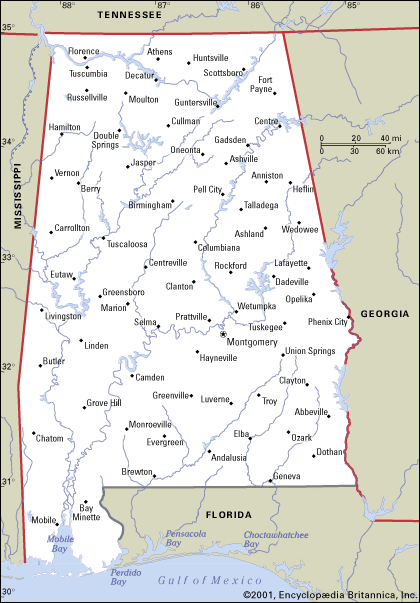


 Recent studies at Princeton University examined a Sequoia voting system of slightly older vintage than what's used in Maricopa. There are however similarities: the “Advantage” pushbutton system in New Jersey runs on a Z80 processor and stores data on EEPROMs – Electrically Erasable Read Only Memory. The Optech optical scanner stations in Maricopa that record 98% of the precinct vote also use Z80 processors and EEPROM memory packs.


 Two statewide elections are coming up later this year but local elections officials say they’re working with outdated electronic voting booths.



 In a unanimous ruling, the court turned back a challenge by a group of citizens who filed suit three years ago in Fulton County Superior Court. A judge had previously dismissed the suit, ruling in favor of state officials.






 As previously reported, voting machine failures at eight polling places in St. Lawrence County caused the Board of Elections to hand count those ballots. Realistically, there was no other choice but to do so. According to the Board, the locked voting machines were transported to a warehouse in Canton where the ballots were counted by hand. The problem with this procedure is that it is illegal under § 9-100 of New York State Election Law, which requires that the votes be counted at the polling place:

 * - These counties are reporting final counts with absentee ballots included.


.JPG)
.JPG)
.JPG)
.JPG)
.JPG)
.JPG)
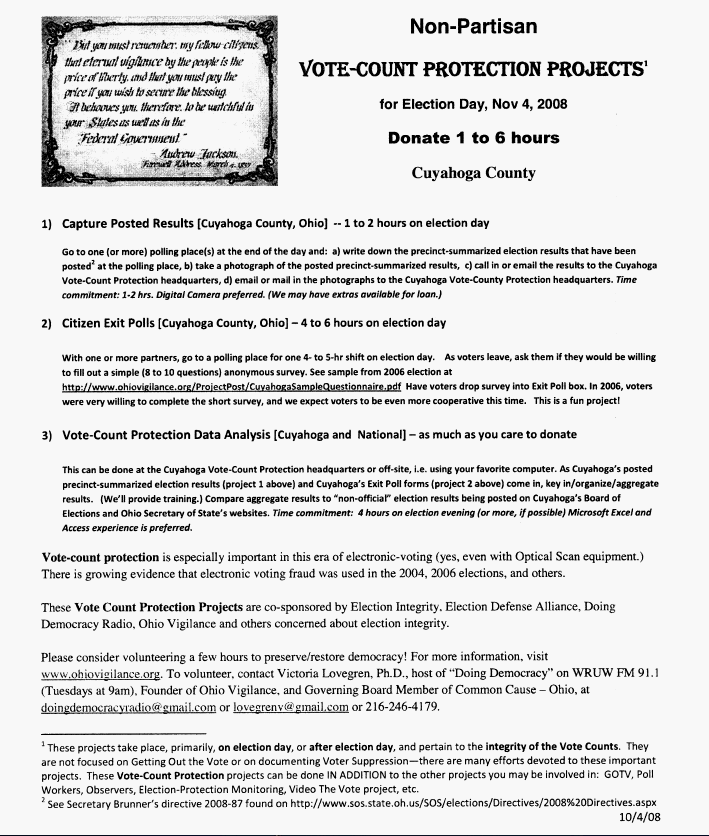






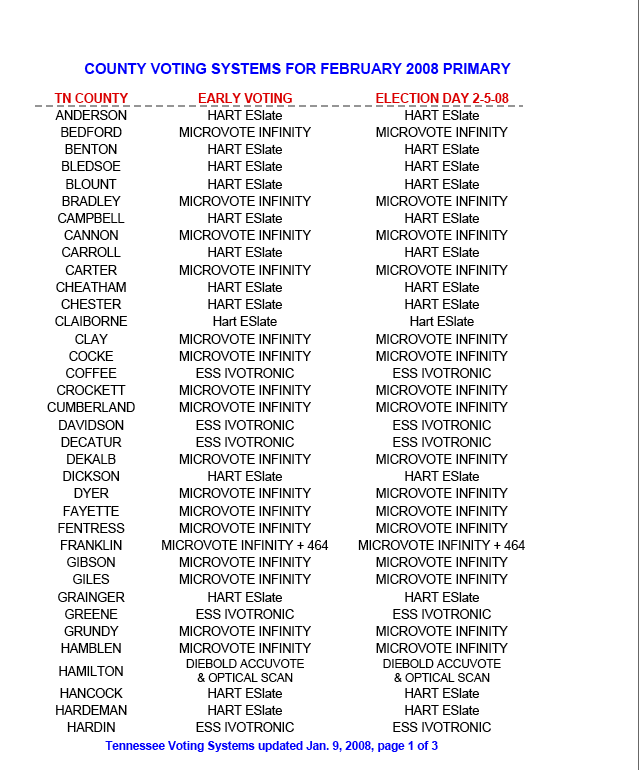
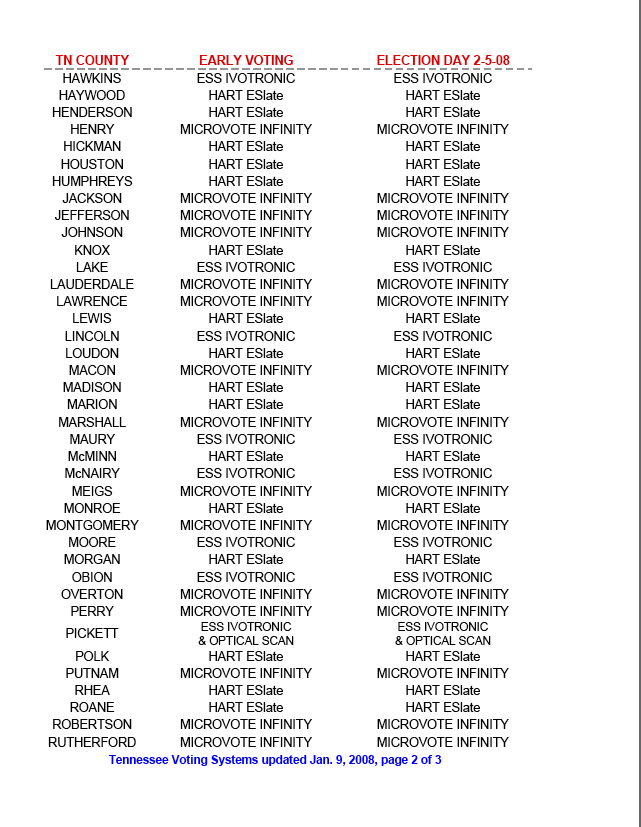
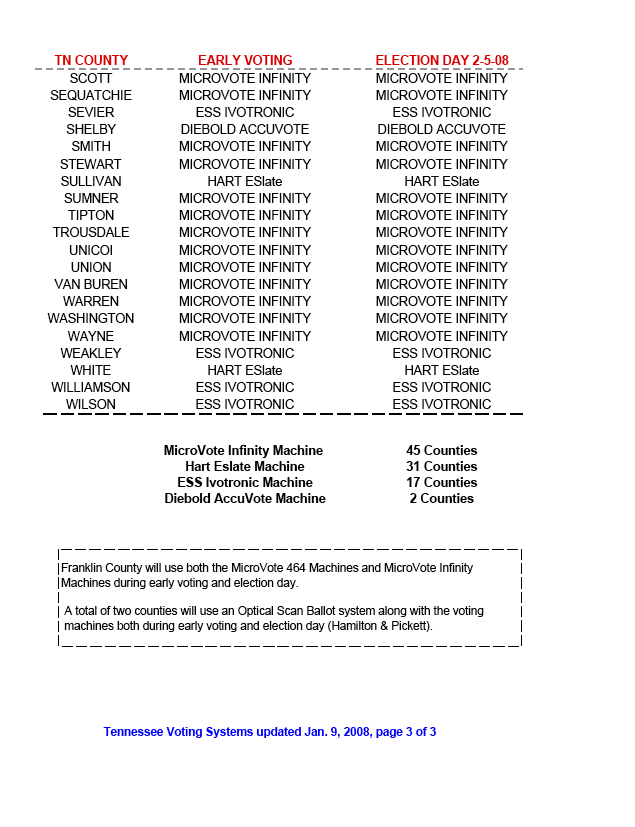



 Across the nation, states have enacted new laws supposedly designed to prevent voter fraud and avoid election-day debacles. But qualified voters may also be left out in the cold, especially minorities, the poor, the elderly and the disabled. Friday, 9/1/06, this week NOW looks at several states where these new rules may keep voters away from the polls in November. Critics charge that the Bush administration is part of the problem as the U.S. Department of Justice, which is charged with protecting the rights of all voters, has signed off on a number of the new regulations.
 Take Action as a Voter

 EDA is helping to fill the void of silence about the national electoral crisis by getting our message on mainstream air, and by providing those audio downloads and podcasts on this website.
![[click > to play || to pause]](../../../../images/playhelp.png)






 The 2004 presidential election in Ohio, the state that decided the election, was rigged. Richard Hayes Phillips, Ph.D., began investigating the Ohio election when he received an unsolicited e-mail containing obviously erroneous election results from Cleveland. He quickly found that hundreds of votes in certain precincts had inexplicably shifted from John Kerry to other presidential candidates. This made him a witness to a crime, with a duty to investigate further and to present his findings publicly. The result is the book that you hold in your hands. It is an investigative report and eyewitness history, the document of record for what really happened in Ohio.
 Available from the EDA store, this 426-page hardcover first edition, autographed by the author, comes with a 600 MB CD containing 1200 digital images of actual 2004 election ballots, poll books, voter signature books, and other elections records, many obviously falsified. Much of the evidence preserved here in digital imagery--including illegally altered ballots--were subsequently destroyed by Ohio election officials,in violation of federal election law and a federal court order. See for yourself. This book and CD put the evidence in your hands. This hard-to-find, one-of-a-kind book is self-published and distributed by the author. You can order directly from R. H. Phillips at the Witness To A Crime website OR, you can
 Bev Harris is a ground breaking investigative journalist who raised one of the first alarms on the dangers and lack of security of e-voting systems. She is the author of "Black Box Voting: Ballot Tampering In The 21st Century" and her continuing work can be explored further at her website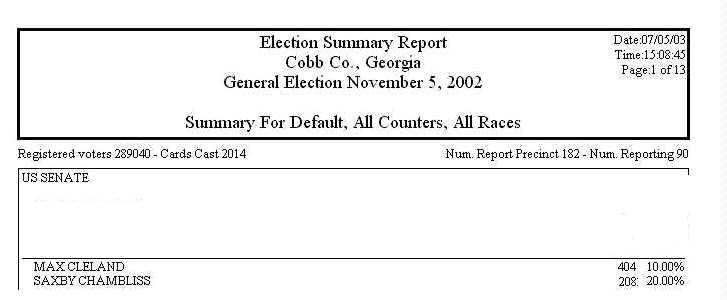
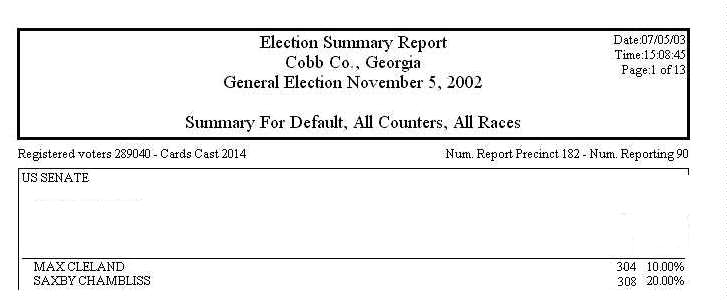
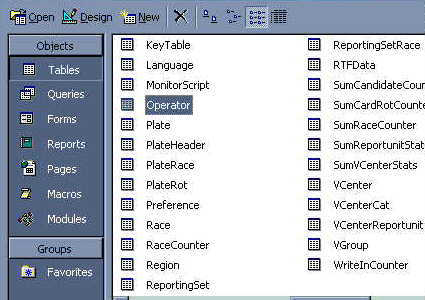

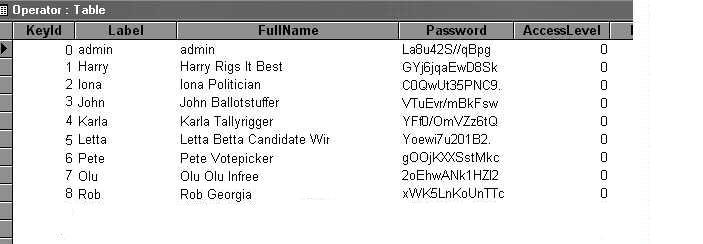


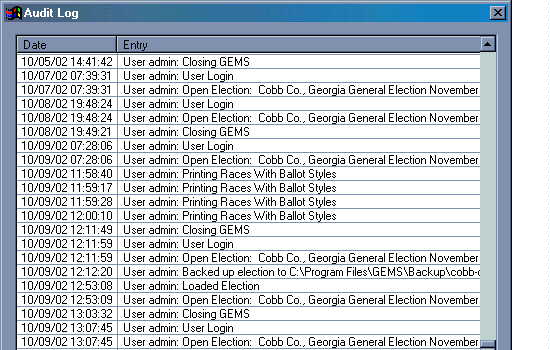
 Thom Hartmann is an outstanding advocate for fair and transparent elections and one of the rare members of the election integrity movement who is also a widely read and respected historian, author and a media personality. Thom hosts a local progressive talk show in his hometown, Portland, Oregon, every weekday on KPOJ 620 AM and also a 3 hour national program on Air America. His voice is urgently needed in this movement and he finds every opportunity to remind us of the importance of reclaiming our elections.
  Indeed, his deep study of Thomas Jefferson's writings makes it impossible for him not to comment frequently on how seriously broken our democracy now is, compared to the vision of the Founders. Thom knows, and shares with us everyday, that it is the people who own this democracy, not the corporations. Moreover, Thom stresses in his writings the core truth that "voting" is part of the "Commons" or the "Commonwealth" of the people. Once this commons is violated, as it is today with private corporations counting our votes on secret software out of public view, our ability to exercise our proper ownership over all other Commons will be gone.
 Mark Crispin Miller is one of our most important, courageous public intellectuals today. After publishing his outstanding, well-researched and deeply disturbing compendium on the stolen election of 2004, "Fooled Again," Professor Miller toured the country to raise the alarm on the crisis we face while media coverage and reviews of his book were actively supressed and mysteriously absent. He toured the country promoting his book, giving sold-out lectures, and providing radio interviews, while the mainstream media ignored his work that clearly demonstrated the serious, outcome-changing fraud and corruption that carried Bush to a second unelected term. His books, articles and daily email alerts and
  Banksy
 Bush drive-by at the Jan 20, 2005 inauguration Image "Mission Accomplished" By Nov. 2, 2004, the mission of returning the extremists to power and retaining their agenda was complete. The process of distortions began with the smears of Kerry by the "swift boaters," Bush partisans who mounted a relentless campaign against Sen. John F. Kerry. This wasn't new. Marginal groups attacking candidates are common in our elections. Full cooperation by the mainstream media with the vicious attacks was a first. The worst elements of partisan politics were willingly incorporated into the national dialog by the network talking heads and the shouting cable clones. And they treated it as business as usual instead of an unfair but devastating attack on the core character issue of Sen. Kerry's campaign, his service to the nation. At the same time, the 2004 reporting of the networks and press consistently ignored the obvious signs of looming election disasters around the country. Coverage of the partisan set up in Ohio for an Election Day melt down was inadequate. Little attention was paid to the biased Department of Justice handling of voting and civil rights violations. And, of course, there had been no correction whatsoever of the problems of Florida 2000, which were characterized by 175,000 spoiled ballots, largely in minority precincts. When it came time to vote on Nov. 2, 2004, the forces working for a perpetuation of illegitimate power swung into action and sealed our fate without even bothering to consult us. We were guaranteed four more years of decline and debasement, all enabled through election fraud on a scale never seen. It became the new business as usual with a bonus of more war, more torture, and a yet to be delivered economic melt down that would affect us all. Miller's latest effort bears witness to his ability to inspire others to investigation and action after looking into the abyss of extremist corruption that he has observed so well in the past. He provides an elegant framework for the collection of essays with his ongoing commentary forming the articles into a persuasive whole. If you want to understand how the tragedy of the last eight years began and developed into the current crisis, this book is one of your key resources. In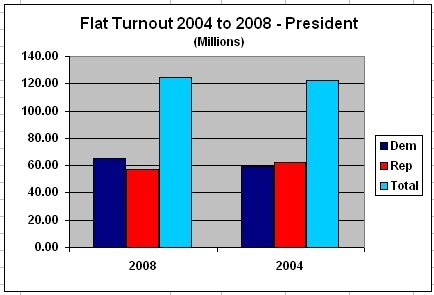
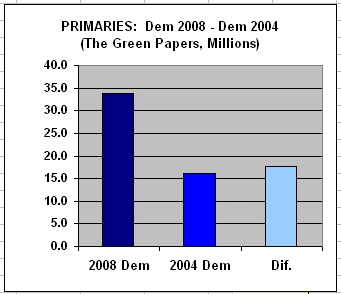
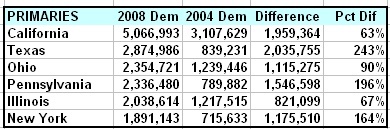
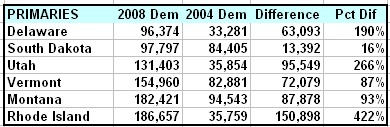
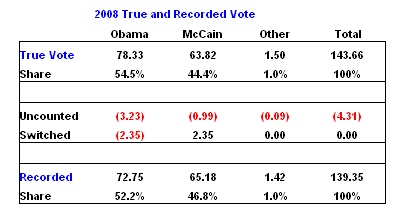


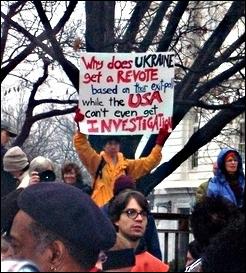
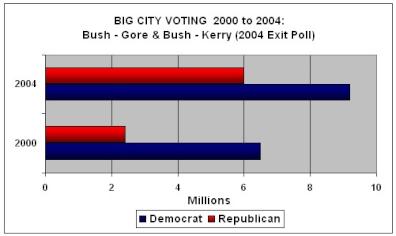
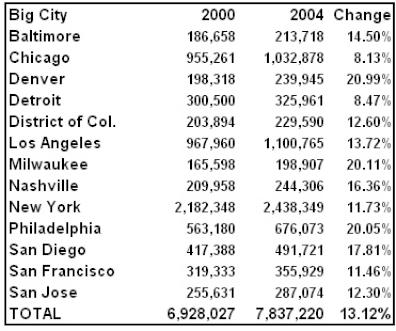
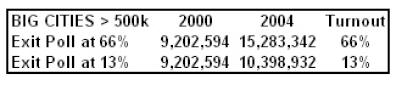


Lunatics.
Posted by Nathan | November 2, 2007 2:20 PM
Posted on November 2, 2007 14:20