Poll Worker Training and the Human Side of Election Security

When people picture election security, they usually picture technology — encrypted databases, tamper-evident seals, video surveillance of ballot storage rooms. All of that matters. But we think one of the most under-discussed pieces of the puzzle is much less technical: the thousands of ordinary people who staff polling places on election day.

Poll workers are the ones who verify identification, hand out ballots, troubleshoot equipment when it hiccups, and manage the line when it gets long and tempers get short. They’re also, in most jurisdictions, the first line of defense against both honest mistakes and deliberate interference. A well-trained poll worker catches a discrepancy before it becomes a problem. An undertrained one might miss it entirely, or worse, create a new problem trying to fix something that wasn’t actually broken.

This is why recruitment and training deserve as much attention as any piece of hardware. Many counties have struggled in recent cycles to find enough workers, a challenge covered in some depth by NPR, which reported on efforts to recruit teenagers, veterans, and other new volunteers to fill the gap as longtime poll workers retire. A shortage doesn’t just mean longer lines — it means less experienced staff handling procedures that are easy to get wrong under pressure.

Good training programs cover more than button-pushing. They walk poll workers through provisional ballot procedures, chain-of-custody paperwork, how to de-escalate a frustrated voter without violating anyone’s rights, and what to do if a piece of equipment fails mid-day. We’d note that this last category — knowing the manual fallback procedure when the primary system isn’t working — is often where the gap between a minor hiccup and a real crisis is decided.

There’s also a quieter benefit to strong training: it builds a poll worker corps that can explain, clearly and confidently, what’s happening to voters standing in line. A worker who understands why a signature is being checked, or why a ballot is being set aside for provisional review, can defuse suspicion on the spot. One who doesn’t understand the procedure they’re following can accidentally make a routine step look sinister.

We keep coming back to a similar theme in our own work — the idea that verifiable elections rest as much on process as on any single piece of equipment, much like the paper-ballot backbone we discussed previously. Poll workers are the human version of that same principle. No amount of secure hardware compensates for undertrained staff, and no amount of software audits substitutes for a person at the table who knows exactly what they’re supposed to do and why.

Investing in recruitment, pay, and training for poll workers isn’t a glamorous fix. But it may be one of the more cost-effective ways to strengthen an election, precinct by precinct, well before anyone shows up to vote.

Read more →

The Working Class Vote: How Siding Contractors Can Help Defend Electoral Transparency

The Intersection of Blue-Collar Workers and Democratic Integrity

In an era where trust in democratic institutions faces unprecedented challenges, the voice of working-class Americans has never been more critical. Among these essential voices are the skilled tradespeople who build and maintain our communities—carpenters, electricians, plumbers, and siding contractors in Pittsburgh and beyond. These workers represent more than just the backbone of our economy; they embody the values of transparency, accountability, and honest work that should define our electoral process.

The connection between skilled trades and electoral integrity might not seem immediately obvious, but it runs deeper than many realize. Both domains require precision, verification, and a commitment to doing things right the first time. When we examine how working-class professionals approach their craft, we discover valuable lessons that can strengthen our democratic systems.

Why the Working Class Vote Matters More Than Ever

The working-class vote has historically served as a bellwether for American political sentiment. These voters—often employed in manufacturing, construction, service industries, and skilled trades—comprise a significant portion of the electorate. Their concerns about economic security, job stability, and community welfare directly influence policy directions at local, state, and federal levels.

Recent electoral cycles have demonstrated increasing volatility in working-class voting patterns. Communities that once reliably supported one party have shifted allegiances, reflecting deeper anxieties about representation and responsiveness. This volatility underscores the importance of ensuring that every vote is counted accurately and that the electoral process remains transparent and trustworthy.

Economic Anxiety and Political Engagement

Working-class Americans face unique economic pressures that shape their political priorities. Stagnant wages, rising healthcare costs, and concerns about job security create an environment where voters demand accountability from their elected officials. When these voters perceive that the system is rigged or that their voices don’t matter, disengagement follows—or worse, support for candidates who promise to disrupt the system entirely.

Electoral transparency becomes crucial in this context. Workers who spend their days following strict building codes, safety regulations, and quality standards expect similar rigor in how their votes are handled. Any perception of irregularity or lack of oversight can erode confidence in democratic institutions.

Lessons from the Trades: Transparency and Verification

Skilled tradespeople operate under constant scrutiny. Their work must pass inspections, meet code requirements, and stand the test of time. A siding contractor doesn’t simply nail boards to a house and walk away; they must ensure proper installation, adequate weatherproofing, and compliance with local regulations. Inspectors verify the work, and the final product must demonstrate quality that homeowners can trust.

This same principle should apply to elections. Every step of the electoral process—from voter registration to ballot counting to result certification—should be transparent, verifiable, and subject to appropriate oversight. Just as a homeowner can inspect the work being done on their property, voters should be able to understand and verify how their ballots are handled.

The Value of Documentation

In construction and renovation work, documentation is everything. Permits, contracts, inspection reports, and warranties create a paper trail that protects both workers and clients. This documentation serves multiple purposes: it proves work was completed to standard, provides recourse if problems arise, and maintains accountability throughout the project.

Electoral systems similarly require robust documentation. Voter rolls must be accurate and up-to-date. Chain of custody for ballots must be maintained. Audit trails should allow for verification without compromising ballot secrecy. These aren’t partisan concerns—they’re basic quality control measures that any skilled tradesperson would recognize as essential.

How Tradespeople Can Advocate for Electoral Integrity

Working-class Americans, particularly those in skilled trades, possess unique credibility when discussing issues of quality, accountability, and honest work. Their advocacy for electoral transparency carries weight precisely because it’s not rooted in partisan advantage but in professional standards that transcend politics.

Community Leadership and Local Engagement

Tradespeople are deeply embedded in their communities. They work on neighbors’ homes, participate in local business associations, and understand community needs firsthand. This positioning makes them natural advocates for electoral reforms that enhance transparency and accessibility.

Local engagement might include:

  • Serving as poll workers or election observers to ensure proper procedures are followed
  • Attending town halls and county commissioner meetings to advocate for electoral improvements
  • Participating in voter registration drives within their communities
  • Speaking publicly about the importance of verifiable, transparent elections
  • Supporting candidates who prioritize electoral integrity regardless of party affiliation

Bringing Professional Standards to Civic Life

The standards that govern skilled trades—precision, verification, accountability—can inform discussions about electoral reform. When tradespeople frame electoral transparency in terms of quality control and professional standards, they help depoliticize the conversation and focus on practical improvements.

For example, just as building inspectors verify that construction meets code, election observers from multiple parties should verify that vote counting follows established procedures. Just as contractors maintain detailed records of their work, election officials should maintain comprehensive documentation of ballot handling. These parallels make abstract concerns about electoral integrity more concrete and understandable.

Specific Reforms That Working-Class Voters Should Support

Electoral transparency isn’t a vague aspiration—it requires specific, practical reforms that make the voting process more verifiable and trustworthy. Working-class voters should advocate for measures that bring elections up to the same standards of accountability they maintain in their own professions.

Voter ID and Registration Verification

Most tradespeople must show licensing and credentials to work on projects. Similar verification for voting—implemented in ways that don’t create unnecessary barriers—ensures that each vote represents a legitimate, eligible voter. The key is balancing security with accessibility, much like building codes balance safety with practicality.

civic engagement siding repair methods

Audit Procedures and Transparency

Regular audits should be standard practice, not controversial exceptions. Just as health inspectors randomly check restaurants and building inspectors spot-check construction sites, election officials should conduct routine audits of voter rolls, ballot counting procedures, and equipment functionality. These audits should be transparent, with results publicly available and conducted by bipartisan teams.

Observer Access and Meaningful Oversight

Poll watchers and election observers serve a crucial verification function, but only if they have meaningful access to observe key processes. This includes ballot counting, signature verification, and result tabulation. Restrictions on observer access undermine confidence; robust observer programs enhance it.

Paper Trails and Backup Systems

Electronic voting systems offer efficiency, but they must include paper backups that allow for manual recounts if needed. This redundancy is standard practice in critical systems—contractors don’t rely on a single support beam, and elections shouldn’t rely solely on digital records that can’t be independently verified.

Building Coalition Support Across the Working Class

Electoral transparency shouldn’t be a partisan issue, and working-class solidarity can help keep it nonpartisan. When tradespeople, service workers, manufacturers, and other blue-collar professionals unite around the principle that elections should be as rigorously managed as any quality construction project, they create powerful momentum for reform.

This coalition-building requires focusing on shared values rather than partisan talking points. Working-class voters across the political spectrum value honesty, accountability, and getting the job done right. These values provide common ground for discussions about electoral integrity that transcend partisan divisions.

Cross-Industry Collaboration

Labor unions, trade associations, and professional organizations can play important roles in advocating for electoral transparency. These groups already represent workers’ interests on economic issues; extending that advocacy to democratic participation makes natural sense. When unions and trade groups demand verifiable, transparent elections, they amplify working-class voices in ways that individual advocacy cannot.

The Path Forward: Practical Steps for Protecting Democracy

Defending electoral transparency requires sustained engagement, not just periodic attention during election cycles. Working-class Americans can take concrete steps to strengthen democratic institutions:

Stay Informed: Understand how elections are conducted in your jurisdiction. What verification procedures are in place? How are ballots secured? What audit processes exist? Knowledge is the foundation of effective advocacy.

Participate Actively: Volunteer as a poll worker, election observer, or voter registration volunteer. Direct participation provides insight into how the system works and where improvements are needed.

Demand Accountability: Contact elected officials and election administrators to advocate for transparency measures. Ask specific questions about procedures and push for clear, detailed answers.

Support Nonpartisan Reforms: Back electoral improvements that enhance transparency and verifiability regardless of which party might benefit. Integrity should never be a partisan issue.

Engage Your Community: Talk with neighbors, coworkers, and fellow tradespeople about the importance of electoral transparency. Build grassroots support for reforms that make elections more trustworthy.

Conclusion: Building a More Transparent Democracy

The skills and values that define working-class professions—attention to detail, commitment to quality, accountability for results—are precisely what our electoral system needs. When siding contractors, electricians, plumbers, and other tradespeople bring their professional standards to civic engagement, they strengthen democratic institutions in ways that benefit all Americans.

Electoral transparency isn’t about partisan advantage; it’s about ensuring that democracy functions as reliably and verifiably as a well-built house. Just as skilled tradespeople take pride in work that meets the highest standards, all Americans should take pride in an electoral system that earns and maintains public trust through transparency, verification, and accountability.

The working-class vote represents more than numbers on a tally sheet. It represents communities, families, and the fundamental American belief that honest work deserves honest representation. By advocating for electoral transparency with the same vigor they bring to their professions, working-class Americans can help build a democracy as solid and trustworthy as the homes and buildings they construct every day.

Read more →

Paper Ballots: The Quiet Backbone of a Verifiable Election

There’s nothing flashy about a sheet of paper. It doesn’t blink, it doesn’t need a software update, and it certainly doesn’t make for exciting television. But when we talk about what actually makes an election verifiable — as opposed to merely fast — paper is usually where the conversation ends up.

The logic is straightforward. Any voting system that produces only a digital tally is, in a very real sense, asking voters to take the result on faith. A paper ballot, or a paper record generated alongside an electronic vote, gives everyone something physical to check the digital total against. It’s the difference between a bank statement you can print out and one that only exists as a number on a screen you’re told to trust.

This is precisely why paper matters so much for the kind of post-election review we covered recently — without a physical record, there’s nothing for an audit to actually sample and hand-count against the machine tally. Paper isn’t a nice-to-have alongside auditing; it’s the precondition that makes auditing possible at all.

We’re aware that “paper ballots” can sound like a step backward to people used to instant results on election night. It isn’t. Most jurisdictions that use paper still count ballots with high-speed optical scanners, so speed isn’t really the trade-off people assume it is. What paper buys instead is resilience: if a scanner malfunctions, if software has a bug, or if results simply look strange, there’s an underlying record that doesn’t depend on any single piece of equipment working correctly.

Storage and chain of custody matter just as much as the paper itself, of course. A ballot that isn’t properly sealed, logged, and secured between polling day and any subsequent recount is only as trustworthy as the process protecting it. That’s a separate discipline from the printing and counting of ballots, but the two are inseparable in practice — a strong paper trail with weak custody procedures is still a weak system.

We’d also push back gently on the idea that paper systems are inherently partisan territory, favored by one side of the aisle over the other. Verifiability benefits everyone equally, regardless of who wins a given race. A losing candidate’s supporters get the same reassurance as the winner’s: that the numbers were checked, and checked against something real. That shared benefit is, we think, the strongest argument for treating durable paper records as a baseline requirement rather than an optional upgrade.

None of this is a novel idea. It’s closer to a return to first principles — building systems that don’t ask anyone to simply take the outcome on faith. In an environment where trust in institutions is already strained, that seems like a modest, achievable place to start.

Read more →

Emergency Water Damage Restoration for Tucson’s Religious and Community Centers

Myth: “Our building is only used a few days a week, so water damage isn’t urgent.”

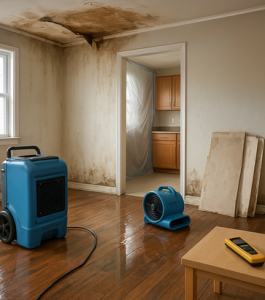
This dangerous misconception has cost countless religious institutions and community centers tens of thousands in preventable damage. The reality? Limited occupancy actually increases your risk. When buildings sit empty for days, small leaks go unnoticed, humidity builds unchecked, and by the time Sunday services roll around, you’re facing extensive mold growth and structural compromise.

Houses of worship and community centers in Tucson require specialized emergency response that understands both the architectural uniqueness of these spaces and their critical role in the community. When water damage strikes, partnering with Tucson Water Damage Restoration Champions ensures your facility receives the urgent, respectful care it deserves while minimizing disruption to your congregation or community programs.

Debunking Common Water Damage Myths in Large Gathering Spaces

Myth #1: “We Can Wait Until Monday to Address Weekend Water Damage”

The 24-48 hour window is critical. Mold begins colonizing within this timeframe, and in Tucson’s climate, the combination of monsoon moisture and indoor temperature fluctuations accelerates this process. That pipe burst discovered Saturday evening? By Monday morning, you’re looking at contaminated carpeting, compromised drywall, and potential health hazards for vulnerable populations including children and elderly members.

Myth #2: “Our Insurance Won’t Cover Emergency Services”

Most religious and nonprofit organizations carry property insurance that specifically covers emergency water mitigation. What insurance won’t cover is secondary damage caused by delayed response. Documentation is key—professional restoration services provide the detailed reporting insurers require while protecting your claim value.

Myth #3: “Industrial Fans and Dehumidifiers Are All the Same”

Big-box rental equipment cannot match professional-grade restoration technology. Commercial moisture meters, thermal imaging cameras, and calibrated drying systems are essential for large spaces with high ceilings, multiple rooms, and complex HVAC systems common in religious facilities. Amateur drying attempts often trap moisture in walls and subflooring, creating long-term problems.

Special Considerations for Sacred and Community Spaces

Protecting Irreplaceable Items

Religious artifacts, historical documents, musical instruments, and memorial items require specialized handling during water emergencies. Professional restoration teams understand the difference between standard contents and sacred objects that hold deep spiritual or community significance.

Priority protection includes:

  • Religious texts and historical records requiring freeze-drying techniques
  • Stained glass windows vulnerable to moisture-related deterioration
  • Wooden pews, altars, and architectural elements needing controlled drying
  • Sound systems and projection equipment requiring immediate electrical safety protocols
  • Kitchen facilities used for community meals and events

water damage restoration tucson az

Maintaining Operational Continuity

Your community depends on you. Emergency restoration for religious and community centers isn’t just about drying out a building—it’s about restoring a gathering place. Professional teams work around service schedules, coordinate temporary space solutions, and prioritize areas based on your operational needs.

The Hidden Dangers of DIY Approaches

Myth: “Our volunteers can handle the cleanup to save money.”

Well-meaning volunteers face serious risks in water damage scenarios. Category 2 and 3 water (from toilets, sewage backups, or external flooding) contains harmful bacteria and pathogens requiring proper PPE and disposal protocols. Additionally, electrical hazards, structural instability, and mold exposure present liability issues for organizations allowing untrained individuals to perform restoration work.

Professional restoration protects both your facility and your people, providing proper safety equipment, licensed expertise, and insurance coverage that volunteer labor cannot offer. Consulting with organizations like the American Society of Plumbing Engineers can help facility managers understand proper plumbing infrastructure maintenance to prevent future water emergencies, while the ASCE provides valuable resources on building infrastructure resilience.

citizen oversight emergency drying

Act Immediately, Restore Completely

Water damage in religious and community centers demands immediate professional response. Every hour of delay multiplies restoration costs and extends the time your community goes without their essential gathering space. Don’t let myths about cost, urgency, or DIY capabilities compromise your facility’s integrity and your community’s wellbeing.

Read more →

Why Post-Election Audits Matter More Than Ever

Every election cycle, we hear the same question from voters: how do we actually know the count was right? It’s a fair question, and it deserves a better answer than “trust the process.” That’s where post-election audits come in — the quiet, unglamorous work that happens after the headlines move on, when election officials go back and check their own math.

At its simplest, a post-election audit is a comparison. Officials pull a sample of paper ballots, count them by hand, and check whether that hand count matches what the voting machines reported. If the numbers line up, that’s strong evidence the tabulation worked as intended. If they don’t, it’s a signal to look closer before anyone certifies a result. We think of audits less as an accusation and more as a routine safety check, the electoral equivalent of a pilot’s pre-flight checklist.

Not all audits are created equal, though. Some states still rely on fixed-percentage audits — always checking, say, 1% of precincts regardless of how close the race was. That approach is easy to explain, but it doesn’t scale well: a 1% sample might catch problems in a landslide election and miss them entirely in a race decided by a few hundred votes. A newer method, the risk-limiting audit, adjusts the sample size to the actual margin of victory, which means closer races get a harder look. Research from the Brennan Center explains why this approach is gaining ground among election administrators.

We’d argue the real value of audits isn’t just catching errors — it’s what happens when nothing goes wrong. A clean audit result, conducted in public, with observers present and the methodology explained ahead of time, is one of the most persuasive tools available for building confidence in an outcome. It’s much harder to dismiss a result as illegitimate when the paper trail has already been checked by hand, in the open, before certification.

Of course, audits only work if the underlying infrastructure supports them. That means paper ballots or paper backups, secure chain-of-custody procedures, and enough trained staff to do the counting correctly. None of that happens by accident — it requires sustained attention from election officials, lawmakers, and the public between election cycles, not just in the anxious weeks after polls close.

We don’t think audits are a cure-all. They can’t fix a broken registration system or resolve a genuinely contested legal dispute. But as a baseline check on whether the count matched the ballots, they’re one of the most concrete, verifiable tools we have. The more routine and unremarkable audits become — the more they’re just something that happens after every election, win or lose — the more they can do their real job: giving everyone, regardless of who won, a reason to trust the number on the board.

Read more →