Paper Ballots: The Quiet Backbone of a Verifiable Election

There’s nothing flashy about a sheet of paper. It doesn’t blink, it doesn’t need a software update, and it certainly doesn’t make for exciting television. But when we talk about what actually makes an election verifiable — as opposed to merely fast — paper is usually where the conversation ends up.

The logic is straightforward. Any voting system that produces only a digital tally is, in a very real sense, asking voters to take the result on faith. A paper ballot, or a paper record generated alongside an electronic vote, gives everyone something physical to check the digital total against. It’s the difference between a bank statement you can print out and one that only exists as a number on a screen you’re told to trust.

This is precisely why paper matters so much for the kind of post-election review we covered recently — without a physical record, there’s nothing for an audit to actually sample and hand-count against the machine tally. Paper isn’t a nice-to-have alongside auditing; it’s the precondition that makes auditing possible at all.

We’re aware that “paper ballots” can sound like a step backward to people used to instant results on election night. It isn’t. Most jurisdictions that use paper still count ballots with high-speed optical scanners, so speed isn’t really the trade-off people assume it is. What paper buys instead is resilience: if a scanner malfunctions, if software has a bug, or if results simply look strange, there’s an underlying record that doesn’t depend on any single piece of equipment working correctly.

Storage and chain of custody matter just as much as the paper itself, of course. A ballot that isn’t properly sealed, logged, and secured between polling day and any subsequent recount is only as trustworthy as the process protecting it. That’s a separate discipline from the printing and counting of ballots, but the two are inseparable in practice — a strong paper trail with weak custody procedures is still a weak system.

We’d also push back gently on the idea that paper systems are inherently partisan territory, favored by one side of the aisle over the other. Verifiability benefits everyone equally, regardless of who wins a given race. A losing candidate’s supporters get the same reassurance as the winner’s: that the numbers were checked, and checked against something real. That shared benefit is, we think, the strongest argument for treating durable paper records as a baseline requirement rather than an optional upgrade.

None of this is a novel idea. It’s closer to a return to first principles — building systems that don’t ask anyone to simply take the outcome on faith. In an environment where trust in institutions is already strained, that seems like a modest, achievable place to start.
Read more →

Emergency Water Damage Restoration for Tucson’s Religious and Community Centers

Myth: “Our building is only used a few days a week, so water damage isn’t urgent.”

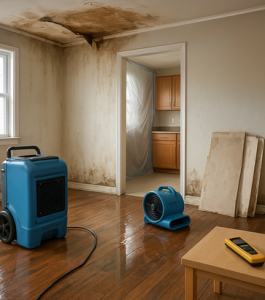
This dangerous misconception has cost countless religious institutions and community centers tens of thousands in preventable damage. The reality? Limited occupancy actually increases your risk. When buildings sit empty for days, small leaks go unnoticed, humidity builds unchecked, and by the time Sunday services roll around, you’re facing extensive mold growth and structural compromise.

Houses of worship and community centers in Tucson require specialized emergency response that understands both the architectural uniqueness of these spaces and their critical role in the community. When water damage strikes, partnering with Tucson Water Damage Restoration Champions ensures your facility receives the urgent, respectful care it deserves while minimizing disruption to your congregation or community programs.

Debunking Common Water Damage Myths in Large Gathering Spaces

Myth #1: “We Can Wait Until Monday to Address Weekend Water Damage”

The 24-48 hour window is critical. Mold begins colonizing within this timeframe, and in Tucson’s climate, the combination of monsoon moisture and indoor temperature fluctuations accelerates this process. That pipe burst discovered Saturday evening? By Monday morning, you’re looking at contaminated carpeting, compromised drywall, and potential health hazards for vulnerable populations including children and elderly members.

Myth #2: “Our Insurance Won’t Cover Emergency Services”

Most religious and nonprofit organizations carry property insurance that specifically covers emergency water mitigation. What insurance won’t cover is secondary damage caused by delayed response. Documentation is key—professional restoration services provide the detailed reporting insurers require while protecting your claim value.

Myth #3: “Industrial Fans and Dehumidifiers Are All the Same”

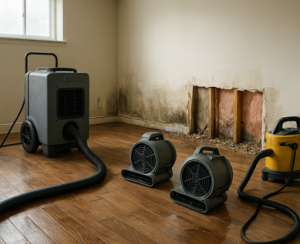
Big-box rental equipment cannot match professional-grade restoration technology. Commercial moisture meters, thermal imaging cameras, and calibrated drying systems are essential for large spaces with high ceilings, multiple rooms, and complex HVAC systems common in religious facilities. Amateur drying attempts often trap moisture in walls and subflooring, creating long-term problems.

Special Considerations for Sacred and Community Spaces

Protecting Irreplaceable Items

Religious artifacts, historical documents, musical instruments, and memorial items require specialized handling during water emergencies. Professional restoration teams understand the difference between standard contents and sacred objects that hold deep spiritual or community significance.

Priority protection includes:

  • Religious texts and historical records requiring freeze-drying techniques
  • Stained glass windows vulnerable to moisture-related deterioration
  • Wooden pews, altars, and architectural elements needing controlled drying
  • Sound systems and projection equipment requiring immediate electrical safety protocols
  • Kitchen facilities used for community meals and events

water damage restoration tucson az

Maintaining Operational Continuity

Your community depends on you. Emergency restoration for religious and community centers isn’t just about drying out a building—it’s about restoring a gathering place. Professional teams work around service schedules, coordinate temporary space solutions, and prioritize areas based on your operational needs.

The Hidden Dangers of DIY Approaches

Myth: “Our volunteers can handle the cleanup to save money.”

Well-meaning volunteers face serious risks in water damage scenarios. Category 2 and 3 water (from toilets, sewage backups, or external flooding) contains harmful bacteria and pathogens requiring proper PPE and disposal protocols. Additionally, electrical hazards, structural instability, and mold exposure present liability issues for organizations allowing untrained individuals to perform restoration work.

Professional restoration protects both your facility and your people, providing proper safety equipment, licensed expertise, and insurance coverage that volunteer labor cannot offer. Consulting with organizations like the American Society of Plumbing Engineers can help facility managers understand proper plumbing infrastructure maintenance to prevent future water emergencies, while the ASCE provides valuable resources on building infrastructure resilience.

citizen oversight emergency drying

Act Immediately, Restore Completely

Water damage in religious and community centers demands immediate professional response. Every hour of delay multiplies restoration costs and extends the time your community goes without their essential gathering space. Don’t let myths about cost, urgency, or DIY capabilities compromise your facility’s integrity and your community’s wellbeing.

Read more →

Why Post-Election Audits Matter More Than Ever

Every election cycle, we hear the same question from voters: how do we actually know the count was right? It’s a fair question, and it deserves a better answer than “trust the process.” That’s where post-election audits come in — the quiet, unglamorous work that happens after the headlines move on, when election officials go back and check their own math.

At its simplest, a post-election audit is a comparison. Officials pull a sample of paper ballots, count them by hand, and check whether that hand count matches what the voting machines reported. If the numbers line up, that’s strong evidence the tabulation worked as intended. If they don’t, it’s a signal to look closer before anyone certifies a result. We think of audits less as an accusation and more as a routine safety check, the electoral equivalent of a pilot’s pre-flight checklist.

Not all audits are created equal, though. Some states still rely on fixed-percentage audits — always checking, say, 1% of precincts regardless of how close the race was. That approach is easy to explain, but it doesn’t scale well: a 1% sample might catch problems in a landslide election and miss them entirely in a race decided by a few hundred votes. A newer method, the risk-limiting audit, adjusts the sample size to the actual margin of victory, which means closer races get a harder look. Research from the Brennan Center explains why this approach is gaining ground among election administrators.

We’d argue the real value of audits isn’t just catching errors — it’s what happens when nothing goes wrong. A clean audit result, conducted in public, with observers present and the methodology explained ahead of time, is one of the most persuasive tools available for building confidence in an outcome. It’s much harder to dismiss a result as illegitimate when the paper trail has already been checked by hand, in the open, before certification.

Of course, audits only work if the underlying infrastructure supports them. That means paper ballots or paper backups, secure chain-of-custody procedures, and enough trained staff to do the counting correctly. None of that happens by accident — it requires sustained attention from election officials, lawmakers, and the public between election cycles, not just in the anxious weeks after polls close.

We don’t think audits are a cure-all. They can’t fix a broken registration system or resolve a genuinely contested legal dispute. But as a baseline check on whether the count matched the ballots, they’re one of the most concrete, verifiable tools we have. The more routine and unremarkable audits become — the more they’re just something that happens after every election, win or lose — the more they can do their real job: giving everyone, regardless of who won, a reason to trust the number on the board.

Read more →