Printer-friendly version
Coordinating Council
Harold Lecar
 Harold Lecar is professor of biophysics and neurobiology at the University of California Berkeley. He received his Ph.D. in physics from Columbia in 1963, working on masers with C. H. Townes.
 From 1963 to 1985, he was a research physicist at the Biophysics Lab of the National Institute of Neurological
Disease and Stroke, doing both theoretical and experimental research on the mechanisms of nerve excitation. Much of his research involved the application of statistical physics to understanding the molecular mechanisms underlying nerve excitation.
In 1985, he received the US Public Health Service Special Recognition Award for "contributions to the understanding of the role of membrane ionic channels in producing electrical excitability and for pioneering work in advancing
single-channel."
Since 1985, he has been professor of biophysics and
neurobiology at UC Berkeley.
Harold started working on election problems in 2000, when he watched the Florida election results going monotonically up for Bush (and then monotonically down) in the final two hours of the vote count -- hardly what is expected for a random process with approximately 50-50 a-priori probability.
As did many election integrity workers, he watched aghast as the 2004 election was being stolen in real time, with contested state after contested state mysteriously reversing late in the day. Two weeks after the election, he was one of the initial members of Berkeley's Voting Rights Task Force and took on analysis as his prime responsibility.
Harold has delved into the numbers behind some of the strangest election results in recent American history, including the presidential elections in New Hampshire and Florida 2004, the California gubernatorial recall, and a series of studies of third-party voting behavior in the 2004 California presidential election that defy political and numerical common sense.
In a number of studies, he has tried to ferret out the consequences of different computer vote-transfer schemes. He used these methods to study California Proposition 66 (2004) concerning the "three strikes" law. This proposition was favored by both Democrats and Republicans in the polls, yet lost in the election, rather reminiscent of Prop. 8 in the 2008
election.
The California anomalies were the basis for an effort pursued with Judy Alter and Dan Ashby, to find a government prosecutor with the subpoena power and will to follow staggeringly improbable vote counts to their source and find out if they were real. Various consulting election lawyers said none would, and ultimately, their pessimism proved correct. This effort was ultimately frustrated, but we learned a lot about the barriers to discovery built into election laws that prevent public examination of critical election evidence.
As a coordinator, Harold is eager to facilitate communication and exchange of technical ideas among members of the EDA Data Analysis Group, all of whose work he has studied and admired.

Judy Alter, Ph.D.
 Judy Alter (Judith B. Alter Ed.D.), emeritus UCLA Professor, began working on election justice issues four days after the CA Oct. 2003 Recall election when Lynn Landes offered compelling evidence about how Diebold machines swung the election away from Bustamante to the current "governor."
 Before the Nov. 2004 election she urged elected officials to consider counting voters' filled in sample ballots to check the accuracy of the secret software being used in the election. Jeremiah Akin trained her in the thwarted Recount New Mexico effort. She subsequently analyzed the voting results in Santa Fe NM (posted on Solarbus and freepress) and since January 2005, has given numerous talks about her findings there as a case study of voting irregularities in the 2004 presidential election.
She started Study California Ballots and signed up over 260 volunteers in 16 CA counties to work toward unsealing the 2004 ballots.
In July 2005 some of her volunteers invited her to help audit the San Diego mayoral election where she led 23 volunteers from 7 counties in parallel elections at 5 polling sites (11 precincts). She directed a partial inconclusive recount there in Aug. 2005.
She conducted 8 parallel elections in Los Angeles County for the special election in Nov. 2005 and helped set up others in four other CA counties (total 19).
Since then she continues to work in Los Angeles County lobbying against ES&S precinct scanners for LA for Nov. 2006; helping technical observers monitor election equipment in election headquarters; educating the public in more than 45 talks; analyzing the results of 1% manual recount and snap tallies; and circulating citizen petitions for hand marked, hand counted ballots at the precinct level.
Sally Castleman, Co-Founder, Co-Director
 Sally Castleman began her political work in high school and has never stopped working on campaigns, both for candidates and for issues. Her work on election reform began in earnest during the 2004 election, when she worked recruiting and training attorneys for election protection roles. After evaluating the issues they reported and observing how Ohio's recount laws were flagrantly violated to falsify the recount in which she participated, she dedicated herself full-time to issues of election integrity.
She began by working in the greater-Boston area, branched out to work with leaders in other states and soon saw the need for a national body to help coordinate the vibrant but often-isolated grassroots work. Since co-founding Election Defense Alliance, Ms Castleman has focused her efforts on educating election officials, the general public, and decision-makers around the country about the prevailing conditions in our election system; creating and organizing citizen exit polls as a method of validating (or not) official outcomes; exposing disregard by election officials of election law; and helping with strategy and grassroots organizing for many projects. Ms Castleman has appeared on numerous TV and radio interviews, led discussions with many groups around the country about the need for transparency in our elections, and has published several articles.
Under Creative Commons License: Attribution
Jonathan Simon, Co-Founder, Director
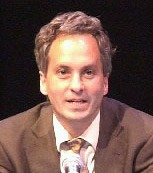 Jonathan Simon, a graduate of Harvard College and New York University School of Law, is a member of the Bar of Massachusetts. As a result of his prior experience as a political survey research analyst for Peter D. Hart Research Associates in Washington, he became an early advocate for an exit poll-based electoral "burglar alarm" system, independent of media and corporate control, to detect computerized vote shifting in Election 2004. In the absence of such a system, he was nevertheless able to capture and analyze critical official exit poll data briefly posted on the web prior to its election-night disappearance, data which served as an initial basis for questioning the validity of Election 2004. Dr. Simon is a member of Alliance for Democracy and We Do Not Concede, and has worked closely with several key election integrity organizations, including National Ballot Integrity Project and National Election Data Archive. He has authored or coauthored several papers addressing statistical anomalies and other evidence of computerized election fraud, and has collaborated with Bruce O’Dell in the development of an effective handcount sampling protocol to be deployed as a check mechanism where computerized vote tabulation is used. Because he believes that restoration of fair and honorable elections will depend upon exposure of the systemic fraud currently nullifying American democracy, and because he is deeply skeptical about the impact of proposed federal electoral reform legislation, Dr. Simon has focused much of his effort on the introduction of working hand-counted paper ballot voting methods and/or airtight handcount sampling protocols at the state and local levels.